PILOTING A MEDICAID POPULATION HEALTH MANAGEMENT INTERVENTION IN COMMUNITY PHARMACIES: AN IMPLEMENTATION STUDY
Kea L. Turner
A dissertation submitted to the faculty at the University of North Carolina at Chapel Hill in partial fulfillment of the requirements for the degree of Doctor of Philosophy in the Department of Health Policy and Management in the Gillings School of Global Public
Health.
Chapel Hill 2018
Approved by:
Christopher M. Shea Stefanie Ferreri Justin G. Trogdon Troy Trygstad Morris Weinberger
© 2018 Kea L. Turner ALL RIGHTS RESERVED
ABSTRACT
Kea L. Turner: Piloting a Medicaid Population Health Management Intervention in Community Pharmacies: An Implementation Study
(Under the direction of Christopher M. Shea)
The overall objectives of this research were to: (1) examine the determinants of implementation effectiveness of a community pharmacy population health management intervention and (2) compare the implementation process of high- and low-performing community pharmacies participating in a population health management intervention.
We used a sequential mixed-methods research design to examine implementation of the Community Pharmacy Enhanced Services Network (CPESNSM) in North Carolina. Data sources included qualitative interviews and survey data linked with program administrative data from 2016. The first study used a hurdle regression to examine the impact of organizational
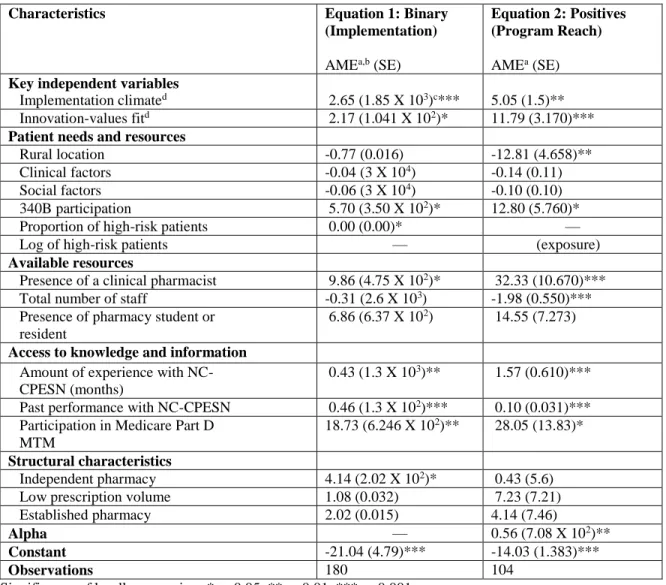
determinants on implementation effectiveness (e.g., implementation activity and program reach) (n=191). Community pharmacy’s implementation climate (AME = 2.65, p = 0.000) and
innovation-values fit (AME = 2.17, p = 0.037) was significantly associated with implementation activity (e.g., implementation versus non-implementation). Similarly, pharmacy’s
implementation climate (AME = 5.05, p = 0.001) and innovation-values fit (AME = 11.79, p = 0.000) was significantly associated with program reach (e.g., amount of intervention delivered to target population).
The second study identified the role of network ties to support implementation of NC- CPESN and compared network ties among high- and low-performing pharmacies using thematic analysis of qualitative interviews (n=40). The study found that high-performing pharmacies had
a greater diversity of network ties (e.g., relationships with healthcare providers, care managers, and public health agencies) and were able to use those ties to support implementation of NC- CPESN.
The third study compared the implementation process of high- and low-performing NC- CPESN community pharmacies using thematic analysis of qualitative interviews (n=40).
Community pharmacies employed implementation strategies such as redefining job
responsibilities to ensure pharmacists and pharmacy technicians are working at the top of their license. Findings also revealed differences in the implementation process among high- and low- performing pharmacies, such as low-performing pharmacies omitting strategies used by high- performers.
In sum, organizational- and environmental-level determinants and differences in the implementation process affected implementation effectiveness of a community pharmacy
population health management intervention. Payers supporting community pharmacy integration into population health management models should consider these factors affect implementation and develop implementation strategies accordingly.
.
ACKNOWLEDGEMENTS
I would like to briefly acknowledge all of the individuals who supported and encouraged me during the dissertation process and my time as a doctoral student in the Department of Health Policy and Management (HPM). First, I would like to acknowledge my dissertation committee:
Drs. Christopher M. Shea, Stefanie Ferreri, Justin G. Trogdon, Troy Trygstad, and Morris Weinberger. I would like to thank Dr. Shea for serving as my dissertation chair and program advisor during my four years as an HPM student. From Dr. Shea, I have learned a great deal about implementation science research and because of his mentorship, I am able to pursue a career in this area. Dr. Weinberger has been an extraordinary mentor and committee member—
he has helped me to successfully navigate the doctoral program and the dissertation process, and decide on a career path. Working with Dr. Trogdon, I have learned about econometrics and study design and have become a better researcher in the process because he has pushed me to think more critically about my research methods. Dr. Ferreri has taught me about community
pharmacy practice and research and has been a mentor and advocate for me. Dr. Trygstad is the reason I pursued a dissertation project related to community pharmacy. He was willing to take a risk on me—an implementation researcher who knew very little about community pharmacy—
and inspired me to get involved with CPESN because of his enthusiasm and passion for community pharmacy.
In addition to my committee members, I would like to thank the other faculty members who have supported my academic career. I would like to thank Dr. Joanne Earp who has always pushed me to take risks, believe in myself, and be a better advocate for myself. I am also grateful
for Drs. Geni Eng and Alex Lightfoot for pushing me to think more critically about community participation in research, research ethics, and how my background influences me as a researcher.
I am grateful I had the opportunity to collaborate with Drs. Bryan Weiner and Sarah Birken who exposed me to new areas of implementation science research and pushed me to think more critically about the use and development of organizational theory. I am also thankful for the support and mentorship I received from Drs. Angela Stover, Byron Powell, Joel Farley, and Chelsea Renfro during the dissertation process.
I have also received a tremendous amount of dissertation support from the Community Care of North Carolina and UNC Eshelman School of Pharmacy staff. I am especially grateful for Casey Schwartz, Nicole Mark, Chuck Shasky, and Trista Pfeiffenberger at CCNC who were kind enough to share their expertise about CPESN with me and help administer surveys to CPESN participants. I am also very thankful for Neepa Ray at the school of pharmacy who helped me to obtain data for my dissertation and Michael Patti who assisted with me with survey data collection and entry.
Additional thanks go to the colleagues from the doctoral program, my friends, and my spouse. My “HPM buddy” Lisa DiMartino helped me to navigate the doctoral program through her advice and encouragement and I am extremely grateful for her mentorship. My cohort has also been incredibly supportive and collaborative throughout the doctoral program. I would especially like to thank Daniel Erim, Amir Alishahitabriz, Dunc Williams, Lindsey Eley Yates, Alecia Clary, and Stacey Klaman who have always been there for me when I needed them.
I am also grateful for my best friends Jenny Wells and Turquoise Sidibe who have lifted me up and made it possible to overcome adversity. Finally, I would like to thank my spouse Cory Evans who has been a constant source of encouragement and strength and has helped me to make it through the doctoral program.
TABLE OF CONTENTS
LIST OF TABLES ... xii
LIST OF FIGURES ... xiii
LIST OF ABBREVIATIONS ... xiv
CHAPTER 1. INTRODUCTION ... 1
REFERENCES ... 5
CHAPTER 2. LITERATURE REVIEW ... 7
High-Need, High-Cost Patients ... 7
Pharmacist-led Medication Management Programs... 8
Implementation of Medication Management Programs ... 9
Community Pharmacy Enhanced Services Program ... 10
Significance and Innovation ... 10
REFERENCES ... 12
CHAPTER 3. STUDY DESIGN AND METHODS ... 17
Overview and Rationale ... 17
Specific Aims and Hypotheses ... 17
Conceptual Framework ... 18
Study Setting and Sample ... 22
Intervention Description ... 22
Data Sources ... 23
Variables and Measurement ... 24
Aim 1 Measures ... 24
Aim 2 and Aim 3 Measures ... 27
Data Analysis by Aim ... 27
Aim 1 ... 27
Aim 2 and Aim 3 ... 30
REFERENCES ... 31
CHAPTER 4. ORGANIZATIONAL DETERMINANTS THAT INFLUENCE IMPLEMENTATION EFFECTIVENESS IN A COMMUNITY PHARMACY MEDICAID MEDICATION MANAGEMENT PROGRAM... 33
Introduction ... 33
Conceptual Framework ... 34
Methods ... 36
Study Design ... 36
Intervention Description ... 37
Study Population ... 37
Data Sources ... 37
Dependent Variables ... 38
Independent Variables ... 39
Statistical Analysis ... 41
Results ... 44
Exploratory Factor Analysis ... 44
Hurdle Regression: Equation 1 ... 45
Hurdle Regression: Equation 2 ... 46
Discussion ... 47
Limitations ... 50
Conclusion ... 51
REFERENCES ... 59
CHAPTER 5. THE ROLE OF NETWORK TIES TO SUPPORT
IMPLEMENTATION OF A COMMUNITY PHARMACY ENHANCED
SERVICES NETWORK ... 62
Introduction ... 62
Study Objectives ... 63
Conceptual Framework ... 64
Methods ... 65
Study Setting ... 65
Study Sample ... 66
Data Collection ... 66
Data Analysis ... 67
Results ... 67
Sample Characteristics ... 67
Interpersonal Ties ... 68
Inter-organizational Ties ... 70
Ties with Patients ... 73
Discussion ... 75
Limitations ... 77
Conclusion ... 78
REFERENCES ... 81
CHAPTER 6. STAGES OF CHANGE: MOVING COMMUNITY PHARMACIES FROM A DRUG DISPENSING TO POPULATION HEALTH MANAGEMENT MODEL ... 87
Introduction ... 87
Objectives ... 89
Conceptual Framework ... 89
Methods ... 91
Intervention Description ... 91
Selection of Study Sites ... 92
Data Collection ... 92
Data Analysis ... 93
Results ... 93
Sample Characteristics ... 93
Pre-implementation Stage: High-performing Pharmacies ... 94
Pre-implementation Stage: Low-performing Pharmacies ... 95
Implementation Stage: High-performing Pharmacies ... 96
Implementation Stage: Low-performing Pharmacies ... 99
Sustainment Stage ... 101
Discussion ... 102
Conclusion ... 105
REFERENCES ... 110
CHAPTER 7. SUMMARY OF FINDINGS AND IMPLICATIONS FOR POLICY, PRACTICE, AND RESEARCH ... 117
Summary of Findings ... 117
Practice Implications ... 119
Policy Implications ... 119
Research Implications ... 121
REFERENCES ... 122
LIST OF TABLES
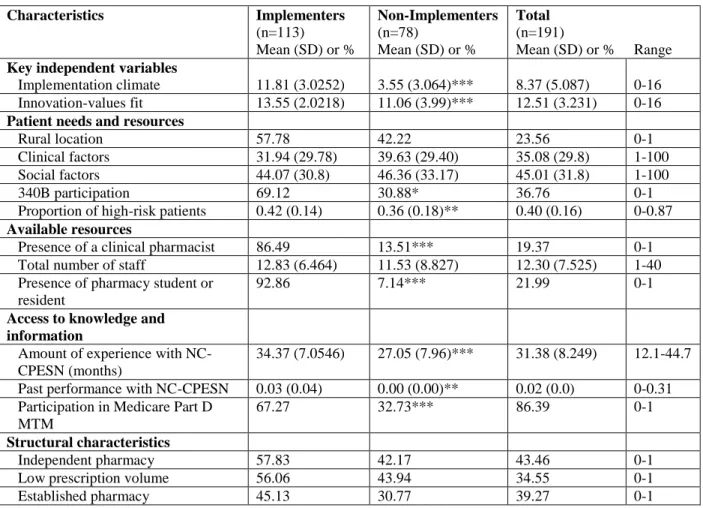
Table 4.1. Descriptive statistics of community pharmacies participating in NC-
CPESN ... 53 Table 4.2. Correlation matrix for the implementation climate and innovation-
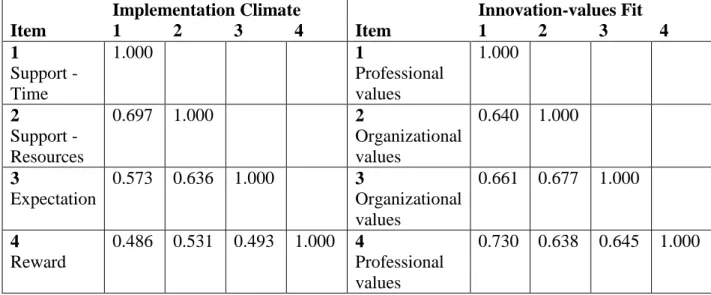
values fit scales ... 54 Table 4.3. Factor loadings from the rotated factor structure matrix for
implementation climate and innovation-values fit scales ... 55 Table 4.4. Parameter estimates from Hurdle regression of NC-CPESN
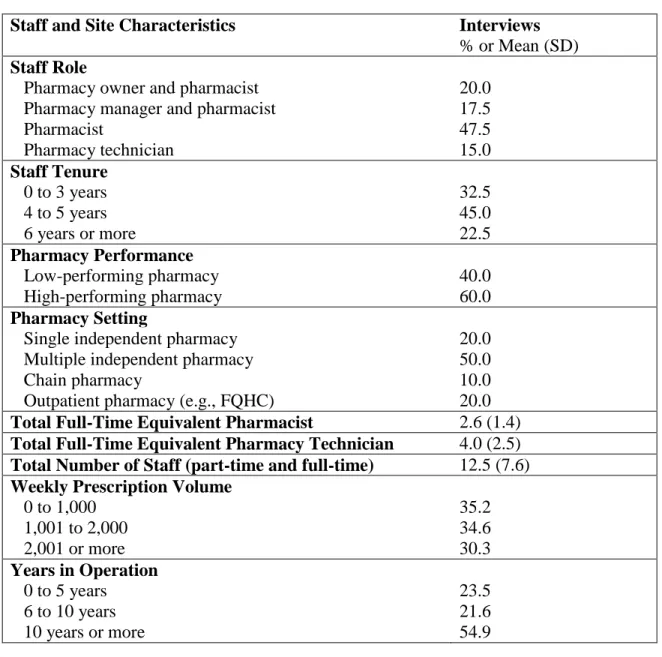
Implementation and Program Reach of NC-CPESN Implementation ... 56 Table 5.1. Community pharmacy staff and site characteristics (n=40) ... 79 Table 5.2. Differences in the role of network ties among high- and low-
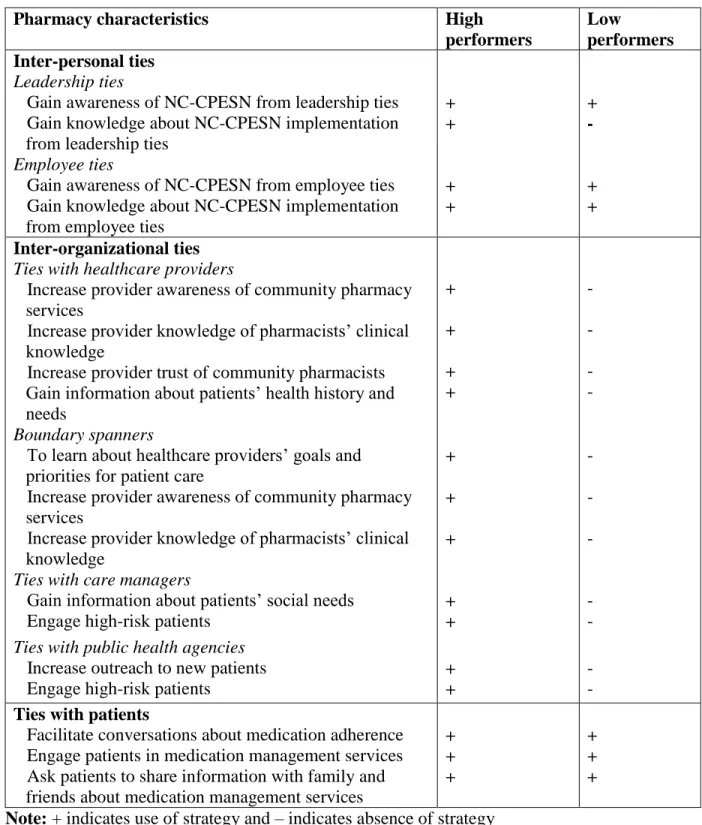
performing pharmacies ... 80 Table 6.1. Community pharmacy staff and site characteristics (n=40) ... 107 Table 6.2. Implementation strategies of high- and low-performing pharmacies ... 108
LIST OF FIGURES
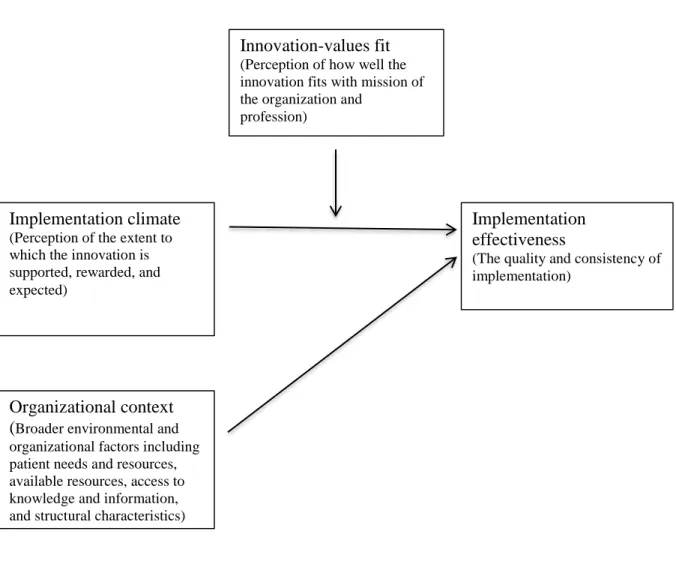
Figure 3.1. The impact of implementation climate and innovation-values fit on
implementation effectiveness ... 21 Figure 4.1. The impact of implementation climate and innovation-values fit on
implementation effectiveness ... 52 Figure 4.2. Plot of marginal effect of innovation-values fit at representative values
of implementation climate score for Equation 1 ... 57 Figure 4.3. Plot of marginal effect of innovation-values fit at representative values
of implementation climate score for Equation 2 ... 58 Figure 6.1. Selection of community pharmacy study sites ... 106
LIST OF ABBREVIATIONS AME average marginal effect
CCNC Community Care of North Carolina
CFIR consolidated framework for implementation research CI confidence interval
CMR comprehensive medication review
CPESNSM Community Pharmacy Enhanced Services Network EHR electronic health records
EV eigenvalue
FTE full-time equivalent
HIE health information exchange HPM Health Policy and Management HNHC high-need, high-cost
KMO Kaiser-Meyer-Olkin LDL low-density lipoprotein MCC multiple chronic conditions MN Minnesota
MTM medication therapy management NB2 negative binomial model type 2
NC North Carolina
NC-CPESN North Carolina CPESN PCPs primary care providers RUCA rural-urban commuting area
SD standard deviation SE standard error
WI Wisconsin
CHAPTER 1. INTRODUCTION
The Affordable Care Act has changed the organization, financing, and delivery of healthcare1 by implementing new payment models and financial incentives to encourage healthcare providers to accept and manage healthcare for a defined patient population.2 To this end, population health management programs have arisen that have common features such as identifying high-need, high-cost (HNHC) patients; tailoring care delivery to patients’ risk level;
and coordinating care across a diverse team of healthcare and social service providers.3 One of the most challenging aspects of population health management is improving health outcomes for HNHC patients4 who often have complex health and social needs that can interfere with disease management.5-7 Pharmacists could play a critical role in population health management programs by delivering medication management services to HNHC patients. However, pharmacists have been underutilized in population health management models such as Accountable Care
Organizations.8
Community Care of North Carolina (CCNC)—North Carolina’s primary case
management program for Medicaid beneficiaries—is currently piloting Community Pharmacy Enhanced Services Network (CPESNSM), a population health management intervention designed to both improve the quality and outcomes of healthcare and reduce healthcare costs for HNHC patients.9 Pharmacies participating in CPESN deliver intensive, one-on-one services to patients, often requiring pharmacy staff to work together in teams to effectively deliver services. Program participants include community pharmacies that are locally-owned, part of a chain, or outpatient pharmacies that are part of a health system.10 The evaluation of the CPESN pilot that is
underway does not assess its implementation effectiveness (the quality and consistency of implementation11,12), which is critical for decision-makers in North Carolina who seek to spread CPESN, as well stakeholders in other states that are considering similar programs.
We used a sequential mixed-methods research design25 to examine implementation of the CPESN program in North Carolina. Using the organizational theory of implementation
effectiveness11,12, the first study of this dissertation quantitatively examined the role of
implementation climate, as well as the overall fit between CPESN and pharmacy’s mission and values, on implementation effectiveness in community pharmacies.13 This first study also examined the impact of other organizational determinants of implementation effectives that are identified by the consolidated framework for implementation research including patient needs and resources, available resources, access to information and knowledge, and structural characteristics.14
The second study of this dissertation identified and compared the use of network ties to support implementation among high- and low-performing community pharmacies using qualitative methods. The second study also explored how network ties are formed and
maintained to support implementation of CPESN. The third study compared the implementation strategies used at different stages of the innovation process among high- and low-performing community pharmacies. The implementation process unfolds in key phases, from agenda setting when an organization identifies a need for an innovation, through routinization when the
innovation is no longer viewed as separate from day-to-day activities of the organization.15 Within each of these phases, pharmacies use key implementation strategies to support the implementation process, such as planning, education, restructuring, quality-management, and finance strategies.16,17
The central hypothesis of this research was that key organizational and environmental determinants and the implementation process influence which pharmacies are more effective at implementing CPESN. The long-term goal of this research is to increase successful
implementation of population health management interventions in community pharmacies in the US. To test the central hypothesis, this dissertation examined implementation effectiveness of CPESN in approximately 255 community pharmacies in NC by pursuing the followingSpecific Aims:
Aim 1: To examine the association between organizational determinants and implementation effectiveness of a population health management intervention in community pharmacies.
Aim 2: To identify and compare the network ties used to support implementation of a population health management intervention among high- and low-performing community pharmacies.
Aim 3: To identify and compare the implementation strategies of high- and low-
performing community pharmacies at different stages of the innovation implementation process.
This dissertation used a sequential mixed-methods research design to examine
implementation of the Community Pharmacy Enhanced Services Network (CPESNSM) in North Carolina. Data sources included qualitative interviews and survey data linked with program administrative data from 2016. The first study used a hurdle regression model to examine the impact of organizational determinants on implementation effectiveness (e.g., implementation activity and program reach). The second study used a thematic analysis of qualitative interviews to identify and compare the network ties used to support implementation of a population health
management intervention among high- and low-performing community pharmacies. Similarly, the third study used a thematic analysis of qualitative interviews to identify and compare the implementation strategies of high- and low-performing community pharmacies at different stages of the innovation implementation process.
The aims from this dissertation were anticipated to produce the following outcomes: 1) contribute to understanding of the environmental and organizational determinants of
implementation effectiveness of a population health management in community pharmacy, and 2) Provide guidance to community pharmacy practitioners and policymakers on how to
implement population health management interventions in community pharmacy settings. The results from this dissertation will be important for scaling up interventions like CPESN that seek to integrate community pharmacists into population health management models.
The sections of this dissertation are organized as follows. Chapter 2 summarizes the current literature regarding population health management in community pharmacy. This chapter concludes with a statement regarding the significance and innovation of this research. Chapter 3 provides an overview of the methods used in this dissertation including the conceptual
framework, study design and rationale, study setting and sample, intervention description, data sources, and analytic approaches. Chapters 4-6 are manuscripts for Aims 1-3, respectively, and are intended for submission for peer-reviewed publication. Chapter 7 summarizes the findings of this dissertation and provides implications for policy, practice, and research.
REFERENCES
1. Blumenthal D, Abrams M, Nuzum R. The Affordable Care Act at 5 Years. The New England journal of medicine. 2015;372(25):2451-2458.
2. Whittington JW, Nolan K, Lewis N, Torres T. Pursuing the Triple Aim: The First 7 Years. The Milbank quarterly. 2015;93(2):263-300.
3. Felt-Lisk SHT. Exploring the promise of population health management programs to improve health. Princeton, NJ: Mathematica Policy Research;2011.
4. Billings J, Mijanovich T. Improving the management of care for high-cost Medicaid patients. Health Aff (Millwood). 2007;26(6):1643-1654.
5. Conwell LJ, Cohen JW. Characteristics of persons with high medical expenditures in the US civilian non institutionalized population. Rockville, MD: Agency for Healthcare Research and Quality;2005.
6. Cohen B, Yu W. The concentration and persistence in the level of health expenditures over time: Estimates for the US population 2008-2009. Rockville, MD2012.
7. Sarnak DO, Ryan J. How high-need patients experience the health care system in nine countries. Washington DC: The Commonwealth Fund;2016.
8. Smith M, Bates DW, Bodenheimer TS. Pharmacists belong in accountable care
organizations and integrated care teams. Health Aff (Millwood). 2013;32(11):1963-1970.
9. CCNC. Community Pharmacy Enhanced Services Network. 2016;
https://www.communitycarenc.org/population-management/pharmacy/community- pharmacy-enhanced-services-network-cpesn/. Accessed October 21, 2016.
10. Association AP. Independent community pharmacy. 2007;
https://www.pharmacist.com/sites/default/files/files/Profile_16_Independent_SDS_FINA L_090307.pdf. Accessed October 21, 2016.
11. Helfrich CD, Weiner BJ, McKinney MM, Minasian L. Determinants of implementation effectiveness: adapting a framework for complex innovations. Med Care Res Rev.
2007;64(3):279-303.
12. Klein KJ, Sorra JS. The challenge of innovation implementation. Academy of Management Review. 1996;21(4):1055-1080.
13. Watkins K, Wood H, Schneider CR, Clifford R. Effectiveness of implementation strategies for clinical guidelines to community pharmacy: a systematic review.
Implementation science : IS. 2015;10:151.
14. Damschroder LJ, Aron DC, Keith RE, Kirsh SR, Alexander JA, Lowery JC. Fostering implementation of health services research findings into practice: a consolidated
framework for advancing implementation science. Implementation science : IS.
2009;4:50.
15. Rogers EM. Diffusion of innovations. New York City, NY: Simon and Schuster; 2010.
16. Powell BJ, McMillen JC, Proctor EK, et al. A compilation of strategies for implementing clinical innovations in health and mental health. Med Care Res Rev. 2012;69(2):123-157.
17. Powell BJ, Waltz TJ, Chinman MJ, et al. A refined compilation of implementation strategies: results from the Expert Recommendations for Implementing Change (ERIC) project. Implementation science : IS. 2015;10:21.
CHAPTER 2. LITERATURE REVIEW High-Need, High-Cost Patients
Nearly half of total healthcare expenditures are concentrated among five percent of the U.S adult population (12 million people).1,2 This small subset of the population is commonly referred to as high-need, high-cost (HNHC).3-5 HNHC patients have been defined in multiple ways; however, the most commonly used definition is patients with three or more chronic conditions and a functional limitation (e.g., cognitive, physical, or psychological).3-5 Studies have found that HNHC patients have higher annual expenditures on healthcare services and prescriptions and higher rates of preventable hospitalizations and emergency department use than the general population.3,4,6-8 Additionally, HNHC patients are more likely than the general
population to report having unmet medical needs, lower satisfaction with patient-provider communication, and experiences of social isolation and loneliness.6,9 Several patient
demographics are positively associated with HNHC status including age greater than 65, female gender, non-Hispanic ethnicity, White race, public insurance, lower educational attainment, and lower income.3,6,9
Within the Medicaid program, HNHC patients account for a large proportion of spending; five percent of Medicaid beneficiaries account for almost half of Medicaid expenditures.10 HNHC Medicaid patients are disproportionately impacted by costly chronic conditions, such as asthma and diabetes, and the co-occurrence of difficult-to-treat conditions, including mental health and substance use conditions.10 Medicaid HNHC patients more frequently report experiences of social isolation and loneliness and homelessness and housing
instability than other Medicaid beneficiaries.11 Several patient demographics are positively associated with HNHC status for Medicaid beneficiaries including older age, female gender, non-Hispanic ethnicity, and White race.12,13
Pharmacist-led Medication Management Programs
To improve care for HNHC patients, Medicaid and other payers have started shifting from fee-for-service to alternative payment models, which offer incentives for healthcare organizations to implement population health management strategies to increase the value, effectiveness, and efficiency of care.14,15 Population health management programs emphasize tailored interventions for HNHC patients who are at greater risk than the general population for medication errors16 and adverse drug events17,18, which, in turn, increase hospitalization risk.19 Since pharmacists are highly trained in medication management, some population health management programs have included pharmacist-led medication management programs.20
Pharmacist-led medication management programs have demonstrated success in changing patients’ medication behaviors and therapeutic outcomes while reducing healthcare costs.21-28 For example, pharmacist-led medication management programs have demonstrated success in identifying drug-related therapy problems29, improving disease management and medication adherence30,3144, and reducing inappropriate medication use.32 Additionally, community pharmacist-led medication management programs have positively affected patient outcomes including patients’ ability to manage their blood glucose, blood pressure, and LDL cholesterol.30,33,34 Studies have also reported that pharmacist-led medication management programs have reduced hospital length of stay and pharmacy and total cost of care compared to usual care.35-37
Implementation of Medication Management Programs
Researchers have tried to determine which medication management program features are associated with changes in patient outcomes but have had difficulty finding a connection due to variation in program design.21,38 In the Medicare Part D Medication Therapy Management (MTM) program, for example, researchers have noted that medication services are delivered in a variety of settings (e.g., call centers, outpatient care) and formats (e.g., in-person vs. phone).21 Similar challenges exist in Medicaid medication management programs—programs vary in patient eligibility criteria, the services provided, and the setting of service delivery.38 Some Medicaid pharmacist-led medication management programs, for example, involve having a pharmacist deliver medication management services in a primary care setting whereas other programs offer medication management services in community pharmacy settings.38
In addition to program design variability, there are a limited number of studies examining implementation of medication management programs, making it difficult to assess why program outcomes might vary across organizations. Organizational context is important for understanding why implementation effectiveness may vary across settings and for identifying common factors across diverse settings that contribute to effective implementation. Many of the studies that have examined determinants of implementation effectiveness have been qualitative, limiting their generalizability, or have not been guided by a theory, making it difficult to interpret the findings.
Past studies have identified factors, such as organizational structure (e.g., staff size), leadership support, and financial resource availability39-43, but not applied theory to demonstrate how these factors work in concert to produce effective implementation.
The majority of studies that have examined implementation of pharmacist-led medication management services have not been conducted in community pharmacy settings. Several state
community pharmacy settings38 but there are only two studies assessing implementation.44,45 One study focuses on factors associated with documentation of medication management services, rather than overall program implementation.44 The other study explores organizational factors associated with program implementation using bivariate analysis, making it difficult to assess which factors are associated with effective implementation holding other factors constant.45 This dissertation will address this research gap by using multivariate analysis to examine overall program implementation of the Community Pharmacy Enhanced Services Program--a Medicaid medication management program in a community pharmacy setting.
Community Pharmacy Enhanced Services Program
Community Care of North Carolina (CCNC)—North Carolina’s primary case
management program for Medicaid beneficiaries—is currently piloting Community Pharmacy Enhanced Services Network (CPESN), a population health management intervention designed to both improve the quality and outcomes of healthcare and reduce healthcare costs for HNHC patients.46 Pharmacies participating in CPESN deliver intensive, one-on-one services to patients, often requiring pharmacy staff to work together in teams to effectively deliver services. Program participants include community pharmacies that are locally-owned, part of a chain, and or outpatient pharmacies that are part of a health system.47 The evaluation of the CPESN pilot that is underway does not assess its implementation effectiveness (the quality and consistency of implementation48,49), which is critical for decision-makers in North Carolina who seek to spread CPESN, as well stakeholders in other states that are considering similar programs.
Significance and Innovation
There is limited implementation research about medication management programs and more specifically, programs in community pharmacy settings.21,38,50 Having limited evidence about implementation makes it difficult for policymakers and practitioners to provide
implementation guidance or offer technical assistance to community pharmacies implementing medication management programs. Additionally, the lack of implementation research makes it impossible to spread and scale up effective practices or discontinue ineffective practices. This dissertation is significant for its potential to close this implementation gap by examining three key determinants of implementation effectiveness: organizational determinants (aim 1),
environmental determinants (e.g., network ties) (aim 2), and the implementation process (aim 3).
This study is innovative because it uses a theory-based approach to examine
implementation effectiveness of a medication management program in a community pharmacy setting. Prior studies of medication management programs have not used a theory-based approach, making it difficult to assess how a combination of factors interacts to produce effective implementation. Additionally, this study quantitatively tests the organizational theory of innovation implementation48,49,51, which has only been quantitatively tested in a few
studies48,52, and has never been tested in a community pharmacy setting. Therefore, the findings from this dissertation will contribute to implementation theory by determining whether the constructs of this theory are relevant in the community pharmacy context.
REFERENCES
1. Cohen SB. The concentration and persistence in the level of health expenditures over time: Estimates for the U.S. population 2012-2013. Rockville, MD2015.
2. Mitchell EM, Machlin SR. Concentration of health expenditures and selected characteristics of high spenders, U.S civilian, non-institutionalized population.
Rockville, MD2015.
3. Hayes SL, Salzberg CA, McCarthy D, et al. High-Need, High-Cost Patients: Who Are They and How Do They Use Health Care? A Population-Based Comparison of
Demographics, Health Care Use, and Expenditures. Issue Brief (Commonw Fund).
2016;26:1-14.
4. Hong CS, Siegel AL, Ferris TG. Caring for high-need, high-cost patients: what makes for a successful care management program? Issue Brief (Commonw Fund). 2014;19:1-19.
5. Blumenthal D, Chernof B, Fulmer T, Lumpkin J, Selberg J. Caring for High-Need, High- Cost Patients - An Urgent Priority. The New England journal of medicine.
2016;375(10):909-911.
6. Salzberg CA, Hayes SL, McCarthy D, et al. Health System Performance for the High- Need Patient: A Look at Access to Care and Patient Care Experiences. Issue Brief (Commonw Fund). 2016;27:1-12.
7. Koroukian SM, Schiltz N, Warner DF, et al. Combinations of Chronic Conditions, Functional Limitations, and Geriatric Syndromes that Predict Health Outcomes. Journal of general internal medicine. 2016;31(6):630-637.
8. Paez KA, Zhao L, Hwang W. Rising out-of-pocket spending for chronic conditions: a ten-year trend. Health Aff (Millwood). 2009;28(1):15-25.
9. Ryan J, Abrams MK, Doty MM, Shah T, Schneider EC. How High-Need Patients Experience Health Care in the United States. Findings from the 2016 Commonwealth Fund Survey of High-Need Patients. Issue Brief (Commonw Fund). 2016;43:1-20.
10. GAO. A small share of enrollees consistently accounted for a large share of expenditures. Washington DC2015.
11. Raven MC, Billings JC, Goldfrank LR, Manheimer ED, Gourevitch MN. Medicaid patients at high risk for frequent hospital admission: real-time identification and remediable risks. Journal of urban health : bulletin of the New York Academy of Medicine. 2009;86(2):230-241.
12. Sommers A, Cohen M. Medicaid's high cost enrollees: how much do they drive program spending? Washington DC2006.
13. Coughlin TA, Long SK. Health care spending and service use among high-cost Medicaid beneficiaries, 2002-2004. Inquiry. 2009;46(4):405-417.
14. Sarnak DO, Ryan J. How high-need patients experience the health care system in nine countries. Washington DC: The Commonwealth Fund;2016.
15. Muhlestein D. Continued growth of public and private accountable care organizations.
2013; 19:http://healthaffairs.org/blog/2013/02/19/continued-growth-of-public-and- private-accountable-care-organizations/. Accessed December 6, 2016.
16. Koper D, Kamenski G, Flamm M, Böhmdorfer B, Sönnichsen A. Frequency of medication errors in primary care patients with polypharmacy. Fam Pract.
2013;30(3):313-319.
17. Fulton MM, Allen ER. Polypharmacy in the elderly: a literature review. Journal of the American Academy of Nurse Practitioners. 2005;17(4):123-132.
18. Hajjar ER, Cafiero AC, Hanlon JT. Polypharmacy in elderly patients. Am J Geriatr Pharmacother. 2007;5(4):345-351.
19. Leendertse AJ, Egberts AC, Stoker LJ, van den Bemt PM, Group HS. Frequency of and risk factors for preventable medication-related hospital admissions in the Netherlands.
Arch Intern Med. 2008;168(17):1890-1896.
20. Smith M, Bates DW, Bodenheimer TS. Pharmacists belong in accountable care
organizations and integrated care teams. Health Aff (Millwood). 2013;32(11):1963-1970.
21. Viswanathan M, Kahwati LC, Golin CE, et al. Medication therapy management
interventions in outpatient settings: a systematic review and meta-analysis. JAMA Intern Med. 2015;175(1):76-87.
22. Krumme AA, Isaman DL, Stolpe SF, Dougherty S, Choudhry NK. Prevalence, effectiveness, and characteristics of pharmacy-based medication synchronization programs. The American journal of managed care. 2016;22(3):179-186.
23. Conn VS, Ruppar TM, Chan KC, Dunbar-Jacob J, Pepper GA, De Geest S. Packaging interventions to increase medication adherence: systematic review and meta-analysis.
Curr Med Res Opin. 2015;31(1):145-160.
24. Watson L, Ahmed N, Mccall H, et al. Home delivery of medication - the role of a patient information leaflet on maximising service uptake. International journal of STD & AIDS.
2014;25(14):1035-1037.
25. Chisholm-Burns MA, Kim Lee J, Spivey CA, et al. US pharmacists' effect as team members on patient care: systematic review and meta-analyses. Medical care.
2010;48(10):923-933.
26. Beney J, Bero LA, Bond C. Expanding the roles of outpatient pharmacists: effects on health services utilisation, costs, and patient outcomes. Cochrane Database Syst Rev.
2000(3):CD000336.
27. Blenkinsopp A, Anderson C, Armstrong M. Systematic review of the effectiveness of community pharmacy-based interventions to reduce risk behaviours and risk factors for coronary heart disease. J Public Health Med. 2003;25(2):144-153.
28. Kaboli PJ, Hoth AB, McClimon BJ, Schnipper JL. Clinical pharmacists and inpatient medical care: a systematic review. Arch Intern Med. 2006;166(9):955-964.
29. Messerli M, Blozik E, Vriends N, Hersberger KE. Impact of a community pharmacist-led medication review on medicines use in patients on polypharmacy--a prospective
randomised controlled trial. BMC health services research. 2016;16:145.
30. Mehuys E, Van Bortel L, De Bolle L, et al. Effectiveness of a community pharmacist intervention in diabetes care: a randomized controlled trial. J Clin Pharm Ther.
2011;36(5):602-613.
31. Pringle JL, Boyer A, Conklin MH, McCullough JW, Aldridge A. The Pennsylvania Project: pharmacist intervention improved medication adherence and reduced health care costs. Health Aff (Millwood). 2014;33(8):1444-1452.
32. Ottenbros S, Teichert M, de Groot R, et al. Pharmacist-led intervention study to improve drug therapy in asthma and COPD patients. Int J Clin Pharm. 2014;36(2):336-344.
33. Ali M, Schifano F, Robinson P, et al. Impact of community pharmacy diabetes
monitoring and education programme on diabetes management: a randomized controlled study. Diabet Med. 2012;29(9):e326-333.
34. Tsuyuki RT, Houle SK, Charrois TL, et al. Randomized Trial of the Effect of Pharmacist Prescribing on Improving Blood Pressure in the Community: The Alberta Clinical Trial in Optimizing Hypertension (RxACTION). Circulation. 2015;132(2):93-100.
35. Bjornson DC, Hiner WO, Potyk RP, et al. Effect of pharmacists on health care outcomes in hospitalized patients. Am J Hosp Pharm. 1993;50(9):1875-1884.
36. Bond CA, Raehl CL. Clinical and economic outcomes of pharmacist-managed antimicrobial prophylaxis in surgical patients. American journal of health-system pharmacy : AJHP : official journal of the American Society of Health-System Pharmacists. 2007;64(18):1935-1942.
37. Boyko WL, Yurkowski PJ, Ivey MF, Armitstead JA, Roberts BL. Pharmacist influence on economic and morbidity outcomes in a tertiary care teaching hospital. American journal of health-system pharmacy : AJHP : official journal of the American Society of Health-System Pharmacists. 1997;54(14):1591-1595.
38. Neyarapally GA, Smith MA. Variability in state Medicaid medication management initiatives. Res Social Adm Pharm. 2017;13(1):214-223.
39. Doucette WR, Koch YD. An exploratory study of community pharmacy practice change.
J Am Pharm Assoc (Wash). 2000;40(3):384-391.
40. Roberts AS, Benrimoj SI, Chen TF, Williams KA, Aslani P. Practice change in community pharmacy: quantification of facilitators. The Annals of pharmacotherapy.
2008;42(6):861-868.
41. Feletto E, Wilson LK, Roberts AS, Benrimoj SI. Measuring organizational flexibility in community pharmacy: Building the capacity to implement cognitive pharmaceutical services. Res Social Adm Pharm. 2011;7(1):27-38.
42. Pestka DL, Frail CK, Palombi LC, Von Hoff BA, Conway JM, Sorensen TD. Strategies and steps fostering the success of medication management services in community pharmacies. Journal of the American Pharmacists Association : JAPhA. 2016;56(5):504- 512.e501.
43. Law AV, Okamoto MP, Brock K. Ready, willing, and able to provide MTM services?: A survey of community pharmacists in the USA. Res Social Adm Pharm. 2009;5(4):376- 381.
44. Smith MG, Ferreri SP, Brown P, Wines K, Shea CM, Pfeiffenberger TM. Implementing an integrated care management program in community pharmacies: A focus on
medication management services. Journal of the American Pharmacists Association : JAPhA. 2017;57(2):229-235.e221.
45. Smith MG, Shea CM, Brown P, Wines K, Farley JF, Ferreri SP. Pharmacy characteristics associated with the provision of medication management services within an integrated care management program. Journal of the American Pharmacists Association : JAPhA.
2017;57(2):217-221.e211.
46. CCNC. Community Pharmacy Enhanced Services Network. 2016;
https://www.communitycarenc.org/population-management/pharmacy/community- pharmacy-enhanced-services-network-cpesn/. Accessed October 21, 2016.
47. Association AP. Independent community pharmacy. 2007;
https://www.pharmacist.com/sites/default/files/files/Profile_16_Independent_SDS_FINA L_090307.pdf. Accessed October 21, 2016.
48. Helfrich CD, Weiner BJ, McKinney MM, Minasian L. Determinants of implementation effectiveness: adapting a framework for complex innovations. Med Care Res Rev.
2007;64(3):279-303.
49. Klein KJ, Sorra JS. The challenge of innovation implementation. Academy of Management Review. 1996;21(4):1055-1080.
50. Watkins K, Wood H, Schneider CR, Clifford R. Effectiveness of implementation strategies for clinical guidelines to community pharmacy: a systematic review.
Implementation science : IS. 2015;10:151.
51. Klein KJ, Conn AB, Sorra JS. Implementing computerized technology: an organizational analysis. Journal of Applied Psychology. 2001;86(5):811-824.
52. Jacobs SR, Weiner BJ, Reeve BB, Hofmann DA, Christian M, Weinberger M.
Determining the predictors of innovation implementation in healthcare: a quantitative analysis of implementation effectiveness. BMC health services research. 2015;15:6.
CHAPTER 3. STUDY DESIGN AND METHODS Overview and Rationale
This dissertation employed a sequential mixed-methods research design1 to understand implementation effectiveness of a community pharmacist-led medication management program for Medicaid beneficiaries. The purpose of the mixed-methods design was to use the qualitative findings from aims 2 and 3 to help explain the findings of the quantitative analysis of aim 1 (i.e., expansion).1 Aim 1 used a hurdle regression to examine the organizational determinants
associated with implementation effectiveness (e.g., implementation activity and program reach).
In Aim 2, a thematic analysis was conducted to identify and compare use of network ties to support implementation among high- and low-performing community pharmacies. Similarly, aim 3 used a thematic analysis to identify and compare the implementation strategies used by high- and low-performing community pharmacies at each stage of the innovation process.
Specific Aims and Hypotheses
Aim 1: To examine the association between organizational determinants and implementation effectiveness of a population health management intervention in community pharmacies.
Hypothesis 1a: Positive perceptions about implementation climate will be positively associated with implementation effectiveness.
Hypothesis 1b: Positive perceptions about innovation-values fit will be positively associated with implementation effectiveness.
Hypothesis 1c: The impact of implementation climate on implementation effectiveness will be amplified by positive, and weakened by negative, perceptions about innovation-values fit (moderation).
Hypothesis 1d: Four contextual factors (e.g., patient needs and resources, available resources, access to knowledge, and structural characteristics, will affect implementation effectiveness.
Aim 2: To identify and compare the use of network ties to support implementation of a population health management intervention in community pharmacies among high- and low-performing pharmacies.
Aim 3: To identify and compare the implementation strategies of high- and low-performing community pharmacies at different stages of the innovation implementation process.
Conceptual Framework
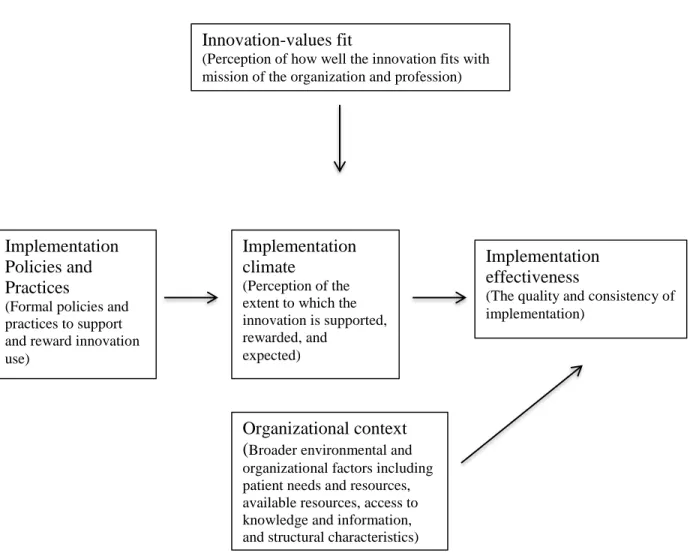
Implementation theories have been developed to identify the organizational factors and underlying relationships that are hypothesized to influence effective implementation (i.e., the quality and consistency of implementation).2,3 The organizational theory of innovation implementation effectiveness was designed for complex innovations like medication management programs, which often require coordinated use by multiple individuals to be effective.3-5 This theory posits that effective implementation is driven by an organization’s implementation climate and the fit between the innovation and organization values (Figure 3.1).3-
5 For example, a community pharmacy might develop formal policies or strategies to support implementation of medication management programs such as employee training, reward and recognition systems, or job reassignment. The collective influence of the pharmacy’s
implementation policies, in turn, affects employees’ shared perceptions about the extent to which the medication management program is rewarded, supported, and expected (implementation
climate).3-5 Positive perceptions about implementation climate are likely to increase employees’
acceptance of medication management programs, increasingly the likelihood that pharmacy staff will appropriately implement medication management programs (i.e., as the pharmacy intended for it to be implemented) and ultimately increase implementation effectiveness.
The organizational theory of innovation implementation effectiveness maintains that innovation-values fit also affects implementation effectiveness.3-5 Specifically, pharmacy
employees’ perceptions about how well medication management programs align with the values of the pharmacy and the pharmacy profession affect implementation effectiveness both directly and indirectly. If pharmacy employees perceive that medication management programs do not align with the pharmacy’s values, the employee may be less committed to implementation and exert less effort towards ensuring effective implementation.3 Innovation-values fit is also likely to impact the relationship between implementation climate and implementation effectiveness. 3-5 Since innovation-values fit affects commitment, the impact of implementation climate on implementation effectiveness will be amplified by positive, and weakened by negative, perceptions about innovation-values fit.
Implementation effectiveness is also likely to be affected by broader environmental and organizational factors (e.g., organizational context).6 Based on the consolidated framework for implementation research,6 we hypothesize four factors influence implementation effectiveness:
patient needs and resources, available resources, access to knowledge and information, and structural characteristics.6 For example, community pharmacies that serve a higher proportion of high-need, high-cost patients may be better at implementing innovations for high-need, high-cost populations. Additionally, pharmacies in rural locations may be better at implementing
innovations for high-need, high-cost populations since residents in rural areas have higher rates
of chronic illness.7 Implementation effectiveness is also likely to be positively influenced by a pharmacy’s available resources, such as amount of staff and training of staff, and access to knowledge and information about medication management programs (e.g., experience implementing similar interventions). Conversely, certain structural characteristics may negatively affect implementation effectiveness. For example, pharmacies that have opened recently may not have as strong of ties with patients as pharmacies that have been in operation for many years (e.g., the liability of newness hypothesis).8 Similarly, larger pharmacies may be impeded by a more formal organizational structure, which can negatively impact innovation implementation.9 For instance, managers of independently owned pharmacies may have greater decisional autonomy because there is less formalization in the organization and as a result, be better able to support implementation of medication management programs.
Figure 3.1. The impact of implementation climate and innovation-values fit on implementation effectiveness
Innovation-values fit
(Perception of how well the innovation fits with mission of the organization and profession)
Organizational context (Broader environmental and organizational factors including patient needs and resources, available resources, access to knowledge and information, and structural characteristics)
Implementation Policies and Practices
(Formal policies and practices to support and reward innovation use)
Implementation effectiveness
(The quality and consistency of implementation)
Implementation climate
(Perception of the extent to which the innovation is supported, rewarded, and
expected)
Study Setting and Sample
The study was conducted with approximately 255 community pharmacies that
participated in CPESN over the three-year program period (September 2014- August 2017). The community pharmacies were located throughout the state of NC in both rural and urban areas.
The participating pharmacies served Medicaid, Medicare, dually eligible, and NC Health Choice Beneficiaries. Participating community pharmacies were located in various settings such as grocery stores and federally qualified health centers and included a mix of approximately locally owned and non-locally owned pharmacies such as chain pharmacies and outpatient pharmacies.
The sample included 123 community pharmacies that enrolled in year 1 of the program, 107 community pharmacies that enrolled in year 2 of the program, and 25 community pharmacies that enrolled in year 3 of the program. Within each pharmacy, staff that participated in
implementing CPESN were surveyed including pharmacy owners or managers, the lead pharmacists, other pharmacists, pharmacy technicians, data entry specialists, and delivery drivers. Pharmacies varied in their staffing models to support CPESN. As an example, some pharmacies had only one staff member responsible for CPESN implementation, such as the owner, whereas other pharmacies had several pharmacists and technicians that supported CPESN.
Intervention Description
This dissertation examined the implementation of CPESN in North Carolina. CPESN is an open network of community pharmacies (meaning anyone that meets the requirements can participate) that have agreed to offer enhanced medication management services, document those services in PHARMACeHOME, and receive payment for those services based on performance.
The medication management services are based on a population health management approach.
CCNC identifies HNHC patients using their proprietary risk score based on chronic conditions
and disease severity; then, participating pharmacies deliver medication management services to those patients and coordinate that service with other providers in CCNC’s statewide patient- centered medical home network. The specific enhanced medication management services that are offered are divided into required and optional services. One of the key services required for reimbursement is a comprehensive medication review (CMR) to identify opportunities for improving medication management and reduce risk of medication problems. CPESN is funded by a 3-year pilot grant from the Center for Medicare and Medicaid Innovation.
Data Sources
The three aims explored in this dissertation relied on both qualitative and quantitative data sources. Qualitative data were collected through in-depth, semi-structured interviews with community pharmacy representatives who were responsible for overseeing CPESN
implementation. There were three sources of quantitative data including survey data, program administrative data, and county health ranking data.
In fall 2016, we administered a paper-based survey to community pharmacies that participated in either the first or second year of the NC-CPESN program. The survey assessed pharmacies’ organizational characteristics, experience with NC-CPESN, and perceptions about implementation (e.g., implementation climate, innovation-values fit). A committee of researchers and community pharmacy practitioners reviewed the survey items’ content, readability, and formatting. The survey questions were also piloted in a small group of community pharmacists (n=5). The survey was mailed to participating pharmacies along with other NC-CPESN program materials to increase the response rate. Pharmacies also received three email reminders at ~2, 4, and 8 weeks after the survey was mailed. Within the pharmacy, employees that were intended users of NC-CPESN (e.g., pharmacists, pharmacy technicians, and administrative staff)
In addition, we used 2016 NC-CPESN program administrative data and 2016 county health ranking data.10 Program administrative data provided information on the number of high- risk patients attributed to each pharmacy, patient demographics, and the amount of the
intervention that was delivered. County health ranking data included county-level measures of clinical (e.g., healthcare access) and social (e.g., insurance status) factors that might affect the pharmacy’s implementation of NC-CPESN.10 The operationalization of these measures is described below.
Variables and Measurement Aim 1 Measures
Implementation of a CMR for high-risk patients. Based upon whether a pharmacy
implemented a CMR on any attributed high-risk patient, we divided the sample into
implementers (e.g., > 1 CMR for an attributed high-risk patient) and non-implementers (e.g., no CMR for any attributed high-risk patients) between Nov 2016 and Jan 2017. We chose this quarter because there were no changes to the intervention (e.g., intervention requirements or payment model) during this or the previous quarter. We measured implementation effectiveness over a quarter to correspond with CCNC’s performance measures. High risk was defined as having a care triage score > 75. Care triage score is a proprietary measure used by CCNC to estimate a patient’s risk for hospitalization. Patients with triage scores > 75 are considered a priority population for CCNC. Patients are defined as attributed to a pharmacy if they filled at least one chronic medication within the last 90 days or > 80% of their medications for at least two of three months within the quarter.
Proportion of high-risk patients receiving a CMR. Second, we measured implementation
effectiveness to assess the reach of the intervention among attributed high-risk patients. We calculated the number of attributed high-risk patients receiving a CMR divided by the number of high-risk, attributed patients per pharmacy during a program quarter.
Independent Variables
Implementation climate. Implementation climate was defined using four survey items
assessing the extent to which NC-CPESN was supported, rewarded, and expected within the pharmacy (e.g., “Our pharmacy allocates sufficient time to delivering enhanced pharmacy services” and “Our pharmacy devotes adequate resources to implementing enhanced pharmacy services”).3-5 The questions included group rather than individual referents, which is
recommended when assessing organizational-level outcomes such as implementation climate.11 Each item was measured on 5-point Likert scale ranging from 0 (strongly disagree) to 4 (strongly agree). The survey items were summed for individual staff members, and the mean of all
individuals in the pharmacy was calculated to produce a pharmacy-level measure. Higher values of the score corresponded with positive perceptions of implementation climate.
Innovation-values fit. Innovation-values fit was defined using four survey items assessing
staff perceptions about the extent to which NC-CPESN fit with the values of the pharmacy (e.g.,
“Delivering enhanced pharmacy services is consistent with providing the best care possible for our patients)” and of the pharmacy profession (“Delivering enhanced pharmacy services is important for advancing the field of pharmacy”).3-5 As with implementation climate, the innovation-values fit questions were group-referenced, measured on the same 5-point Likert scale, aggregated from individual responses to produce a pharmacy-level mean, and ordered so that higher scores corresponded to positive perceptions.
Other independent variables. Patients’ needs and resources were measured by rural
location, clinical factors, social factors, 340B participation, and proportion of high-risk patients.
Rural location was defined as a binary variable (e.g., urban, rural) using a zip code
approximation of the rural-urban commuting area (RUCA) codes. Clinical factors were defined using a pre-existing, county-level composite measure of access to care items (e.g., primary care provider ratio, uninsured rate) and quality of care items (e.g., preventable hospital stays, diabetes monitoring) ranging from 0-100.10 Social factors were defined using a pre-existing, county-level composite measure of items such as education, employment, uninsured, and income ranging from 0-100.10 The clinical and social factor scales were recoded so that higher values on the scale were associated with better patient outcomes. Participation in 340B Drug Pricing Program was measured as a binary variable. Proportion of high-risk patients was defined as the number of attributed high-risk patients divided by the number of attributed patients per pharmacy over a program quarter.
Available resources were measured by three variables: the presence of a clinical pharmacist (binary), total number of full- and part-time staff (e.g., pharmacists, pharmacy technicians, administrative staff), and the presence of pharmacy students or residents in the past month (binary).
Access to knowledge and information about the intervention was measured in three ways:
(1) experience with NC-CPESN, defined as the number of months the pharmacy was enrolled in NC-CPESN; (2) past performance with NC-CPESN, measured using a lagged dependent variable (e.g., proportion of CMRs completed per high-risk patients) for the previous program quarter (Aug – Oct 2016); and (3) participation in Medicare Part D MTM (binary).
Structural characteristics were assessed by three variables. First, independent ownership was a binary variable: single and multiple independent pharmacies versus chain, outpatient, and federally qualified health center pharmacies. We used a binary variable due to small sample sizes within the chain and outpatient pharmacy categories. Second, prescription volume was
dichomotized as low (< 2000 prescriptions/week) versus high (>2000 prescriptions/week). Third, established pharmacies were those that had been in operation for more than 20 years.
Aim 2 and Aim 3 Measures
A semi-structured interview guide was developed to explore environmental determinants of implementation effectiveness (e.g., network ties) (aim 2) and the stages of the innovation process from Rogers’ stages of the innovation process in organizations (aim 3).6,12 During the first half of the interview, participants were asked to describe the strategies the pharmacy used to implement CPESN at various stages of implementation (e.g., pre-implementation,
implementation, and sustainment).12 During the first half of the interview, participants were asked to describe their pharmacy’s relationships with external organizations (e.g., healthcare providers, care managers) and relationships with patients.
Data Analysis by Aim Aim 1
Descriptive statistics. Frequencies and percentages were used to describe the study
population. We conducted bivariate analyses to compare the sample characteristics between implementers (completed > 1 CMR during the program quarter) and non-implementers (no completed CMR during the program quarter).
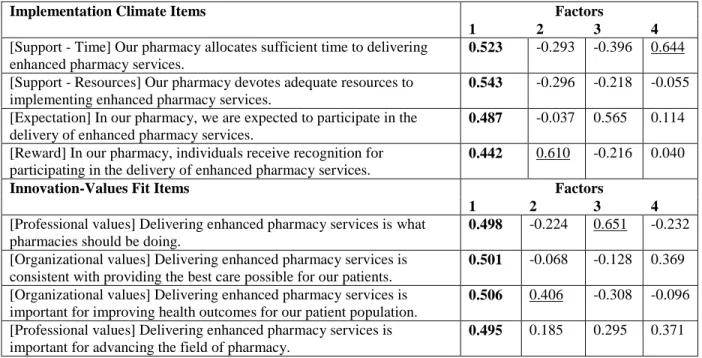
Exploratory factor analyses. To determine if survey items could be adequately summarized using implementation climate and innovation-values fit scales, we first assessed
items and conducting a Barlett’s test of sphericity and a Kaiser-Meyer-Olkin (KMO) test.
Second, we defined the number of initial factors using principal component analysis using orthogonal varimax rotation to improve interpretability. Finally, we confirmed the number of extracted factors using two decision rules: 1) eigenvalue >1 and 2) the number of eigenvalues from the factor analysis that are larger than the eigenvalues from randomly generated data (e.g., parallel analysis test). We assessed the reliability of the two scales using Cronbach’s alpha. To ensure the results were not sensitive to the method of factor extraction, we ran a common factor analysis using principal axis factoring and did not find differences in the results. Since the measures of implementation climate and innovation-values fit were aggregated from multiple staff roles within the pharmacy (e.g., pharmacists, pharmacy technicians, and administrative staff), we compared the results of the exploratory factor analyses by these sub-groups and did not find differences in the results. Since all of the implementation climate and innovation-values fit items were measured using similar Likert scales of measurement, we did not standardize the scores (e.g., z scores) prior to conducting the exploratory factor analysis.
Hurdle regression model. Hurdle regression is a two-equation model for count data: one
equation determines the likelihood of an outcome (e.g., whether a pharmacy implemented a CMR) and the other examines the positive outcomes (e.g., how many CMRs were delivered to high-risk patients).13,14 We used a hurdle regression to model both of these processes and to account for an excess of zeroes in the dependent variable (40.8% of the sample had zero implementation in the program quarter). For the first stage, we used a logistic regression to determine the probability of a pharmacy implementing a CMR for a high-risk patient (e.g., implementer versus non-implementer). For the second stage, we used a zero-truncated negative binomial model to determine how many CMRs were delivered to high-risk patients (e.g.,
program reach). A negative binomial model was selected over a Poisson model to account for overdispersion in the data (i.e., the variance was larger than the mean). For the negative binomial model, we treated the denominator (i.e., number of high-risk patients) as the exposure to adjust for differences in the opportunity available to deliver the intervention and assumed the
unobserved heterogeneity was gamma distributed (i.e., NB2 model). We compared this model with a zero-inflated negative binomial, which is another two-equation model for count data; we did not find differences in the results. Therefore, we used the hurdle regression.
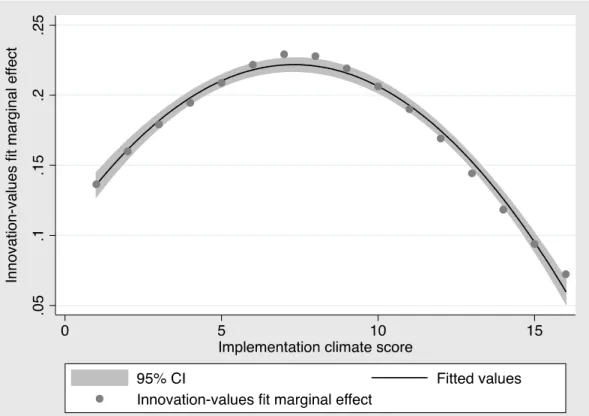
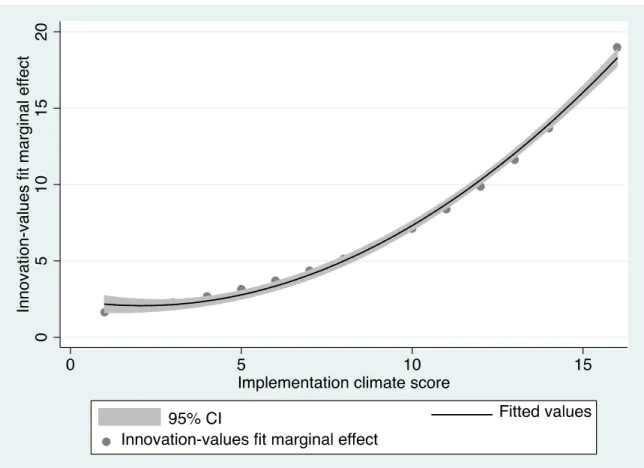
In the hurdle regression, we included the key variables of interest (e.g., implementation climate, innovation-values fit, and an interaction of the two) and control variables selected a priori (e.g., patient needs and resources, available resources). We assessed the goodness of fit for the interaction term in both stages of the model since interpretation of marginal effects on
interaction terms can be complicated in non-linear models.15 Since the interaction term improved fit in both stages, we included the term. One control variable, past performance with NC-
CPESN, was a lagged dependent variable, which can caused biased coefficients if the data generating process is non-stationary.16 Using the Harris-Tzavalis test17, which can be used when the number of time periods is small relative to the number of panels, we rejected the null
hypothesis that the data generating process is non-stationary. Therefore, we included the lagged dependent variable in the model. We used cluster-robust standard errors to account for clustering that might occur at the network level. NC-CPESN pharmacies are grouped into regional
networks by CCNC and may receive different levels and quality of implementation support across networks. Because the amount of missing data in both equations of the model was less than 10% (8.0% and 5.8% respectively), we addressed missingness using complete case analysis.
To test whether missingness might be correlated with the dependent variable, we compared the
proportion of implementers and non-implementers between survey respondents and non- respondents and did not find significant differences (𝒳2 = 2.27, p =0.132). We conducted the analyses using Stata version 13.0 (College Station, TX).
Aim 2 and Aim 3
For Aims 2 and 3, thematic analysis was conducted using Dedoose (version 7.0) to analyze the qualitative data. First, a set of structural codes were developed based on Roger’s theory 12,18 and the CFIR.6 Two members of the research team coded five transcripts to:
determine how similarly codes were being applied; develop a set of emergent codes18; and reach consensus on code definitions. One author coded the remaining transcripts. After transcripts were coded, a summary was sent to three of the interview participants to confirm the findings; this member-checking process helps ensure that the interpretation is consistent with the experiences of study participants.19 Interview participants who were consulted agreed with the interpretation of the findings and did not suggest any modifications.
REFERENCES
1. Palinkas LA, Aarons GA, Horwitz S, Chamberlain P, Hurlburt M, Landsverk J. Mixed method designs in implementation research. Adm Policy Ment Health. 2011;38(1):44-53.
2. Nilsen P. Making sense of implementation theories, models and frameworks.
Implementation science : IS. 2015;10:53.
3. Klein KJ, Sorra JS. The challenge of innovation implementation. Academy of Management Review. 1996;21(4):1055-1080.
4. Klein KJ, Conn AB, Sorra JS. Implementing computerized technology: an organizational analysis. Journal of Applied Psychology. 2001;86(5):811-824.
5. Helfrich CD, Weiner BJ, McKinney MM, Minasian L. Determinants of implementation effectiveness: adapting a framework for complex innovations. Med Care Res Rev.
2007;64(3):279-303.
6. Damschroder LJ, Aron DC, Keith RE, Kirsh SR, Alexander JA, Lowery JC. Fostering implementation of health services research findings into practice: a consolidated framework for advancing implementation science. Implementation science : IS.
2009;4:50.
7. Crosby RA, Wendel ML, Vanderpool RC, Casey BR. Rural populations and health:
determinants, disparities, and solutions. 1st ed. Hoboken, NJ John Wiley & Sons; 2012.
8. Freeman J, Carroll GR, Hannan MT. The liability of newness: Age dependence in organizational death rates. American sociological review. 1983;48(5):692-710.
9. Dalton DR, Todor WD, Spendolini MJ, Fielding GJ, Porter LW. Organization structure and performance: A critical review. Academy of management review. 1980;5(1):49-64.
10. RWJF. North Carolina county rankings. 2017;
http://www.countyhealthrankings.org/app/north-carolina/2017/overview. Accessed November 11, 2017.
11. Weiner BJ, Belden CM, Bergmire DM, Johnston M. The meaning and measurement of implementation climate. Implementation science : IS. 2011;6:78.
12. Rogers EM. Diffusion of innovations. New York City, NY: Simon and Schuster; 2010.
13. Cameron AC, Trivedi PK. Regression analysis of count data. Vol 53. Cambridge, United Kingdom: Cambridge University Press; 2013.
14. Cragg JG. Some statistical models for limited dependent variables with application to the demand for durable goods. Econometrica: Journal of the Econometric Society.
1971;39:829-844.