This is a repository copy of
THE role of the technology acceptance model in information
systems research: a case study
.
White Rose Research Online URL for this paper:
http://eprints.whiterose.ac.uk/74741/
Proceedings Paper:
Mojtahed, R., Nunes, J.M.B. and Peng, G.C. (2011) THE role of the technology
acceptance model in information systems research: a case study. In: Proceedings of the
IADIS International Workshop on Information Systems Research Trends, Approaches and
Methodologies. IADIS International Workshop on Information Systems Research Trends,
Approaches and Methodologies 2011, 20 July 2011, Rome, Italy. .
[email protected] https://eprints.whiterose.ac.uk/
Reuse
Unless indicated otherwise, fulltext items are protected by copyright with all rights reserved. The copyright exception in section 29 of the Copyright, Designs and Patents Act 1988 allows the making of a single copy solely for the purpose of non-commercial research or private study within the limits of fair dealing. The publisher or other rights-holder may allow further reproduction and re-use of this version - refer to the White Rose Research Online record for this item. Where records identify the publisher as the copyright holder, users can verify any specific terms of use on the publisher’s website.
Takedown
If you consider content in White Rose Research Online to be in breach of UK law, please notify us by
promoting access to White Rose research papers
White Rose Research Online
[email protected]
Universities of Leeds, Sheffield and York
http://eprints.whiterose.ac.uk/
This is an author produced version of a paper published in Proceedings of the
IADIS International Workshop on Information Systems Research Trends,
Approaches and Methodologies.
White Rose Research Online URL for this paper:
Published paper
Mojtahed, R., Nunes, J.M.B. and Peng, G.C. (2011). The role of the technology
acceptance model in information systems research. In Proceedings of the IADIS
International Workshop on Information Systems Research Trends, Approaches
THE ROLE OF THE TECHNOLOGY ACCEPTANCE
MODEL IN INFORMATION SYSTEMS RESEARCH: A
CASE STUDY
Reza Mojtahed
Information School
The University of Sheffield, Regent Court, 211 Portobello, Sheffield, S1 4DP, UK
Dr Miguel Baptista Nunes
Information School
The University of Sheffield, Regent Court, 211 Portobello, Sheffield, S1 4DP, UK
Dr Guo Chao Peng
Information School
The University of Sheffield, Regent Court, 211 Portobello, Sheffield, S1 4DP, UK
ABSTRACT
Explaining the factors that lead to use and acceptance of information technology (IT), both at individual and organizational levels, has been the focus of information systems (IS) researchers since 1970s. The Technology Acceptance Model (TAM) is known as such an explanatory model and has increasingly gained recognition due to its focus on theories of human behaviour. Although this model has faced with some criticism in terms of not being able to fully explain the social-technical acceptance of technology, it is still known as one of the best IS methodologies that contributes greatly to explaining it. This paper discusses, describes and explains TAM as one of the well-known information system research methodologies and attempts to demonstrate how this model can be applied in practice in IS research projects. TAM is widely used in different areas of IS studies such as e-commerce, e-business, multimedia and mobile commerce. This paper shows how TAM can be applied in an IS research project by referring to a case study conducted in the area of mobile banking in the UK.
This paper aims to contribute to IS research by providing an informed criticism of TAM as well as a clear proposal on how to use it.
KEYWORDS : IT Adoption, Information System, Technology Acceptance Model, Information Systems Research
1.
INTRODUCTION
Although, for the last four decades, the implementation of Information Systems (IS) in organizations has been known to be costly, frustrating and with a relative low success rate. Nonetheless, the literature in the field indicates that organizations continuously invest in IS in order to improve their performance, maintain customer satisfaction, increase the quality of their services and decline cost (Legris et al., 2003).
figures indicated by the Standish Group in 2009 show that the level of SW project success is still only at 32%. This apparent failure is usually linked to the “productivity paradox” (Brynjolfsson, 1993), that first put forward by researchers in the late 20 century, which challenges the expected benefit of using IT and IS.
“Productivity is a simple concept. It is the amount of output produced per unit of input. While it is easy to define, it is notoriously difficult to measure, especially in the modern economy. In particular, there are two aspects of productivity that have increasingly defied precise measurement: output, and input.” (Brynjolfsson and Hitt, 1998)
The productivity paradox emerged during empirical studies of IT by the U.S. researchers during 80s and 90s (Brynjolfsson, 1993). However, this focus on input vs. output is rather reductionist in terms of understanding the effects of the adoption and implementation of an IS in organizations. Hitt and Brynjolfsson (1996) were among the first to propose that a shift in understanding the role and effects of IS in organisations was necessary. These authors suggested that IS provide have the potential of originating changes in quality, processes and work practices as well as in the nature and variety of products and services offered by the organization. IS may even have more drastic impacts in reforming the organizational structures and boundaries. However, these effects do not necessarily lead to increases in productivity, if measured strictly in terms of output vs. input. Nonetheless, all these impacts may increase competitiveness, organizational effectiveness, employee satisfaction and even provide extra value for the organisation’s customers and business partners (Hitt and Brynjolfsson, 1996).
Therefore, the key question in IS successful adoption lies in exploitation of the system. That is how well the system is accepted and used internally in the organization. As recognized very early on, by authors such Davis (1989), one of the main indications of IS success or failure is the level or degree of the acceptance of the system by the users. Identifying the reasons of acceptance or rejection of IS has been one of the main challenges of IS research ever since (Swanson, 1988). Sichel (1997) added to this argument by proposing that it is the low usage of installed system that is one of the main reasons for the failure of IS. The importance of IS usage has actually become one of the core concerns in modern organizational behaviour to such an extent that authors, such as Devaraj and Kohli (2003), consider it as one of the main determinants of organizational performance. This is confirmed by continued investment in IT by modern organizations, that, even during financial crises, keep allocating a large portion of their assets to IT investment (Kanaracus, 2008). Hence, it is on intention to use, acceptance and actual use of the system that will enable organizations to attain the expected benefits of IT/IS. Therefore, It is crucial to research the elements that lead to acceptance or rejection of technology by users.
As a result, identifying suitable models to explain and predict IS acceptance has been prioritised as one of the main goals in IS research. A number of social psychology theoretical frameworks have been introduced in IS research to attempt to explain the socio-technical phenomenon of IS acceptance and usage (Bhattacherjee and Premkamar, 2004). The Technology Acceptance Model (TAM) is such a framework that is based the social psychology theory and has been specifically developed to identify and explain the reasons for intention to use, acceptance or rejection of IS. TAM model that is widely used in various IS contexts such as banking (Wang et al., 2003), online shopping (Grefen et al., 2003), mobile devices (Pagani, 2004) and rich media (Kim and Forsythe, 2007). This paper aims to describe and discuss the use of TAM, as well as to illustrate its use in practice though the discussion of a practical case.
2.
TECHNOLOGY ACCEPTANCE MODEL (TAM)
2.1 Introduction of TAM
“Despite the widespread use of subjective measures in practice, little attention is paid to the quality of the measures used or how well they correlate with usage behavior.” (Davis, 1989)
This realization led Davis (1989) to propose that measures of IS usage should be closely related to two factors: Perceived Ease of Use (PEOU) and Perceived Usefulness (PU). These two factors became the corner stone of TAM as new proposition and method to understand the user acceptance phenomenon.
2.2 Description of the TAM model
Davis (1989) and Davis et al. (1989) suggested TAM as a suitable model that can explain and characterise the reasons why users accept or reject IS. TAM is useful both as a predictive method, in order to assess the likelihood of people and organisations to adopt a particular new technology (Turner et al., 2010), or as a evaluation technique to assess acceptance of technology already in use (Trevino and Webster, 1992). Despite the many additions and changes to TAM as a methodology (e.g. Venkatesh and Davis, 2000), the initial emphasis remains today, that is identifying the effective factors that influence user acceptance of IS. After more than a decade of use in the field of IS, IT and Computer Science, TAM model is now recognized as one of the more efficient (Taylor and Todd, 1995), pervasive and continuously used model in measuring the adoption of IS (Venkatesh and Davis, 2000).
TAM is based on social psychology theory, in particular theory of reasoned action (TRA) (Ajzen and Fishbein, 1980). TRA is based on the assumption that people, in performing of their organizational tasks, consider the impacts of their possible actions and this reasoning affects their decisions to undertake these actions (Ajzen and Fishbein, 1980). Therefore, based on TRA, TAM assumes that technology acceptance and usage is determined by users’ reflections and reasoning, that in turn determine their attitudes, intentions and internal beliefs.
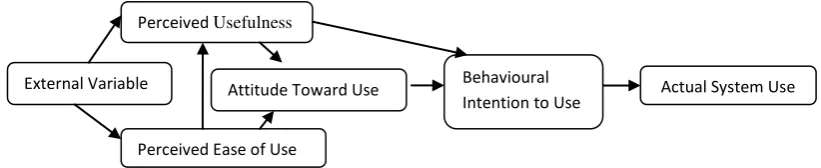
As discussed above, the TAM model originally proposed by Davis (1989) contains two core elements, namely PEOU and PU. Specifically, Davis (1989) claims that the difficulties of using an IS can offset the usefulness and benefits of the system, as well as affecting user acceptance and satisfaction. PEOU is thus defined as “the degree to which a person believes that using a particular system would be free of effort” (Davis, 1989). On the other hand, if users perceive an IS to be useful to support their current and long-term job performance, they are more likely to adopt the system in their daily practice. PU is hence referred to as “the degree to which a person believes that using a particular system would enhance his or her [current and continuous] job performance” (Davis, 1989). A large number of IS studies confirmed and validated that both PEOU and PU can have direct impact on user’s intention to use IS (e.g. Park et al., 2009). Moreover, previous research also identified and supported that PEOU can in turn affect PU, since users’ feeling on how easy or difficult the system can be used will shape their perception on the usefulness of the system (e.g. Wu and Wang, 2005; Park et al., 2009).
The original version of TAM consists of combinations of these two core factors (i.e. PU and PEOU) and other essential elements, including External Variables, Attitude, Behavioural Intention and Actual Use, as synthesised by Legris et al. (2003) and shown in Fig. 1. The user acceptance and actual use of technology is assumed to depend on the intention of users. In turn, the attitude of users, which influences the users’ intention, is formed by the users’ beliefs. According to Davis et al. (1989) the two base elements of perceived ease of use and perceived usefulness are the components of these users’ beliefs. However, these beliefs are also constructed by development processes, personal experiences, professional experiences, organisational factors, social and political influences as well as the perceptions of the tasks to be performed using the technology. These latter influencing factors are known in TAM as external variables.
framework, by using the original TAM model as the core but extending it with new proposed elements and relations (e.g. Wu and Wang, 2005; Hill and Troshani, 2009). The following section presents a previous study as an example to illustrate how TAM can be extended and applied in IS research.
Figure 1: Technology acceptance model (TAM) according to Legris et al. (2003) synthesis.
3. EXPERIENCES IN APPLYING TAM IN IS RESEARCH
After giving an extensive introduction and description about the model, this section aims to provide further explanation and guideline regarding how to apply TAM in IS research projects. A previous IS case-study project is used as an example to illustrate our discussion. The presentation of this IS study is divided into four parts, namely introducing research aims and objectives, presenting the research design as well as the research model established based on TAM, discussing the data collection and analysis processes, and finally explaining the findings of research.
3.1 Research question and research aims
The International Telecommunication Union (ITU) estimated that by the end of 2012, the number of mobile subscriptions would reach around 4.5 billion in the world (ITU, 2008). In the UK, the number of mobile phone subscription reached 75 million in 2009, which accounted for around 1.6% of the world’s total (Cellulr-news, 2009). Nonetheless, in a recent survey carried out by KPMG (2009), a global consulting and professional services firms, only 33 percent of the UK population felt comfortable using a mobile phone to access financial services, although the majority of the population also stated that having access to banking services through a mobile phone is important to them. This contradiction of choices and opinions led the researchers to carry out the research project reported in this paper. This research aimed at answering the question: What are the factors that influence the intension of UK citizens to use mobile banking services? In response to this predefined research question, the study aimed to identify the social and behavioural factors affecting mobile banking, as well as to explore the impact of these identified factors on the intention to use mobile banking.
3.2 Research design
In order to gain a more in-depth understanding on the topic, an extensive literature review was conducted at the initial stage of the study. As a result of this literature review, the researchers identified and selected TAM as a highly suitable and valuable model to be used to understand and study user intention and acceptance towards using mobile banking services. Moreover, and as discussed earlier, the original TAM model, which consists of six main elements (External variable, PEOU, PU, BI, AT and actual use) and a set of relations between them, is rarely used by researchers without changes (Legris et al., 2003; Turner et al., 2010). In order to satisfy the needs of specific subject and research questions, researchers very often need to customise the model by selecting and focusing on some of the originally proposed elements and relations, as well as to extend the model by added new elements and suggesting new relations between the elements (e.g. Wu and Wang, 2005; Hill and Troshani, 2009). In light of this discussion, a new research model was established based on TAM, as further discussed below.
Perceived Usefulness
Perceived Ease of Use
Behavioural
Intention to Use Actual System Use
Furthermore, since TAM originated from positivistic quantitative study (Davis, 1989), quantitative methodology is generally adopted in research projects that apply the TAM model (Wu, 2009). In fact, by adopting TAM, researchers also often aim to capture a snapshot of the current situation and focus on a contemporary event, as well as to answer a “What” question. Yin (1994) highlights that when a research study has involved all of theses three characteristics, it is highly appropriate to adopt a quantitative design, in particular a questionnaire survey.
Taking these factors into consideration, many previous studies using TAM have followed a common path of empirical investigation, as proposed by Wu (2009):
“review previous literature select relevant factors such as PU and PEOU for the study propose hypotheses/model collect empirical data from a quantitative survey test the hypotheses and/or validate the model.” (Wu, 2009)
The study reported here thus followed a similar research design. Specifically, a further literature review was carried out to propose a more specific and extended research model that was constructed based on TAM. A questionnaire survey was then conducted to test and validate the model. Based on the result of this survey, the researchers refined the model and proposed a set of factors that are crucial determinants to the use of mobile banking in the UK.
3.3 Research model
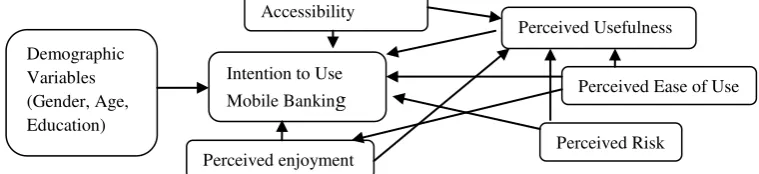
The final research model of the study was established based on an extensive review of existing literature in the areas of mobile commerce and electronic banking. As shown in Fig. 2, this research model consists of seven main factors that were deduced from the literature review. It includes the combination of TAM (Davis, 1989), perceived risk (e.g. Langendoerfer, 2002), demographic variables (e.g. Morris and Venkatesh, 2000; McKechnie et al., 2006), perceived enjoyment (e.g. Davis et al., 1989), and accessibility (e.g. Daniel, 1999).
Specifically, the TAM model indicated that PEOU and PU have direct influences on the intention of the use of technology, i.e. the use of mobile banking in this case. Moreover, PEOU was expected to have a moderating impact on perceived usefulness, as proposed by Davis (1989). On the other hand, PEOU was identified by Cyr et al. (2006) to have influential effect in users’ enjoyment toward using the mobile commerce. Moreover, education (Laforet and Li, 2005), gender (Koivumaki et al., 2008) and age (Wei et al., 2009) were also identified as important demographic factors affecting the intention of users to use mobile technologies. In addition, the literature review also suggested perceived risk as an influential factor for using mobile banking (Wu and Wang, 2005). This factor can in turn impact on perceived usefulness of the system (Rose and Fogarty, 2006). Finally, the element of accessibility is identified by Kim et al. (2010) as an important factor to take into consideration.
[image:7.595.116.496.535.622.2]Subsequently, this established research model is used as the theoretical basis to develop the data collection tool, namely the questionnaire survey, as discussed below.
Figure 2: The research model for mobile banking
3.4 Data collection
As discussed above, questionnaire survey, which is the most commonly used method in TAM-based research (Wu, 2009), was selected and adopted as the data collection tool for this study. Moreover, it was considered that conducting a national survey covering the entire UK population is very difficult due to time and cost
Perceived Risk Perceived Usefulness
Perceived Ease of Use Intention to Use
Mobile Bankin
g
AccessibilityDemographic Variables (Gender, Age, Education)
restrictions. Furthermore, not all citizens in the UK will use mobile phones or get access to the Internet by using mobile phones. These citizens may therefore be less interested in and/or less willing to getting involved in the study. In fact, the survey of Office for National Statistics (2007) shows that the use of mobile technologies has been particularly widespread and penetrated among young teenagers at universities, who consider mobile phones as a ‘must-have’ and even an integral part of their everyday life (Carter et al., 2011). For these reasons, the researchers decided to carry out the questionnaire survey with students in their own institution, i.e. University of Sheffield, UK.
By following the guidance of Davis (1989) and fellow IS researchers (e.g. Cyr et al., 2006; Wu and Wang, 2005; Rose and Fogarty, 2006), the questionnaire was designed by using multiple-item Likert scales. In fact, in his original paper, Davis (1989) introduced and attached the questionnaire that was used in his survey. Questions contained in this questionnaire are thus often re-used in other TAM-based studies. However, it was felt that since this set of questions was not originally developed to study mobile banking, they would not entirely suit this study. And certainly, Davis’ original questionnaire does not cover the additional elements that we established in the above research model. As a result, the questionnaire that we developed and used in this study was a revised version of Davis’ work, with support from the literature. Specifically, this modified questionnaire consists of seven parts:
• In part one, the demographic information such as age, gender and education was gathered.
• Part two measured the scale of accessibility and the ease of access to the Internet through mobile devices.
• Parts three to seven contained questions that measured perceived ease of use, perceived usefulness, perceived risk in terms of security and privacy, perceived enjoyment and intention to use mobile banking.
Moreover, the designed questionnaire was sent to 11 students in the researchers’ department for pilot testing. Subsequently, Cronbach’s alpha test was used to examine the reliability of the data collected from the pilot study. The result of the test showed that cronbach alpha for all variables are greater than 0.7. According to Kaplan and Saccuzzo (2008), when alpha is higher than 0.7, the data collected can be considered as internally reliable. Therefore, this pilot study concluded that the designed questionnaire was efficient in collecting reliable data, and was thus considered as the final one. The final questionnaire was then distributed to a randomly selected sample of 350 students at the university by email. In order to increase the response rate, some printed hard copies of the questionnaire were also distributed to students. Consequently, 140 valid and usable questionnaires were collected and analysed.
3.5 Data analysis and research findings
After data collection, the questionnaire data was analysed by using the statistical software SPSS. A wide range of tests was carried out to analyse the data, including: Frequency table (to identify the distribution of the response to the questions), Mean comparisons (to examine the importance of each identified element), Correlation test (to identify level of dependency between the identified factors), and Regression test (to identify the direct impact of identified factors on intention to use of mobile banking). Nonetheless, as the most significant findings of this study came out from the Regression test, this part of the finding is selected to be discussed in more detail in this paper.
Specifically, the result of the regression test indicated that as the value of perceived risk increases the intention to use mobile banking declines. Moreover, if perceived usefulness and perceived enjoyment of mobile banking is effectively marketed by the financial sector, users’ intention to adopt mobile banking will increase. These findings are supported by past studies, which identified direct influences of perceived risk (Dai and Palvia, 2009), perceived usefulness (Wu and Wang, 2005), perceived enjoyment (Hill and Troshani, 2009; Dai and Palvia, 2009) on intention to use mobile banking by customers.
Furthermore, the study also confirmed the results derived by Cyr et al. (2006) and Liao et al. (2007), who identified that perceived enjoyment of mobile banking can be directly affected by perceived ease of use. Nonetheless, the survey also generated some unexpected findings. For example, the survey did not confirm the direct relationship between perceived ease of use and intention to use mobile banking. Moreover, direct relationships of demography and accessibility with other identified variables were not validated in our findings. Overall, the results of the survey led to the development of the following model, which was originally established based on TAM and then tested, validated and revised based on research findings.
Figure 3: Approved model on factors influencing the intention to use mobile banking
4. FURTHER DISCUSSION AND CONCLUSION
This paper discussed the use of TAM as a methodology to investigate and explain factors that lead to use and acceptance of IT and IS. A previous IS study was used as an exemplification to illustrate the discussion. As mentioned above, TAM has been widely used in IS research since 1989. However, when this model is very useful in providing an initial theoretical lens for studying user acceptance towards new technologies, it was criticised to be too simple to cover all important elements of the phenomenon being investigated (Wu, 2009; Bagozzi 2007). As a result, there is always a need to customise and extend the TAM model when applying it in IS studies, as proposed by previous researchers (Legris et al., 2003; Turner et al., 2010). Moreover, and as demonstrated in the above IS project, customisation and extension of the TAM model should be done based on the nature of the research subject and the actual context of the study. An extensive literature review should be carried out to support the establishment of such an extended model.
On the other hand, and as discussed above, quantitative survey is typically used in studies that apply TAM. However, there are actually some criticisms about the use of self-reported survey as the dominated method in TAM studies. In particular, and as argued by Straub et al. (1995), when measuring both dependent and independent variables subjectively by using self-reported survey, artifacts rather than truth are generated. As a result, the findings of a self-reported questionnaire may not accurately reflect users’ actual intension for using the new technology (Straub et al., 1995; Turner et al., 2010). Moreover, Wu (2009) and Martins and Nunes (2009) argued that the use of quantitative surveys in TAM research may not allow researchers to generate rich and deep understanding of human intentions to use technology. Given these considerations, Wu (2009) proposed to use mixed-methods design in TAM studies. Specifically, it was suggested that a qualitative component may be carried out before the questionnaire, in order to explore and better understand the context and subject before the survey stage (Wu, 2009). When this could be one of the possible mixed-methods designs in TAM research, we would also like to propose that a qualitative component may actually be conducted after the questionnaire survey. This alternative design can help to generate richer human insights on the phenomenon under investigation, as well as to explore any unexpected results derived from the survey (as in the case of the above IS study).
Overall, we would like to conclude that the original TAM model needs to be earnestly modified and extended when applying in IS research, and that more flexible research designs can be developed and adopted in TAM studies, in order to yield more comprehensive and significant findings.
Perceived Risk
Intention to use Mobile banking Perceived Usefulness
Perceived Enjoyment
References:
Ajzen, I. and Fishbein, M.,1980. Understanding Attitude and Predicting Social Behavior. Englewood Cliff, NJ: Prentice-Hall.
Bagozzi, R.P., 2007.The Legacy of the Technology Acceptance Model and a Proposal for a Paradigm Shift. Journal of the Association for Information Systems . Vol.8, Issue.4, pp. 243-254.
Benbasat, I. and Dexter, A. S.,1986. An Investigation of the Effectiveness of Color and Graphical Presentation Under Varying Time Constraints , MIS Quarterly, Vol.10, Issue.1, pp. 59-84.
Bhattacherjee, A. and Premkumar, G., 2004. Understanding changes in belief and attitude toward information technology usage: a theoretical model and longitudinal test. MIS Quarterly, Vol. 28, No.2, pp.229–254.
Brynjolfsson, E., 1993. The productivity paradox of information technology: review and assessment. ACM, Vol. 36, Issue. 12, pp. 66-77.
Brynjolfsson, E., and Hitt, L. M., 1998. Beyond the productivity paradox. Communications of the ACM, Vol. 41, Issue 8, pp. 49-55.
Carter, M., Thatcher, J. B., Applefield, C., and Mcalpine, J., 2011. What Cell Phones Mean in Young People's Daily Lives and Social Interactions. SAIS 2011 Proceedings. Paper 29.
Cellular-news.,2009. Vodafone Sees Loss of UK Market Share and Lower ARPUs. Cellular-news 23.April . http://www.cellular-news.com/story/37159.php [Accessed 08 April 2010].
Cyr, D., Head, M., and Ivanov, A. 2006. Design Aesthetics Leading to M-Loyalty in Mobile Commerce. Information & Management, Vol.43, Issue.8, pp. 950-963.
Davis, F.,1989. Perceived Usefulness, Perceived Ease of Use, and User Acceptance of Information Technology. MIS Quarterly, Vol. 13, No. 3, pp. 319-340.
Davis, F., Bagozzi, R. P. and Warshaw, P. R.,1989. User acceptance of computer technology: a comparison of two theoretical models. Management Science, Vol. 35, No. 8, pp 982-1002.
Daniel, E. 1999. Provision of electronic banking in the UK and the Republic of Ireland. International Journal of Bank Marketing, Vol. 17, No. 2, pp. 72-82.
Dai, SIGMIS Database, Vol.40, Issue.4, pp.43-61.
Devaraj, S. and Kohli, R., 2003. Performance impacts of information technology: is actual usage the missing link?.
Management Science , Vol. 49, Issue. 3, pp. 273–289.
GAO, 1979. Contracting for computer software development--serious problems require management attention to avoid wasting additional millions. General Accounting Office, November 9, GMSD-80-4.
Gefen, D., Karahanna, E. and Straub, D. W., 2003. Trust and TAM in Online Shopping: An Integrated Model. MIS Quarterly, Vol.27, N.1, pp.51-90.
Gu J. C., Lee S. C., and Suh Y. H.,2009. Determinants of behavioral intention to mobile banking, Expert Systems with Applications, Vol.36, Issue.9, pp.11605- 11616.
Hill, S. R., and Troshani, I., 2009. Adoption of Personalisation Mobile Services: Evidence from Young Australians.
BLED 2009 Proceedings. Paper 35. http://aisel.aisnet.org/bled2009/35.
Hitt, L. M., and Brynjolfsson, E.,1996. Productivity, Business Profitability, and Consumer Surplus: Three Different Measures of Information Technology Value. MIS Quarterly ,Vol. 20, No. 2, pp.121-142.
ITU. 2008. ICT Statistics Newslog - Global Mobile Phone Subscribers to Reach 4.5 Billion by 2012. ITU [online]
11/March
Kanaracus, c., 2008. Gartner: global IT spending growth stable. InfoWorld.
Kaplan, R. W. and Saccuzzo, D. P.,2008. Psycho- logical Testing. Principles, Applications, and Issues, Monterey, CA: Brooks/Cole.
Kim, J. and Forsythe, S., 2007. Hedonic usage of product virtualization technologies in online apparel shopping. International Journal of Retail and Distribution Management, Vol. 35, Issue.6, pp.502–514.
Kim, C., Mirusmonov ,M., and Lee, I., 2010. An empirical examination of factors influencing the intention to use mobile payment, Computers in Human Behaviour, Vol.26, Issue.3, pp.310–322.
Koivumaki T., Ristola A., Kesti M., 2008. The perceptions towards mobile services: an empirical analysis of the role of use facilitators. Personal and Ubiquitous Computing, Vol.12, Issue.1 pp. 67–75.
Langendoerfer, P.,2002. M-commerce: Why it Does Not Fly (Yet?). Proceedings of the SSGRR 2002s Conference, L’Aquila, Italy, July 29 - August 4, 2002.
Laforet, S. and Li, X., 2005. Consumers' attitudes towards online and mobile banking in China, International Journal of Bank Marketing, Vol. 23, No.5, pp.362-380.
Legris, P., Ingham, J. and Collerette, P., 2003. Why do people use information technology? A critical review of the technology acceptance model. Information & Management, Vol. 40, Issue. 3, pp. 191–204.
Liao, C. H., Tsou, C.W., Huang, M.F. 2007, Factors influencing the usage of 3G mobile services in Taiwan, Online Information Review, Vol. 31 No.6, pp.759-74.
Liu, Z., Min, Q., and Ji, S., 2009. An Empirical Study on Mobile Banking Adoption: The Role of Trust.2nd International Symposium on Electronic Commerce and Security, isecs, Vol.2, pp.7-13.
Martins ,J. T. and Nunes, M. B., 2009.Methodological constituents of faculty technology perception and appropriation . Does from follow function?. IADIS International Conference on e-Learning. Algarve, Portugal 17-20 June 2009. McKechnie, S., Winklhofer, H., and Ennew, C., 2006. Applying the technology acceptance model to the online retailing
of financial services. International Journal of Retail & Distribution Management, Vol. 34, No. 4/5; pp. 388-410. Morris, M. G., and Venkatesh, V. 2000. Age differences in technology adoption decisions: Implications for a changing
workforce. Personnel Psychology, Vol.53, Issue.2, pp.375–403.
Office for National Statistics. 2007. Use of ICT at Home. Office for National statistics [Online] 5 March.
Park. N., Roman, R., Lee, S. and Chung. J. E., 2009. User acceptance of a digital library system in developing countries: an application of the technology acceptance model. International Journal of Information Management , Vol.29, No.3, pp. 196–209.
Pagani, M., 2004. Determinants of adoption of third generation mobile multimedia services. Journal of Interactive Marketing, Vol.18, Issue.3, pp.46-59.
Rose, J., and Fogarty, G. J.,2006. Determinants of perceived usefulness and perceived ease of use in the technology acceptance model: senior consumers’ adoption of self-service banking Technologies. Marketing and Management Development, Vol.2, No.10, pp. 122-129.
Sichel, D. E., 1997. The Coinputer Revolution: An Economic Perspective (Washington, DC: Brookings Institution Press).
Standish Group Inc., 2001. Extreme Chaos. available at:
(accessed 7 April 2011).
Standish Group. 2009. Chaos Report, Standish Group, Boston, MA, available at: www1. standishgroup.com/newsroom/chaos_2009.php (accessed 7 February 2011).
Straub, D., Limayem, M.and Karahanna-Evaristo, E., 1995. Measuring system usage – implications for IS theory testing,
Management Science, Vol.41, No.8, pp. 1328–1342.
Swanson, E. B.,1988. Information System Implementation: Bridging the Gap Between Design and Utilization, Irwin, Homewood, IL.
Taylor, S. and Todd, P.A., 1995. Understanding information technology usage: a test of competing models, Information Systems Research, Vol. 6, No. 2, pp.144-176.
Trevino, L. K. and Webster, J.,1992. Flow in computer-mediated communication: electronic mail and voice evaluation.
Communication Research, Vol.19, Issue.2, pp. 539-573.
Turner, M., Kitchenham, B., Brereton, P., Charters, S., and Budgen, D., 2010. Does the technology acceptance model predict actual use? A systematic literature review. Information and Software Technology, Vol.52, Issue.5, pp.463-479.
Venkatesh, V. and Davis, F. D., 2000. A Theoretical Extension of the Technology Acceptance Model: Four Longitudinal Field, Management Science, Vol. 46, No. 2, pp. 186-204.
Wang, Y.S., Wang, Y.M., Lin, H.H., and Tang, T.I., 2003. Determinants of user acceptance of Internet banking: An empirical study. International Journal of Service Industry Management, Vol.14, No. 5, pp.501-519.
Wei, T. T., Marthandan, G., Chong, A. Y.L., Ooi, K.B., and Arumugam, S.,2009. What drives Malaysian m-commerce adoption? an empirical analysis. Industrialmanagement & data systems, Vol.109, No.3, pp.370-388.
Wu, J. H., and Wang, S. C., 2005. What drives mobile commerce? An empirical evaluation of the revised technology acceptance model. Information & Management. Vol.42, Issue.5, pp.719–29.
Wu, P. F., 2009. Opening the black boxes of TAM : Towrds a Mixed methods approach. ICIS 2009. Paper 101. http:// aisle.aisnet.org/icis2009/101.