BioMed Central
Retrovirology
Open Access
Research
Crystal structure of an FIV/HIV chimeric protease complexed with
the broad-based inhibitor, TL-3
Holly Heaslet
1, Ying-Chuan Lin
2, Karen Tam
2, Bruce E Torbett
3,
John H Elder
2and C David Stout*
2Address: 1Pfizer Global Research & Development, 2800 Plymouth Rd., Ann Arbor, MI 48105, USA, 2Department of Molecular Biology, The Scripps Research Institute, 10550 N. Torrey Pines Rd., La Jolla, CA 92037, USA and 3Department of Molecular & Experimental Medicine, The Scripps Research Institute, 10550 N. Torrey Pines Rd., La Jolla, CA 92037, USA
Email: Holly Heaslet - [email protected]; Ying-Chuan Lin - [email protected]; Karen Tam - [email protected]; Bruce E Torbett - [email protected]; John H Elder - [email protected]; C David Stout* - [email protected] * Corresponding author
Abstract
We have obtained the 1.7 Å crystal structure of FIV protease (PR) in which 12 critical residues around the active site have been substituted with the structurally equivalent residues of HIV PR (12X FIV PR). The chimeric PR was crystallized in complex with the broad-based inhibitor TL-3, which inhibits wild type FIV and HIV PRs, as well as 12X FIV PR and several drug-resistant HIV mutants [1-4]. Biochemical analyses have demonstrated that TL-3 inhibits these PRs in the order HIV PR > 12X FIV PR > FIV PR, with Ki values of 1.5 nM, 10 nM, and 41 nM, respectively [2-4]. Comparison of the crystal structures of the TL-3 complexes of 12X FIV and wild-typeFIV PR revealed theformation of additinal van der Waals interactions between the enzyme inhibitor in the mutant PR. The 12X FIV PR retained the hydrogen bonding interactions between residues in the flap regions and active site involving the enzyme and the TL-3 inhibitor in comparison to both FIV PR and HIV PR. However, the flap regions of the 12X FIV PR more closely resemble those of HIV PR, having gained several stabilizing intra-flap interactions not present in wild type FIV PR. These findings offer a structural explanation for the observed inhibitor/substrate binding properties of the chimeric PR.
Background
Feline immunodeficiency virus (FIV), a member of the lentivirus family, is a useful model for developing inter-vention strategies against lentiviral infection [5-7]. We aim to better understand the molecular basis of HIV-1 and FIV protease (PR) substrate and inhibitor specificities in order to develop broad-spectrum protease inhibitors that will inhibit both wild type and drug-resistant proteases. This approach has led to the development of TL-3, an inhibitor that is capable of inhibiting FIV, SIV, HIV-1 and
several HIV-1 drug-resistant strains ex vivo [1-3], and other potential inhibitors with broad efficacy [8-10]. FIV PR, like HIV-1 PR, is a homodimer, but each monomer is comprised of 116 amino acids, as opposed to 99 amino acids for HIV-1 PR. The structure of FIV PR has been deter-mined and compared to that of HIV-1 PR [11-13]. FIV PR, particularly in the active core region, is very similar to HIV-1 PR but only shares 27 identical amino acids (23% identical at amino acid level) and exhibits distinct sub-strate and inhibitor specificity [11,14-17]. FIV and HIV-1
Published: 09 January 2007
Retrovirology 2007, 4:1 doi:10.1186/1742-4690-4-1
Received: 14 September 2006 Accepted: 09 January 2007 This article is available from: http://www.retrovirology.com/content/4/1/1
© 2007 Heaslet et al; licensee BioMed Central Ltd.
PR each prefer their own matrix-capsid (MA-CA) junction substrate and FIV PR prefers a longer substrate than HIV-1 PR. Current clinical drugs against HIV-HIV-1 PR are poor inhibitors for FIV PR, primarily due to a smaller S3 sub-strate binding site in FIV PR which restricts binding of these drugs [2,3].
FIV PR is responsible for processing the FIV Gag and Gag-Pol polyproteins into 10 individual functional pro-teins[18]. Although the overall order of proteins in the Gag-Pol polyprotein in FIV and HIV-1 is similar, distinc-tions are also evident. HIV-1 Gag-Pol has an additional small spacer protein, p1, between nucleocapsid (NC) and p6 while the equivalent region in FIV is a single p2 pep-tide. In addition, HIV-1 lacks dUTPase (DU), which is encoded between reverse transcriptase (RT) and integrase (IN) within the Pol polyprotein in FIV. FIV PR, similar to HIV-1 PR, regulates its own activity through autoproteol-ysis at 4 cleavage sites in PR [12].
In both HIV-1 and FIV, the sequence of Gag and Gag-Pol precursor processing is highly regulated and critical for producing mature viruses for infection and replication [4,19-21]. Thus, PR is an attractive target for development of antiretroviral drugs. Protease inhibitors have drastically slowed the progression of disease and reduced the mortal-ity rate in HIV-1 infected patients [22-25]. However, the high error rate of reverse transcriptase (RT) and high levels of viral replication, combined with lack of adherence to medication regimens, have led to the development of drug-resistant strains. Additional strategies are therefore needed for drug design to target cross-resistant PR vari-ants.
The properties of FIV PR and HIV-1 PR have been com-pared to better understand the molecular basis of retrovi-ral PR substrate and inhibitor specificity. In previous studies, up to 24 amino acid residues in and around the active site of FIV PR were substituted at equivalent posi-tions of HIV-1 PR and the specificity of mutant PRs was examined in vitro [2,4,15-17]. Substrate specificity of mutant FIV PRs was analyzed by examining cleavage effi-ciency on peptides representing HIV-1 and FIV cleavage sites. Inhibitor specificity of mutant PRs was assessed by measuring IC50/Ki values of potent HIV-1 PR inhibitors. These experiments have revealed that some mutants, such as I3732V in the active core, N5546M, M5647I and V5950I
in the flap region, and L9780T, I9881P, Q9982V, and
P10083N, and L10184I in the "90s loop" region, retained
comparable activity against FIV substrates while substan-tially changing substrate and inhibitor specificities toward that of HIV-1 PR (residue numbers for HIV PR indicated in superscript) (Fig. 1) [15,17]. Partial changes, both in inhibitor and substrate binding, were observed with over 40 chimeric PRs generated in the previous studies [4]. The
most critical residues are embodied in a mutant contain-ing 12 amino acid substitutions (referred to elsewhere as "12S FIV [4] and the studies reported here utilize this chi-meric PR.
In order to better understand the molecular basis for the chimeric phenotypes described above, we have analyzed the crystal structure of a 12X FIV/HIV chimeric PR in com-plex with TL-3 and compared that structure to FIV and HIV wild type PRs in complex with the same inhibitor. The results show little alteration in the hydrogen bonding network formed between residues in the active site and flap regions of PR and the inhibitor. However, there is an increase in packing contacts formed between the P1 phe-nyl group of TL-3 and residues in the "90s loop" of the chimeric PR which involve 5 of the 12 mutations. These interactions help to explain the increase in potency of TL-3 against the 12X FIV PR relative to FIV PR. Additional mutations in 12X FIV PR localized to the flap regions of PR result in the formation of contacts within and between monomers, which may be related to changes in substrate processing efficiency.
Results
Two fold symmetric 12X FIV PR dimer binds C2 symmetric TL-3
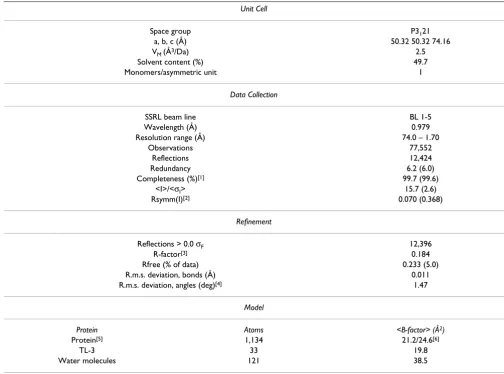
To better understand the structural basis for the changes in substrate processing and efficiency as well as inhibitor specificity in the 12X FIV PR mutant, we determined the 1.7Å crystal structure of 12X FIV PR in complex with TL-3. The 12X FIV PR-TL3 complex crystallized in the space group P3121 with a monomer in the asymmetric unit and the C2 axis of the protease dimer coincident with a crystal-lographic 2-fold (Table 1). As a result, the structure of the complex is an average of the two half-sites. Similarly, TL-3 was bound in the active site of the 12X FIV PR with its C2 axis of symmetry coincident with the crystallographic 2-fold and, therefore, was modeled as one half of the C2 symmetric compound.
The network of hydrogen bonds between TL-3 and resi-dues in the catalytic loop and flap region of the 12X FIV protease is essentially identical to that observed in the HIV PR-TL-3 and FIV PR-TL-3 complexes previously deter-mined (Fig. 2) [13,26]. This hydrogen bonding network is mediated by four central water molecules and another coincident on the C2 axis, and includes the two pairs of
hydrogen bonds that form critical interactions between the flap regions of the PR and the inhibitor. However, the 12X FIV PR complex lacks the water molecule which bridges the P4 carboxybenzyl group and Asp3429 in the
Retrovirology 2007, 4:1 http://www.retrovirology.com/content/4/1/1
Mutations localized to 90s loop result in the formation of packing contacts with bound TL-3
In HIV PR, the P1' phenyl ring of TL-3 is tightly packed against the side chains of Pro81 and Val82 in the "80s" loop of the two-fold related monomer [26]. In FIV PR, the structurally equivalent region spans residues 97 to 101 and is thus referred to here as the "90s loop". In this con-text, residues Ile9881 and Gln9982, are positioned too far
away to form van der Waals interactions with the P1' phe-nyl group of TL-3 (Fig. 3). Five residues in the 90s loop have been mutated to their corresponding HIV PR resi-dues in the 12X FIV PR; these include Leu9780Thr,
Ile9881Pro, Gln9982Val, Pro10083Asn and Leu10184Ile. In
the 12X FIV PR complex with TL-3, the P1' phenyl group is again able to pack against the side chains of Pro9881 and
Val9982 reforming important interactions between the
protein and inhibitor (Fig. 3). The ability of the 90s loop
to shift towards the bound TL-3 and reform this packing contact is facilitated by three additional mutations, Ile3732Val, Leu9780Thr and Leu10184Ile. In the WT FIV
PR-TL-3 complex, the side chain of Ile3732 forms packing
contacts with the side chains of Leu9780 and Leu10184
which holds the 90s loop in position, away from the P1' subsite of TL-3 (Fig. 4). The mutation of Ile3732 to Val,
Leu9780 to Thr, and Leu10184 to Ile abolishes these
pack-ing contacts, allowpack-ing the 90s loop to shift toward the bound inhibitor, therefore promoting the reformation of the packing contacts between the P1' phenyl group of TL-3, Pro9881 and Val9982. Hence, the "HIVinizing"
replace-ments affect TL-3 binding directly, and indirectly, as a consequence of buried side chain interactions. Restora-tion of the packing interacRestora-tions increases the inhibiRestora-tion by TL-3 relative to wild-type FIV PR by a factor of 3.7 (Ki12X FIV PR = 10 nM; K
iWT FIV PR = 41 nM) [2-4]. However, TL-3
[image:3.612.54.554.90.439.2]Positions of mutation in chimeric 12X FIV protease Figure 1
inhibition remains over 7-fold weaker relative to wild-type HIV PR (KiHIV PR = 1.5 nM).
Intra-flap and inter-flap interactions stabilize the closed conformation of the flap regions in 12X FIV PR
Six of the mutations introduced into 12X FIV PR are local-ized to the flap regions of the protein; Asn5546Met,
Met5647Ile, Ile5748Gly, Val5950Ile, Gly6253Phe, Lys6354Ile
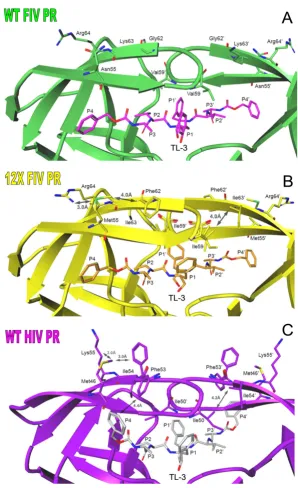
(Fig. 1). Residues 55, 62 and 63 are positioned in the center of the flaps with their side chains pointing away from the active site (Fig. 5(a), (b)). The mutation of Asn5546 to Met and Gly6253 to Phe in 12X FIV PR results
in the formation of two intra-flap interactions: a packing contact formed between the Cεatom of Met5546 and the
side chain of Phe6253, and an electrostatic interaction
between the Sδatom of Met5546 and the Nε atom of
Arg6455 (Fig. 5(b)). This pair of intra-flap interactions
closely mimics the pair of intra-flap packing contacts between Met46, Phe53 and Lys55 seen in the HIV PR-TL-3 complex structure (Fig. 5(c)) [1PR-TL-3,26]. Additional muta-tions of Val5950 to Ile and Lys6354 to Ile result in the
for-mation of flap interactions between monomers that is not present in wild-type FIV PR (Fig. 1). The introduction of
the intra-flap and inter-flap interactions in 12X FIV PR may help to stabilize the closed conformation of the flap regions, and may be a contributing factor to the increased inhibition by TL-3. The stabilization of the flaps could increase the thermodynamic barrier to flap opening and, therefore affect substrate processing efficiency by increas-ing the residence time of substrate in the active site.
Discussion
12X FIV PR is a transitional mutant with engineered drug susceptibility. The mutations found in 12X FIV PR change residues from their native amino acids to those at structur-ally equivalent positions in HIV PR. In this way, 12X FIV PR can be considered a transitional mutant that exhibits intermediate susceptibility to TL-3 (KiWT FIV PR = 41 nM;
Ki12X FIV PR = 10 nM; K
iHIV PR = 1.5 nM). While the 12
sub-stitutions have no affect on the hydrogen bonding pattern between the protein and inhibitor, they do affect the pack-ing interactions. The 90s loop in 12X FIV PR more closely resembles the 80s loop of HIV PR in sequence and confor-mational flexibility. The removal of a packing contacts formed by Val3732, Thr9780 and Ile10184 allows the 90s
loop to shift more closely to the bound inhibitor. With
Conformation of 12X FIV protease in complex with the inhibitor TL-3 Figure 2
Retrovirology 2007, 4:1 http://www.retrovirology.com/content/4/1/1
the additional mutations of Ile9881 to Pro and Gln9982 to
Val, the 90s loop becomes able to form the packing inter-action with the P1' phenyl group of TL-3 as seen in the complex between HIV PR and TL-3. The loss of this partic-ular packing contact was previously reported to result in a nearly 4-fold decrease in inhibition by TL-3 in 1X HIV PR, where 1X represents the V82A mutant (IC50WTHIVPR = 6
nM; IC501X HIV PR = 22 nM) [1,26]. Hence, it is reasonable
that recovery of this interaction in the 12X FIV PR would have the opposite affect, contributing to the TL-3
suscep-tibility of the enzyme (IC50WT FIV PR = 90 nM; IC
5012X FIV PR
= 71 nM).
The above findings account for observed changes in inhib-itor specificity in the HIV/FIV chimeric PRs and support the involvement of targeted residues in the hinge, flap, and 90s loop in inhibitor binding (Fig. 1). Interestingly, changes in substrate cleavage are harder to institute, so that the virus is able to develop inhibitor resistance while replicating sufficiently to maintain virus production. As many as 24 HIV amino acid substitutions have been made
[image:5.612.61.558.97.497.2]Effects of the 90s loop mutations on interactions with TL-3 Figure 3
Effects of the 90s loop mutations on interactions with TL-3. Comparisons of the TL-3 complexes of wild-type FIV pro-tease (green) and 12X propro-tease (yellow) reveals conformational differences at the P1/P1' position of the inhibitor. The muta-tion of residue 98 from Isoleucine to Proline and residue 99 from Glutamine to Valine in the 12X mutant protease allows the formation of packing contacts with the P1/P1' position of TL-3, causing the P1/P1' phenyl ring to shift toward the side chain of Proline 98 by 2.0Å and rotate by 21° about the χ1 torsion angle. These movements are facilitated by other mutations in the 90s
in the FIV PR background without substantially increasing HIV substrate cleavage [17]. Mutations that increase sta-bility in the flap allow a degree of cleavage of HIV sub-strates by FIV, but levels do not approach that obtained by HIV PR [17]. Several of the mutations in the 12X FIV PR could affect the stability of the flaps in either the open or closed state. In addition to Met5546 and Phe6253, which
stabilize individual flaps (Fig. 5b), Ile5950 and Ile6354
could form reciprocal packing interactions between flaps, favoring a closed conformation [27]. Loss of an equiva-lent interaction results in a 6 Å separation between flaps in the Phe53Leu mutant of apo-HIV PR [28]. Two of the flap residues replaced in 12X FIV PR (Asn5546Met,
Lys6354Ile) are also sites of mutation in the 'wide-open'
conformation of a multidrug-resistant HIV PR [29]. Molecular dynamics studies suggest that hydrophobic clustering of Val3732, Ile5950, Pro9881, and Val9982 within
monomers could stabilize an open conformation of the enzyme [27]. Saturation mutagenesis of HIV PR shows that of six flap residues mutated in 12X FIV PR, four (Met 5546, Gly5748, Ile5950, and Phe6253) result in
intermedi-ate activity if inserted into HIV PR, and two (Ile5647 and
Ile6354) inactivate the enzyme [30]. Clearly, the overall
character of the PR contributes to the observed substrate specificity with the conformational preferences of the flaps being critical.
Changes in the packing contacts between the active site core and 90s loop Figure 4
Retrovirology 2007, 4:1 http://www.retrovirology.com/content/4/1/1
[image:7.612.155.453.81.569.2]Comparison of the flap regions of wild-type FIV protease, 12X FIV protease, and wild-type HIV protease Figure 5
In addition, the context of PR in the natural substrate has a direct impact on overall processing efficiency. The criti-cal role for PR in the virus life cycle is not only to process the Gag and Gag-Pol proteins specifically [31,32], but also to perform cleavages in the proper order and temporal sequence [33]. The processing sequence and efficiency of the HIV-1 Gag-Pol polyprotein has been studied in great detail and has been shown to be critical to generate infec-tious virus [20,33,34]. Of note is the finding that proper temporal cleavage of the Gag-Pol polyprotein is influ-enced by conformational constraints on PR "embedded" in the context of the polyprotein such that minor amino acid changes can alter the order of polyprotein cleavage [35]. In particular, the replacement P1A appears to enhance mobility of the dimeric, embedded protease [21,35]. Recent studies of FIV using the 12X mutant and additional FIV/HIV PR chimeras, when placed in the con-text of the Gag and Gag-Pol polyprotein, are consistent with the findings in HIV PR [4]. The results show that the chimeric PRs cleave the natural Gag polyprotein substrate expressed in the context of pseudovirions. However, the addition of HIV residues with concomitant increase in HIV character results in inappropriate order of cleavage [4]. Specifically, the NC-p2 cleavage junction was proc-essed efficiently by wild type FIV PR, but poorly by the "HIVinized" FIV mutants. The junctions on either side of NC are the earliest processing sites and the proper timing of these cleavages is critical to generation of infectious HIV virions [20,21,34]. FIVs encoding the chimeric PRs are non-infectious and it is probable that temporal changes in processing are responsible, due to altered rates of cleavage arising from the structural changes identified here. Increased rigidity of the flaps of HIV PR has been previously demonstrated to alter substrate cleavage kinet-ics by increasing the off-rate [36]. Recent molecular dynamics simulations have emphasized the importance of flap mobility on function in the crowded molecular environment of the cell [37]. The phenomenon has also been observed in other systems where allosteric effects have led to an increased residency time in the enzyme active site [38,39]. Obtaining the structure of PR in the context of the polyprotein would be of great interest in better defining structural constraints, and stands as a chal-lenge for future experimentation.
Conclusion
The 1.7 Å resolution crystal structure of FIV protease (PR), in which 12 critical residues around the active site have been substituted with structurally equivalent residues in HIV PR, was determined in complex with the broad-based inhibitor TL-3. The structure, in comparison with struc-tures of HIV and FIV PRs with TL-3 bound, demonstrates how substitutions which make FIV PR more HIV-like result in altered inhibition constants in the order HIV PR > 12X FIV PR > FIV PR. The analysis shows how 12X FIV
PR gains several stabilizing intra- and inter-flap interac-tions that resemble those in HIV PR, while retaining hydrogen bonding interactions common to both FIV and HIV PRs. The structural details suggest that changes in flap mobility may be related to changes in substrate processing efficiency, thereby affecting cleavage of Gag and Gag-Pol sites by FIV vs. HIV protease. The results provide better understanding of the molecular basis of HIV-1 and FIV protease (PR) substrate specificities in vivo, and are rele-vant to the development of broad-spectrum protease inhibitors that can inhibit both wild type and drug-resist-ant proteases.
Methods
Mutagenesis of chimeric FIV PRs
Chimeric FIV PRs were constructed by substituting the res-idues of FIV PR for the structurally equivalent resres-idues of HIV-1 PR with PCR-mediated megaprimer site-directed mutagenesis as described [17]. The chimeric PR genes were digested with NdeI and HindIII and cloned into pET-21a (Novagen, Inc.). The substitutions were verified by dideoxy DNA sequencing. All protease constructs were over-expressed in E. coli strain BL21.DE3/pLysS using T7-driven expression in the context of the pET21 vector (Novagen) [13,17]. Expression was induced by treatment of late log phase cells with 1 mM isopropylthiogalacto-pyranoside (IPTG) for 3 hr at 37°C.
Purification and refolding of mutant FIV PR
Retrovirology 2007, 4:1 http://www.retrovirology.com/content/4/1/1
2-mercaptoethanol for 3 hr. The refolded protease was centrifuged for 20 min. at 38,000 g at 4°C to remove any precipitated material. The sample was then concentrated using a centrifuge concentrator (Amicon Ultra 10,000 MW cut-off), washed twice with 20 mM sodium acetate, pH 5.2 saturated with TL-3, and then concentrated to 5– 10 mg/ml.
Crystallization and data collection Crystallization
1 μl of 12X FIV PR at 2.5 mg/ml with added TL-3 was mixed with 1 μl of 2.5 M lithium chloride, 100 mM Hepes, pH 7.5, and equilibrated by hanging drop vapor diffusion against this reservoir solution at 8°C. Prismatic trigonal crystals formed within one week. The crystals
were transferred to a synthetic mother liquor solution containing 15% propylene glycol for a several seconds, and then flash frozen in liquid N2.
Data collection
Diffraction data were collected at 100 K by the rotation method (120 frames, 1° oscillation per frame) to 1.7 Å resolution at beam line 1–5 (λ = 0.979 Å) at the Stanford Synchrotron Radiation Laboratory. The data were proc-essed with Mosflm [40] and Scala [41] (Table 1).
Structure solution and refinement
[image:9.612.51.555.290.664.2]The structure of 12X FIV protease was solved by molecular replacement at 3 Å resolution using coordinates of the monomer of wild-type FIV protease (PDB 1B11) as a
Table 1: Crystallographic Statistics
Unit Cell
Space group P3121
a, b, c (Å) 50.32 50.32 74.16
VM (Å3/Da) 2.5
Solvent content (%) 49.7
Monomers/asymmetric unit 1
Data Collection
SSRL beam line BL 1-5
Wavelength (Å) 0.979
Resolution range (Å) 74.0 – 1.70
Observations 77,552
Reflections 12,424
Redundancy 6.2 (6.0)
Completeness (%)[1] 99.7 (99.6)
<I>/<σI> 15.7 (2.6)
Rsymm(I)[2] 0.070 (0.368)
Refinement
Reflections > 0.0 σF 12,396
R-factor[3] 0.184
Rfree (% of data) 0.233 (5.0)
R.m.s. deviation, bonds (Å) 0.011 R.m.s. deviation, angles (deg)[4] 1.47
Model
Protein Atoms <B-factor> (Å2)
Protein[5] 1,134 21.2/24.6[6]
TL-3 33 19.8
Water molecules 121 38.5
[1] Values for highest resolution shell in parentheses.
[2] Rsymm = ΣhklΣi|Ii(hkl) - I(hkl)|/ΣhklΣi(I(hkl)) where Ii(hkl) is the intensity of an individual measurement, and I(hkl) is the mean intensity of this reflection.
[3] R-factor = Σhkl|Fobs| - |Fcalc|/Σhkl|Fobs|, where |Fobs| and |Fcalc| are observed and calculated structure factor amplitudes, respectively.
[4] Ramachandran plot: 95.9% of residues in most favored regions; 3.1% in allowed regions, 1.0% in disfavored regions. [5] Includes residues with alternate conformations.
search model in Molrep [42]. Residues differing in sequence between the two proteins were modeled as alanines. Five percent of randomly selected reflections were designated as test reflections for use in the Free-R cross-validation method [43] and used throughout the refinement. The correlation coefficient and R-factor from the molecular replacement solutions indicated that the correct space group was P3121. Rigid body and restrained refinement were performed in Refmac [44] at 3 Å and 2.0 Å, respectively. Simulated annealing, Powell minimiza-tion and individual temperature factor refinements were performed using CNS [45]. After refinement, the model was adjusted and correct amino acids were built into regions of the composite omit map using the visualization program O [46]. The model was refined in CNS [45] using a bulk solvent correction and isotropic B-factors, followed by several rounds of model adjustment using the SigmaA-weighted 2|Fo|-|Fc| and |Fo|-|Fc| electron density maps [47] generated in CNS [45]. TL-3 was initially modeled by superposition of the wild-type FIV structure in complex with TL-3 (1B11). The conformation of the bound TL-3 was manually adjusted to fit the SigmaA-weighted |Fo |-|Fc| electron density (2σ). 121 water molecules were
added and nine residues were model as having alternate side chain conformations. The region between Ile59 and Gly61 was modeled with two main chain conformations that contained a flipped peptide bond between Ile59 and Gly60. The model was refined to a final Rcryst/Rfree of 18.4/ 23.3% [43,45] (Table 1).
Protein Data Bank accession numbers
The 12X FIV protease complex crystal structure with the inhibitor TL-3 has been deposited into the RCSB Protein Data Bank and has been assigned the accession code 2HAH.
Competing interests
The author(s) declare that they have no competing inter-ests.
Authors' contributions
YCL and KT prepared the protein samples, and HH grew the crystals and performed crystallographic analysis. BET and JHE developed the TL-3 inhibitor, and JHE directed the design of the 12X chimeric FIV protease. CDS super-vised the structural analysis. All authors read and approved the final manuscript.
Acknowledgements
C.D. Stout, B.E. Torbett and J.H. Elder are supported by the N.I.H. grant GM48870. Additional support for B.E. Torbett and J.H. Elder comes from the N.I.H. grant AI40882. We would like to thank Duncan McRee, Isaac Hoffman, Robin Rosenfeld and the staff at Active Sight, San Diego, for assist-ance in crystallization screening. We thank the staff of the Stanford Syn-chrotron Radiation Laboratory (SSRL) for expert technical support and access to resources. SSRL is a national user facility operated by Stanford
University on behalf of the U.S. Department of Energy, Office of Basic Energy Sciences. The SSRL Structural Molecular Biology Program is sup-ported by the Department of Energy, Office of Biological and Environmen-tal Research, and by the National Institutes of Health, National Center for Research Resources, Biomedical Technology Program, and the National Institute of General Medical Sciences.
References
1. Buhler B, Lin YC, Morris G, Olson AJ, Wong C-H, Richman DD, Elder JH, Torbett BE: "Viral evolution in response to the broad-based retroviral protease inhibitor TL-3". J Virol 2001,
75:9502-9508.
2. Lee T, Laco GS, Torbett BE, Fox HS, Lerner DL, Elder JH, Wong C-H: "Analysis of the S3 and S3' subsite specificities of feline immunodeficiency virus (FIV) protease: Development of a broad-based protease inhibitor efficacious against FIV, SIV, and HIV in vitro and ex vivo". Proc Natl Acad Sci USA 1998,
95:939-944.
3. Lee T, Le V-D, Lim D, Lin Y-C, Wong AL, Morris GM, Olson AJ, Elder JH, Wong C-H: "Development of a new type of protease inhib-itors, efficacious against FIV and HIV variants". J Am Chem Soc 1999, 121:1145-1155.
4. Lin Y-C, Brik A, Parseval AD, Tam K, Torbett BE, Wong C-H, Elder JH: "Altered Gag Polyprotein Cleavage Specificity of FIV/HIV Mutant Proteases as Demonstrated in a Cell-Based Expres-sion System". J Virol 2006, 80:7832-7843.
5. Elder JH, Phillips TR: "Feline immunodeficiency virus as a model for development of molecular approaches to inter-vention strategies against lentivirus infections". Adv Virus Res 1995, 45:225-247.
6. Henriksen SJ, Prospero-Garcia O, Phillips TR, Fox HS, Bloom FE, Elder JH: "Feline immunodeficiency virus as a model for study of lentivirus infection of the central nervous system". Curr Top Microbiol Immunol 1995, 202:167-186.
7. Elder JH, Dean GA, Hoover EA, Hoxie JA, Malim MH, Mathes L, Neil JC, North TW, Sparger E, Tompkins MB, Tompkins WAF, Yamamoto J, Yuhki N, Pedersen NC, Miller RH: "Lessons from the cat: feline immunodeficiency virus as a tool to develop intervention strategies against human immunodeficiency virus type 1".
AIDS Res Hum Retroviruses 1998, 14:797-801.
8. Le VD, Mak CC, Lin Y-C, Elder JH, Wong C-H: "Structure-activity studies of FIV and HIV protease inhibitors containing allo-phenylnorstatine". Bioorg Med Chem 2001, 9:1185-1195. 9. Mak CC, Le V-D, Lin Y-C, Elder JH, Wong C-H: "Design, synthesis,
and biological evaluation of HIV/FIV protease inhibitors incorporating a conformationally constrained macrocycle with a small P3' residue". Bioorg Med Chem Lett 2001, 11:219-222. 10. CC Mak, Brik A, Lerner DL, Elder JH, Morris GM, Olson AJ, Wong C-H: "Design and synthesis of broad-based mono- and bi-cyclic inhibitors of FIV and HIV proteases". Bioorg Med Chem 2003, 11:2025-2040.
11. Wlodawer A, Gustchina A, Reshetnikova L, Lubkowski J, Zdanov A, Hui KY, Gngleton EL, Farmerie WG, Goodenow MM, Bhatt D, Zhang L, Dunn BM: "Structure of an inhibitor complex of the protei-nase from feline immunodeficiency virus". Nat Struct Biol 1995,
2:480-488.
12. GS Laco, Schalk-Hihi C, Lubkowski J, Morris G, Zdanov A, Olson A, Elder JH, Wlodawer A, Gustchina A: "Crystal structures of the inactive D30N mutant of feline immunodeficiency virus pro-tease complexed with a substrate and an inhibitor". Biochem 1997, 36:10696-10708.
13. Li M, Morris GM, Lee T, Laco GS, Wong C-H, Olson AJ, Elder JH, Wlodawer A, Gustchina A: "Structural studies of FIV and HIV-1 protease complexed with an efficient inhibitor of FIV pro-tease". Proteins: Struct Funct Gen 2000, 38:29-40.
14. Schnolzer M, Rackwitz H-R, Gustchina A, Laco GS, Wlodawer A, Elder JH, Kent SBH: "Comparative properties of feline immun-odeficiency virus (FIV) and human immunimmun-odeficiency virus type 1 (HIV-1) proteinases prepared by total chemical syn-thesis". Virology 1996, 224:268-275.
15. Lin YC, Beck Z, Lee T, Le V-D, Morris GM, Olson AJ, Wong C-H, Elder JH: "Alteration of substrate and inhibitor specificity of feline immunodeficiency virus protease". J Virol 2000,
Publish with BioMed Central and every scientist can read your work free of charge "BioMed Central will be the most significant development for disseminating the results of biomedical researc h in our lifetime."
Sir Paul Nurse, Cancer Research UK
Your research papers will be:
available free of charge to the entire biomedical community
peer reviewed and published immediately upon acceptance
cited in PubMed and archived on PubMed Central
yours — you keep the copyright
Submit your manuscript here:
http://www.biomedcentral.com/info/publishing_adv.asp
BioMedcentral
Retrovirology 2007, 4:1 http://www.retrovirology.com/content/4/1/1
16. Beck ZQ, Lin YC, Elder JH: "Molecular basis for the relative sub-strate specificity of human immunodeficiency virus type 1 and feline immunodeficiency virus proteases". J Virol 2001,
75:9458-9469.
17. Lin Y-C, Beck Z, Morris GM, Olson AJ, Elder JH: "Structural basis for distinctions between substrate and inhibitor specificities for feline immunodeficiency virus and human immunodefi-ciency virus proteases". J Virol 2003, 77:6589-6600.
18. Elder JH, Schnolzer M, Hasselkus-Light CS, Henson M, Lerner DA, Phillips TR, Wagaman PC, Kent SB: "Identification of proteolytic processing sites within the Gag and Pol polyproteins of feline immunodeficiency virus". J Virol 1993, 67:1869-1876.
19. Swanstrom R, Wills J: Synthesis, assembly, and processing of viral proteins. In Retroviruses Edited by: Coffin J, Hughes S. NY, Cold Spring Harbor Laboratory Press; 1997:263-334.
20. Pettit SC, Sheng N, Tritch R, Erickson-Viitanen S, Swanstrom R: "The regulation of sequential processing of HIV-1 Gag by the viral protease". Adv Exp Med Biol 1998, 436:15-25.
21. Pettit SC, Clemente JC, Jeung JA, Dunn BM, Kaplan AH: "Ordered Processing of the Human Immunodeficiency Virus Type 1 GagPol Precursor Is Influenced by the Context of the Embedded Viral Protease". J Virol 2005, 79:10601-10607. 22. Swanstrom R, Erona J: "Human immunodeficiency virus type-1
protease inhibitors: therapeutic successes and failures, sup-pression and resistance". Pharmacol Ther 2000, 86:145-70. 23. Beck ZQ, Morris GM, Elder JH: "Defining HIV-1 protease
sub-strate selectivity". Curr Drug Targets: Infect Disord 2002, 2:37-50. 24. Kutilek VD, Sheeter DA, Elder JH, Torbett BE: "Is resistance
futile?". Curr Drug Targets: Infect Disord 2003, 3:295-309.
25. Kozal M: "Cross-resistance patterns among HIV protease inhibitors". AIDS Patient Care STDS 2004, 18:199-208.
26. Heaslet H, Kutilek V, Morris GM, Lin Y-C, Elder JH, Torbett BE, Stout CD: "Structural insights into the mechanisms of drug resist-ance in HIV-1 protease NL4-3". J Mol Biol 2006, 356:967-981. 27. Tóth G, Borics A: "Flap opening mechanism of HIV-1
pro-tease". J Mol Graphics Model 2006, 24:465-474.
28. Liu F, Kovalevsky AY, Louis JM, Boross PI, Wang Y-F, Harrison RW, Weber IT: "Mechanism of Drug Resistance Revealed by the Crystal Structure of the Unliganded HIV-1 Protease with F53L Mutation". J Mol Biol 2006, 358:1191-1199.
29. Martin P, Vickrey JF, Proteasa G, Jimenez YL, Wawrzak Z, Winters MA, Merigan TC, Kovari LC: " 'Wide-Open' 1.3 A Structure of a Multidrug-Resistant HIV-1 Protease as a Drug Target". Struc-ture 2005, 13:1887-1895.
30. Shao W, Everitt L, Manchester M, Loeb DD, Hutchison CA III, Swan-strom R: "Sequence requirements of the HIV-1 protease flap region determined by saturation mutagenesis and kinetic analysis of flap mutants". Proc Natl Acad Sci USA 1997,
94:2243-2248.
31. Prabu-Jeyabalan M, Nalivaika E, Schiffer CA: "Substrate Shape Determines Specificity of Recognition for HIV-1 Protease: Analysis of Crystal Structures of Six Substrate Complexex".
Structure 2002, 10:369-381.
32. Ozer N, Haliloglu T, Schiffer CA: "Substrate Specificity in HIV-1 Protease by a Biased Sequence Search Method". Proteins: Struct Func Bioinfor 2006, 64:444-456.
33. Pettit SC, Lindquist JN, Kaplan AH, Swanstrom R: "Processing sites in the human immunodeficiency virus type 1 (HIV-1) Gag-Pro-Pol precursor are cleaved by the viral protease at differ-ent rates". Retrovirology 2005, 2:66.
34. Pettit SC, Moody MD, Wehbie RS, Kaplan AH, Nantermet PV, Klein CA, Swanstrom R: "The p2 domain of human immunodefi-ciency virus type 1 Gag regulates sequential proteolytic processing and is required to produce fully infectious viri-ons". J Virol 1994, 68:8017-8027.
35. Pettit SC, Everitt LE, Choudhury S, Dunn BM, Kaplan AH: "Initial Cleavage of the Human Immunodeficiency Virus Type 1 GagPol Precursor by Its Activated Protease Occurs by an Intramolecular Mechanism". J Virol 2004, 78:8477-8485. 36. Lin Y, Lin X, Hong L, Foundling S, Heinrikson RL, Thaisrivongs S,
Leelamanit W, Raterman D, Shah M, Dunn BM, Tang J: "Effect of Point Mutations on the Kinetics and the Inhibition of Human Immunodeficiency Virus Type 1 Protease: Relationship to Drug Resistance". Biochem 1995, 34:1143-1152.
37. Minh DLD, Chang C, Trylska J, Tozzini V, McCammon JA: "The influence of Macromolecular Crowding on HIV-1 Protease Internal Dynamics". J Amer Chem Soc 2006, 128:6006-6007. 38. Lai CJ, Harris BG, Cook PF: "Mechanism of activation of the
NAD-malic enzyme from Ascaris suum by fumarate". Arch Bio-chem Biophys 1992, 299:214-219.
39. Jeannin E, Robyr D, Desvergne B: "Transcriptional regulatory patterns of the myelin basic protein and malic enzyme genes by the thyroid hormone receptors alpha1 and beta1". J Biol Chem 1998, 273:24239-24248.
40. Leslie AGW: The CCP4 Suite: Programs for Protein Crystal-lography. Acta Crystallogr 1992, D50:760-763.
41. Kabsch W: "Evaluation of single-crystal X-ray diffraction data from a position sensitive detector". J of Appl Cryst 1988,
21:916-924.
42. Vagin A, Teplyakov A: "An approach to multi-copy search in molecular replacement". Acta Crystallogr 2000, D56:1622-1624. 43. Brünger AT: "The free R value: a novel statistical quantity for
assessing the accuracy of crystal structures". Nature 1992,
355:472-474.
44. Murshudov GN, Vagin AA, Dobson EJ: "Refinement of macromo-lecular structures by the maximum-likelihood method". Acta Crystallogr 1997, D53:240-255.
45. Brünger AT, Adams PD, Clore GM, DeLano WL, Gros P, Grosse-Kunstleve RW, Jiang J-S, Kuszewski J, Nilges M, Pannu NS, Read RJ, Rice LM, Simonson T, Warren GL: "Crystallography & NMR sys-tem (CNS): A new software syssys-tem for macromolecular structure determination". Acta Crystallogr 1998, D54:905-921. 46. Jones TA, Zou JY, Cowan SW, Kjeldgaardet M: "Improved
meth-ods for building protein models in electron density maps and the location of errors in these models". Acta Crystallogr 1991,
A47:110-119.