Monograph:
Nice, K and Davidson, J (2010) Provider-led Pathways: Experiences and views of Condition Management Programmes. Research Report. Department for Work and Pensions Research Report, No. 644 . HMSO , Norwich.
[email protected] https://eprints.whiterose.ac.uk/
Reuse
Items deposited in White Rose Research Online are protected by copyright, with all rights reserved unless indicated otherwise. They may be downloaded and/or printed for private study, or other acts as permitted by national copyright laws. The publisher or other rights holders may allow further reproduction and re-use of the full text version. This is indicated by the licence information on the White Rose Research Online record for the item.
Takedown
If you consider content in White Rose Research Online to be in breach of UK law, please notify us by
Provider-led Pathways: experiences
and views of Condition
Management Programmes
Provider-led Pathways:
experiences and views of
Condition Management
Programmes
Katharine Nice and Jacqueline Davidson
First Published 2010.
ISBN 978 1 84712 733 4
Contents
Acknowledgements ... vii
The Authors ...viii
Summary ...1
1 Introduction ...7
1.1 Policy and research context ...7
1.2 Research aims and questions ...9
1.3 Research design and methods ...10
1.4 Structure of the report ...11
2 Organisation and structure of the Condition Management Programmes ...13
2.1 Contractual requirements ...13
2.2 Description of CMP purpose ...15
2.3 CMP design ...16
2.3.1 In-house or sub-contracted ...18
2.3.2 Interventions offered ...19
2.3.3 Practitioner discretion and client choice ...20
2.3.4 Programme duration ...21
2.3.5 Stafing ...22
2.4 Summary ...26
3 Learning about CMP and the referral process ...29
3.1 Awareness and understanding of CMP ...29
3.2 Clients’ initial impressions and responses to the offer of CMP ...31
3.3 The CMP referral processes ...33
3.3.1 Referral processes ...33
3.3.2 Problems making and receiving referrals ...33
3.3.3 Delays when accessing CMP ...34
3.4 Appropriateness of referrals ...35
3.5 Experiences of the initial CMP assessment ...36
3.6 Summary ...37
4 Experiences of CMP delivery ...39
4.1 Experiences of delivering and receiving interventions...39
4.1.1 Experiences of the content and format of CMP sessions ....39
4.1.2 Views about delivery and content of CMP sessions ...43
4.2 The extent to which CMP sessions focused on work ...47
4.2.1 CMP is driven by a focus on work ...48
4.2.2 CMP is a work-oriented programme but other goals and outcomes are important ...48
4.2.3 CMP is client-led and work is discussed if considered beneicial...51
4.3 Client expectations of further contact ...52
4.4 Non-attendance ...53
4.4.1 Levels of non-attendance ...53
4.4.2 Reasons for missing appointments or ending attendance ...54
4.4.3 Staff responses to non-attendance ...56
4.5 In-work support ...57
4.6 Staff experiences of support and supervision ...57
4.7 Summary ...59
5 Linking CMP to other Pathways services and support from other sources ...61
5.1 The end of CMP and the inal session ...61
5.3 Working relationships between Pathways advisers and CMP
practitioner staff ...65
5.4 Client experiences of support from other sources ...67
5.5 CMP practitioners’ experiences and views of signposting clients to other organisations ...68
5.6 Summary ...69
6 Views on the impact and performance of Condition Management Programmes ...71
6.1 Staff experiences of monitoring performance and overall impressions of performance so far ...71
6.2 Impact on CMP clients ...73
6.2.1 Initiating progress towards work ...74
6.2.2 Enhancing progress towards work ...76
6.2.3 Improving well-being ...78
6.2.4 Limited impact, no impact and negative impact ...79
6.3 Impact duration ...81
6.4 Suggestions for improvements ...82
6.4.1 Changes to operational and management matters ...82
6.4.2 Changes to the content and delivery format for CMP sessions ...84
6.5 Continuing barriers to work and support needs ...86
6.5.1 Barriers to work ...86
6.5.2 Support needs ...87
6.6 Summary ...88
7 Conclusions and discussion ...91
7.1 The role of Pathways advisers ...91
7.2 Stafing within CMP ...93
7.3 What works well regarding the delivery and impact of CMP ...94
7.4 Reaching the end of CMP and providing ongoing support ...97
Appendix A Provider-led Pathways, study of the Condition Management
Programme: Research methods ...101
Appendix B Research instruments ...115
References ...153
List of tables
Table 1.1 Achieved interviews across four ieldwork sites ...10Table 1.2 Main characteristics of the CMP client sample ...11
Table 2.1 CMP designs ...16
Table 2.2 Interventions offered ...19
Table A.1 Pathways and CMP personnel to be approached for research interview ...103
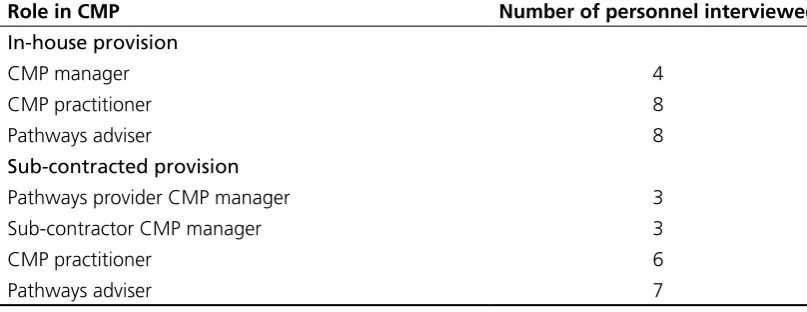
Table A.2 Pathways and CMP personnel interviewed ...109
Table A.3 Role and background of CMP managers ...110
Table A.4 CMP practitioners’ qualiications/professional background ...110
Table A.5 Age and sex of participants...112
Table A.6 Stage reached in CMP at the time of the research interview ...112
Acknowledgements
We are very thankful to the people who agreed to take part in individual and group interviews for this study: Pathways Provider managers, Condition Management Programme managers and front-line practitioners, Pathways Advisers and clients who had participated in the Condition Management Programme.
The research team at the Social Policy Research Unit had overall responsibility for conducting this study, but staff at the National Centre for Social Research were involved in carrying out ieldwork with Pathways and Condition Management Programme staff and in doing some of the early analysis. We are especially thankful to them for their valuable contributions.
The project was managed by Lizzie Coates and Preeti Tyagi at the Department for Work and Pensions and we have appreciated their support.
The Authors
Katharine Nice, Social Policy Research Unit (SPRU), University of York.
Summary
Introduction
This report presents the indings from a qualitative study carried out in 2009 exploring the experiences of people supplying and using Condition Management Programme (CMP) services within the Provider-led Pathways programme. The study was commissioned by the Department for Work and Pensions (DWP) and was led by the Social Policy Research Unit, working with the National Centre for Social Research.
Condition Management Programmes were established as part of the Pathways to Work pilot, as an innovative intervention designed to help people understand and manage their health conditions in preparation for returning to work. Provider-led Pathways contracts stipulate that providers must offer some form of Condition Management Programme, though there is a degree of freedom in how these programmes are designed and delivered.
This research study was designed to provide an understanding of how CMP is operating in Provider-led Pathways districts. The research was carried out in four districts and generated data from the following key stakeholders: 10 Pathways managers who oversee CMP provision, and managers within contracted out CMP provision; 15 Pathways advisers who refer people to CMP; 14 CMP practitioners and 36 CMP clients.
Organisation and structure of the CMP programmes
In keeping with the ‘black box’ model of implementation, the organisation and structure of CMP varied over the four study areas. Areas differed on a number of key structural and operational elements of CMP provision which might be expected to have an impact on how provision is experienced.
experience of staff who were recruited to deliver CMP and this made a difference as to whether CMP practitioners were able to offer therapeutic or non-therapeutic interventions. At the time of the research study, some providers were experiencing some problems with staff recruitment and retention.
The content and format of CMP sessions also varied across the different areas. Some programmes only provided either group sessions or individual CMP sessions. In other areas, both types of sessions were available for clients to choose from. In some areas, CMP content had been designed to focus on a range of physical and mental health conditions and in others, the programme’s primary focus was on mental health. Some providers had chosen to deliver generic content in CMP sessions while others sought to tailor support towards individual clients’ needs.
Learning about CMP and the referrals process
Clients described learning about CMP in a number of different ways, from their Pathways adviser and other provider staff, from Jobcentre Plus staff, from lealets sent by the Pathways provider through the post and from people in their social networks. There were no set procedures followed by Pathways advisers regarding when they told clients about CMP and advisers’ approaches also differed regarding which clients they told about CMP and which clients they referred to CMP. A range of positive responses were reported by clients on hearing about CMP. Clients were found to have varying understandings about the nature of CMP. Some had thought the programme would focus on helping them learn more about improving and managing their health conditions and some had also understood that this would enable them to ind paid work at some point in the future. Clients’ reasons for participating in CMP included wanting to get well and (back) into a ‘normal’ routine, wanting to get (back) to paid work and wanting help with their health condition(s). Some clients had not understood that their participation in CMP had been voluntary and had thought that they had no choice but to participate in the programme, which was also supported by the data from CMP practitioners. Practitioners also thought that some clients had come to them with unrealistic expectations about what CMP could deliver.
Some Pathways advisers and CMP providers thought that some advisers were sometimes referring people for CMP for whom the provision was not appropriate (for example people with severe mental health conditions, or people who had not received a diagnosis for their condition).
Experiences of CMP delivery
Despite the different ways in which CMP was designed in the study areas, people reported a number of key elements common to their experiences of CMP delivery. Sessions were described as including an introduction from staff, a chance to explore clients’ problems and information about their health conditions.
CMP staff behaviour and expertise in sessions were seen by all concerned as being crucial to client engagement. While there was evidence that individually tailored support was particularly helpful, this did not mean that group workshops were unhelpful, as they were perceived as providing opportunities for people to meet others in similar circumstances and as encouraging mutual support between group members.
Unhelpful aspects of CMP delivery included sessions being held in inappropriate locations and buildings. This could mean that some people had far to travel, or that rooms were too small or lacked soundprooing facilities and were noisy or did not protect privacy as a result. There was evidence that CMP did not meet everyone’s needs, for example where people had severe health conditions or multiple barriers to work, or where their health problems were primarily physical. Negative interactions with staff and uncertainty about staff expertise and the validity of the ‘therapeutic’ approaches they adopted were also highlighted as unhelpful aspects of CMP.
CMP staff differed in the extent to which they focused on work within CMP sessions. Some had a distinct and constant focus on paid work where others introduced work when this seemed appropriate for the individual client. The extent to which clients acknowledged the same strength of focus on work, and responded positively, seemed to depend on how motivated they were to return to work. For example, people who were looking for work-oriented support were happiest when work seemed the main focal point of CMP sessions.
Non-attendance levels were a concern in all of the study areas. Findings from CMP practitioner and client data showed that non-attendance could be explained by a range of factors, including individuals’ attitudes (such as a lack of motivation) or circumstances (such as deteriorating health), CMP structure and delivery (for example, long waiting lists or inding session content irrelevant) and external barriers (such as travel problems).
Linking CMP to other Pathways services and support from
other sources
There was variation in whether Pathways advisers attempted to continue clients’ work-focused interviews during the time they were taking part in CMP. Some advisers perceived that they were not allowed to defer work-focused interviews, even if this meant they could combine interviews with client progress made on CMP, while other advisers felt able to defer interviews as appropriate.
For some clients the ending of their CMP sessions were emotionally upsetting, especially where their sessions terminated early and they had little notice of this, for example when CMP practitioners left their employment. Comparing CMP across the four different areas in this study suggests that the structure of CMP can affect the degree to which clients could experience the ending of CMP as either more or less ‘sudden’. For example, the least abrupt ending to CMP seemed to occur where modules had been designed to run on for long or indeinite periods, such as Pilates sessions that were operated on a drop-in basis.
There were differences in how, and if, clients were referred back to Pathways Advisers by CMP practitioners after CMP sessions had inished. In one area, three-way meetings between the client, adviser and CMP practitioner were perceived as useful for agreeing the next steps to be taken by the client.
Physical proximity between CMP providers and Pathways advisers was important in a number of different ways, especially in working relationships, communication, and an understanding of the respective roles between Pathways advisers and CMP practitioners. Practitioners said that they worked with advisers in order to ‘up skill’ them for their dealings with clients: for example, educating advisers about who to signpost to other organisations.
Some CMP clients were immersed in strong social and health-related networks, but others were found to have had virtually no support from any other sources. For those with little or no support outside of Pathways and CMP, other organisations and services that CMP practitioners (and advisers) could signpost them to are potentially important. However, some CMP practitioners spoke of the dificulties encountered in signposting CMP clients. These included the limited availability of low cost or free counselling services, and problems identifying information about appropriate local services.
Views on the impact and performance of CMP
Managers‘ and practitioners‘ views about CMP performance were generally positive even though most providers were in the early stages of developing performance targets and measuring outcomes.
for jobs, taking up training or gaining paid employment. For many, CMP had resulted in increased conidence and motivation which along with learning more about how to manage their health conditions (and sometimes seeing symptoms improve) seemed to help people to feel more ready for work. Even for those people considered to be furthest from paid work, improvements in well-being could be achieved, which were regarded by staff as a irst step in removing barriers to work. CMP was not able to help all clients, however. Some clients said that participating in CMP had made no difference to them, or that the impacts made were limited or negative. It also appeared that personal circumstances (such as deteriorating health conditions) and certain aspects of delivery (for example, the content of CMP sessions seeming irrelevant to them in their situation, or staff leaving employment with the provider) could obstruct the potential for CMP to inluence progress towards work or improvements in well-being.
Analysis suggests that some CMP outcomes are typically longer-lasting (such as being able to control symptoms using practical techniques) in part because of service delivery methods (such as providing written information and advice that can be reviewed over time by clients). However, there were perceptions that where impacts were made during a short programme, or were not followed up with further support, these impacts could dissipate. In this respect, CMP helped people to make progress towards work or positive changes in their lives, but it did not often take people all the way to feeling ready for paid work.
Suggested improvements to operational and managerial matters within CMP included more staff, improved collaboration between Pathways and CMP staff, and more client information made available to practitioners at an earlier stage. Suggested improvements to the content and delivery of CMP sessions included the provision of more individualised support, more interventions targeted at physical conditions and provision of further support once CMP has ended.
Conclusions and discussion
This report has considered staff and participants’ experiences and views of CMP within Provider-led Pathways. The indings show that CMP can help to improve people’s well-being and readiness for work, notably through building conidence and motivation, and equipping people to self-manage their health conditions. However, there were also indications that some clients are not helped by CMP at present because the programme does not cater for their needs or because problems exist in aspects of delivery. The indings highlight the importance of the following aspects of delivery:
• ensuring Pathways advisers have a good understanding of the purpose and content of CMP and of what constitutes an appropriate referral;
• providing opportunities for both individual support and group interaction as part of CMP;
• offering speciic support for physical health conditions;
• ensuring clients are well supported after contact with CMP ends;
• developing collaborative ways of working between Pathways and CMP staff, and with external service providers.
1 Introduction
This report presents the indings from a qualitative study carried out in 2009 exploring the experiences of people supplying and using Condition Management Programme (CMP) services within the Provider-led Pathways programme. The study was commissioned by the Department for Work and Pensions (DWP) and was led by the Social Policy Research Unit, working with the National Centre for Social Research.
Provider-led Pathways refers to the inal phase of the national roll-out of the Pathways to Work initiative that was irst introduced in seven pilot areas and had been extended to 17 further districts by 2006. In all of these areas Pathways to Work was delivered by Jobcentre Plus on behalf of DWP. In 2007, DWP announced that the programme was to be extended to the remaining 31 districts in Great Britain, but in a departure from previous policy, services would be provided by a mix of private companies and third sector (i.e. voluntary, not-for-proit) organisations rather than Jobcentre Plus. Provider-led Pathways was implemented in two stages, in December 2007 and April 2008.
Condition Management Programmes were established as part of the Pathways to Work pilot, as an innovative intervention designed to help people understand and manage health conditions in preparation for returning to work. Provider-led Pathways contracts stipulate that providers must offer some form of CMP, though there is a degree of freedom in how these programmes are designed and delivered. This research study was designed to provide feedback from key stakeholders (Pathways managers, CMP managers, CMP front-line practitioners, Pathways advisers and CMP clients) in four locations, to understand how CMP is operating in Provider-led Pathways districts.
1.1
Policy and research context
• the requirement that claimants of incapacity beneits attend a series of work-focused interviews conducted by a team of Pathways advisers;
• a range of services and inancial measures (together known as the ‘Choices’ package) to support progress to paid work. The Condition Management Programme, In-Work Support and Return to Work Credit were new measures introduced as part of Pathways to Work.1
Provider-led Pathways provider organisations have been given a substantial degree of autonomy in how they choose to deliver the Pathways to Work programme, known as a ‘black-box’ contract. The contracts between DWP and provider organisations do have some stipulations however, which require that providers carry out a series of work-focused interviews with clients and provide tailored, work-focused support alongside a personal action plan. Providers also have a contractual duty to include in their range of interventions a CMP. CMPs should focus on at least the three main health conditions that have given rise to the majority of Incapacity Beneit and Employment and Support Allowance claims, i.e. musculoskeletal, cardiovascular and mild to moderate mental health conditions. CMP is a joint venture between the Department of Health and DWP in districts where Pathways is delivered by Jobcentre Plus. The programme is based on a bio-psychosocial model of health and illness and provides clients with information and advice to help them overcome barriers, such as anxiety and lack of conidence, and to manage health conditions in work. It is not the aim of CMP to offer clients treatment for their health conditions but rather to empower them by educating about what they might be capable of despite their health condition(s).
A number of research studies have been conducted exploring experiences of Condition Management Programmes within Jobcentre Plus-led Pathways. The irst study, commissioned by DWP, took place during an early stage of implementation and involved CMP practitioners, co-ordinators and managers in the original seven Pathways to Work pilot areas (Barnes and Hudson, 2006). Another DWP study, conducted in three Jobcentre Plus districts with 30 CMP participants, sought to deepen understanding of clients’ experiences and views of CMP (Warrener et al., 2009). A third study was commissioned by the Department of Health and aimed to assess the impact achieved by CMP (in the seven Pathways pilot areas) on participants’ health and readiness for work, and on the local health and social care economies (Ford and Plowright, 2009). Findings from these studies helped to inform the design of this study. These indings are also used in a discussion of conclusions and implications in Chapter 7 of this report, to draw comparisons between CMP provision in Provider-led Pathways areas and areas where Pathways to Work is delivered by Jobcentre Plus.
1 These measures run alongside previously established support such as the
1.2
Research aims and questions
The overall aim of the study was to generate data about the experiences of people delivering and using CMP services, to learn lessons of effective practice and to identify potential dificulties and how these are being addressed. To meet the study objectives, a number of topics were explored with each of the key stakeholders.
For Pathways managers who oversee CMP provision, and managers within contracted out CMP provision:
• the design of CMP delivery;
• the volume and appropriateness of referrals to CMP;
• the processes involved in monitoring performance and supporting staff;
• the importance and quality of relationships with Jobcentre Plus/DWP, with the Pathways provider or sub-contractor (as appropriate), and with other organisations;
• their overall relections on the delivery and impact of CMP.
For Pathways advisers who refer people to CMP: • their knowledge about CMP;
• their approaches to introducing CMP, client responses and take-up, and the process of making referrals to CMP;
• the level and nature of contact with clients and CMP staff after referral; • their overall relections on the delivery and impact of CMP.
For CMP practitioners:
• experiences of receiving referrals including perceptions of the appropriateness of referrals;
• experiences of delivering CMP interventions and what happens at the end of the programme;
• (where sub-contracted) views on relationships with Pathways provider staff; • the availability of staff support and the ways in which staff are supervised; • their overall relections on the delivery and impact of CMP.
For CMP clients:
• their experiences of learning about CMP and their initial impressions; • their experiences and views of attending CMP sessions;
• whether they had received any signiicant support from other sources since being referred to CMP;
1.3
Research design and methods
The research questions were designed to elicit peoples’ experiences and perceptions of CMP and so required the use of qualitative data collection and analysis techniques. Fieldwork was carried out in four locations in the UK. Information supplied by DWP showed that, in keeping with a ‘black-box’ approach to administration, some Pathways providers were delivering CMP through in-house teams (for example, of occupational therapists) while others had contracted out their CMP provision. Therefore, the research study included two areas where CMP was provided by in-house delivery and two areas where CMP was sub-contracted. The study was conducted in three main phases:
• a scoping exercise in each location, involving Jobcentre Plus third party provision managers and CMP managers, which aimed to provide information about CMP delivery arrangements and to identify key personnel for research interviews; • individual and group interviews with Pathways and CMP staff
• individual interviews with CMP clients.
A more detailed explanation of the research methods and analysis adopted by the study can be found in Appendix A.
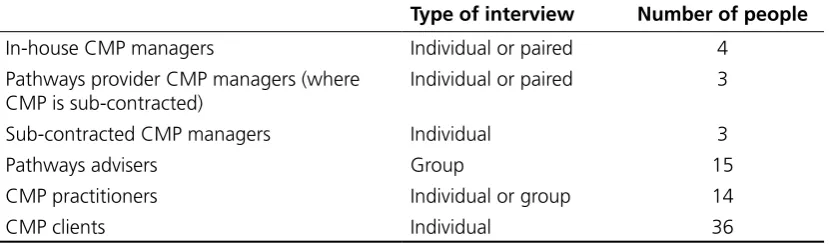
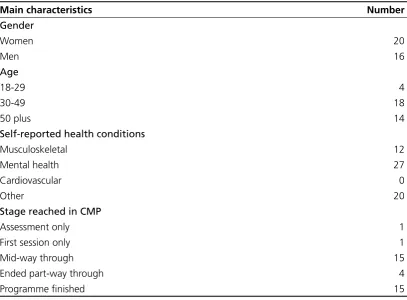
[image:20.595.92.507.510.632.2]The main characteristics of the achieved sample are presented below in Tables 1.1 and 1.2. More detail can be found in Appendix A.
Table 1.1 Achieved interviews across four ieldwork sites
Type of interview Number of people
In-house CMP managers Individual or paired 4 Pathways provider CMP managers (where
CMP is sub-contracted)
Individual or paired 3
Sub-contracted CMP managers Individual 3
Pathways advisers Group 15
CMP practitioners Individual or group 14
CMP clients Individual 36
variation in health conditions and length of time on CMP would be found among the achieved group of participants without sampling for it. Table 1.2 sets out the main characteristics of the CMP client sample
Table 1.2 Main characteristics of the CMP client sample
Main characteristics Number
Gender
Women 20
Men 16
Age
18-29 4
30-49 18
50 plus 14
Self-reported health conditions
Musculoskeletal 12
Mental health 27
Cardiovascular 0
Other 20
Stage reached in CMP
Assessment only 1
First session only 1
Mid-way through 15
Ended part-way through 4
Programme inished 15
The resulting data were analysed systematically using the data management technique Framework (Ritchie and Spencer, 1994). A thematic framework was developed for the classiication and summary of the data from interviews according to the themes emerging. This approach meant that the analysis was grounded in participants’ own accounts and, at the same time, enabled analysis to address key policy interests and issues.
1.4
Structure of the report
Chapter 3 looks at how clients came to learn about CMP and what they had initially understood as the aim of the programme. This chapter also considers the CMP referrals process and the perceived appropriateness of referrals from the perspective of clients, Pathways Advisers and CMP practitioners.
Chapter 4 explores experiences of CMP delivery from the perspectives of CMP managers and practitioners and CMP clients. In particular it covers experiences and views of the content and format of CMP sessions, the extent to which CMP focuses on work, non-attendance at CMP sessions and in-work support. The chapter also includes indings about clients’ expectations for further CMP contact and staff experiences of support and supervision.
Chapter 5 considers how CMP links up with other Pathways services and how clients can be helped by other sources of support. In particular, the chapter explores Pathway adviser, CMP practitioner and client experiences of the end of CMP and contact between clients and Pathways advisers either during or after CMP. Clients’ perspectives on other sources of support and CMP practitioners’ experiences of signposting clients to other organisations are also examined. This chapter also discusses the working relationships between provider advisers and CMP practitioners.
Chapter 6 presents the views of Pathways advisers, CMP managers and practitioners and clients on the impact and performance of CMP. The chapter concentrates on the kinds and duration of impacts made by CMP on clients. Also included are indings regarding the methods for recording and measuring client outcomes, suggested improvements to CMP, and clients’ ongoing barriers to work and support needs.
Chapter 7 concludes the report with a discussion of implications for policy and practice, drawing on themes that emerged in the study indings.
2 Organisation and
structure of the Condition
Management
Programmes
Chapter 2 sets out the design of the Condition Management Programmes (CMP) in the four locations studied. First, managers’ perceptions of the contractual requirements for delivering CMP are reported in Section 2.1 before Section 2.2 considers the ways in which CMP staff describe the programme’s purposes. Using CMP manager and practitioner interview data, a full examination of the design of CMP in the four study areas is provided in Section 2.3, looking in detail at whether CMP was delivered in-house or sub-contracted, the interventions offered to clients, the levels of practitioner discretion and client choice, programme duration and a range of stafing issues. The chapter concludes in Section 2.4 with a summary of the main indings.
2.1
Contractual requirements
moderate mental health conditions) and which conforms to clinical governance standards and data protection requirements.2
Given this design freedom, it might be considered surprising that some CMP managers of Pathways providers referred to aspects of delivery as contractually agreed, such as the format of sessions (i.e. one-to-one sessions and/or group workshops). One possible explanation for this apparent misunderstanding is that some managers had confused contractually agreed terms with decisions that had been informally discussed and agreed with DWP at other times. Aside from these perceived obligations, managers talked about requirements to provide a programme that was therapeutic in nature, using a multi-disciplinary approach, and aimed at helping people get back to work. Some managers explicitly referred to the requirement to meet clinical governance standards in the organisation and practice of CMP, or said that they were contractually obliged to employ healthcare professionals. There were, however, managers (some of whom had no clinical training or healthcare experience) who said they were uncertain about the role of clinical governance in the DWP contract. A recent development, explained by one manager, was that the provider had become contractually required to notify DWP when clients start participating in CMP.
Prior to this research study it was unknown what was stipulated in contracts between Pathways providers and CMP sub-contractors. The data suggests that in the three sub-contracts represented in this study, Pathways providers had comprehensive plans for the shape of CMP and passed on detailed obligations to their sub-contractors to realise their chosen design, such as the requirement to write individualised action plans and conduct a review at 13 weeks. The extent to which the requirement to uphold clinical governance standards had been explicitly delegated to sub-contractors seemed to vary. Thus some sub-contractor managers seemed to be aware of, if not responsible for, the inclusion of clinical governance standards in designing and implementing CMP. However, not all sub-contractors were able to say whether and how clinical governance played a role in CMP. There was agreement among all the Pathways provider CMP managers that there were no performance targets relating speciically to CMP. In line with this, most Pathways providers did not impose job outcome targets on their sub-contractors, but sub-contractor managers had expectations about the number of people referred to them. However, one sub-contractor CMP manager explained how their contract had recently changed to include a target to move 15 per cent of CMP clients into paid work. Among Pathways provider CMP managers and sub-contractor CMP managers there were views that a job outcome target for CMP would give the programme an inappropriate focus and might motivate clinicians to act unethically. Managers seemed much happier to monitor and report ‘soft’ outcomes such as changes in conidence and reduction in symptoms of depression
2 Where CMP is delivered in England it must conform to Department of Health
or anxiety. Another contractual target mentioned by one sub-contractor manager was to ensure that practitioners were in contact with clients within ten days of referral. Non-contractual targets for staff performance are discussed in Section 6.1.
Some sub-contractor CMP managers explained the funding arrangements for the CMP contract. One funding model was to pay the sub-contractor an agreed price per referral or ‘start’ on the programme. To incentivise sustained engagement with the programme, one Pathways provider paid their sub-contractor part of the fee when the client started the programme and the remainder when they completed it. Another arrangement was to pay the contractor a set monthly fee based on expectations about the number of referrals, which made it imperative for the Pathways provider to meet their referral target to avoid losing money. At the time of the interviews, one sub-contractor was expecting to start being paid per course delivered rather than per referral as they were at present.
2.2
Description of CMP purpose
To understand practitioners’ and managers’ perceptions of the purpose of CMP they were asked to explain how they would describe the programme to someone who does not know anything about it, such as a potential client. Some responses to this question articulated the kinds of people who the programme was aimed at, such as people who have health problems and who are not working as a result, or people whose quality of life is poor due to ill health and who have subsequently ‘lost their way’. Most people talked about what the programme aims to do and those most commonly cited can be grouped under three interlinked aims:
• helping people to understand their health condition(s), prognosis and treatment options and explore barriers to improved well-being;
• helping people manage their condition(s) to improve quality of life and ultimately take steps towards or into paid work;
• empowering people to manage their health condition(s) by raising awareness of coping strategies, such as enabling people to think differently, adjust to changing circumstances and focus on what they can do, and providing structure to daily living.
applied. It was clear, therefore, that while some CMP staff felt the programme aimed to give advice and guidance, mentor, coach, encourage and enable clients, there were others who understood they were providing psychological support of a therapeutic nature.
2.3
CMP design
Not all the Pathways provider CMP managers in post at the time of the research interviews had been involved in the design of CMP. Those with knowledge of what had inluenced the design explained how knowledge and experience from within the organisation had been useful or that external consultants had been drafted in to ensure the programme complied with clinical governance standards. The provider that was able to build on internal experience had previously trialled a programme similar to CMP for three years and had thus built knowledge about what works well. For sub-contractors, either CMP had been pre-designed by the Pathways provider, or sub-contractors had a role in designing their own programme working closely with the Pathways provider. The data is incomplete regarding views about these design arrangements, but there were signs that being given a pre-designed programme could be problematic where it was not accompanied with instruction for delivering some of the techniques and, as a result, practitioners’ delivery could be inconsistent. In an area where this happened, CMP was later redesigned with greater input from the sub-contractor.
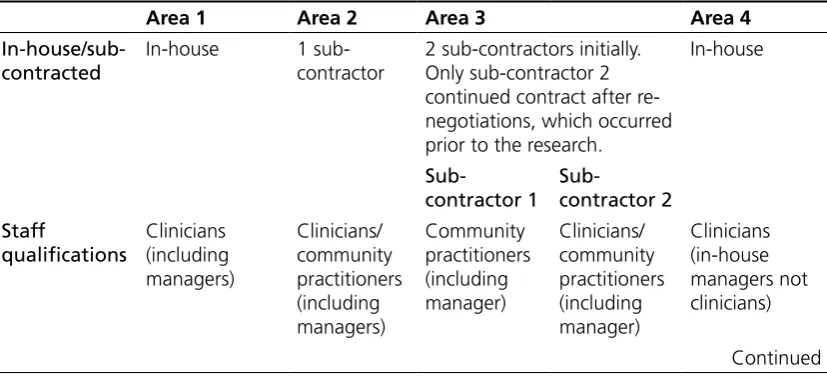
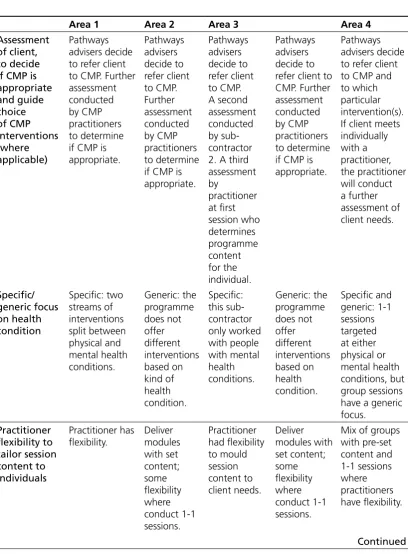
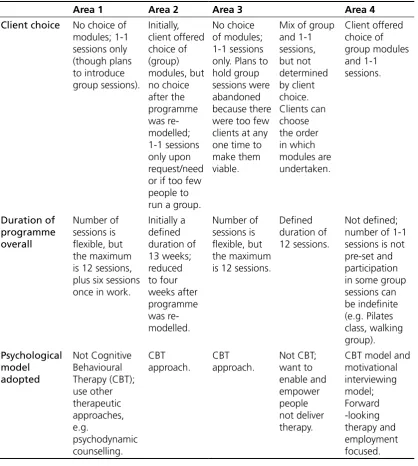
[image:26.595.94.508.559.748.2]The sub-sections that follow set out the key, interlinked elements of programme design and draw out similarities and differences between the programmes in the districts studied. Table 2.1 summarises the approach taken in each area.
Table 2.1 CMP designs
Area 1 Area 2 Area 3 Area 4
In-house/sub-contracted
In-house 1 sub-contractor
2 sub-contractors initially. Only sub-contractor 2 continued contract after re-negotiations, which occurred prior to the research.
Table 2.1 Continued
Area 1 Area 2 Area 3 Area 4
Assessment of client, to decide if CMP is appropriate and guide choice of CMP interventions (where applicable) Pathways advisers decide to refer client to CMP. Further assessment conducted by CMP practitioners to determine if CMP is appropriate. Pathways advisers decide to refer client to CMP. Further assessment conducted by CMP practitioners to determine if CMP is appropriate. Pathways advisers decide to refer client to CMP. A second assessment conducted by sub-contractor 2. A third assessment by practitioner at irst session who determines programme content for the individual. Pathways advisers decide to refer client to CMP. Further assessment conducted by CMP practitioners to determine if CMP is appropriate.
Pathways advisers decide to refer client to CMP and to which particular intervention(s). If client meets individually with a practitioner, the practitioner will conduct a further assessment of client needs. Speciic/ generic focus on health condition Speciic: two streams of interventions split between physical and mental health conditions. Generic: the programme does not offer different interventions based on kind of health condition. Speciic: this sub-contractor only worked with people with mental health conditions. Generic: the programme does not offer different interventions based on health condition. Speciic and generic: 1-1 sessions targeted at either physical or mental health conditions, but group sessions have a generic focus. Practitioner lexibility to tailor session content to individuals Practitioner has lexibility. Deliver modules with set content; some lexibility where conduct 1-1 sessions. Practitioner had lexibility to mould session content to client needs. Deliver modules with set content; some lexibility where conduct 1-1 sessions.
Table 2.1 Continued
Area 1 Area 2 Area 3 Area 4
Client choice No choice of modules; 1-1 sessions only (though plans to introduce group sessions). Initially, client offered choice of (group) modules, but no choice after the programme was re-modelled; 1-1 sessions only upon request/need or if too few people to run a group.
No choice of modules; 1-1 sessions only. Plans to hold group sessions were abandoned because there were too few clients at any one time to make them viable.
Mix of group and 1-1 sessions, but not determined by client choice. Clients can choose the order in which modules are undertaken. Client offered choice of group modules and 1-1 sessions. Duration of programme overall Number of sessions is lexible, but the maximum is 12 sessions, plus six sessions once in work.
Initially a deined duration of 13 weeks; reduced to four weeks after programme was re-modelled. Number of sessions is lexible, but the maximum is 12 sessions.
Deined duration of 12 sessions.
Not deined; number of 1-1 sessions is not pre-set and participation in some group sessions can be indeinite (e.g. Pilates class, walking group). Psychological model adopted Not Cognitive Behavioural Therapy (CBT); use other therapeutic approaches, e.g. psychodynamic counselling. CBT approach. CBT approach. Not CBT; want to enable and empower people not deliver therapy.
CBT model and motivational interviewing model; Forward -looking therapy and employment focused.
2.3.1 In-house or sub-contracted
All three of the sub-contractors in this research were recognised providers of healthcare services and had a presence across a number of regions in the UK. One of the sub-contractors had CMP contracts in other Provider-led Pathways districts. Two sub-contractors specialised in treatment and support for mental health conditions, though one of these contractors delivered a generic CMP programme designed to help people irrespective of their health condition. The third contractor had experience in working with a broader range of health problems.
2.3.2 Interventions offered
Table 2.2 sets out the kinds of interventions available across the four districts according to whether they were focused at speciic health complaints or more generally, and whether group or individual sessions were used.
Table 2.2 Interventions offered
One-to-one delivery Group delivery
Speciic content • Pain management Mental health:
• Psychodynamic counselling • Cognitive Behavioural Therapy • Breathing techniques
• Distraction techniques • Improving relationships Physical health:
• Education, advice and practical strategies for physical problems
Generic content
• Mentoring sessions interspersed with group work of similar themes (e.g. sleep, stress, depression)
Modules focused on:
• Healthy living and working • Stress and relaxation
• Communication and assertiveness • Managing anxiety and depression1
• Anger management
• Managing relationships at work • Sleep and routine
• Unhelpful thinking • Problem-solving • Readiness to work • Pilates2
• Walking group
• Motivational strategies
1 Sessions focused on anxiety and depression were available to people regardless of their health
condition (in areas where group workshops were offered), as advice on these topics was expected to be useful even to people with primarily physical conditions.
2 Physical exercise, such as Pilates and walking, was considered to be helpful to people with
Generally, interventions that focused on speciic kinds of health problems were delivered during one-to-one sessions, and generic interventions were delivered via group work. There were two exceptions to this pattern however. First, one sub-contractor delivered generic group workshops on a range of themes, interspersed with one-to-one mentoring sessions where the same themes were discussed and applied to an individual’s circumstances. Second, where pain management group workshops were run it was expected that only people with physical conditions causing chronic pain would attend.
Furthermore, two different providers were considering introducing group sessions aimed at speciic kinds of health problems and needs. Currently, one of these providers was operating separate streams of help for people with mental health conditions and people with physical health problems, only on a one-to-one basis, and planned for speciically-focused group sessions to slot into each of the two streams. The other provider had recently re-adjusted provision, creating a much shorter generic programme aimed at clients who were closer to employment. This change was introduced because feedback from Pathways advisers and some clients suggested that the course was too long, keeping people out of the job market for months or resulting in people becoming ineligible for CMP support part-way through the programme after losing entitlement to Employment and Support Allowance following a Work Capability Assessment. In designing a shorter course, which was biased towards the needs of people with mental health conditions rather than physical health conditions, the provider no longer included routinely a pain management session. However, they planned to add an extra group session to the programme for people requiring help with chronic pain. Given the variation in session content and design, approaches to helping people with both physical and mental health conditions were also different. Both sets of conditions were catered for to some extent in programmes where mental health and physical health specialists were available for consultation, or where there were group sessions that included content applicable to both mental and physical needs. However, where all the information and advice was aimed mostly at mental health topics and needs, speciic help for physical problems was not catered for (as discussed in the previous paragraph).
2.3.3 Practitioner discretion and client choice
‘modules’ were used as the primary means of delivering an intervention, the session content was pre-set providing practitioners with little lexibility.
Likewise, clients could choose (with the help of practitioners) to do what seemed most suitable for them where providers offered both individual and group sessions, or a selection of group ‘modules’. Equally, choice was restricted in those areas where providers offered only one-to-one appointments with a practitioner, or only a set schedule of group workshops. However, providing both individual and group sessions did not guarantee clients choice. In one area practitioners expected clients to attend a series of individual mentoring sessions following the same themes as a series of group modules and, apart from choosing to leave the programme, clients could only decide the order in which they undertook modules. Client choice receded in one area where the sub-contractor had decided to stop using a menu of modules and had replaced it with a standardised four-week course that did not enable people to opt in or out of certain sessions. In this area, one of the few ways clients could exercise choice was to request a one-off meeting with a practitioner, during which practitioners seemed to possess a degree of discretion in how they helped individuals.
Thus, in order for providers to achieve both a degree of practitioner discretion and client choice they needed to deliver both one-to-one sessions and a selection of group workshops. It should be noted that client choice was moderated or facilitated to some extent by either a CMP practitioner or Pathways adviser. As would be expected in clinical practice, at initial assessments (in most cases, the irst contact after referral) practitioners offered clients considered opinions on the kinds of help within CMP that would be most suitable for them. In one area, however, Pathways advisers were involved in helping clients choose interventions and only if the client was referred to a practitioner on an individual basis did a practitioner conduct an assessment about an appropriate plan of action.
2.3.4 Programme duration
2.3.5 Stafing
Staff background and roles – managers
In the two areas where CMP was delivered in-house, the role of CMP managers varied according to whether they were clinically trained or not. In one area the two managers interviewed had no experience in healthcare services and explained how their role was primarily operational management, ensuring that the organisation as a whole achieved its targets, which included performance management for CMP staff. Although they were line managers for CMP practitioners, they explained that lead practitioners were responsible for colleagues’ clinical training and supervision. In the other district the two managers interviewed had managerial responsibility only for CMP and also had frontline duties as practitioners. One of these managers explained the managerial role as working to ensure compliance with clinical governance. The other manager’s responsibilities were more varied and apart from seeing clients the role included managing the operation of CMP and linking in with the ‘business’ managers in the organisation (i.e. other Pathways managers), and clinically supervising practitioners.
Sub-contractor CMP managers all had backgrounds in healthcare service delivery and were either clinically trained or experienced community mental health workers3. Other than line managing and supervising their practitioners, they
all had responsibility for the programme’s content and delivery, and spent time delivering interventions to clients as practitioners.
Pathways provider CMP managers in areas where CMP was sub-contracted did not have line management responsibility for practitioners. The manager in one of these areas had clinical experience and stressed her role in ensuring compliance with clinical governance standards and best practice, and ensuring consistency in CMP practice across a number of Provider-led Pathways districts. The Pathways provider CMP managers in the other district did not have clinical experience and held responsibilities beyond CMP, being tasked with the overall successful delivery of Pathways or with monitoring all sub-contracts in the district.
Staff background and roles – practitioners
At the time of the research interviews, each organisation currently delivering CMP had between four and six frontline staff, including managers. The provider who no longer had a sub-contract to deliver CMP had used a team of three practitioners to work with CMP clients. Most practitioners needed to travel between a number of delivery sites within the district.
3 By ‘community mental health workers’ we mean people who have not
In the two in-house areas all the practitioners were clinically trained as psychologists or psychotherapists and physiotherapists or occupational therapists, and used their expertise to perform tasks including:
• conduct initial triage (i.e. determine whether the referral is appropriate) and in-depth assessments, and devise action plans;
• deliver one-to-one interventions (by providing psychological support, or information and advice to help manage physical problems);
• (in one area only) facilitate group workshops, giving people information about healthiness and well-being and practical coping strategies;
• hold three or four-way meetings with the client, Pathways adviser and another practitioner (as appropriate);
• review client progress.
These in-house practitioners also described a number of secondary roles, including: • training Pathways advisers to understand more about CMP, including what
makes an appropriate referral and where to signpost clients who are not appropriate for CMP;
• supporting and ‘up-skilling’ Pathways advisers in their work with clients through information and advice given at case conferences4;
• supervising less experienced CMP colleagues;
• conducting outreach by visiting local organisations to promote CMP.
Two of the sub-contractors employed a mix of clinically experienced practitioners and people with no clinical training. One of these providers employed trained counsellors with expertise in cognitive behavioural therapy or neuro-linguistic programming, as well as psychologists, and their main tasks were similar to those listed above, except that interventions were not delivered routinely on a one-to-one basis and they did not hold shared meetings with clients and Pathways advisers. Secondary roles performed by practitioners of this provider were undertaking administrative tasks (such as maintaining databases) when the administrator was away and carrying out research to inform best practice, when time permitted. The other sub-contractor employed clinically trained people (such as nurses) to conduct initial assessments, prepare action plans, conduct end reviews and supervise non-clinically trained staff. The tasks of facilitating group workshops and ‘mentoring’ (explained as encouraging people to achieve goals set in action plans) through one-to-one contact were the remit of staff without clinical training. These staff members had come to CMP with experience of working in complementary therapy,
4 Case conferences are meetings between Pathways provider staff (including
teaching or community programmes (for example, working with prisoners). More recently, since a job outcome target had been applied to CMP, these mentors had been asked to help clients identify suitable job roles.
The staff at the sub-contractor who was no longer delivering CMP were not clinically trained but had varied experience of working in community health services and one practitioner had previously had a role in the NHS-led CMP in another district. These practitioners met clients individually and used cognitive behavioural therapy and other established techniques to help remove barriers, improve well-being and achieve goals set in their action plan.
CMP managers and practitioners were not asked systematically for their views on the necessity of clinical training or experience of healthcare services to work in CMP. However, some managers spontaneously explained that it was important for them, as staff supervisors and with responsibility to adhere to clinical governance legislation, to have clinical backgrounds. A CMP manager who was not a health professional considered it important that all the practitioners were clinically qualiied as most of their work was unsupervised. A similar view was given by a practitioner who felt that all CMP staff should be health professionals with clinical experience to possess the necessary awareness of clinical standards. Furthermore, a number of practitioners thought that their previous training and experiences in healthcare had been useful preparation for their CMP role.
Recruitment and retention
There were signs that recruitment had not been easy, with some managers referring to the jobs on offer as part of a ‘niche’ labour market. Recruiting desirable, experienced professionals had been helped by using a health recruitment agency in one area, and advertising their use of clinical governance standards was thought to have been useful in demonstrating that a job in CMP would be similar to other clinical practice (i.e. in the NHS). One more recent appointment had been easier to make because the manager involved already knew the practitioner and was aware that they were inishing another job.
future plans, there was a view that, in time, it might contribute to high rates of staff turnover. Furthermore, if rates of pay did not improve, CMP may only attract junior level professionals as replacements.
Staff training
The research interviews included discussion on the training provided to and undertaken by practitioners (which included managers who also had frontline roles). Only one of the managers who was not a health professional talked about her own induction and explained how it had included time with CMP practitioners learning about the ‘bio-psycho-social model’ and advice from another operations manager about how to manage CMP practitioners.
All CMP practitioners in this research had completed an induction of some kind early on in their post. The duration of inductions, and the detail covered, varied with some lasting between one and four days, and others taking one or two weeks. The training content was also different depending on practitioners’ level of expertise in dealing with people with health problems. Thus, those who were qualiied health professionals or had counselling experience were expected to perform their professional roles without extra training to deliver CMP interventions. Mostly, their induction focused on organisational and operational matters, such as:
• background information about the Pathways provider organisation;
• the aims and structure of Pathways to Work and the place of CMP within it; • operational processes and paperwork in Pathways as a whole and CMP in particular; • the expected characteristics of the Pathways client group;
• the content of group workshops they would be delivering.
Inductions focused solely on organisational issues were led by company human resources staff and were received with mixed views. Some staff thought that the induction had been ‘pointless’ and more suitable for Pathways advisers, but others appreciated being given an overview of the Pathways programme and felt that they had gained new insights into their role.
Sometimes, inductions for qualiied health professionals included some elements of professional development, to meet the particular challenges expected in CMP. For example, practitioners talked about training sessions on working as a sole practitioner, working closely in a cross-disciplinary team, facilitating group sessions, observing professional boundaries, and listening skills. These training sessions were designed and facilitated by lead practitioners and (in one area) staff from the provider’s training and development department.
one-to-one and group interventions. Examples of topics covered in these inductions were:
• the theory and practice of Cognitive Behavioural Therapy;
• the kinds of barriers presented by people with health conditions; • providing support over the telephone;
• building conidence and life skills; • health and safety.
Training experts or health professionals within provider organisations were drafted in to help CMP managers plan and deliver this training. One sub-contractor was not completely satisied about the quality of this training as, at the time it took place, some elements of CMP had still to be designed.
The data also suggests that some CMP providers made provision for ongoing or further staff training and development. Mostly this occurred through clinical supervision or staff support and any opportunities undertaken by clinicians to practice externally. One manager explained how staff were routinely offered basic training, such as personal safety or risk assessment training, some of which was available online. In response to the needs of Pathways advisers, managers of one in-house CMP provider organised two days’ training about mental health education and awareness to which CMP practitioners were invited. Although practitioners considered this training useful, they also thought that it added little to their existing knowledge.
A number of managers and practitioners were asked about their awareness of Disability Equality Duty (DED) training, which DWP expects providers to cover with staff. None of those who were asked as part of this research recognised DED training as a speciic part of their CMP inductions. There were however practitioners who said that their CMP training had explored something similar, such as the Disability Discrimination Act or diversity and equality in general, and practitioners who had come across DED training in previous jobs in the NHS or Jobcentre Plus.
2.4
Summary
This chapter has illustrated the variety of CMP design in the four study areas. It has provided context for discussion of indings relating to experiences of delivering and taking part in CMP (reported in the next four chapters).
design of CMP provision to sub-contractors. No performance indicators relating speciically to CMP were included in Pathways providers’ contracts with DWP, but one Pathways provider had recently set its CMP sub-contractor a target to move 15 per cent of CMP clients into paid work. Despite this, there was agreement among many CMP managers and practitioners that job outcome targets for CMP would give the programme an inappropriate focus and might motivate clinicians to act unethically.
Another notable way in which CMP provision differed across the four areas was the kinds of interventions offered to clients. CMP providers offered either interventions aimed at speciic kinds of health conditions (such as mental health conditions, or physical health conditions), or generic interventions, or both. It was often the case that one-to-one meetings were used for interventions of a speciic nature and that group sessions supported delivery of generic interventions. It was evident that programme design had the potential to affect the levels of practitioner discretion and client choice. Thus practitioners had more freedom to tailor-make support for individuals in one-to-one sessions, but often had set schedules to follow in delivering group sessions. Clients could choose what seemed most suitable for them where both individual and group sessions or a menu of group sessions were offered, but choice was restricted where CMP consisted of only one-to-one meetings or a set programme of group sessions.
Although there were differences in programme design and delivery there were common understandings about the main purposes of CMP. These were described as: helping people gain a better understanding of their health conditions and explore the barriers to improved well-being; helping people manage health conditions to improve quality of life and the likelihood of working again; and empowering people to manage conditions through the use of various coping strategies. Some differences in interpretations of how CMP helped people can be attributed to whether the programme offered therapeutic or non-therapeutic interventions.
3 Learning about CMP and
the referral process
This chapter looks at how clients came to learn about Condition Management Programmes (CMP). It also considers the CMP referrals process from the experience and perspective of clients, Pathways advisers and CMP practitioners. Section 3.1 sets out the ways in which clients learnt about CMP and the ways in which the Pathways advisers introduced CMP to clients. Clients’ initial impressions and reactions to CMP are discussed in Section 3.2. Section 3.3 explores client, adviser and CMP staff experiences and perceptions of the referral process. Section 3.4 considers adviser, CMP practitioner and client perceptions of the appropriateness of referrals and Section 3.5 looks at client and CMP practitioners’ experiences of the initial assessment. Section 3.6 concludes the chapter with a summary of the main indings.
3.1
Awareness and understanding of CMP
Analysis of data from clients and Pathways advisers highlighted a number of ways in which clients had come to learn about CMP. These included:
• through lealets from the provider sent through the post; • from Pathways staff, including the clients’ adviser;
• from Jobcentre Plus staff; • from friends or acquaintances.
Pathways advisers spoke about a number of different ways of introducing CMP to Pathways clients. Some advisers seemed to have operated with a set procedure of introducing CMP, for example at the irst work-focused interview. Other advisers said that they did not have a set time for introducing CMP to clients. This inding mirrors data from clients which showed that the timing at which people had learned about CMP varied. Some people had learned of the programme before having had any contact or work-focused interviews at the Pathways provider; other people reported that they had heard about CMP from their adviser at various different stages of their contact with the provider, ranging from the irst to the last work-focused interview. For some people, being told about CMP seemed to have come about when they had asked their adviser for some form of help, for example with their conidence or low self esteem, or after having become tearful or upset during a discussion with their adviser.
Some advisers reported that they usually explained CMP to clients by telling them that it was one of a number of support options available to them. Other advisers suggested ways in which CMP might be able to improve or help clients to manage their particular health conditions. Some advisers talked about making sure they presented CMP to clients in a favourable light and said that they attempted to make it sound as non-threatening as possible. There were also instances of advisers in an area where CMP was provided in-house inviting CMP practitioners over to help explain the programme in more detail to clients. Some also spoke of using the CMP lealet to talk through the programme with clients. The data showed that advisers had gained their knowledge about CMP in a number of ways. Some used the CMP lealets and others had conversations with CMP staff to ind out more about CMP. Some advisers felt that they were not as knowledgeable about CMP as they would like to be to encourage clients to take part.
Pathways advisers differed regarding which of their clients they told about
CMP. Some advisers reported that they told all of their clients about CMP while other advisers appeared to have been more selective and only told some. Those who took the latter approach said that they told the following kinds of clients about CMP:
• people considered to have speciic barriers which might be helped by CMP; • people with enduring health problems, such as anxiety and arthritis (who were
thought to be likely to beneit from developing coping strategies for their conditions, and then be able to return to work);
• people who had been ‘screened in’ by a screening tool which was used to determine eligibility speciically for CMP.
screening tool questions. Some advisers referred clients when they were near to gaining paid work. Other advisers spoke of offering CMP to people who had never accessed services such as counselling previously and some looked for speciic social or health conditions which might lead them to refer clients for CMP, for example mild to moderate mental ill health; anxiety; isolation; the lack of a social network; bereavement; those with very demanding caring roles or osteoarthritis.
3.1.1 Clients’ initial understandings of CMP
Clients’ initial understandings of CMP were quite wide ranging and varied within areas. Some people seemed to have an initial understanding which was very closely related to the name of the programme and understood that participation in CMP would help them to manage their health condition(s). Other people had initially understood that CMP was designed to impart techniques that would allow them to understand and deal with their health on a day-to-day basis. Some understood that the programme would help them with their health condition(s) and (therefore) help them to return to work. Others mentioned that they had understood CMP as a range of courses and/or opportunities for physical exercise that would help with health and itness. Some people had been expecting CMP sessions to partly focus on paid work while others had formed the impression that the sessions would have nothing to do with paid work. A number of people reported that they had not been clear about CMP at the initial stage and had not known what to expect from it, or could not remember what they had understood about CMP at that stage. There were CMP practitioners who said that some clients had come to them with expectations beyond what CMP could deliver, for example, expecting to see their symptoms cured.
There were a range of understandings concerning whether clients were required to attend CMP sessions as a condition of receiving beneit. Some people had understood that their participation in CMP was entirely voluntary but others had perceived that they were compelled, in some cases by their adviser, to take part in CMP or they would lose beneit. While understanding that their participation was voluntary, some other people reported that they felt obliged to take part in CMP because it had been offered or because they wanted to show their adviser that they were willing to help themselves try to get (back) to paid work.