LITERATURE SURVEY
LITERATURE SURVEY
“
STATUS QUO ANALYSIS OF APPLE ORGANIC FARMING
IN THE DIFFERENT COUNTRIES
”
WP 2 STATUS QUO ANALYSIS
Country Profile: Germany
Fruit Crop: Apple (Malus domestica)Authors: Daniela Schätzel, Sabine Zikeli (University of Hohenheim)
1.
Figures on Organic Apple Production
In Germany organic apples are produced on an area of 6.092 ha as of 2017. This is around 80% of the total area of organically cultivated tree fruit and around 18% of the total area of apple production in Germany (destatis, 2019a & 2019b).
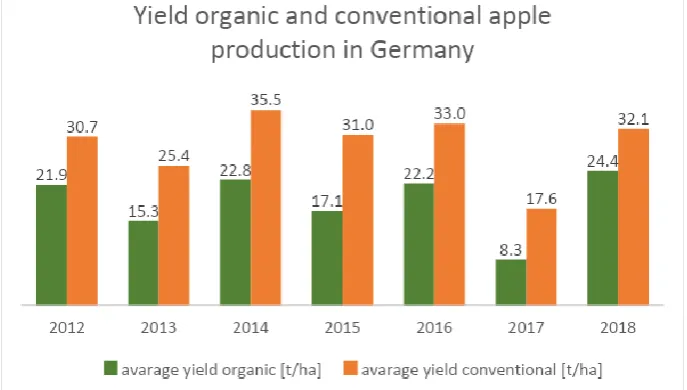
[image:3.595.56.400.429.624.2]The two biggest apple production regions in Germany are located in the area around Lake Constance in the South and in the so called “Alte Land” in the federal state of Lower Saxony in the North. In 2017 a total of 777 farms produced organic apples in Germany which is around 90% of all farms cultivating organic tree fruits and around 14% of all apple producing farms in Germany (destatis, 2019b). In 2018 the average yield was 24.4 t ha-1 (Fig. 1). (AMI & destatis, 2018)
Figure 1: Average yield in organic (green) and conventional (orange) apple production in Germany from 2012 till 2018 (Source: AMI & destatis, 2018; adapted and translated)
example, the varieties Topaz, Jonagold and Santana are the most important apple varieties in the Lake Constance region (Fig. 2).
Figure 2: Percentage of apple varieties in organic apple production in the Lake Constance growing region based on a random sample from 267 organic orchards of 10 organic apple producers within the region (Source: Kienzle, 2018, adapted and translated).
In recent years many conventional farms have converted to organic production. In 2017, an especially high conversion rate was found resulting in an increase of 17% of the area under organic cultivation compared to 2016. The previous years showed rather low conversion rates of only 5-6% (AMI & destatis, 2017). This trend is expected to continue, except for the apple producing regions in southern Germany where the growth has slowed down (Bundesanstalt für Landwirtschaft und Ernährung, 2019a). The share of yields of organic apples on the total yield of apples in Germany has been rather stable in recent years (AMI & destatis, 2018).
2.
Soil Management and Plant Nutrition
2.1 Tillage strategies and weed controlThe standard tillage and weed control strategy in organic apple production in Germany includes six mechanical weed controls per year which are conducted with 2 to 3 different tillage devices. The most important equipment for all organic apple orchards is the hoe. A hoe can be used for weed control and soil cultivation between rows of trees as well as between the trees within the rows. The first hoeing per year against weeds is adjusted to the time of soil fertilization in spring as the fertilizers are usually incorporated into the soil at the same time. Bigger farms with a size > 25 ha also use different machinery for weed control e.g. a string device with adjustable lengths of strings and a disc harrow for the incorporation of plant material. The string device is mainly used in August/September before harvesting to cut weeds in order to avoid unwanted N mineralization late in the year which would be triggered by using a hoe.
High N availability and N uptake affect e.g. the apples’ storage suitability negatively which is avoided by this weeding strategy. A disc harrow is used additionally for weed control in the tree rows. After a certain duration of using a disc harrow exclusively, a hoe would once again be needed for weed control between the trees within a tree row. In order to adjust to different soil conditions, the farmers usually use different tillage machinery as their operation modes differ. If a farmer only uses a hoe and no other tillage devices, additional manual weed control is necessary because a hoe cannot remove the weeds close to the tree trunk.
Table 1: Average number of weed control operations within a typical soil tillage strategy in an organic apple orchard during the vegetation period in 2016 (exemplary for the region of Lake Constance in southern Germany) and percentage of the total area covered by the operation. (Source: Kienzle, 2018; translated and adapted)
Measure Lake Constance Region
Avarage total number of runs to keep the tree strips clear 6,3
Spinning top device (Kreislgerät) 3,7
Treated area in %* 98
Disc plough pileing up 2,1
Treated area in %* 74
Disc plough or others pileing down 1,0
Treated area in % * 3
String device 1,6
Treated area in % * 69
Brush 1,0
Treated area in % * 0,4
Manual hoeing
Treated area in % *
57
*Treated area refers to 211 ha, which is the total area of organic fruit orchards in the Lake Constance region involved in a study in 2016
2.2 Strategies for soil improvement
have stricter guidelines for compost quality than the RAL quality control system. For instance, Bioland e.V. requires lower threshold values of foreign matter (e.g. plastic) of only 15 cm3 l -1 of compost. Compost properties are not regulated in the EU regulation on Organic Food and Farming (European Commission, 2008). Compost is applied in late spring starting from May after the soil has dried from the previous fall and winter precipitation. The aim is to increase the soil’s phosphorus and potassium content as well as to enhance the activity of soil organisms, improve soil structure and water storage capacity (Buchleither, 2019).
2.3 Fertilisation strategies
Note: Times/dates are given for the example of apple cultivation in the Lake Constance region in southern Germany and may vary in northern Germany due to climatic variations.
Soil fertilization
In spring, before blossoming, organic commercial fertilizers are applied as basic fertilization to increase the soil’s nitrogen content. The target N application is 20-40 kg N ha-1 depending on yield expectation and number of trees. The following organic commercial fertilizers are currently used: horn meal, horn pellets and grits, hair meal pellets or hair meal-potassium pellets, wool pellets, feather meal pellets, Biosol (NPK fertilizer made from microbial fungal biomass (BayWa, 2019), phyto pellets/granulates, Bioagenasol (NPK fertilizer with 85% plant-based organic substance) (Biofa AG, 2019). Advantages of organic commercial fertilizers are an easy storage until application, an easy application, high N contents and fast N release (Möller & Schultheiß, 2014).
In case the tree carries a sufficient amount of buds, a second fertilization is conducted close to the tree’s blossoming between mid of May until the beginning of June. For this application liquid organic commercial fertilizer vinasse (from sugar production) is mainly used since N from this liquid fertiliser is immediately plant available.
Phosphorus, potassium and magnesium fertilizers, e.g. ESTA Kiserit (water-soluble magnesium oxide and water-soluble sulphur trioxide (K+S Kali GmbH, 2017)) are only applied in case regular soil analyses show a deficiency or the nutrient availability in the soil is not adequate. In this case, fertilization is applied in spring before shoot development (Buchleither, 2019). However, first data show that imbalances in fertilisation in organic fruit orchards occur resulting in increased contents of plant available P and in some cases of plant available K (Möller & Zikeli, 2018). However, all keratin based fertilisers do not contribute to these imbalances as they contain only N and S, but no additional P.
Leaf fertilization
fertilizers are usually bought as liquid formula or are mixed manually using calcium flakes and sprayed onto the leaves.
In the case of micronutrient deficiencies other nutrients such as boron are applied to leaves. This deficiency must be documented for certification/control purposes (Buchleither, 2019).
Liming
The regulation of the soil pH-value is not conducted every year only if needed. Regular monitoring of the pH-value by soil analysis is conducted by most farmers as pH influences the availability of nutrients in the soil. In case the soil’s acidity is too high, lime is spread in dry form (Buchleither, 2019).
3.
Plant Protection
3.1 Fungal diseasesIn German organic apple production, fungal diseases are the most important threat to yields. The most relevant fungal diseases including the respective plant protection strategies are:
3.1.1 Apple Scab (Venturia inaequalis)
Apple scab is the most important disease in apple production in humid climates like in Germany. This is because moist leaves trigger the distribution of the fungi’s ascospores which settle on the susceptible plant parts. Warm temperatures (16-20°C) promote the fungi’s germination and growth.
Preventive measures are:
● Measures to control/remove fallen leaves (e.g. application of vinasse in autumn to enhance decomposition of leaf litter)
● Site selection to ensure a quick drying of the leaves and to avoid foggy sites
● Promotion of good aeration through adequate planting distance between trees and thinning out the tree crowns
● Choosing robust and resistant varieties when planting new trees
Direct measures with allowed plant protection products: ● Sulphur and sulphur-lime-wash
● Copper hydroxide sprays
● Potassium hydrogen carbonate sprays ● Calcium hydroxide sprays
3.1.2 Apple Mildew (Podosphaera leucotricha)
Preventive measures:
● Removal of infested shoots during winter to decrease the number of fungal spores in spring ● Measures to promote a regulated growth like adapted fertilization and a proper winter cut ● Breaking off infested organs, especially shoot tips, regularly in early summer
● Enough space for good aeration of the orchard ● Choosing hairless and resistant varieties
Direct measures with allowed plant protection products: ● Sulphur sprays
● Lecithin and an infusion of field horsetail (Equisetum arvense, self-preparation) ● Potassium bicarbonate sprays
3.1.3 Sooty blotch (Phialophora sessilis)
Preventive measures:
● Choosing varieties with an early harvesting date
● Avoid planting orchards close to forests and planting of shrubs in wind direction to the apple trees as the pathogen has a large range of host trees from which they can spread to the orchard ● Good aeration of tree tops by shoot removal and choosing of locations
● Short undergrowth between the tree rows to avoid a moist environment ● Removal of fruit mummies in winter
Direct measures with permitted allowed plant protection products: ● Potassium bicarbonate
● Sulphur-lime-broth
Washing or brushing of infested fruits is necessary to be able to market them regarding EU-quality norms (Bundesanstalt für Landwirtschaft und Ernährung, 2019b; Kompetenzzentrum Obstbau Bodensee, 2019)
Infestations of sooty blotch as well as with the fungal disease Marssonina coronaria increased in recent years (Kompetenzzentrum Obstbau Bodensee, 2019; Buchleither, 2019).
3.2 Bacterial diseases
Bacterial diseases are not as prevalent in apple production in Germany as fungal diseases. However, fire blight is a very important disease.
3.2.1 Fire blight (Erwinia amylovora)
Preventive measures:
Direct measures with allowed plant protection products: ● Copper hydroxide
● Bacillus amyloquefaciens
● Aureobasidium pullulans (a yeast preparation)
So far, curing infested trees has not been done successfully (Bundesanstalt für Landwirtschaft und Ernährung, 2019b; Kompetenzzentrum Obstbau Bodensee, 2019).
3.3 Insect pests
Several insect pests are prevalent in apple production in Germany and pose a threat especially to organic yields. The most important, including the respective plant protection strategies are:
3.3.1 Mealy aphid (Dysaphis plantaginea)
The mealy aphid starts emerging at the time of flowering. Infested fruits can’t be marketed due to deformations. Since the aphids multiply very quickly an early control is important. Preventive measures:
● Balanced shooting and fruit bearing ● Balanced plant nutrition
● Improvement of soil conditions
● Irrigation to improve climatic regulation ● Promotion of efficient beneficial insects
Direct measures with active ingredients permitted in organic farming: ● Products based on Azadirachtin
3.3.2 Sawfly (Hoplocampa testudinea)
Infestation is visible by a spiral, corked scar in the fruit peel. Severe infestations result in yield reduction due to fallen fruits.
Preventive measures:
● Removal of infested fruits after flowering
● Application of liquid fructose and sucrose on leaves during flowering to stimulate plants’ defence mechanisms
● Control of infestation:
● White boards with glue to simulate blossoms and thus attract the sawflies ● Visual control of egg deposition
● Models like POMSUM or HOPLOSUM to calculate development stages of sawflies
● Quassia extracts (liquid)
Direct measures are only necessary in case of an extremely high infestation.
3.3.3 Codling moth (Cydia pomonella)
The infestation risk of codling moth in Germany is highest between May and September. To avoid mass multiplication a long-term combined strategy of infestation monitoring, prevention, application of confusion techniques and direct control measures is applied.
Infestation monitoring:
● Installation of pheromone traps in the crown at the end of April to monitor the flight of codling moths and to be able to start with other measures
● Checking leaves for moth eggs
● Control and counting of apples with holes to estimate potential infestation for the following year or the following generation
● The forecasting models fruitweb and CYDIASUM or POSUM are used to estimate dates for control measures
Preventive measures:
● Reduce places for overwintering of the larvae by replacing cracked softwood poles, avoiding the use of bamboo poles, removing cleared waste wood from the orchard
● Catch overwintering larvae by offering of material in which larvae can build their cocoon e.g. bamboo sticks or corrugated cardboard and removal of the material before winter
● Promotion of birds and beneficial insects like earwigs and Trichogramma
● Application of liquid fructose and sucrose on tree leaves in spring to stimulate plants’ defence mechanisms
Biological and bio technological control:
● Confusion technique with pheromones as basic strategy ● Use of entomopathogenic nematodes
● Direct measures permitted in organic farming: Spraying of codling moth-granulosis virus (CpGV)
(Bundesanstalt für Landwirtschaft und Ernährung, 2019b; Kompetenzzentrum Obstbau Bodensee, 2019)
3.4 Vole control
Preventive measures:
● Planting trees in wire baskets covering the complete root of the tree to avoid voles from accessing and feeding from the roots. The wire (max. 20 mm wide) should be wrapped tightly around the first few centimetres of the trunk above ground.
● Keeping the grass within the tree rows and in the inter row short starting from August ● Constant collection of fallen fruits
● Promotion of predators which feed on voles e.g. nesting aids for predatory birds and hiding spots like stone piles for weasels and stoats
Direct measures:
● Traps killing the voles
Through the prohibition of poisonous measures vole control in organic apple production is much less effective and takes much longer than in conventional apple production where it is common to apply poisoned wheat into the voles’ tunnels (Bundesanstalt für Landwirtschaft und Ernährung, 2019b; Buchleither, 2019).
4.
Partly Covered Systems
Photo 1: Apple orchard covered with hail nets in the Lake Constance region (Source: Sascha Buchleither)
As these nets alter the view of the landscape the perception of the public is very critical towards further use of plastic covers in fruit growing as tourism is a major income source in particular in the region of Lake Constance (Zikeli, 2019).
5.
Practices to Increase Biodiversity
Other measures to increase biodiversity are flower strips at the end of tree rows and nesting aids for wild bee species and birds (Kienzle et al., 2018). Currently, diverse field trials are conducted on various orchards in a country-wide research project to investigate several measures to promote biodiversity in organic apple production in Germany. The respective measures are currently validated and optimised and a catalogue of biodiversity promoting measures is under development, but so far, no recommendations have been published (Kienzle, 2019).
The role of agriculture in biodiversity decline is currently a hot topic in the political and public debate in Germany and farmers are encouraged to apply biodiversity measures included in the agri-environmental schemes of the German Federal States. However, as organic fruit farmers already receive area-based payments from the agri-environmental schemes for organic production further funding of biodiversity promoting measures is not possible.
References
AMI & destatis (2017): Bioäpfel sind knapp
https://www.oekolandbau.de/handel/marktinformationen/der-biomarkt/marktberichte/bioaepfel-sind-knapp/ (accessed May 21st 2019)
AMI & destatis (2018): Erträge im biologischen und konventionellem Landbau
https://www.oekolandbau.de/handel/marktinformationen/der-biomarkt/marktberichte/ertraege-im-biologischen-und-konventionellen-landbau/ (accessed May 9th 2019)
Arnegger, T., Buchleither, S., Mayer, U. (2018): Impact of rain-roof covering-system on the
incidence of fungal diseases, quality parameters and solar-radiation in organic apple production. In: 18th International Conference on Organic Fruit-Growing: Proceedings to the conference from February, 19 to February, 21, 2018 University of Hohenheim, Germany. Eds: Fördergemeinschaft Ökologischer Obstbau e.V.
BayWa AG (2019): Biosal, Product Description, https://www.baywa.de/de/garten/duenger/blumen--pflanzenduenger/biosol/p-000000000000221662/ (accessed June 24th 2019)
Biofa AG (2919): Bioagenasol, Product Description, https://www.biofa-profi.de/de/b/bioagenasol.html (accessed June 24th 2019)
Bioland e. V. (2016) Kriterien für die Verwendung von Kompost aus Bioabfällen aus der getrennten Sammlung aus Haushaltungen (Biotonne) sowie für Grüngutkomposte.
https://www.bioland.de/fileadmin/dateien/HP_Dokumente/Richtlinien/Bioland_Kompost_Kriterien _27-06-2016.pdf (accessed May 25th 2019)
European Commission, 2008. Commission Regulation (EC) No. 889/2008 of 5 September 2008 laying down detailed rules for the implementation of Council Regulation (EC) No 834/2007 on organic production and labelling of organic products with regard to organic production, labelling and control.
http://eur-lex.europa.eu/LexUriServ/LexUriServ.do?uri=OJ:L:2008:250:0001:0084:EN:PDF (accessed June 26th 2019)
Bundesanstalt für Landwirtschaft und Ernährung (2019a): Bioäpfel sind knapp
https://www.oekolandbau.de/handel/marktinformationen/der-biomarkt/marktberichte/bioaepfel-sind-knapp/ (accessed May 21st 2019)
Bundesanstalt für Landwirtschaft und Ernährung (2019b): Schadorganismen im Obstbau
https://www.oekolandbau.de/landwirtschaft/pflanze/grundlagen-pflanzenbau/pflanzenschutz/schaderreger/schadorganismen-im-obstbau/ (accessed April/May 2019)
Destatis (2019a): Ökologischer Landbau in Deutschland: Baumobst 2017 und Strauchbeeren 2018: Vollständig ökologisch bewirtschaftete Anbaufläche
https://www.destatis.de/DE/Themen/Branchen-Unternehmen/Landwirtschaft-Forstwirtschaft-Fischerei/Obst-Gemuese-Gartenbau/Tabellen/oekologisches-obst.html (accessed July 24th 2019)
Destatis (2019b): Anbaufläche für Äpfel 2017 um 7% gegenüber 2012 gestiegen
https://www.destatis.de/DE/Presse/Pressemitteilungen/2017/09/PD17_328_412.html (accessed May 21st 2019)
Institut für Phytomedizin Universität Hohenheim (2015): Blühstreifen mit heimischen Wildkräutern in Apfelanlagen zur Förderung natürlicher Gegenspieler von Blattläusen. Stuttgart, pp. 36
Kienzle, J. (2017): Gesunderhaltung der Kulturpflanzen im Ökologischen Apfelanbau auf Basis einer Erhebung von Praxisdaten in den Jahren 2014 und 2015. Weinsberg, Fördergemeinschaft Ökologischer Obstbau e.V., pp. 95
Kienzle, J. (2018): Gesunderhaltung der Kulturpflanzen im Ökologischen Apfelanbau auf Basis einer Erhebung von Praxisdaten im Jahr 2016. Weinsberg, Fördergemeinschaft Ökologischer Obstbau e.V., pp. 95
Kienzle, J., Krismann, A., Zimmer, A., Eisenreich, F., Haseloff, E., Zebitz, C.P.W., Berger, J., Benduhn, B. (2018): Evaluation and improvement of measures for the enhancement of biodiversity in German organic orchards. In: 18th International Conference on Organic Fruit-Growing:
Kompetenzzentrum Obstbau Bodensee (2019): Krankheiten: Schorf und Co präsentieren sich. Ausführliche Beschreibungen zu den wichtigsten Krankheiten im Kernobstbau http://www.kob-bavendorf.de/Service/krankheiten-und-physiologische-stoerungen/?searchterm=Krankheiten (accessed May 2019)
K+S Kali GmbH (2017): ESTA Kiserit gran.: Magnesium Schwefel Power, Product Description, https://www.kali-gmbh.com/dede/fertiliser/products/kieserite_gran.html?display=ShortText (accessed June 24th 2019)
Möller, K., Zikeli S. (2018). Nutrient Flows in Organic Fruit Orchards in Baden-Württemberg. Conference Proceedings. In: 18th International Conference on Organic Fruit-Growing: Proceedings to the conference, February 19th to February 21st, 2018, Hohenheim, Germany. p. 157 – 158. Eds. Fördergemeinschaft Ökologischer Obstbau e.V.
Möller, K., Schultheiß, U. (2018). Organische Handelsdüngemittel im ökologischen Obstbau. Charakterisierung und Empfehlungen für die Praxis. Darmstadt: Kuratorium für Technik und Bauwesen in der Landwirtschaft e.V. (KTBL), p. 392
Country Profile: France
Fruit Crop: Apple (Malus domestica)
Author: Fernandez Maria-Martha; Mathieu Serrurier (French Interprofessionnal Centre for Fruits and Vegetables)
1.
Figures on Organic Production
Area: 4 254 ha in organic farming and 2 488 ha converting to organic, or a total of 6 742 ha, meaning 18,1% of the French apple total area (Agence Bio, 2017).
254 organic farms are producing apples in France, located all over the country, and more particularly in the PACA region, Pays de la Loire, Nouvelle-Aquitaine, Auvergne-Rhône-Alpes and Occitanie (Agence Bio, 2017).
The average yields in organic apple production are27,0 T/Ha (vs 49,2 T/Ha in conventional farming) (Agreste Chiffres et Données Agriculture, 2017).
For apple, the choice of variety and rootstock is decisive in organic farming. A choice of about twenty cultivars, selected mainly for its lower sensitivity to scab and ash aphid, is recommended. (Guide pratique – Conduite du pommier en Agriculture Biologique dans le Sud-Ouest, 2017) However, we don’t have any published figures on the current varietal distribution of apple trees planted organically today.
Apple is one of the fruit species that has been experiencing a constant evolution of organic areas for several years: +36 % between 2016 and 2017 and +94 % since 2013 (Agreste Chiffres et Données Agriculture, 2017; Serrurier 2019). On the French apple market, the market share of organic fruit is now 6.9% by volume and 9.9% by value (KantarWordPanel, 2018).
Figure 1: Mapping of organic apple orchards in France (translated from AGENCE BIO (Agreste Chiffres et
[image:18.595.25.567.49.404.2]Données Agriculture, 2017)
Figure 2: Evolution of organic apple areas in France (Serrurier, 2019)
2. Soil Management and Plant Nutrition
2.1 Tillage strategies and weed control No statistics are available on this topic for France.2.2 Fertilisation strategies
No statistics exist on the current fertilisation strategies used.
Some published technical guides recommend 23-32 kg N, 5-31 kg P2O5 and 27-45 kg K2O ha-1 for a fully productive orchard with a production potential of 45 t ha-1 (Guide pratique – Conduite du pommier en Agriculture Biologique dans le Sud-Ouest, 2017) which is lower than recommended in conventional systems.
A fairly well documented practice in southwest France is the so-called "double supply" technique: organic amendments and/or composts applied in the autumn, (as a base manure), and commercial organic fertilizers with rapid mineralization in the spring, during the period of high tree demand (splitting in 2 times).
3.
Plant Protection
The most problematic pests and diseases for organic apple growing differ, in their order of importance, from those most controlled in conventional agriculture.
Thus, apple aphids (ashen aphid and woolly aphid) come in first position, closely followed by codling moth (C. polmonella) and apple sawfly; apple scab (V. inequalis) and gloeosporiosis arrive in 5th and 6th position, followed by anthonomus and oriental fruit moth (Millian, 2013).
Data sources: Left: Ctifl survey 2012 (Agreste Chiffres et Données Agriculture, 2017)
Right: Data from AGRESTE survey 2015 (Agreste Chiffres et Données Agriculture, 2017)
3.1 Fungal diseases
3.1.1 Apple Scab (V. inequalis)
The protection strategy against scab is to use only resistant varieties and to avoid bypassing resistance by acting on primary infections; the control is based on the use of the apple scab models (DGAL/Inoki® or RIMpro) along with the spraying of copper, sulphur, potassium bicarbonate or calcium polysulphide. The strategy includes early leaf grinding in winter, as a prophylactic measure. (Guide pratique – Conduite du pommier en Agriculture Biologique dans le Sud-Ouest, 2017; Le Guide Arbo PFI et AB, 2019)
3.1.2 Gloeosporioides
general. (Guide pratique – Conduite du pommier en Agriculture Biologique dans le Sud-Ouest, 2017; Le Guide Arbo PFI et AB, 2019)
3.2 Insect pests
3.2.1 Aphids
The authorised control solutions against apple aphids are paraffinic oil and sulphur that can be used from BBCH 51 to BBCH 60. Azadirachtin is not yet approved in France by Plant Protection Regulation, but it can be used in recent years under derogation in organic apple orchards. The control of aphids can be supplemented in the fall by the use of kaolin. (Guide pratique – Conduite du pommier en Agriculture Biologique dans le Sud-Ouest, 2017; Le Guide Arbo PFI et AB, 2019)
3.2.2 Codling moth and oriental fruit moth
Against codling moth and oriental fruit moth, the most common strategy is to use mating disruption, possibly supplemented by applying biocontrol products based on Granulosis Virus or Bacillus thuringensis. (Guide pratique – Conduite du pommier en Agriculture Biologique dans le Sud-Ouest, 2017; Le Guide Arbo PFI et AB, 2019)
75% of organic apple orchards are estimated to be covered by mating disruption techniques (Agreste Chiffres et Données Agriculture, 2017).
3.1.3 Apple sawfly
Quassia amara gives good results to control apple sawfly in field trials, but its use is not yet authorised by French national regulation. The use of glue traps is the only option currently available. (Guide pratique – Conduite du pommier en Agriculture Biologique dans le Sud-Ouest, 2017; Le Guide Arbo PFI et AB, 2019)
3.1.4 Anthonomus
No control method is available against anthonomus today.
4.
Partly Covered Systems
The use of rain covers has been tested by Ctifl since 2010 until now. These systems make it possible to reduce scab treatment programmes and it seems to have a beneficial effect against gloeosporiosis, but many technical obstacles remain: induction of a climate favourable to the development of powdery mildew and ash aphid, difficulty in managing irrigation, etc. (Guide pratique – Conduite du pommier en Agriculture Biologique dans le Sud-Ouest, 2017; Boucaud, 2019).In view of these many insecurities regarding the cost/benefit ratio of this method, it is only used in experimentation today and is not widespread in commercial orchards.
that seems most suitable is the single plot net (nets out of the four orchard borders in addition to the classic anti-hail protection), which shows an efficacy of 75 to 85% against lepidoptera in apple orchards. However, it is recommended to apply a treatment on the first generation of codling moth to eliminate individuals who would have still managed to get under the nets. The need to close nets early in the season raises other questions, such as pollination or frost control (Koke, 2011).
We have no statistics on the coverage rate of orchards by Alt’Carpo nets today.
The use of hail nets seems also to reduce codling moth pressure. 98% of French organic apple orchards are currently equipped with hail nets. (Agreste Chiffres et Données Agriculture, 2017)
5.
Practices to Increase Biodiversity
Several measures are strongly recommended in organic orchards to increase functional biodiversity: use of floral strips and composite hedges, installation of bird and bat nesting boxes, lacewing shelters, perches for birds of prey, or even snake shelters. No statistics exist on the use of these methods (Ricard, 2012).
References
Agence Bio – Données 2017
Agreste Chiffres et Données Agriculture – n°245 – déc. 2017 (Enquête sur les pratiques culturales des arboriculteurs en 2015)
Guide pratique – Conduite du pommier en Agriculture Biologique dans le Sud-Ouest – 2017 – Publication du Service AB de la Chambre d’Agriculture du Lot-et-Garonne (en collaboration avec Invenio et le Ctifl)
KantarWordPanel, 2018
GIRA Foodservice, 2016
Serrurier, M. 2019. Observatoire économique des fruits et légumes Bio par produit. Document interne CTIFL/INTERFEL
Millian, M. 2013. Enquête nationale : quels besoins de recherche/expérimentation pour l’orientation du programme AB fruit du Ctifl ? (Ctifl internal document)
Le Guide Arbo PFI et AB 2019. L’action agricole, N°109 Supplément n°1 au n°144 – Février 2019 (rédaction conjointe des Chambres d’Agriculture du Tarn-et-Garonne et du Lot-et-Garonne)
Laget et al., 2015.Guide pour la conception de systèmes de production fruitière économes en produits phytopharmaceutiques. Fiche 15 – Filet mono-parcelle Alt’Carpo. GIS Fruits et Ministère de l’agriculture, Paris
Koke, E. 2011. Protection des vergers de pommiers contre les lépidoptères – Lutte mécanique avec filets. Infos Ctifl, avril 2011, n°270
Country Profile: Bulgaria
Fruit Crop: Apple (Malus domestica Borkh.) Autors: Vasiliy Dzhuvinov and Hristina Kutinkova
1.
Figures on Organic Production
Organic Crop Production [image:23.595.57.550.439.741.2]Area under organic-crop production (land still being converted and certified) in 2017 declined for all crops from 2016. Lower subsidies for farmers during the conversion process particularly drove a reduction in area undergoing conversion. The share of fully-converted organic area in 2017 also declined, although was still significant for some categories, including 38 % for permanent crops (e.g. orchards, vineyards). The number of organic farms in 2017 decreased by 7% from 2016. Organic farmers accounted for 7.1 % of all farmers in 2016, down from 7.4 % in 2015 (Ministry of Agriculture 2018). It is not clear how the current situation affects organic fruit producers in detail but after a strong increase of the area of organic fruits and berries until 2016 a decline in 2017 occurred (Tab. 1).
Table 1. Agricultural Land under Organic Production, indicators, 2013 - 2017
2013 2014 2015 2016 2017
Total fully converted and under conversion to organic farming
agricultural land, (ha)
56,287 47,914 118,552 160,620 136,618
Total utilized
agricultural land (%)
1.13 0.96 2.37 3.20 2.72
Fully converted to organic farming (ha)
15,161 15,170 21,539 36,137 48,453
Under conversion to organic farming (ha)
41,126 32,744 97,013 124,484 88,164
Total fully converted and under conversion to organic farming land arable land*(ha)
Permanent crops for human consumption
NA 9,442 25,920 33,108 30,478
-Fruits, berries and nuts NA 6,512 21,722 27,717 26,386
-Pome fruits NA 431 702 900 757
-Stone fruits NA 1,612 4,581 6,757 5,935
-Nuts 8,947 3,677 15,366 18,484 17,985
-Grapes 3,872 2,914 4,199 5,390 4,092
[image:24.595.56.544.127.323.2] [image:24.595.57.520.387.647.2]Source: Eurostat
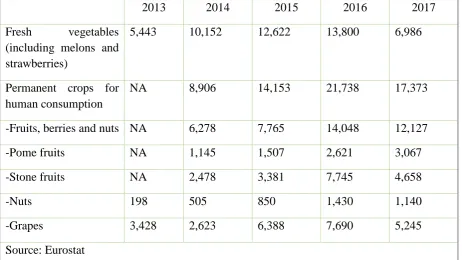
Table 3. Production of Organic Crops in MT, 2013 - 2017
2013 2014 2015 2016 2017
Fresh vegetables (including melons and strawberries)
5,443 10,152 12,622 13,800 6,986
Permanent crops for human consumption
NA 8,906 14,153 21,738 17,373
-Fruits, berries and nuts NA 6,278 7,765 14,048 12,127
-Pome fruits NA 1,145 1,507 2,621 3,067
-Stone fruits NA 2,478 3,381 7,745 4,658
-Nuts 198 505 850 1,430 1,140
-Grapes 3,428 2,623 6,388 7,690 5,245
Source: Eurostat
Cultivars
Fig. 1: Organic apple production in Bulgaria (rootstocks: M9, M26, MM106, Pajam2 -France, Supporter4 (Pi80) - Germany)
2.
Soil Management and fertilization
Natural grassy vegetation is found in the inter rows and weed control by machines is done in the intra rows. External fertilisers (farm yard manure and compost are applied at amounts of 30-50 t ha-1. For fertigationis used liquid Lumbreco fertilizer.
3.
Plant Protection
3.1 Fungal Diseases3.1.1 Apple scab
Apple scab - Venturia inequalis is controlled by sulphur based products or copper. The protection strategy against scab is to use only resistant varieties.
3.2 Insect pests
The main pests in organic apple growing in Bulgaria are: ● Codling moth ( Cydia pomonella L.) – a key pest on apple
● Aphids – Dysaphis plantaginea Pass., Aphis pomi de Geer, Aphis spiraecola Patch. and Dysaphis devecta Walker
● Leaf miners (Leucoptera scitella Zell. (Lepidoptera: Lyonetidae), Lithocolletis (Phyllonorycter) blancardella (F.) (Lepidoptera: Gracillariidae), Lithocolletis corylifoliella
(Hübner) /Lepidoptera; Lithocolletidae 3.2.1 Codling moth
The control strategy against Cydia pomonella L.: Mating disruption – in Bulgaria only GINKO dispensers are registered and they are distributed by Summit Agro BG; Biocontrol products based on
Granulosis Virus - Madex Top and Madex Twinof Andermatt Biocontrol AG. 3.2. 2 Aphids
Aphids are controlled by parafin oils in winter time and by bioinsecticides during the season derived from the neem tree Azadirachta indica A. Juss (Meliaceae). They are a good alternative to control D. plantaginea on susceptible cultivars when natural enemies do not guarantee biological control. Satisfactory control has been achieved with applications of NeemAzal-T/S.
For prophylactic the organic producers are using Pireco ВBА- capsules. Pireco WBA capsules contain natural plant extracts that are taken from the plant through the roots and spread within it. The taste and smell of the plants and soil changes noticeably for insects, therefore they no longer harm the plants. The taste and smell of the does not change for humans. The taste and smell of the plants used for food is not change for humans.
It is recommended that the capsules will be used for prophylactic against aphis, spider mite, and trips. Beneficial insects such as bees are not affected. One capsule is sufficient for a plant height of 50 cm. The product should be followed for approximately 4-6 weeks. After this period the treatment should be repeated.
3.2.3 Leaf rollers
Leaf rollers are controlled by products based on Bacillus thuringiensis
3.2.4 Leaf miners
Leaf miners are controlled by Azadiractin (NeemAzal-T/S).
4.
Partly covered systems
During several years the farmers started to use the anti-hail nets, which also help to reduce the damages from codling moth.
References
Ministry of Agriculture and forestry in Bulgaria (2018). Annual report for 2018 Dzhivinov et al. 2016. Apple -the book (in Bulgarian), Plovdiv
Country Profile: North Italy – South Tyrol
Fruit Crop: Apple (Malus domestica)Author: Thomas Holtz, Markus Kelderer
1. Figures on Organic Production
AreaIn 2018, 2194 ha were used for the organic fruit production, that is 11.9% of the total surface used for fruit production in South Tyrol (Provincia Autonoma di Bolzano, 2018a).
Number of organic farms
In 2018, 1283 organic farms were present in South Tyrol (Provincia Autonoma di Bolzano, 2018b).
Total yield
The certified organic apples produced in 2017 were 55000 tons, representing 70% of the Italian organic apple production (Kelderer & Telfser, 2017)
The average yield of organic apples is almost 42 tons per ha (Reiffeisenverband Südtirol, 2018)
Apple varieties in organic agriculture
% of the organic production in 2017 (Kelderer & Telfser, 2017)
● Gala 32,7%
● Golden Delicious 17,6% ● Braeburn 14,5%
● Pinova/Evelina 7,8% ● Red Delicious 5%
● Cripps Pink/Rosy Glow, Fuji, Topaz, Jonagold, Idared, Elstar and others are the rest 22,4% (in order of importance)
2. Soil Management and Plant Nutrition (Südtirol Beratungsring, 2019)
Tillage with the inter-row harrow in spring and fall and with the brush during the summer season (every 3 – 4 weeks).
yeast and treacle residue), etc. and with organic compost (animal and plant based self-produced or bought).
3. Plant Protection (Südtirol Beratungsring, 2019)
3.1 Fungal diseases3.1.1 Apple scab (Venturia inequalis)
● Preventive and scab stop treatments with calcium polysulfide, preventive treatments with copper comp.
3.1.2 Alternaria alternate
● Treated with copper and acid clays
3.1.3 Powdery mildew
● Preventive treatment with sulphur
3.2 Bacterial diseases
3.2.1 Apple proliferation (phytoplasmal disease)
● prompt eradication and destruction of the infected trees; regulation of the vector with pyrethrum
3.2.2 Fireblight
● Prompt eradication and destruction of the infected trees and treatments with copper comp. and acid clays.
3.3 Pests
3.3.1 Codling moth
● Granulovirus treatments during the flight period, mating disruption with pheromones, nematodes
3.3.2 Leafrollers
● Bacillus thuringiensis
3.3.3 Rosy apple aphid
● Neempre and post-blooming
3.3.4 Wooly apple aphid
● Mineral oil and sulphur at bud broke
3.3.5 Spidermites
● mineral oil, insecticidal soap
3.4 Vole control
4. Partly Covered Systems
Hail protection nets are quite diffused, when not possible because of costs, position, local policies etc., it is possible to stipulate an insurance (Stainer, 2014; Provincia Autonoma di Bolzano, 2017). Other types of cover are not largely diffused.
5. Practices to Increase Biodiversity
Some farmers are using inter row flower strips, but this is not the rule. Other elements of biodiversity are cairn, nesting boxes, high trees, dead wood, pond, insect hotels, and digs (Südtirol Beratungsring, 2019).
References
Bioland (2019): Guidelines Bioland Südtirol. https://www.bioland.de/ueber-uns/richtlinien.html (accessed October 2019)
Kelderer M. and Telfser J. (2017): Varietà per la coltura biologica, cosa fa l’Europa. Frutticoltura nr. 11, 2017. pp. 20
Provincia Autonoma di Bolzano (2018a) - Dipartimento Agricoltura, Foreste, Turismo e Protezione civile. Relazione agraria e forestale 2018.
http://www.provincia.bz.it/agricoltura-foreste/agricoltura/relazione-agraria-forestale.asp (accessed October 2019)
Provincia autonoma di Bolzano (2018b) - Ripartizione 31, Agricoltura. Elenco degli operatori dell'agricoltura biologica 2018 - statistica.
http://www.provincia.bz.it/agricoltura-foreste/agricoltura/agricoltura-biologica/produzione-biologica.asp (accessed October 2019)
Provincia Autonoma di Bolzano (2017): Dalla Giunta: indennizzi per divieto di installare reti antigrandine. www.provincia.bz.it/news/it/news.asp?news_action=4&news_article_id=579727 (accessed October 2019)
Raiffeisenverband Südtirol (2018): Obststatistik Geschäftsjahr 2016/17
Stainer R. (2014): Klimawandel: Hype oder Herausforderung für den Obstbau Südtirols. Versuchszentrum Laimburg, Präsentation Interpoma 11/2014
http://www.fierabolzano.it/interpoma/mod_moduli_files/Reinhold%20Stainer.pdf (accessed October 2019)
Südtirol Beratungsring (2019): Bioleitfaden Apfel 2019
Country Profile: Switzerland
Fruit Crop: apple (Malus domestica)Author: Michael Friedli (FiBL)
1.
Figures on Organic Apple Production
The total area of organic table apple was more or less constant in the last 10 years. In the last 2 years several partially large conventional apple farmers converted to organic production. Therefore, the area of organic apple production strongly increased from 2018 to 2019. The biggest increase in the area was in the canton of Valais (Table 1). More than half of the organic apple production area of Switzerland belongs to the canton of Valais, followed by the production area in the canton of Thurgau and canton of St. Gallen.
The largest production area is cultivated with Gala (54 ha), followed by Topaz (43 ha) and Canada Reinette (39 ha) (Table 2). The remaining area is cultivated with many different varieties.
[image:30.595.56.377.446.671.2]Area
Table 1: Organic table apple production in Switzerland – main growing areas (Source: Federal Office for Agriculture - FOAG)
2018 2019
Region ha % ha %
Valais 122 45.1 189 55.4
Thurgau 39 14.4 39 11.4
St. Gallen 37 13.7 38 11.2
Vaud 21 7.6 21 6.0
Aargau 20 7.3 20 5.8
Others 32 11.9 35 10.2
Total 271 342
Number of farms
Average yields in organic farming
In average around 20 t ha-1. However, yields are strongly depending on the variety and also on the intensity of the production system. There are also farmers that achieve 50 t ha-1.
Varieties
Table 2: Organic apple varieties used in Switzerland - area per variety (Source: Federal Office for Agriculture)
2018 2019
Variety ha % ha %
Gala 53 20 54 16
Topaz 42 16 43 12
Braeburn 12 5 13 4
Golden Delicious 9 3 9 3
Maigold 8 3 22 7
Gravensteiner 5 2 17 5
Otava 5 2 5 1
Boskop 5 2 5 2
Pinova 5 2 5 1
Goldrush 5 2 5 1
Canadian Reinette 5 1 39 11
Others 120 44 125 36
total 271 342
2. Soil Management and Plant Nutrition
2.1 Tillage strategies and weed control [image:31.595.55.401.255.627.2]were developed. Hence, machines such as the “Greenmaster” with rotating plastic-strings are used to cut the grass in the tree row. Many farmers use a combination of hoeing machines and machines that cut/mulch the grass.
2.2 Fertilisation strategies
Most farmers use a combination of different fertilisers. They give compost or manure every 2-3 years and in springtime many farmers use every year commercial fertiliser pellets as N-fertiliser.
3. Plant Protection
3.1 Fungal diseases and the most important plant protection strategies
3.1.1 Apple scab (Venturia inaequalis) 🡪 plant protection according to the forecasting model “RIMpro” with:
● Clay products such as “Myco-Sin” in combination with sulphur ● Lime sulphur
3.1.2 Sooty blotch (complex of fungi)
● Potassium bicarbonate products such as “Armicarb” or “Vitisan”
3.1.3 Marssonina coronaria
● Clay products such as “Myco-Sin” in combination with sulphur ● Lime sulphur
3.2 Bacterial diseases and the most important plant protection strategies
3.2.1 Fire blight (Erwinia amylophora)
● Clay products such as “Myco-Sin” in Combination with “Vacciplant”. ● “Blossom Protect” + “Buffer Protect”
🡪 “Blossom Protect” consists of two yeast strains that have a preventive effect as antagonists against various pathogens by competing for space and resources. “Buffer Protect” consists of citric acid and is used as an additive with “Blossom Protect” in fire blight control. The citric acid lowers the pH value on the plant surface for a longer period of time. This lower pH is favourable when controlling fire blight.
3.3 Insect pests and the most important plant protection strategies
3.3.1 Codling moth (Cydia pomonella) ● Mating disruption
● Granulovirus application
3.4 Vole control
● Manual with vole traps. A lot of farmers use the vole trap system “topcat”: https://www.topcat.ch/Beschreibung-1_1-3.html
● With the machine “Mauki”: https://www.bb-shop.ch/pi/mauki-maeusevernichter-gx200.html
4. Partly Covered Systems
Anti-hail net is standard and installed in most organic apple orchards for table apple production. Depending on the risk of hailstorms the use of anti-hail nets varies in different regions of Switzerland. Rain-protection is not widely installed for apple production. For organic table cherry production rain-protection is standard. Some organic farmers are testing rain-rain-protection for table apple production. In the future the use of rain protection for table apple production could increase. However, there could be a conflict with landscape protection.
5. Practices to Increase Biodiversity
Flower strips are used by many organic farmers to increase the supply of nectar and pollen for beneficial organisms that contribute to pest control. Hedges are used by organic farmers to increase biodiversity in apple orchards. Bird boxes are also installed to give shelter for birds that contribute to pest control.
References
Bio Suisse Richtlinien für die Erzeugung, Verarbeitung und den Handel von Knospe-Produkten (Fassung vom 1. Januar 2019).
https://www.bio-suisse.ch/media/VundH/Regelwerk/2019/DE/rl_2019_1.1_d_gesamt__11.12.2018.pdf (accessed 29.07.2019)
● Pfiffner, L., Jamar, L., Cahenzli, F., Korsgaard, M., Swiergiel, W. & Sigsgaard, L. (2018): Perennial flower strips – a tool for improving pest control in fruit orchards.
Country Profile: Poland
Fruit Crop: Apple (Malus domestica L.)
Author: Eligio Malusá, Małgorzata Tartanus, Ewa Furmańczyk
1. Figures on Organic Production
AreaIn 2016, the total area under organic production in Poland was 536.579,22 ha (105.683,18 in conversion). The land area dedicated to fruit production was 25.850,60 ha (about 6.4%). Apple orchards are covering about 5.400 ha in 2017, which is strongly reduced from the average 25.000 ha in the previous 5 years.
Number of farms
22.435 organic farmers in 2016, 3788 of which are engaged in fruit production
Average yields in OF
On average, apple orchards yield is about 30-35 tha-1.
Varieties
Rootstocks: P22, M9 (T337, EMLA) M26, MM106, P14, P60
Cultivars resistant to apple scab: Topaz, Melfree, Gold Millenium, Rubinola, Waleria Liberty, Ariwa, Enterprise
Cultivars susceptible to apple scab: Szampion, Rubi, Jonagored, Ligol, Lobo, Early Geneva, Witos, Empire, Cortland Wicki, Reno, Gala group, Antonówka
Development in the recent years
Fig. 1: Land area of organic apple production in Poland (Source: FIBL statistics website - https://statistics.fibl.org)
2. Soil Management and Plant Nutrition
2.1 Tillage strategies and weed controlThe orchards are generally managed with a natural mulching method, which is mown in the inter-row and less frequently also in the row, to control weeds. Rows and inter-rows are also hoed in springtime and whenever necessary during the growing season.
2.2 Fertilisation strategies
3. Plant Protection
3.1 PathogensThe most important fungal disease is apple scab (V. inequalis). There are problems in controlling it because of lack of registered and marketed products in Poland. Therefore, apart from the use of scab-resistant cultivars, the control is based on S-based products or compounds such as potassium bicarbonate (Armicarb). For the control of other pathogens, copper in different formulations is widely used.
The most important bacterial disease of apple in Poland is fire blight (Erwinia amylovora). There are no specific products for this pathogen and the normal approach to control is the prevention and the use of copper-based products. Prevention is based on the use of less susceptible varieties (e.g. Free Redstar, Elstar), the reduced application of nitrogen fertilizers and the use of forecast model (Maryblyt) which is alerting the grower when the risk of infection during blooming is increasing thus requiring the control treatment. Removal and burning of the affected shoots is also required to reduce the pathogen pressure.
3.2 Pests
Pest control in organic apple orchards is mainly devoted to control aphids and codling moth (Cydia pomonella). Several products based on physical mechanisms (e.g. silicates, oils, etc.) are available to control aphids, but the damage from these pests is frequently of high impact to the orchard. To control codling moth, a strategy based on the use of pheromone traps and microbial based products (granulovirus) is normally applied. Other kinds of lepidoptera, such as Tortricidae, are also frequently present and controlled with the use of products based on B. thuringiensis.
4. Partly Covered Systems
These systems are currently not used in the country, even for conventional orchards. However, there is increasing interest in such option for the control of pests in other crops (i.e. Drosophila suzuki).
5. Practices to Increase Biodiversity
References
Agricultural and Food Quality Inspection 2017. The report on organic farming in Poland in 2015– 2016.
FiBL Statistics website: Area data for selected crops
https://statistics.fibl.org/europe/selected-crops-europe.html (accessed August 5th 2019)
List of cultivars offered by selected nurseries present in the Association of Polish Nurseries http://www.sps.agro.pl/katalog-szkolek,29.html (accessed August 5th 2019)
List of fertilizers and soil improvers registered in Poland
http://iung.pl/index.php?option=com_content&view=article&id=111&Itemid=61 (accessed August 5th 2019)
List of plant protection products for organic farming registered in Poland
https://www.ior.poznan.pl/1631,srodki-ochrony-roslin-do-upraw-ekologicznych (accessed August 5th 2019)
Matyjaszczyk E. 2017. Plant protection means used in organic farming throughout the European Union. Pest Manag. Sci. DOI 10.1002/ps.4789
Turechek, W. W. and Biggs, A. R. 2015. Maryblyt v. 7.1 for Windows: An Improved Fire Blight Forecasting Program for Apples and Pears. Plant Health Progress doi:10.1094/PHP-RS-14-0046.