This is a repository copy of A semiconductor photon-sorter.. White Rose Research Online URL for this paper:
http://eprints.whiterose.ac.uk/103202/ Version: Accepted Version
Article:
Bennett, A.J., Lee, J.P., Ellis, D.J. et al. (3 more authors) (2016) A semiconductor photon-sorter. Nature Nanotechnology. ISSN 1748-3387
https://doi.org/10.1038/nnano.2016.113
[email protected] https://eprints.whiterose.ac.uk/
Reuse
Unless indicated otherwise, fulltext items are protected by copyright with all rights reserved. The copyright exception in section 29 of the Copyright, Designs and Patents Act 1988 allows the making of a single copy solely for the purpose of non-commercial research or private study within the limits of fair dealing. The publisher or other rights-holder may allow further reproduction and re-use of this version - refer to the White Rose Research Online record for this item. Where records identify the publisher as the copyright holder, users can verify any specific terms of use on the publisher’s website.
Takedown
If you consider content in White Rose Research Online to be in breach of UK law, please notify us by
A semiconductor photon
-
sorter
A. J. Bennett1*, J. P. Lee1, 2, D. J. P. Ellis1, I. Farrer3*, D. A. Ritchie3, and A. J. Shields1.
1
Toshiba Research Europe Limited, Cambridge Research Laboratory, 208 Science Park, Milton
Road, Cambridge, CB4 0GZ, U. K.
2
Engineering Department, University of Cambridge, 9 J.J. Thomson Avenue, Cambridge, CB3
0FA, U.K.
3
Cavendish Laboratory, Cambridge University, J. J. Thomson Avenue, Cambridge, CB3 0HE,
U. K.
* Department of Electronic & Electrical Engineering, University of Sheffield, Mappin St,
Sheffield, S13JD, U.K.
Photons do not interact directly with each other, but conditional control of one beam by
another can be achieved with non-linear optical media at high field intensities. It is exceedingly
difficult to reach such intensities at the single photon level but proposals have been made to
obtain effective interactions by scattering photons from single transitions. We report here
effective interactions between photons created using a quantum dot weakly coupled to a cavity.
We show that a passive single-photon non-linearity can modify the counting statistics of a
Poissonian beam, sorting the photons in number. This is used to create strong correlations
between detection events and sort polarisation correlated photons from an uncorrelated stream
using a single spin. These results pave the way for optical switches operated by single quanta of
light.
In many ways photons are ideal carriers of classical and quantum information in that they
can be transmitted over large distances and only suffer decoherence from absorption, which
coupled to an optically active medium. In the case of quantum optics, non-linear crystals have
been developed that can create entangled photon pairs probabilistically2. This precludes their
operation with single-photon input states; it remains desirable to create a single-photon
non-linearity for optical quantum information processing3,4.
In systems where light and matter are strongly coupled the inherent non-linearity of the
Jaynes-Cummings ladder can be used to manipulate photon states5,6. It has been shown that the
same functionality can be achieved by single emitters coupled to an open optical system, such as
a 1D photonic crystal mode or a surface plasmon7,8, where near deterministic interactions are
possible in high efficiency geometries. The promise of this approach has led to many theoretical
proposals to create giant Kerr rotations of photon polarisation9,10 entangle spins and photons11,12,
perform logic operations13,14,15 and achieve rectification of light transmission16, to name a few
possibilities. Experiments have recently shown the optical transitions in ions can mediate an
attractive force between photons, leading to bunching being observed in a transmitted photon
stream17. It is appealing to realize these applications in the solid-state where devices can be
miniaturized and produced at scale.
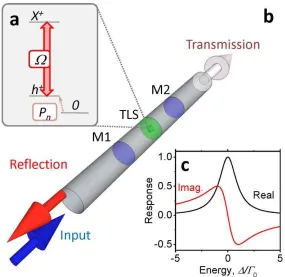
Figure 1 shows the concept: a waveguide supporting a single transverse optical mode
hosts a single transition that controls the transmission and reflection of light. In Fig. 1c we plot
the real and imaginary components of the transition’s fluorescence. The net optical response of
this system is governed by the coherent interference of the fluorescence and the incident light,
which we show leads to strong correlations between photons in the reflected beam. The cavity
formed by mirrors M1 and M2 enhances the coherent part of the reflected beam, leading to
efficient “photon sorting”; measurement of one reflected photon is correlated with others in the
Figure 1 a, The level scheme of the emitter. The thick red arrow couples to the transition between and
single hole (h+ ) and a positively charged exciton (X+ ) b, shows a schematic of system where a single
transition (green) can control the transmission and reflection through the guide. c, calculated real
(black) and imaginary (red) parts of the electric field of the transition as a function of detuning, ,
from the transition of width 0.
The experiments reported here used the reflected light from a pillar micro-cavity18
containing a single InGaAs quantum dot emitting at 1332 meV. The transition between the trion
state X+ and a single hole, was activated by a weak non-resonant optical field; effectively Pn in
Fig. 1a introduced a hole to the ground state. Lateral confinement led to degenerate HE11 optical
modes whilst Bragg reflectors confined light along the axis, leading to a Beta factor of 0.9. The
the transition19,20,21 to near unity at a Rabi frequency of 0.83 GHz. The RRS photons retain a
high spectral overlap with the input optical field, allowing for high level of first-order
[image:5.612.81.535.158.347.2]interference.
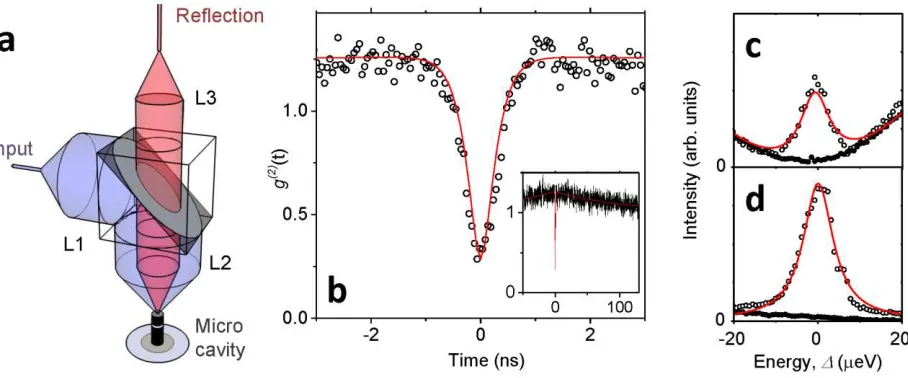
Figure 2. a, A schematic of the experimental layout. b, The auto-correlation histogram of the light
collected without polarisation filtering at 11K. The insert shows data over a wider range to illustrate
the charge-induced bunching caused by the probabilistic excitation with laser Pn. c, shows a scan of
intensity as a function of energy detuning with (open data points) and without (filled data points) a
charge in the ground state, when the collected polarisation is parallel to that of the driving field. d,
shows the same scan as in c, with the collected polarisation set orthogonal to the driving field.
Fig. 2a shows an input beam focused onto the sample. Light was collected along the
same axis, after transmission though a weakly reflecting beam-splitter, into a single mode output
fiber. This confocal arrangement with unequal lenses L1 and L3 limits the reflectivity of the
cavity to the point where the light in the output fiber is controlled by the transition. A
Hanbury-Brown and Twiss autocorrelation histogram confirms the light displays non-classical photon
detection path so, in effect, the Poissonian statistics of the input field were “truncated” by the
[image:6.612.233.383.127.539.2]transition, removing N ≥ 2 photon components on the timescale of the transition lifetime.
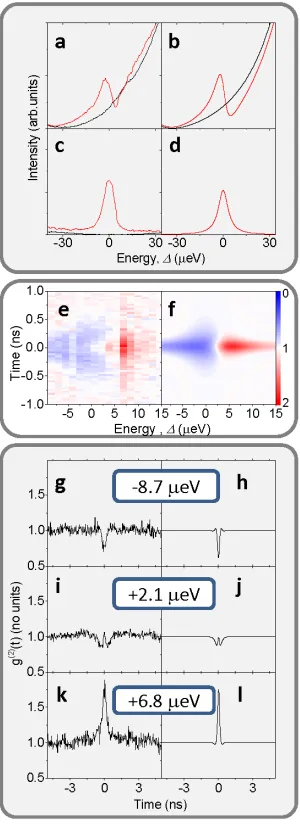
Figure 3 a, The collected intensity when the input and detection polarisations are equal, with (red)
and without (black) a carrier present in the ground state at 5 K. b, Calculation of the same
measurement. c, and d, show experiment and model, respectively, under the same conditions but with
the collection polarisation set to reject the light reflected by the cavity. e, and f, show experiment and
model of the photon statistics as a function of detuning. The lower panel shows individual photon
auto-correlation measurements at fixed detuning of g, and h, -8.7eV, i, and j, 2.1 eV and k, and l,
Introducing a polariser in the detection path set parallel to the driving field polarisation
the RRS intensity was an order of magnitude greater than the detected light reflected by the
cavity. The reflectivity spectrum as a function of energy detuning, , is shown in Fig. 2c when
the transition was active (open circles). When the ground state was not loaded with a hole the
reflectivity spectrum shows the response of the cavity mode (filled circles). Conversely, when
the polariser is set to be orthogonal to the driving field we observe the real-part of the transition’s
response (Fig. 2d, open circles). Following analysis, we conclude the non-zero g(2)(0) measured
in Fig. 2b is a result of the mixing ideal anti-bunched RRS photons with the small contribution of
Poissonian light reflected directly by the cavity.
The imaginary part of the transition’s fluorescence can be revealed by mixing the RRS
photons with a phase-coherent reference beam. Fig. 3a shows a measurement of the net
reflectivity for co-polarised arrangement when the transition was temperature-shifted to a point
of greater cavity reflectivity. The electric field at the output, Etota l(), is given by22,23:
0 0 0 ) ( ) ( i R R
Etota l ca vity
(1)
Where R0 is the maximum reflectivity of the transition and Rcavity() the cavity reflectivity
determined from the experimental data in Fig. 3a (black line). The reflection from the dot is a
Lorentzian function with full-width = 7.7 eV (Fig. 3c) cavity-enhanced by the Purcell effect.
The calculated reflectivity is given by |Etotal|2, which is shown in Fig. 3b, shows a good
agreement with the experiment. We see that the peak reflectivity at negative is increased by
. This 236% modulation in the signal can be tuned with temperature and input intensity, and
underlines the degree of control the transition has over the reflected light.
As the input energy was scanned across the transition the photon statistics at the detector
were modified as shown in Fig. 3e, and modelled in Fig. 3f. These auto-correlations can be
understood by combining the interference effect described by equation (1) and the dynamics of
the transition after a photon detection event. Intuitively, this effect is a result of the quantized
RRS photons being added or subtracted from the output-field. When the input is blue-detuned
from the transition a single photon is added in phase with the coherent light and so the intensity
is increased, but the corresponding g(2)(0) parameter is then less than one. At -8.7 eV g(2)(0) =
0.75 (Fig. 3g), in agreement with the model Fig. 3h. As is increased it is possible to observe
some bunching around time zero. At = +2.1 eV (Fig 3i) a W-shaped correlation observed and
predicted. When the input was red detuned the RRS light was subtracted from the coherent field,
reducing the total intensity but leaving the multi-photon components of the remaining state to
dominate. At = +6.8 eV g(2)
(0)=1.75. The ability of the transition to actively sort the input
weak coherent beam by photon number has led to strong correlations in the reflected photon
statistics. This gives the appearance of an attractive or repulsive force either bunching or
separating single photons from each other.
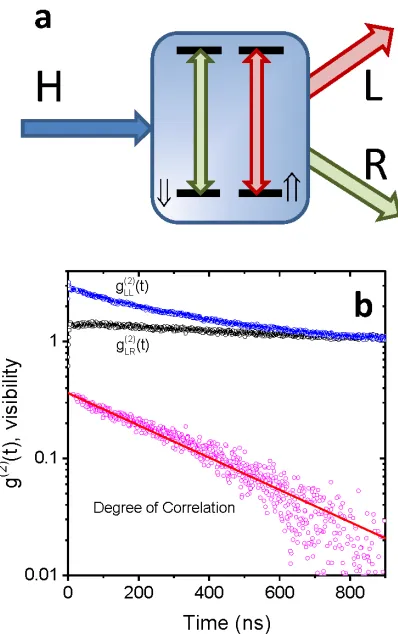
Finally, we used the spin of the hole to sort the photons in polarisation, under the same
conditions as in Fig. 2b. Light at the detector was dominated by RRS photons, so the detection of
a certain handedness of photon corresponded uniquely to a certain spin-eigenstate. Polarised
correlations measure the probability of the source scattering incident linearly polarised photons
into the same circular polarisation, left-left (L-L) or right-right (R-R), versus the probability of
hole spin is aligned along the cavity axis can it result in polarisation correlation at the detectors.
When the spin is not prepared its random orientation and zero expectation value lead to a 1/3
degree of polarisation correlation, as is observed in Fig. 4b. The bunching of photons of common
circular polarisation has a characteristic timescale of 0.315 ± 0.003 s at zero magnetic field.
This value is limited by the incoherent, probabilistic charging of the dot but could be increased to
>100 s by deterministic charging24
[image:9.612.210.409.246.563.2].
Figure 4 a, A linearly polarised input is scattered from the two degenerate transitions, each coupled
equally to a different ground state hole-spin. The scattered photon polarisation is determined by this
spin. b, Polarised correlation measurements on the scattered photons, for (blue) common circular
polarisation and (black) orthogonal circular polarisation and the degree of polarisation correlation
The experiment reported here show a transition is able to sort photons in a weak coherent
beam based on photon number and polarisation. The coherently scattered light from the
transition passively creates a non-linear interaction between photons that can be used to create
strongly correlated photonswithout requiring strong coupling or intense optical fields. This
photon sorter will operate with any incident beam which is at the energy of the transition
provided its spectral width is less than that of the transition, making it compatible with atomic
systems and narrow-band quantum memories.
We anticipate that increasing the vertical extent of the micro-cavity, whilst ensuring the
emitter remains in the confocal image plane will further reduce the cavity’s reflection, and may
allow for the inclusion of electrical contacts to control the phase shift imparted by the
transition25. Furthermore, optimizing the overlap of the input beam with the transition could lead
to their deterministic interaction26,27 leading to a single-photon transistor. Most promisingly,
extension of this work to a system where the spin of the hole can be optically prepared28 will lead
to an efficient photon-photon or spin-photon entanglement resource11,12,13,14,15.
References:
1. Hecht, J. Laser Light Press (1993).
2. Kwiat, P. G. et al, Phys. Rev. Lett. 75, 4667-4671 (1995).
3. Parigi, V., Zavatta, A., Kim, M., & Bellini, M. Science 317, 1890 (2007).
4. Ourjoumtsev, A., Tualle-Brouri, R., Laurat, J. & Grangier, P. Science 312, 83-86 (2006).
5. Fushman, I. et al, Science 320, 769-772 (2008).
7. Shen, J-T. & Fan, S. Phys. Rev. Lett. 98, 153003 (20070).
8. Chang, D. E., Sørensen, A. S., Demler, E. A. & Lukin, M. D. Nat. Physics 3, 807 - 812
(2007)
9. Hu, C. Y., Young, A., O’Brien, J. L., Munro & W. J., Rarity, J. G. Phys. Rev. B 78, 085307
(2008).
10.Gazzano, O. et al, Nat. Commun. 73, 1425 (2013).
11.Hu, C. Y., Munro, W. J. & Rarity, J. G., Phys. Rev. B 78, 125318 (2008).
12.Bonato, C. et al, Phys. Rev. Lett. 104, 160503 (2010).
13.Witthaut, D., Lukin, M. D. & Sorensen, A. S., Euro. Phys. Lett 97 50007 (2012).
14.Ralph, T. C., Söllner, I., Mahmoodian, S., White, A. G. & Lodahl, P. Phys. Rev. Lett. 114,
173603 (2015).
15.Hwang, J. et al, Nature 460, 76-80 (2009).
16.Mascarenhas, E., Santos, M. F., Auffeves, A. & Gerace, D. arXiv: 1510.01472 (2015).
17.Firstenberg, O et al, V. Nature 502, 71-75 (2013).
18.Moreau, E. et al, Appl. Phys. Lett. 79, 2865-2867 (2001).
19.Nguyen, H. S. et al, Phys. Rev. Lett. 108, 057401 (2012).
20.Matthiesen, C. et al, Nat. Commun. 4, 1600 (2013).
21.Konthasinghe, K. et al, Phys. Rev. B 85, 235315 (2012).
23.Wrigge, G., Gerhardt, I., Hwang, J., Zumofen G. & Sandoghdar, V. Nature Physics 4, 60-64
(2008).
24.Heiss, D. et al, Phys. Rev. B 76, 241306(R) (2007).
25.Patel, R. B. et al, Nat. Photon. 4, 632-935 (2010).
26.D. Pinotsi & A. Imamoglu, Phys. Rev. Lett. 100, 093603 (2008).
27.G. Zumfofen, N. M. Mojarad, V. Sandoghdar & M. Agio, Phys. Rev. Lett. 101, 180404
(2008).