
The development, implementation and evaluation of an alternative learning and teaching approach for digital media design education: the POOL Model framework
381
0
0
Full text
(2) THE DEVELOPMENT, IMPLEMENTATION AND EVALUATION OF AN ALTERNATIVE LEARNING AND TEACHING APPROACH FOR DIGITAL MEDIA DESIGN EDUCATION: THE POOL MODEL FRAMEWORK. A thesis submitted by. Katja Fleischmann Bachelor of Communication Design, University of Applied Sciences Würzburg-Schweinfurt, Germany; Master of Fine Arts (Multimedia design), University of Miami, USA. in October 2012. for the degree of Doctor of Philosophy in the School of Creative Arts James Cook University.
(3)
(4)
(5) STATEMENT OF THE CONTRIBUTION OF OTHERS. Support for the completion of this thesis was obtained through the following sources: Financial support -. minimum resource funding of $3000 from the School of Creative Arts at James Cook University; and. -. a Higher Degree by Research Grant (HDRG) of $2888 received in 2008 from the Faculty of Law, Business and Creative Arts at James Cook University.. Data collection -. some digital media design industry data were collected by a group of undergraduate digital media design students as part of a research assignment in their course of study;. -. some focus group interviews were conducted by subject coordinators of trialled subjects; and. -. interviews were transcribed by a professional transcription service.. iv.
(6) ACKNOWLEDGEMENTS Having a vision to develop an alternative learning and teaching approach for digital media design education can be likened to planting a seed. For it to grow it needs to fall onto fertile ground. I found this ground at the School of Creative Arts at James Cook University under the leadership of the Head of School at the time, Professor Ryan Daniel. I am grateful that he saw the potential in the seed to blossom and bear fruit. I would like to thank Professor Daniel for his support and hard work in making this vision become reality. A seed needs watering and care in order for it to flourish. This I found in several of my colleagues who helped set up the collaborations and contributed their time in designing the subjects, in particular Associate Professor Bruce Litow, Mr Lindsay Ward and Mr Clive Hutchison. The plant blossomed and bore fruits. Are they ripe yet? Can they be harvested—joyfully eaten? Do they taste good? My thanks go to all those students, educators and others who participated in the surveys providing feedback on the quality of the fruits.. Having been a design educator and designer for some time I wanted to extend my knowledge and commence a career as a researcher. I wanted to grow by undertaking PhD research training. My gratitude goes to my principal supervisor Professor Ryan Daniel who has been a wonderful mentor in this process. His guidance, support and encouragement have been invaluable. I owe him my deepest gratitude for the many hours he invested in my growth. Some parts of this study were only possible through financial support from the Faculty of Law, Business and Creative Arts, and guidance from Dr Steven Campbell in the early stages of my research and Dr Ian White. Fruitful discussions held at conferences and feedback from peer reviewers on publications along the way have also been important input from which to learn and grow as a researcher. Designing a new curriculum on top of normal academic duties while simultaneously writing a PhD is demanding. I was fortunate to have the full support of my partner Torsten who often took care of the everyday things of life and who ensured the sun keeps shining after all. Thank you. v.
(7) ABSTRACT. The profession of the graphic designer has changed profoundly since the emergence of digital media and in particular the Internet. New roles, such as that of the digital media designer, have emerged. The design industry has changed and is often structured around a multidisciplinary collaborative model, necessary to facilitate the production of complex interactive multimedia projects. While this transformation has been widely acknowledged, it is not yet commonly reflected in undergraduate design education, with many programs continuing to educate the designer as an individual creator. At the same time reports continue to suggest that digital media design graduates are not sufficiently prepared to enter the world of work. Professional design bodies and design practitioners are increasingly alarmed by the gap between what is taught in design education programs and what is practiced, suggesting a change in design education is not only required but necessary. This thesis details the rationale for, and the development, implementation and evaluation of, an alternative learning and teaching approach to digital media design education. A pragmatic research paradigm and methodology was chosen, enabling the researcher to select methods that suit the real world practice nature of the situation. Using a mixed methods approach, the perspectives of three stakeholder groups (students, educators and industry/community) were obtained via questionnaires, individual and focus group interviews. The triangulation of data, gathered through different methods and from different sources, enabled comparisons to determine if findings were congruent and allowed a deeper understanding of the researched phenomena. The first phase of this research focused on an investigation of the Australian context. Findings, obtained from exploring the digital media design industry and higher education art and design schools in Australia, in conjunction with findings from extant research informed the development of an alternative learning and teaching approach—the POOL Model framework. While a broad underpinning strategy of the framework is to reflect industry practice through implementing workplace realities such as multidisciplinary teamwork with disciplinary constellations driven by the nature of the tasks, an equally important core strategy is to engage students with industry and community and make such engagement an integrated part of the undergraduate design curriculum. The POOL Model framework was implemented in three digital media design subjects in the Bachelor of New Media Arts at James Cook University, Australia, with each subject being trialled twice. Reflections and feedback presented from all key stakeholders involved reveal the fact that the POOL Model framework provides students with a range of beneficial outcomes that could not be achieved when working individually or as part of a single discipline team. Engaging industry and community in various roles helped students to develop a more realistic understanding of workplace realities. While a small number of students identified some challenges when working with disciplines beyond the creative arts and when engaging with stakeholders outside the classroom, the overarching benefits were significant and empowering for all involved, proposing not only the viability of the framework but also the potential for wider application across the undergraduate design curriculum.. vi.
(8) TABLE OF CONTENTS STATEMENT OF ACCESS ....................................................................................................... ii ELECTRONIC COPY ................................................................................................................ iii STATEMENT OF THE CONTRIBUTION OF OTHERS ........................................................ iv ACKNOWLEDGEMENTS ......................................................................................................... v ABSTRACT ............................................................................................................................. vi TABLE OF CONTENTS .......................................................................................................... vii LIST OF FIGURES ................................................................................................................. xvii LIST OF TABLES ..................................................................................................................... xx Chapter 1. Digital Media Design in the 21st century .......................................................... 1 1.1 The digital world............................................................................................................. 1 1.2 Design in the 21st century ............................................................................................... 2 1.3 The increasing complexity of technology and the digital media designer ..................... 7 1.4 Digital media design in education ................................................................................ 12 1.5 The research question and aims of the study ................................................................ 16 1.6 Scope of the study ......................................................................................................... 17 1.7 Organisation of the thesis ............................................................................................. 18 1.8 Formatting principles applied in the thesis ................................................................... 19 Chapter 2. Design in industry: issues driving the discipline ............................................ 21 2.1 The digital media design revolution ............................................................................. 22 2.2 The increasing complexity of digital media design ...................................................... 27 2.3 The digital media designer in a changing work environment....................................... 32 2.4 The role and place of design in the 21st century ........................................................... 35 2.5 The designer of the 21st century .................................................................................... 39 2.5.1 The hybrid versus specialist designer debate .................................................... 43 2.6 Design industries perspectives: employer satisfaction in the UK ................................ 47 . vii.
(9) 2.7 Design industries perspectives: employer satisfaction in Australia ............................. 50 2.8 Summary and directions ............................................................................................... 52 Chapter 3. Design education: contemporary issues and challenges ................................ 54 3.1 Undergraduate and postgraduate digital media design education ................................ 55 3.1.1 Design pedagogy and curricula at the undergraduate level .............................. 57 3.2 Emerging challenges for design education ................................................................... 59 3.2.1 The big squeeze in design education................................................................. 62 3.2.2 Responding to the dynamics of the digital media design environment ............ 66 3.2.3 The gap between design education and the realities of the profession ............. 67 3.2.4 New directions in design education .................................................................. 71 3.2.5 Collaborative environments in undergraduate design education ...................... 76 3.2.6 Multidisciplinary collaboration within and beyond the creative arts in undergraduate design education ....................................................................... 79 3.2.7 Education versus industry debates: linking digital media design education with industry and community .......................................................... 86 3.3 Summary and directions ............................................................................................... 90 Chapter 4. Methodology and research design ................................................................... 92 4.1 Approach to methodology ............................................................................................ 92 4.2 Research design: Phase 1 and Phase 2 .......................................................................... 96 4.3 Collection of data ........................................................................................................ 101 4.3.1 Questionnaires ................................................................................................. 101 4.3.2 Interviews ........................................................................................................ 104 4.4 Sampling strategies ..................................................................................................... 106 4.5 Analysing and presenting the data .............................................................................. 107 4.6 Ethical considerations ................................................................................................. 113 . viii.
(10) Chapter 5. Phase 1: Foregrounding an alternative learning and teaching approach ......................................................................................................... 114 5.1 The Australian university sector: learning and teaching approaches in undergraduate design education ................................................................................. 114 5.1.1 Exploring design educator perspectives in Australian art and design schools ........................................................................................................... 115 5.1.1.1 Designing the educator questionnaire................................................ 115 5.1.1.2 Defining the sample for the educator questionnaire .......................... 116 5.1.1.3 Implementing the educator questionnaire.......................................... 117 5.1.1.4 Developing the educator interview questions .................................... 118 5.1.1.5 Defining the sample for the educator interview ................................ 119 5.1.1.6 Implementing the educator interview ................................................ 120 5.1.2 Exploring student perspectives in an Australian undergraduate learning environment ................................................................................................... 122 5.1.2.1 Designing the student questionnaire .................................................. 122 5.1.2.2 Developing the student focus group interview questions .................. 124 5.1.2.3 Defining the sample for the student questionnaire and interview ..... 125 5.1.2.4 Implementing the student questionnaire and interview ..................... 126 5.2 Exploring the Australian digital media design industry sector ................................... 127 5.2.1 Exploring the Australian regional digital media design industry ................... 129 5.2.1.1 Developing the interview questions for a regional area .................... 129 5.2.1.2 Defining the sample for the interview in a regional area .................. 129 5.2.1.3 Implementing the interview: regional North Queensland ................. 130 . ix.
(11) 5.2.2 Exploring the digital media design industry in Australian metropolitan areas. ........................................................................................................... 131 . 5.2.2.1 Developing the interview questions for metropolitan areas .............. 131 5.2.2.2 Defining the sample for the interview in metropolitan areas ............ 132 5.2.2.3 Implementing the interview: Melbourne, Perth, Sydney ................... 132 5.3 Analysing the data from Phase 1 ................................................................................ 133 5.3.1 Stakeholder perspectives: qualitative data analysis ........................................ 133 5.3.2 Stakeholder perspectives: quantitative data analysis ...................................... 134 5.3.3 Discovering interrelations derived from disciplinary characteristics of teams ........................................................................................................... 135 5.4 Presenting the data from Phase 1 ................................................................................ 137 Chapter 6. Exploring the Australian digital media design context: Phase 1 findings ............................................................................................................ 138 6.1 The Australian digital media design industry: employer expectations of new graduates’ work-ready attributes and skills ................................................................ 138 6.2 The Australian digital media design industry: current work practices and environments............................................................................................................... 141 6.3 An overview of collaborative practice in Australian art and design schools ............. 143 6.4 Innovative models of collaboration in Australian art and design schools .................. 145 6.5 Student perspectives regarding the need for multidisciplinary collaboration ............ 148 6.6 Benefits of multidisciplinary collaboration: perspectives of design educators and students ....................................................................................................................... 149 6.7 Challenges of multidisciplinary collaboration: perspectives of design educators and students ................................................................................................................ 151 . x.
(12) 6.8 Engaging with industry and community: perspectives of design educators and students ....................................................................................................................... 153 6.9 Future directions for collaborations in undergraduate digital media design education ..................................................................................................................... 154 6.9.1 Employer perspectives on disciplinary characteristics of a future collaborative learning environment ............................................................... 155 6.9.2 Design educator perspectives on disciplinary characteristics of a future collaborative learning environment ............................................................... 156 6.9.3 Student perspectives on disciplinary characteristics of a future collaborative learning environment ............................................................... 157 6.10 Summary and directions ............................................................................................. 160 Chapter 7. Phase 2: A vision for the development of an alternative learning and teaching approach—the POOL Model framework .................................... 162 7.1 Developing an alternative learning and teaching approach: the POOL Model framework ................................................................................................................... 162 7.2 Implementing the POOL Model framework in an academic environment ................ 168 7.3 Trial A ......................................................................................................................... 171 7.3.1 Web Authoring 1 and Multimedia Web Design (Web 1): Trial A ................... 172 7.3.2 Web Authoring 2 and Internet Technology (Web 2): Trial A ......................... 175 7.3.3 Creative Exchange Project and IT Project 2 (CXC): Trial A......................... 178 7.4 Trial B ......................................................................................................................... 184 7.4.1 Web Authoring 1 and Multimedia Web Design (Web 1): Trial B ................... 184 7.4.2 Web Authoring 2 and Internet Technology (Web 2): Trial B ......................... 186 7.4.3 Creative Exchange Project and IT Project 2 (CXC): Trial B ......................... 187 7.5 Summary ..................................................................................................................... 190 . xi.
(13) Chapter 8. Evaluation of the Pool Model framework ..................................................... 191 8.1 Exploring student perspectives: evaluation procedures .............................................. 193 8.1.1 Designing the online student questionnaires ................................................... 193 8.1.2 Developing the student focus group interview questions ............................... 194 8.1.3 Implementing the student questionnaires and interviews ............................... 195 8.2 Exploring educator perspectives: evaluation procedures ........................................... 196 8.2.1 Developing the educator interview questions ................................................. 197 8.2.2 Implementing the educator interviews ............................................................ 199 8.3 Exploring industry and community perspectives: evaluation procedures .................. 199 8.3.1 Developing the industry professional and external client interview questions......................................................................................................... 200 8.3.2 Implementing the industry professional and external client interviews ......... 201 8.4 Phase 2 data analysis procedures: stakeholder feedback ............................................ 201 8.4.1 Subject trials: quantitative data analysis ......................................................... 202 8.4.2 Subject trials: qualitative data analysis ........................................................... 202 8.4.3 Quantitative and qualitative data analysis: the iterative process..................... 206 8.4.4 Triangulation of data sources and data types .................................................. 207 8.4.5 Discovering interrelations across and between subject trials.......................... 210 8.5 Presenting the data from Phase 2: Trial A and Trial B ............................................... 211 Chapter 9. Multidisciplinary collaboration: Phase 2 findings ....................................... 213 9.1 Intended outcome 1: Digital media design students learn skills required for effective collaboration within multidisciplinary teams .............................................. 213 9.1.1 Student reflections on intended outcome 1 ..................................................... 214 9.1.2 Educator reflections on intended outcome 1 ................................................... 215 . xii.
(14) 9.1.3 Summary and reflections on the achievement of intended outcome 1: Digital media design students learn skills required for effective collaboration within multidisciplinary teams ................................................. 217 9.2 Intended outcome 2: Digital media design students gain insights into the ways in which different disciplines work and practice ............................................................ 218 9.2.1 Student reflections on intended outcome 2 ..................................................... 218 9.2.2 Educator reflections on intended outcome 2 ................................................... 219 9.2.3 Summary and reflections on the achievement of intended outcome 2: Digital media design students have the opportunity to gain insights into the ways in which different disciplines work and practice ............................ 221 9.3 Intended outcome 3: Digital media design students continue to develop discipline-specific skills and knowledge .................................................................... 221 9.3.1 Student reflections on intended outcome 3 ..................................................... 222 9.3.2 Educator reflections on intended outcome 3 ................................................... 225 9.3.3 Summary and reflections on the achievement of intended outcome 3: Digital media design students continue to develop discipline-specific skills and knowledge ...................................................................................... 226 9.4 Factors inhibiting the achievement of intended outcomes 1-3 ................................... 226 9.4.1 Student reflections on the factors inhibiting the achievement of intended outcomes 1-3 .................................................................................................. 227 9.4.2 Educator reflections on the factors inhibiting the achievement of intended outcomes 1-3 ................................................................................... 229 9.4.3 Summary and reflections on factors inhibiting the achievement of intended outcomes 1-3 ................................................................................... 231 . xiii.
(15) 9.5 Intended outcome 4: Digital media design students have the opportunity to contribute to a product or outcome that could not be achieved when working as an individual or in a single discipline team ................................................................ 231 9.5.1 Student reflections on intended outcome 4 ..................................................... 231 9.5.2 Educator and industry/community reflections on intended outcome 4........... 234 9.5.3 Summary and reflections on the achievement of intended outcome 4: Digital media design students have the opportunity to contribute to a product or outcome that could not be achieved when working as an individual or in a single discipline team ........................................................ 237 9.6 Factors inhibiting the achievement of intended outcome 4 ........................................ 237 9.6.1 Student reflections on the factors inhibiting the achievement of intended outcome 4 ....................................................................................................... 237 9.6.2 Educator reflections on the factors inhibiting the achievement of intended outcome 4 ........................................................................................ 238 9.6.3 Summary and reflections on factors inhibiting the achievement of intended outcome 4 ........................................................................................ 239 9.7 Final summary ............................................................................................................ 239 Chapter 10. Industry/community engagement and POOL Model framework pragmatics: Phase 2 findings ........................................................................ 241 10.1 Intended outcome 5: digital media design students have the opportunity to develop an understanding of industry realities and forms of practice ........................ 241 10.1.1 Student reflections on intended outcome 5 ..................................................... 241 10.1.2 Educator reflections on intended outcome 5 ................................................... 244 10.1.3 Industry/community reflections on intended outcome 5................................. 247 . xiv.
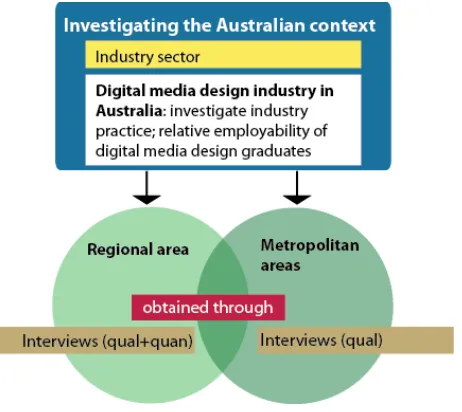
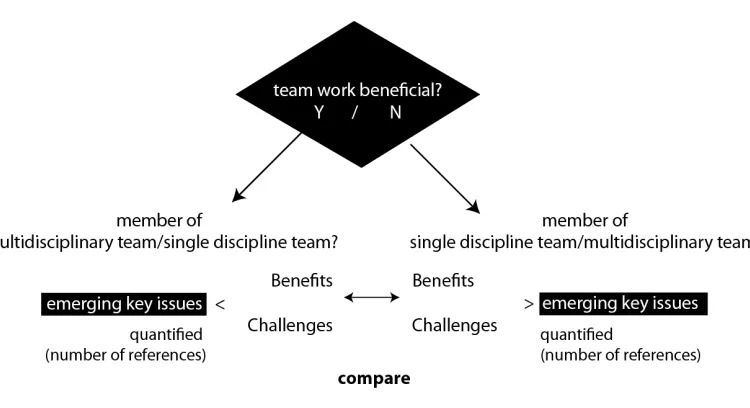
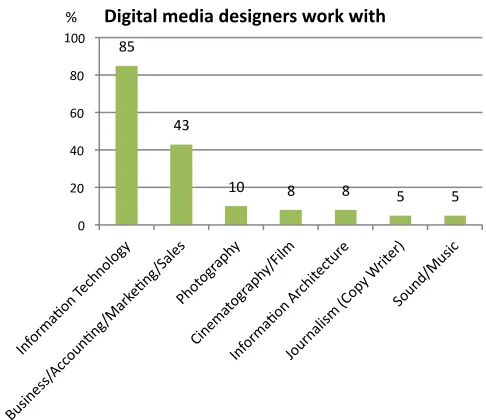
(16) 10.1.4 Summary and reflections on the achievement of intended outcome 5: digital media design students have the opportunity to develop an understanding of industry realities and forms of practice .............................. 248 10.2 Factors inhibiting the achievement of intended outcome 5 ........................................ 249 10.2.1 Student reflections on the factors inhibiting the achievement of intended outcome 5 ....................................................................................................... 249 10.2.2 Educator and industry/community reflections on the factors inhibiting the achievement of intended outcome 5 ......................................................... 251 10.2.3 Summary and reflections on factors inhibiting the achievement of intended outcome 5 ........................................................................................ 252 10.3 Effectiveness of pragmatic principles ......................................................................... 253 10.3.1 Pragmatic principles: enabling discipline-specific learning ........................... 253 10.3.2 Pragmatic principles: enabling effective multidisciplinary collaboration through formal teaching of teamwork ............................................................ 258 10.4 Future developments of the POOL Model framework ............................................... 259 10.5 Final summary ............................................................................................................ 261 Chapter 11. Conclusion and Directions ........................................................................... 263 11.1 Overall research outcomes .......................................................................................... 263 11.1.1 Multidisciplinarity in teams ............................................................................ 264 11.1.2 Supporting structures: pragmatic principles ................................................... 264 11.1.3 Managing the multidisciplinary teamwork process and outcome ................... 265 11.1.4 Linking the learning environment with industry and community................... 265 11.2 Challenges and limitations .......................................................................................... 266 11.3 Future developments ................................................................................................... 267 11.4 Implications for further research ................................................................................ 268 . xv.
(17) 11.4.1 Implications for digital media design education ............................................. 269 11.4.2 Implications for the digital media design industry.......................................... 270 REFERENCES ........................................................................................................................ 271 APPENDICES ......................................................................................................................... 292 Appendix A. Educator questionnaire (Phase 1) ..................................................................... 292 Appendix B. List of Australian universities .......................................................................... 294 Appendix C. Student questionnaires (Phase 1) ..................................................................... 301 Appendix D. Student focus group questions (Phase 1) ......................................................... 311 Appendix E. Interview questions: regional digital media design industry ........................... 312 Appendix F. Interview questions: digital media design industry in metropolitan areas ...... 314 Appendix G. Learning and teaching schedule of Web 1, Trial A ......................................... 315 Appendix H. Learning and teaching schedule of Web 2, Trial A ......................................... 316 Appendix I. Learning and teaching schedule of CXC, Trial A ............................................ 317 Appendix J. Examples of negotiated assessment criteria for projects ................................. 318 Appendix K. Learning and teaching schedule of Web 1, Trial B .......................................... 321 Appendix L. Learning and teaching schedule of Web 2, Trial B .......................................... 322 Appendix M. Creative Exchange reflective document 2009 ................................................. 323 Appendix N. Learning and teaching schedule of CXC, Trial B ............................................ 329 Appendix O. Student questionnaires in Trial A and Trial B ................................................. 331 Appendix P. Interview questions: educator in Trial A and Trial B ..................................... 353 Appendix Q. Interview questions: industry professionals and external clients in Trial A and Trial B.................................................................................................... 355 . xvi.
(18) LIST OF FIGURES Figure 1.1. An example of website design and development in 1997 and 2007. ...................... 10 Figure 2.1. Evolution of digital media and the effect on the design profession as noted in the literature. ........................................................................................................... 24 Figure 2.2. Typical software technologies and knowledge areas involved in creating a website..................................................................................................................... 28 Figure 2.3. Specialised design and IT knowledge domains involved in creating a website with e-commerce functionality. .............................................................................. 30 Figure 2.4. Web development timeline (from Lalli 2008). ........................................................ 31 Figure 2.5. T-shaped person (based on Kelly 2005). ................................................................. 44 Figure 2.6. Identification of deficient skills and attributes in design graduates and designers: Design Council and Creative & Cultural Skills’ (2007) report. ............ 48 Figure 2.7. Capability gap ranking: employers’ views of the importance of skills and attributes compared to employers’ views of the capabilities of aspiring creative (based on Figure 1 and Table 5 in 60Sox 2010). ....................................... 52 Figure 3.1. Key questions presented by contemporary design educators. ................................. 60 Figure 3.2. Expansion of traditional design programs through introduction of digital media subjects. ........................................................................................................ 63 Figure 4.1. Research methodology visual model. ...................................................................... 98 Figure 4.2. Triangulation design for data sources and research methods. ............................... 100 Figure 4.3. Logic of inquiry applied throughout the research process. ................................... 109 Figure 5.1. Research strategy exploring learning and teaching approaches in Australian art and design schools. .......................................................................................... 115 Figure 5.2. Feedback obtained from initial questionnaire guiding the design of future questions. ............................................................................................................... 123 Figure 5.3. Example of a revised question for the student questionnaires. ............................. 123 . xvii.
(19) Figure 5.4. Combination quantitative and qualitative data collection employed in student questionnaire. ........................................................................................................ 124 Figure 5.5. Research strategy to explore workplace realities in the Australian digital media design industry. .......................................................................................... 128 Figure 5.6. Example coding categories for open-ended question analysis. ............................. 134 Figure 5.7. Example of SurveyMonkey descriptive statistic function: sorting response percentages. ........................................................................................................... 135 Figure 5.8. Testing perceptions of teamwork in relation to the experienced teamwork characteristic. ........................................................................................................ 136 Figure 6.1. Disciplines collaborating with digital media designers when creating interactive industry projects: the Australian context. ............................................ 142 Figure 7.1 Core characteristics that facilitate the design of a flexible, adaptive and responsive learning and teaching environment. .................................................... 165 Figure 7.2. The POOL Model framework: an alternative approach for the teaching of digital media design in higher education. ............................................................. 167 Figure 7.3. Managing learning and assessment within the POOL Model framework............. 168 Figure 7.4. POOL Model framework and participants in Web 1, Trial A. .............................. 173 Figure 7.5. POOL Model framework and participants in Web 2, Trial A. .............................. 176 Figure 7.6. POOL Model framework and participants in CXC, Trial A. ................................ 179 Figure 7.7. POOL Model framework and participants in Web 1, Trial B. .............................. 185 Figure 7.8. POOL Model framework and participants in Web 2, Trial B. .............................. 186 Figure 7.9. POOL Model framework and participants in CXC, Trial B. ................................ 188 Figure 8.1. Evaluation framework and methods: Trials A and B. ........................................... 192 Figure 8.2. Typical open-ended question used in questionnaires to capture the widest possible range of thoughts and experiences. ......................................................... 194 Figure 8.3. NVivo screen showing coded comments ‘achieve more’ and reference count..... 203 . xviii.
(20) Figure 8.4. Qualitative data analysis procedures applied to student focus group interviews. ............................................................................................................. 205 Figure 8.5. Data analysis: iterative process applied to evaluate the achievement of an intended outcome of the POOL Model framework. .............................................. 207 Figure 8.6. Triangulation of data sources and data types: student focus group interviews. .... 209 Figure 8.7. Investigating interrelation between challenges and benefits experienced by students across subject trials. ................................................................................ 210 . xix.
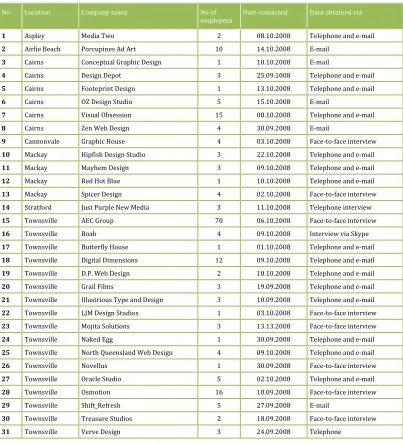
(21) LIST OF TABLES Table 1.1. Design disciplines, terminology and areas of application .......................................... 3 Table 2.1. Global trends: economic and political agendas relevant to design, designers and design education. .............................................................................................. 37 Table 2.2. Global industry perspectives on skills and attributes required by designers and design graduates. ..................................................................................................... 41 Table 2.3. Digital content industries: employers expectations versus workplace realities (based on 60Sox 2010). ........................................................................................... 51 Table 3.1. Alternative approaches in design education in such areas as graphic design, digital media arts, interaction design or digital media design. ................................ 73 Table 3.2. Examples of multidisciplinary collaboration in undergraduate industrial design education. ..................................................................................................... 82 Table 3.3. Examples of multidisciplinary collaboration between undergraduate creative arts and computer science students. ........................................................................ 84 Table 5.1. Overview of interview strategy relevant to universities in key Australian metropolitan centres. ............................................................................................. 121 Table 5.2. Design of Phase 1 student focus group interview questions................................... 125 Table 5.3. Questionnaires and interviews conducted with design and IT students in order to explore their perspectives of undergraduate learning environments................. 127 Table 5.4. Interviews with digital media design industry professionals in North Queensland. ........................................................................................................... 131 Table 5.5. Interviews with industry practitioners in metropolitan Australia. .......................... 133 Table 5.6. The approach to side-by-side comparison via cross tabulating data. ..................... 136 Table 6.1. Attributes and skills strongly valued by employers in the Australian digital media design industry. .......................................................................................... 139 . xx.
(22) Table 6.2. Type of digital media design graduate preferred by Australian metropolitan based employers. ................................................................................................... 140 Table 6.3. Characteristics of collaborative practice in digital media design degree programs in Australian art and design schools. .................................................... 143 Table 6.4. Examples of regularly occurring multidisciplinary collaborations involving undergraduate digital media design students in Australian art and design schools. .................................................................................................................. 144 Table 6.5. Examples of collaborative practice occurring in design education in Australian art and design schools. ......................................................................... 146 Table 6.7. Undergraduate design students’ perceptions of the benefits of multidisciplinary teamwork. ................................................................................. 149 Table 6.8. Benefits of multidisciplinary collaboration in a digital media design learning environment........................................................................................................... 150 Table 6.9. Key challenges of multidisciplinary collaboration identified by design educators and undergraduate digital media design students. ................................ 152 Table 6.10. Student feedback on community and industry involvement in and undergraduate design learning and teaching environment. ................................... 154 Table 6.11. Employers’ perspectives on implementing collaborative practice reflective of industry. ............................................................................................................ 155 Table 6.12. Approach to collaboration: thoughts on future developments in digital media design education. ................................................................................................... 157 Table 6.13. Students’ perspectives on which disciplines would enhance their learning environment when creating interactive digital media design projects. ................. 158 Table 6.14. Student perceptions on team size and combination of disciplines when producing a professional website. ......................................................................... 159 Table 6.15. Students’ experience in single discipline teams vs. multidisciplinary teams. ...... 160 . xxi.
(23) Table 7.1. Developing an alternative learning and teaching approach: managing challenges. ............................................................................................................. 164 Table 7.2. Curriculum plan and structure for Web 1, Trial A. ................................................ 174 Table 7.3. Curriculum plan and structure for Web 2, Trial A. ................................................ 177 Table 7.4. Trial A: teams and projects in CXC. ...................................................................... 180 Table 7.5. Curriculum plan and structure for CXC, Trial A. ................................................... 182 Table 7.6. Trial B: teams and projects in Creative Exchange Project and IT Project 2. ......... 189 Table 8.1. Questionnaires and focus group interviews conducted in order to explore digital media design students’ perspectives on the POOL Model framework and process. ........................................................................................................... 196 Table 8.2. Interviews conducted with educators to explore perspectives on the POOL Model framework and process. ............................................................................. 199 Table 8.3. Interview questions developed to explore key areas with industry professionals and external clients from industry/community. .............................. 200 Table 8.4. Interviews conducted with industry professionals and external clients to explore perspectives on the POOL Model framework and process. ..................... 201 Table 9.1. Digital media design students’ reflections on developing an understanding of the multidisciplinary teamwork process. ............................................................... 214 Table 9.2. Coded themes from student focus group interviews that evidence the learning of skills required for effective collaboration within multidisciplinary teams. ...... 215 Table 9.3. Educators’ reflections on the extent to which students have the opportunity to develop skills required for effective collaboration within multidisciplinary teams. .................................................................................................................... 216 Table 9.4. Digital media design students’ reflections on the development of insights into disciplines beyond their own. ................................................................................ 218 Table 9.5. Coded themes from student focus group interviews that evidence the gaining of insights into the ways in which different disciplines work and practice. ......... 219 xxii.
(24) Table 9.6. Educators’ reflections on the extent to which students gained insights into the ways in which different disciplines work and practice. ........................................ 220 Table 9.7. Digital media design students’ reflections on the extent to which they were able to develop discipline-specific skills............................................................... 222 Table 9.8. Coded themes from questionnaires and focus group interviews that evidence students were able to continue to develop discipline-specific skills and knowledge. ............................................................................................................ 224 Table 9.9. Educators’ reflections on the extent to which students were able to develop discipline-specific skills and knowledge. .............................................................. 225 Table 9.10. Identified challenges preventing students from achieving intended outcomes relevant to the multidisciplinary teamwork process. ............................................. 228 Table 9.11. Digital media design students’ reflections on the benefits of multidisciplinarity towards project outcomes. ...................................................... 232 Table 9.12. Coded themes from student focus group interviews that evidence the opportunity to contribute to a product or outcome that could not be achieved when working as an individual or in a single discipline team. ............................. 233 Table 9.13. Reflections from educators and external clients on project outcomes. ................ 235 Table 9.14. Digital media design students’ reflections on challenges inhibiting the achievement of a fully developed project outcome. .............................................. 238 Table 10.1. Digital media design students’ reflections on the process of engaging directly with industry professionals. ..................................................................... 242 Table 10.2. Coded themes which evidence that students have the opportunity to develop an understanding of industry realities and forms of practice. ............................... 243 Table 10.3. Educators’ perspectives on the extent to which students had the opportunity to develop an understanding of industry realities and forms of practice. ............. 245 Table 10.4. Factors limiting the opportunity for students to develop an understanding of industry realities and forms of practice. ................................................................ 250 xxiii.
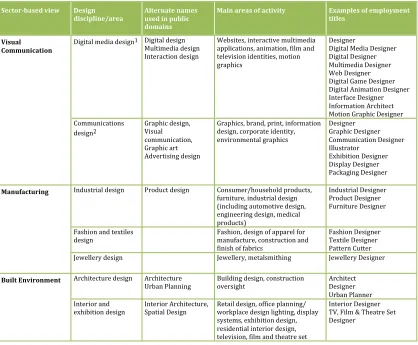
(25) Table 10.5. Digital media design student reflections on the amount of discipline-specific content provided in Web 1 A. ............................................................................... 254 Table 10.6. Expertise sought by digital media design students during CXC A. ..................... 256 . xxiv.
(26) CHAPTER 1. DIGITAL MEDIA DESIGN IN THE 21ST CENTURY 1.1. The digital world. Digital media have transformed our lives with unprecedented force and speed. They have changed the way people communicate, shop, learn, and play—virtually no area in the developed world has remained unaffected. We are able to view our holiday hotel right down to street level from home using Google Maps or Google Earth. While on a plane heading towards a holiday destination, the children interact with digital devices—a handheld game console for example—on which animation, sound, text, 3D-graphics and video are used to create an entertaining experience. Parents aim to relax in the neighbouring seats reading a book on an ebook reader. On the way to the hotel a mobile device application is used to help translate unfamiliar words. Holiday pictures are taken using a compact digital camera or mobile phone; something funny or unusual is captured on video using the same devices. Once arrived at the hotel first impressions are posted on social networking websites like Facebook and photos are shared with family and friends back home via image and video hosting websites like Flickr or Vimeo.. The above scenario highlights only one way in which digital media have radically transformed our lives. Websites, games or mobile phone applications are all digital media we consume, learn and interact with using computers, computer-enabled consumer devices and most importantly the Internet. These digital media are defined by Flew (2008) as “the combination of the three C’s–computing and information technology (IT), communications networks, and digitized media and information content” (p.2). In technical terms, digital media are electronic media (e-media) based on a digital code formed out of ones and zeros (e.g. 01110011) generated using a computer. Digital media are usually produced for a screen-based environment such as a computer screen, video-screen or touch screen. Mouse, pen, direct touch or even voice or body movements are utilised for creating a dialogue between a human 1.
(27) being (the user) and the application, turning a usually passive audience into an audience in control of dynamic content (Flew 2008). It is this central concept of interactivity that distinguishes digital media (Flew 2008) from both analogue media (e.g. a printed newspaper or a poster) and digitised media (e.g. a scanned photograph).. Digital media were often termed ‘new media’ at the turn of the 21st century, referring then to the Internet, websites, computer multimedia, computer games, interactive Compact Disks Read Only Memory (CD-ROMs), Digital Versatile Discs (DVDs) and virtual reality. This popular understanding of what digital media is has not changed considerably; only devices to store, use, consume and generate digital media have evolved. The widespread use and acceptance of new media and its services and products by individuals of post-industrial societies made the ‘new’ become ordinary (Steane 2010a). While ‘new media’ remains an accepted term in Media Studies and the Arts for example, it has to a large extent been replaced by the term ‘digital media’ when referring to screen-based interactive media in other domains– including design.. 1.2. Design in the 21st century. Design is all around us. In general “everything man-made has been designed, whether consciously or not” (Hunter 2010). Cox argues that design is “what links creativity and innovation. It shapes ideas to become practical and attractive propositions for users or customers. Design may be described as creativity deployed to a specific end” (HM Treasury Cox Review 2005 p.2).. Design per se means different things to different people (Micklethwaite 2002; Design Commission 2011). It is often discussed in a broad and inclusive way despite the fact that design has different connotations in different fields, serves different industries and has different intentions, histories, theories, methods, and processes; all not necessarily 2.
(28) interchangeable. To add to the confusion, multiple terms are used to describe the design domain. In order to attempt to simplify this complex area, Table 1.1 presents the broad sectorbased view. The table shows the specific design disciplines, alternate terms used to describe these disciplines, their main areas of activity and examples of employment titles.. Table 1.1. Design disciplines, terminology and areas of application1 Sector-based view . Design discipline/area . Visual Communication . Digital media design1 Digital design Multimedia design Interaction design . Manufacturing . Built Environment . Alternate names used in public domains . Main areas of activity . Examples of employment titles . Websites, interactive multimedia applications, animation, film and television identities, motion graphics . Communications design2 . Graphic design, Visual communication, Graphic art Advertising design . Industrial design . Product design . Fashion and textiles design . . Jewellery design . . Designer Digital Media Designer Digital Designer Multimedia Designer Web Designer Digital Game Designer Digital Animation Designer Interface Designer Information Architect Motion Graphic Designer Graphics, brand, print, information Designer design, corporate identity, Graphic Designer environmental graphics Communication Designer Illustrator Exhibition Designer Display Designer Packaging Designer Consumer/household products, Industrial Designer furniture, industrial design Product Designer (including automotive design, Furniture Designer engineering design, medical products) Fashion, design of apparel for Fashion Designer manufacture, construction and Textile Designer finish of fabrics Pattern Cutter Jewellery, metalsmithing Jewellery Designer . Architecture design . Architecture Urban Planning . Building design, construction oversight . Interior and exhibition design . Interior Architecture, Spatial Design . Retail design, office planning/ workplace design lighting, display systems, exhibition design, residential interior design, television, film and theatre set . Architect Designer Urban Planner Interior Designer TV, Film & Theatre Set Designer . 1 area of research focus 2 related design discipline. As shown in Table 1.1, there are numerous design disciplines as well as terms used to describe each. The design area that is the fastest growing (DCITA 2006) and highly influential in current society is that referred to as digital media design. Communication design, a sister. 1. based on sources of the Design Council (2005) and the Design Institute of Australia (2009).. 3.
(29) discipline (McCoy 1998b), is strongly intertwined with the young history of digital media design. Indeed there is often no clear separation between the two design disciplines running both under the umbrella of visual communication in a sector-based classification of design disciplines. This is confirmed by professional design bodies such as the International Council of Graphic Design Association (Icograda 2011) which defines the work of a communication designer inclusive of print design, motion graphic design and digital media design (e.g. web/game interface design and interaction design). As a matter of fact, some designers tend to work in both design disciplines—communication design and digital media design—also expressed in popular terms as working in ‘print and online’ or ‘print and digital’.. Digital media are ubiquitous and immersed in western society. The process of interacting with digital media is now often unconscious. For example, a huge number of people of nearly any age use the Short Message Service (SMS) on a mobile phone or use the World Wide Web (WWW or the Web) to look for and find information on a daily basis and they do so with ease. This is not only a result of the convenience those services offer a user but it is also proof that these services are easy to use; hence, that they are well designed, most likely by a digital media designer. Returning to the scenario at the beginning of section 1.1, digital media designers have indeed participated in designing most of the applications children or parents have interacted with, for example the interface of the e-book reader, the look, feel and readability of the e-book itself and the games on the console. Digital media designers conceptualise and design the interactive applications; they design the information we seek on the Web and the process by which we reach it; they determine how an interactive application behaves, and how a user must behave to use it (Murray 1999).. Broadly speaking, digital media designers combine creativity with digital technology (Billy Blue 2010) and engage in activities such as:. 4.
(30) •. Designing for web, e-commerce applications and mobile devices. •. Interface design creation. •. Interactive content creation. •. Information architecture development. •. Information design. •. Digital video and animation production. •. Interactive multimedia production. •. 3D modelling and game design. •. Design for emerging technologies. Although there are designers who work in print and digital media design, the complex nature of many digital media design projects often demands the designer to become a creative specialist within the digital media design area in one of the above mentioned activities. This is also reflected in the job titles including web designer, interface designer, interaction designer, multimedia designer, communication designer for interactive media, designer for digital timebased interactive media, game designer and 2D or 3D animator. All of these are referred to as digital media designer in this thesis.. Digital media designers are part of a thriving industry that continues to grow world wide (DCITA 2006). The digital media design industry contributes intensively to the growth of the creative industries (DCITA 2005; Design Council 2010a) and hence its development is of particular importance for the expansion of economies of industrialised countries. “Creative industries [including the digital media design industry] have gone from ‘nice-to-have’ to ‘need-to-have’ and cultural policies have increasingly become an instrument for driving growth and creating jobs” (Tscherning 2009). Governments around the world have started recognising design not only for its social value but also for its potential to contribute to the growth of the economy (DCITA 2005; HM Treasury Cox Review 2005; Design Council and 5.
(31) Creative & Cultural Skills 2007; DesignSingapore Council 2009; Queensland Government 2009; ANAT 2010; Woodham 2010). Many nations are now investing in building the capability of their design sectors (Design Council and Creative & Cultural Skills 2007; Commission of the European Communities 2009; Raulik-Murphy 2010). Countries such as Finland, Singapore, Japan, Netherlands, New Zealand, Korea, Czech Republic and India even have design policies implemented at government level (Raulik-Murphy 2010). South Korea and Singapore are reportedly becoming powerhouses of design, while China’s ambitious plans for design are turning it into a major player (Institute for Manufacturing 2009). The Australian government and state governments have also increasingly acknowledged the importance of design in the process of innovation and in strengthening a unique Australian identity (Summit 2020 2009; Queensland Government 2009; ANAT 2010; State Government of Victoria 2010).. Design is projected to play a key role in facing complex social, cultural, technological, environmental and economical challenges in the future (Design Council 2010e; Icograda 2011). It has also developed as a key player in the business world over the last decade (e.g. Commission of the European Communities 2009; State Government of Victoria 2010; Design Council 2011). The emerging concept of ‘design thinking’, for example, introduces “design methods and culture into fields beyond traditional design, such as business innovation” (Design Council 2010c) in order to accelerate the process of inventing a product or a service that sets the enterprise apart and ultimately makes it more competitive. Design in its broadest sense of linking creativity and innovation (HM Treasury Cox Review 2005) is currently at the cutting edge. Saffo, a noted forecaster in Silicon Valley, states that designers are “the engine room of the new economy” (cited in McMillan 2009c p.30).. Inevitably, this increasing interest in the role of design also shifts attention towards the education of future creators and innovators—including the education of digital media designers. It is evident that new “design methods” which Nick Leon (former Director of 6.
(32) Design London) sees as “how you organize multidisciplinary teams, how you exploit technology or what processes and practices you might apply” (cited in Walters 2007), may require the introduction of new practice models and the need for different processes—in industry as well as in digital media design education. As one academic recently argued: “You can’t just wander into a business school and say: ‘Design is innovation!’ It won’t get you anywhere” (Design Council 2010d p.29).. 1.3. The increasing complexity of technology and the digital media designer. While computer games and interactive CD-ROMs actually pre-date the Internet, it was the Internet, with its services like e-mail or the World Wide Web, which through its mass popularisation during the 1990s heralded the rise of new media (Flew 2008). The fast commercially driven development of the Web created a demand for the web designer and multimedia designer, professions which were previously not in existence in the world of design. A “new kind of designer” (Viemeister 2001b p.205) was needed to conceptualise and design interactive applications in the digital media space, whether it was meant for learning a language, telling a story, selling products on the Internet, or delivering the news (Murray 1999).. At first, websites and multimedia projects were, compared to today, rather basic in conception, design, programming and technology implementation. With the development of advanced information technologies an entirely new industry emerged, producing projects with extensive technological features such as online shopping, social networking and new methods for information categorisation and retrieval. In the case of websites for example, Waltuch stated in 2001 that they “have evolved from simple ‘brochureware’ to sophisticated ‘megasystems’, and this logical progression has led to the challenge to successfully develop hugely complex Websites” (p.154). Consequently, the designer’s work became increasingly complex. It was “no longer linear and two-dimensional. [It became] hyperfluid and six-dimensional, adding the 7.
(33) dimensions of real time, motion, sound and interactivity to our two traditional XY coordinates” (McCoy 1998a).. Suddenly, technology provided the platforms to use text,. graphics, video, animation and sound together to create an interactive experience. The tool palette of a designer not only changed but also increased enormously, posing the new challenge of becoming efficient in all the necessary software programs. Swanson (1996) argued even prior to the 21st century that it is indeed physically impossible to know them all.. The big challenge, however, was not necessarily acquiring extensive software skills. Designing was no longer about “making nifty images on a computer” (McCoy 1998a). Designing for the interactive media space required the extension of design’s traditional body of knowledge. While digital media design “draws on many traditional graphic design skills and methodologies” (McCoy 1998a), its interactive and dynamic output reaches into a whole new world requiring a deeper understanding: To create comprehensible virtual communication spaces for our audiences, designers must grasp profoundly more complex fundamentals of how human beings receive information, conceptualize information space, navigate and orient themselves, understand, respond, make choices, change behavior and express themselves. Not only is communications theory and methodology applicable, including semiotics, but also cognitive and perceptual psychology and strategies from the social sciences and cultural anthropology (McCoy 1998a). In addition, designers for digital media were expected to perform more tasks outside of the creative process (Panning 2005). Because computing and information technology are driving most interactive digital media design projects, digital media designers were, in the beginning, often involved in different levels of scripting and programming when creating websites or other interactive applications. The IT component quickly became more advanced, making it challenging for many designers to serve both the creative as well as the technical side of projects.. 8.
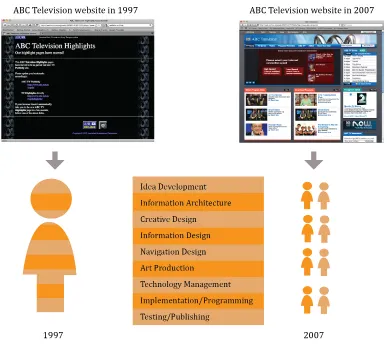
(34) Digital media designers are clearly affected by the enormous rate of technological progress. The complexity of projects has grown so rapidly that the original belief in the designer’s oneman-show, ‘I-can-do-it-all’, is over, a view clearly expressed by McCarron (2001): The designer as the singular creator of discrete objects has been supplanted by a new vision of the design professional as orchestrator of complex systems in which information, materials, sensation, and technology are in a state flux (p.35). Friedman (2000b) expresses a similar view, stating that in this “complex, changing professional environment…design involves more skills and knowledge than one designer can hope to provide, [in fact] most successful design solutions require several kinds of expertise” (p.21). Consequently, the complexity of today’s design projects and in particular digital media has seen a switch in the industry to multidisciplinary teamwork, with designers mostly working in collaborative environments (Friedman 2000b; Kerlow 2001; Niederhelman 2001; Sommese 2007; Whyte and Bessant 2007). In order to visualise this increasing complexity, Figure 1.1 illustrates the design and production process of a website; in this case, that of ABC Television Australia, in 1997 and in 2007.. 9.
(35) Figure 1.1. An example of website design and development in 1997 and 2007.. As illustrated in Figure 1.1, within ten years the work environment of the digital media designer has changed from being the individual creator to being part of a multidisciplinary team. Indeed, the profession of a digital media designer has altered considerably in just a few years: The contemporary designer must identify and focus on the distinctive areas where their skills will make a contribution and allow other specialists to take primary responsibility for others. This collaborative approach to design will be particularly relevant in some areas as the design of multi-technology products is simply too complex for an individual to comprehend (Whyte and Bessant 2007 p.15). The evolving nature of digital media created a digital media design profession in a state of flux (Kerlow 2001; Davis 2005a). Exon (2009) proclaims the next job of design is to involve. 10.
(36) authoring and editing. Others see more exciting times ahead with mobile devices turning into “a channel for delivering communication, services and media” (McMillan 2009b p.28) which is a new paradigm with its own set of rules and a design language still to be fully developed (McMillan 2009b). New opportunities emerge for the digital media designer, with immersive systems being developed, promising users “the same sensations from simulated environments that they would have from physical ones” (Colucci 2011 p.66). Considering the technological developments of the last two decades and how they have impacted on individuals living in post-industrial societies, it is difficult to predict how and with what speed the digital media design profession will continue to change. When graphic design professor and theorist Gunnar Swanson projected in 1996 the future for graphic design, in the light of constantly changing technology, his opening statement remains as true as ever: “There’s only one thing we can say for sure about the future: It will be different from now” (p.79).. Although it is difficult to forecast the profile of the future digital media design profession (Design Commission 2011), it is safe to predict that the profession will not disappear any time soon. The digital content industries have been growing significantly faster worldwide than other economic areas (DCITA 2006). Indeed digital content creation “is the fastest growing sector in global media arts, and is revolutionizing the power and importance of creative industries in the 21st Century” (Department of Industry & Resources and Department of Culture & the Arts 2007 p.3). Despite the difficult economic climate over the past few years, the digital media design industry is still developing rapidly. For example, the design industry in the United Kingdom (UK) has recorded 15% growth since 2005, bringing the total income to £15 billion in 2009 (this includes design consultancy and freelance fee income as well as inhouse design team budgets). Over half (61%) of digital and multimedia businesses in the UK reported growth in demand for their services since 2005 (Design Council 2010a). This level of growth is also occurring in Australia, with the digital frontier “being charted at a rapid rate” and “exciting times are ahead for Australia’s digital industry” (McNamara 2009 p.81). The 11.
(37) peak body for interactive content and digital media, the Australian Interactive Media Industry Association (AIMIA), projected a rise of 25% in revenue for 2009 in the digital industry in Australia (McNamara 2009). For 2011–2016 Australian graphic design services (including digital media design) are estimated to have an annual growth of nearly five per cent (IBISWorld cited in Branson 2011).. Globally, the digital media design industry mostly consists of small to medium size enterprises (SMEs). In the UK, for example, 60% of design businesses employ fewer than five people and only nine per cent employ between 10–49 designers (Design Council 2010a). In Australia only one per cent of digital media design businesses employ more than 19 people (Department of State and Regional Development 2008). In general, a digital media designer can be employed in design consultancies (e.g. multimedia design companies or design firms, animation studios), as part of in-house design teams or as a freelance designer.. 1.4. Digital media design in education. There are various ways to obtain an education as a digital media designer: “One can learn through. self-teaching,. the. Internet,. continuing. education,. undergraduate. programs,. [post]graduate2 programs, internships, or studio training programs” (Wands 2001 p.21). A significant number of design professionals acquire their education in an informal way, as a study conducted in the UK revealed; just over half (51%) of designers have a degree or equivalent qualification (Design Council 2010b) although this has increased to 62% in 2010 (Design Commission 2011).. 2 In the Australian education system the terms used to differentiate between the Bachelor and Master/Doctorate are ‘undergraduate’ for all Bachelor degrees (including Honours) and ‘postgraduate’ for all studies following the Bachelor degree, such as Masters and Doctorates.. 12.
Figure
+7

Related documents
The research uses a Realistic Evaluation approach (Pawson and Tilley, 1997) to begin to identify and refine shared programme theories that underpin alternative education
To see the effectiveness of the product an analysis of the learning outcomes of the 26 students taught using the Instructional Media Design textbook developed,
Scale of Teaching Strategies for Collaborative Learning: Design, Validation and Evaluation of Its Psychometric Properties in High School Education.. Magaly Cárdenas Rodríguez *
The teacher candidates listed the following problems regarding the implementation of alternative assessment and evaluation techniques in schools: Lack of knowledge
