收稿日期:2010-04 Received Date: 2010-04
Technical developments of functional electrical
stimulation to restore gait functions: Sensing, control
strategies and current commercial systems
Lin Meng1, Bernd Porr2, Henrik Gollee2
(1.Department of Biomedical Engineering, University of Strathclyde, United Kingdom; 2. Division of Biomedical Engineering,
University of Glasgow, United Kingdom)
Abstract:The work presents a review on the technological advancements of functional electrical stimulation (FES) neuroprostheses to restore gait walking over the last decades. The aim of an FES intervention is to functionally restore and rehabilitate individuals with motor disorders, such as stroke, spinal cord injury, multiple sclerosis, and others. The technique has been applied for widespread practical use for several years due to the rapid development of micro- and nano-technology. This technical review covers neuroprostheses developed within academia and currently available on the market. These systems are thoroughly analyzed and discussed with particular emphasis on the sensing techniques and control strategies. In the last part, a combination of FES technology and exoskeletons is presented as an emerging solution to overcome the drawbacks of current FES-based neuroprostheses, and recommendations on future research direction are suggested.
Keywords:Functional electrical stimulation, Neuroprosthesis, Gait restoration, Closed-loop control, Open-loop control, hybrid exoskeleton
1
Introduction
Damage to the central nervous system (CNS) due to injury or diseases can lead to decreased performance of the sensory-motor system. Motor disabilities are often the consequence and can affect gait, as well as other daily functions. For instance, about 20% of survivors after stroke suffer from drop foot that severely impairs their mobility [1]. Overall, the community activities of patients are limited
and lifestyles are directly affected.
Functional electrical stimulation (FES) was introduced to be a method that can elicit the paralyzed muscles contraction to generate movements. It has widely been used in gait restoration for neurologically impaired individuals [2–4]. The purpose of an FES intervention is to enable gait functions by replacing or assisting a person’s voluntary locomotion, thus achieving a desired movement. A neuroprosthesis based on FES is used to substitute for lost neurological functions.
Since the first reported use of FES to assist gait in patients
with stroke in 1960s [5], FES has proven itself as a promising technique to restore lost motor functions [6]. A
number of FES-based neuroprostheses became
commercially available, such like Walkaide, ActiGait, etc. However, despite continuous development, there are still important challenges that need to be tackled. One major challenge is the control structure aspects of these neuroprostheses [2,3,7] to synchronize the movement of muscles with the integration of sensory feedback. Closed-loop control with a hierarchical structure based on biological inspiration has become popular in the last decades[8,9]. The higher hierarchy determines the functioning of the lower levels while the lower levels cooperate the continuous components [2]. The hierarchical organization of FES controller facilitates the management of the complexity of human musculoskeletal system.
neuroprostheses for gait restoration in recent decade has not been established to the authors’ knowledge. We address advanced actuation and sensing techniques, especially focus on the open- and closed-loop control structures. The combination of FES with orthoses, often named hybrid orthoses, will be a part of this review, because of its increasing and promising use in the last few years [11–13] to compensate the user’s movement when FES alone is not enough to provide the desired function.
2
Sensor Techniques
A typical FES system can be decomposed into sensors, a control algorithm and a stimulation unit [14]. The sensors provide essential feedback to the controller, upon which the control system enables to adjusting stimulation outputs corresponding to parameter variations and interaction with the environment.
Wearable sensors have been widely used in FES control strategies: foot pressure insoles, foot switches, accelerometers, gyroscopes, inertial measurement units (IMUs), and electromyography (EMG) signals, etc. These techniques have their strengths in price and weight, which makes them particularly suitable for portable FES devices.
2.1 Foot switches/sensors
Foot contact with ground can be detected directly by foot switches embedded in shoes. Foot switches are commonly used in gait phase detection for FES control. A simple switch placed underneath the heel can distinguish the stance and swing phases[5], [15]. Various types of force transducers [16,17] have been utilized to measure exerted force from foot contact during gait cycles. These force sensitive resistors (FSRs) were placed under the heel and forefoot to detect gait phases, such as heel strike, heel off and toe off, in real time [18].
This technique is widely adopted in commercial products. For instance, a foot switch worn under the heel wirelessly triggers the stimulation of the peroneal nerve when the user’s foot being lifted is detected, facilitating the knee flexion during walking [19]. Due to its high reliability, it is also used to validate data acquired from other sensors.
However, there are still several disadvantages: the sub-phases cannot be detected in the swing phase; the accuracy and reliability is affected by the placement of sensors on patients with gait dysfunction [20].
2.2 Accelerometer, gyroscope, and IMU sensors
Accelerometers and other inertial units have their distinct advantages, such like miniature size, low power consumption, low cost, high mobility and availability on the market. With respect to methods based on foot switches or FSRs imbedded insoles, the use of inertial units allows researchers to recognize a greater granularity of gait cycles, such as sub-phases of the swing phase. Moreover, kinematic parameters can be computed from measured data and then be fed into FES systems.
Williamson and Andrews [21] presented a gait phase detection system based on adaptive logic network algorithm (ALN) using a cluster of accelerometers attached to the shank for detecting the stance and swing phase during walking. Rueterbories et al.[22] validated a rule-based algorithm with the average radial and tangential acceleration of the foot, which allows the detection of four phases. A complex sensor system introduced by Mijailović et al. [23] consists of tri-axial accelerometers placed on the lower limb segments (thigh, shank and foot) respectively. The algorithm was based on a neural network trained by walking data of a healthy subject. The results compared with reference outputs obtained from foot switches showed acceptable accuracy for practical use.
The use of the angular velocity has been widely accepted in gait phase detection in recent decades and has become the preferred option compared to other inertial variables because angular velocity is less affected by vibrations. Catalfamo et al. [24] proposed a method of using a gyroscope placed on the shank for detecting the initial contact and foot off during level and incline walking trials. Mannini et al. [25] applied a hidden Markov model (HMM) to a database of the sagittal angular velocity of the foot during treadmill walking in order to define four gait events including heel strike, foot flat, heel off and toe off. The sagittal angular velocity gives the best performance with an accuracy > 90%. These studies demonstrate that angular velocity is a suitable quantity for the detection of up to six gait phases by using an appropriate machine learning algorithm.
Kotiadis et al. [26] proposed an inertial sensor detection system with a combination of two-axis accelerometers and one-axis gyroscope on the shank. A three phases model
收稿日期:2010-04 Received Date: 2010-04
three variables. All algorithms were compared with the computed outputs by an optical system and a heel switch. The best performance was achieved by the algorithm based on the three signals, however, the algorithm using the angular velocity also obtained a similar performance. The results suggested that the gyroscope sensor is the optimal choice to reduce the number of sensors.
The data fusion in IMU sensors permits to compensate for the drift errors, therefore in order to compute spatio-temporal parameters and kinematic variables. A network of IMU sensors attached to the thigh, shank and foot was used to determine a three phases model based on a threshold method [27]. The estimation of knee and shank angles using data measured by IMU sensors placed on the thigh, shank and foot respectively was used to detect gait phases combing with the angular velocity of the foot. Algorithms based on use of IMUs can detect up to seven gait phases [28].
2.3 Combination of FSRs and inertial sensors
To overcome the limits in each technology, IMU and FSR-embedded insoles have been combined to develop a robust algorithm for gait detection that can be applied to FES control strategy.
Pappas et al. [29] demonstrated a system working robustly on different terrains based on the processing of three FSRs signals (measured underneath the heel, first metatarsal head and fifth metatarsal head) and the angular velocity of the foot. A state machine and state transitions were defined by handcrafted rules. Kojović et al. [30] utilized the FSRs under the heel and metatarsal heads and accelerometer attached to the shank as sensory inputs to define gait phases that are used for the generation of stimulation sequences for muscles. The IF-THEN rules were designed by mapping sensors and muscle activation patterns measured
from the non-affected leg of stroke individuals.
Gorsic et al. [31] proposed a real-time phase detection system. The sensor system consisted of seven IMUs, placed on thigh, shank and foot of both lower limbs, and placed on pelvic, and two pressure insoles. Eight variables
were used: ground reaction force and centre of pressure of left and right foot, difference between ground reaction force of two sides, angular velocity of left and right foot,
the sum of knee and hip angles. A machine learning algorithm was trained with data from five healthy subject to generate a set of rules.
The combination of the inertial variables and foot switches/sensors allowed an increase of the number of gait phases by dividing the sub-phases during the swing phase. The kinematic and kinetic outputs computed using IMUs and foot pressures can also be used as essential sensory feedback in sensor-driven or closed-loop FES control.
2.4 Electromyography (EMG)
The EMG represents the action of a muscle in the form of a voltage potential that can be measured by surface electrodes to provide the timing and intensity of muscle contraction. EMG signals have been used in gait phase detection due to coordinated muscle activations of the lower extremity during gait cycles [32]. Lauer et al. [33,34] developed a fuzzy inference system that employs EMG signals to predict the occurrence of gait phases in children with cerebral palsy. The envelop of the EMG and their derivatives were used as inputs to the detection algorithm for the prediction of seven gait phases based on subject-oriented fuzzy rules under a supervised control scheme.
The EMG signal is less favored in wearable gait systems due to its complexity in acquisition and post-processing. Nevertheless, the evoked EMG by electrical stimulation can be employed to predict the resultant joint torque which provides a necessary prediction of the muscle response before achieving accurate joint torque controlled by FES [35]. The M wave provides essential information to estimate
muscle fatigue [36]. Assessment of muscle activity from the EMG is difficult in the presence of electrical stimulation, particularly if more stimulation channels are applied while the electrodes are close to each other. Removal of the stimulation artifact is feasible but this approach has not
been perfected yet [2].
2.5 Key enabling technologies
The miniaturization of sensors plays an essential role in the development of neuroprostheses, as the size of sensors has been one of the major issues to the daily use of FES systems. Recent development of microelectronics has allowed researchers to develop miniature circuits that entail data collection, pre-amplification, microcontroller
functions and wireless communication[37]. Particularly
relevant to applications in the field of neuroprostheses is
advances in technology to manufacture
by using batch fabrication techniques, which promotes the applications of miniaturized inertial sensors in monitoring activity or other healthcare systems.
Advances in material science enables the development of sensing fabric. The so-called ‘smart textiles’ are fabrics that feature electronics woven into them [38]. The smart
textiles have their advantages in flexibility and typical size that are not achievable by any other electronic techniques. Moreover, smart textiles could be an important factor to increase patients’ confidence to wear FES systems in their daily lives, as the electrical cables/circuits are intrinsic to the fabric making them less visible and noticeable to surrounding subjects. The fabric sensors have been used in a large field of biomedical signal measurement, such like electrocardiogram(ECG)[39], electromyography (EMG)[40],
and electroencephalography (EEG)[41]. Shape-sensitive
fabric incorporated with EMG sensing can be a promising way to simultaneously detect human movement and muscle activity [42–46] enabling the development of soft FES
prosthesis in near future.
2.5 Advanced enabling technologies
The miniaturization of sensors plays an essential role in the development of wearable neuroprostheses
Besides the techniques mentioned above, researchers also exploited the application of other methods, such as,
sensing fabric, magnetic sensors, flexible sensors, for the measurement of human motion [37–41]. Advanced
technology allows real-time monitoring of position, velocity, acceleration, orientation in space and other physical variables. The current sensors are miniature, and can be incorporated with a microprocessor and wireless communication circuitry.
3
FES control strategies
A neuroprosthesis based on FES aims to compensate for sensor-motor pathologies in hemiplegia and paraplegia. They replace or assist the functions generated by the CNS in humans. The muscle activated through FES is expected to perform in parallel with the human natural movement. Because the stimulated response of a muscle is non-linear, time varying and time delayed, especially for people with neurological impairment [42], the FES control strategy is still a veritably challenging step in the design of reliable and efficient clinical FES devices.
3.1 Open-loop systems
[image:4.595.134.466.103.359.2]An open-loop system using FES for drop foot correction was firstly proposed by Liberson et al.[5]. The first FES system for gait restoration in paraplegic patients was proposed by Kralj et al. [43] based on a simple on-off stimulation protocol. The stimulation of several channels was controlled by the patient using two press buttons that
Fig. 1 A model of a hierarchical controller for functional electrical stimulation (right panel) inspired by the simplified model of biological control (left
收稿日期:2010-04 Received Date: 2010-04
were attached to the left and right handles of a walking frame. Following similar paradigm, ParaStep I became available on the market as the first commercial FES-based neuroprosthesis that consists of a portable stimulator with microprocessor, a walker frame for support, and six channels of bilateral adhesive electrodes [44]. The quadriceps muscle, peroneal nerve and gluteus maximus muscles are electrically stimulated to facilitate knee extension, flexion and hip flexion during the gait cycle.
An open-loop control strategy is a simple but reliable approach to control the timing of stimulation. All current commercially available FES systems are based on open-loop architectures. However, the open-open-loop control requires the continuous attention from the user, and would result in abnormal synchronization within gait events and limited number of gait event indications per gait cycle.
3.2 Closed-loop systems
Automatic FES control with the integration of sensory inputs was proposed to synchronize the control of multiple muscle for various motor tasks.
Matjačić et al.[45] pointed out that traditional proportional-integral-derivative (PID) control is not an optimal option for FES strategies because the derivative action of such controller will amplify high frequency noise, which may lead to system instability. Results from a model reference controller for knee movement based on FES control showed that the PID algorithm performed well at the extreme range of the angle but poor in the track of knee angle in the middle range[46]. Chang et al. [47] proposed a hybrid control model consisting of a neural network and a PID feedback control. The multi-level neural network was used and trained to obtain the inverse dynamic of the knee joint. The PID controller was used to compensate the residual errors caused by disturbances and modelling errors. A better performance with the implementation of a neural-PID controller compared to the conventional control methods was stated in this study.
The above sophisticated FES models considered the muscle as the actuators, the joint trajectory as the input and
the electrical stimulation as the output. The effects of the upper CNS are not addressed. Nevertheless, the external stimulated muscle activity also results in a change in the
ascending pathway, therefore the activity of antagonistic muscle and may also affect the environmental interaction. The mimesis of biological control may be used for a
successful restoration of function [48]. The biological inspired model usually has a hierarchical structure as shown in Fig.1. The highest level uses the discrete control, while the lowest levels include dynamics control [2].
3.2.1 Discrete control
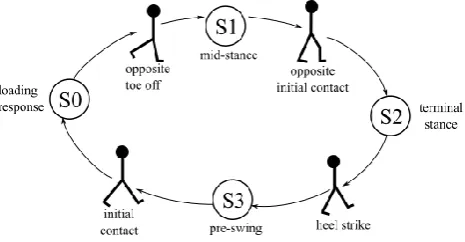
The gait locomotion control model is equivalent to biological control at the level of the brainstem and spinal cord. The model based on the low level of the CNS consists of two aspects: sensory feedback for timing and the individual activities at the joint level [49]. Finite state control (FSC) is known as a well-suited method that can be implemented in discrete control since it addresses the nonlinearity and time variability of the system [50]. A finite state controller operates based on three components: (1) a set of rules; (2) a dataset containing the facts of interest; (3) Interpreter of these facts and rules [2]. There are two ways to structure an FSC system, forward chaining (study first on the established fact) and backward chaining (start from the aim). The rules in FSC can be either defined by “hand crafted” method or automatically generated by machine learning algorithms [51–54].
The fundamental characteristics of FSC is sequential
operation, which makes the method suitable for gait
control as human gait consists of a sequential pattern of
movements [8], as shown in Fig.2. The simplest FES
strategy based on FSC employs singe event-triggered
control where electrical stimulation is turned on/off by the
foot switch placed in the shoe insole for drop foot
correction [5]. The use of FSC in gait rehabilitation was
[image:5.595.311.544.570.691.2]firstly proposed by Tomović and Mcghee [50]. Following
Fig.2: A finite state model of human gait walking. The states represent
this paradigm, Andrews et al.[55] presented the first FSC implemented in neural prostheses with a hand-crafted model. An FES controller consisting of a rule-based hierarchical structure detected the patient’s intention to step based on sensory signals measured from FSRs insole and a pressure sensor placed on the crutch handgrip, and stimulated the peroneal nerve to initiate flexion.
An FSC control is usually an implementation with a set of “IF-THEN” rules. “IF” describes the sensory states, while a “THEN” part defines the corresponding motor states, in other words, muscle activations. Kojović et al [30] developed a sensor driven based control for four channels stimulation in a neural prosthesis. Four muscles were selected, namely quadriceps, hamstrings, tibialis anterior and soleus muscles. The IF-THEN rules were created via mapping input data (joint angles and foot force signals) to output data (EMG signals) through iterative learning (IL) algorithm. The FES strategy switches the stimulation of the muscles on and off in the corresponding gait phases. Pappas et al. [29] proposed a reliable gait phase detection system which can be implemented in neural prosthesis for walking. The system employs a gyroscope to measure the angular velocity of the foot and FSRs in shoe insole to measure the foot contact forces during walking. An ‘IF-THEN’ rule-based algorithm was designed to detect various locomotion patterns including climbing stairs, walking on the level ground, walking on the slope. The gait phases, namely heel strike, heel-off, swing, were discriminated during level ground walking. The system achieved above 99% accuracy for both able-bodied subjects and people with gait impairment.
Machine learning approaches have been well adapted in
FSC as learning tools to generate rules for automatic
control without acquiring existing knowledge. Kirkwood
et al.[56] developed a method for automatic gait phases
classification by using IL algorithm. The ground contact
information from different foot areas were sensory input
signals, while phases within gait cycle were determined
using joint angles. Given a set of sensory inputs from the
gait phases, a decision tree was produced using a minimum
number of sensors. Kostov et al.[53] applied an artificial
neural network (ANN) with a feedforward multilayer
perception in which signals were translated to be binary
and a structure of binary trees was created under
supervised training. Chizeck et al. [57] presented a fuzzy
logic system for gait events classification where gait cycle
was divided using kinematic variables as inputs to five gait
phases.
The FSC method is a symbolic technique that relies on
non-parametric models of movements in which set theory
and symbols in a spatio-temporal space are used [51]. It
relatively alleviates the problems related to individual
sensor noise and small variations in input signals.
Therefore, it is an effective control method for the
synchronization of muscle stimulations on the highest level
of the FES control strategy.
3.2.2 Dynamic control
The lower level of a hierarchical model is responsible for
the activation of specific muscle groups to provide
functional movement. Most FES systems applied
constant/ramp stimulation sequences to muscles [8,21,30,58].
But continuous feedback at the joint level is essential for
smooth and biological-like movement in a musculoskeletal
system. The close-loop model in the lowest level should
incorporate the properties of the sensory motor system in a
given subject. Studies about regulating stimulation
parameters with precise control of stimulated muscle force,
torque, kinematic or kinetic data during locomotion have
been reported [59,60]. One essential issue that remains to be
resolved is the time variability of the muscle response, e.g.,
muscle fatigue. The complex patterns of muscle activities
are associated with natural movements. The force-length
and force-velocity relationships have been estimated in [60,61].
Researchers suggested that model-based control is a
crucial and efficient method for simulating a gait
locomotion and response to muscle fatigue [62–65]. Using
simulation model internal disturbance would be avoided
and the muscular force output would be optimized. The
musculoskeletal model plays an important role in
developing a reliable closed-loop controlled
neuroprosthesis. Nevertheless, model-based control
strategy is not suitable in practical FES systems in
收稿日期:2010-04 Received Date: 2010-04
Franken et al. [66] presented an iterative PID controller
based on gait cycles to maintain the desired hip angle range
by applying the stimulation on the hip flexors, hamstring
and quadriceps. However, the control tends to be late or
oscillatory as a result of the large time delay in the
musculoskeletal system. From the viewpoint of patient
safety and accuracy of control, conventional PID control
may not be suitable in the control of clinical neural
prosthesis.
The hybrid controller with both feedforward and feedback
controllers was proposed: the forward controller enables
fast movement with delay, while the feedback controller is
able to compensate for disturbance. The use of a
combination of neural network and PID has been exploited
in [47,67]. The neuro-PID controllers have a better
performance compared to that of conventional PID
controller.
Existing parameter variation, time-delay, nonlinearity in
muscle activation, muscle dynamics and skeletal dynamics
are not negligible[68]. The adaptive algorithms, such as
artificial neural network [69], fuzzy network [70], iterative
error-based learning [71], have been used to adjust
stimulation parameters which would help the systems deal
with the uncertainties. In recent few years, sliding model
control theory has been successfully implemented in FES
control [63]. Slide model control theory is a powerful and
robust control method to deal with the uncertainties,
nonlinearities and bounded external disturbances [64].
Kobravi et al. [65] proposed a robust adaptive controller
based on the combination of an adaptive nonlinear
compensator with a sliding model control (SMC) model,
regarding each muscle joint as a subsystem and individual
controller. Each controller operates solely on its associate
subsystem while the interaction between the subsystem is
seen as external disturbance. The controller would regulate
the interaction between agonist and antagonist muscles
under different conditions. The control of agonist and
antagonist activities in the ankle was therefore first
exploited in this study.
3.3 Commercial systems
Currently, FES-based systems in the markets range from
externally worn portable surface stimulators, to partially
implantable solutions where a stimulator and electrodes are
implanted in humans. All systems are based on a simple
FSC model in which the lowest level of the model is
open-loop. Sensors are used to time the stimulation but not for
further regulation of muscle response. The preset
parameters are tuned by qualified clinicians.
Most well-known FES systems have their main focus on
foot drop correction, such as Ness L300 (Bioness Inc.,
Valencia, CA, USA), Walkaide (Innovative Neurotronics,
Austin, TX), ActiGait (Neurodan A/S, Aalborg, Denmark).
It may be because of the limit in stimulation channels of a
portable stimulator and need of the simplicity so that the
Tab.1: Current commercial FES systems for ambulation.
System Type Channels Pulse type Stimulation Parameters Pulse width
(µs)
Amplitude (mA)
Frequency (Hz) ActiGait [19] Implant 4 Balance symmetrical Up to 300 Up to 1.2 5 to 50
STIMuSTEP [88] Implant 2 Balance symmetrical 300 Up to 16 30
ParaStepI [44] Surface 6 Single Pulse 120 to 150 NA NA
Ness L300 [72] Surface 1 Balance symmetrical 250/450/650 Up to 80 20 to 45
Ness L300 Plus [89] Surface 2 Balance symmetrical 250/450/650 Up to 80 20 to 45
Odstock 2 [90] Surface 2 Balance symmetrical 7 to 365 20 to 80 20 to 60
Odstock Pace [91] Surface 1 Balance symmetrical Up to 360 10 to 100 20 to 60
Walkaide [86] Surface 1 Balance symmetrical 25 to 300 Up to 200 16.7 to 33
user is comfortable to use it in their daily life. These
devices for foot drop correction have been well reviewed
in [7], detailed in Tab.1. Therefore, systems whose concern
is to restore gait but not only correct drop foot are
discussed in this paper.
Ness L300 Plus (Bioness Inc., Valencia, CA, USA) was
developed based on the Ness L300 with an addition of
thigh stimulation unit. It delivers electrical stimulations to
the common peroneal nerve, hamstrings and quadriceps. A
wireless heel switch is used to switch on/off the electrical
stimulations and the current intensity is controlled via a
hand-held controller. Van Swigchem et al.[72] reported
similar increase in gait velocity and stride length of
patients with stroke compared to an active foot orthosis.
Patients had a high satisfaction level of FES-based neural
prosthesis due to improved functional ability and the feel
of active strengthening [73].
RehaMove system (Hasomed GmbH) has 8 channels to
stimulate up to 8 muscles. The system was designed to
accomplish various movement therapies, such as walking
and cycling [74]. The stimulation mode can be set up for
individual patients. During gait rehabilitation, the
stimulation statues of each muscle are switched by an
external press button controlled by therapists as shown in
Fig.3. This system is used in hospital or clinic for
rehabilitation training program.
4
Hybrid FES and exoskeleton systems
The challenges in FES limit its widespread for gait
restoration. The muscle fatigue prevents long stimulation
periods, resulting in a limited walking distance. The
[image:8.595.73.528.118.268.2]precise trajectory of joint movements remains to be
Fig.4: Cooperative control approach [12]. The figure depicts physical interaction (red line), cooperative control command (blue line) and controller
outputs (black line).
[image:8.595.120.481.581.738.2]收稿日期:2010-04 Received Date: 2010-04
unresolved due to the complexity of the musculoskeletal
system. These drawbacks prevent the existing FES systems
from widespread practical use.
The combination of FES and orthoses has emerged as a
promising approach to achieve gait compensation and
restoration during the last decade. A study showed that the
inclusion of FES provides little improvement in energy
cost [75]. However, the addition of FES to orthotic systems
generates the muscle power, which minimizes the external
power requirement, and would result in a lighter orthotic
system. Moreover, considering the therapeutic effects of
the use of FES, such hybrid systems should promote more
effective neural plasticity.
As an essential improvement of FES-based
neuroprosthesis, the state of the art of hybrid orthoses that
aim to compensate gait functions by delivering and
controlling power to the lower limb joints are reviewed in
the section.
Several commercial orthotic devices are currently
available in the market, such like Rewalk, and Ekso [76,77].
However, the community ambulation is limited due to the
bulky size of these orthoses.
The first implementation of a hybrid system that combined
reciprocal gait orthosis and 4 channels of electrical
stimulation was described in the 1990s [78]. Different
systems have since been proposed with diverse actuations
and control principles. However, they can fall in two main
categories based on the activation principles: braking and
active.
Early effects focused on integrating FES with passive
orthotics, for instance, a reciprocating gait orthosis (RGO)
[78–80]. A typical RGO is a passive device that can lock the
knee and ankle in a neutral position for standing or stance
phase. Later, a more natural-looking gait was generated
when the joints of orthosis were only locked in the stance
phase via sensory feedback [81,82]. Nandor et al. [83] at Case
Western Reserve University proposed a hybrid neuroprosthesis with the combination of a hydraulically actuated exoskeleton and implanted FES system. The FES system supplies all active motor torques while the
exoskeleton applies joint constraints according to detected gait phases. Such hybrid orthoses provide the improvement in energy consumption and walking distance [84]. The passive mechanism in orthotic part
reduces the number of degree of freedom to simplify FES
control.
A further hybrid neuroprosthesis aims to blend robotic exoskeletons and electrical stimulation to overcome the drawbacks of each approach while preserving their advantages [75]. A major challenging issue is the development of a control strategy that adequately manages the balance between FES and orthotic control in which the lack of muscle response in individuals with neurological injures and the FES induced muscle fatigue can be compensated by robotic actuation.
Kobetic and Marsolais [85] developed a hybrid exoskeleton based on a 16 channels implanted FES system, allowing a trajectory control of the hip and knee joints. The FES system generates walking through a pre-programmed stimulation pattern, while the exoskeleton provides control based on gait events and transitions. Del-Ama et al. [12] presented a cooperative control strategy of a hybrid neuroprosthesis. The controller consists of four components: (1) robotic joint controller, (2) FES controller, (3) muscle fatigue estimator, (4) a finite state machine (FSM), as shown in Fig.4. The FSM was designed to allow the controllers to work in a cooperative fashion, obtaining stimulation patterns, estimating muscle fatigue and reducing robotic assistance on the basis of the gait states.
5
Discussion
Since 1961, when the first neuroprosthesis was developed
by Liberson et al [5], FES has been used as a promising tool
to restore gait functions with its therapeutic effects in gait
rehabilitation. Despite remarkable progress in the
development of FES-based neuroprostheses, the concept of
Liberson has been popularly used in commercial products.
Muscle stimulators evolved into more portable and lightweight solutions [86]. The use of foot switch to trigger stimulation has been one of the most popular approaches in the fields of FES due to its ease of use and success in the gait phase detection [29,30,52,86]. However, reliability issues have been arisen regarding the foot switches/sensors where repetitive contact force eventually leads to deterioration of function. The addition of other sensing techniques provides adequate information, allowing the development and implementation of more complex algorithm in FES systems. The technical methods camp up ranging from the inertia [21–26], to joint position [47,65,87], sEMG [32–35], and flexible sensors [37–41]. These sensor solutions have been successfully used to estimate desired trajectories and gait states.
The control strategies of FES gait assisted systems have been presented in this review paper. The efficiency of open-loop control has been proven by existing commercial devices [44] . The improvement of stimulation and sensing technologies over the last decades has provided the possibility of applying the close-loop control strategy for FES gait assistance for practical use. The biologically inspired hierarchical structure has been widely accepted in the field of FES control to assist or restore gait functions. The FSCs are often utilized as the high level controller to determine the stimulation statues of muscle during locomotion while the dynamic control in the low level generates a smooth and natural movement with inputs
provided by additional sensors.
An ideal FES control strategy is expected to work in
parallel with human natural motor system during gait.
Major issues in existing FES systems are that how to
respond to internal (muscle fatigue, time delay in muscle
response) and external disturbances. Researchers have
devoted themselves to these challenges to develop FES
control strategies that are robust to variations in systems
over last decades. Classical closed-loop algorithms, e.g.
PID control, have failed to provide satisfactory
performance. Neural networks have been incorporated into
the control schemes as they can learn to deal with complex
and/or unknown nonlinearities. Chang et al. [47] presented
a neuro-PID controller in which the control delay was
reduced than that with conventional PID controller. But
stability issues remained to be resolved due to their
black-box structure, and off-line training is required [59]. Jonic et
al. [70] compared the performance of three machine learning
algorithms to predict the activation pattern of muscles and
knee joint angle based on data recorded during FES-based
walking. The authors emphasized the advantages of
adaptive learning methods, e.g. iterative learning, fuzzy
logic, that the generated rules are comprehensive and
explicit compared to that generated by artificial neural
network. These methods are critical as they address
different hierarchical control levels, but are still unable to
guarantee stability.
Several groups have developed and tested model-based
control approaches to control gait in paraplegic. Modelling
the musculoskeletal system can provide better insight of
muscular force production and movement coordination
principles [62]. Jezernik et al. [63] proposed a model-based,
nonlinear controller based on sliding mode theory. The
results in both simulation and actual experiment with
spinal cord injuries showed that SMC is a useful control
scheme to deal with uncertainties, nonlinearities and
external disturbances. Continuing work of Jezernik and his
colleagues, a hybrid controller based on SMC and adaptive control was developed to solve the ‘chattering’ phenomena in the original SMC model [65].
Studies in the area of FES up to date are promising but far
to resolve major issues. A hybrid approach attempts to
combine the FES and exoskeletons, aiming to compensate
and/or rehabilitate gait in daily living where the joint net
power is generated by a combination of the FES and the
electromechanical actuators. Robotic actuations can
compensate FES induced movements to achieve the
desired trajectories during gait [13]. Currently most of the
designs are intended to develop energy efficient systems to
restore gait functions[12,75,84,85]. The reduced energy cost allows the development of portable exoskeletons.
However, hybrid exoskeletons should also be able to adapt
their performances and modes of operations according to the users’ residual functions. To the authors’ knowledge, this “assist-as-need” paradigm [75] has not been
implemented in the field of hybrid exoskeletons. Study
about optimal balance between the exoskeleton and
FES-induced muscular forces is in their early stages [12]. All
收稿日期:2010-04 Received Date: 2010-04
preliminary evaluation on user safety and energy
consumption. Nevertheless, hybrid exoskeletons are
emerging as a promising approach to restore gait functions
for individuals with neurological impairments, especially
for those who have a complete loss of gait ability.
6
Conclusion
Gait restoration is considered as a high priority among patients with walking disability. To restore walking, different approaches have been developed. Among these approaches, FES-based neuroprostheses have their unique therapeutic effects in gait rehabilitation by inducing the contraction of paralyzed muscles. The state of the art in sensing techniques and FES control strategies have been reviewed in this paper. Advances in sensors have improved the development of portable FES devices. Meanwhile, the additional sensory feedback contributed to the improvement of control algorithms. Effective closed-loop FES control with a hierarchical structure enables implementation of real-time strategies to manage muscle performance during walking. However, many challenges remain due to the complexity of human neuromusculoskeletal system. To provide a more reliable and efficient system, the combination of FES and exoskeleton has been emerging in last decade. The hybrid exoskeleton is an auspicious solution to realize gait assistance and/or restoration for long time use in the near future.
Acknowledgement
This work was supported by Lord Kelvin/Adam Smith Scholarship at the University of Glasgow.
References
[1] JOHNSON C A, BURRIDGE J H, STRIKE P W et al. The effect of combined use of botulinum toxin type A and functional electric stimulation in the treatment of spastic drop foot after stroke: a preliminary investigation[J]. Archives of Physical Medicine and Rehabilitation, 2004, 85(6): 902–909.
[2] POPOVIĆ D B. Advances in functional electrical stimulation (FES)[J]. Journal of Electromyography and Kinesiology, 2014, 24(6): 795–802.
[3] BRAZ G P, RUSSOLD M, DAVIS G M. Functional electrical stimulation control of standing and stepping after spinal cord injury: a review of technical characteristics.[J]. Neuromodulation : journal of the International
Neuromodulation Society, 2009, 12(PG-180-190): 180– 190.
[4] CHIA N, AMBROSINI E, BACCINELLI W, et al. A multi-channel biomimetic neuroprosthesis to support treadmill gait training in stroke patients[C]. Proceedings of the Annual International Conference of the IEEE Engineering in Medicine and Biology Society, EMBS, 2015: 7159– 7162.
[5] LIBERSON W T, HOLMQUEST H J, SCOT D, et al. Functional electrotherapy: stimulation of the peroneal nerve synchronized with the swing phase of the gait of hemiplegic patients.[J]. Archives of physical medicine and rehabilitation, 1961, 42: 101–5.
[6] SHEFFLER L R, TAYLOR P N, GUNZLER D, et al. Tab 2: FES control strategies to restore gait functions.
Reference Sensing techniques Control Model Participants in the study Franken et al. [66] Foot switch Cycle-to-cycle PID control 2 paraplegic
Kostov et al. [53]a FSR insole + goniometers at the
joints
FSC control, rule generated by adaptive machine learning methods
6 spinal cord injured
Chang et al. [47] Goniometer at the knee joint Neuro-PID control 1 paraplegic + 1 able-bodied
Chen et al. [15] Foot switch Open-loop 6 hemiplegic
Sepulveda et al. [59] Goniometers at the joints Artificial neural network (ANN) 1 spinal cord injured
Williamson and Andrew[21]a A cluster of accelerometers on the
shank
FSC, rough sets and adaptive logic networks
3 able-bodied
Skelly and Chizeck [18]a FSRs insole FSC, fuzzy logic network 3 spinal cord injured
Aminian [20]a Gyroscopes on the shank and thigh +
FSRs insole
FSC, wavelet transformation 20 able-bodied
Popović et al. [49] EMG and joint angles FSC, ANN 6 spinal cord injured
Lauer et al [33,34]a EMG recorded by intramuscular
electrodes
FSC, fuzzy inference system 2 cerebral palsy
Lau and Tong [27] IMUs attached on the thigh, shank
and foot.
FSC, threshold detection 10 dropped foot + 3 able-bodied
Kojović et al. [30] FSRs insole + accelerometer
attached to the shank
FSC, threshold mapping method 13 acute stroke
Catalfamo et al. [24]a Gyroscope placed on the shank FSC, threshold detection. 1 able-bodied + 1 cerebral
palsy Kotiadis et al. [26]a IMUs placed on upper shank FSC, threshold detection. 1 stroke
Senanayake et al [93] 4 FSRs and 2 IMUs placed on thigh
and shank
FSC, fuzzy logic -
Mannini and Sabatini [25] Gyroscope attached on the foot Hidden Markov model 6 able-bodied
Rueterbories et al. [94] Accelerometers placed on the foot FSC, ANN 10 hemiparetic
收稿日期:2010-04 Received Date: 2010-04
Randomized Controlled Trial of Surface Peroneal Nerve Stimulation for Motor Relearning in Lower Limb Hemiparesis[J]. Archives of Physical Medicine and Rehabilitation, 2013, 94(6): 1007–1014.
[7] MELO P L, SILVA M T, MARTINS J, et al. Technical developments of functional electrical stimulation to correct drop foot: Sensing, actuation and control strategies[J]. Clinical Biomechanics, Elsevier Ltd, 2015, 30(2): 101–113. [8] LYONS G M, VELTINK P H, SWEENEY P C. Finite state
control of functional electrical stimulation for the rehabilitation of gait[J]. Medical and Biological Engineering and Computing, 2000, 38(2): 121–126. [9] DE CROMMERT H W A A, MULDER T, DUYSENS J.
Neural control of locomotion: sensory control of the central pattern generator and its relation to treadmill training[J]. Gait & posture, Elsevier, 1998, 7(3): 251–263.
[10] LYONS G M, SINKJAER T, BURRIDGE J H, et al. A review of portable FES-based neural orthoses for the correction of drop foot.[J]. IEEE transactions on neural systems and rehabilitation engineering : a publication of the IEEE Engineering in Medicine and Biology Society, 2002, 10(4): 260–79.
[11] FOGLYANO K M, KOBETIC R, TO C S, et al. Feasibility of a hydraulic power assist system for use in hybrid neuroprostheses[J]. Applied Bionics and Biomechanics, 2015, 2015.
[12] DEL-AMA A J, GIL-AGUDO Á, PONS J L, et al. Hybrid FES-robot cooperative control of ambulatory gait rehabilitation exoskeleton[J]. Journal of NeuroEngineering and Rehabilitation, 2014, 11: 27.
[13] STAUFFER Y, ALLEMAND Y, BOURI, et al. The WalkTrainer - A new generation of walking reeducation device combining orthoses and muscle stimulation[J]. IEEE Transactions on Neural Systems and Rehabilitation Engineering, 2009, 17(1): 38–45.
[14] MOORE JR J E, MAITLAND D J. Biomedical technology and devices[M]. CRC press, 2013.
[15] CHEN Y-L, CHANG W H, WONG M-K, et al. A treadmill apparatus with a computer-assisted functional electrical stimulation system and foot switch control for restoration of ambulation in stroke patients[C].1997, 4: 1785–1787. [16] PEDOTTI A, ASSENTE R, FUSI, et al. Multisensor
piezoelectric polymer insole for pedobarography[J]. Ferroelectrics, Taylor & Francis, 1984, 60(1): 163–174. [17] FAIVRE A, DAHAN M, PARRATTE B, et al.
Instrumented shoes for pathological gait assessment[J]. Mechanics research communications, Elsevier, 2004, 31(5): 627–632.
[18] SKELLY M M, CHIZECK H J. Real-time gait event detection for paraplegic FES walking[J]. IEEE Transactions on neural systems and rehabilitation engineering, IEEE, 2001, 9(1): 59–68.
[19] LARSEN B, PATRICIU A. ActiGait®: A Partly Implantable Drop-Foot Stimulator System[J]. Introduction to Neural Engineering for Motor Rehabilitation. John Wiley & Sons, Inc., 2013: 421–432.
[20] AMINIAN K, NAJAFI B, BÜLA, et al. Spatio-temporal parameters of gait measured by an ambulatory system using miniature gyroscopes[J]. Journal of biomechanics, Elsevier, 2002, 35(5): 689–699.
[21] WILLIAMSON R, ANDREWS B J. Gait event detection for FES using accelerometers and supervised machine learning[J]. IEEE Transactions on Rehabilitation Engineering, IEEE, 2000, 8(3): 312–319.
[22] RUETERBORIES J, SPAICH E G, ANDERSEN O K. Gait event detection for use in FES rehabilitation by radial and tangential foot accelerations[J]. Medical engineering & physics, Elsevier, 2014, 36(4): 502–508.
[23] MIJAILOVIĆ N, GAVRILOVIĆ M, RAFAJLOVIĆ S, et al. Gait phases recognition from accelerations and ground reaction forces: Application of neural networks[J]. Telfor Journal, 2009, 1(1): 34–36.
[24] CATALFAMO P, GHOUSSAYNI S, EWINS D. Gait event detection on level ground and incline walking using a rate gyroscope[J]. Sensors, Molecular Diversity Preservation International, 2010, 10(6): 5683–5702.
[25] MANNINI A, SABATINI A M. Gait phase detection and discrimination between walking--jogging activities using hidden Markov models applied to foot motion data from a gyroscope[J]. Gait & posture, Elsevier, 2012, 36(4): 657– 661.
engineering & physics, Elsevier, 2010, 32(4): 287–297. [27] LAU H, TONG K. The reliability of using accelerometer
and gyroscope for gait event identification on persons with dropped foot[J]. Gait & posture, Elsevier, 2008, 27(2): 248–257.
[28] MENG X, YU H, THAM M P. Gait phase detection in able-bodied subjects and dementia patients[C]. 2013 35th Annual International Conference of the IEEE Engineering in Medicine and Biology Society (EMBC). 2013: 4907– 4910.
[29] PAPPAS I P I, KELLER T, MANGOLD S, et al. A reliable gyroscope-based gait-phase detection sensor embedded in a shoe insole[J]. Sensors Journal, IEEE, IEEE, 2004, 4(2): 268–274.
[30] KOJOVIĆ J, DJURIĆ-JOVIČIĆ M, DOŠEN S, et al. Sensor-driven four-channel stimulation of paretic leg: functional electrical walking therapy[J]. Journal of neuroscience methods, Elsevier, 2009, 181(1): 100–105. [31] GORŠIČ M, KAMNIK R, AMBROŽIČ L, et al. Online
phase detection using wearable sensors for walking with a robotic prosthesis[J]. Sensors, Multidisciplinary Digital Publishing Institute, 2014, 14(2): 2776–2794.
[32] HOF A L, ELZINGA H, GRIMMIUS W, et al. Speed dependence of averaged EMG profiles in walking[J]. Gait & posture, Elsevier, 2002, 16(1): 78–86.
[33] LAUER R T, SMITH B T, COIRO D, et al. Feasibility of gait event detection using intramuscular electromyography in the child with cerebral palsy[J]. Neuromodulation: Technology at the Neural Interface, Wiley Online Library, 2004, 7(3): 205–213.
[34] LAUER R T, SMITH B T, BETZ R R. Application of a neuro-fuzzy network for gait event detection using electromyography in the child with cerebral palsy[J]. IEEE Transactions on Biomedical Engineering, IEEE, 2005, 52(9): 1532–1540.
[35] LI Z, GUIRAUD D, ANDREU D, et al. Real-time estimation of FES-induced joint torque with evoked EMG: Application to spinal cord injured patients[J]. Journal of NeuroEngineering and Rehabilitation, Journal of NeuroEngineering and Rehabilitation, 2016, 13(1): 60. [36] ENOKA R M, STUART D G. Neurobiology of muscle
fatigue[J]. Journal of applied physiology, Am Physiological Soc, 1992, 72(5): 1631–1648.
[37] MILLS P M, MORRISON S, LLOYD D G, et al. Repeatability of 3D gait kinematics obtained from an electromagnetic tracking system during treadmill locomotion[J]. Journal of biomechanics, Elsevier, 2007, 40(7): 1504–1511.
[38] FINLEY M A, LEE R Y. Effect of sitting posture on 3-dimensional scapular kinematics measured by skin-mounted electromagnetic tracking sensors[J]. Archives of physical medicine and rehabilitation, Elsevier, 2003, 84(4): 563–568.
[39] TOGNETTI A, BARTALESI R, LORUSSI F, et al. Body segment position reconstruction and posture classification by smart textiles[J]. Transactions of the Institute of Measurement and Control, SAGE Publications, 2007, 29(3–4): 215–253.
[40] SCILINGO E P, LORUSSI F, MAZZOLDI A, et al. Strain-sensing fabrics for wearable kinaesthetic-like systems[J]. IEEE sensors journal, IEEE, 2003, 3(4): 460–467. [41] TAO W, LIU T, ZHENG R, et al. Gait analysis using
wearable sensors[J]. Sensors, 2012, 12(2): 2255–2283. [42]LYNCH C L, POPOVIC M R. Closed-loop control for FES:
Past work and future directions[C]. 10th Annual Conference of the International FES Society. 2005: 2–4. [43] KRALJ A, BAJD T, TURK R. Electrical stimulation
providing functional use of paraplegic patient muscles.[J]. Medical progress through technology, 1980, 7(1): 3–9. [44] GRAUPE D, KOHN K H. Functional neuromuscular
stimulator for short-distance ambulation by certain thoracic-level spinal-cord-injured paraplegics[J]. Surgical neurology, Elsevier, 1998, 50(3): 202–207.
[45] MATJAČIĆ Z, HUNT K, GOLLEE H, et al. Control of posture with FES systems[J]. Medical engineering & physics, Elsevier, 2003, 25(1): 51–62.
[46] HATWELL M S, ODERKERK B J, SACHER C A, et al. The development of a model reference adaptive controller to control the knee joint of paraplegics[J]. IEEE transactions on automatic control, IEEE, 1991, 36(6): 683– 691.
[47] CHANG G-C, LUB J-J, LIAO G-D, et al. A neuro-control system for the knee joint position control with quadriceps stimulation[J]. IEEE transactions on rehabilitation engineering, IEEE, 1997, 5(1): 2–11.
收稿日期:2010-04 Received Date: 2010-04
in the use of electrical stimulation for the recovery of motor function[G]. Progress in Brain Research. 2011, 194: 215– 225.
[49] POPOVIĆ D, RADULOVIĆ M, SCHWIRTLICH L, et al. Automatic vs hand-controlled walking of paraplegics[J]. Medical Engineering & Physics, 2003, 25(1): 63–73. [50] TOMOVIC R, MCGHEE R B. A finite state approach to
the synthesis of bioengineering control systems[J]. IEEE Transactions on Human Factors in Electronics, IEEE, 1966(2): 65–69.
[51] TOMOVIC R, POPOVIC D, STEIN R B. Nonanalytical methods for motor control[M]. World Scientific, 1995. [52] DOSEN S, POPOVIC D B, OTHERS. Accelerometers and
force sensing resistors for optimal control of walking of a hemiplegic[J]. IEEE Transactions on Biomedical Engineering, IEEE, 2008, 55(8): 1973–1984.
[53] KOSTOV A, ANDREWS B J, POPOVIC D B, et al. Machine learning in control of functional electrical stimulation systems for locomotion[J]. IEEE Transactions on Biomedical Engineering, IEEE, 1995, 42(6): 541–551. [54] NIKOLIC Z M, POPOVIC D B. Predicting quadriceps
muscle activity during gait with an automatic rule determination method[J]. IEEE transactions on biomedical engineering, IEEE, 1998, 45(8): 1081–1085.
[55] ANDREWS B J, BAXENDALE R H, BARNETT R, et al. Hybrid FES orthosis incorporating closed loop control and sensory feedback[J]. Journal of Biomedical Engineering, Elsevier, 1988, 10(2): 189–195.
[56] KIRKWOOD C A, ANDREWS B J, MOWFORTH P. Automatic detection of gait events: a case study using inductive learning techniques[J]. Journal of biomedical engineering, Elsevier, 1989, 11(6): 511–516.
[57] CHIZECK H J, OTHERS. Fuzzy model identification for classification of gait events in paraplegics[J]. IEEE Transactions on Fuzzy Systems, IEEE, 1997, 5(4): 536– 544.
[58] BAJD T, KRALJ A, ŠTEFANČIČ M, et al. Use of functional electrical stimulation in the lower extremities of incomplete spinal cord injured patients[J]. Artificial organs, Wiley Online Library, 1999, 23(5): 403–409.
[59] SEPULVEDA F, GRANAT M H, CLIQUET A. Two artificial neural systems for generation of gait swing by
means of neuromuscular electrical stimulation[J]. Medical Engineering and Physics, 1997, 19(1): 21–28.
[60] JOHNSON L A, FUGLEVAND A J. Mimicking muscle activity with electrical stimulation[J]. Journal of Neural Engineering, 2011, 8(1): 16009.
[61] KIRSCH N, ALIBEJI N, SHARMA N. Nonlinear model predictive control of functional electrical stimulation[J]. Asme Dscc, Elsevier, 2015: 1–13.
[62] ROBERT R. Model--based development of neuroprostheses for paraplegic patients[J]. Philosophical Transactions of the Royal Society of London B: Biological Sciences, The Royal Society, 1999, 354(1385): 877–894. [63] JEZERNIK S, WASSINK R G V, KELLER T. Sliding
mode closed-loop control of FES: controlling the shank movement[J]. 2004, 51(12): 263–272.
[64] AJOUDANI A, ERFANIAN A. A Neuro-Sliding Mode Control With Adaptive Modeling of Uncertainty for Control of Movement in Paralyzed Limbs Using Functional Electrical Stimulation.[J]. IEEE transactions on bio-medical engineering, 2009, 56(7): 1771–1780. [65] KOBRAVI H-R, ERFANIAN A. Decentralized adaptive
robust control based on sliding mode and nonlinear compensator for the control of ankle movement using functional electrical stimulation of agonist--antagonist muscles[J]. Journal of neural engineering, IOP Publishing, 2009, 6(4): 46007.
[66] FRANKEN H M, VELTINK P H, BAARDMAN G, et al. Cycle-to-cycle control of swing phase of paraplegic gait induced by surface electrical stimulation[J]. Medical and biological engineering and computing, Springer, 1995, 33(3): 440–451.
[67] KUROSAWA K, FUTAMI R, WATANABE T, et al. Joint angle control by FES using a feedback error learning controller[J]. IEEE Transactions on Neural Systems and Rehabilitation Engineering, 2005, 13(3): 359–371. [68] LYNCH C L, POPOVIC M R. A stochastic model of knee
angle in response to electrical stimulation of the quadriceps and hamstrings muscles[J]. Artificial organs, Wiley Online Library, 2011, 35(12): 1169–1174.
Neural Systems and Rehabilitation Engineering, 2001, 9(3): 326–330.
[70] JONIC S, JANKOVIC T, GAJIC V, et al. Three machine learning techniques for automatic determination of rules to control locomotion[J]. IEEE transactions on biomedical engineering, IEEE, 1999, 46(3): 300–310.
[71] FREEMAN C T, HUGHES A M, BURRIDGE J H, et al. Iterative learning control of FES applied to the upper extremity for rehabilitation[J]. Control Engineering Practice, 2009, 17(3): 368–381.
[72] VAN SWIGCHEM R, WEERDESTEYN V, VAN DUIJNHOVEN H J等. Near-normal gait pattern with peroneal electrical stimulation as a neuroprosthesis in the chronic phase of stroke: A case report[J]. Archives of Physical Medicine and Rehabilitation, 2011, 92(2): 320– 324.
[73] KHAMIS S, MARTIKARO R, WIENTROUB S, et al. A functional electrical stimulation system improves knee control in crouch gait[J]. Journal of children’s orthopaedics, Springer, 2015, 9(2): 137–143.
[74] VALTIN M, KOCIEMBA K, BEHLING C, et al. RehaMovePro: A versatile mobile stimulation system for transcutaneous FES applications[J]. European Journal of Translational Myology, 2016, 26(3).
[75] DEL-AMA A J, KOUTSOU A D, MORENO J C, et al. Review of hybrid exoskeletons to restore gait following spinal cord injury[J]. J Rehabil Res Dev, 2012, 49(4): 497– 514.
[76] ESQUENAZI A, TALATY M, PACKEL A, et al. The ReWalk powered exoskeleton to restore ambulatory function to individuals with thoracic-level motor-complete spinal cord injury[J]. American journal of physical medicine & rehabilitation, LWW, 2012, 91(11): 911–921. [77] KOLAKOWSKY-HAYNER S A, CREW J, MORAN S, et
al. Safety and feasibility of using the EksoTM bionic exoskeleton to aid ambulation after spinal cord injury[J]. Journal of Spine, OMICS International, 2013, 2013. [78] SOLOMONOW M, BARATTA R, HIROKAWA S, et al.
The RGO generation II: muscle stimulation powered orthosis as a practical walking system for thoracic paraplegics[J]. Orthopedics, SLACK Incorporated, 1989, 12(10): 1309–1315.
[79] ISAKOV E, DOUGLAS R, BERNS P. Ambulation using
the reciprocating gait orthosis and functional electrical stimulation[J]. Spinal Cord, Nature Publishing Group, 1992, 30(4): 239–245.
[80] HIROKAWA S, GRIMM M, SOLOMONOW M, et al. Energy consumption in paraplegic ambulation using the reciprocating gait orthosis and electric stimulation of the thigh muscles.[J]. Archives of physical medicine and rehabilitation, 1990, 71(9): 687–694.
[81] GOLDFARB M, DURFEE W K. Design of a controlled-brake orthosis for FES-aided gait[J]. IEEE Transactions on Rehabilitation Engineering, IEEE, 1996, 4(1): 13–24. [82] GOLDFARB M, KORKOWSKI K, HARROLD B, et al.
Preliminary evaluation of a controlled-brake orthosis for FES-aided gait[J]. IEEE Transactions on Neural Systems and Rehabilitation Engineering, IEEE, 2003, 11(3): 241– 248.
[83] NANDOR M J, CHANG S R, KOBETIC R, et al. A Hydraulic Hybrid Neuroprosthesis for Gait Restoration in People with Spinal Cord Injuries[G]//LEPORA N F, MURA A, MANGAN M, et al. Biomimetic and Biohybrid Systems: 5th International Conference, Living Machines 2016, Edinburgh, UK, July 19-22, 2016. Proceedings. Cham: Springer International Publishing, 2016: 192–202. [84] FERGUSON K A, POLANDO G, KOBETIC R, et al.
Walking with a hybrid orthosis system[J]. Spinal cord, 1999, 37(11): 800–804.
[85] KOBETIC R, TO C S, SCHNELLENBERGER J R, et al. Development of hybrid orthosis for standing, walking, and stair climbing after spinal cord injury[J]. Journal of rehabilitation research and development, Superintendent of Documents, 2009, 46(3): 447.
[86] STEIN R B, ROLF R, EVERAERT D G, et al. Surface electrical stimulation for foot drop: control aspects and walking performance[J]. J. Autom. Control, 2008, 18: 47– 52.
[87] TONG K Y, GRANAT M H. Gait control system for functional electrical stimulation using neural networks[J]. Medical & biological engineering & computing, 1999, 37(1): 35–41.
收稿日期:2010-04 Received Date: 2010-04 Medicine and Rehabilitation, 2007, 88(8): 971–978. [89] IBRAHIM D, TOSUN A, YIGITOGLU P H. DESIGN OF
A LOW-COST MICROCONTROLLER-BASED
FUNCTIONAL ELECTRONIC STIMULATION
DEVICE FOR DROP FOOT CORRECTION[J]. Instrumentation Science & Technology, Taylor & Francis, 2013, 41(6): 556–573.
[90] TAYLOR P N, WRIGHT P A, BURRIDGE J H, et al. Correction of bi-lateral dropped foot using the Odstock 2 channel stimulator (O2CHS)[C]. Proc. 4th Annual Conf. Int. Functional Electrical Stimulation Society (IFESS ‘99). 1999: 257–260.
[91] KHATTAR B, BANERJEE A, REDDI R, et al. Feasibility of Functional Electrical Stimulation-Assisted Neurorehabilitation following Stroke in India: A Case Series[J]. Case reports in neurological medicine, 2012, 2012: 830873–830877.
[92] HUNT K J, HOSMANN D, GROB M, et al. Metabolic efficiency of volitional and electrically stimulated cycling in able-bodied subjects[J]. Medical engineering & physics, Elsevier, 2013, 35(7): 919–925.
[93] SENANAYAKE C M, SENANAYAKE S M N A. Computational intelligent gait-phase detection system to identify pathological gait[J]. IEEE Transactions on Information Technology in Biomedicine, IEEE, 2010, 14(5): 1173–1179.
[94] RUETERBORIES J, SPAICH E G, ANDERSEN O K. Gait event detection for use in FES rehabilitation by radial and tangential foot accelerations[J]. Medical Engineering and Physics, Institute of Physics and Engineering in Medicine, 2014, 36(4): 502–508.
作者简介
孟琳 (唯一通讯作者),2008年于
天津大学获得学士学位, 2010年于天
津大学获得硕士学位,2015 年于英国
格拉斯哥大学获得博士学位,现为英 国思克莱德大学副研究员,主要研究 方向为神经科学与机器人控制交叉学 科的研究。
E-mail: [email protected]
Lin Meng received her B.Sc. degree in 2008 from Tianjin
University,received her M.Sc. degree in 2010 from Tianjin University,received her Ph.D. degree in 2015 from University of Glasgow, now she is Research Associate in University of Strathclyde. Her main research interests include human-machine interaction, biologically inspired control, gait rehabilitation.
Dr Bernd Porr, received his B.Sc. degree in 1997 from the University of Bochum,received his M.Sc. degree in 2000 from the University of Bochum, received his Ph.D. degree in 2003 from the University of Stirling, now he is Lecturer in Electrical Engineering / Biomedical engineering. His main research interests include biped walking, limbic system, machine learning and visual/auditory perception.
![Fig. 1 A model of a hierarchical controller for functional electrical stimulation (right panel) inspired by the simplified model of biological control (left panel) [2]](https://thumb-us.123doks.com/thumbv2/123dok_us/1474604.100091/4.595.134.466.103.359/hierarchical-controller-functional-electrical-stimulation-inspired-simplified-biological.webp)