PRACTICE AND ASSESSMENT-BASED PROCESS
IMPROVEMENT IN SMALL SOFTWARE
DEVELOPMENT FIRMS
Submitted by
Aileen Patricia Cater-Steel B.Bus (USQ), MIT (USQ)
School of Computing and Information Technology
Faculty of Engineering and Information Technology
Griffith University
Submitted in fulfilment of the requirements of the degree of
Doctor of Philosophy
As software becomes increasingly important to all aspects of industry, there is a need to encourage practitioners to adopt best practice so as to improve the quality of the processes in use, and therefore achieve targets relating to time, budget and quality. The software development industry in Australia is dominated by a myriad of small firms. This presents a challenge in terms of determining the current practices of industry participants, and in devising improvement initiatives which are feasible for small organisations. Currently, the level of adoption of best practice among local software developers is unknown. To help improve the software industry, it is necessary to determine the current status of use of practices and techniques. Furthermore, the effectiveness of assessment-based software process improvement for small organisations needs to be evaluated. The objective of this research is to understand the extent of software development practices currently in use, and to evaluate the effectiveness of assessment-based software process improvement initiatives for small firms.
organisations. While project management planning and customer involvement practices are widely adopted, the use of metrics for estimating and testing are barely used by the organisations that responded to the survey. Overall, practices of a technical nature are more widely adopted compared to techniques related to support and management. Organisations involved in developing commercial off-the-shelf software have higher adoption than firms which do not develop such systems, and adoption of best practice is associated with the size of the development group. The leaders in adoption have significantly better practices when compared to the laggards for 40 of the 44 practices included in the survey. Furthermore, organisations from the finance, insurance and utilities sectors exhibited higher adoption of best practice compared to organisations from other sectors. The overall adoption of 48 percent implies that the organisations which responded have adopted, on average, almost half of the best practices in the questionnaire. While this overall adoption rate places the Queensland software industry in a competitive position compared to adoption of firms in European countries, there is scope for improvement.
The process improvement assessments of 22 firms also confirmed that the capability of technical processes is higher than that of management processes; and suggested that higher capability is associated with the proportion of experienced staff and the proportion of staff with post graduate qualifications. Higher process capability is also associated with firms undertaking projects of lengthy durations. Most of the processes were rated at the lowest levels. Almost one third of all the processes were rated as incomplete (level 0) and 46 percent were rated as performed (level 1).
the firms as far as implementing the recommendations from the assessments. Analysis of the reactions of the participants of this program suggests that for small firms, mentoring, training and organisation stability are important factors, while senior management support may not be an issue of concern.
I certify that the ideas, analyses, results, and conclusions reported in this thesis are entirely my own effort, except where otherwise acknowledged. This work has not previously been submitted for a degree or diploma in any university. To the best of my knowledge and belief, the thesis contains no material previously published or written by another person except where due reference is made in the thesis itself.
During the course of the research, a number of research papers were published. For all of these works, I was the sole author:
1999 ‘SEA National Industry Improvement Program “Best Practice” Survey: Preliminary Findings’, paper presented to Software Engineering Australia ‘99, Canberra.
2000 ‘Software process evaluation: experience report from Down Under’, in Proceedings of European Conference on IT Evaluation, Dublin, pp. 353-63. 2000 ‘COTS developers lead best practice adoption’, in Proceedings of Australian
Software Engineering Conference (ASWEC), IEEE, Canberra, pp. 23-30.
2001 ‘Process improvement in four small software companies’, in Proceedings of Australian Software Engineering Conference (ASWEC), Canberra, pp. 262-72. 2002 ‘Process capability assessments in small development firms’, in Proceedings of
IASTED 6th International Conference Software Engineering and Applications, Cambridge, MA, pp. 737-42.
2002 ‘Software process evaluation: experience report’, Electronic Journal of Information Systems Evaluation, vol. 5, no. 2.
2003 ‘SPICE-based software process improvement: an empirical study of 22 small Australian firms’, paper presented to Australian Software and Systems Engineering Process Group Conference, Surfers Paradise, 24-26 September. 2004 ‘Low-rigour, rapid software process assessments for small software development
2004 ‘After the assessment: actions and reactions of 22 small Australian firms’, in Proceedings of 4th International SPICE Conference on Process Assessment and Improvement, Lisbon, Portugal, pp. 54-63.
_______________________ ___________________
This thesis is the result of almost seven years of part-time study, and during this time I have been accompanied and supported by many people. I am delighted to now have the opportunity to express my sincere gratitude and appreciation to all of them.
I am deeply indebted to my principal supervisor, Associate Professor Terry Rout for his stimulating suggestions, guiding hand and expertise in the field of software process improvement. My associate supervisor, Associate Professor Mark Toleman (USQ) has given much of his valuable time to help me over the last two years. In particular, Mark’s encouragement, optimism and research expertise has enabled me to overcome many obstacles. I recognise, with gratitude, the support from Software Engineering Australia (Queensland), and the Software Quality Institute at Griffith University.
My colleagues at USQ have provided support, interest and advice, in particular, Carol Edwards, Chris O’Reilly, Ilona Eberle and members of the Department of Information Systems. Special thanks also to my dear friends Rosie, Edel, Jill, and Annie, and my brothers and sisters for their continued encouragement and affection.
Finally, my thanks go to three very special people. My two children, Emily and Declan have helped me achieve my goal through their patience, understanding and willingness to accommodate my dream. I am also deeply grateful to my husband, Michael for his love, patience and encouragement.
Persistence
‘Nothing in the world can take the place of persistence.
Talent will not; nothing is more common than unsuccessful men with talent. Genius will not; unrewarded genius is almost a proverb.
Education will not; the world is full of educated derelicts. Persistence and determination alone are omnipotent.
Table of Contents
ABSTRACT...I
CERTIFICATION OF THESIS...V
ACKNOWLEDGEMENTS...VII
1 CHAPTER ONE—INTRODUCTION...1
1.1 RESEARCH TOPIC...1
1.2 BACKGROUND TO THE RESEARCH...1
1.2.1 Importance of software process improvement ...1
1.2.2 Software industry ...2
1.3 RESEARCH PROBLEM AND RESEARCH QUESTIONS...5
1.4 JUSTIFICATION FOR THE RESEARCH...8
1.4.1 The need for an industry-wide survey...8
1.4.2 SPI adoption and evaluation...9
1.4.3 Lack of research about SPI for small firms ...11
1.5 METHODOLOGY...12
1.6 OUTLINE OF THE THESIS...14
1.7 DEFINITIONS...15
1.8 DELIMITATIONS OF SCOPE AND KEY ASSUMPTIONS...18
1.9 CONCLUSION...19
2 CHAPTER TWO—LITERATURE REVIEW ...21
2.1 INTRODUCTION...21
2.2 THEORETICAL APPROACHES TO PROCESS IMPROVEMENT...23
2.2.1 TQM theory...24
2.2.2 Process improvement ...26
2.2.3 Organisational maturity...28
2.2.4 Diffusion of innovation ...29
2.3 SOFTWARE PROCESS IMPROVEMENT...31
2.3.1 Capability maturity model ...33
2.3.2 ISO/IEC 15504 SPICE...36
2.5.3 SPI adoption—organisational factors ...46
2.5.4 SPI adoption—implementation factors ...48
2.6 SPI ADOPTION BY SMALL FIRMS...55
2.6.1 International research SPI small firms...56
2.6.2 Australian research related to best practice and SPI for small firms ...58
2.6.3 Need for research into SPI for small firms ...64
2.6.4 Conclusion ...64
2.7 HYPOTHESIS DEVELOPMENT...65
2.7.1 Research question 1—software best practice survey...66
2.7.2 Research question 2—process capability ...74
2.7.3 Research question 3—issues related to extent of process improvement..85
2.8 CONCLUSION...89
3 CHAPTER THREE—RESEARCH APPROACH ...91
3.1 INTRODUCTION...91
3.2 SOFTWARE ENGINEERING RESEARCH APPROACHES...91
3.3 RESEARCH PHILOSOPHY...93
3.4 RESEARCH APPROACH...94
3.4.1 Theoretical and empirical aspects ...96
3.4.2 Empirical approach in software engineering research ...96
3.5 RESEARCH METHOD...98
3.5.1 Multi-method approach ...99
3.5.2 Survey method...101
3.5.3 Process improvement program—field experiments ...102
3.6 REFERENCE DISCIPLINES FOR METHODOLOGY...104
3.7 UNIT OF ANALYSIS...104
3.8 RESEARCH PLAN...104
3.9 CONCLUSION...107
4 CHAPTER FOUR—BEST PRACTICE SURVEY METHODOLOGY ...109
4.1 INTRODUCTION...109
4.2.3 Survey pre-test ...110
4.2.4 Questionnaire format ...112
4.2.5 Selection of survey participants ...113
4.2.6 Survey execution ...114
4.2.7 Recording survey responses...114
4.3 DEFINITION OF SURVEY VARIABLES...115
4.4 DATA ANALYSIS METHOD FOR SURVEY RESPONSES...117
4.5 LIMITATIONS OF THE SURVEY METHODOLOGY...118
4.5.1 Construct validity...118
4.5.2 Statistical conclusion validity ...119
4.5.3 External validity...119
4.5.4 Reliability...120
4.6 ETHICAL CONSIDERATIONS RELATED TO SURVEY...120
4.7 SUMMARY...121
5 CHAPTER FIVE—SURVEY RESULTS ...123
5.1 INTRODUCTION...123
5.2 SURVEY RESPONSE...123
5.3 RESPONDENT PROFILE...124
5.3.1 Geographical distribution...124
5.3.2 Industry sector ...125
5.3.3 Organisation size ...126
5.3.4 Software development group size...126
5.3.5 Primary involvement in software industry...127
5.3.6 Programming languages and tools...128
5.3.7 Representativeness of responses to industry...129
5.4 EXTENT OF ADOPTION OF BEST PRACTICE TECHNIQUES...130
5.4.1 Analysis of practice adoption level ...131
5.4.2 Adoption levels by organisation...134
5.4.3 Association of adoption level and organisation size...137
5.5 ANALYSIS OF SURVEY RESPONDENTS’ COMMENTS...143
5.6 SUMMARY...145
6 CHAPTER SIX—FIELD EXPERIMENT DESIGN ...147
6.1 INTRODUCTION...147
6.2 PROCESS IMPROVEMENT PROGRAM...147
6.3 SELECTION OF SUBJECTS...148
6.4 DESIGN OF FIELD EXPERIMENT INSTRUMENTS...148
6.5 ASSESSMENT MODEL...148
6.6 PROTOCOL OF EACH FIELD EXPERIMENT...156
6.7 PIP DATA COLLECTION INSTRUMENTS...159
6.7.1 Organisation context questionnaire...160
6.7.2 Assessment instrument ...160
6.7.3 Assessment report ...161
6.7.4 Feedback questionnaire ...162
6.7.5 Follow-up interview record ...162
6.7.6 Final report...162
6.8 COMPILATION OF RESULTS FROM FIELD EXPERIMENTS...163
6.9 DEFINITION OF PIP VARIABLES...163
6.9.1 Process capability level ...163
6.9.2 Organisational characteristics ...166
6.9.3 Project factors...167
6.9.4 Perceptions of firm performance ...168
6.10 DATA ANALYSIS METHOD...170
6.11 JUSTIFICATION FOR THE METHODOLOGY...172
6.12 LIMITATIONS OF THE FIELD EXPERIMENT METHODOLOGY...173
6.12.1 Construct validity...173
6.12.2 Conclusion validity ...175
6.12.3 Internal validity and reliability...175
6.12.4 External validity...177
7.2 DESCRIPTION OF FIRMS...181
7.2.1 Organisational characteristics of firms ...182
7.2.2 Project characteristics of firms...186
7.2.3 Perceptions about performance...187
7.2.4 Summary of demographic profile...188
7.3 PROCESS CAPABILITY ASSESSMENTS...189
7.3.1 Process capability at initial assessment ...192
7.3.2 Variation in capability across processes ...194
7.3.3 Relationship firm size and process capability ...197
7.3.4 Relationship proportion of experienced staff and process capability ...197
7.3.5 Relationship extent of formal education of staff and capability level....198
7.3.6 Relationship proportion of technical staff and process capability ...199
7.3.7 Relationship age of firm and process capability level ...200
7.3.8 Relationship target business sector and process capability ...201
7.3.9 Relationship ISO 9001 certification and process capability ...203
7.3.10 Relationship project characteristics and process capability ...204
7.3.11 Relationship perceptions of performance and process capability...207
7.3.12 Summary of capability assessments ...210
7.4 PROCESS CAPABILITY AT FOLLOW-UP MEETINGS...210
7.4.1 Capability level improvement ...211
7.4.2 Achievement attribute improvement ...213
7.4.3 Comparison of capability at assessment and follow-up meetings ...214
7.4.4 Effect of firm size on extent of improvement...215
7.4.5 Experience of staff and extent of improvement ...216
7.4.6 Formal education of staff and extent of improvement ...216
7.4.7 Proportion of technical staff and extent of improvement...218
7.5 SUMMARY OF HYPOTHESES AND STATISTICAL TESTS...219
7.6 COMPARISON OF BEST PRACTICE ADOPTION WITH PROCESS CAPABILITY...221
7.7 CONCLUSION...223
8.2.2 Variation in adoption across software development industry ...230
8.2.3 Organisation size ...233
8.2.4 Software development team size ...234
8.2.5 Development type COTS/nonCOTS ...234
8.2.6 Industry sector ...237
8.2.7 Comparison of best practice in Queensland with European countries .238 8.2.8 Compilation of list of best practice techniques...241
8.2.9 Summary of discussion relating to research question 1 ...243
8.3 DISCUSSION OF FINDINGS RELATED TO RESEARCH QUESTION 2...245
8.3.1 Primary and supporting processes ...246
8.3.2 Organisation and project characteristics ...246
8.3.3 Perceptions relating to performance ...251
8.3.4 Discussion focussing on processes at assessment ...252
8.3.5 Summary of discussion relating to research question 2 ...259
8.4 DISCUSSION OF FINDINGS RELATED TO RESEARCH QUESTION 3...259
8.4.1 Extent of improvement ...260
8.4.2 Organisational factors ...262
8.4.3 Formal reassessments...263
8.4.4 Informal follow-up meetings ...266
8.4.5 Summary of discussion relating to research question 3 ...267
8.5 CRITICAL SUCCESS FACTORS FOR SPI IN SMALL FIRMS...267
8.5.1 Specific issues relating to the PIP firms ...267
8.5.2 Meta analysis of PIP: lessons learnt ...272
8.5.3 People, organisation and implementation issues...275
8.5.4 Summary of critical success factors...278
8.6 COMPARISON OF SURVEY AND PROCESS IMPROVEMENT PROGRAM...281
8.7 SUMMARY...282
9 CHAPTER NINE—CONCLUSIONS AND IMPLICATIONS ...285
9.1 INTRODUCTION...285
9.4 IMPLICATIONS FOR PRACTICE AND POLICY...295
9.4.1 Software developers, firms and consultants...295
9.4.2 Public sector policy analysts ...299
9.4.3 Software purchasers...300
9.5 LIMITATIONS OF THE RESEARCH...300
9.6 FUTURE DIRECTIONS IN RESEARCH...302
9.7 CONCLUDING REMARKS...303
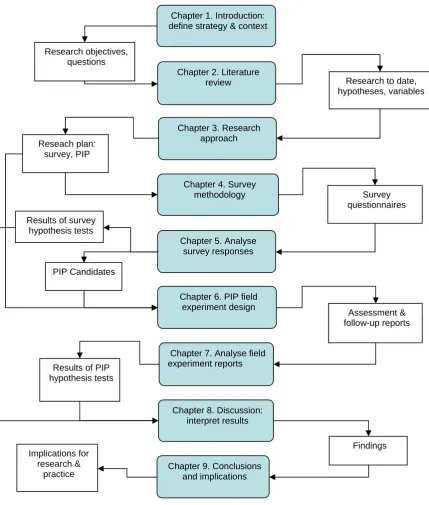
Figure 1-2 Research process flowchart showing chapters and interim work
products...13
Figure 2-1 Literature review map ...22
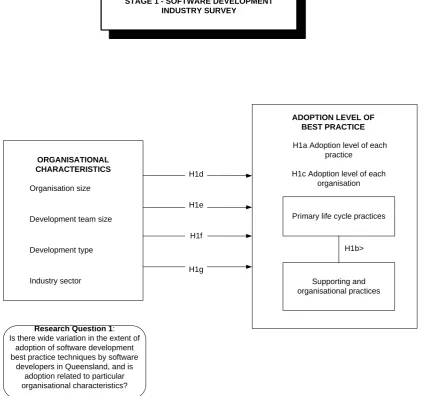
Figure 2-2 Research model showing hypotheses related to research question 1...73
Figure 2-3 Research model showing hypotheses related to research question 2...84
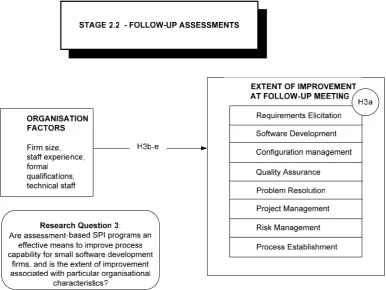
Figure 2-4 Research model showing hypotheses related to research question 3...88
Figure 3-1 Empirical Software Engineering research approach ...98
Figure 3-2 Research framework flow chart ...100
Figure 5-1 Histogram showing distribution of practice adoption level ...131
Figure 5-2 Histogram showing distribution of organisation adoption levels. ...135
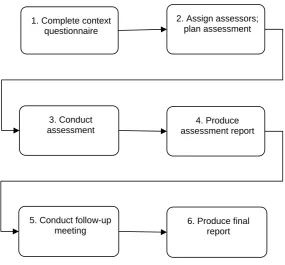
Figure 6-1 Summary of PIP method showing six steps for each assessment ...156
Figure 7-1 Capability level distribution...192
Figure 7-2 Attribute achievement ratings profile...193
Figure 7-3 Capability levels by process...194
Figure 7-4 Comparison of capability levels at assessment and follow-up meetings .211 Figure 8-1 Hofstede’s five generic cultural factors ...240
Figure 8-2 Comparison of capability levels PIP and SPICE trials phase 2 ...245
Figure 8-3 Process capability levels at initial assessment and follow-up meeting for group 1 firms...263
Table 2.2 Examples of international empirical research on SPI for small firms ...57
Table 2.3 Summary of Australian industry reports relating to software development 61 Table 2.4 Australian academic empirical research: best practice and SPI 1994-2000 64 Table 2.5 Research question 1 and associated hypotheses. ...74
Table 2.6 Research question 2 and associated hypotheses. ...85
Table 2.7 Research question 3 and associated hypotheses. ...88
Table 3.1 Summary list of research questions, hypotheses, and variables ...105
Table 4.1 Composition of best practice questionnaire...112
Table 4.2 Australian & New Zealand standard industrial classification ...113
Table 5.1 Breakdown of survey distribution and return ...123
Table 5.2 Geographical distribution of responses...125
Table 5.3 Summary of responses by organisation size ...126
Table 5.4 Summary by number of software developers ...127
Table 5.5 Distribution of responses by primary involvement in software industry...127
Table 5.6 Analysis of frequency of responses by ‘Software User’ and ‘Software Developer’...128
Table 5.7 Responses by source for survey mailing list...129
Table 5.8 Summary of extent of adoption of techniques ...132
Table 5.9 Mean adoption level of practices grouped by ISO 15504 process groups.133 Table 5.10 Frequencies and percentages of organisations by extent of adoption of practices ...134
Table 5.11 Results from series of tests of normality on selected groups of responses ...136
Table 5.12 Summary of adoption by organisation size scale...138
Table 5.13 Summary of adoption by number of software developers for COTS and Non-COTS ...139
Table 5.14 Mean adoption by primary involvement in software industry...140
Table 5.15 Comparison of adoption levels for COTS and custom developers...140
Table 5.16 Comparison of mean adoption by type of development ...141
Table 6.1 Roles and responsibilities of PIP participants...148
Table 6.2 Capability levels ...149
Table 6.3 RAPID processes and process categories ...150
Table 6.4 Process capability levels and corresponding process attributes...154
Table 6.5 Calibration of achievement attribute...155
Table 6.6 Allocation of tasks to PIP project team members...159
Table 6.7 Format of organisation context questionnaire ...160
Table 6.8 Number of questions for each process attribute for each process...161
Table 6.9 Summary of variables, scale type and related hypotheses...170
Table 7.1 Summary of age of firms ...182
Table 7.2 Size of firms – staff headcount ...182
Table 7.3 Post graduate qualifications ...183
Table 7.4 Graduate qualifications (excluding post graduates)...183
Table 7.5 Formal education qualifications—graduate and post graduate combined.183 Table 7.6 Comparison of proportion of technical staff...184
Table 7.7 Comparison of proportion of experienced staff...184
Table 7.8 Number of target business sectors selected ...185
Table 7.9 Distribution of target business sectors ...185
Table 7.10 Summary of organisational characteristics ...186
Table 7.11 Summary of project characteristics...187
Table 7.12 Summary of responses of performance perceptions ...188
Table 7.13 Summary of responses of importance of performance measures ...188
Table 7.14 List of process rating anomalies ...191
Table 7.15 Processes ranked by capability level ...194
Table 7.16 Processes ranked by attribute achievement ...195
Table 7.17 Tests of association: process capability and firm size ...197
Table 7.18 Tests of association: process capability and proportion of experienced staff ...198
Table 7.23 Top ranking target business sector by process capability for each
process...201
Table 7.24 Comparison of process capability by target business sectors ...202
Table 7.25 Comparison of process capability for firms with public and non-public sector clients...203
Table 7.26 Comparison of process capability of firms with few or many target business sectors...203
Table 7.27 Comparison of process capability based on ISO 9001 certification...204
Table 7.28 Tests of association: process capability and number of projects in progress ...205
Table 7.29 Tests of association: process capability and number of employees per project ...205
Table 7.30 Tests of association: process capability and project duration...206
Table 7.31 Tests of association: process capability and average cost overrun...206
Table 7.32 Tests of association: capability levels and performance perceptions ...207
Table 7.33 Tests of association: attribute achievement and performance perceptions ...208
Table 7.34 Summary of associations: process capability and performance perceptions ...209
Table 7.35 Summary of associations: process capability and perceptions about the importance of performance indicators ...209
Table 7.36 Summary of significant correlations of organisation and project characteristics with process capability...210
Table 7.37 Frequency of capability levels by process at follow-up meetings ...211
Table 7.38 Capability levels for six most improved firms at follow-up meeting ...212
Table 7.39 Extent of improvement by firms...213
Table 7.40 Attribute achievement improvement ...214
Table 7.41 Comparison of capability levels and attribute achievement at assessment and follow-up meeting ...215
qualifications...217 Table 7.46 Tests of association: extent of process improvement and proportion of
technical staff ...218 Table 7.47 Summary of significant correlations related to extent of improvement ..219 Table 7.48 Summary of statistical tests for research question 2...220 Table 7.49 Summary of statistical tests for research question 3...221 Table 7.50 Summary of mapping of best practice survey to RAPID processes ...222 Table 8.1 Comparison of adoption of least and most used practices...226 Table 8.2 Summary of adoption levels by process groups ...227 Table 8.3 Comparison of adoption by ESI groups for non-COTS and COTS
organisations ...236 Table 8.4 Most used software engineering practices ...236 Table 8.5 Overall responses and average adoption level by country...238 Table 8.6 European results: leaders and laggards...239 Table 8.7 Summary of significant correlations of organisation and project
characteristics with process capability...247 Table 8.8 Comparison of process capability for small and large firms ...248 Table 8.9 Summary of associations between capability levels and perceptions
about performance indicators...251 Table 8.10 Distribution of firms at each capability level by process...253 Table 8.11 Links from RAPID processes to other processes and process attributes.257 Table 8.12 Firms rated at level 2 or 3 without achievement of supporting process
attributes...258 Table 8.13 Groups of firms based on outcome of PIP...261 Table 8.14 Association: extent of process improvement and number of months
from assessment to follow-up meeting ...269 Table 8.15 Summary of effect of consistent follow-up assessor for each outcome
Appendix B. Glossary of Statistical Tests and Terminology ... 355 Appendix C. Timeframe of Study ... 359 Appendix D. Mappings Related to Survey... 361 Appendix E. Survey Cover Letter and Questionnaire... 373 Appendix F. Analysis of Best Practice Survey Data ... 379 Appendix G. PIP Sample Documents ... 395 Appendix H. Summary of PIP Assessment and Final Reports ... 409 Appendix I. Statistical Tests Relating to PIP Field Experiments ... 431 Appendix J. Quantitative and Qualitative Analysis Supporting
1
CHAPTER ONE—INTRODUCTION
1.1 Research topic
This thesis reports on a comprehensive attempt to determine the extent to which software developers in Queensland are using best practice, and to empirically assess the effectiveness of a process improvement intervention in small software development firms. The objective is to understand the extent of software development practices currently in use, and to evaluate the effectiveness of assessment-based software process improvement (SPI) initiatives for small firms. To achieve this objective, an extensive survey of the software industry was conducted to identify and compare best practice in software development with current practice. Following on from this, a detailed evaluation of a software process improvement initiative in 22 small firms was carried out.
This chapter provides the foundation for the thesis. Firstly, background information describing the Queensland software development industry is provided and the significance of the research is established. Next, the research problem is stated and the research is justified on theoretical and practical grounds. The format of the thesis is then outlined and definitions are provided. The final section describes the scope of the research, justifies the boundaries and states key assumptions.
1.2 Background to the research
Prior to providing background information about the local software industry, the importance of software and software improvement is discussed.
1.2.1 Importance of software process improvement
our daily lives’ (Glass 1996, p.11). Today, software is an intrinsic part of cars, watches, televisions and many other commodities used every day (McKerlie Consulting 1996).
Due to the growing dependence on software, problems in developing software can have devastating results at all levels: individual; business; community; national and international. Consequently, the improvement of processes associated with software development has become a focus for practitioners and researchers alike (Dyba 2000; Hall, Rainer & Baddoo 2002; Niazi, Wilson & Zowghi 2003).
In 1987, Fred Brooks observed that ‘the gap between the best software engineering practice and the average practice is very wide—perhaps wider than in any other engineering discipline’ (Brooks 1987, p.15). The view that the state of practice lags far behind the state of the art is still held today (Ludewig 2001; McConnell 2002).
Recently, software engineering research has been criticised on two counts. Firstly, that researchers, while eagerly prescribing practices, are not aware of what practitioners are actually doing (Fitzgerald 1997, p.202; Glass 2003b); and secondly, that many of the prescribed practices, methods, techniques and standards are not thoroughly evaluated (Fenton, Pfleeger & Glass 1994; McBride 2004) and may not even be suitable for all software development organisations (Brodman & Johnson 1997a; Bucci, Campanai & Cignoni 2001; Kautz 1998b; Pfleeger et al. 1997; Richardson & Ryan 2001; Wilkie, McFall & McCaffery 2004).
1.2.2 Software industry
Although comprehensive and consistent data on the Australian software sector is lacking (Framework for the Future Mapping Working Group 2002, p. 8), a brief overview of the Australian software industry is provided, followed by a profile of the software industry in Queensland.
It is estimated that globally, US$182 billion was spent on software in 2001, with Australian spending of software accounting for 1.3 percent of the global spend (McKinsey & Co. 2002, p. 23). The Australian software industry makes a significant contribution to the Australian economy by creating jobs, and increasing productivity, capability and competitiveness (BSA & PricewaterhouseCoopers 1998). In 2001, the software and services sector generated revenues of A$2.6 billion (Framework for the Future Mapping Working Group 2002). In Australia, the Information, Communications and Technology (ICT) industry is dominated by small firms: almost 96 percent of all specialist ICT businesses employ less than 20 people (Houghton 2003, p. 1).
Industry statistics related specifically to software development businesses are not gathered by the Australian Bureau of Statistics (ABS). The ABS classifies software development within the Computer Consultancy Services industry. This industry classification comprises consultancy and professional services related to hardware and software, systems analysis design and programming, building of custom-designed systems, data processing and preparation services, and microfiching and microfilming services (ABS 2004b). At the end of June 2003, there were 14,500 business enterprises in the computer consultancy services industry; these businesses employed 63,500 staff and reported a total turnover of A$9.8 billion. The five major players in the computer consultancy industry are IBM Australia Ltd, EDS Australia Pty Ltd, CSC Australia Pty Ltd, MYOB Ltd and DMR Consulting Pty Ltd (IBISWorld 2004).
SEA estimate there are approximately 650 software development companies each with revenue of over $1 million per year and that 70 percent of these companies employ less than 20 people (SEA National 2004). There are also thousands of small firms with revenues of less than $1 million (McKerlie Consulting 1996).
The statistics available from the ABS do not take into account the substantial activity and contribution related to in-house software development and embedded software (Framework for the Future Mapping Working Group 2002). It has been estimated that the cost expended by organisations on in-house software development is equivalent to the revenue from systems and utilities software, applications tools, applications solutions and software consulting services combined (McKerlie Consulting 1996, p.20).
Software development in Queensland
The economy of the State of Queensland is comparable in size to the economy of Singapore, New Zealand or Malaysia (IIB 2000, p. 1). ABS figures for 2002/2003 report that 14 percent of all Australian computer consultancy establishments are located in Queensland (IBIS 2004). As far as the number of staff employed, data for Queensland is not published, however it is likely that the profile is similar to the Australian distribution with predominately small businesses and a few large businesses (IIB 2000, p. 3).
1.3 Research problem and research questions
Although Glass has declared the software crisis has passed (1996, p. 11), there are still reports of abandoned projects and software errors causing problems (Yardley 2002). As software becomes increasingly important to all aspects of industry, there is a need to encourage practitioners to adopt best practice so as to improve the quality of the processes in use, and therefore achieve targets relating to time, budget and quality. Furthermore, the local development industry needs to adopt world-class standards to be competitive (Howarth 2004a).
This presents a challenge in terms of determining the current practices of industry participants, and in devising improvement initiatives which are feasible for these very small organisations. In many small software development organisations, processes are not defined and chaotic modes of operation eventuate (Batista & Dias de Figueiredo 2000).
Currently, the level of adoption of best practice among local software developers is unknown. To help improve the software industry, it is necessary to determine the current status of use of practices and techniques. Furthermore, as the local industry is dominated by small firms, the effectiveness of assessment-based SPI for small organisations needs to be evaluated.
Thus the research problem addressed in this study is:
To what extent are best practice techniques used by Queensland software development organisations, and how effective are assessment-based SPI programs for small software development firms?
Essentially, the position taken is that there is wide variation in the adoption of software development practices, and that low-cost mini-assessments are effective for software process improvement for small development firms, including those firms with low capability.
Three specific research questions are investigated to explore the research problem. The first question is answered with data from an industry-wide survey:
Research question 1. Is there wide variation in the extent of adoption of
software development best practice techniques by software developers in Queensland, and is adoption related to particular organisational characteristics?
The remaining two research questions are investigated by analysing assessment reports from field experiments involving 22 small software development firms:
Research question 2. Is the capability of technical processes higher than that
of management processes, and is process capability associated with particular organisational characteristics?
Research question 3. Are assessment-based SPI programs an effective means
to improve process capability for small software development firms, and is the extent of improvement associated with particular organisational characteristics?
This research investigates the adoption and use of software process improvement initiatives by software development firms. In particular, it determines the use of best practice techniques across a broad range of software development organisations in Queensland, and then evaluates the impact of an assessment-based SPI initiative in 22 firms. As the software development industry is dominated by small firms, the study focuses on to small-medium Queensland software development firms.
1.4 Justification for the research
This research is justified on three grounds: the need for an industry-wide survey of current software practices; the need to use and evaluate software process improvement models; and the lack of empirical research about software process improvement within small software development firms. Each of these issues is now discussed.
1.4.1 The need for an industry-wide survey
There is much prescriptive advice written about what software engineers should be doing but rarely is any description provided about what they are actually doing (Glass 2003b). Paulk, Goldenson and White (2000, p. 1) also note the need for a survey to gain a ‘good feel for the breadth of deployment of specific techniques across industry’. Ludewig (2001) considers that broad investigations on the actual state of software engineering are rarely done because ‘collecting the information is a huge effort, while few people appreciate the results’ (p. 1). Consequently, there are few empirical studies reported of actual software processes used (Bandinelli et al. 1995; Dutta, Van Wassenhove & Kulandaiswamy 1998). Prior to instigating process improvement programs, it is imperative to have an understanding of current software development practices throughout the industry. The best practice survey highlights areas of weakness in need of improvement. Furthermore, the survey identifies characteristics of organisations associated with adoption of best practice.
survey such as this is essential to ensure policies relating to ICT are based on a factual representation of the industry. The findings from this research may assist government policy-makers in formulating industry improvement programs, research grants, funding for industry support organisations such as SEA and the Information Industries Bureau (IIB); and purchasing policies to help the local software development industry compete for government spending and also internationally.
A further justification for the survey is that it provides a list of candidates for the process improvement program. Therefore this research provides a valuable contribution by investigating the level of adoption of software best practice techniques across the software development industry in Queensland.
1.4.2 SPI adoption and evaluation
Process improvement is recommended to software development organisations as a means to improve effectiveness in terms of cost, schedule, quality, performance and to enhance competitiveness (Ibanez & Reo 1998; Yamamura & Wigle 1997).
In 1995, the Federal Government commissioned a study to determine the needs of the Australian software development industry. Firstly, the report identified five technology and market trends influencing the software industry: process improvement; standards; programming languages and tools; outsourcing; and packaged software (McKerlie Consulting 1996, p. 5). Software process improvement promises enhanced manageability and productivity, reduced faults, and more effective reuse, by predicting project costs and durations, meeting quality standards, capturing organisational knowledge and improving work processes (McKerlie Consulting 1996, p. 14-5). Following on from the trend analysis, the McKerlie report identified the need for accurate information on cost effective methods associated with process improvement, and the requirement for the ‘independent evaluation of process improvement tools and methods’ (McKerlie Consulting 1996, p. 37).
flawed research, not on careful, rigorous software engineering experimentation’ (Fenton, Pfleeger & Glass 1994, p. 87). Therefore, researchers are urged to undertake evaluative research involving realistic projects with sufficient rigour to ensure that any benefits identified are clearly derived from the concept in question (Fenton, Pfleeger & Glass 1994, p. 87). Although past studies have indicated factors which inhibit adoption of SPI, empirical research on software process innovation is largely lacking. Consequently, there is insufficient knowledge about which innovations are effective, and which factors influence their adoption. It is vital to understand the processes currently used, and to evaluate the effectiveness of process improvement programs, or investments in SPI are wasted (Mustonen-Ollila & Lyytinen 2003, p. 275). This research provides evidence of the outcomes of software process innovation in 22 software development firms.
Assessment-based SPI programs are based on formal frameworks and promote the use of systematic processes and management practices for software engineering (Dutta, Lee & Van Wassenhove 1999). These approaches identify best practices for the management of software engineering and when applied, enable organisations to understand, control and improve development processes. The purpose of an SPI assessment is to compare the current processes used in an organisation with a list of recommended or ‘best’ practices, thereby identifying areas to be improved.
been adequately addressed in the software engineering literature. Therefore, this research addresses that need by including organisation and project characteristics in terms of how they relate to process capability, and also the extent of improvement.
This research answers the call to reduce the scepticism and uncertainty which exists in relation to the accuracy and usefulness of software process assessments and the improvements based on them (Goldenson et al. 1997). Furthermore, although there are many published accounts of assessments, there is little reported about reappraisals or follow-up assessments except for large high maturity organisations (Goldenson & Herbsleb 1995).
1.4.3 Lack of research about SPI for small firms
The lack of theory-based empirical research pertaining to SPI adoption has been noted, but nowhere is the research shortage more acute than in relation to small software development firms.
In the Australian and international software development industry, there is a large proportion of small software development firms. Such firms are involved in producing commercial-off-the-shelf packages and also custom writing software applications for clients. Although the customised software market is still substantial, its growth is being outstripped by that for packaged software, with many companies choosing to buy packaged software which they can customise internally, rather than buying a fully customised system (McKerlie Consulting 1996).
Recent research has raised doubts about whether traditional SPI models are appropriate for small software development organisations. This study responds to demands for more research to evaluate the effectiveness of assessment-based SPI programs within small development firms (Brodman & Johnson 1997a; Kautz 1998b). 1.5 Methodology
The underlying research paradigm of this study is positivist and the research approach is both descriptive and evaluative. The extent of adoption of best practice by software development organisations is evaluated, as is the SPI experience of a selected group of 22 firms. This study conforms to the nomothetic research style as it uses a survey and field experiments to test hypotheses within the scientific tradition. Quantitative analysis, focusing on statistical analysis of numerical data, and also qualitative analysis of textual and numerical data, are employed. As detailed in Chapter 3, this approach is consistent with the traditional research approach adopted by software engineering researchers.
A survey is considered to be a feasible means of providing data for any study investigating the state of practice (Wilson, Petocz & Roiter 1995). In this case, the survey provides a broad industry-wide snapshot of the adoption of best practice techniques in use throughout software development groups in Queensland. The mail survey is complemented by the field experiments, which provide an in-depth analysis of the outcomes of a software process improvement program involving 22 small software development firms. This type of multi-method approach is strongly advocated by Morrison and George (1995) and other software engineering and information systems researchers (for example Gable 1994; Gallivan 1997; Groves et al. 2000). It is claimed that a superior piece of research can be achieved by combining the main strength of survey research, generalisability, with the main strength of experimentation (Gutek 1991). The multi-method approach used in this study provides richer data and the opportunity to compare the best practice survey results with the results from the process improvement program.
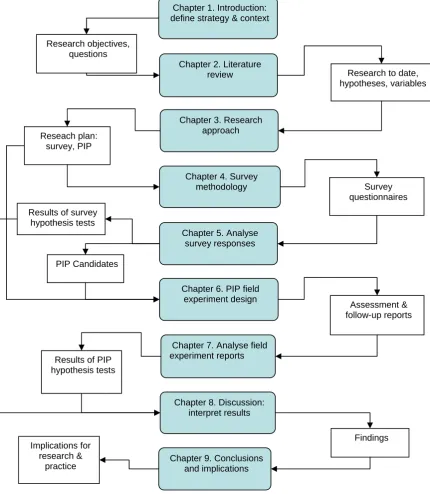
A flowchart outlining the research process adopted for this study is shown in Figure 1-2 and full details of the methods employed are provided in Chapters 4 and 6.
Chapter 1. Introduction: define strategy & context
Chapter 2. Literature review
Chapter 3. Research approach
Chapter 5. Analyse survey responses
Chapter 6. PIP field experiment design
Chapter 7. Analyse field experiment reports
Chapter 8. Discussion: interpret results
Implications for research &
practice
Results of PIP hypothesis tests
Assessment & follow-up reports Research objectives,
questions
Survey questionnaires
PIP Candidates
Research to date, hypotheses, variables
Chapter 9. Conclusions and implications Results of survey
hypothesis tests
Findings Chapter 4. Survey
methodology Reseach plan:
[image:37.595.92.522.150.656.2]survey, PIP
1.6 Outline of the thesis
This first chapter of the thesis provides a brief background of the software development industry in Queensland. The concepts of best practice and process improvement are introduced, the research problem is stated, the justification of the research presented and the methodology introduced. Delimitations of the scope of the research and key assumptions are discussed.
In Chapter 2, literature relating to the underlying theories of process improvement and diffusion of innovation is reviewed. Current research about software process improvement is summarised, highlighting the gap in research relating to the adoption of SPI by small organisations. Finally, the literature is used to formulate hypotheses to explore the research questions posed in Chapter 1.
Chapter 3 details the methodology used, firstly describing the research paradigm, approach and method. The two data collection methods, the survey and field experiments, are introduced and justified.
Chapter 4 describes the procedures followed for the best practice survey. The design and pre-test of the questionnaire is explained, followed by the selection of organisations to be included in the survey. Variables sourced from the survey are defined and the data analysis techniques identified. Limitations of the survey methodology are discussed, and ethical issues related to the survey are considered.
In Chapter 5, the data analysis from the survey responses is reported. A demographic profile of respondents is presented, followed by the analysis of the survey data, with particular emphasis on exploring the distribution of the variables representing the extent of adoption of best practice, and their association with organisational characteristics. Finally, the results of the hypothesis tests relating to the first research question are summarised.
variables are defined and data analysis method described. Finally, limitations to the field experiment methodology and ethical considerations related to the process improvement program are discussed.
Chapter 7 focuses on the results of the field experiments, and reports the findings from the 22 assessments and also the follow-up meetings. Firstly, the 22 firms which participated in the process improvement program are summarised in terms of their organisation and project characteristics. Statistical tests are presented exploring the relationship between the process capability levels and organisation and project characteristics to test the hypotheses relating to research question 2. The extent of process improvement from the time of the initial assessment to the follow-up meetings is analysed to test the hypotheses formulated to explore research question 3. Finally, the data from the survey is compared with that gathered through the field experiments.
Chapter 8 discusses the findings in terms of each of the three research questions. The outcomes of the hypothesis tests related to the best practice survey (presented in Chapter 5) and the process improvement field experiments (detailed in Chapter 7) are discussed. This chapter provides context and meaning to the study by comparing the results with similar studies, and by qualitative analysis of the survey responses and PIP reports. Critical success factors identified in previous software process improvement studies are considered to highlight factors of particular relevance to small development firms. The results from the best practice survey are then compared with those from the process improvement program.
Chapter 9 summarises the study and presents the conclusions about the research problem and the contribution of the research to the body of knowledge. Implications of the research for theory, practice and policy are considered. The limitations of the research method and analysis are discussed and areas for future research suggested. 1.7 Definitions
the reader, a list of abbreviations is included as Appendix A of this thesis, and a glossary of statistical tests and terms in Appendix B.
Practice refers to a software engineering or management activity that contributes to the creation of the output (work products) of a process or enhances the capability of a process (ISO/IEC TR 15504-9 1998, p. 3).
Best practices are the most successful solutions or problem-solving methods that have been developed by a specific organisation or industry and are widely recognised as excellent, and recommended by most practitioners and experts in the field (ESI 1997; Laudon & Laudon 2004, p. 316).
Software process is a set of activities, methods, practices and transformations that people use to develop and maintain software and their associated products (Graydon, Nevalainen & Drouin 1998, p. 76).
Process capability is the ability of a process to achieve a required goal (ISO/IEC TR 15504-9 1998).
Process capability level refers to a point on an ordinal scale (of process capability) that represents the increasing capability of the performed process; each level builds on the capability of the level below (ISO/IEC TR 15504-9 1998, p. 4).
Process improvement is the operation of putting in place measures to strengthen processes which have been identified as sources of defects or risks to quality, cost or schedule performance. Process improvement is based on the premise that product quality is highly dependent upon the processes used in its creation (ISO/IEC JTC1/SC7 N944R 1992).
determine the suitability of another organisation’s processes (ISO/IEC TR 15504-9 1998, p. 10).
Process improvement program is defined as all the strategies, policies, goals, responsibilities and activities concerned with the achievement of specified improvement goals (ISO/IEC TR 15504-9 1998, p. 10). In the context of this thesis, the process improvement program (PIP) refers to the activities related to the one-day RAPID-based assessments and follow-up meetings conducted during 1999 and 2000 by the Software Quality Institute (SQI).
Definition of small business
Another term relevant to this study is SME: small and medium sized enterprise. As noted by Xydias-Lobo and Jones (2003, p. 2) literature related to SMEs sometimes suffers from methodological limitations such as unclear or inconsistent definitions of what constitutes an SME. The Small Business Coalition (SBC) has called for a clear and uniform definition of small business to enable greater clarification of eligibility criteria for government programs and for the collection of more reliable statistics (SME E-Commerce Roundtable - Thinktank 2001).
During 1999, the ABS conducted a review of the way businesses should be defined by size. In summary, the review recommended that for statistical purposes, small businesses (excluding agricultural businesses) should be defined on the basis of full-time equivalent (FTE) employment (ABS 1995). Furthermore, small organisations are defined by the ABS (2002) as businesses employing less than 20 people. The ABS recognises three categories within that definition: non-employing businesses (sole-proprietorships and partnerships without employees); businesses with one to four employees; and businesses with between five and 19 employees. The first two categories are sometimes referred to as micro-businesses. Organisations with 20-199 employees are classed as medium sized businesses. This study conforms to the ABS definition, but care is taken in comparisons involving studies which have used different definitions of organisation size.
1.8 Delimitations of scope and key assumptions
The study was limited in terms of the geographic location of the organisations studied, and also the instruments used to collect the data.
The question of access is the principal constraint in selecting a research setting (McGrath, Martin & Kulka 1982, p. 50). The researcher’s association with the SQI provided opportunities for collaboration with the Queensland branch of SEA. As SEA sponsored both the survey and the PIP, the survey was conducted in the State of Queensland and the process improvement program was conducted mostly in Brisbane with one regional firm included. Although the survey only includes organisations based in Queensland, some of these firms may be the Australian headquarters for national or international development firms. Many of the surveyed organisations would have clients from all over Australia, as well as international clients. Therefore, although these organisations are based in Queensland, they are not developing software solely for the Queensland market.
the ESI questionnaire constitute best practice. As discussed in Chapter 2, the list of best practices included in the ESI questionnaire was derived from accepted software process improvement models.
The process improvement program reported and evaluated in this thesis was conducted using the Rapid Assessment for Process Improvement for software Development (RAPID) model and method (Rout et al. 2000). The RAPID method is based on the emerging international standard for software process assessment ISO/IEC 15504 (SPICE). The ISO/IEC 15504 standard has been validated through an international series of trials. The RAPID method is SPICE-compliant and restricted to assess eight processes: requirements elicitation, software development, project management, configuration management, quality assurance, problem resolution, risk management, and process establishment. A key assumption is that the one-day RAPID assessment provides an accurate measure of the capability of the processes under review.
1.9 Conclusion
2
CHAPTER TWO—LITERATURE REVIEW
2.1 Introduction
Chapter 1 introduced the research problem: To what extent are best practice techniques used by Queensland software development organisations, and how effective are assessment-based SPI programs for small software development firms? The purpose of this chapter is threefold: firstly, to review literature relating to the underlying theory of process improvement; and secondly, to summarise current research about software process improvement. From this literature review, it becomes apparent that there is little research relating to the adoption of SPI in small organisations. The third purpose is to identify and define the gap in the literature and to formulate hypotheses to provide answers to the research questions posed in Chapter 1.
Figure 2-1 presents an overview of this chapter, graphically showing the reference and immediate disciplines. To enhance readability, Appendix A includes a list of all abbreviations used in the study.
§2.2 Theoretical Approaches §2.2.1 TQM Theory
§2.2.2 Process Improvement §2.2.3 Organisational Maturity §2.2.4 Diffusion of Innovation
§2.3 Software Process Improvement §2.3.1 CMM
§2.3.2 SPICE
§2.4 SPI Empirical Research
Software Process Best Practice Research §2.5 SPI Critical Success Factors §2.5.1 Economic factors
§2.5.2 People issues §2.5.3 Organisation factors §2.5.4 Implementation factors
§2.6 SPI Adoption by Small Firms §2.6.1 International research small firms §2.6.2 Australian research small firms
§2.6.3 Need for research about SPI for small firms
§2.7 Hypotheses Development §2.7.1 Research Question 1 §2.7.2 Research Question 2 §2.7.3 Research Question 3
Figure 2-1 Literature review map
Need for theoretical approach
between researchers by offering a standardised language to describe complex phenomena, allowing researchers to learn from each other; and finally, to become and remain credible, research must be based in theory and must apply appropriately rigorous research methods to address applied questions. They go on to posit that ‘Theory enables explanation and prediction. The most likely sources of general theoretical arguments about organizational phenomena are the various theories of organizational structure and process’ (p. 14). Robey and Zmud (1992) also argue that mature research perspectives drawn from organisational theories, such as diffusion of innovation, provide insights into the phenomenon and increase the richness of a researcher’s theoretical imagination and empirical strategies.
Researchers are urged to use robust theories and models from social sciences, economics, management and organisations to study software engineering in the context of organisational and institutional practices (Agresti 1993a; Jeffery 1993; Kling et al. 1992). The use of reference disciplines outside the Software Engineering field for theory and concepts is deemed to provide an important basis for software research fields: for example, manufacturing concepts apply to process maturity models (Glass, Vessey & Ramesh 2002).
Accordingly, in the next three sections, management and economic theories which underpin SPI are discussed.
2.2 Theoretical approaches to process improvement
Hall (2002a) borrowed the repertory grid technique from the field of psychoanalysis to explore the roles of practitioners in companies which had implemented SPI.
In considering the reference disciplines for this study, TQM was chosen because Humphrey (1990), a pioneer of SPI, credits Deming’s TQM concepts (Deming 1986) as motivating his Capability Maturity Model. The next section traces the history of TQM, provides a definition of TQM, and summarises empirical research reporting TQM’s contribution to organisational performance.
2.2.1 TQM theory
In 1931, the American physicist, Walter Shewhart drew on the disciplines of engineering, statistics and economics to develop a concept of statistical process control (SPC) (Shewhart 1931). Shewhart believed that total quality improvement could be achieved by organisations if they followed the Shewhart cycle: plan, do, study, act (PDSA). The structure of the PDSA cycle was based on Shewhart’s belief that the key to the evolution of a successful enterprise required constant evaluation of management practices and the willingness of managers to adopt ideas (ASQ; Skymark).
Shewhart’s concepts were extended and refined by W. Edwards Deming, Joseph Juran and Kaoru Ishikawa to form the total quality management (TQM) approach. During the last 50 years, there have been many variations in TQM implementations, but all recognise that the key strategy of most organisations is to improve product and service quality, and continuously improve business processes (Dale et al. 2001). Researchers in the fields of engineering, economics, production, management and operations research have studied the development, application and assessment of TQM techniques (Wruck & Jensen 1994). Although TQM has been criticised as lacking underlying theories (Chiles & Choi 2000), and TQM researchers have also been criticised for not applying TQM standards to research design, measurement and analysis (Hackman & Wageman 1995), a plethora of articles and books have been published on the topic.
on statistical process control to encompass a variety of technical and behavioural methods for improving organisational performance’ (Dean & Bowen 1994, p. 396). Although much of the TQM literature is written by consultants, there is a body of empirical research evaluating the effect of TQM on organisational performance. This is examined in the next section.
Effect of TQM on organisational performance
It has been reported that process-oriented improvement techniques have been very successful in some organisations, but have failed in many others (Repenning 2000). For example, although fewer than 100 of the 1,000 companies surveyed by Easton and Jarrell (1998) had ongoing TQM programs, those that had implemented TQM ‘significantly outperformed their competitors’ (Repenning 2000). From the analysis of survey responses from 62 small/medium Australian firms, Anderson and Sohal (1998) found a number of significant positive relationships between TQM practices and organisational performance. The International Quality Study was conducted jointly by the American Quality Foundation and Ernst and Young. The survey, which included over 580 organisations on three continents, concluded that only three of the 945 management practices examined have a significant impact on performance. These three practices are process improvement methods, strategic plan deployment and supplier certification (Adam 1994; Anderson & Sohal 1998).
research showed that TQM has much better effects on overall performance than ISO 9000, reducing quality costs by more than seven percent.
Therefore, it is clear that TQM can provide benefits to organisations and this may account for the opinion that interest in, and efforts toward TQM are worldwide and growing rapidly (French & Bell 1995).
2.2.2 Process improvement
Regardless of the particular flavour of TQM implemented, process control and improvement is always included as it is a core TQM principle (Hackman & Wageman 1995). The main idea behind process control is that organisations are sets of interlinked processes and that improvement of these processes is the foundation of performance improvement (Dean & Bowen 1994). The importance of the focus on work processes is stressed because TQM practitioners assert that product and service quality is determined most of all by the quality of the processes by which they are designed and produced. Theory to support these concepts can be found in research from industrial engineering (Taylor 1911), and management (Hammer & Champy 1993) fields.
Benchmarking
problems in gaining internal acceptance of these processes (Hackman & Wageman 1995, p. 317).
Process definition
Many organisations recognise the value of specifying, articulating and defining the processes in use. As well as reducing the wasted effort and subsequent cost through coordination losses and misdirection, specifying current procedures provides a means of organisational learning (Hackman & Wageman 1995). The advantages of articulating a routine are also stated by Chiles and Choi (2000) as providing a ‘framework for predicting consequences of alterations of the routine and hence opportunity to plan successful intervention’ and also the ‘apparatus to convert tacit knowledge (which may not be understood by the firm itself) to explicit knowledge (which it can readily grasp)’ (p. 199). However, there can be disadvantages if work practices are over specified. A loss in staff motivation can result if the processes are identified, documented, diffused, and standardised to the point where workers feel they have little discretion about performing their tasks (Hackman & Wageman 1995). Also, although routines, rules and procedures provide some measure of stability and order in uncertain environments, the failure to continuously improve such institutionalised processes can lead to ‘an atrophy of knowledge within organisations’ (Chiles & Choi 2000, p. 198).
The effect of TQM on transaction costs
2.2.3 Organisational maturity
Following on from the work of TQM pioneers Deming (1986) and Juran (1988), Crosby (1979) produced the quality management maturity grid. The grid has six measurement categories: management understanding and attitude; quality organisation status; problem handling; cost of quality as percent of sales; quality improvement actions; and summation of company quality posture. For each of these categories, there are five stages of maturity: stage I uncertainty; stage II awakening; stage III enlightenment; stage IV wisdom; and stage V certainty (Crosby 1979, pp. 38-9). Crosby encouraged managers to use the grid to assess the current situation and to identify actions needed for improvement.
Earlier, Likert (1967) had defined four distinct stages of organisational maturity which he referred to as systems of organisation: system 1 exploitive authoritative; system 2 benevolent authoritative; system 3 consultative; system 4 participative group. His research, conducted with the use of the now popular Likert-type questionnaires, found that system 4 organisations are the most effective and successful whereas system 1 organisations face many problems. Tully, Kuvaja and Messnarz (1999) traced the history of staged maturity models from Plato’s four stage ascent of the mind, through Marx’s four stages of society development and Rostow’s five stages of economic growth and concluded that ‘stage models, whether of philosophers, economists, quality gurus, or software engineers, can be seen as occupying a respectable place in that utopian tradition’ (Tully, Kuvaja & Messnarz 1999, p. 56).
Since Crosby’s work, maturity models have gained popularity and have been proposed for a range of activities including quality management, software development, supplier relationships, research and development effectiveness, product development, innovation, product design, product development collaboration and product reliability (Fraser, Moultrie & Gregory 2002). As well as the CMM, described in §2.3.1, another well known and often applied IT model is Nolan’s stages of growth (Nolan 1973) which considers the adoption steps of IT within organisations.
diffusion of innovation theory to provide a framework to understand the complex phenomenon of the dissemination of process innovations throughout an industry.
2.2.4 Diffusion of innovation
Diffusion of innovation theory is a rich research area which has been used by many researchers to analyse the adoption of best practice techniques and SPI by software developers (Agarwal & Prasad 2000; Bayer & Melone 1989; Fichman 1992, 1994, 1995; Mustonen-Ollila & Lyytinen 2003; Zmud 1982).
An innovation is defined as any idea, object, or practice that is perceived as new by members of the social system (Mahajan & Peterson 1985). The diffusion of an innovation has been defined as the process by which that innovation is communicated through certain channels over time among the members of a social system (Mahajan & Peterson 1985; Rogers 1995). Relating three of these four key elements in the diffusion process to this study:
• the innovation is best practice techniques, in other words, software development processes which are widely recognised and recommended by practitioners and experts
• the social system is software developers in Queensland
• the time period relates to the study time period, January 1999-December 2000.
It is recognised that innovations can be either adopted from external sources or transferred from internal sources by learning from and formalizing best practice (Mustonen-Ollila & Lyytinen 2003), but temporal and financial constraints precluded the examination of channels of communication in the study reported in this thesis.
majority. At this point, the rate of adoption peaked and then the late majority and laggards also took up the innovation. This model has been modified by Moore (1999) who claimed that for the adoption of high technology innovations, the curve is not continuous since a chasm exists between the early adopters (the technology enthusiasts and visionaries) and the early majority (the pragmatists). To cross the chasm and thereby ensure successful adoption, Moore believes that the core technology must be accompanied by policies, training, reference materials, procedures, systems integration, job aids, tooling and installation support (Graettinger 2003). Although Moore’s theory has been promoted by researchers at the Software Engineering Institute (SEI) as a useful model to understand the adoption of the CMM and CMMI (CMM Integration), to date it has not been supported by empirical evidence.
In the ‘modern software practices’ study, Zmud (1982) distinguishes two types of innovations: those primarily serving the interests of the technical core and the other serving the administrative core. He also differentiates between product and process innovations: ‘... product innovations refer to the introduction of new products or services that shift or expand an organisation’s domain, while process innovations refer to the introduction of new methods, procedures or responsibilities within existing domains’ (Zmud 1982, p. 1424). Using Zmud’s classifications, SPI can be classified as a process innovation serving both technical and administrative cores.
2.2.5 Conclusion to referent discipline theory