University of Strathclyde
Department of Design, Manufacture and Engineering
Management
Glasgow, UK
Strategy Process in Manufacturing SMEs
by
Aylin Ates
A thesis presented in fulfilment of the requirements for the
degree of Doctor of Philosophy
COPYRIGHT STATEMENT
ACKNOWLEDGEMENTS
I wish to give my sincere thanks to those who contributed suggestions, inspiration, and cases to this research. Thanks to EPSRC (Engineering and Physical Sciences Research Council) and University of Strathclyde, Department of Design, Manufacture and Engineering Management for funding this doctoral study. Also, thanks to industrial collaborators in case study companies. I would like to mention the generosity, encouragement, advice and constructive criticism I have received on this thesis and over the last three years from my supervisor, Prof. Umit Bititci. Not enough can be said about the friendly and professional assistance of Prof. Bititci during the course of this research. He has shown an incredible ability to give quick, helpful and challenging comments on large amounts of text. He has been very supportive during all my years as a doctoral student.
I would also like to express my thanks and appreciation to my present and former colleagues and friends at the University of Strathclyde who inspired me greatly and made this journey much joyful: Marisa Smith, Cigdem Altin-Gumussoy, Katherine Davis, Eileen Hearl, Alina Shamsuddin, Carrie Shaw, Margo Hutchison, Maneesh Kumar, Jose Hernandez, Adrian Shields, Trevor Turner, Figen Cakar, Peter Ball, Fran Ackermann, John Davis, Alex Duffy, Robert van der Meer and Jill
MacBryde. My very special thanks go to David MacKay and Catherine Maguire whom I worked with in the larger project and have given me extensive feedback on my thesis. You all have made my life in Glasgow enjoyable both professionally and personally. Many thanks go to my internal examiner Dr. Kepa Mendibil and my external examiner Prof. Mike Gregory for their valuable suggestions on my thesis for future publications.
Last but not least, I am grateful to my sisters and brothers; Deniz, Yasemin, Ozgur, Yeliz, Baris, the source of much joy, encouragement, and support, specially my mother, Leyla Ates and my father, Hasan Ates, I can not express in words how much I love you!
Despite all support I have received, responsibility for any shortcomings in my doctoral thesis is of course mine alone.
CONTENTS
Page
Title Page i
Copyright Statement ii
Acknowledgements iii
Contents iv
List of Tables viii
List of Figures ix
Abstract x
Chapter
1 INTRODUCTION 1
1.1 Contextualising the Research 3
1.2 Why is this Topic Timely and Interesting to Investigate? 5
1.3 What Does This Research Do? 5
1.4 Thesis Structure 7
2 A PROCESS-BASED APPROACH TO STRATEGY MANAGEMENT: A Review of SME Context
9
2.1 Historical Development of Strategy Management 9
2.1.1 Rational (Planning / Analytical) approach 10
2.1.2 Emergent strategy approach 12
2.1.3 Processual approach to strategy 14
2.1.4 Underlying theoretical framework: A processual view to strategy
16
2.2 SME Strategy 21
2.2.1 What is an SME? 22
2.2.2 Entrepreneurship strategy and strategic management 23
2.3 Key Focus of the SME Strategy 25
2.3.1 Flexibility and responsiveness 25
2.3.2 Pursuit of opportunities 26
2.3.3 Risk taking 26
2.3.4 Innovation, unconventional thinking and creativity 26
2.3.5 Less structured decision making mechanisms 26
2.3.6 Organising and allocating limited economic resources effectively
29
2.3.7 Operational focus 29
2.3.8 Further research questions 30
2.3.9 Strategy tools, methods and techniques 32
2.4 Towards a Conceptual Framework for the SME Strategy Process
32
2.4.1 Environmental scanning/ gathering, assimilating and processing internal and external environmental information
33
2.4.2 Strategic planning/ formulation/ strategy development process
33
2.4.3 Deployment of strategic plans/ implementation/ execution 35
2.4.5 Selecting strategies 36
2.4.6 Communication 36
2.4.7 Reorganisation and organisational change 36
2.4.8 Strategy reformulation/ revisions/ evaluation/ modifying strategy
37
2.5 The Anatomy of the Strategy Process 39
2.6 Summary of Chapter 2: The purpose revisited 49
3 MANAGEMENT RESEARCH OVERVIEW: Focusing on Case Study Method
51
3.1 Introduction: Scoping the Field in Research Paradigms 51
3.2 Debate Around Research Philosophies 52
3.2.1 Ontology 52
3.2.2 Epistemology 53
3.2.2.1 Positivist paradigm 54
3.2.2.2 Interpretivist paradigm 54
3.2.2.3 Critical realist paradigm 55
3.2.2.4 Action research 55
3.2.3 Methodology 56
3.2.4 Methods and techniques 58
3.3 Summary of Research Design 58
3.4 A Review of Research Methodologies and Methods 59
3.4.1 Survey research 60
3.4.2 Multivariate research design 62
3.4.3 Experimental research 62
3.4.4 Model building 63
3.4.5 Grounded theory 63
3.4.6 Case study method 65
3.4.6.1 When to employ case study research 65
3.4.6.2 Case study research types 66
3.4.6.2.1 Explanatory/ causal case studies 66
3.4.6.2.2 Descriptive case studies 66
3.4.6.2.3 Exploratory case studies 66
3.4.6.2.4 Theory building 67
3.4.6.2.5 Theory testing 68
3.4.6.2.6 Theory extension/refinement 68
3.4.6.3 Core tasks while conducting case study research 69
3.4.7 Interviews 71
3.5 Choices Researchers Have to Make 72
3.6 Criteria for Assessing the Quality of Research 74
3.6.1 Data/ research evidence 75
3.6.2 Contribution to knowledge 76
3.6.3 Contribution to practice 76
3.6.4 Internal validity 76
3.6.5 External validity/Generalisability 76
3.6.6 Construct validity 77
3.6.7 Reliability 77
3.7 Summary of Chapter 3 82
4 RESEARCH DESIGN 83
4.1 Research Design Addressing This Study 83
4.1.1 Broad research problem 84
4.1.3 Ontology choice exploration for this study: Objective ontology
86
4.1.2 Epistemology choice for this study: Critical realist paradigm
88
4.1.3 Methodology choice for this research: Inductive approach 89
4.1.4 Research methods/techniques for this research: Case study method
91
4.1.4.1 Case study versus Survey method 92
4.1.4.2 Case study versus Experiments 93
4.1.4.3 Case study versus Participation 93
4.1.4.4 Summary: Case study method choice for this research 93
4.2 Case Study Design Addressing This Study 96
4.2. 1 Case study type 96
4.2. 2 Getting started: Defining the specific research questions 98
4.2. 3 Selecting case study organisations 98
4.2.3.1 Unit of analysis 100
4.3 Summary of Chapter 4 101
5 FIELD WORK: Data Collection and Presenting 103
5.1 Exploratory Stage 104
5.2 Case Study Selection Stage 105
5.3 Research Design Modification Stage: Case study protocol refinement
107
5.3.1 Case study protocol to get prepared for the field work 107
5.4 Case Study Data Collection Process 110
5.4.1 Collecting case study evidence 111
5.5 Case Study Reports 113
5.6 Company Profiles 114
5.7 Summary of Chapter 5 114
6 FIELD WORK: Multiple-Case Study Qualitative Data Analysis and Results
116
6.1 Display Data and Coding 117
6.1.1 Unit of analysis 118
6.1.2 Taxonomy and coding book 119
6.2 Within-Case Displays 120
6.2.1 Within-Case exploring and describing 120
6.2.2 Within-Case explaining and predicting 121
6.2.2.1 Thematic based interpretation and Counting 121
6.2.2.2 Thematic based interpretation and Mapping 122
6.3 Blairs of Scotland 123
6.3.1 Pre-1997: before the new MD was appointed 124
6.3.2 Post-1997: after the new MD was appointed 124
6.3.3 Strategic initiatives (Unit of Analysis) 125
6.3.4 Coding 125
6.3.4.1 Coding result for Blairs of Scotland 126
6.3.5 Blairs of Scotland conceptually ordered map 130
6.3.6 Researcher’s interpretations 131
6.4 Cemtron 135
6.4.1 Strategic initiatives 136
6.4.2 Coding 136
6.4.2.1 Coding result for Cemtron 136
6.4.4 Researcher’s interpretations 139
6.5 Houston Co-pack 144
6.5.1 Strategic initiatives 144
6.5.2 Coding 145
6.5.2.1 Coding result for Houston Co-pack 145
6.5.3 Houston Co-pack conceptually ordered map 147
6.5.4 Researcher’s interpretations 148
6.6 TFC Cables 151
6.6.1 Strategic initiatives 152
6.6.2 Coding 152
6.6.2.1 Coding result for TFC 153
6.6.3 TFC Cables conceptually ordered map 155
6.6.4 Researcher’s interpretations 156
6.7 Cross-Case Analysis 160
6.7.1 Cross-case analysis results 161
6.7.1.1 Answers to research question 1 162
6.7.1.2 Answers to research question 2 164
6.7.1.3 Answers to research question 3 168
6.7.1.4 Answers to research question 4 169
6.7.1.5 Answers to the broad research question 170
6.8 Summary of Chapter 6 170
7 DISCUSSIONS 172
7.1 A Critical Review of the Research Objectives 172
7.2 Discussion on Findings 173
7.2.1 The usefulness of a process theory in this study 173
7.3 Theoretical Contribution 174
7.4 Implications for Managerial Practice 177
7.5 Assessing the Research Quality 187
7.6 Limitations 196
7.7 Future Research Directions 198
7.8 Some Personal Reflections and Lessons 199
8 CONCLUSIONS AND KEY LEARNING POINTS 201
8.1 Research Conclusions 201
8.2 Key Learning Points 203
8.2.1 Implications for theory 206
8.2.2 Implications for practice 208
Bibliography 209
LIST OF TABLES
Page
Table 2.1 Summary of key focus and authors in strategy approaches 19
Table 2.2 SME definition 23
Table 2.3 The anatomy of the strategy process 42
Table 2.4 Definitions for strategy process activities 46
Table 3.1. Ontologies and epistemologies in social science research 57
Table 3.2. Matching research purpose with case study types 69
Table 3.3 Process of building theory from case studies 70
Table 3.4 Strengths and weaknesses of research interviews 72
Table 3.5 Key choices of research design 73
Table 3.6 Research design viewpoints related to research quality 78
Table 3.7 Some ways to deliver research quality criteria in case studies 79
Table 3.8 Summary of research quality criteria in this research 80
Table 4.1. Relevant characteristics for different research ontologies 87
Table 4.2. Research method choice for this study 95
Table 4.3 Case study type for this research 97
Table 5.1 Case study companies: Company profiles and business facts 115
Table 6.1 Strategy process conceptual framework based on theory (taxonomy) 120
Table 6.2 Example of coding table for Blairs of Scotland 127
Table 6.3 Cross-case analysis of to answer the RQ1 163
Table 6.4 Cross case analysis of strategic initiatives 310
Table 6.5 Cross-case analysis matrix for thematic pattern searching 312
Table 6.6 Pattern searching across within-case analysis answers to the RQs 316
Table 7.1 Summary of evaluation of research quality criteria based in literature
188
Table 7.2 Process of building theory from case studies 193
LIST OF FIGURES
Page
Figure 1.1 Locating manufacturing SME strategy process as a subject 4
Figure 2.1 Deliberate and emergent Strategies 13
Figure 2.2 Various kinds of strategies, from rather deliberate to mostly emergent
20
Figure 2.3 Answers to some research questions based on literature on the topic of SME strategy process
38
Figure 2.4 Strategy process framework based on theory 44
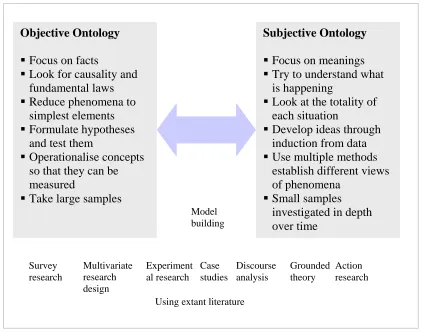
Figure 3.1 Choice of research methods related to ontology 53
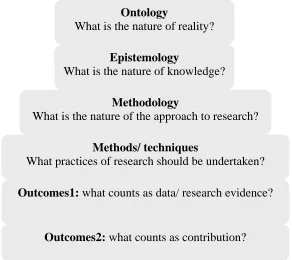
Figure 3.2 Research methodology design building blocks 58
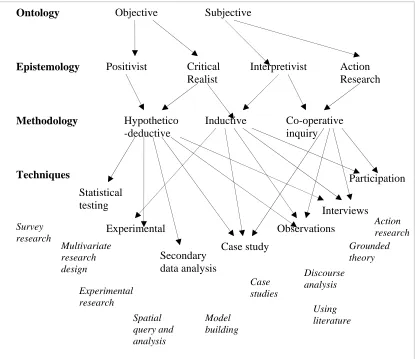
Figure 3.3 Research design map 60
Figure 3.4 The process of theory building 67
Figure 3.5 Research design and related method choices 73
Figure 4.1 Research design activity map 84
Figure 4.2 Paradigm choice for this study 89
Figure 4.3 The REL triangle 90
Figure 4.4 Research design choice map for this research 95
Figure 5.1 Research activities used for field work in this research 104
Figure 5.2 Data collection activities map 111
Figure 5.3 Triangulation of data in this study 113
Figure 6.1 Data analysis process summary 117
Figure 6.2 Emphasis on activities in Blairs of Scatland 128
Figure 6.3 Emphasis on activities in Cemtron 137
Figure 6.4 Emphasis on activities in Houston Co-pack 146
Figure 6.5 Emphasis on activities in TFC 154
Figure 6.6 Within case analysis about emphasis on phases 162
Figure 6.7 Within case analysis about emphasis on activities 164
Figure 6.8 Qualitative data design summary 171
ABSTRACT
“The quality of research definition, literature review, research design, execution and analysis are well above the standards necessary for the PhD.”
External examiner comments after viva examination (25th July 2008) Prof. Mike Gregory, Cambridge University
1. INTRODUCTION
Numerous developed economies have seen a relative increase in the number of small to medium-sized enterprises (SMEs) compared with large organisations since the 1980s (Ruigrok & Tate, 1996). Therefore, SMEs now provide a major portion of the employment in most European countries (Dutta & Evrard, 1999; Voss et al., 1998). There were approximately 4.3 million businesses in the UK at the start of 2005. The vast majority of these (more than 90%) were SMEs and they provided 47% of the UK private sector employment and 36% of turnover (Anon, 2007a; Dutta & Evrard, 1999; Ruigrok & Tate, 1996). Not only in European economy but also in many industrialised world economies such as the US, Russia and China, SMEs comprise a major part of these countries’ economies (Dutta & Evrard, 1999; Mikhailitchenko & Lundstrom, 2006; Ruigrok & Tate, 1996; Vries & Margaret, 2003).
SMEs are important ‘engines’ to stimulate the economic growth of a country (Van Gils, 2005). Especially it is broadly accepted that manufacturing SMEs play a vital role in the economic health of the country (Ghobadian & O'Regan, 2000; Voss et al., 1998). European SMEs have to compete with emerging economies and therefore it is thought that they should act more strategically in order to survive and grow. If firms are merely focused on short term return on investment and financial performance, they are unlikely to stay competitive in the long term (Mills, Neely, Platts, & Gregory, 1998; Mills, Neely, Platts, Richards, & Gregory, 1998). Poor strategic planning capabilities, short terminism, a lack of focus to external and strategic issues are main areas for limited success of SMEs (Hudson-Smith & Smith, 2007; Hudson, Smart, & Bourne, 2001).
SMEs (Hudson-Smith & Smith, 2007). So, what is known about strategy in SME context is an important area to further investigate. Literature highlights that strategy is managed in SMEs from an informal and intuitive fashion with a fire fighting approach, short terminism and strategy is shaped in the head of the entrepreneur, owner-manager or the Managing Director merely (Koberg, 1996; Mintzberg and Quinn, 1992; Van de Ven, 1986; Walsh, 1987). However, it is pointed out that the strategic awareness of SME managers and entrepreneurs is the critical determinant of the company’s survival and achievements in the long term. SME managers in successful companies recognise that strategic management is an integral business activity (Berry, 1996) performed either consciously and visibly or unconsciously and invisibly (Jennings & Beaver, 1997). Thus, SMEs are important to the economy and it is thought that strategy management is a key area that SME managers should put more emphasis on in order to stay competitive in the long term.
The academic literature on entrepreneurship started to discover points of convergence with strategy management through the 1980s (Entrialgo, Fernandez, & Vazquez, 2000; Rae, 2007). For instance, Entrialgo et al. (2000) study the relationship between entrepreneurship and strategic management, from the standpoint of a process. However, in literature the majority of studies of SME performance have a tendency to focus on either the symptoms resulting from problems within the firm or upon the reasons cited for failure. Comparatively small analysis of the ingredients that promote and sustain competitive advantage has been undertaken. Despite the fact that generic skills and abilities are requisite, the strategy management process in SMEs is unique and can not be considered to the same as professional management in larger organisations practiced on a ‘reduced scale’ (Jennings & Beaver, 1997, p. 13). Hence, this research aims to address the focus and the activities of the SME strategy process and, this may help the reader understand the practices and language of SME managers concerning strategy.
craft and execute a strategy capable of moving the organisation in the anticipated direction, growing its business, and improving its financial and market performance. This research shall indicate the kinds of activities that determine strategic initiatives of SMEs which direct their operations with a major impact.
1.1 Contextualising the Research
This research is part of a multidisciplinary EPSRC (Engineering and Physical Sciences Research Council) funded research project called Understanding and Managing the Manage Processes: what makes successful companies different?
(Grant Number GR/T25897/01 11603RA3330). Briefly, this research project has a particular focus into what managers do in SME-like organisations so as to understand how managerial processes are carried out in companies in order to sustain competitive advantage. In the scope of the research project 37 companies across Europe, majority of which included SME-like companies both independent or subsidiaries, profit/ cost centres of larger organisations, employing less than 250 people, are investigated. Hence, the researcher benefited additional learning and experience by participating in this research project during the last three years as a researcher. She took part in all stages of the research project from research design, case study data collection, and data analysis to dissemination seminars. One of the managerial processes investigated is ‘managing strategy’. Consequently, this PhD study focuses on strategy management in SMEs.
Hence, the researcher focused on a particular theoretical approach to look at strategy in manufacturing SME context, which is a process view because of her industrial engineering background. She felt more comfortable in the frame of mind to look into processes and activities within strategy management. As a starting point she assumed that a process view to strategy would provide useful insights into clarifying manufacturing SME strategy which seems to be a fuzzy concept (Mills et al., 1998) in the head of SME managers (Mintzberg and Quinn, 1992). Then the researcher developed further insights from 37 case studies conducted by the wider research team. For instance, ten pilot case studies, conducted in the UK, implied that managers of SME-like companies which are mainly manufacturing SMEs do not necessarily use the word ‘strategy’ when they talk about longer term health of their company and how they manage their business. However, they mentioned in the interviews that they engaged with a set of activities to run their business and to survive over years. So, what those activities are and how SME managers are performing those activities from a strategy process perspective is the broad research question that inspired the researcher to pursue this research. She aims to develop a deeper understanding into SME strategy process. As a result the researcher positioned her PhD topic in strategy process in manufacturing SME context.
Figure 1.1. Locating SME strategy process as a subject SME Strategy
Process Strategic Management
Literature
Entrepreneurship Literature Strategy
Management in SMEs
1.2 Why is this Topic Timely and Interesting to Investigate?
The PhD topic is: Strategy Process in Manufacturing SMEs. This topic is important and timely because manufacturing SMEs are important contributors to economy and strategy management is an important area which is thought to contribute survival and growth of SMEs. There are a number of studies that look at large companies and explore strategy processes in those companies. Also, recently there is a growing body of literature around strategic planning and performance in entrepreneurship strategy literature (Hudson-Smith & Smith, 2007; Ghobadian & O'Regan, 2000; Voss et al., 1998; Jennings & Beaver, 1997). This study aims to join this rising academic debate in literature and aims to contribute to knowledge by developing a deeper understanding into manufacturing SME strategy process via articulating activities within the process.
1.3 What Does This Research Do?
This research is broadly aiming to look at ‘business level strategy’ in manufacturing SMEs in the UK. Banfield et al. (1996) suggest that ‘business strategy’ is the simple business logic which management use to share with shareholders and the stakeholders how they see the environment changing and how their organisation will survive and grow.
The main objective of the research is contributing to extending strategy process theory into a manufacturing SME context by integrating different authors’ view on managing strategy so as to bring together current thinking in the field and carrying out a comparative study between theory and practice to clarify this topic. This research does not aim to provide normative suggestions to SME managers so it should not be considered as a how-to thesis, but rather a point of departure for fresh lines of exploratory case study research about the manufacturing SME strategy process.
Broad Research Question: How does the strategy process work in manufacturing
SMEs? In order to answer the broad research question, the researcher developed further research questions from the relevant literature which are:
Research Question 1. What are the key activities that are carried out by
manufacturing SMEs in the strategy process? This research question aims to clarify activities within the strategy process in the investigated SMEs.
Research Question 2. What is the key focus of the strategy process in the context of
manufacturing SMEs? The goal of this research question is to provide some implications for SME strategy scholarship and SME managers by clarifying the key focus of strategy process in the context of manufacturing SMEs.
Research Question 3. What strategy tools, techniques and methods are being
employed in manufacturing SMEs? This research question aims to address a gap in knowledge about the strategy tools, techniques and method most commonly used when decision making and execution in manufacturing SMEs.
Research Question 4. How do strategic initiatives and decisions lead to
implementation in manufacturing SMEs? This research question aims to shed light on the linkages between strategic initiatives/ decisions and implementation. The potential catalysts enabling decisions to put into action will be investigated.
Briefly, the objectives set to be accomplished in this research are:
• Identifying what is known about strategy management in manufacturing SMEs from the literature – Systematic and general literature review will be carried out.
• Examining a process view as an approach to clarify activities in the manufacturing SME strategy process - A literature based conceptual framework will be developed and will guide the empirical investigation.
1.4 Thesis Structure
Each chapter of the thesis starts with chapter goals which suggest what the researcher can expect to accomplish from the chapter, and help her remind the reader what the research is about, what she is doing and how this is relevant to the research topic. At the end of each chapter there is a summary of what was set out to be achieved and to what extent the objectives are met in that chapter including some critical messages emerging. The thesis is structured in eight chapters, which are introduced below:
Chapter 1. Introduction This chapter sets out the wider context for the thesis introduces the topic and key concepts and outlines the approach and structure.
Chapter 2. A Process-based approach to strategy: A review of manufacturing
SME context This literature review chapter explains the theoretical framework for this study which is a ‘process based approach to strategy’ followed by putting theories together and working them into a conceptual framework. This chapter intends to clarify how manufacturing SME strategy is located in relation to the wider academic literature in strategy and strategic management.
Chapter 3. An overview to management research methodology This chapter concentrates on an introduction of the methodological aspects of management research and introduces a ‘research design map’ which is a powerful tool to warrant one’s research design choices. The role of the researcher’s personal preferences and the nature of the research topic are explained. Methods to assess ‘research quality’ especially in case study research are explored.
Chapter 4. Research design adopted in this study: Case studies This chapter introduces the case study companies and explains how those SMEs were chosen from the larger project database. As a result, this study investigates independent (non-subsidiary) manufacturing SMEs from similar sizes (medium sized) in terms of employee numbers in the UK.
Chapter 6. Multiple cross-case qualitative data analysis This chapter demonstrates a rigorous qualitative data analysis by using ‘coding tables’ and ‘conceptually ordered maps’. This approach let the data speak and let the story emerge inductively although the conceptual framework guided what the researcher was searching for.
Chapter 7. Discussions This chapter proposes answers to the research questions as being significant for the future development of SME strategy process research, learning, policy and practice. Similarities and differences with the previous research are compared with the current research in this final chapter. This chapter explains how high quality research is accomplished. Finally, the chapter closes with the researcher’s personal reflections and learning during the PhD journey and leaves a challenge to the reader: is strategy as a terminology lifeless in the head of SME managers or does it exist as a set of interrelated activities that managers are more comfortable to talk through?
2. A PROCESS-BASED APPROACH TO STRATEGY
MANAGEMENT: A Review of SME Context
Strategic management has been deemed to be an important and well established discipline in the management of organisations since 1960s. The field is fairly young and fast growing and has been renamed in 1979 from ‘business policy’ (Schendel & Hofer, 1979). Strategic management is considered as a discipline first by Schendel and Hofer’s book (1979) called ‘Strategic Management: A New View of Business Policy and Planning’. However, it is usually declared that the field of strategic management is fragmented; overlapping with several other well developed fields and is deficient in having a consistent identity (Nag, Hambrick, & Chen, 2007). Even though there are a number of different approaches, strategic management has enjoyed a great success over recent years in academia. Nag et al. (2007: 935) imply that strategic management’s success as a field comes out from an underlying agreement that enables it to draw ‘multiple perspectives’, while still maintaining its articulate distinctiveness. Definitions for the relevant terminology is summarised in Appendix IA Glossary.
Looking at general strategic management text books and journal papers as well as using a systematic literature review approach (Tranfield, Denyer, & Smart, 2003), the researcher investigated the different theoretical frameworks to study strategy management. Specific management databases, such as Business Source Premier, Web of Knowledge, Emerald Insight, ABI Inform and Science Direct, were investigated. Main findings from the main stream strategy management literature are mapped by adopting Pettigrew’s (1992) Context-Process-Content categorisations of strategy. The mind map of literature helped me to explore the field and develop an appreciation to different views of strategy (Appendix IB).
The following sections give a brief summary of how strategy management developed historically. Finally it explores ‘a process based approach’ to look into strategy as a theoretical framework underlying this research.
2.1 Historical Development of Strategy Management
classical/ analytical) approach, Emergent approach and Processual approach. Before drilling into the detail, it is worth summarising the general implications of each view. The Rational view is the oldest and still very influential, using management tools, methods and techniques. Emergent approach considers strategy not only as a programmable and deliberate concept but rather an outcome of actions and environmental influences in the form of a realised strategy. Processual approach differs from the other two approaches and focuses on the processes and activities by which the strategy is made rather than the outcomes of strategy. Processual view also combines the above two views by considering that there is a process of what is emerging.
2.1.1 Rational (Planning / Analytical) approach
Starting with the meaning of ‘Strategy’ which originally was a Greek word ‘strategos’ meaning a general, lead and army or a broad set of manoeuvres carried out to triumph over an enemy, the critical idea can be ascertained as having a clear direction supported by a number of plans so as to accomplish a particular outcome (Bracker, 1980; Whittington, 1993). The origin of strategy as a military word can be seen as an indication of deliberate view of strategy as represented in rational approach to strategy where there are clear objectives and goals and the means to accomplish them are deliberated.
In strategic management theory, the strategy definition of Alfred Chandler (1962), who is the recognised first academic researcher of strategy, is classic to represent ‘Rational’ view to strategic management. Chandler (1962) deems strategy as the means of a precisely planned growth. Structure enables the organisation to manage all those strategic activities and resources. He claims that a set of new courses of action must be developed for growth. Resources are allocated in order to accomplish the goals and to sustain the firm’s activities in the new fields responding to changing sources of supply and demand, variable economic conditions, new technological progress, and the performance of competitors.
Chandler (1962) proposes that in a large company strategy management is an identifiable activity and a role of executives as a full time specialised job. Alfred Chandler describes two main management tasks within this job:
• Responding to immediate problems and needs for handling unexpected contingencies and crises in order to run day to day operations of the business efficiently.
The executives’ roles in large organisations are very much focused on long-range planning. However, Chandler (1962) also expresses that in small firms, the entrepreneurs concentrate on day to day operational dealings, giving little or no attention to shifting markets, technology, sources of supply, and other factors influencing the long-term health of their company. They may make decisions within the frame of forward planning or analysis but rather by an ad hoc way to every new situation, problem, or crisis as it arises. They accept the goals of their enterprise as inherited or set without giving a second thought. Chandler clearly states that this approach is not very effective because wherever entrepreneurs only think about short term activities and exclude or disregard long range planning, appraisal, and coordination, they fail to carry out their role for the benefit of economy and the company.
Similarly, Porter (1980) offers a complete framework of analytical methods to assist an organisation to analyze its industry and foresee the industry’s future evolution, to know its competitors and its own position, and to convert this analysis into a competitive strategy for a specific business. Thus, Porter’s analytical view on strategy puts a lot of emphasis on formal strategic planning and formulation in an organized and disciplined way. Porter proposes that there are several benefits of pursuing a formal strategic planning process explicitly in order to ensure that policies of functional departments are co-ordinated.
Christensen et al. discuss the importance of explicit strategy in their work (Christensen, Andrews, & Bower, 1973). Associated authors such as (Allison, 1971; Ansoff, 1965; Christensen et al., 1973; Porter, 1980, 1985; Sloan, 1963), claim strategy is a rational process of deliberate calculation and examination which results in capitalization of long term competitive advantage. These authors propose that good quality planning is what it requires ‘to master internal and external environments’. Strategy matters in that rational analysis and objective decisions create the difference between sustainable success and failure (Whittington, 1993, p. 3). The following is the key feature of planned strategy.
2.1.2 Emergent strategy approach
The first critics to the rational approach began debating its merits pretty quickly. The main argument was around rationalists’ interpretation of competition being so simplistic and sterile since it considers the environment as static and unchanging (Whittington, 1993). Rational view look upon strategy as explicit, developed intentionally and purposefully, and made in advance of the precise decisions to which it applies. However, considering strategic management as having two distinct and sequential phases (i.e. planning and executing as classified in the rational view) resulted in criticism from some scholars in the field (Eden & Van der Heijden, 1993; Lindblom & Braybrooke, 1963; Mintzberg, 1978, 1981, 1987; Mintzberg & Waters, 1985; Quinn, 1978). These authors propose that the execution of strategy should be seen as part of strategic planning.
In other words, strategies seem to be far from being best and right and concrete as they were claimed in rational view. For instance, Weick (1990) tells the true story of a Hungarian detachment that got lost in the Alps during military manoeuvres. As it snowed for two days, the soldiers lost hope and laid themselves down to die in the frozen wilds. Then unexpectedly one of the soldiers found a map in his pocket, the detachment had confidence, and they walked boldly out of the mountains. Safe and sound back at camp, they found out the map was of the Pyrenees. For Weick, strategic plans are often like this map. In fact, it is not the issue if they are mistaken, as long as they provide managers the assurance and sense of purpose to act
(Weick, 1990) in (Whittington, 1993). If the firm sits and hangs around for the right map, it will freeze up; if it gets up and moves about, it will one way or another find direction, gain experience and create its own opportunities. In this way rational approach of formulation coming first and implementation second, gets reversed: strategy is realised in action (March, 1976; Whittington, 1993).
[image:23.595.119.478.372.623.2]Similarly, Mintzberg and Quinn (1992, p. xiii) argue that in reality, formulation and implementation are tangled as ‘complex interactive processes in which politics, values, organisational culture, and management styles’ decide or restrict particular strategic decisions. Strategy formulation and implementation may be separated in some situations possibly in crises, in some entirely new ventures, as well as in firms facing unsurprising futures, however these occasions are uncommon. Mintzberg and his colleagues argue that strategies may result from ‘human actions but not human designs’. Moving from there they identify intended and realised strategies as shown in Figure 2.1 (Mintzberg & Waters, 1985).
Figure 2.1. Deliberate and emergent strategies (Mintzberg & Waters, 1985)
Quinn criticises the formal planning exercise because it places greater central control over operations instead of inspiring creative options, opportunity creation, innovation and entrepreneurship.
To sum up, this alternative view suggests that strategies are not always realized as a result of deliberated and intended top down plans and actions, but rather strategies are results of experiments, learning from operational levels and greatly influenced by negotiations, politics within the organisation, culture and pressure of external factors (Collins & Porras, 1991; Johnson & Scholes, 1999). Thus, this perspective suggests that “strategy as a whole should be seen as crafted through emergent processes, with formal strategy analysis a distraction” (Whittington, Molloy, Mayer, & Smith, 2006, p. 616). The following is the key feature of emergent strategy.
2.1.3 Processual approach to strategy
An important view is that while there is a contradiction between a more deliberate/ deterministic approach and a more emergent/ intuitive one in strategy management, there is also an important complement between them. Several academics and practitioners emphasise the significance of task of strategy and answering how
question. For instance, Teece, Rumelt, Dosi and Winter (1994) highlight the primary policy process question – how does policy process matter? Similarly, Porter (1996) expresses concern with the leadership and organisational challenges of managing the strategy process. Furthermore, Hamel and Prahalad (2005) and Prahalad and Hamel (1994) urge the field to devote as much attention to the carrying out of strategy (such as the task of strategy making), as they have to its content. Also, for senior managers and leaders, the question of how to make successful strategies sits usually at the top of their agenda (Szulanski, Porac, & Doz, 2005).
Pettigrew (1992) has drawn attention to Hofer and Schendel’s ground-breaking explanation of strategic management as processual in character emphasizing the development and use of strategy (Szulanski et al., 2005). The strategy process
research stream is attributable to the unhappiness of managers with result of previous attempts at strategic planning, which failed to foresee ‘the contingencies of the environment’ (Herrmann, 2005, p. 114). In addition, overly sophisticated management activities in planning augmented strategy implementation difficulties (Rumelt et al.,
1994). In contrast to the rational and emergent approaches to strategy, the processual approach e.g. (Johnson & Scholes, 1999; Pettigrew, 1992; Quinn, 1981) has offered rich and systematic descriptions showing that strategy making engages a variety of actors and various contextual influences (Regner, 2005) which is practically proven to be useful to managers.
As pointed out in Regner’s (2005) recent work, the most leading strategic management research directions of the 80s and 90s, the market based strategy perspective (e.g. Porter, 1980) and the resource based view (RBV) (e.g. Barney, 2001; Barney, 2001; Jay & Edward, 1994; Wernerfelt, 1984) have interestingly determined that strategy grows out of exploitation of industry and resource compositions. However, how market imperfections and forces regarding entry barriers (Porter, 1980, 1981) and isolating mechanisms (Rumelt, Schendel, & Teece, 1991; 1994) in reality are created (Cockburn, Henderson, & Stern, 2000) is not addressed in these views. Hence, several authors looked at strategy process as comprising of a set of complementary activities integrating resource based view (inside-out) and market based view (outside-in) (Pettigrew, 1992; Pettigrew et al., 2003).
Furthermore, the processual approach takes a middle view between emergent and rational views. The processual approach to strategy accounts for the importance of activities and practices comprising those processes as being crafted rather than as analytical science. Managers in general are more and more perceived as ‘craftspeople’, shaping the material with which they work in a hands-on, almost intuitive manner (Whittington et al., 2006, p. 616; Ackermann, Eden and Brown, 2005). Hence, the processual perspective does not see formal strategy work inappropriate, but that this formal work can be re-visualized its nature by everyday practices and processes with respect to environmental influences and leadership (Whittington et al., 2006, pp. 625).
Brown and Duguid (2001) also claim that effective strategy practices are what lie inside the strategy process. This view aims to expand our understanding of the interconnections between strategy activities at the ‘intra and extra organisational’ stages of analysis (Hodgkinson & Wright, 2006, p. 1895).
However, process and practice are complementary to each other. A study by Brown & Duguid (2001) indicates that process assists to coordinate different areas so that their practices, while allowed to flourish, do not grow out of touch with one another. Preferably, processes must allow rigour without rigidity. Process tries to plot a route while practice is apt to pursue the path of slightest resistance. “Process
emphasizes the explicit side of the organisation that gets things done. In contrast,
practice emphasizes the implicit coordination and exploration that produces things to do. Practice without process tends to become unmanageable; process without practice results in the loss of creativity needed for sustained competitive advantage” (Brown & Duguid, 2001, pp. 93-94). As a result, the best run firms are those that can preserve forward progress, favouring neither practice nor process, but managing both. So, the key feature of processual strategy is follows:
2.1.4 Underlying Theoretical Framework: A processual view to strategy
Considering the multitude perspectives in strategy literature, the concept of strategy can stand for very different things. However, as pointed out by Mintzberg and Quinn (1992: 12), “explicit recognition of multiple definitions can help people to manoeuvre through this difficult field”. Five definition of strategy are:
Strategy practitioners (strategist) Strategy practices (tools of strategy) Strategy praxis (micro element of strategy)
Strategy as plan – as widely known definition of strategy that setting some sort of consciously intended courses of action, guidelines to deal with a situation
Strategy as ploy – only a precise manoeuvre intended to outperform a competitor
Strategy as pattern – strategy is consistency in behaviour whether or not intended (e.g. Henry Ford offered his Model T only in black, IKEA offering products mainly in flat boxes)
Strategy as position – consists of locating an organisation in the external environment and looks outside of the organisation
Strategy as perspective – looks inside the organisation and broadening the view of a chosen strategy
To make it easier for the reader to follow the reasoning in this study, the researcher should be explicit on her own view. My conception of strategy is certainly not unique. It is in the tradition of strategy process research (Whittington et al., 2006; Ackermann, Eden and Brown, 2005; Johnson, Melin, & Whittington, 2003; Pettigrew, 1992), aiming at describing how strategy is made and executed, rather than prescribing what it should look like. Still, I believe that the ambition to understand strategy processes in an SME context requires openness to contributions from different school of thoughts, including the more rationalistic to emergent views. Rather than putting myself into a predefined box of the strategy field, I therefore want to outline my view of strategy, starting with the notions of definition and theoretical stand that allows for addressing many important aspects of strategy in SMEs.
Firstly, Schendel and Hofer’s definition (1979) suggesting strategy management having a processual character which leads organisations’ operations is guiding my research.
Strategic management is a process that is considered with the entrepreneurial effort of the organisation, with organisational regeneration and growth, and, above all, with developing and using the strategy which is to direct the organisation’s operations (Schendel & Hofer, 1979).
see strategy not only as a plan evidenced from written down, published documents but also strategy can be a pattern of actions, ploy, perspective or a position as suggested in Mintzberg and Quinn (1992).
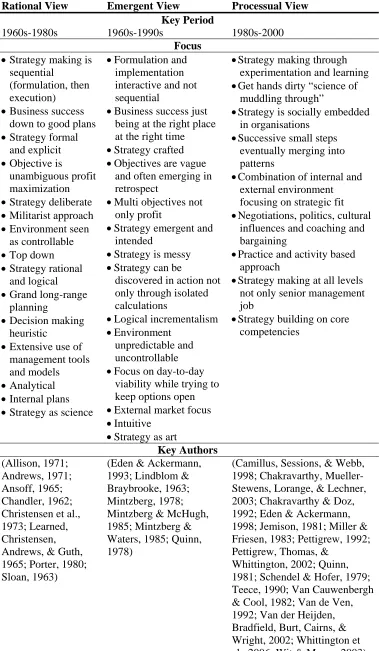
Table 2.1. Summary of key focus and authors in strategy approaches Rational View Emergent View Processual View
Key Period
1960s-1980s 1960s-1990s 1980s-2000
Focus
•Strategy making is sequential
(formulation, then execution) •Business success
down to good plans •Strategy formal
and explicit •Objective is
unambiguous profit maximization •Strategy deliberate •Militarist approach •Environment seen
as controllable
•Top down
•Strategy rational and logical •Grand long-range
planning
•Decision making heuristic
•Extensive use of management tools and models •Analytical •Internal plans •Strategy as science
•Formulation and implementation interactive and not sequential
•Business success just being at the right place at the right time •Strategy crafted •Objectives are vague
and often emerging in retrospect
•Multi objectives not only profit
•Strategy emergent and intended
•Strategy is messy •Strategy can be
discovered in action not only through isolated calculations
•Logical incrementalism •Environment
unpredictable and uncontrollable •Focus on day-to-day
viability while trying to keep options open •External market focus •Intuitive
•Strategy as art
•Strategy making through experimentation and learning •Get hands dirty “science of
muddling through”
•Strategy is socially embedded in organisations
•Successive small steps eventually merging into patterns
•Combination of internal and external environment focusing on strategic fit •Negotiations, politics, cultural
influences and coaching and bargaining
•Practice and activity based approach
•Strategy making at all levels not only senior management job
•Strategy building on core competencies Key Authors (Allison, 1971; Andrews, 1971; Ansoff, 1965; Chandler, 1962; Christensen et al., 1973; Learned, Christensen, Andrews, & Guth, 1965; Porter, 1980; Sloan, 1963)
(Eden & Ackermann, 1993; Lindblom & Braybrooke, 1963; Mintzberg, 1978; Mintzberg & McHugh, 1985; Mintzberg & Waters, 1985; Quinn, 1978)
(Camillus, Sessions, & Webb, 1998; Chakravarthy, Mueller-Stewens, Lorange, & Lechner, 2003; Chakravarthy & Doz, 1992; Eden & Ackermann, 1998; Jemison, 1981; Miller & Friesen, 1983; Pettigrew, 1992; Pettigrew, Thomas, &
Two of the central elements of strategy management are sustaining competitive advantage and engaging with long term horizons. Investigating the journey to achieving this is the task of strategy process research. Strategy process research attempts to address the question of how strategies are formed, implemented and changed. Strategy process researchers claim that there is a process of what is emerging (strategy content - outcome). For example, one of eight strategies of Mintzberg & Waters (1985, pp. 270) is process strategy and is described as (Figure 2.2):
‘The leadership controls the process aspects of strategy (who gets hired and so gets a chance to influence strategy, what structures they work within, etc.), leaving the actual content of strategy to others: strategies are again partly deliberated (concerning process) and partly emergent (concerning content), and deliberately emergent.’
Figure 2.2. Various kinds of strategies, from rather deliberate to mostly emergent
(Mintzberg & Waters, 1985)
There are different subdivisions to strategy process in literature such as Mintzberg’s 10 schools of thoughts (Mintzberg et al., 2000) that are the Design school, Planning school, Positioning school, Entrepreneurial school, Cognitive school, Learning school, Power school, Cultural school, Environmental school and Configuration school’ and Whittington’s (Whittington et al., 1999) subdivisions i.e. Classic school, Evolutionary school, Processual school and Systemic school. Each of these schools has individual premises and unique implications for practice.
As suggested by Whittington (2006), strategy practice comprises of strategy practitioners, tools of strategy and micro elements of strategy. Particularly, strategy
EMERGENT Process
strategy
Planned strategy
Imposed strategy Entrepreneurial
strategy
Umbrella strategy
Consensus strategy Disconnected
strategy
practitioner is an important element to understand the strategy processes which covers
leadership. Furthermore, the competitive advantage of SMEs is often tied to contingent factors such as being in the right place at the same time and ‘luck’ which cannot be foreseen and formalised (Jennings and Beaver, 1997). Similarly, strategy management practices are closely linked to the skill and characteristics of the entrepreneurs. Usually he/she is in charge of both operational and managerial functions, he/she often plays multiple roles like general manager, sales manager, production manager but he/she usually does not have the necessary and he/she usually neglects the strategic activities (Fuller-Love, 2006). It is also highlighted in literature that strategy is in the head of the entrepreneur and the senior managers in SMEs (Mintzberg & Quinn, 1992). Consequently, the researcher considers that leadership and the influence of leaders/ strategist although being very important, in this research will not be addressed as being the key focus. Strategy tools, methods and techniques as well as activities within the strategy process will be the elements of the underlying theoretical framework in this research (adapted from Whittington, 2006).
Strategy process has been widely publicised during the last two decades, but what has been accomplished by this strategy management process in small to medium sized enterprises (SMEs)? The next section will explore what is known in entrepreneurship strategy and SME specific strategy management literature about this topic.
2.2 SME Strategy
Using a systematic literature review approach (Tranfield, Denyer, & Smart, 2003), the researcher investigated the main features of strategy process in SMEs in order to put the research topic into its context. Specific management databases, such as Business Source Premier, Web of Knowledge, Emerald Insight, ABI Inform and
Strategy practitioners – entrepreneurs, owner-manager, MD, managers (leadership)
Tools, methods and techniques of strategy Activities within the strategy process
• (small business) AND (strateg* process)
• (strateg* process*) AND (SME*) OR (small business) • (strateg* development) AND (SME*)
• (strateg* implement*) AND (SME*)
• (strateg* review*) AND (SME*) OR (small business) • (strateg*) AND (SME*)
• (strateg* management) AND (small business)
Abstract and citation search was carried out according to some inclusion and exclusion criteria. Because this research has a particular interest in manufacturing or production SMEs, empirical studies focused on service sector companies only are excluded. Studies focusing on information systems merely and papers written in other languages rather than English are also excluded.
The database resulted in 497 relevant articles. The chosen studies were analysed and integrated with some available empirical studies focused on the small business, entrepreneurship and manufacturing SME fields. It is worth noting that, some significant books and other sources are not neglected in this study, mainly because the researcher believes that carrying out a systematic literature review might not be sufficient enough since text books are overlooked in the databases. Thus, the researcher not only benefits from systematic literature review principles to investigate the topic but also she applies a conventional literature search so as to cover other significant sources. Based on the literature, seven main SME characteristics were highlighted as affecting SME strategy process. These are; flexibility and responsiveness, pursuit of opportunities, risk taking, innovation, unconventional thinking and creativity, less structured decision making mechanisms, organising and allocating limited economic resources effectively and last but not least operational focus.
Literature highlights the importance of SMEs in economy and recognises SME contribution to economic health of countries (Dutta & Evrard, 1999; Ghobadian & O'Regan, 2000; Mikhailitchenko & Lundstrom, 2006; Ruigrok & Tate, 1996; Van Gils, 2005; Vries & Margaret, 2003).
2.2.1 What is an SME?
fewer than 250 employees. However, there is no single definition in literature. Generally, micro-businesses are those with 0-9 employees, small businesses have 10-49 employees, medium-sized businesses have 50-210-49 employees, and large businesses 250+ employees. An SME represents independent companies with a number of employees less than 250 persons (Annual working unit) and/or its turnover is less than EUR 50 million and/or its annual balance sheet total is less than EUR43 million (European Commission definition, 2008).
There are other definitions in literature, for example, that of The Companies Act 1985 or the European Definition of an SME (Anon, 2007a). A company (or group) qualifies as a small or medium-sized company (or group) if it meets two out of three criteria relating to turnover, balance sheet total and number of employees as set out below in Table 2.2 in its first financial year, or in the case of a subsequent year, in that year and the preceding year (Anon, 2007b).
Table 2.2. SME definition
Turnover Balance sheet total Number of
employees Small company not more than
£5.6 million
not more than £2.8 million
not more than 50
Small group not more than £5.6 million net (or £6.72 million gross)
not more than £2.8 million net (or £3.36 million gross)
not more than 50
Medium-sized company
not more than £22.8 million
not more than £11.4 million
not more than 250
Medium-sized group
not more than £22.8 million net (or £27.36 million gross)
not more than £11.4 million net (or £13.68 million gross)
not more than 250
2.2.2 Entrepreneurship strategy and strategic management
The academic literature on entrepreneurship started to discover points of convergence with strategic management through the 1980s (Entrialgo, Fernandez, & Vazquez, 2000; Rae, 2007). For instance, (Entrialgo et al., 2000) study the relationship between entrepreneurship and strategic management, from the standpoint of a process.
connects SMEs in joint ventures and international integration of SMEs with larger firms renders small business studies both an attractive and relevant research topic (Mikhailitchenko & Lundstrom, 2006). Large firms no longer dominate niche markets; on the other hand, SMEs are often operating within supply chains in which large companies set demanding standards and requirements. For instance, Gilmore (1966: 48) gives an example in his article that a key challenge to the ‘small traditionally managed business’, which desires to be a main contractor, is that it must perform long-range planning to decide where it will allocate its limited resources so as to be in a position to make the strongest technical proposals.
To sum up, SMEs engage with global industrial restructuring in at least five key ways: “by being partners to strategic alliances; by being participants in mergers and acquisitions; by being specialised suppliers to multinational companies; by being members of global informal networks; and by participating in global electronic networks” (Griffiths, Wall, Zimmermann, & Klingebiel, 2007, p. 15). For example, IKEA, the Swedish furniture mass distribution firm, carefully monitors “subcontracting of production to specialized manufacturers ensured quality at a lower cost” (Mintzberg & Quinn, 1992, p. 92). Hence, strategic development of SMEs is an interest for large, multinational companies in today’s global environment and strategy in an SME context has been attracting an important amount of consideration in literature recently.
Furthermore, interest in the field of organisational development in SMEs has increased significantly among policy makers and practitioners in recent decades. For instance, the UK government Department for Business, Enterprise and Regulatory Reform as well as the European Commission support and sponsor projects that look at SME development (http://www.berr.gov.uk/ and http://ec.europa.eu/index_en.htm).
be considered to be the same as professional management in larger organisations practiced on a ‘reduced scale’ (Jennings & Beaver, 1997, p. 13). Consequently, the broad research question in this research has emerged which is:
In order to seek answers to this broad research question, the following research question is emerging as a key area to look at because it is important to understand the specific context of SMEs in the strategy process.
2.3 Key Focus of the SME Strategy
Literature suggests that flexibility and responsiveness - operational flexibility, and responsiveness to customers; opportunity seeking; risk taking; innovation and creativity; less structured and random decision making; effective resource allocation and operational excellence are the main focuses of successful SME strategy. The following sections aim to expand on those focuses.
2.3.1 Flexibility and responsiveness
Flexibility, opportunity creation and risk taking are common characteristics of SMEs (Aloulou & Fayolle, 2005; Margi, Philip, & Philip, 2002). Particularly, managing growth in an innovative start-up firm necessitates flexibility and contingency planning (Dean, 1986). Managerial activities in SMEs are generally characterised by flexibility and an ability to rapidly react and adapt to the competitive environment with business processes which are not very structured or engineered. In large companies, it is a common practice to observe formalized processes to manage operational activities whereas SMEs take on less structured systems and processes whilst decision making and managing the whole business. This activity might be related to the responsive and flexible nature of SMEs, however the lack of unambiguous knowledge causes difficulties in transferring know-how rapidly (Eriksen and Mikkelsen, 1996: 68); the long period communication in a group necessary to transfer knowledge could hinder the flexibility.
participative, and adaptive with employees who could carry out the work duties of others and were likely to be managed in a way that given these workers with the flexibility to adapt their jobs to altering industry and organisational situations. Besides, Entrialgo et al. (2000) analysed the influence of the competitive strategy and the practices of analysis, flexibility, horizon, planning and control attributes on entrepreneurship. The results were tested on 233 Spanish SMEs and revealed a positive relationship between entrepreneurship and analysis, flexibility, planning, control and strategy based on differentiation.
2.3.2 Pursuit of opportunities
It is the research of French speaking research on management that shows substantial evidence about the notion of entrepreneurship during the 1990s. Many studies focused on business creation but entrepreneurship could be deemed more generally as the active pursuit of new opportunities (Messeghem, 2003).
SMEs might show willingness to pursue opportunities, to marshal resources and initiate actions rather than to react to other people’s actions (Neshamba, 2006). However, most SMEs accept their environment as given and put in the mechanisms to react to its forces. Entrepreneurial strategic orientation encapsulates discovery and exploitation of opportunities and this is found to be positively related to enhanced firm performance in SMEs (Wiklund & Shepherd, 2003). Only high performers match the complexity of their external environment by exploiting environmental parameters as sources for effective controls within their organisations (Badri, Davis, & Davis, 2000).
Among the latest studies Companys & McMullen (2007) integrated three different approaches to opportunity creation and exploitation process. They suggest that entrepreneurial opportunities exist owing to the circulation of information about material resources in the public. Entrepreneurial opportunities might also stay alive as a result of environmental ambiguity and the cultural resources on hand to deduce and identify these opportunities. Finally, networks and political structures might have a considerable part in entrepreneurial opportunities.
2.3.3 Risk taking
works’ to the risk-taking and adventurous ‘leaps into the unknown’ in SMEs. Aloulou & Fayolle (2005) suggests three components of strategic entrepreneurship that are innovativeness, proactiveness and risk taking. More recent work by Rae (2007, p. 25) identifies ‘innovation, decision-making, leading an industry, organising economic resources, contracting, arbitrage (market-maker) and allocating resources’ as attributes to entrepreneurship strategy. He also particularly identifies ‘risk taking’ as a trait of processual definitions for entrepreneurs.
2.3.4 Innovation, unconventional thinking and creativity
SMEs act a key role in innovative contribution and expansion of the global economy (Allocca & Kessler, 2006). Combining innovation with foreseeing and acting on opportunities is a vital aspect of entrepreneurial behaviour, which involves ‘going beyond’ the borders of what is known and customary, rather than just replicating something which already exists, although the scale of innovation may be little (Rae, 2007). SMEs engage with strategic plans and have particular focus on innovation with the ability to lift up their heads above the day-to-day struggle for survival (Aloulou & Fayolle, 2005; Ghobadian, Mole, & Regan, 2003).
2.3.5 Less structured decision making mechanisms
processes. The lack of explicit strategies and methodologies leads to a short term vision (Brouthers, Andriessen, & Nicolaes, 1998). The prevalence of tacit knowledge, which is context-specific and almost entirely technical in nature, limits tendency to formalize. The SME owner is often convinced that successfully operating in the particular niche is solely based on his/her long and day-by-day experience (Cagliano, Blackmon, & Voss, 2001). The lack of formalization and amateur spirit are often considered useful, as opposed to bureaucracy, and is very much tied to the capability of an organisation to be flexible, fast and responsive (Chittenden, 1998). Thus, some small companies tend to take on formal quality systems only when there is strong external pressure to do so and that when they do, there is usually a minimalist approach to implementing the ISO standards (Sturkenboom, Van der Wiele, & Brown, 2001).
Recent studies highlight that in SMEs knowledge is mainly gained through experiences and it often absorbed by means of tacit learning (Chaston, 2001; Honig, 2001; Ward, 2004). Cagliano et al. (2001) point out that advanced decision making practices in SMEs seem to take place characteristically in a less structured and informal fashion. However, other authors indicate that formalization could enable SMEs to save resources and to concentrate efforts on promoting effectiveness, improving morale and increasing innovation (Koberg, 1996; Van de Ven, 1986; Walsh, 1987).
2.3.6 Organising and allocating limited economic resources effectively
Since SMEs are overloaded with short term cash and payment problems, technical issues and in particular limited resources (Alon, 2004; Burke & Gaughran, 2006; Celuch, Murphy, & Callaway, 2007; Dean, 1986; Hudson-Smith & Smith, 2007; Kennedy & Keeney, 2006; MacDougall, 2003; Martine, 2003; Qian & Li, 2003; Savioz & Blum, 2002; Thakur, 1999; Wesson & De Figueiredo, 2001) their strategy process focuses on attracting outstanding employees, using resources effectively and engaging with universities to benefit from their information sources and know-how. For instance, SMEs do not have the resources required to research environmental aspects of their business and extensive research and testing of products and services (Alon, 2004; Burke & Gaughran, 2006).
2.3.7 Operational focus
Managerial practices in SMEs emerge mostly in response to operational needs, which present themselves at the start-up of the business. Improvements are not planned, but rather are made only in response to contingent and emerging problems and often offer short term solutions (Jennings & Beaver, 1997). The focus on technical aspects and operational issues seems to emerge from a conviction that the only real determining factor for competitive success is the technical excellence of the product and production processes. In these companies managerial tools and techniques are perceived as being of little benefit to the company. In SMEs planning is usually absent or limited only to the operation levels where performance is measured (Cagliano et al., 2001).
management is chosen to guide this research because their definition is appropriate in an SME context which emphasises the above characteristics of SME companies.
As it is pointed out in Schendel and Hofer’s definition, this research considers that SMEs strategy process may be related to major strategic decisions and initiatives such as business regeneration and growth as well as operational issues. Mainly, because SMEs have a particular focus on accomplishing operational excellence in their strategy process; therefore this research shall consider operational level major decisions, initiatives and activities as part of the SME strategy process.
2.3.8 Further research questions
As I have read more in the relevant literature, I have increasingly become aware that in spite of the increasing number and significance of SMEs, there has been little explicit examination of SME strategy process in literature. Managers of new SMEs must discover ways to compete in a world which had got along without them before. Starting with no reputation and limited financial and human resources, they must “seek out opportunities and develop strategies” which allow them to compete, sometimes in industries dominated by large, well-known companies (Cooper, Willard, & Woo, 1986; Mintzberg & Quinn, 1992, p. 253). Hence, SME context is very interesting to look at strategically. Literature points out the evolution of successful SMEs that if SMEs are booming in developing markets, they will sooner or later evolve into large organisations. As these firms grow, they become more complex and the necessary strategy management processes may cause such firms to take on characteristics of larger competitors, slowing responsiveness and “dulling the competitive edge they once held” (Cooper et al., 1986, p. 258). Consequently, this research identified a gap in literature which will be further addressed through empirical work in the following chapters.