with Automated Toolchain (Invited Paper) : From Java to Real-Time Java: A Model-Driven
Methodology
.
White Rose Research Online URL for this paper:
http://eprints.whiterose.ac.uk/149256/
Version: Accepted Version
Conference or Workshop Item:
Chang, Wanli orcid.org/0000-0002-4053-8898, Zhao, Shuai, Wei, Ran et al. (2 more
authors) (2019) From Java to Real-Time Java: A Model-Driven Methodology with
Automated Toolchain (Invited Paper) : From Java to Real-Time Java: A Model-Driven
Methodology. In: 20th ACM SIGPLAN/SIGBED International Conference on Languages,
Compilers, and Tools for Embedded Systems, 22 Jun 2019, Phoenix, Arizona.
[email protected] https://eprints.whiterose.ac.uk/
Reuse
Items deposited in White Rose Research Online are protected by copyright, with all rights reserved unless indicated otherwise. They may be downloaded and/or printed for private study, or other acts as permitted by national copyright laws. The publisher or other rights holders may allow further reproduction and re-use of the full text version. This is indicated by the licence information on the White Rose Research Online record for the item.
Takedown
If you consider content in White Rose Research Online to be in breach of UK law, please notify us by
From Java to Real-Time Java: A Model-Driven
Methodology with Automated Toolchain
(Invited Paper)
Wanli Chang
University of York The United Kingdom [email protected]
Shuai Zhao
University of York The United Kingdom [email protected]
Ran Wei
University of York The United Kingdom
Andy Wellings
University of York The United Kingdom [email protected]
Alan Burns
University of York The United Kingdom [email protected]
Abstract
Real-time systems are receiving increasing attention with the emerging application scenarios that are safety-critical, com-plex in functionality, high on timing-related performance requirements, and cost-sensitive, such as autonomous vehi-cles. Development of real-time systems is error-prone and highly dependent on the sophisticated domain expertise, making it a costly process. There is a trend of the existing software without the real-time notion being re-developed to realise real-time features, e.g., in the big data technology. This paper utilises the principles of model-driven engineer-ing (MDE) and proposes the irst methodology that automat-ically converts standard time-sharing Java applications to real-time Java applications. It opens up a new research direc-tion on development automadirec-tion of real-time programming languages and inspires many research questions that can be jointly investigated by the embedded systems, programming languages as well as MDE communities.
CCS Concepts · Computer systems organization → Real-time systems; ·Software and its engineering→ Software notations and tools.
Keywords real-time programming languages, real-time spec-iication for Java, model-driven engineering
Permission to make digital or hard copies of all or part of this work for personal or classroom use is granted without fee provided that copies are not made or distributed for proit or commercial advantage and that copies bear this notice and the full citation on the irst page. Copyrights for components of this work owned by others than the author(s) must be honored. Abstracting with credit is permitted. To copy otherwise, or republish, to post on servers or to redistribute to lists, requires prior speciic permission and⁄or a fee. Request permissions from [email protected]. LCTES ’19, June 23, 2019, Phoenix, AZ, USA
© 2019 Copyright held by the owner⁄author(s). Publication rights licensed to ACM.
ACM ISBN 978-1-4503-6724-0⁄19⁄06. . . $15.00
htps://doi.org/10.1145/3316482.3326360
ACM Reference Format:
Wanli Chang, Shuai Zhao, Ran Wei, Andy Wellings, and Alan Burns. 2019. From Java to Real-Time Java: A Model-Driven Methodology with Automated Toolchain (Invited Paper). InProceedings of the 20th ACM SIGPLAN/SIGBED Conference on Languages, Compilers, and Tools for Embedded Systems (LCTES ’19), June 23, 2019, Phoenix, AZ, USA.ACM, New York, NY, USA,12pages.htps://doi.org/10. 1145/3316482.3326360
1
Introduction
Real-time systemsoften enclose stringent temporal require-ments, where a real-time application must react to stimuli from the environment (including the passage of physical time) within time intervals dictated by the environment [10]. Such systems have been well practised in many ields, and their application domains keep growing with emerging sce-narios [15].
Although timing requirements are categorised as non-functional requirements, they are essential to safety-related systems. In [26], the author classiies system failure modes intorandom failuresandsystematic failures, where system-atic failures contribute to system hazards which could lead to incidents with catastrophic consequences.Systematic failures
can be further classiied intofunctional failuresandtiming failures. It is imperative to ensure that a safety-related system possesses correct timing requirements and at the same time, that its timing behaviour satisies these timing requirements. Therefore, demonstrating real-time properties forms key ev-idence in certifying the safety of a safety-related system.
especially when the complex perception functions are in-volved. As mandated by safety regulations, such as the ISO 26262 for automotive systems and IEC 61508 for functional safety, hard real-time constraints are essential to guarantee safety of the system (e.g., the vehicle) and its surrounding environment. Thus, there is a need to push these existing works towards the real-time regime.
There is a trend that matured Java techniques (which were developed without the notion of real-time) are re-developed to possess real-time guarantees (e.g., real-time big data sys-tems [18] and real-time stream processing techniques [32]). The major reason is that, those simple and conservative meth-ods (like leaving large safety margins) that were deployed in practice are losing ground, with the ever more compli-cated functionality, higher timing-related performance re-quirements and limited resources on the emerging real-time applications [3,12ś14].
Despite its popularity, standard Java cannot be directly applied to produce real-time software due to the lack of facilities such as thread scheduling, resource sharing control, memory management, etc., which are essential to achieve predictability [11] in terms of temporal behaviour. This has motivated the development of theReal-Time Speciication for Java(RTSJ) [8]. RTSJ reserves the intrinsic advantages of Java, and provides plenty of real-time facilities to guarantee the system temporal behaviour, but at the same time is harder to be used by software engineers.
Compared to the generic time-sharing applications in Java, developing real-time applications using RTSJ depends highly on the expertise in the real-time systems design and requires thorough understanding of the speciication. It is also error-prone due to the complexity. All of these above make development of real-time applications a costly process. Although there have been system analysis and veriication techniques [35] to ensure correctness in the design phase, in terms of both logical and temporal behaviour, it remains an open and challenging problem how to eliminate human-related erroneous factors (e.g., caused by limited understand-ing of the real-time concepts and insuicient experience with RTSJ facilities). The safety-critical nature in many real-time systems domains ampliies the impact of such concerns.
Model-driven engineering (MDE) is a contemporary soft-ware development paradigm, which promotesmodels as irst-class artefacts. Based on models, developers are able to per-form a series of model management operations in an auto-mated manner, and eventually produce software artefacts, such as documentation and working code. This reduces the amount of time required to develop a system and thus im-proves the productivity of software engineers, by at least a factor of 10 in many cases [23,25]. Adopting MDE also reduces the number of errors throughout the development process and improves consistency [51]. In addition, MDE can be applied to any domain to achieve automation, due to
the concept of domain-speciic modelling and the interoper-ability provided by model management operations, which can be executed in an automated manner.
In this paper, we apply the principles of MDE in the do-main of real-time programming with Java. We propose the irst methodology that is able to automatically convert ex-isting time-sharing Java applications to real-time applica-tions in RTSJ, through a series of model management op-erations. The output software is in full compliance to the RTSJ speciication, with dependencies to the RTSJ runtime environment supporting scheduling, memory management, resource sharing, asynchrony, etc. This enables the develop-ers with limited real-time background to perform temporal analysis on their non-real-time base code and convert it to source code written in RTSJ. Due to the application of MDE techniques, the productivity and consistency throughout the development. Human errors are eliminated in the au-tomation. We describe an automated toolchain associated with the proposed methodology. All the functional blocks in the toolchain and the involved technical approaches are explained. The scientiic challenges addressed and hidden issues discovered towards automatic generation of real-time applications with MDE techniques are discussed. We also point out future research directions beyond this paper.
The rest of the paper is organised as follows. Section2 provides a review of the MDE technology and its applica-tion in the real-time systems development. Secapplica-tion3 de-scribes the real-time Java, The proposed methodology and toolchain are reported in Section4with detailed transfor-mation approaches. Section5outlines open questions and possible research directions that are introduced by the pro-posed methodology. Finally, Section6gives the conclusion.
2
Model-Driven Engineering
Modelling is an essential part of any system engineering process. Engineers of all disciplines construct models of the systems they intend to build to capture, test and validate their system design ideas with other stakeholders before committing to a long and costly production process.
MDE is a software engineering methodology that aims to reduce the accidental complexity of software systems by promotingmodels that focus on the essential complexity of systems, as the irst-class artefacts of the software devel-opment process. In contrast to those traditional software development methodologies, where models are mainly used for communication and post-mortem documentation process, in MDE models are the main living and evolving artefacts from which concrete software development artefacts can be produced in an analysable and automated fashion.
the level of abstraction beyond that provided by 3rd gener-ation programming languages. In recent studies, MDE has been shown to increase productivity by as much as a factor of 10 [23,25], and signiicantly enhance important aspects of the software development process such as maintainability, consistency and traceability [33].
There are two important aspects of MDE Ð (i) domain-speciic modelling, where domain experts create their own domain-speciic modelling languages (DSMLs) to capture the concepts in their domain (and create instances of their DSMLs to model their systems); (ii)model management op-erations, which are programs performed on models in an automated manner to generate software engineering arte-facts. Model management operations typically include, but are not limited to:
• Text-to-Model Transformation (T2M): to convert text (such as source code) into models based on parsing rules deined in the transformation;
• Model Validation: to check the well-formedness of models, as well as custom constraints against the ele-ments in models;
• Model-to-Model Transformation (M2M): to interoper-ate between diferent modelling technologies, where one type of model is transformed into another type; • Model-to-Text Transformation (M2T): to generate text
based on the contents of the model (e.g., documenta-tion generadocumenta-tion and source code generadocumenta-tion);
• Model Comparison: to compare diferent versions of a model to ind out what is changed;
• Model Merging: to integrate models deined by difer-ent parties but share model elemdifer-ents.
MDE has been applied to a variety of domains, with proven beneits. In [28] MDE is applied to transform model query languages to MySQL queries to reduce the efort and error rates in manually creating MySQL queries. In [51], MDE is applied to automatically generate fully functional graphical editors for UML proiles. In [5], MDE is applied to trans-form natural languages to database query languages to trans-form complex query using simple natural language grammars.
Developing real-time systems via a model-based approach is not novel in the community [24,46]. The idea proposed in this paper is partially inspired by them. None of these works study the migration from standard Java to real-time Java. In addition, many of the past eforts rely on the notion of model-driven architecture, which is an outdated MDE practice and has a lack of tool support. By applying MDE techniques, as previously described, Real-Time system developers can beneit from the productivity gain from MDE, as well as the consistency and maintainability through automation provided by MDE.
3
Real-Time Speciication for Java
RTSJ, originally developed as Java Special Request 1 un-der the Java Community Process in 20011, has been well-practised in a wide range of application domains, including automotive, manufacturing control, avionics and informa-tion systems [22,43,46,47]. For instance, RTSJ has been ap-plied to the auto-pilot system of an unmanned aerial vehicle, which is the irst Java-based system that satisies all Boe-ing’s operational requirements and lew in tests [1].Jcoap, realised by RTSJ, provides real-time communications for IoT systems [29]. In [17], RTSJ has been applied in a real-time big data processing systems with FPGA-based hardware acceleration. In industry,JamaicaCARdeveloped by both Acis and Perrone Robotics2provides a lightweight applica-tion framework for car headunits and in-vehicle informaapplica-tion systems. In addition, Acis and CLAAS3present solutions (namelyJamaica-IoT) for digital factory and manufacturing, which enables deployment and operation of data analytics and control logic at the network’s edge.
The RTSJ is designed to support both hard and soft real-time applications. This speciication consists of two major components Ð (i) extensions from the Java programming language; and (ii) modiications on the semantics of the stan-dard Java Virtual Machines (JVM) [8]. This section briely reviews the programming speciication of RTSJ, together with its reference implementations as well as the supporting Virtual Machines (VM). Detailed descriptions of each RTSJ facility and the application examples can be found in [10] and [48].
3.1 Programming Speciication
In total, there are seven extensions from the standard Java language that are provided in the packagejavax.realtime, including task scheduling and dispatching, memory manage-ment, shared resource control, asynchronous event handling, etc.
One major facility provided in RTSJ isjavax.RealtimeThr ead, which takes a set of scheduling-related parameters (e.g., priority, period and deadline) specifying a real-time thread’s release, execution and timing properties. Three types of threads are derived from this entity: periodic, spo-radic and aperiodic, depending on the input release param-eter. In addition, a set of asynchronous event handlers are provided to allow user-deined actions in the cases of dead-line miss or budge overrun. By default, the real-time threads are scheduled by a preemptive ixed-priority scheduler, but user-deined scheduling and dispatching policies are also possible.
Another important extension the real-time memory man-agement model. In RTSJ, a set of memory manman-agement
Figure 1.Time-sharing applications to real-time applications migration
facilities are provided in RTSJ (e.g.,ImmortalMemoryand ScopedMemory) to allow the construction of self-deined memory models. However, RTSJ imposes a set of memory accessing rules that restrict memory-accessing behaviours to preventdangling reference(i.e., references that point to objects in reclaimed memory blocks). With memory man-agement model deined, the standard Java garbage collector is no longer required so that its unpredictable interference is avoided during run-time. Later, a real-time garbage collector is supported by JamaicaVM (see Section3.2), which allows the use of Heap memory and eases the development of RTSJ applications by avoiding building complex memory models. In the presence of shared objects, RTSJ provides several resource sharing policies like priority Inheritance [40] and Priority Ceiling Protocol (PCP) [36]. Among these protocols, the PCP yields the minimised blocking time (i.e., one critical section only) and guarantee dead-lock free resource accesses. In addition, asynchrony is well handled via a set of asynchro-nous event handling facilities. Finally, a set of time-related fa-cilities (e.g., real-time system clock andHighResolutionTime with granularity of nanoseconds) are supported.
3.2 RTSJ Implementations and VMs
This speciication was irstly implemented by TimeSys4. This
implementation (i.e., a RTSJ-compliant VM and a RTSJ refer-ence implementation) supports all versions of Linux. Later, Aicas GmbH5provided a diferent RTSJ implementation in
their JamaicaVM, supporting a wide range of Real-time oper-ating systems, such as Linux, VxWorks and QNX. In addition,
4htps://www.timesys.com 5htps://www.aicas.com/cms/en
there also existed other virtual machines that are compliant with RTSJ, e.g., jRate6, OVM [4] and Aero JVM7.
Among these VMs, JamaicaVM provides hard real-time guarantees and is the mostly adopted VM for executing RTSJ applications. Currently, JamaicaVM supports RTSJ V1.0.2 and is working towards RTSJ 2.0 implementation based on Java 8. In particular, a real-time Garbage Collector (GC) is supported by JamaicaVM [41]. This GC executes each time when threads issues requests to allocate an object in a pre-emptable fashion, and will not interrupt application threads. In JamaicaVM manual8, an analytical approach for
measur-ing worst-case execution time in the presence of the real-time garbage collector are provided.
In total, thirty-eight priority levels are supported by this VM, where priority levels 11-38 are designated for real-time threads (through the classRealtimeThread) and priority levels 1-10 belong to the standard Java. That is, JamaicaVM also compliant with the standard non real-time threads. How-ever, in this work, we assume that each thread in the given application will be mapped to a real-time thread, and each real-time thread has a unique priority.
3.3 Targeted RTSJ Run-Time Environment
As the irst attempt of this methodology, we assume a simple but widely applied real-time system model. The current ver-sion of proposed methodology aims transferring standard Java applications in uniprocessor systems to real-time ap-plications. In this work, we consider those threads can be transferred to either periodic or aperiodic real-time threads,
6htp://jrate.sourceforge.net/ 7htp://www.aero-project.org
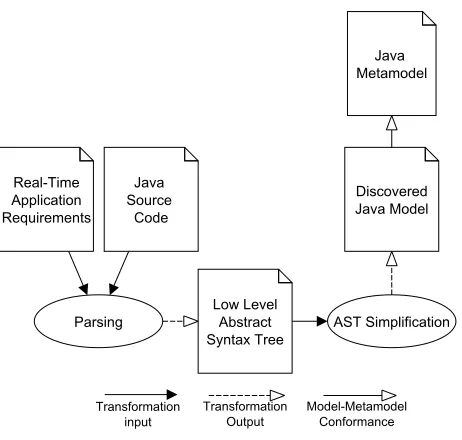
Figure 2.Discovering Java a model from Java source code
with their release parameters pdeined in application re-quirements. Fixed-priority preemptive scheduling policy is enforced for coordinating executions of real-time threads. Threads can access to shared objects, but they must do so with the PCP applied, which is an optimal resource sharing solution in uniprocessor systems (i.e., deadlock-free and min-imised blocking time) [16]. JamaicaVM v8.5 (with RTSJ v1.0.2 and Java 1.5) is applied as the underlying virtual machine. Finally, Memory management is handled by the real-time GC provided by JamaicaVM.
4
Proposed Methodology
The structure of our proposed methodology is shown in Fig-ure1. The irst step in our approach is the reverse-engineering of the Java programs into models. In order to do this, we use a Text-to-Model transformation to convert the source code of standard Java applications (i.e. without real-time properties) into Java models. In addition to the Java source code, we also take a list of real-time application requirements that provide necessary information (e.g. timing and prior-ity parameters for each thread, scheduling policies, etc.) for building a real-time system.
With the two inputs, a Java model that conforms to the Java metamodel is produced. With the Java model, there is a need to perform a model validation to check if the given application is capable to satisfy all the temporal requirement after being transformed to a real-time application. If the model validation passes (the response time of each real-time thread is equal to or less than its deadline), it means that the to be transformed application is schedulable. We then perform a model-to-model transformation to transform the
Java model to the target Java model (named Java Model′)
which uses RTSJ Java constructs. This transformation is a endogenous transformation - that the target model also con-forms to the Java Metamodel (for RTSJ does not introduce new language syntax in Java). The transformation is derived based on our knowledge in RTSJ and our deined mappings from standard Java classes to RTSJ classes. The target Java Model′is then used as an input for a model-to-text transfor-mation, which is responsible to transform Java models back to Java source code.
With the proposed approach, applications developed orig-inally in standard Java can be automatically converted to real-time applications based on RTSJ, and are directly ex-ecutable on JamaicaVM. The whole conversion process is conducted without intervention of software developers, and hence, eliminates human-related erroneous factors. In addi-tion, the proposed methodology removes the need of exper-tise in the real-time systems design and necessary knowledge of any targeted real-time programming speciication. Conse-quently, the cost for real-time systems development can be signiicantly reduced with the high productivity brought by MDE. In the following sections, we will discuss the transfor-mations involved in the approach individually.
4.1 Reverse Engineering Transformation (T2M) The reverse engineering transformation is the very irst trans-formation in the tool chain. Reverse engineering transfor-mation is also normally referred to asModel Discovery, in the sense that a model isdiscoveredfrom the source code. There are a number of available tools and approaches that are capable of performing this task. For example, JaMopp [20], Spoon [34] and MoDisco [9] are all feasible tools to perform reverse engineering from Java. It is to be noted that in this step, there is a strict requirement for model discovery in our proposed approach, that there shall be no information loss during the model discovery. This is typically due to the fact that the discovered model will be analysed, changed and then transformed back to the source code. If there is any information loss, the eventual transformed source code is not complete.
4.2 Model Validation
With the discovered Java model, a model validation is per-formed to check whether the given application can meet its timing constraints deined in its real-time application re-quirements. The validation process irst checks whether the given requirements are consist with the input Java source code (e.g., whether threads’ ids in the application are consis-tent with the ones given by the requirement). The real-time application requirements provide full thread releasing and scheduling information for each thread that needs to be transferred to real-time threads.
Then (assuming threads deined in the requirements are consist with the source code), an analysis is performed to verify the timing properties of each real-time thread via the Response Time Analysis (RTA) [2] . For a given task τi in the targeted system, the worst-case response timeRi
is then calculated by adding the task worst-case execution timeCi, the blocking timeBi and the interference time due
to preemptions from higher-priority tasksIi:
Ri =Ci+Bi+Ii
=Ci+Bi+ Õ
j∈hp(i)
Ri
Tj
Cj (1)
where⌈·⌉denotes the ceiling function andhp(i)returns the set of tasks that have a higher priorities thanτi’s priority
(denoted asPri(τi)in the following equations).
In the presence of shared resources,Ciis further extended
to include the timeτi spends on executing each shared
re-sources, as shown in (2).
Ci =W CETi+
Õ
rk∈F(τ i)
Nikck (2)
whereW CETi denotes the worst-case execution time ofτi
without accessing any shared resources,F(τi)gives a set of
resources accessed byτi,ckgives the worst-case execution
time of a given resourcek andNk
i returns the number of
accessτi can issue to resourcek in one release. Note, as
described in [42], the overheads cost by the real-time GC for allocating objects are included into the worst-case execution time (notationW CET) of each thread, which should be pre-deined in the application requirements based on memory usage of each thread (i.e., keywordnew).
The blocking timeBiindicates the time period that taskτi
is prevented from executing due to either the non-preemptive sections from the underlying operating system or a low-priority thread that accesses a shared resource with a ceiling priority higher thanPri(τi), as give in equation (3).
Bi =max{cˆi,bˆ} (3)
in which ˆci denotes blocking due to resource accessing and
ˆ
bgives the longest non-preemptive section period in the un-derlying operating system. Finally, ˆci is computed by
equa-tion (4) with PCP assumed. Note, the value of ˆbdepends on
the operating system and underlying hardware, and should be measured and reported in the input application require-ments.
ˆ
ci =max{ck|Nlpk >0∧Pri(r
k) ≥Pri(τ
i)} (4)
This equation inds all resources are accessed by tasks with a lower priority but have a higher ceiling priority thanPri(τi),
and gets the longest critical section among these resources as the worst-case blocking time forτi.
With the above analysis, the worst-case response time for each release of the application threads is bounded. If the system validation yields a schedulable system with given threads’ scheduling parameters in the requirement, the pro-posed methodology processed to the next step, where it transfers the standard Java model to the real-time Java model based on the pre-generated metamodel.
However, the current version of model validation heavily depends on system requirement for pre-measured computa-tion cost of each thread and shared resource. In the future, mature worst-case execution time measuring techniques can be integrated into the proposed toolchain for a higher degree of automation.
4.3 RTSJ Model Transformation
After the RTA (model validation) passes, in the next step, a model-to-model transformation (i.e., blockM2Min Figure1) is performed to migrate the standard Java model to RTSJ Java model. It is to be noted that this transformation is en-dogenous in the sense that RTSJ does not introduce new Java abstract syntax, therefore the both the source model and the target model conform to the same Java Metamodel. This mi-gration is performed based on a set of transformation rules, which specify the mapping from standard Java facilities to RTSJ facilities provided in packagejavax.realtime. For the interest of brevity, below we elaborate on two major Java to RTSJ transformations (i.e., threads and synchronisation) and then briely describe the transformation rules to resolve RTSJ run-time environment dependencies.
4.3.1 Standard Threads to RTSJ Threads
One major diference between standard Java and RTSJ is the schedulable entities (i.e., threads), where Java usesjava.lang .Threadwhile RTSJ applications relies onjavax.realtime. RealtimeThread. Figure3shows an example transforma-tion rule (namedThread2RealtimeThread), which transforms a standard Java thread into a real-time thread.
Figure 3.Example transformation ruleead2RealtimeThread
this thread. This Runnable objective will be passed directly into therun()method9of the real-time thread constructed during this transformation phase. In addition, each standard Java thread may also deine an optionalfaultRecovery() method, which contains recovery operations to be performed in the situation that the thread misses its deadline. The trans-formation rule transforms the code in thefaultRecovery() method into RTSJ dedicated handlers, in this instance, the transformation creates aDeadlineMissHandlerbased on javax.realtime.AsyncEventHandler. If such a method is not provided, an immediately system shutdown is triggered in case of any deadline misses.
Then, the transformation rule creates RTSJ parameters such as ReleaseParameter and SchedulingParameter to ap-ply timing constraints. As deined in the previous section, the source model also contains a set of real-time application requirements, which is embedded in the form of a Java class with static ields. In this real-time application requirements, a set release and scheduling parameters specifying the ex-ecution eligibility and temporal proprieties of each thread should be deined by the users, as shown in Figure3. Note that a period parameter is mandated for periodic threads, but should be omitted by those aperiodic threads to facilitate the identiication of various activation pattern of real-time threads. Listing1provides a simple example of real-time ap-plication requirements for a periodic thread and an aperiodic thread.
// Periodic thread PT1
public static final String PT1_id = "PT1";
public static final int PT1_Period = 250;
9This Runnable object does not replace the Runnable of the real-time thread.
It is passed into the real-time thread and executed by invoking itsrun()
just for the execution the logic implementation in the method. Therun()
method of a real-time thread may contain extra implementation for realising its activation behaviours.
public static final int PT1_Cost = 200;
public static final int PT1_Deadline = 250;
public static final int PT1_Priority = 20;
// Aperiodic thread AT1
public static final String PT1_id = "AT1";
public static final int AT1_Cost = 30;
public static final int AT1_Deadline = 50;
public static final int AT1_Priority = 25;
Listing 1. An example of the real-time application requirements
During the transformation, threads’ priorities are con-structed asjavax.realime.PriorityParameterobjects an-d other parameters (e.g., cost, an-deaan-dline) are moan-dellean-d into javax.realtime.ReleaseParametersobjects, as shown in Figure3. Depending on whether a given thread is associ-ated with a period, the release parameter objects are further modelled to eitherPeriodicParameters or AperiodicPa-rameters10objects provided injava.realtime.package. In addition, it is to be noted that theDeadlineMissHandler transferred from the pre-deinedfaultRecovery()method is also integrated into theReleaseParametersobject, as deined by the RTSJ speciication.
With above real-time thread parameters and logic con-structed, a standard Java thread can be transferred into a RTSJ thread via passing these parameter objects and the Runnable object into the construction method, where the Runnable object is called inside the run() method. For peri-odic threads, methodwaitForNextPeriod()is added into its run() method to achieve a periodic release behaviour. Note that as we assume the presence of a real-time GC, real-time threads are allowed to execute in Heap memory so that those memory area parameters associated to the real-time threads
10The ClassPeriodicParametersand AperiodicParameters are realised by
are set as empty, which by default are executed in Heap by JamaicaVM.
Finally, it is to be noted that we used a hybrid (i.e. impera-tive and declaraimpera-tive) transformation approach. The transfor-mation rule in Figure3is one of the rules we deine for the entire transformation. There are also rule dependencies, for example, we also deine afaultRecovery2DeadlineMissHandler
transformation rule, this rule should be called within our
Thread2RealtimeThreadtransformation rule. This execution behaviour is typical for hybrid transformations and we rec-ommend using the Epsilon Transformation Language [27] to write and execute the transformation.
4.3.2 Java Synchronisation to Real-Time Resource Control
Besides thread scheduling, another major diference between stand Java application and RTSJ is thread synchronisation approach, where in RTSJ each shared resource must be pro-tected by proper resource sharing protocols (i.e.,javax.real time.MonitorControl) to ensure bounded resource access-ing time for each resource access. As described in Section3.3, the PCP is applied in the proposed toolchain for managing shared resources in transformed RTSJ appellations. This sec-tion describes the transformasec-tion ruleLock2RealtimeLock
that transforms standard Java synchronisation to RTSJ PCP facility11. In the current version of the proposed toolchain, we assume that each thread can only can only access one resource at a time.
To perform proper transformation, we deine a set of rules towards thread synchronisation in the input source code and real-time application requirements, as described below.
• The user should be aware of all shared objects (i.e., ones that are read and written by more than one threads) and the threads that access those shared objects in the input Java source code.
• Each shared resource must be implemented as a class with the required operations implementing its meth-ods properly protected by the standard Java synchro-nisation approach, i.e., via synchronised coding blocks and methods.
• The use ofwait(),notify()andnotifyAll() facil-ities in Standard Java are not allowed i.e., threads are not self suspended.
• For a given shared resource, sayrk, the user should provide its ceiling priority (i.e., the maximum priority of threads that accessrk) in the real-time application requirements.
Below we provide an example of a valid input source code of a shared object classSharedResourceand the associated application requirements conforming to the rules deined above.
11The PCP in RTSJ is implemented by classPriorityCeilingEmulation
in packagejavax.realtimeby extending classMonitorControl.
// real-time application requirements
public static finalString SR1_id = "sr1";
public static final int SR1_Ceiling = 25; ...
// input source code
class SharedResource{ String id;
public synchronised void access(){ critical_section;
} }
SharedResource sr1 =new SharedResource("sr1");
Listing 2.An example of RTSJ synchronisation with PCP applied
With above rules deined, the standard Java synchroni-sation approach can be efectively transferred to real-time resource sharing techniques. First, the source Java model generated in Section4.1(i.e., the model that extracts all ob-jects in the input source code) is able to identify all shared objects (i.e., classes) and required operations by detecting the
synchronisedkeyword. Then, for each object created based on these classes, its associated priority ceiling priority can be found in the application requirements. With above infor-mation, RTSJ implementation can be generated by adding aPriorityCeilingEmulation instance to that object, as shown below.
SharedResource sr1 =new SharedResource("sr1"); // With PCP enforced.
PriorityCeilingEmulation PCP =
PriorityCeilingEmulation.instance(25); MonitorControl.setMonitorControl(sr1, PCP);
Listing 3.An example of RTSJ synchronisation with PCP applied
The transformation irst generates aPriorityCeiling Emulationinstance for the shared object with its ceiling pri-ority assigned based on the requirements. Then, the control policy for this shared resource is set to this PCP instance so that each thread accesses this object will raise its prior-ity, and later on restore its original priority once the lock is released. This is performed automatically by JamaicaVM, assuming the transformation is conducted successfully.
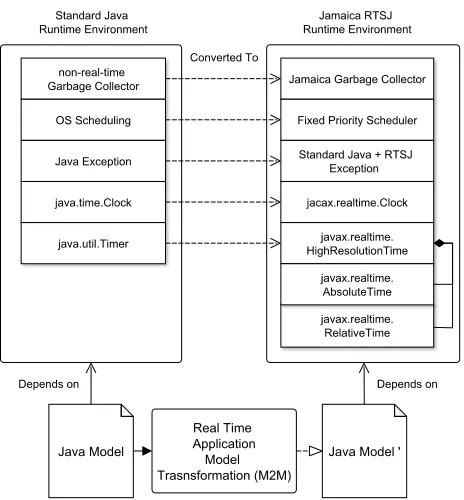
Figure 4.Transformation rule to resolve run-time environ-ment dependencies
4.3.3 Transformation Rules for Run-Time Environment Dependencies
Besides the transformation towards those major RTSJ fa-cilities, RTSJ applications require dedicated run-time Envi-ronment in order to be executed with real-time properties. Therefore, there is a need to execute a transformation to convert standard Java run-time Environment dependencies into RTSJ run-time Environment dependencies.
Figure4illustrates the transformation rule that converts these run-time environment dependencies. As shown in the igure, a typical standard Java run-time environment is equipped with a non-real-time garbage collector, a sys-tem clock with granularity in milliseconds, utility timers, standard Java exceptions. In addition, standard Java threads are mapped to native level threads and are scheduled by the underlying operating system.
In order for the output application with the RTSJ facili-ties generated in the above sections to execute successfully and to satisfy the application’s timing requirements, a RTSJ run-time environment is required. The right side of Figure4 shows an example of JamaicaVM-based RTSJ run-time envi-ronment. This JaimaicaJM RTSJ run-time is equipped with a dedicated Real-Time garbage collector running in the Heap memory, a real-time wall clock, iner-grained HighResolu-tionTime objects with granularity in nanoseconds and addi-tional RTSJ related exceptions and a Fixed Priority preemp-tive scheduler mechanisms. The mappings from Standard Java run-time environment to RTSJ run-time environment is drawn in Figure4using dashed lines.
Among the facilities considered in the targeted RTSJ run-time environment, the real-run-time garbage collector is enabled and the ixed priority scheduler is applied as default by JaimaicaVM. The standard Java clock is transformed tojavax .realtime.Clockinjavax.realtimepackage so that the invocations to obtain the current system time12is replaced by the methodClock.getRealtimeClock().getTime(). Fur-ther, as required by the RTSJ speciication, time units in RTSJ should be modelled byHighResolutionTimeas either aAbsoluteTimeor aRelativeTimeobject, where the later two time units are sub-classes of the former. For instance, the temporal properties (e.g., period, cost and deadline) for a real-time thread will be generated as theRelativeTime ob-jects before they are assigned to the construction method of RealtimeThread. Finally, additional exceptions introduced by Class RTSJ is generated into the output implementa-tion where applicable. For instance, for each synchronised method, aCeilingViolationExceptionexception should be thrown for illegal ceiling priority assignment. After this transformation is executed, the target model should have dependencies to RTSJ run-time resolved.
5
Open Challenges and Further Research
Directions
Plenty of open questions and research opportunities are introduced from this work. In this section, we discuss some of the challenges and point towards selected future research directions.
First, the current version of the proposed toolchain as-sumes the presence of a real-time garbage collector (e.g., the one supported by JamaicaVM), which allows the execution of real-time threads inHeapmemory. However, in situations where a real-time GC is not available, an explicit memory management model must be constructed byScpoedMemory to guarantee temporal requirements of real-time Java ap-plications, as executing in Heap memory will sufer from unpredictable interference of standard Java garbage collec-tor. One major challenge of this Java to RTSJ automation approach is to provide a generic memory management model that suits all types of RTSJ applications. The memory man-agement model in RTSJ is highly speciic to the application characteristics (especially, the correlation of those real-time threads) and is diicult to generate based merely on the knowledge from the input source code.
A possible workaround is to enforce an SCJ (Safety-Critical Java)-like programming model [39], which imposes restric-tions towards the application structure but is suicient to provide the required functionalities. In the SCJ, threads are grouped intomissions, which are executed by one or more
mission sequencers(i.e., missions can be executed concur-rently). This programming model conforms to a speciic
memory management framework [38]. In the SCJ, each sion has its own memory block and each thread in that mis-sion is also assigned with a private memory area, building upon the memory block of the associated mission. Once a mission is inished (i.e., all its threads are signalled to be terminated), its associated memory block (and subsequently, memory areas of its threads) will be reclaimed during a mis-sioncleanUpphase. However, applying this memory model in the proposed methodology requires extra information de-scribing the correlation between those real-time threads in order to allocate them correctly into each individual group for memory allocation.
Second, as an initial attempt on the topic, we have targeted at a simple and widely-applied uniprocessor environment and focused mainly on the functionality of the proposed toolchain. There is a trend that most of the existing real-time programming speciications are extended to support multiprocessor and distributed systems [50]. The proposed approach can also be extended to support multiprocessor fea-tures with multiprocessor scheduling policies and resource sharing techniques taken into account. In addition, as the application scenarios of real-time systems become more so-phisticated, supporting complex system semantics (e.g., in the presence of release jitters or shared resources) is also desirable and should be investigated.
In addition, as illustrated in Figure1, there is an open question to be answered when the given applications are found unschedulable after model validation. One possible solution would be the reconiguration of system scheduling parameters to achieve better schedulability (i.e., transfer-ring systems that are deemed unschedulable into feasible real-time systems). Such reconiguration is worthwhile es-pecially for complex systems (e.g., multiprocessor systems with shared resources), where optimal scheduling solutions may not be available. In such cases, a search-based algorithm could be applied for searching threads’ parameters and feasi-ble resource sharing protocols that can achieve a schedulafeasi-ble system [49]. In addition, further improvement can be made towards other perspectives of real-time systems, such as sustainability and robustness in the presence of additional interference.
From the programming language perspective, the pro-posed automated toolchain can be generalised to support diferent programming languages (e.g., C⁄C++ and Ada) and their real-time, safety-critical and high-integrity extension proiles (e.g., MISRA C⁄C++ [19, 44] and Spark Ada [6]). Such eforts are worthwhile as they remove the restriction on the usage of a speciic programming language (and its ex-tensions) in the proposed automated toolchain and provide solutions towards those major programming languages in embedded systems.
From the model-driven perspective, for those program-ming languages where reverse engineering facilities may not be available (e.g., C and Ada), modelling real-time systems
from system speciication directly and then generating imple-mentation via code generation facilities would be desirable. There are several modelling languages which are capable of modelling real-time systems, e.g., the Architectural Anal-ysis and Design Language (AADL), the Uniied Modelling Language (UML), the Systems Modelling Language (SysML), the Modelling and Analysis of Real-Time Embedded Systems (MARTE) UML proile, and the AADL for UML proile are all feasible languages for modelling real-time systems.
However, there are shortcomings in these languages dis-cussed above. AADL is not an open modelling language, and there is a lack of modelling capabilities for the system be-haviour. UML is a general modelling language. However, it lacks the formalism needed in modelling of the real-time systems. SysML shares the same problem as UML. MARTE provides extensive modelling capabilities, which leads to the complexity of the language itself. Consequently, a MARTE model could get complex quickly, leading to complex models and diagrams which are hard to manage. A new modelling language is therefore needed for the real-time systems com-munity to address the above shortcomings. With this mod-elling language, we could generate the real-time applications in programming languages such as Java, Ada and C.
6
Conclusion
This paper proposes a model-driven methodology that auto-matically transforms time-sharing Java applications to real-time applications in RTSJ. This methodology eases the devel-opment of real-time systems by allowing software engineers to construct real-time Java applications without necessary knowledge of the RTSJ programming speciication. In ad-dition, the proposed methodology is favourable to those organisations with a need to re-develop their products to possess real-time features. The proposed methodology pro-vides a real-time system development solution that reduces software development cost, increases productivity and elim-inates human-related errors. In this paper, a complete stan-dard Java to RTSJ conversion automation architecture is presented with required actions during each transformation phase described in detail. In addition, transformation rules are presented for generating major RTSJ facilities and the RTSJ run-time environment based on the JamaicaVM with the given inputs.
References
[1] Austin Armbruster, Jason Baker, Antonio Cunei, Chapman Flack, David Holmes, Filip Pizlo, Edward Pla, Marek Prochazka, and Jan Vitek. 2007. A real-time Java virtual machine with applications in avionics.ACM Transactions on Embedded Computing Systems (TECS) 7, 1 (2007), 5.
[2] Neil Audsley, Alan Burns, Mike Richardson, Ken Tindell, and Andy J Wellings. 1993. Applying new scheduling theory to static priority pre-emptive scheduling. Software Engineering Journal8, 5 (1993), 284ś292.
[3] Neil C Audsley, Yu Chan, Ian Gray, and Andy J Wellings. 2014. Real-Time Big Data: the JUNIPER Approach. (2014).
[4] Jason Baker, Antonio Cunei, Chapman Flack, Filip Pizlo, Marek Proc-hazka, Jan Vitek, Austin Armbruster, Edward Pla, and David Holmes. 2006. A real-time java virtual machine for avionics-an experience re-port. In12th IEEE Real-Time and Embedded Technology and Applications Symposium (RTAS’06). IEEE, 384ś396.
[5] Konstantinos Barmpis, Dimitrios Kolovos, and Justin Hingorani. 2018. Towards a framework for writing executable natural language rules. InEuropean Conference on Modelling Foundations and Applications. Springer, 251ś263.
[6] John Barnes. 1997.High integrity Ada: the SPARK approach. Vol. 189. Addison-Wesley Reading.
[7] Jean Bézivin. 2005. On the uniication power of models.Software & Systems Modeling4, 2 (2005), 171ś188.
[8] Gregory Bollella and James Gosling. 2000. The real-time speciication for Java.Computer33, 6 (2000), 47ś54.
[9] Hugo Bruneliere, Jordi Cabot, Grégoire Dupé, and Frédéric Madiot. 2014. Modisco: A model driven reverse engineering framework. Infor-mation and Software Technology56, 8 (2014), 1012ś1032.
[10] Alan Burns and Andy Wellings. 2016.Analysable Real-Time Systems: Programmed in Ada. CreateSpace Independent Publishing Platform. [11] Alan Burns and Andrew J Wellings. 2001. Real-time systems and
programming languages: Ada 95, real-time Java, and real-time POSIX. Pearson Education.
[12] Wanli Chang and Samarjit Chakraborty. 2016. Resource-aware auto-motive control systems design: A cyber-physical systems approach. Foundations and Trends in Electronic Design Automation10, 4 (2016), 249ś369.
[13] Wanli Chang, Dip Goswami, Samarjit Chakraborty, and Arne Hamann. 2018. OS-aware automotive controller design using non-uniform sampling.ACM Transactions on Cyber-Physical Systems2, 4 (2018), 26. [14] Wanli Chang, Dip Goswami, Samarjit Chakraborty, Lei Ju, Chun Xue,
and Sidharta Andalam. 2017. Memory-aware embedded control sys-tems design.IEEE Transactions on Computer-Aided Design of Integrated Circuits and Systems36, 4 (2017), 586ś599.
[15] Wanli Chang, Alma Pröbstl, Dip Goswami, Majid Zamani, and Samarjit Chakraborty. 2015. Reliable CPS design for mitigating semiconductor and battery aging in electric vehicles. InIEEE International Conference on Cyber-Physical Systems, Networks, and Applications. 37ś42. [16] Robert I. Davis and Alan Burns. 2011. A survey of hard real-time
scheduling for multiprocessor systems.Acm Computing Surveys43, 4 (2011), 1ś44.
[17] Ian Gray, Neil Cameron Audsley, Jamie Garside, Yu Chan, and Andrew John Wellings. 2015. FPGA-based acceleration for Real-Time Big Data Systems. In9th HiPEAC workshop on Reconigurable Computing. [18] Ian Gray, Yu Chan, Jamie Garside, Neil C. Audsley, and Andy J.
Wellings. 2015. FPGA-based hardware acceleration for Real-Time Big Data systems.
[19] Les Hatton. 2004. Safer language subsets: an overview and a case history, MISRA C.Information and Software Technology46, 7 (2004), 465ś472.
[20] Florian Heidenreich, Jendrik Johannes, Mirko Seifert, and Christian Wende. 2009. Closing the gap between modelling and java. In In-ternational Conference on Software Language Engineering. Springer, 374ś383.
[21] Thomas Henties, James J Hunt, Doug Locke, Kelvin Nilsen, Martin Schoeberl, and Jan Vitek. 2009. Java for safety-critical applications. In 2nd international workshop on the certiication of safety-critical software controlled systems (SafeCert 2009).
[22] Erik Yu-Shing Hu, Eric Jenn, Nicolas Valot, and Alejandro Alonso. 2006. Safety critical applications and hard real-time proile for Java: a case study in avionics. InProceedings of the 4th international workshop on Java technologies for real-time and embedded systems. ACM, 125ś134. [23] Ari Jaaksi. 2002. Developing mobile browsers in a product line.IEEE
software19, 4 (2002), 73ś80.
[24] A Juan, Jorge Garrido, Juan Zamorano, and Alejandro Alonso. 2014. Model-driven design of real-time software for an experimental satellite. IFAC Proceedings Volumes47, 3 (2014), 1592ś1598.
[25] Juha Kärnä, Juha-Pekka Tolvanen, and Steven Kelly. 2009. Evaluating the use of domain-speciic modeling in practice. InProceedings of the 9th OOPSLA workshop on Domain-Speciic Modeling.
[26] Timothy Patrick Kelly. 1999.Arguing safety: a systematic approach to managing safety cases. Ph.D. Dissertation. University of York York, UK.
[27] Dimitrios S Kolovos, Richard F Paige, and Fiona AC Polack. 2008. The epsilon transformation language. InInternational Conference on Theory and Practice of Model Transformations. Springer, 46ś60.
[28] Dimitrios S Kolovos, Ran Wei, and Konstantinos Barmpis. 2013. An approach for eicient querying of large relational datasets with ocl-based languages. InXM 2013śExtreme Modeling Workshop. 48. [29] Björsn Konieczek, Michael Rethfeldt, Frank Golatowski, and Dirk
Tim-mermann. 2015. Real-time communication for the internet of things using jcoap. In2015 IEEE 18th International Symposium on Real-Time Distributed Computing. IEEE, 134ś141.
[30] Shaoshan Liu, Jie Tang, Chao Wang, Quan Wang, and Jean-Luc Gaudiot. 2017. Implementing a Cloud Platform for Autonomous Driving.arXiv preprint arXiv:1704.02696(2017).
[31] Shaoshan Liu, Jie Tang, Chao Wang, Quan Wang, and Jean-Luc Gaudiot. 2017. A uniied cloud platform for autonomous driving.Computer50, 12 (2017), 42ś49.
[32] HaiTao Mei, Ian Gray, and Andy Wellings. 2016. Real-Time stream processing in java. InAda-Europe International Conference on Reliable Software Technologies. Springer, 44ś57.
[33] Parastoo Mohagheghi and Vegard Dehlen. 2008. Where is the proof?-A review of experiences from applying MDE in industry. InEuropean Conference on Model Driven Architecture-Foundations and Applications. Springer, 432ś443.
[34] Renaud Pawlak, Martin Monperrus, Nicolas Petitprez, Carlos Noguera, and Lionel Seinturier. 2015. Spoon: A Library for Implementing Anal-yses and Transformations of Java Source Code.Software: Practice and Experience46 (2015), 1155ś1179.htps://doi.org/10.1002/spe.2346
[35] Ben Potter, David Till, and Jane Sinclair. 1996.An introduction to formal speciication and Z. Prentice Hall PTR.
[36] Ragunathan Rajkumar. 2012.Synchronization in real-time systems: a priority inheritance approach. Vol. 151. Springer Science & Business Media.
[37] Douglas C Schmidt. 2006. Model-driven engineering.COMPUTER-IEEE COMPUTER SOCIETY-39, 2 (2006), 25.
[38] Martin Schoeberl, Andreas Engelbredt Dalsgaard, René Rydhof Hansen, Stephan E Korsholm, Anders P Ravn, Juan Ricardo Rios Rivas, Tórur Biskopstù Strùm, Hans Sùndergaard, Andy Wellings, and Shuai Zhao. 2017. Safety-critical Java for embedded systems.Concurrency and Computation: Practice and Experience29, 22 (2017), e3963. [39] Martin Schoeberl, Hans Sondergaard, Bent Thomsen, and Anders P
Symposium on Object and Component-Oriented Real-Time Distributed Computing (ISORC’07). IEEE, 94ś101.
[40] Lui Sha, Ragunathan Rajkumar, and John P. Lehoczky. 1990. Priority Inheritance Protocols: An Approach to Real-Time Synchronization. 39, 9 (1990).
[41] Fridtjof Siebert. 2007. Realtime garbage collection in the JamaicaVM 3.0. InProceedings of the 5th international workshop on Java technologies for real-time and embedded systems. Citeseer, 94ś103.
[42] Fridtjof Siebert. 2010. Concurrent, parallel, real-time garbage-collection. InACM Sigplan Notices, Vol. 45. ACM, 11ś20.
[43] Rashmi P Sonar and Rani S Lande. 2018. Javolution-Solution for Real Time Embedded System. In2018 International Conference on Research in Intelligent and Computing in Engineering (RICE). IEEE, 1ś10. [44] Chris Tapp. 2008. An introduction to MISRA C++.SAE international
journal of passenger cars-electronic and electrical systems1, 2008-01-0664 (2008), 265ś268.
[45] Kleanthis Thramboulidis. 2007. IEC 61499 in factory automation. In Advances in Computer, Information, and Systems Sciences, and Engi-neering. Springer, 115ś124.
[46] Kleanthis Thramboulidis and Alkiviadis Zoupas. 2005. Real-time Java in control and automation: a model driven development approach. In
2005 IEEE Conference on Emerging Technologies and Factory Automation, Vol. 1. IEEE, 8śpp.
[47] Christian Wawersich, Michael Stilkerich, and Wolfgang Schröder-Preikschat. 2007. An OSEK⁄VDX-based multi-JVM for automotive appliances. InEmbedded System Design: Topics, Techniques and Trends. Springer, 85ś96.
[48] Andrew J Wellings. 2004.Concurrent and real-time programming in Java. John Wiley New York.
[49] Shuai Zhao. 2018.A FIFO Spin-based Resource Control Framework for Symmetric Multiprocessing. Ph.D. Dissertation. University of York. [50] Shuai Zhao, Andy Wellings, and Stephan Erbs Korsholm. 2015.
Sup-porting multiprocessors in the ICECAP safety-critical java run-time environment. InProceedings of the 13th International Workshop on Java Technologies for Real-time and Embedded Systems. ACM, 1.