Evaluating the learning outcomes and program format
of the science education programs for school groups
at the CSIRO Discovery Centre (Canberra)
Margot Hislop
A sub-thesis submitted in partial fulfilment of the requirements for the award of Master of Science (Science Communication)
October 2007
Centre for Public Awareness of Science Faculty of Science
Acknowledgements and Dedication
1 would like to thank the follow ing people for their assistance during the completion o f this thesis - Rod Lamberts for his vast knowledge, perennial humour and interesting analogies and gesticulations that accompanied explanations - all o f which made each step easier; along w ith the coffee at the Purple Pickle. Also, Dr Sue Stocklmayer, Professor Mike Gore and Emeritus Professor Chris Bryant for inspiration in the field o f science communication, and Dr Sharyn Errington for her impeccable organisational skills.
I would also like to thank Sheila Lunter and Justin Freeman for their proof-reading skills, and words o f encouragement from fellow Masters students. Finally, I thank all those lovely friends and fellow mothers for their child-minding support while I embarked on this w riting journey.
I would like to dedicate this research to my gorgeous son Harrison, who is my inspiration for perseverance and achievement in all aspects o f my life - even when his creation o f mess and sleeplessness put great limitations on my time availability and energy levels. A ls o ,! would like to thank my fam ily, who are always there, encouraging and supporting all my endeavours - even those that take a little longer than expected!
Lastly, I would like to remember my dear departed friend Alan Jennings, who sadly did not see my Masters program completed. After a life in the medical profession, his interest in and enthusiasm for the area o f seience communication and my involvement in it has been a buoying and inspiring force to me in the last few years. He is dearly missed.
Thank you one and all.
Declaration
I declare that this sub-thesis is my own work and all sources have been acknowledged. I certify that this thesis does not incorporate, without any acknowledgement, any material previously submitted for a degree or diploma at any university, and that to the best o f my knowledge and belief it does not contain any material previously published or written by another person except when due reference is made in the text.
Table of Contents
Acknowledgements and Dedication ii
Declaration ii
Abstract 1
Chapter 1: Introduction 2
1.1 A little bit of history 3
1.2 Background 5
1.3 Objectives and Philosophy of the DSIS Programs 5 1.4 ‘Discovering Science in Society’ School Education Program 6
1.5 Research problem 11
1.6 Research questions 13
1.7 Summary 13
Chapter 2: Review of Associated Literature 14
2.1 Introduction 14
2.2 Educative role of science centres 15
2.3 Learning in science centres 16
2.4 Learning styles, models and theories 17
2.5 The Contextual Model of Learning 19
2.6 The learning experience within Discovery 21 2.7 The nature of learning and assessing outcomes in informal settings 22 2.8 Enhancing the informal learning experience with pre-visit preparation
and post-visit activities 23
2.9 Issues-based exhibitions in science centres 26
2.10 Summary 29
Chapter 3: Research Method 30
3.1 Introduction 30
3.2 Survey Research Methodology 30
3.2.1 Quantitative research 30
3.2.2 Sampling 30
3.2.3 Errors 31
3.2.4 Questionnaire design 31
3.2.5 Ethical considerations 32
3.2.6 Data analysis 32
3.2.7 Advantages of surveys 33
3.2.8 Limitations 33
3.3 Research Method 34
3.3.1 Data collection rationale 35
3.3.2 Sampling 36
3.3.3 Survey design 37
3.3.4 Survey questions 38
3.3.5 Limitations of method 40
Chapter 4: Results 42
4.1 Introduction 42
4.2 Data analysis 42
4.3 Survey questionnaire answers 44
4.3.1 Student responses 44
4.3.2 Teacher responses 53
4.4 Summary 59
Chapter 5: Discussion and Conclusion 60
References 65
Appendices 69
Appendix 1: Survey Questionnaire 69
Appendix 2: Results of Survey Questionnaire 72
List of figures
Photos
1: Students exploring the biodiversity display 7
2: Students asking questions during a presentation about science research 8 3: Students involved in the mini-lab activities during the education program 10 Figures
1: Flow diagram of program format and activities 9
Tables
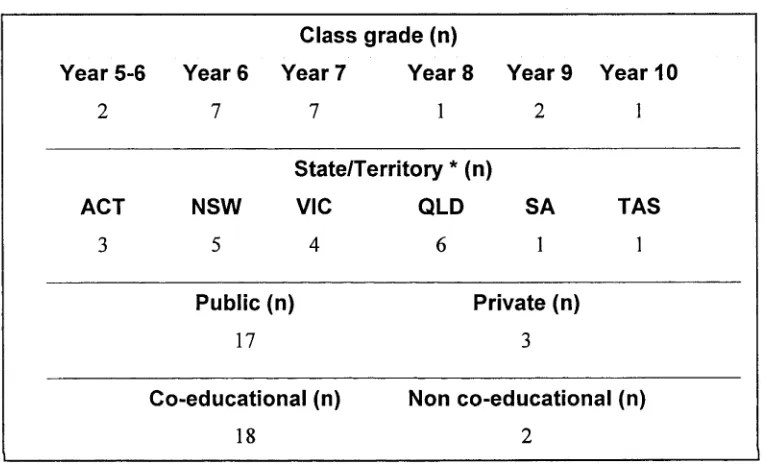
4.1: Sample group by grade demographic, geographic location and type of school 43
Boxes
1: Percentage analysis of responses to Questions 1-3 44
2: Number of Yes/No group responses to enjoyment of DSIS programs 45 3: Number of Yes/No responses from groups for enjoyment of staff guiding students through
program 46
4: Number of Yes/No responses for student groups’ enjoyment of role-play activity 48 5: Some teachers’ responses to their group’s increased level of interest in science 54 6: Some examples of topics recalled by students after DSIS program 56 7: List of some information learned by students, as perceived by teachers 57
8: Positive additional Comments from teachers 58
9: Negative additional comments from teachers 58
Charts
4.1: Percentage analysis of sample groups’ recall of DSIS activities 45 4.2: Frequency distribution of students’ reasons for enjoyment of staff guiding students
through program 47
4.3: Frequency distribution of student groups’ reasons for enjoyment of role-play and
vote casting activity 49
4.4: Frequency distribution of clustered responses of student groups to what they
remember about science 51
4.5: Frequency distribution of clustered responses from student groups in response to
importance of scientific research 52
4.6: Frequency distribution of teacher responses to student groups’ increased interest
in science 54
4.7: Frequency distribution of teacher responses to student groups’ recall of DSIS
Presentation taik to primary school students as part of the CSiRO's ‘Discovering Science in Society’ science education programs
For learning to take place with any kind of efficiency students must be motivated. To be motivated, they must become interested. And they become interested when they
are actively working on projects which they can relate to their values and goals in life.
Gus Tuberville, President, William Penn College
“I was impressed with the amount o f knowledge
the children retained, as we visited CSIRO
Abstract
Science centres are places of informal learning where people visit usually with the intention of finding out about science. Many of these science centres conduct school education programs as a means of communicating scientific information to school students. Previous research has shown that learning does occur during these science centre visits, and this paper looks at the efficacy of the school education programs at the Discovery Centre in Canberra. By exploring the learning outcomes and format of these programs this paper examines whether the objectives of the program are met and what factors may influence this learning episode. Of greatest interest is the reflection on, and recollection of, information learned from the science education experience and students’ enjoyment levels of the program.
Data was collected by survey questionnaire, administered to the students and teacher of each class. Results are based on classes as the unit of analysis and show a high level of information retention and interest in science. Results also showed that these programs met the objectives set for them, with most student groups recalling their science education program experience and enjoying the
participatory style of the programs. Additionally, results indicated a
Chapter 1: INTRODUCTION
Science centres' are places that people visit, usually with the intention of finding out something about science. Whether that is a visitor’s intention or not, that is the hope of the science centre - to communicate some information about science. Though they may have changed over the past century, and the experience vary dramatically from place to place - from the ‘good old days’ of staring at unrecognisable species of stuffed animals in glass cabinets, to hypnotically staring at intriguing fishes in decorative floor-to-ceiling tanks, to the now whiz bang, bedazzling, entertaining, button-pushing, lever-moving exhibits of many contemporary science centres - they are all about the same thing: science.
But do these places actually successfully convey any science information to their visitors? Does looking at aesthetically pleasing fishes with pleasant background music playing, or pushing a button to create a mini earthquake really bestow science
information upon the science centre visitor? Maybe some just do it better than others, or, maybe there is a formula for success? Whatever the answer, the question is, do science centres successfully communicate science information?
It is general belief that science centres are places where learning occurs and
knowledge is acquired - one of the reasons why people visit them. For decades they have enticed teachers and school students to visit on field trips, to enhance or
reinforce their formal education at school. Now, many science centres run education programs specifically for school groups, in the hope (by both teachers and science centres) that some learning will occur.
In this paper, the question of learning experiences in science centres is explored by looking at the design and intended outcomes of the science education programs at one particular science centre. But first, a little bit of history.
1.1 A little bit of history
Science centres, as we know them, are one type of public facility that has evolved out of the broader category of museums. It appears that the first function of museums was for collection - to preserve objects of artistic, historic and scientific importance for the enlightenment and enjoyment of present and future generations (Alexander, 1980). These collections existed because their contents were deemed important and evocative survivals of human civilization worthy of careful study and powerful educational impact (Alexander, 1980). The many carefully preserved items, which tell much about nature, the universe and the human condition, transmit important information to the present generation and posterity (Alexander, 1980).
Starting from the Renaissance, those of the upper echelons of society had various collections on display to show associates, and universities and medical schools had large collections of specimens for study. From these collections, natural history museums evolved during the nineteenth century, and in the late 1800s and on into the beginning of the twentieth century, science museums started to emerge, predecessors of modern science centres.
The Deutches Museum in Munich, built in 1903, was probably the first true science centre as we define them today, which included some interactive exhibits. The
German science centre is said to have inspired the creation of the Museum of Science and Technology in Chicago, built in the 1930s. Later that century, the Ontario Science Centre opened in 1967, and then Frank Oppenheimer’s Exploratorium in 1969. Since then, science centres have become popular in modern society as a place to go to learn about science.
an educative role in society started to grow during the first half of the twentieth century (Hein, 2000).
During this time, there was extensive experimental work on learning and perception carried out in growing educational psychology departments (Hein, 2000). This started changing the views of many towards supporting the notion of an educational function for museums. At the same time, the connection between schools and museums was reinforced by the development of museums within school systems (Rathman, 1915, in Hein, 2000), and their association with school activities (Coleman, 1939, in Hein, 2000)
Today, many science centres conduct education programs as alternatives to
curriculum-driven formal school systems. Although programs may enhance school curricula, they are places of informal learning, not bound to school agendas. There is a substantial collection of research that indicates learning takes place in science centres, and to varying degrees in school education programs.
This paper looks at the learning outcomes of the education programs at one particular science centre - the Discovery Centre (Discovery) in Canberra, Australia. Discovery is part of the federal Commonwealth and Industrial Research Organisation (CSIRO). The objectives of the science education programs at Discovery (as set by the program creators) are to raise awareness of CSIRO, scientific research and the benefits of it, in school age students, and, engage them in a scientific funding decision-making
process. So, do students learn any science information after participating in these programs? And if so, what is it that they learn? There is much anecdotal evidence suggesting that there is learning going on, however, these questions have not been examined formally. This research assesses the type of information that students recall, the level of students’ enjoyment of these programs and explores the role of the
1.2 Background
The CSIRO ks Discovery Centre (Discovery) is a public science facility, located in Canberra, opened in August 2000. It is part of the division of Plant Industry of CSIRO and is housed in the Discovery building at the Black Mountain site. The building is designed to facilitate public accessibility to science. It includes functioning gene technology laboratories, with glass walls to enable visitors to view scientists at work, and the Discovery centre - which displays information about CSIRO research and hosts school education programs.
1.3 Objectives and Philosophy of the DSIS Programs
Discovery’s school education programs are called ‘Discovering Science in Society' (DSIS). They are available for both primary and secondary school students, from all states and territories of Australia. The content and structure of these programs are designed with the intention of effectively meeting certain objectives.
The DSIS program objectives, as stated by the program creators and manager of the Discovery Centre, Ms Christine Cansfield-Smith, are:
• to raise awareness of CSIRO amongst school-age children;
• to engage students in a scientific funding decision-making process, and • raise awareness of scientific research, and its benefits, amongst school-age
children.
The philosophy of the education programs is to showcase CSIRO research and present contemporary science research in an engaging, exciting and interactive format. The programs try to counterbalance the frequently presented image of science being fun, bubbles, mirrors and liquid nitrogen, by making science relevant. Hence, the
The education programs are therefore designed to expose students to CSIRO, explain some past and current research undertaken by CSIRO in scientific terms - how it is conducted, issues associated with conducting research, results and implications of the research - and involve students in a number of science-related activities.
1.4 ‘Discovering Science in Society’ School Education Programs
Upon arrival at Discovery, visiting students are assembled in an ‘Education Room’ where they are welcomed, introduced to the staff who will be working with them and familiarised with what the education program entails and what they will be doing.
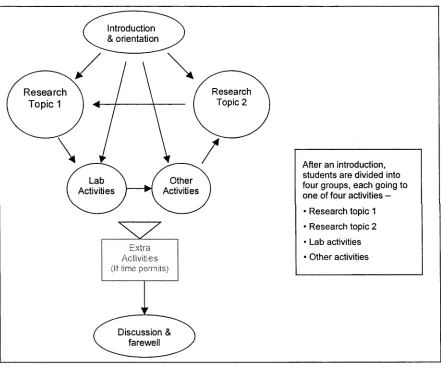
The DSIS programs are 90 minutes in duration and involve students in a variety of learning activities. Students are divided into groups of around 10-15 students for each activity, with the aim of encouraging optimal learning and manageability. The
activities include a role-play scenario involving the delivery of information about current CSIRO research; watching visual media; listening to information about various CSIRO projects and spending time in a mini-laboratory, performing simple experiments. Additionally, if time allows, some groups are also able to handle some live creatures (stick insects and mice) as an extra activity. The program developers consider the mental activity of the role-play scenario to be a ‘minds-on’ activity, and the activities in the laboratory as ‘hands-on’.
The majority of time is spent on the ‘minds-on’ scenario. For this role-play activity students assume the role of an organisation, or private company, with funds available to invest in a CSIRO research project . Each group is presented with information on two different research topics (current CSIRO projects) that need funding in order to begin or continue its work. Information about the nature of the research; the
methodology and science involved; the intended purpose of performing such research, and the desired outcome or demonstrated application is explained. After each body of
2
information is presented, students are requested to vote for which research project they wish to fund.
Some research areas presented at the time of this data collection (2005), included gene technology, food technology and ecological research. Gene technology covered the use of genetic modification in plants or animals to determine a particular beneficial outcome. For example, genetic modification of cowpea plants to protect plants from insect damage and crop loss. Food technology covered aspects of food use and development for medicinal purposes. For example, extracting substances from particular foods to be used in food supplements for health benefits and disease protection. Ecological research included environmental issues and the research used to solve these problems. For example, manipulation of cane toad lifecycles to reduce population numbers, and the use o f ‘indicator species’ in determining native species loss and environmental degradation. These topics change approximately every six to nine months to maintain contact with updates within current research, or to showcase new research projects.
Photo 1:
Students exploring the
Biodiversity display as
part of the presentation
talks on science research
discussions can become quite passionate about some of the issues raised by the research.
By assigning decision-making responsibility to the students, they are incorporated into an experience that demonstrates one of the processes of decision-making regarding scientific research. This responsibility stimulates the students to consider and evaluate issues such as urgency, priority, economics, ethics, safety, society and the environment related to the scientific research presented to them. In the process of voting for their preferred research topic students choose between the two projects based on these issues. For example, they may have had to decide whether salinity issues and degradation of farming land in Australia is a more urgent problem and in greater need of funding than a humanitarian project that involves genetic
manipulation of plants to feed people in Africa. Another example would be the choice between research involving eradication of cane toads and food technology research used to create disease-preventing food supplements. Some questions they may have considered before casting a vote are:
o Who will benefit from the research?;
o How wide-spread are the benefits?;
o Are there any negative consequences of the research?;
o How does it affect me, my family and community?;
o How much will it cost?;
o Does it affect the environment?, and
Once votes were cast and tallied, students were asked about their choice of one research topic over the other and the decision-making process involved. This was a voluntary process in which students chose whether they wanted to offer this
information to staff. However, most groups were eager to impart their rationale or reasoning about how they came to their individual voting decision.
Figure 1: Flow diagram of program format and activities
After an introduction, students are divided into four groups, each going to one of four activities
-• Research topic 1
• Research topic 2
• Lab activities
• Other activities
[image:14.535.45.486.224.596.2]what they want to do. They are encouraged to function autonomously, follow written instruction and use their own problem-solving abilities, only requesting assistance where necessary. However, staff do assist various students with their activities and explain the science behind the activities. Other activities included viewing a short three-dimensional film (with 3D glasses) about some scientific research, freely wandering through other exhibits or handling live creatures.
Photo 3:
Students involved in
the mini-lab activities
during the education
program
All activities within the DSIS program impart scientific information to students through a participatory, active and enquiry-based approach. They are designed to be most effective for small groups; ideally for students between the ages of 10 and 15. However, programs can be modified to suit the age or ability of each group by adding or removing information, adapting specific tasks or changing the duration of
activities.
The program format specifically incorporates a variety of activities within each session. Each group of students moves from one activity to the next within
That learning experience, within the DSIS programs, is the object of this research paper. Are these programs effective forms of science communication resulting in learning?
1.5 Research Problem
The research problem being explored is whether the DSIS education programs are an effective form of science communication. Education programs are often assumed to be effective forms of science communication, hence their existence, and in this case anecdotal evidence3 4 suggests the DSIS programs are effective. However, no previous research has formally assessed their learning outcomes.
This paper looks at the success of dissemination of scientific information through these programs, and whether the format is a determining part of their efficacy. Learning outcomes are evaluated and the influence of the program format is assessed.
Of most interest to this research is the type and quantity of scientific information absorbed by students. Do the students leave with an understanding of the CSIRO and the research it undertakes? And, do they gain any other knowledge about science from the information that is presented, or to which they are exposed, during their visit?
If students do learn from these programs, do they retain this information? Are these transient moments of knowledge acquisition, or do they have a more significant impact and holistic affect on learning about science? To determine the possible
retention of learned information, assessment was made in a period of 8-20 weeks after completing the education programs. As students demonstrated enthusiastic initial
3
In this paper, effective refers to successfully meeting the goals set for the DSIS programs - to learn about the CSIRO, the relevance o f scientific research and engage students in a funding decision making process. It also includes the acquisition o f any other information about science by students.
4
recall of information learned immediately upon completion of the DSIS programs, the author was interested in ascertaining for how long this may be retained.
The format of the programs is designed to be varied, participatory and enquiry-based, which seemed to be favourable with the majority of participating students. The author believed this particular format had an influence on the learning experiences, therefore, student responses about the format of the programs were recorded and evaluated.
Participating students come from various learning levels and backgrounds of prior scientific knowledge. Therefore students’ absorption and retention levels will vary. This variation has been considered and addressed in the number and variety of students in the sample group.
The purpose in analysing the learning outcomes of these education programs is to assist understanding in communication of science knowledge through such education programs. Looking at the structure and program format helps determine whether this is a factor affecting learning outcomes. These analyses may assist with the creation or design of future science education programs. They may be maintained or modified as a result of these findings.
1.6 Research Questions
The following questions assess the learning outcomes and program format in order to
address the research problem.
1. Do the education programs fu lfil the objectives set for them? (As stated on p.5)
2. Do participating students enjoy the activities/format o f the education programs?
2.1. I f so, does the format have an effect on student learning?
3. Do the participating students learn any scientific information?
3.1. I f so, what scientific information do students learn?
3.2. I f learnt, how long do students retain the scientific information?
1.7 Summary
This thesis looks at the efficacy o f science education programs at CSIRO Discovery
as a form o f science communication. It evaluates the learning outcomes o f the
programs and explores whether the program structure contributed to the results.
Data was collected in the form o f a survey. Questions were asked to students and their
teachers about their experience o f the education program. Each survey contains
answers that have been compiled as a group response from each group o f students.
The follow ing chapters look at some o f the associated literature on learning in science
centres, explains the methods undertaken to obtain data, the results, analysis and
Chapter 2: REVIEW OF LITERATURE
2.1 Introduction
This chapter looks at some of the literature on learning and various aspects of learning within science centres. The educative role of science centres, some influences on the learning process and how the content of certain exhibits can affect learning is
explored. In this paper, science centres are classified as informal or free-choice learning environments — as defined by the premise that any learning undertaken within science centres is not part of a formal education curriculum — therefore, visitors can choose to participate in and/or learn from their visit to a science centre.
There is large collection of literature that explores learning in science centres. That is, learning by individuals, family groups and school groups. The research shows
innumerable observations, interviews, questionnaires and other forms of data
collection that have been performed in order to gain some insight into what and how people learn in these informal settings. In the last decade or so, the research has covered topics that include measuring learning outcomes; focusing on the processes of learning and the influences on them; analysing exhibits, their contents and
responses to them, and analysis of the existing research and theory development from emerging patterns.
Different papers present different perspectives on the learning experience. However, they all aspire to the same goal - to gain a better understanding of what is learned and the nature of learning in a science centre. Some of the perspectives researched have been aspects of motivation for visiting a science centre; the tasks or activities involved during the visit; the experience and learning process while there, and how this fits in with an individual’s overall learning about science.
2.2 Educative role of science centres
Historically, science centres were largely venues to behold the ‘wonders’ of science by viewing objects in glass cabinets. Students would often visit on a school excursion in which they would predominantly just observe these objects; perhaps being required to answer questions on a worksheet or draw images. Generally, visits were passive, without interaction with displays, and with minimum interactivity with other aspects of the centre, such as staff. However, a new generation of science centres has emerged (Janousek, 2000; Koster, 1999) that represents a paradigm shift from the traditional to an emphasis on involvement, activity and ideas (Beetlestone et al., 1998; Farmelo,
1997; Wellington, 1998, in Pedretti, 2006).
In the words of Frank Oppenheimer in 1968 - founder of The Exploratorium science centre in San Francisco - “there is an increasing need to develop public understanding of science and technology. Remarkably few individuals are familiar with the details of the industrial processes involved in their food, their medicine, their entertainment or their clothing” (Oppenheimer, 1968, p.206). Oppenheimer believed the purpose of a science museum and exploration centre would be to satisfy the growing need for an environment in which people can become familiar with the details of science and technology. Also, that it could be valuable and entertaining for the general public and would serve as a resource for schools and existing adult education programs
(Oppenheimer, 1968). Based on this philosophy, Oppenheimer founded The
Exploratorium in 1969, one of the first science centres in which visitors could interact with exhibits. He also created ‘Explainer Programs’ (Delacote, 1998) to enhance visitor, or learner, understanding of displays, that involved staff or docents who try to communicate information about the exhibits and the associated science.
These Explainer Programs focused on the learner. Goery Delacote, executive director of The Exploratorium from 1991 to 2005, explained that they offer an active
which the exhibits and explanations engender questions, and the visitors in turn generate questions from the institute (Delacote, 1998).
Nearly forty years later, science centres are still designed to allow public access to, and information about, their particular area of science, and many conduct education programs. Most of these science centres display or disseminate scientific information to their visitors, with the aim of exposing, informing, teaching or encouraging
awareness of this information. The CSIRO Discovery centre is one such place that offers publicly accessible science information and education programs for school-age students.
These informal or free-choice learning environments allow visitors to choose whether or not to engage in the information provided. That is, it is a more self-directed style of learning, without a set curriculum that progresses from lower to higher levels; that usually does not require attendance or participation, and does not certify mastery of specific knowledge at the conclusion of the visit (Hein, 2000).
2.3 Learning in science centres
Recent research suggests that nearly half of the public’s science understanding and learning derives from free-choice learning environments (Falk, 2002). In a survey conducted by Falk, the largest number of respondents claimed to have learned their science and/or technology during their leisure time, through some kind of free-choice learning experience - via the internet, reading magazines or books, going to science centres or participating in special-interest groups. This and other studies (Dierking et al, 2004; Falk, 2004; Falk & Storksdieck, 2005), demonstrate the important role that free-choice or informal settings play in learning about science.
assimilate and integrate our experiences into new ways of understanding, thinking and acting (Rennie & Johnston, 2004).
A visit to, and participation in, a science centre education program is just one possible learning episode in the many learning experiences we may encounter. As noted by Hein (2000), the brief encounters at science centres do appear to lead to learning, do result in change that is often remembered with pleasure and can influence future behaviour. These learning experiences, however, are bound by certain influences in the context of the event.
Looking at the nature of learning and factors that might affect it is therefore of assistance in assessing any outcomes.
2.4 Learning styles, models and theories
There is significant research that indicates people learn in a variety of ways, acquiring new information in particular ways. We develop patterns over a period of time, with which we feel comfortable, whether they are effective or not, and, although not necessarily performed exactly the same way each time, there is a set of behaviours common to each learning episode. This is what is called a learning style, and there are a number of widely used theories and models describing and evaluating the way in which we learn. For example, the Constructivist Theory of Learning; Kolb's Model of Learning; Gregorc’s Style Delineation Model; Dunn & Dunn’s Model of Learning; Witkin’s Field-dependence/Field-Independence Theory, and Kagan's Impulsivity- Reflexivity Model (Cassidy, 2004), are just a few; there are many others.
These models define learning styles by a range of characteristics, thinking and behavioural patterns. These include verbal, linguistic, visual, spatial, auditory, musical, logical, bodily, tactile, reasoning, analytical, inductive and deductive patterns. For example, Kolb & Fry’s model proposes there are four elements
over the others (Smith, 2001). Gregorc’s Model also describes four distinct and observable behaviours associated with learning that includes sensory-based, intuitive, analytic, logical and verbal approaches to learning (Cassidy, 2004). Similarly, other learning theories and models incorporate various senses and behavioural patterns observed during a learning episode. Dunn & Dunn’s model incorporates responses to environmental, emotional, sociological, physical and psychological stimuli (Cassidy, 2004). All of these models define how a learner perceives the world and their
preferred method of working. Most learners tend to have a combination of the different styles, and do not solely use one style.
These differing styles will directly affect a person’s ability to learn new information. Therefore, it is wise to design education programs to cater for the different learning styles among participants. Education programs will result in varied learning
outcomes, dependent on the learning styles of the audience, thus this should be a consideration in the design, format and structure of an education program for optimal learning outcomes.
Participants in the DSIS programs at Discovery come from all over Australia and range in age from lower primary school to upper high school. Therefore, learning levels, capabilities and styles are many and varied amongst visiting school groups, which the DSIS programs are designed to consider and attempt to accommodate. All learning, however, is based upon and affected by myriad factors within an
individual’s life, such as what an individual already knows, how they perceive the world around them, and their personal, social and physical environments.
The Constructivist Theory of Learning suggests that learners construct their
Based on the Constructivist Theory of Learning, and taking into consideration the multitude of other possible factors affecting the process of an individual’s learning, is a more recent model - the Contextual Model of Learning put forward by leading informal education specialists and researchers John Falk and Lynn Dierking in 2000.
2.5 The Contextual Model of Learning
Falk and Dierking’s theory was devised by drawing from constructivist, cognitive and socio-cultural theories in which the authors state that their theory is a device for organising the complexities of learning within free-choice settings. It is described as non-predictive and proposes that learning is a complex phenomenon situated within a series of contexts (Falk & Storksdieck, 2005).
The basis of the Contextual Model of Learning is that there exists a continuous dialogue between an individual and their physical and socio-cultural environment. This contextually-driven dialogue is the process/product of the interactions between an individual’s personal, socio-cultural and physical contexts over time (Falk & Storksdieck, 2005). These three contexts are not stable or constant, but change across a lifetime.
These three contexts are considered fundamental for learning in an informal setting (Falk & Storksdieck, 2005). The personal context involves the motivation and expectations of an individual, their prior knowledge, interests and beliefs, and, their choice and control over the situation. The socio-cultural involves within-group social interaction and mediation, facilitated mediation by others, and the cultural background of individuals. The physical context involves advance organisation, orientation and the architecture and design of the environment (Falk & Storskieck, 2005).
Discovery are not motivated to visit by personal interest, as they are there visiting as a school-related activity. However, there may be personal interest in science that may motivate an individual student to be more receptive to the overall experience. As well as possible personal motivation, the other factors of personal context described by Falk & Storksdiek (2005) — individual expectations, prior knowledge, interests and beliefs, and choice and control over the situation — will affect the process of the learning experience.
The socio-cultural context of the students participating in the Discovery education program learning experience is a pertinent factor in this research. Visiting students participate in these programs in groups, therefore the social interactions have a strong influence on the learning experience. Considerable research now exists which shows that visitors to science centres are strongly influenced by the interactions and
collaborations they have with individuals within their own social group (Falk and Storksdieck, 2005). Research has also shown that the quality of interactions with others outside the visitor’s own social group, such as science centre staff - explainers, guides, demonstrators - can make a profound difference to visitor learning (Crowley & Callanan, 1998; Wolins el al. 1992; Koran el al. 1988). The DSIS programs are entirely supervised by Discovery staff - explainers and demonstrators - who have the ability to positively affect each student’s learning outcome.
There is no right or wrong way to learn things, no single place or moment, we learn from many different sources in many different ways (Medrich, 1991; Anderson, 1999; Bransford et al, 1999). All learning is situated within the unique personal, socio cultural and physical context in which it occurs (Falk and Dierking, 1992; 2000). That is, what people learn depends on what they already know and understand, whom they are with when they learn, where they are when they learn, and what is motivating them to learn.
experience in the education programs - for example, the informal setting, peer group interaction and personal ethics. These are factors that need consideration when assessing the learning outcomes of such programs.
Deeper exploration of these factors and how they affect learning within the DSIS programs would be of benefit to this paper, however, is beyond the scope of this research. Therefore, future studies, following-on and including this exploration, would greatly assist the understanding of the contribution each of these contexts makes to the learning process within informal settings.
2.6 The learning experience within Discovery
Theoretically, the total number of factors that directly and indirectly influence learning in a science centre number in the hundreds, if not thousands (Falk, 2004). Some of these are apparent and considered important, others less so. The most
apparent variables influencing learning in the case of the DSIS programs at Discovery are prior knowledge, personal interest and motivation, peer group interaction, group
size, gender, age, time of day and other activities included on the school’s excursion itinerary (as most of the students are inter-state visitors with busy daily itineraries).
It has been shown that visitor learning within a science centre is strongly influenced by how successfully an individual can orient him/herself in that physical space
(Evans, 1995; Kubota & Olstad, 1991). Confident navigation within a complex setting highly correlates with what and how much an individual learns. As the students participating in the programs at Discovery are guided by staff members for the 90 minute duration of the program, it is likely that this is a positive influence on the learning process.
examination of learned material. Some segments of the program are completely free- choice activities, such as mini-lab experiments and 'additional activities' at the end of the program, during which students choose which activity they wish to perform or participate in, if at all. Therefore, these programs can be defined as informal learning environments and the Contextual Model of Learning usefully and aptly describes some of the factors affecting learning outcomes with the DSIS education programs.
2.7 The nature of learning and assessing outcomes in informal settings
During the 1980s and early 1990s researchers had started to look at aspects of affective learning outcomes, such as studies by Koran & Koran (1983) and Boyd (1993). Koran & Koran state that attitude and curiosity are critical to learning, while Boyd states that motivation and engagement are the basis to effective educational experiences. Falk & Dierking (1992) suggested evidence that student’s strongest memories of a learning experience in an informal setting related to emotional aspects of the visit, although these may not relate to the content. They also investigated the contexts in which this learning takes place.
Falk & Dierking formulated their Contextual Model of Learning in 2000. As noted earlier, this model proposes three fundamental contexts for learning in an informal setting. One of those contexts - the socio-cultural - addresses group interactions. Typically with any group learning experience, the socio-cultural perspective has a particularly strong influence. As noted by Griffin (2004), with increased interest in how learning occurs within a group setting, there has been increased emphasis on incorporating a socio-cultural perspective on learning and an increased emphasis on students’ learning processes, and how these can be facilitated, by paying attention to the students’ views of their learning experiences.
The DSIS education programs at Discovery are designed specifically to be group learning experiences, encouraging students to ask questions and discuss topics
themselves. Within-group discussions were regularly observed by the author during the education programs. This could suggest that these group interactions may enhance the learning outcomes of the education programs.
Additionally, there is a body of research that supports the evidence that, although learning about science does occur during these short episodes at science centres, reinforcing this learning with pre-visit preparation and post-visit activity/information consolidates and enhances that learning experience.
2.8 Enhancing the informal learning experience with pre-visit preparation and post-visit activities
Effective learning from a science centre visit is not an isolated experience. Research indicates that previous knowledge, pre-visit preparation and post-visit activity greatly enhances the learning outcomes of a visit to a science centre. A study by Gennaro in
1981 found that students who have done work on a topic at school before visiting a science centre, and who have prepared for their visit, learn most from their
experience. With some pre-visit preparation and orientation, students were less likely to concentrate on non-relevant aspects of the surroundings, and more likely to focus on those relevant to the learning intended. Research by Price and Hein (1991) concluded that promotion of long-term learning was achieved if the programs included planning; consideration of the unique opportunities of the science centre; variation in activities during the visit; sparse use of worksheets, and emphasis on first hand experience and observation.
Of the 64 students, one group was shown a slide show of the exhibit they were to visit; it included questions they might ask. The other group was shown slides from a different exhibit. As hypothesised, the second group, who were shown slides from a different exhibit, had lower scores on the post-test and reduced exploratory behaviour was observed.
The researchers also found that the novelty-reducing preparation increased exploratory behaviour and cognitive learning for boys, not in girls. Although this particular finding is not of significance for this paper, it may be of use to, or relevant for, further studies that may include learning differences between boys and girls and how this affects their learning in informal settings.
Further, Anderson's study revealed the relationships between students' responses on a post-test instrument, the students' ability to recall exhibits, exhibit content/familiarity, and whether students deemed exhibits to be interesting and/or puzzling. Among the relationships revealed, of most significance was the fact that students learned most from exhibits that they later deemed to be both interesting and puzzling (Anderson,
1994).
In another study by Anderson et al (1999), there was evidence that an integrated series of post-visit activities, for a group of 28 Year 7 students, resulted in their construction and reconstruction of personal knowledge about science concepts and principles represented in the science centre exhibits. Sometimes this construction and reconstruction was towards the accepted scientific understanding and sometimes in different and surprising ways (Anderson et al, 1999). These post-visit activities or follow-ups after a science centre visit help reveal learning outcomes from these informal learning experiences more clearly. They support the development of
scientific concepts, but also detect and respond to alternative conceptions that may be produced or strengthened in an informal learning setting (Anderson, 1999).
receptive and able to recall these experiences. Hence, if learners consider their science centre experience enjoyable, it is likely they will be receptive to, and engage in, post visit activity and related-learning. It has been argued that to affect learning in the visit experience, priming the learner for the subsequent instruction is also important
(Rennie, 1994).
In light of this, it can be confidently asserted that if students enjoy their experience during the DSIS programs at Discovery, it is more likely that they will learn during their visit. In addition, it is likely that an enjoyable learning experience will pre dispose students to further learning of related information, and consolidate or confirm any information to which they were exposed during the science centre experience.
However, post-visit activity may also reveal unintended learning outcomes. These may be ideas, information or alternative conceptions of science that students have formed as a result of a science centre visit. One example of this can be seen in the research by Anderson et al. (1999), a case study in which knowledge construction about electricity and magnetism by Year 7 students was investigated. The responses of two particular students were investigated in detail. The intended learning outcome of one exhibit was to demonstrate the effect of heat on magnetism (ie. if metal with a magnet attached to it is heated, the magnet will lose its magnetic properties and fall off). One of the students interviewed after interaction with the exhibit constructed the belief that heat has a repelling force on magnets. This of course was not the intended learning outcome of this particular exhibit.
actually be sold, but it is not a sustainable, broad-scale solution for this problem. The aim was to impart information about environmental degradation and agricultural disadvantage, the problems caused by these issues and the solutions provided by the research. Some of these unintended outcomes may be discussed at the time of the presentation or upon completion of the education program, however, post-visit activities and discussions may reinforce the intended outcome rather than others.
Although there may be unintended outcomes of learning situations in science centres, the results of this study indicate that most students do grasp a good understanding of the science information presented to them. This type of learning experience - one that discusses science and its relevance in day-to-day life - promotes understanding about
science, rather than one particular scientific fact or concept. This, according to recent research by Dr Erminia Pedretti, assistant professor at the University of Toronto, leads to more robust views of science (Pedretti, 2004). Pedretti states that issues-based exhibitions - ones that present information on contemporary science and technology issues - carry the potential to enhance learning by personalising the subject matter, evoking emotion, stimulating dialogue and debate, and promoting reflexivity.
2,9 Issues-based exhibitions in science centres
As Pedretti’s research findings suggest, presenting contemporary science and technology issues have a greater potential to promote learning about science. Similarly, the DSIS programs present current research in science and technology, performed by the CSIRO, some issues related to its practice as well as some possible effects on individuals and greater society — as the program name suggests.
"Teaching science is about making connections to our everyday life and relating science to larger social-cultural issues such as cloning, reproductive technologies, genetically altered food, environmental concerns etc.", (Pedretti, 2000 online).
historical, philosophical, cultural, sociological, political and ethical perspectives. Science cannot be divorced from its social purposes and responsibilities; to do so is to err on the side of presenting science as a value-free, abstract, and objective pursuit (Pedretti, 1997). Rather, science should be portrayed as a human activity,
acknowledging its strengths, and its limitations.
Pedretti has conducted a number of studies (Pedretti, 1999; 2004; Pedretti & Forbes, 2000; Pedretti et al, 2001) exploring scientific knowledge and social responsibility and how this is taught in schools and science centres. In one paper, Pedretti (2004) looks at two Canadian science centres with issues-based exhibitions - one at Science World in Vancouver, the other installed in the Ontario Science Centre - that
demonstrate the difficulty in separating science and society. Pedretti describes this type of exhibit as critical issues-based installations' and findings suggest that these installations challenge visitors in different ways - intellectually and emotionally.
The exhibits are titled ‘Mine Games’ (Vancouver) and ‘A Question of Truth’ (Ontario) and are designed to ask questions of the visitor about topical or
controversial issues. ‘Mine Games’ is an exhibition that explores the impacts of building a potential mine in an imaginary town. Students use three-dimensional simulation to meet town residents, who each have their own perspective and opinions regarding the development of the mine. They are then faced with the challenge of deciding whether to, and if so, how to build the mine taking into consideration safety, economical and environmental aspects. After this task, students then engage in a discussion, guided by a mediator, in an attempt to reach consensus.
‘A Question of Truth’ is designed to examine a number of questions about the nature of science, how ideas are formed and how cultural and political conditions affect the actions of individual scientists. There are three topics covered in this exhibit:
1) Frames of reference - illustrating that differences in context can lead to many valid perspectives (eg. Sun-centred versus Earth-centred planetary models, western medicine and alternative views on health and well-being),
2) Bias in science and society - examines the long history of oppression and marginalisation for certain groups of people (eg. concepts of racism, prejudice, eugenics, slavery, sterilisation, intelligence testing), and
3) Science and the community - suggests our future depends on an informed and active citizenry, and includes interviews with scientists, contributions from local school children and street kids and visitor reactions to it.
Such exhibitions evoke many responses and have also created controversy, because it is questioning the pursuit of science (Pedretti, 2004). They invite visitors to consider socio-scientific material from a variety of perspectives, engage in decision-making and healthy debate of complex issues, and critique the nature and practice of science and technology. These exhibits emphasise learning about science, developing an understanding of the nature and methods of science, an appreciation of its history and development, and an awareness of the complex interactions among science,
technology, society and environment (Pedretti, 2004).
Science centres are beginning to see themselves as important players in a number of external scientific, social, cultural and political contexts (Beetlestone et al., 1998). Today’s mass media allows information about science to enter most people’s daily lives, so many science centres have evolved to represent popular, topical or
controversial issues, realising not only their educative role about science, but their role within society.
2.10 Summary
The literature presented in this chapter showed the change in the role of science centres from places to observe objects to places where interaction with exhibits is now popular. Science centres can provide a significant role in informal education to both individual visitors and school groups, and a number of studies explored the nature of these learning experiences. Many theories and models of learning have evolved in the past 50 years that have informed the understanding of learning in science centres. Further research into the processes of learning in such environments has seen the formulation of theories specific to informal learning. Other studies investigated the type of exhibits within a science centre and demonstrated how these can affect the outcome of a learning experience and overall perceptions of science.
Chapter 3: RESEARCH METHOD
3.1 Introduction
This chapter describes the methods used in this research. It explains the way in which data were collected using survey questionnaires that were sent to participating student groups, via their teachers. The survey also contained several questions directed at the teachers of each group. Also outlined is the use of quantitative research methods for this research, reasons for this course of action for acquiring data, the rationale behind choices of survey questions and the limitations experienced using this method.
3.2 Survey Research Methodology
3.2.1 Quantitative research
Quantitative methods were used to analyse the survey data in this research. This method enabled evaluation of the learning outcomes of the science education
programs. Survey research is a commonly used quantitative method for obtaining data through sampling a population. Defined by Babbie (1999), quantitative analysis is the technique by which researchers convert data to numerical form and subject it to statistical analysis. In survey research, the researcher selects a sample group from a population and administers a questionnaire to that group.
3.2.2 Sampling
The goal of most surveys is to enable the researcher to accurately describe or predict the characteristics or thoughts of a pre-defined group of people (Doyle, 2004). Surveys enable data to be collected from large or small populations, from the entire population or via sample groups. In a review of quantitative research design
groups to obtain relatively precise information about a population is a very efficient
technique (Williams, 1978, in Yu & Cooper, 1983). It enables the researcher to make
inferences about the population at much less expense as a complete census. Also, the
sample may prove to be more accurate than a census, because the latter has greater
potential for non-sampling error6 (Williams, 1978, in Yu & Cooper, Statistics Canada,
2006 online). That is, previous research has been found that the likelihood o f non
response and errors due to sampling technique is greater in census surveys than
sample surveys.
3.2.3 Errors
In research by Assael & Keon (1982), non-sampling error is the major contributor to
total survey error, while random sampling error is minimal. Random sampling error
can be controlled by careful selection o f the sample and increasing the sample size
(Assael & Keon, 1983).
Also, low return rates can result in insufficient data and errors in analysis and
interpretation. It is suggested in research by Yu & Harrison (1983) that preliminary
notification and follow-up are relevant and valid techniques that may increase return
rate.
3.2.4 Questionnaire Design
It is important to construct a valid and reliable questionnaire. It needs to be
understandable and easy to follow for the intended respondents. I f respondents feel a
survey is important and easy to complete, they are more likely to complete it (Doyle,
2004). I f it looks complicated and difficult, they are less likely to participate, therefore
resulting in low return rates.
A survey questionnaire may be created in various forms - a written document (usually
for mailing), on-line questionnaire, face-to-face interview, telephone interview or
focus group. M ail surveys should contain accompanying information, such as a cover
letter explaining who is conducting the research and why, a brief description of the survey content and issues regarding legalities, confidentiality and privacy.
The organisation and format of the question sequence should be considered carefully to guide the respondent through the survey with ease and without error. A
questionnaire could contain a number of question types, requiring a variety of answers; for example, numerical or written answers. Questions may be closed-ended questions (selecting from specified options) or open-ended responses allowing explanation. The questionnaire should be standardised to ensure reliability,
generalisability and validity, with each respondent being presented exactly the same questionnaire (Doyle, 2004).
3.2.5 Ethical Considerations
All researchers have an ethical obligation to protect the welfare of the people they study. Respondents should be informed that participation is voluntary, that they may omit answers to any particular questions if they choose or they can refuse to
participate altogether.
Research involving school students can be ethically sensitive. The safety and welfare of students must be protected at all times. Survey content and data collection
techniques are dependent on associated ethical issues and protocols. Approval is required from ethics committees and/or parents, school staff and education authorities7.
3.2.6 Data analysis
Quantitative research uses various forms of analysis. This research uses univariate analysis, a simple form of quantitative analysis. Babbie (1999) defines this analysis as describing a case in terms of a single variable - specifically, the distribution of
attributes that comprise it. Univariate analysis is first and foremost the assessment of the distributional properties of a variable. It serves two broad purposes: (1)
description and (2) preparation for multivariate analysis (Aneshensal, 2004).
This involves presenting univariate data by reporting on individual cases by listing the attribute for each case under study in terms of the variable in question (Babbie, 1999). Univariate analyses allow descriptive inferences to be made about the larger
population, if the sample is appropriately drawn from that population.
Data may be calculated in terms of frequency distribution of a unit or value. The frequency count condenses the information contained within the data (Aneshensal, 2004). The frequency distribution data can then be condensed further by calculating measures of central tendency - values that summarise the characteristics or qualities of a set of values as to be fully representative of the set (Aneshensal, 2004). The central tendency summarises the distribution set into a single average quantity or
o
quality, measured using the mode, median or mean .
3.2.7 Advantages of surveys
Conducting research via surveys has many advantages. Most of the literature
concludes that survey data collection techniques are an inexpensive and efficient way of collecting information from a large number of respondents. These large sample sizes often result in significant information.
Marshall and Rossman (1995) state that the strengths of survey data collection methods include accuracy, generalisability and convenience. Accuracy in
measurement is enhanced by quantification and replicability. Survey results can be generalised to a larger population within known limits of error. Also, surveys are amenable to rapid statistical analysis (Marshall & Rossman, 1995).
Another advantage of surveys is that they can access respondents in distant and remote areas, therefore including a greater number and variety of respondents in the sample, enhancing the accuracy and representation of the total population.
Over 50 years ago, Angus and Katona (1953, in Colorado State University, 2006, online), stated "It is the capacity for wide application and broad coverage which gives the survey technique its great usefulness." This view still applies today. However, surveys do also have their limitations.
3.2.8 Limitations
Using surveys for data collection can have weaknesses. They depend on subjects’ motivation, honesty, memory, and ability to respond. Of a sample group, some may respond while others do not, therefore, non-response errors may bias the result. Measurement errors may also occur when respondents answer questions inaccurately. This may be due to question wording, question ordering or other external factors (Western Michigan University, 2003, online). Answers may lead to vague data sets as the respondents’ answers may be interpreted differently to their meaning by the researcher.
Another weakness of surveys is that they may have little value for examining complex social relationships, intricate patterns of interaction or represent the broader universe without further investigation (Marshall & Rossman, 1995). This research however, is not examining detailed relationships or interactions, nor a broad-scale universal group. It is exploring individual group responses of students from a sample group (20 school groups who participated in the DSIS education program) that represents a larger group (all student groups who participated in the DSIS education programs within the surveyed timeframe), but not universal population (all student groups who have visited Discovery).
There has been considerable debate during the past few decades over a definition for response rate estimation standards (Johnson & Owens, 2003). Although there has been some definition set, it is still debated because some believe response rate to be only one indicator of a survey’s ability to be representative of the sample.
According to Yu & Harris (1983) return rates for surveys can be increased by preliminary notification, foot-in-the-door techniques, personalisation and follow-up letters. If these techniques are not employed, return rates may be low.
3.3 Research Method
3.3.1 Data collection rationale
The survey questions in this research were designed to answer the research questions and therefore explore the research problem being investigated.
A survey questionnaire was the preferred method as it provided a small amount of information about a large number of subjects. As stated by Marshall and Rossman (1995), the basic aim of survey research is to describe and explain statistically the variability of certain features of a population. The aim of this questionnaire was to identify some of the likely variables in learning outcomes from these particular education programs, and possibly reveal others.
3.3.2 Sampling
The sample group was selected from a list of school groups that visited Discovery between February and June 2005, who participated in the education programs that were conducted during the day. School groups also visit during the evening, but were excluded from the sample group as they vary slightly from the day group program.
This four-month timeframe was chosen because all groups were exposed to the same education program and research talks during that time. There was a variation in the research topic for one group, and another group did not participate in a voting activity, but this was not known at the time of sample selection. These minor variations,
however, did not affect the analysis in any significant way and therefore were included in the sample group.
Fifty-three school groups were selected from the list of those who participated in the daytime 90-minute DSIS program.
The sample group included students from both primary and secondary classes - Years 5/6 through to Year 12. The sample group included schools from the following states - NSW, VIC, QLD, SA and TAS - and one territory - ACT.
The type of schools in the sample group included both public and private schools, and co-educational and non-co-educational schools. The range of class years, school locations and types in the sample group are representative of the variety of schools that visit Discovery.
Reminder letters were sent during the following two-month period (July-August) to groups from Round 1 who had not responded to the initial mailout. Time constraints did not allow for further follow-up reminder mailouts to Round 2 groups.
Once surveys were received, teachers were requested to garner data from the students in a group within a class setting. Each survey represents one class group, made up of multiple student responses. Classes varied in size, averaging approximately 20 students.
The responses to these questions were then analysed using quantitative methods to evaluate the learning outcomes of the education programs. Initial data was collated, results assessed and conclusions drawn from the findings.
Surveying school students usually entails many ethical considerations. The survey method used in this research avoided direct contact with students, thus avoiding the possible ethical issues associated with child safety and welfare.
3.3.3 Survey Design
Data were collected via survey questionnaire. The survey contained eight questions to the students of each group about their participation in the DSIS programs. Questions directed at students were chosen in order to address the research questions of this paper - do the education programs satisfy the objectives set for them; do students learn any science information; if so, what and for how long, and do they enjoy the program format. The first three questions ascertained whether students remembered the CSIRO and the research it performs. The other five questions pertained to what students did during the education programs and their level of enjoyment of these activities.
The survey also contained three questions to the teachers of each group. These questions aimed at gleaning the teachers’ interpretations of their group’s
education programs, and observations of any possible post-visit changes in relation to science after their science centre experience.
The survey design included both closed-ended and open-ended questions. A yes/no response was requested, and reasons for their answer. These closed questions were intended to gain the students’ or teacher’s immediate response to the question, while the open part of the question allowed some detail for each answer.
3.3.4 Survey Questions
The questions used in the survey were chosen because they directly address the objectives of the Discovery education programs. The questions, and their rationale for inclusion, are outlined below.
QUESTIONS TO STUDENTS
Questions 1-3 - CSRIO
1) Who is CSIRO? (2) What does CSIRO do? (3) What kind of jobs do people do at
CSIRO?
These questions investigate students’ recall and ability to identify CSIRO and its functions. These questions address the first research question (see p. 13), which investigates the first objective of the education programs - to raise awareness of CSIRO among school age children (see p. 5).
Question 4 - Activities
What do you remember doing at Discovery? Did you like doing this?
Question 5 - Program and interaction with staff
Did you like the way the staff showed you around the exhibit and talked to you?
Question 6 - Enjoyment of participatory role-play activity