R E S E A R C H
Open Access
Development of a new version of the Liverpool
Malaria Model. I. Refining the parameter settings
and mathematical formulation of basic processes
based on a literature review
Volker Ermert
1*, Andreas H Fink
1, Anne E Jones
2, Andrew P Morse
2Abstract
Background:A warm and humid climate triggers several water-associated diseases such as malaria. Climate- or weather-driven malaria models, therefore, allow for a better understanding of malaria transmission dynamics. The Liverpool Malaria Model(LMM) is a mathematical-biological model of malaria parasite dynamics using daily temperature and precipitation data. In this study, the parameter settings of the LMM are refined and a new mathematical formulation of key processes related to the growth and size of the vector population are developed.
Methods:One of the most comprehensive studies to date in terms of gathering entomological and parasitological information from the literature was undertaken for the development of a new version of an existing malaria model. The knowledge was needed to allow the justification of new settings of various model parameters and motivated changes of the mathematical formulation of the LMM.
Results:The first part of the present study developed an improved set of parameter settings and mathematical formulation of the LMM. Important modules of the original LMM version were enhanced in order to achieve a higher biological and physical accuracy. The oviposition as well as the survival of immature mosquitoes were adjusted to field conditions via the application of a fuzzy distribution model. Key model parameters, including the mature age of mosquitoes, the survival probability of adult mosquitoes, the human blood index, the mosquito-to-human (human-to-mosquito) transmission efficiency, the human infectious age, the recovery rate, as well as the gametocyte prevalence, were reassessed by means of entomological and parasitological
observations. This paper also revealed that various malaria variables lack information from field studies to be set properly in a malaria modelling approach.
Conclusions:Due to the multitude of model parameters and the uncertainty involved in the setting of parameters, an extensive literature survey was carried out, in order to produce a refined set of settings of various model parameters. This approach limits the degrees of freedom of the parameter space of the model, simplifying the final calibration of undetermined parameters (see the second part of this study). In addition, new mathematical formulations of important processes have improved the model in terms of the growth of the vector population.
* Correspondence: [email protected]
1
Institute of Geophysics and Meteorology, University of Cologne, Cologne, Germany
Full list of author information is available at the end of the article
Background
A warm and humid climate triggers several water-asso-ciated diseases, such as malaria [1]. Vector-borne diseases are highly sensitive to global warming and associated changes in precipitation [2]. Malaria is strongly influenced by warm and moist tropical atmospheric conditions [3]. Temperatures in Africa lie above the threshold for parasite development and the rainy seasons lead to a rapid increase of the mosquito population.
At the beginning of the 20th century, Ross was the pio-neer who developed the first mathematical model of malaria transmission [4]. Since Ross’work, numerous mathematical malaria models have been developed. One of the most accepted models of malaria transmission dynamics and immunity to date is that of the Garki project [5]. The development of malaria models is hampered when key parameter values are uncertain. For example, so far no general value or satisfying functional relation has been found for the adult mosquito survival probability observed in nature. Most older malaria models further leave out the generation of a variable size of the mosquito population.
Meteorological variables turn out to be useful explana-tory variables for the simulation of malaria [6]. Various
biological processes depend on temperature, rainfall, and humidity conditions [7]. Climate- or weather-driven malaria models, therefore, allow for a better understand-ing of the dynamics of malaria transmission. More recently, the construction of dynamic vector models enabled the simulation of a time-dependent mosquito population [8,9].
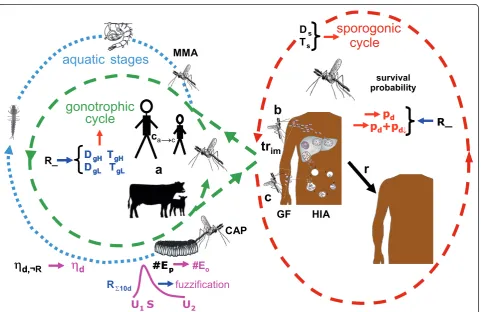
Hoshen and Morse [10] introduced a weather-driven mathematical biological model of malaria parasite dynamics, known as the Liverpool Malaria Model
(LMM; see Figure 1 for an illustrative outline of the newly developed LMM version). The LMM comprises weather-dependent within-vector stages as well as weather-independent within-host stages. On a daily basis, the size and behaviour of the total mosquito population and malaria prevalence within human hosts are simulated. The LMM entails the combination of many separate sub-models, each with its own parame-terization (see Table 1). The LMM can be used for the understanding of the process of malaria transmission, for mapping purposes, the seasonal forecasting of malaria [11,12], as well as the assessment of the impact of climate change on the disease [13].
sporogonic
cycle
survival probability
gonotrophic
cycle
aquatic stages
a
MMA
η
d,¬Rη
dη
d,¬η
dfuzzification
RΣ10d
#Ep #Eo
#Ep R_ DgH TgH
DgL TgL DgH TgH DgL TgL DgH TgH DgL TgL
CAP
c
b
tr
imGF HIA
r
Ds Ts
pd
pd+pd R_
pd
pd+pd↓
U1 S U2
[image:2.595.59.541.380.692.2]ca→c
A prerequisite for realistic simulations using malaria models is an optimal set of parameter settings. At the present time, numerous malaria models, including the LMM, are partly based on fairly qualitative assumptions. An optimal set of parameter settings has often not been explored and the models are usually not extensively vali-dated against entomological and parasitological field observations. In the case of the LMM, biological pro-cesses were handled somewhat heuristically [10]. The present study aimed to define an optimal parameter set-ting based on the literature and an improved mathema-tical formulation of the LMM (this paper), as well as an extensive validation and calibration of the LMM against field studies using quality checked meteorological data
as input (second paper [14]). According to Hoshen and Morse [10], the application of the LMM is limited to epidemic malaria areas, as the inclusion of immunity was not part of the model structure. However, it will be shown that the LMM can also be used for endemic malaria areas, where large parts of the population exhi-bit immunity to infection and disease. The present study illustrates that the refined version of the LMM simulates realistic transmission rates for epidemic as well as ende-mic malaria areas.
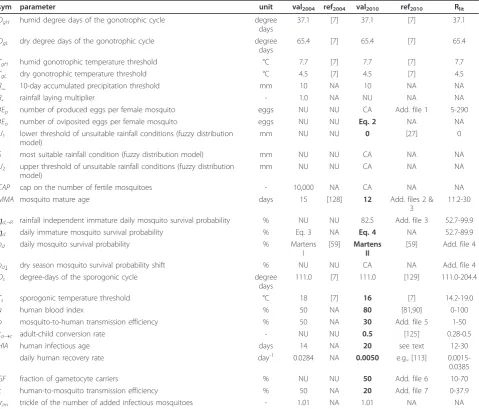
[image:3.595.59.539.100.509.2]The present study was conducted under the umbrella of the IMPETUS project (Integrated Approach to the Efficient Management of Scarce Water Resources in West Africa) [15] and is probably one of the most comprehensive Table 1 LMM parameters and mathematical formulations
sym parameter unit val2004 ref2004 val2010 ref2010 Rlit
DgH humid degree days of the gonotrophic cycle degree
days
37.1 [7] 37.1 [7] 37.1
DgL dry degree days of the gonotrophic cycle degree
days
65.4 [7] 65.4 [7] 65.4
TgH humid gonotrophic temperature threshold °C 7.7 [7] 7.7 [7] 7.7
TgL dry gonotrophic temperature threshold °C 4.5 [7] 4.5 [7] 4.5
R_ 10-day accumulated precipitation threshold mm 10 NA 10 NA NA
R• rainfall laying multiplier - 1.0 NA NU NA NA
#Ep number of produced eggs per female mosquito eggs NU NU CA Add. file 1 5-290
#Eo number of oviposited eggs per female mosquito eggs NU NU Eq. 2 NA NA
U1 lower threshold of unsuitable rainfall conditions (fuzzy distribution
model)
mm NU NU 0 [27] 0
S most suitable rainfall condition (fuzzy distribution model) mm NU NU CA NA NA
U2 upper threshold of unsuitable rainfall conditions (fuzzy distribution
model)
mm NU NU CA NA NA
CAP cap on the number of fertile mosquitoes - 10,000 NA CA NA NA
MMA mosquito mature age days 15 [128] 12 Add. files 2 &
3
11.2-30
hd,¬R rainfall independent immature daily mosquito survival probability % NU NU 82.5 Add. file 3 52.7-99.9
hd daily immature mosquito survival probability % Eq. 3 NA Eq. 4 NA 52.7-89.9
pd daily mosquito survival probability % Martens
I
[59] Martens II
[59] Add. file 4
pd↓ dry season mosquito survival probability shift % NU NU CA NA Add. file 4
Ds degree-days of the sporogonic cycle degree
days
111.0 [7] 111.0 [129] 111.0-204.4
Ts sporogonic temperature threshold °C 18 [7] 16 [7] 14.2-19.0
a human blood index % 50 NA 80 [81,90] 0-100
b mosquito-to-human transmission efficiency % 50 NA 30 Add. file 5 1-50
ca®c adult-child conversion rate - NU NU 0.5 [125] 0.28-0.5
HIA human infectious age days 14 NA 20 see text 12-30
r daily human recovery rate day-1 0.0284 NA 0.0050 e.g., [113]
0.0015-0.0385
GF fraction of gametocyte carriers % NU NU 50 Add. file 6 10-70
c human-to-mosquito transmission efficiency % 50 NA 20 Add. file 7 0-37.9
trim trickle of the number of added infectious mosquitoes - 1.01 NA 1.01 NA NA
LMM model parameters and mathematical formulations with regard to their original [10] and new settings. Columns: sym: symbol of the model parameter; parameter: name of the parameter; unit: unit; val2004: parameter value or mathematical formulation of the LMM2004; ref2004: LMM2004reference; val2010: parameter
value or mathematical formulation of the LMM2010; ref2010: LMM2010reference; Rlit: literature values. Abbreviations: NU: not used; NA: not available; CA: will be
studies to date in terms of gathering knowledge from the literature. Due to the extensiveness of the study, it is split into two parts. In the first part of this study (this paper), changes of the mathematical formulation, which were introduced to better simulate known physical relation-ships, are described. Further, in this paper the LMM para-meter settings are reassessed by means of an extensive literature survey. In the second part [14], meteorological data and malaria observations from West Africa are used for the final calibration of model parameters that lack data from the literature. It will be demonstrated that the cali-bration by means of field data, results in realistic simula-tions of disease transmission.
Methods
Literature review of entomological and parasitological malaria variables
In terms of malaria modelling, entomological and para-sitological data are of particular interest since malaria models have to undergo some form of validation proce-dure. Information regarding different malaria variables was required for the refinement of the LMM parameter settings. Numerous published malaria observations were extracted from the literature such as from review arti-cles. Data were gathered for the gametocyte prevalence, which is the percentage of humans with gametocytes in their blood. Articles were reviewed in terms of the mos-quito survival probability. Horizontal (controlled condi-tions) and vertical (field condicondi-tions) life tables from various studies furnished data for the daily survival probability of aquatic stages of mosquitoes. Further-more, data were provided by the literature observing the gonotrophic cycle, the number of eggs per female mos-quito, the duration of the immature mosquito stages, the duration until asexual and sexual parasites appear in the blood circulation, and the preference towards humans by Anopheles females. In addition, values for the transmission efficiencies of the malaria parasite between the human and mosquito hosts were searched for in the literature.
Changes of the set of parameter settings
The LMM consists of a number of parameters that have to be set for the simulation of the malaria transmission cycle. In the first part of this study, the parameter set-tings and mathematical formulation of the LMM is reviewed and refined according to the gathered litera-ture data. Sub-modules of the LMM are modified in order to handle specific model problems. For example, in the current version of the model, too many infective mosquito bites are generated in humid areas such as the equatorial tropics (see Figure Six in [14]). In order to refine the model parameter settings and mathematical formulations, the following strategy was applied: (i)
Model parameters lacking numerous literature refer-ences such as those related to the gonotrophic or sporo-gonic cycle were not changed. (ii) Parameters exhibiting various values in the literature were reassessed if possi-ble (bold values and formulations in Tapossi-ble 1). As a result of an extensive literature survey, entomological and parasitological malaria data were gathered. (iii) In the second part of this study [14], uncertain model para-meters and those parapara-meters that lack literature refer-ences are calibrated.
The strategy was to set as many parameters as possi-ble, in order to simplify the final calibration of the model by means of entomological and parasitological observations from West Africa. The selected procedure significantly reduces the degrees of freedom of the para-meter space, and the literature survey ensures a refined setting of individual model parameters.
LMM simulations reveal that various model para-meters exert the same effects on the model behaviour [13]. In terms of malaria transmission, for example, the
human blood index(a) can be compensated by a lower value of thenumber of produced eggs per female mos-quito (#Ep). For this reason, the final calibration (see [14]) will compensate some uncertain assessments of predefined model parameters.
Changes of LMM modules
The simulation of some key processes is changed in the new LMM version of 2010 (henceforth called LMM2010) to achieve a higher biological and physical accuracy. For example, the process of oviposition, the immature survival probability, as well as the mosquito survival schemes are reviewed. In the original LMM version of 2004 (henceforth called LMM2004), some detailed aspects of parasitological processes as well as age-dependencies of the malaria disease in humans are not included. Some of these aspects are newly intro-duced in the model.
Results
The LMM simulates the spread of malaria at a daily time resolution, using daily mean temperature(T) and
10-day accumulated precipitation(RΣ10d). For a thor-ough mathematical formulation of the LMM2004version the reader is referred to Hoshen and Morse [10]. In this paper, the mathematical formulations of important pro-cesses are refined, and parameters of the LMM are reviewed and changed if necessary.
Review of the LMM set of parameter settings and mathematical formulation
Oviposition
transmission in the human population [8,16-18]. Ovipo-sitioning is dependent on open water bodies that are mostly created by precipitation events. In the LMM2004 version, the number of laid eggs is roughly assumed to be proportional to both the number of ovipositing mos-quitoes and to the 10-day accumulated rainfall (RΣ10d). The constant of proportionality is the so-called rainfall laying multiplier (R•), which couples RΣ10d with the number of ovipositioning female mosquitoes.
Observations show that thenumber of produced eggs per female mosquito (#Ep; i.e. the number of eggs/ mature oocytes that are found by dissection and/or the oviposition of females) depends on the body size of female mosquitoes [19] as well as on the age of the females [20]. As shown (see Additional file 1) #Epranges between 5 and 290 eggs [19-21]. For this reason, the LMM2010version takes into account a realistic number of eggs perAnophelesfemale (i.e. accounted by #Epand is determined in the second part of this study [14]). However, due to environmental conditions, not all pro-duced eggs are (successfully) oviposited [22,23].
In the LMM2010, in terms of the deposition of eggs as well as the immature survival a fuzzy logic approach is used: The availability of suitable mosquito habitats is not a simple linear function of rainfall [24]. Certain rainfall regimes will be more suitable, and probably no further breeding sites are provided with increasing rainfall amounts. Various studies have noted that breeding places are washed out by strong rainfall events [24-26]. In fact, rainfall significantly affects lar-vae by flushing them out of their aquatic habitat and killing them [23]. For these reasons, the LMM2010uses a simple fuzzy distribution model comparable to Craig
et al. [27], which applies RΣ10d as input. The general concept is the following: (i) none or a small amount of eggs are oviposited during dry conditions; (ii) more moist conditions lead to a higher proportion of depos-ited eggs; and (iii) breeding places are washed out by excessive rainfall. The fuzzy logic approach, therefore, differentiates between dry unsuitable conditions
(thresholdU1), a most suitable condition(S), and again
unsuitable conditions due to very high rainfall (thresh-oldU2). Obviously,U1 is set to zero since female mos-quitoes are not able to produce progeny without water supply. This fuzzy distribution model might reflect a more physically correct relationship of the egg laying process than the construction with R• used in the
LMM2004.
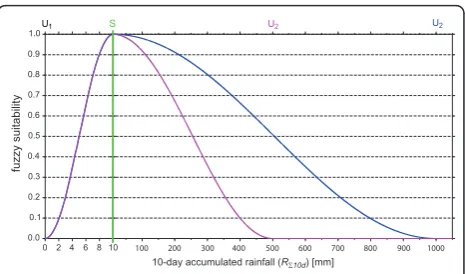
The fuzzy distribution model computes fractions between zero (conditions unsuitable, U1 and U2) and one (condition most suitable,S). The fuzzy suitability(f) of RΣ10d is computed by means of a sigmoidal fuzzy membership curve (see also Figure 2):
f R
R U
S U U R S
R d d d d 10
2 10 1
1 1 10 2 10 1 2 cos cos , if S S
U2 S 2 S R10d U2
0 , , if else (1)
The final number of oviposited eggs per female mos-quito (#Eo), which forms the basis of the modelled immature mosquito population, is simply determined by the multiplication of the #Epwith the respective value of the fuzzy function (Eq. 1), that is:
#Eo#Epf R
10d
(2)Due to the protective effect of houses or the usage of mosquito nets, only a limited number of mosquitoes are able to come into contact with humans. Humans, there-fore, can only be exposed to a certain number of biting mosquitoes. Environmental conditions also have an impact on the growth of the mosquito population. Due to the limited flight range of mosquitoes of less than seven kilometres [28] only a limited number of breeding sites are available forAnopheles females. Provided that there are a large number of fertile mosquitoes, the larval densities will increase under such circumstances and will hence produce higher larval mortalities [29-32]. Takkenet al.[19] showed that high larval densities lead to a higher mortality and a slower gonotrophic develop-ment of adult mosquitoes due to reduced body sizes and, therefore, small nutritional resources.
0.0 0.1 0.2 0.3 0.4 0.5 0.6 0.7 0.8 0.9 1.0 fuzzy suitability
0 2 4 6 8 10 100 200 300 400 500 600 700 800 900 1000
10-day accumulated rainfall (RΣ10d) [mm]
[image:5.595.306.539.87.224.2]U1 S U2 U2
Figure 2 Fuzzy distribution model. Illustration of the fuzzy function with regard to the influence of the 10-day accumulated rainfall (RΣ10d) on the number of oviposited eggs per female
mosquito (#Eo) as well as the daily immature mosquito survival
probability (hd). The green vertical line at 10 mm (=S) depicts the
most suitable rainfall conditions and separates different scales of the abscissa. Pink and blue lines depict two different settings of the fuzzy distribution model. According to these adjustments rainfall condition are unsuitable forRΣ10dvalues of 0 mm (=U1) and above
All the environmental and physical causes, outlined above, are combined in another model parameter limit-ing the number of fertile mosquitoes. Thecap on the number of fertile mosquitoes(CAP) simply restricts the size of the mosquito population to a certain level. With-out the application ofCAP the growth of the mosquito population is often unrealistically large. Note that the size of the number of fertile mosquitoes is also limited in the LMM2004, where CAP has been set to 10,000. However,CAPwill be calibrated to a much lower value in the LMM2010in the second part of this study [14].
Mosquito Mature Age (MMA)
Immature mosquitoes undergo the egg, larval, and pupal stages until they mature to adult mosquitoes. In the LMM2004, the Mosquito Mature Age (MMA; i.e. the time between the egg stage and adult emergence) is fixed at 15 days. However, field studies in Kenya and Mali showed (see Additional file 2) that on average the time between oviposition and eclosion is about 12 days [33-37]. On this account MMA is reduced from 15 to 12 days in the LMM2010.
Survival of immature mosquitoes
The life cycle of mosquitoes comprises the egg, larval, pupal, and adult stages. The egg, larval, and pupal stages are entirely aquatic and, therefore, mostly depend on weather conditions. Besides climatic conditions, compe-tition due to overcrowding, water quality, food supply, cannibalism, predators, parasites, as well as pathogens are limiting factors for aquatic stages of mosquitoes [23,32,34,38,39]. In the LMM2004, the daily survival
probability of immature mosquitoes(hd) is only subject toRΣ10dand is calculated as follows:
d d
d
R R
1 2
10
10
(3)
Therefore, also under small precipitation amounts, a large fraction of larvae outlives the maturation period of 15 days (i.e. the mature age of mosquitoes of the LMM2004). For example, 27.1 and 49.8% of the larvae become adults in the model at a constantRΣ10dvalue of 10 and 20 mm, respectively. However, age distributions from so-called vertical life tables from field studies (see Additional file 2) reveal that a much smaller fraction (2-15%) of deposited eggs emerge to adults [33-35,37,40,41]. By contrast, most laboratory studies prove by means of so-called horizontal life tables (see Additional file 3) that under controlled conditions more than 90% of eggs, lar-vae, and pupae survive one day [29-32,36]. The higher laboratory survival is because under controlled condi-tions various natural factors are eliminated.
In the LMM2010, the calculation of the survival of immature mosquitoes is separated into two parts. In a
first step, it is assumed that survival is independent of hydrological conditions. Therainfall-independent daily survival probability of immature mosquitoes(hd,¬R) is set to 82.5%. This is due to the fact that in general less than 10% of the immature mosquitoes reach the adult stage under field conditions (see Additional file 2) and because the MMA is fixed to twelve days (0.82512 ≈ 0.099). In a second step, the dependence on the hydro-logical stage is included. For simplicity, the same para-meters are used as for the fuzzy logic approach of the oviposition (U1,S, and U2; Table 1). The survival prob-ability of immature mosquitoes is realized by the multi-plication ofhd,¬Rwith the fuzzy value:
d d,Rf R
10d
(4)As a consequence, in the LMM2010thehdcan reach at maximum 82.5% and no more than 10% of the oviposited eggs emerge to adults (i.e. about 5.4% and 0.7% for f= 0.95 andf= 0.8, respectively; f: value of the fuzzy distri-bution model). This modelling approach again reflects a more physically correct relationship than the originalhd equation (see Eq. 3). Note that Pascualet al.[9] used a comparable approach in their model. Larval mortality was simulated as a function of accumulated days with no rain to represent desiccation of breeding sites. What is not considered is the fact that mosquito larvae can bene-fit from drought conditions such as when streams dry up due the occurrence of numerous pools [42-44]. Also the existence of permanent breeding sites provided by, for example, large ponds, lakes, and rivers is neglected in both versions of the model.
Survival probability of adult mosquitoes (pd)
study of Kirby and Lindsay [54] clearly showed that extremely high temperatures above 40°C are often fatal to mosquitoes. Note that for simplicity the LMM uses an exponential model of mortality. Most observed pd values range between about 80 and 95% (see Addi-tional file 4).
[image:7.595.59.537.90.331.2]Various daily mosquito survival probability schemes (pd-scheme) were developed with regard to malaria modelling. In the LMM, four different pd-schemes are implemented, these are: the so-called Lindsay-Birley, the Martens I, the Martens II, and theBayoh scheme
(Figure 3). Initially, the LMM was set by the Lindsay-Birley scheme [10,55]. However, it is not clear whether vector survival per gonotrophic cycle is constant [10]. This pd-scheme is furthermore unrealistic at very high temperatures. Experiments performed by Kirby and Lindsay [54] showed that 50% ofAnopheles arabiensis
andAnopheles gambiae s.s. are killed at 40°C within at least two hours. In contrast, above 40°C the Lindsay-Birley scheme shows unrealistic high survivorships (cf. Figure 3).
The literature [27,56] refers to studies published by Martens [57-59]. Martens [59] states (see also [57,58]): Relying on data reported by Boyd [50], Hors-fall [60], and Clements and Paterson [46], a daily sur-vival probability of 0.82, 0.90, and 0.04 at temperatures of 9, 20, and 40°C is assumed, respec-tively, expressed as:
p
T T
d
exp(
. . . ).
1
4 4 1 31 0 03 2 (5)
The so-called Martens I scheme was obviously gener-ated as a polynomial connecting the quoted three data points in theT-pd-diagram (Figure 3) and is based on the following equation:
pd 0 0016. T20 054. T 0 45. (6)
The formula (Eq. 5) provided by Martens [59] is not used in the LMM2004. However, in the LMM2010 this formula is introduced and forms the so-called Martens II scheme. The main difference between the Martens I and II schemes is the earlier and smoother decrease of
pdat temperatures above 25°C in the Martens I scheme. Taking into account the uncertainty of the so far intro-ducedpd-schemes, further data are needed. Bayoh [61] observed the survival and mortality rates ofAnopheles gambiae s.s. in environmental chambers at combinations of temperatures from 0-45°C at 5°C intervals and relative humidities of 40%, 60%, 80%, and 100%. Using the data from these experiments and assuming an exponential model of mortality it is possible to derivepdvalues. The identified probabilities did not vary considerably with regard to different humidities. For this reason, the prob-abilities were averaged at each temperature. Finally, the average was used to define a polynomial regarding
Lindsay-Birley (dry)
Lindsay-Birley (humid)
Martens II
Martens I
daily mean temperature (T) [°C]
100
80
40
60
20
0
5
10
15
20
25
30
35
40
45
daily survival probability (p
d
) [%]
Bayoh
Figure 3Mosquito survival schemes. Illustration of different schemes regarding the daily mosquito survival (pd) against the daily mean
temperature (T): the Lindsay-Birley (humid (dry) conditions in dashed purple (orange)), the Martens I (red line; derived from [57-59]), the Martens II (green line; given by [27] and [59]), and the Bayoh scheme (blue line; derived from [61]). Crosses (+) denotepdvalues with regard to different
Anopheles gambiae s.s. survivorship in the laboratory, the so-called Bayoh scheme (Figure 3):
p T T T
T
d
2 123 10 1 951 10 6 394 10 8 217 10 1 865 1
7 5 5 4 4 3
3 2
. . .
. . 002T7 238 10. 1 (7)
As previously discussed, vector survival is higher in captivity than in the wild and hence pd is generally higher in the Bayoh scheme than in both Martens schemes. It is interesting to note that the Bayoh scheme reveals only a slight decrease ofpdbetween 25 and 35° C. For this reason, the Bayoh scheme agrees better with the Martens II than with the Martens I scheme. On account of these facts the Martens II scheme is utilized for the LMM2010version.
Various studies point out the importance of the atmo-spheric humidity on the longevity of adult vectors [58,62-66]. Relative humidities above 60% seem to be preferred by most vector species. However, it is noted that the crucial factor for the physiology of Anopheles
females might be the absolute saturation deficit rather than the relative humidity [67]. The usual dryness of the atmosphere in arid or semi-arid areas such as the Sahel militates against the longevity of mosquitoes and thus reducing malaria transmission [68]. In Niger, for exam-ple,Anophelespopulations seem to drop steeply around October, when shifts in the prevailing winds drastically reduce humidity. Favourable microclimates become gra-dually scarcer as the Harmattan conditions establish and the dry season progresses (A. Kiszewsky, personal com-munication, 2006). In El Salvador, Weidhaas et al.[40] calculated lower adult survival rates forAnopheles albi-manus during the dry than during the rainy season. Daily survival was 65-70% and 73-91%, respectively. However, the authors note that the occurrence of breed-ing outside the study area and the immigration of mos-quitoes might be in part responsible for the higher calculated rainy season survival. On account of the pos-sible influence of humidity on vector survival a shift of the dry season mosquito survival probability (pd↓) is introduced in the LMM2010version and is set in the sec-ond part of this study [14]. To simplify matters, pd↓ is
applied when the 10-day rainfall amount(RΣ10d) is lower than the 10-day accumulated precipitation threshold
(R_) that distinguishes between dry and humid weather conditions [10].
Sporogonic cycle
The sporogonic cycle or extrinsic incubation denotes the development of the malaria parasite within the mosquito vector. The development of sporozoites is temperature dependent [7,69]. There is an uncertainty about the value of thesporogonic temperature threshold (Ts; note thatTsrefers to the daily average temperature). Lindsay and Birley [63] concluded that the parasite development
ceases below temperatures between 14.5 and 16°C for
Plasmodium vivax and between 16 and 19°C for Plas-modium falciparum. It is not surprising that theTsdata given in the literature are inconsistent. Various publica-tions agree that the Tsis located within a certain range [57,58,62,63,70]. On the other hand a temperature threshold of 18°C is referred to in various publications [1,10,71-73], whereas others quote a value of 16°C or even lower [27,43,56,59,65,74-81].
The setting of the threshold is particularly important when malaria is modelled in areas with temperatures in the range of Ts(e.g., in highlands of East Africa). For temperatures well aboveTsthe length of the sporogonic cycle is much less dependent upon the setting of the lower threshold temperature. Regarding the sporogonic cycle the LMM2004was set at a threshold of 18°C [10]. However, modelled temperatures or data from weather stations are unlikely to record conditions in the micro-habitats where vectors spend most of their time [53,82]. For example, indoor temperatures in the Usambara mountains (northeast Tanzania) have found to be 2.6°C higher than outdoor air temperatures [83,84]. By resting in more climatically stable and warmer houses, vectors may avoid cold temperatures and thus the restrictions concerning the progress of the parasite development [64,70,85]. Therefore, the effect of altitude might be partly compensated when mosquitoes stay in heated houses [86]. For this reason, the use of 16°C as a tem-perature threshold for parasite development is used for the LMM2010.
Human blood index (a)
The rate of malaria transmission directly depends on the degree of the host-vector-pathogen contact.Anopheles
mosquitoes with a high preference for human blood are considered important vectors of malaria [87]. This fact is expressed in the so-calledhuman blood index (a) that is the proportion of blood meals of a mosquito popula-tion obtained from humans rather than animals, for example, cattle.
The assessment of ais a difficult task as it is depen-dent on the feeding preference of each species, the accessibility of different potential hosts, as well as on the mosquito sampling technique. The calculation ofa
is most often performed by captures of indoor resting mosquitoes (endophilic females) excluding exophilic mosquitoes feeding on humans [88]. By contrast,a is best estimated by applying the unweighted mean of a part-sample collected from human dwellings and one from other types of resting-place [89]. Kiszewski et al.
mean value ofaofAnopheles arabiensisall the median and mean values of these vectors are consistently higher than 80% for these three vectors. For this reason, the LMM2004 value ofa of 50% seems to be an underesti-mation. Due to the fact that the endophily of major African vectors probably was overestimated [88,91] the value for LMM2010is approximated by 80%.
Mosquito-to-human transmission efficiency (b)
Not every biting infectious mosquito is able to pass malaria infection by injecting parasites into humans. Unfortunately, themosquito-to-human transmission effi-ciency(b; i.e. the proportion of sporozoite-positive mos-quito bites infecting susceptible people; see Additional file 5) is a largely undefined parameter [92]. For this rea-son, this factor is commonly ignored in most malaria models [93]. However, the proportion of actually infec-tiveAnophelinesis a crucial parameter in the epidemiol-ogy and simulation of malaria.
One infectious bite is generally thought to infect about half of immunologically-naive people and this level seems to decrease with the level of endemicity and is age dependent [94]. This transmission efficiency is a function of the exposure history, reflecting effects of immunity [95]. The study of Rickmanet al.[96] showed that three (two) out of five non-immune subjects devel-oped malaria parasitaemia after the exposure to one (two) infected mosquito(es) (that meansb = 33%). In addition, a total of 44.1% of 68 experimentally infected
Anopheles gambiaeand 49.2% of 63 infectiousAnopheles stephensitransmitted sporozoites in vitro into a sucrose solution [97]. By contrast, surveys of infants revealed fairly lowbvalues. For example, Pull and Grab [98] esti-mated the value of b as between 1.5 and 2.6%. Indeed, such studies generally ignore superinfection and the fact that adults are bitten more often than children or infants [99]. Superinfection also explains the strong var-iation of b in children in an urban area of Senegal, where age-correctedHuman Biting Rate (HBR) values were used for the analysis of b [91]. The low observed
Entomological Inoculation Rate(EIR) values in March led to comparatively high computedbvalues of about 46%. By contrast, the stronger transmission in June resulted in the calculation ofbof only about 8% [91]. In this context it should be noted that there is no reason for the seasonal variation ofb. In conclusion, the value ofbseems to be generally lower than 50% - the value of the LMM2004 -for most African populations. For this reason, b is approximated as 30% in the LMM2010version.
Human Infectious Age (HIA)
The transmission of the malaria parasite from humans to mosquitoes is made possible by male and female cytes. The duration after infection until mature gameto-cytes appear in the blood is termed here as theHuman Infectious Age(HIA). The duration in days after that a
human becomes infectious starting from the mosquito bite is longer than the so-calledprepatent period(np; i.e. the time needed for the detection of asexual parasites in the blood after the infection of humans). This is due to thetime needed for gametocytogenesis(nmf; i.e. the time needed for the production of male and female gameto-cytes), which is also called sequestration time, as well as the finalmaturation period of gametocytes(nm). There-fore,HIAis computed viaHIA=np+nmf+nm.
Asexual parasites are usually detected by blood slides, which are examined under a microscope. According to microscope detection np lasts one week or slightly longer (e.g., [100]: eight days). Schneider et al. [101] compared the microscope with the QuanTitative-Nucleic Acid Sequence-Based Amplification (QT-NASBA) detection method. They found that the micro-scope detection is delayed by one to two days (np: 8.3 versus 6.0-7.0 days). This is in agreement with the find-ings of Murphy et al.[102], who cultured asexual para-sites from blood taken 6.5-7.0 days after exposure. By contrast, Rickman et al. [96] found a prolonged np of 14.0-16.5 days from patients without antimalarial immu-nity. Moreover, a study comparing the Panama, McLen-don, and Santee Cooper strain of Plasmodium falciparumrevealed meannpvalues of 10.3, 13.0 and 9.8 days, respectively [103].
The duration for gametocytogenesis (nmf) is derived in vitro or from the delay in vivo between the onset of symptoms (e.g., fever) or the detection of asexual para-sites and the detection of male and female gametocytes [104]. The values reported in the literature generally range between 7 and 15 days ([105]: about ten days for non-immune subjects; [106]: about twelve days for immune adults; [107]: nine to twelve days; [108]: 7-15 days). Diebner et al.[109] and Eichneret al.[104] more recently estimated the sequestration time from fitting a model to malaria therapy data. According to their stu-dies the time needed for the transition of asexual blood stages of Plasmodium falciparum to mature gameto-cytes amounts to four to twelve days (mean 7.4 days). It is also shown that sequestration time depends on pre-sence of the parasite strain (geometric mean: 4.9 days for Santee Cooper strain (South Carolina, 1946); 6.2 days for El Limon strain (Panama, 1948); 8.7 days for McLendon strain (South Carolina, 1940)). Eichneret al.
In summary, due to the length ofnp(about six to ten days),nmf(four to twelve days), andnm(one to four days)
HIAlasts altogether about 11-26 days. For this reason,
HIAis approximated as 20 days in the LMM2010, which is five days longer than the LMM2004value of 15 days (cf. Table 1).
Recovery rate (r)
A lowrecovery rate (r) of malaria infection is a crucial factor for transmission of malaria. Recovery is affected by the genetic multiplicity of the malaria parasite and is a function of the exposure history, reflecting effects of immunity. Parasite clearance is, therefore, closely related to the age of an individual as well as to the transmission intensity. The former fact was found in data from longi-tudinal studies from 16 villages in the West African savannah [112]. Daily recovery rates were 0.0045 in infants (< 1 year), fell to a minimum of 0.0016 in young children (1-4 years), and increased again to 0.0194 in the oldest adult age group (≥43 years). The dependence ofr on the transmission intensity was found at 30 sites along coastal Kenya. Guet al.[95] showed that the daily parasite clearance was lower than 0.005 day-1at one or less infectious bites per year and higher at intensities of ten or more.
The mathematical formulation of the LMM does not account for an individual immune status. As a result,r
is independent from transmission intensity or age of an individual in the model, only one single setting of the recovery rate is possible. For this reason, the applied clearance rate represents an age or transmission inten-sity average. Due to the fact that the LMM2004does not include superinfection, parasite clearance is related to the elimination of single parasite clones [10]. The recov-ery rate was originally set to 0.0284 day-1 enabling about 90% of the infected population to clear their infection after 80 days ((1 -r)80≈0.10). However, estimates from simple infections of Plasmodium falciparuminduced in immunologically naive patients for malaria therapy often revealed longer persistence. Patterns of recrudescence survived partly longer than 150 days [100]. In order to partly take into account superinfection, the parasite clearance is significantly decreased in the LMM2010and is set to 0.005 day-1. In fact, the value of 0.005 day-1was previously assessed by Macdonald and Gockel [113] and was applied in various malaria models [95,114]. Note that the reduction of the r value is essential when the LMM is extended to endemic malaria areas.
Gametocyte prevalence (sPR)
The presence of male and female gametocytes in the blood of a human host, the so-called sexual Parasite Ratio(sPR; i.e. gametocytaemia), is a necessary condition for malaria transmission. Gametocytaemia is generally lower than the parasite ratio (PR). Only one annual mean sPR value was found to be higher than 40%,
which has been detected by theReverse Transcriptase-Polymerase Chain Reaction (RT-PCR) (see Additional file 6). In most studies using microscopy less than 15% of the population were detected as gametocyte carriers. In contrast, the majority of studies revealed asexual parasite ratios above 30%.
There is a problem of enumerating gametocytes pat-terns. Gametocytes are prone to be missed by standard microscopy examination [111,115]. For example, RT-PCR revealed in comparison with microscopy a 40% higher sPR[116]. Ouedraogo et al.[117] recently found that the QT-NASBA technique provided about 3.3 fold higher estimates of sPRthan microscopy. This clearly demonstrates that studies based on the detection of gametocytes by microscopy are rather insensitive and inaccurate in the quantification of gametocytes in blood smears.
Sexual and asexual parasite ratios are generally higher in children than in adults. That is due to the fact that adults better control asexual and sexual parasite densi-ties, and are, therefore, more likely to carry gametocytes at the borderline level of detection [115]. Young chil-dren are unlikely to be able to control malaria infec-tions, and likely more parasites turn into gametocytes. In Kenya, Bousemaet al.[118] found a decrease in the mean duration of gametocyte carriage with increasing age for asymptomatic children.
The fact that not all infected humans actually carry male and female gametocytes is accounted for in the LMM2010 version. Note that this detailed aspect is not included in the LMM2004. Afraction of gametocyte carriers(GF) is introduced into the model. This fraction stands for the proportion of the population that: (i) is infected by the malaria parasite; (ii) has already passed the human infec-tious age (HIA); and (iii) is exhibiting a sufficiently high density of gametocytes. These humans are, therefore, the infectors of the human population. Due to the problem of enumerating gametocytes patterns, the GF is set to the comparatively high value of 0.5 in the LMM2010.
Human-to-mosquito transmission efficiency (c)
Not all Anopheles females feeding on gametocyte-infected hosts get gametocyte-infected. Most malaria transmission models have not used direct field estimates of the
human-to-mosquito transmission efficiency (c; i.e. the proportion of mosquito bites on infectious humans, which infect susceptible mosquitoes) that is usually termed parametercin the literature [119].
The infectiousness of mosquitoes can be determined by using blood from gametocyte carriers. It is either measured by direct skin feeding or by membrane feed-ing [121]. However, the best method for estimatfeed-ing infectiousness of a human population is to feed labora-tory-reared Anopheles on a representative population sample without regard to the presence of gametocytes [122]. Obviously, not allAnophelinesfeeding on gameto-cyte-infected hosts become infected. Human-to-mos-quito transmission efficiencies are generally lower than 40%, and for the majority of trials infectiousness is higher than 20% (see Additional file 7). Muirhead-Thomson [123] observed that the ‘best infectors’ infected only about 30% of mosquitoes feeding on them. On the other hand, cryptic gametocytaemia can result in mosquito infections [124]. In the LMM2010 version,cis approximated as 20% in contrast to 50% of the LMM2004, which is located amidst the observed mea-surements. This means, in combination with the value of GF, that a fraction of 10% of females feeding on gametocyte-infected hosts becomes infected with the parasite in the model.
Issues regarding the age-dependence of malaria
Entomological and parasitological studies clearly identi-fied the age-dependence of malaria in areas of year-round and seasonal malaria transmission. The increase of functional immunity from child- to adulthood leads to an age-dependence of various malaria parameters (these are:PR,sPR, r, b, as well asc). The values differ considerably between children than in adults.
Some individuals are more likely to be bitten than others. Port et al. [99] found that the proportions of feeds upon an individual human are associated with the body surface of the host. Their results from The Gambia revealed a child-to-adult conversion factor of 3.57. Such a heterogeneous biting pattern was also found in a vil-lage close to Brazzaville (Congo). Number of bites increased regularly in infants (age: <2 years), children (2-10 years), adolescents (10-20 years), and adults, in proportions of 1:1.93:2.53:3.00 [125] implying a child-to-adult conversion factor of 1.43. Note that averaged pro-portions of adolescents and adults were used (1.93·1.43
≈2.765 = 2 53 3 00
2
. . ).
The parameter settings in the present study refer to observations from children, since data values (e.g., that of PR) are mostly available for this population group. This in turn implies that the model output (e.g., PR,
HBR, EIR) is again related to that of children. Due to the lack of an age-dependence of the LMM it is assumed thatchildren between 2-10 years(groupC) and the rest of the population (groupR; these are infants, adolescents, and adults) equally contribute to the infec-tious reservoir of malaria. On that condition an isolated
simulation of the malaria transmission based on groupC,
groupR, or that of the whole population always results in the same infection level of the mosquito population and after age-adjustment also in the same HBRandEIR
values. The LMM simulation is, therefore, henceforth orientated ongroupC. For this reason, the host-vector contact is lowered in the LMM2010version by the
adult-child conversion rate (ca®c). Due to findings of Port et
al.[99] and Carnevale et al.[125]ca®cis approximated as 0.5, which means thatHBR andEIR values for chil-dren between 2-10 years are about two times lower than that for adults. This in turn implies that simulatedHBR
and EIR values must be doubled when they are com-pared to field observations.
Discussion
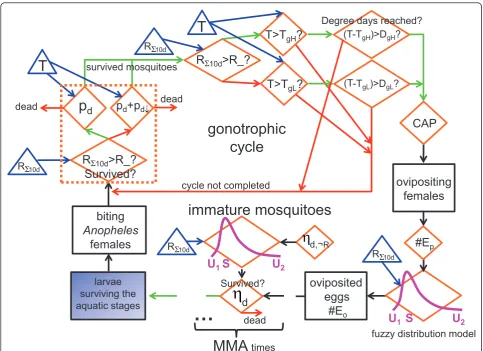
The aim of the first part of the present study was the development of a refined parameter setting and mathe-matical formulation of the LMM (cf. the various com-ponents of the LMM2010 outlined by flow charts in Figures 4 and 5). For this reason, key model para-meters as well as some modules of the original LMM were reviewed. It was found that the knowledge gath-ered by entomological and parasitological field research enabled the final setting of most model parameters. Various parameters were, therefore, reassessed by means of an extensive literature survey. The setting of numerous model parameters furthermore reduces the degrees of freedom of the model, which simplifies the final calibration of the model in the second part of this study [14]. In addition, important malaria processes such as the vector survival during aquatic stages were changed in the model to achieve a higher biological and physical accuracy (Figure 4).
Most model parameters were set based on data and knowledge currently available in the literature. However, various model parameters lack a precise setting due to variable observed values, which are probably a result of different environmental conditions. As in other malaria models (e.g, [8,18]), various model parameters were set by a consensus literature value and a parameter range is indicated for most parameters (see Table 1). Compar-able with previous studies (e.g., [5,18]), the remaining undetermined parameters will be calibrated by means of field observations [14]. As mentioned earlier, the final calibration (see [14]) will largely compensate potential inaccurate assessments of the predefined model para-meters. Some newly inserted (these are S, U2, #Ep, and
pd↓; see Table 1 for their explanation) and one old
One of the most important aspects of malaria trans-mission is the size of the mosquito population, which strongly depends upon breeding conditions. The rela-tionship between rainfall and larval breeding was treated in a very simple approach in the original version of the LMM. In the current model version, ovipositioning and immature mosquito survival is controlled by the fuzzy distribution model (Figure 4). As will be shown in the second part of this study [14] the fuzzy logic approach seems to be more realistic than the former linear rainfall relationship with regard to the oviposition. In addition, the survival through the aquatic stages was adjusted to the field conditions. In contrast to the LMM2004, the fuzzy distribution model ensures that only a reasonable fraction of oviposited eggs emerge to adults. Note that the fuzzy distribution model is based on qualitative arguments, however, the assumptions seem to be
reasonable. Unfortunately, the settings of the required model parameters are not available from the literature. This would require case studies under different rainfall conditions as such from Paaijmans et al. [23]. In the second part of this study, parameter values of the fuzzy distribution model will be calibrated [14].
There are further possible future extensions of the LMM. For instance, a necessity for an improvement of the LMM concerns the dependence of immature devel-opment on water temperatures [126]. This would require the incorporation of meteorological variables such as potential evaporation, cloud cover, or sunshine duration [8] as well as information on their relation to water temperatures. The presented adult mosquito sur-vival schemes are not fully satisfactory. Therefore, the incorporation of upcoming new information would be essential for future refinements of the LMM.
MMA
times…
Survived?
biting
Anopheles
females
oviposited
eggs
#E
oP
p
dR
10d>R_?
Survived?
T
p
d+p
ddead
survived mosquitoes
dead
(T-TgH)>DgH?
gonotrophic
cycle
T>T
gH?
T
Degree days reached?R
10d>R_?
T>T
gL?
-TgL)>DgL?cycle not completed
CAP
I
r
#E
povipositing
females
larvae surviving the aquatic stages
U
1S U
2U
1S U
2R10d d,¬R
dead
immature mosquitoes
fuzzy distribution model
η
d
η
Σ R
10d Σ RΣ10d
Σ
Σ
↓
RΣ10d
[image:12.595.56.540.87.438.2](T
Figure 4Flow chart of the simulation of the mosquito population. Flow chart of various components of the LMM version of 2010 regarding the simulation of the mosquito population. The gonotrophic cycle as well as the development of immature mosquitoes within the aquatic stages are illustrated. Individual states of immature and mature mosquitoes are indicated by black rectangles. The orange rhombi denote decisions within the model as well as implemented functions. Green and red arrows represent a positive and negative affirmation, respectively. The impact of the model drivers is indicated via blue triangles and blue arrows (T: daily mean temperature;RΣ10d: 10-day accumulated rainfall).
Ideally a more complete understanding of the complex ecology of malaria will require integration of research efforts across diverse areas [127]. The present formulation of the LMM actually misses various aspects of malaria. For example, the immune status of the human population as well as age-dependencies are neglected (cf. Figure 5). This would require the inclusion of the exposure history of individuals, which is not possible under the current mathematical formulation of the LMM. This issue of the LMM might be overcome by running the Garki model (see [5]) withEIRdata from the LMM provided that the LMM2010produces reasonableEIRvalues. The last fact
will be shown by the second part of this study [14]. The hybrid LMM-Garki model was utilised by Ermert [13] and enables the simulation of realistic transmission rates between humans and mosquitoes (via the LMM2010) and provides a reasonable pattern of malaria exposure within the human population (via the Garki model).
Conclusions
One of the most comprehensive studies to date in terms of gathering information from the malaria literature was undertaken for the development of a new version of an existing malaria model (Figures 4 and 5). An extensive
I
p
dPr
(T-Ts)>Ds?sporogonic
cycle
T>T
s?
R
10d>R_?
Survived?
T
R 10d
I I
a
GF
b
c
r
r
HIA
times…
tr
imT
p
d+p
ddead
Biting ?
Carrier of ?
recovered humans
biting mosquitoes survived mosquitoes
added infectious mosquitoes cycle not completed
Degree days reached?
? dead
dead
? ?
Survived?
? dead
infectious
mosquitoes
potentially
infectious
humans
larvae surviving the aquatic stages
Recovery
Transmitted humans
gametocytes Transmitted
Survived
uninfected
humans
infected
humans
infected
mosquitoes
Σ Σ
↓
[image:13.595.58.537.252.660.2]uninfected
mosquitoes
literature survey with regard to entomological and parasito-logical malaria variables (see the seven Additional files) provided valuable information for a refined setting of most of the model parameters. This approach limits the degrees of freedom of the parameter space of the model simplifying the final calibration of undetermined parameters. In addi-tion, the simulation of some key processes was changed in order to reflect a more physically correct relationship. For example, the oviposition as well as the survival of immature mosquitoes is now steered via a fuzzy distribution model. In the second part of this study [14], undetermined model parameters will be calibrated and the model simulations are validated by means of entomological and parasitological observations from West Africa.
Additional material
Additional file 1: Number of produced eggs perAnophelesfemale. Data with regard to the number of produced eggs perAnophelesfemale. Additional file 2: Data in terms of the development of immature mosquitoes from vertical life tables. Data in terms of the development immature mosquitoes taken from vertical life tables as derived under field conditions.
Additional file 3: Data regarding the development of immature mosquitoes from horizontal life tables. Data regarding the development of immature mosquitoes taken from horizontal life tables as derived under controlled conditions.
Additional file 4: Mosquito survival probabilities. Data with regard to the daily survival probability of adult mosquitoes (pd) as derived from
entomological field studies.
Additional file 5: Mosquito-to-human transmission efficiencies. Data regarding the mosquito-to-human transmission efficiency (b).
Additional file 6: Sexual parasite ratios. Data with regard to the sexual parasite ratio (sPR), that is the percentage of humans with gametocytes in their blood as well as the ratio between sexual and asexual parasite ratio (SAR), which is the proportion of malaria parasite positive humans that are gametocytaemic.
Additional file 7: Human-to-mosquito transmission efficiencies. Data with regard to the human-to-mosquito transmission efficiency (c), i.e. the proportion of mosquito bites on infectious humans which infect susceptible mosquitoes.
List of abbreviations
LMM: Liverpool Malaria Model; LMM2004:Liverpool Malaria Model version of
2004; LMM2010: Liverpool Malaria Model version of 2010; QT-NASBA:
QuanTitative-Nucleic Acid Sequence-Based Amplification; RT-PCR: Reverse Transcriptase-Polymerase Chain Reaction.List of symbols:EIR:
Entomological Inoculation Rate;F: fuzzy suitability;groupC: children between 2-10 years;groupR: rest of the population (excluding group C);HBR: Human Biting Rate;nm: maturation period of gametocytes;nmf: time needed for
gametocytogenesis;np: prepatent period;PR: Parasite Ratio;RΣ10d: 10-day
accumulated rainfall;sPR: sexual Parasite Ratio;T:daily mean temperature.
Acknowledgements
We are grateful to numerous people who kindly provided useful data, literature references, or special knowledge. These are: Dr. A. Bomblies from the College of Engineering and Mathematical Sciences(CEMS)/University of Vermont (Anopheles gambiae s.l. larvae and female photos; malaria literature), Dr. M. Craig from the Medical Research Council/Durban (pdliterature), Dr.
J.-B. Duchemin from the‘Centre de Recherche Médicale et Sanitaire (CERMES)’/ Niamey (construction of Figure 1), Dr. C. Drakeley from the London School
of Hygiene and Tropical Medicine (gametocytogenesis andc), Prof. Dr. M. Eichner from the Department of Medical Biometry/Tübingen (maturation of gametocytes), Dr. C. Favier from the‘Laboratoire d’Océanographie’et du Climat: Expérimentations et Approches Numériques (LOCEAN)’/Paris (pd
discussion), Dr. C. Guerra from the Malaria Atlas Project (PRinformation), Dr. A. Kiszewski form the Department of Immunology and Infectious Diseases/ Harvard University (pddata andpd↓discussion), Dr. S. Louvet from the
‘Centre de Recherches de Climatologie (CRC)’/Dijon (malaria literature), as well as Prof. Dr. R. Steffen and M. Funk-Baumann from the Institute of Social and Preventive Medicine/Zürich (references).
This study was part of the IMPETUS West Africa project and was supported by the Federal German Ministry of Education and Research (BMBF) under grant No. 01 LW 06001A in the GLOWA programme and by the Ministry of Innovation, Science, Research, and Technology (MIWFT) of the federal state of North Rhine-Westphalia under grant No. 313-21200200. The support by the EU project AMMA (African Monsoon Multidisciplinary Analysis; funded by the European Commission’s Sixth Framework Research Programme through project No. 004089) and the NERC (Natural Environment Research Council) AMMA is gratefully acknowledged by AEJ and APM. Based on a French initiative, AMMA was built by an international scientific group and was funded by a large number of agencies, especially from France, United Kingdom, United States, and Africa. Detailed information on scientific coordination and funding is available on the AMMA international website http://www.amma-international.org. Finally, we wish to thank one anonymous reviewer whose comments helped to greatly improve the manuscript.
Author details
1
Institute of Geophysics and Meteorology, University of Cologne, Cologne, Germany.2School of Environmental Sciences, University of Liverpool,
Liverpool, UK.
Authors’contributions
VE designed the study, undertook the literature review and proposed changes of the mathematical formulation of the LMM, as well as wrote the manuscript. AHF and APM contributed to the concept of the study. AHF supervised the PhD study of VE whose results formed the basis of the manuscript. APM was furthermore originally involved in the formulation of the LMM. AEJ contributed to the new design of LMM and provided the new model code. All authors read, suggested changes and approved the final manuscript.
Competing interests
The authors declare that they have no competing interests.
Received: 17 September 2010 Accepted: 11 February 2011 Published: 11 February 2011
References
1. Githeko AK, Lindsay SW, Confalonieri UE, Patz JA:Climate change and vector-borne diseases: a regional analysis.Bull World Health Org2000,
78:1136-1147.
2. Martens WJM, Jetten TH, Focks DA:Sensitivity of malaria, schistomiasis and dengue to global warming.Clim Change1997,35:145-156.
3. Patz JA, Strzepec K, Lele S, Hedden M, Green S, Noden B, Hay SI, Kalkstein L, Beier JC:Predicting key malaria transmission factors, biting and entomological inoculation rates, using modelled soil moisture in Kenja.
Trop Med Int Health1998,3:818-827.
4. Ross R:The prevention of malaria.2 edition. London, United Kingdom: John Murray; 1911.
5. Dietz K, Molineaux L, Thomas A:A malaria model tested in the African savannah.Bull World Health Org1974,50:347-357.
6. Chalvet-Monfray K, Sabatier P, Bicout DJ:Downscaling modeling of the aggressiveness of mosquitoes vectors of diseases.Ecol Model2007,204:540-546. 7. Detinova TS:Age-grouping methods in Diptera of medical importance with
special reference to some vectors of malaria. No. 47 in Monograph Series, WHO1962.
9. Pascual M, Ahumada JA, Chaves LF, Rodó X, Bouma M:Malaria resurgence in the East African highlands: temperature trends revisited.Proc Natl
Acad Sci USA2006,103:5829-5834.
10. Hoshen MB, Morse AP:A weather-driven model of malaria transmission.
Malar J2004,3:32.
11. Jones AE:Seasonal ensemble prediction of malaria in Africa.PhD thesis
University of Liverpool, Liverpool, United Kingdom; 2007.
12. Jones AE, Morse AP:Application and validation of a seasonal ensemble prediction system using a dynamic malaria model.J Clim2010,
23:4202-4215.
13. Ermert V:Risk assessment with regard to the occurrence of malaria in Africa under the influence of observed and projected climate change.
PhD thesisUniversity of Cologne, Cologne, Germany; 2010 [http://kups.ub.
uni-koeln.de/volltexte/2010/3109/].
14. Ermert V, Fink AH, Jones AE, Morse AP:A new version of the Liverpool Malaria Model. II. Calibration and validation for West Africa.2011, [in the Malar J].
15. Speth P, Christoph M, Diekkrüger B, Bollig M, Fink AH, Goldbach H, Heckelei T, Menz G, Reichert B, Rössler M:Impacts of global change on the
hydrological cycle in West and Northwest AfricaHeidelberg, Germany:
Springer; 2010 [http://www.springer.com/978-3-642-12956-8]. 16. Ross R:Studies on malariaLondon, United Kingdom: John Murray; 1928. 17. McKenzie FE, Killeen GF, Beier JC, Bossert WH:Seasonality, parasite
diversity, and local extinctions inPlasmodium falciparummalaria.Ecology
2001,82:2673-2681.
18. Ahumada JA, Lapointe D, Samuel MD:Modeling the population dynamics ofCulex quinquefasciatus(Diptera: Culicidae), along an Elevational Gradient in Hawaii.J Med Entomol2004,41:1157-70.
19. Takken W, Klowden MJ, Chambers GM:Effect of body size on host seeking and blood meal utilization inAnopheles gambiae sensu stricto
(Diptera: Culicidae): the disadvantage of being small.J Med Entomol
1998,35:639-645.
20. Lyimo EO, Takken W:Effects of adult body size on fecundity and the pre-gravid rate ofAnopheles gambiaefemales in Tanzania.Med Vet Entomol
1993,7:328-332.
21. Hogg JC, Thompson MC, Hurd H:Comparative fecundity and associated factors for two sibling species of theAnopheles gambiaecomplex occuring sympatrically in The Gambia.Med Vet Entomol1996,10:385-391. 22. Koenraadt CJM, Paaijmans KP, Githeko AK, Knols BGJ, Takken W:Egg
hatching, larval movement and larval survival of the malaria vector
Anopheles gambiaein desiccating habitats.Malar J2003,2:20. 23. Paaijmans KP, Wandago MO, Githeko AK, Takken W:Unexpected high
losses ofAnopheles gambiaelarvae due to rainfall.PLoS One2007,2: e1146.
24. Shaman J, Day JF:Achieving operational hydrologic monitoring of mosquitoborne disease.Emerg Infect Dis2005,11:1343-1350. 25. Gimnig JE, Ombok M, Kamau L, Hawley WA:Characteristics of larval
anopheline (Diptera: Culicidae) habitats in Western Kenya.J Med Entomol
2001,38:282-288.
26. Drakeley CJ, Carneiro I, Reyburn H, Malima R, Lusingu JPA, Cox J, Theander TG, Nkya WMMM, Lemnge MM, Riley EM:Altitude-dependent and -independent variations inPlasmodium falciparumprevalence in Northeastern Tanzania.J Infect Dis2005,191:1589-1598.
27. Craig MH, Snow RW, le Sueur D:A climate-based distribution model of malaria transmission in sub-Saharan Africa.Parasitol Today1999,
15:105-111.
28. Gillies MT:Studies on the dispersion and survival ofAnopheles gambiae
Giles in East Africa, by means of marking and release experiments.Bull
Entomol Res1961,52:99-127.
29. Lyimo EO, Takken W, Koella J:Effect of rearing temperature and larval density on larval survival, age at pupation and adult size ofAnopheles gambiae.Entomol Exp Appl1992,63:265-271.
30. Schneider P, Takken W, McCall PJ:Interspecific competition between sibling species larvae ofAnopheles arabiensisandAn. gambiae.Med Vet
Entomol2000,14:165-170.
31. Gimnig JE, Ombok M, Otieno S, Kaufman MG, Vulule JM, Walker ED:
Density-dependent development ofAnopheles gambiae(Diptera: Culicidae) larvae in artificial habitats.J Med Entomol2002,39:162-172. 32. Munga S, Minakawa N, Zhou G, Mushinzimana E, Barrack OOJ, Githeko AK,
Yan G:Association between land cover and habitat productivity of
malaria vectors in western Kenyan highlands.Am J Trop Med Hyg2006,
74:69-75.
33. Service MW:Studies on sampling larval populations of theAnopheles gambiaecomplex.Bull World Health Org1971,45:169-180.
34. Service MW:Mortalities of the larvae of theAnopheles gambiaeGiles complex and detection of predators by the precipitin test.Bull Entomol Res1973,62:359-369.
35. Service MW:Mortalities of the immature stages of species B of the
Anopheles gambiaecomplex in Kenya: comparison between rice fields and temporary pools, identification of predators, and effects of insecticidal spraying.J Med Entomol1977,13:535-545.
36. Edillo FE, Touré YT, Lanzaro GC, Dolo G, Taylor CE:Survivorship and distribution of immature Anopheles gambiae s.l. (Diptera: Culicidae) in Banambani village, Mali.J Med Entomol2004,41:333-339.
37. Mwangangi JM, Muturi EJ, Shililu J, Muriu SM, Jacob B, Kabiru EW, Mbogo CM, Githure J, Novak R:Survival of immatureAnopheles arabiensis
(Diptera: Culicidae) in aquatic habitats in Mwea rice irrigation scheme, Central Kenya.Malar J2006,5:114.
38. Koenraadt CJM, Takken W:Cannibalism and predation among larvae of theAnopheles gambiaecomplex.Med Vet Entomol2003,17:61-66. 39. Bayoh MN, Lindsay SW:Temperature-related duration of aquatic stages
of the Afrotropical malaria vector mosquitoAnopheles gambiaein the laboratory.Med Vet Entomol2004,18:174-179.
40. Weidhaas DE, Breeland SG, Lofgren CS, Dame DA, Kaiser R:Release of chemosterilized males for the control ofAnopheles Albimanusin El Salvador. IV. Dynamics of the test population.Am J Trop Med Hyg1974,
23:298-308.
41. Aniedu I, Mutinga MJ, Mutero CM:Vertical estimates of survivorship of larvae and pupae ofAnopheles gambiaeGiles complex in Baringo district, Kenya.Insect Science and its Application1993,14:39-48. 42. Wijesundera MdS:Malaria outbreaks in new foci in Sri Lanka.Parasitol
Today1988,4:147-150.
43. Reiter P:From Shakespeare to Defoe: malaria in England in the Little Ice
age.Emerg Infect Dis2000,6:1-11.
44. Shaman J, Day JF:Reproductive phase locking of mosquito populations in response to rainfall frequency.PLoS One2007,3:e331.
45. Service MW:Mosquito ecology: field sampling methodsLondon, United Kingdom: Elsevier Applied Science; 1976.
46. Clements AN, Paterson GD:The analysis of mortality and survival rates in wild populations of mosquitoes.J Appl Ecol1981,18:373-399.
47. Lee HI, Lee JS, Shin EH, Lee WJ, Kim YY, Lee KR:Malaria transmission potential byAnopheles sinensisin the Republic of Korea.Korean J
Parasitol2001,39:185-192.
48. McKenzie FE, Baird JK, Beier JC, Lal AA, Bossert WH:A biologic basis for integrated malaria control.Am J Trop Med Hyg2002,67:571-577. 49. Scholte EJ, Njiru BN, Smallegang RC, Takken W, Knols BGJ:Infection of
malaria (Anopheles gambiae s.s.) andfilariasis(Culex quinquefasciatus) vectors with the entomopathogenic fungus Metarhizium anisopliae.
Malar J2003,2:29.
50. Boyd MF: InMalariology. Volume 1.Philadelphia, USA: WB Saunders Co; 1949. 51. Samarawickrema WA:A study of the age-composition of natural
populations ofCulex pipiens fatigansWiedemann in relation to the transmission of filariasis due toWuchereria bancrofti(Cobbold) in Ceylon.Bull World Health Org1967,37:117-137.
52. Macdonald G:Epidemiological basis of malaria control.Bull World Health Org1956,15:613-626.
53. Hay SI, Tucker CJ, Rogers DJ, Packer MJ:Remotely sensed surrogates of meteorological data for the study of the distribution and abundance of arthropod vectors of disease.Ann Trop Med Parasitol
1996,90:1-19.
54. Kirby MJSWL:Responses of adult mosquitoes of two sibling species,
Anopheles arabiensisandA. gambiae s.s. (Diptera: Culicidae), to high temperatures.Bull Entomol Res2004,94:441-448.
55. Hoshen MB, Morse AP:A model structure for estimating malaria risk.In
Environmental change and malaria risk - global and local implications, no. 9
in UR Frontis Series.Edited by: Takken W, Martens P, Bogers RJ. Wageningen,
Netherlands: Springer; 2005:41-50.
![Figure 3 Mosquito survival schemestemperature (II (green line; given by [27] and [59]), and the Bayoh scheme (blue line; derived from [61])](https://thumb-us.123doks.com/thumbv2/123dok_us/8326959.300059/7.595.59.537.90.331/figure-mosquito-survival-schemestemperature-green-bayoh-scheme-derived.webp)