i
Parental Alienation: Target Parent Perspective
Sian Balmer BA (Hons)
A report submitted in partial requirement for the degree of Master of Psychology (Clinical) at the University of Tasmania, 2015.
I declare that this research report is my own work and that, to the best of my knowledge and belief, it does not contain material from published sources without proper acknowledgement, nor does it contain material which has been accepted for
the award of any other higher degree or graduate diploma in any university.
ii
I would like to acknowledge the support of my supervisor Dr. Mandy Matthewson. I would also like to acknowledge the unconditional support of my fellow Masters colleagues. A huge thank you to all of the participants and advertising organisations for supporting our research, and for the continued contribution of support and advice
for future research to come. Last but not least, I would like to extend an enormous thank you to all of my family and friends, especially my mum, Kerry, and my partner, Ben, for the love, support and understanding that you all have shown to me
iii
Abstract... 9
Introduction………10
Parental Alienation Syndrome ... 10
Parental Alienation as a Broad Concept ... 12
The Alienating Parent ... 16
The Target Child ... 17
The Target Parent... 19
The Present Study ... 22
Method ... 23
Participants... 23
Procedure ... 23
Materials ... 24
Design and Analysis ... 27
Results ... 29
Socio-Demographics ... 29
Data Assumptions and Screening ... 31
Descriptive Statistics... 32
Regression One ... 33
Regression Two ... 35
Discussion... 39
Target Parent Experiences of Parental Alienation ... 39
Target Parent Characteristics ... 43
Clinical Implications ... 45
iv
v
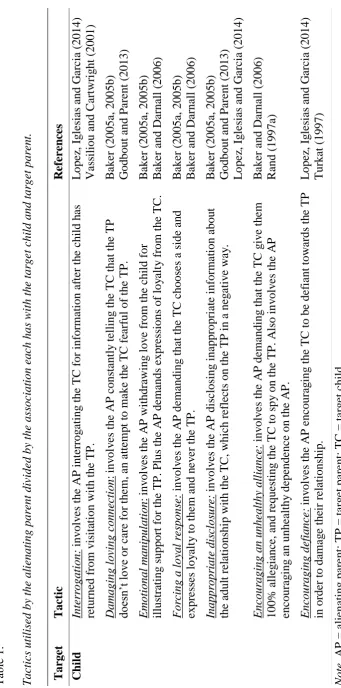
Table 1………....14 Tactics utilised by the alienating parent divided by the association each has with the
target child and target parent.
Table E1……….….83 Chi-square observed frequencies for the relationship status of the sample.
Table F1……….…….84 Chi-square observed frequencies for the employment status of the sample.
Table G1………...………..…85 Distributional Properties of the Data
Table H1………..86 Multicollinearity of the Predictors in Regression One
Table I1………...87 Means, Standard Deviations and Standard Errors For All Outcome Variables
Table J1………...88 Frequency and percentage of exposure to each of the 13 parental alienation tactics
and ratings of severity of exposure
Table K1……….90 Predicting Severity of Exposure to Parental Alienation Tactic from Target Parent
Gender, Target Child Gender and Target Child Age
Table L1………..91 Distributional Properties of the One-Way ANOVAs Comparing Exposure to Parental
vi
Table displaying the homogeneity of variance statistics for each one-way ANOVA
investigating the differences in parental alienation exposure for males and females
Table N1………..93 Means and Standard Deviations for the Differential Severity of Exposure to Parental
Alienation Tactics Between Males and Females
Table O1………..94 Predicting Parental Responsibility, Parental Sense of Competence,
Parent-Child Relationship, Stress Appraisal and Affect from Severity of Exposure to
vii
Figure 1...28
Predicting severity of exposure to parental alienation tactics from target parent gender, target child age and target child gender.
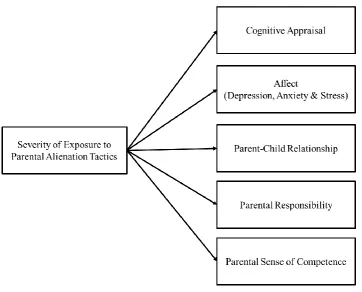
Figure 2...28
Predicting cognitive appraisal, affect, parent-child relationship, parental
responsibility and parental sense of competence from severity of exposure to parental alienation tactics.
Figure 3...29
Distributions of male (n = 105) and female (n = 120) relationship status.
Figure 4...30
Distributions of male (n = 105) and female (n = 120) employment status.
Figure 5...34
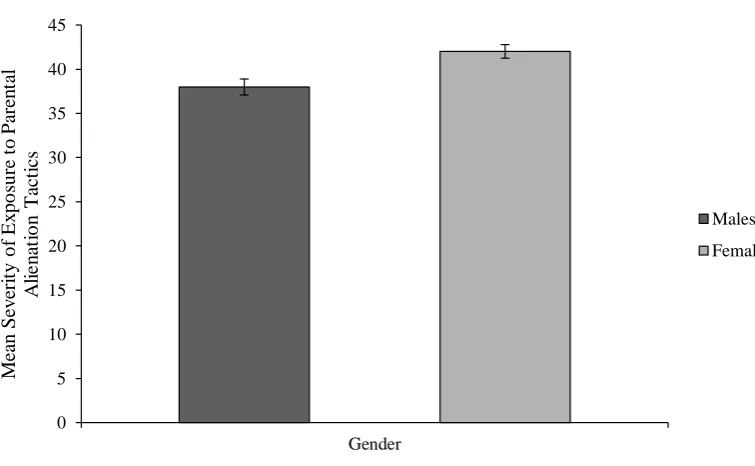
Differences in mean severity of exposure to parental alienation tactics for males and females with error bars depicting 95% confidence intervals.
Figure 6...37
Differences in mean levels of parenting satisfaction for males and females with error bars depicting 95% confidence intervals.
Figure 7...38
Differences in mean levels of propensity towards parental involvement for males and females with error bars depicting 95% confidence intervals.
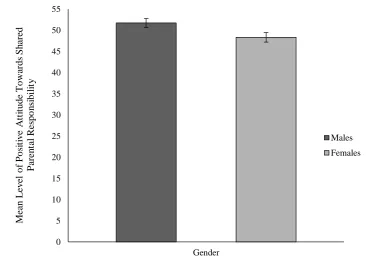
Figure 8...38
viii
Parental Alienation: Target Parent Perspective
Sian Balmer
Abstract
The present study was conducted to investigate the characteristics and experiences of parents targeted by parental alienation. The aims of the study were to determine target parent experiences of parental alienation post-separation from the alienating parent, and to investigate common target parent characteristics. This was conducted via an online survey. A total of 225 target parents participated, 120 of whom were female (Mage = 40.73 years, SD = 7.05). The current study’s findings revealed that
target parents were experiencing extremely high severity of exposure to parental alienation tactics at the hand of the alienating parent. Target parent gender and target child age were found to significantly predict variance in exposure to parental
alienation. Targeted mothers experienced significantly higher severity of exposure to parental alienation compared to targeted fathers. Finally, the severity of exposure to parental alienation tactics significantly predicted increases in the appraisal of the parental alienation situation as threatening. The present findings contradicted
Separation and divorce are difficult processes for both the separating couple and their children. In 2011, 48.4% of divorces granted in Australia involved children under the age of 18 years, and Tasmania had one of the highest rates (53.3%) of divorces involving children in the country (Australian Bureau of Statistics, 2013). Approximately one third of divorces do not eventuate to have effective co-parenting, which is characterised by consistent expectations and limits of the child’s behaviour (Campbell, 2005). Campbell (2005) suggests that a subset of this group then evolves into parental alienation cases. During the process of divorce, one parent might develop a tendency to encourage the child to reject the other parent for various reasons, such as to gain primary custody (Lorandos, Bernet, & Sauber, 2013). The process of a child irrationally denigrating one parent, while expressing irrational unabated support of the other, is what Richard Gardner (2002a) coined Parental Alienation Syndrome (PAS).
Parental Alienation Syndrome
According to Gardner (2002a), Parental Alienation Syndrome (PAS) could be a result of physical or emotional abuse, neglect, or in the case of the argument in this study, because of overt behaviours displayed by the alienating parent that attempt to undermine the target parent. Essentially, PAS involves three roles: 1) the alienating parent, who encourages the child to reject the other parent; 2) the target parent, who
of ambivalence towards both parents; 4) the target child argues that their thoughts about the target parent are their own and are not influenced by the alienating parent (independent-thinker phenomenon); 5) the target child has reflexive support of the alienating parent in parental conflicts; 6) the target child has an absence of guilt about their behaviour towards the target parent; 7) the target child retells stories about the target parent that were first created by the alienating parent, which paint the target parent in a negative light (borrowed scenarios); and 8) the rejection of the target parent spreads to the target parent’s extended family and significant other.
Extensive research has been conducted to examine the existence of PAS, as well as to investigate the degree of acceptance of the syndrome. Following an
investigation of custody evaluators, Baker (2007) concluded that approximately 75% of the survey respondents were familiar with PAS and believed that it was highly plausible for one parent to program a child against the other parent. However, in the same study Baker (2007) discovered that two thirds of the sample did not express a need for PAS to be a disorder in the Diagnostic Statistical Manual of Mental Disorders – Fifth Edition (DSM-5: American Psychiatric Association, 2013).
et al., 2013). This is concerning based on the overwhelming evidence that suggests it is the alienating parent’s overt behaviours that influence the target child’s behaviour towards the target parent, and that the target child does not always act on their own volition (Baker, 2005a, 2005b; Baker & Darnall, 2006; Godbout & Parent, 2012; López, Iglesias, & García, 2014; Rand, 1997a; Turkat, 1997; Vassiliou & Cartwright, 2001).
Parental Alienation as a Broad Concept
As discussed, there is a wealth of mental health and legal literature that discounts the use of Parental Alienation Syndrome (PAS: Kelly & Johnston, 2001; Meier, 2009; Rueda, 2004; Walker & Shapiro, 2010; Warshak, 2001). Thus, due to the controversy surrounding the concept of PAS the present study focuses on parental alienation as a broader concept that is not restricted by the eight symptoms described by Gardner (2002a). Even Gardner (2002a) himself came to consider PAS as a subtype of parental alienation, where parental alienation is the overarching concept.
Parental alienation refers to the use of a number of tactics by the alienating
parent in an attempt to program the target child to reject the target parent (Bond, 2008; Gardner, 2002a; Hands & Warshak, 2011). Parental alienation differs from Parental Alienation Syndrome (PAS) as it encompasses all possible negative behaviours that can be present during separation cases despite where these behaviours originated (Bond, 2008; Darnall, 1998; Johnston, 2003).
T abl e 1. T ac ti cs ut il is ed by t he al ie nat ing par ent di vi de d by t he as soc iat ion e a ch has wi th t h e t ar ge t c hi
ld and t
ar ge t par en t. Targe t Tacti c R efe re n ce s C h il d Int er rogat ion: i nv ol v e s t he A P i nt e rr og a ti ng t he T C for i nform at ion a ft er t h e c hi ld h as re turne d from v is it at ion w it h the T P . L o pe z, Ig le si as a nd G arc ia (2014) V as si li ou a nd Ca rt w ri g ht (2001) D am agi ng l ov ing c onne ct ion : inv ol v es t he A P c ons ta nt ly t el li ng t he T C t ha t the T P doe sn’t lov e or c are for the m , an a tt em p t to m ake t h e T C fe arful of the T P . B ake r (2005a , 2005b) G odbout a nd P are nt (2013) E m ot iona l m anipul a ti on : inv ol v es t he A P w it hdraw ing l ov
e from t
he c hi ld for il lus tra ti ng s upport for t he T P . P lus t he A P de m ands e xpre ss ions of l oy al ty from t he T C. B ake r (20 05a, 2005b ) B ake r a nd D arna ll (2006) F or ci
ng a l
oy a l r es pons e: i nv ol v es t he A P de m andi ng t ha t the T C choos es a s ide a n d expre ss es l o y al ty t o t he m a nd n ev er t he T P . B ake r (2005a , 2005b) B ake r a nd D arna ll (2006) Inappr opr iat e di sc los ur e: inv ol v es t he A P di sc los ing i na ppropri at e i nform at ion a bou t the a dul t re la ti ons hi p w it h t he T C, w hi ch r efl ec ts on the T P i n a ne g at iv e w ay . B ake r (2005a , 2005b) G odb out a nd P are nt (201 3) L o pe z, Ig le si as a nd G arc ia (2014) E nc our agi
ng an unhe
al thy al li anc e: inv ol v es t he A P de m andi ng t ha t t he T C g iv e t h em 100% a ll eg ia nc e, a nd r eque st ing t he T C to s p y on t he T P . A ls o i n v ol v es t he A P enc oura g ing a n unhe al thy de pe nde nc e on the A P . B ake r a nd D arna ll (2006) Ra nd (1997a ) E nc our aging de fi ance : inv ol v es t he A P e nc ourag ing t he T
C to be
[image:14.595.125.467.75.764.2]Tar ge t Tac ti c R efe re n ce s P ar en t V il if ic a ti on of t he T P : inv ol v es t he A P i m pl y ing t ha t t he T P i s a ba d a nd d ang erous pe rs on, w ho h as i nt ent ions of h ar m ing t he T C. B ake r (2005a , 2005b) G odb out a nd P are nt (201 3) L o pe z, Ig le si as a nd G arc ia (2014) V as si li ou a nd Ca rt w ri g ht (2001) E radi cat ion o f T P : inv ol v es t he A P i nt erfe ri ng w it h c om m uni ca ti on b et w ee n t he T P a nd T C, s uc h a s bl oc ki ng phone c al ls a nd thro w ing a w a y m ai l. A ls o i nv ol v es a ct ua l or sy m bol ic re m ov al of t he T P from the T C’ s l ife c om pl et el y, t hrou gh m ea ns s uc h a s re loc at ing w it hou t m ak ing t he T P a w are o f w h ere t he T C h as be en r el oc at ed ( ac tu al ) or re pl ac ing t he T P w it h a s te p -pa re nt (s y m bol ic ). B ake r (2005a , 2005b) B ake r a nd D arna ll (2006) G odbout a nd P are nt (2013) L o pe z, Ig le si as a nd G arc ia (201 4) Inf or m at ion gat ek ee pi ng: inv ol v es t he A P purpos eful ly w it hhol di ng i nform at ion abo ut the T C from t he T P , a nd m aki ng de ci si ons a bout t he T C w it hout c ons ul ti ng w it h t he T P . B ake r a nd D arna ll (2006) L o pe z, Ig le si as a nd G arc ia (2014) U ti li si ng out si d e f or ce s: inv ol v es t he A P r eport ing a nd m aki ng not ifi ca ti ons t o pol ic e and c hi ld pro te ct ion about t h e T P . L o pe z, Ig le si as a nd G arc ia (2014) T urka t (1997) Bo th Int er fe re nc e wi th ti m e s pe n t wi th t h e T P : inv ol v es t he a li en at ing pa re n t e nc our ag ing t he chi ld t o eng ag e i n ot he r a ct iv it ie s ra the r t h an s pe ndi ng t im e w it h T P , a s w el l a s not produc ing t he T C t o t h e T P w he n i t is t he ir t
urn for v
is it at ion. A ls o i nv ol v es t he A P ca ll ing t he c hi ld dur ing v is it at ion t im e w it h t he T P
, or l
is
te
ni
ng
i
n on phone
The Alienating Parent
As mentioned, there are three primary roles in the parental alienation saga described in the literature, the first of which is the alienating parent (Gardner, 1998, 2002a; Lorandos et al., 2013). There is extensive literature which describes the behaviours and characteristics of the alienating parent, and it has been suggested that they engage in alienating tactics because they are fearful that they will lose their child after separation or divorce (Gardner, 2002a; Lorandos et al., 2013; Meier, 2009; Nichols, 2013; Warshak, 2000).
The literature has outlined various characteristics of the alienating parent, including: a) narcissism and a paranoid orientation to interactions with others; b) severe cognitive distortions, such that they actually believe that the target parent is a bad person; c) externalising unwanted emotions and responsibilities; d) exhibiting anger evident of an abnormal grieving process; e) a family history of difficulty separating from parents, emotional deprivation and an absence of awareness of normal ambivalence about parents; f) personality disorders, including borderline and paranoid; and g) alcohol misuse (Baker, 2005b, 2006; Ellis & Boyan, 2010; Gardner, 1999a; Kopetski, 1998a, 1998b; Lorandos et al., 2013; Lund, 1995; Rand, 1997a, 1997b).
more likely to denigrate the father in front of the child (López et al., 2014; Rand, 1997a). Throughout the period of research into these tactics adopted by alienating parents, the concern about how such tactics impact the child has resonated in the discussions.
The Target Child
The second role in the instance of parental alienation belongs to the target child. The perspective of the target child has been thoroughly examined in parental alienation research, and it has been proposed that target children align themselves with the alienating parent unknowingly (Baker & Andre, 2008; Campbell, 2005). A number of commonly witnessed characteristics of target children has been outlined in the literature, including: a) the appearance of being completely dependent on the alienating parent; b) female children are slightly more likely to be targeted; and c) children around 10 to 14 years of age are more commonly alienated (Baker & Darnall, 2006; Bow, Gould, & Flens, 2009; Ellis & Boyan, 2010).
It has been suggested that there are extensive short- and long-term negative psychosocial and emotional effects for target children that can extend well into adulthood, including: a) low self-esteem; b) low self-sufficiency; c) higher risk of depression and anxiety; d) sleep disturbances; e) inability to regulate natural bodily functions; f) reduce impulse control; g) social isolation; h) lower school
Further, Baker (2005b) also found that in adulthood, those who were targeted by parental alienation as children were likely to have been divorced at least once and be alienated from at least one of their children. Thus, it would seem that children targeted by parental alienation might develop characteristics in adulthood similar to those presented by their targeted parents (Baker, 2005b; Baker & Andre, 2008; Friedlander & Walters, 2010). Despite knowing this potential pattern of parental alienation development, there has been little research into how this phenomenon could be reduced (Gottlieb, 2012; Warshak, 2010). Yet, there is currently
encouragement in the literature for target parents to be proactive and respond more effectively towards parental alienation, whether by engaging in assertive
communication with the alienating parent and the target child, or by seeking support from the family law court or a psychologist (Baker & Andre, 2008; Ellis & Boyan, 2010; Kelly & Johnston, 2001; Schwartz, 2015; Warshak, 2010).
2010).
The Target Parent
The third role in the case of parental alienation is that of the target parent (referred to as the alienated or rejected parent in some literature: Godbout & Parent, 2012; Johnston, 2003). The perspective of the target parent remains
under-researched. However, some studies have identified some common emotions experienced by target parents. These include: intense negative emotions, such as frustration, stress, fear, loss, powerlessness, helplessness and anger directed at the constant interference by the alienating parent (Baker, 2010a; Baker & Andre, 2008; Baker & Darnall, 2006; Vassiliou & Cartwright, 2001). Throughout the process of alienation, the target parent can endure countless personal costs, and overtime they may become emotionally and financially exhausted as the process of alienation continues (Walsh & Bone, 1997).
To examine the target parent experience of parental alienation, Vassiliou and Cartwright (2001) conducted a qualitative study in which they surveyed five fathers and one mother who asserted that they had been alienated from their child. The researchers found that there was a reduction in both visitation and other forms of contact between the target parent and the target child, and all of the participants perceived that the alienating parent used denigrating techniques in order to ‘sabotage’ the relationship between them and the target child (Vassiliou &
Cartwright, 2001). Additionally, the target parents reported that the target children, as well as the alienating parent’s extended family members, also engaged in
alienating techniques (Vassiliou & Cartwright, 2001).
as they prematurely expect a change in the child’s behaviour when the presence of parental alienation has been determined; being rigid, controlling and harsh, in their parenting style and expectations of the child; having a distant and unskilled
parenting style, which can enhance the alienating parent’s argument that they can
better provide for the child’s needs; having a passive parenting style, even prior to the separation, which can result in a vulnerable target parent-child relationship making it easy for the alienating parent to target it; being narcissistic, immature or emotionally detached, which interferes with their ability to be attuned to the child’s
emotions and needs; experiencing difficulty managing their anger and
disappointment, which reinforces the child’s negative view of them by rejecting the
child in response to the child’s rejection of them, for example; withdrawing from and are avoidant of conflict, which can occur pre- and post-separation from the alienating
parent; and being ambivalent, in regards to wanting a relationship with the child (Baker & Andre, 2008; Drodz & Olesen, 2004; Friedlander & Walters, 2010; Godbout & Parent, 2012; Gottlieb, 2012; Johnston, 2003; Kelly & Johnston, 2001; Rand, 1997a).
Little is known about the target parent-child relationship during the parental alienation process from the perspective of the target parent. This is despite numerous studies highlighting the negative effects of parental alienation from the target child’s point of view (Baker, 2005b, 2006, 2010b; Ben-Ami & Baker, 2012; Friedlander & Walters, 2010; Godbout & Parent, 2012; Johnston et al., 2005). For example, in a study surveying 40 adults who were alienated from a parent in childhood,
the targeted parent did not make an effort to contact them via phone or mail (Baker, 2006). Likewise, Ellis and Boyan (2010) suggested that prior to separation target parents may not have had a close relationship with the target child, and that they could have potentially acted in a manner that violated the child’s morals, such as infidelity, which fostered the child’s support for the alienating parent. However, it must be highlighted that the reports of the target children should be interpreted with caution, as such factors could have been influenced by the alienating parent without the target child’s knowledge (e.g., blocked calls and false allegations of abuse: Baker, 2005a, 2006; Lowenstein, 2012; Vassiliou & Cartwright, 2001).
Currently the majority of descriptions of the target parent characteristics and experience are drawn from methodologically flawed literature. These methodical limitations include: small sample sizes (e.g., N < 50); conclusions were based on a non-systematic review of previous literature; or the informants of the target parents’ experiences were professionals (e.g., legal or mental health) who have worked with the target parent or target child, or were the target child when interviewed in
adulthood (Baker, 2006, 2010a; Friedlander & Walters, 2010; Godbout & Parent, 2012; Johnston, 2003; Kelly & Johnston, 2001; Vassiliou & Cartwright, 2001). Thus, there is a risk that assumptions have been and will continue to be made about the target parent experience, or that their experiences will be unrealistically
generalisable.
indicate common target parent attitudes regarding parenting, such as parental self-efficacy, confidence, responsibility, involvement and social support. Essentially, there is currently a real risk that the provision of services for target parents, both legal and mental health, is uninformed and inadequate, based on the lack of knowledge about the population as a whole. Therefore, these gaps in the current literature warrant further exploration into the target parent perspective and experience of parental alienation via a larger scale research design. The Present Study
Based on a review of the previous literature, there is a clear lack of insight into what the target parent experience of parental alienation is like, potentially due to a lack of research including target parents as the informants (Baker, 2006, 2010a; Friedlander & Walters, 2010; Godbout & Parent, 2012; Johnston, 2003; Vassiliou & Cartwright, 2001). Therefore, it is important to investigate the experience of parental alienation from the perspective of both male and female target parents, as well as the characteristics of the target parent as this is yet to be thoroughly explored. In the present study, the characteristics and experiences of the target parent will be investigated post-separation from the alienating parent, to identify further
information about the relationships experienced by target parents both with the target child and the alienating parent. This research could potentially educate parents, as well as mental health and legal professionals, in order to guide them through the process of parental alienation and to offer more knowledgeable, tailored support. Due to the exploratory nature of the present study, it will not include hypothesis testing (Hesse-Biber, 2010). However, there are two aims:
2) to determine what characteristics are common among target parents. Method
Participants
A total of 274 respondents participated in the present study. Of this sample, 118 partially completed the survey and 156 participants completed the survey in full. A total of 49 participants were excluded from the analysis, as 6 respondents
identified as step-parents, while 43 respondents identified that their target child was over the age of 18 years. Of the remaining sample, 225 were included in the
analyses, 105 were men (Mage = 40.86 years, SD = 8.42) and 120 were women (Mage
= 40.73 years, SD = 7.05). Participants were recruited from parental alienation support websites, non-government organisations and private practices in the southern Tasmanian area, via online advertisements, poster advertisements, and personal invitations (see Appendix A). Each person participated voluntarily. The inclusion criteria were being a biological parent of a child (under the age of 18 years) who they are currently isolated from, in which the child has explicitly stated that they want nothing to do with this parent. The participants were invited to contact the researcher if they had any further questions regarding informed consent or the information sheet (see Appendix B), which were provided online prior to the beginning of the
questionnaire. Sample size was determined by a G*Power 3.1 analysis (Faul, Erdfelder, Buchner, & Lang, 2009), in which to detect a medium effect size of .25 and power at .80 with an alpha level of .05, 179 participants were required. Procedure
would agree to advertising the present study to their members (see Appendix C). Interested groups and organisations were provided with an information sheet and a consent form, which they were required to read and sign in consent of volunteering to advertise the present study. Participants were recruited primarily via
non-government organisations and support groups, and were provided with a link to the survey online via Limesurvey (Schmitz, 2015). The survey took a maximum of 1 hour to complete. After the participants submitted the survey, they were offered contact information for legal and mental health support services that may have been of interest.
Materials
Socio-demographics. Were collected to give a clearer context in which
parental alienation occurs, and to assist determination of common characteristics among target parents. Information collected about the target parent included: age; gender; date of birth; place of birth; relationship status; employment status; and parental status (e.g., biological or step-parent; see Appendix D for a copy of the full survey). Information collected about the target child, included age and gender. Further information collected included: current custody status and number of children alienated from.
Outcome measures.
Exposure to parental alienating tactics. An online questionnaire was
developed by the researchers to assess exposure to 13 alienating tactics. An example item includes, “In the last month, have you experienced interference with time spent with your child?”, rated on a 5-point Likert scale (0 = never to 4 = always). Internal
acceptable (Cronbach alpha = .85) and together the 13 items accounted for 83.02% of the variance in the sample.
Parental sense of competence. The Parenting Sense of Competence Scale (Johnston & Mash, 1989) was utilised to evaluate competence on a 6-point Likert scale (1 = strongly agree to 6 = strongly disagree). This measure consists of 16 items, divided into two subscales: satisfaction subscale with 9 items (Cronbach’s α Pre/Post = .75/.74); and efficacy subscale with 7 items (Cronbach’s α Pre/Post = .76/.75; Johnston & Mash, 1989). An example item is, “Being a parent is
manageable and any problems are easily solved”.
Parental responsibility. The Parental Responsibility Scale (McBride & Mills, 1993) was utilised to measure parental responsibilities on a 5-point Likert scale (1 = mother always responsible to 5 = father always responsible). This scale consists of
14 items (Cronbach’s α Pre/Post = .79/.98), and an example item includes, “Determines and implements discipline strategies”.
10 items (Cronbach’s α Pre/Post = .80/.62); and role orientation subscale with 9 items (Cronbach’s α Pre/Post = .75/.38). An example item includes, “I feel very close to my child”. The PCRI (Gerard, 1994) may be an unreliable measure for use with
the current study sample, based on the low (e.g., <.6) Cronbach’s alphas calculated. Tavakol and Dennick (2011) stated that low Cronbach’s alphas may be due to a low number of questions, heterogeneous constructs or poor interrelatedness between items, which should be considered for use in future research with this population.
Stress appraisal. The Stress Appraisal Measure (SAM: Peacock & Wong, 1990) was utilised to measure cognitive appraisals that result in stress on a 5-point Likert scale (1 = not at all to 5 = extremely). This measure consists of 28 items (Cronbach’s α = .67) divided into 7 subscales: threat subscale with 4 items
(Cronbach’s α Pre/Post = .73/.69); challenge subscale with 4 items (Cronbach’s α Pre/Post = .79/.54); centrality subscale with 4 items (Cronbach’s α Pre/Post = .85/.82); controllable-by-self subscale with 4 items (Cronbach’s α Pre/Post = .86/.85); controllable-by-others subscale with 4 items (Cronbach’s α Pre/Post = .84/.89); uncontrollable subscale with 4 items (Cronbach’s α Pre/Post = .82/.72); and stressfulness subscale with 4 items (Cronbach’s α Pre/Post = .75/.78: Peacock & Wong, 1990). An example item, “Is this a totally hopeless situation?”.
Affect. The Depression and Anxiety Stress Scale (DASS-21: Lovibond & Lovibond, 1995) was utilised to measure depression, anxiety and stress on a 4-point Likert scale (0 = never to 3 = almost always). The scale consists of 21 items
hearted and blue”, “I felt I was close to panic”, and “I found myself getting
agitated”, to measure depression, anxiety and stress, respectively.
Design and Analysis
The present study utilised a 2 (target parent gender: male/female) x 2 (target child gender: male/female) x 1 (target child age) correlational design. The outcome variables included: parental responsibility, affect, parent-child relationship, stress appraisal, parental competence, and severity of exposure to parental alienation
tactics. The predictor variables included: target parent gender, target child gender,
target child age, and severity of exposure to parental alienation tactics.
Regression one. The direct effect of the predictor variables (target parent
gender, target child gender and target child age) on the outcome variable (severity of
exposure to parental alienation tactics), were analysed using forced entry multiple
regression analyses in SPSS 21 (IBM Corp, 2012). Figure 1 illustrates the regression of the outcome variable (severity of exposure to parental alienation tactics) on each of the predictor variables (target parent gender, target child gender and target child age).
Regression two. The direct effect of the predictor variable (severity of
exposure to PA tactics) on the outcome variables (parental responsibility, parental
competence, parent-child relationship, stress appraisal and affect), was analysed
using a series of univariate regression analyses in SPSS 21 (IBM Corp, 2012). Figure 2 illustrates the regression of the outcome variables (parental responsibility, parental competence, parent-child relationship, stress appraisal and affect) on the predictor
Figure 1. Predicting severity of exposure to parental alienation tactics from target
parent gender, target child age and target child gender.
Figure 2. Predicting cognitive appraisal, affect, parent-child relationship, parental
[image:28.595.112.475.358.650.2]Results
Socio-Demographics
To fulfil the aim of investigating the common characteristics among target parents, the socio-demographic information collected is discussed. The current study sample consisted of 225 participants, of whom 120 were female. Close to half of the participants (48%) were currently living in the United States of America, with 36.4% currently living in Australia. English (97.8%) was the primary language spoken by participants.
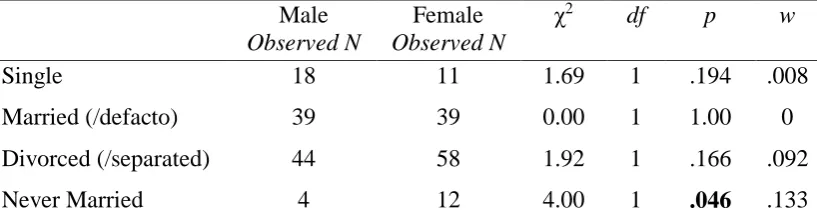
In regards to relationship status, 45.3% of the current sample reported being divorced (or separated), 34.7% were married (including defacto), 12.9% were
[image:29.595.143.497.495.712.2]currently single and 7.1% were never married. A chi-square goodness of fit test (with α = .05) was used to assess whether relationship status significantly differed for male and female respondents (see Appendix E). The results indicated that a significantly higher proportion of female participants reported being never married compared to male respondents, χ2 (1, N = 225) = 4.00, p = .046, w = .133 (see Figure 3).
Figure 3. Distributions of male (n = 105) and female (n = 120) relationship status. 0
10 20 30 40 50 60 70
Single Married (defacto)
Divorced (separated)
Never Married
F
re
que
nc
y
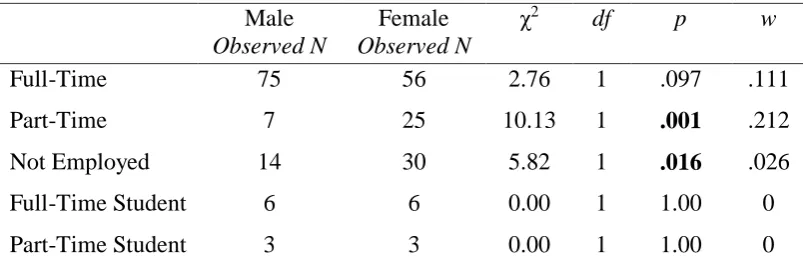
Over half of the participants identified as full-time employees (58.2%), with 14.2% identifying as part-time employees, while 19.6% and the remaining 8%
[image:30.595.117.466.323.569.2]reported being unemployed and part- or full-time students, respectively. A chi-square goodness of fit test (with α = .05) was used to assess whether employment status significantly differed for male and female respondents (see Appendix F). The results indicated that a significantly higher proportion of female participants reported being employed part-time, χ2 (1, N = 225) = 10.13, p = .001, w = .212, as well as not employed, χ2 (1, N = 225) = 5.82, p = .016, w = .161, compared to male respondents (see Figure 4).
Figure 4. Distributions of male (n = 105) and female (n = 120) employment status.
Approximately 95.6% of the sample reported having between 1 and 4
biological children, with 83 respondents reporting having children with people other than the alienating parent, and 56 indicating that they had step-children.
In relation to information collected about the parental alienation experience, over half of the participants (51.6%) reported that they were alienated from one
0 10 20 30 40 50 60 70 80
Full-time Part-time Not Employed
Full-time Student
Part-time Student
F
re
que
nc
y
child, while the remaining participants reported being alienated from between two and six children. Of these children, each participant was required to report on their experiences being alienated from one target child in particular throughout the survey. The target child age ranged from 1 year to 18 years old (Mage = 11.32; SDage = 4.74),
with participants reporting 102 of the target children being male (Mage = 11.27; SDage
= 4.71) and 123 being female (Mage = 11.37; SDage = 4.77).
A total of 207 respondents reported that the target child does not currently reside with them. In regards to current custody status, 27.1% of respondents
indicated having no custody, 22.7% were a non-custodial parent with visitation and 17.3% reported having joint custody of the target child with the alienating parent. Of the 61 respondents who indicated currently having no custody of the target child, 37.7% reported that they were supposed to have a joint custody arrangement. Data Assumptions and Screening
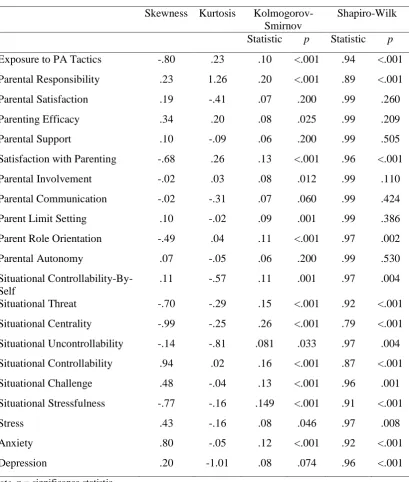
The distributional properties of the data were assessed before the primary analyses were conducted (see Appendix G). Examination of the Kolmogorov-Smirnov and Shapiro-Wilk tests of normality and values of skewness and kurtosis, indicated that there was an evident violation of the assumption of normality. Further, several outliers for each variable were detected. This violation was addressed by transforming the data using the Winsorizing technique, in order to retain the sample size and power (Field, 2012; Lusk, Halperin, & Heilig, 2011). Following this transformation, further screening revealed that each outcome variable, with the exception of the parental responsibility variable, was free from outliers.
the data file, indicating that multivariate outliers were not of concern. Finally, relatively high tolerances for each predictor variable indicated that multicollinearity would not interfere with our ability to interpret the analysis (see Appendix H). Descriptive Statistics
Through examination of the means and standard deviations of each outcome variable (see Appendix I), it is evident that overall the current study sample were experiencing moderate levels of depression (M = 9.52, SD = 6.12) and anxiety (M = 6.66, SD = 5.50), and mild levels of stress (M = 9.30, SD = 4.93), as measured by the Depression, Anxiety and Stress Scale (DASS-21: Lovibond & Lovibond, 1995). Further, the current sample appraised that their current situation of parental
alienation, as measured by the Stress Appraisal Measure (SAM: Peacock & Wong, 1990) subscales, was moderately controllable by themselves (M = 12.11, SD = 4.28), uncontrollable by anyone (M = 13.15, SD = 4.08), and challenging to manage (M = 12.38, SD = 3.32). On average the sample rated that the likelihood of the alienation being controllable by any person is unlikely (M = 7.60, SD = 3.56), and that the alienation was highly stressful (M = 16.93, SD = 2.65), threatening to their wellbeing (M = 16.35, SD = 3.12), as well as an important determinant for their wellbeing (M = 18.12, SD = 2.31).
willingness to promote their child’s age-appropriate autonomy (M = 50.14, SD = 9.96); and have an attitude mostly consistent with the sharing of parental
responsibilities (M = 50.09, SD = 9.97).
Further, overall the current sample indicated moderate levels of parental satisfaction (M = 36.66, SD = 6.84) and parental self-efficacy (M = 21.17, SD = 5.63), as measured by the Parenting Sense of Competence Scale (PSOC: Johnston & Mash, 1989). Additionally, respondents reported scores on the Parental
Responsibility Scale (PRS: McBride & Mills, 1993), which indicated that they perceived that responsibility for child care tasks for the target child, should be fairly distributed between both mothers and fathers (M = 38.79, SD = 12.24).
In regards to the severity of exposure to parental alienation tactics, overall the current sample rated extremely high severity of exposure to parental alienation tactics (M = 40.15, SD = 9.01; Min. = 0 to Max. = 52). In particular, the occurrence of damaging loving connection and information gatekeeping tactics were the most highly reported by 99.6% of participants, with the encouraging defiance tactic being the least reported (80%: see Appendix J).
Regression One
To estimate the proportion of variance in severity of exposure to parental alienation tactics that can be accounted for by target parent gender, target child gender and target child age, a standard multiple regression analysis was performed.
Multiple Regression Analysis. In combination, target parent gender, target
child gender and target child age accounted for a significant 7.8% of the variability in severity of exposure to parental alienation tactics, R2 = .078, adjusted R2 = .065, F (3,
220) = 6.19, p = <.001, η2= .078. This revealed significant positive correlations
(3) = 2.63, p = .009, d = .354, 95% CI [.80, 5.58], as well as target child age, t (3) = 2.03, p = .044, d = .274, 95% CI [.01, .52] (see Appendix K).
One-Way ANOVA. In a second step, a one-way between groups analysis of
[image:34.595.115.493.462.695.2]variance (ANOVA) was used to further investigate the differential severity of exposure to parental alienation tactics for mothers and fathers. Inspection of the skewness, kurtosis and Shapiro-Wilk statistics indicated that the assumption of normality was supported (see Appendix L). Levene’s statistic was non-significant, F (1, 222) = .583, p = .446, and thus assumption of homogeneity of variance was not violated (see Appendix M). The ANOVA revealed a significant main effect of target parent gender on the severity of exposure to parental alienation tactics, F (1, 222) = 11.54, p = .001, η2 = .049, in which mothers (M = 42.01, SD = 8.45) experienced a significantly higher severity of exposure to parental alienation tactics than fathers (M = 38, SD = 9.21; see Figure 5).
Figure 5. Differences in mean severity of exposure to parental alienation tactics for
males and females with error bars depicting 95% confidence intervals.
0 5 10 15 20 25 30 35 40 45
Gender
M
ea
n
S
ev
er
it
y
o
f
E
x
po
sur
e
to
P
ar
en
ta
l
A
li
e
n
at
io
n
T
ac
ti
cs
Males
Further, a series of one-way ANOVAs were used to investigate the
differential severity of exposure to each of the 13 alienation tactics included in the present study, for mothers and fathers. Inspection of the skewness and kurtosis of the data revealed that the outcomes were negatively skewed, and the Kolmogorov-Smirnov and Shapiro-Wilk statistics were significant, which indicated that the assumption of normality was violated (see Appendix L). Further, Levene’s statistics for several items were significant, and thus assumption of homogeneity of variance for these outcomes were violated (see Appendix M). However, inspection of the Welch statistics indicated that the means of the groups are significantly different, and thus equal variances between groups can be assumed (Field, 2009: see Appendix M).
A significant main effect of target parent gender on the severity of exposure to the alienating parent: interrogating the target child, F (1, 223) = 9.92, p =.002, η2 = .043; speaking badly about the target parent in front of the target child, F (1, 223) = 10.43, p =.001, η2 = .045; withdrawing love from target child when they express support for the target parent, F (1, 223) = 4.84, p =.029, η2 = .021; demanding target child to be loyal only to them, F (1, 223) = 5.99, p =.015, η2 = .026; inappropriately disclosing information about the target parent to target child, F (1, 223) = 7.95, p =.005, η2 = .035; encouraging an unhealthy alliance with target child, F (1, 223) = 8.27, p =.004, η2 = .036; and encouraging the target child to be defiant while
spending time with the target parent, F (1, 223) = 18.64, p =<.001, η2 = .077. Planned contrasts revealed that mothers experienced significantly higher severity of exposure to each of the tactics compared to fathers (see Appendix N).
Regression Two
the severity of exposure to parental alienation tactics, a series of standard multiple regression analyses were performed.
Regression Analyses. The severity of exposure to parental alienation tactics accounted for a significant 3.8% of the variance in appraisal of how threatening the parental alienation situation was, as measured by the Stress Appraisal Measure threat subscale, R2 = .038, adjusted R2 = .03, F (1, 129) = 5.11, p = .026 (see Appendix O).
This revealed a significant positive correlation between severity of exposure to parental alienation tactics and stress appraisal of the potential harm or loss that may come in the future due to the parental alienation experience, t (129) = 2.26, p = .026, d = .398, 95% CI [.01, .14]. The severity of exposure to parental alienation tactics did
not account for significant variances for any of the remaining outcome variables (see Appendix O).
One-Way ANOVA. In a second step, a series of one-way ANOVAs were conducted to investigate any differences between mothers and fathers for each of the outcome variables (parental responsibility, parental competence, parent-child relationship, stress appraisal and affect). Inspection of the skewness, kurtosis,
Kolmogorov-Smirnov and Shapiro-Wilk statistics indicated that the assumptions of normality were supported (see Appendix G). Levene’s statistics were non-significant for parental satisfaction, F (1, 166) = .443, p = .506, parental involvement, F (1, 166) = .009, p = .925, and parental role orientation, F (1, 165) = 1.460, p = .229, and thus assumption of homogeneity of variance was not violated (see Appendix M).
The ANOVA showed a significant main effect of target parent gender on: satisfaction with parenting, as measured by the Parent-Child Relationship Inventory (PCRI) satisfaction subscale, F (1, 166) = 5.61, p = .019, η2 = .033; parental
= .029, η2 = .028; parental role orientation, as measured by PCRI role orientation subscale, F (1, 165) = 4.98, p = .027, η2 = .029. Planned contrasts revealed that mothers reported significantly higher reflections of satisfaction with parenting (M = 51.76, SD = 9.84) compared to fathers (M = 48.15, SD = 9.89), t (166) = -2.37, p = .019, d = -.387 (see Figure 6). In comparison, planned contrasts showed that fathers had significantly higher propensity to seek out their child and show interest in being involved with their life activities (M = 51.72, SD = 10.19) compared to
mothers (M = 48.36, SD = 9.59), t (166) = 2.20, p = .029, d = .342 (see Figure 7), as well as significantly higher attitudes consistent with the sharing of parental
[image:37.595.122.509.386.628.2]responsibility (M = 51.73, SD = 9.30) compared to mothers (M = 48.32, SD = 10.41), t (165) = 2.23, p = .027, d = .347 (see Figure 8).
Figure 6. Differences in mean levels of parenting satisfaction for males and females
with error bars depicting 95% confidence intervals.
0 5 10 15 20 25 30 35 40 45 50 55
Gender
M
ea
n
L
ev
el
o
f
P
ar
en
ta
l
S
at
is
fa
ct
io
n
Males
Figure 7. Differences in mean levels of propensity towards parental involvement for
males and females with error bars depicting 95% confidence intervals.
Figure 8. Differences in mean levels of positive attitude towards shared parental
responsibility for males and females with error bars depicting 95% confidence intervals.
0 5 10 15 20 25 30 35 40 45 50 55
Gender
M
ea
n
L
ev
el
o
f
P
ro
pe
n
si
ty
T
o
wa
rds
P
ar
en
ta
l
In
v
o
lv
e
m
e
n
t
Males
Females
0 5 10 15 20 25 30 35 40 45 50 55
Gender
M
ea
n
L
ev
el
o
f
P
o
si
ti
v
e
A
tt
it
ude
T
o
wa
rds
S
h
ar
ed
P
ar
en
tal
R
es
po
n
si
bi
li
ty
Males
[image:38.595.115.482.407.670.2]Discussion
The present study was conducted to explore two aims: 1) to determine the target parents’ experiences of parental alienation post-separation from the alienating parent; and 2) to determine what characteristics are common among target parents. Previous research on parental alienation has largely looked at the characteristics of the alienating parent (Baker, 2005b, 2006; Ellis & Boyan, 2010; Gardner, 1999a; Kopetski, 1998a, 1998b; Lorandos et al., 2013; Lund, 1995; Meier, 2009; Nichols, 2013; Rand, 1997a, 1997b; Warshak, 2000), as well as the characteristics and negative impact parental alienation has on the target child (Baker & Darnall, 2006; Bow et al., 2009; Ellis & Boyan, 2010). However, the experience of parental alienation from the perspective of the target parent has been under-researched, and those studies that do involve investigating the target parent have methodological limitations (Baker & Andre, 2008; Drodz & Olesen, 2004; Friedlander & Walters, 2010; Godbout & Parent, 2012; Johnston, 2003; Kelly & Johnston, 2001; Rand, 1997a). As a result, the nature of the current study was exploratory and did not involve hypothesis testing (Hesse-Biber, 2010).
Target Parent Experiences of Parental Alienation
Exposure to parental alienation tactics. The findings of the present study
child age, significantly predicted changes in the severity of exposure to parental alienation tactics. Specifically, the results showed that as target child age increased, the severity of exposure to parental alienation tactics also increased for the target parent.
Target parent gender was also found to significantly predict changes in the severity of exposure to parental alienation tactics. Further exploration of this finding revealed that mothers experienced significantly higher severity of exposure to parental alienation tactics compared to fathers. This finding did not support the conclusions of previous research, which has continued to suggest that mothers are most commonly found to be the alienating parents, and thus fathers experience a higher frequency and severity of exposure to parental alienation tactics (Bow et al., 2009; Ellis & Boyan, 2010; Gardner, 2002a; Johnston, 2003; Meier, 2009; Nichols, 2013; Rand, 1997a; Vassiliou & Cartwright, 2001).
The present findings do offer some empirical support for the suggestion that alienating mothers and alienating fathers appear to engage in differing tactics against the target parent (Gardner, 1992; Lorandos et al., 2013). The current study’s findings showed that compared to target fathers, target mothers experienced significantly higher severity of exposure to the alienating parent interrogating the target child following spending time with the target parent (interrogation), the alienating parent speaking badly about the target parent in front of the target child and others
(denigration), the alienating parent withdrawing love from the target child if they express support for the target parent (withdrawing love), the alienating parent
unhealthy alliance with the target child (unhealthy alliance) and the alienating parent encouraging the target child to be defiant while spending time with the target parent (encouraging defiance).
This present study finding supports Gardner (1992), who described that alienating fathers are more likely to engage in emotional manipulation and denigration tactics against the target mother, as the target mothers in the present study experienced significantly higher severity of exposure to emotional
manipulation and denigration tactics at the hand of the alienating parent. The impacts of exposure to parental alienation tactics. In relation to the
impact that parental alienation has on the target parent, one of the most important findings of the present study was that the target parents’ perceptions of situational threat to current and/or future wellbeing, could be significantly predicted by
increases in the severity of exposure to parental alienation tactics. That is, the higher the severity of exposure to parental alienation tactics, the more target parents
perceived the situation to be a threat to their wellbeing.
Additionally, the respondents appraised their current situation of parental
alienation as highly stressful and threatening to their current and/or future wellbeing, as well as an important determinant for their current and/or future wellbeing. Further, the sample indicated that they perceived the parental alienation situation to be
would be imaginable that engaging in interventions might be difficult for target parents, particularly as their perceptions about their ability to control the outcome of the situation is not positive. Similarly, if target parents appraise the situation as unlikely to be controllable by anyone, they may be unlikely to think that external help will be beneficial. This may have been a consequence of having sought external help previously, such as that of a psychologist or lawyer, which was unsuccessful (Baker, 2010a; Vassiliou & Cartwright, 2001). Further investigation of this issue may be beneficial, with an aim to increase the effectiveness of support services provided to target parents.
The findings of the current study also indicate that the sample were experiencing moderate levels of depression, anxiety, and stress. While this finding may appear obvious based on the highly stressful nature of the parental alienation process, there is limited evidence of target parents experiencing negative affect, such as depression and anxiety (Baker, 2010a). However, one study conducted by Baker (2010a), examining the target parent experience of the child custody dispute process,
determined that all of the participants reported experiencing anxiety and depression (~80% rated high levels). Baker (2010a) also suggested that high levels of depression and anxiety are counter-productive in parental alienation conditions, as it limits an individual’s ability to interact with others effectively, including professionals and other support persons. In particular, involvement in custody disputes requires immense preparation, energy and motivation, all of which may be reduced by depression and anxiety (Baker, 2010a).
Impacts on the target parent-child relationship. In regards to the target
involved in the target child’s life, high confidence in their ability to discipline and set boundaries for the target child, high levels of encouragement of target child’s
autonomy, a good awareness of their ability to communicate with the target child, and an attitude consistent with the sharing of parental responsibilities with relaxed expectations based on gender roles. This finding highlights that despite the various difficulties target parents have in attempting to maintain a relationship with the target child, they appear to have the desire to continue to seek out involvement in their life.
Further, these current findings are in contrast to previous descriptions of target parents in the literature, in which target parents were described as being rigid, controlling, distant, unskilled, passive and emotionally detached (Baker & Andre, 2008; Drodz & Olesen, 2004; Friedlander & Walters, 2010; Godbout & Parent, 2012; Gottlieb, 2012; Johnston, 2003; Kelly & Johnston, 2001; Rand, 1997a). For example, previous literature has described target parents as ambivalent in regards to wanting a relationship with the child (Baker & Andre, 2008; Friedlander & Walters, 2010). Yet, the target parents in the present study revealed great desires to continue to seek out involvement in the target child’s life.
Target Parent Characteristics
The second aim of the current study was to explore the common characteristics of the current target parent population, through examination of
sociodemographic information collected via the survey. In regards to the relationship statuses of the present study sample, the majority of respondents reported being divorced or separated, closely followed by married or defacto. Previously, separation or divorce, as well as the target parent remarrying have been proposed to provoke the parental alienation process (Baker, 2006; Warshak, 2000). While comments
alienation cannot be made for the current study population, it can be confirmed that the target parents in the present sample were most commonly separated, divorced or remarried.
Similarly, previous literature has suggested that the ability of one parent to offer financial support for the child during child custody disputes, has coincided with an increase in the other parent resorting to alienation tactics to strengthen their position in the dispute (Gardner, 2002a). The present study’s findings can neither confirm nor deny that this may have been the case for the present sample. However, exploration of the employment and custody statuses of the current study sample did reveal that over half of the participants identified as full-time employees, and the majority of respondents indicated having no custody of the target child. While associations between employment and child custody status cannot be made based on the present study’s findings, this could be an interesting direction for future research.
Investigation of the factors of the parental alienation experience for the present study sample, revealed that both mothers and fathers were more frequently alienated from children aged 7 years or older. Based on the high severity ratings of parental alienation exposure coupled with the target child characteristics identified in the current study, this supports the findings of earlier research, which determined that parental alienation is more likely to be reported as severe when target children are around the age of 10 to 14 years or over (Baker, 2006; Bow et al., 2009).
reports by target fathers in the present study. Clinical Implications
The present study’s finding, which suggests that target parents feel that their wellbeing is significantly threatened by their exposure to the parental alienation tactics, signifies that there is a need for greater support services for target parents to reduce the likelihood of the severity of exposure increasing. The present study also highlighted that the sample were experiencing moderate levels of anxiety and
depression, which has the potential to interfere with the target parent’s motivation to seek out support services, particularly as the present sample also appraised their current experience with parental alienation as a moderately uncontrollable situation. Thus, mental health and legal professionals might do well to identify the presence of negative affect and review the individual’s cognitive appraisal of the situation, to ensure that they are able to tailor the support to the individual as best they can.
As the current findings contradict depictions of target parents in previous literature, professionals should not make assumptions about gender, nor should they assume that target parents are ineffective parents. Finally, professionals need to be aware of the presence and severity of parental alienation tactics, as the more severe the exposure to the tactics, the greater the impact on the mental health of the target parent becomes. This could then determine how the provision of support is tailored to best suit the needs of the target parent.
Limitations
Secondly, researchers received unsolicited feedback from advertisers and participants about difficulties using the Limesurvey program to complete the online survey, and that some questions were difficult to answer as several respondents had not seen their child for several years. This resulted in missing data from incomplete surveys.
Methodologically the second set of regression analyses in the study might be underpowered, as based on a power analysis 179 participants would have been required to detect moderate effect sizes, but only 169 participants completed the full survey. However, the marginal small effect sizes suggest that a larger sample size would have been unlikely to affect the results.
Finally, as the current study is cross-sectional, comments about the development of the parental alienation process, as well as associations between the target parent characteristics and the severity of exposure to parent alienation tactics overtime, cannot be made.
Direction for Future Research
A longitudinal study examining the presence of the participant characteristics as determined in the present study, and how these interact could prove beneficial in understanding when such characteristics develop and become more influential in the parental alienation process. Similarly, looking into the outcome variables included in the present study in a repeated measures design, may assist in determining if they developed due to the exposure to parental alienation or whether they were there prior to the parental alienation.
literature (Baker, 2010a; Baker & Andre, 2008; Drodz & Olesen, 2004; Friedlander & Walters, 2010; Godbout & Parent, 2012; Gottlieb, 2012; Johnston, 2003; Kelly & Johnston, 2001; Rand, 1997a).
Finally, as the evidence for target parent characteristics expands with further research, examining the effectiveness of interventions, such as the family systems approach or cognitive restructuring of the target child (Gardner, 2001; Gottlieb, 2012), is important. This is necessary to establish some evidence-based approaches to support target parents experiencing parental alienation.
Summary and Conclusion
The present study was conducted to investigate the characteristics and experiences of parents targeted by parental alienation. The aims of the study, firstly to determine the target parents’ experiences of parental alienation post-separation from the alienating parent, and secondly to determine what characteristics were common among target parents, were examined via an online survey.
The current study’s findings revealed that target parents were experiencing extremely high severity of exposure to the 13 parental alienation tactics outlined in Haines et al. (unpublished manuscript), as over 80% of the sample reported
experiencing each of the 13 tactics. In combination, target parent gender, target child gender and target child age were found to significantly predict variances in the severity of exposure to parental alienation tactics. Specifically, as target child age increased, the severity of exposure to parental alienation tactics increased for target parents. Further, target mothers were found to experience significantly higher
The present study’s findings contradicted previous literature, which concluded that fathers were more likely to experience parental alienation than mothers (Bow et al., 2009; Ellis & Boyan, 2010; Gardner, 2002a; Johnston, 2003; Meier, 2009; Nichols, 2013; Rand, 1997a; Vassiliou & Cartwright, 2001). The present findings also offered new insights into target parent appraisals of their parental alienation experience and their ability to control the exposure to parental alienation.
In conclusion, target parents are exposed to a number of parental alienation tactics that can significantly impact on their wellbeing. Understanding the experience of parental alienation from the target parent perspective, is important to ensure that support services are well informed and are engaging in interventions that are
References
American Psychiatric Association. (2013). Diagnostic and statistical manual of mental disorders (5th Ed.). Arlington, VA: American Psychiatric Publishing.
Antony, M. M., Bieling, P. J., Cox, B. J., Enns, M. W., & Swinson, R. P. (1998). Psychometric properties of the 42-item and 21-item versions of the
depression anxiety stress scales in clinical groups and a community sample. Psychological Assessment, 10(2), 176-181. Retrieved from http://dx.doi.org
/10.1037//1040-3590.10.2.176
Australian Bureau of Statistics. (2013). Marriages and divorces, Australia. Retrieved from http://www.abs.gov.au/ausstats/[email protected]/mf/3310.0 Baker, A. J. L. (2005a). The cult of parenthood: A qualitative study of parental
alienation. Cultic Studies Review, 4(1), 1-29. doi: 10.1080/019261805 90962129
Baker, A. J. L. (2005b). The long-term effects of parental alienation on adult children: A qualitative research study. The American Journal of Family Therapy, 33(4), 289-302. doi:10.1080/01926180590962129
Baker, A. J. L. (2006). Patterns of parental alienation syndrome: A qualitative study of adults who were alienated from a parent as a child. American Journal of Family Therapy, 34(1), 63-78. doi:10.1080/01926180500301444
Baker, A. J. L. (2007). Knowledge and attitudes about the parental alienation syndrome: A survey of custody evaluators. The American Journal of Family Therapy, 35(1), 1-19. doi:10.1080/01926180600698368
Baker, A. J. L. (2010b). Adult recall of parental alienation in a community sample: Prevalence and associations with psychological maltreatment. Journal of Divorce & Remarriage, 51, 16-35. doi:10.1080/10502550903423206
Baker, A. J. L., & Andre, K. (2008). Working with alienated children and their targeted parents: suggestions for sound practices for mental health
professionals. Annals of Psychotherapy and Integrative Health. Retrieved from http://www.annalsofpsychotherapy.com/articles/summer08.php?topic =article7
Baker, A. J. L., & Darnall, D. C. (2006). Behaviors and strategies employed in parental alienation. Journal of Divorce & Remarriage, 45(1-2), 97-124. doi:10.1300/J087v45n01_06
Ben-Ami, N., & Baker, A. J. L. (2012). The long-term correlates of childhood exposure to parental alienation on adult self-sufficiency and well-being. The American Journal of Family Therapy, 40(2), 169-183. doi: 10.1080/019
26187.2011.601206
Bernet, W. (2008). Parental alienation disorder and DSM-V. The American Journal of Family Therapy, 36(5), 349-366. doi:10.1080/01926180802405513
Bond, R. (2008). The lingering debate over the parental alienation syndrome phenomenon. Journal of Child Custody, 4(1-2), 37-54. doi:10.1300/J19 0v04n01_02
Bow, J. N., Gould, J. W., & Flens, J. R. (2009). Examining parental alienation in child custody cases: A survey of mental health and legal professionals. The American Journal of Family Therapy, 37(2), 127-145. doi:10.1080/01926
Campbell, T. W. (2005). Why doesn't parental alienation occur more frequently? The significance of role discrimination. The American Journal of Family Therapy, 33, 365-377. doi:10.1080/01926180500274567
Darnall, D. (1998). Divorce casualties: Protecting your children from parental alienation. UK: Taylor Publishing.
Drodz, L. M., & Olesen, N. W. (2004). Is it abuse, alienation and/or estrangement? A decision tree. Journal of Child Custody, 1(3), 65-106. doi:10.1300/J19
0v01n03_05
Dunne, J., & Hedrick, M. (1994). The parental alienation syndrome: An analysis of sixteen selected cases. Journal of Divorce & Remarriage, 21, 21-38.
doi:10.1300/J087v21n03_02
Ellis, E. M., & Boyan, S. (2010). Intervention strategies for parent coordinators in parental alienation cases. The American Journal of Family Therapy, 38(3), 218-236. doi:10.1080/01926181003757074
Faul, F., Erdfelder, E., Buchner, A., & Lang, A. G. (2009). Statistical power analyses using G*Power 3.1: Tests for correlation and regression analyses. Behavior Research Methods, 41(4), 1149-1160. doi:10.3758/BRM.41.4.1149
Field, A. (2009). Discovering statistics using IBM SPSS statistics. London, UK: Sage Publications.
Field, A. (2012). Discovering statistics using IBM SPSS statistics (3rd ed.). London, UK: Sage Publications.
Gardner, R. A. (1992). The parental alienation syndrome: A guide for mental health and legal professionals. Cresskill, NJ: Creative Therapeutics, Inc.
Gardner, R. A. (1998). Recommendations for dealing with parents who induce parental alienation syndrome in their children. Journal of Divorce & Remarriage, 28(3), 1-21. doi:10.1300/J087v28n03_01
Gardner, R. A. (1999a). Parental alienation syndrome (2nd edition).
Gardner, R. A. (2001). Should courts order PAS children to visit/reside with the alienated parent? A follow-up study. The American Journal of Forensic Psychology, 19(3), 61-106. Retrieved from http://www.fact.on.ca/Info/pas/
gard01a.htm
Gardner, R. A. (2002a). Parental alienation syndrome versus parental alienation: Which diagnosis should evaluators use in child-custody disputes? American Journal of Family Therapy, 30, 93-115. doi:10.1080/019261802753573821
Gardner, R. A. (2002b). Denial of the parental alienation syndrome also harms women. American Journal of Family Therapy, 30, 91-202. doi:10.1080/ 019261802753577520
Gardner, R. A. (2003). Does DSM-IV have equivalents for parental alienation syndrome (PAS) diagnosis? American Journal of Family Therapy, 31, 1-21. doi:10.1080/01926180390167025
Gerard, A. B. (1994). Parent-child relationship inventory (PCRI) manual. Los Angeles: WPS.