Optimal primitive reference frames
David Jennings
Institute for Mathematical Sciences, Imperial College London, London SW7 2BW, United Kingdom
QOLS, The Blackett Laboratory, Imperial College London, Prince Consort Road, London SW7 2BW, United Kingdom (Received 5 December 2010; published 5 July 2011)
We consider the smallest possible directional reference frames allowed and determine the best one can ever do in preserving quantum information in various scenarios. We find that for the preservation of a single spin state, two orthogonal spins are optimal primitive reference frames; and in a product state, they do approximately 22% as well as an infinite-sized classical frame. By adding a small amount of entanglement to the reference frame, this can be raised to 2(2/3)5=26%. Under the different criterion of entanglement preservation, a very similar
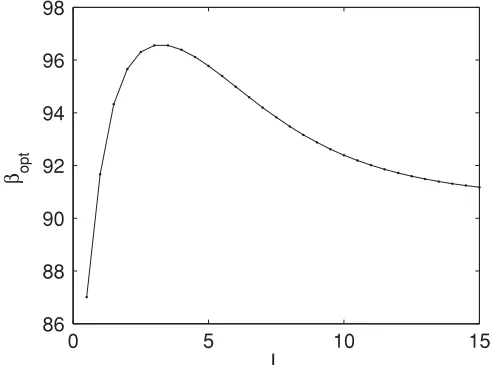
optimal reference frame is found; however, this time it is for spins aligned at an optimal angle of 87◦. In this case 24% of the negativity is preserved. The classical limit is considered numerically, and indicates under the criterion of entanglement preservation, that 90◦is selected out nonmonotonically, with a peak optimal angle of 96.5◦forL=3 spins.
DOI:10.1103/PhysRevA.84.012306 PACS number(s): 03.67.−a, 03.65.Ud, 03.65.Ta
I. INTRODUCTION
In information processing it is generally assumed that a large, classical background reference frame is defined and readily available. For example, to measure the spin of a particle along a certain axis, a Cartesian frame is required. In flat space, with Euclidean geometry, it is usual and convenient to work with orthogonal axes. However, for a classical reference frame (CRF) any nondegenerate coordinate system, together with the usual vector addition law, is assumed to be operationally sharp in specifying any direction in space. Furthermore, the principle of general covariance [1] dictates that the laws of physics do not contain privileged sets of vector fields. As a result of these two assumptions it follows that any two nondegenerate CRFs will do equally well in specifying directions in space, and sothere is no operational distinction between nondegenerate classical reference frames.
However, “information is physical”, and so any directional CRF is unavoidably described by a classical system in a well-defined state. Beyond classical scenarios, situations arise where such an idealized CRF is not available and a finite-sized reference frame is required. For such a quantum reference frame (QRF), encoded, say, in the quantum state of a set of spin particles, one obtains deviations from the classical situation and finite-size effects can be important [2–7].
A typical scenario of interest might consist of an agent Eve who prepares a singlet spin state and gives the two halves to parties Alice and Bob, who wish to detect entanglement present in the system via their local measurements. To do so, they must share some notion of “up and down.” This classically corresponds to a shared Cartesian frame, and is described by a rotationR() that takes some local orthonormal triad for Alice or Bob to some local orthonormal triad for Eve, whether Alice and Bob decide to use orthonormal coordinates or not. In the absence of a shared classical frame, the directionality must be encoded in quantum systems QRFAand QRFB that accompany the two halves of the singlet state. The quantum information, here entanglement, is only partially preserved in the relational properties of the composite state. The degree to which it is preserved will depend on both the size of the QRFs and on their particular directional states.
It is a remarkable fact that Nature provides a minimum nonzero size of spin for particles, e.g., the intrinsic spin of an electron, and hence a minimum scale for a directional reference frame. In three dimensions equipped with a Euclidean inner product we have the notion of a cross-product [9], and so classically it suffices to specify two linearly independent directions in space,e1ande2, with a third direction then taken
to be e1×e2. In the quantum regime, we then find that the
simplest possible QRF allowed consists of two nonaligned spin-1/2 particles [2].
In this paper we consider the fundamental limits of directional reference frames, and consider a QRF that consists of just two spin particles. Our primary interest is in the properties of the quantum reference frame itself, separate from the system for which it is used, and so we take the QRF to be in a pure state, uncorrelated with any other system. While classically any nondegenerate coordinate system performs as well as another, this is not the case for a quantum reference frame. Intuitively one would expect that a QRF with spins aligned orthogonally is best, since it is “farthest from the spins being parallel”; surprisingly, however, we find that this is not generally the case. Instead we find that entanglement can assist the QRF and that orthogonal spins arealmostspecial.
reference frame this can be raised to 24.4%. We also find that it is possible to obtain greater negativity if we use a less than maximally entangled state. For the case of both Alice and Bob lacking a reference frame we find that the most entanglement one can preserve with primitive reference frames isN =7%, with identical frames for Alice and Bob, but now with reference frame spins aligned at an angle of 83◦. In Sec. V we consider how increasing the spin from the primitive reference frame scale to the classical limit affects matters. We show how classical vector addition emerges sharply in the large-Llimit, analyze how well the spin-Lreference does at preserving entanglement, and give evidence that suggests that 90◦is asymptotically optimal.1We conclude with Sec.VI
and provide some technical details on G twirling and spin observables in the appendixes.
II. PRIMITIVE QUANTUM REFERENCE FRAME We look at the simplest possible quantum reference frame for specifying spatial directions in three dimensions: two nonaligned spin-1/2 particles. We refer to any QRF consisting of two spin-1/2 particles simply as a primitive quantum reference frame. Our task is to determine the optimal primitive quantum reference frame for both state preservation and entanglement preservation. The absence of a CRF is described mathematically by the action of G twirling, which involves an averaging of a quantum state over the rotation group. The technicalities of G twirling as they relate to this work are described in Appendixes A andB.
A. Canonical reference frame states
In what follows we shall assume that the QRF is in a pure state |QRF. The system spin states are labeled with respect to a defining, background CRF so that|Jz= +1/2 ≡ |0and |Jz= −1/2 ≡ |1and we order the three spins so thatH= HQRF⊗Hsystem.
For any single spin unitary U, and any composite state ρ on H we can use G[ρ]=G[U⊗3ρ(U†)⊗3] to deduce
that
G[U⊗2⊗1ρ(U†)⊗2⊗1]=G[1⊗2⊗U†ρ1⊗2⊗U], (1)
and so a rigid rotation of the QRF is equivalent to an application of the inverse rotation to the system of interest, and does not af-fect the issue of irreversible loss of quantum information. This equivalence under the two different transformations is simply the equivalence between active and passive transformations in physics [1]. In particular this means that, without loss of generality, we may restrict ourselves to a subset of canonical QRF states.
We can thus work in an external frame in which the Schmidt decomposition of the canonical QRF state is parametrized
1Although of course in this limit any linearly independent frame of
spins preserves entanglement perfectly.
as
|QRF(α,β,δ) =cosα|0 ⊗
cosβ 2|0 +e
iδ sinβ
2|1
+sinα|1 ⊗
sinβ 2|0 −e
−iδ cosβ
2|1
.
(2)
III. OPTIMAL FOR A SINGLE SPIN STATE The G twirling of three spins under rotations results in a single protected subsystem qubit, and in what follows we shall consider the encoding of a single spin state into this protected subsystem. The technical details of G twirling are contained in AppendixesAandB, while AppendixCdescribes the spin observables that allow access to the virtual subsystem degrees of freedom.
The key property of the G-twirling map on the three-spin system is that it splits up into a fully decohering map on the four-dimensional subspace corresponding to a total angular momentumJ =3/2, and apartially decohering map on the orthogonalJ =1/2 subspace. TheJ =1/2 subspace can in turn be split into two virtual qubit systemsM2⊗N2. More
explicitly, we have
G[ρ]=D1[1ρ1]+D2[2ρ2], (3)
where 1 is the projector onto the J =3/2 subspace, and 2is the projector onto theJ =1/2 subspace. The operation
D1 is fully decohering on the support of 1, while D2=
DM2⊗1N2, which signifies that it decoheres fully on a
two-dimensional virtual subsystem M2 while leaving the
two-dimensional virtual subsystemN2unaffected (see AppendixB
for more details).
We adopt the convention of (α,β,δ) for the QRF parameters as given in Eq. (2), and use single spin state parameters (θ,φ), in the state|θ,φ =cosθ|0 +eiφsinθ|1. The encoding of the spin state into the protected subsystem defines a quantum channel from the physical system into a virtual subsystem. The quality of the QRF at protecting quantum information is then equivalent to how noisy this resultant quantum channel is, and as such we do not worry about unitary rotations in the encoding of the state. We also note that the reduction in purity under the encoding can vary greatly with the direction along which the spin is polarized. To eliminate scenarios in which the state is strongly dephased (e.g., ones that preserve only classical information) we should require that the encoding of the quantum state does not decohere strongly along any one direction.
(3 ˜V
4π)
1/31 for the encoding, which gives a measure for the
average distinguishability of two orthogonal states under the encoding.
We first consider a canonical QRF that is in a product state
|QRF = |0 ⊗
cosβ 2|0 +e
iδ sinβ
2|1
, (4)
with the full state | = |QRF ⊗ |θ,φ then subject to G twirling. Only the reduced state on the protected virtual subsystem is unaffected, and we may obtain the Bloch vector in the protected virtual subsystem by simply computing the qubit state TrM2[2||2].
The bases for theJ =3/2 andJ =1/2 are{|J,s,p}, and are given explicitly in AppendixB. We define a virtual set of two qubits for theJ =1/2 sector as|¯i ⊗ |j¯:= |12,i,j. In this notation, the second of the two virtual qubits is the protected virtual subsystem in which the quantum state is stored.
To determine the protected qubit state we first project into theJ =1/2 sector and then trace out the first virtual qubit. Upon doing this for the uncorrelated QRF (4), we find that the Bloch vector of the protected state is given byR=(Rx,Ry,Rz) where
Rx = 1 2√3
−2 cos 2θsin2β
2 +cos(δ−φ) sinβsin 2θ
,
Ry = − 1
2√3sinβsin 2θsin(δ−φ),
Rz= 1
6[cosβ(−2+cos 2θ)
+cos 2θ+cos(δ−φ) sinβsin 2θ]. (5)
For two aligned spins we haveβ =0, and the Bloch vector images get set to (0,0,−23sin2θ),and so this is a very poor
image of the Bloch sphere. Similarly for anti-aligned spins, β=π, we get (−√1
3cos 2θ,0, 1
3), and this is also a very poor
image of the Bloch sphere; both are one-dimensional images of the sphere.
As already mentioned, we can view the action of G twirling as defining a single qubit quantum channel. The mapping induced by G twirling can then be written as an affine map of the state spacex→A(α,β,δ)x+b(α,β,δ), composed of a linear transformation followed by a global translation along a fixed direction. The volume distortion factor is obtained from the determinant of the linear transformation; and for a canonical product state, QRF is found to equal detA=
2 9sin
2β, which has a peak for β
opt=90◦. Thus, the best
product QRF for the preservation of the single spin logical state is obtained when we orient the two spins orthogonally, for which the Bloch sphere is shrunk by about 22%. The image of the Bloch sphere becomes
R(θ,φ)= ⎛ ⎜ ⎝
1
2√3[−cos 2θ+cos(δ−φ) sin 2θ] 1
√
3sin 2θsin(δ−φ) 1
6[cos 2θ+cos(δ−φ) sin 2θ]
⎞ ⎟ ⎠.
Note that the arbitrary phase angle on the QRF acts simply as a linear translation of the phase of the encoded state.
For the most general QRF, in which we allow the two spins to be entangled, it is possible to once again calculate the volume distortion of the state space. In this case
detA(α,β)= 29(cosα−sinα)4(cosα+sinα)2sin2β,
where for simplicity we have set δ=0 as this turns out to be optimal. We now have a maximum volume forβopt=90◦ andαopt =arctan(2
√
2−3). This corresponds to an entropy of entanglement [8] ofE[|QRFQRF|]=0.19 for the QRF.
Thus, the best possible primitive quantum reference frame for encoding a single spin state shrinks the Bloch ball by a factor of 24364 ≈26%, or roughly to a radius of 0.64, and shows that an orthogonal frame is best, but a little bit of entanglement also helps.
IV. OPTIMAL FOR SPIN ENTANGLEMENT We now determine the best primitive QRF for the preserva-tion of entanglement. As menpreserva-tioned before we have a global freedom to rigidly rotate the QRF in space. We consider a composite state | = |QRFA ⊗ |ϕ ⊗ |QRFB, where |ϕ is a maximally entangled state of two spin-1/2 particles; however, rotation of the two local QRFs is equivalent under G twirling to the application of rotation of the two spins that make up |ϕ. Since every such pure maximally entangled state is locally equivalent to the singlet state, we can take|ϕ = |ψ− and work with a general QRF, or alternatively we can fix |QRFAand|QRFBto be canonical QRF states and leave|ϕ unspecified, but maximally entangled. We opt for the latter.
As the measure of bipartite entanglement, we use negativity [11], which is defined as N[ρAB] :=12(||ρAB||TB
1−1), where
||M||1:=Tr√M†M and TB denotes partial transpose with respect to B. While the negativity is usually convenient to calculate, the spectrum of ρTB
AB does not admit an analytic expression for the most general QRF, and so for such cases numerics will be needed.
There are two distinct situations of interest. The first is where either Alice or Bob does not share a classical reference frame with Eve; the second is where neither Alice nor Bob share a CRF with Eve. Since the latter is obtained by two independent G twirlings for Alice and Bob (see AppendixD), we shall first consider the situation where Alice lacks the appropriate CRF. Moreover, this is closest to our main aim of determining the best primitive QRF, since this situation tests the quality of a single QRF, as opposed to the joint functioning of two such reference frames.
A. Twirling Alice
We consider the state consisting of a canonical QRF for Alice and a maximally entangled two spin state. The four spins are in the state
| = |QRF(α,β,δ) ⊗ |ϕ. (6)
G twirling Alice involves ≡ ||transforming as
→G[]=D1[11]+D2[22], (7)
Since measures of entanglement are unitarily invariant, we define a unitary U from the physical basis for the three spins to a virtual one, consisting of orthonormal basis vectors for the two sectors H1 and H2. We then analyze the two
(unnormalized) states p1ρ1=UD1[11]U†andp2ρ2=
UD2[22]U†, where we project into the two sectors of
the first three spins and transform to the virtual basis. In the virtual basis we use the states|¯0and|¯1of the first spin to label the two orthogonal sectors.
The action of the G twirling on the first three spins with probabilityp1results in the first “sector spin” being projected
into the|¯0state and in spins 2 and 3 being fully depolarized; and with probabilityp2, the sector spin is projected into |¯1
and spin 2 is fully depolarized. This leaves us with
ρ1 =14|¯0¯0| ⊗12⊗13⊗σ4(1),
(8) ρ2= 12|¯1¯1| ⊗12⊗σ34(2)
(subscripts on the right-hand side label the qubits) and ρ= G[]=ρ=p1ρ1+p2ρ2. We find that for the singlet state
the projection probabilities are given by
p1,2= 12±16(cosβ−2 cosαcosβcosδsinα
+cosδsin 2α). (9) We wish to maximize the negativity of the full stateG[] acrossAandB. Since negativity is unitarily invariant we attack the problem in the virtual basis, and establish the following lemma and theorem, which are useful for our analysis.
Lemma. Given Hermitian operators {Ai} and {Bi}, with each pair in{Ai}having mutually orthogonal support, we have that |iAi⊗Bi| =
i|Ai| ⊗ |Bi|, where |M|:= √
M†M for any operatorM.
Proof.By spectral decomposition, any Hermitian operator Mcan be written asM=M+−M−, whereM±are positive operators with orthogonal support, and thus|M| =M++M−. In particular,
Ai⊗Bi =(Ai,+⊗Bi,++Ai,−⊗Bi,−)
−(Ai,+⊗Bi,−+Ai,−⊗Bi,+). (10) However, Ai,±⊗Bi,± is orthogonal toAk,∓⊗Bk,± for i= k by definition of the decomposition into positive opera-tors, and orthogonal for i=k by assumption on the set {Ai}. Hence, we have X:=iAi⊗Bi=X+−X− where X+=i,±(Ai,±⊗Bi,±) andX−=i,±(Ai,∓⊗Bi,±),and so|X| = |iAi⊗Bi| =i|Ai| ⊗ |Bi|.
Theorem.For any bipartite stateρAB=
ipiϕA,i⊗σAB,i with orthogonal states{ϕA,i}, the negativity of the state is given byN[ρAB]=ipiN[σAB,i].
Proof.The negativity is defined asN(ρAB) := 12(||ρTB
AB||1−
1), where ||X||1 :=Tr|X| andTB denotes partial transpose
on B. Since ρTB
AB =
ipiϕA,i⊗σ TB
AB,i, it follows from the previous lemma and basic trace properties that N(ρAB)=
1 2
ipiTr(ϕA,i)Tr|σ TB
AB,i| − 1
2 =
ipiN(σAB,i). Due to the orthogonality of the different local sectors for A, this theorem tells us that our task of maximizing the negativity of the full state is reduced to maximiz-ing N[ρAB]=p2N[σ34(2)] over the virtual two spin output statesσ34(2).
B. Induced quantum operation on a single spin From the analysis in the previous section we established that it is sufficient to consider the inducedselectivequantum operation on one-half of the maximally entangled state|ϕ, which takes ϕ→p2σ34(2). This operation depends on the
specific QRF state|QRF(α,β,δ) involved in the G twirling and can be described by the linear completely positive map
EA[|ϕϕ|]=M1|ϕϕ|M1†+M2|ϕϕ|M2†,
whereM1,2act nontrivially only on the first spin. The operators
M1,2 can be found by projecting into theJ =1/2 sector and
then tracing out the virtual subsystemM. For the canonical primitive QRF state (2) they are given by
M1=
1
√
2(e
iδcosα−sinα) sinβ
2 0
−√1 6(e
iδcosα+sinα) sinβ
2
2
3cosαcos
β
2
,
(11)
M2 =
0 √1
2(e
iδcosα−sinα) sinβ
2
0 √1
6(e
iδcosα+sinα) sinβ
2
.
We have fixed the QRF state to be canonical and can now consider a maximally entangled spin state shared betweenA andBwhich, in general, can be written as|ϕ =1⊗U|ψ−, for some unitaryU. The action of the quantum operation on this state is thenEA[|ϕϕ|]=i(Mi⊗1)|ϕϕ|(Mi†⊗1)= (1⊗U)EA[|ψ−ψ−|](1⊗U†) and from unitary invariance of negativity we conclude that all maximally entangled spin states|ϕwill suffer exactly the same loss in negativity.
It is then a simple matter to compute p2σ34(2)=
EA[|ψ−ψ−|] and analyze its negativity. In particular, for the case of a canonical product state QRF, the state σ2
34 is
rank 2, and (for 0β π) has eigenvaluesλ1,2=12± cosβ2 cosβ−3with
corresponding eigenstates
|e1 =
−√3 cotβ 4,−
√
3,−tanβ 4,1
,
(12) |e2 =
√ 3 tanβ
4,− √
3,cotβ 2,1
,
in the virtual basis.
For β =π/2 the negativity of the bipartite state may be found analytically and is N[ρ]= 1
3√2 ≈23.57%, and
furthermore, to good approximation we have that
N(β,γ)≈ 1
3√2|sinβsin 2γ| (13) for an entangled state |ϕ =cosγ|01 −sinγ|10. Surpris-ingly, however, it turns out that a state of orthogonal spins is
notthe optimal product state QRF. It can be shown that one can do slightly better, and obtainN[ρ]=23.60% forβopt=87◦.
As in the previous section, the addition of a small bit of entanglement increases the performance of the QRF. Numerics on the full set of quantum reference frames show that the optimal primitive reference frame for preserving entanglement in a maximally entangled spin state achievesN[ρ]=24.4% for the QRF in the state withδ=0, an entropy of entanglement of E=0.167 (for αopt= −0.15) and the spins aligned at
analytic optimal one we obtained for the quite different task of preserving a logical state. Furthermore, both do approximately 25% as well as the classical limit, with the addition of entanglement providing a similar benefit in each case.
It is also of interest to considerpartiallyentangled states |ϕ. If we use the entangled state|ϕ =cosγ|01 −sinγ|10, instead of a maximally entangled state, we find that the optimal alignment angle obeys
lim γ→0βopt =
π
2. (14)
However, more unusual is that we can preserve more output entanglement by using a less than maximally entangled input state. A careful numerical analysis finds that the most entanglement that can be preserved with any QRF and any entangled two spin state is withβopt =82◦,δopt=0,αopt = −0.2, andγopt=38◦. For this we getN =25.2%. Here we
note that the negativity varies slowly for angles between about 80◦ and 90◦, while the addition of entanglement to the QRF contributes to a much larger variation for N. The unusual parameters for the optimal QRF in each case arise from the finite-sized effects within the full Hilbert space, which occur once we impose the constraint that the QRF must be a separate disentangled system. For such small systems the states of the protected virtual subsystem only have partial overlap with those accessible product states.
C. Twirling Alice and twirling Bob
The tools acquired in the previous section can be directly applied to the situation where neither Alice nor Bob has access to the reference frame of the prepared maximally entangled spin state. As before, we restrict this to primitive quantum reference frames QRFA and QRFB for Alice and Bob, respectively.
The composite system is composed of six spins, in the pure state| = |QRFA ⊗ |ϕ ⊗ |QRFB. However, the independent G twirling at A and B transforms the state as →GB[GA[]]≡G[], where
G[]=
i,j
DB,i[DA,j[i,ji,j]], (15)
where we again label local sectors as either 1 or 2, and define i,j ≡B,iA,j.
We transform the system to the two local virtual bases, and use the orthogonality of the spin states labeling the sectors to deduce that N[G[]]=p2,2σ(2
,2)
3,4 . For identical product
reference frames we havep2,2=181(7−cosβ) sin2β/2 and
σ3(2,4,2) is rank 2. We obtain this state more directly via an application of the selective operations derived above, in other words,
p2,2σ(2
,2)
3,4 =EB[EA[|ϕϕ|]], (16)
with corresponding single spin Kraus matrices {MiA,MjB} given by the local QRFs as in Eq. (11). It is then straight forward to determine, for example, that in the case of product state QRFs for both Alice and Bob, the largest negativity preserved under the two G twirlings is only N =7% for a QRF with spins aligned atβA=βB =83◦.
V. CLASSICAL LIMIT: SPIN-LQUANTUM REFERENCE FRAMES
We have obtained optimal angles close to 90◦for primitive QRFs, and so it is natural to ask what happens to these angles in the classical limit. To do this we consider a QRF composed of two spin-L particles and analyze how βopt
varies with L for a singlet state input. The sector struc-ture atAnow becomes (H2L⊕H2L−1⊕ · · · ⊕H0)⊗H1/2=
H2L+1/2⊕2H2L−1/2⊕ · · · ⊕2H1/2, and we get 2L virtual
protected qubits on 2Ldifferent sectors.
As before, we unitarily transformAto a local “sector” plus “junk” system and a protected qubit system. The negativity of the resultant state (assuming singlet betweenAandB) is then given by
N[G[|QRF(α,β,δ) ⊗ |ψ−]]= k
pkN[σk], (17)
wherekranges over the 2Lsectors containing protected qubits, σk is the reduced state on the two spin subsystem, andp
k is the projection probability of obtaining sectork.
We may once again obtain a reference-frame-dependent quantum operation EA:ρ→i
k,kM
k ikρM
k†
ik that describes
the action of the G twirling purely on Alice’s spin and gives the required ensemble terms pkσk=
ikM
k ik|ψ
−ψ−|Mk† ik
for the negativity.
A. Sectors for the quantum reference frame
To construct the unitary to go from the physical basis states to the Hk sector states we make use of the Clebsch-Gordan coefficients [12,13] L,L;m1,m2|J,M to couple the two
spin-L particles in the QRF. In this setting it is illuminating to see how for large L the state of two orthogonal spins |Jz=L ⊗ |Jx =Lis distributed over the different sectors. Classically one expects the sharp vector addition law where the two orthogonal vectors add to one of length√2L. Numerics show that asLincreases, the distribution of|Jz=L ⊗ |Jx= Lis sharply peaked on the sector with totalJ value closest to√2Las one would expect (see Fig.1). For example, with L=17 it peaks on sectorJ =24, with 24/17≈1.412 being a good approximation to √2≈1.414. By increasing L we probabilistically recover the standard vector addition, although for any finite-sized spin,√2 is always a rational number, which would have pleased the ancient Greeks. Classicality emerges through the distribution over the different sectors, and the value for the negativity of the twirled state is dominated by states σkcwherek
clabels a sector with total angular momentum near to the classical value.
For any angle of inclinationβ for the QRF spins, we can construct the corresponding state
|QRF = |Jz=L ⊗ |Jnˆ(β) =L, (18)
where |Jnˆ(β)=L is a coherent spin state polarized at an
angle β to the Z axis, and then compute the negativity
of G[|QRF ⊗ |ψ−]. Intuitively we expect the preserved
negativity to increase withLfor optimal angles at each value ofL.
In Fig.2we have computed the optimal anglesβopt(L), for
0 0.5 1 1.5 2 0
0.02 0.04 0.06 0.08 0.1 0.12
J/L
Scaled Probability
FIG. 1. (Color online) Quantum Pythagorean theorem: getting
√
2 with spins up toL=25. The vertical axis is a rescaled probability to account for the increase in data points as we increase L. The horizontal axis is J /L where J is the measured total angular momentum of the two orthogonal spins.
most negativity in the singlet state. The numerical algorithm used is as follows: for a fixed L, we first construct Alice’s unitary transformation UA(L) from the physical basis of the spin system H=HL⊗HL⊗H1/2 to the virtual basis
{|s,j,p}wheresis the sector label,j labels the junk degrees of freedom affected by the G twirling, while p labels the degrees of freedom of the protected virtual subsystems. For any fixed angle β, we construct |QRF(β)A⊗ |ψ−AB and apply UA(L)⊗1B to the full state. The negativity after G twirling is then obtained by projecting onto sectors, tracing out onto the protected qubit systems, and using Eq. (17) to find the total preserved negativity betweenAandB.
0 5 10 15
86 88 90 92 94 96 98
L
[image:6.608.316.556.68.257.2]β opt
FIG. 2. Classical limit: optimal angle of inclinationβoptfor the
two spins in the QRF as a function of L. A peak occurs ofβopt=
96.5◦ atL=3. Numerical analysis for large Limplies thatN(β) approaches a step function with zeros atβ=0 andβ=180◦, and that asymptoticallyβopt→90◦.
0 5 10 15
0.2 0.4 0.6 0.8 1
Negativity
[image:6.608.51.294.71.260.2]L
FIG. 3. Negativity in the classical limit: preservation of negativity increases rapidly with increasing spin L. States σkc from sectors
with angular momentum close to the classical value dominate the negativity.
We find that the functionβopt(L) rises to a peak of 96.5◦
forL=3 before starting a slow decline. For large values ofL we find that the functionN(β,L=constant) flattens out over the interval 0 to 180◦and vanishes at the two endpoints where the QRF becomes degenerate. The maximal preservation of negativity increases rapidly withL, reaching 90% already by L=6.5, see Fig.3.
Some insight into why small values ofLhaveβopt>90◦
can be gained from Fig.1. For small values ofLthe probability distribution is asymmetric and has a relatively large weight on the sector with total angular momentum 2L. This sector contains no protected subsystem, and so it is clearly beneficial to have an angle of inclination slightly above 90◦ to reduce the contribution from a sector that can preserve no negativity. Of course there is another competing aspect. Having the spins strongly anti-aligned results in virtual qubit statesσkwith poor negativity. Note that theL=1/2 case is in fact the only one withβopt<90◦, and so in this case it is not merely a matter
of avoiding the sector of largestL, but there is also a strong dependence of the negativity for each σk on the QRF spin alignment. In light of these results, it would be of interest in future work to study this emergence of classicality and to further analyze the competing mechanisms at work for small systems.
VI. CONCLUSIONS
In this work we have considered the fundamental limits of finite-sized quantum reference frames. We have analyzed how well the most primitive such frame can ever perform under certain information-preserving criteria, and have found a rough concordance as to the properties of the optimal primitive reference frame. The optimal frames involve spins roughly
[image:6.608.49.295.505.688.2]reference frame and found that the usual vector addition law emerges gradually, and that a large amount of negativity can be preserved even for modest-sized spins. The optimal angle of inclination as a function ofLdisplays an unusual peak at L=3, before slowly decreasing toward 90◦, where finite-size effects are washed out and the reference frame no longer degrades the spin entanglement.
ACKNOWLEDGMENTS
D.J. acknowledges the support of EPSRC and thanks Terry Rudolph and Yeong-Cherng Liang for helpful discussions.
APPENDIX A : LACK OF A CLASSICAL REFERENCE FRAME
Here we describe how G twirling arises when there is not a shared directional reference frame. We can imagine an agent Eve, preparing a system of spin particles that make up a quantum system in a state|. This pure quantum system is prepared in conjunction with a classical reference frame CRFE which sharply specifies directions in space. We could regard CRFEas a large spin-jsystem in a highly coherent state, here, however, we simply take it as an abstract background setting and place it on the classical side of the Heisenberg cut.
Eve then sends the system to Alice, but unfortunately Alice does not share a private reference frame with Eve. Her local axes are related to Eve’s by some unknown rotation and so Alice must average the state uniformly over all spatial rotations. The processed state represents the updated knowledge of the randomly rotated state, or the state from Alice’s point of view, where she lacks knowledge of how her CRFA is related to Eve’s CRFE. In the case of multiple copies, instead of a single-shot procedure, Eve sends multiple copies of the same state to Alice; but if the systems are sent identically, then the same unitary rotation is applied to each system and then we have a perfect channel, where no averaging takes place. However, if the systems are independently and randomly rotated around, then Alice must once again use an average over all rotations. These two perspectives correspond to the Bayesian and frequentist views of quantum states.
In both cases the averaged state becomes
G[||]≡
dU()||U†(), (A1)
where we use the Haar measure over the set of unitaries U()=U1()⊗ · · · ⊗UN() induced by the spatial rotation R() and integrate over all rotations in SO(3). Each subsystem HkinH=H1⊗ · · · ⊗HNtransforms under the rotation via
an irreducible representation (irrep)Uk() of SU(2)−N spin-1/2 particles in total. We refer to the applicationρ→G[ρ] of this group averaging as “G twirling.”
APPENDIX B : PROTECTED SUBSYSTEMS The tensor product representationU() is reducible, and the full Hilbert spaceH=H1⊗ · · · ⊗HN can be split into
irreps of the rotational symmetry group. Specifically, the Schur-Weyl duality [14] tells us that the full Hilbert space Hsplits into a sum of multiplicity-free irreps of the group SU(2)×SN, whereSNis the discrete permutation group ofN
elements. In other words, we have thatH= ⊕q(Mq⊗Nq) whereMq⊗Nq≡Hqis thesubspace sectorin which SU(2) acts trivially on Nq and irreducibly onMq, whileSN acts trivially onMqand irreducibly onNq.
We shall assume that Eve shares an ordering reference frame with both Alice and Bob, or at the least, she maintains the same ordering of systems when sending multiple copies of the same state. Since the subsystems undergo a unitary channel,Nq are calledprotected or decoherence-freevirtual subsystems and can hold information that is not erased by rotations.
It is found that two spins can protect one classical bit, while we need a minimum of three spins to encode a single virtual spin subsystem. This follows from the angular momentum ad-dition H=H1/2⊗H1/2⊗H1/2=M3/2⊗N3/2⊕M1/2⊗
N1/2with dim(M3/2)=4, dim(N3/2)=1, and dim(M1/2)=
dim(N1/2)=2.
This decomposition into irreps of SU(2)×S3 can be described in an orthonormal basis forHof the form{|λ,s,p} whereλ=3/2,1/2 is a symmetry class label and corresponds to the different total angular momentum sectors, while the remaining labels s and p correspond to the action of the rotation group and permutation group, respectively. In terms of computational spin bases, we have for the J =3/2 sector
32,0,0
= |000,
32,1,0
= √1
3(|001 + |010 + |100),
(B1)
32,2,0
= √1
3(|110 + |101 + |011),
32,3,0
= |111,
while for theJ =1/2 sector
12,0,0
= √1
2(|010 − |100),
12,0,1
= √1
6(2|001 − |010 − |100),
(B2)
12,1,0
= √1
2(|011 − |101),
12,1,1
=√1
6(−2|110 + |101 + |011).
APPENDIX C : ACCESSING THE PROTECTED QUBIT We can ask which spin observables must Alice manipulate in order to access the virtual qubit subsystem, protected from the G twirling. Alice has in her possession three spin-1/2 particles, with angular momentum operators{J1,J2,J3}, where
for a fixed Cartesian frame with Pauli matrices {σx a,σ
y a,σaz} on spin a we will use the compact vector notation Ja:= (Jx
a,J y
a,Jaz)=(
1 2σ
x a,
1 2σ
She knows that for a given stateρthe relevant G-twirling map takes the form
G[ρ]=D1[1ρ1]+D2[2ρ2], (C1)
where the j =3/2 and j =1/2 sectors are writtenH1 and
H2=M2⊗N2, with projectors1 and2, and whereD1
fully decoheres H1 while D2 fully decoheres the virtual
subsystem M2 and leaves N2 unaltered. The observable S
that has the sectorsH1,2 as eigenspaces is given, in terms of
local spin observables, by
S=13(J1·J2+J2·J3+J1·J3), (C2)
where the inner products inSare defined by
Ja·Jb :=Jax⊗Jbx+Jay⊗Jby+Jaz⊗Jbz⊗1c. (C3)
We see that S is a relational observable, roughly being the average degree of alignment between the three spins, and is both rotationally invariant and permutationally invariant, as expected from the Schur-Weyl duality.
The physical observables that Alice must measure to access the state on the protected virtual qubit systemN2are given in
terms of the physical spin observables by
Nx= √1
3(J2−J1)·J3,
Ny= √2
3(J1×J2)·J3, (C4)
Nz=1
3(J2·J3+J1·J3−2J1·J2).
The observablesNiare rotationally invariant, but not invariant under permutations, as expected.
Using the “order 2 with order 2” operator identity
[Ja·Jc,Jb·Jc]=i(Ja×Jb)·Jc (C5)
together with the “order 2 with order 3” identity
[Jb·Jc,(Ja×Jb)·Jc]= i
2Ja·(Jc−Jb), (C6) one can readily verify that{Ni}obey the su(2) Lie Algebra relations [Ni,Nj]=iij kNk and also satisfy Ni2=1H2=
projector onto thej =1/2 sector, justifying our labels ofx,y,z for the virtual spin observables.
Furthermore, changes of the order reference of the particles correspond to the action of the permutation groupS3, which
preserves the commutation relations and corresponds to rotations of the virtual Bloch sphere through angles of 120◦.
APPENDIX D : TWIRLING ALICE, TWIRLING BOB In Sec. IVwe are interested in how well local reference frames do in the preservation of bipartite entanglement. The initial product state is assumed to take the form | = |QRFA ⊗ |ϕ ⊗ |QRFB, where|ϕis an entangled two spin state and |QRFA and|QRFB consist ofNA andNB spins, respectively. In the absence of a shared classical reference frame for bothAandBthis means that both sides are G twirled independently,|| →ρAB=GA⊗GB[||], or more explicitly,
GA⊗GB[||]=
d dUAB(,)|
× |UAB† (,),
where UAB(,)=U()⊗NA+1⊗U()⊗NB+1 is the
uni-tary corresponding to the rigid rotation of all spins atAthrough an angle, and the rigid rotation of all spins atBthrough an angle.
A brute-force numerical simulation of this G twirling rapidly gets difficult, and so one must exploit the structure of the decoherence-full or decoherence-free subsystems to determine how much entanglement is lost for a given pair of local reference frames QRFAand QRFB.
[1] R. M. Wald,General Relativity(University of Chicago Press, Chicago, 1984).
[2] S. Bartlett, T. Rudolph, and R. Spekkens,Rev. Mod. Phys.79, 555 (2007).
[3] F. Costa, N. Harrigan, T. Rudolph, and C. Brukner,New J. Phys. 11, 123007 (2009).
[4] S. Bartlett, T. Rudolph, R. Spekkens, and P. Turner,New J. Phys. 11, 063013 (2009).
[5] M. Ahmadi, D. Jennings, and T. Rudolph, Phys. Rev. A82, 032320 (2010)
[6] D. Poulin, and J. Yard,New J. Phys.9, 156 (2007).
[7] S. D. Bartlett, T. Rudolph, and R. W. Spekkens,Phys. Rev. A 70, 032321 (2004).
[8] S. Popescu, and D. Rohrlich,Phys. Rev. A56, R3319 (1997). [9] T. Frankel, The Geometry of Physics, 2nd ed. (Cambridge
University Press, Cambridge, England, 2004).
[10] M. A. Nielsen and I. L. Chuang,Quantum Computation and Quantum Information, Cambridge University Press, Cambridge, England, 2000).
[11] G. Vidal and R. F. Werner,Phys. Rev. A65, 032314 (2002). [12] M. E. Rose,Elementary Theory of Angular Momentum(Wiley,
New York, 1957).
[13] A. R. Edmonds, Angular Momentum in Quantum Mechanics (Princeton University, Princeton, NJ, 1957).