
Exploring how "smart" the Basel II framework is in the Australian context of banking reform
448
0
0
Full text
(2) STATEMENT OF ORIGINALITY This thesis contains no material which has been accepted for the award of any other degree or diploma in any university or other tertiary institute and, to the best of my knowledge and belief, contains no material previously published or written by another person, except where due reference has been made in the text. I give consent to this copy of my thesis, when deposited in the University Library, being made available for loan and photocopying subject to the provisions of the Copyright Act 1968.. Signed by . .. ………………………………………. PUBLICATION FROM THE RESEARCH The following conference papers and proceedings have been produced from the research reported in this thesis. •. Li Siqiwen, (2009) ‘Insights into the Financial Crisis: A Minskyian perspective drawing on interviews with Australian regulators and risk managers’ 11th Path to Full Employment Conference/16th National Unemployment Conference: Proceedings, Newcastle, NSW, Australia. •. Li Siqiwen, Juniper Archibald James, (2008) ‘Adjustments to the Basel-II framework for prudential control as suggested by the current financial crisis’, Labour Underutilisation, Skills Shortages and Social Inclusion: Incorporating the 10th Path to Full Employment Conference and 15th National Conference on Unemployment: Proceedings, Newcastle, NSW, Australia. •. Li Siqiwen, Juniper Archibald James, (2007), ‘Basel II: An example of 'smart' regulation’, 20th Australasian Finance and Banking Conference (AFBC), Sydney.
(3) Acknowledgements This is a long and challenging journey in my entire life. I could not travel alone without the supports from my supervisor, family, friends and colleagues. I want to thank everyone who accompanies with me going through this. I have the most supportive and lovely family whose unlimited love gives me forever power to chase my dream. They always encourage and guide me to be optimistic towards the uncertain and downside part of the life. I am lucky to have Dr James Juniper as PhD supervisor. His extensive experience in supervision helps me walk through the tough periods and figure out all the puzzles from my research. I am amased by his intelligence and lovely personality. I have learnt from his how to be a good academic and enjoyed discussing my career plan with him. I am proud that I have a group of excellent friends with me during PhD journey whom I met mostly in Newcastle. They all are warm people with beautiful soul. We had lots of coffee together and share all thoughts and giggles. Thank you my friend—Taha, Katherine, Hawzhin, Alison, Josh, Helena and Julie. I will never forget the cries and laughs we had together. In particular, I want to thank two persons who make significant contributions for my PhD. Julie sacrifices her private time with family to proofread my thesis and my husband transcribes research interviews for me with only few complaint. I also wish to acknowledge the contribution of interviewees who participate in this research and those who kindly assist me with data collection, thesis submission and other relevant works..
(4) Thesis Abstract This thesis evaluates the effectiveness of Basel II as a regulatory framework in the Australian context of banking reform. More specifically, the thesis draws on a range of economic theories to establish a distinction between risk and uncertainty, explain both the causes and consequences of financial instability, and investigate the structure of, and policy responses to major financial crises. In this context, the thesis investigates the congruence between Basel II framework and the attributes of Responsive and Smart Regulation. While the thesis argues that Basel II can be regarded as a good example of ‘smart’ regulation, it highlights areas of weakness and potential danger. In particular, it raises concerns about procedures of risk-management that are based on internal modelling using the Value-at-Risk (VaR) approach, as required under Basel II. It examines ways in which techniques of quantitative analysis can be enhanced to accommodate uncertainty through the use of robust techniques that account for time-varying uncertainty premia. However, within an environment characterised by increasing financial instability, the parameters that determine deep structures of selfsimilarity in the stochastic processes of different assets, will themselves be shifting so that the relevant asymptotic densities become more fat-tailed and negatively skewed. This thesis applies the Universal Pragmatics methodology developed by Jurgen Habermas for interpreting both relevant documents and the responses of interviewees. The validity claims highlighted in Habermasian discourse analysis are adopted as benchmark for normative evaluations of interviewee responses. This methodology is applied to transcripts of semi-structured interviews that have been designed to extract relevant information from both risk managers in the banking sector and supervisors from the regulatory authorities in Australia. The research findings arising from an analysis of interviews show the superiority of Basel II in contrast to Basel I, and also supports the determination of those aspects of Basel II that are more or less effective. This process highlights a range of problematic issues arising from Basel II, in regard to risk management and supervisory practices, which need to be addressed by policy-makers, supervisors, and bank practitioners in the future. i.
(5) In particular, the thesis concludes that a more effective prudential control of the entire financial market and an improved system of corporate governance in the banking sector, are important complements to Basel II for the purpose of stabilising financial markets and obtaining sustainable economic growth in the Australian economy.. ii.
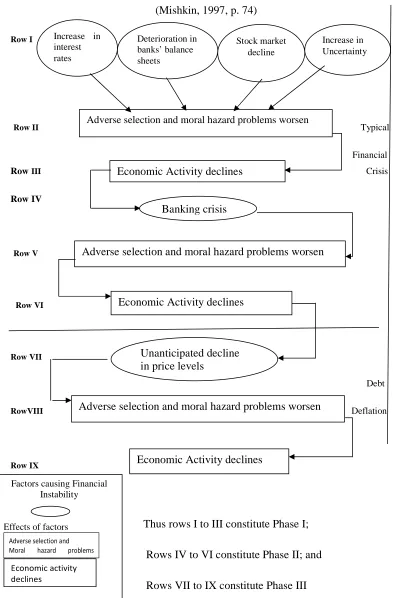
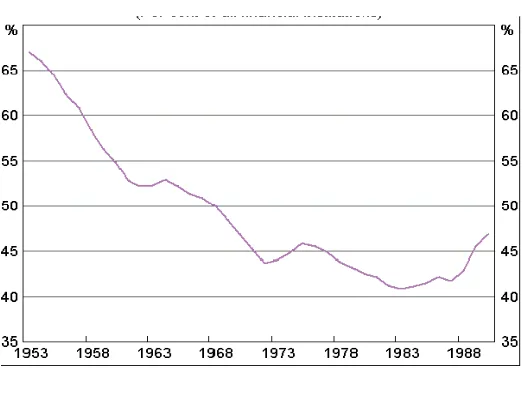
(6) List of Figures Figure 1: Propagation of Financial Instability in Industrialized Countries Figure 2: Bank Assets (% of all financial institutions) Figure 3: Decrease in real wage and increase in productivity Figure 4: Decrease in total wage share of GDP Figure 5: Increase in household debt to income ratio Figure 6: Household interest payments as percentage of income Figure 7: Decrease in household saving ratio Figure 8: Information Disclosures under Market Discipline Figure 9: The Enforcement Pyramid representing the Sanctions pitched at Single Regulated Firms and an Example Figure 10: Major Dimensions underlying the Typology of Regulatory Agencies Figure 11: The Enforcement Pyramid representing the Sanctions pitched at the Entire Industry Figure 12: The Three-faceted Pyramid developed by Gunningham etc Figure 13: The Pyramid of Risk Evaluation Approaches for Credit Risks Figure 14: One day VaR at 95% Confidence Level Figure 15: Delta-Normal Method Figure 16: Historical Simulation Method Figure 17: Monte Carlo Method Figure 18: Scenario Analysis Approach Figure 19: Caravani’s Risk-Sensitive Weighting Function. iii.
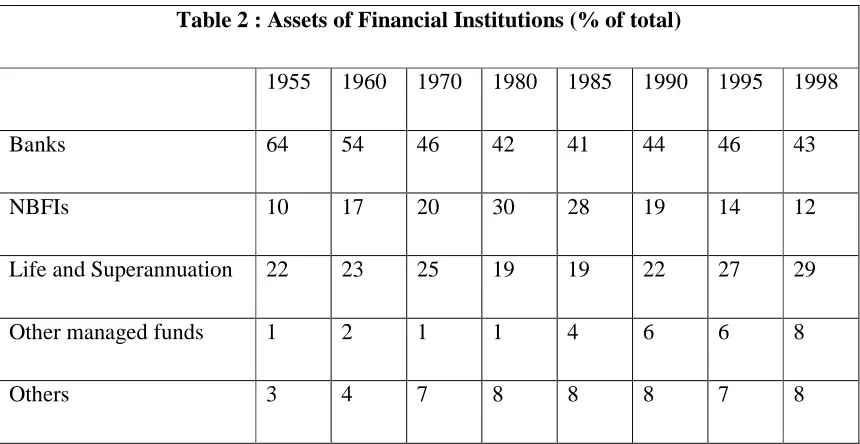
(7) List of Tables Table 1: Knightian /Keynesian Uncertainty—A Synthesis Table 2: Assets of Financial Institutions Table 3: Authorized Foreign Banks in Australia (Numbers of firms) Table 4: Regulatory Capital Elements Table 5: Minimum Capital Requirements Table 6: Habermas’ Three Domains of Knowledge Table 7: Type of Organizations and Individuals Participants involved in Research Interviews. iv.
(8) List of Appendixes Appendix 1: 1988 Basel Capital Accord: Definition of Capital included in the Capital Base Appendix 2: Risk Weights by Category of On-Balance Sheet Asset Appendix 3: Credit Conversion Factors for Off-Balance Sheet Items Appendix 4: Research Project Information Statement for Interviewees Appendix 5: Interview Consent Form Sample Appendix 6: Interview Questionnaire Sample. v.
(9) Table of Content i. Abstract List of Figures. iii. List of Tables. iv. List of Appendixes. v. Chapter One: Introduction 1.1 Introduction. 1. 1.2 Background of Research. 1. 1.3 The Research Aim and Scope. 4. 1.4 Content and Structure of the Thesis. 6. Chapter Two: Decision-Making under the Conditions of Risk and Uncertainty 2.1 Introduction. 11. 2.2. Risk and Uncertainty. 12. 2.2.1 Frank Knight on Uncertainty and Risk. 13. 2.2.2 Keynes’s Uncertainty. 15. 2.2.3 Ambiguity and Fundamental Uncertainty. 21. 2.2.3.1 Distinction between Ambiguity and Fundamental Uncertainty. 21. 2.2.3.2 Brief Review of Utility Theory. 24. 2.2.3.2.1 Multiple-Priors. 26. 2.2.3.2.2 Sub-Additive Probability. 27. 2.2.3.3 Cumulative Prospect Theory. 29. 2.2.3.4 Minsky’s interpretation of Keynes’ Uncertainty. 32. 2.3 Efficient Market Hypothesis. 34. 2.3.1 Rational Expectation. 36. 2.3.2 Different perspectives on Efficient Market Hypothesis. 37. 2.4 Financial Instability and Crisis 2.4.1 Financial Crisis 2.4.1.1 Noise Traders. 41 41 42. 2.4.1.2 Nonlinear dynamics of Economic Bubbles. 42. 2.4.1.3 Bubbles. 43. 2.4.2 Financial Instability 2.4.2.1 Asymmetric Information Approach. 45 47.
(10) 2.4.2.1.1 Factors leading to Financial Instability. 49. 2.4.2.1.1.1 Increase in the Interest Rate. 49. 2.4.2.1.1.2 Increase in Uncertainty. 50. 2.4.2.1.1.3 Asset Market Effects on Balance Sheet. 50. 2.4.2.1.1.4 Problems in the Banking Sector. 51. 2.4.2.1.2 Propagation Mechanism of Financial Instability. 52. 2.4.2.1.3 Policy Implications of Asymmetric Information Approach 2.4.2.2 The Monetarists Approach to Financial Instability. 55 59. 2.4.2.2.1 Foundations of the Monetarist Approach. 59. 2.4.2.2.2 Schwartz’s Extensions of Monetarist Approach. 60. 2.4.2.2.3 Policy Implication of Monetarist Approach. 62. 2.4.2.3 Financial Instability Hypothesis 2.4.2.3.1 Policy Implication of Financial Instability Hypothesis. 64 73. 2.4.2.3.1.1 Lender-of-Last-Resort (LOLR) Intervention. 73. 2.4.2.3.1.2 The Government Deficit. 74. 2.5 Conclusion. 76. Chapter Three: Prudential Control and Banking Regulation 3.1 Introduction. 79. 3.2 Theories of Regulation. 80. 3.2.1 Oscillation between Two Modes of Regulation. 80. 3.2.1.1 Command and Control. 80. 3.2.1.2 Self Regulation. 85. 3.2.2 Third Way Approaches. 89. 3.3 History of Prudential Control Regulation. 91. 3.3.1 History of Changes in Financial Sector. 91. 3.3.1.1 Pre-Deregulation Period. 92. 3.3.1.1.1 U.S before Deregulation. 92. 3.3.1.1.2 UK before Deregulation. 93. 3.3.1.1.3 Australian before Deregulation. 94. 3.3.1.2 Financial Deregulation. 97. 3.3.1.2.1 Financial Deregulation in UK. 98. 3.3.1.2.2 Financial Deregulation in U.S. 99.
(11) 3.3.1.2.3 Financial Deregulation in Australia 3.3.2 Change of Bank Activities. 100 107. 3.3.2.1 The Shift from Financial Intermediation to Brokerage. 107. 3.3.2.2 Structured Finance Products. 107. 3.3.3 Implications for Regulation on Banking System. 110. 3.3.3.1 Pre-Basel Prudential Control. 110. 3.3.3.2 1988 Basel Accord: Basel I. 113. 3.3.3.3 1996 Basel I Amendment. 115. 3.3.3.4 New Basel II Accord: Basel II. 118. 3.3.3.4.1 The Three Pillars of Basel II 3.3.3.5 2008 Financial Crisis. 118 123. 3.3.3.5.1 Disconnection within Securitisation Process. 123. 3.3.3.5.2 Criticism of External Ratings. 125. 3.3.3.5.3 Regulatory Environmental Changes as Underlying Driver. 126. 3.4 Conclusion. 128. Chapter Four: Is Basel II a “Smart” Regulation 4.1 Introduction. 129. 4.2 Governmentality. 130. 4.2.1 Foucault’s Concept of “Governmentality”. 130. 4.2.2 Rethink the Role of State in Neo-liberalism under “Govermentality”. 135. 4.3 The Concept of Reflexivity. 138. 4.3.1 The Concept of “Responsive Law”. 138. 4.3.2 The Concept of Reflexivity: ‘Autopoietic’ Regulation. 139. 4.3.2.1 System Monitoring. 142. 4.3.2.2 Intermediary Structure and Networks. 143. 4.3.2.3 Corporate Social Responsibility. 143. 4.3.2.4 Market-Oriented Strategies. 144. 4.4 Responsive Regulation. 144. 4.4.1 Responsiveness. 145. 4.4.1.1 Tit-for-Tat Strategy. 146. 4.4.2 Spreading the “Regulatory” Burden. 148. 4.4.2.1 Transforming from Command-and-Control to SelfRegulation. 148.
(12) 4.4.2.2 Tripartism. 151. 4.5 Smart Regulation. 152. 4.6 Is Basel II a “Smart” Regulation?. 156. 4.6.1 Dichotomous Framework as Evaluation Benchmark 4.6.1.1 Spreading the Regulatory Burden. 157 158. 4.6.1.1.1 System Monitoring and Enforced Self-Regulation. 158. 4.6.1.1.2 Intermediary Structures and Tripartism. 158. 4.6.1.2 Achieving Responsive Enforcement. 159. 4.6.1.2.1 Corporate Social Responsibility and Responsiveness. 159. 4.6.1.2.2 Market-Oriented Strategies and Tripartism. 159. 4.6.2 Is Basel II Framework an Example of these new Regulatory Approaches? 4.6.2.1 Spreading the Regulatory Burden. 160 160. 4.6.2.1.1 Internal-Rating based Approach and System Monitoring. 160. 4.6.2.1.2 Intermediary Structures and Tripartism under Basel II. 161. 4.6.2.2 Achieving Responsive Enforcement. 163. 4.6.2.2.1 “Responsiveness” in Basel II framework. 163. 4.6.2.2.2 Risk Culture, Board Education and Corporate Social Responsibility. 165. 4.6.2.2.3 Market Discipline. 166 167. 4.7 Conclusion Chapter Five: Is the Value-at-Risk (VaR) Approach adequate for Risk Management under the Basel II Framework? 5.1 Introduction. 169. 5.2 Value-at-Risk (VaR) Risk Estimate Approach. 170. 5.2.1 Traditional Value-at-Risk Approach 5.2.1.1 Variance-Covariance Approach. 170 173. 5.2.1.1.1 Delta-Normal Method. 174. 5.2.1.1.2 Delta-Gamma Method. 175. 5.2.1.2 Historical Simulation. 176. 5.2.1.3 Monte Carlo Simulation. 178. 5.2.2 VaR Backtesting. 180. 5.2.3 Stress Testing. 181. 5.2.4 Extreme Value Theory. 183.
(13) 5.2.5 Copula Methodology. 187. 5.3 “Coherent” Risk Measures. 191. 5.3.1 Lacking of Sub-Additivity as Weakness of VaR Approach. 192. 5.3.2 Expected Shortfall (ES). 193. 5.4 Distortion Risk Measures and Choquet Integral. 196. 5.4.1 Distortion Risk Measure. 196. 5.4.2 Choquet Expected Utility. 198. 5.5 The Approach to measure Uncertainty and Ambiguity 5.5.1 Robust and Risk-Sensitive Control 5.6 Conclusion. 201 204 211. Chapter Six: Research Methods: the Philosophy and Research Design 6.1 Introduction. 213. 6.2 Philosophical Underpinnings. 214. 6.2.1 Universal Pragmatics. 216. 6.2.2 Theory of Communicative Action. 220. 6.2.2.1 Lifeworld and System. 221. 6.2.2.2 Communicative Action. 225. 6.3 Research Design. 227. 6.3.1 Research Questions. 227. 6.3.2 Qualitative Research Method. 228. 6.3.3 Semi-Structured Interviews. 230. 6.3.4 Interview Strategy. 230. 6.3.4.1 Sampling. 233. 6.3.4.2 Strategy of Accessing Potential Interviewees. 233. 6.3.4.3 Rationale of Interview Questions. 234. 6.3.4.4 Updating of Interview Questionnaires. 237. 6.3.5 Discourse Analysis. 237. 6.3.6 Coding Strategy. 238. 6.3.6.1 Open Coding. 238. 6.3.6.1.1 Breaking down Data into Units. 239. 6.3.6.1.2 Descriptive Categories. 240. 6.3.6.1.3 Constant Comparisons. 240. 6.3.6.2 Selective Coding. 241.
(14) 6.3.7 Memoing, Sorting and Writing. 241. 6.3.8 Validity. 242. 6.3.9 Limitation. 244 245. 6.4 Conclusion Chapter Seven: Research Interview Analysis and Findings 7.1 Introduction. 247. 7.2 Research Findings. 248. 7.2.1 Views on the Inadequacies of Basel I. 248. 7.2.1.1 Simplified Risk Categories under Basel I. 248. 7.2.1.2 Broader Risk Categories under Basel II. 250. 7.2.1.3 Stronger Underlying Methodology under Basel II. 251. 7.2.1.4 Performance of Basel I and Basel II in a Stressed Economic Environment. 255. 7.2.1.5 Capital Relief and Information Disclosure as Two Ways to Correct the Distortion under Basel I. 259. 7.2.2 Assessment of the Effectiveness of Basel II in Empirical Risk Management and Prudential Supervision Practices. 262. 7.2.2.1 The Effectiveness of the Underlying Methodology. 262. 7.2.2.1.1 The Impact on Banks from Adopting IRB Approach. 263. 7.2.2.1.2 The Effectiveness of VaR Risk Approach. 268. 7.2.2.1.3 Stress Test. 274. 7.2.2.1.4 Backtesting. 279. 7.2.2.2 The Practicability of Basel II. 281. 7.2.2.3 The Organizational Impact on the Banks and Regulatory Supervision Process. 285. 7.2.2.3.1 The Organizational Impact on Banks. 285. 7.2.2.3.1.1 The Impact on Banks arising from Pillar One. 285. 7.2.2.3.1.2 The Impact of Market Awareness on Banks. 290. 7.2.2.3.1.3 The Impact on Regulatory Supervision. 296. 7.2.2.4 The Building of a Risk Culture. 300. 7.3 Conclusion. 303. Chapter Eight: Concerns about the Problems arising from Basel II Implementation 8.1 Introduction. 307. 8.2 The Burdens of Basel II Implementation. 307.
(15) 8.2.1 Excessive Complexity of Underlying Methodology. 308. 8.2.2 Strict Data Requirements under Basel II Framework. 309. 8.3 The Possibility of Competitive Disadvantage relating to IRB Approach. 314. 8.3.1 IRB Approach introduces the Possibility of Competitive Advantage. 314. 8.3.2 Debate on IRB Accreditation between Regulators and Banks. 315. 8.3.3 Major Banks benefit more and in more advanced Market Position. 320. 8.3.4 The Non-Sensitive Regulatory Buffer imposed in Australia. 322. 8.4 The Issue with External Ratings. 327. 8.4.1 Profit-Driven Nature of Credit Rating Agencies. 328. 8.4.2 Impact of Unreliable External Ratings on the Effectiveness of Basel II. 330. 8.4.3 Why Unreliable External Ratings still play a Role in Banks’ Risk Management Process. 331. 8.5 The Issues with Regulatory Arbitrage. 334. 8.5.1 The “Seeds” of Regulatory Arbitrage sown by Problematic Nature of Securitization. 334. 8.5.2 The Efforts Basel II made to address Securitization Issues. 337. 8.5.3 Existing Arbitrage Possibility under Basel II Framework. 340. 8.6 The Issues arising from Cross-Border Supervision under Basel II. 343. 8.6.1 Different Risk Approaches adopted between Overseas Branches and Parent Banks. 344. 8.6.2 Difficulties in Implementation and Dislocation in Risk Measurement. 346. 8.6.3 The Possibility of Competitive Disadvantages. 347. 8.6.4 The Necessity of Efficient Negotiation between Home and Host Countries’ Regulators. 351. 8.7 The Issues with Information Disclosure. 353. 8.7.1 Lack of Information and Cost Burden. 354. 8.7.2 Excessive Information Disclosure. 355. 8.7.3 Education and Understanding Issues. 358. 8.7.4 Inconsistency with International Accounting Standards. 360. 8.7.5 Confidentiality Issue. 363. 8.8 Issue relating to Pillar Two Risks. 365. 8.8.1 The Quantifying of Pillar Two Risks. 365. 8.8.2 Liquidity Risk. 368. 8.9 Conclusion. 371.
(16) Chapter Nine: Contribution of the Research and Policy Implication for Reforming Banking Risk Management Systems under Basel II Framework 9.1 Introduction. 377. 9.2 Theoretical Contributions. 377. 9.2.1 Behavioural Economics Literature as new Entry-Point contribute to Risk Management System Reform. 378. 9.2.2 The Analysis of 2008 Financial Crisis drawing on Securitization Issue. 380. 9.2.3 Basel II possesses certain attributes of Responsive and Smart Regulation. 381. 9.2.4 Adopt Risk-Sensitive and Robust Control Theory in Basel II. 382. 9.3 Empirical Research Findings. 383. 9.3.1 Research Methodology for Empirical Investigation. 383. 9.3.2 Superiority and Effective aspects of Basel II. 384. 9.3.3 Insufficient Underlying Risk Methodology of Basel II. 386. 9.3.4 Issues and Problems arising from Basel II Implementation. 387. 9.4 Policy Implications of the Research. 391. 9.4.1 Effective Prudential Controls over the Financial Market. 391. 9.4.2 Improvement of Corporate Governance in the Banking sector. 392. 9.5 Limitations and Future Research. 393. 9.5.1 Limitations of the Research. 393. 9.5.2 Future Research Area. 394. Bibliography. 395. Appendixes. 419.
(17) Chapter One Introduction 1.1 Introduction The thesis provides a timely evaluation of Basel II, which has been implemented in Australia and certain other developed economies recently. The following sections consider the background to the research, research aim and scope, and the content and structure of the thesis.. 1.2 Background of Research On 26 June 2004, Central Bank Governors and the heads of their respective bank supervisory authorities within the Group of ten (G10) countries issued a publication based on an agreed text, the Revised Framework on International Convergence of Capital Measurement and Capital Standards. A comprehensive version of it was issued on 4 July 2006 after collecting responses from banks and relevant regulatory authorities from various regimes. This new capital adequacy framework is commonly known as Basel II. This framework serves as the basis for the national rulemaking and implementation process, and it takes account of new developments in the measurement and management of banking risks for those banks that move onto the “internal ratings-based” (IRB) approach. In releasing the 1988 Capital Accord (Basel I), the Basel Committee on Banking Supervision (BCBS) sought to harmonise regulatory capital requirements for internationally active banks and to make regulatory capital sensitive to risk, by risk-weighting assets and converting off-balance sheet assets to on-balance sheet equivalents. Basel I has been implemented in many jurisdictions including Australia. In Australia, Basel I was first implemented for all Australian banks and, over time, for all authorised deposit-taking institutions. In 1996, a requirement to hold regulatory capital explicitly against market risk was added. There are two alternative approaches to the measurement of market risk: a standardised method and an internal model approach. With subsequent advances in risk management practices, technology and banking markets, the insufficiencies and poor performance of Basel I and its 1996 amendment became apparent, and it has been criticised by academics, regulators 1.
(18) and bank practitioners widely especially after the occurrence of the 2008 financial crisis. As a step forward in the evolution of regulatory capital, Basel II aims to strengthen the soundness and stability of the international banking system while maintaining sufficient consistency. Basel II is structured based on three pillars. Pillar One is the direct replacement for the prescriptive elements of Basel I. In addition to credit and market risks, Pillar One requires regulatory capital for operational risk and it provides a range of approaches through which banks are able to use their own risk estimates. Similar to credit risk, there are standardised and advanced approaches to operational risk1. The treatment of market risk is little changed under Basel II. The second Pillar—supervisory process, and the third Pillar—market discipline, constitute the new content of Basel II, and are regarded as supplements to regulatory capital adequacy requirements to oversight the risk-taking activities of banks. In particular, the aim of the second Pillar is specified to be the extended and active bank supervision. Pillar Two is a supervisory review process, which seeks to ensure that banks have adequate capital to support all the risks in their business and to encourage them to develop and use better risk management techniques in monitoring and managing their risks. This Pillar is regarded as providing formalised guidance for national supervision. Pillar Three is market discipline, and it details certain disclosure requirements to allow market participants to assess key pieces of information such as risk exposures, risk assessment processes and capital adequacy. Under national supervision, banks are required to provide reports with such information to regulators, in the terms of Pillar Three of Basel II; however banks need to disclose information to the public as well as to regulators which is beyond the regulatory purpose of information disclosure.. 1. Under each of the available standardised approaches, income is used as a proxy for operational risk. In contrast, the capital requirement of the advanced measurement approaches (AMA) is the risk measure generated by a bank’s internal operational risk measurement system using certain quantitative and qualitative criteria.. 2.
(19) Until the late 1970s, financial regulation in Australia imposed heavy restrictions on how banks could structure and grow their balance sheets. The deregulation of the banking sector in Australia (simultaneously in other developed economies) in the early 1980s clearly placed the prime responsibility for a bank’s prudential management on the bank itself. At the same time, in common with other banking systems around the world, an explicit bank supervision regime was put in place with the support of the Basel regulatory framework. While Australia is not a member of the BCBS, the Australian Prudential Regulatory Authority (APRA), as prudential regulator of the Australian financial services industry, implemented all of the Basel II approaches through APRA’s prudential standards on 1 January 2008, the earliest day that the BCBS made the advanced approaches available. Similar to the approach taken with Basel I, it is applied to all authorised deposit-taking institutions in Australia. For several years prior to the release of the Basel II proposals, some of the larger Australian banks, such as Commonwealth, Westpac, and ANZ, had been developing ‘economic capital’ models as a way of better managing their risks. Based on their understanding of Basel II, that is argued to be primarily designed for large internationally operating banks, those banks expected to be able to retain their existing risk methodologies and assessment processes for Basel II purposes and, on that basis, also expected very large reductions in regulatory capital compared to their regulatory capital-holdings under Basel I. As regulator, APRA challenged the banks’ internal processes and models according to its benchmarking which highlighted the differences in the balance sheet composition and risk profile of the larger Australian banks and the impact of those differences on regulatory capital. This was against a background of apparently large reductions in credit risk capital under the IRB approaches that, as argued by APRA, could not be fully explained by the structure of banks’ balance sheets. Under APRA’s prudential standards, each bank is subject to a prudential capital ratio 2 (PCR) as determined by APRA. To support the determining of PCR, APRA’s existing Probability and Impact Rating System (PAIRS) assist. 2. The PCR cannot be less than eight percent but it may be higher according to the result of banks’ internal capital adequacy assessment process (ICAAP).. 3.
(20) supervisors’ judgement-making regarding inherent risks and the quality of a bank’s risk management and controls. APRA takes into account a bank’s internal capital adequacy assessment process (ICAAP) and other relevant factors when determining PCR. This supervisory process is implemented under the Basel II framework, the same as under the previous Basel accord. The implementation of Basel II in Australia has required a new suite of prudential reporting forms. APRA has taken a two-tiered approach to Pillar Three and banks are required to make their first Pillar Three disclosure at end-September 2008. For those Australian-owned banks adopting the advanced approaches, the requirements closely align with those of the Basel II framework. The requirements for banks which have not adopted the advanced approaches are less onerous but are equally relevant. According to the comments from advocators who are mainly the regulators, Basel II with three-Pillar structure is regarded as able to make regulatory capital much more risk-sensitive. Furthermore, it is considered that the opportunities for regulatory arbitrage have been significantly reduced, and that it leads to greater transparency in the financial market which is beneficial for the supervision of banks’ risk-taking behaviours. APRA describes the overall benefits of Basel II as from: “the greater risk-sensitivity of regulatory capital and improvements to risk management will manifest Banks themselves over time, and will be significant” (APRA, 2008, P.6).. 1.3 The Research Aim and Scope The design and structure of Basel II reflects the intention of policy-makers to improve supervision of the banking system and risk management practices in the banking (and insurance) sectors, so that the stability of the financial system as whole can be enhanced. The task of evaluating the effectiveness of Basel II is informed by an exploration of the diverse aspects of this regulatory framework. To this end, two research questions have been constructed to inform the analysis conducted in chapters Two, Three, Four, and Five of the thesis.. 4.
(21) Based on the literature review of four pioneering theories of regulation (governmentality, reflexivity, responsive regulation and ‘smart regulation), the first research question is whether the Basel II framework possesses certain attributes which enable it to be regarded as an example of ‘smart’ regulation? The second research question is how effective is the Value-at-Risk (VaR) approach, which forms the core aspects of the underlying risk methodology applied under the Basel II framework? In this regard, the thesis aims to evaluate the advantages and disadvantages of the VaR approach supplemented, where necessary, with a discussion about other prevalent risk assessment techniques. In particular, the thesis makes a number of suggestions about how techniques of risk assessment can be augmented. To this end, the literature review focuses on the Keynesian distinction between risk and uncertainty, non-expected utility theory, and other relevant concepts. The notion of decision-making under conditions of uncertainty is utilized to investigate options for the design of an ‘optimal’ regulatory strategy for the purpose of achieving financial stability. The issues raised by this interrogation of the second research question are deployed in guiding the response to the first research question. In the evaluation of Basel II as a guiding framework for regulating risk-taking in banking, one crucial fact must be considered: Basel II is translated by national regulators into a set of regional prudential policies that reflect differences in regulatory interests, priorities, and concerns and, more importantly, differences in the structure of their banking systems. Therefore, to assess the effectiveness and performance of Basel II in regard to risk management and supervision practices, the second step of this research is to explore and evaluate the responses from Australian practitioners who work in both Basel II-related risk management and supervision. As discussed in the previous section, Australia, although not the member of BCBS, embraced Basel II at an early stage and encouraged banks to adopt more advanced aspects of this regulatory framework. Empirical analysis was based on interviews undertaken with supervisors from the regulatory authorities (i.e. APRA), risk analysts, risk managers, and directors of the Basel II program within. 5.
(22) banks with responsibility for the implementation and oversight of the policy and risk-management framework. In subsequent chapters of the thesis (Six, Seven, and Eight) research conducted for this thesis is motivated by the aim of ascertaining whether Basel II is superior to Basel I, and the extent to which Basel II has responded to the acknowledged deficiencies of Basel I. To this end the thesis addresses the following research questions: research question three — does Basel II perform effectively in regard to the purpose of maintaining financial stability? Research question four— are there issues or problems arising from the Basel II implementation, and if yes, will these issues or problems have an impact on the effectiveness of Basel II? In an effort to penetrate beneath the surface of what is presented in interview responses interpretation is guided by the prospect that divergent strategic interests may be responsible for distorting communicative action in regard to risk management and supervision practices under Basel II framework. To this end, some of the more radical aspects of Habermas’s Universal Pragmatics and Theory of Communicative Action have been drawn upon to provide the researcher with useful insights. The results of this Habermasian analysis of interview responses are then reviewed to determine the implications of the current financial crisis for future policy-making, supervision and corporate governance of the banking system.. 1.4 Content and Structure of the Thesis The thesis is structured by nine chapters including this introductory chapter. The second chapter, which follows, examines the nature of decision-making under conditions of both risk and uncertainty. Initially, the Chapter draws on the seminal work of Frank Knight and John Maynard Keynes, for whom uncertainty arises in a context where probabilities can neither be measured nor assigned, before examining recent developments in the behavioural economics of ambiguity and uncertainty aversion. Based on a brief review of expected utility theory, this chapter explores inconsistencies that arise when there are departures from fundamental axioms, departures that seem to be justified by observed behaviour. The discussion. 6.
(23) extends to a consideration of sub-additive and multiple-prior approaches that have developed to accommodate aversion to ambiguity or uncertainty. Chapter Two explores the debate between various schools of thought (Keynesian, Post-Keynesian, Monetarist, New Classical and New Keynesian) that differ markedly in the explanations on offer about the causes and cures for financial instability. Included here are the Asymmetric Information approach of Mishkin, the Monetarist approach, and Minsky’s Financial Instability Hypothesis. By linking the concepts of uncertainty to the explanation of the causes of financial instability a theoretical framework is constructed to inform the evaluation of broadly macroeconomic policy interventions, on one hand, and more specific forms of financial regulation, like Basel II, on the other hand. The economic hypotheses and policy stances of each of the various schools of thought carry over to theories of regulation as shown in Chapter Three. There it is argued that approaches to regulation have typically oscillated between commandand-control and voluntary forms of self-regulation. Influenced by the Keynesian conviction that market failures associated with uncertainty and instability are unavoidable, a stringent “command-and-control” approach is usually embraced by policy-makers of this persuasion. For those working within the Responsive Regulation, Neoclassical, and Austrian economics traditions, as discussed in this chapter, the “command-and-control” approach to regulation has been criticised. While members of the aforementioned economic schools favour self-regulation the proponents of Responsive Regulation favour an approach based on the “regulation of regulation”. Drawing on these various perspectives, the Chapter traces the transformation of financial regulations in the U.S, UK and Australia during and after the 1980s. As a consequence of this regulatory change, the role of banks in the financial market has been transformed from a simple intermediary role based on the conversion of short term household deposits into long term loans to the corporate sector to one where banks operate as brokers in the structured finance market. The Chapter argues that this change in roles raises new regulatory challenges and imposes a requirement for the design of an appropriate new regime of prudential controls. 7.
(24) Under the process of financial deregulation scheme, banking systems in U.S., UK and Australia were exposed to a marked evolution in the nature of capital regulation (from pre-Basel; to Basel I; 1996 amendment; and then to Basel II). Chapter Three reviews this historical change. Moreover, the recent 2007-2008 global financial crisis is used as the context for a preliminary appraisal of the effectiveness of the Basel II implementation in Australia. Based on the recognition that neither the command-and-control nor the selfregulation mode based regulation can accommodate the growing complexity of the financial market, it is argued that a new regulatory regime is needed. Chapter Four. introduces. responsive. four. regulation. theoretical and. ‘smart’. concepts—governmentality, regulation—which. are. reflexivity, deployed. in. characterising the nature of frame of this new regulatory regime category. The Chapter develops a benchmark derived by weaving together the conceptual frameworks of reflexivity and responsive regulation (with smart regulation viewed largely as an updated version of responsive regulation). In turn, this benchmark is seen to have two components: on one hand, the concept of responsive enforcement and, on the other hand, the notion of spreading the burden of regulation beyond the direct sphere of government. This benchmark is then applied to an exploration of the congruence between Basel II and those innovative regulatory approaches. In Chapter Five, Basel II’s underlying risk estimation approach—Value-at-Risk (VaR)—is evaluated. To uncover both its flaws and advantages, three methods of calculating VaR (variance-covariance; historical and Monte Carlo simulation) are discussed. Backtesting and stress testing—techniques that are regarded as necessary complement to VaR analysis—are also examined in this chapter. Given the failure of VaR to adequately capture tail risks and due to its lack of subadditivity, the effectiveness of other prevalent approaches to the estimation of risk—Extreme Value Theory (EVT), Copula-based approaches, Expected Shortfall (ES)—are evaluated. In addition, distortion risk measures (which are shown to be closely related to coherent risk measures), are also discussed, thus, shedding further light on the limitations of VaR (and ES). The Chapter argues that not only risk premia, but also uncertainty premia, should be taken into account in the estimation techniques adopted for regulatory capital assessment 8.
(25) purposes. Accordingly, the capacity of the techniques drawn from the literature on risk-sensitive and robust control theory, to accommodate fundamental uncertainty is discussed. Chapters Two, Three, Four, and Five serve the purpose of evaluating Basel II from a variety of theoretical perspectives. In contrast, based on the research methodology set out in Chapter Six, Chapters Seven and Eight evaluate the effectiveness of Basel II as implemented in Australia since 2008 by explicitly drawing on the interview responses of bank practitioners and supervisors from the regulatory authorities that work closely with banks to guide the process of implementation of Basel II in Australia. The research methodology adopted for this research is qualitative research using semi-structured interviews as a tool to extract information. Chapter Six elucidates the design of the research methodology with a detailed explanation of the interview strategy (including sampling type, the strategy used for contacting potential interviewees, the rationale behind the design of interview questionnaires and their subsequent updating), and also the process of qualitative data analysis. This analysis was based on philosophical and methodological notions drawn from Habermas’s Universal Pragmatics, the Theory of Communicative Action, and Habermasian Discourse Ethics. In Chapter Six it is argued that these components of a Habermasian approach provide the researcher with useful insights into whatever tendencies may exist for communicative distortion in relation to the Basel II related risk management and supervision process. Chapters Seven and Eight interpret the research findings arising from interviews. Based on interviewee responses, the research findings interpreted in Chapter Seven focus on evaluating the superiority of Basel II relative to Basel I by highlighting the inadequacies of Basel I with respect to the risk categories employed, the underlying risk methodology, performance in stressed market conditions and the resulting distortions. While Basel II overcomes many of these limitations, the chapter argues that it also has a profound organisational impact both on banks and the supervision process itself, not least through the building of a reflexive culture of risk management.. 9.
(26) Chapter Eight departs from Chapter Seven by engaging in a deeper interpretation of the specific issues and problems raised by interviewees. The problems emerging from Basel II implementation focus on seven aspects: first, implementation burdens including complexity of risk methodology, restricted data requirements, regulatory buffer imposed by national regulators, and the IRB accreditation debate; second, the possibility of competitive disadvantage specifically related to issues of the capital benefits to be derived from adopting IRB, and cross-border supervision; third, issues with external ratings, in which the profit-driven nature of rating agencies and its impact on the quality of ratings and consequently the effectiveness of Basel II are discussed; fourth, securitisation with discussion on regulatory arbitrage; fifth, cross-border supervision with issues of different risk approaches adopted in overseas branches and parent banks, dislocation in risk measurement, difficulties in Basel II implementation and the possibility of competitive disadvantage specifically in regard to cross-border supervision; sixth, problems with Pillar Three reporting which involves issues relating to information shortage, the excessive cost burden, the need for education, and the understanding, possible inconsistency with International Accounting Standards, and issues of confidentiality; seventh, Pillar Two risk assessment in regard to relevant quantification difficulties and aspects of liquidity risk management. In this chapter, the underlying conflicts between regulators and bank practitioners, which, it is suggested, reflect their distinct strategic interests (bureaucratic and economic, respectively) that drive decision-making and action, are exposed and critically discussed. Chapter Nine concludes the thesis by summarising the theoretical contributions and empirical research findings arising from the interview analysis. In the light of the theoretical discussion and empirical findings, this Chapter examines policy implications under three aspects: effective prudential control with enhanced supervision over the entire financial market, and improved corporate governance. The research findings are also exposed to a critical appraised which discusses limitations and suggests potential for improvement. To close off the Chapter, potential areas of future research are foreshadowed.. 10.
(27) Chapter Two Decision-Making under the Conditions of Risk and Uncertainty 2.1 Introduction Financial markets play an important role in the intermediation between borrowers and lenders, thereby facilitating macroeconomic expenditures that impact on economic growth and the welfare of economies. However the same markets are also a source of economic instability that has the potential to generate systemic failure in the financial system. The intent of this thesis ultimately is to explore the role of the Basel – II accords in ameliorating that threat. However the immediate purpose of this chapter is to examine the nature of the decisions faced by economic agents and finance markets as they grapple with determining a course of action that has repercussions for future outcomes but where those outcomes carry inherent risk and uncertainty. The Chapter opens, in Section 2.2, with a discussion of the debate surrounding the concepts of risk and uncertainty. At the heart of the debate are two different views of the world. One holds that decision makers assign probabilities to likely outcomes and make decisions based on the maximization of their expected utility or benefit. The other view argues that decision makers face circumstances in which it is impossible to assign or even measure probabilities, and that expectations, weight of evidence and states of confidence will be critical to decision making. The first view is largely held by the classical school and their later adherents. The latter view has its roots in the work of Frank Knight and John Maynard Keynes. Since Knight and Keynes represent a departure from the traditional view, their work is discussed in some detail. Later writers, like Davidson and Hacking, distinguish between situations that are amenable to probabilities (as in ergodic or aleatory) and those which are not (as in non-ergodic or epistemic). Post Keynesians continue this dialogue with further theoretic refinement, including the notions of ambiguity and fundamental uncertainty. The Chapter then offers a brief review of Expected Utility Theory and its many critics. The review highlights problems with the fundamental axioms on which the theory is. 11.
(28) expounded and the sub-additive and multiple-prior approaches developed to cope with decision making with an aversion to uncertainty. Notwithstanding the criticisms levelled at expected utility theory, it has spawned an influential stream of thought that has given rise to the propositions that markets are capable of producing efficient outcomes and that decision makers can form and be guided behaviourally by rational expectations. These views are hotly contested and the flavour of that debate is outlined in Section 2.3. The discussion of the various schools of thought—Keynesian, Post-Keynesian, Monetarist, New Classical and New Keynesian – lays a foundation for the different perspectives on the causes of observed financial instability. Section 2.4 begins with an outline that defines financial crises in terms of various “bubbles” but devotes most attention to reviewing and discussing the competing theories on financial instability, notably: Asymmetric Information approach to financial instability (Mishkin, 1991, 1997); Monetarist approach to financial instability (Friedman and Schwartz, 1963); and Minsky’s (1982a. 1982b, 1986) Financial Instability Hypothesis (FIH). Furthermore, the different policy propositions based on their diverse views are critically discussed. This section brings together the links between the conceptions of uncertainty and the hypothesized causes of financial instability and the policy prescriptions foreshadow the potential role of financial regulations like those of the Basel accords.. 2.2 Risk and Uncertainty Surprisingly, risk and uncertainty have a rather short history in economics. The formal incorporation of risk and uncertainty into economic theory was only accomplished in 1944, when John von Neumann and Oskar Morgenstern published their Theory of Games and Economic Behavior - although the exceptional effort of Frank P. Ramsey (1926) must be mentioned as an antecedent. Indeed, the very idea that risk and uncertainty might be relevant for economic analysis was only really suggested in 1921, by Frank H. Knight in his formidable treatise, Risk, Uncertainty and Profit.. 12.
(29) 2.2.1 Frank Knight on Uncertainty and Risk Prior to Frank H. Knight's 1921 treatise, only a handful of economists, notably Carl Menger (1871), Irving Fisher (1906) and Francis Y. Edgeworth (1908), had deigned to acknowledge the potential modifications risk and uncertainty might make to economic theory. It was in Knight's treatise that, for effectively the first time, the case was made for the economic importance of these concepts. Indeed, he linked profits, entrepreneurship and the very existence of the free enterprise system to risk and uncertainty. Frank Knight’s perspective on uncertainty exercised a significant influence over Keynes (1936) and the Post Keynesian monetary theorists. Frank Knight (1921) defines the distinction between risk and uncertainty in the following terms: The essential fact is that “risk” means in some cases a quantity susceptible of measurement, while at other times it is something distinctly not of this character; and there are far reaching and crucial differences in the bearings of the phenomenon depending on which of the two is really present and operating. […] It will appear that a measurable uncertainty, or “risk” proper, as we shall use the term, is so far different from an immeasurable one that it is not in effect an uncertainty at all (Knight, 1921, pp. 10-20). In Knight's interpretation, "risk" refers to situations where the decision-maker can assign mathematical probabilities to the randomness which he faces, while "uncertainty" refers to situations when this randomness "cannot" be expressed in terms of specific mathematical probabilities. According to Knight, there are two ways of assessing “risk”: a priori and statistic judgment that in economic practice relies on the estimate of the frequency and thus probability of an event3.. 3. This implies that an event must have been experienced a sufficient number of times in the past.. 13.
(30) After making the distinction between a-priori and statistical judgment, Knight defines a third type of judgment which he calls estimates, where objective probability cannot be determined4: The liability of opinion or estimate to error must be radically distinguished from probability or chance of either type, for there is no possibility of forming in any way groups of instances of sufficient homogeneity to make possible a quantitative determination of true probability. Business decisions, for example, deal with situations which are far too unique, generally speaking, for any sort of statistical tabulation to have any value for guidance. The conception of an objectively measurable probability or chance is simply inapplicable (Knight, 1921, p.231). This type of subjective judgment is about the correctness of an estimate of the consequences of a certain action when a valid basis to determine numerically the potential error in this estimate is lacking. In such cases the difference between risk and uncertainty is visible. Knight also introduces the notion of the confidence that agents feel about their estimates of risk and return: The businessman himself not merely forms the best estimate he can of the outcome of his actions, but he is likely also to estimate the probability that his estimate is correct. The “degree” of certainly or of confidence felt in the conclusion after it is reached cannot be ignored, for it is of the greatest practical significance. The action which follows upon opinion depends as much upon the amount of confidence in that opinion as it does upon the favourableness of the opinion itself. The ultimate logic, or psychology, of these deliberations is obscure, a part of the. 4. Because even in cases of risk there is always a subjective element in the establishment of a probability. 14.
(31) scientifically unfathomable mystery of life and mind (Knight, 1921, pp. 226-7). Nonetheless, some economists dispute this distinction between risk and uncertainty and argue that in Knightian uncertainty the problem is that the agent does not assign probabilities (not that she/he actually cannot). They raise the issue that uncertainty is an epistemological and not an ontological problem 5 . Langlois and Cosgel (1993) convincingly argue that Knight has been misunderstood in his interpretation from the perspective of present-day theory—particularly asymmetric information and noninsurable risk. They contend that Knight’s main concern was less with the difficulty in assigning probabilities to outcomes and more with the impossibility of classifying the relevant states of nature (Langlois and Cosgel, 1993, p.459)6. After Knight, economists finally began to take the concepts of risk and uncertainty into account: John Hicks (1931), John Maynard Keynes (1921, 1936, 1937), Michael Kalecki (1937), Helen Makower and Jacob Marschak (1938), George J. Stigler (1939), Gerhard Tintner (1941), A.G. Hart (1942) and Oskar Lange (1944) appealed to risk or uncertainty to explain things like profits, investment decisions, demand for liquid assets, the financing, size and structure of firms, production flexibility, inventory holdings, etc. 2.2.2 Keynes’s Uncertainty As is commonly known, uncertainty is the fundamental element of Keynes’s theory. As Minsky (1975, p.57) writes, to comprehend Keynes “it is necessary to understand his sophisticated view about uncertainty, and the importance of uncertainty in his vision of the economic process.”7 To understand Keynes’ treatment of uncertainty in The General Theory (1973a) one has to go back to his Treatise on Probability (1973b). Similar to Knightian uncertainty, Keynes links the concept of uncertainty to the problem of measurability as “there is no scientific basis on which to form any calculable probability whatever. We simply do not know.” (Keynes, 1921, p.114) 5. The problem centres on “knowledge” of the relevant probability, not of its “existence”. A similar Knightian notion of uncertainty appears to underpin Fama’s recent interpretation of the ‘unnamed’ state variables problem arising in Breeden’s (1979) inter-temporal capital assetpricing model (Fama, 1998). 7 Minsky (1975, p.57) argues that “Keynes without uncertainty is something like Hamlet without Prince”. 6. 15.
(32) Keynes argues that social, economic and political conditions change radically (over a twenty-year period), making it impossible to extrapolate future events based on the events of today. In other words, Keynes defined as uncertain a phenomenon whose probability cannot be calculated, leaving people ignorant about the future. In view of the future being uncertain, individuals, more specifically entrepreneurs, follow their instincts, characterized by what Keynes described as animal spirits8. In contrast to Knight who mainly focuses on the distinction between risk and uncertainty discussed before, Keynes stresses the amount of knowledge on which probabilities often have to be based. The concept of probability developed in his Treatise shows that intuitive knowledge is important for the formation of a rational belief. The imperative to act rationally provides a justification for the determination of rational degrees of belief9. In the Treatise Keynes argues that three conditions: measurability; the principle of indifference; and atomic uniformity 10 , must hold jointly for application of the conventional Benthamite form of the probability calculus. These conditions are unlikely to be simultaneously satisfied. For instance, in the absence of measurability, Keynes intimated that we might not even be able to rank probabilities on an ordinal scale of greater or smaller likelihood (Juniper, 2001b). According to Keynes, the principle of indifference 11 can only be applied when evaluating indivisible alternatives (i.e. those which are not a disjunction of two or more mutually exclusive probabilities), and “equal probabilities must be assigned to each of several arguments, if there is an absence of positive ground for assigning unequal ones” (Keynes, 1973b, p.45).. Atomic uniformity requires that causes work. additively so that the net outcome of any complex of causes in combination can be determined as the vector sum of each of their separate, independent and invariable effects (Keynes, 1973b, pp. 276-7). The condition of limited independent variety applied when a finite number of ultimate axioms and laws of necessary connection 8. In other words, the state of confidence of individuals depends on conventions. Therefore, the adoption of conventions by economic agents is a partial solution to the problems of uncertainty. 9 In Keynes’ view a probability reflects the degree of rational belief which is held about a proposition on the basis of given knowledge or evidence. The maximum degree of rational belief is called certainty and the minimum degree impossibility. 10 These latter two supplementary conditions relate to the problem of induction, and consequently, the level of confidence we may have in our calculations of probability. 11 In the General Theory, Keynes argues that the principle of indifference is not generally applicable to social and economic phenomena because the calculation of actuarial expectations on the “assumption of arithmetically equal probabilities based on a state of ignorance leads to absurdities” (Keynes, 1973a, p. 152).. 16.
(33) govern the structural composition of the system under analysis such that the range of future realizations of the system can be identified and their relative likelihoods determined. In The General Theory, Keynes questions whether this condition could hold for future outcomes in unstable and volatile markets (Keynes, 1937, p. 214). Finally, Keynes contends the weight of argument as a measure of the sum of favorable and unfavorable evidence must be distinguished from probability, which instead measures the difference between two classes of evidence. The weight comprises both the amount of relevant evidence and the completeness of evidence12. Any assessment must include both the weight of argument and the associated risk, even in the case that probabilities and worth are measurable, and if only in an ordinal sense (Juniper, 2001b). In his later economic writing—The General Theory - Keynes maintains the view that expectations depend not only on the most probable forecast but also on the state of confidence (Gerrard, 1994). Keynes consistently distinguishes between short-run and long-run expectations in The General Theory. 13. . Short-term expectations are. concerned with the day-to-day production and employment decisions of firms with the daily process of revising market anticipations in the light of actual market outcomes. In contrast, long-term expectations are concerned with decisions about real and financial investment. Keynes asserts that agents would generally expect the future to be like the recent past unless strong reasons exist for thinking otherwise in the case of short-term expectations. For long-term expectations, Keynes argues the most probable forecast and the state of confidence, which depends on both the size of any prospective change and uncertainty about the precise form that the change would take, are the influencing components (Keynes, 1936, p.148). Therefore, Keynes thought confidence is more related to the concept of weight than probability. He also asserts that the investment decision at any particular moment is a unique choice since there might be no relevant frequency distribution in existence, for example because of systematic changes in market condition14 (Juniper, 2001b).. 12. Keynes contends that any assessment of evidence must account for risk in the sense of the mathematical expectation of the loss attached to a particular action. 13 In other words, the distinction between risk and uncertainty takes a specific form in Keynes’ General Theory—the distinction between short-term and long-term expectations. 14 Gerrard (1994) argued that the Keynesian notion of “animal spirits”, defined as the spontaneous urge to action rather than inaction, is most appropriately viewed as being determined. 17.
(34) After Keynes, Davidson (1994) distinguishes between two different economic paradigms: predetermined, immutable and ergodically knowable reality; and unknowable, transmutable and non-ergodic reality (see also Skidelsky, 1992, p.xi). By ergodicity Davidson means the implicit or explicit assumptions made by most orthodox economists (e.g. Samuelson, 1969, pp.184-5) of the existence of a unique long-run equilibrium independent of initial conditions. In ergodic environments agents either know the future in the sense of actuarial certainty equivalents, or their knowledge is incomplete in the short-run due to bounded rationality and the path of the economy is largely deterministic, subject to random stochastic variation15 as in the stationary random process. However, in a non-ergodic environment, knowledge is intrinsically incomplete16. Deprez (2001, p.282) also makes a distinction between ergodic and non-ergodic contexts which is more statistic-based: Some stationary random processes possess the property that almost every member of the ensemble exhibits the same statistical behavior that the whole ensemble has. Thus, it is possible to determine this statistical behavior by examining only one typical sample function. Such processes are said to be ergodic. […] A process that does not possess [this] property […] is non-ergodic. Moreover, Davidson argues that non-ergodic reality is a feature associated with all long-term decisions about investment and wealth creation which: by the state of confidence rather than by some sort of non-rational motivation. In contrast, Davidson (1995) thought that “animal spirits” reflect a disposition on the part of an investor to act in the absence of any secure basis for determining the likely outcome of their actions. 15 In this case, it follows by using time-series or cross-sectional data of past events, it is possible to derive a well-defined probability distribution for the full set of possible future outcomes (Solow, 1985). 16 According to Juniper (2001, p. 68), this argument raises a series of issues which concern the relationship between cognition and reality. From a critical realist perspective the cognitive capabilities of agents come to operate as a part of the very mechanisms and structures which the human sciences are seeking to explain. Therefore, in addition to changes in sentiments or the breakdown of conventions and other institutional arrangements, fundamental uncertainty about events, in and of itself, can give rise to structural breaks and unpredictable changes in the relationships determining these same events. As such, variations in subjective cognition and attitudes can give rise to variations in objective processes and conditions, but causality also flows in the opposite direction. Accordingly, Keynes suggests that for both reasons, economic processes were too changeable for aleatory notions of probability to apply with any degree of confidence to the world of human conduct.. 18.
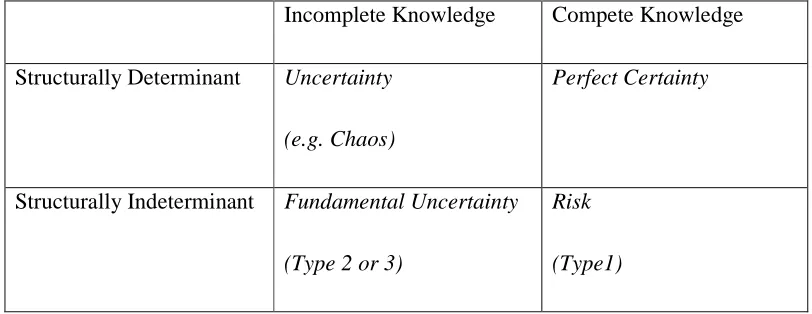
(35) Implies the probability that there is a permanent and positive role for government in designing policies and institutions to provide results referable to those that would be generated by competitive markets in a nonergodic environment (Davidson, 1994, p.XXX). Hacking (1975) drew a further distinction, applied to probability theory, to clarify the crucial differences between the two generic types of choice situations: aleatory dimension and epistemic dimension. The aleatory dimension relates to the nature of the real causal structure whereas the epistemic dimension relates to the decisionmakers knowledge and understanding of that causal structure. A risky choice situation is characterized by a causal structure with stable deterministic and stochastic components (the aleatory dimension) where decision-makers are essentially backward looking at past outcomes as a guide to future actions. Conversely, an uncertain choice situation is characterized by causal structures that are subject to fundamental change or limited understanding of decision-makers. In this type of situation, firms have to form long-term expectations for the purpose of investment decisions, and decisionmakers have to be forward-looking and “scientific”. A reconciliation of the apparently divergent views of Gerrard and Davidson, regarding the concept of Keynesian uncertainty, is achieved with the synthesis in the following table (source from Juniper, 2001b): Table 1 Knightian / Keynesian Uncertainty—A Synthesis. Structurally Determinant. Incomplete Knowledge. Compete Knowledge. Uncertainty. Perfect Certainty. (e.g. Chaos) Structurally Indeterminant. Fundamental Uncertainty. Risk. (Type 2 or 3). (Type1). 19.
(36) Immutable (Ergodic) Reality: •. Type 1— Agents know the future in the sense of actuarial certainty equivalents. •. Type 2— Agents’ knowledge of ergodic reality if incomplete in short-run due to bounded rationality.. (Subjective probabilities converge to objective probabilities through learning or Darwinian selection by market of more rational techniques=>become type 1) Transmutable (Non-Ergodic) Reality: •. Type 3— Agents believe sufficient information does not exist to predict future by means of frequency distributions. (Relevant to decisions involving investment, accumulation of wealth and finance). The case of perfect certainty represents an environment with the most straightforward and simple assumption that can be made in economic analysis, which generates perfect foresight. Most orthodox theories presume an environment of risk (bottom right-hand), in which economic agents can determine the optimal trade-off between variance and return for any transaction or group of transactions because agents are assumed to have complete knowledge of the future in the sense that outcomes can be described in terms of actuarially certain equivalents. In the case of chaotic (top lefthand) processes, the formation of expectations are with incomplete knowledge of the structurally determinant system due to the infinite sensitivity of the system to initial conditions. Grandmont has argued that the existence of non-linear chaotic macroeconomic systems justifies a permanent and positive role for government (Grandmont, 1985, 1987). In this context, the role of policy is to nudge the economy onto more preferable, but still attainable, trajectories or to manipulate key parameters to prevent any transition from systems with well-behaved and stable dynamics to one subject to complex, chaotic dynamics (Juniper, 2001b). In the case of fundamental uncertainty in which agents have incomplete knowledge of a structurally indeterminant system, many orthodox models (particularly neoclassical) 20.
(37) allow for the existence of uncertainty in this sense but are predicated on the notion that knowledge which is initially incomplete can gradually become more complete. Accordingly, Keynes considered orthodox (i.e. Classical) economic theory as having reduced the analysis of behaviour under uncertainty to be a special case of risk. He advocated moving beyond the orthodox theory of economic behaviour by encompassing the theory of decision-making under conditions of risk within a more general theory that allowed for a broader conception of uncertainty to include fuzzy probability distributions and the possibility of future structural changes to which no relative frequencies could be attached17 (Fontana & Gerrard, 2004). 2.2.3 Ambiguity and Fundamental Uncertainty Dequech (2000, p.41) introduced Post Keynesian developments with the comment that “some lines of research close to mainstream economics have started to deal with ‘Keynesian’ or ‘Knightian uncertainty” 18 […] particularly Post Keynesian.” This discussion of Keynes’ uncertainty 19 , particularly through distinguishing ambiguity and fundamental uncertainty could help to assess the similarities and differences between the more mainstream and more heterodox works, which share a common foundation in Keynes’s work on probability and uncertainty. 2.2.3.1 Distinction between Ambiguity and Fundamental Uncertainty Dequech (2000, p.41) follows Camerer and Weber (1992, p.330) in contending that fundamental uncertainty and ambiguity, although distinct, (ambiguity refers to missing information that could be known, while fundamental uncertainty20 implies that some information does not exist at the decision time because the future is yet to be created) both pertain to situations different from those that mainstream economics deals with under uncertainty or risk. Under this notion of fundamental uncertainty he subsumes both Paul Davidson’s ontologically grounded concept of non-ergodicity in stochastic processes and also the philosophical approach adopted by such as 17. This will be discussed later within the Chapter. For surveys of this kind of research refer to Camerer and Weber (1992) and Kelsey and Quiggin (1992). 19 Some, especially Post Keynesians, interpret Keynesian uncertainty as synonymous with what is called here fundamental uncertainty. 20 Dequech (2000, p.42) argued that fundamental uncertainty is not synonymous with complete ignorance and that its degree varies depending on the existence and range of institutions such as contracts, market-makers, and informal conventions. 18. 21.
(38) O’Donnell (1991), Carabeli and De Vecchi (2001) and Lawson (1999a, b), who follow the position articulated by Keynes in his Treatise on Probability. Winslow (1989) 21 actually demonstrates that Keynes had abandoned the atomistic ontology of the Treatise on Probability for Whitehead’s (1928) notion of organic interdependence when he came to write the General Theory. To be able to support processes of inference within a world where everything was now seen to be dependent on everything else, Keynes was also obliged to adopt Whitehead’s ontological conception of a nested hierarchy. Winslow22 (1989, pp. 1175-1178) argues that this notion grounds the distinction Keynes makes between short run and long run expectations (also refer to pp.7-8 of thesis). The shorter the distance into the future of events to be forecast, the greater is the number of factors that can be treated as given. The further into the future are the event to be predicted the larger the reduction in what can be treated as given, and the smaller the amount of knowledge available for purpose of prediction (cited in Juniper, 2007, pp.4-5). Furthermore, Winslow (2005, pp. 13-15) argues that Keynes’s antagonism towards utilitarianism was due to the fact that it was predicated on atomistic rather than organic foundations. In particular, the axiomatic foundations of utility theory gave rise to what Keynes, following Ramsey, called “scholasticism”, which entailed “treating what is vague as if it were precise and trying to fit it into an exact logic category” (Keynes, 1937, p.197). As briefly discussed earlier, the central organising principle of Paul Davidson’s ontological grounded concept of non-ergodicity has a great deal in common with the critical realists’ emphasis on mutability and the necessity for open-systems thinking, which believes this world does change due to emerging objects and structures. The social world is changing more rapidly than the natural world, because the social world incorporates the perception, reflection and action of human beings and social collectives engaged in social experience, learning and innovation. Thus in an open system it is not possible to obtain a closure, which is opposite to the closed-system thinking of mechanism.. 21. He draws heavily on the work of Keynesian scholars such as Rod O’Donnell and Anna Carabelli. 22 According to Winslow (1989), Keynes argued further that “money-making” and “moneyloving”, as drives, would provide an effective motivational support for what Freud described as the phenomenon of “group psychology”. In addition, Ernest Jones’s notion of sublimination and regression played a key role (Juniper, 2007).. 22.
(39) According to the characteristics (existence of information) of each of them (ambiguity and fundamental uncertainty), Dequech argued in his paper (2000, p.42), ambiguity, unlike fundamental uncertainty, may disappear ex ante with the passage of time23. Fundamental uncertainty, in contrast, would be the type of uncertainty supporting the claim, made by Keynes and his more heterodox followers (Post-Keynesian), that money is not neutral, either in the short or in the long run. This criticizes the mainstream models treatment of money by putting it in an intertemporal context that allows a Keynesian type of money demand to exist only in the short run, while keeping a standard notion of uncertainty (risk). Also, the impossibility of completely eliminating fundamental uncertainty before the time of making some important economic decisions opens the way for a permanent reason for liquidity preference, which may not exist under ambiguity and which is strictly precautionary. On the other hand, Dequech argued (p.43), if fundamental uncertainty can be reduced, then both under ambiguity and fundamental uncertainty, one reason that people prefer liquidity is that they want to wait until obtaining more information (to form more reliable estimates) for their decision-making. This (non-existence of information in the case of fundamental uncertainty and thus permanent reason for liquidity preference) again raises the criticism of the self-adjustment process of markets and neutral money in the long run, believed by mainstream theorists. Two groups offer interpretation of Keynes’ notion of uncertainty. One group argues that uncertainty corresponds to an absence of numerically determinate or even comparable probabilities (Lawson, 1988; Rotheim, 1988, p.88; Brown-Collier and Bausor, 1988, p.238-9; Hamouda and Smithin, 1988, p.160; and Dutt and Amadeo, 1990, p.105-6). Related to the notion of weight in the Treatise, the other group argues that probability is a relation that weight has to do with the evidence on which the probability relation is based (Hoogduin, 1987; Kregel, 1987; O’Donnell, 1991; Runde, 1991; Anand, 1991; Brady, 1993; and Gerrard, 1994). Before engaging in further discussion of the Post-Keynesian distinction between ambiguity and fundamental uncertainty, it is useful to briefly review recent developments in utility theory which extend the expected utility framework of Von Neumann and Morgenstern (1944). In particular the sub-additive and multiple-prior 23. Under ambiguity in a dynamic setting, more information may become available to the decisionmakers, changing their probability distributions or their assessment of the reliability of these.. 23.
(40) versions of uncertainty aversion help to expound the distinction between ambiguity and fundamental uncertainty. 2.2.3.2 Brief Review of Utility Theory The growth of literature covering decision-making, game theory and finance, draws upon generalizations of expected utility theory (EUT). After the 1738 version of expected utility theory described by Daniel Bernouli, Von Neumann and Morgenstern (VNM) reinterpreted and presented an axiomatization of the theory in 1944 in terms of agents' preferences over different ventures with random prospects. Some authors have extended the VNM axiomatic framework including the axiom of continuity (see Bewley, 1986) and the independence axiom (see Chew and Epstein, 1989; Dekel, 1986; and Tversky and Wakker, 1995). The independence axiom, first posited by Paul Samuelson, is related to the linearity of probabilities (Juniper, 2001b). Let A and B be two lotteries with A > B, and let tЄ (0,1] then tA + (1 − t)C > tB + (1 − t)C . Later the Allais Paradox (Allais, 1953) questioned the nature of EU-based choice under the independence axiom and showed an inconsistency of actual observed choices with the predictions of expected utility theory by devising the following questions. Question 1: which prospect would you choose of x1= to receive 100 millions with probability 1, or y1= to receive 500 million with probability 0.10, 100 millions with probability 0.89, and nothing with probability 0.01? Question 2: which prospect would you choose of x2= to receive 100 millions with probability 0.11, and nothing with probability 0.89, or y2=to receive 500 millions with probability 0.10, and nothing with probability 0.90? Allais found that the majority answered x1 to question 1 and y2 to question 2, and argued that this pair of prospects could indeed be chosen for good reasons. But it violates EUT, since there is no function U that would both satisfy: U(100) > 10/100 U(500) + 89/100 U(100) + 1/100 U(0), and 11/100 U(100) + 89/100 U(0) < 10/100 U(500) + 90/100 U(0).. 24.
Figure
+7


Outline
Distinction between Ambiguity and Fundamental Uncertainty
Brief Review of Utility Theory
Cumulative Prospect Theory
Different Perspectives on Efficient Market Hypothesis
Financial Crisis
Factors leading to Financial Instability
Command and Control
Financial Deregulation in Australia
Change of Bank Activities
Dichotomous Framework as evaluation Benchmark
Related documents