Wunambal Gaambera Aboriginal Corporation
Fire Operations Manual
DOCUMENT CONTROL
Project number: WGAC12_01
File ref: Biome5:Projects:Projects:WGAC12_01:Reports:Reviewed manuals June 13:Fire Operations Manual V-1.0.docx
Report by: Dr Noel Preece
Date: Revision Status: Reviewed by: Document distribution:
7 July 2012 V 0.11 – outline draft Tom Vigilante Tom Vigilante
27 Sept 2012 V 0.12 – revised draft Tom Vigilante Tom Vigilante 17 Dec
2012-June 2013
V 0.31 WG Healthy Country Team
July 2013 V 0.41 Tom Vigilante Tom Vigilante, WGAC Healthy Country Team
August 2013 Field Test Version 1.0 Tom Vigilante Tom Vigilante, WGAC Healthy Country Team
October 2013 Field Test Version 1.0 Tom Vigilante Tom Vigilante, WGAC Healthy Country Team
RELIANCE STATEMENT, USES & LIMITATIONS
This report is copyright and to be used only for its intended purpose by the intended recipient. It is not to be copied or used in any other way. The report may be relied upon for its intended purpose within the limits of the following disclaimer.
TABLE OF CONTENTS
1 Purpose of the Manual ... 1-1 1.1 Structure of the Operations Manual ... 1-4
2 Purpose and Reasons for Burning ... 2-1 2.1 Purpose of Fire Management ... 2-1 2.2 Fire Planning ... 2-1 Wunambal Gaambera Fire Planning Calendar ... 2-3 General Structure of a fire management plan ... 2-5 2.3 Burning for country, plants and animals ... 2-13 Right way fire – what are the benefits? ... 2-15 Wrong way fire impacts on plants and animals in the Kimberley ... 2-16 2.4 Savanna burning ... 2-17 General Principles... 2-17 2.5 Wildfire fighting ... 2-21
3 Law and Legislation ... 3-1 3.1 Traditional Law of Wunambal Gaambera ... 3-1 3.2 Western Australian Legislation ... 3-1
Responsibilities ... 3-1 Permits to burn ... 3-2
4 Fire Safety ... 4-1 4.1 Risk Assessment and Job Safety Analysis ... 4-2 4.2 Safety ... 4-7 Your approach to burning ... 4-7 4.3 Safety procedures ... 4-7 First Aid ... 4-7 Safety and Personal Protective Equipment (PPE) ... 4-8 Communications and safety devices ... 4-9 4.4 Field & Office Response Procedures ... 4-11 Routine schedule ... 4-11 Emergency Procedures... 4-11 Contacts for Schedules and Emergencies ... 4-12 4.5 IN AN EMERGENCY in the field ... 4-13
5 Burning the bush ... 5-1 5.1 Operational Fire Plan ... 5-1 Operational Control ... 5-2 5.2 Aerial Control Burning ... 5-3 5.3 Aerial Ignition Operations ... 5-4 Communications ... 5-5 5.4 Preparation before the day of the fire ... 5-6 5.5 On the day of the fire... 5-8 Drug and Alcohol testing... 5-11 Attitude ... 5-11 Casuals ... 5-11 Contingency planning ... 5-11
8 References ... 8-1
9 AppendiCES ... 9-1 9.1 Appendix 1 - Legislation ... 9-1 Bush Fires Act 1954 ... 9-1 Environmental Protection Act 1986 ... 9-2 9.2 APPENDIX 2 – Forms & Checklists ... 9-4
Acknowledgements
Wunambal Gaambera Aboriginal Corporation (WGAC) engaged Dr Noel Preece of Biome 5 Pty Ltd to prepare this manual. The manual benefitted from the assistance, advice and guidance of many people including Andy Peart, Anna Pickworth, Wil Bennett, Phil Palmer, Amanda Moncrief, Richard Tunnicliffe, Brad Bourke, Jarrad Holmes, Ed Hatherley, Rachel Partridge, Steve Sutton, Jeremy Russell-Smith, Andrew Edwards, Steve Winderlich, Mark Crumblin, Lizbet Fergoose, and David Whitelaw and Alistair Dermer of Bush Heritage Australia. The Wunambal Gaambera Healthy Country Team provided much advice and comment and guided me on their needs, and included Robert Warren, Neil Waina, Jason Adams, Bevan Stott and Tom Vigilante. I hope I haven’t missed anyone. I trust also that the manual does justice to the information and advice received.
Robert Warren kindly supplied the cover photo and photos on PPE (the Team), burning the roadside and flame-thrower. Noel Preece supplied the photos of vegetation and patch fires: right way fire.
Funding for the project was provided by Bush Heritage Australia and the Federal Department of Sustainability, Environment, Water, Population and Communities.
Copyright Notice
© 2013 Wunambal Gaambera Aboriginal Corporation & Noel D. Preece
Preferred citation:
Preece, N.D. & Wunambal Gaambera Aboriginal Corporation (2013) Fire Operations Manual. Report to Wunambal Gaambera Aboriginal Corporation, Kalumburu, W.A.
The manual reproduces some material provided by a number of organisations, for which copyright is retained by the original copyright owner, and material for which copyright is held by Wunambal Gaambera Aboriginal Corporation.
1
PURPOSE OF THE MANUAL
RIGHT WAY FIRE
This Fire Operations Manual is for use on Wunambal Gaambera country in the north-west Kimberley region of Western Australia.
The Wunambal Gaambera Healthy Country Plan 2010-2020 is a plan for looking after our country and all the important things in it. Strategy 1 says ‘continue and expand the fire management program with annual burns and by 2012 complete the Uunguu Fire
Management Plan consistent with carbon abatement opportunities’. This strategy helps to achieve the following objectives:
Objective 2 By 2020 our country will still be healthy with no plants, animals, fish or birds or their habitats that are here today, being lost;
Objective 3 By 2014 we will be looking after ten important cultural sites according to Wanjina Wunggurr Law, and by 2020 all culturally important sites will be looked after in this way;
Objective 8 By 2015 we will be managing fire on Wunambal Gaambera Country; and
Objective 10 By 2015 we will have figured out and started using ways to reduce the problems that climate change might have on our targets, us and Wunambal
Gaambera Country, and ways to make sure our actions don’t make carbon problems worse.
The Healthy Country Team is also developing a 10-year fire activity plan to outline how fire will be managed. It also develops annual operations plans to guide each year’s work.
This operations manual will help to guide the implementation of the activity plan and annual operations plans. It aims to ensure that Uunguu Land and Sea Management Rangers and traditional owners can manage fire safely and to a high and accredited standard. This
includes having the appropriate levels of qualifications under state training requirements and under national accreditation. It means having the appropriate equipment, systems and OH&S procedures in place to carry out fire management.
This manual provides guidelines for Wunambal Gaambera Aboriginal Corporation (WGAC) and its Wunambal Gaambera Healthy Country Team to control fire. WGAC has the authority of Wunambal Gaambera people to implement the Healthy Country Plan. The WGHC Team includes the Healthy Country Manager, Uunguu Rangers, nominated WGAC Directors and any Traditional Owners and staff working on Wunambal Gaambera country.
The Fire Operations Manual is part of Wunambal Gaambera Healthy Country planning objectives to undertake right way fire to Uunguu (country – our living home) and limit wrong way fire.
The Manual provides guidelines for the Wunambal Gaambera Healthy Country Team and associated fire crews on:
how to prepare for lighting and fighting fires in the region
what permits and permissions are required
procedures to follow
safety
It is not a training manual, but is a tool to implement fire management and control operations, using the training and skills that fire crews have developed.
Safety first:
for fire-lighters and fire-fighters
local landholders
tourists
cattlemen
People need training, qualifications and experience under both traditional culture and national accreditation.
All people working with fire are expected to be trained and skilled in the correct safe procedures for the tasks they undertake.
People must have the appropriate equipment, systems and procedures to conduct fire operations.
The Manual includes the legal requirements established under both Western Australian law, and Traditional Wanjina Wungurr law of Wunambal Gaambera peoples.
Permits need to be obtained from Bush Fire Control Officers for the region.
The Operations Manual:
provides structure and consistency to fire operations so that all needs are met
makes sure that traditional and western laws are followed and that there is no inconsistency
enables relevant views to be considered and expressed about fire management
helps to plan for the allocation of resources and jobs
brings together all important aspects of fire planning and management, including training
provides an operations framework for individual plans for fire, so that all people working on fire go about their work in the proper way
provides assurance to the relevant authorities and investors in Wunambal Gaambera country that money is being well spent and that fire is being planned and
The manual has been written with minimal text, while attempting to address all the key aspects of fire operations, in order to reach a wide audience.
The manual does not replace the specialist manuals, procedures, laws, codes, rules and guidelines for the skills required to do the work.
A list of the key documents which were used to produce this manual is provided in the reference section.
The manual is meant to be a living manual to be used and revised as needs arise, and as better ways of doing things are identified.
2
PURPOSE AND REASONS FOR BURNING
2.1 Purpose of Fire Management
Wunambal Gaambera people have always managed country with fire:
fire is a natural process
fire maintains country and plants and animals if managed properly
planned fire reduces the impacts and incidence of wildfire
planned fire is better than mechanical firebreaks and slashing
fires are under our control, rather than left to chance and weather.
Fire management fulfils several other purposes:
fulfils traditional law obligations, including ceremony
helps maintain cultural practices
fulfils Western Australian Bush Fires law
protects people, infrastructure and assets.
2.2 Fire Planning
A fire management plan was identified in the Uunguu Wunambal Gaambera Healthy Country Plan. The plan is a way of deciding what has to be done to manage fire.
Important steps for fire planning:
Right people to decide
why you want to burn
where to burn
who will do the burning
when to burn.
The right people are important
Traditional Owners
Ranger staff of WGAC
KLC
DEC
Wyndham-East Kimberley Shire
Neighbours, pastoralists
Plan
how you will go about the burning program,
what outcomes you want,
what people, tools and equipment you will need, and
how you will keep a record of the burning.
Experts from other Ranger groups, organisations like DEC, and fire ecologists will also help.
You will need meetings to prepare for write-ups of ideas.
You will need to have large maps of Uunguu so that people can identify places and how fire can be managed.
Wunambal Gaambera Fire Planning Calendar
Wunambal Gaambera Jan Feb Mar Apr May Jun Jul Aug Sep Oct Nov Dec
Fire planning calendar Wet Season Early Dry Late Dry Early wet
Fire Planning Workshop
Map no-go areas
Prepare Annual fire plan for WGAC Directors for approval Notify DEC, Neighbours, Wyndham-East Kimberley Shire
Apply for Permit to Burn
Pre-season preparation
Training, Cert Courses
Training – AIMSS
Training – Aircraft Safety & Raindance
Prepare budgets and logistics
Equipment maintenance - fire trailer, drip torches, pack sprays, O-rings etc
Drills *
Risk Assessments * * * * * * * * * *
Coordinate with KLC and DEC
Burns
Rain stops - grass starts drying - flyovers to assess grass curing Cultural site protection, sensitive areas, around sandstone
Dry season burns - foot, Quads, vehicles
Wunambal Gaambera Jan Feb Mar Apr May Jun Jul Aug Sep Oct Nov Dec Fire planning calendar Wet Season Early Dry Late Dry Early wet
Fire Walks
Review fire outcomes - look for weak spots, need for additional burns,
firebreaks etc
Share information with neighbours
Late hot burns
Review suppression response procedures
Suppress wildfires - contact Shire, FESA, DEC, Drysdale, Dunkeld, Police,
Clinic
Daily check of NAFI for hot spots and fire spread, weather checks
Review and revise
Monitoring & evaluation committee
Information to Members
Annual report
NAFI, Fire report tool, fire scar map
Review Workshop
General Structure of a fire management plan
Section Purpose
Aim What are you trying to do?
Reduce impact of bushfires
Protect sacred sites
protect buildings, infrastructure
carbon outcomes Right people, Right place, right time Objectives List achievable and measurable goals:
Illustrate where values are located, e.g.: o sacred and cultural sites
o rainforests, stands of food trees o creeks, waterholes
o buildings, campsites o
Define and rank fire hazard areas
Define how you will assess the effectiveness and impact of fire lighting and prevention
Description of area
Maps showing
physical and cultural features
topography
climate
vegetation and fire fuel types
assets – buildings, campsites, fences, bores
access
water sources and water points
fire history from NAFI site
Fire Management Strategies
Fuel management
buildings and campsite areas
special areas – sacred sites, cultural sites, rainforests
creeklines and waterholes
Access and strategic fire breaks
fire break locations such as roads and rocky bare hills
Burning blocks
how will you plan to burn the country?
an example is shown below for Kakadu National Park prepared by Rangers from Kakadu
Fire breaks may be creeklines, rocky ridges, previous burnt areas
Timing calendar for
planning
Section Purpose
follow-up
review and revision
Monitoring and evaluation
How will you map the fires you lit and the wildfires to see how your fire program went?
NAFI website image maps?
photopoints?
walk-around and GPS making notes?
fly-over?
How will you evaluate the program?
revise the plan
revise methods
review practices
Adapted from (Bush Fire & Environmental Protection Branch 2007)
Fire history
The North Australian Fire Information website (NAFI) produces maps of fires of the Wunambal Gaambera country, from satellite images.
Figure 1. NAFI site image of 2012 fire scars for Wunambal Gaambera country
Locations and sites
Good planning:
sacred sites mapped
buildings, bores, yards and fences (and other built things) mapped
areas needing special protection – such as cycads, food trees, rainforest patches, waterholes
common fire paths so that fire buffers can be burnt to prevent wildfires spreading
cleaning up country
vegetation needing protection, and vegetation map
Fuel/Vegetation Types
The term ‘fuel’ is used to describe the vegetation that burns in a fire. Different vegetation types have different fuel characteristics and grow at different rates. There are three main landsystems in WG country, each supporting different vegetation types (Map).
more than one year between fires to accumulate high fuel loads but can support annual late dry season fires.
Sandstone country is dominated by open woodland with spinifex (Triodia spp) which usually takes more than two years after fire to accumulate high fuel loads. Sandstone is often rugged and dissected for fires to move through. Many sandstone areas also support shrublands (heath) which have fire sensitive woody obligate seeder shrub species. Like cypress pine, these shrubs are killed by fire and can only grow back by seed not resprouting.
[image:16.595.97.529.238.546.2]Volcanic hills support open woodland with mostly perennial grasses. These grasses support fires every year as they regrow each wet season.
Figure 2. Vegetation of Wunambal Gaambera country
Mineral Earth Firebreaks
Fire breaks may be needed around buildings, bores and camps, to protect them and give a clean line to burn from to remove fuel.
Constructed firebreaks may need to be 6 to 10 metres wide. On the boundary in some places they may need to be wider.
Firebreak locations may need to be worked out with a fire control officer, so that only those that are needed are built.
provide a mineral earth break or reduced fuel zone so that planned and unplanned fires do not enter or leave the area
provide access to critical areas so that fire suppression activities can be undertaken
Details on how and where to construct firebreaks are given in the Kimberley Bush Fire Guidelines (Bush Fire & Environmental Protection Branch 2007).
Fuel Age Patch Mapping and Fuel Reduction Burning
The aim of fuel age patch mapping and fuel reduction burning is to identify large areas or patches of country of the same older fuel age which have a high risk of becoming a large wildfire. These large patches need to be broken up with patchy burns so they become a patchwork of different fuel ages with reduced wildfire risk.
Fuel age (years since last burnt) can be mapped with firescar data from NAFI, the North Australian Fire Information website: http://www.firenorth.org.au/nafi2/. It is also important to identify different fuel (grass) types as they will accumulate fuels at different rates. Spinifex on sandstone generally takes 2-3 years to accumulate to high fuel loads, speargrass can accumulate after one year without fire, while perennial grasses on volcanic hills can burn every year.
Strategic Fire Control Blocks
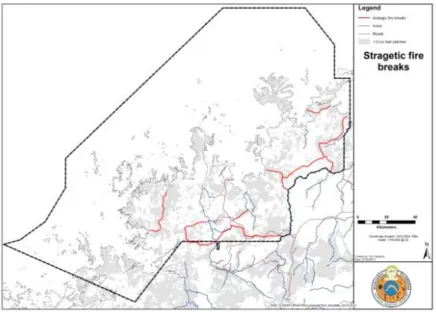
Strategic Fire Control blocks aim to contain a late dry season fire within a firebreak made from strategic fire lines. These fire lines are usually created by aerial burning but can also be created with fire walks and roadside burning. Natural features like coastline and rivers also create barriers to fire. Strategic fire lines are created by flying along set routes over and over until there is a complete fire line. There are often weak points in fire lines where fires can get through.
[image:19.595.93.530.249.561.2]Strategic fire control blocks are most useful at a large scale, making sure that one wildfire cannot burn the whole country. The limitation to strategic fire control blocks are that lightning storms can strike inside the control block and burns out the block.
Figure 4. Strategic fire breaks or fire lines used to create fire control blocks.
Weak points can occur on the edges of burnt country where
the gap is too narrow,
the burnt area is too patchy,
2.3 Burning for country, plants and animals
For Wunambal Gaambera people, fire is one of the most important things people can use to look after and keep country healthy. Fire helps bush foods grow and makes new grass for animals. Burning at the wrong time is no good. Many plants need fire to grow again or cannot survive if there are too many hot fires. Right way fire makes plants flower and fruit at the right time.
Fire is medicine for the country and medicine for the people. Fire is also a signal that can tell people what is happening on country.
Fire has a spiritual importance in Wunambal Gaambera culture. Fire is used in smoking ceremonies and for spiritual ceremonies.
Wildfires are not the right types of fire and worry people as they happen in the hot season, burn lots of country and can damage cultural places and other parts of our Uunguu, our living home, like plants and animals.
The old way of lighting fires while walking is a respectful way of looking after country. Today, rangers also burn country that is hard to get to, by flying in helicopters and burning. Mixing the old and new ways is good for Uunguu.
If fire is not done in the right way in Wulo (rainforest) some tree and plant types due and the Wulo gets smaller. If fire is not done the right way, the Wulo can spread over the moree (savanna woodland) so there is less open country for aamba (kangaroos and wallabies).
Islands need right way fire as there are important cultural places that need to be looked after. The islands are also safe refuges for some animals so fire has to be done the rich twat to make sure they stay healthy.
Each family has a responsibility to do right way burning to keep their graa (their traditional part of country) clean and healthy.
Working with neighbours to do right way fire is important. Burning the right way and at the right time means there is less smoke which helps reduce climate change.
Right way fire – what are the benefits?
Right way fire means:
controlled lighting of fires under specified environmental conditions
to a predetermined area
at the time, intensity, and rate of spread required to attain planned targets
Right way fire helps to:
maintain healthy country targets
reduce fuel loads so that hot fires are not as destructive or extensive
clean up country
© Noel Preece Right way fire involves:
• learning from last fire season • planning
• patch burning to break up country • right time
• right place • right people • assessing fuels
• using knowledge of fire behaviour
• forecasting and reading weather conditions • monitoring the results of the burn
Wrong way fire impacts on plants and animals in the Kimberley
Problems with wrong way fire – late dry season hot fires
Plants and vegetation
Moree - Savanna woodlands and riparian vegetation
Hot late dry season wildfires cause:
loss of shrubby mid-storey;
loss of nesting hollows in older trees;
loss of flower and fruit resources;
replacement of perennial grasses with fire-prone annual grasses;
loss of fine-grained habitat mosaic
Wumanggarr - Sandstone vegetation, particularly heaths
Shrubs which regenerate from seed alone are particularly vulnerable to frequent, extensive hot fires:
Small patches need 4-5 years between fires
some species such Cypress pine and wattles (Acacias) may require longer periods
fires need to be very patchy
Guru - Cypress pine groves
These long-lived trees are dying out in the north Kimberley due to frequent, hot late dry season fires – they need to live long enough to seed so that new plants can grow
Wulo - Rainforest patches
Severe impact in exposed sites
Animals
Gundun - small to medium mammals
Because of changes to fires – some too hot and too big, and less patchy These animals are disappearing from country:
Northern Quoll
Brush-tailed Phascogale
Golden Bandicoot, Golden-backed Tree Rat
Pale Field-rat
Wirrirri and diigu – seed-eating birds
Changes in habitat conditions, including woody thickening due to lack of burning, and over- or selective grazing of grass resources
11 species of seed-eating birds including Gouldian Finch and Partridge Pigeon
2.4 Savanna burning
General Principles
Moree - Savanna grasslands
Moree – savanna grasslands of the north Kimberley can burn often
start burning early in the dry season
burn at other times of the year for specific purposes – e.g. woody thickening may need a hot burn
avoid applying the same fire frequency, interval, season and scale over large areas for long periods
burn areas no more than once every 2 or 3 years
avoid frequent burning or infrequent burning in same locations
avoid allowing frequent large wildfires in same locations
focus on areas of high conservation value
aim for patchiness rather than complete burns
Wildfire reduction and asset protection
manage fuel by early dry season and late wet season burns to 400 metres wide around buildings and structures
reduce fuel around buildings to 100 metres away
overlap strategic burn areas to reduce chance of wildfire spreading
include some wet season burning for spear grass reduction
Carbon trading
shift fires from late dry season (August onwards) to early dry season as much as possible
Neighbours and learning
use all available knowledge including indigenous, scientific, and local
consult and partner with neighbours
learn from and adapt methods
use tools including satellite images (NAFI) and flyovers for mapping and monitoring fire patches and fire history
Priorities
focus on
1. asset and people protection
2. threatened species and communities 3. fire sensitive species and communities 4. the remaining biota
Special areas Cypress pine
protection burns around stands, especially on eastern flanks
early in dry season April-May
Springs and waterholes
protective burning around stands, especially areas where fire often comes from
early burning, April-June
Rainforest patches
protective burning around stands, especially on eastern flanks and downslope
Heath
in small patches reduce fire frequency to 4 to 5 years or longer to help heath plants seed
patch burn savanna and heath to protect heath
Weed control and fire
plan weed control and fire plans together so that areas to be sprayed are not burnt first
Cultural sites
where sites need protection, pull spinifex and other vegetation away from rock paintings and burial sites and then burn around them early in the dry season
(Sources: (DECWA 2010; Midgley & Tan 2006; NSW Rural Fire Service 2006; Palmer 2004; Russell-Smith 2005; Standards Australia 2009a, b).
© Robert Warren
Burning for Carbon
Wunambal Gaambera Aboriginal Corporation is preparing to register a project under the Carbon Farming Initiative to use the Savanna Burning methodology. Burning for carbon needs to be done in a particular way if the project aims to generate a return.
The methodology is also based on different fuel (grass) structure types. Some grass types in the country regrow faster than others. It is important to think about fuel types when burning for carbon.
2.5 Wildfire fighting
Burning country the right way helps to keep country healthy.
When country is not burnt early with lots of cool burns, then if a malgarra (wildfire) starts late in the dry season, it will be too hot and will burn large areas of country. When the flames are ‘dancing mad’ then the fire is too hot. So it is important to do burning the right way to look after country.
If fire is done the wrong way then the following things can happen:
the area and number of wulo (rainforest) gets smaller
the trees and grasses change in the country so there is less food for aamba
(kangaroos and wallabies), jebarra (emu), diigu (birds) and gundun (bush mice) to eat
some plants and trees such as guru (cypress pine) are killed or damaged
animals that cannot move quickly or find a safe place such as gunanji (echidna, porcupine) and luu (snakes) get burnt and killed
the homes, feeding and nesting places of some animals such as yilangal (scaly-tailed possum) and diigu (birds), such as the wirrirri (finches including Gouldian finch), are burnt
weeds spread easier and quicker
rock art sites are damaged
buildings, fences and other assets are destroyed
(adapted from Wunambal Gaambera Healthy Country Plan 2010-2020).
Prescribed burning helps reduce the incidence, frequency and impacts of wildfires.
Burning country in small areas from the early dry season and throughout the dry season breaks up the country, making it harder for a wildfire to start and to spread.
Sometimes wildfires will start anyway and will burn across country, causing damage. Fire suppression is sometimes needed.
The risks with wildfire must be assessed before fighting a wildfire.
Fighting wildfires is dangerous and difficult.
If the weather is hot and windy, and the fire has grown to even a moderate size, it may be impossible to put out, especially in rugged and remote country.
Making good decisions when wildfires start will save lives and possibly save country, but action needs to be taken very quickly, or not at all.
Protecting lives and property needs great care, effort and equipment and people to do the work.
Detecting wildfires in remote country can be difficult, and only the smoke may be seen from a long way off. For these fires, unless access is very good, or a helicopter is available to view the fire, then there is probably not much that can be done.
Where wildfires start close to roads, there is more chance of fighting them early, before they get too big and hot.
If a wildfire does start and it’s still small, the first thing to do is to contact the senior ranger or senior fire officer of the fire crew.
Do not try to fight a wildfire by yourself
You will need a crew, proper personal protective equipment (PPE), fire-fighting equipment, water and food.
You will need to act fast in the first couple of hours to stop the fire.
If you don’t succeed in stopping the wildfire spreading in these first critical hours, then all you can do is to monitor and warn people of the fire heading their way until the weather changes, the wind drops, it gets cool, or it rains.
Fire equipment and appropriate use - fire trailer and slip on unit - backpack pump spray - drip torch
3
LAW AND LEGISLATION
3.1 Traditional Law of Wunambal Gaambera
Right way fire means burning done by the right Traditional Owners for the right country, the right way at the right time of year.
For Wunambal Gaambera people, only Traditional Owners are allowed to burn the gra (clan estate), unless they give their permission for others to burn the gra for them. This is why all families are represented at the annual fire planning workshop and why Traditional Owners from each family take part in the fire program.
There are three main seasons for burning for Wunambal Gaambera people:
- The first season is after the last rains of the wet season as the dry season is beginning and the grass is beginning to dry. This is a good time to burn sensitive places like cultural sites, old spinifex and around rainforest patches.
- The second season is in the dry season months when the southeast winds are blowing and the grass is dry. This burning is for cleaning up country; and
- The third season is at the end of the dry season before the first rains start. This is a hot fire used to clean up particular areas of country that are sick so the rain will come and bring back fresh growth. An example of this would be an area where the
bushtucker trees are sick with disease and not producing any fruit.
3.2 Western Australian Legislation
Acts regulating fires in the region are the Bush Fires Act, the Fire and Emergency Services Act, and the Fire Brigades Act.
Other Acts which talk about fire are the Environmental Protection Act, and the Conservation and Land Management Act.
Responsibilities
At a bush fire the most senior officer takes control of a fire.
Figure 7. Possible chains of command in fire operations (adapted from AIIMS Incident Control System & Bush Fires Act and DFES guidelines).
For prescribed fires, the permit holder or most senior person would normally take control of the fire. If a fire gets out of control, or is a wildfire, or there are multiple fires, then an incident controller may be appointed. If an incident controller is appointed, they will decide who will take charge and what actions will be taken. In this case, a Permit Officer may be required to answer to an authorised DEC officer of Bush Fire Control Officer.
Permits to burn
Permits to burn are required from 1st April to 14 January, which is the dry season. Permits can be obtained from the Bush Fire Control Officer from the Wyndham-East Kimberley Shire.
The Bush Fire Control Officer may require the construction and maintenance of firebreaks before burning, and specify separation distances of buildings from fuels.
You must have:
a plan for the fire
minimum three people
equipment (spray unit, rakehoes, backpacks, PPE)
weather information
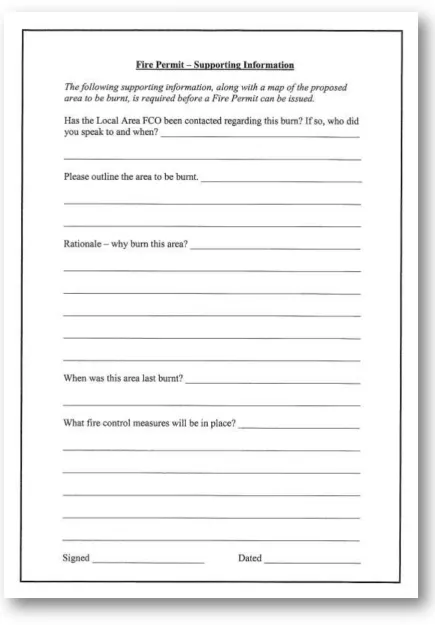
The application will need to be completed by someone in authority, and be accompanied by a map of the proposed burning areas.
Send the permit application to the bush fire control officer at the Shire of Wyndham East Kimberley, or the Fire Warden (currently John Koyers at Drysdale River Station), well before you plan to burn.
Give yourselves a couple of weeks or a month so that the fire control officer can consider the application and sign the permit in time.
Phone him when you send it, so that he is aware that it’s coming and can you can talk about what you need and what he will need.
The bush fire control officer may require at least a supervisor’s course certificate for the fire supervisors.
You may need to demonstrate that each member of the fire crew has been trained in fire operations. The training could be the FESA courses, which are run periodically, or the Certificate Courses for Cert II, Cert III or Cert IV – see last section.
Each member of the team will probably need to have completed at least the AHCFIR201A Assist with prescribed burning unit of Cert II.
Training is discussed in Section 6.
Permit-holders have to comply with the conditions of the permit. This may include firebreak preparation and other requirements. Normally the Permit holder will be the Uunguu Ranger Coordinator, or the Senior Ranger.
4
FIRE SAFETY
Fire Safety is about looking after yourself and each other.
Fires can turn on you and deserve respect.
Equipment used in fires can cause injuries.
It is vital that safety is a part of the culture around fires, not an add-on, and that all team members respect safety.
Just wearing safety gear is not the first step, but essential for fire safety.
© Robert Warren
You must wear personal protective equipment for safety, but when planning to light or fight a fire, look first to eliminate hazards and dangers from the area.
Steps to reducing risks
Control Examples of Action
Eliminate keep up-wind of the fire instead of fighting the fire head-on, or don’t go up a hill ahead of a fire
Substitute use water from a fire unit instead of a rakehoe to clean an edge, if possible
Isolation keep people away from the fire if not crew
Engineering controls use a rake-hoe to clean a burning log on the ground instead of your hands, even with gloves
Administrative controls change work practices, re-organise the work Personal Protective
Equipment
always wear suitable protective clothing around bush fires
4.1 Risk Assessment and Job Safety Analysis
Each time you burn, you need to assess the risks and make sure that you have taken all the necessary steps.
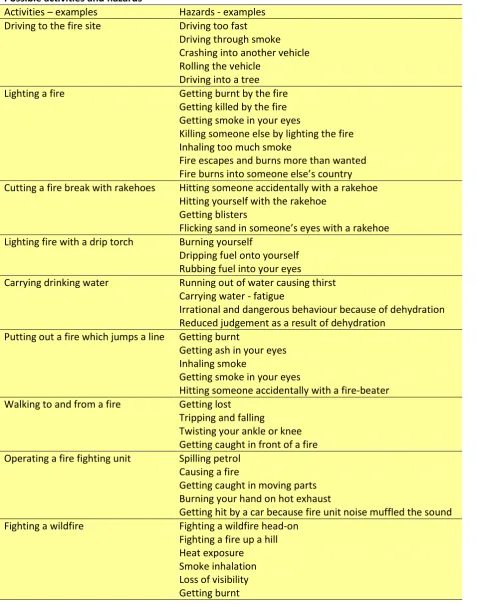
Do this each time you prepare to do an activity like fire-lighting or fire-fighting. Some examples of possible activities and hazards are shown below.
Possible activities and hazards
Activities – examples Hazards - examples
Driving to the fire site Driving too fast
Driving through smoke Crashing into another vehicle Rolling the vehicle
Driving into a tree
Lighting a fire Getting burnt by the fire
Getting killed by the fire Getting smoke in your eyes
Killing someone else by lighting the fire Inhaling too much smoke
Fire escapes and burns more than wanted Fire burns into someone else’s country Cutting a fire break with rakehoes Hitting someone accidentally with a rakehoe
Hitting yourself with the rakehoe Getting blisters
Flicking sand in someone’s eyes with a rakehoe Lighting fire with a drip torch Burning yourself
Dripping fuel onto yourself Rubbing fuel into your eyes
Carrying drinking water Running out of water causing thirst Carrying water - fatigue
Irrational and dangerous behaviour because of dehydration Reduced judgement as a result of dehydration
Putting out a fire which jumps a line Getting burnt
Getting ash in your eyes Inhaling smoke
Getting smoke in your eyes
Hitting someone accidentally with a fire-beater
Walking to and from a fire Getting lost
Tripping and falling
Twisting your ankle or knee Getting caught in front of a fire Operating a fire fighting unit Spilling petrol
Causing a fire
Getting caught in moving parts Burning your hand on hot exhaust
[image:38.595.81.559.180.785.2]Getting hit by a car because fire unit noise muffled the sound
Fighting a wildfire Fighting a wildfire head-on
In the Job Safety Analysis Worksheet are two columns asking what level of risk goes with the tasks you have identified in the JSA. These risk levels can vary with different situations.
Use the risk tables below to estimate the consequences of something happening and the likelihood of it happening.
Consequence risk rankings (following AS/NZS 31000)
Descriptor Example detail description Insignificant No injuries, low financial costs
Minor First aid treatment, medium financial costs
Moderate Medical treatment required, damage to property, high financial costs Major Extensive injuries, major damage to others’ property, major financial cost Catastrophic Death of yourself or crew, death of someone else, huge financial cost
Likelihood risk rankings
Descriptor Description
Almost certain Is expected to occur in most circumstances
Likely Will probably occur in most circumstances
Possible Might occur at some time
Unlikely Could occur at some time
Rare May occur only in exceptional circumstances
Risk levels have to be applied to each of the identified risks, both before you take action to reduce the risk, and after you take action. In other words, what is the worst that could happen if you did not take action to prevent or reduce the risks? How can you reduce the risks, and how likely is the hazard after you take the preventative action?
Risk analysis matrix – level of risk (following AS/NZS 31000)
Likelihood
Consequence
Insignificant Minor Moderate Major Catastrophe
Almost certain High High Extreme Extreme Extreme
Likely Moderate High High Extreme Extreme
Possible Low Moderate High Extreme Extreme
Unlikely Low Low Moderate High Extreme
Rare Low Low Moderate High High
Risk Management Actions
Risk Level Management action
Extreme STOP – consult supervisor - senior management decisions, contingency plans, external authorities involved
High Senior planning & action, specific management actions required, external advice may be sought
Moderate Expert planning & management, exceedance of accepted standards Low Good planning & management, accepted standards
Example of Job Safety Analysis Worksheet – part complete
Wunambal Gaambera Aboriginal Corporation Date: 19th Nov 12
Fire crew members names:
Activity: burning around ranger station
Approved by
Activity Hazards Risk level before
controls
Risk control measures Risk level after controls
Who is responsible?
Get crew together Less than 3
Unfit
Under influence Bad attitude
Extreme Get 3 or don’t go
Teamwork Stand down Stand down Stand down
Low Coordinator/Senior
Ranger/Individuals
Packing
car/vehicle –
checklist
Hurt back
falling off roof-rack
moderate Lift properly
Get assistance to lift
Use lifting device Driving to Ranger
station
Car accident getting bogged run out of fuel Check firebreak &
other assets
Damage to property or people
Fill fire-fighting unit and get gear
Hurt back, injuries fuel spill
smoking around fuel lose trailer
inadequate communication gear failure
Light fire Hurt or kill
Damage property
After you have done the JSA at the beginning of the season or activity, write up the risks you have identified into a checklist and use this checklist each time you do the activity.
Right way fire – planned burning - An example of a check list
Activities Hazards Controls Check
Driving to the fire site
Driving too fast Driving through smoke Crashing into another vehicle
Rolling the vehicle Driving into a tree
Drive according to conditions
Lighting a fire
Getting burnt by the fire Getting killed by the fire
Work at a safe distance from the fire
Getting smoke in your eyes
Work from windward side of fire
Killing someone else by lighting the fire
Name team members to watch and keep them in sight in a safe position
Inhaling too much smoke Work from windward side of fire Fire escapes and burns
more than wanted
Fire burns into someone else’s country
Burn according to conditions Plan your firebreaks before burning
Cutting a fire break with rakehoes
Hitting someone accidentally with a rakehoe
Work at a safe distance from other fire crew
Hitting yourself with the rakehoe
Handle tools carefully
Carry first aid kit
Getting blisters Use work gloves
Flicking sand in
someone’s eyes with a rakehoe
Handle tools carefully
Lighting fire with a drip torch
Burning yourself Light fire with proper tool in good condition
Splashing fuel onto yourself
Handle fuel carefully
Rubbing fuel into your eyes
Wash hands after handling fuel
Carrying drinking water
Running out of water causing thirst
Carry enough water (4 Litres per day)
Carrying water - fatigue Carry what you need, get additional water transported by vehicle Irrational and dangerous
behaviour because of dehydration
4.2 Safety
Your approach to burning
Plan carefully each time you burn or fight a fire. Responsibility for life and property and for traditional country is yours and your team’s.
The permit to burn requires that you have a plan, and map of where you want to burn, have all the necessary equipment and are prepared in every way for the fires you light.
Your fire may be intended to be a cool or light control burn, but all fires have the potential to become dangerous in some circumstances. A simple change in wind, or a heavier fuel load may lead to unintended consequences, including injury and death.
Consequences may include:
negative reactions from neighbours
negative reactions from the public
excessive heat and damage to trees, fruit trees, and wildlife
increased risk of fire escapes
damage to lives and property.
4.3 Safety procedures
Safety starts during planning and ends when the fire is completely out.
First Aid
At least one person in a crew should be trained in First Aid.
Carry field first aid kit.
Safety and Personal Protective Equipment (PPE)
The right clothing and equipment are essential– image from Robert Warren, Uunguu Ranger Coordinator
Wear:
natural fibres
long-sleeved cotton/nomex hi-viz shirts
long trousers, jeans or overalls
sturdy leather lace-up boots, not elastic sides
wool or cotton socks
hats or helmets
cotton or leather gloves
eye protection
water carrier
Some of you have tough leathery feet because you walk everywhere barefoot. But, if you are lighting fires under a Permit from the bush fire control officer, you will have to wear boots because even tough leathery feet will burn in fires and on hot coals. It’s a safety issue!
Planning must identify areas where there are public risks.
Communications and safety devices
The fire crew must maintain contact and communications with WGAC every day at a fixed time. To do this, the crew can use the Spot Satellite GPS Messenger, Satellite phone, two-way VHF radio or messenger.
The SPOT device must be set up and tested before you go into the field. A profile needs to be set up on the SPOT website http://au.findmespot.com/en for contacts while you are in the field.
The profile includes the information below:
Profile
Check-in/OK
[email protected] +61 419 259 868 (Robert Warren) +61 427 163 080 (Tom Vigilante) Message to send Check-in – All OK here and on schedule
Help
[email protected] +61 419 259 868 (Robert Warren) +61 427 163 080 (Tom Vigilante)
Message to send Having trouble but not dangerous nor life-threatening. If you don't hear again for 24 hrs, activate Emergency procedures
Custom Message
[email protected] +61 419 259 868 (Robert Warren) +61 427 163 080 (Tom Vigilante)
Message to send Have been delayed, but don't worry as otherwise OK
SOS
Primary Emergency Contact Secondary Emergency Contact
Bevan Stott Ed Hatherley
Radios
Radio station or unit Channel
Base radio
DEC WAERN –DEC – WA Emergency Radio Network – High-band
VHF
Dual band with CB UHF
WG has VHF in vehicles and hand-held
Marine & Emergency
WG operations
16
Satellite phones
A Satellite Phone must be carried by crews when in areas not covered by cell-phone coverage, and in remote areas. The phone must have an open account, and not pre-paid, which could expire or be used up when in the field.
The phone must have contact numbers pre-coded into it.
Every crew member must be able to demonstrate that they can use the phone properly.
4.4 Field & Office Response Procedures
Routine schedule
A routine or normal schedule call will be made by the field crew every day between 0700 and 0800 hrs.
The WGAC office manager will normally take that call, unless otherwise arranged in advance.
If all is OK, the office manager must record this in the Field Schedule book, including time of call, location and what they are doing.
If there is a problem, the office manager must contact the next senior person who will take appropriate action. The office manager will record the details in the Field Schedule book.
If there is an emergency, the office manager must trigger Emergency Procedures.
Emergency Procedures
If the crew calls an emergency, the office manager or next senior officer must contact the people in the contact list below, in the order that they are listed.
The office manager must record this in the Field Schedule book, including time of call, location and what they are doing.
The office manager must record all contact details, who was contacted, what time, and what action they took.
Contacts for Schedules and Emergencies
Name Organisation Number Email
Kalumburu WG Satellite Phone Wunambal Gaambera crew
8707 7639 6769 (calls and sms)
Tom Vigilante WGAC 0427 163 080
(mobile) Sat phone - 8707 7639 6769 (calls and sms)
Robert Warren – Ranger Coordinator
WGAC [email protected]
Neil Waina - Head Ranger
WGAC [email protected]
Bevan Stott WGAC 0428 681 406 [email protected]
Kalumburu Police
(08) 9161 4777
Wunambal Gaambera Ranger Office
(08) 9161 4205 Sat ph: 8816 214 68994
Kalumburu Clinic
(08) 9161 4335 [email protected]
Mitchell Plateau Kandiwal Community - Cathy, Ambrose, Alex or Gregory Catherine Goonack Home
WGAC (08) 9161 4405
(08) 9161 4077 (fax)
(08) 9191 7882
DEC Ranger Station - Lindsay and John
(08) 9161 4172
Truscott-Mungulalu Truscott Airbase
(08) 9161 4558
Gaambemirri Ranger Camp
4.5 IN AN EMERGENCY in the field
Stop work
Check for Danger Signs
Turn off all equipment so that it does not cause problems
Check that all people are present and OK
If anyone is in trouble, contact the emergency contact using SPOT or Satellite phone
Do not attempt to walk out unless you are fully equipped to walk and all people are fit for the walk
Do not leave anyone alone
5
BURNING THE BUSH
5.1 Operational Fire Plan
An operational plan is needed for both aerial incendiary operations and for ground
operations. This is developed from the Wunambal Gaambera Healthy Country Plan and the Annual Fire Operations Plan, and must be done before operations. It is a simpler summary of proposed actions for the days of the proposed fires.
The Operational Fire Plan will be for a period of days or weeks at most. The maps and documents must be filed into one file for future reference.
Reporting on the results of the fires lit will be according to the Operational Fire Plan.
The operational fire plan should include:
A description of the area to be treated and the fuel characteristics
Operational objectives, burn prescriptions and strategies
Equipment and personnel required
Notifications and signage required
Reporting protocols
Communications Plan
Ground safety
Weather information both current and forecast
A map showing:
o areas to be burnt and areas to remain unburnt o proposed drop lines,
o flight line directions, o number of runs,
o adjoining or otherwise affected landholders, o controls required to contain the burn, o aircraft landing and supply sites,
o safe refuge areas and withdrawal routes.
Operational Control
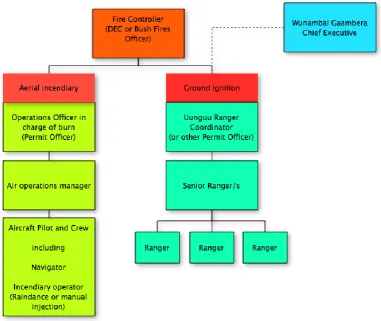
[image:51.595.135.516.154.470.2]Control of all fire operations must be strict.
Figure 10. Fire command structure
In joint operations cultural leadership for the operation operates alongside operational responsibility.
5.2 Aerial Control Burning
For aerial incendiary operations, rules are more strict than for ground operations. Wunambal Gaambera staff who have appropriate training can assume control of an aerial burning operation. Burning Operations Supervisor (or Operations Officer in charge of burn) requirements include:
Incendiary Machine Operator (IMO) – has completed a Department Environment & Conservation (DEC) IMO Training Course in the year of conducting the aerial burning;
Has 3 years experience in conducting aerial burning with a Raindance Machine; and/or
Permission from KLC Executive with advice from Senior Project Officer, North Kimberley Fire Abatement Project (in writing)
o (from KLC Aerial Burning Operations Manual Draft v1.1 , 2013).
The rules and laws on aerial burning operations are provided in the KLC Aerial Burning Operations Manual (Draft v1.1, 2013). More detailed rules and laws are provided in the AFAC Aerial Ignition Operations Guideline 2012. The rules are detailed and complicated but must be followed to ensure the safety of the people flying and the aircraft, and people on the ground.
All aircraft used for aerial control burning on Wunambal Gaambera country will have to comply with these laws and rules.
Helicopter Use Procedures
The procedures below are to help staff use choppers efficiently and to help the pilot manage their time (especially in the busiest months of April to July).
Timetable bookings into 3 hour runs of either morning, afternoon or all day.
Bookings can be made for other times if necessary by booking for specific times.
Cancel bookings with at least 24 hours notice. Last minute cancellations ok if absolutely necessary.
If all day booking try to keep lunch or breaks to a minimum (definitely not more than 1 hour!)
Be ready to go when chopper arrives (including a flight plan and all equipment required). The pilot has left from Jabiru to arrive at your booking on time so make sure you are on time.
If changing over staff flying make sure 2nd group is also ready to go when chopper returns.
Have a flight plan for your time in the chopper. It is a very expensive machine and needs to be used efficiently. If the purpose of your flight is burning the flight plan should be part of your fire plan.
Respect all instructions given by pilot while in and around helicopter.
If taking lots of gear talk to the pilot about how much and what kind of gear you have and have it packed well.
Ensure that you follow the procedure for SAR times.
[image:53.595.77.543.94.462.2]These procedures were developed for Kakadu National Park, by staff in Report on The Kakadu National Park Stone Country Burning Program 2008; reprinted with permission.
Figure 11. Helicopter use procedures
The pilot is responsible for the safe operation of the aircraft at all times, and remains in command at all times during aerial incendiary operations.
5.3 Aerial Ignition Operations
Aerial ignition may be conducted using hand-injected capsules, or a Raindance R2 Aerial Incendiary Machine. Both require special training which is not within the scope of this manual.
Steps involved with aerial ignition operations include:
Fire Controller (or Incident Controller) makes sure that the area to be burnt is clear of people, stock and equipment before burning starts
Pilot will fly over the area to check
Operations Officer (Permit Officer) will fully brief the pilot and crew on all matters to do with the fire before any operation
This includes and emergency brief and full functional check of equipment prior to flight
All people and pilots involved with aerial burn will have correct PPE
Navigator will monitor fire spread and direct Incendiary Operator to alter capsule spacing as needed
Navigator may ask Pilot to alter aircraft speed
Capsule spacing will be determined by fire plan including rate of spread, desired intensity, and patchiness
Where possible, lighting will start downwind of burn area and work upwind so that target area is not covered in smoke
Lighting patterns should normally follow contours and work from higher to lower ground
Ignition spacing needs to be watched to make sure fires are not too close and hot
Sometimes intense quick burns may be needed
Ignitions need to be close enough together to burn out as needed on the day
Pilots must make sure that Visual Flight Rating and visual contact with the ground is maintained at all times
Pilots and machine operators must make sure that ignitions occur only within the burn area and must stop dropping in time to allow for burnout before reaching the boundary
Debrief at end of each mission to assess the operation and fix procedures if needed.
(Adapted from AFAC Aerial Ignition Operations)
Communications
Ground-to-air communication schedules must be pre-planned.
Radio communications between the Operations Officer and aircraft must be established before the operation starts.
During any Aerial Ignition Operation, the aircraft conducting the operation shall have radio communications with the Operations Officer at all times during the ignition operation.
No communications should take place with the helicopter while it is hovering, landing, taking off, or during loading operations. At these times, the pilot’s
concentration must not be disturbed unless there is significant cause to alert them to other issues.
Aircraft conducting Aerial Ignition Operations must have an aeronautical VHF Communications system.
Aircraft should be equipped with fully independently controlled audio switching facilities serving the pilot, co-pilot and operator, and which provide transmit and receive access without changing headsets or helmets to Agency transceivers.
Helicopters should be equipped with a siren to warn people on the ground of danger
Communications between ground crew and pilot, designated fuelling, mixing and loading areas, and marked escape routes are essential to the conduct of all Aerial Ignition Operations.
5.4 Preparation before the day of the fire
[image:55.595.82.569.128.563.2]You will need to check that all is ready for the next day:
Table 2. Checklist before the day of the fire
Action Responsible
person
Check
obtain a permit to burn from the Bush Fire Control Officer review the fire management plan for the area
make sure all necessary equipment and people are available and in good working order
provide each crew leader with a copy of the burning plan and map
familiarise each person with the burning plan and the area to be burnt
identify and discuss significant features, such as steep slopes, high fuel areas, creeks, rocky areas and water sources
never send people into dangerous places such as steep slopes, areas of high fuel or difficult access or areas where fires are burning below them
display warning signs where required under the permit
contact neighbours to inform of plan to burn
conduct early preparation such as edge burning to reduce the chance of fires escaping control lines, if this is part of your fire management plan
conduct a Risk Assessment for the burn
obtain the latest weather forecast for the day of the burn fly or drive the areas to be burnt a few days before to check the condition of the grasses
check that all PPE, food, water, communications, first aid kits are present and in good condition
check that fuel for aircraft is supplied and in the right location
Weather and fuels determine how the fire will burn and whether it will do what you want it to do.
5.5 On the day of the fire
[image:57.595.87.566.112.783.2]On the day of the burn:
Table 3. Checklist on the day of the fire
Action Responsible
person
Check
1. make sure the right people are available to do the work, and that permissions have been obtained from the right TOs
2. print out the Permit and check that you have done everything required
3. print out the fire plan for the area for the day 4. dress ready for the fire with all PPE
5. make sure all necessary equipment and people are available and in good working order
6. Zero tolerance of alcohol - if fire crew members are
intoxicated at all, they are to be stood down before going to the fire
7. contact neighbours to inform of plan to burn
8. obtain the latest weather forecast for the day of the burn from the Bureau of Meteorology (BOM) and NAFI sites 9. obtain local weather readings using a Kestrel Weather
Meter
10.determine the fire danger using the Grassland Fire Danger Meter and the Fire Spread Meter for Northern Australia 11.consider any potential wind changes and the possible
effects on fire behaviour
12.verify that the contact people for emergencies are on stand-by
13.check the area thoroughly on the day of the burn to make sure no-one other than fire crew are in the burn area 14.make sure all crew members know the escape routes,
fall-back areas and assembly points
15.give clear and concise instructions at all times and ensure the chain-of-command is well-defined in the briefing and made known to all crew members
16.ensure regular contact with all crew members during the fire, and account for each member – where they are, what they are doing, how they are feeling
17.maintain communication between leaders and crew members at all times
18.make sure you have the proper protective equipment 19.make sure everyone has access to unlimited supplies of
water and energy drinks
20.Record your notes on the checklist – provided below and in the Appendix
If flying:
1. obtain safety briefing from pilot
The fire crew must keep records of the fire crew, conditions and locations on the day of the fire.
Table 4. Records on day of fire
Item Names and notes
Fire location and name Date
Fire Crew present 1. Crew Leader
Name: 2. 3. 4. 5. 6. 7. 8
Notify DEC officer Name:
Date: Equipment
Hose Knapsack Fire appliance (600 L slip on, other) Grader, tractor or plough Drinking water
Check:
Notify local government Name:
Date: Notify local landowners (if required) Name:
Date: Wind strength
Wind Direction Temperature Relative humidity Degree of curing of grass Calculated rate of spread Calculated fire danger Time of lighting Signed
Name
Drug and Alcohol testing
People under the influence of drugs or alcohol will not be permitted to work on any fire activity.
People may be tested routinely or on the spot.
Supervisors will stand people down immediately if they are intoxicated, and they will not be paid for the days they are stood down.
Aerial incendiary operators must have zero alcohol and zero drugs in their bodies. They will also be tested and stood down immediately.
Attitude
Fire lighting and fire fighting are serious activities which require a very positive attitude. A bad attitude can cause injuries and even death. Everyone can have bad days, but a bad attitude on the day of a fire will not be tolerated.
If a supervisor feels that someone with a bad attitude is a risk to the fire activity, he may stand that person down, without question, because the safety of the team is in the hands of the supervisor.
If there is a disagreement about the stand-down, it will be dealt with after the fire event by a meeting of people elected by the Board of Directors to resolve the dispute.
Communications and teamwork are essential.
Casuals
Casual and volunteers on fire crews must be assessed by the senior officer for fitness and ability. If they are not fit or able, then they will not be accepted.
They must follow all rules and procedures that other crew members must follow.
Casuals and volunteers are always under the authority of senior person and must obey commands.
They must accept liability for their involvement.
All volunteers and casuals are subject to Work Safety & Health obligations and duties as if they were employed.
Contingency planning
A fire activity may be called off at short notice for a variety of reasons.
the weather may not be right, or changes quickly
cultural reasons
there may be other problems
Aerial incendiary burning is particularly risky, so planned aerial burns may be called off at short notice as well. Reasons may be:
lack of trained personnel
incorrect PPE
equipment failure
air sickness of an operator or observer
JSA shows an unacceptable level of risk
there is a chance of people in the burn area
an operator does not show up, so there are not enough crew.
If a job is cancelled at short notice, the supervisor will prepare a report for the CEO.
6
MONITORING AND REVIEW
After each fire and at the end of the fire season it is essential to review the successes and failures.
Monitoring includes checking how successful the fires were at achieving the goals set in the fire plan. It may include fly-overs. NAFI provides a useful means to monitoring fires.
Review means that all your activities and successes and mistakes are reviewed, so that corrections can be made where necessary.
6.1 Reporting
Reporting is a part of the operations and planning process. The Annual Fire Operations Plan guides the overall planning, and reporting will be to the Operational Fire Plan and the Job Safety Analysis for the season.
Reporting of the results of the fires will be in accordance with the Operational Fire Plan and should include:
Operational Fire Plan Action
JSA (Job Safety Analysis) Attach completed JSA to report A description of the area burnt Map the areas burnt
Operational objectives, burn prescriptions and strategies
[image:61.595.91.549.605.774.2]Did you meet the objectives? If not, what happened? Equipment and personnel Attach the checklists
Table 2. Checklist before the day of the fire
Table 3. Checklist on the day of the fire