Open Access
Research article
Development of the conceptual framework for the Eye-Drop
Satisfaction Questionnaire (EDSQ
©
) in glaucoma using a qualitative
study
Jean-Philippe Nordmann
1, Philippe Denis
2, Marc Vigneux
3, Elyse Trudeau
3,
Isabelle Guillemin
3and Gilles Berdeaux*
4,5Address: 1Hôpital des XV XX, Paris, France, 2Hôpital Edouard Herriot, Lyon, France, 3Mapi Values, Lyon, France, 4Conservatoire national des Arts
et Métiers, Paris, France and 5Alcon France, Rueil-Malmaison, France
Email: Jean-Philippe Nordmann - [email protected]; Philippe Denis - [email protected]; Marc Vigneux - [email protected]; Elyse Trudeau - [email protected]; Isabelle Guillemin - [email protected]; Gilles Berdeaux* - [email protected]
* Corresponding author
Abstract
Background: Compliance is a major issue in glaucoma care. It is usually poor in glaucomatous
patients, and may ultimately result in an acceleration of the disease progression and a risk of blindness. Reasons for this poor compliance are complex and multifactorial, amongst which patient satisfaction can be counted. The objective of this study was to develop a questionnaire to assess patient satisfaction and compliance with eye-drop treatment.
Methods: A qualitative study was carried out to develop the questionnaire. An interview guide
was developed based on a literature review. Structured interviews of fifteen French and English patients with primary open-angle glaucoma or intraocular hypertension were conducted by trained interviewers of the native language of the interviewees. General concepts and subconcepts were identified from the transcripts. The questionnaire was developed using the patient verbatim, and submitted to six patients (French and English) for cognitive debriefing. Following patients' comments, items were modified and restructured, and a pilot questionnaire was designed.
Results: Analysis of data from the interviews with patients and clinicians resulted in the elicitation of concepts related to patient satisfaction and compliance with glaucomatous treatment. These were further refined and used to generate a test questionnaire, which consisted of 46 items grouped into 6 domains: patient characteristics, treatment characteristics, patient-clinician relationship, patient experience with the disease and the treatment, interaction between the patient and the treatment, and patient knowledge of the disease and the treatment.
Conclusion: The Eye-Drop Satisfaction Questionnaire (EDSQ) conceptual framework and items
were developed simultaneously in French and in English. This questionnaire could be used to evaluate patient satisfaction and compliance with eye-drop treatment and would facilitate the identification of patients at risk of being non-compliant prior to clinical trials or innovative device tests. A psychometric study is under way to validate the questionnaire.
Published: 6 August 2007
BMC Health Services Research 2007, 7:124 doi:10.1186/1472-6963-7-124
Received: 12 December 2006 Accepted: 6 August 2007
This article is available from: http://www.biomedcentral.com/1472-6963/7/124 © 2007 Nordmann et al; licensee BioMed Central Ltd.
Background
Primary open-angle glaucoma (POAG) is the most com-mon form of glaucoma. It is a chronic disease character-ised by a progressive alteration of the optic nerve, leading to visual impairment. Glaucoma is one of the three lead-ing causes of visual impairment in developed countries [1,2]. The prevalence of glaucoma is about 2% in people over 40 years and increases with age [3-5]. Reported increase in office visit rates is also directly associated with ageing [6]. According to the World Health Organisation, visual impairment was responsible for 2,286,000 disabil-ity-adjusted life years in high-income countries in 2001 [7]. It has considerable impact on the economy because of the non-medical costs associated with the incapacity and dependency resulting from the disease, such as loss of income, burden on carer, paid assistance and residential adaptation [8]. Visual impairment also negatively affects the Health-Related Quality of Life (HRQoL) of patients [9,10], and constitutes a major cause of disability that affects individuals, family and society, and is associated with an increased risk of institutionalisation and death [1,11-13].
In all prospective multi-centre trials, elevated intraocular pressure (IOP) is a major risk factor of POAG, even though up to 50% of reported glaucoma cases may have "normal" or "average" IOP. Moreover, elevated IOP has been observed in patients with ocular hypertension (OHT), who may never develop glaucoma [14,15]. How-ever, multiple randomised studies have established the efficacy of IOP reduction in preventing glaucomatous pro-gression [16-19]. Therefore, control of IOP remains the main approach to glaucoma care, and several medical strategies have been developed to improve care: medica-tion, laser treatment and surgery. Treatment of glaucoma or OHT with medications is a major factor in the control of the progression of glaucoma, thus contributing to the maintaining of patients' HRQoL [13,20-22]. Nevertheless, non-compliance of glaucomatous patients with the pre-scribed therapy is significant, and is a highly limiting fac-tor in the management of glaucoma. Numerous barriers to medication compliance exist, such as the lifelong-nature of the treatment, situational/environmental factors (e.g. travelling), medication regimen (e.g. difficulty in self-administering eye-drop product; side effects), patient factors (e.g. forgetfulness, wrong idea of their medical condition) and provider factors (e.g. poor communica-tion between physicians and patients) [20,23-26]. While compliance with treatment is indeed multifactorial [27], Woodside et al. have proposed and illustrated the rela-tionship between satisfaction and behavioural intention and attitude regarding health [28]. Specifically, glaucoma patient satisfaction with his/her treatment has been shown to be a key driver of compliance [29], and could therefore be used as an endpoint to characterise patients
at risk of being non-compliant. This information could help characterize the treatment features that need to be improved by identifying the determinant of satisfaction.
To this end, we proposed to develop a questionnaire on compliance and satisfaction with medications adminis-tered as eye-drops (the Eye-Drop Satisfaction Question-naire – EDSQ-) for glaucoma or IOP treatment. Recently, the importance of the very first steps in the development of a Patient-Reported Outcomes (PRO) questionnaire has been pointed out, and includes the design of a thorough and rigorous conceptual framework following patient ver-batim [30]. This manuscript presents the development of the conceptual framework based on patient and clinician interviews, and the subsequent generation of the items that constitute the EDSQ.
Methods
Concept development
Based on patient concerns about eye-drop treatment iden-tified in the literature review, a project team consisting of a health psychologist, two ophthalmologists and a group of experts in the development of questionnaires first met to design a list of concepts related to patients' expectations and satisfaction with eye-drop treatment. This concept list was used for the development of the clinician and patient interview guides.
Clinician interviews
Five clinicians who had experience in the treatment of patients suffering from glaucoma or ocular hypertension were recruited. Interviews with the clinicians were con-ducted either face-to-face (France; n = 3) or by phone (United Kingdom; n = 2) by a health psychologist and a trained reviewer, and lasted 30 to 45 minutes. Clinicians received a financial incentive for their participation.
The clinician interview guide explored the following top-ics: clinicians' perception of the disease (s), patient man-agement, patients' expectations regarding their management, ease of use and treatment constraint, com-pliance with the treatment and patient education about the disease and its treatment.
Patient interviews
a trained interviewer (in England) in the native language of the interviewees and interviewers, and were tape-recorded. These took place at the same place patients were recruited, (i.e. clinic or clinical practice), or at the patients' home. Patients received a financial incentive for their par-ticipation.
The patient interview guide explored the following points: patients' perception of the disease, fear and worries linked to the disease, patients' actual experience of the treatment, ease of use and treatment constraint, efficacy and tolera-bility of the treatment, information and communication between clinicians and patients, compliance with the treatment.
Analysis of clinician and patient interviews
The tapes of the patient and clinician interviews were first transcribed. Then, the transcripts were analysed by the health psychologist following the Interpretative Phenom-enological Analysis approach [31], and used to amend and complete the initial list of concepts. The concepts within this second list were categorised into new global concepts and detailed subconcepts to create a conceptual framework.
Item generation
Based on the pooled data from French and English patient verbatim extracted from the interview transcripts, the items were simultaneously generated in French and Eng-lish during a project team "item generation meeting" [32]. This process ensured that each item in the subsequent questionnaire was relevant to both English and French patients.
Following discussions between members of the project team about the concepts and the choice of appropriate response-scales and of the overall structure of the ques-tionnaire, a first version was developed.
Evaluation of the content validity
Patient structured interviews were performed by native speaking and trained interviewers to assess the question-naire's clarity and ease of comprehension, cultural equiv-alence and relevance of the questions. Participants were different from those who took part in the concept devel-opment phase, but were recruited using the same method and criteria as those used for the recruitment of patients for the first set of interviews.
Six face-to-face interviews (three per country) were per-formed. Two patients were diagnosed with OHT and four with POAG. Interviews were tape-recorded. During the interviews, patients were asked questions on their under-standing and the wording of the items. In addition, they were asked to review each item of the questionnaire in order to evaluate the clarity and ease of understanding on first reading and the relevance of the items. Throughout the interview, the interviewer prompted the patient to ensure they gave as much feedback as possible.
Results and discussion
Interviews were performed between December 2005 and January 2006.
Patients' characteristics
[image:3.612.54.561.554.711.2]Socio-demographic and clinical characteristics of the patients are summarised in Table 1. Of the fifteen patients interviewed, seven were diagnosed with OHT and eight with POAG. Eight patients were male and seven patients were female. The mean age of the patients was 68 years (± 10 years); the majority of them were retired. French patients had been diagnosed 16 years ago (± 9 years) on average, and had been following a treatment for 15 years on average. All patients were taking at least one type of ophthalmic drop. One French patient was suffering from tachycardia, and one from hypertension. Amongst Eng-lish patients, one was suffering from prostate cancer, one
Table 1: Socio-demographic and clinical characteristics of the patients
Characteristics France (n = 9) United Kingdom (n = 6) Total (n = 15) Pathology Ocular Hypertension 4 3 7
Primary Open-Angle Glaucoma 5 3 8 Time since diagnosis (years ± SD) 15 ± 9 NA* NA Age Min-Max 50–82 59–81 50–82
Mean (years ± SD) 67 ± 12 70 ± 8 68 ± 10
Gender Male 6 2 8
Female 3 4 7
Living situation Alone 1 1 2 As a couple 7 5 12
Married 1 0 1
with high blood pressure, one had breast cancer and one had arthritis.
Concept elicitation
Therapeutic compliance is a major factor in the treatment of glaucoma and prevention of blindness. However, com-pliance remains poor in this disease area; patient satisfac-tion has been identified as being one of the causes [28]. Based on these observations, we have developed a satis-faction questionnaire on eye-drop treatment that will help identify patients at risk of being non-compliant.
Qualitative analysis of pooled data from English and French patients' and clinicians' interviews revealed six major concepts. Some of these had already been addressed and gathered from the preliminary literature review, but interviews also allowed the elicitation of more emotional aspects by placing the patient in the psycho-sociological context of the disease. The conceptual frame-work is presented in Figure 1. Concepts extracted from the clinicians' and patients' interviews are presented in the following sections, and are illustrated with selected cita-tions from the interviews. Where French verbatim was included, this was translated into English by a bilingual English speaking native. This verbatim is annotated with an asterisk in the text.
Patient characteristics
According to the clinicians' interviews, "non-compliant (patients) are more often men*", a "retired 'old man' is more compliant*", and "non-compliant (patients) are more often young*". Patients reported physical difficulty in self-administering drops ("the actual drop itself can be difficult to put in"; "to put the drops in by myself would be difficult*", "Yes, perhaps for people who are unsteady; this is not my case*"), which could result in missing the eye ("quite often it falls on the eye lid and trickles away so
I have to do it again"), and their discomfort in having to put things in their eyes: "I hate instruments that get close to the eyes*". Related to these remarks may be patients mentioning that the presence of somebody (spouse, hus-band or external help) would facilitate this step ("my mother applied the drops to my father's eyes*"). Clini-cians also expressed the discomfort and difficulty of the drop instillation process ("they just seem to say that it's hard to look in the mirror and hold one eye at the same time as putting a drop in-so it's the coordination of the whole thing – very rarely someone says that the bottle itself is a problem, but that's rare"; "they find it hard to put them in themselves"; "if someone was coming in regularly to help them put the drop in they would be able to do it"), and have observed that "plenty of those people will have them put in by their wife or spouse". Factors related to travel, whether professional or personal, constituted another major reason of non-compliance with the treat-ment. Some patients reported difficulties in having to remember to take their bottle when they were away: "always having my bottle with me", "even in another country", "I have forgotten them when I have been away from home". Clinicians also indicated that "professional life makes the follow-up of the treatment difficult*". A few patients explained that they were compliant with their treatment because a person in their family or friends had previously had glaucoma ("My dad having had glaucoma that was badly treated. He was 80 years old and maybe that at this age, you have other priorities. I knew I had to be very careful and pay great attention to my condi-tion*"). Finally, clinicians reported that non-compliance could be explained by "the patients' attitude first of all, and usually they are some other issues going on that make them not bother to put the drops in".
Thus, patient characteristics including socio-demographic criteria such as age and gender appear to have a direct impact on eye-drop treatment compliance. Their level of education also has an impact (data not reported). In par-ticular, the marital status seems to be an important factor in compliance; the presence of a partner, or any external help, is a motivating factor for patients, either as a reminder or as a direct participant who would administer eye-drops. Previous glaucoma history in patients' entou-rage may help in increasing their compliance, as the patient could then be aware of the effects that might result from an inappropriate treatment. Physical difficulties including palsy, discomfort putting things in eyes, and blink reflex when instilling the drops are a barrier regard-ing the patients' compliance with eye-drop treatment. Patient compliance is also related to the time they can spend administering their drops during the day. Lastly, travel or any modifications in patient habits often result in forgetting to use their medication, and thus have a nega-tive impact on compliance.
Conceptual framework for the Eye Drop Satisfaction Ques-tionnaire
Figure 1
Conceptual framework for the Eye Drop Satisfaction Ques-tionnaire.
Patient-Clinician relationship
Patient experience Patient
characteristics Treatment characteristics
COMPLIANCE
SATISFACTION
Patient-treatment interaction
Treatment characteristics
Daily frequency of the treatment was often given by patients as having an impact on their compliance: "three (drops) in the evening and two in the morning with a ten-minute pause between the two drops", "the one (drop) during the day, I might forget it", "the one in between I might take it at dinner time and might take it at 4 o'clock". Side effects and feelings of discomfort resulting from the treatment were also reported by patients and clinicians: "It stings. I don't want to take my drops tonight", "It stings and it makes my eyes red. I'm going out tonight, I don't want to have red eyes*", "It burned when I applied it. I had puffy eyes, red eyes*".
Patients' compliance and/or satisfaction with the ment may be influenced by the characteristics of the treat-ment itself, such as the frequency of daily intake, and the time of intake. The amount and intensity of the treatment side effects are major factors: the greater and more painful the side effects, the less compliant the patients. Finally, satisfaction is closely related to compliance; indeed, if the patient is satisfied with the treatment in its overall fea-tures, then he/she will be more compliant.
Patient-clinician relationship
Sharing information about the disease and the treatment with their clinician and checking-up on the efficiency of the treatment have been mentioned by most patients as motivating factors for compliance and/or satisfaction: "(About change in the visual field) without an ophthal-mologist it is impossible to know about it on your own*", "I know because every 6 months, I have an appointment with my clinician and he measures my ocular tension. And I noticed that from 17, I stabilized at 10 for each eye and it's not changing anymore. For me, this is a good result*"; A few patients said that they would be encour-aged to continue their treatment if their physicians were willing to train them how to administer their medication and gave regular check-ups. The attention paid by the cli-nician and positive feedback were also reported by patients as motivating factors ("I consulted a specialist who cheered me up, he told me that if the pathology is treated early enough, it couldn't go badly*"; "I was diag-nosed very early. It's lucky the ophthalmologist had a good reaction, because some of them think that you are making it up*").
A good relationship, including care, training, feedback and regular check-ups with their clinician is essential to patient satisfaction, and is likely to result in improved compliance. This may be linked to the patients' difficulty in evaluating the efficacy of their treatment themselves because of the elusiveness of the disease. Only a clinician (ophthalmologist) can inform patients about a change in their medical condition (an improvement, deterioration
or stabilisation). A relationship based on trust and regular check-ups of patients by their clinician is therefore neces-sary to motivate patients to take their treatment.
Patient experience
The trouble the patients have remembering to take the treatment, ("the constraint is thinking about it*"; "You get in, you fall asleep, you wake up later and can't remember if you have taken your drops") and the burden of admin-istering drops in the eyes ("I can drive but it bothers me at night, the car lights...that's why we stopped going out in the evening*", "The only trouble is remembering to use them") were just part of the list of constraints that may result in not taking the medication. Patients expressed their doubts about the effectiveness of the treatment because of the absence of an immediate medical deterio-ration in their condition if they don't take their drops ("I didn't take all [my drops]) last week and feel fine"), because of the absence of a fast and noticeable improve-ment in their vision ("The difficulty is knowing if the treatment is working*"; "sometimes because of poor effi-cacy of the drops"). One patient reported his non-compli-ance with any medication ("I don't actually like taking medication, full stop"). Fear is very frequently reported as being a factor contributing to the non-compliance of patients. For clinicians, the association of glaucoma with blindness was the most frequent fear found in glaucoma-tous patients ("I think their first fear is 'am I going to go blind or not?"). For the majority of the patients, the fear of going blind was also the biggest fear linked to their medical condition ("Yes, scared of going blind, more than of being in a wheelchair*"; "I was worried at first, the fear of going blind*"). Fear of surgery was also brought up. Clinicians reported that they used these fears to incite patients to be compliant with the eye-drop treatment ("Once they have gone through that, then you can tell them about the medical treatments – we tell them that most of the time the drops work"; "Fear of surgery is a real fear; We use that to make sure they put the drops in"). Equally, having to take a treatment for life was another factor that patients indicated: "At the beginning, it makes me think, a lifelong treatment is never something pleas-ant*".
Patient knowledge
Clinicians reported that patients have no or incorrect knowledge about glaucoma and its symptoms ("A strong non-compliance factor is the non-understanding of the disease by the patient; there is no need to take treatment, I don't feel symptoms*"; "Just preconceptions they have about going blind basically and that is associated with the word glaucoma"). Patients often indicated the lack of information regarding their disease: "I have no informa-tion*", "As with a lot of treatments, in medicine, they are not very talkative about why you have to take a treatment, what it does, the inconveniences, you don't know any of these*". Patients confessed their attempts to self-diagnose their disease: "I read in a book about glaucoma symptoms about seeing a halo around the light and thought, I have that symptom, so went to see the doctor", "Oh yes because I always – they have a leaflet to tell you exactly what they are doing for you and what the side effects might be, if you have any, which was good, nothing to get upset about"), and their need to be informed (talking about information: "No, not much. I'd like to have more. But we read a lot of things. My sister is also under treatment*".
Patients' knowledge about the disease treatment also influences their compliance: patients will be satisfied if they are regularly informed about their illness and in turn will be more compliant with their treatment. To fully understand the importance of being compliant with the treatment, patients need to understand the reasons for which they have to follow a treatment, especially when the treatment has constraints. Consequently, clinicians play a major role by supplying this information, which underlines the need for a good relationship between patients and clinicians.
Patient-treatment interaction
Patients mentioned forgetting to take the treatment or deliberately interrupting it: "Sometimes I don't want to. I told you it happened 3, 5, 10 times maximum in 3 years... There is no reason... I think I did it consciously, so few times in 3 years; it's neutral (without consequences). ... Because I don't want to! I have children, and when they were at school, I always told them – during the school year you can take 2 mornings off no more...I do the same with [name of the product]*". Other patients said they have developed routines and organisational means to help them remember to take their treatment: "When I get up in the morning I usually have a wash and come back into the kitchen and put one drop in my right eye"; "Well, I keep the bottle on the bedside table so that usually it reminds me"; "You just get into the routine – twice a day and it's no big deal". But often, patients related these routines to a necessity, and as such defined them as an obligation: ("But I have to admit that drops every evenings, it's a con-straint*"). The repetitive aspect of the treatment could
also help the patient to accept the treatment, as reported by a patient: "No, it's not restrictive because one drop in each eye once a day before going to bed, it's a reflex, it's a habit and it only takes 8 seconds*". The inconvenience of the application device was raised as a problem for cor-rectly measuring out the drops ("the bottles are not too bad. It's a mass-produced drug and with some of them, you have to be careful because there are at least 2 to 3 drops that come out*"). Its inconvenience was also noted because of the difficulties in using it for elderly people (talking about elderly people: "The bottles are very small and so, when they press them they don't have the same flexibility that we have in their fingers, and also, to have to lean back your head can result in dizziness, they may fall. That elderly people are non-compliant with these kinds of treatments doesn't surprise me*"), or because of their difficulty in administering the drops by themselves: "I was doing it myself, but watching the mirror is not very handy and I was missing my eyes. However, for some other patients, "the bottle is not too badly designed*".
Interaction between patients and treatment is another fac-tor to consider in patients' treatment compliance. On the one hand, routines may help the patient to be compliant, but on the other hand, these same routines might be per-ceived as a constraint. Non-compliance might thus be a way for patients to re-appropriate their life and to cope with the anxiety and fear they associate with their disease. The convenience of the application device and its ease of use are an other major factor in satisfaction and/or com-pliance with the treatment.
Item generation
Based on the conceptual framework and the verbatim of the French and English patients' pooled-responses, a pilot questionnaire was developed simultaneously in French and in English. The questionnaire contained 56 items assessing the following six concepts: a/Patient characteris-tics, (18 items), b/Treatment characteristics (6 items), c/ Patient-clinician relationship (12 items), d/Patient treat-ment experience (8 items), e/Patient-treattreat-ment interac-tion (8 items), and f/Patient compliance (4 items). The interviewees answered using to a 5-point Likert scale rang-ing from "not at all" to "extremely" or from "never" to "always".
Evaluation of the content validity
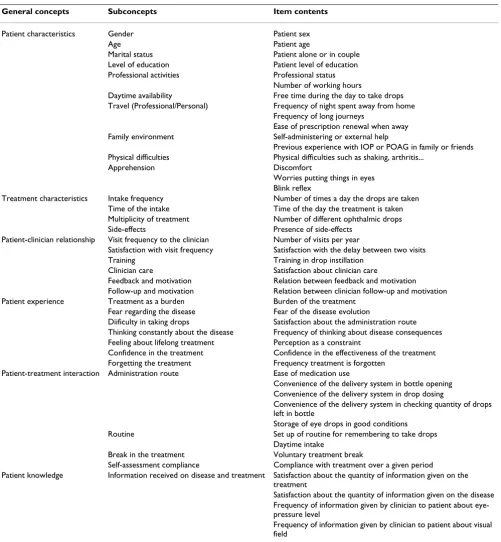
Table 2: General concepts and subconcepts of the final questionnaire
General concepts Subconcepts Item contents
Patient characteristics Gender Patient sex Age Patient age
Marital status Patient alone or in couple Level of education Patient level of education Professional activities Professional status
Number of working hours
Daytime availability Free time during the day to take drops Travel (Professional/Personal) Frequency of night spent away from home
Frequency of long journeys
Ease of prescription renewal when away Family environment Self-administering or external help
Previous experience with IOP or POAG in family or friends Physical difficulties Physical difficulties such as shaking, arthritis...
Apprehension Discomfort
Worries putting things in eyes Blink reflex
Treatment characteristics Intake frequency Number of times a day the drops are taken Time of the intake Time of the day the treatment is taken Multiplicity of treatment Number of different ophthalmic drops Side-effects Presence of side-effects
Patient-clinician relationship Visit frequency to the clinician Number of visits per year
Satisfaction with visit frequency Satisfaction with the delay between two visits Training Training in drop instillation
Clinician care Satisfaction about clinician care
Feedback and motivation Relation between feedback and motivation Follow-up and motivation Relation between clinician follow-up and motivation Patient experience Treatment as a burden Burden of the treatment
Fear regarding the disease Fear of the disease evolution
Diificulty in taking drops Satisfaction about the administration route Thinking constantly about the disease Frequency of thinking about disease consequences Feeling about lifelong treatment Perception as a constraint
Confidence in the treatment Confidence in the effectiveness of the treatment Forgetting the treatment Frequency treatment is forgotten
Patient-treatment interaction Administration route Ease of medication use
Convenience of the delivery system in bottle opening Convenience of the delivery system in drop dosing
Convenience of the delivery system in checking quantity of drops left in bottle
Storage of eye drops in good conditions Routine Set up of routine for remembering to take drops
Daytime intake
Break in the treatment Voluntary treatment break
Self-assessment compliance Compliance with treatment over a given period
Patient knowledge Information received on disease and treatment Satisfaction about the quantity of information given on the treatment
Satisfaction about the quantity of information given on the disease Frequency of information given by clinician to patient about eye-pressure level
Frequency of information given by clinician to patient about visual field
order to make them clearer for the patients. Following experts' comments, the order of the items was also modi-fied in order to facilitate the completion of the question-naire. The definition of the concepts was also refined and restructured. These concepts and the associated subcon-cepts are presented in Table 2.
multiplicity of treatments and side-effects), 3/Patient-cli-nician relationship (6 items, including items on frequency of visits, satisfaction with frequency of visits, training, sat-isfaction with clinician care and impact of good feedback and follow-up), 4/Patient experience (7 items, including items on perceived constraints of the treatment, fear of the disease, confidence in the treatment, forgetting the treat-ment, difficulty in taking drops and thinking constantly about the disease), 5/Patient-treatment interaction (9 items, including items on the ease and convenience of the administration route, set up of routine, break in the treat-ment, and self-assessment of compliance), and 6/Patient knowledge (4 items related to the information received by the patient on the disease and the treatment). For ease and clarity, the questionnaire was divided into two distinct parts, the first part dealing with socio-demographic items, and the second with disease-related questions. Respond-ents answered each item using either a dichotomous scale (Yes/No) or a 5-point Likert type scale ranging from "not at all" to "extremely" or from "never" to "always".
Conclusion
A conceptual framework and items were generated accord-ing to the Guidance for Industry document published by the Food and Drug Administration [30], and resulted in the development of the EDSQ. To our knowledge, there is no article describing the very first steps of the develop-ment of a questionnaire on glaucoma eye-drop treatdevelop-ment compliance and satisfaction. In this manuscript, the elab-oration of a conceptual framework and the item genera-tion based on a qualitative study of interviews with glaucomatous patients are presented. The concepts and subconcepts established herein support previous quanti-tative studies that have provided evidence that patient sat-isfaction may be related to compliance, perceived effectiveness of treatment, side effects, ease and conven-ience of use, acceptance of illness, and knowledge of glau-coma [29,33,34]. Two limitations to the present work should be noted; one may reside in the absence of satura-tion as interview methodology [30,31,35]. However, the conceptual framework that was elaborated from the pre-liminary literature review and subsequent patients' and clinicians' interviews appeared consistent and solid; this framework was further confirmed with cognitive debrief-ing. One should add that recent work has found that sat-uration occurs within the first twelve interviews [36]. The other limit might consist in the bias that could have been introduced when translating French verbatim into English before analysis. This may have resulted in the loss or mis-interpretation of some information, although such issues were not highlighted during cognitive debriefing. Further psychometric validation is required to confirm the items.
This questionnaire will be useful to evaluate satisfaction and compliance for patients receiving eye-drop treatment
for ocular hypertension and glaucoma, thus facilitating the identification of patients at risk of being non-compli-ant, and ultimately help to select the best patient candi-dates for eye-drop treatment. In the current economic climate, such a tool will render decision-making easier for pharmaceutical industries that will want to test innovative devices and newly developed treatments. A psychometric validation of the EDSQ questionnaire is under way to examine its psychometric properties; in addition, the questionnaire is being currently translated and linguisti-cally validated in Dutch, Spanish and Italian, which will widen its use to international studies.
Competing interests
The author(s) declare that they have no competing inter-ests.
Authors' contributions
JPN and PD participated in patients' interviews and man-uscript reviewing; MV carried out patients' interviews and performed the verbatim analyses; ET participated in the questionnaire conception and the study coordination, and the reviewing of the manuscript; IG wrote the manu-script and gave input to the data analysis; GB conceived the study and participated in its design, as well as in the analysis and the development of the questionnaire, and in the manuscript reviewing.
Acknowledgements
This work was supported by an unrestricted grant from Alconlabs. We would like to thank Katie Allen for her logistical contribution in England, and Nicola Barnes in France (Mapi Values) for her helpful comments on the English wording. We would also like to thank Dr Eric Sellem in France, and Drs Kancha Bhan and Nitin Anand in England for the selection of the patients and their willingness to be interviewed.
References
1. Berdeaux G, Brézin A, Fagnani F, Lafuma A, Mesbah M: Self-reported visual impairment and mortality: a French nation-wide perspective. Ophthalmic Epidemiol 2007, 14:80-87.
2. Goldstein H: Magnitude and causes of blindness: Sources and limitations of data. In Clinical ophthalmology. Volume 2Volume 5. Edited by: Freemann JS. Philadelphia, USA: Lippincott Company; 1990:1-10.
3. Brézin AP, Lafuma A, Fagnani F, Mesbah M, Berdeaux G: Prevalence and burden of self-reported blindness, low vision, and visual impairment in the French community: a nationwide survey. Arch Ophthalmol 2005, 123:1117-1124.
4. Friedman DS, Wolfs RC, O'Colmain BJ, Klein BE, Taylor HR, West S, Leske MC, Mitchell P, Congdon N, Kempen J, Eye Diseases Preva-lence Research Group: Prevalence of Open-Angle Glaucoma among adults in the United States. Arch Ophthalmol 2004,
122:532-538.
5. Tuck MW, Crick RP: The age distribution of primary open angle glaucoma. Ophthalmic Epidemiol 1998, 5:173-183.
6. Schappert SM: Office visits for glaucoma: United States, 1991– 1992. Adv Data 1995:1-14.
7. Mathers C, Lopez A, Stein C, Ma Fat D, Rao C, Inoue M, Shibuya K, Tomijima N, Bernard C, Xu H: Deaths and disease burden by cause: global burden of disease estimates for 2001 by world bank country groups. [http://www.dcp2.org/file/33/wp18.pdf]. 8. Lafuma A, Brézin A, Lopatriello S, Hieke K, Hutchinson J, Mimaud V,
Publish with BioMed Central and every scientist can read your work free of charge
"BioMed Central will be the most significant development for disseminating the results of biomedical researc h in our lifetime."
Sir Paul Nurse, Cancer Research UK
Your research papers will be:
available free of charge to the entire biomedical community
peer reviewed and published immediately upon acceptance
cited in PubMed and archived on PubMed Central
yours — you keep the copyright
Submit your manuscript here:
http://www.biomedcentral.com/info/publishing_adv.asp
BioMedcentral visual impairment in four European countries: France, Italy,
Germany and the United Kingdom. Pharmacoeconomics 2006,
24:193-205.
9. Odberg T, Jakobsen JE, Hultgren SJ, Halseide R: The impact of glau-coma on the quality of life of patients in Norway. II. Patient response correlated to objective data. Acta Ophthalmol Scand
2001, 79:121-124.
10. Spaeth G, Walt J, Keener J: Evaluation of quality of life for patients with glaucoma. Am J Ophthalmol 2006, 141:3-14. 11. Brézin A, Lafuma A, Fagnani F, Mesbah M, Berdeaux G: Blindness,
low vision and other handicaps as risk factors attached to institutional residence. Br J Ophthalmol 2004, 88:1330-1337. 12. Lafuma A, Brézin A, Fagnani F, Mimaud V, Mesbah M, Berdeaux G:
Nonmedical economic consequences attributable to visual impairment: A nation-wide approach in France. Eur J Health Econ 2006, 7:158-164.
13. Nordmann JP, Viala M, Sullivan K, Arnoult B, Berdeaux G: Psycho-metric validation of the National Eye Institute Visual Func-tion QuesFunc-tionnaire – 25 (NEI VFQ-25) French version: in a population of patients treated for ocular hypertension and glaucoma. Pharmacoeconomics 2004, 22:197-206.
14. Armaly MF: Ocular pressure and visual fields. A ten-year fol-low-up study. Arch Ophthalmol 1969, 81:25-40.
15. Kitazawa Y, Horie T, Aoki S, Suzuki M, Nishioka K: Untreated ocu-lar hypertension. A long-term prospective study. Arch Oph-thalmol 1977, 95:1180-1184.
16. Collaborative Normal-Tension Glaucoma Study Group: Comparai-son of glaucomatous progression between untreated patients with normal-tension glaucoma and patients with therapeutically reduced intraocular pressures. Am J Ophthal-mol 1998, 126:487-497.
17. Heijl A, Leske MC, Bengtsson B, Hyman L, Bengtsson B, Hussein M, Early Manifest Glaucoma Trial Group: Reduction of intraocular pressure and glaucoma progression: results from the Early Manifest Glaucoma Trial. Arch Ophthalmol 2002, 120:1268-1279. 18. Kass MA, Heuer DK, Higginbotham EJ, Johnson CA, Keltner JL, Miller JP, Parrish RK 2nd, Wilson MR, Gordon MO: The Ocular Hyper-tension Treatment Study: A randomized trial determines that topical ocular hypotensive medication delays or pre-vents the onset of primary open-angle glaucoma. Arch Oph-thalmol 2002, 120:701-713.
19. The AGIS investigators: The advanced glaucoma intervention study (AGIS): 7. The relationship between control of intra-ocular pressure and visual field deterioration. Am J Ophthalmol
2000, 130:429-440.
20. Kosoko O, Quigley HA, Vitale S, Enger C, Kerrigan L, Tielsch JM: Risk factors for noncompliance with glaucoma follow-up visits in a residents' eye clinic. Ophthalmology 1998, 105:2105-2111. 21. Stewart WC, Konstas AG, Pfeiffer N: Patient and
ophthalmolo-gist attitudes concerning compliance and dosing in glaucoma treatment. J Ocul Pharmacol Ther 2004, 20:461-469.
22. The European Glaucoma Society: Terminology and guidelines for glaucoma. 2nd edition. [http://www.eugs.org/ebook.asp]. 23. Denis P, Lafuma A, Berdeaux G: Medical outcomes of glaucoma
therapy from a nationwide representative survey. Clin Drug Investig 2004, 24:343-352.
24. Nordmann JP, Auzanneau N, Ricard S, Berdeaux G: Vision related quality of life and topical glaucoma treatment side effects. Health Qual Life Outcomes 2003, 1:1-9.
25. Sleath B, Robin AL, Covert D, Byrd JE, Tudor G, Svarstad B: Patient-reported behaviour and problems in using glaucoma medi-cations. Ophthalmology 2006, 113:431-436.
26. Tsai JC, McClure CA, Ramos SE, Schlundt DG, Pichert JW: Compli-ance barriers in glaucoma: a systematic classification. J Glau-coma 2003, 12:393-398.
27. Hays RD, Kravitz RL, Mazel RM, Sherbourne CD, DiMatteo MR, Rog-ers WH, Greenfield S: The impact of patient adherence on health outcomes for patients with chronic disease in the medical outcomes study. J Behav Med 1994, 17:347-360. 28. Woodside AG, Frey LL, Day RT: Linking service quality,
cus-tomer satisfaction, and behavioral intention. J Health Care Mark 1989, 9:5-17.
29. Day DG, Sharpe ED, Atkinson MJ, Stewart JA, Stewart WC: The clinical validity of the treatment satisfaction survey for intraocular pressure in ocular hypertensive and glaucoma patients. Eye 2006, 20:583-590.
30. Patrick DL, Burke LB, Powers JH, Scott JA, Rock EP, Dawisha S, O'Neill R, Kennedy D: Patient-Reported Outcomes to support medical product labelling claims. . Unpublished data.
31. Charmaz K: The Grounded Theory. In Rethinking methods in psy-chology Edited by: Smith JA, Harré R, Van Langenhove L. London, Sage; 1995:27-49.
32. Kubin M, Trudeau E, Gondek K, Seignobos E, Fugl-Meyer AR: Early Conceptual and linguistic development of a patient and part-ner Treatment Satisfaction Scale (TSS) for erectile dysfunc-tion. Eur Urol 2004, 46:768-775.
33. Atkinson MJ, Sinha A, Hass SL, Colman SS, Kumar RN, Brod M, Row-land CR: Validation of a general measure of treatment satis-faction, the Treatment Satisfaction Questionnaire for Medication (TSQM), using a national panel study of chronic disease. Health Qual Life Outcomes 2004, 2:12.
34. Atkinson MJ, Stewart WC, Fain JM, Stewart JA, Dhawan R, Mozaffari E, Lohs J: A new measure of patient satisfaction with ocular hypotensive medications: The Treatment Satisfaction Sur-vey for Intraocular Pressure (TSS-IOP). Health Qual Life Out-comes 2003, 1(1):67-.
35. Morse JM: The significance of saturation. Qual Health Res 1995,
5:145-147.
36. Guest G, Bunce A, Johnson L: How many interviews are enough? An experiment with data saturation and variability. Field Methods 2006, 18:59-82.
Pre-publication history
The pre-publication history for this paper can be accessed here: