International Journal of Innovative Technology and Exploring Engineering (IJITEE) ISSN: 2278-3075,Volume-8 Issue-12, October 2019
Abstract: Optimization in the field of Operations Research has applications in various industries, be it medicine, business, analytics or education. Likewise Supply Chain Management (SCM) is required in every industry and with the need comes various challenges to get the optimized and best quality solution. There are stochastic, analytical models working on attaining optimization in various sub events involved in SCM. Supply Chain is a network at global level used for delivering of products and services from unprocessed materials to consumers through well-structured and planned flow of information, physical distribution and money. The process of managing this supply chain is Supply Chain Management. A major work on the previous research done using various mathematical models, be it mixed integer linear, nonlinear programming or evolutionary have been depicted in this paper. The aim is to get the best result and comparative approach is focused. This article provides a detailed study on various techniques, algorithms and mathematical models in optimization of SCM and in particular it focuses on Genetic Algorithm (GA) in SCM.
Keywords : Supply Chain Management, Supply Chain Management Processes , Optimization Model, Genetic Algorithm
I. INTRODUCTION
Sustaining a supply chain in efficient manner has been one of the most important goals of researchers since an era. In reality, a country's economy depends on effective well-organized supply chain developments. Nevertheless, due to the ever-rising competition among various companies and industries, the SCM models are getting complex each passing day. The priority now is to enhance the existing techniques and refine various algorithms by integrating different methods to attain the objective subjected to various constraints. Optimization of supply chain is the need the hour, since it is not sufficient to have just good supply chain network, but it is extremely important to attain an optimal solution to various objectives under SCM processes. Closed loop supply chain networks have also seen sufficient work and a brief review is given in[84]. There exist around 8 processes under SCM and various work has been done in most of these sub-processes. These processes will be mentioned in the later section of the article. Supply Chain Management Optimization involves inventory control,
Revised Manuscript Received on October 10, 2019
* Correspondence Author
Shraddha Ramdas Bandekar*,Mathematics Division, School of Advanced Sciences, Vellore Institute of Technology. Chennai Email: [email protected]
Vijayalakshmi C*, Mathematics Division, School of Advanced Sciences, Vellore Institute of Technology. Chennai Email: [email protected]
[image:1.595.310.548.585.834.2]transportation scheduling, supply chain network design, production and capacity planning etc. SCM is applied in almost all real world problems and one recent works would be of water management in Chennai using fuzzy approach by Gayathridevi et al. [36] Bharathi and Vijayalakshmi [49] used evolutionary algorithm for job shop scheduling designing and optimization. With optimization comes decision making depending on the kind of project and the tenure involved. Decisions in supply chain are mainly classified into three levels namely, strategical, operational and tactical. A long term project which require years of work involves strategical decision making whereas a mid-term work for say a few months or years is at tactical level and short-term, hourly or few days work is considered at operational level. Effective functioning of supply chain process requires optimization models. Research has been done in optimization in SCM using various models like Linear Programming (LP), Heuristics, Mixed Integer Programming (MIP),Multi-objective Linear Programming (MOLP), and Stochastic. Heuristics includes various hybrid algorithms, Genetic Algorithm (GA) and Genetic Algorithm - Simulated Annealing (GA-SA) etc. Recent studies shows GA has been extensively used in most of the SCM processes, be it inventory optimization, production and distribution planning or logistics. In this paper detailed review on above mentioned methods in addition with few more will be looked on, but a thorough study will be focused on Genetic Algorithm and it's various types. Genetic Algorithm is one of the most prevalent techniques used in supply chain optimization as it can adapt to any form of problem and gets accustomed with the main objective and constraints. More shall be discussed on this aspect in the coming sections of the paper.
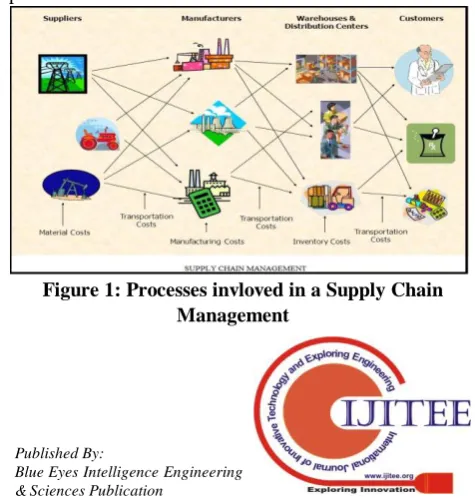
Figure 1: Processes invloved in a Supply Chain Management
Optimization Algorithm in Supply Chain
Management
Following is a brief layout of the paper: A brief introduction on SCM and optimization is outlined in first section of the paper, section II will include a gist on different optimization models used in SCM, this will be followed by a brief history of genetic algorithm and its functioning in section III and section IV will emphasis on studies done using GA in supply chain management and different processes under SCM . In the end, conclusions are drawn in last section of the article.
II. OPTIMIZATION MODELS USED IN SUPPLY
CHAIN MANAGEMENT
Optimization models as the term itself states is the required for operating supply chain process. With growing advancements comes intricacy in the problem which can dealt by these models to a greater extent. The author now provides a review based on the models used in SCM optimization. Linear Programming (LP) is a branch of mathematics which deals with solving optimization problems with objective to minimize or maximize a function subjected to certain constraints, and it has been used in supply chain optimization time and then. Alawneh et al. [3]worked on inventory control optimization for a steel company and formulated a linear programming model for the same focusing on the supply of desired amount of raw materials from supplier as well as optimal amount of products to be delivered to customers. In [28], the authors have worked using commercial linear programming for optimization in distribution problem with multiple products and facilities. Oh and Karimi [67] used this model for planning of distributions with certain drawbacks. From [69], it could be seen that non-hierarchical supply chain have utilized linear programming for optimization. Uzorh et al.[31] and Aliyu et al. [8] have worked on transportation problem which is an inevitable part of SCM with the objective of cost minimization and considering different factors. Kumanan et al. [74] also formulated a linear programming model to minimize the cost of transportation from plants to distributors to retailers.Unlike LP, Mixed Integer Programming(MIP) adds a condition to the given set of constraints, that no less that one variables can take only integer value. MIP is used for formulating various models of which most are solved using different algorithms or techniques with the help of different software. Altiparmak et al. [33], Farahani and Elahipanah [32]and Zegordi et al. [78] have a provided MIP formulation for multiple product supply chain network design, cost and service level optimization considering just-in-time distribution and in two-stage supply chain scheduling respectively. Agarwal and Johari [1], designed a mixed integer model to solve problem involving minimization of the total cost of transportation in logistics network with multiple facilities and single product. Ali [4]framed MIP model for minimizing sum of investment, transportation and shortage costs taking supply chain disruption as a parameter.
Saha et al. [7] used an Mixed Integer Linear Programming Model(MILP) for a closed loop supply chain involving forward and backward flow of products to optimize the facility location and reducing supply chain network cost. In the same context, Das and Chowdhury [26]depicted a mixed integer linear programming model in maximizing the overall
International Journal of Innovative Technology and Exploring Engineering (IJITEE) ISSN: 2278-3075,Volume-8 Issue-12, October 2019
Rezaei and Davoodi [72]worked on multi-period lot- sizing problems which involved multiple products as well as suppliers developing a multi-objective mixed integer non-linear model. Kavitha and Vijayalakshmi [19],[20],[21]worked on Multi
Objective Fuzzy Linear Programming (MOFLP) techniques for weighted additive model for selection of supplier in SCM, wherein they considered cases to incorporate Zimmermann method and weighted method along with MOLP and in the later using fuzzy approach with MILP.
A general supply chain management model with multiple objectives is depicted below:
Subject to Constraints
In SCM , the minimize objective function is cost function which includes transportation cost, manufacturing cost, distribution and suppliers cost which sums to "Total Operational Cost" and the maximize function is profit and efficiency. The constraints relate with demands, amount of materials to be shipped and lead time so on.
A heuristic is a method designed to solve a problem faster when traditional techniques tend to be time consuming in providing solutions, or to determine a solution when it is difficult to get the exact solution using classic methods. A meta-heuristic is a higher level heuristic developed to find heuristic that may give better solutions to an optimization sum. The different heuristics include Lagrangian Heuristic (LRH)[14],[53] wherein the former one considered multiple plants producing the same item was considered and the main focus on optimal lot sizing in the supply chain considering different periods and the later aimed at minimizing total cost production, inventory and distribution considering multiple plants, in [98] Ant colony system -Tabu search (ANT-TABU) was used for vehicle routing optimization using meta heuristics, MOLP based Heuristic algorithm [60] was approached considering complete cost and time flow and all lost sales as main aims, MILP-GA has been discussed above, Mixed-integer programming based heuristic algorithm (MIPH) could be observed in [50],[66], hybrid simulation mathematical model, Tabu search heuristic algorithm (TABU) [6], Simulated Annealing (SA) approach was used by Safaei et al. [77]to explore real world system concerning transportation and distribution control under supply chain management, Lagrangian and genetic algorithm (LR-GA)[64], [63] preferred Lagrangian relaxation in addition with Surrogate Sub-Gradient algorithm (LR-SSG) approach for design of supply chain network with multi mode demand taking into account all the demands of customers. We shall be discussing Genetic-Algorithm (GA) in detail in the coming section. In [11], Bharathi and Vijayalakshmi used evolutionary algorithm approach for optimization of transportation with multiple objectives using a special bi-partite graph encoding method.
III. GENETIC ALGORITHM
An evolutionary algorithm is an algorithm that uses nature inspired mechanisms and solves problems through processes
that match the behaviors of living organisms. Genetic Algorithm which was first introduced by John Holland and his team of colleagues in the year 1975. These algorithms are based on Darwin's theory of survival of the fittest and based on the same is genetic algorithm and is one of the extremely used search methods for optimization works. Genetic algorithm is a direct search algorithm which implies no prior information on the gradient of the objective function is required for solving the optimization problem[43].
The steps involved in genetic algorithm are:
1. Randomly selecting the initial population which serves as the initial solution
2. Next the given criteria of the problem is considered which is the deciding condition. If the initial population satisfies this condition, then go to stop, else go to the selection stage.
3. In the selection stage the fitness function is evaluated and the individuals which conform to the fitness function are selected for mating.
4. Now comes the reproduction stage which involves: Crossover: Crossover is held on the basis of
predefined crossover probability for production of offspring.
Mutation: Mutation is performed on basis of the predefined mutation probability wherein any random bit in genetic sequence is altered.
5. Check whether the newly produced offspring(solution) satisfies the criteria.
If the condition is not satisfied, continue the process else terminate.
IV. GENETIC ALGORITHM IN SUPPLY CHAIN MANAGEMENT PROCESS
A thorough study on performance measures in supply chain management namely qualitative performance measures, quantitative performance measures, measures based on cost and customer responsiveness was done by Beamon et al. [10]. Genetic algorithm is applied in varied fields of supply chain management, be it vendor management replenishment system[16], supply chain logistics networking [74], [30], inventory optimization [80] as well as in economic lot-size scheduling and modelling. The Council of Supply Chain Management Professionals have listed 8 sub-processes under SCM. These processes will be discussed in detail along with the existing work done in the different sectors.
4.1 Manufacturing Flow Management
Manufacturing is basically adding value to raw materials so that it can be used by the mass. Manufacturing flow management involves "Inventory Management", "Supply Chain Planning" and "Production Planning" and basically deals with activities associated with these sub-domains namely transportation, employing of vehicles, flexibility in supply chain and production plan etc. The flow in manufacturing starts with suppliers followed by assembling of the parts and inspection of the materials followed by shipping of the inspected materials.
4.1.1 Inventory Management
Best service is provided to the consumers provided the planning of inventory in supply chain management is done in efficient way. Inventory optimization is intended on improving customer services, decreasing lead time as well as costs and upholding with the market demands. The outlays associated with inventory systems administrative cost, maintenance cost and shortage costs. In [91], the authors Umamahesgwari et al. have designed and analyzed optimal inventory model considering perishable goods with fixed life time.GA was used by Sadok et al.[76] for the analysis of bi-objective routing problem in inventory where transportation and delivery were calculated independently. For production of qualitied solutions an adaptive genetic algorithm was proposed by Cho et al.[17] to an inventory routing problem which is time dependent. In [46], a study was done multi-product and multi-period inventory models using the approach of genetic algorithm. Diabat [29] applied GA to get solution to a Vendor Management Inventory using hybrid algorithm in a two-stage supply chain. Jackson et al. [47]used simulation and genetic algorithm in stochastic inventory system with multiple products.
Singh and Thakur [80] designed a new effective approach applying genetic algorithm to provide the most likely shortage level and excess stock level to decrease the total cost in the system. They used the fitness function,
where k=1,2,3,...,m to identify the fit individuals for applying GA. Here, represents number of occurrences of chromosomes throughout the period, represents total inventory values after clustering and m is number of chromosomes for which evaluation of fitness function is done.
4.1.2 Supply Chain Planning
Planning of supply chain, in maximum initiatives, is organization of supply and demand related doings to lower discrepancies in complete chain. Han and Damrongwongsiri [13] used genetic algorithm to design optimum resolutions via an optimization method with two stages for planning of supply chain in collaborating, moreover a prototype for strategic resource planning and operational needs of manufacturing small and medium sized enterprises was presented by [45] and Huang et al. [44]took a GA based model to include production and sourcing decisions of the supply chain.
4.1.3 Production Planning
A thorough planning of production as well as distribution plays a crucial role in performance capacity. Factually, distribution and production planning have been considered to be independent of one another, as in the impact of one on each other was taken to be nil. However, research in this field over past few years imply that integrated production and distribution planning helps optimize the safety stocks for unexpected distribution disruptions and demands. Production planning in SCM involves demand management, aggregating the planning of production, mastering the schedule, planning of material requirements and controlling the production activity. Study on scheduling of the production considering maintenance factor was studied by Wong et al. [93] based on a GA approach. In enterprise resource planning optimization, GA was used by Tan and Zang[87] in improving system performance by analyzing the production planning decision factors. Mok et al.[62] proposed algorithms for default allocation of work based on genetic algorithm and group technology. An enhanced approach of GA for optimization of production planning along with supplier selection taking into account flexibility of customer was presented by Cui [24]. In [35]a lot-scheduling problem was worked on using GA and in [22] a hybrid GA which combined features of random sampling search with GA was used to solve a scheduling problem.
4.2 Order Fulfillment
Customer service performance is reflected by one of the crucial parameters which is order fulfillment. The order fulfillment cycle begins receiving the materials followed by assembling and quality checking. Once the quality is assured, the products are packed and shipped from warehouse.
4.2.1 Logistics Network Designing
International Journal of Innovative Technology and Exploring Engineering (IJITEE) ISSN: 2278-3075,Volume-8 Issue-12, October 2019
[15] used Monte Carlo simulation based genetic algorithm to provide a continuous balanced model of network plan of stochastic demands and supplies. Soleimani and Kannan [82] made use of particle swarm technique of optimization and GA in supply chain with closed loop in huge scale network. Hiremath et al.[42]used multi-objective genetic algorithm for optimization of consequential network problems and Pasandideh et al. [79] proposed evolutionary algorithms NRGA and NSGA-II for optimization of bi-objective problem involving multiple entities in three- stage supply chain under certain uncertain conditions.
4.2.2 Vehicle Routing
In [54], [59] authors have presented a hybrid approach merging GA with an iterated local search for efficient location-routing problem also the later also considered time window. Hsu et al. [56]suggested a hybrid genetic algorithm for vehicle routing having lesser capacity. On the other hand Cai et al.[97] provided solution to a vehicle routing problem with various depos and coincident pick up and delivery time windows. Ahmadizar et al. [2] used GA for cross-docking in three stage supply chain for vehicle assignment at two levels.
4.2.3 Other Issues
In addition to vehicle routing and logistics network , there are other factors concerning order fulfillment like replenishment policies optimization with different number of warehouse and retailers [94],facility location [92],[71]and man power shift plan using GA [65]etc.
4.3 Demand Management
Demand management covers activities relating the demands, market developing and sensing and demand controlling. As per [73]demand management includes 2 important sub-sections namely sales forecasting and bullwhip effect.
4.3.1 Sales Forecasting
Sales forecasting is a method involved in practices which involves decision-taking and it plays a crucial role in goods and services marketing. Genetic algorithm was applied in optimizing predictions of coal sales via neural network optimization by Zhang and Qinghe [86]and Gao et al. [57]developed an integrated model of decision tree algorithm and genetic algorithm for the same. In [89], authors presented GA for forecast of car sales.
4.3.2 Bullwhip Effect
In [52]bullwhip effect is such that a minute discrepancy in the demand from end consumers alters the whole flow of events as one proceeds higher level. Othman and Gomma[84] used control engineering and genetic algorithm to reduce bullwhip in supply chain and in [90]GA is applied for the same but to obtain the optimal amount of ordering in a chain with multiple stages. Tosun et al. [88]used parallel GA approach and Devika et al. [27]applied evolutionary multi-objective metaheuristics for the same.
4.4 Suppliers Relationship Management
Supplier relationship management deals with optimum vendors, discovering new vendors, prediction of
procurement, getting the buyers and segregate the gains of supplier partnership. The different steps involved in supplier relationship management include strategic value identification, supplier segregation, performance management, influencing and deliver value. In [95]GA approach was used with budget constraint to optimize supply chain allies an in [96]multi-objective GA was applied to achieve pareto-optimal solution in multi-vendor system. GA was used in supplier evaluation and selection [75],[18]and obtain solution using GA.
4.5 Returns Management
Management of returned amenities is a section which involves reverse logistics wherein products are returned due to defects or unsatisfied service or quality. Hence, it is extremely important to optimize returns management in order to avoid losses. Gheezavati and Nia [37] solved an product returns optimization sum using genetic algorithm and simulated annealing. In [41] authors considered returned product's cost and time satisfaction degree of retailers to optimize inventory routing problem using adaptive GA. [40] worked on spare parts returns using simulation based GA and Trappey et al.[25] presented a quantitative as well as qualitative method with GA to estimate RFID enabled reverse logistics.
4.6 Development of Products and Commercialization
Planning of this process in efficient manner is quite important for a sustainable profit in supply chain. The different steps involved are concept advancement, thorough research, pre and post production, assembling and commercialization. Fernando and Escobedo [61] used a hybrid GA approach and Bao et al [9] used adaptive GA for pharmaceutical product development and for optimization of task allocation in customized product development respectively. Fung et al. [34] used GA search technique to attain optimal affective design of products.
4.7 Customer Service Management
It is a process which is involved with client administration and this section depicts the face of the firm to it's consumers.[12].important sub-sections namely sales forecasting and bullwhip effect.
4.8 Customer Relationship Management
This is a customer-centric strategy in business which a company implements to better customer understanding and level of customer satisfaction by refining their goods and amenities to customers' needs [51]. In [51]evolutionary computing is used.
V. CONCLUSION
In customer service and relationship management the authors could not find much articles. The challenge that lies in today's era is the emerging complexities in supply chain management due to competition. The focus is to develop different variants of genetic algorithm with multiple objectives and researching on the techniques like MILP and MINLP for bringing out effective and efficient genetic algorithms. Supply Chain Management is vast topic of research and the complexities are growing every hour. The future scope is to integrate distinct factors and decision variables on which the system depends like flexibility with routing and loading, considering multiple periods and stochastic demands, optimizing customer relations and services.
REFERENCES
1. Dr. Sumit Agarwal and Kushal Johari. Mathematical modelling in transportation sciences. IOSR Journal of Mathematics, 5:39–43, 2013. 2. Fardin Ahmadizar, Mehdi Zeynivand, and Jamal Arkat. Two-level
vehicle routing with cross-docking in a three-echelon supply chain: A genetic algorithm approach. Applied Mathematical Modelling, 39(22):7065–7081, nov 2015.
3. Ameen Alawneh, Mahmoud Alrefaei, Ali Diabat, Raid Al-Aomar, and Mohd Nishat Faisal. An lp model for optimizing a supply chain management system for steel company. volume 2210, 03 2014. 4. Syed Mithun Ali and Nakade Koichi. A mathematical optimization
approach to supply chain disruptions management considering disruptions to suppliers and distribution centers. Operations and Supply Chain Management, 8(2):57–66, 2015.
5. Ali Amiri. Designing a distribution network in a supply chain system: Formulation and efficient solution procedure. European Journal of Operational Research, pages 567–576, 2006.
6. A.and Armentanoa, V.and Shiguemotob and A. Løkketangenc. Computers & operations research. Tabu search with path relinking for an integrated production-distribution problem, (38(8)):1199–1209, 2011.
7. Aninda Saha , Md. Asadujjaman and Md. Asaduzzaman. A mixed integer linear programming model for solving closed loop supply chain problems. Journal of Modern Science and Technology, 5(1):125–134, 2017. 8. M. L. Aliyu, U. Usman, Z. Babayaro and M. K. Aminu. A minimization
of the cost of transportation. American Journal of Operational Research, (9(1)):01–07, 2019.
9. Beijing Bao, Yu Yang, Aijun Liu, Jiali Zhao, and Leiting Li. Task allocation optimization in collaborative customized product development based on adaptive genetic algorithm. Journal of Intelligent Systems, 23(1):1–19, jan 2014.
10. Benita M Beamon. Supply chain design and analysis: Models and methods. International Journal of Production Economics, (55):281–294, 1998.
11. K. Bharathi and C. Vijayalakshmi. Optimization of multi-objective transportation problem using evolutionary algorithms. Global Journal of Pure and Applied Mathematics, 12(2):1387–1396, 2016.
12. Yemisi A. Bolumole, A. Michael Knemeyer, and Douglas M. Lambert. The customer service management process. The International Journal of Logistics Management, 14(2):15–31, jul 2003.
13. Han C and Damrongwongsiri M. Stochastic modeling of a two-echelon multiple sourcing supply chain system with genetic algorithm. J. Manuf. Technol. Manag., (16(1)):87–108, 2005.
14. Desiree M. Carvalho and Mariá C.V. Nascimento. Lagrangian heuristics for the capacitated multi-plant lot sizing problem with multiple periods and items. Computers & Operations Research, 71:137–148, jul 2016. 15. Jie Cheng, Pengcheng Du, and Menglong Zhao. Research on continuous
equilibrium network design model of stochastic demand and supply based on genetic algorithm. nov 2012.
16. Hoi-Ming Chi, Okan K. Ersoy, Herbert Moskowitz, and Jim Ward. Modeling and optimizing a vendor managed replenishment system using machine learning and genetic algorithms. European Journal of Operational Research, 180(1):174–ch193, jul 2007.
17. Dong Won Cho, Young Hae Lee, Tae Youn Lee, and Mitsuo Gen. An adaptive genetic algorithm for the time dependent inventory routing problem. Journal of Intelligent Manufacturing, 25(5):1025–1042, jan 2013.
18. Y.S.Shen , C.C.Yang , C.J.Chung and S.C.Lin. A multiple-supplier-multiple-buyer collaborative supply chain model
considering information sharing investment using genetic algorithm solutions. Int. Rev. Bus. Res. Pap., (9(3)):146–161, 2013.
19. C.Kavitha and C.Vijayalakshami. Multi objective fuzzy linear programming techniques for weighted additive model for supplier selection in supply chain management. International Journal of Applied Mathematics and Informatics, 7:143–152, 2013.
20. C.Kavitha and C.Vijayalakshmi. Implementation of fuzzy multi-objective linear programming using weighted additive ranking technique for supplier evaluation and allocation. Far East Journal of Mathematical Sciences, 1, 07 2013.
21. C.Kavitha and C.Vijayalakshmi. Fuzzy multi objective mixed integer linear programming technique for supply chain management. International Journal of Pure and Applied Mathematics, 101:781–790, 2015.
22. Antonio Costa, Fulvio Antonio Cappadonna, and Sergio Fichera. A hybrid genetic algorithm for minimizing makespan in a flow-shop sequence-dependent group scheduling problem. Journal of Intelligent Manufacturing, 28(6):1269–1283, feb 2015.
23. A. Creazza, F. Dallari, and T. Rossi. Applying an integrated logistics network design and optimisation model: the pirelli tyre case. International Journal of Production, pages 37–41, 2012.
24. L. X. Cui. Joint optimization of production planning and supplier selection incorporating customer flexibility: an improved genetic approach. Journal of Intelligent Manufacturing, 27(5):1017–1035, jul 2014.
25. A.J.Trappey, C.V.Trappey and C.R.Wu. Genetic algorithm dynamic performance evaluation for rfid reverse logistic management. Expert Syst. Appl., 37(11):7329–7335, 2010.
26. Kanchan Das and Abdul H. Chowdhury. Designing a reverse logistics network for optimal collection, recovery and quality-based product-mix planning. International Journal of Production Economics, 135(1):209–221, jan 2012.
27. K. Devika, A. Jafarian, A. Hassanzadeh, and R. Khodaverdi. Optimizing of bullwhip effect and net stock amplification in three-echelon supply chains using evolutionary multi-objective metaheuristics. Annals of Operations Research, 242(2):457–487, jan 2014.
28. Clarisse Dhaenens-Flipo and Gerd Finke. An integrated model for an industrial production–distribution problem. IIE Transactions, 33(9):705–715, 2001.
29. Ali Diabat. Hybrid algorithm for a vendor managed inventory system in a two-echelon supply chain. European Journal of Operational Research, 2014.
30. Payman Taebi Ehsan Abolfathi and Mohammad Hassan Alavi Sadr. Optimization of supply chain using genetic algorithm. International Journal of Life Sciences, (9(7)), 2015.
31. A.C Engr. Dr. Uzorh and Nnanna Innocent. Supply chain management optimization problem. The International Journal Of Engineering And Science (IJES), 3:1–9, 2014.
32. Reza Zanjirani Farahani and Mahsa Elahipanah. A genetic algorithm to optimize the total cost and service level for just-in -time distribution in a supply chain. International Journal of Production Economics, (111):229–243, 2008.
33. Lin Lin Fulya Altiparmak a, Mitsuo Gen and Ismail Karaoglan. A steady-state genetic algorithm for multi-product supply chain network design. Computers and Industrial Engineering(Elsevier), (56):521–537, 2009.
34. K.Y.Chris Fung, C.K. Kwong, Kit Yan Chan, and H. Jiang. A guided search genetic algorithm using mined rules for optimal affective product design. Engineering Optimization, 46(8):1094–1108, sep 2013. 35. Marcos Furlan, Bernardo Almada-Lobo, Maristela Santos, and Reinaldo
Morabito. Unequal individual genetic algorithm with intelligent diversification for the lot-scheduling problem in integrated mills using multiple-paper machines. Computers & Operations Research, 59:33–50, jul 2015.
36. S. Gayathridevi, T. Johnson, and C. Vijayalakshmi. Water management in chennai-a fuzzy study. International Journal of Pure and Applied Mathematics, 117:867–872, 2017.
37. Vahidreza Ghezavati and Niloofar Saadati Nia. Development of an optimization model for product returns using genetic algorithms and simulated annealing. Soft Computing, 19(11):3055–3069, sep 2014. 38. G. Guillen-Gosalbez, F. Mele, and I. Grossmann. A bi-criterion
optimization approach for the design and planning of hydrogen supply chains for vehicle use. AIChE Journal, (56(3)), 2010.
International Journal of Innovative Technology and Exploring Engineering (IJITEE) ISSN: 2278-3075,Volume-8 Issue-12, October 2019
40. H.Boudhar,M.Dahane and N.Rezg. Spare part returns in stochastic deteriorating manufacturing system under a condition-based maintenance policy: Simulation-based genetic algorithm approach. Manuf. Modell. Manag. Control, 7(1):1399–1404, 2013.
41. H.Guo and Y.Li. Multiobjective location-inventoryrouting problem taking returns into consideration. In Proceedings of the Ninth International Symposium on Linear Drives for Industry Applications, volume 2, pages 19–26. Springer, 2014.
42. N. C. Hiremath, Sadananda Sahu, and Manoj Kumar Tiwari. Multi objective outbound logistics network design for a manufacturing supply chain. Journal of Intelligent Manufacturing, 24(6):1071–1084, mar 2012.
43. John H. Holland. Genetic algorithms. Scientific American, 267(1):66–72, jul 1992.
44. George Q. Huang, X.Y. Zhang, and L. Liang. Towards integrated optimal configuration of platform products, manufacturing processes, and supply chains. Journal of Operations Management, 23(3-4):267–290, dec 2004.
45. S.F. Huin, L.H.S. Luong, and K. Abhary. Knowledge-based tool for planning of enterprise resources in ASEAN SMEs. Robotics and Computer-Integrated Manufacturing, 19(5):409–414, oct 2003. 46. I.Saracoglu, S.Topaloglu, and T.Keskinturk. A genetic algorithm
approach for multi-product multi-period continuous review inventory models. Expert Syst. Appl., (41(18)):8189–8202, 2014.
47. Ilya Jackson, Jurijs Tolujevs, and Tobias Reggelin. The combination of discrete-event simulation and genetic algorithm for solving the stochastic multi-product inventory optimization problem. Transport and Telecommunication Journal, 19(3):233–243, sep 2018.
48. K.A.Othman and H.W.Gomma. Reducing the bullwhip effect in supply chains using genetic algorithm and control engineering. In IEEE International Conference on Systems, Man, and Cybernetics (SMC), pages 440–445, 2011.
49. K.Bharathi and C.Vijayalakshmi. Evolutionary analysis for optimization model with the design of job shop scheduling. Journal of Advanced Research in Dynamical and Control Systems, 10(3):1119–1123, 2018. 50. Gülsen Aydn Keskin, Sevinç Ilhan Omurca, Nursen Aydn, and Ekin Ekinci. A comparative study of productioninventory model for determining effective production quantity and safety stock level. Applied Mathematical Modelling, 39(20):6359–6374, oct 2015.
51. Gutha Jaya Krishna and Vadlamani Ravi. Evolutionary computing applied to customer relationship management: A survey. Engineering Applications of Artificial Intelligence, 56:30–59, nov 2016.
52. Yohanes Kristianto, Petri Helo, Jianxin (Roger) Jiao, and Maqsood Sandhu. Adaptive fuzzy vendor managed inventory control for mitigating the bullwhip effect in supply chains. European Journal of Operational Research, 216(2):346–355, jan 2012.
53. Maryam Darvish , Homero Larrain and Leandro C. Coelho. A dynamic multi-plant lot-sizing and distribution problem. International Journal of Production Research, 54(22):6707–6717, mar 2016.
54. L.Chung-Cheng and F.Y.Vincent. Data envelopment analysis for evaluating the efficiency of genetic algorithms on solving the vehicle routing problem with soft time windows. Comput. Ind. Eng., (63):520–529, 2012.
55. M. M. Monteiro ,J. E. Leal and F. M. P. Raupp. A four-type decision-variable MINLP model for a supply chain network design. Mathematical Problems in Engineering, 2010:1–16, 2010.
56. L.F.Hsu, C.C.Hsu, and T.D.Lin. An intelligent artificial system: Artificial immune based hybrid genetic algorithm for the vehicle routing problem. Appl. Math., (8(3)):1191–1200, 2014.
57. L.Gao, K.L.Xu, and D.X.Mao. Research of sales forecasting model and algorithm in food and beverage enterprise. In The 19th International Conference on Industrial Engineering and Engineering Management, pages 925–934. Springer, 2013.
58. Shu-Hsien Liao, Chia-Lin Hsieh, and Yu-Siang Lin. A multi-objective evolutionary optimization approach for an integrated location-inventory distribution network problem under vendor-managed inventory systems. Annals of Operations Research, 186(1):213–229, nov 2010. 59. Chun-Ying Liu. An improved adaptive genetic algorithm for the
multi-depot vehicle routing problem with time window. Journal of Networks, 8(5), 2013.
60. Songsong Liu and Lazaros G. Papageorgiou. Multiobjective optimisation of production, distribution and capacity planning of global supply chains in the process industry. Omega, 41(2):369–382, apr 2013.
61. M.L.Fernando and P.Escobedo. Selecting the best portfolio alternative from a hybrid multiobjective gamcdm approach for new product development in the pharmaceutical industry. In 2011 IEEE Symposium on Computational Intelligence in Multicriteria Decision- Making (MDCM), pages 159–166, 2011.
62. P. Y. Mok, T. Y. Cheung, W. K. Wong, S. Y. S. Leung, and J. T. Fan. Intelligent production planning for complex garment manufacturing. Journal of Intelligent Manufacturing, 24(1):133–145, jun 2011. 63. Zaniar Ardalan, Sajad Karimi ,B Naderi and Alireza Arshadi Khamseh.
Supply chain networks design with multi-mode demand satisfaction policy. Computers & Industrial Engineering, 96:108–117, 2016. 64. G. Reza Nasiri, Rohollah Zolfaghari, and Hamid Davoudpour. An
integrated supply chain productiondistribution planning with stochastic demands. Computers & Industrial Engineering, 77:35–45, 2014. 65. A. C. Nearchou, I. C. Giannikos, and A. G. Lagodimos. A genetic
algorithm for the economic manpower shift planning problem. Cybernetics and Systems, 45(5):439–464, jun 2014.
66. Ali Mohammad Nezhad, Hasan Manzour, and Said Salhi. Lagrangian relaxation heuristics for the uncapacitated single-source multi-product facility location problem. International Journal of Production Economics, 145(2):713–723, oct 2013.
67. Hong-Choon Oh and I. A. Karimi. Global multiproduct production-distribution planning with duty drawbacks. AIChE Journal, 52(2):595–610, 2006.
68. Li L H , Fu Z,Zhou H P and Hu Z D. Discrete logistics network design model under interval hierarchical od demand based on interval genetic algorithm. J. Central South Univ., (20):2625–2634, 2013.
69. Matheus Cardoso Pires and Enzo Morosini Frazzon. On the research of linear programming solving methods for non-hierarchical spare parts supply chain planning. IFAC-PapersOnLine, 49(30):198–203, 2016. 70. S. PrasannaVenkatesan and S. Kumanan. Multi-objective supply chain
sourcing strategy design under risk using PSO and simulation. The International Journal of Advanced Manufacturing Technology, 61(1-4):325–337, nov 2011.
71. A. Rahmani and S.A. MirHassani. A hybrid firefly-genetic algorithm for the capacitated facility location problem. Information Sciences, 283:70–78, nov 2014.
72. J. Rezaei and M Davoodi. Multi-objective models for lot-sizing with supplier selection. International Journal of Production Economics, (130(1)):77–86, 2011.
73. R.J.Kuo. A sales forecasting system based on fuzzy neural network with initial weights generated by genetic algorithm. Eur. J. Oper. Res., (129(3)):496–517, 2001.
74. S Prasanna Venkatesan S Kumanan and J Prasanna Kumar. A genetic algorithm for optimization of supply chain logistics network. The International Journal of Applied Management and Technology, 3(2), 2005.
75. A. Sadeghieh, M. Dehghanbaghi, A. Dabbaghi, and S. Barak. A genetic algorithm based grey goal programming (g3) approach for parts supplier evaluation and selection. International Journal of Production Research, 50(16):4612–4630, aug 2012.
76. Abdeljawed Sadok, Jacques Teghem, and Habib Chabcoub. Grouping genetic algorithms for a bi-objective inventory routing problem. International Journal of Multicriteria Decision Making, 3(2/3):256, 2013.
77. A.S. Safaei, S.M. Moattar Husseini, R. Z.Farahani, F. Jolai, and S.H. Ghodsypour. Integrated multi-site production-distribution planning in supply chain by hybrid modelling. International Journal of Production Research, 48(14):4043–4069, may 2009.
78. I.N. Kamal Abadi S.H. Zegordi and M.A. Beheshti Nia. A novel genetic algorithm for solving production and transportation scheduling in a two-stage supply chain. Computers and Industrial Engineering, (58):373–381, 2010.
79. S.H.R.Pasandideh, S.T.A.Niaki, and K.Asadi. Biobjective optimization of a multi-product multi-period three-echelon supply chain problem under uncertain environments: Nsga-ii and nrga. Inform. Sci., (292):57–74, 2015.
80. S R Singh and Tarun Kumar. Inventory optimization in efficient supply chain management. International Journal of Computer Applications in Engineering Sciences, 1, 2011.
81. Amin Harahap , Herman Mawengkang , Siswadi and Syahril Effendi. An integer programming model for multi-echelon supply chain decision problem considering inventories. IOP Conference Series: Materials Science and Engineering, 300:012026, jan 2018.
82. Hamed Soleimani and Govindan Kannan. A hybrid particle swarm optimization and genetic algorithm for closed-loop supply chain network design in large-scale networks. Applied Mathematical Modelling, 39(14):3990–4012, jul 2015.
84. P.R. Thiripura Sundari and C.Vijayalakshmi. A comprehensive review of closed loop supply chain. Global Journal of Pure and Applied Mathematics, 12:2785–2792, 2016.
85. P.R.Thirupura Sundari and C.Vijayalakshmi. Inventory management in reverse supply chain with remanufacturing of multiple products using multiple collection sites. International Journal of Pure and Applied Mathematics, Scopus Indexed, 109:135–142, 2016.
86. S.Zhang and H.Qinghe. Application of ga optimizing neural network to coal sales forecasts. In 2nd International Conference on Information, Electronics and Computer. Atlantis Press, 2014.
87. Dan Dan Tan and Yi Ming Zhang. A method on process planning decision based on genetic algorithm. Advanced Materials Research, 760-762:1902–1905, sep 2013.
88. U.Tosun ,T.Dokeroglu and A.Cosar. A new parallel genetic algorithm for reducing the bullwhip effect in an automotive supply chain. Manuf. Modell. Manag. Control, (7(1)):70–74, 2013.
89. T.Jun and W.Qing. Optimize bp neural network structure on car sales forecasts based on genetic algorithm. In International Industrial Informatics and Computer Engineering Conference, pages 75–79. Atlantis Press, 2015.
90. T.Yesmin and M.A.A.Hasin. Determination of optimal ordering quantity and reduction of bullwhip effect in a multistage supply chain using genetic algorithm. Int. J. Integr. Supply Manag., (7(4)):193–214, 2012. 91. Umamaheswari, Chandrasekeran, and C. Vijayalakshmi. Design and
analysis of an optimal inventory model for perishable goods with fixed life time. Indian Journal of Science and Technology, 9(25), jul 2016. 92. Bing Wang, Xiaokang Fu, Tinggui Chen, and Guanglan Zhou. Modeling
supply chain facility location problem and its solution using a genetic algorithm. Journal of Software, 9(9), sep 2014.
93. C.S. Wong, F.T.S. Chan, and S.H. Chung. A genetic algorithm approach for production scheduling with mould maintenance consideration. International Journal of Production Research, 50(20):5683–5697, oct 2012.
94. W.Yang, F.T.Chan, and V.Kumar. Optimizing replenishment polices using genetic algorithm for singlewarehouse multi-retailer system. Expert Syst. Appl., (39(3)):3081–3086, 2012.
95. P.C. Yang, H.M. Wee, S. Pai, and Y.F. Tseng. Solving a stochastic demand multi-product supplier selection model with service level and budget constraints using genetic algorithm. Expert Systems with Applications, 38(12):14773–14777, nov 2011.
96. Wei-Chang Yeh and Mei-Chi Chuang. Using multi-objective genetic algorithm for partner selection in green supply chain problems. Expert Systems with Applications, 38(4):4244–4253, apr 2011.
97. Y.G.Cai, Y.L.Tang, and Q.J.Yang. An improved genetic algorithm for multi-depot heterogeneous vehicle routing problem with simultaneous pickup and delivery time windows. Appl. Mech. Mater., (738):361–365, 2015.
98. E. Zare-Reisabadi and S. H. Mirmohammadi. Site dependent vehicle routing problem with soft time window:modeling and solution approach. Computers & Industrial Engineering, pages 177–185, 2015.
AUTHORS PROFILE
Shraddha Ramdas Bandekar is a Research Associate in Mathematics Division, School of Advanced Sciences, Vellore Institute of Technology, Chennai. She has two years of teaching experience in degree college. She has been a rank holder and a national level mime artist.
Dr. Vijayalakshmi C is working as an Associate Professor, Mathematics Division, School of Advanced Sciences, Vellore Institute of Technology, Chennai. She has published 4 books and more than 100 Scopus indexed publications. She has guided 17 PhD scholars’ and her area of