Differential Dependence
of Herpes Simplex Virus Immediate-Early
Gene
Expression
on
De
Novo-Infected Cell Protein
Synthesist
NINAALY ELSHIEKH, ELIZABETH HARRIS-HAMILTON,t AND STEVEN L. BACHENHEIMER*
Department of MicrobiologyandImmunology, University of North Carolina School
of
Medicine,
Chapel
Hill, North Carolina 27599-7290Received 16 May 1991/Accepted 19 August 1991
The timecourseof accumulation of herpes simplex virus immediate-early(IE) mRNA and the requirement
forinfected cellprotein synthesis for mRNA transcription and accumulationwerecompared. Measurements of
transcription in nuclear run-on assays, accumulation of cytoplasmic mRNA by Northern (RNA) blot hybridization, andratesof infected cell proteinsynthesis by pulse-labeling did notindicate differencesamong
the five IE genes, consistent with previous studies. However, as a result ofvarying the amount of de novo
protein synthesis after infection, atleast threepatternsof maximal expression of the IEgenes wererevealed.
Addition of the protein synthesis inhibitor anisomycinto cellscoincident with infection resulted in maximal
ratesof transcription andaccumulation of functional ICPO mRNA, while 0.5 h of infected cell protein synthesis priortoaddition of the drugwasrequired for maximal expression ofICP22/47andICP27 mRNAs. Maximal expression of ICP4 mRNA occurred only when 1hof denovoprotein synthesis occurred priortotheaddition of the drug. These results are discussed in the context of alternative mechanisms for regulating IE gene expression.
Expression of the herpes simplex virus (HSV)genome is
temporally regulatedat thetranscriptional level. Early
stud-ies defined the time of appearance and thus the kinetic
classificationof infected cell proteinsonthebasis of
require-mentsforeither denovoproteinorDNA synthesis(29, 30).
Analysis of infected celltranscription patterns revealed that
no protein synthesis was required for the accumulation of
functional immediate-early (IE) mRNA, while 2 to 3 h of infected cell proteinsynthesiswasrequiredforaccumulation
ofdelayed-early (DE) mRNAs. The late(L) genescould be
subclassified into those (gamma-1) requiring 3 to 5 h of proteinsynthesis and others (gamma-2) requiringinaddition
theonsetofviral DNAreplication (9, 27, 31, 64, 66). During productive infection, viral gene expression is initiated by
interactionofastructuralcomponentof the virion, variously termed VP16, ICP25, Vmw65, or (x-TIF (4, 7, 43),with the cellulartranscription factor Oct-1 (23, 34, 38, 46,47, 55, 65)
and at least one additional cellular protein (23, 32, 35, 68)
resultingin interaction with cognatebinding sites (theTAA TGARAT sequence), present one or more times in IE
promoters (5, 18, 33, 40, 41). This regulatory network, however, isdispensable atleastfor growth in tissue culture
since viralDNA is infectious andamutantcarrying a12-bp
insertioninthe structuralgenefor VP16 is viable(1).Though
efficiencyofreplication of themutantisseverely impairedat
lowmultiplicity of infection (>10particlespercell[1]), it is
capableofestablishing and maintainingalatent infection and
efficiently reactivating froma mouse eyelatency model(63).
The products of two IE genes play critical roles in the
subsequent expression ofDE and Lgenes. A large number ofmutational analyses of infected cell protein 4 (ICP4) as well as cotransfection assays have demonstrated that this gene product is essential for DE and L gene transcription
*Corresponding author.
t Dedicatedtothememoryof Robert W. Honess.
tPresent address: Department of Dermatology, University of North CarolinaSchool ofMedicine, Chapel Hill, NC 27599-7600.
andisrequired in afunctional form throughoutthe
replica-tion cycle (11, 24, 37, 54, 66). Similarly, ICP27 is a
multi-functional protein which stimulates expression ofgamma-1
genes and is essentialforgamma-2geneexpression (57, 60, 62).
Genetic studies have indicatedarole forathirdIEprotein,
ICP0(2, 30, 51, 52), inefficient reactivationfromlatency (8, 26, 36, 59, 71). In addition, viral DNA from ICP0 mutant viruses is less efficient at initiating foci ofinfection than is
wild-type DNA when transfected into permissive cells (6). Finally, ICP0 has been showntotransactivate viralIE, DE,
and L promoters alone or in combination with other HSV
transactivating proteins in transfected cells (13, 14, 19, 20, 45, 48, 49, 56, 62).Takentogether,thesefindingssuggestan
important role for ICP0 in very early events of viral gene
expression, particularlyin theabsenceofVP16.At leastone
study has reported the absence of Oct-1 (but not other
members ofthe POU domainregulatoryprotein family)from adult mammaliansensorygangliaorspinalcord(28). On the
assumption thattemporally regulated viral gene expression
occurs during reactivation from latency, it could be argued
that analternative pathway, underlying andindependentof VP16-Oct-1 interactions, exists for activating IE gene expression.
WeinitiatedcomparativestudiesofIEmRNA metabolism in order to gather information on rates of transcription,
accumulation of functional mRNA, and requirements for maximal expression. Our results support a model for
effi-cientexpressionofIEgeneswhichrelies,atleast in part,on
theexpression ofone or more IEproteins.
MATERIALSANDMETHODS
Cells and virus. Vero cells were grown in Dulbecco's modified Eagle medium-H (DMEM-H) supplemented with
5% bovinecalfserum. HSV-1 strain Fwas usedthroughout
this study andpropagated asdescribed previously (27). All infectionswereperformedatamultiplicity of infection of 10 6430
0022-538X/91/126430-08$02.00/0
Copyright C) 1991,AmericanSociety forMicrobiology
on November 10, 2019 by guest
http://jvi.asm.org/
for 1 h. Times postinfection (p.i.) were calculated fromthe
time of addition ofthe inoculum.
Analysis of protein synthesis. Replicate 35-mm culturesof Vero cells were infected and then treated with 25 F.M
anisomycin where indicated in the figure legends.
Experi-ence with emetine and cycloheximideat the outsetof these
studies suggested that these drugs were not ideally suited,
since the former had toxic effectson cellswhen presentfor
prolonged periods (5 to 8 h), and the latter did not rapidly
reverseunderourconditions of drugtreatment. At 7 h p.i.,
DMEM-H containing drug was removed, and monolayers
werewashedoncewith drug-free medium andoverlaid with
DMEM-Hcontainingactinomycin D (5 pug/ml).After 30min,
the mediumwasremoved, and the monolayerswerewashed twice with methionine-free medium and labeled for 30 min
with methionine-free medium supplemented with 5% dia-lyzed fetal calfserum and 30 ,uCiof[35S]methionine perml. Lysates were prepared by washing monolayers with phos-phate-buffered saline (PBS) and scraping cells intoa buffer consisting of 5 mM Tris (pH 6.8), 1.4 M2-mercaptoethanol,
2% sodium dodecyl sulfate (SDS), 5% glycerol, and0.0001% bromophenol blue. Protein samples were boiled for 3 min prior to storage at -70°C. Aliquots of protein lysates were electrophoresedon9% acrylamideSDS-polyacrylamidegels cross-linked with N,N-diallyl tartardiamide as described previously (27, 61). Autoradiographs of the resulting gels wereprepared by fluorography.
Analysis of steady-state RNA levels. Replicate 100-mm cultures of Vero cells were infected and harvested at indi-cated times between 0.5 and 14 h p.i. or infected in the presence of drugs as indicated and harvested at 8 h p.i.
CytoplasmicRNAsampleswereprepared, and 5-jgaliquots were fractionated on formaldehyde agarose gels and then transferredto nitrocellulose membranesas described previ-ously (27). Double-stranded DNAprobes (0.5 jigofplasmid
insert) were labeled by nick translation and hybridized to
replicate Northern (RNA) blotsaspreviously described (27, 61). The following mRNA-specific hybridization probes
wereused: forICP4,aBamHI(0.844 to0.856/0.964to0.976 mapunits [m.u.]) 1.8-kb fragment(Bam Y [53]); forICPO, a BamHI-PstI (0.022 to 0.052 m.u.) 4.5-kb fragment from pRB111 (53);forICP22,aPvuII-BstEII (0.869to0.874 m.u.) 0.75-kbfragment from pSG25(25); for ICP27, aBamHI-SalI (0.741to0.748 m.u.) 1.05-kb fragmentfrom pSG28 (25); and for ICP47, a BamHI-BstEII (0.952 to 0.955 m.u.) 0.45-kb
fragment from pSG25 (25, 58). In the interest ofspace and
convenience of presentation, only those portions of the autoradiographs containing signalare presented (Fig. 1 and
3).
Analysis of transcriptionrates. (i)Isolation of nuclei.Nuclei
were isolated by the method of Marzluff (44). Briefly, 100-mm cultures ofinfected cells were washed with PBS, resuspended inlysis buffer[0.32 Msucrose, 3 mM CaCl2, 2
mMMg(CH3COO)2, 10 mM Tris-HCl (pH 8), 1 mM dithio-threitol (DTT), 0.1%Triton X-100] at 10 x 106to 50 x 106
cellsperml anddisrupted by Dounce homogenization. The
lysatewasdiluted with 0.5 volume ofsuspension buffer [2.0 Msucrose, 5 mMMg(CH3COO)2, 10 mMTris-HCl(pH 8), 1 mMDTT],layeredovera2-mlcushionofsuspension buffer, andcentrifuged for 45minat25,000 x gat4°C. The nuclear
pellet was resuspended in storage buffer [25% glycerol, 5 mM Mg(CH3COO)2, 50 mM Tris-HCl (pH 8), 5 mM DTT]
and stored in liquid N2 forup to 1 month priorto use.
(ii)Run-on transcription.Thawednuclei werediluted with
areaction mix to give final concentrations of 10 mM Tris-HCl (pH 8), 5 mMMgCl2, 0.3M KCl, 2mMATP, CTP, and
UTP,5 mMDTT, and 100 ,u Ci of [at-32P]GTP (800 Ci/mmol, 10 mCi/ml). Reaction mixes were incubated for 30 min at 25°C. Control reactions for RNA polymerase II were per-formed in the presence of 100 ,ug of a-amanitin per ml; under these conditions, no hybridizable counts per minute were
detectable (data not shown). Reactions were stopped by addition of 1.5 volumes of HSB (0.5 M NaCl2, 50 mM MgCl2, 2 mMCaCl2, 10 mM Tris-HCl [pH 7.4]) containing 50 ,ug of RNAse-free DNAse I per ml and furtherincubation at 30°C for 5 min.
(iii) Preparation of RNA, hybridization conditions, and quantitation. Nuclei were digested by the addition of 0.2 volume of5% SDS-0.5 M Tris-HCl (pH
7.4)-0.125
MEDTA and proteinase K (200 ,ug/ml) andincubation at 42°C for 30 min. RNA was extracted twice with phenol-chloroform-isoamyl alcohol (25:24:1) andprecipitated on ice for 30 min in 1 volume of20% trichloroacetic acid and 100 pug of tRNA perml. The RNA waspelleted, washed four times with 5% trichloroaceticacid resuspended in 200[Lof [N-tris(hydroxy-methyl)methyl-2-aminoethanesulfonic acid] (TES) buffer (10 mM TES [pH 7.4], 10 mM EDTA, 0.2% SDS) andprecip-itated by addition of 2 volumes of95% ethanol. RNA was
pelleted, resuspended in 1 ml ofTES buffer, and, following limited hydrolysis of the RNA in 1 N NaOH, dilutedto5ml by addition ofTESbuffer-0.6 M NaCl.Labeled run-on RNA washybridized for 36 h at 65°C tosingle-strandedphage M13 probes immobilized on nitrocellulose filters, specific for ICP4, ICPO, ICP22, ICP27, ICP8, ICP5, and gC mRNAs. DNA inserts complementary to mRNA encoding ICP4, ICP8, ICP5, and gC (24) and ICP22 and ICP27 (37) have been previously described. The DNA insert complementary to
ICPO mRNA is a 658-bp XmaI-SalIfragment nearthe 3' end of the gene (from W. Sacks and P. Schaffer). Priorto usein run-on transcription analyses, the specificity of each clone was verified by Northern blot hybridization against RNA preparations isolated from cells infected in the presence of anisomycin or in the absence of drug at various times p.i.
Filters were washed twice for 1 h in 2x SSC (0.3 M NaCl,
0.03 Msodiumcitrate) at 22°C, oncefor30 minat37°Cin 2x SSC containing 10
jig
of RNase Aperml, and once for 1 h in 2x SSC at 370C. Filters were air dried, and hybridizationwas quantitated with an AMBIS radioanalytic beta scanner.
RESULTS
Kinetics of appearance and metabolic requirements for
individual IE gene expression. Wepreviouslyreported exper-imentswhichdefined in Vero cells thekineticsof appearance of representative IE (ICP4 and ICPO), DE (thymidine ki-nase), and L(ICP5) mRNAs and themetabolicrequirements
for their accumulation; in addition, we presented a time course of appearance of infected cell proteins in which the corresponding protein products could be identified (27).
Figure 1presents acomprehensive Northern blotanalysisof
all five IE genes, based on identical RNA samples purified from replicate Vero cell cultures. At the indicated times,
cytoplasmic RNA was isolated and fractionated by
formal-dehyde gelelectrophoresis, transferredtonitrocellulose,and
hybridized with labeled DNA probes as described in
Mate-rials and Methods. Where indicated, cells weretreated with
25 puM anisomycin or 2.0 mM canavanine in arginine-free medium or 10 mM phosphonoacetate (PAA). In this
analy-sis, all of the IE mRNAs accumulated as early as 1 h p.i.,
peaked in accumulation at 3 to 5 h
p.i.,
and thereafterdeclined in relative abundance (Fig. 1A). The additional
transcriptdetected with the ICP47probe anddisplayinglate
on November 10, 2019 by guest
http://jvi.asm.org/
ICP
47
0.5 1 3 5 8 10 12 14 276
0.5 1 5 8 10 12 14 M CAN ANI 3H 8H PAA
time post infection conditions of infection
FIG. 1. Kinetics and metabolic requirements for accumulation of IE mRNAs. Northern blot analysis of cytoplasmic RNA isolated from infected cells at indicated times (hours) p.i. (A) or under variousconditions of infection(B)arepresented.IEmRNA-specific probes andconditions of drugtreatmentaredescribed in Materials
and Methods. M, mock-infected cells; CAN, canavanine; ANI, anisomycin; 3H, 3-h-p.i. no-drug control; 8H, 8-h-p.i. no-drug control. Mock and drug-treated RNA samples were from cells harvestedat8 h p.i.The ICPdesignationsatthe left refertothe IE protein-coding potential of the corresponding mRNAs; an
alterna-tivenomenclature referstothese mRNAsaslEl,IE3, IE4, IE5, and
IE2, respectively. The additional transcript detected by the ICP47 probebeginningat5h p.i. (A) and in the 8-h sample(B,lane8H)is
the1.5-kb L mRNA of the US11gene (57).
genekinetics is US11 mRNA(57). Importantly, the absence ofrequirements for de novoprotein synthesis (anisomycin)
andviral DNA replication (PAA) foratleast minimal
accu-mulation were shared by all IE species (Fig. SB).
Earlier reports demonstrated that the normal transition
from IEtoDE andLgeneexpression required functional IE
proteins, sincetreatmentofcellsfromthe onsetofinfection
with the arginine analog canavanine resulted in IE gene
expression but noDE orLgene expression (30, 51).
Treat-mentwith thearginine analog canavanine (Fig. 1B)
demon-strated that normal metabolism of IE mRNA requires the presenceoffunctional infected cell proteins. Whilelevels of
ICP22, ICP27, and ICP47 mRNAswere reduced to
approx-imately 20% of control (lane 3H) levels andtoapproximately
10% of thelevelsattained in the absence ofprotein synthesis (lane ANI), theywerehigherthanthelevelsnormally seenin
controlcellsinfected foranequivalent timein the absence of
drug (lane 8H). Similar results were obtained for ICP4 and
ICPO mRNA levels when the effects of canavanine and
anisomycinwerecompared,though canavanine-treated
sam-ples and the 8-h control levelswerecomparable. The latter
result probably reflects the persistence of ICP4 and ICPO
mRNAsat latetimes p.i. compared with ICP22, ICP27,and
ICP47(Fig. 1A and reference27). For allof the IEmRNAs, the difference between thelevels of mRNA obtained in the
absence of protein synthesis (Fig. 1B, lane ANI) and the
presence ofdefective proteins (lane CAN) is striking. The overaccumulation of IE mRNAs in the presence ofprotein
synthesis inhibitors aswell as genetic analyses (11, 48, 50)
have indicated thatICP4playsarole in the down regulation
68
0226
-43.
M 0 1 120 140 2 8
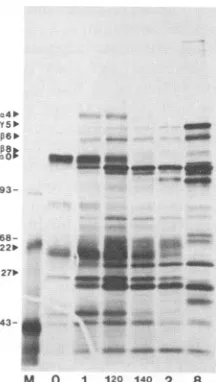
FIG. 2. Effect of the time ofanisomycin additionon the subse-quentpattern of infected cell protein synthesis afterdrug reversal.
Samples of [35S]methionine-labeled proteins from infected cells
initiallytreated withanisomycinbetween 0 and 2 hp.i.,asindicated below thelanes, andlabeled from 7.5to8hp.i. were separated by SDS-PAGEasdescribed in Materials and Methods. Lane 8contains control8-h-infected cellproteins.Themobilities of various infected cell proteins (alpha[IE] 4, 0, 22, and 27, beta [DE] 6 and 8, and
gamma[L] 5)areindicated. Other numbers refertomolecular sizes
(in kilodaltons) of markerproteins(laneM).
of IB gene expression (but see reference 17), though it is unclearhowrepressionismediated for each of the individual
IB genes. Reduced levels ofIE mRNA in the presence of canavanine suggest that one or more infected cell proteins play a positive regulatory role in mRNA synthesis or
accumulation (see Discussion).
Wepreviously noted an altered mobility of ICPO mRNA isolated from canavanine-treated cells (27) and have ob-served similar results with ICP22 and ICP47 mRNAs.
Whetherthis is relatedtothespliced structureof these three mRNAsis unknown. Ofinterest, however,is thefindingthat both species of mRNA in the time course show a similar decrease in relative mobility by 8 h p.i. (compare Fig. 1A,
lane 8H, with Fig. iB, lanes CAN and 8H). Finally, the increased accumulation of mRNA in the presence of PAA relative to the 8-h untreated control is consistent with the observation that failure toexpress DE and Lproteins leads
todefective shutoff of geneexpression (10, 24, 30, 54). Effectsof de novoprotein synthesis on IE geneexpression.
(i)SDS-PAGEandNorthern blotanalyses.The first indication that an additional level of regulation might exist in the metabolism of mRNAoccurredwhenwedeterminedthat
infected cell protein synthesis was required to achieve maximal expression of mRNAs. The protein synthesis
inhibitoranisomycinwasaddedtoreplicateinfected cultures
at progressively latertimes between0and 2 hp.i. The drug
was removed at 8 h p.i,, and proteins pulse-labeled with
[15S]methionine and analyzed by SDS-polyacrylamide gel electrophoresis (PAGE)asdescribed in Materials and Meth-ods. Thus,thepattern ofproteinsdetected should reflect the
ability of infected cells to accumulate the corresponding
mRNAs in thepresence of0h, 1h, h 20min, 1 h 40min,
2 h, and 8 h of de novo infected cell protein synthesis.
Resultsof theanalysis (Fig. 2)revealed thefollowing: (i)the
highest rate of ICPO protein synthesis occurred in cells
[X
a
ax4*Y56
p66
-a0 .'
fw.(w
22o-
_a
_m4on November 10, 2019 by guest
http://jvi.asm.org/
[image:3.612.65.281.77.275.2] [image:3.612.379.487.80.271.2]21
ICP
0 4_ _
4.2-
_*
_22P *m OM OM SOW 01)
52
47> Rl
-27>p,W X t t
[image:4.612.370.526.77.333.2]0 1 120 140 2 00
FIG. 3. Effect of the time of anisomycin addition onthe
accu-mulation of IE mRNAs. Cytoplasmic RNA from infected cells
initially treated with anisomycin between0and2 hp.i.,asindicated
belowthepanels,waspurified from cellsat8hp.i. and analyzedby
Northern blothybridizationasdescribed in Materials and Methods.
(A) Autoradiographic results of Northern blots of IE mRNAs.
Designations at theleft refertothe protein-coding potential ofthe
mRNAs as described in the legend to Fig. 1. (B and C) Relative amountsofindividual IE mRNAs determined by laser densitometry of autoradiographs as described in Materials and Methods. To
ensure linearity of theresponse, X-rayfilms of different lengthsof
exposure of each Northern blot (not necessarily those shown in
panel A) were scanned. (B) 0, IE ICP4; 0, IE ICPO. (C) 0, lE
ICP27; *, IE ICP22; O, IE ICP47.
which were treated withanisomycin initially atthe time of
infection (0 h p.i.), and (ii)ratesof ICP4, ICP22, andICP27
were maximal when 1 h 20 min of infected cell protein
synthesis was allowed priorto the anisomycin block. Two
additional observations, aside from differential effects of
anisomycinonmaximalratesof IE protein synthesis, canbe made: (i) 1 h 20 min of infection was required for the
synthesis, maturation, and localization of positive regulatory
factorscontrolling levels of DEand Lgeneexpression(e.g.,
ICP8andICP5), and (ii) anadditional 20min(1h40min) of
infection was required for synthesis of negative regulatory
factorscontrollinglevelsof IEexpression (see also Fig. 3A).
Northern blot analysis (Fig. 3) revealed a pattern of dependence oninfected cell protein synthesis for the
maxi-malaccumulation of IE mRNAs, consistent with the
previ-ous data on rates of protein synthesis. Anisomycin was
added at the indicated times, and cellswere harvested and
RNAwasextracted at8hp.i. The autoradiographic results
of the hybridizations (Fig. 3A) indicate that the highest
accumulation of ICPO mRNA occurred in the complete
absenceof infected cellprotein synthesis, while periods of1 hand 1 h20minwererequired for maximal accumulation of
ICP4, ICP22,andICP47mRNAsand ICP27 mRNA,
respec-tively. Figures3B and C summarize densitometric analysis
of the hybridization results. Steady-state levels of ICP0 mRNA declined continuously through the course of the
experiment, while levelsof ICP4 mRNA initially increased
to a maximum when drug addition was delayed to 1 h p.i. (Fig. 3B). Levels of ICP22, ICP27, and ICP47 increased through1 hto1 h20minbeforedeclining (Fig.3C). It is clear thatby2 hp.i.,DEorgamma-1geneproductshad
accumu-latedto sufficient levels in the infected cell to mediate the
E
._
E
x
to
0
0-~~~~~D
50-o
-0Io5 2 3 4 5
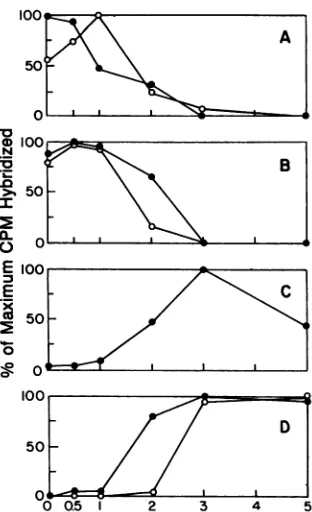
FIG. 4. Effect of the time ofanisomycin addition on the tran-scriptionratesofIE, DE,and L mRNAs. Run-ontranscriptswere
purified from nuclei of infected cells initiallytreated with anisomy-cin between 0 and 3 h p.i., as indicated below the panels, and hybridizedtosingle-stranded mRNA-specific DNA probes, andthe
transcription ratesof the resultinghybrids werequantitated, allas
described in Materials and Methods. Results are presented as
percentage ofmaximum countsper minute hybridized. (A) 0, IE
ICPO, maximumcpm= 1,412;0,IEICP4, maximumcpm= 2,165.
(B)0,IE ICP22, maximumcpm = 1,510; *, IE ICP27,maximum
cpm = 1,174. (C) 0, DE ICP8, maximumcpm = 3,237. (D)0, L
ICP5, maximum cpm = 1,342; 0,LgC, maximumcpm = 1,655.
decline in levels of IE mRNAs normally seen after5 h of
infection (compare Fig. 3Awith Fig. 1A).
(ii) Run-on nuclear transcription analysis. To determine whether the apparent requirement for infected cell protein synthesis was at the transcriptional or posttranscriptional
level, run-on assays were performed by using nuclei from
cellstreated withanisomycinforincreasingtimes between 0 and 3 h p.i. All cells were harvested and nuclei were
preparedat5 h p.i. asdescribedinMaterials and Methods.
If the protein synthesis requirement were at the level of
transcription, we would expect rates ofRNA synthesis to
mirror results from the previous protein synthesis and mRNAaccumulation analyses (Fig. 2 and 3). Alternatively,
if therequirementwereposttranscriptional, thenrates of IE
transcription should be similar and the previous results
would likely reflect differential mRNA stability or transla-tional efficiency. Figure4 summarizes results of beta emis-siondensitometry scanningof slotblothybridization exper-iments. Panels of single-stranded DNA probes specific for four ofthe fiveIEgeneswerehybridizedwith nuclearrun-on
RNAasdescribed in Materials and Methods. LabeledRNA
wasprepared fromnuclei treated for variouslengthsof time
with anisomycin and harvested at 5 h p.i. The analysis
revealed a differential pattern ofIE transcription that
mir-rored the differences in mRNA accumulation and protein synthesis results seen earlier. Maximum transcription of
10
- X \ Aj
5
on November 10, 2019 by guest
http://jvi.asm.org/
[image:4.612.67.307.78.264.2]ICPOoccurred in nuclei from cells treated from the time of infection (0 h) (Fig. 4A). Maximum transcription of ICP22
and ICP27 occurred in nuclei from cells treated with ani-somycin at 0.5 h p.i. (Fig. 4B). While differences between
the 0- and0.5-h points for bothICP22 and ICP27 are small,
they are reproducible and display a maximum rate
depen-dent on infected cell protein synthesis. With regard to ICP22, these results are consistent with protein synthesis (Fig. 2) and mRNA accumulation (Fig. 3) data. Finally, maximal ICP4transcription (Fig. 4A) occurredafter adelay
of 1 hbeforedrugaddition. ICP8, aDEgene(Fig. 4C),ICP5,
an L orgamma-1gene (Fig. 4D), and gC, an L orgamma-2
gene (Fig. 4D), displayed a pattern ofdelayed transcription
consistent withtheir kinetic class designation and provided
evidence that the run-on analysis faithfully reflected the
regulation seen in vivo (24, 67, 69). These results argue
strongly that the requirement for infected cell protein
syn-thesis formaximumIEgeneexpressionexistsatthe level of transcription.
DISCUSSION
Theresults ofmany studies describing kinetics and
meta-bolicrequirements (27, 29-31, 39),promoter structure(5, 18, 21, 22, 33, 40, 41),andratesoftranscription (24, 67, 70)have
supportedaunifiedmechanismforpositive regulation ofthe
IE genes. In the experiments described here, we have
attempted to determine whether any other positive
regula-tory mechanisms underlie the VP16-mediated effects. The
impetus for these studies came from work demonstrating
that theviriontransactivatorisnotrequired for reactivation
from latency(63) andthatICPOappearsto be important for
criticalearlystepsinthereplication cycle,whenvirion DNA rather than infectious virus initiates infection (6). Our
ap-proach was to amplify the consequences of very early
regulatory events in HSV infection. This was achieved by
varying the length oftime for which infected cell protein synthesis was allowed and observing the consequences on
rates oftranscription, accumulation, andexpression of
cy-toplasmicmRNA. Theresultssupporttheconclusion thata
requirement for infected cell protein synthesis exists for maximal expression of ICP4, ICP22, and ICP27, but not ICPO, genes. We have no direct evidence for the protein
synthesis requirement for maximal transcription ofICP47.
From the pattern ofmRNA accumulation (Fig. 3) and the fact that ICP22 and ICP47 have identical promoter se-quences, it is likely thatthis IE genehas a similar
require-mentforinfectedcellprotein synthesisfor maximal expres-sion. AccumulationofICP27 mRNAmayhaveanadditional
requirement beyond that shared with ICP4, -22, and -47 mRNAs for maximaltranscription (compare results in Fig.
3B and 4B). The highest rate ofsynthesisunder our
condi-tions ofdrugtreatment was coincident with that of ICP4 in
the in vitrorun-onassay. Inanearlieranalysis of
transcrip-tion rates in untreated intact infected cells, the time of
maximalsynthesisofICP27 lagged behind that of ICP4(70).
Though the significance of transcription rates of ICP27 compared with ICP22/47 and ICP4 is unknown, we have
consistently observeddelayed maximalexpression ofthese
fourIEgenesrelativetoICPO(datanotshown). The ratio of
accumulated ICPO to ICP4 mRNAs in the absence of de
novoprotein synthesiswasapproximately6:1(Fig.3),while
the ratio of ICP4 to ICPO transcription under these same
conditionswasapproximately2:1(Fig. 4). This finding likely
reflectsdifferences inthe size of the specific probesused in
[image:5.612.310.551.101.156.2]thetwotypesofassays. For theNorthern blotexperiments,
TABLE 1. Comparison of Northern blothybridization and nuclear run-on transcription for ICPO and ICP4
Run-on Northern blot
Protein transcriptiona hybridizationb ICPO 1,412/0.658 = 2,145 1.8/4.5 = 0.4
lCP4 1,207/1.5 = 804 0.2/1.8= 0.11
(2.67)c (3.63)c
aCounts perminute ofa0-hanisomycinrun-on RNAsamplehybridizedper
kilobase ofspecific probe.
bRelative absorbanceof an autoradiographic image ofa0-hanisomycin
steady-stateRNAsampleperkilobase ofspecific labeled DNA probe. Ratio ofnormalized valuesforICPO and ICP4 samples.
ICPO and ICP4 probes were 4.5 and 1.8 kb in size, respec-tively, while in the run-on transcription assay, the two probes were 0.66 and 1.5kb, respectively. Table 1 summa-rizes the quantitative data from the Northern blot andrun-on transcription assays, presented as units of RNA detected (eitherrelativeamounts or counts per minutehybridized) per kilobase ofprobe forboth ICPO and ICP4 transcripts. The ratios ofICPO to ICP4, once normalizedfor the method of
quantitation, varyfrom 2.7 to 3.6.
One ofthe earliest papers describingthe cascade regula-tionof HSV geneexpression (29)reported thatastheonset
ofinhibition ofprotein synthesiswasdelayed relativetothe time of infection, the subsequent rates of synthesis of IE
polypeptides ICP4, -0, and -27 declined continuously after removal of the block. On the basis of this and subsequent
experiments (30)ontheeffects ofcanavanineonthe pattern of viralprotein synthesis, the authorsconcludedthatone or
morepolypeptides of the DE and L classes were required for theturn-offof the IEclass. While our results areconsistent
with this conclusion, we have noted differences in the metabolic requirements for ICP4 and ICP27 synthesis after removal ofa protein synthesis block. Someobvious differ-encesin theexperimental approachinclude cell type(HEp-2
versus Vero) and the use of cycloheximide rather than
anisomycin. Accumulation of viral mRNA restricted tothe IE class has previously been demonstrated with emetine,
cycloheximide, andanisomycinover a rangeof 0.6 to5.5%
residual protein synthesis (39). We routinely achieved 98%
inhibition of protein synthesis with 25 ,uM anisomycin in
Vero cells and could effect complete recovery ofprotein
synthesis withina30-min period bywashing monolayers in
drug-free medium andpreventingfurther RNAsynthesisby addition ofactinomycin D(unpublished data). One possible explanationfor the differences in protein synthesis patterns after drug reversal is the inclusion of the 30-min recovery time. Perhapswewereabletoindirectly detectdifferences in the levels of accumulatedfunctional mRNAs that were not
detectable by labeling immediately after drug reversal, a
time when translationalcapacityis notfully restored.Inany event, theseNorthern blot and run-ontranscription results, which should be independent of the previousconsiderations,
clearly indicate differential effects on transcription and IE
mRNAaccumulation asafunction of priorproteinsynthesis. Itisunlikely thatourresultsobtained by usinganisomycin
were due to effects of the drug distinct from inhibition of
proteinsynthesis. First, we observed an inverse relationship between the accumulation andexpression ofICP4, -22, -27, and -47 mRNAs and the length of drug treatment, arguing
against anmRNAstabilizationorsuperinduction effect (42).
Second, the patterns of transcription, accumulation, and
expression ofICPO andICP4 mRNA wereconsistentlyand
on November 10, 2019 by guest
http://jvi.asm.org/
demonstrably
different(this
work and data not shown),arguing against
somegeneral nonspecific
effect of the drugon mRNA metabolism or
expression. Finally,
we would argue that the de novoprotein synthesis-dependent change
inIEtranscription
isnotduetoalterations in theproperties
of thevirion-associated transactivator
VP16,
since itsbind-ing
and thatof Oct-ItoconsensusTAATGARAT target sitescan be demonstrated in vitro in the absence of
protein
synthesis
(55).
It remainsaformalpossibility, however,
that theformationoftheDNA-protein complex merely precedes
aprotein synthesis-dependent
step that results in promoter activation.Itis
tempting
tospeculate
thattherequirement
for denovoprotein synthesis
for maximalexpression
of ICP4 andper-haps
ICP22/47 andICP27 is in factarequirement
forICPO. Thetransactivating properties
of the ICPOprotein
on IE target promoters(21, 22, 48)
aswellasDEandheterologous
promoters
(12, 19, 48, 56)
has been well documented. The ICPO geneproduct
is anuclearphosphoprotein,
and exten-sivemutagenesis
studies and sequenceinspection
(8, 14,
16,52, 71)
have revealedactivationdomainsaswellaspotential
sites ofprotein-protein
interaction(15).
The present resultsclearly
indicate that the ICPO gene hasrequirements
for maximalexpression
which differfrom thoseof ICP4and the other IE genes.This,
in turn, suggests that apartially
nonoverlapping
set oftranscription factor-promoter
se-quence interactions mayregulate
the ICPO gene and the other IE genes. Whileinspection
of upstream promoter sequences ofICP4 and ICPO reveals motifsmediating Spl
and TATA box factor
binding,
two sequence motifs in the ICPO promoterarenotshared with the ICP4 promoter.First,
thereisa nearconsensusCAAT box
(GCCATT)
centeredatposition
-77 relative to thetranscription
start site.Second,
there are three
copies
of the sequenceYCTTTGGGG,
atpositions
-213, -151,
and -51. Inaddition,
the number and sequenceorganization
of the TAATGARAT sites in the ICP4 and ICPO promoters differ. The ICP4 promotercon-tainstwoTAATGARAT siteswhichlack
overlapping
Oct-1consensus
binding
sites(T
sites[3])
and whichweakly
bind the VP16/Oct-1complex
as measuredby
agel mobility
assay. The ICPOpromoter containsfour
sites, consisting
ofoverlapping
octamer and TAATGARAT sequences(O/T
sites
[3]),
which bind the VP16/Oct-1complex
morestrongly.
It remains tobe determined whether any of thesedifferences in consensus factor
binding
sites mediate thedifferential activation of the ICPO promoter.
Experiments
arein progresstofurthersubstantiate the roleofICPO in theregulation
ofIEtranscription.
ACKNOWLEDGMENTS
We thank Bernard Roizman, Leonard Post, Myron Levine, PriscillaSchaffer,and David Knipefororiginal stocks of recombi-nantplasmids andphage carryingHSVDNAinserts.
Thisworkwassupported byPublic HealthServicegrantsA114377
andCA19014 from the National InstitutesofHealthto S.L.B.
REFERENCES
1. Ace,C.I.,T. A.McKee,J.M.Ryan,J.T.Cameron,and C. R. Preston. 1989. Construction and characterization of a herpes
simplex
virustype 1 mutantunable totransinduceimmediate-earlygene
expression.
J.Virol.63:2260-2269.2. Ackermann,M.,D. K.Braun,L.Pereira,and B.Roizman.1984.
Characterization of
herpes simplex
virus 1alpha polypeptides0, 4,and 27with monoclonalantibodies.J. Virol.52:108-118. 3. apRhys,C. M.J.,D. M.Ciufo,E. A.O'Neill,T.J.Kelly,andG.Hayward.1989.OverlappingoctamerandTAATGARAT motifs
in the VF65-response elements inherpes simplex virus
imme-diate-early promoters represent independent binding sites for cellular nuclear factor III. J. Virol. 63:2798-2812.
4. Batterson, W., and B. Roizman. 1983. Characterization of the
herpessimplexvirus virion associatedfactorresponsiblefor the induction ofalphagenes. J. Virol. 46:371-377.
5. Bzik, D. J., and C. M. Preston. 1986. Analysis of DNA se-quenceswhich regulatethe synthesis ofherpes simplex virus immediateearly gene 3: DNA sequencesrequiredfor enhancer likeactivity and response to trans-activation byavirion
poly-peptide. Nucleic Acids Res. 14:929-943.
6. Cai, W., and P. A. Schaffer. 1989.Herpessimplexvirus type 1 ICPOplaysacritical role in the denovosynthesisof infectious virus following transfection of viral DNA. J. Virol.
63:4579-4589.
7. Campbell, M. E. M., J. W. Palfreyman, and C. M. Preston. 1984. Identification ofherpes simplex virus sequences which encode atrans-actingpolypeptide responsible for stimulation of
immediate-earlygenetranscription. J. Mol. Biol. 180:1-19. 8. Chen, J., X.Zhu,and S. Silverstein. 1991. Mutationalanalysisof
the sequenceencoding ICPO fromherpessimplex virus type 1.
Virology180:207-220.
9. Clements, J. B., R. J. Watson, and N. M. Wilkie. 1977.Temporal
regulation of herpes simplex virus type 1transcription: location of transcripts on the viral genome. Cell 12:275-285.
10. DeLuca, N. A., A. McCarthy, and P. A. Schaffer. 1985.Isolation and characterization of deletionmutantsofherpes simplexvirus type 1 in the gene encoding immediate-early regulatoryprotein
ICP4. J. Virol.56:558-570.
11. DeLuca, N. A., and P. A. Schaffer. 1988. Physical and functional domains of the herpes simplex virus transcriptionalregulatory
protein ICP4. J. Virol. 62:732-743.
12. Everett, R. D. 1984. Trans activation of transcription by herpes-virus products: requirements for two HSV-1 immediate-early polypeptides for maximum activity. EMBO J. 3:3135-3141. 13. Everett, R. D. 1986. The products of herpes simplex virus type
1(HSV-1) immediate early genes 1, 2, and 3 can activate HSV-1 geneexpression in trans. J. Gen. Virol. 67:2507-2513. 14. Everett, R. D. 1987. A detailed mutational analysis ofVmwllO,
atrans-acting transcriptional activator encodedby herpes sim-plex virus type 1. EMBO J. 6:2069-2076.
15. Everett, R. D. 1988. Analysis of the functional domains of
herpes simplex virus type 1 immediate-early polypeptide VmwllO. J. Mol. Biol.202:87-96.
16. Everett, R. D. 1989. Construction and characterization ofherpes
simplexvirustype 1 mutants with defined lesions in
immediate-earlygene 1. J. Gen. Virol. 70:1185-1202.
17. Everett, R. D., and A. Orr. 1991. TheVmwl75bindingsite in the IE-1 promoter has no apparent role in the expression of VmwllOduring herpes simplexvirus type 1infection. Virology 180:509-517.
18. Gaffney, D. F., J. McLauchlan, J. L. Whitton, and J. B. Clements. 1985. A modularsystem for the assay of transcription
regulatory signals: thesequence TAATGARAT is required for
herpes simplexvirusimmediate-earlygene activation. Nucleic Acids Res. 13:7874-7882.
19. Gelman, I. H., and S. Silverstein. 1985. Identificationof
imme-diate-early genesfromherpes simplex virus that transactivate the virusthymidine kinase gene. Proc. Natl. Acad. Sci. USA 82:5265-5269.
20. Gelman,I.H.,andS. Silverstein. 1986.Co-ordinateregulationof
herpes simplex virus geneexpression is mediatedby the func-tional interaction oftwoimmediateearly gene products. J. Mol. Biol. 191:395-409.
21. Gelman, I. H., and S. Silverstein. 1987. Herpes simplexvirus
immediate-early promoters are responsive to virus and cell
trans-activating factors.J.Virol. 61:2286-2296.
22. Gelman, I. H., and S. Silverstein. 1987. Dissection of
immediate-earlygene promoters fromherpes simplexvirus:sequences that
respond to the virus transcriptional activators. J. Virol. 61: 3167-3172.
23. Gerster, T., and R.G. Roeder. 1988. A herpesvirus
on November 10, 2019 by guest
http://jvi.asm.org/
vating protein interacts with transcription factor OTF-1 and othercellular proteins. Proc. Natl. Acad. Sci. USA 85:6347-6351.
24. Godowski, P. J., and D. M. Knipe.1986. Transcriptional control of herpesvirus gene expression: gene functions required for positive and negative regulation. Proc. Natl. Acad. Sci. USA 83:256-260.
25. Goldin,A. L., R. M.Sandri-Goldin, M. Levine, and J. Glorioso. 1981. Cloning of herpes simplex virustype 1 sequences repre-senting the whole genome. J. Virol. 38:50-58.
26. Harris,R. A., R. D. Everett, X. Zhu, S. Silverstein, and C. M. Preston. 1989. Herpes simplex virus type 1 immediate-early proteinVmwllOreactivates latent herpes simplexvirus type 2 in an invitro latencysystem. J. Virol. 63:3513-3515.
27. Harris-Hamilton, E., and S. L. Bachenheimer. 1985. Accumula-tion ofherpes simplex virus type 1 RNAs of different kinetic classes in the cytoplasm of infectedcells. J. Virol. 53:144-151. 28. He, X.,M. N. Treacy, D. M. Simmons, H. A. Ingraham, L. W. Swanson, and M. G. Rosenfeld. 1989. Expression of a large family of POU-domain regulatory genes in mammalian brain development. Nature (London)340:35-42.
29. Honess,R. W., and B. Roizman. 1974. Regulation ofherpesvirus macromolecular synthesis. I. Cascade regulation of the synthe-sis ofthree groups of viral proteins. J. Virol. 14:8-19. 30. Honess,R. W., and B.Roizman.1975.Regulation ofherpesvirus
macromolecular synthesis: sequential transition of polypeptide synthesis requires functional viral polypeptides. Proc. Natl. Acad. Sci. USA 72:1276-1280.
31. Jones, P. C., and B. Roizman. 1979. Regulation of herpesvirus macromolecular synthesis. VII. The transcription program con-sists ofthree phases during which both extent oftranscription
and accumulation of RNA in the cytoplasm are regulated. J. Virol. 31:299-314.
32. Kristie, T. M., J. H. LeBowitz, and P. A. Sharp. 1989. The octamerbinding proteins form multi-protein-DNA complexes
with the HSV alpha-TIFregulatory protein. EMBO J. 8:4229-4238.
33. Kristie, T. M., and B.Roizman. 1984. Separation of sequences defining basal expression from those conferring alpha gene recognition within the regulatory domains of herpes simplex virus 1alpha genes. Proc. Natl. Acad. Sci. USA 81:4065-4069. 34. Kristie,T. M., and B.Roizman. 1987. Host cell proteins bind to thecis-acting site required for virion-mediated induction of the herpessimplex virus 1 alpha genes. Proc. Natl. Acad. Sci. USA 84:71-75.
35. Kristie, T. M., and B.Roizman. 1988. Differentiation and DNA contact points of host proteins binding at the cis site for
virion-mediated induction of alpha genes of herpes simplex virus 1. J. Virol. 62:1145-1157.
36. Lieb, D. A., D. M. Coen, C. L. Bogard, K. A. Hicks, D. R. Yager, D. M. Knipe, K. L. Tyler, and P. A. Schaffer. 1989. Immediate-early regulatory gene mutants define different stages in the establishment and reactivation of herpes simplex virus latency. J. Virol. 63:759-768.
37. McCarthy, A. M., L. McMahan, and P. A. Schaffer. 1989. Herpes simplex virus type 1 ICP27 deletion mutants exhibit alteredpatterns of transcription and are DNAdeficient.J.Virol.
63:18-27.
38. McKnight, J. L. C., T. M. Kristie, and B. Roizman. 1987. Bindingof the virion protein mediating alpha gene induction in herpes simplex virus 1-infected cells to its cis site requires cellularproteins. Proc. Natl. Acad. Sci. USA 84:7061-7065. 39. Mackem, S., and B. Roizman. 1981. Regulation of herpesvirus
macromolecular synthesis: temporal order of transcription of alphagenes is not dependent on the stringency of inhibition of protein synthesis. J. Virol. 40:319-322.
40. Mackem, S., and B. Roizman. 1982. Differentiation between alpha promoter and regulatory regions of herpes simplex virus type 1:the functional domains and sequence of a movable alpha regulator. Proc. Natl. Acad. Sci. USA 79:4917-4921.
41. Mackem, S., and B. Roizman. 1982. Structural features of the herpes simplex virus gene 4, 0 and 27 promoter-regulatory sequences which confer alpha regulation on chimeric thymidine
kinasegenes. J. Virol. 44:939-949.
42. Mahadevan, L. C., and D. R. Edwards. 1991. Signalling and
superinduction. Nature(London)349:747-748.
43. Marsden, H. S.,M. E. M. Campbell, L.Haarr, M. C. Frame,
D.S.Parris, M. Murphy, R. G.Hope, M. T.Muller,andC.M.
Preston. 1987. The 65,00-Mr DNA-binding and virion
trans-inducing proteins of herpes simplex virus type 1. J. Virol. 61:2428-2437.
44. Marzluff, W. F., Jr. 1978. Transcription of RNA in isolated
nuclei. MethodsCell Biol. 19:317-332.
45. Mavromara-Nazos, P., S. Silver, J. Hubenthal-Voss, J. L. C. McKnight, and B. Roizman. 1986.Regulation ofherpessimplex virus 1 genes: alphagene sequencerequirements for transient
inductionofindicator genesregulated bybetaorlate(gamma2) promoters. Virology149:152-164.
45. O'Hare, P., and C. R. Goding. 1988. Herpes simplex virus
regulatory elements and the immunoglobulin octamer domain bind a common factor andareboth targets for virion transacti-vation. Cell 52:435-445.
46. O'Hare,P.,C. R.Goding,andA.Haigh. 1988.Direct
combina-torial interaction between a herpes simplex virus regulatory
protein and acellularoctamer-binding factor mediatesspecific
induction ofvirusimmediate-earlygeneexpression. EMBO J. 7:4231-4238.
47. O'Hare,P.,and G.S.Hayward.1985. Evidence foradirect role of both the 175,00- and 110,000-molecular-weight
immediate-early proteins ofherpes simplexvirus inthetransactivationof
delayedearlypromoters. J. Virol.53:751-760.
48. O'Hare, P., and G. S. Hayward. 1985. Three trans-acting
regulatory proteins ofherpes simplex virus modulate
immedi-ate-earlygene expressionin apathwayinvolving positive and
negative feedbackregulation. J.Virol. 56:723-733.
49. Patterson,T.,and R. D. Everett.1988.Mutational dissectionof theHSV-1 immediate-early protein Vmwl75 involved in tran-scriptional activationandrepression. Virology 166:186-196. 50. Pereira, L., M. H. Wolff,M. Fenwick, andB. Roizman. 1977.
Regulation ofherpesvirus macromolecularsynthesis. V.
Prop-erties ofalphapolypeptidesmade inHSV-1 andHSV-2 infected
cells.Virology 77:733-749.
51. Perry,L.J.,F.J.Rixon,R. D.Everett,M.C.Frame,andD.J.
McGeoch.1986. TheIE110 gene ofherpessimplexvirus type 1:
characterizationbymRNAmapping,DNAsequence,
oligopep-tideantiserum andmutationalanalysis.J. Gen. Virol. 67:2365-2380.
52. Post, L. E., A.J. Conley, E.Mocarski, andB. Roizman. 1980.
Cloning ofreiterated and non-reiterated herpessimplexvirus 1 sequences as Bam HI fragments. Proc. Natl. Acad. Sci. USA 77:4201-4205.
53. Preston, C. M. 1979. Control ofherpes simplex virus type 1 mRNA synthesis in cells infected with wild type virus orthe temperature sensitivemutanttsK. J. Virol. 29:275-284.
54. Preston, C.M.,M.C.Frame,and M.E. M. Campbell.1988. A
complex formed between cell components and anHSV struc-tural polypeptidebinds to aviral immediate earlygene regula-tory DNA sequence. Cell 52:425-434.
55. Quinlan, M. P.,and D. Knipe. 1985. Stimulationofexpression ofa herpes simplex virus DNA-binding protein by two viral
factors. Mol. Cell. Biol. 5:957-963.
56. Rice,S. A., and D. M. Knipe. 1990. Genetic evidence fortwo distinct transactivation functions of the herpes simplex virus
alphaprotein ICP27. J. Virol. 64:1704-1715.
57. Rixon,F.J.,andD.J.McGeoch. 1984. A 3' co-terminalfamily
ofmRNAs from the herpes simplex virus type 1 short region:
twooverlapping readingframes encode unrelated polypeptides
one of which has a highly reiterated amino acid sequence. Nucleic Acids Res. 12:2473-2487.
58. Russell, J., N. D. Stow, E. C. Stow, and C. M. Preston. 1987.
Herpessimplex virusgenesinvolvedinlatencyin vitro.J.Gen.
Virol. 68:3009-3018.
59. Sacks, W.R.,C. C. Greene,D. P.Aschman, and P.A.Schaffer. 1985. Herpessimplex virus type 1ICP27 isanessential regula-toryprotein. J. Virol. 55:796-805.
60. Schek, N., and S. L. Bachenheimer. 1985. Degradation of
on November 10, 2019 by guest
http://jvi.asm.org/
cellular mRNAs is induced byavirion-associated factor during
herpes simplex virus infection of Vero cells. J. Virol. 55:601-610.
61. Sekulovich,R. E., K. Leary, and R. M.Sandri-Goldin. 1988. The herpes simplex virus type 1alpha protein ICP27 canact as a
trans-repressor or a trans-activator in combination with ICP4
and ICPO. J.Virol. 62:4510-4522.
62. Steiner, I., J. G. Spivack, S. L. Deshmane, C. I. Ace, C. M.
Preston, and N.W. Fraser.1990. A herpes simplex virustype1 mutant containing a nontransinducing Vmw65 protein estab-lishes latentinfection in vivo in the absence of viral regulation and reactivates efficiently from explanted trigeminal ganglia. J. Virol. 64:1630-1638.
63. Swanstrom, R. I., K. Pivo, and E. K. Wagner. 1975.Restricted expression of the herpes simplex virusgenomeoccurring early
after infection and in the presence of metabolic inhibitors. Virology 66:140-150.
64. Triezenberg, S.J.,K.L. LaMarco,andS. L. McKnight. 1988. Evidence for DNA: protein interactions that mediate the HSV-1 immediate early gene activation by VP16. Genes Dev.
2:730-742.
65. Watson, R. J., and J. B. Clements. 1980. A herpessimplexvirus
type 1 functioncontinuously required for early and late virus RNAsynthesis. Nature (London) 285:329-330.
66. Weinheimer, S. P., and S. L. McKnight. 1987. Transcriptional andpost-transcriptional controls establish the cascade of herpes simplex virusprotein synthesis. J. Mol. Biol. 195:819-833. 67. Xiao, P., and J. P.Capone. 1990. A cellular factorbindstothe
herpes simplex virus type 1 transactivator Vmw65 and is required for Vmw65-dependent protein-DNA complex forma-tion with Oct-1. Mol. Cell. Biol. 10:4974-4977.
68. Yager, D. R., and S. L. Bachenheimer. 1988. Synthesis and metabolism ofcellular transcripts in HSV-1 infected cells.Virus
Genes 1:135-148.
69. Zhang,Y.-F., and E.K.Wagner. 1987.Thekinetics of
expres-sion of individual herpessimplex virustype1transcripts. Virus
Genes 1:49-60.
70. Zhu, X., J. Chen, C. S. H. Young, and S. Silverstein. 1990.
Reactivation of latent herpes simplex virus by adenovirus recombinants encoding mutant IE-0 gene products. J. Virol.
64:4489-4498.