New Crops and Uses:
Their role in a rapidly changing world
Edited by
International Symposium on New Crops and Uses:
Their role in a rapidly changing world
ORGANIZING COMMITTEE
Dr. John Meadley Mr. George Taylor-Hunt
Former Chief Executive, Tropical Agriculture Association Rural Investment Overseas Ms. Lucy Hodsman
Dr. Peter Lapinskas National Non-food Crops Centre
Consultant Dr. Nazmul Haq
Prof. J.T. Williams Founding Director International Former Director, Centre for Underutilised Crops International Board for Mr. Roger Smith
Plant Genetic Resources TAA, Former Chair,
ICUC Board
SPONSORS
The Organising Committee expresses its gratitude to the following sponsors, without whose help the Symposium would not have been possible:
University of Southampton International Science Foundation ECUC Trust
National Non-food Crops Centre Tropical Agriculture Association
First published in 2008 by Centre for Underutilised Crops
University of Southampton, Southampton, SO17 1BJ, UK
@ 2008 Centre for Underutilised Crops
Printed at RPM Print & Design, 2-3 Spur Road, Quarry Lane, Chichester, West Sussex, PO19 8PR
ISBN 9 78 085432 89 18
All rights reserved. No part of this book may be reprinted or reproduced, or utilised in any form or by any electronic, medicinal or other means, now known or hereafter invented, including photocopying and recording, or in any information storage and
retrieval system, without permission in writing from the publisher.
---
British Library Cataloguing in Publication Data
---
New Crops and Uses: Their role in a rapidly changing world
Smartt, J.; Haq, N.
ISBN 9 78 085432 89 18
Contents
List of Participants 4
Preface 10
Section 1: Papers
THE CONTEXT, JUSTIFICATION AND APPLICATION OF UNDERUTILISED CROPS IN A RAPIDLY CHANGING WORLD
1. Climate change: an exciting challenge for new and underutilised crops
T. Tanton and N. Haq 15
2. Food and nutrition: the role of under-utilised crops in traditional crop improvement and new crop development
P. van Damme 23
3. Contribution of molecular genetics for new crops development
K. Polok, T. Korniak and R. Zielinski 36
4. The regulatory environment for commercialisation of new/underutilised crops
L.D. Phillips 57
THE NEED FOR UNDERUTILISED CROPS IN A CHANGING WORLD 5. Underutilised species in Indonesian tradtitional farming systems
S.D. Sastrapradja and A. Haryatmo 68
6. Indigenous vegetables in East Africa: sorted out, forgotten, revitalised and successful
D. Virchow 79
7. Small scale processing and marketing of underutilised fruits: case study of Amla in India
T. Gajanana, I.N.D. Gowda and B.M.C. Reddy 101
8. Consumer perceptions and determinants in purchasing fresh and processed tropical fruit products: an exploratory study
S. Sabbe, W. Verbecke and P. van Damme 113
9. Sowing seeds of success: commercial farmers’ perspective
J. Moffett 128
10. Traditional versus exotic vegetables in Tanzania
G. Keding, I.S. Swai and D. Virchow 150
11. A donor’s perspective
J.-M. Leblanc 164
SUCCESS, FAILURES AND LESSONS LEARNED- FOOD AND NUTRITIONAL CROPS: CASE STUDIES
12. Diversity in small millets germplasm in genebank at ICRISAT
13. Ancient underutilised pseudocereals - potential alternatives for nutrition and income generation
E. de la Cruz Torres, C. Mapes Sánchez, A. Laguna Cerda, J.M. García Andrade, A. López Monroy, J. González Jiménez and T. Falcó Bárcenas 186
14. Role of Bambara groundnuts (Vigna subterranean) in cropping
systems in western Kenya
D.O. Andika, M.O.A. Onyango and J.C. Onyango 204
15. Aerial Yam: a potential underutilised crop for the resource-poor people of Bangladesh
A. Kalam Azad, M. Sayeed Hassan and Md. Abdur Razzaque 213
16. Collection and characterisation of germplasm of some underutilised plant species in Pakistan
Z. Ahmad, S. Hussain, M.S. Iqbal, M. Irfan, N. Rehman, A. Jamal,
A. Qayyum and A. Ghafoor 219
17. Ricebean: a multipurpose underutilised legume
K.D. Joshi, B. Bhandari, R. Gautam, J. Bajracharya and P.A.
Hollington 234
18. The challenge of introducing new and underutilised crops in intensive systems: three successful cases in Argentina
C. Desmarchelier, G. Ciccia, H. Golberg and J. Alonso 249
19. The potentials of African yam bean (Sphenostylis stenocarpa Hochst.
Ex. A. Rich) in Nigeria: character distribution and genetic diversity
B.D. Adewale, O.B. Kehinde, B.O. Odu and D.J. Dumet 265
20. Promotion of underutilised crops for income generation and environmental sustainability
N. G. Hegde 277
21. A case for promotion of tropical underutilised fruits for improvement of livelihoods
N. Haq, C. Bowe and C. Clarke 288
22. Domesticating and commercialising indigenous fruit and nut tree crops for food security and income generation in Sub-Saharan Africa
F.K. Akinnifesi, O.C. Ajayi, S. Gudeta, I. Kadzere and A.I. Akinnifesi 300
23. Underutilised crops for famine and poverty alleviation: a case studyon the potential of the multipurpose Prosopis tree
N.M. Pasiecznik, S.K. Choge, A.B. Rosenfeld and P.J.C. Harris 326
24. Sustainable supply of plants entering the trade
M.J. Simmonds 347
26. Description and analysis of the sustainability of underutilised tropical fruits with high commercial potential: Blackberries (Rubus spp), Red-Pitahaya
(Hylocereus purpusii) and Peach Palm Fruits (Bactris gasipaes) in Costa
Rica and Nicaragua
O. Quiros, I. Alfaro, M. Garcia and D. Gomez 351
27. Potential uses of underutilised crops for nutritional and medicinal properties
S.K. Mitra, P.K. Pathak and I. Chakrabortyl 352
28. Orkney Bere - Developing new markets for an old crop
P. Martin, J. Wishart, A. Cromarty and X. Chang 359
SUCCESS, FAILURES AND LESSONS LEARNED - FOOD AND NUTRITIONAL CROPS: CASE STUDIES
29. Biodiversity, conservation and sustainable use of medicinal plants
A. Hamilton 374
30. Establishing of Agave americana industry in South Africa
A. Boguslavsky,F. Barkhuysen, E. Timme and R.N. Matsane 381
DISCUSSION OF CONFERENCE PROCEEDINGS
31. New crops and their uses: discussion based on the proceedings of the conference
J. Meadley 399
Section 2: Presentation Synopses
1. A supermarket view on underutilised crop marketing
A. Dhanani 404
2. Plant research in the European 7th Framework Programme
A. Schneegans 405
3. Commercialisation of NTFPs in Malawi
D. Mauambeta 413
4. Status and market potential of traditional leafy vegetables (Marogo) in South Africa
E. van den Heever and C.P. du Pooly 434
5. The Potential for utilising bioenergy within anaerobic digestion for CHP
L. Lewis 440
6. Overview of non-food crops : the way forward
M. Askew 448
Section 3: Poster Abstracts
List of Participants
Adewale, D. Genebank Unit, International Institute of Tropical Agriculture, PMB 5320
Oyo Road, Ibadan, Nigeria; Department of Plant Breeding and Seed Technology, University of Agriculture, PMB 2240, Abeokuta, Nigeria.
e-mail: [email protected]
Ahmad, Z. Institute of Agri-Biotechnology and Genetic Resources (IABGR),
National Agricultural Research Centre, Islamabad, Pakistan.
e-mail: [email protected]
Akinnifesi, F. SADC-ICRAFAgroforestry Programme, Chitedze Agricultural Resaerch
Station, P.O. Box 30798, Lilongwe, Malawi.
e-mail: [email protected]
Andika, D. Horticulture Department, Maseno University, Kenya.
e-mail: [email protected]
Anida, H. NATURINDO (Naturae Indonesiana), Bogor, Indonesia.
e-mail: [email protected]
Askew, M. Census-Bio, Haddo House, Keepers Lane, Tettenhall, Wolverhampton,
WV6 8UA, UK.
e-mail: [email protected]
Assogbadjo, A. Laboratory of Applied Ecology, Faculty of Agronomic Sciences,
University of Abomey-Calavi, Benin.
e-mail: [email protected]
Boguslavasky, A. CSIR Materials Science and Manufacturing, Port Elizabeth, South Africa.
e-mail: [email protected]
Bordoni, P. GFU, Via del Tre Denari 472/a, 00057 Maccarese, Rome, Italy.
e-mail: [email protected]
Bowe, C. Centre for Underutilised Crops, University of Southampton, Southampton
SO17 1BJ, UK.
e-mail: [email protected]
Burbage, M. 83 Pine Ridge, Carshalton, Surrey, SM5 4QQ, UK.
e-mail: not available
Chang, X. Agronomy Institute, Orkney College UHI, East Road, Kirkwall, Orkney,
KW15 1LX, UK.
e-mail: [email protected]
de Groote, S. Laboratory of Tropical and Subtropical Agriculture, Department of Plant Production, Faculty of Bioscience Engineering, University of Ghent, Ghent, Belgium.
e-mail: [email protected]
de la Cruz Torres, E. Departamento de Biología, Instituto Nacional de Investigaciones
Nucleares, Carretera México-Toluca S/N, La Marquesa. Ocoyoacac, México, C.P. 52750.
e-mail: [email protected]
Desmarschelier, C. Fundación Mundo Sano, Av. Libertador 1146 PB “B” Buenos Aires,
Argentina.
e-mail: [email protected]
Dhanani, A. No address available
e-mail: [email protected]
Enoh-Arthur, S. Department Plant Production, Laboratory of Tropical and Subtropical
Agronomy and Ethnobotany, Ghent University, Ghent, Belgium.
e-mail: [email protected]
Gunasena, H. Sri Lanka Council for Agricultural Research Policy, 114/7, Wijerama
Mawatha, Colombo 7, Sri Lanka.
e-mail: [email protected]
Guzmán-Maldonado,
S.H. Unidad de Biotecnología del Campo Experimental Bajío (INIFAP),Alimentos Funcionales (Functional Foods), Km. 6.5 Carr. Celaya-San Miguel Allende,C.P. 38110; A. Post 112,Celaya, Gto., Mexico.
e-mail: [email protected]
Guzmán-Tovar, A. PROPAC Universidad Autónoma de Querétaro.
e-mail: not available
Hamilton, A. Plant Conservation and Livelihoods Programme, Plantlife International,
14 Rollestone St, Salisbury, Wiltshire SP1 1DX, UK.
e-mail: [email protected]
Hancock, N. Centre for Environmental Sciences, University of Southampton,
Southampton SO17 1BJ, UK.
e-mail: [email protected]
Haq, N. Centre for Underutilised Crops, University of Southampton, Southampton
SO17 1BJ, UK.
e-mail: [email protected]
Hedge, N. BAIF Development Research Foundation, Pune, India.
e-mail: [email protected]
Higson, A. NNFCC, Biocentre, York Science Park, Innovation Way, Heslington,
York YO10 5DG, UK.
Hill, T. Tree Aid, Brunswick Court, Brunswick Square, Bristol BS2 8PE, UK.
e-mail: [email protected]
Taylor-Hunt, G.L. National Non-food Crops Centre, Brambledown, 19 Abbotsridge Drive,
Ogwell, Newton Abbot, Devon TQ12 6YS, UK.
e-mail: [email protected]
Hollington, P. CAZS Natural Resources, College of Natural Sciences, University of
Wales Bangor, UK.
e-mail: [email protected]
Jaenicke, H. ICUC, C/O IWMI, P.O.Box 2075, Colombo, Sri Lanka.
e-mail: [email protected]
Joshi, K. CAZS Natural Resources, College of Natural Sciences, University of
Wales Bangor, UK.
e-mail: [email protected]
Kalam Azad, A. PSO (Crops), Bangladesh Agricultural Research Council, Farmgate,
Dhaka, Bangladesh
e-mail: [email protected]
Keding, G. Institute of Nutritional Science, International Nutrition,
Justus-Liebig-University Giessen, Germany.
e-mail: [email protected]
Lapinskas, P. 26, Deepdone Wood, Dorking Surrey RH5 4BQ, UK.
e-mail: [email protected]
Leblanc, J.-M. IFS, Crop Science, Karlavagen 108 5th Floor, SE-115 26, Stockholm,
Sweden.
e-mail: [email protected]
Lewis, L.D. Greenfinch Ltd., The Business Park, Coder Road, Ludlow, Shropshire
SY8 1XE, UK.
e-mail: [email protected]
Martin, P. Agronomy Institute, Orkney College UHI, East Road, Kirkwall, Orkney
KW15 1LX, UK.
e-mail: [email protected]
Mauambeta, D. Wildlife and Environmental Society of Malawi, Private Bag 578, LIMBE,
Malawi.
e-mail: [email protected]
Meadley, J. 3 Stanley House, Kings Stanley, Stonehouse, Glos GL10 3HH, UK.
Moffett, J. Kirklington Farm, Ficksburg, South Africa.
e-mail: [email protected]
Mudziwa, N. Agricultural Research Council - Vegetable and Ornamental Plant Institute
(ARC-VOPI), Private Bag X293, Pretoria, 0001, South Africa; Faculty of Natural and Agricultural Sciences, Department of Plant Production and Soil science, University of Pretoria, Pretoria, 0002, South Africa.
e-mail: [email protected]
Naranjo, S. Centre for Environmental Sciences, University of Southampton,
Southampton SO17 1BJ, UK.
e-mail: [email protected]
Oduro-Yeboah, C. Food Research Institute (CSIR), P.O. Box M20, Accra, Ghana.
e-mail: [email protected]
Palmer, J. Forest Management Trust, Gainesville, Florida 326608, USA.
e-mail: [email protected]
Pascual-Villalobos,
M. Instituto Murciano de Investigación y Desarrollo Agrario y Alimentario (IMIDA), Estación Sericícola, 30.150 La Alberca, Murcia.
e-mail: [email protected]
Phillips, L.D. Denzil Philips International, 25 Stanmore Gardens, Kew, Richmond,
Surrey TW9 2HN, UK.
e-mail: [email protected]
Pole, J. WHRI, The University of Warwick, Wellesbourne, CV35 9EF, UK.
e-mail: [email protected]
Polok, K. Department of Genetics, University of Warmia and Mazury in Olsztyn,
Plac Lodzki 3, 10-967 Olsztyn, Poland.
e-mail: [email protected]
Pushpakumara, D. Department of Crop Science, Faculty of Agriculture, University of
Peradeniya, Peradeniya, Sri Lanka.
e-mail: [email protected]
Quiros, O. PAVUC, SIEDA, School of Agricultural Economics, University of Costa
Rica, Costa Rica.
e-mail: [email protected]
Rahman, M. Centre for Environmental Sciences, University of Southampton,
Southampton SO17 1BJ, UK.
e-mail: [email protected]
Riddleton, S. Bioregional, 24 Ellios D, Wallingham, Surrey, SM6 7BZ, UK.
e-mail: [email protected]
Roman, G.V. University of Agronomic Sciences and Veterinary Medicine Bucharest,
Romania.
Rosenfeld, A.B. Henry Doubleday Research Association, Ryton Organic Gardens, Coventry CV8 3LG, UK.
e-mail: [email protected]
Rothschild, G. 4, Swan Cottages, The Green, Offham, Kent ME19 5NN, UK.
e-mail: [email protected]
Sabbe, S. Department Plant Production, Laboratory of Tropical and Subtropical
Agronomy and Ethnobotany, Ghent University, Copure Links 653, 9000 Gent, Belgium.
e-mail: [email protected]
Sastrapradja, S. NATURINDO (Naturae Indonesiana), Bogor, Indonesia.
e-mail: [email protected]
Schneegans, A. Unit Agriculture, Forestry, Fisheries, Acquaculture, Directorate Food,
Agriculture and Biotechnology, Directorate-General for Research, EC.
e-mail: [email protected]
Seal, C. Seed Conservation Department, Wakehurst Place, Royal Botanic Gardens
Kew, West Sussex RH17 6TN, UK.
e-mail: [email protected]
Simmonds, M. Sustainable Use Department, Royal Botanic Gardens, Kew, Richmond,
Surrey, UK.
e-mail: [email protected]
Smartt, J. Formerly Biology Department, University of Southampton, Southampton,
SO17 1BJ, UK.
e-mail: [email protected]
Smith, R. Studdridge Farm Cottage, Ibstone Road, Stockenchurch,
Buckinghamshire, UK.
e-mail: [email protected]
Solomon, V. Agricultural Extension and Rural Development, Bowen University, Iwo,
Osun State, Nigeria.
e-mail: [email protected]
Tanton, T. School of Civil Engineering & the Environment, University of
Southampton, Southampton, SO17 1BJ, UK.
e-mail: [email protected]
Thompson, M. 10, Swaynes Lane, Comberton, Cambridge CB23 7ER, UK.
e-mail: [email protected]
Toader, M. University of Agronomic Sciences and Veterinary Medicine Bucharest,
Van Damme, P. Department Plant Production, Laboratory of Tropical and Subtropical Agronomy and Ethnobotany, Ghent University, Copure Links 653, 9000 Gent, Belgium.
e-mail: [email protected]
van den Heever, E. Agricultural Research Council - Vegetable and Ornamental Plant Institute
(ARC-VOPI), Private Bag X293, Pretoria, 0001, South Africa.
e-mail: [email protected]
Jansen van Rensburg,
W. Agricultural Research Council - Vegetable and Ornamental Plant Institute (ARC-VOPI), Private Bag X293, Pretoria, 0001, South Africa.
e-mail: [email protected]
Virchow, D. AVRDC-The World Vegetable Center, Regional Center for Africa,
Arusha, Tanzania.
e-mail: [email protected]
Williams, T. 18 Dawson Road, Cheadle, Cheshire, SK8 3AE, UK.
e-mail: [email protected]
Zozio, S. Integrated Food Processing Research Unit, CIRAD, France.
New Crops and Uses:
Their role in a rapidly changing world
Preface
The Centre for Under-utilised Crops in the University of Southampton organised the 5th International Symposium on New Crops and Uses on 3rd and 4th September, 2007. The ECUC (European Centre for Under-utilised Crops) Trust, the International Foundation for Science (IFS), the UK National non-food Crops Centre (NNFCC) and the Tropical Agriculture Association were partners in its organisation.
The purpose of the symposium was to review and assess the past work on under-utilised crops and to determine the focus of future endeavours by all stakeholders. Over 75 delegates attended the conference, from all parts of the world, and 33 papers were presented, together with many posters. Additional papers, which could not be accommodated in the conference, appear in these proceedings.
The symposium was deemed by the delegates to be highly successful in achieving its aims and provided guidelines on where future research should focus.
The papers and posters provided a wealth of information on completed and on-going research projects, and case studies from which successes and failures could be identified. This led to the identification of many issues which impact on the need to continue working on the domestication of numerous species and their incorporation into farming and marketing systems. The research work on under-utilised crops was justified for the following reasons:
1. Climate change and its effects on food production remains unpredictable although models are able to predict future changes in temperature, but not in rainfall and therefore its effects on soil moisture.
2. The present high energy costs and declining supply of fossil fuels are exacerbating the attempts to increase food production and assure food security.
3. Population growth is resulting in the need to use less fertile land and increase the use of farm and homestead gardens.
4. Our over-dependency on a few plant species for our staples is a trend which continues; e.g., rice is replacing other sources of carbohydrates such as sago.
5. Our dependency on high yielding (green revolution) varieties, which require inputs of fertilisers and pesticides results in increasing indebtedness of farmers.
climate, more science and technological developments are needed to meet these challenges. A particular problem is the current inability to predict future changes in rainfall patterns and soil moisture. Immediate research on the water requirements of many of the crops was considered a priority.
Delegates agreed on the necessity to define desirable characteristics of new crops to address consumer needs and concerns, the need for determinate plant habits and their potential for domestication. It was also suggested that several negative characteristics of these new under-utilised crops need to be overcome by improving qualities such as bitterness, lodging and hard seed coats. However, these crops have abundant genetic diversity that remains unexplored, and the potential is therefore available for crop improvement.
It was agreed that the development of local and global markets is essential for the establishment of these crops as mainstream food sources. Attention will have to be given to consumer taste, shelf life, convenience, processing potential, length of growing seasons, the standardisation of products, presentation, demand creation and price stability. Global marketing will also require appropriate registration, covering food safety and uses in medicine, cosmetics and industrial uses.
The strengthening of farmer organizations will influence crop biology and agronomy research and improve marketing and business skills. It was highlighted that supermarkets should play a vital role through providing better labelling that recognises the importance of factors such as fair trade, food miles and organic production systems.
The role of under-utilised crops in maintaining and increasing biodiversity was considered particularly important for a large range of very diverse species. However, the logistics of the work was seen as a major challenge. The use of molecular marking techniques has the potential to reduce the workload through conserving the genes rather than whole genomes. Some International Centres are now reducing their core collections to some 10% of the total, and even establishing "mini-core" collections to a further 10% of those. However, the lack of global research funding is a serious constraint to all agricultural research and development. For example, research into biotechnology, agriculture and fisheries constitutes only 5% of the EU total research budget.
The case studies clearly show that developments at grass roots level, i.e., in the field, greatly benefit from farmers’ knowledge through community based farmer participation.
The value of under-utilised crops was assessed throughout the symposium, and the following attributes were considered to be amongst the most important. Many of the species produced during the "hungry seasons" provide empowerment and income for women and extend the harvest periods. Many species are multi-purpose, providing a range of products with a high nutritional value for both humans and animals that often exceeds the food qualities found in common crops. They enable growers to spread the risks associated with reliance on a small basket of traditional crops, and many of them are good at stabilising fragile and risk-prone environments.
It was agreed that use must be made of a wide range of sophisticated modern techniques including GIS, molecular biology, phytochemistry research and computer models to improve efficiency and productivity within both village and global environments.
future shortages of food and energy, and the change in use of several crops, from food to biofuels, further underlines the need for increased investment in research and development of under-utilised crops. It is my view that our first priority should be the use of crops for food, and that biofuels should, where possible, be manufactured from waste or by-products.
The recent report of the International Assessment of Agricultural Knowledge, Science and Technology (AKST) makes several references to under-utilised crops and highlights that the importance of these crops is now being recognised by policy makers. The report states that policy options for addressing food security include developing high value and under-utilised crops in rain fed areas. The report also makes reference to "traditional, local knowledge and community-based innovation". Traditional and local
knowledge are recognised as being important for the conservation and utilisation of many under-utilised species, under the UN Convention on Biological Diversity. This local knowledge refers to capacities and activities, which include the use of indigenous and under-utilised species, which exist amongst the rural people in all parts of the world. The AKST report also gives much emphasis to the gender issue, by stressing the role of women in agricultural production and postharvest activities. Women’s input ranges from 20% to 70%, particularly with the development of export-orientated farming, which is associated with a growing demand for female labour, including migrant workers. Meeting this demand depends on strengthening women’s ability to benefit from market-based opportunities by institutions and policies, giving explicit priority to women farmer groups. This conference has identified the important role of women in the development of production, processing and marketing systems based on under-utilised crops.
In writing this preface I hope that readers will be encouraged to study the papers and posters in detail and be persuaded to assert their influence on government and policy makers, encouraging, indeed insisting, that new needed investments are put in place.
The editors apologise that the publication of the proceedings of the meeting has been delayed due to late submission of some of the manuscripts. Even after repeated reminders some of the manuscripts have not been received. The editors have therefore decided to include the relevant PowerPoint presentations instead. Where possible, the editors have tried to keep the manuscripts as submitted.
We thank Kirsty Rule and Liz Williams for formatting the text and making the manuscript camera ready for the printers and Colm Bowe for designing the cover page.
SECTION 1
THE CONTEXT, JUSTIFICATION
1
Climate change: an exciting challenge for
new and underutilised crops
Trevor Tanton and Nazmul Haq
The paper explores the challenges and opportunities posed by global warming. Global Climate Change Models suggest that the mid-latitudes will generally get appreciably drier, northern latitudes will get a lot hotter and wetter, while at the same time a considerable amount of the world’s most productive agricultural land will be under water due to sea level rise. Under the most likely A2 and B2 scenarios of climate change the predicted changes for plants and crops in many parts of the world are severe, and although regional climatic change predictions have a wide level of uncertainty within a single human life time, cropping practices across the world are expected to change dramatically. Crops from other parts of the globe will replace crops that are no longer suited to a particular location, thus opening up appreciable opportunities for new/under utilised crops.
Although we have a good understanding of the environmental growth requirements of the major world crops, i.e. maize, wheat, cotton and potatoes, for most crops we have a very poor understanding. For example as the acceptable temperature range of many tropical and sub-tropical crops expands towards the poles as a result of climate warming, their climate range might also be expected to move towards the poles. It is possible however that for many species day length requirements or specific seasonal requirements could still restrict their range. It is therefore clear that with climate change cropping systems throughout the world and the crops grown within them will have to change if they are to adapt to the new climatic conditions. Unfortunately there is a lack of data on the physiological response of most crops to the environmental variables that restrict their development and yield, and hence it is difficult if not impossible to anticipate future cropping systems throughout the world. To enable effective introduction of new crops on a world scale research needs to concentrate on gaining a fundamental understanding of the climatic variables that constrain plant adaptation.
The paper draws attention to the steady decline of crop research infrastructure that has taken place which unless reversed in the near future will leave us ill equipped to adequately adapt to the anticipated rapid rate of climate change. Attention is also drawn to perhaps an even more deep seated problem and that is the lack of good qualified young scientists who are capable of undertaking the essential research in Europe (and to some extent in North America).
INTRODUCTION
It is generally accepted that climate change is happening and that anthropogenic CO2
northern hemisphere plants are progressively flowering earlier in the year (Franks et al.,
2007) and senescence is occurring later. In the Alps the alpine plant communities are progressively moving even higher up the mountains (Pauli et al., 2007) and in the past 40
years the northern limit of maize production has moved north from central France to Finland.
The rate of climate change is already noticeable with increased temperatures and extreme events occurring more frequently. Unfortunately all Global Circulation Models (GCMS) predict that the rate of change will increase significantly. For the latest predictions of future climate change see the International Panel for Climate Change (IPCC) Fourth Assessment report on climate change, 2007 (see http://www.ipcc.ch/#). This paper looks at the likely changes that are expected to take place in the global climate, and the secondary consequences that are likely to affect the growth and development of crops and plant communities as a whole, before looking at the role of research in minimising the impact of change on global crop production.
CLIMATE CHANGE SCENARIOS
Intergovernmental Panel on Climate Change: Scenarios of Climate Change
Global climate change modellers make predictions of potential climate change based on predicted changes in the atmospheric concentration of forcing gases, CO2, CFCs etc.
which are likely to occur with different potential world economic, political and population development scenarios. The two scenarios considered in this paper are the:
• A2 scenario. National self reliance, preservation of local identities, continuously increasing population and economic growth on regional scale.
• B2 scenario. Local solutions to sustainability; continuously increasing population
at a lower rate than in A2; less rapid technological change than in B1 and A1 scenarios.
Change in temperature
Table 1. Anticipated mean annual temperature changes for a number of European cities with the A2 Scenario
Variability in precipitation and available soil moisture
For agricultural production precipitation characteristics interact strongly with seasonal temperature to dictate crop production. Unfortunately at the present time there is poor agreement between the different Global Climate General Circulation models in their prediction of precipitation distribution around the globe in the future, apart from a general trend upwards (Figure 1). The situation appears worse when the models are run for specific locations when there is even greater divergence with changes in precipitation greater than + 20% to -20% being predicted by the different models in some instances. Because of the importance in predicting precipitation locally these models are often downscaled using widely accepted procedures (see IPCC 2007). For example in Britain the output from the HAD models are downscaled to a 100km² grid and in 2008 will be downscaled to a 25 km² grid by the Hadley centre. However, although the basis for the downscaling is sound and gives more apparent precision it can be misleading as there is no gain in accuracy and hence give a false sense of reliability. The problem is made worse by many nations selecting one model, often their own national group’s model and not considering the wide variability between different models.
City Mean
Annual Temp . oC.
A2Predicted Increase in Temp.
Temp 2080
London 9.6 +3.5 13.1
Paris 10.8 +3.5 14.3
Barcelona 15.3 +3.5 18.8
Bordeaux 12.8 +3.5 16.3
Figure 1. Nine GCM predictions of Percentage Change in Precipitation for the A2 scenario
Increase in evapotranspiration and change in soil moisture
As crop production is very much linked to soil moisture availability researchers have combined the precipitation and temperature output of the models to produce maps of potential changes in soil moisture. These maps show vast changes in the distribution of soil moisture throughout the World. For example the HAD 3 model data gives a reduction of available soil moisture in Europe of typically 10 to 20%, while in the Amazon it is anticipated to have a 50% reduction and in North Eastern Siberia a 50% increase is anticipated. Because for many locations the models have wide ranges of anticipated changes in precipitation, the colourful GIS output maps of predicted precipitation that are produced from them, although looking very seductive, need to be considered with great caution. In summary we can expect soil moisture balance to change, and in some areas this change will be dramatic but the models are still not accurate enough, and maybe never will be, to allow given countries to develop specific coping strategies for changes in the soil water balance. But what is clear is that we need to plan for uncertainty and in general where all models show a similar pattern of change the anticipated changes may be more robust.
Other anticipated changes that will affect cropping patterns and cropping systems as a result of climate change
[image:21.595.92.454.106.337.2]• With greater energy in the weather systems of the world the greater will be the
extremes of climate, i.e. harder more frequent droughts, prolonged hot periods, more heavy storms, frequent tropical cyclones, floods and wetter monsoons.
• Changes in humidity are also expected but few have tried to quantify it but
changes in humidity will be linked to changes in soil moisture balance.
Despite the uncertainty in what the climate will be in the future it is not an excuse for inaction. Climate is changing and all models are predicting changes that for many parts of the World will result in a very different climate by 2080. Given the scale of the problem and coupled with an energy crisis as oil production begins to decline we need to be in a position to guarantee the food supply for future generations.
WHAT DOES CLIMATE CHANGE MEAN FOR CROPS AND PLANT LIFE?
• Due to the rapid change in climatic conditions in many parts of the world plants will have inadequate time to adapt resulting in mass extinction and loss of biodiversity. For example much of the wild gene pool of potatoes could be lost as the temperature rises in the Andes and tubers are no longer formed, while only the most invasive species are likely to be able to easily adapt to changing climatic conditions.
• Many crops will not be able to grow in their existing climatic range. For example
over most of Southern Africa maize is the staple food but over much of the region it is at the extreme of its range due to lack of soil moisture availability. As a result food shortages are common in dry years. With an anticipated increase in temperature of 2-3ºC and the associated increase in evapotranspiration coupled to a potential decrease in precipitation the future for maize in the region does not look good.
• A significant area of the world most fertile floodplains will be submerged below
sea level resulting in loss of existing coastal communities.
• Crop production will move north into the more wealthy nations. For example in
the past 50 years the northerly limit for maize production has moved north from central France to Finland. Although this has partly been brought about by plant selection it is also the result of a steady increase in temperature and number of frost free days. This move north is expected to accelerate in the coming decades.
• Because of the uncertainty of future precipitation distribution it is difficult to
anticipate future soil moisture regimes and to identify how it will effect plant growth. It also makes it impossible to adapt a specific scenario to plan for the future but what is clear is that we need to plan for change.
• There will be changes in soil fertility. With higher temperatures humic matter in the soil will oxidise more readily leading to long term reduced fertility while in areas with increased rainfall there will be increased leaching of soil nutrients. This will occur against a background of very expensive artificial fertilisers, a result of the rapidly looming world energy crisis.
The world research efforts into crop adaptation and development is only at a fraction of the level it was in the 1960’s and 1970’s. This decline in research effort being justified by the fact that the research carried out in those years has allowed the world to feed it self to date. Unfortunately the severe threat posed by climate change is confounded with a world rapidly growing population coupled with rapidly increasing energy prices and hence fertiliser costs. Hence the future food security of the world is under an unprecedented level of risk. There are signs that this era of food security is drawing to a close and hence an already difficult time for future food security is going to be further aggravated by the fact that within a person’s life span dramatic changes in climate are being predicted.
WHAT STEPS ARE BEING MADE TOWARDS CROP/ ADAPTATION? Seed banks
Seed banks, such as The Royal Botanic Gardens Millennium Seed Bank (see website) and Norway’s Svalbard Seed Vaults are attempts to try and preserve plant genetic diversity when it is clear that it is rapidly diminishing in the natural environment. However ambitious these attempts might be, they will only ever contain a fraction of what presently exists in the natural environmental today.
Research in crop adaptation
Research is underway on how a number of the major crops can be expected to respond to changing climatic and environmental conditions. For example there is adequate knowledge of how the potato crop responds to its environment to allow us to accurately predict dry matter production from environment variables, although it is not always possible to predict tuber yield (Haverkort and MacKerron, 1995). Wheeler et al. (2000)
and Challinor et al. (2007) have reviewed the literature on the effect of a wider
fluctuation of temperature on the seed production of crops noting that seed production in many species is sensitive to short periods of high temperature. There is also a number of ongoing studies looking at how most of the major crops respond to their environment and how they might respond to climate change (for example Hodges et al.,1987, Matthews,
1997).
Field trials
Field trials are the agronomic approach to selecting crops and they continue to be used widely throughout the world to adopt crops to their environment. This approach is well tried and tested. However, they are both time consuming and expensive. In time of rapid climate change and when in many locations new crops will be needed to replace crops that are unable to adopt to the new climate it is not a cost effective means of screening potential new varieties and crops.
that the base temperature of tea, (the temperature below which it does not grow) is 12.5ºC. This is widely accepted in environmental modelling work, but this work was carried out on a single clone (Tanton, 1979). It could be that there is a wide range of variability between different genetic material or equally there could be no range. What is clear is that for crops like tea that have very specific habitat requirements, much more information is needed about their adaptability to adapt to a changing climate if future production is to be guaranteed.
We therefore consider that it would be cost effective to carry out research into the genetic variability of the world’s major crops to establish their capability to adapt to a changing environment and to have sufficient understanding of their requirements and adaptability to be able to predict future regional crop distribution from anticipated climatic changes.
Our understanding of the crop physiology of the major crops gives us a platform from which a more in depth understanding can be developed but unfortunately we have little or no understanding of how new/underutilised crops respond to their environment. If they are to fulfil their potential in helping us adapt to climate change it is essential that we have a clear understanding of their climatic/environmental tolerance.
Major changes in climate are predicted within a single lifespan and considerable knowledge needs to be gained on the adaptability of our crops if we are to be in a strong position to effectively adapt our cropping pattern throughout the world. Unfortunately in Europe we have wound down our agricultural research base, both in Europe and within our aid programmes. In addition the supply of good well trained scientists is of underlying concern with the number of Botany / Agricultural botany courses in the UK being countable on one hand. Hence we do not have a good trained pool of manpower to take up the challenge.
CONCLUSIONS
A. We urgently need an expansion of research into the understanding of the adaptability of all our crops, both staple crops and underutilised crops.
B. We need to educate graduates to provide the personnel who can rise to the challenge. Even if the research effort has still got to get under way it is interesting that some sectors of the agro-industry are beginning to consider the future, for example French Champagne producers are reported to be buying chalk land in the south of England, (Kanter, 2008).
REFERENCES
Challinor, A.J., Wheeler, T.R., Craufurd, P.Q., Ferro, C.A.T. and Stevenson, D.B., 2007. Adaptation of crops to climate change through genotypic responses to mean and extreme temperatures. Agricultural Ecosystems and Environment, 119,190-204. Franks, S.J., Sim, S. and Weis, A.E ., 2007. Rapid evolution of flowering time by an
annual plant in response to a climate fluctuation. Proceedings of the National Academy of Sciences of the United States of America, 104 (4), 1278-1282 . Haverkort, A.J. and MacKerron, D.K.L. (eds.), 1995. Potato Ecology and Modelling of
Potato Modelling Conference, held in Wageningen, 17--19 May, 1994. In: Current Issues in Production Ecology, 3, ISBN: 978-0-7923-3412-5.
Hodges, T., Botner, D., Sakamoto, C. and Hays Hang, J., 1987. Using the CERES-Maize model to estimate production for the US cornbelt. Agric. For. Meteorol., 40, 293– 303.
International Panel for Climate Change (IPCC), 2007. Fourth assessment report on climate change: www.ipcc.ch#
Kanter, J., 2008. Herald Tribune, Mar 4
Matthews, R.B.,Kropff, M.J., Horie, T. and Bachelet, D., 1997. Simulating the Impact of Climate Change on Rice Production in Asia and Evaluating Options for Adaptation.
Agricultural Systems, 54, 3, 399-425
Pauli, H., Gottfried, M., Reier, K., Klettner, C. And Grabherr, G., 2007. Source Signals of range expansions and contractions of vascular plants in the high Alps: observations (1994-2004) at the GLORIAmaster site Schrankogel, Tyrol, Austria. Global Change Biology, 13(1), 147-156 .
Royal Botanic Gardens, Kew: See www.kew.org/msbp/index.htm
Svalbard Global Seed Vault. See www.regjeringen.no/en/dep/lmd/campain/svalbard-global-seed-vault.htm?id=462220
Tanton T.W., 1979. Some Factors Limiting Yields of Tea (Camellia sinensis).
Experimental Agriculture, 15,187-191.
2
Food and nutrition: the role of under-utilised crops in
traditional crop improvement and new crop
development
Patrick Van Damme
Projections on world population growth foresee a figure of 9 billion people by the year 2050. Food production will have to follow this ever increasing trend. As such, ‘traditional’ food crops such as rice, wheat and maize (to name the 3 most important) will have to increase in yield so as to continue to provide quality food to the world. In a world that for a number of reasons does not want to rely too much on GMOs, yield increases will depend heavily on the introduction of genetic material from landraces and related (under-utilised and wild) species into known or newly developed varieties. However, in order to continue to offer a diverse and quality-rich food basket, new crops and products need to be domesticated and developed, respectively. Recent trends and possibilities, based on examples from Latin America and Africa will show the scope, opportunities and limitations of this new crop development. The necessary policy measures will be highlighted with an emphasis on the expected (and needed) input of different stakeholders, with this the specific place and importance of niche commodities for greater food security and income generation will be emphasised.
INTRODUCTION
Needless to say, Africa is a big continent that harbours a wide agro-ecological variation, based on a variety of climates and soils. The latter interact to yield a number of biomes that cover a range comprising dry woodland and scrublands in the north, deserts (Sahara and Namib desert being the most prominent on and near the tropics), evergreen broadleaf forest, tropical deciduous forest, tropical scrub forest, tropical savannah and woodland, semi-desert and arid grasslands and mountainous vegetations (sensu White, 1983).
Annual rainfall figures range from < 25 mm to > 8000 mm. However, the natural environments they generate are mostly influenced and changed by human interventions. Sedentary farmers, transhumant and nomadic cattle growers use and shape the natural landscape in such a way that the original vegetation is altered into a man-made environment, with a specific biodiversity. Cropping can either be intensive or extensive, uses traditional – some would say primitive – implements or else rather modern inputs in an effort to lower production risks and low yields.
environments animal husbandry systems prevail and cattle, goats and sheep are raised for auto-subsistence and marketing (Ruthenberg, 1976).
The different vegetation types do not harbour the widest variety of plant biodiversity in the world. In fact, Latin America hosts some of the most biodiverse ‘hotspots’ of the world, whereas Asia also has some very rich sites. Wherever there is rich plant diversity available, this can be the basis for subsequent plant domestication into crops. Thus, both Latin America and Asia have been the cradle of a number of important crops. By comparison, Africa is rather poor. Still, and following Vavilov, Africa is the centre of origin of a number of well-known crops with worldwide importance. Moreover, it hosts a number of plant species with local and/or regional importance.
The present review wants to highlight a number of crops with African origins, but also draw the reader’s attention to a number of useful species with domestication potential which are currently under consideration for domestication and/or actual development. Specific attention will be drawn to the methodology to ‘find’ new candidates for crop and niche product development, with a specific emphasis on market chain analysis and promotion, and development aspects of the latter process.
AFRICAN CROPS
Coffea arabica and C. canephora (better known as robusta coffee) together with the
lesser known and used C. liberica are three coffee species that have entered the
international markets over several centuries. C. arabica was first domesticated in the
Horn of Africa, then moved into the Arab peninsula before it began its tour du monde. Robusta is a species that was first domesticated from the humid tropical lowland forests of central Africa. Both co-exist and have specific markets and customers, robusta being the source of soluble coffee as it has a strong, somewhat bitter taste that does not loose its properties too much after and with processing.
Amongst the different cotton species (Gossypium spp.), at least one originated
from Africa. In fact, cotton is already mentioned in the New Testament. However, archaeological findings in Thailand and Machu Pichu point to a disjunct origin for the genus that indeed contains several species that each developed into commercial crops.
At the commercial level, Elaeis guineensis or oil palm is a real success. Originally
coming from the Guinea Gulf area, it is now ‘big money’ in South East Asia, with Malaysia and Indonesia being the biggest producers, trailed by Vietnam. Oil palms offer a healthy vegetable oil whose properties have been altered for greater nutritious value and better health properties. The recent interest in biofuels based on energy-rich chemical compounds from oil crops has increased investment efforts to promote its cultivation in new areas (that are often situated in fragile humid tropical environments).
Even though Oryza sativa is globally the most important cereal crop (together -
and depending on the years - with wheat, Triticum spp.), Africa has been the centre of
need for costly inputs such as fertiliser or pesticides (www.warda.org). As such, NERICA can be a life saver for many resource-poor farmers, and should also allow them to secure some additional income over their meagre subsistence earnings.
In terms of acreage and cultural, food and commercial importance these four product groups are the most important amongst the crops which have their origin in Africa. The rest of the list covers species that only have a local and/or regional interest. If they or their by-products are exported, they serve specific ‘niche’ or seasonal markets with limited scope or impact.
Amongst the most important ‘secondary’ crops with African origin, we can mention Pennisetum glaucum (pearl millet), Sorghum bicolor (sorghum) and Dioscorea
spp. (yam). Where they occur, the three of them are important staples. Pearl millet is a basic food item whose flour is prepared into a sort of porridge that is the basis for meals in the semi-arid areas of Africa. White-seeded sorghum serves the same purpose; the red-seeded variety, however, is the basis of sorghum beer. Its tannins guarantee a strong and
specific taste that is appreciated both in the northern and southern hemispheres of Africa. The seeds of both species are also known on western markets where they are sold as birds’ feed. Yams are another staple source of energy. Different species are still harvested from the wild, whereas others form an integral part of the farming system of the somewhat more (sub-) humid farming systems. As the vining Dioscorea needs a support,
it is often grown in association with other crops, mainly cereals.
The continent gave birth to a number of other cereals such as finger millet/coracan (Eleusine coracana), fonio (Digitaria exilis), or teff (Eragrostis teff). The
latter originated from Ethiopia, where it is a staple crop in part of the country – its flour is turned into enjeera which accompanies every ‘proper’ meal in Ethiopia. Teff is also
grown in South Africa as cattle feed.
Vigna unguiculata (cowpea) is another crop that is typically grown in association
with cereals. Especially in West Africa, it occurs in mixed stands of millet and/or sorghum. Its centre of origin is situated in Nigeria. The three crops typically grow in semi-arid, low resource settings, and have low yields. Improved varieties do exist for all three of them, but still yields are in the range of 1 t/ha only. Sorghum and millet are mandate crops for the International Crop Research Institute for the Semi-Arid Tropics (ICRISAT, headquarters in Hyderabad, India), whereas cowpea is a focal crop for the International Institute of Tropical Agriculture (IITA, Ibadan, Nigeria). Both institutes try to develop varieties with high rusticity and resistance against the more common pests and diseases.
Apart from cowpea, there are still a few other legumes that have their centre of origin in Africa. Cajanus cajan is an important seed legume, whose grains are used for
feed but also for human food. Pigeon pea is also a crop that is often used in improved agroforestry of agro-sylvopastoral systems in alley cropping configurations. It hereby improves soil fertility and can also protect the field from degradation and erosion. Lablab (Lablab purpureus) is another legume that was initially domesticated in Africa.
Africa also saw a number of vegetables being developed from the wild. Solanum aethiopicum is a species that is rich in a number of subspecies all of which are termed
African eggplants. They have a somewhat bitter taste, and come in different forms and colours. Cucumbers (a wide variety of Cucumis spp.) were also and initially developed
are interesting Malvaceae. Red roselle is grown for its red succulent calices (that continue to develop once fruits are set) that once dried are the source of a sweet and sour beverage traditionally drunk by muslims during Ramadan. Kenaf is a source of coarse stem fibres. It is traditionally grown in garden plots; its fibres are made into cords with specific uses.
Lagenaria siceraria was amongst the first domesticated plants in the world. This cucurbit
is basically grown for its calabash fruits that once dried are used as containers. Ricinus communis (ricin) is also grown in garden environments, but its final uses are mostly
medicinal. Guizotia abyssinica is the source of ‘Niger seed’. It is an erect, stout, branched
annual herb, grown for its edible oil and seed. Its cultivation originated in the Ethiopian highlands, and has spread to other parts of Ethiopia.
Apart from coffee, trees or perennials are quite absent from this list. There are, however, a few African perennials that made it into ‘real’ crops such as Quercus suber, a
North African tree species whose bark is a source of cork, which has many uses (see
infra). Phoenix dactylifera, date palm, forms an essential part of the North African oasis
production system. Dates are a very useful survival food, rich in energy that is appreciated in numerous societies for its sweetness. On the other hand, Cola nitida (cola
nut) has a huge local, cultural and - more widely - traditional importance. Although it is regionally widely traded, it has hardly any big interest beyond its initial centre of domestication. At the same level, Ricinodendron heudelotii, Xylopia aethiopica or Tamarindus indica serve local and regional markets, but have hardly made it into the
international market, with an exception for the latter species for which there exists a ready market in Asia, and of late also Europe. With the exception of cork oak, there exist no improved varieties for the other species, ‘real’ domestication only having started recently. Interest in the latter species has recently risen, amongst others because of the research and development work initiated by the World Agroforestry Centre (ICRAF). The latter is also true for Prunus africana, a species once named as a ‘cinderella species’
by Leakey and Newton (1995) and Leakey and Jaenicke (1994) to indicate this is a species with a multitude of hidden valuable uses that are (as yet) not appreciated by the wider (scientific/development) community. P. africana is currently being domesticated as
there is a huge market demand from the west for its medicinal bark.
UNDER-UTILISED AFRICAN PLANT SPECIES WAITING TO BE DOMESTICATED
From the above, it is clear that up till now Africa has been the source of only a few crops with ‘universal’ importance. Others remain confined to the continent. There are, however, a number of other useful species that are only known and used by local communities for food, medicine, rituals, dye, and timber. Within this group, especially non-timber forest products (NTFPs) would seem to have at least some potential on a wider scale.
and the existence of specific eco- and genotypes evidenced. The latter information is important if and when one wants to improve the existing material through crossings and breeding. Better knowledge of the existing germplasm would allow for the better material to be domesticated. In order to achieve this, species have to be propagated and the plants developed into ‘real’ crops for introduction as food or medicine for auto-consumption and/or commercial, ‘niche’ crop development.
In a global economy, development of new commodities that address specific so-called niche markets seems imperative if one wants to guarantee ready market access to resource-poor farmers who often don’t have the financial nor organisational means to start competing with established global-market products such as coffee, rubber, cacao or tea. With the latter crops, the economic positions have been taken for a long time already. New ‘players’ will only be able to enter these markets if they can offer specific quality products, or else can start producing enormous amounts (that would lower or compensate fixed production costs). Both strategies, however, necessitate high investments which more often than not are not available.
Box 1. The importance of niche commodities – Tonts & Selwood (2003)
Diversification and niche marketing have become very important economic strategies for many rural small businesses, farmers and communities. As part of these strategies, new opportunities often emerge for traditional products and industries. In the case of Western Australia, this has contributed to the revitalisation of the sandalwood industry. While sandalwood has been exported from Western Australia for more than 150 years, for much of the second half of the twentieth century it was of little economic significance. In recent years, however, the industry has become increasingly entrepreneurial, successfully marketing its products into niche markets in the global economy. For farmers and communities in rural areas, the revitalisation of the sandalwood industry has also provided opportunities for economic diversification and a profitable way of tackling land degradation.
Biodiversity as a whole, and African plant biodiversity in particular ‘has emerged in the past decade as a key area of concern for sustainable development. It provides a source of significant economic, aesthetic, health and cultural benefits. Although estimates vary, there is general scientific consensus that the world is becoming less biologically diverse in terms of genes, species, and ecosystems. Rapid loss of biodiversity poses a global threat to human well-being’ (cited from web.worldbank.org).
Ethnobotanical research in Africa has come up with some promising candidates for new crop development. In what follows, we briefly present a few (NTFPs ) that specifically cover food (and feed) uses.
DIRECT FOOD Seeds and Nuts
From the Mediterranean area, Argania spinosa could be a source of argan oil, Ceratonia siliqua (carob tree, known from the bible as John the Baptist’s survival food) is already
commercialised as an alternative sweetener (and has been incorporated in chocolates and confectionery in general), whereas a number of Pistacia spp. either yield seeds or have
is the source of shea (nut) butter which is used in food preparation but also in cosmetics: locally, women use it to treat their skin, whereas it is also exported to the West for more formal incorporation into cosmetics.
Fruits
Ziziphus mauritiana (jujube) yields sweet fruits. Through research, new varieties have
been developed that produce bigger fruits with better/sweeter taste. The international market prospects of Balanites aegyptiaca, Parkia biglobosa (néré, or African locust
bean) and Parinari macrophylla still need to be explored. However, locally and
regionally commercial activities are quite intense. Saba senegalensis yields very acid
fruits that could appeal to specific tastes. The fruit pulp of Adansonia digitata or baobab
is the source of a sweet juice that is already produced in Europe (France, Italy); the fruit contains seeds that are locally used in sauces, whereas (dried) leaves, bark for rope, seedlings, are other sources for a number of useful products.
Palms
The Arecaceae family has a prominent place when useful plants are concerned. Elaeis guineensis has already been mentioned as a source of vegetable oil. Of late, the latter oil
has attracted some interest as a possible source of biofuel. However, using a food oil as a
source of combustion would seem in advisable in the light of the big problems with
hunger that continue to prevail in the world, and in Africa specifically. Using limited soil resources for ‘another’ cash crop should thus not be promoted. Palm oil plants, however, can also be good sources of edible fruits, palm wine, and palm hearts. Borassus aethiopum yields a sweet sap rich in sugars, is a source of palm wine whereas fruits are
also eaten. Metroxylon spp. (sago palm, amylaceous pith inside the trunk) and Phoenix paludosa (palm hearts, but also the host of the edible and eaten palm worm) are other
possible contenders.
Mushrooms
Worldwide, mushrooms are collected and used for food and medicine. A number of them can be cultivated, thus adding value to organic waste (growth medium) and creating additional incomes for local communities. Their sustainable collection can feed into production-marketing chains with international importance.
Fodder
The African continent also has some species that are valuable sources of fodder or browse: Acacia spp. and Atriplex spp. occur in dry and saline environments, resp. Prosopis spp. have been introduced from elsewhere; their sweet pods are rich in energy
and can also be used as fodder.
Alternative sources of employment/income generation
spp. (which are mangrove species) and also Quercus spp. Tasar silk (sericulture) is
produced by Antheraea spp. (butterfly) feeding on Terminalia tomentosa, T. arjuna, or Ziziphus mauritiana.
A special case is offered by Quercus suber, the cork tree, whose bark is used in a
wide variety of applications. Cork's elasticity combined with its near-impermeability makes it suitable as a material for bottle stoppers, especially for wine bottles. Cork stoppers represent about 60% of all cork-based production. Cork's low density makes it a suitable material for fishing boats and buoys, as well as handles for fishing rods (as an alternative to neoprene). Cork is also used in the manufacture of musical instruments, particularly woodwind instruments, where it is used to fasten together different segments of the instrument and make the seams airtight. Sheets of cork, often the by-product of more lucrative stopper production, are used to make floor tiles and bulletin boards. Granules of cork can also be mixed into concrete. The composites made by mixing cork granules and cement have low thermal conductivity, low density and good energy absorption characteristics. Some of the property ranges of the composites are density (400–1500 kg/m³), compressive strength (1–26 MPa) and flexural strength (0.5–4.0 MPa) (Karade, 2003).
Honey and beeswax are interesting by-products of beekeeping. As such, the latter activity is well-suited to developing countries, requiring little capital injection, and making virtually no demands on natural resources. Beekeeping may be carried out in conjunction with subsistence and modern agriculture (any scale of operation) and can be an integral part of an agricultural management system.
Acacia senegal, a source of tannins, also provides gum arabic, fodder, fuelwood,
poles, whereas its N-fixing properties make it well-suited for integration in agroforestry systems.
Aloë spp. are among the newer, niche commodities (see infra) that have entered
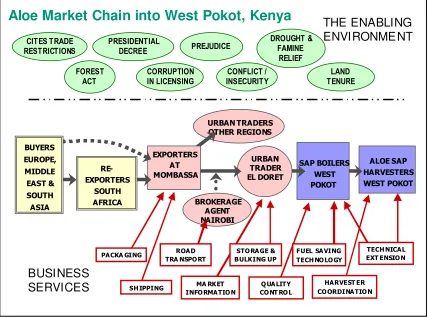
formal commercial markets. The genus is native to Africa and is common in South Africa's Cape Province and the mountains of tropical Africa (especially East Africa), and neighbouring areas such as Madagascar, the Arabian Peninsula and the islands off Africa. Where they occur in Africa, they are collected and processed into cosmetics and skin products (Figure 1). Aloë species are also frequently cultivated as ornamental plants both
in gardens and in pots. Many Aloë species are highly decorative and are valued by
collectors of succulents. Some species, in particular Aloë vera are purported to have
medicinal properties. Other uses of aloës include their role in alternative medicines and in home first aid. Both the translucent inner pulp as well as the resinous yellow exudate from wounding the aloë plant are used externally to relieve skin discomforts and internally as a laxative. To date, research has shown that Aloë vera produces positive
medicinal benefits for healing damaged skin. Conversely, other research suggests A. vera
can negatively effect healing (Vogler and Ernst, 1999). Some Aloë species have also been
contains a number of medicinal substances used as a purgative. The medicinal substance is produced from various species of aloë, such as A. vera, A. vulgaris, A. socotrina, A. chinensis, and A. perryi. Several kinds of aloës are commercially available: Barbadoes,
Socotrine, Hepatic, Indian, and Cape aloës. Barbadoes and Socotrine are the varieties most commonly used for curative purposes. Aloë juices are the expressed juice of the leaves of the plant. When the leaves are cut, the juice that flows out is collected and evaporated. After the juice has been removed, the leaves are sometimes boiled to yield an inferior kind of aloes. The juice of the leaves of certain species, e.g. Aloë venenosa, is
poisonous.
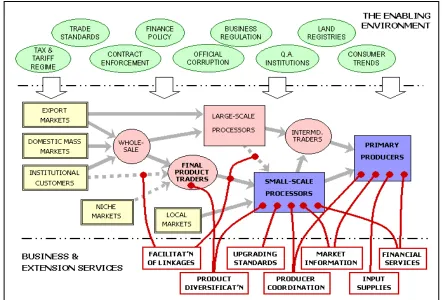
Figure 1. Specific ‘market map’ developed from figure 1 (in collaboration with local stakeholders) and applied to Aloë spp. market chain with red arrows showing which
activities in the market chain require specific services (from Hellin et al., 2005)
FROM UNDER-UTILISED CROP TO NICHE MARKET DEVELOPMENT
ALOE SAP HARVESTERS WEST POKOT SAP BOILERS WEST POKOT URBAN TRADER EL DORET URBAN TRADERS OTHER REGIONS EXPORTERS AT MOMBASSA BROKERAGE AGENT NAIROBI RE -EXPORTERS SOUTH AFRICA BUYERS EUROPE, MIDDLE EAST & SOUTH ASIA
Aloe Market Chain into West Pokot, Kenya
DROUGHT & FAMINE RELIEF PREJUDICE CONFLICT / INSECURIT Y LAND T ENURE CIT ES T RADE
REST RICT IONS
PRESIDENT IAL DECREE CORRUPTION IN LICENSING FOREST ACT HARVEST ER CO ORDINATIO N Q UA LITY
CO NT RO L
PACKA GING STO RA GE &
BULKING UP ROAD
TRA NSPO RT
FUEL SAVING TECH NO LO GY
TECH NICAL EXT ENSIO N
SH IPPING MA RKET
INFO RMATIO N BUSINESS
SERVICES
[image:33.595.85.513.251.569.2]