COMPARISION OF MATERNAL AND FETAL OUTCOME
AMONG OBESE AND NORMAL MOTHERS IN VIEW OF
DEVELOPING MATERNAL OBESITY MANAGEMENT
STRATEGY AT SELECTED HOSPITALS,
CHENNAI
DISSERTATION SUBMITTED TO
THE TAMIL NADU DR.M.G.R.MEDICAL UNIVERSITY
CHENNAI
IN PARTIAL FULFILMENT OF REQUIREMENT FOR THE DEGREE OF
COMPARISION OF MATERNAL AND FETAL OUTCOME
AMONG OBESE AND NORMAL MOTHERS IN VIEW OF
DEVELOPING MATERNAL OBESITY MANAGEMENT
STRATEGY AT SELECTED HOSPITALS,
CHENNAI, 2013
Certified that this is the bonafide work of
Ms. BABY SHOBANA.N
Omayal Achi College of Nursing #45, Ambattur road Puzhal, Chennai – 600 066.
COLLEGE SEAL:
SIGNATURE : _________________
Dr. (Mrs) S.KANCHANA
R.N., R.M., M.Sc.(N)., Ph.D., Post Doc.(Res)., Principal & Research Director,
Omayal Achi College of Nursing, Puzhal, Chennai – 600 066, Tamil Nadu
Dissertation submitted to
THE TAMIL NADU DR.M.G.R.MEDICAL UNIVERSITY
CHENNAI
In partial fulfilment of requirement for the degree of
MASTER OF SCIENCE IN NURSING
COMPARISION OF MATERNAL AND FETAL OUTCOME
AMONG OBESE AND NORMAL MOTHERS IN VIEW OF
DEVELOPING MATERNAL OBESITY MANAGEMENT
STRATEGY AT SELECTED HOSPITALS,
CHENNAI, 2013
Approved by Research Committee in December 2012
PROFESSOR IN NURSING RESEARCH
Dr. (Mrs) S.KANCHANA __________________ R.N., R.M., M.Sc. (N)., Ph.D., Post Doc.(Res).,
Principal & Research Director, Omayal Achi College of Nursing,
Puzhal, Chennai – 600 066, Tamil Nadu.
CLINICAL SPECIALITY - HOD
Mrs. VIJAYALAKSHIMI .R ___________________
R.N., R.M., M.Sc.(N)., Ph.D Head of the Department,
Obstetrics and Gynecological Nursing, Omayal Achi College of Nursing.
Puzhal, Chennai – 600 066, Tamil Nadu.
CLINICAL SPECIALITY – RESEARCH GUIDE
Mrs. VIJAYALAKSHIMI .R __________________
R.N., R.M., M.Sc.(N)., Ph.D
Obstetrics and Gynecological Nursing, Omayal Achi College of Nursing.
Puzhal, Chennai – 600 066, Tamil Nadu.
MEDICAL EXPERT
Dr. (Mrs) HIDAYATUNNISSA, ___________________
D.G.O, DNB (O& G)., Consultant,
Department of Obstetrics and Gynecology, Sir Ivan Stedeford Hospital,
Ambattur, Chennai – 600 053.
Dissertation submitted to
THE TAMIL NADU DR.M.G.R.MEDICAL UNIVERSITY
CHENNAI
In partial fulfilment of requirement for the degree of
MASTER OF SCIENCE IN NURSING
ACKNOWLEDGEMENT
Gratitude can never be expressed in words but this is only the deep perception that makes the words to flow from one’s inner heart.
The dissertation hereby prepared is not only the result of my own effort but also collective efforts of many around me. I have made a considerable effort to acknowledge the persons to whom I owe my gratitude.
I express my sincere thanks and honour to the Vice Chancellor and Research Department of The Tamil Nadu Dr. M. G. R Medical University, Guindy for giving me an opportunity to undertake my Postgraduate degree in Nursing at this esteemed university.
I express my sincere indebtedness to the Managing Trustee, Omayal Achi College of Nursing who gave me an opportunity to pursue my post graduate education in this esteemed institution.
I express my deep sense of gratitude to Dr. K.R. Rajanarayanan, B.Sc., M.B.B.S., FRCH (London), Research Coordinator, International Centre for Collaborative Research (ICCR), Omayal Achi College of Nursing and Honorary Professor in Community Medicine for his valuable suggestions, expert guidance and with regard to approval and ethical clearance for conducting the study.
It gives great pleasure to thank with great sense of gratitude and respect to
Dr. (Mrs) S. Kanchana, Principal and Research Director, ICCR, Omayal Achi College
of Nursing for her expert guidance, patience, valuable suggestions and encouragement throughout the study.
I also thank the ICCR Executive Committee Members for their suggestions during the research proposal, pilot study and Mock viva presentations.
I express my special and heartfelt thanks to my Research guide
Mrs.Vijayalakshmi.R, Head Of the Department, Obstetrics and Gynecological Nursing,
for her expert guidance, constant inspiration, timely help, valuable suggestions, motivation and patient endurance which helped me in completion of the study.
I extend my sincere thanks to my Medical guide Dr. Hidayatunnissa., D.G.O, DNB (O& G), Consultant Obstetrician and Gynecologist for her valuable suggestions and guidance throughout the study.
I extend my grateful endless thanks to Mrs.S.Bhagavathy, Mrs. Amutha,
Mrs. Beulah Jeyaselvi, and Mrs. Sheeba Suvitha of Obstetrics and Gynecological Nursing Department, for their constant encouragement, scholarly suggestions and guidance, timely corrections, support and motivation till the final fraction of the study.
I am greatly obliged to the Class coordinator Mrs. Jose Eapen Jolly Cecily for her constant support, valuable suggestions, ceaseless guidance, thoughtful comments, and words of encouragement till the final day.
I owe my profound gratitude and sincere thanks to HODs’ and faculty members of Omayal Achi College of Nursing for their suggestions and guidance throughout the study.
I express my sincere gratitude to Prof. Nancy, Biostatistician for her continuous and instant help in data analysis involved in the study.
I extend my honour of thanks to all the Nursing and Medical experts for their valuable suggestions in validating the tool for the study.
I extend my gratitude to the research assistance Ms.Priyadarshini and
Ms.Nithya who were the partaker of the data collection procedure and reduced the
burden of the researcher, without you it is impossible to finish data collection within limited time.
I extend my sincere thanks to all the staff nurses and mothers, who were a part of this research, without whose cooperation and participation it would not have been possible to complete the study.
I extend my gratitude to the librarians of Omayal Achi College of Nursing and The Tamil Nadu Dr. M.G.R Medical University, for their co-operation in collecting the related literature for this study.
I express my sincere gratitude to Mrs. Premalatha, M.A., B.ED., B.T assistant for editing this manuscript and tool in English.
I express my sincere gratitude to Mrs. Sheela, M.A., B.ED., B.T assistant for editing this manuscript and tool in Tamil.
I extend my heart full thanks to my department friends D.Jerlin Shiny, J.Nisha,
T.Priyadarshini for their suggestions, encouragement, new ideas, corrections and
constant encouragement and support throughout the course to complete my study successfully.
I heart fully thank all my M.Sc Nursing colleagues – Axios and my peer evaluators for their constructive ideas, support, and encouragement which helped me to mould this piece of work and complete this venture.
I extend my sincere gratitude to Mr.G.K.Venkataraman, Elite Computers for typing, aligning and shaping the manuscript.
I am indeed grateful to my beloved dad Mr.C.Natarajan, my mom
Mrs.N.Jayalakshmi, my sister N.SusanAshok and my brother Mr.N.Karthick, for
their unconditional love, special prayers, support and strength to make my study success.
LIST OF ABBREVIATIONS
APGAR – Appearance, Pulse, Grimace, Activity, Respiration BMI – Body Mass Index
CI – Confidence Interval
CMACE – Centre for Maternal and Child Enquiries ETIP – Exercise Training in Pregnancy
GDM – Gestational Diabetes Mellitus GWG – Gestational Weight Gain
ICCR – International Centre for Collaborative Research IOL – Induction of Labour
Kg/m2 – Kilogram per Meter square LMP – Lifestyle Modification Program NICU – Neonatal Intensive Care Unit NHS – National Health Service OR – Odds Ratio
PIH – Pregnancy Induced Hypertension PPH – Post Partum Haemorrhage PROM – Premature Rupture of Membrane RR – Relative Risk
SGA – Small for Gestational Age SMF – Sundaram Medical Foundation USA – United States of America UK – United Kingdom
TABLE OF CONTENTS
CHAPTER NO. CONTENT PAGE NO.
ABSTRACT
1 INTRODUCTION 1
1.1 Background of the study 2 1.2 Significance and need for the study 4 1.3 Statement of the problem 7
1.4 Objectives 7
1.5 Operational definitions 7
1.6 Assumptions 9
1.7 Research hypotheses 9
1.8 Delimitation 9
1.9 Conceptual framework 10 1.10 Outline of the report 13
2 REVIEW OF LITERATURE
Scientific reviews of related literature 14 3 RESEARCH METHODOLOGY
3.1 Research approach 23
3.2 Research design 23
3.3 Variables 25
3.4 Setting of the study 25
3.5 Population 25
3.6 Sample 26
3.7 Sample size 26
CHAPTER NO. CONTENT PAGE NO.
3.14 Pilot study 30
3.15 Data collection procedure 31 3.16 Plan for data analysis 32 4 DATA ANALYSIS AND INTERPRETATION 35
5 DISCUSSION 54
6 SUMMARY, CONCLUSION, IMPLICATIONS, RECOMMENDATIONS AND LIMITATION
62
REFERENCES 69
LIST OF TABLES
TABLE NO. TITLE PAGE NO.
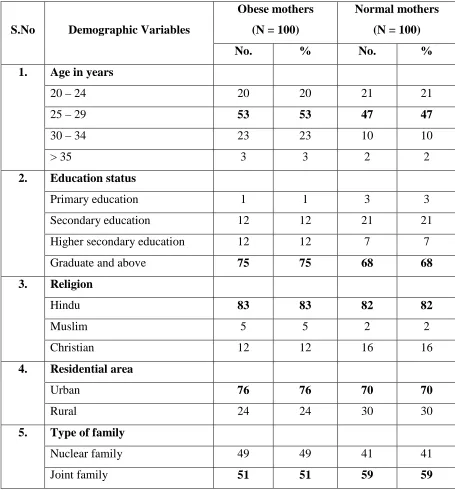
4.1.1 Frequency and percentage distribution of demographic variables of obese and normal mothers with respect to age, educational status, religion, residential area and type of family.
36
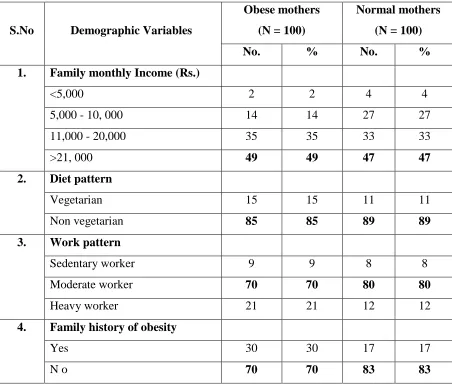
4.1.2 Frequency and percentage distribution of demographic variables of obese and normal mothers with respect to total family income, diet pattern, work pattern and
family history of obesity. 38
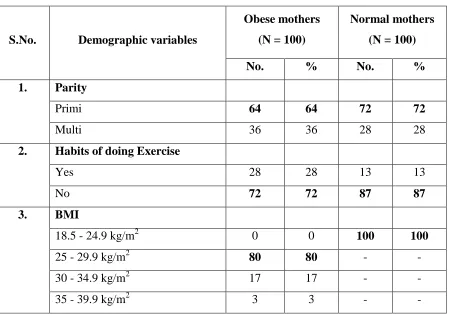
4.1.3 Frequency and percentage distribution of demographic variables of obese and normal mothers with to respect parity, habits of doing exercise and BMI
40
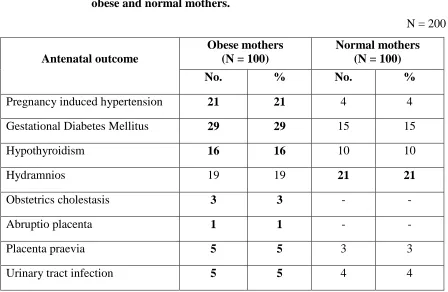
4.2.1 Frequency and percentage distribution of antenatal outcome among obese and normal mothers.
41
4.2.2 Frequency and percentage distribution of Intra natal outcome among obese and normal mother.
42
4.2.3 Frequency and percentage distribution of post natal outcome among obese and normal mothers.
43
4.2.4 Frequency and percentage distribution of neonatal
outcome among obese and normal mothers 44
4.3.1 Comparison of the antenatal outcome between obese and normal mothers.
45
4.3.2 Comparison of the intranatal outcome between obese and normalmothers.
46
4.3.3 Comparison of the post natal outcome between obese and normal mothers.
LIST OF TABLES
TABLE NO. TITLE PAGE NO.
4.3.4 Comparison of the neonatal outcome between obese
and obese and normal mothers. 49
4.4.1 Association of selected demographic variable maternal and fetal outcome among obese mothers
50
4.4.2 Association of selected demographic variables with maternal and fetal outcome among normal mothers
LIST OF FIGURES
TABLE NO. TITLE PAGE NO.
1.9.1 Conceptual framework based on Grounded theory of Glaser and Strauss
LIST OF APPENDICES
APPENDIX TITLE PAGE NO.
A Ethical clearance certificate i B Letter seeking and granting permission for
conducting the main study
ii
C Content validity
i) Letter seeking expert’s opinion for content validity ii) List of experts for content validity
iii) Certificate for content validity
vi vii
ix D Certificate for English editing xvi E Certificate for Tamil editing xvii F Informed consent
i) Informed consent request form ii) Informed written consent form
xviii xx G Copy of the tool for data collection xxiii H Plagiarism report xxviii
I Coding for the demographic variables xxix J Maternal Obesity Management Strategy
ABSTRACT
ABSTRACT
ABSTRACT
ABSTRACT
Comparison of maternal and fetal outcome among obese and
normal mothers in view of developing maternal obesity management
strategy at selected hospitals, Chennai.
INTRODUCTION
Pregnancy is a process that invites women to experience the unseen force behind all life. Throughout pregnancy, mother is at the center stage. Even though pregnancy gives pleasure and makes feel proud, it gives pressure on her due to some health determinants like obesity.
As the prevalence of obesity is increasing, the number of obese women of reproductive age is also increasing and consequently obesity complicates about 18.5 - 38.5% of pregnancies. These pregnancies are at an increased risk of several maternal as well as fetal adverse outcomes. The increasing risks among obese mothers are gestational hypertension and pre eclampsias are 2.5-3.2 and 1.6-3.3 times, gestational diabetes is 3
Aims and objectives: To compare the maternal and fetal outcome among obese and normal
mothers in view of developing obesity management strategy. Methodology: Comparative study to
assess the maternal and fetal outcome among 200 mothers who were in labour were grouped
according to their BMI by purposive sampling technique, 100 normal mothers (BMI 18.5-24.9kg/m2) and 100 obese mothers (BMI ≥25kg/m2) in selected hospitals at Chennai. The antenatal outcomes were retrieved from antenatal record retrospectively where as intranatal, postnatal and neonatal
outcomes were assessed by using observation checklist. Result: compared with women of normal
BMI, the outcomes among obese mothers were significantly associated with PIH (p<0.001), GDM,
preterm labour, forceps delivery, cesarean section and malposition at the level of p<0.05. The
maternal and fetal outcomes were compared by odds ratio. Obese women were about 6 times
likely to develop PIH (Odds Ratio (OR) – 6.37), 2 times more likely to deliver by forceps application
(OR – 2.69), 3 times of risk to deliver by vacuum extraction (OR – 3.59) and prolonged wound
healing (OR – 3.12), 6 times are very high risk for malposition, 3 times are likely to have meconium
aspiration (OR – 3.06). Conclusion: Maternal obesity in early pregnancy is strongly associated
with a number of maternal and fetal outcomes. Hence the maternal obesity management strategy
will create awareness among future mothers with obesity to keep their weight gain goal in order to
protect from adverse maternal and fetal outcomes.
to 5 times higher, Fetal macrosomia is 1.5-2 times, 2 to 3 fold risk of still birth, fetal structural anomalies such as neural tube defects, omphalocele and cardiac defects are up to 3 times more in obese mothers. Obesity also frequently complicates delivery 1.7 fold increased risk of operative vaginal delivery and 2 to 3 times increased risk of cesarean section. Greater awareness of these adverse effects needs to be made to healthcare professionals in order to prevent complications which are associated with obesity during pregnancy. (Expert Review of Obstetrics and Gynecology, 2012).
OBJECTIVES
To compare the maternal and fetal outcome among obese and normal mothers in
view of developing maternal obesity management strategy.
METHODOLOGY Research design
The research design used in this study was non- experimental comparative descriptive design.
Research variable
The study variable includes maternal and fetal outcome of obese and normal mothers.
Setting
The study was conducted in labour ward of Vijaya Hospital, K.S. Hospital, Sir Ivan Stedeford Hospital, and Sundaram Medical Foundation at Chennai.
Samples
The study sample comprised of 200 antenatal mothers – 100 normal mothers and 100 obese mothers who fulfilled the inclusive criteria.
Measurement and tool
prepared by the researcher. Both descriptive and inferential statistics were used for data analysis.
RESULTS
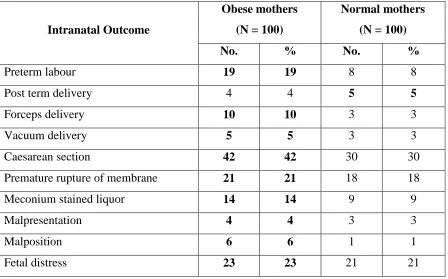
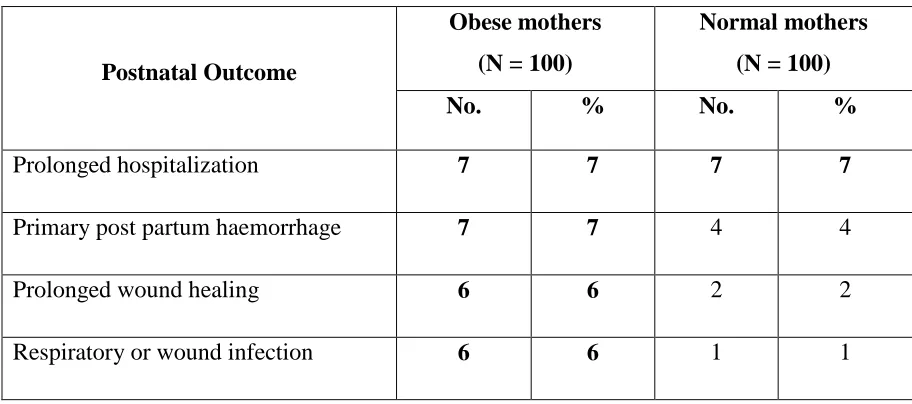
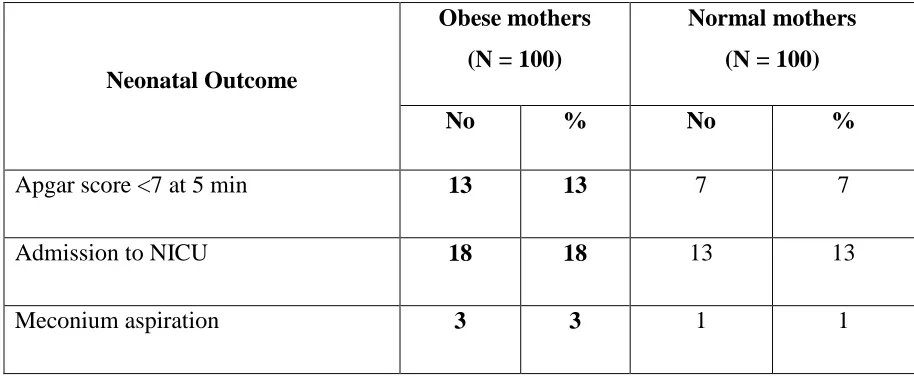
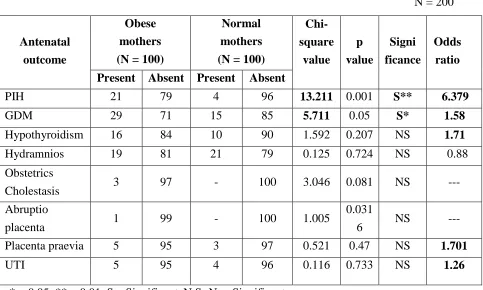
The findings of the study revealed that obesity is significantly associated with pregnancy induced hypertension at the level of p<0.001, gestational diabetes mellitus, preterm labour, forceps delivery, malposition, cesarean section at the level of p<0.05.
The maternal and fetal outcomes were compared by odds ratio. Obese women were about 6 times likely to develop PIH (OR – 6.37), 2 times more likely to deliver by forceps application (OR – 2.69), 3 times of risk to deliver by vacuum extraction (OR – 3.59) and prolonged wound healing (OR – 3.12), 6 times were at high risk for malposition, 3 times were likely to have meconium aspiration (OR – 3.06).
DISCUSSION
The study findings showed that obese mothers are at more risks of adverse maternal and fetal outcome than the normal mothers. Thus the researcher has prepared a poster regarding maternal obesity management strategy in order to create an awareness among future mothers with obesity, thereby controlling obesity related complications during pregnancy.
IMPLICATIONS
CONCLUSION
CHAPTER
CHAPTER
CHAPTER
CHAPTER----1
1
1
1
Introduction
Introduction
Introduction
Introduction
1
INTRODUCTION
Pregnancy is a process that invites women to experience the unseen force behind all life. Childbirth is an experience that holds the power to transform her forever. Passing through these powerful gates on her way makes to think twice, one for herself and one for her child. Throughout pregnancy, mother is at the center stage and brings about an easy labor, without risking injury to the mother or the child.
Birth is a natural, normal physiological function for normal, healthy women and their healthy babies. According to physiological law, all natural, normal functions of the body are achieved without peril or pain. Having a baby will change the physiology, even when the pregnancy goes smoothly, but complications can lead to even physiology, pathological and psychological change due to many factors which is associated with socio demographic and health factors like age, parity and dietary habits. Treating normal labors as though they were complicated can become a self-fulfilling prophecy. Even though pregnancy gives pleasure and makes feel proud, it gives pressure too on the mother due to some health determinant like obesity.
Obesity is a condition in which excess of fat has accumulated to such an extent that health may be affected and is defined as Body Mass Index ≥30kg/m2.. Obesity in pregnancy is widely defined as a maternal BMI of 30 or more, usually at the time of the first antenatal consultation. Problems of overweight and obesity are caused by chronic imbalance between energy intake and actual energy needs of the body. Rapidly changing diets and lifestyles are fueling the global obesity epidemic. In many developing countries, with increasing urbanization, mechanization of job and transportation, availability of processed and fast foods, and dependence on television for leisure, people are fast adopting less physically active lifestyles and consuming more “energy-dense, nutrient-poor” diets.
2
"obesity” as a growing epidemic and if immediate action is not taken, millions will suffer from an array of serious weight-related disorders during pregnancy. (WHO 2012)
Obesity in pregnancy has numerous potential detrimental effects on the mother and the newborn. The increasing risks among obese mothers are gestational hypertension and pre eclampsias are 2.5-3.2 and 1.6-3.3 times, gestational diabetes is 3 to 5 times higher, Fetal macrosomia is 1.5-2 times, 2 to 3 fold risk of still birth, fetal structural anomalies such as neural tube defects and omphalocele and cardiac defects are up to 3 times more in obese mothers. Obesity also frequently complicates delivery causing 1.7 fold increased risk of operative vaginal delivery and 2 to 3 times increased risk of cesarean section. (Expert Review of Obstetrics and Gynecology, 2012)
1.1. BACKGROUND OF THE STUDY
During the past 20 years, obesity has become a worldwide epidemic. The WHO estimates that approximately 700 million adults will be obese by 2015. As the prevalence of obesity is increasing, the number of obese women of reproductive age is also increasing and consequently obesity complicates about 18.5 - 38.5% of pregnancies. These pregnancies are at an increased risk of several maternal as well as fetal adverse outcomes. (WHO 2012)
Obesity has reached epidemic proportions globally, with more than 1.5 billion adults are overweight - at least 300 million of them clinically obese - and it is a major contributing factor to the global burden among reproductive age group.. Among women of childbearing age, it is of paramount importance because of its association with multiple adverse health outcomes for the mother and fetus, once a woman becomes pregnant. About 4 million births occur in the United States annually and at present approximately 60% of women of childbearing age are either overweight or obese. In Mexico, 32% of women of reproductive years are obese; in Brazil, 50% of the population is overweight or obese, in Ghana, 64.7% of women are either overweight or obese. The latest data from the US National Centre for Health Statistics show that 35% of women of reproductive years are obese. (Advances in nutrition, International
3
In the United Kingdom, 1 in 5 women at booking are obese. About 56% of all women are over the recommended BMI, that is 33% of them classified as overweight (BMI>25) and 23% as obese (BMI >30). The prevalence of women with a known BMI
≥35 (class II and class III obesity) is 4.49%. This translates into approximately 38.47 maternities with obesity each year in the UK. The prevalence of women with a pregnancy BMI≥40 (class III obesity) in the UK is 2.01%, while super-morbid obesity BMI ≥50 affects 0.19% of all women giving birth. The confidential enquiry into maternal and child health reported that 35% of all maternal deaths is occurring due to obesity related complications. Obesity in reproductive age group is classed as the sixth most important risk factor contributing to overall burden of disease which is attributed to 30,000 deaths in UK per year. (CMACE- obesity report, 2010).
For the first time, the number of overweight individuals around the world, rival the number of individuals who is underweight. Developing nations have also joined the ranks of countries troubled by obesity. In China, the number of overweight people rose from less than 10% to 15% in just three years. In Brazil and Colombia, the figure of overweight is about 40%. Even sub-Saharan Africa, where most of the world's hungry live, is seeing an increase in obesity, especially among urban women. In all regions, obesity appears to escalate as income increases.
The prevalence of obesity and overweight in United Arab Emirates (UAE) reached 39.9% among pregnant women. Most of the studies reporting the effect of obesity on pregnancy outcomes are from developing countries. The highest obesity levels are in America (26% of adults) and the lowest in the South-East Asia Region (3% obese). In all parts of the world, women are more likely to be obese than men, and thus at greater risk of complications. (Clinical Epidemiology and global health, 2012).
4
women of reproductive years are overweight and 8% are obese. In India prevalence of abdominal obesity has been consistently higher in women of about 20% who were not overweight or obese as per the BMI definition still had abdominal obesity (Journal of
Clinical Gynecology and Obstetrics, 2012)
Greater awareness of these adverse effects needs to be made to healthcare professionals, who can target obese and/or overweight women of child-bearing age. Such a women should be informed of the risks associated with obesity during pregnancy and receive appropriate dietary and lifestyle advice in order to prevent complications which are associated with obesity during pregnancy. (FOCUS, Missouri Department of
Health & Senior Services, 2011)
1.2. SIGNIFICANCE AND NEED FOR THE STUDY
Obesity is a global public health problem that has received much attention for the past two decades. Among women of childbearing age, it is of paramount importance because of its association with multiple adverse health outcomes for the mother and the fetus once a woman becomes pregnant. According to WHO, if immediate action is not taken, millions will suffer from an array of serious obesity related problems during pregnancy.
Pooja Rajesh Vaswani, (2012) conducted a retrospective study among 1985
women at United Arab Emirates to evaluate the effect of varying degrees of maternal obesity on perinatal outcome. Morbidly obese women were about five times more likely to develop hypertensive disorders of pregnancy (OR-4.97), four times more likely to develop gestational diabetes (OR 3.7), three times more at risk of delivery by cesarean section (OR 2.73) and at a high risk of delivering big babies (OR 17.30). Maternal obesity especially morbid obesity in early pregnancy is strongly associated with a number of obstetrical and perinatal complications. Pregnancy in obese women should be managed as high risk pregnancies with strategies for prevention, early detection and management of complications arising from obesity.
Dimuthu Vinayagam and Edwin Chandraharan, (2012) conducted a
5
between 20 and 25 kg/ m2 to determine the impact of increased body mass index (BMI) on intra partum outcomes. The study result showed that there is a significant increase in delivery by caesarean section (OR 2.32, 95% CI 1.26–4.29), minor and major postpartum hemorrhage (OR 5.93, 95% CI 2.34–11.98, OR 16.11, 95% CI 2.08–125.09, resp.), perineal trauma (OR 2.59, 95% CI 1.44–4.69), and fetal macrosomia (OR 3.11, 95% CI 1.25–7.79) among study group. Babies also had an increased risk of having a lower APGAR scores in the study group as compared to the control group (OR 3.09, 95% CI 1.07– 8.94).
Shahla Yazdani, (2012) conducted a retrospective cohort study among 1356
primi gravid with a singleton uncomplicated pregnancy at Mumbai to evaluate the effect of maternal body mass index on pregnancy outcome women. The study concluded that women with an above-normal body mass index had a higher incidence of pre-eclampsia, induction of labour, cesarean section, preterm labor and macrosomia than women with a normal BMI (controls). BMI of women in the first trimester of pregnancy is associated with the risk of adverse pregnancy outcomes.
International journal of obstetrics and gynecology, (2013) conducted a
retrospective study among 30,298 singleton pregnancies at Texas University, USA to assess the impact of BMI on maternal and neonatal outcome. The result showed that, compared with normal weight women, women in the overweight and obese class I (BMI 30 to 34.9) category had an increased risk of hypertensive disorders, gestational diabetes, induction of labour, cesarean section, postpartum hemorrhage and macrosomia. Furthermore, women in obese class III (BMI 40 or more) were identified to be at the most risk of adverse outcomes including having a preterm delivery, a newborn requiring neonatal admission and stillbirth.
Arrowsmith S, S Wray and S Quenby, (2011) conducted a retrospective cohort
6
multiparous women, respectively). Higher maternal body mass index at booking is associated with an increased risk of prolonged pregnancy and increased rate of IOL.
Bloomberg M, (2013) conducted a cohort study among 1,024,471 women from
Swedish Medical Birth Registry in Sweden to evaluate the adverse neonatal outcome which is associated with maternal body mass index (BMI) of singleton pregnancies. The study compared the neonates born to women of normal weight with the neonates born to women with BMI of 40 or more (morbidly obese) and stated that the latter are at increased risk of birth injury to the peripheral nervous system (odds ratio [OR] 3.80, 95% confidence interval [CI] 2.83-5.12; 0.2% compared with 0.6%), birth injury to the skeleton (OR 2.59, 95% CI 2.10-3.21; 0.5% compared with 1.1%), respiratory distress syndrome (OR 2.08, 95% CI 1.88-2.30; 2.9 compared with 5.8%), bacterial sepsis (OR 2.90, 95% CI 2.43-3.46; 0.6% compared with 1.7%), convulsions (OR 3.43, 95% CI 2.63-4.47; 0.2% compared with 0.8%), and hypoglycemia (OR 3.48, 95% CI 3.20-3.78; 2.4% compared with 7.9%). The study concluded that the neonates born to morbidly obese women are at markedly increased risk of adverse neonatal outcome regardless of mode of delivery
Bogaerts et.al., (2009) conducted a longitudinal interventional study by a
randomized controlled trial among 235 eligible obese pregnant women to assess the effects of lifestyle intervention in obese pregnant women on gestational weight gain. The study result showed a significant reduction of Gestational Weight Gain(GWG) in the brochure (9.5kg) and lifestyle intervention (10.6kg) group compared with normal care group (13.5kg) (P=0.007) . Obese pregnant women who stopped smoking recently showed a significant higher GWG (OR=3.04; P=0.01); those with concurrent gestational diabetes mellitus (GDM) (OR=3.54; P=0.03). A targeted lifestyle intervention programme based on the principles of motivational interviewing reduces GWG in obese pregnant women.
7
The researcher felt that the complications of pregnancy can involve the mother's health, baby's health or both. Some women have health problems that arise before they become pregnant and other problem arises during pregnancy that could lead to complication. The investigator found that there is a rise in complications among obese mothers which troubled them physically, physiologically and psychologically instead giving them joy and excitement during their pregnancy. This created a provoking thought in the researchers mind that it is very important for women to receive health care before and during pregnant to decrease the risk of pregnancy complications among obese mothers by developing maternal obesity management strategy.
1.3 STATEMENT OF THE PROBLEM
A comparative study to assess the maternal and fetal outcome among obese and normal mothers in view of developing maternal obesity management strategy at selected hospitals, Chennai.
1.4. OBJECTIVES
1. To assess the maternal and fetal outcome among obese and normal mothers. 2. To compare the maternal and fetal outcome between obese and normal mothers 3. To associate the selected demographic variables with maternal and fetal outcome
among obese and normal mothers
4. To develop maternal obesity management strategy.
1.5. OPERATIONAL DEFINITION 1.5.1. Maternal outcome
It is the occurrence of selected predictable conditions that arises due to obesity during antenatal, intra natal, postnatal period which was assessed using checklist. The predictable conditions are;
8
Intranatal period: It is the observation of predictable complications like
meconium stained liquor, premature rupture of membrane, malpresentation, malposition, caesarean section, normal vaginal delivery, preterm labour, operative vaginal delivery, post term delivery, fetal distress which was assessed by using observation check list.
Postnatal period: It is the observation done till discharge of the mothers from
hospital for presence of any respiratory or wound Infection, prolonged hospitalization, prolong wound healing, primary post partum hemorrhage, which was assessed by using observation check list.
1.5.2. Fetal outcome
It is the condition of newborn at birth and its degree of wellness which includes Apgar score < 7 at 5 min, still birth, macrosomia, meconium aspiration syndrome, admission to NICU which was assessed by using observation checklist.
1.5.3. Normal mother
A singleton pregnant woman who admitted for labour with the first trimester Body Mass Index between 18.5 to 24.9kg/m2 which was calculated by the researcher based on the height and weight documented in the antenatal record.
1.5.4. Obese mother
A singleton pregnant woman who are admitted for labour with the first trimester Body Mass Index of ≥ 25 kg/m2 which was calculated by the researcher based on the height and weight documented in the antenatal record.
1.5.5. Maternal obesity management strategy
It is the preparation of poster regarding prevention and control of obesity related complications during pregnancy.
Components include early identification of obesity, dietary management, life
9
1.6 ASSUMPTIONS
1. Maternal obesity may have an impact on maternal and fetal out come
2. Development of maternal obesity management strategy may help the fore coming obese mothers to be aware of weight management measures.
1.7. RESEARCH HYPOTHESES
RH1: There is a significant difference in maternal and fetal outcome between obese and
normal mothers
RH2: There is a significant association of selected demographic variables with maternal
and fetal outcome among obese and normal mothers at the level of p<0.05.
1.8. DELIMITATION
10
1.9. CONCEPTUAL FRAMEWORK
A conceptual framework or model refers to interrelated concepts or abstractions assembled together in a rational scheme by virtue of their relevance to a common theme that structure or offer a framework for conducting research.
The researcher has adopted Grounded Theory of Glaser and Strauss with
Action Research.
According to Glaser and Strauss, the Grounded theory approach is designed to enable the researcher for constant comparison of collected and coded data and to formulate proposition.
Action research is a process of gaining information about the situation through a deliberate process of making explicit assumption about how and why things work and planning to improve the act.
The investigator comprised these two models to prepare a proposition by assessing and comparing maternal and fetal outcome among obese and normal mothers. The components of Grounded theory are as follows;
Data generation
Data generation refers to collection of data. Data collection can be done by interview, observation or documents or from a combination of these sources. Here, the researcher has reviewed the clients’ antenatal record, calculated the first trimester BMI with the height and weight of mothers who are admitted for labour.
Concept formation
11
Concept development
Concept development involves steps which describes the images of phenomena and the need for proposition. Through this process, the core variable emerges. The concept of core variable refers to a category which accounts for most of the variation in a pattern of behavior and which helps to integrate other categories that have been discovered in the data.
Concept modification and integration
13
1.10 OUTLINE OF THE REPORT
CHAPTER 1 : Dealt with the back ground of the study, need for the study, and statement of the problem, objectives, operational definitions, null hypotheses, assumptions, delimitations and conceptual frame work.
CHAPTER 2 : Focuses on scientific review of literature related to the present study.
CHAPTER 3 : Enumerates the methodology of the study.
CHAPTER 4 : Presents the data analysis and data interpretation.
CHAPTER 5 : Deals with the discussion of the study
CHAPTER 6 : Gives the summary, conclusion, implications, recommendations and limitations of the study.
[Type text]
Review of antenatal record of mothers who are in labour
Assessment of BMI and categorize it
Normal mother BMI 18.5 - 24.9 Obese mother
BMI ≥ 25 kg/m2
Non probability purposive sampling
Collection of data using formulated tool
Assessment of demographic variables- age, education, religion, type of family, diet pattern, exercise pattern, BMI, family history of obesity.
checklist to assess maternal and fetal
Identification of maternal and fetal outcome
Antenatal outcome by using antenatal health record
Intranatal, postnatal and neonatal outcome by using
observation checklist
Obese mother comparison of maternal Normal mother
and fetal outcome
[image:34.595.35.564.62.768.2]Preparation of poster regarding maternal obesity management strategy DATA GENERATION CONCEPT FORMATION CONCEPT DEVELOPMENT CONCEPT MODIFICATION & INTEGRATION
FIG.1.9.1. CONCEPTUAL FRAMEWORK BASED ON GROUNDED THEORY OF GLASER AND STRAUSS
CONTEXT
CHAPTER
CHAPTER
CHAPTER
CHAPTER----2222
Review of Literature
Review of Literature
Review of Literature
Review of Literature
14
REVIEW OF LITERATURE
This chapter deals with the related literature review which aids to generate a
picture of what is known and not known about a particular situation.Review of literature is an organized critique of important scholarly literature which supports a study and a key step in research process (Polit & Beck).
An extensive review of literature was done by the investigator to gain an insight into the problem, collect maximum information from systematic and critical review of scholarly publications, unpublished scholarly print materials. The logical sequence of the chapter is organized in the following sections:
SECTION 2.1:
Scientific reviews related to impact of obesity on pregnancySECTION 2.2 : Scientific reviews related to effect of obesity on maternal Outcome. SECTION 2.3 : Scientific reviews related to effect of obesity on fetal outcome
SECTION 2.4 : Scientific reviews related to effectiveness of obesity management strategy.
SECTION 2.1: SCIENTIFIC REVIEWS RELATED TO IMPACT OF OBESITY ON PREGNANCY
Magann EF et.al., (2013) conducted an observational study based on secondary
15
Valerie Holmes et al., (2013) conducted a cohort study among 30,298
pregnancies at referral unit, Northern Ireland to find the prevalence of overweight and obese women and their risk of adverse neonatal and maternal outcomes. The study revealed that 2.8% of women were categorized as underweight, 5.25% normal weight, 27.8% overweight, 11% obese class I, 3.9% obese class II and 1.9% obese class III and concluded that, compared with normal weight women, women in the overweight and obese class I category had an increased risk of hypertensive disorders, gestational diabetes, induction of labour, caesarean section, postpartum hemorrhage and macrosomia (large birth weight baby) are significantly increased for obese class II and III women.
Meenakshi et al., (2012) conducted a prospective study among 83 normal weight
and 87 obese singleton pregnant women at Nehru Hospital, Gorakpur, to compare maternal and fetal complications among normal and obese. The study inferred that gestational hypertension (p<0.05), preeclampsia(p<0.001), preterm delivery (p<0.01), induction of labour (p<0.05), instrumental vaginal delivery (p<0.05), cesarean section (p<0.01), increased operative time (p<0.01), still birth (p<0.05), early neonatal death (p<0.05), Apgar score < 7 at 5minutes (p<0.05) and admission to NICU (p<0.001) are the adverse pregnancy outcome among overweight and obese mothers and concluded that overweight and obesity are definite risk factor for adverse pregnancy outcomes.
Pooja Rajesh Vaswani, (2012) conducted a retrospective study among 1985
women in United Arab Emirates to evaluate the effect of varying degrees of maternal obesity on perinatal outcome. Morbidly obese women were about 5 times more likely to develop hypertensive disorders of pregnancy (OR = 4.97), 4 times more likely to develop gestational diabetes (OR 3.75), 3 times more likely to deliver post-term (OR 2.99), 3 times more at risk of delivering by caesarean section (OR 2.73) and at a very high risk of delivering big babies (OR 17.30). The study concluded that the pregnancies in obese women should be managed as high risk pregnancies with strategies for prevention, early detection and management of complications arising from obesity.
Sreedevi C et al., (2012) conducted a correlation study among 250 primi gravid
16
gestational age and IUGR were found to be more in abnormal first trimester BMI categories and concluded that abnormal first trimester BMI revealed to be associated with severe maternal and neonatal complications. Therefore pregnant women should maintain a normal BMI to achieve a healthy pregnancy outcome.
Vellanki Venkata Sujatha et al., (2011) conducted a prospective non
randomized descriptive study among 100 women with high BMI were compared with 100 women with normal BMI at Narketpally, India to examine the maternal and fetal risks of adverse pregnancy outcome in obese women (BMI > 30). The result revealed that compared to women with normal BMI, the following outcomes were significantly
more common in obese pregnant women) for BMI > 30 gestational diabetes mellitus (OR 4.8, CI-1.01 - 3.02); pre-eclampsia (OR 2.52, CI-1.04-6.11); macrosomia (OR 13.8,
CI -3.1 - 60.57); caesarean section (OR 3.45, CI - 1.65 - 7.15) and infections (OR 1.7, CI - 0.39 - 7.32) and concluded that there is a strong association between maternal morbid obesity in early pregnancy and a number of threatening complications during pregnancy, delivery, and in the neonatal period.
Baeten et al., (2008) conducted a population-based cohort study among 100,000
pregnancies to examine the prevalence of complications of maternal obesity during pregnancy. The study result showed that gestational diabetes is of 6% for obese participants, but only 1.6% of normal weight individuals. Also, preeclampsia had a 13.5% incidence for obese women versus 5.7% for normal weight. The study concluded that gestational diabetes, preeclampsia, and eclampsia conditions that can cause severe maternal illness or even death, were significantly higher in the overweight and obese BMI groups compared to lean women.
SECTION 2.2: SCIENTIFIC REVIEWS RELATED EFFECT OF OBESITY ON MATERNAL OUTCOME
Nil Halvdan Morken et al., (2013) conducted a population based cohort study
among 50,416 singleton pregnant mothers at Norwegian Mother to estimate the risk of operative delivery with that of maternal pre pregnant body mass index and gestational weight gain. The study revealed that there was increased risk of vacuum extraction among BMI > 30 (RR 1.5, 95% CI 1.04 - 2.2), women with a gestational weight gain of
17
CI 1.03 - 1.4, RR 1.2, 95% CI 1.1 - 1.23) and concluded that obese women have an increased risk of operative delivery with vacuum extraction.
Semins M.J. et.al., (2012) conducted a cohort study 95,598 subjects with
national private claims database, Baltimore, to describe the way in which an
increasingly obese body mass index is associated with urinary tract infection. The study result showed that women were 4.2 times more likely to be diagnosed with urinary tract infection and concluded that elevated BMI appears to be associated with an increased risk for urinary tract infection.
Halloran D.R. et.al., (2012) conducted a retrospective cohort study among
3, 75, 003 singleton births in Asia to examine the effect of pre pregnancy weight and maternal gestational weight gain on post term delivery. The study revealed that overweight women who gain within or above recommended weight were at increased risk of post term delivery, and obese women were at increased risk of post term delivery with increasing weight. (Odds ratio 1.21 and 1.27 within and above recommended).
Rami Gilead et al., (2012) conducted a retrospective population based study
among 1, 73,623 deliveries at Israel to investigate pregnancy outcomes, particularly
cesarean delivery among women with "isolated" obesity (without additional co morbidities). The study compared the pregnancy outcomes of obese (BMI ≥30 kg/m2)
and non obese women and the result revealed that higher rates of cesarean delivery were found among patients with “isolated” obesity (30.7% vs. 12.3%; odds ration [OR] = 3.2;
p < 0.001). The study concluded that "isolated" obesity is an independent risk factor for
cesarean delivery.
Tristan Gauthier et.al., (2012) conducted a retrospective study among 190
18
Elaine M Fyle et al., (2012) conducted a cohort study among 11,363 mothers in
National Women Hospital, Auckland to determine whether overweight and obesity are
independent risk factor for major post partum hemorrhage after vaginal and cesarean section delivery. Result shows that two fold increase of risk in obese women, odd ratio was 1.86 (1.51- 2.28). The study concluded that obesity is an important high risk factor for post partum hemorrhage.
Stephen T. Vermillion MD et.al., (2012) conducted s cohort study to estimate
the effect of the thickness of subcutaneous tissue at the surgery site on abdominal wound infection. The risk factors identified were thickness of subcutaneous tissue, maternal weight and body mass index was significantly associated with wound infection by univariate analysis. He concluded that thickness of subcutaneous tissue appears to be the only significant risk factor associated with abdominal wound infection after cesarean delivery.
Mamum et.al., (2011) conducted a population based cohort study among 6632
women in Brisbane, Australia to determine the association of pre pregnancy obesity and excess gestational weight gain with pregnancy complications and increased length of postnatal hospital stay. The study concluded that women who were obese prior to pregnancy and women who gained excess weight during pregnancy were at greater risk and longer length of hospital stay. Gestational weight gain is associated with a longer stay in hospital after delivery.
Rita Andersen Leth et al., (2011) conducted a prospective cohort study among
2,492 women having cesarean section at Obstetric departments at three hospitals in Denmark to assess the impact of obesity and the risk of post cesarean infection. The study result showed that the risk of post cesarean infection was higher among obese than non obese women (OR 1.43, 95% CI 1.09 - 1.88) and concluded that obesity increases the risk of post cesarean infection.
Tarakeshwari Surapaneni, Evita Fernandez, (2010) conducted a retrospective
19
pregnant women had gestational diabetes and were more likely to have cesarean section (OR 2.04), large of gestational age babies (OR 3.82) and macrosomia (OR 20.90) due to impact of obesity on gestational diabetes mellitus. The study concluded that gestational diabetes and obesity are increasingly important priorities for perinatal care.
Shabnam Shamim Asim, Humaira Naeem et al., (2010) conducted a
prospective study among 200 gravid women by non probability purposive sampling at Antenatal Clinic and Obstetrics Ward of Abbasi Shaheed Hospital, Karachi to compare the frequency of pregnancy induced hypertension between obese and non obese women. The study revealed that the frequency of PIH was found to be higher in obese women; overall PIH was 67 out of 200 (33.5%). PIH was present in 41% of obese women and in 26% of non obese women and P-value=0.025 (OR= 1.98, 95% CI=1.09 to 3.59) and concluded that pregnancy induced hypertension was two times more likely in obese women than non-obese women.
Sarah D Mc Donald et al., (2010) conducted a systemic review and Meta
analysis among singleton pregnancies with 84 studies and totally 1,095,834 women in developed and developing countries from Medline and Embase reviews to determine the relation between overweight and obese mothers with that of preterm birth. He concluded that overweight and obese women have increased risks of spontaneous preterm birth (relative risk 1.30, 95% confidence interval 1.23 to 1.37) and induced preterm birth (OR 1.24, CI: 1.13 to 1.37).
Eliezer Burstein et al., (2008) conducted a prospective cohort study among 376
20
SECTION 2.3: SCIENTIFIC REVIEWS RELATED TO EFFECT OF OBESITY ON FETAL OUTCOME
Samantha Vanhorn M et al., (2012) conducted a retrospective study among
1740 births of singleton live born ≥ 35 weeks of gestation at New York Methodist Hospital, Brooklyn New York to evaluate the correlation of maternal obesity on NICU admission. The study result revealed that greater maternal BMI was associated with higher rates of NICU admission and concluded that maternal obesity is significantly associated with increased NICU admission.
Upadhyay et al., (2011) conducted a retrospective study among 811 singleton
delivery of different ethnic Nepalese women to assess the association between maternal body mass index and the birth weight of neonates. The study revealed that maternal BMI, gestational weight gain and birth weight of the newborn were significantly higher in Sherpa/Tamang community, mean BMI and weight of newborn was 23.53 ± 2.28 and the increasing BMI and gestational weight gain was found to be strongly associated with the birth weight of the newborn among this ethnic community.
Minghua Chen et.al., (2010) conducted a retrospective study among 58,089
women with Maine State Birth Records Database at USA to determine whether maternal obesity in early pregnancy is associated with low neonatal 5 minute Apgar score. Compared with newborn of normal weight women, the risk to receive low Apgar scores 4-6 is increased in newborns of obese (OR 1.4, 95% CI 1.1 - 1.7) and morbidly obese mother (OR 2.0, 95% CI 1.5 - 2.7). He concluded that maternal obesity is associated with a significantly increased risk for decreased Apgar score at birth.
SECTION 2.4: SCIENTIFIC REVIEWS RELATED TO EFFECTIVENESS OF OBESITY MANAGEMENT STRATEGY.
Thangaratinam et al., (2012) conducted a systemic review Meta analysis with
21
rating was low to very low for important outcomes such as pre-eclampsia, gestational diabetes, gestational hypertension, and preterm delivery. Dietary and lifestyle interventions in pregnancy can reduce maternal gestational weight gain and improve outcomes for both mother and baby. Among the interventions, those based on diet are the most effective and are associated with reductions in maternal gestational weight gain and improved obstetric outcomes.
Furness PJ, (2011) conducted a qualitative study on perspectives of women and
midwives, maternal obesity support services. Two overarching themes were identified, 'Explanations for obesity and weight management' and 'Best care for pregnant women'. 'Explanations' included a lack of knowledge about weight, diet and exercise during pregnancy; self-talk messages which excused overeating; difficulties in maintaining motivation for a healthy lifestyle; the importance of social support; stigmatization; and sensitivity surrounding communication about obesity between midwives and their clients. The study concluded that, Women need unambiguous advice regarding healthy lifestyles, diet and exercise in pregnancy to address a lack of knowledge and a tendency towards unhelpful self-talk messages.
Isabelle Guelinckx et al., (2010) conducted a randomized controlled trial among
195 white obese pregnant women in USA to evaluate the effect of lifestyle intervention on dietary habits, physical activity to reduce gestational weight gain in obese pregnant women. Fat intake, specifically saturated fat intake was decreased and protein intake increased from the first to the third trimester in the passive and active groups. Calcium intake and vegetable consumption increased during pregnancy in all groups. The study concluded that both lifestyle interventions improved the nutritional habits of obese women during pregnancy. There is a significant decrease in gestational weight gain with an individually designed caloric intake restriction based on energy expenditure data.
Trine T Moholdt et al., (2011) conducted a randomized controlled trial among
22
weight gain and adverse pregnancy outcomes, such programs should be considered as part of routine pregnancy care for obese women.
Shirazian T et al., (2008) conducted a prospective matched controlled study to
assess the impact of a lifestyle modification program (LMP) on weight gain in pregnancy and evaluated its effect on adverse outcomes. Study participants gained significantly less weight in their pregnancies when compared with control group (mean weight gain 17 versus 34 pounds, respectively; p = 0.008). This study suggests an effective method of reducing prenatal weight gain in the obese population. Secondary outcomes of preeclampsia, gestational diabetes, cesarean section, as well as infant birth weight did not significantly differ between the groups and concluded that type of comprehensive intervention could be an important, cost-effective risk-reduction strategy.
Wolff, (2010) conducted a randomized trial of the effects of dietary counseling
on gestational weight gain and glucose metabolism in obese pregnant women. among fifty non diabetic nonsmoking Caucasian obese pregnant women .The study result revealed that women in the intervention group successfully limited their energy intake, and restricted the gestational weight gain to 6.6 kg vs. a gain of 13.3 kg in the control group (P=0.002, 95% confidence interval (CI): 2.6–10.8 kg). Both s-insulin and s-leptin were reduced by 20% and fasting b-glucose were reduced by 8% compared to control group. The study concluded that restriction of gestational weight gain in obese women is achievable and reduces the deterioration in the glucose metabolism.
Claesson IM, (2009) conducted a prospective case control intervention study
CHAPTER
CHAPTER
CHAPTER
CHAPTER----3333
23
RESEARCH METHODOLOGY
This chapter describes the methodology adopted in this study to compare the maternal and fetal outcome among obese and normal mothers at selected hospital, Chennai in view of developing maternal obesity management strategy.
This phase of the study included selecting a research design, variables, setting of the study, population, sample, criteria for sample selection, sample size, sampling technique, development and description of the tool, content validity, pilot study, reliability of the tool, procedure for data collection and plan for data analysis.
3.1 RESEARCH APPROACH
The research approach used in this study was Quantitative research approach
3.2 RESEARCH DESIGN
24
25
3.3 VARIABLES Research variable
The study variable includes maternal and fetal outcome of obese and normal mothers.
Extraneous Variables
The extraneous variables were age, educational status, marital status, residential area, type of family, diet pattern, work pattern, habits of doing exercise, parity, family history of obesity, first trimester BMI.
3.4 SETTING OF THE STUDY
The Research study was conducted at
• Sir Ivan Stedeford Hospital, Ambattur: It is a 220 bedded hospital with 60 beds in maternity ward and 300 deliveries per month are conducted.
• Vijaya Hospital, Vadapalani: It is a 200 bedded Multi speciality hospital with 30 beds for maternity ward and 80-100 deliveries per month are conducted.
• Sundaram Medical Foundation (SMF), Anna nagar. It is 250 bedded multispecialty
hospitals with 30beds for maternity ward and 150-200 deliveries per month are conducted.
• K.S. Hospital, Velachery. It is 20 bedded maternity hospital and 50-80 deliveries per month are conducted.
3.5 POPULATION Target Population
The target population for the study included all antenatal mothers who are in labour.
Accessible Population
26
3.6 SAMPLE
The study sample comprised of all antenatal mothers who fulfilled the inclusive criteria.
3.7 SAMPLE SIZE
A sample of 200 mothers whose first trimester BMI was ≥ 18.5 kg/m2 100 samples – normal mothers (BMI is 18.5 to 24.9 kg/m2) 100 samples – obese mothers (BMI is ≥ 25.0 kg/m2)
3.8 CRITERIA FOR SAMPLE SELECTION Inclusive Criteria
1. All singleton pregnant mothers who were in labour with BMI ≥ 18.5 kg/m2 at the time of registration during first trimester.
2. All antenatal mothers who were willing to participate in the study.
Exclusive Criteria
1. Mothers who were known case of chronic medical conditions like diabetes mellitus, hypertension, cardiovascular disease, and hypothyroidism.
2. Mothers who had undergone abdominal and genital tract surgery.
3. Mothers whose height and weight were not recorded during first trimester.
4. Mothers who were taking regular medications like steroids, hormonal treatments etc.
3.9 SAMPLING TECHNIQUE
200 antenatal mothers (100 obese mothers and 100 normal mothers) who are in labour in selected settings were selected using non probability purposive sampling technique.
3.10 DEVELOPMENT AND DESCRIPTION OF THE TOOL
27
The tool constructed in this study was divided into two parts.
PART A: DATA COLLECTION TOOL
PART B: DEVELOPMENT OF MATERNAL OBESITY MANAGEMENT STRATEGY
3.10.1 PART A: DATA COLLECTION TOOL
This consists of 3 sections.
Section A: Demographic variables
The demographic variables consisted of age, education, marital status, residential area, type of family, diet pattern, work pattern, habits of doing exercise, parity, family history of obesity, first trimester BMI.
Section B: Tool to assess the antenatal outcome
Checklist was used to retrieve the antenatal outcome among obese and normal mothers retrospectively from the antenatal record. The items were in “present” or “absent” form. The score for “present” was ‘one’ and “absent” was ‘zero’.
Checklist consists of predictable complications like pregnancy induced hypertension, gestational diabetes mellitus, hypothyroidism, hydramnios, obstetric cholestasis, placenta previa, abruptio placenta, urinary tract infection which was retrieved from antenatal record retrospectively.
Section C: Tool to assess the intra natal, postnatal and neonatal outcome.
Observational checklist to assess the anticipated outcome during intra natal, postnatal and neonatal period among obese and normal mothers. The items were in “present” or “absent” form. The score for “present” was ‘one’ and “absent” was ‘zero’.
The observation checklist consisted of predictable complications during
Intra natal period - meconium stained liquor, premature rupture of membrane,
malpresentation, malposition, caesarean section, abnormal vaginal delivery, preterm labour, operative vaginal delivery, post term delivery, fetal distress.
Post natal period - respiratory or wound Infection, prolonged hospitalization,
28
Neonatal period - Apgar score < 7 at 5 min, still birth, macrosomia, meconium
aspiration syndrome, admission to NICU.
PART B: DEVELOPMENT OF MATERNAL OBESITY MANAGEMENT STRATEGY
Preparation of poster regarding maternal prevention and control of obesity related complications during pregnancy.
Components include
Early identification of obesity, Dietary management,
Life style modification and Physical exercise.
Utilization of obesity management strategy is planned to be done in the following ways.
• Nurse researcher has planned to provide the poster to the hospital in which the study was conducted.
• Conduction of continuous nursing education programme for all nurse midwives
who are working in selected setting regarding impact of obesity on maternal and fetal outcome and its management strategies.
• Organization of training program for all student nurses of Omayal Achi College of nursing.
• Participating in poster competitions at all levels.
• Arranging for mass education programme in Omayal Achi community health centre.
3.11 CONTENT VALIDITY
The content validity of the data collection and intervention tool was ascertained from the expert’s opinion in the following field of expertise.
Obstetrics and Gynecologist– 2 Nursing experts – 5
29
separated into sections as checklist for antenatal outcome and observation checklist for intranatal, postnatal and neonatal outcome.
3.12 ETHICAL CONSIDERATION
The research study was approved by Institutional Ethics Review Board (IERD) held on December-2012 by International Centre for Collaborative Research (ICCR), Omayal Achi college of Nursing.
The ethical principles followed in the study were,
A. BENEFICENCE
The investigator followed the fundamental ethical principle of beneficence by adhering to
a) Freedom from harm and discomfort
Participants were not subjected to unnecessary risks for harm or discomfort during the study period.
The study was beneficial for the participants as it enhances their
knowledge about obesity related maternal complications after the results.
b) Protection from exploitation
The investigator explained the procedure and nature of the study to the participants and ensured that none of the participants in both group would be exploited or denied fair treatment. Participants were assured that their participation or information provided would not be used against them in any way.
B. RESPECT FOR HUMAN DIGNITY
The investigator followed the second ethical principle of respect for human dignity. It includes the right to determination and the right to self disclosure.
a) The Right to self determination
30
b) The right to full disclosure
The researcher has fully described the nature of the study, the person’s right to refuse participation and the researcher’s responsibilities based on which both oral and written informed consent was obtained from the participants.
C. JUSTICE
The researcher adhered to the third ethical principle of justice; it includes participants right to fair treatment and right to privacy
a) Right to fair treatment
The researcher selected the study participants based on the research requirements.
b) Right to privacy
The researcher maintained the participants privacy throughout the study.
D. CONFIDENTIALITY
The researcher maintained confidentiality of the data provided by the study participants
3.13 RELIABILITY OF THE TOOL
The Reliability of the tool was determined by using inter rater method. The inter rater was explained about the tool and data collection procedure. The researcher done the inter rater reliability with the trained person and the information obtained was the same in all aspects and the number of observations is also the same. . The reliability score was r=0.86 respectively. The ‘r’ value reveals there was a high positive correlation. So, the tool was considered reliable for proceeding with the study.
3.14 PILOT STUDY
31
permission letter from the Principal, Omayal Achi College of Nursing and the Medical Director and Nursing Superintendent of Sir Ivan Stedeford hospital, Chennai . The investigator conducted the pilot study by selecting 20 samples, out of which 10 samples were normal mothers and 10 samples were obese mothers who fulfilled the sample selection criteria by using non probability purposive sampling technique.
The investigator gave brief introduction about self and the purpose of the study to the mother who was admitted for labour, after obtaining verbal and written informed consent for willingness to participate in the study.
Retrospectively assessing the antenatal record, the researcher retrieved maternal weight and height of mothers those who hare registered their pregnancy during first trimester retrospectively. Body mass index was calculated from weight (kg) divided by height2 (cm). BMI was used to categorize women as normal (BMI 18.5 - 24.9kg/m2) and obese mothers (BMI ≥ 25kg/m2)
Information on demographic data was obtained by a structured one to one interview schedule in confidential and comfortable setting. A complete review of antenatal record of mothers who were in labour was done and antenatal outcomes were retrieved from the record. The researcher monitored and observed the intranatal, postnatal and neonatal outcome among mothers who delivered singleton babies consecutively by using observation checklist prepared by the researcher. The result of the pilot study showed that the tool was reliable, feasible and predictable to conduct the main study.
3.15 PROCEDURE FOR DATA COLLECTION
32
The investigator gave brief introduction about herself and the purpose of the study to the mother who was admitted for labour, after obtaining verbal and written informed consent for willingness to participate in the study.
The investigator selected two research assistants who were working in labour room, whose qualification was B.Sc (N) in Sir Ivan Stedeford hospital and K.S. hospital. The investigator gave thorough description about the tool and explained the procedure for data collection. Researcher gave adequate training to each research assistance. Reliability was checked by inter ra
![FIG.1.9.1. CONCEPTUAL FRAMEWORK BASED ON GROUNDED THEORY [Type text] OF GLASER AND STRAUSS](https://thumb-us.123doks.com/thumbv2/123dok_us/365735.67757/34.595.35.564.62.768/conceptual-framework-based-grounded-theory-type-glaser-strauss.webp)