COM(79) 290 final
Brussels, 1"June 1979
THE REGIONAL DEVELOPMENT PROGRAMMES
I.
IntroductionII.
RoIeof
the
regionaL deveLopment programmesIII.
Summariesof
the
regionaL developmentp ro9 r ammes
.
BeLgium,
Denmark,
FederaL RepubLicof
Germany.
France.
Iretand.
ItaLy.
Luxembourg.
NetherLands.
United KingdomIV.
Comparat'ive anaLysis(incLud'ing country
tables
and map)Annexes
Page
I
2to4
5
to
2256
21 51 80 109 122
186 198
214
to
?25?26
to
?51I -
Common outLineII -
Commission op'inionIII -
Recommendations to252
Member States
to
267 253 257 261I.
INTRODUCTIONMember States
sent
their
regionaI
deveLopment programmesto
the Commission bythe
endof
1977in
accordancewith
CounciL Regulation (EEC) No 7?4/75of
18 March 1975establishing a
European Regional Devetopment Fund (ERDF)(1).
These programmes
constitute the
reference frameworkfor
assessingERDF
projects; they
concernthe
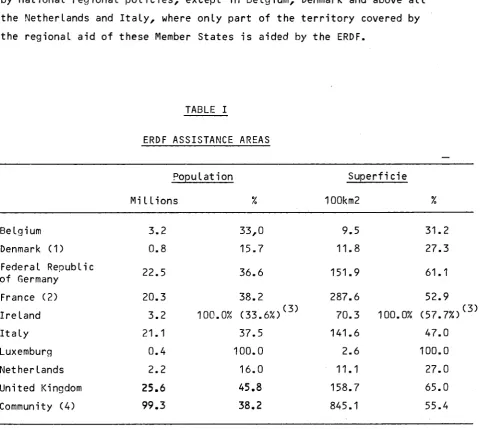
75 regions assisted bythe
ERDF,covering 55?(
of
the
areaof
the
Community and accountingfor
38%of its
population.
This
role
has now been strengthenedfurther
by
Councit ReguLation (EEC) No 214179of
6
February 1979(2),
under which the Commissionis
required
to
determinethe
priorities for
assistance fromthe
ERDF.In
addition, the
Counci[ Resolutionof
6
February 19?9concerning
the
guidetines
for
Community regionaLpoLicy
(3)
stipuIates
that
regionaI
devetopment programmeswitL
henceforthconstitute the
mostappropriate framework
for
the practicaL
implementationof
propercoordination
of
nationaI
regionaLpoIicies
andof
Community regionaL poLicy.In
the
caseof
somecountries, the
requirement introduced byRegulation (EEC) No '724175
that
they
draw up regionaL development prog-rammes wasthe starting point
for their
regional
ptanningactivities;
,
atl
countries
have hadto
makethe
effort of
presenting these programmesa
onthe
basis
of
the
commonoutline
produced bythe
RegionaLpoiici
Committee
(4)
andto
submit themwithin the time
limits
set.
The Committeedetivered
its
opinion on
16 June and ?6 October 1978 underthe
conditions given
in
Article
6
of its
own regutejtion(5)
and forwardedit
to
the
CounciI andthe
Commission. Having examined these programmesin
the Light
of
the
provisions
of
the
Treaty
andthe
decisionsof
the Communityinstitutions,
the
Commission made knownits opinion. It
aLsoformulated recommendations
for
the
Henber States onthe
basis
of
the
newprovisions
of
Communityregionat
poIicy.
(1)
0.J,
(z)
0.J.
(3)
0.J.
(4)
0.J.
(5)
0.J.
No No No No No
L
73of
21 ttlar:ch 1975.L
35of
9
February 1979.C 36
of
9
February 1979. C 69of
24 ltlarch 1976L
320of
11 Decerben 1975t
II.
ROLE OF THE REGIONAL DEVELOPMENT PROGRAMMES1.
The roLeof
any programmejs first
and foremostto
set out the
intentions
and commitmentsof
the
pubLicauthorities
towardsthe
deveLopment orreconversion
of
a region,
so asto
provide
economic agentswith the
inform-atjon
neededfor
proper aL[ocationof
the factors
of
production.
It
thus heIpsto
reduceuncertainty,
since
the jnfrastructure
programmes and aid schemes from whichpotentiat
investors
canbenefit
ane announced pubticLy,2.
Fromthe
Communityrspo'int
of
view, the
regionaL deveLopment programmes ane botha
referencetooI
for
assess'ingprojects
submittedfor
ERDF assistance,which must
faIL
within the
frameworkof
these programmes, andthe
mostappropriate framewonk
for
coordinating
nationaLregionaI poLicies
and Community regionaLpolicy.
They needto
be updated reguLarty.3.
t,Jhi[ethe
regionaI
deveLopment programmesare thus
essentiaLboth
for
Commun-ity
regionaL poL'icy andfor
the
harmonjous deveLopmentof
the
regions,
they mustjn
a
market economy remainindicative,
i.e.,
outLinethe
mainIines
ofdeveLopment
(types
of
infrastnucture
investment andtheir
priorities,
ma'inLocationaL advantages
for
various
typesof activ'ity),
andstate
the
cost
ofsuch
projects
andthe fjnanciaL
commitmentsof
the
various
pubIic
author-ities,
particuLarLy
centraI
government.4.
The ERDF ReguLationstipuLates
that,
in
order
to
benefit
fromthe
Fundfsassistance,
investments must"faLL wjthin the
frameworkof
a
regjonaldeve[opment programme".
This
meansthat
the
programmes shouLdjustify
theprojects,
though these donot
necessariLy haveto
beListed expLicitLy.
5.
The new prov'isionsstate
that
the
Commission
must examinethe
reg'ionaL deveLopment programmesin
the Light
of
the
Communityrs programmes onobjectives.
Asthe
Latter
become moredefin'ite,
the
CommissionwiIL
beabLe
to
detenminethe
priorjties for
assistance fromthe
Fu:nd, as catLedfor in
ArtjcLe
6 (4)
of
ReguLation (EEC) No214/79.
The programmes mustatso,
throughtheir
content,
showthe
needfor
ERDF assistanceto
infra-structure
pnojects contribut'ing
to
the
deveLopmentof
the
region (1).
(1)
Thetext
of
ReguLation (EEC) No 724/75 apptieda
narrowdefinjtion
ofinfrastructure/ requiring
themto
be"directLy Iinked"
to
the
deveLop-ment
of
industriaL,
handicraft
or
service
activities
(ArticLe
4(1)(b).
6. The expanded
role
of
the
programmesjn
administeringthe
ERDFis
easi[y
expLained
if
one bearsin
mindthat
between 1975 and 1978 morethan
61000projects
receivedassistance.
The more detaiLed and precfsethe
contentof
the
programmes,the easier
it
wiLL befor
the
Fundto
grant
assistanceto
projects.
Theeffectiveness
of
ERDF assistanceis
cLoseLy Linkedto
the quaLityof
the
regionaL deveLopment programmes.As regards
the
ERDFregions,
the
negionaL deveLopment programmes aLso formthe
reference frameworkfor
usingother
CommunityfinanciaL
instruments,This
wiLL aLLowgreater
cons'istencyto
be achieved betweenthe
various
formsof
CommunityfinanciaL
assjstancein
the
regions concerned(1).
The CommissionwiLL ensure
that
accountis
takenof this
needin
admjnisteringthe
otherCommunity funds.
8.
However, asstated
in
the
CounciL ResoLutionof
6
February 1979(2),
the programmes aLsoconstitute the
most appropriate frameworkfon
coordinatingnationat
and Community regionaLpoLicies.
Suchcoordination
must bi- achievedthrough more
precise informatjon
onregional
poLicy and regionaLplanning
inthe
various
Member States and through comparisonof
the objectives
set
andthe
resources depLoyed,identifying the points
of
convergence anddiu".n"n."rf
sothat
a baLanceddistribution
of
economicactjvities
in
the
Community canbe progressiveLy achjeved
(3).
Such examinatjon couLd reLateto
such mattersas
the
cost
andeffectivenqss
of
the
various
typesof
aid, the
concept andassessment
of
infrastructure
requirements, programmesfor frontier
regions,and study
of
the
regionaL impactof
public expenditure.
In
this
connection, an importantrole
can be p[ayed bythe
Regionat PoLicy Commjttee, attachedto
the
CounciL andthe
Commjssion, whjch wasset'up
with
a
viewto
contribut-ing
to
the
coordinatjonof
the
regionaLpolicies
of
the
Member States.(1)tJhere
poIjcy
on agricuLturaLstructures
is
concerned,it is
intendedthat
infuture
commonactions
with a
regionaLorientation
wiLL haveto
formpart
of
the
regional
development programmes.This
is
alreadythe
casewith the
agri-cuLtural
decisionsto
promote drainag6in
IreLand and Northern lreLand(0,J.
No
L
43of
20.2.1979> andreafforestation
jn
the
Mediterraneanregions
(0.J.
No
L
38of
14,2,1979>.
It is
aLsothe
casewith
atL the
other
CommissionproposaLs
in this fie[d.
In
addition, the
proposalfor
a
Regutationconcern-ing interest
rebatesfor
certain
Loanswith a
structuraL
objective
(DOC. COt'l 3finat
of 9
February 1979)in
connectionwith the
European Monetary Systemstates
that
e[igibLe
investmentsin
regionsfor
whichthe
Member States arerequired
to
presentregionat
devetopment programmes must comewithin
theframework
of
theseprolratmes.
I
(2)0.J,
No C 36of
9
February 1979.(3)It
shouLda[so
be pointedout
herethat
the
recent
Commission Communication otregional
aid
systems providesthat
the
regionaLaids
gwardedin
the
regionsbenefiting
fromthe
ERDF shouLdin
principte
formpart
of
a regional
devetop-ment programmewithin the
meaningof
Article
6of
Regulation (EEC) No 724/75establishing
the
Fund(0,J.'No
C 31 o.f3
February 1979).9.
rn addition, the
guideLines andpriorities
estabLished onthe
basisof
the
periodic report
onsocial
and economictrends
in
the
regionsof
the
Community,the
first of
whichthe
Commission wiLL presentto
theCounciL
in
1980, as providedfor in
the
CounciL Decisions and Resotutionof
6
February 1979(D,
wil.Lhelp
to
define
the
Communitycriteria
for
such coordination.10'
FinaLLy,the
regiona[
deveLopment programmes must aLso atLowthe
Community
authorities
to
take
accountof
the
regionaI
impactof
Conimunitypolicies
andthe effects
of
measuresthey
adopt,
particularly
as regardsthe
areasin
which such community poL.iciesare
moststrong[y
estabtished (commonagricuLturat
poLicy,
trade
poLicy). rf
they
contain
sufficientty
preciseinformation on
this fieId,
the
regionaL development programmeswiIt
makeit
possible
to
carry out
this
task
mondeffectiveLy (1),
11.
The Commission has examinedthe
programmessent
bythe
Member Statesat
the
endof
1977in
cLose colLaborationwith the
nationaLauthorities,
particular[y
within the
context
of
the
Regionatpol.icy
committee,which
t
deLiveredits
opinion
onthe
programmes'in accordancewith
Regu[ation No724/75.
In
nany cases,the
programmes h,ere suppLementedduring'the
examination
procedure.
In
its
opinion
(see Annexrl)rthe
Commission made referenceto
the
commonoutLine
(given
in
Annexr).
It
aLso made recommendationsto
the
MemberStates
(see Annexrrl)
with
a viewto
improvingthe
contentof
the
programmes, bearingin
mind the increased roLe whichthey are
to
ptay
both
in
the
administration
of
theERDF and
in
the
coondinationof
nationat
regionaLpoticies.
(1)
See (a)in
this
connection !The Coun'cil nesoLution
of
6
February 1979in
whichthe
CounciL notedthe
commission'sintention
of
taking
monesystemati.
"..ornt
of
the regionaL impLicatio_nsof
the principaL
communitypoLicies;
theCounciL
atso
stated
its
intention
of
taking
accountof
these
impticationswhen adopting
its
decisions reLating
to
thesepol.icies;
'
tArticLe
13of
counciL Regutation (EEc) No 214/79of
6
February 1979, which deaIswith
specific
communityregionat
development meastres whichare
Linkedwith
communitypoLicies
and with.measures adopted by the communityin
order
to
take
better
accountof their
regio;al
airensionor
to
reducetheir
regionaI
conseguences. (b)III.
SUMMARIES OF THE REGIONAL DEVELOPMENT PROGRAMMESIn
the
foLLowing pages,the
regionaL deveLopment programmesof
the
varjous
Member States have been summarjsedin
the
foLLowingorder:
i
BeLgium
Denmark, incLuding GreenLand
FederaL RepubLic
of
Germany F n anceIreLand
ItaLy
Luxembourg
Net her L ands United Kingdom
.page
6to
2021
to
5051
to
7980
to
108109
to
1211?2
to
185186
to
197198
to
213 214to
251SUtqilARY
OF THE
REGIONAL DEVELOPMENT PROGRAMME
BELGIUM
1978
-
1980l
SUMMARY
OF THE REGIONAL DEVELOPMENT PROGRAMIVIE
BELGIUM
1978
-
1980Int roduct i on
1.
The above documentation, which was forwardedto
the Commission pursuantto Article
6of
the
ERDF Regulation, consistsof
an introduction and the revised programmefor
FLanders (5.6 mi Ltion
inhabitants) and I'laL Lonia
(3.2mi L
Iion
inhabitants).It is:gA
pages [ong, contains three maps and covers the period 1978-80.By way
of
annexto
the
introduction there are detaiLsof :
the different methodoLogies usedin
the two programmesto
caLculate empLoymentdefic'its,
as welL as on the use
of
ERDF resirurces andfinaIly
certa'in information on thetextiLe
and cLoth'ingindustry.
Moreover thereis
a note attachedto
theWaLLonjan programme concerning physicaL and area pLanning.
Socio-economic devetopments
in
BeLgium during the period 1960-77faLI
intc phasesof
cycLicatactivity
cutminatingin
a recession which has since wayfor
a verysiight
recovery.3.
In
its
statementto
both housesof
Parliament on 7 June 1977' theGovernment outLined various options aimed
at
pursuing a far-sighted energy and raw materiats poLicy/ reorganisingthe
structureof
pubIic finance and grantingthe
regions wider powerswith
regardto
economicpoticy-4.
The regionaI deveIopment programmes forwarded previousIy were based onthe
1978-80Ptan. In
the meantime, important decisions takenor
announcedby the Government have made
it
necessaryto
revise the programmes. As aresutt,
the
Government decided, on 10 March 1978'to
update the Ptanin
theform
of
a memo on the generalpolicy
to
be fol[owedin
1979-80. The newguideIines have prompted the Belgian Government
to
requestthat
examinationof
the
regionaI development programmes atready submitted be suspended and thatit
be attowedto
submit net,l programmes.5.
The Legistation on economic expansionis
at
present based on the Law of 30 December 1970 Laying down the devetopmentareas.
Moreover,with
a view tofaciLitating
socio-economic anaLysis,it
has been decidedto
set
up"priority
btocs" made upof
mostof
the deveLopment areas eligibLefor
assistance fromthe
European RegionaI DeveLopment Fundin
viewof
the Commission Decision of 26 ApriL
'1972,
For F[anders, the "b[ocs" are "!'lesthoek"; EastFtanders and Limburg-Kempen and
for
tJaL[onia the West, East and Southof
thereg ion.
6.
Institutiona[[y
speaking, an economic andpoLiticaI
decentratisation intothree regions (hlaIlonia, Ftanders and BrusseLs) has taken pIace and the country diviaed
into
threecutturat
communities (Dutch-speaking,French-speaking and German-speaking).
In
addition,
pursuantto
a "pact" on Community and regionaI matters, thedivision
of
powerswitI
probabLy haveto
be adjusted substantiatLy bothat
nationa[ and Community [eveLs and at regionaI and sub-regionaL leveIs.'rovisionat address: Bue de la Loi 2OO, B-1O49 Brussels - Tetephone 735OO40/7358040 - Tsl6graphic addrsss: "COMEUR gl;tirt" Telex: "21 877 COMEU B"
2.
four
made
D
FLANDERS
Chapter
I:
Economic and sociaL anatysisA.
StructuraI
anatysis0n 31 December 1976,
the
popu[ation stoodat
5
565 991, having grownby 10%
in
the period
1961-76.
However, foLtowinga
decLinein
the
birth
rate,
this
rate
of
increaseis
slower thanthat
recordedpreviously.
The numberof
individuals
in
the
0-14 age category hasfaL[en
whiLethe
tabourforce
has expanded. Thetota[
population
is
expectedto
growby
142 000 by1 980.
During
the period
1961-76, employmentfetL
in
the
primarysector
androse
in
the
secondary andparticuLar[y the
tertiary sector.
0n 31 December1976,
the
primarysector
accountedfor
0.57.,the
secondarysector
50.?il
andthe
tertiary
sector
49.3%of
the
occupied popuLation(sociaI
security
statistics).
In
1974, gross domestic productat
factor
cost
in
Flanders amountedto
Bfrs
1
037 800milLion
at
current
prices,
or
55.6%of
total
GDPfor
Belgium.0n
the
other
hand, value addedper capita (Bfrs
188 200) wasstiL[
bbLow thenational
average(Bfrs
191000).
The breakdownby sector
rlas as foLtows:prinary sector
r
5.6/,,
secondarysector
z
45.37; andtertiary
sector
z
49.fil.
During
the period
1966-74,the
vaLueof
exports
climbed fromBfrs
120 100mittion
to
Bfrs
451 200mi[[ion,
an increaseof
?75.8%.
The Provinceof
Antwerp exported most
in
1974, accountingfor
one-quarterof
the
countryts
a
industriaL
exports;
Limbourg exported 63.'1%of its
production.
ln
1974, thekey
industria[
sectors
in
FLanderswere:
metaI pnoducts and shipbuilding(34.5?( as against
the national
figure
of
31.9%), chemica[s and copper.The share
of total
investmentin
Belgium accountedfor
by
Ftanders rose from 502to
58?(in
the
perlod
1964.74,the
key investmentsectors
being:pnepared
foods,
textiles
andctothing,
metal products andthe
wood andfurniture
industry.
Forced commuting
-
invotving
actuat
hardship-
accountsfor
62of
the tabourforce
in
Ftanders,the lndividuaIs affected
woikingmainly
in
BrusseIs.Average
per
capita taxable
income stoodat
Bfrs
73 000in
1974 (97.2%of
the nationaI average).
In
tlesthoek, averageper capita
taxabte
incomefelt
sharpty between 1974 and 1976.Between now and 1980,
the [eve[
of
employmentis
expectedto
declinethroughout
the
primarysector
andin
certain
branchesof
the
secondary sector suchas
leather,
textites,
meansof
transport,
footwear andctothing.
However,the
Levelof
employmentis
expectedto
steadyin
the
soLidfuels, oil-refining,
metat
products,
buiLding andconstruction,
furniture
industries,
etc,,
whereaserployment
in
chemicaIs,eIectricaL
engineering, rubber,
ptastics,
thedistributive
trades,
banks, insurance,hoteIs,
etc.
wiLI
probabty expand.B-
Eggngsls-enelYsisThe
industriaL
production
index showedthe
samefaLI
asthat
recordedfor
Be[gium asa
whote?2.3D
betweenthe
endof
1976 andthe
endof
1977. Between 1970 and September 1977,the
unempLoymentrate
rose
fron
2.67,to
9.9%, young peop[e and women beingparticular[y
hard-hit.
In
the period
1974-77, closuresaffected 1
591 undertakjngs and 45 102individuaLs
(51%of atI
cLosuresin
BeLgium)c.
!gvg!9p99!!-grgggThe Limburg-Kempen devetopment area
takes
in
the
provinceof
Limburg,the
administrative
district of
Turnhout andthe
townshjpsof
Diest
andAarschot.
It
accountsfor
20.6%of
the
populationof
Flanders and 11.7%of
the
totat
popuLationof
BeLgium.The province
of
Limburg, whose popuLation expandedby
22.0% between 1961and 1977, has
a
labourforce
of
?56 500 anda
job
pooLof
208 300units,
represeniing
a
shortageof
48 000jobs
broken downinto
25 000 unemployed and23 O0O commuters, Per
capita
taxable
incomein
1974 t,rasreLativeLy
Low (17%lower than
the
averagefor
F[anders and atmost 202 Lower thanthe
nationaL average).The
adminjstrative
district of
Turnhout, whose popuLation hasrisen
by16/,, has
a
job
shortageof
22 000units
(7
000 unempLoyed and 15 000commuters)
out
of
a
tabourforce
of
136 000 anda
job
pooLof
140 000units.
)
Taxable incomeis
14% Lower thanthe
averagefor
FLanders and 16% Lower than.the
nationaI
average.Income Leve[s
in
the
townshipsof
Aarschot andDiest, with a
combinedpopu[ation
of
106 579 on 31 December 19?6,are
137, and 12% lower respectiveLythan
the nationaI
average,The "Westhoek" development area incLudes
the
administrative
districts
of
Veurne, Diksmuide,Ieper
andTielt. Its
poputation accountsfor
5.1%of
the popuf.aiionof
Flanders and 2.9%of
the
poputationof
Betgium asa
whoLe.Att
the
dlstricts
concerned show anet
migration
Loss.
Employmentis
concentrated
in
the textiLe
and cLothingindustries particuLarLy.
In
addition,
the
job
shortageis
reftected
in
unemployment and commuting andthe
unfavourabte economicsituation
in
income LeveLs.The area
of
East Flanders jncLudesthe
administrative
districts of
EekLo,oudenaarde and a number
of
communesin
the Aalst
district. Its
populationaccounts
for
3.6%of
the
popuLationof
FLanders and 2.0%of
the
total
popuLationof
BeLgium.The
characteristics
of
the
administrative
district of
Oudenaarde and thecommunes
in
ALostare
thoseof
a
developmentregion:
nameLy, inadequateinfrastructures,
contraction
in
empLoymentin
agricuLture,
singLe-industrystructure,
undeveLopedtertiary
sector,
commuting, unempLoyment and Lowincomes-The
administrative
district of
Eektois
an areathat
hasto
content with12
job
shortage, anundiversified jndustriaL structure,
statjc
popuLation ando.
lhe-seisr-dresgs:librie_end_!!sir_sesss!
Unemptoyment t.las
very high
between 1950 and 1960,after
which the economic andsociaI
situation
underwenta
significant
transformation.Under
the
regionaL expansjontaws,
investments have been channeLledto
sectors
with
a substantiaI
shortfaLI
of jobs.
In
recent years,
the
economiccrisjs
has resurrectedthe
probIemof
unempLoyment andactentuited
regionaIdisparities.
The need
for
an improvedliving,
working and housing environment andfor
regionaI pLanning has become
evjdent.
]n
addition, the
birth
rate
has dropped,resulting
in
a
naturaLrate
of
popuLation growth approaching zero.e.
Essg!!!-ej-!!s-es!jgl_!e!sn
In
the period
1959-77'the
State
carried
out,
underthe
economic expansion[aws,
a
spending programmecosting
Bfrs
23 1OOmiLlion
in
FLanders andthjs
prompted investments totaLL'ingBfrs
2?? 500mitLion, the
creation
of
126 564igU:
!n
aLt
and, moreparticuLarLy,
the
setting
upof
819 newfirms
providing 73 079jobs.
Once completed,the
programmefor
constructing
industriaL
estaieswitI
provicje some 140 000jobs.
The buLkof
theseestates
is
Locatedin
Limburg.SubstantiaI
efforts
have been madeto
improvetransport infrastructures
(roads, motorways,inIand
bratert"tays,etc.).
In
the
period
1975-77,the
European RegionaI Development Fund granted assistanceto
Flandersfor
the construction,
extension andfitting
out
ofindustriaL
estates,
incLuding accessroads
,
r.
!sye! gpss!! _ pessi bi -UI j ss_ e!d_ !etd: ! : gnsThe advantages FIanders possesses
as
regards economic deveLopment stemfrom
a
favoured geographicaIsituation,
high
productivity
anda
newindustriaI
poIicy.
The disadvantagesit
facesare high
unemployment,the
decLineof
thetextiLe
and ready-made-cLothingindust?yt
d newpattern
of
distribution
of
Labour, dependence onoutside
economies,the
contraction
in
foreign
investment, and environmentaL and negionaI deveIopment probIems.c.
!gs: g:s.c9!esis_!sys! gps,s!!!_gsri!g_!!s_p!enu!s_psti9d
The most
cruciaI
probtem, which wiLl. bea
continuing
sourceof
concern,is
that
of
high unemptoyment dueto
the
economiccnisis ind the
steady expansionin
the
labourforce
(2
316 O0Oin
1977 and2
431 800in
19g0).Assuming
that
structuraI
unemptoyment Levetsoff,
94
140jobs wiLI
be neededto
mopit
up, not
to
mentionthe jobs
that
wit[
be neededto
keep pace withthe
expansionin
the
labourforce
(115 800).There
are,
in
addition, the
problemsof
weIfare and regjonaL devetopment.25
sector
p[answitt
haveto
be imp[ementedto
reso[vethe
Latter.
In
the AaIst,
Dendermonde andSt-NjkIaas areas, forecasts
for
the secondarysector
suggestthat
emp[oymentwiLt
decLinein
haLfof
the
firms concerned, increasein
around 1A%of
them and[eveI
off in
the
remainder.As
for
the
administrative
djstrict of
RoeseLare, empLoymentin
thesecondary
sector
is
expectedto
fa[L
in
around 4A%of
the
firms
concerned,mark
time
in
ha[f
of
them and increasejn
onLy around 10'/.of
them. ChapterII :
DeveLopment objectivestdhen
the
regionaL pLanfor
Ftanders was being drawnup,
two poLiticaLchojces were made
to
promote empLoyment andweLfare-A.
gbjssltvs!-l!-Ileldsr:
ALLowing
for
the
expansjonin
the
Labourforce
(115 800) andfor
structuraLunempLoyment
Q4
14C),209 940 newjobs
wiLL be neededin
the period
1978-80. Stepping upjob-creating capacities
and absorbing unempLoymentwiIL
dependprimariLy
onthe
success achievedin
restructuring industry
and strengtheningthe
tertiary
sector.In
the
primarysector,
agricuLture
witL
continueto
pLayits
importantroIe,
andinfrastructures
wjLL be improved through Iand-reparceILing schemes.It
has been decidedto
raise
coa[production
in
the
KempencoalfieLd
to7
000 000 tonnesby
1980.l
In
the
secondarysector,
it
wi[L
be important above aLLto
maintain avariety
of
industriaI
activities,
to
embark onthe
necessaryrestructuring
programmes,
to
assist
growthsectors
such as chemicaLs and metaL products andto
protect the textiLe
and cLothingindustry'
The
tertiary
sector
wjLL assume evengreater
importance as administrative services and servicesof
generaIinterest
are
expanded.The growth
of
smaLL and medium-sizedenterprises
(SMEs) wiLL beencouraged by
aids
to
investment, vocationaLtraining,
business guidance and exports.It
wiLLalso
be importantto
set
in
pLacea
networkof
primary andsecondary "growth poLes" and, where
transport infrastructures are
concerned,to
develop maritimeactivities, to
safeguardthe
importan.t roLe pLayed byinLand h,aterway
transport
andto
extendthe
road network whiLe promotingraiL
andair
transport
and transmission by pipeLine and accordingpriority
to
pubLictransport
jn
urban areas and between communes.e- lpesilis-slissljvss-Jer-lle-dgvelepse!!-etsss
On
the
empLoymentfront,84
4?7jobs
are
estimatedto
be neededif
theexpansion
in
the
labour
force
(44
933) andstructuraL
unemp[oyment(39
494)are
to
be absorbed.r
Moreover, investmentaids
wiLL continueto
be made avaiLabLe by the ?conomic Expansion Fund andthe
estabLishment andfitting
out
of
industriaLestates
wjLL needto
remaina
key instrumentfor
infLuencingthe
Locationof
DeveLopment wiLL aLso need
to
be encouragedin
areasoutside
the
sphereof
inf[uenceof
a
major centreof
population.In
addition,
it
witL
be necessaryto
guarantee anefficient
communicationLink
with
the
ports,
with
the
Large centresof
population
such as Antwerp andBrusseLs and
with
the
other
reg'ionsin
the
country andthe other
membercountries
of
the
European Community.c.
lss:e!-:nys!!!!s!!-pg$gy
As regards
[iving
conditions,
the
objectives
are
to
improve housing (12 000dwelLings
per
year)
andthe
urban andruraL
environment,to
preserve and create open spaces,to
carry
out water-purification
and waste-disposaI schemes,to
combat nojse and poLLution,
to
protect the
watersof
the
ScheLdt andthe
coastL'iand,
tastLy,
to
guarantee water suppties.As
for
socjaLsecurity,
medicaLattention
wiIt
haveto
be made moreefficir:
by medicaL care
p[anning,
bygreater
speciaLisation
among medlcaIinstitutions,
by preventive medicine andby
homevisits.
Measures wiLLa[so
be neededto
improve
faciLities
for
the
elderLy andfor
children
andto
create
smaLI culturalland
sports
centres.CHAPTER
III -
MeasuresA.
Igesgrss-s!-rssiete!-leye
!
A Government programme aimed
at
reducing unemptoyment and improving workinlconditions
the
cost
of
whichis
put
at
Bfrs
23 708miLtion
and which shouldbrf
down
the
numberof
unemptoyedin
Belgiumto
?20 000in
1978,features
measuresto
provide
25 000 unemployed personswith jobs
in
the pub[ic
sector,
to
promotetraineeships
for
young peopIe,to
introduceear[y
retirement
schemes,to
providrtemporary empLoyment
for
24 000 workers andto
deve[opvocationat
training
faci
Lities.
At
sectoraLLevet,
restructuring
programmes have been drawn upfor
thesteeL
industry
andfor
the
texti[e
andclothing
industry.
TheTripartite
Conference onthe
SteeLIndustry
he[d on5
March 1977 agreed, among otherthings,
to
freeze productioncapacities
at their
present
level
andto
put
ahalt
to
redundanciesuntiI
the restructuring
pLan had been adopted and an overastrategy
decidedon,
Forthe
texti[e
and cLothingindustry,
aptan
has beenprepared by
the
Governmentthat
guarantees yorkers empIoyment premiumsduring a
transitionaL
period.
The aimof
the
plan
is to
reorganisefirms
byboosting
their
competitiveness and byrestoring a
heaLthyfinanciaL
structure.
The new
industriaI
policy
is
gearedprimarity
to
safeguaiding and increasiemptoyment and
to
reorganisingthe
traditiondl
sectorsof
{he
economy whiLeassisting
smaLI and medium-sizedenterprises,
promotingexports, attiacting
foreign
capitaI
and makingpracticaL
useof
research doneat
universities.
The pLan
for
sma[L and medium-sizedenterprises,
which was adopted by the Government on9
December 1977, providesfor
a
morestraightforuard
procedurethan
that
appLiedhitherto,
the granting
of
employment premiums, assistencein
setting
upfirms,
management guidance, favourab[etax
measuris andbetter
information.
t
Where major pubLic
infrastructures are
concerned,the ptan
is to
improveaccess
to
the ports
of
Gent and Antwerp andto
improve and extendthe
infra-structures
and superstructuresin
the ports
of
Antwerp and Zeebnugge (terminaIWhere
inland
waterwaysare
concerned,the
programmeis
concernedin
particutar with
wideningthe
draughtto
cater
for
vesselsof
upto
1
350ionner
andto
improve Links between Antwerp andthe Albert
CanaL and withthe
NetherIands andFrance.
The road deveLopment programme includes newmotorways,
other
fast
roads and urbanring
roads. In
addition,
work onimproving and
electrifying
the
raiI
networkwiIL
continue,
urban transport wiU. be lxtendedin
Antwerp and Gent, and twopipe[ines
may be buiLt( Net he r I ands-Ant we rp-Brus se L s-t'la [ lon i
a
and Z eebrugge-Gent-Ant we rp-Li mburg-Li 6ge-Germany)
a- $ssilis-ssesgrss-in-lls-Csvslgpss!!-3lss!
In
the period
1978-80, investmentaid
in
F[anderswiL[
amountto
someBfrs 7
000mi[[ion,
with
priority
goingto
job-creating
schemeswith a
highvalue added component'
SeveraI
infrastructure
programmesfor
the
construction
of
industriaI
estates
wiLt
be [aunchedin
conjunctionwith the
pubLicauthorities
in
Ljmburg,Westhoek and East
FLanders.
Assistance fromthe
ERDF wiLLbe
soticited
for
major
projects.
As regards
infrastructures,
improvement schemesin
the ports
of
Antwerp,Zeebrugge and Gent
wit[
create conditions
conduciveto
growthin
thedeveLopment
areas.
tlherethe
inLand waterway networkis
concerned, improvement schemesare
pLannedfor
the
Gent-Brugge-Oostende CanaL,the
Ijze?,
the
Denderand
Leie
rivers,
the
Desse[-Kwaadmacheten Canat,the
upper ScheLdt and thelink
between Antwerp andthe Atbert
CanaL-)v
In
addition, action
witI
be taken bythe
five
regionaL deveLopment companieseach
of
which has been a[Locateda
budgetfor
Bfrs
85 miL[ion.c-
lesie!-invsslsen!-PglisY
Under
the sociaI
investmentpoLicy,
the public authorities
wiLL each yearprovide assistance
for
the
construction
of
12 000 subsidized dweLLings,9
000of
which wiLL besocial
housingin
the
strlct
senseof
the
term.
Sincethis
target
wasnot
metin
1976-78, emphasiswiLI
haveto
beshifted
gradua[Ly towardsthe
renovationof
existing
dweLLjngs.In
agreement 1.1iththe
communaLadministrations, urbanisation
projects
wiLtbe
carried
out.
In
addition,
measures wiLL be takento
create open spaces,with
the
State acquiring
wooded areas andnature
reserves and opening themto
the
pubLic.Measures
are
aLso ptannedwith
a
viewto
improvingthe
environment, waterdistribution
and dyke buttress'ing.With regard
to
medicatcare,
two probLems needto
beresolved:
themodernisation
of
hospitaLs andthe
numberof
beds avaiLabLe, onthe
one hand,and
the setting
upof geriatric
departments andpsychiatric
centres,
onthe
otherIn
addition,
measureswitt
haveto
be takento
improve chiLd-carefacitjties
to
encourage adoption and, depending onthe
finance
avaitab[e,
to
promoteCHAPTER
IV
-
FinanciaL meansThe sounces
of
finance avaiIabte
incLudethe
centraL government budget,the
regionaI
budget,the tocat authority
and[ocaI
authority
associationbudgets, and
the
ERDF. Sincethe
deveLopment areas have no decision-making powersin
budgetarymatters,
it is
very
difficuLt to
ascertain
the
breakdownof
pubLic assistance madeavajIab[e
to
these areas.hlith
regardto
nationaI infrastructure
expenditurein
the period
1978-80, investments bythe centraI
governmentwiLI
totat
Bfrs
309 200 miLLion(at
current
prices),
of
whichBfrs
236 300mi[[ion witL
befor
economicinfra-structures
andBfrs
58 100 miLLionfor
sociaI infrastructures.
In
the
sameperiod,
spending onregionaI
infrastructures
in
FLanders wiLI amountto
Bfrs
142 400 miLLion,of
whichBfrs
13 400miL[ion
wiIL
befor
economic
infrastructures
andBfrs
127 3A0miLIion
for
sociaI infrastructures.
Certain
other
itemsof
regionaI
expenditure shouLd be mentioned :(i)
Bfrs 5
200mi[lion
for
vocationaLtraining
in
1978-80;(ii)
someBfrs
7
000mjtlion
for
investmentaid
in
1978-80;(iii)
51.48%of
a
tota[
amountof
Bfrs
1
000 miLLionfor
the
regionaldeveLopment companies
for
1978.CHAPTER V
-
Imptementation1.
PLanning and negionaI bodiesI
The PLan has
to
be submitted,for their
opinions,
to
the
RegionaL EconomicCounc'ils,
the
CentraI Economic Counci[,the
NationaL Labour CounciL and theNationaI Committee on Economic Expansion before being presented
to
both
housesof
ParIiamentfor
adoption.
Thereis
a
contractuaI
commitmentto
the
pLan onthe
part
of
firms,
which haveto
satisfy
its
provisions
before being granted Government assi stance.The
Ministers are
invo[vedin its
impLementationvia
the
budget.
ActuaIimpLementation
is
the
responsibiLity
of
the IocaI
authorities,
LocaIauthority
associations,
etc.
The Ptanning Bureau monitorsits
impIemeniation and producesprogress reports.
The
regionaI
bodies invotvedare
the
Reg'ionaI EconomicCounciIs,
whichdeLiver opinions and recommendat'ions, and
the
regionaI
deveLopment companies, which may determjneregionaI
needs, formutate suggestions and undertakepraciicat
measures, and
Iastty
the IndustriaI
Promotion0ffice,
whichis
a
study
andresearch body.
2.
RegionalisationThe poL'icy areas
in
which adjfferentiated
regionaLpoIicy
is
whot[y orpartLy
warranted are:(iii)
(i)
ii)
iv)
(v)
town and country pLanning;
regionaL economic expansion and emptoyment;
hous i ng;
family
andpopuLation;
a
hygiene and
public
heatth;reception
(for
firms, etc.);
water-management;
hunting, fishing
andforestry;
industry
and energy.(vi )
(vii)
( v] 1 1 l
The reLevant poIicy-making powers
are
exercisedpartLy
bythe
Secretaryof
State
for
the
Reg'ionaL Economy,subject
to
the authority
of
his
Minister,
and
partLy
bythe
Secretaryof
State
for
SociaLAffairs
in
the
RegionalAffai
rs
Ministry.
A
MinisteriaL
Committeefor
RegionaLAffairs,
chaired bythe
Ministerfor
RegionaIAffairs
and consist'ingof
the
ministers
andsecretaries
of
statewhose
responsibiLities
overIap
with
regionaI matters,
frames, coordinates and irnpLementsregionaI
poLicy.The LocaI
authorities
andin
particuLar the
LocaLauthority
associationstake
part
in thjs
poLicy-makingprocess.
The LocaLauthority
associations aremade up
of
representativesof
pubtic
andprivate jnterest
groupings.)
t,lALLONIA
CHAPTER
I -
Economic and sociaL anatysisn.
!!rgs!srs!-sre!r!is
The popuLation
of
WaLLonia stoodat
3
214 810 on 31 December 1976,representing an lncrease
of
3.5%in
the
period
1961-76(the
increasefor
BeLgium asa
whole was6.9%).
The average ageof
the
popuLationis
rising
steadiLy.
0n 31 December 1970,the
Labourforce totatLed 1
138 000 persons,or
31.3%of
the
populationof
Belgium asa
whote, and 8%of this
figure
he[d down
jobs
eLsewherein
Belgium.The
regionrs
gross domestic productfeLI
steadiLy
in
termsof
the
grossdomestic product
of
BeLgium asa
whoLe, sLipping from 32.27,in
1960to
28.6%in
1974.
The sectoraL breakdownof
gross va[ue addedin
the period
1971-74was as fo[Lows:
prinary
7.0%; secondary 44.6% andtertiary
48.4%.0n 31 December 1976,
the
numberof
workersregistered
with
socia[security
funds stoodat
841240,
with
just
over
50% being emptoyedin
thedistributive
trades
andin
the
services
sector.
EmpLoymentin
industryshrank by 4.6%
in
the
period
'1965-70 andby
13.6%in
the period
19z0-26. ExportstotalLed
Bfrs
?34 700 miLLionin
1974of
which 43% was accountedfor
by
steeI products.
Theregionts
shareof
industriaL
investmentin
BeLgiumas
a
whole rose from 30.17.in
1965to
36.3%in
1975.
The Leadingindustries
are
pottery,
cement, metaIproducts,
chemicaIs and rubber.Average jncome
per capita
wasBfrs
70 700in
1974,or
94.12of
thenationaI
average.e.
-Esgnggig-stslrsigThe index
of
industria[
productionis
dropping increasingLyfurther
behindthe
nationaL index.The number
of
ctosuresof
firms
andof
workersaffected
has been consistentLyhigher
in
tJaLtoniathan
in
Belgium asa
whoLein
the period
1974-72.Between 1973 and 1977, unempLoyment, expressed as
a
percentageof
the numberof
persons coveredby
sociaLsecurity,
rose from 4.9%to
17.2%,with
areLative[y
highproportion
of
peopLe being under 25 (expressed as a percentageof
persons insured against unempIoyment).c
-
.Psyg!gp!r'9!!_st9sgThese areas faLL
into
three
b[ocks.
Thefirst
grouptakes
in
the
adminis-trative
districts of
CharIeroi-Mons-Soignies and Namur. Thedensity
of
poputatjonis
reLativeLyhigh
(403inhabitants
per
kmZ). However,the
recent
changein
thebirthrate
canonly
[eadto
an increased ageingof
the
population.
from 1974to
1977
industriaL
empLoymentdid
not6ssssto
decLine.
Bycontrast, the
service sector gained 111703 jobs..The second bLock
is
made upof
the
adminjstrative
districts
of
Huy-Lidge andVerviers,
0ther than
in
the
administrative
distrjct of
Li6ge,
the
density of
population
is
quite Low.
A decreasein
the
birth
rate
is
generalLybecoming
a
noticeab[e.
Job lossesin
industry
between 1974 and 1977 G14.4'l> were not compensatedfor
bythe
creation
of
jobs
in
the
service
sector.The
thjrd
bLock jncLudesthe
administrative
djstricts of
Ar[on, Virton
andNeufchSteau. As weLI as
a
Lowdensity
of
popuIation, characteristic
of
apre-dominantLy
rural
region, the
highest
LeveLof
young peopLe- in
reLation
to
theother
bLocks- in
the
structuneof
the
poputation
should benoted.
The secondarysebtor
is
very
poorLy nepresentedin
this
bLock whereastourism
accountsfor
thepredominance
of
the
service
sector
(62.3%)'o
-
Agciss!!grs-in-!e!-[en!e
The northern
parts
of
WatLoniaconstitute a
regionof
[arge-scaLe farmingthat
accountsfor
the
majorpart
of
the
areaof
loameysoil in
BeLgium and aLarge
part
of
the
areaof
silty
sand.The southern
parts
of
tJa[Loniainclude
the
regionof
pasture
tand aroundLiAge,
the
Famenne,the
Haute-Ardenne,the
Ardenne,the
Jurassic region
and thepasture
landof
the
Fagnes. This
ts
primari[y a
stock
farming areain
which81ll
of
the
UAAis
made upof
permanentpasture
Land anda
large
part
of
whichfaLts within the
scopeof
the Directive
concerning Less-favoured farming areas.e'
Ile-seier-dissggililrie
The main
factors
makingfor
imbaLance inc[udethe
excessivety predominantposition
of
the
steeI industry,
which hasnot
madethe
necessary adjustments,the
concentration onthe
productionof
semi-manufactures,the
heavy dependenceon
export
markets andthe
inadequate LeveLof
new investment.r.
Esss!ls-gJ-es!ie!-!s!s!
-
Theratio
betweenthe
volumeof
investment andthe
numberof
jobs
created)
teLLsteadiLy
in
a[L
three
bLocks, wherethe
investments madeduring
theperiod
1960-77 tendto
be more and morecapitat
intensive,
a
tendancy observedparticuLarLy
in
the
Westenn and Eastern bLocks.As regards
industria[
estates,
it
shou[d be pointedout
that
haLftheir
totaL
surface areais
stiLL
unoccupied.0nthe other
hand, one canstate
that
ineach
of
the
bLocks considered, andparticuLarLy
in
the
onethat
concernsthe
soutlthe industriaL
sites
are
concentratedin
the
devetopment zones.Between 1969 and 19?6,
the
State
spentBfrs 4
184mittion
on constructingand
fitting
out
theseindustriaL
estates.In
the period
1975-77,the
ERDFcontributed
overBfrs
460miILion to
devetopment schemes
in
Wa[lonia,
inc[uding industriaL, infrastructure
andruraL
infrastructure
schemes.e
-
-Psvs-!gpss!!-pe:siliU liss-stg- se!9iliens
The
priviIiged
position
of
industry
in
t,laLtonia has undergonea
rapiddecline
owingto
the
needto
import
rawmateria[s.
However,the
region
doeshave
the
advantagesof
a
long-standingindustriaL
tradjtion,
high
labourproductivity,
easeof
communicationwith
surrounding areas anda
newindustriaL
poLicyto
attract
foreign
investment by promoting new formsof
business
association
such asjoint
ventures.1.
It.
Elpsg!sd-sesie:eselgsis-dsyslepses!s-:J-ne-!s!-s'gsssrs!-ecs_!elsnThe tabour
force
is
expectedto
expandsignificantty
by
1980.
AL[owingfor
redundanciesin
the
textiLe, printing
andsteeI industries
(between6
900 and8
500),
the
LeveLof
totaL
emp[oyment wiLL Leve[off
somewhat.As
a
result,
there
wiLL bea
quite substantia[
shortfa[
of
over
260 000jobs
in
1980.DeveLopment
of
the
region
is
Largetya
functjon
of
the
needto
reorganisethe steet
industry.
In
addition, the
buiLding andconstruction
industry
andthe
metaL productsindustry
are
stiLI
havingto
contendwith
seriousdifficuIties.
CHAPTER
II
-
DeveLopment objectivesThe generaL
objective
is to
safeguard andraise
employment.The
specific objectives
can be summarised as foLLows:Immediate regeneratjon
of
empLoyment by expanding pubLicthe
impactof
the re-industrjaIi
sation
programme.Encouraging
the
growthof
profitabLe firms
regardLess of Promoting technoIogicatinnovatjon
andthe
estabIishment Encounagingfirms with
unduLy towproductivity
to
embarkrationatisatjon
anddiversification
programmes.CIear[y,
the restructuring
programmesfor
the steet industry
andfor
thetexti[e
industry
arepart
and parceLof
theseobjectives,
whichare,
in
anycase, compIementary.
CHAPTER
III
-
DeveLopment measuresGeneraLty speaking, increased cooperation between pubLic and
private
hoLding companieswitL
hetpto
boostinvestment.
The necessary fundswiLI
be madeavaiLab[e by
the
Nationat
Investment Company andthe
regionaL developmentcompanies. An
Industriat
Renovation Fund wi tt
aLso beset
up.In traditionat
industries
such assteeI
andtextiLes, the
most comprehensivenestructuring
programmepossib[e
witL
beput
in
hand.In
the
steeLindustry,
one packageof
measures based ona
study
conductedat
the
Governmentrs
requestis
concernedwith
rationatisation.
SociaL measuresto
compensatefor
the jobs (put
at
between7
500 and8
000)that
wi tI
be
Lostin
the
courseof this
rationatisation
processwiLl
be examinedLater.
ThesteeL
industry wiLt
be reorganised aroundthree
centres andfinanciaI panticipatior
by
the
State
in
the restructuring
processis
pIanned,Reorgan'isation
of
the
textiLe
industry witL
take
pLacein
two phases, thefirst
featuring transitionaL
arrangements based onfinanciaI
ajd.
After
aperiod
of thirty
months,the
reorganisation properwilt
begin andutiLI
bedesigned
to
irnprovethe
competitivenessof
firms, in
particuLar by injecting
fresh
capita[.
investment pending
size.
of
newfirms.
on
restructuring,
2, ?
4.
![tabLe 2Population in Oreenl-ancL subclivideal by category nectio ].9?4](https://thumb-us.123doks.com/thumbv2/123dok_us/7760764.712556/40.552.29.491.364.797/table-population-oreenl-ancl-subclivideal-category-nectio.webp)