OCCUPATIONAL PERFORMANCE (CO-OP) TO
IMPROVE HANDWRITING PERFORMANCE
IN CHILDREN WITH DEVELOPMENTAL
COORDINATION DISORDER
Dissertation submitted for
MASTER OF OCCUPATIONAL THERAPY
2016-2018
KMCH COLLEGE OF OCCUPATIONAL THERAPY
THE TAMILNADU Dr. M.G.R. MEDICAL UNIVERSITY
CHENNAI
K
M
This is to certify that the research work entitled
EFFECTIVENESS OFCOGNITIVE ORIENTATION TO OCCUPATIONAL PERFORMANCE (CO-OP) TO IMPROVE HANDWRITING PERFORMANCE IN CHILDREN
WITH DEVELOPMENTAL COORDINATION DISORDER
was carried out by
Reg. No. 411613001
, KMCH College of Occupational Therapy, towards
partial fulfilment of the requirements of Master of Occupational Therapy
(Advanced OT in paediatrics) of the Tamil Nadu Dr. M.G.R. Medical
University, Chennai.
Project Guide Principal
Mrs. Sujata Missal Mrs. Sujata Missal
M. Sc. (OT), PGDR. (OT), M. Sc. (OT), PGDR. (OT),
KMCH College of Occupational Therapy KMCH College of Occupational Therapy
Clinical Guide
Dr. RajendranK.M.B.B.S., M.D. (Paed),
Head of the Department – Department of Pediatrics Consultant Pediatrician and Neonatologist
Kovai Medical Center and Hospital, Coimbatore.
Date of Submission
First of all I would like to thank my God Almighty for all His wonderful and amazing grace and blessings. All this wouldn’t have happened without Him. Just as
He promised me, He was with me, throughout this thesis and helped me to finish it.
I would like to thank my family for their support, for upholding me constantly
in their prayers and for helping me to achieve my dreams. They are my inspiration
I would like to acknowledge my heartfelt gratitude to my guide, Mrs. Sujata Missal Principal, KMCH College of Occupational Therapy for her incredible guidance throughout this project. She supported me and helped at all times. I express my sincere to madam for all her constant support and guidance to complete.
I would like to extend my gratitude to Mrs. Sugi Soumiyan, M.O.T. in Advanced Pediatrics, for her incredible support, for clearing my doubts and supporting with her teaching.
I am thankful to Mr. S. G. Praveen MOT, Vice Principal, for all his support as my class in-charge.
I am very much thankful to Dr. Rajendran, Head of Pediatrics and Neonatology for his incredible support, guidance and also for giving me his valuable time and suggestions.
I would like to thank Vicky for his constant help and support in all my ups and downs, boosted my spirits up whenever I felt low, and helped me to realise that I should never give up. You are a gift to me from above.
I also thank my roomates, Ida, Agnes, Anu and Deepa for helping me out in various, my batch-mates and friends Sivaranjini, Subashini and many others. My seniors from CMC, Tanya, Sarah, Thajus and Manoj, I thank God for giving me fosters like you. You all came to my aid whenever I needed and helped in all aspects of life. I’ll cherish this for a lifetime.
S. No
CONTENT
Page No.
1
ABSTRACT
2
INTRODUCTION
1
3
AIMS AND OBJECTIVES
5
4
OPERATIONAL DEFINITIONS
6
5
RELATED LITERATURE
7
6
REVIEW OF LITERATURE
15
7
CONCEPTUAL FRAMEWORK
23
8
METHODOLOGY
26
9
DATA ANALYSIS
41
10
RESULTS
58
11
DISCUSSION
61
12
CONCLUSION
65
13
LIMITATIONS AND RECOMMENDATIONS
66
14
REFERENCES
67
S.No. LIST OF TABLES PAGE NO.
1.1 Screening of the participants using DCDQ 42
1.2 Demographic details of the participants in the study 42
2.1 Descriptive Statistic of Canadian Occupational Performance Measure: Performance and Satisfaction component
43
2.2 Comparison of Components of COPM within the Groups 43
2.3 Comparison between Control and Experimental Group Scores of COPM
44
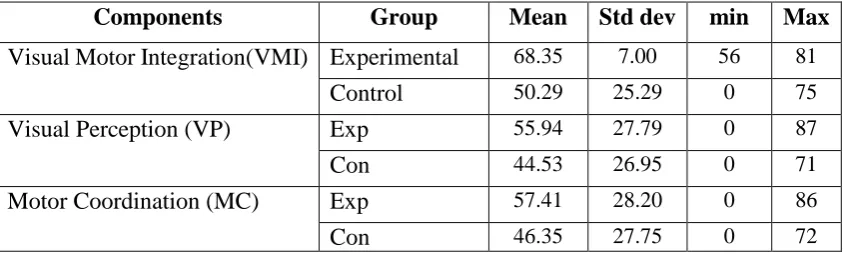
3.1 Descriptive Statistic of Beery Buktenica VMI, VP, MC Pretest Scores
45
3.2 Descriptive Scores of Beery Buktenica VMI, VP and MC Post Test Scores
45
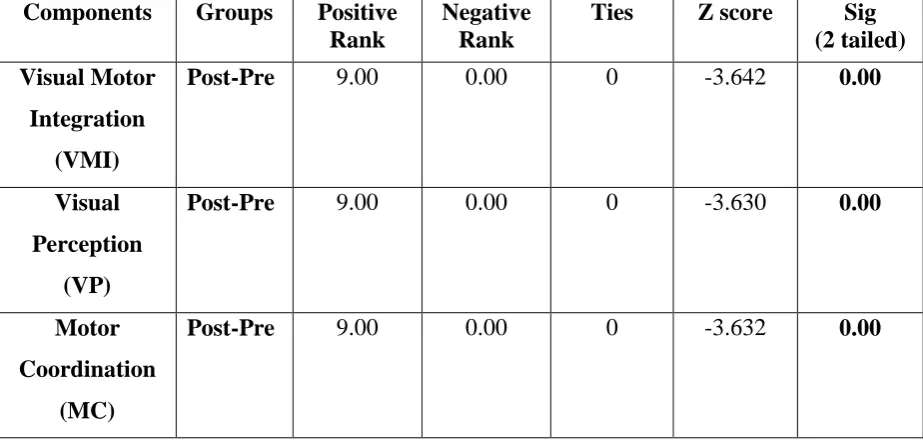
3.3 Comparison of Pre and Post test scores of VMI, VP and MC in Experimental Group
46
3.4 Comparison of Pre and Posttest scores of VMI, VP and MC in Control Group
47
3.5 Comparison of post test scores of VMI, VP and MC in Experimental and Control Group
48
4.1 Descriptive Statistic of Evaluation Tool of Children’s Handwriting – Manuscript (ETCH-M) Pretest Scores
49
4.2 Descriptive Statistic of Evaluation Tool of Children’s Handwriting – Manuscript (ETCH-M) Posttest Scores
49
4.3 Comparison of Pre and Posttest Scores of ETCH - M in Experimental Group
50
4.4 Comparison of pre and post test scores of ETCH - M in Control Group
51
4.5 Comparison between the Pre test scores of ETCH-M in Experimental and Control Group
52
4.6 Comparison between the Posttest Scores of ETCH-M in experimental and Control Group following CO-OP Intervention
53
5.1 Showing the Mean scores of PQRS of Experimental Group 54
5.2 Showing the Mean Scores of PQRS of Control Group 55
S.No. LIST OF GRAPHS PAGE NO.
2.1 Graphical representation of Comparison between control and experimental group scores of COPM (Handwriting alone)
44
3.1 Showing the comparison of Pre and Posttest scores of VMI, VP and MC in Experimental Group
46
3.2 Showing the comparison of Pre and post test scores of VMI, VP and MC in Control Group
47
3.3 Showing the Comparison of Post test scores of VMI, VP and MC in Experimental and Control Group
48
4.1 Showing comparison of Pre and Post test scores of ETCH-M in Experimental Group
50
4.2 Showing the Comparison of Pre and Post test Scores of ETCH - M in Control Group
51
4.3 Showing the comparison between the Pre test scores of Experimental and Control Group following CO-OP Intervention
52
4.4 Showing the comparison between the Posttest Scores of
ETCH-M in Experimental and Control Group following CO-OP Intervention
53
5.1 Showing the Mean Scores of PQRS of Experimental Group 54
5.2 Showing the Mean Scores of PQRS of Control Group 55
5.3 Showing Comparison of PQRS between Experimental and Control Group
Background: Handwriting competence is frequently affected, consequently affecting legibility of written output and thus affecting academic achievement. Cognitive Orientation to (daily) Occupational Performance (CO-OP) is an intervention that facilitates motor skill acquisition in children with Developmental Coordination Disorder (DCD).
Aim: Therefore the aim was to determine the effectiveness of Cognitive Orientation to Occupational Performance (CO-OP) to improve handwriting performance in children with Developmental Coordination Disorder (DCD).
Methodology: A quasi-experimental study design was adopted. Thirty four children with DCD with handwriting difficulties were screened and assigned into experimental and control group. DCD Questionnaire was used as screening tool, COPM, PQRS,
Beery Buktenica developmental scale for visual motor integration, visual perception and motor coordination and ETCH – M were used as the outcome measures. The children in the experimental group were given CO-OP intervention, whereas the control group were given handwriting practice as homework .The duration of intervention was 45 minutes once a week. They were asked to practice the strategies at classroom as well at home during the rest of the days of the week.
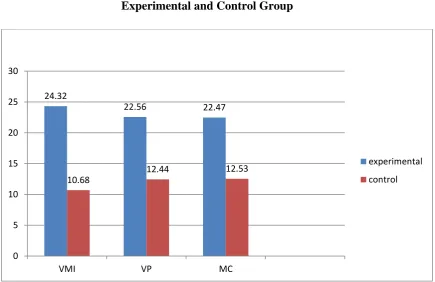
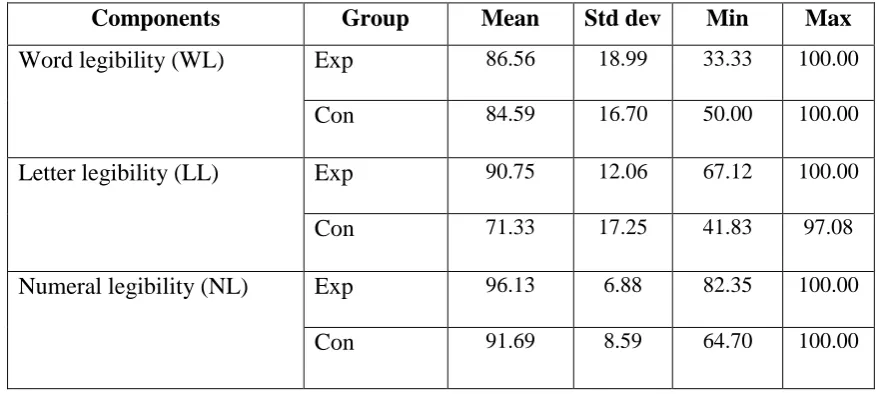
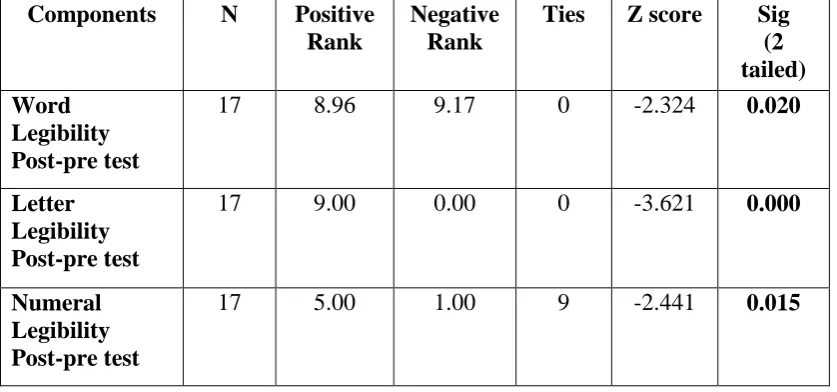
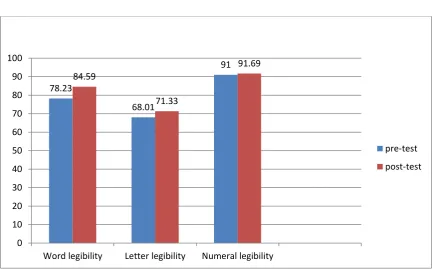
Results: Children in the CO-OP group showed a significant difference in COPM from baseline to week 12 in performance and satisfaction ,PQRS score (p<0.05), indicating improvement in performance. Additional skills of VMI, VP and MC (p<0.05) ,showed a significant increase in the CO-OP group compared to control group . There was a significant improvement in word, letter and numeral legibility (p<0.05) at post intervention in comparison to the control group.
Conclusion: This finding proves that Cognitive Orientation to Occupational Performance approach improves handwriting performance in children with Developmental Coordination Disorder.
1
INTRODUCTION
“Handwriting is one of the most important occupations during childhood which
is essential for the participation of the child in the classroom environment. Handwriting is the primary form of written expression for the young and elementary school children”1.
Competency in handwriting is considered as an important skill that the children have to acquire during their initial years at school2,3. Thirty to sixty percent of the
activities of a school day constitutes fine motor activities, among which handwriting is the most predominant task4,5. Being a foundational skill, if the child fails to achieve
this, it may have implications for the child’s future and academic performance6.
Occupational therapists are concerned with the production of non-proficient handwriting in children. Feder & Majnemer (2007) in their study found that treatment may differ according to the cause of such handwriting, among which poor performance in perceptual and motor skills are one of the factors2,3.
Handwriting requires a majority of fine motor skills along with the combination of cognitive and visual perceptual abilities. Daftari and Jaywant (2015) in their study found that difficulty in handwriting is an anticipated factor in children diagnosed with Developmental Coordination Disorder (DCD) and such children are found to have
dystrophic handwriting7.DSM 5 criteria characterises dystrophic handwriting as having distortions in overall shape of the letters, distortions in the relative size of the letters, irregular spacing between letters and crowding of words8.
2
Prevalence of DCD in India was found in a normal school going population in a study done by Komal K B and Parmar Sanjay (2014) and it was concluded that among 5-15 years of children, 65 were found to have DCD when screened with Developmental Coordination Disorder Questionnaire (DCDQ). The results showed that girls (23.23%) were affected more than boys (19.31%)8. Rubin & Henderson (1982) estimated that handwriting problems in the normal school going children, ranges from 5% to 25%9. This incidence is much greater in children with Developmental Coordination Disorder or Learning Disability (disorder of written expression). According to American Psychiatric Association, Diagnostic and Statistical Manual of Mental Disorders 5th ed, 2013, poor handwriting is a diagnostic indicator of the above conditions10.
Case smith and Feder (2002) in their study found that major contributor towards the intervention for handwriting problems in children with DCD is made by Occupational Therapy6. The need is increasing especially for school-based occupational therapists. Chandler (1994) and Clark Wentz (11997) in their study found that usually the children are referred for assessment and treatment for difficulty in handwriting11,12. An OT assesses fine-motor skills, visual perception, visual motor integration, motor control, coordination and postural skills in the children to find out in-coordination which is the root cause of handwriting difficulty in children with DCD.
Historically theories have suggested that there is a direct relationship between the underlying process and functional performance and therefore intervention was focused on improving the underlying processing deficits. However, recent studies have suggested that direct focus on skill acquisition has positive effects on children with DCD. Among such interventions which follow a “top-down” approach, Cognitive
Orientation to Occupational Performance (CO-OP) approach has shown promising effects13,14,15,16,17.
3
of strategies such as Global Strategies and Domain Specific Strategies (DSS). Global strategies involve Goal, Plan, Do, Check (GDPC) which can be easily learnt and applied by the child. The Domain Specific strategies (DSS) involves seven strategies which are task specification, verbal mnemonic, body position, feeling the movement, attention to doing, verbal guidance, verbal self-guidance, verbal role script.
Banks and Rojer’s study (2008) aimed to elucidate the specific strategies used
by children with DCD while addressing handwriting goals. Discussion, not practice, was the predominant tool employed to improve performance14. Significantly, the children most often used strategies that increased their awareness and understanding of task requirements. But the study included only 4 boys. Very small sample size, restriction to one gender and lack of focus on transfer of strategy use between goals became a major limitation for the study14.
NEED OF THE STUDY:
Study done in western country by Ward A and Roger S in 2004 investigated the utility of CO-OP with children aged 5-7 and have proved its effectiveness upon child set goals upon COPM in which handwriting was a need for both the children, but had a very small sample size13.
An Indian study by Daftari and Jaywant (2015), on typically developing children with handwriting difficulties, showed that the use of CO-OP research in occupational therapy intervention, improves handwriting performance skills7.
In India apart from prevalence studies no other interventional studies have been
done upon DCD. In the previous studies upon DCD which have been published in international journals, such as Mandich et al (2001) when given COPM, most of the
children in the younger age group and the parents have specified handwriting as one of the goals as school performance ranks among the most essential tasks16.
4
RESEARCH QUESTION
Therefore the research question is highlighted as follows:
5
AIM AND OBJECTIVES
AIM:
To determine the effectiveness of CO-OP approach to improve handwriting in children with Developmental Coordination Disorder (DCD).
OBJECTIVES:
1. To evaluate the effectiveness of CO-OP approach on DCD.
2. To analyze the improvement in handwriting towards end of the intervention program
6
OPERATIONAL DEFINITIONS
Developmental Coordination Disorder:
A condition in which children often experience fine and gross motor difficulties,
which affect their participation in classroom and other Activities of Daily Living (ADL) (Dewey and Wilson 2001).
Cognitive Orientation to Occupational Performance:
A direct intervention for children with Developmental Coordination Disorder (DCD) is a client centered approach that focuses on skill acquisition, cognitive strategy
development, global strategies of Goal, Plan, Do and Check and discovery of domain-specific strategies for probem solving and generalization and transfer where the child can use the skills and strategies for other daily tasks. (Polatajko, Mandich, Missuina 2001; Sangster, Beninger, Polatajko, & Mandich, 2005).
Handwriting:
7
RELATED LITERATURE
Definition: Children with developmental coordination disorder, have difficulty in the activities requiring coordination and movement. Therefore it affects their fine and/or gross motor coordination. Activities such as self care, typing, writing riding a bike and playing are of utmost difficulty for the children with DCD as their coordination is affected.
Nosology of Sensory Processing Disorder18: Dyspraxia is one of the Sensory processing disorders. According to Miller (2007) the new concept of Sensory Processing Disorder is categorised as Sensory Modulation Disorder (SMD), Sensory
Based Motor Disorder and Sensory Discrimination disorder. Sensory modulation disorder is again classified into Sensory Under Responsivity (SUR), Sensory Over
Responsivity (SUR), and Sensory Seeking (SS). Sensory based motor disorder as
Dyspraxia or Developmental Coordination Disorder (DCD) and postural disorder; Sensory discrimination disorder categorised into visual, auditory, tactile, vestibular, proprioception and taste/smell.
SENSORY PROCESSING DISORDER (SPD)
Sensory Modulation Sensory-Based Motor Sensory Discrimination Disorder (SMD) Disorder (SBMD) Disorder
SOR SUR SS
Dyspraxia
Postural disorder
SOR=Sensory Over-Responsivity SUR=sensory UnderResponsivity SS=Sensory Seeker/Craver
Visual
Auditory
Tactile
Vestibular Proprioception
8
The neurophysiology involves the information which are received from the senses, followed by sensory integration. The central processing which occurs following that involes decision making and ordering of priorities. Therefore the child involuntarily does motor planning before executing it.
Development of handwriting in typically developing children:
Development of Prewriting and Handwriting in typically developing young children is given by Bayley scales on infant development as follows (Relationship between visual motor and handwriting skills of children in kindergarden. Americal journal of occupational therapy, 48, 982-988).
PERFORMANCE TASK AGE LEVEL
Scribbles on paper 10-12 months
Imitates horizontal, vertical and circular marks on paper
2 years
Copies a vertical line, horizontal line and circle
3 years
Copies a cross, right oblique line, square, left diagonal line, left oblique cross, some letters and numerals and may be able to write own name
4-5 years
Copies a triangle, prints own name, copies most lower- and upper-case letters
5-6 years
In case of children with DCD, there is disruption in the way messages from the brain are transmitted to the body. This affects the child’s ability to perform movements
9
Children with DCD, exhibit lateness in achieving developmental milestones such as sitting and walking. Delayed development is also noted in speech milestones. Activities requiring physical coordination such as running, hopping, jumping and playing catch and throw with a all are of particular difficulty for the child. Academic activities are also affected due to decreased attention span, increased distractibility, difficulties copying from blackboard, difficulty following more than 1 instruction at a time. Activities of play such as solving a jigsaw puzzle, shape sorting games, constructional toys such as lego blocks are also difficult for the child. Other activities such as art work shows particular immaturity and incoordination. Child also has difficulty understanding positional concepts such as in/ out/ on/ below/ behind/ in front/ forward/ backward/ reversal etc.
Handwriting competency is frequently affected, consequently affecting legibility and/or speed of written output and thus ultimately affecting academic achievement. The impact is distinguished from Specific Learning Disability (SLD) by the emphasis on the motoric component of written output skills.
Interventions for improving handwriting performance in DCD:
To address handwriting difficulties in children with DCD, researches have come up with two types of intervention: process-oriented intervention and task-oriented intervention. Process-oriented approach addresses all the underlying deficits which causes motor in-coordination such as sensory processing difficulties and therefore focuses on Sensory Integration Therapy as the mode of intervention.
Recent research has proved that task-oriented intervention is much more beneficial and this includes Neuro-motor task training, and use of cognitive strategies such as CO-OP. CO-OP is an approach which was developed especially for children with DCD.
Foundation of CO-OP19:
10
problems. In CO-OP, a global problem-solving strategy is used to frame the development of domain specific strategies that enable successful task performance and promote skill acquisition. CO-OP is a highly verbal approach in which cognitive strategies are mapped onto performance to facilitate and support performance.
Objectives:
CO-OP has three basic objectives:
Skill acquisition: The child learns to perform the required or desired skills. In CO-OP, a client-centred approach is used to identify the skills to be learned. The Canadian Occupational PerformanceMeasure (COPM) is used with the child to identify the three skills that he/she needs to, wants to, or is expected to do at school, home, or play that will be the focus of treatment. The COPM is a self-report measure that allows children
to rate both their level of performance and satisfaction when carrying out tasks that they need to do on a regular basis.
Cognitive strategy development: the child learns to use a global problem solving strategy to frame the discovery of domain specific strategies that will solve performance problems and thereby, improve performance and promote skill acquisition.
Generalization and transfer: the child uses the newly acquired skills and strategies beyond the treatment session, in everyday life, and these skills and strategies serve as a foundation for learning related skills and strategies.
Prerequisites:
For the CO-OP approach to be successful, there are a number of prerequisites for all involved: the child, his/her parents and/or caregivers and the therapist. To benefit from the CO-OP approach, the child must: have sufficient cognitive and language ability to respond to the COPM; be able to identify three occupational goals;
Be able to respond and attend to the therapist;
Have the potential to perform the task; and
11
The approach is most successful if the parents and/or caregivers are involved and committed to implementing the approach beyond the treatment arena. To be able to implement the CO-OP approach successfully, the therapist must already bring with him or her effective communication skills, experience with the management of children with disabilities in a child-centered framework, excellent skills in task analysis, and a commitment to working with parents. In addition, the therapist must become proficient in the CO-OP approach.
Key features of the co-op approach
There are six key features to the CO-OP approach: session structure, child-chosen goals, dynamic performance analysis, cognitive strategies, enabling principles and parent/caregiver involvement which are briefly explained below:
Key feature 1: Session Structure: In Cognitive Orientation to daily Occupational Performance (CO-OP) the therapy sessions are offered according to a structured format. CO-OP is usually delivered over twelve, one-to-onesessions, each of approximately one hour in length. Parents and/orcaregivers are encouraged to observe as frequently as possible, in order to encourage generalization and transfer. The therapy process is divided into five phases: Preparation, Assessment, Introduction, Acquisition and Consolidation.
Child-Chosen Goals: CO-OP is a child-centred approach. The child’s perspective is of central importance throughout, beginning with the process of goal setting and continuing throughout the intervention. Having children choose their own goals ensures
Key features of CO-OP
12
ecological relevance, which promotes motivation, transfer and generalization. A daily activity log is provided to the child in advance of the goal-setting session. The log helps children reflect upon the activities that they do each day. At the beginning of the assessment phase, the COPM is used to ensure that the goals that will be focused on during intervention are child-chosen.
Key feature 2: Dynamic Performance Analysis (DPA): DPA was developed in concert with the CO-OP approach to allow for continuous evaluation of performance and to structure the problem solving process. The purpose of DPA is to solve performance problems by identifying where performance breaks down, identifying possible solutions and testing them out in a trial and error fashion. Dynamic performance analysis (DPA) is based on three assumptions regarding occupational performance: that motivation is a necessary prerequisite for successful performance; that an individual requires adequate knowledge of a task before he or she can successfully perform the task and that occupational performance is the result of the interaction of person, occupation, and environment.
Key feature 3: Cognitive Strategies: In CO-OP, two kinds of strategies are used: a global strategy and domain-specific strategies. A global strategyutilized in CO-OP is Goal-Plan-Do-Check. The global strategy provides a structure within which the therapist or child can talk through the problems encountered in task performance. When using the Goal- Plan-Do-Check framework, the child is taught to use the following line of self-talk:
GOAL: What do I want to do? PLAN: How am I going to do it? DO: Do it! (carry out the plan)
CHECK: How well did my plan work?
13
to the child during the second intervention session, and reinforced throughout subsequent therapy sessions. It not only provides a global problem solving strategy for the child, but also provides a vehicle for discovering domain specific strategies.
Domain Specific Strategies (DSS) are an array of specific cognitive strategies, which focus on facilitating or improving performance that are task, child, or situation specific. There are eight domain specific strategies used in CO-OP: body position, task specification/modification, feeling the movement, verbal motor mnemonic, verbal rote
script, verbal instruction, verbal self-instruction, and attention to doing. The emphasis during intervention is on helping the child to see how he or she can set goals, plan actions, talk him or herself through doing, and check outcomes. In other words, the focus is on metacognitive problem solving processes.
Key feature 4: Guided Discovery: This is a process created for use of CO-OP to ensure that the children discover the strategies that will solve their performance problems by
themselves. It is also possible to use strategies without using this process. It is an important learning concept. It involves Meichenbaum’s scaffolding techniques and
meditational techniques of Feurestein et al. Here the adult leads the child to discover answers to problems and it has been shown to be more effective than discovering learning where the child is asked to discover answers on his own.
Key feature 5: Enabling Principles of CO-OP: Enabling principles are an integral part of the CO-OP therapeutic approach and are used throughout the therapeutic intervention.
GOAL
PLAN
DO
CHECK
SKILL
ACQUISITION
YES
14
They are captured in 6 imperatives: Make it fun
Promote Good strategy use Frame It in Goal-Plan-Do-Check
One Thing at a Time
Work Toward Independence Guided Discovery
Key feature 6: Parent/Caregiver Involvement: Parent involvement in the CO-OP approach is crucial to promote the child’s ongoing skill acquisition, strategy use, and
generalization and transfer of learning. The therapist can promote parental involvement by ensuring that parents learn about the salient features of CO-OP and the application of enabling principles. In this way the parent provides a critical link between the therapeutic setting and other environments. Use of the CO-OP approach, within a research paradigm, has provided evidence of the effectiveness of the approach with children with DCD. This approach presents an alternative for therapists interested in a direct approach to the treatment of performance problems in children with DCD.
Key feature 7: Intervention format: the first phase of preparation is the GOAL phase. The therapist meets the parents or significant others along with the child to establish child’s chosen and the baseline level of performance. This initial contact with parents
is necessary to provide them with a general orientation to the approach to ensure that all the perquisites are met, and to make it clear to the parent/caregiver the expectations for involvement.
15
REVIEW OF LITERATURE
Effectiveness of CO-OP approach for DCD:
O’Dea and Connel(BJOT 2016) did a study and examined “The performance difficulties, activity limitations and participation restrictions experienced by adolescents aged 16–19 years with developmental coordination disorder”. The experience of disability was analysed for 40 individuals who completed the optional measure of activity and participation section, including the World Health Organization Disability Assessment Schedule II. Results revealed that adolescents experience cognitive rather than physical impairments evolving from executive functioning and social skills. These impact on participation restrictions in academic, vocational, recreation and family life areas. Adolescents required access to the specific health services of occupational therapy to improve their academic and vocational skills20.
Engelsman, Blank, Kaay, Rianne, Brand, Polatajko and Wilson (Developmental medicine and child neurology, 2013)did a review study: The aim of this study was to
review systematically evidence about the efficacy of motor interventions for children with developmental coordination disorder (DCD), and to quantify treatment effects
16
Donna Y K Chan in her study The application of Cognitive Orientation To
daily Occupational Performance (CO-OP) in children with Developmental
Coordination Disorder (DCD) in Hong Kong: a Pilot study”, (2007) aimed to
investigate the effectiveness of co-op and to improve motor, cognitive and functional
performance after treatment in children with DCD in a single-group pilot trial. Six
children with DCD were recruited consecutively by convenient sampling at a single
time occasion. A treatment programme based on the co-op, which consisted of seven
weekly sessions, was provided for all children in a closed group format. Motor,
cognitive and functional performances were evaluated pre-/post-treatment. The study
resulted in significant differences after treatment were found in activity performance in
motor planning, motor process, and daily life within the group. The conclusion of the
study indicated that the co-op focused in the cognitive domain helped to improve
problem-solving skills and organization of daily chores in everyday life. This pilot
study demonstrated the effectiveness of this new approach in clinical application and
provided a good piece of preliminary evidence in the local context21.
Poulsen, A. A., Ziviani, J. M., Cuskelly, M., & Smith, R. American Journal of Occupational Therapy (2007) in their study, Boys with developmental coordination disorder, aimed to investigate the mediational role of team sports and other leisure occupations for boys ages 10 to 13 years in the relationship between physical coordination ability and perceptions of loneliness. The study included sixty boys with developmental coordination disorder (DCD) and 113 comparison boys without DCD completed a self-report measure of loneliness. Parents recorded information on leisure
17
therapists can act as advocates to support boys with DCD who choose to participate in team sports. Further investigations are recommended to determine aspects of team sports environments that promote an optimal fit among child, activity, and environment and team sports participation22.
Claire A. Sangster, Claire Beninger, Helene J. Polatajko, Angela Mandich (CJOT, 2005) did a study, “Cognitive strategy generation in children with developmental coordination disorder: A pilot study” that investigated the use of cognitive strategies in children with DCD to determine whether cognitive strategy use is improved by CO-OP. Observations of video-recorded sessions of 18 school-aged children were scored for frequency and type of cognitive strategies used. The results of the study included differences within and between groups revealed changes in the types and frequency of cognitive strategies. The results of the present study support the use of a cognitively-based approach such as CO-OP in assisting children with DCD in developing cognitive strategies when solving occupational performance problems. However, further research using a larger sample is necessary to fully explore the impact of CO-OP on the strategy use of children with DCD23.
Marie-Laure Kaiser (Scandinavian Journal of Occupational Therapy, 2013) did a study, “Children with Developmental Coordination Disorder: The Effects of Combined Intervention on Motor Coordination, occupational performance and Quality of Life: A pilot study”, which included a group of 33 boys and 12 girls (5.4 to 10.7 years) with developmental coordination disorder (DCD) aimed to analyze (1)
the effects of a combined approach on motor coordination, occupational performance,
and quality of life and (2) the relationship between motor coordination and occupational
performance. Movement ABC (M-ABC) and Canadian Occupational Performance
Measure (COPM) were administered at the beginning of Occupational Therapy (T1)
18
Effectiveness of CO-OP approach to improve handwriting performance
for children with DCD:
Banks,R. Rodger,S. and Polatajko,H (OTJR: Occcupation, Participation and Health 2008), aimed to elucidate the specific strategies used by children with DCD while addressing handwriting goals. In this descriptive study, 4 boys aged 6 to 11 years who had DCD were videotaped while engaging in 10 hour long CO-OP treatment sessions over 5 consecutive weeks. Motor skill deficits in children with DCD are addressed through CO-OP intervention. There is need for preliminary research which has recently begun to prove the significance of cognitive strategies which are the basis
of CO-OP approach. Common trends were observed within each handwriting sub-goal, but the children did not apply identical domain-specific strategies to improve their
handwriting. Furthermore, despite using the same types of strategies, each child developed his own unique strategies (Table 2). The most significant feature of the data is the pre-eminence of Task Specification/Modification strategies. Task Specification/Modification encompassed strategies that addressed task specifics (e.g., start writing from the left) and also those that involved modifying components of the task (e.g., try using a sharper pencil). The children’s recurrent and consistent use of these strategies indicates that they struggled to understand the requirements of handwriting activities. The study concluded that “Discussion not practice was the predominant tool employed to improve performance. Significantly the children most often used strategies that increased their awareness and understanding of task requirements”. It was observed that children used strategies that heightened their awareness and understanding of task requirements more often. The study supported the fact that DCD represents the physical and motor manifestation of a learning problem14.
Ward A, Roger S,(BJOT) in 2004 did a study in the “Application of Cognitive
19
physical education and playground and literacy skills. Their mothers shared these concerns, particularly each child’s difficulty with homework. After conducting a pre-test the children were given 10 treatment sessions of intervention upon each of their respective child chosen goals as identified by COPM. PQRS (Performance Quality Rating Scale) was used to rate the sessions which were twice a week. After 10 treatment sessions, working on three goals each the child had identified using COPM. Sessions were twice a week. This study proved that CO-OP could be used and very effective in 5 to 7 yr old children. These two case studies demonstrated that younger children with DCD were able to use the CO-OP framework to enhance their performance of motor-based goals. Their ability to learn and apply the global framework to a goal was evident in their ability to engage with the therapist in plan development and to use checking strategies. These two young boys used a wide range of Domain Specific Strategies(DSS) during the intervention for each goal, with Task Specification, Body Position, Verbal Rote Script and Mnemonics being among the most frequently used DSSs. Handwriting was a goal set by both the subjects at this younger age and the children perception of their performance and satisfaction with their performance
reportedly improved13.
Jongmans M J, Linthrost B E, Englesman S did a study in 2003, “Use of task
oriented self instruction method to support children in primary school with poor handwriting quality and speed”. The study used task-oriented intervention using a self instruction method in a group format with children in special education classes. The control group had regular writing instruction while the experimental group used
task-oriented self-instruction method for two 30 minute sessions for a week for a period of six months. Children with poor handwriting who received intervention showed a greater improvement in the quality of their handwriting compared to their peers with poor handwriting who did not receive intervention. Seventy-two percent of children with dysgraphic handwriting who received intervention were not classified as “dysgraphic” on post test. It was also found that children who had “normal”
20
of children with poor handwriting and “protected” those with “normal” handwriting from deteriorating over the six months of the study28.
Missiuna, Mandich, Polatajko, & Malloy-Miller, 2001; Mandich, Polatajko, Macnab, & Miller (Human Movement Science, 2001) did a study “Cognitive
treatment for children with Developmental Coordination Disorder: A pilot trial”. In their study they compared the performance of 10 children with DCD aged 7 to 12 years who were exposed to the CO-OP approach to the performance of 10 children with DCD who received a comtemporary treatment approach (CTA). Contemporary treatment included a variety of approaches, including multisensory intervention. Although this study did not the examine the effectiveness of handwriting, 16 of the 20 children involved in the study chose printing or cursive writing as one of their treatment goals. The cognitive orientation to daily occupational performance (CO-OP) approach combines Meichenbaum’s (1977) verbal guidance and self-instructional
training with a global problem solving strategy. Compared to the control group, the children in the CO-OP interventional group rated greater scores in their performance and satisfaction of their treatment goals. Even though the study did not measure the effectiveness of handwriting, Polatajko and colleagues concluded that further research is essential in the remediation of handwriting difficulties faced by children with DCD15.
Bernie C and Roger S (Physical Occupational Therapy Pediatrics, 2001) did a study where they used cognitive strategy in school aged children with developmental coordination disorder. Systemic observation of videotaped intervention sessions were used to identify the frequency and type of strategies that four children with DCD used during the CO-OP intervention, who had handwriting as one of their goals. Verbal based strategy was the difference found between younger and older children when compared. Cognitive strategy used may be more related to the child and intervention goal to age26.
Martini R, Polatajko H J, (Occupation Therapy journal of research, 1998) did a study of using “Verbal guidance as a treatment approach for children with
21
as their goal to be worked on. Cognitive Occupational Performance Measure (COPM) was used to rate the performance and satisfaction scores post the intervention session. The results of the study indicated that all the children had learnt the CO-OP approach successfully and all their scores of performance and satisfaction of the task increased post-intervention27.
Daftari and Jaywant (2015) did a study “To study the efficacy of Cognitive
orientation to Occupational Performance in children with handwriting difficulties” to prove the effectiveness of CO-OP approach to improve handwriting performance.In their research showed that the use of CO-OP research in occupational therapy intervention, improves handwriting performance skills. Children referred to Outpatient Occupational therapy for complaints of handwriting were taken for the study. 8 children between 7 to 9 years with I.Q below 90 were selected for the study. ETCH tests were used as outcome measure. 10 individual CO-OP sessions each session 1 hour for 2.5 weeks. “Plan-do-check” method of CO-OP was used to improve handwriting in these children. Although the CO-OP approach was originally used for children with DCD, the study aimed to examine its effectiveness in children with handwriting difficulties. The results of the study revealed that CO-OP approach was beneficial for children with handwriting difficulties in achieving motor based occupational performance goals7.
Performance and satisfaction in handwriting post CO-OP intervention:
22
regular activity for 10 weeks (n = 10). All children identified fine motor goals of handwriting speed and legibility; other fine motor goals included using scissors and cutlery appropriately. The therapists used a Police Detective puppet to introduce the ‘‘Goal-Plan-Do-Check’’ strategy to help solve (performance) problems. Goal is the
task that the child wishes to perform (e.g. handwriting). Plan refers to how the child will tackle the goal (involving specific strategies). Do refers to the performance of the task, requiring the child to practice. Check is the child’s evaluation of the strategies employed and whether they were successful. Outcome measures relating to impairment (MABC-2, motor overflow assessment), activity (Handwriting Speed Test) and participation [Canadian Occupational Performance Measure, (COPM) and Goal Attainment Scale) were measured at weeks 0 and 10 in the intervention group. . Parent and child performance and satisfaction ratings on the COPM and all goals were achieved at or above the expected outcome. They concluded that strategies implemented by children in the CO-OP treatment group, targeted towards individualised goal attainment, show that CO-OP, when run in a group environment, can lead to improvements across all levels of the ICF. The study concluded that CO-OP
is an approach which uses cognitive-based strategies to improve performance of specific tasks based on child chosen goals. The intervention program had a positive effect on self-perceived levels of performance. Parents felt the intervention enhanced socialisation, peer modelling and encouragement and felt that this increased confidence and independence25.
Shannon Taylor, Nora Fayed, Angela Mandich did a study (IJOT, 2007),
“CO-OP intervention for young children with Developmental Coordination Disorder”
23
CONCEPTUAL FRAMEWORK
Occupational performance is classified into self care, productivity and leisure.
Productivity includes: paid/unpaid work, household management, play/school. The last component of play/school includes play skills, reading, doing calculations, problem solving and writing homework. Among all this occupations, handwriting occupies majority of the day’s work at school. It is the primary form of written expression the
child learns to express themselves. Therefore it is essential the occupational therapist address the problems of handwriting especially when it is affected in children such as with DCD.
An occupational therapist plans treatment using process-oriented approaches such as sensory integrative approach, sensorimotor approach and task-oriented approaches such as compensatory skill development approach and neuro-motor task training and use of cognitive strategies, among which task oriented has been proved to reveal promising results. Among these task oriented approaches, the CO-OP approach has been developed especially for the children with DCD and it has been used to widely to address various components of
Occupational Performance and it has been proven successful9.
Occupational
Performance
SELF-CARE PRODUCTIVITY
LEISURE
Personal Care
Functional Mobility Community Management
Paid/unpaid work
Household Management
Play /School (eg., play skills, Handwriting)
Quite recreation
Active recreation
24
CO-OP is an approach which is based on client centeredness which is a fundamental element of the approach and it utilizes cognitive behavior modification and verbal self instruction. Hence the approach was initially named as Verbal Self-Guidance (VSG) and it was later changed to CO-OP. It was developed by Mandich A, Polatajko HJ, derived from their Canadian Model of Occupational Performance (CMOP). The global strategy which is problem-solving strategy was derived from the work of Meichenbaum (1977) which provides a structure through which the child can talk through the occupational performance goals. The domain specific strategies are used in specific tasks or situations to help achieve occupational performance goals. Therefore there is interaction between the person, environment and occupation elements, in which any change if it occurs will ultimately have an impact on performance.
CO-OP approach is the intervention used by the researcher in this study. Research has shown that Children have showed improved meta-cognitive skills in the action domain following participation in the CO-OP program, thus improving their ability to apply and monitor cognitive strategies in working through an occupational performance problem. Remediation of body positioning and action sequencing difficulties through the application of cognitive strategies during occupational performance can be achieved through improved meta-cognitive knowledge and skills following CO-OP treatment might assist children with DCD. Once the child learns this, the last step is generalisation and transfer of skills and problem solving strategies that have been learned in therapy and applying it in their everyday life.
The researcher has based her study upon the following concepts:
Children with DCD have handwriting problems
Children with DCD can identify problems in their handwriting and are able to
set performance goals for improving it.
Children with DCD when guided can develop their own cognitive strategies for
self instruction and self-direction to improve handwriting
Goal setting and development of cognitive strategies into meta-cognition will
25
Framework Components Sub Components Intervention Format Outcome
Canadian model of occupational performance (CMOP) CO-OP client centered Cognitive oriented Occupational Performance [ Performance based Problem Solving Based Learning Theory Based Cognitive Theories Skill Acquisition:
Establish contact with school administration and parents
Orient teachers and parents to CO-OP
Identify client chosen goals
Goal Plan, Do, Check
Initiate the cognitive strategy
Activities and practices related to handwriting
Performing different skills
Verify if goals have been met
Guided Discovery
Always focus on the given written task
Chid practices all fun and creative activities to master handwriting skill
Demonstrate verbal guidance and reinforcement
Generalisation and transfer of skills
Using the learnt skills and applying in different situations
Preparation Phase:
Verbal Guidance
Child’s self-instruction
Attention to doing
Feeling the Movement
Acquisition Phase:
Initiate Cognitive Strategy Use
Body Position
Verbal Guidance
Task Specification
Verification Phase:
Re-administer COPM, ETCH, PQRS
Work towards independence
Probe for generalisation
26
METHODOLOGY
Research Design: 2 group Quasi experimental pre-post test design was adopted for the study.
Experimental group underwent CO-OP intervention and control group underwent conventional occupational therapy intervention.
Ethical consideration was obtained from the institutions where the study was conducted. Informed consent form was obtained from the parents of the children who
participated in the study.
Schematic Representation of the Research Design
Ethical committee approval
34 samples
Baseline Measure
(COPM, Beery VMI, VP, MC and ETCH-M)
Experimental group (17)
Control group (17)
CO-OP Homework
27
Setting of the Study:
The study was conducted in and around Coimbatore which includes,
Department of occupational therapy, Kovai Medical Centre and Coimbatore.
Rashmika Centre for Learning and Counselling, Ramanathapuram, Coimbatore
Cognito Academy for Learning Achievement, Sivanantha Colony, Coimbatore.
Sampling:
Convenience sampling method was used to select the sample based on criteria.
Sample population
:
34 children were screened for DCD with a potential for handwriting issues and they were included for the study .
Sample size:
Sample size was determined using effect size. Effect size was calculated with the formula,
Effect size (ES):
Group size (N) = AB/ (ES)2
Where A= (1/q1 + 1q0) B= (Zα + Zβ)2
Where q1 is the proportion of subjects that are in group 1 exposed to treatment,
q0 is the proportion of subjects in group 2 unexposed to treatment,
E is the effect size
S is the standard deviation of the outcome in the population.
Zα is the normal standard deviate for α
(α – threshold probability for rejecting the null hypothesis. Type I error)
28
(β- Probability of failing to reject the null hypothesis under alternate hypothesis. Type II
error)
Normal approximation was calculated using Z statistics.
The study included 34 samples
Experimental group:17
Control group:17
Duration of intervention: One session per week for 12 weeks (12 sessions for experimental group and 12 sessions for control group). Each session was for 45 minutes to 1 hour.
Selection Criteria
Inclusion criteria:
Children with a diagnosis of DCD, scoring 15-46 in DCDQ (indication of DCD or suspect of DCD). (children who may have a co-morbidity of LD will also included for the study)
Age group: 6 years, both boys and girls, with either hand dominancy.
Children who had ‘Below average, low and very low scores in Beery Buktenika scale for Visual-motor integration, Visual-Perception and motor coordination.
Exclusion Criteria:
Children with physical disorders, conditions such as autism, ADHD, severe and profound Mental retardation etc.
Children taking additional tuitions or special coaching for improving handwriting.
Variables:
Independent variable: CO-OP approach
Dependent variable: Handwriting improves or remains same
29
Tools, Equipments and Outcome Measures
Developmental coordination Questionnaire 2007:
The Developmental Coordination Questionnaire (DCDQ) is a parent report measure developed to assist in the identification of Developmental Coordination Disorder (DCD) in children. It was developed initially in the late 90’s by B.N. Wilson
and S.G. Crawford at the Alberta Children’s Hospital, Calgary, Canada and was later revised in 2007, administered for children aged 5 to 15 years. Parents are asked to compare their child’s motor performance to that of his/her peers using a 5 point Likert
scale. It provides a standard method to measure a child’s coordination in everyday, functional activities. The internal consistency of the DCDQ is high and the results from discriminant function analyses were appropriately strong for it as a screening tool. The DCDQ’07 consists of 15 items, which group into three distinct factors. The first factor “Control during Movement”. The second factor contains “Fine Motor and Handwriting” and the third factor relates to “General Coordination”.
Psychometric properties: Age group 5 years to 7years 11 months: Sensitivity = 75.0% and Specificity = 71.4% , 8 years to 9 years 11 months: Sensitivity = 88.6% and
specificity = 66.7%, 10 years to 15 years: sensitivity = 88.5% and specificity = 75.6%. The overall sensitivity is 84.6% and the specificity is 70.8%.
Beery Buktenica scale of VMI
The Beery VMI was developed by Keith E. Beery, Natasha A. Beery and Norman A. Buktenica in 2009 and standardised in 2010. Can be administered from ages 2 through 18. It measures the extent to which individuals can integrate their visual and
30
Visual-Motor Integration
Visual Perception
Motor Coordination
Psychometric properties: Mean content reliability = 0.93 – 0.96 and mean person reliability = 0.83 – 0.84 Internal consistency = 0.95, internal consistency using Cronbach’s Alphy = 0.96 (very good for clinical purposes) Interrater reliability = 0.93
Evaluation Tool for Children’s Handwriting (ETCH – M):
The ETCH is a criterion-referenced tool developed by Amundson in 1995 which was designed to evaluate manuscript and cursive handwriting skills of children in Grades 1 through 6. Its focus is to assess a student's legibility and speed of handwriting tasks similar to those required of students in the classroom. The test takes about 15 minutes for completion and 25 minutes for scoring. ETCH tasks include alphabet and numerical writing, near-point and far-point copying, dictation, and sentence generation. Assesses legibility components, pencil grasp, hand preference, pencil pressure, manipulative skills with the writing tool, and classroom observations. Scoring:
legibility, number of tasks and speed. A scoring standard for legible letters and words has been established. An inter-rater reliability study is complete for the
ETCH-Manuscript.
Psychometric properties: Test-retest reliability: letter legibility = 0.77 and numeral legibility = 0.63 individual task reliability: Near point copying = 0.20 and alphabet upper case = 0.76
Canadian occupational performance measure (COPM): (Mary law, Sue Baptiste, Anne Carswell, Mary Ann McColl, Helene J. Polatajko and Nancy Pollock, COPM , 3rd edition), evaluates changes in children perception of their performance and satisfaction in identified activities. Caregivers identify issues in self care, productivity and leisure and rate performance and satisfaction scores ranging from 1 to 10. In the current study COPM is given to parents to rate their child’s handwriting performance
31
Psychometric properties: Reliability= 0.63 and 0.84. Test retest reliability= 0.79 and 0.75. Internal consistency for performance = 0.41- 0.56 and satisfaction=0.71.
Procedure:
Ethical clearance from institutional ethical board was obtained to conduct the
study.
A written consent was obtained from the head of the schools to conduct the study.
The purpose of the study was explained and written informed consent was obtained
from the parents prior to the study.
Using convenient sampling, 34children were selected they were divided into 2 groups randomly: experimental and control,17 in each.
Baseline measures were collected using Beery scale of Visual motor coordination,
Visual perception and motor coordination, ETCH-Manuscript and COPM.
Both experimental and control group were undergoing regular occupational
therapy session.
The duration of the intervention was for 10 weeks – one session per week for
control and experimental group.
The duration of each session was 45 minutes to 1 hour.
After 12 weeks of intervention, the post test was taken by using ETCH-M. After
12 sessions of intervention, teachers were given COPM to score the post-intervention performance and satisfaction of the children and the results were analyzed.
Conventional therapy included handwriting practices with 2 lined worksheets and
4 lined worksheets, copying passages from book and black board with pencil.
32
SESSION STRUCTURE: CO-OP INTERVENTION PROTOCOL
Prior to therapy Preparation
1. Establish contact with parents. 2. Orient parents to CO-OP approach.
3. Orients parents about regular worksheet completion
4. Check for child/parent and therapist prerequisites
Assessment
5. Administer COPM
6. Orient child regarding goal setting and help them in identifying goals
7. Asses baseline of child’s performance using PQRS
Session 1 Introduction to Global strategies
8. Introduce Goal-plan-Do-check to the child
9. Researcher performs goal-plan-do-check
10.Child performs goal-plan-do-check with the set goal
Session 2 - 12 Acquisition – child has acquired the set goals in these sessions.
11. Facilitate child’s acquisition and application of
global strategies: Goal-Plan-Do-Check
12. Guided discovery of Domain Specific Strategy (DSS) and facilitate its application in skill acquisition
13. Apply the enabling principles
14. Orient parents/teachers about global strategy and applicable domain specific strategies
15. Educate parents about continuing the use of these strategies to promote skill acquisition
16. Administer PQRS week-wise to monitor child’s performance
Post test Consolidation
17.Re-administer COPM
18.Re-administer outcome measures
33
CO-OP Approach – Intervention Format
Session structure Dynamic Performance Analysis Cognitive strategy Guided strategy Enabling Principles Parent/care giver involvement Interven-tion format Setting parameters COPM PQRS Motivation Task knowledge Performance Competence Global problem solving Strategy Domain Specific Strategy One goal at a time Remember mnemonic Practice Make it fun Promote learning Work towards independence Promote generalization and transfer of
34
CO-OP Intervention Group:
CO-OP intervention was given to the children based on their each individualised child set goals.
Children were taught global strategies of GOAL-PLAN-DO-CHECK and domain specific strategies (DSS) during the second session.
They were taught to apply these strategies during handwriting practice sessions. The sessions for each child included 45 minutes – 1 hour.
Performance Quality Rating Scale (PQRS) was rated during each week in the individual sessions depending on the child’s performance.
The children were taught generalisation of the learnt strategies by writing on textured materials other than paper, such as writing on raised lines, tracing and writing on thickened butter paper and writing on the board.
Intervention continued for 12 weeks, one session per week and each session of 45 minutes – 1 hour and the same intervention was continued by the teachers and parents. At the end of 12 weeks, post test was taken using Beery VMI,VP and MC, ETCH-Manuscript and teachers were given COPM, to rate the performance and satisfaction of
handwriting performance of the children.
Goal Plan do Check
All the children involved in the study were able to apply the global strategies of Goal, Plan, Do and Check.
Goal
35
experimental group set goals such as letters should be big in size, the spacing should improve, the reversal of letters should be corrected, to improve legibility etc.
Plan
The strategy of planning was taught to each child according to the goal they had
set. Age was also an influential factor. The children in the older age group such as above 10 years, were able to plan how to acheieve their goals compared to 8 year old children who needed much assistance. The children were taught planning by asking them which surface of writing would be easier for them to achieve their goals. Such as writing on a four lined note book or a two lined note book with larger space in between. Some children preferred checkered notebook as it helped then to stay in line and also reminded them about spacing.
Do
‘Do’ was the task performance. The children were asked to copy lines from
board, from text books, from story books. They were made to write on different textures such as on black board, on paper, on worksheets, on raised lines, on butter paper, on the notebooks of their choice, on chart papers with different angled lines and shapes. These activities made the children to stay focused on their task because of novel writing surfaces. They were able to see their printing on different surfaces which helped them to improve handwriting performance as a whole.
Check
Checking strategy was taught by making the children compare their handwriting to the previous day’s or previous week and it helped them to see if they are improving
or still needing improving. The children were rewarded with a star if shown improvement and were encouraged to follow the same in other settings such as classroom. Other children were motivated to keep trying for the next week.
36
were able to understand the concept of the intervention and they were actively involved in applying other strategies such as feeling the movment and attention to doing as they performed their tasks. The teachers were also told to encourage the children to motivate them to apply these techniques in the classroom setting as well for generalisation of the learned skills.
Domain Specific Strategies
The children were taught to use strategies of DSS. Initially the researcher guided the children in applying these strategies such as body position, feeling the movement,
verbal script, self-instruction etc. Towards the later sessions the children were able to apply these strategies by themselves during task performance. The children were taught
generalization and transfer of learning so that they can apply the learnt skills in other settings, such as home and classroom.
Intervention for the Control Group:
Children in the control group were given homework of writing in four lines and two lines notebook, one page per week. The homework was checked every week and suggestions were given to the child and the teacher for correcting mistakes and for further improvements in handwriting were suggested.
37
Researcher teaches the child to apply strategies of “feeling the movement” – Domain Specific Strategy
38
Writing on Raised Lines
Writing on Black Board
39
Researcher teaches the child to apply the cognitive strategies while involving in Task Performance
40
41
DATA ANALYSIS
To determine the effectiveness of handwriting in children with DCD, the scales administered were Beery Buktenica scale of VMI, VP and MC, ETCH – Manuscript, COPM and PQRS. The scores obtained from these scales were subjected to statistical
analyses. All statistical analyses was done using SPSS 20 version. 34 children who had Developmental Coordination Disorder were screened using Developmental
Coordination Disorder Questionnaire and were taken for the study. They were divided into 2 groups, 17 in experimental and 17 in control group. The CO-OP approach was given as intervention for experimental group and handwriting practice was suggested as homework for control group. Pre-test was done initially followed by 12 weeks of intervention, after which post-test was administered.
Statistical tests used were Shapiro-Wilk’s test to determine the normality of sample distribution and descriptive analyses was performed to compare the performances of the groups using Wilcoxon and Mann Whitney U tests.
Shapiro – Wilk’s test was used to determine if the sample population was normally distributed. The significance value of the test significantly deviated from a normal distribution except for one component. Therefore, non-parametric test was used.
Wilcoxon signed rank test was used for within the group comparison.
42
Table 1.1. Screening of the participants using DCDQ.
Age group N DCDQ
Score
Mean S.D
6 years – 7 years 11 months 0 15-46 0 0
8years – 9years 11months 18 15-55 21.53 22.18
10 years –15years 11 months 16 15-57 25.38 25.85
The above table shows the mean and standard deviation of DCDQ scores of children in respective age group.
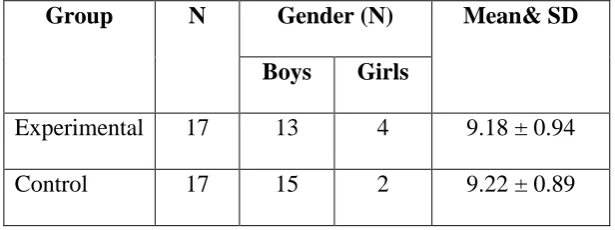
Table 1.2: Demographic details of the participants in the study
Group N Gender (N) Mean& SD
Boys Girls
Experimental 17 13 4 9.18 ± 0.94
Control 17 15 2 9.22 ± 0.89
[image:49.595.162.470.373.488.2]43
Table 2.1: Descriptive Statistic of Canadian Occupational Performance Measure: Performance and Satisfaction component
The above table shows the descriptive statistic and mean value of Canadian Occupational Performance Measure: performance and satisfaction component in the experimental and control group.
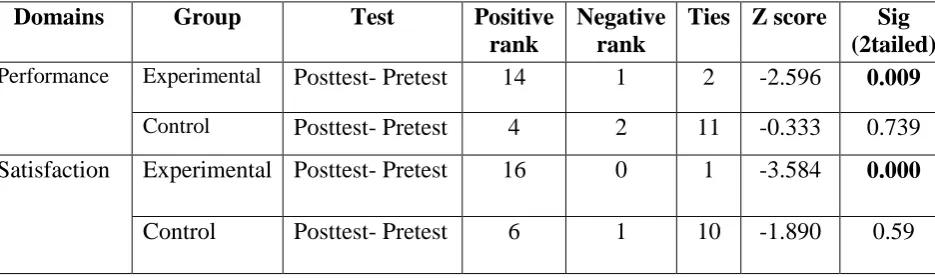
Table 2.2: Comparison of Components of COPM within the Groups
Domains Group Test Positive
rank
Negative rank
Ties Z score Sig (2tailed)
Performance Experimental Posttest- Pretest 14 1 2 -2.596 0.009
Control Posttest- Pretest 4 2 11 -0.333 0.739 Satisfaction Experimental Posttest- Pretest 16 0 1 -3.584 0.000
Control Posttest- Pretest 6 1 10 -1.890 0.59
The above table shows the results of Wilcoxon test, indicating a significant difference in the performance and satisfaction component of experimental group but not in the control group.
Outcome measure
Group Test Mean SD Min Max
Performance Experimental Pre 3.76 1.20 1 5
Post 5.29 1.68 2 8
Control Pre 2.94 0.96 1 4
Post 3.00 1.11 1 5
Satisfaction Experimental Pre 2.59 1.27 1 5
Post 4.24 1.48 2 7
Control Pre 2.59 0.53 1 5
[image:50.595.82.550.431.570.2]44
Table 2.3: Comparison between Control and Experimental Group Scores of COPM
Graph 2.1: Graphical representation of Comparison between control and experimental group scores of COPM (Handwriting alone)
Table 2.2 & Graph 2.1: The above table shows comparison between the groups f