ABSTRACT
AIMS AND OBJECTIVES: To evaluate the effectiveness of health education programme on the knowledge, attitude and practices regarding biomedical wastes among Dental professionals
in Madurai city.
MATERIALS AND METHODS: A list of 201 dental practitioners was prepared out of which 153 consented for the study. Written Informed consent were obtained from all theparticipants.
A well-constructed self-administered questionnaire made in English. The questionnaire
consisted of 27 close ended questions, consists of 8 questions to assess the knowledge,8
questions to assess the attitude and 11 questions to assess the practice regarding the biomedical
waste management. The baseline data was collected after which health education provided 15
days was following which the 2nd data was collected. 15 days after 2nd data collection health
education was again provided 15 days following which the final data was collected. The
collected data was analysed using spss software.
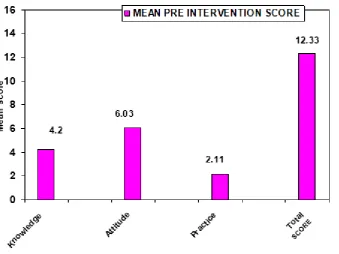
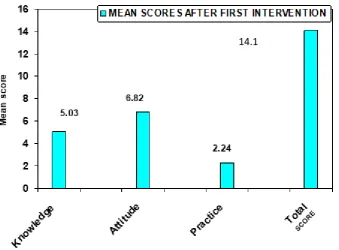
RESULTS: The present study shows consistent improvement in the mean score of knowledge, attitude and practice, at the baseline (4.2, 6.03 and 2.11), at first intervention (5.03, 6.82 and
2.24) and at second intervention (6.23, 7.15 and 2.53).
CONCLUSION: It can be concluded that in the present study even though the dental practitioners have good level of awareness and knowledge regarding the biomedical waste
management and also all the participants have positive attitude towards biomedical waste
management but almost every participants lack in practicing the biomedical waste management
in their own clinics even after providing the health education.
in a proper method. If the government establishes a biomedical waste management plant at
LIST OF ABBREVIATION
SL.NO ABBREVIATIONS MEANING
1. HIV Human Immunodeficiency Virus
2. WHO World Health Organization
3. PVC Polyvinyl Chloride
4. INCLEN International Clinical Epidemiology Network
5. IPEN International Program Evaluation Network
6. BMW Bio-medical waste
7. BMWM Bio-medical waste Management
8. KAP Knowledge, Attitude and Practices
9. NSI Needle Stick Injury
10. TT vaccine Tetanus Vaccine
11. BDS Bachelor of Dental Science
12. MDS Master of Dental Science
13. DCI Dental Council of India
14. IDA Indian Dental Association
SL.NO ABBREVIATIONS MEANING
16. SD Standard Deviation
17. No Number
18. GCP Good Clinical Practice
LIST OF FIGURES
SL.NO FIGURE PAGE NUMBER
1. Madurai city map 18
2. Methodology 23
3. Scoring criteria 24,28
4. Informed consent 25
5. Distribution of questionnaire 25
6. Self administration of questionnaire by the study participants 26
7. Health education by investigator to study participants through power point presentation
26
8. Distribution of pamphlets containing segregation of biomedical waste.
LIST OF TABLES
SL.NO
LIST OF TABLES
PAGE NO.1. Age wise distribution of study participants 29
2. Gender wise distribution of the study participants 30
3. Distribution of the study participants based on their Qualification. 31
4. Distribution of the study participants based on the years of service. 32
5. Response of study participants to knowledge based questions. 33
6. Response of study participants to attitude based questions. 36
7. Response of study participants to practice based questions. 38
8. Levels of Knowledge, Attitude and Practice at baseline regarding biomedical waste management among the study participants
41
9. Levels of Knowledge, Attitude and Practice at first intervention regarding biomedical waste management among the study participants.
42
10. Levels of Knowledge, Attitude and Practice at second intervention regarding biomedical waste management among the study participants.
43
11. Levels of Knowledge at baseline, first intervention and second intervention regarding biomedical waste management among the study participants
44
12. Levels of attitude among the study participants at baseline, first intervention and second intervention regarding biomedical waste management.
45
13. Levels of biomedical waste management practice at baseline, first intervention and second intervention among the study participants.
46
14. Cumulative knowledge, attitude and practice levels at baseline, first intervention and second intervention among the study participants.
47
15. Mean scores of Knowledge, Attitude and Practice at baseline regarding biomedical waste management among the study participants.
16. Mean scores of Knowledge, Attitude and Practice after first health education regarding biomedical waste management among the study participants.
49
17. Mean scores of Knowledge, Attitude and Practice after second health education regarding biomedical waste management among the study participants.
50
18. Mean difference of knowledge, attitude and practice scores at each interventions regarding biomedical waste management among the study participants.
51
19. Mean difference in the Knowledge, Attitude and Practice scores according to the age distribution among the study participants.
52
20. Mean difference in the Knowledge, Attitude and Practice scores according to the gender distribution among the study participants.
53
21. Mean difference in the Knowledge, Attitude and Practice scores according to the qualification among the study participants.
54
22. Mean difference in the Knowledge, Attitude and Practice according to the year of service among the study participants.
LIST OF GRAPHS
SL.NO
LIST OF GRAPHS
PAGE NO.1. Age wise distribution of study participants 29
2. Gender wise distribution of the study participants 30
3. Distribution of the study participants based on their qualification. 31
4. Distribution of the study participants based on the years of service. 32
5. Levels of Knowledge, Attitude and Practice at baseline regarding biomedical waste management among the study participants.
41
6. Levels of Knowledge, Attitude and Practice at first intervention regarding biomedical waste management among the study participants.
42
7. Levels of Knowledge, Attitude and Practice at second intervention regarding biomedical waste management among the study participants.
43
8. Levels of Knowledge among the study participants at baseline, first intervention and second intervention regarding biomedical waste management.
44
9. Levels of attitude among the study participants at baseline, first intervention and second intervention regarding biomedical waste management.
45
10. Levels of biomedical waste management practice at baseline, first intervention and second intervention among the study participants.
46
11. Cumulative knowledge, attitude and practice levels at baseline, first intervention and second intervention among the study participants.
47
12. Mean scores of Knowledge, Attitude and Practice at baseline regarding biomedical waste management among the study participants.
48
13. Mean scores of Knowledge, Attitude and Practice after first health education regarding biomedical waste management among the study participants.
49
14. Mean scores of Knowledge, Attitude and Practice after second health education regarding biomedical waste management among the study participants.
50
15. Mean difference of knowledge, attitude and practice scores at each interventions regarding biomedical waste management among the study participants.
51
SL.NO
LIST OF GRAPHS
PAGE NO.1. Age wise distribution of study participants 29
2. Gender wise distribution of the study participants 30
3. Distribution of the study participants based on their qualification. 31
4. Distribution of the study participants based on the years of service. 32
5. Levels of Knowledge, Attitude and Practice at baseline regarding biomedical waste management among the study participants.
41
6. Levels of Knowledge, Attitude and Practice at first intervention regarding biomedical waste management among the study participants.
42
7. Levels of Knowledge, Attitude and Practice at second intervention regarding biomedical waste management among the study participants.
43
8. Levels of Knowledge among the study participants at baseline, first intervention and second intervention regarding biomedical waste management.
44
9. Levels of attitude among the study participants at baseline, first intervention and second intervention regarding biomedical waste management.
45
10. Levels of biomedical waste management practice at baseline, first intervention and second intervention among the study participants.
46
11. Cumulative knowledge, attitude and practice levels at baseline, first intervention and second intervention among the study participants.
47
12. Mean scores of Knowledge, Attitude and Practice at baseline regarding biomedical waste management among the study participants.
48
13. Mean scores of Knowledge, Attitude and Practice after first health education regarding biomedical waste management among the study participants.
49
14. Mean scores of Knowledge, Attitude and Practice after second health education regarding biomedical waste management among the study participants.
50
15. Mean difference of knowledge, attitude and practice scores at each interventions regarding biomedical waste management among the study participants.
LIST OF CONTENTS
SL.NO TITLE PAGE NUMBER
1. INTRODUCTION 1
2. AIMS AND OBJECTIVES 4
3. REVIEW OF LITERATURE 5
4. MATERIALS AND METHODS 18
5. RESULTS 28
6. DISCUSSION 56
7. CONCLUSIONS 62
8. RECOMMENDATIONS 63
16. Mean difference in the Knowledge, Attitude and Practice scores according to the age distribution among the study participants.
52
17. Mean difference in the Knowledge, Attitude and Practice scores according to the gender distribution among the study participants.
53
18. Mean difference in the Knowledge, Attitude and Practice scores according to the qualification among the study participants.
54
19. Mean difference in the Knowledge, Attitude and Practice according to the year of service among the study participants.
55 16. Mean difference in the Knowledge, Attitude and Practice scores
according to the age distribution among the study participants.
52
17. Mean difference in the Knowledge, Attitude and Practice scores according to the gender distribution among the study participants.
53
18. Mean difference in the Knowledge, Attitude and Practice scores according to the qualification among the study participants.
54
19. Mean difference in the Knowledge, Attitude and Practice according to the year of service among the study participants.
Introduction
Health is the ability to adapt and manage physical, mental and social challenges
throughout life. As defined by the World Health Organization (WHO), health is "a state of
complete physical, mental and social well-being and not merely the absence of disease or
infirmity.1 The onus of maintaining health relies on the health care system of the country. Maintaining and enhancing the health of community uses a complex amalgamation of various
materials, equipment and instruments which often leads to generation of certain health care
waste. The waste which is produced by the health sectors is known as biomedical waste.
Biomedical waste has been defined as any waste generated during the process of diagnosis,
treatment or immunisation of humans or animals, or in research activities pertaining to any of
these processes, or in the production or testing of biological material. Biomedical waste has
become a serious health hazard in many countries, including India. It is a potential health
hazard to health care workers, the public, the flora and fauna of the area.2 It is estimated that
annually about 0.33 million tonnes of hospital waste is generated in India and, the waste
generation rate ranges from 0.5 to 2.0 kg per bed per day. World Health Organisation states
that 85 % of hospital waste are actually non-hazardous whereas 10% are infectious and 5%
are non-infectious but they are included in hazardous waste. About 15%- 35% of the hospital
waste is regulated as infectious waste.2 Waste generated in the process of health care are
composed of variety of wastes including hypodermic needles, scalpels, blades, surgical cottons,
gloves, bandages, clothes, discarded medicine and body fluids, human tissues and organs,
chemicals etc., Other wastes generated in healthcare settings include radioactive wastes,
mercury containing instruments, PVC plastics etc.3
The institutions involved in generation of biomedical waste are government and private
hospitals, nursing homes, dental clinics, primary health centers, laboratories, vaccinating
the dental hospitals, clinics and colleges have amplified exponentially which in turn has
increased its contribution of the biomedical waste generation.4 Dentistry is a multi-disciplinary
system which is advancing in leaps and bounds in recent era, with innovations leading to
novel technologies and materials. Dentistry uses an array of materials for delivery of de ntal
care like acrylics, impression materials and mercury used for restorative purposes may have
a possible environmental and human health impact if not handled properly.2 The biomedical
waste generated in the dental scenario includes sharps, used disposable items, infectious
waste (blood soaked cotton, guaze etc.), hazardous waste (mercury, lead), and chemical waste
( film developers, fixers and disinfectants).4These waste when inadequately treated can lead
to piles of deadly infectious to health care workers, waste handlers, waste pickers and general
public.
To protect the environment and community from these hazards, the ministry of
environment and forest, Government of India, issued a notification on biomedical waste
management rules 1998 under environment protection act. It is the duty of every occupier of
a hospital or clinic generating biomedical waste to take necessary steps to ensure that such
waste is handled without any adverse effect to the human health or environment.5
During 2002-2004, INCLEN (International Clinical Epidemiology Network) Program
Evaluation Network (IPEN)conducted a comprehensive study on the assessment of injection
practices in India that included mapping the status of biomedical waste management. The study
concluded that there is a urgent need for greater commitments at policy and programme levels
for capacity building, and resource investments in biomedical waste management.6
Effective management of biomedical waste is not only a legal necessity but also a social
responsibility. There is a need for resource material to help administrators, doctors, nurses and
safe handling, as well as safe disposal in such a way that it controls infection and improves
safety for employees working in the system. For this, a conscious, coordinated and cooperative
efforts has to be made from physicians to ward boys.6
A study conducted by Narang et al8 among dental health care personnel concluded that there is
a lack of knowledge, attitude and practice regarding biomedical waste management. However
certain studies confirmed that private practitioners have adequate knowledge and positive
attitude but they were not practicing diligently regarding biomedical waste management at their
own clinics.9 A systematic review on studies among the dental students, dental staffs, private
dentists, class IV employee found inadequate knowledge and awareness with considerable
variation in practice and management. Although many studies have been conducted on dental
students and interns at their institutions,10 but limited literature is available assessing the
awareness among the practicing dentists. Most of the existing literatures have constrained to
assess the knowledge, attitude and practice associated with biomedical waste management but
have not attempted to educate the dentist regarding the same. Thus the present study was
planned as an attempt to assess the knowledge, attitude and practice as well as the impact of
health education regarding biomedical waste management among the private dental
practitioners of Madurai city. It is the duty of every health care personal working in a health
care institution to take all steps to ensure segregation, safe handling & disposal of bio-medical
REVIEW OF LITERATURE
Vishal Khandelwal et al in 2013 conducted a study to determine the awareness of dental practitioners on hospital generation and handling of waste. A self-administered questionnaire
was used. The results showed that there was lack of awareness, ignorance of policy and
procedure on the handling of dental healthcare waste and failure to attend educational activities
were major defects found among practitioners in the study. And they emphasized that there is
a need for a plan to improve the awareness of dental healthcare workers about hospital
generated waste and its proper handling.
Alok Sharma in 2013 conducted a study among 144 dentists, nurses, laboratory technicians and Class IV employees (cleaners and maintenance personnel) at Jaipur Dental College. In
their research questionnaire was used to assess their knowledge of biomedical medical waste
disposal and the resulting answers were graded and the percentage of correct and incorrect
answers for each question from all the participants was obtained. Of the 144 questionnaires,
140 were returned and the answers graded. The results showed that there was a poor level of
knowledge and awareness of biomedical waste generation hazards, legislation and
management among health care personnel, 36% of the nurses had an extremely poor knowledge
of biomedical waste generation and legislation and just 15% of the Class IV employees had an
excellent awareness of biomedical waste management practice. Hence they concluded from
their study that there are poor levels of knowledge and awareness about BM waste generation
hazards, legislation and management among health care personnel in Jaipur Dental College.
They recommended regular monitoring and training are required at all levels.
Gyan P singh et al in 2014 conducted a study to assess the Knowledge, Attitude and Practices
(KAP) regarding healthcare waste management among healthcare personnel in Lucknow
dental, paramedical staff and graduate and postgraduate students of King George’s Medical
and Dental University, Lucknow, Uttar Pradesh, India. A total of 28 healthcare personnel
consented for interview. They have used simple random sampling technique to select the study
unit. A predesigned and pretested questionnaire for KAP study was used for data collection. In
their study, 83.3% of medical and dental doctors and students had knowledge about waste
management plan and its authorization and majority of the medical doctors (83.3%),
paramedics (80%) and students (66.7%) had knowledge about place of waste disposal. On
practice level, most of the healthcare personnel were using autoclave and lesser number of
personnel were using dry heat sterilization. They have concluded that the healthcare personnel
were observed to be good in theoretical knowledge as well as practices.
Raghuwar D. Singh et al in 2014 conducted astudy to assess the awareness and performance towards dental waste including mercury management policy and practices among the dental
practitioners in North India. The study was conducted among 200 private dental practitioners.
The survey form was composed of 29 self-administered questions frame based on knowledge,
attitude, and those regarding the practices of dentists in relation to dental health-care waste
management. In his study about 63.7% of the dentists were not aware of the different categories
of biomedical waste generated in their clinics, Only 31.9% of the dentists correctly said that
outdated and contaminated drugs come under cytotoxic waste. 46.2% said they break the needle
and dispose of it and only 21.9% use needle burner to destroy it. 45.0% of the dentists dispose
of the developer and fixer solutions by letting them into the sewer, 49.4% of them dilute the
solutions and let them into sewer and only 5.6% return them to the supplier. About 40.6% of
the dentists dispose of excess silver amalgam by throwing it into common bin. It was concluded
that not all dentists were aware of the risks they were exposed to and only half of them observe
Asgad Adil Mohamed Ahmed et al in 2014 conducted a study to assess Sudanese dentists knowledge, Attitude and Practice towards dental waste disposal management. A descriptive
cross-sectional study among 200 dentists of whom 51.5% were males and 48.5% were females
(general practitioners 68.5% and 31.5% specialists) working in private clinics in Khartoum
locality. Self-administered questionnaire including questions about demographic data, years of
experience, specialty and questions regarding the knowledge, attitude and practice towards
dental waste management. Completed questionnaires were returned anonymously. The result
obtained from this study showed that the majority (96.4%) knew about the harmful effect of
dental waste disposal, 97.6% were aware about the transmissible infectious diseases (HIV/
Hepatitis B&C) and 95.2% said that waste should be segregated into categories. The majority
(84.2%) of the respondents would like to attend a program on dental waste management, 17.6%
agreed that health care is not an issue, yet 76.4% stated that its a financial burden on the clinic
and 40% stated that it's an extra work burden. They concluded that the majority of dentists
working in private clinics are knowledgeable about dental waste management. The attitude
towards dental waste segregation is affected by the financial burden yet there is a need for
training programs with an implementation of an annual audit and education within the dental
health care centers.
Sanjeev R, Suneesh Kuruvilla et al in 2014 conducted a study to assess the knowledge, attitude and practice of biomedical waste management among dental health care personnel in
Kothamangalam, Kerala. This was a cross-sectional questionnaire based survey containing 24
questions to assess the knowledge, attitude and practice on biomedical waste management. The
samples were the teaching faculty members and students of 3 dental colleges in
Kothamangalam, Kerala. The mean knowledge, attitude and practice scores were 4.35±1.63,
that although the attitude regarding biomedical waste management among faculty members
and students of the institution was high, knowledge and practice remained low.
Kaushal Chaudhari et al in 2015 conducted a study to assess the knowledge, attitude and practices among dentists regarding bio-medical waste management in Ahmedabad city,
Gujarat. The study sample included 120 graduate and postgraduate practitioners. The survey
was scheduled to spread over a period of 3 months. Data was collected by using self designed
questionnaire. The results showed that the majority of the practitioners were having good
knowledge regarding biomedical waste management, whereas their attitude towards the same
was found little low which is an alarming condition and they were doing fair practice of the
same.
Kavita Manchanda et al in 2015 assessed the knowledge, attitude, and practices of students (3rd years, 4th years), interns and teaching staff. A cross-sectional study was conducted using
a close-ended questionnaire among the students, interns and teaching staff of three dental
colleges in Himachal Pradesh. A total of 578 subjects were included in the study with their
prior consent. This study showed that many dentists have the knowledge about the waste
management, but they lack in the attitude and practice.
Pawan A Pawar et al in 2016 evaluated the knowledge, attitude and practices of dental care waste management among private dental practitioners in Latur city. This was a cross sectional
study conducted among 48 private practitioners practicing in Latur city. The prefabricated
validity tested questionnaire was used for the present study. In this study amongst the total
respondents 77.08% were males and 22.92% were females while 27.08% were postgraduates
and 72.92% were undergraduates. only 20% of undergraduate practitioners knew about ten
categories of biomedical waste mentioned by ministry of environment and forest and only half
container. The total no. of 33.3% of dentists directly dispose infected needles in common bin.
In this study it has been observed that the most of the practitioners had acceptable knowledge
about biomedical waste management but they fail to apply that in their practice. Hence
legislations and implementation of various programs will certainly give better effect along with practitioner’s positive attitude.
Avani Rijhwani et al in 2016 assessed the knowledge and attitude of bio-medical waste management and Needle Stick Injuries (NSIs) among dental and nursing students of
Narsinhbhaipatel Dental College and Hospital and Nootan College of Nursing Visnagar
Gujarat. A closed-ended questionnaire was prepared and distributed to the study participants.
Total of 15 minutes time was allotted to fill the questionnaire. The anonymity of subjects was
maintained. The results obtained was 82.6% of dental and 80.5% of nursing students have
sufficient knowledge regarding disease spread by BMW. 72.5% of dental students and 87% of
nursing students have sufficient knowledge regarding various methods of disinfection used to
treat BMW. 84.1% of dental students and 71.4% of nursing students are vaccinated with
Hepatitis vaccine. 87% of dental and nursing students are been vaccinated with TT vaccine
every 5 years. The majority of dental (95.1%) and nursing(96.1%) students considers
knowledge of BMW as important. 88.4% dental students and 94.8% of nursing students think
that training for BMW management should be made compulsory which showed the interest
and importance of biomedical waste management training among them. They concluded by
saying that The requirement of compulsory training of BMW waste management and
prevention NSI injuries should be included in the academic curriculum by all the health
institutions.
practicing dentists in Bengaluru city for the past 2 months. A self‑structured questionnaire was
used to obtain required data. The questionnaire was divided into three sections. The first section
of the questionnaire contained questions regarding knowledge of BM waste generation,
hazards, and legislation, whereas the second section contained questions regarding the level of
awareness on BM waste management practice, and the third section contained questions
regarding attitude/behavior toward BM waste. Of 337 (100%) study participants, the result
obtained was 176 (52.2%) were males and 161 (47.8%) were females. Among 337 (100%) study participants, more than three‑fourth, i.e., 291 (88.4%) knew about BM waste generation
and legislation, whereas 23 (6.8%) each did not know and were not aware of it. The conclusion
of this study reveals there is a good level of knowledge and awareness about BM waste
generation hazards, legislation, and management among health care personnel in Bengaluru
city. Regular monitoring and training are still required at all levels, and there is a need for
continuing dental education on dental waste management practices to these dental practitioners.
Usha GV et al 2016 assessed the level of knowledge, attitude and practice towards dental waste management among undergraduate dental students of Bapuji Dental College and hospital
in Davangere city. This study was a descriptive cross - sectional survey conducted among the
dental students (140 students) in Davangere city. Knowledge, attitude and practice towards
dental waste management was assessed using a structured questionnaire containing 29 items.
Out of 140 participants 41(29.3%) were males and 99 (70.6%) were females. Majority (97.9
%) of dental students were aware of the term biomedical waste and almost 72.8 % agreed to
the need for disinfection of biomedical waste before disposal. Only 48.6% agreed that
infectious waste to be put in yellow plastic bag with bio-hazard symbol. Only few (13.6%) of
them use needle burner to destroy it which is the ideal method. They concluded that though
dental students have good knowledge but they were not aware of color coding in disposing the
Aasim Farooq Shah et al in 2016 conducted a study to assess the level of awareness and attitude among dental health care workers which included dentists and dental auxiliaries in
Kashmir division, Jammu and Kashmir State, India. A total of 408 registered dentists and 456
denta auxiliaries who were working with dentists which included dental hygienists and dental
assistants were included in the study. The questionnaire based cross sectional study was
conducted among dentists and both operating and non-operating dental auxiliaries. The results
of this study was based on the responses of the 864 participants showed dentists had fairly
better knowledge than dental auxiliaries and the results were statistically significant. It was
observed that only 24.01% of the dentists had an excellent awareness while 64.03% of the
Dental auxiliaries had poor awareness regarding biomedical waste management practices.
More than 50% of the dentists had an average or good attitude while 60.96% of dental
auxiliaries had a poor attitude towards sterilization, disinfection and labelling of biomedical
wastes. They concluded that the awareness, knowledge and practices regarding biomedical
waste was higher in dentists than dental auxiliaries, however it was not satisfactory.
Deborah Gonmei et al in 2016 assessed the knowledge, attitude and practices of dental postgraduate students regarding biomedical waste management in Bengaluru. This study was
conducted among 250 dental postgraduate students using a validated questionnaire in
Bengaluru. The questionnaire comprised 35 questions in English with 5 general questions and
10 in each domain (knowledge, attitude and practice). In this study they obtained the results as
most of the study participants (58.0%-90.0%) exhibited positive attitudes. With regard to
practice questions, 32.0%-70.4% of study participants had correct practice. This study
concluded that the participants had poor to moderate knowledge and practice while faring
moderate to good in the attitude domain that vary by year of study, gender and specialty.
students. This cross‑sectional study was conducted among dental students belonging from all
dental colleges of Bhubaneswar, Odisha (India) from February 2016 to April 2016. A total of
500 students (208 males and 292 females) participated in the study, which was conducted in
two phases. A questionnaire was distributed to assess the awareness of biomedical waste
management and knowledge of effective recycling of dental materials, and collected data was examined on a 5‑point unipolar scale in percentages to assess the relative awareness regarding
these two different categorizes. In this study forty-four percent of the dental students were not
at all aware about the management of biomedical waste, 22% were moderately aware, 21%
slightly aware, 7% very aware, and 5% fell in extremely aware category. Similarly, a higher
percentage of participants (61%) were completely unaware regarding recycling and reusing of
biomedical waste. They concluded that there was lack of sufficient knowledge among dental
students regarding management of biomedical waste and recycling or reusing of dental
materials.
N.Ashika riswana in 2016 assessed the dental students awareness about dental care waste management. A cross sectional questionnaire study was conducted among 150 dental students
of saveetha dental college, Chennai, Tamilnadu, India. A predesigned and pretested
questionnaire for the study was used for data collection. They concluded that there is a definite
need to create awareness, improve knowledge, inculcate responsible attitude, and adopt proper
methods to dispose dental health care waste to minimise its harmful effects.
Anita Rama Kahar et al in 2017 aimed to evaluate BMW education/awareness, awareness of BMW generation, hazard, and legislation and its management practices among the final BDS
students and interns of VSPM Dental College and Research Centre, Nagpur, Maharashtra,
India. A cross-sectional questionnaire-based study was designed. The questionnaire was
collected back after 10 min and the data were analyzed. This study showed that awareness
regarding the BMW was good and awareness about its generation; hazards, legislation, and
awareness about BMW practices were moderate to poor.
Sheeri Sabir et al in 2017 conducted a study to assess the Knowledge, Attitude and Practices among 140 dental practitioners regarding waste disposal in Dental Clinics of Moradabad
district, India. The result of the study concluded that dentist have better knowledge and practice
regarding waste generated regularly in the dental clinics. And they recommended that Dental
practitioners should upgrade their knowledge about latest development in BMW.
Vinay Kr et al in 2017 assessed thelevel of Knowledge, attitude and practices (KAP) about biomedical waste management among Dental and Medical interns are follow in their set up.
This was a cross sectional study comprises of randomly selected Sample from each of the
categories of medical and dental interns comprising 145 interns, 72 medical and 73 dental on
rolls. A semi-structured questionnaire was used to obtain information from interns. A pretested,
self-administered 16 questionnaire containing questions on Knowledge, Attitude and Practice
regarding bio-medical waste management was used. The study showed knowledge of Medical
and Dental interns about BMW satisfactory except sharp waste should collect in translucent
puncture proof container and incineration, the best method for biomedical waste disposal. Only
55.8% of dental intern and 66.7% of medical intern thought that if waste is not treated then
there is chance of infection.56.2% of dental intern and 79.1% of medical intern reported the
injury due to improper disposal of sharps item. This study concluded that the Knowledge about
the BMW management practices in the intern of institution were satisfactory which may be
due to subject was included in curricula of Medical and Dental education.
needle-stick injury among dentists of four different dental hospitals in Peshawar. A cross-sectional
KAP study was conducted from December 2016 to March 2017 in four Dental hospitals of
Peshawar, using a survey form with closed-ended questions. It was circulated among dental
practitioners (having clinical experience of more than two years) through convenience
sampling. The questionnaire was utilized to survey their insight into the biomedical medicinal
waste transfer and needle stick injuries. Each questionnaire was scored and graded as the
excellent, good or poor level of knowledge for each participant. Of the 150 survey forms, 130
were returned and the appropriate responses were reviewed. The outcomes demonstrated that
there was a decent level of learning and familiarity with biomedical waste generation hazards,
management, and needle stick injuries. Poor level of knowledge on BM waste management
practice was found. Nobody had a great level of awareness about biomedical waste
management.
Santhosh Kumar et al in 2017 assessed the knowledge, awareness, and practices of dental students regarding biomedical waste (BMW) management. A self-administered structured
questionnaire consisting of 16 questions on knowledge, awareness, and practices about BMW
management was distributed among 100 students randomly belonging to 3rd year, final year
and intern students of Saveetha Dental College, Saveetha University, Chennai. The results
revealed that overall, 67% respondents were aware of the existing BMW management policy
systems in India. 62% of students were aware about the correct color coding management
system for hospital waste management that prevails in India. 86% of students knew about the
dental waste categories of materials used in dentistry. 100% practice discarding sharps in the
puncture-proof containers. Only 27% of the respondents discarded the extracted tooth in a
proper way. Only 51% of them have attended previous training programs on dental waste
management. There was also a statistically significant difference of BMW disposal practices
good level of knowledge and awareness regarding BMW management in dental clinics. And
their practice toward BMW disposal was poor. Hence, the knowledge acquired must be put
into practice. Intern students have the highest level of knowledge and practices toward dental
waste disposal when compared to final year and 3rd year students. Hence, these findings imply
that proper training, continuing education programs, and short-term courses about BMW
management, and infection control.
ShaileshKumar et al in 2018 assessed the awareness towards dental waste including mercury management and also the awareness of radiological waste, disposal of surgical waste among
dental students. This was an epidemiologic survey conducted in 109 dental students. The
survey was composed of 21 self-administered questions frame based on knowledge, attitude
and those regarding the practice of dentists in relation to dental health-care waste management.
The results showed that 43.11% of dental students were aware about more than 50% of
questions, 20.18% of dental students were aware about more than 60% of questions and about
36.69% of dental students were not having adequate knowledge of BMW. Awareness per
question shows that approximately 42.85% of dental students were aware about more than 50%
of questions. Frequency of students attending about 50% of question was about 47.61%
whereas 28.57% students attended all 21 questions. It was concluded that not all dental students
were aware of the BMW. A large population of the dental students were not practicing proper
method of health-care waste disposal, hence there is an utmost need to educate almost the dental
practitioners regarding proper practice measure.
Rajeev Kumar Singh et al in 2018 assessed knowledge, attitude and practice regarding bio-medical waste management and to assess impact of awareness classes among dental
Undergraduate and Postgraduate students of King George’s Medical University, Lucknow
Ninety undergraduate and postgraduate students were assessed for their knowledge, attitude
containing 30 questions was given to all the students. In this study postgraduate students showed significantly better knowledge and practice than undergraduate students.
Krishnaveni Marella et al in 2018 assessed the knowledge, attitude and practices about BMW handling among dental practitioners in an urban area of Andhra Pradesh. It was a
hospital based cross sectional study was conducted in Kurnool urban area from September
2017 to January 2018. A total of 360 dental practitioners were present in the study area, out of
which 320 agreed and gave consent for participation in the study. A pre validated questionnaire
was used for the study. Details regarding socio-demographic factors, and on knowledge attitude
and practices about biomedical waste management practice were incorporated. The results
showed that 43.4% had excellent knowledge, 33.8% good, 19.4% moderate knowledge
regarding the BMW management. In this study they recommended that continuing training
programs which emphasize on BMW management practices would assist in improving the
present situation of safe handling and disposal of health care waste.
Malvika Raghuvanshi et al in 2018 aimed to obtain information about knowledge, execution, and attitude toward biomedical waste (BMW) and its management. In this study, a
self-administered closed-ended questionnaire was designed to conduct a cross-sectional survey. It
was distributed among 614 dentists (institution associated or private practitioners) in the cities
of North India. The questionnaire comprised 36 questions regarding knowledge, execution, and
attitude toward BMW and its management. The study showed that 80% private practitioners
were aware of the categories of BMW as compared with 100% of institution-associated
dentists. However, 41% dentists associated with institution were disposing the chemical waste
directly into sewer and a surprising high number of private practitioners were discarding
directly without any treatment. Furthermore, regarding the mandatory maintenance of BMW
records, 100% institution-associated respondents were aware, whereas only 6.5% private
of private practitioners believed extra burden as the reason. They concluded that most of the
dentists had adequate knowledge regarding BMW policies and its management. Although it
was being practiced in mostly all the institutes on a regular basis, the majority of private
practitioners were not practicing it due to various reasons, such as financial burden, lack of
MATERIALS AND METHODS
STUDY DESIGN
A Descriptive study was conducted to assess the effectiveness of health education program on
the knowledge, attitude and practice about biomedical waste management among dental
practitioners in Madurai city.
STUDY AREA
Madurai is one of the major city in Tamil Nadu and also headquarters of the district. The
district is divided into 2 Revenue Divisions. There are 7 taluks. Madurai North and Madurai
South. The district has 12 Town Panchayats and 6 Municipalities. Besides Madurai being a
Municipal Corporation, 20 Census Towns were classified in the district;10 in Madurai South
and 10 in Madurai North. There are 420 Village Panchayats in the district. There are 10 State
[image:37.595.137.461.445.674.2]Assembly Constituencies and 1 Parliament Constituency in the district.
STUDY POPULATION
The study population includes the private dental practitioners of Madurai city.
CRITERIA FOR SAMPLE SELECTION
Inclusion criteria
The participant should be a qualified (minimal BDS qualification) and registered dentist.
The participant should be a dental practitioner in Madurai city.
The participants who are owning the clinic
Exclusion criteria
Practitioner who do not provide informed consent.
SAMPLE SIZE
A list of private dental practitioners was prepared referring the current DCI registration
list(www.tndci.com),, IDA registration list of Madurai and also through snowball sampling
the participants were included in the study.
ETHICAL APPROVAL & INFORMED CONSENT
The synopsis of the proposed research was prepared and submitted to the Institutional Review
Board Best Dental Science College, Madurai. After the review and scrutiny by the board
members of the institutions, approval was granted to conduct the research. Written Informed
consent of participants was obtained from the study subjects before the start of the study.
Participation in this study was purely on voluntary basis and they were allowed to withdraw
from the study at any time if they wish to do so. It was emphasized that strict confidentiality
would be maintained at all times and that no names or personal details will be used in the write
SOURCE OF DATA
The source of data was primary in nature which was recorded using the pre tested,
well-constructed self-administered questionnaire in English to obtain demographic details and
information on the biomedical waste management related knowledge, attitude and practice
among dental Practitioners in Madurai city.
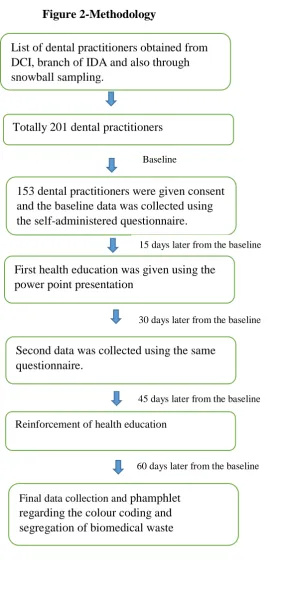
STUDY PROCEDURE
A list of dental practitioners was prepared by referring current DCI
registration(www.tndci.com), IDA registration of Madurai branch and also through snowball
sampling. The dentist who are not practicing in Madurai or who have self retired from clinical
practice were excluded. A list of 201 dental practitioners was prepared out of which 153
consented for the study. Written Informed consent were obtained from all the participants.All
the participants were assured about the confidentiality and anonymity. A well-constructed
self-administered questionnaire made in English which has 2 sections in which the 1st section
includes demographic details such as the age, sex, DCI registration number, year of service,
Degree and contact number and the 2nd section includes the information on the biomedical
waste management related knowledge, attitude and practice among Dental practitioners in
Madurai city. The questionnaire consisted of 27 close ended questions, consists of 8 questions
to assess the knowledge,8 questions to assess the attitude and 11 questions to assess the practice
regarding the biomedical waste management. All the questions in the questionnaire were closed
ended. All the questions were prepared according to the regulations provided by central
government of India and from BWM training manuals34,35,36. Questions were prepared in such
a way that knowledge questions assessed the awareness, amount of information or
understanding about BWM, attitude questions assessed thoughts and feelings of the
participants towards BWM and practice questions assessed actions or actual behaviour towards
Pilot study
A pilot study was done to know the feasibility of the study and to pre-test the questionnaire.
Face/content validity:
The questionnaire was tested for face validity by a panel of “experts” (from the Department Of
Public Health Dentistry) and modified in accordance with their recommendations to ensure
comprehensive ability. A pilot study was carried out with 25 subjects in order to test items
understandability and content validity. Data collected from these participants were used to
make final refinements. The levels of missing data was used as an indicator of inappropriate or
badly worded questions and that question was re-framed accordingly.
Internal consistency (Reliability):
The questionnaire was constructed in English and the complicated English words were changed
into simpler terms so that each and every participants can understand the questions. The internal consistency was assessed by Cronbach’s𝛼. The results of the pilot study showed a good
consistency with 𝛼 values higher than 0.9.
Baseline data:
The baseline data was collected from 153 dental practitioners, before approaching the dental
practitioners a prior appointment was obtained. Every day a maximum of 10 dental
practitioners were approached.15 minutes was provided to each dental practitioner to complete
the questionnaire. If there are more than one dentist in a same clinic, they were made to fill the
First intervention:
The health education was provided 15 days after the baseline data collection. Health education
regarding the biomedical waste management was imparted employing power point
presentation. The power point presentation consisted of introduction to biomedical waste,
environmental production act, regarding the actions for violating the act, segregation of
biomedical waste according to the colour code (2016) given by the central government of India
for the biomedical waste management.34,35,36
Second Data Collection
15 days after the first health education the questionnaire assessing the KAP regarding the
biomedical waste management was administered to the participants following the baseline date
collection protocol to assess the impact of health education.
Second intervention:
The second health education was provided 15 days after the second data collection. Health
education was provided using the same power point presentation( first intervention) as a means
of reinforcement.
Final Data Collection
The final data was collected 15 days after providing the second health education , using the
same questionnaire(Baseline data). A phamphlet regarding the colour coding and segregation
of biomedical waste management was given to each and every participants at the end of the
Figure 2-Methodology
List of dental practitioners obtained from DCI, branch of IDA and also through snowball sampling.
Totally 201 dental practitioners
Baseline
153 dental practitioners were given consent and the baseline data was collected using the self-administered questionnaire.
15 days later from the baseline
First health education was given using the power point presentation
30 days later from the baseline
Second data was collected using the same questionnaire.
45 days later from the baseline
Reinforcement of health education
60 days later from the baseline
Final data collection and phamphlet
ARMAMENTARIUM
1) Well-constructed self-administered questionnaire
2) Inform consent form
3) Power point presentation in laptop
4) Pamphlet
Statistical Tools
Data collected was entered in an Excel sheet. Each correct and incorrect response and each yes
and no questions were given 1 and 0 mark respectively. The maximum score for knowledge
section was 8, for attitude section was 8 and for practice section was 11. KAP of each of the
participants was measured by corresponding scores in each section of the questionnaire. A self
made scoring system was devised to categorize KAP of the study participants as good, fair and
poor (fig 2)33. Data analysis was done with the help of computer using SPSS Statistical
Package- Version 17.Using this software, frequencies, percentages, means, standard
deviations, and 'p' values were calculated. A 'p' value less than 0.05 is taken to denote
significant relationship.
PRACTICE (11 questions) ATTITUDE
(8 questions)
KNOWLEDGE (8 questions)
0 to 3 –poor 4 to 7 – fair. > 7 - good 0 to 2 - poor
3 to 5 - fair > 5 - good 0 to 2 - poor
[image:43.595.107.519.515.742.2]3 to 5 - fair > 5 - good
RESULTS Statistical Tools
Data collected was entered in an Excel sheet. Then a score of ‘1’ was given for each correct answer and a score of ‘0’ to wrong answers and ‘no answers. The total score(27
questions) and distinct score for questions under knowledge, attitude and practice was
calculated for every individual.
Data analysis was done with the help of computer using SPSS Statistical Package- Version
17.Using this software, frequencies, percentages, means, standard deviations, and ‘p’ values
were calculated.. A 'p' value less than 0.05 is taken to denote significant relationship.
The total number of participants at the time of start of the study was 152 dental practitioners,
at the first intervention there was 4 dropouts in the study hence the number of participants was
148 and at the end of second intervention there was again 8 dropouts in the study therefore the
total dental practitioners remained at the end of the study was 140. KNOWLEDGE
(8 questions)
ATTITUDE (8 questions)
PRACTICE (11 questions)
0 to 2 - poor 3 to 5 - fair > 5 - good
0 to 2 - poor 3 to 5 - fair > 5 - good
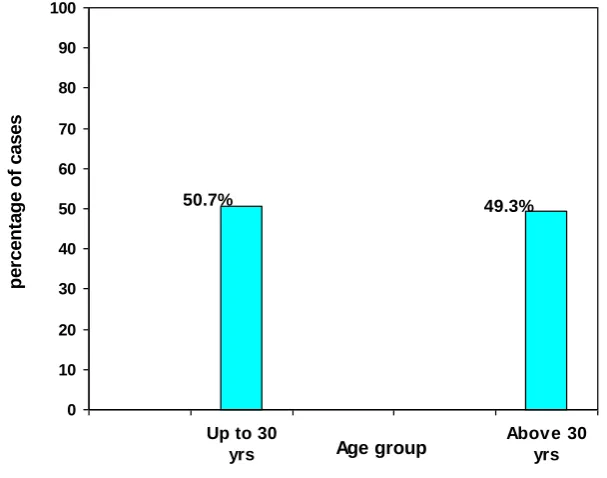
Table 1: Age wise distribution of study participants
Age Group
Cases
No. %
Up to 30 years 77 50.7
Above 30 years 75 49.3
Total 152 100.0.
Mean + S.D 31.8 +7.2 years
Graph 1: Age wise distribution of study participants
Table 1 and graph 1 shows the age wise distribution of the study participants. The mean age group was 31.8 years, where 50.7 % (77) of the participants were below 30 years of age and
49.3% (75) of the participants were above 30 years of age. 49.3% 50.7% 0 10 20 30 40 50 60 70 80 90 100
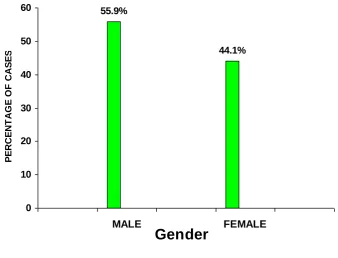
Table 2: Gender wise distribution
Sex
Cases
No. %
Male 85 55.9
Female 57 44.1
Total 152 100.0
Graph 2: Gender wise distribution
Table 2 and graph 2 projects the gender wise distribution of the study participants. The male participants were 55.9%(85) and the female participants 44.1%(57). This shows the male dental
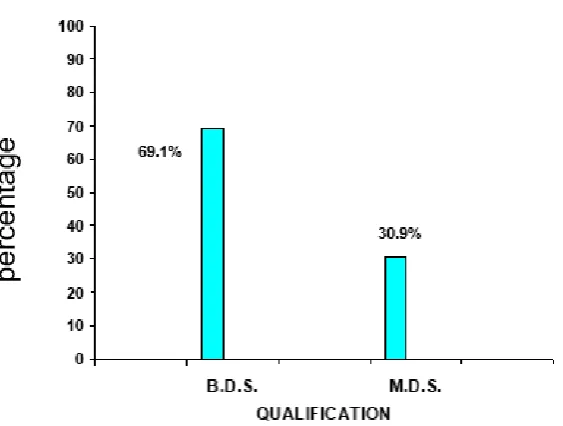
Table 3: Distribution of the study participants based on their Qualification.
Qualification
Cases
No. %
B.D.S. 105 69.1
M.D.S. 47 30.9
Total 152 100.0
Graph 3: Distribution of the study participants based on their Qualification.
Table 3 and Graph 3 presents the distribution of study participants based on their qualification. Majority of the dental practitioner had BDS qualification and only 30.9% had
Table 4 : Distribution of the study participants based on the years of service
Years of service
Cases
No. %
< 1 year 12 7.9
1 – 5 years 73 48.0
6 – 10 years 35 23.0
Above 10 years 32 21.1
Total 152 100.0
Mean + S.D 6.76+6.33 years
Graph 4: Distribution of the study participants based on the years of service
Table 4 and Graph 4 shows the year of service of the dental practitioners who were participated in the study. The mean year of service for the dental practitioners in the study was
6.76 years. 7.9%(12) of the dentist were new practitioners with less than 1 year of practice,
dentist having their practice for 1-5 years, 6-10 years and above 10 years were 48%(73),
[image:48.595.114.382.95.332.2]Table 5: Percentage of participants answered each options for knowledge based questions.
Questions Baseline First
intervention
Second intervention 1) Do you know about biomedical waste management?
a) Yes
b) No 85%
15%
100% 0%
100% 0% 2) Do you think it is important to know about biomedical
waste generation? a)Yes b) No 98% 2% 100% 0% 100% 0% 3) Biomedical waste (management & handling) rules
were first proposed in:
a) 1997 b) 1998 c) 1999 d) 2000
24% 14% 32% 29% 22% 21% 39% 18% 21% 25% 37% 17% 4) Amendments to the biomedical waste (management &
handling) rules were made in:
a) 2000 b) 2001
c) 2003 d) 2004
8% 17% 16% 59% 11% 26% 28% 35% 20% 30% 26% 24% 5) Are you aware that biomedical waste management
rules are applicable to dentists? a)Yes b) No 98% 2% 100% 0% 100% 0% 6) Do you think all the waste generated in the hospitals
are hazardous? a)Yes b) No 89% 11% 96% 4% 100% 0% 7) According to national guidelines, what is the
maximum time limit for which biomedical waste can be stored?
a) 24 hours b) 72 hours c) 48 hours d) Don’t know
16% 13% 8% 63% 28% 18% 21% 33% 29% 22% 33% 16% 8) Which of the following is the universally accepted
70%
9%
8%
13%
25%
45%
16%
14%
19%
49%
14%
18%
Table 5 shows the percentage of participants answered each options for knowledge based
questions. Almost 85% of the participants were aware of biomedical waste management at
baseline and at the end of first and second interventions almost all of the participants were
aware of the biomedical waste management. Almost (98%) everyone were aware of the rules
that was made regarding the biomedical waste management for dentist. Most of the dentist does
not knew the maximum time limit for the storage of the biomedical waste at the baseline only
8% of the participants were answered correctly but at the end of second intervention there was
a improvement(33%) among study participants. The symbol of the biomedical waste was
known only by few participants at the baseline (9%) but at the end of the second intervention
Table 6: Percentage of participants answered each options for attitude based questions
Questions Baseline First
intervention
Second intervention 1) Do you think safe management of health care
waste is important?
a)Yes b) No 94% 6% 100% 0% 100% 0%
2) Do you agree that biomedical wastes should be segregated into different categories?
a)Yes b) No 91% 9% 100% 0% 100% 0% 3) Do you feel that biomedical waste management
should compulsorily be made part of dental undergraduate curriculum? a)Yes b) No 92% 8% 100% 0% 100% 0% 4) Do you think your knowledge regarding
biomedical waste management is adequate? a)Yes b) No 19% 81% 37% 63% 86% 14% 5) Do you think you require any further training on
biomedical waste management? a)Yes b) No 90% 10% 96% 4% 100% 0% 6) Do you think waste management is also doctor’s
responsibility? a)Yes b) No 96% 4% 100% 0% 100% 0% 7) Safe management efforts by the hospital increase
the financial burden on management. a)Yes b) No 100% 0% 100% 0% 100% 0% 8) Do you think it is important to report to the
Pollution Control Board of India about a
particular institution if it is not complying with the guidelines for biomedical waste
Table 6 depicts the percentage of participants answered each options for attitude based
questions. 94% of participants agreed that safe management of health care waste is important
and 91% biomedical wastes should be segregated into different categories at the baseline and
at the end of the second intervention almost everyone agreed. 91% of the participants at the
baseline felt that biomedical waste management should compulsorily be made part of dental
undergraduate curriculum at the end of the second intervention all the participants agreed. All
the participants agreed that they do not have adequate knowledge at the baseline(81%) regarding biomedical waste and they also need further training at the baseline(90%) and even
at the end of the second intervention all the participants accepted that they still need to acquire
knowledge and also they need further training(100%) .Each and every study participants felt
that safe management of biomedical waste increases the financial burden(100%) on the hospital
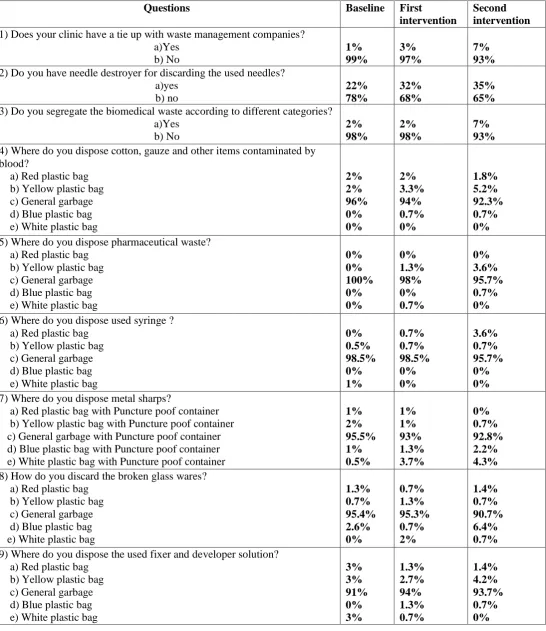
Table 7Percentage of participants answered each options for practice based questions
Questions Baseline First
intervention
Second intervention
1) Does your clinic have a tie up with waste management companies? a)Yes b) No 1% 99% 3% 97% 7% 93%
2) Do you have needle destroyer for discarding the used needles? a)yes b) no 22% 78% 32% 68% 35% 65%
3) Do you segregate the biomedical waste according to different categories? a)Yes b) No 2% 98% 2% 98% 7% 93%
4) Where do you dispose cotton, gauze and other items contaminated by blood?
a) Red plastic bag b) Yellow plastic bag c) General garbage d) Blue plastic bag e) White plastic bag
2% 2% 96% 0% 0% 2% 3.3% 94% 0.7% 0% 1.8% 5.2% 92.3% 0.7% 0%
5) Where do you dispose pharmaceutical waste? a) Red plastic bag
b) Yellow plastic bag c) General garbage d) Blue plastic bag e) White plastic bag
0% 0% 100% 0% 0% 0% 1.3% 98% 0% 0.7% 0% 3.6% 95.7% 0.7% 0%
6) Where do you dispose used syringe ? a) Red plastic bag
b) Yellow plastic bag c) General garbage d) Blue plastic bag e) White plastic bag
0% 0.5% 98.5% 0% 1% 0.7% 0.7% 98.5% 0% 0% 3.6% 0.7% 95.7% 0% 0%
7) Where do you dispose metal sharps?
a) Red plastic bag with Puncture poof container b) Yellow plastic bag with Puncture poof container c) General garbage with Puncture poof container d) Blue plastic bag with Puncture poof container e) White plastic bag with Puncture poof container
1% 2% 95.5% 1% 0.5% 1% 1% 93% 1.3% 3.7% 0% 0.7% 92.8% 2.2% 4.3%
8) How do you discard the broken glass wares? a) Red plastic bag
b) Yellow plastic bag c) General garbage d) Blue plastic bag e) White plastic bag
1.3% 0.7% 95.4% 2.6% 0% 0.7% 1.3% 95.3% 0.7% 2% 1.4% 0.7% 90.7% 6.4% 0.7%
9) Where do you dispose the used fixer and developer solution? a) Red plastic bag
b) Yellow plastic bag c) General garbage d) Blue plastic bag e) White plastic bag
10) Where do you dispose the orthodontic brackets and wires? a) Red plastic bag
b) Yellow plastic bag c) General garbage d) Blue plastic bag e) White plastic bag
2% 1% 95% 1% 1% 0.7% 2% 94.7% 1.3% 1.3% 0% 1.4% 93% 0.6% 5%
11) Are you using personal protective measures while handling biomedical waste management? a)Yes b) No 55% 45% 65% 35% 91.5% 8.5%
Table 7 shows the percentage of participants answered each options for practice based
questions. According to the present study almost 99% of the participants answered that they don’t have
tie-up with the waste management companies to dispose the biomedical waste but at the end of the
second intervention 7% of the participants have made tie-up with the waste management companies.
Questions regarding the disposal of biomedical waste almost every one answered that they were
disposing the waste in the general garbage but at the end of the second intervention there was a minimal
Table 8: Mean scores of Knowledge, Attitude and Practice at baseline
Score in Maximum possible
Score
Baseline score Mean + S.D
Knowledge 8 4.2 +0.54
Attitude 8 6.03 +0.47
Practice 11 2.11 +0.81
Total 27 12.33 +1.37
[image:55.595.76.416.352.606.2]Graph 5: Mean scores of Knowledge, Attitude and Practice at baseline
Table 8 and Graph 5 displays the baseline scores of the Knowledge, Attitude and Practice regarding the biomedical waste management among dental practitioners in Madurai city. The
Table 9 : Mean scores of Knowledge, Attitude and Practice after first health education
Scores in
Maximum possible Score
scores after first health education
Mean + S.D
Knowledge 8 5.03 + 1.13
Attitude 8 6.82 + 0.8
Practice 11 2.24 +0.84
Total 27 14.1 +1.94
Graph 7: Mean scores of Knowledge, Attitude and Practice after first health education
Table 9 and Graph 6 shows the first intervention scores of the Knowledge, Attitude and Practice regarding the biomedical waste management among dental practitioners in Madurai