REGARDING MENSTRUAL HEALTH AMONG
ADOLESCENT GIRLS IN SELECTED
SCHOOLS AT MADURAI
A DISSERTATION SUBMITTED TO THE TAMILNADU
DR.M.G.R MEDICAL UNIVERSITY, CHENNAI, IN PARTIAL
FULFILMENT OF THE REQUIREMENT FOR THE DEGREE OF
MASTER OF SCIENCE IN NURSING
REGARDING MENSTRUAL HEALTH AMONG
ADOLESCENT GIRLS IN SELECTED
SCHOOLS AT MADURAI
APPROVED BY THE DISSERTATION COMMITTEE ON: ________________
PROFESSOR IN NURSING: ___________________________________ RESEARCH
Dr. Nalini Jayavanth Santha, M.Sc., (N) Ph.D., Principal.
Sacred Heart Nursing College, Madurai. CLINICAL SPECIALITY: ____________________________________ EXPERT
Prof.Murugalakshmi P.L, M.Sc., (N) Ph.D., HOD of Obstetrics and Gynaecological Nursing Sacred Heart Nursing College, Madurai-20.
MEDICAL EXPERT: ____________________________________ Dr. Jeyanthi Prabha, M.D, DGO,
Gynaecologist, Sri Hari Hospital, Karuppayurani, Madurai.
A DISSERTATION SUBMITTED TO THE TAMILNADU
DR.M.G.R MEDICAL UNIVERSITY, CHENNAI, IN PARTIAL
FULFILMENT OF THE REQUIREMENT FOR THE DEGREE OF
MASTER OF SCIENCE IN NURSING
This is the bonafide certificate of Miss.P.Sandhya, M.Sc. (n) II
year student from sacred heart Nursing College, Ultra Trust, Madurai,
Submitted in Partial Fulfillment for the degree of master of science in
nursing, under the Tamil Nadu Dr.M.G.R. Medical University, Chennai.
Dr. Nalini Jeyavanth Santha, M.Sc.,(N),Ph.D., Principal
Sacred Heart Nursing College, Ultra Trust
Madurai -625020
Place:
“A mother can understands what a child does not say”
- Mother Theresa The study project involved in this thesis requires the collaboration of many
personal and I wish to thank everyone involved in the project.
First of all I am thankful to Lord Ganesh and my Mother, for providing me
strength to accomplish this task. I thank to God to bless and help me throughout the thesis work.
I wish to record my sincere thanks to the management Prof. K.R.Arumugam, M.Pharm., Correspondent, Ultra Trust, Madurai, for his valuable help rendered to me in providing the facilities.
I am so grateful to incredible personality Dr. R. Nalini Jeyavanthsantha, M.Sc (N) Ph.D., Principal, HOD Of Child health nursing, Sacred Heart Nursing College, Madurai, for her continued support, interest, cheerful approach and her
willingness to provide expert guidance and constructive suggestions to mould this study to the present form.
I express my sense of gratitude to Dr. Juliet Silvia, M.Sc (N)., Ph.D., Vice-Principal, HOD of Community Health Nursing, Sacred Heart Nursing College, Madurai for giving her constant encouragement to complete this work successfully.
I also express my thanks to Pro. Aarthy Soodi, M.Sc (N)., Ph.D, Obstetrics and Gynecological Nursing Speciality, for her directly or indirectly helped me for the completion of the research work in good enough way.
I would like to convey my thanks to Dr.Deva Kirubai, M.Sc (N)., Ph.D., for her spontaneous encouragement and valuable suggestion.
I would like to extend my heartiest thanks to Prof. Sarojini. M.Sc (N), PhD., Child health nursing speciality and Prof. Jothi Lakshmi, M.Sc (N), Ph.D., Child health nursing speciality experts who spare their valuable time for content validation of my research tools.
I record my sincere thank to Mrs. Shakthy Bharathy, M.Sc (N), Lecturer,
Sacred Heart Nursing College for their immense help and valuable suggestions. I express my sincere gratitude to My Medical Guide Dr. Jeyanthi Prabha, M.B.B.S., DGO, Obstetrician and Gynecologist, Hari Hospital, Madurai for helping me with valuable guidance and timely help in making the study as successful one.
I record my sincere thanks to Mr. Manivelusamy, M.Sc (N)., M.Phil., for extending necessary guidance for the statistical analysis of this research works.
complete my research work successfully.
I express my sincere thanks to Mr.Thirunavukarasu, M.Lib., Senior Librarian, Sacred Heart Nursing College, Madurai.
I extent my sincere thank to Mr. Mohan. M.A., B.Ed., Headmaster of Government ADW Aadhidravidar Higher Secondary School, for giving the permission to conduct the study in her setting.
Chapter No Contents Page No
I INTRODUCTION
Background of the study
Significance and Need for the study
Statement of the problem
Objectives Hypotheses Operational Definition Assumptions Delimitations Projected Outcomes Conceptual Framework 1 7 14 14 15 17 19 20 20 21
II REVIEW OF LITERATURE
Overview on menstruation, menstrual hygiene and
newer concepts
Studies related to the knowledge on menstruation
and menstrual hygiene
Studies related to the practice on menstruation and
menstrual hygiene
Studies related to effectiveness of structured
teaching programme on menstruation and menstrual
hygiene
23
28
34
Research Approach Research Design Research setting Study Population Sample Sample Size Sampling Technique
Criteria for Sample Selection
Inclusion criteria
Exclusion criteria
Development of Intervention
Research Tool and Technique
Testing of the tool
Pilot Study
Data Collection Procedure
Plan for Data analysis
Protection of Human Rights
45 45 47 48 48 48 49 50 50 50 51 52 53 53 54 54 55
IV ANALYSIS AND INTERPRETATION OF 56
DATA V VI DISCUSSION SUMMARY,CONCLUSION,IMPLICATIONS AND RECOMMENDATIONS 83 94
Conclusion
Implications
Limitations
Recommendations
101
102
104
104
REFERENCES 106
1. 2. 3.
4.
5.
6.
7. 8.
9. 10.
Ethical committee certificate
Copy of letter seeking permission to conduct study Letter requesting opinion and suggestion for content
and tool validity
Content Validity Certificate
List of experts consulted for the content validity of the research tool
Editing Certificate
Research tool
Lesson plan for Menstrual health in English
Lesson plan for Menstrual health in Tamil Images related to Menstrual health
I III
V VI
VII
VIII
XXIX XXIX
1.
2.
3. 4.
5.
6.
7.
8.
9.
Conceptual Frame Work Based On J.W. Kenny’s Open
System Model
Research methodology
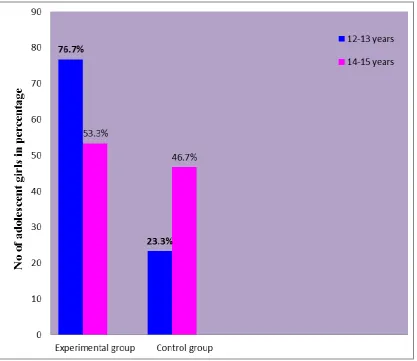
Distribution of adolescent girls based on age at menarche Distribution of adolescent girls based on educational
status
Distribution of adolescent girls based on prior knowledge regarding menarche
Distribution of adolescent girls based on pre-test and post-test level of knowledge in experimental group
Distribution of adolescent girls based on pre-test and post-test level of knowledge in control group
Distribution of adolescent girls based on pre-test and
post-test level of practice in experimental group Distribution of adolescent girls based on pre-test and
post-test level of practice in control group
22
46
61 62
63
65
66
68
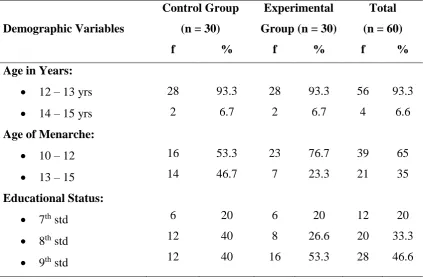
1 Frequency and percentage distribution of the adolescent girls based on demographic variables in both experimental and control group.
58
2 Distribution of adolescent girls according to the pre test and post test level of knowledge in experimental and control group.
64
3 Distribution of adolescent girls according to the pre test and post test level of practices in experimental and control group
67
4 Comparison of mean pre test and post test knowledge
score of adolescent girls in experimental group. 70 5 Comparison of mean pre test and post test practice score
of adolescent girls in experimental group. 71
6 Comparison of mean pre test and post test knowledge
score of adolescent girls in control group. 72 7 Comparison of mean pre test and post test practice score
of adolescent girls in control group. 73
8 Comparison of mean post test knowledge score of
adolescent girls in experimental group and mean post test knowledge score in control group.
74
9 Comparison of mean post test practice score of
adolescent girls in experimental group and mean post test practice score in control group.
75
10 Correlation between the mean post test level of
knowledge and mean post test level of practice score of the adolescent girls in experimental group regarding menstrual health.
76
11 Association between the pre test level of knowledge of
adolescent girls and their selected demographic variables. 77 12 Association between the pre test level of knowledge of
Background of the study: Menstruation is the first significant milestone in the reproductive history of a women’s life. Menstrual health is affected by the economic,
social, cultural, and educational environment, in which girls are born, grow to womanhood, marry and repeat the process in starting their own families. In recent
times reproductive tract infection have been increasingly recognised as a major health problem affecting women world over. Reproductive tract infection preferentially
affect women over men, because women are more likely to be infected, less likely to seek care, are more difficult to diagnose and suffer more severe biological and social
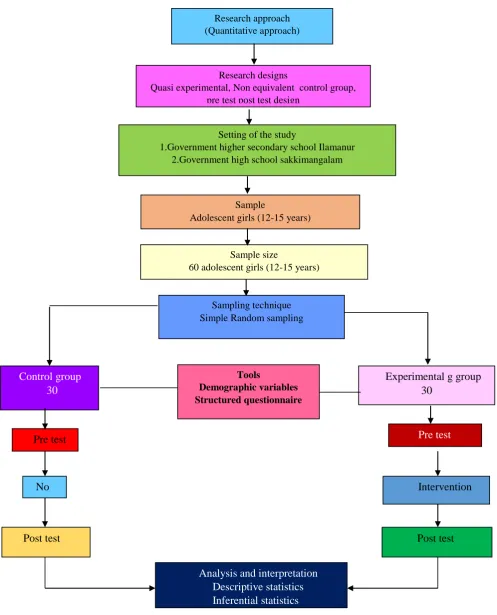
consequences. The aim of the study was to evaluate the effectiveness of video assisted teaching programme on knowledge and practice regarding menstrual health among adolescent girls in selected schools at Madurai. Materials and methods: Non equivalent pre test post test control group quasi experimental research design was used. The tool used for data collection was structured questionnaire to assess the level
of knowledge and practices regarding menstrual health among adolescent girls who participated in the present study. The sampling technique adopted for the study was simple random sampling technique. The sample size of the study was 60 among
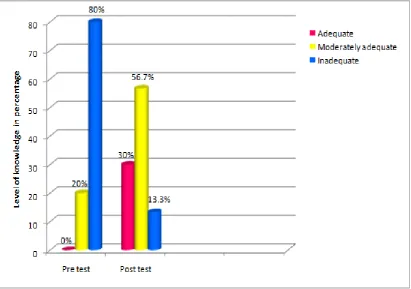
which 30 samples were in experimental group and 30 samples were in control group. Result: 80% in experimental group had inadequate knowledge in pre test, after video assisted teaching only 4% had inadequate knowledge in post test. There was significant improvement in mean post test knowledge score (12.13) in experimental group which was higher than that of the control group (5.83) (t value = 8.52., p<0.05).
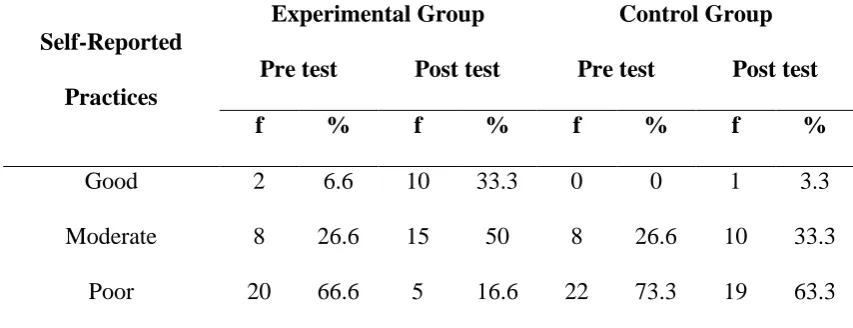
Also 66.6% adolescent girls in experimental group had poor practice in pre test, after video assisted teaching 33.3% had good self reported practices and 50% had moderate
significant positive relationship between the post test level of knowledge and the post test level of practice of adolescent girls. The obtained ‘r’ value was 0.54 is significant
INTRODUCTION
“I hear and I forget
I see and I remember I do and I understand.”
- Confucius
BACK GROUND OF THE STUDY:
Adolescence, is a transitional phase of growth and development between childhood and adulthood. The world health organization (WHO) defines an adolescent as any person between ages 10 & 19.This age range falls within WHO’s
definition of young people, which refers to individuals between ages 10 & 24.
According to UNICEF the manifest gulf in experience that separates younger and older adolescence makes it useful to consider this second decade of life as two parts:early adolescence (10-14 years) and late adolescence (15-19 years).
In 2009, there were an estimated 1.4 billion adolescents in the world, forming around 18 per cent of the global population. An adolescent is defined as an individual
aged 10-19 by the UN. The vast majority of the world’adolescents – 88 per cent – live in developing countries. The least developed countries are home to roughly 16 per cent of all adolescents. Today, 1.2 billion adolescents stand at the crossroads between
childhood and the adult world. Around 243 million of them live in India (UNICEF). 1.2 billion adolescents aged 10-19 years today make up 16 per cent of the world’s
population (UNICEF 2016).
Adolescence is a stage of transition from childhood to adulthood. During this stage of life, a youth undergoes rapid changes in body structure, mediated by the sex
physical aspect. The age group 10-19 years considered as the period of adolescence,
and puberty marks the early half of adolescence. Though it is a continuous process,for convenience sake adolescence is generally divided into three phases: early (10-13 yrs), mid (14-16 yrs), and late (17-19 yr) puberty (Vinod k paul & Arvind Bagga
2013).
The internal changes in the individual, although less evident, are equally
profound. Recent neuroscientific research indicates that in these adolescent years the brain undergoes a spectacular burst of electrical and physiological development. The number of brain cells can almost double in the course of a year, while neural networks
are radically reorganized, with a consequent impact on emotional, physical and mental ability. During adolescence that girls and boys become more keenly aware of
their gender than they were as younger children, and they may make adjustment to their behaviour or appearance in order to fit in with perceived norms. They may fall victim to ,or participate in, bullying, and they may also feel confused about their own
personal and sexual identity. During adolescence teens develop a stronger recognition of their own personal identity, including recognition of a set of personal moral and
ethical values,and greater perception of feelings of self esteem or self worth (UNICEF 2011).
Puberty in girls starts with breast development (thelarche) any time between 8
& 13 year. This is followed by appearance of pubic hair (pubarche) and subsequently menstruation (menarche), occurring at an average of 12.6 years (range 10-16 yr).
Girls who are entering puberty have rapid body changes. It is during this time when young girls develop breasts, hair under arms and around private parts ,oily skin and body odour which will need to pay close attention to personal hygiene during that
Menarche is the onset of menstruation and it is one of the most significant mile stone in a woman’s life. Unlike other pubertal changes that are gradual and
continuous, menarche is a distinct event with a sudden onset. It is highly correlated with after pubertal characteristics and is, therefore preferred as a benchmark for
sexual maturation. For most females it occurs between his age of 10 to 16 years, however it shows a remarkable range of variation.
The first menses is called “Menarche”. Menarche is the signal that sexual
maturation of the young female has occurred and that the body is capable of support pregnancy. With onset of menstruation a girl becomes aware of her emerging identity
as a female capable to reproduce. Her understanding and acceptance of her new identity will be greatly influenced by the feedback she receives from peers, educators
and most importantly her parents. Menstruation occurs periodically throughout the child bearing years, except during pregnancy and lactation. The ages of onset of menstruation differ from person to person but seem to be affected by heredity, racial
back round and nutritional status.
Menstruation is a physiological phenomenon which is unique to females that
begins in adolescence. Menstruation is also properly called menses (or) catamenia and more commonly a period of monthly flow. Menstruation is not an illness. It is a healthy, normal, mature process. Menarche occurs between nine and fifteen years.
Menarche signals reproductive maturity. Menarche often comes with anxiety, fear, confusion and depression. On the other hand, menarche is celebrated in some cultures
and gifts are given to the young girl.
Early onset of menarche has been the risk factor for breast cancer and other diseases. It has been noted that that the average age of menarche is gradually going
annum, in Japan it was one year in a period of eight years, in India a decrease of 5-7
days per annum was observed in Bengali Hindu girls. In Northern and Eastern Europe the downward trend in menarche age has stopped. The menarchial age has fallen steeply is stable around 13 years and may be rising again. There is variability for age
at menarche between women across different countries or across different ethnic group ( Dr.Chandra Prakash 2010).
Menstruation is a physiological cyclic function common to all healthy adult female. There are several minor health problems such as backache, constipation, tension that may be associated with the pre menstruation period or during
menstruation. If assistance given in time, the young girl learn to cope with it and does not allow it to interfere with healthy living.
Menstruation is the first indication of puberty. During puberty, the physical changes occur which transform the body of child into that of an adult, changes in body size, and changes in body proportions. A menstrual taboo is any social taboo
concerned with menstruation. In some societies, it involves menstruation being perceived as unclean or embarrassing, extending even to the mention of menstruation
both in public (in the media and advertising) and in private (among the friends, in the household, and with men). Many traditional religions consider menstruation ritually unclean. Most of the girls receive their gynecological information from their mothers,
religious books, older sister, or a peer. However, such information was generally given after menarche rather than before. Hence, there is a need to provide healthy
family life education to the woman particularly the adolescent girls (Anjali Mahajan , 2017).
Menstruation is linked with several misconceptions and false practices, which
commonest presenting complaint in the adolescent age group and unhygienic
practices during menstruation can lead to untoward consequences like pelvic inflammatory diseases and even infertility. Special health care needs and requirements of women durin g monthly cycle of menstruation are collectively given the term “Menstrual hygiene”.
Today millions of women are sufferers with reproductive tract infection and
its complications and often the infection is transmitted to the offspring of the pregnant mother. Before bringing any change in menstrual practices they should be educated about the facts of menstruation and its physiological implications. (Dr. Neelima
Sharma et al 2013).
Menstruation is still regarded as something unclean or dirty in Indian society.
The reaction to menstruation depends on awareness and knowledge about the subject. The manner in which a girl learns about menstruation and its associated changes may have an impact on her response to the event of menarche. Isolation of the
menstruating girls and restrictions being imposed on them in the family, have reinforced a negative attitude toward this phenomenon. Menstrual practices are
clouded by taboos and social cultural restrictions even today, resulting in adolescence girls remaining ignorant of the scientific facts and hygienic health practices, necessary for maintaining positive reproductive health. Women having better knowledge
regarding menstrual hygiene and safe practices are less vulnerable to reproductive tract infections and its consequences. Therefore, increased knowledge about
menstruation right from childhood may escalate safe practices and may help in mitigating the suffering of millions of women. The social stigma attached to menstruation causes many girls and women to carryout dangerous hygiene practices.
suffer from discomfort and infection, avoiding urination during menstruation, and
using any kind of cloth available old (or) unwashed as an, but still girls are not visiting medical Practitioners. Use of sanitary pads and washing the genital area are essential practices to keep the menstrual hygiene. Unhygienic menstrual practices can
affect the health of the girls and there is an increased vulnerability to reproductive tract infections.
Menstruation is still considered a subject of taboo with its false beliefs due to ignorance. Hygiene practices and knowledge were inadequate. Menstrual hygiene practices have shown marginal improvement in the usage of clean sanitary napkins.
Facilities for changing pads and menstrual cleaning have to be provided in schools and workplaces adequately in safe and hygienic washrooms. Information on
reproductive health needs to be provided to girls before attaining menarche. Health education for girls regarding menstruation and its safe practice from teachers and mothers are going to improve the confidence. Encouraging the mothers to discuss
with their daughters and abolish the myths, taboo and stigma associated with menstruation will improve the overall women health, education and empowerment.
Policy makers, health professionals, women rights activists and environmentalists
have a responsibility towards achieving this goal (Latha Krishnamurthy et al 2011). Poor menstrual hygiene is a risk factor for reproductive tract infection and
cervical neoplasia. Learning about hygiene during menstruation is a vital aspect of health education for adolescent girls as patterns are developed in adolescence are
likely to persist into adult life (J.Bharatha Lakshmi 2014).
The proper menstrual hygiene and correct perception can protect the women from suffering. The girls should be educated about the facts of menstruation,
secondary sexual characters, and above all about proper hygienic practices and
selection of disposable sanitary menstrual absorbent. This can be achieved through educational television programs, compulsory sex education in school curriculum and through school/nurses health personnel. Menstrual health is an important part of life cycle approach to women’s health, so it is important for all adolescent girls that they
should get a loud and clear messages and services on this issue (Channawar Kanchan,
2015).
Hence, the present study was planned to assess the knowledge and practice regarding menstrual health among adolescence girls in selected schools at Madurai.
SIGNIFICANCE AND NEED FOR THE STUDY:
More than half of all adolescents globally lives in Asia (UNICEF 2011). South Asia home to more adolescents around 340 million than any other region. It is
followed by East Asia and the pacific with around 277 million. The adolescent population of either of these regions dwarfs that of any other region in the world. The
census conducted at world level (Flo Ledermann 2011) there are about 2 billion women world-wide, in that adolescents age group its nearly about 334 million.
India has the largest population s(Indian times 2011) of adolescents in the
world being home to 243 million individuals aged 10-19 years. Women & girls constitute half of Indian population (UIS data 2012). There are over 355 million menstruating women and girls in India, but millions of women across the country still
face significant barriers to a comfortable and dignified experience with menstrual hygiene management. According to 2011 census Tamilnadu has a population of 72.1
cities. More than half of the adolescents (10-19 years) and youth (15-24 years) in
tamilnadu lived in rural areas.
Adequate management of menstrual hygiene is taken for granted in affluent countries; however, inadequate menstrual hygiene is a major problem for girls and
women in resource-poor countries, which adversely affects the health and development of adolescent girls. Most research to date has described menstrual
hygiene knowledge, attitudes, and practices, mainly in sub-Saharan Africa and South Asia. Studies are heavily concentrated in a handful of sub-Saharan African countries and the South Asia region. Many school-based studies indicate poorer menstrual
hygiene among girls in rural areas and those attending public schools. The few studies that have tried to improve or change menstrual hygiene practices provide moderate to
strong evidence that targeted interventions do improve menstrual hygiene knowledge and awareness.
Awareness about menstruation prior to menarche was found to be low among
both urban and rural adolescents in Maharashtra state. The limited knowledge available was passed down informally from mothers, who were themselves lacking in
knowledge of reproductive health and hygiene due to low literacy levels and socioeconomic status. Lack of menstrual hygiene was found to result in adverse outcomes like reproductive tract infections. Better knowledge about menstrual
hygiene reduced this risk. Young girls in urban slums of Karachi, Pakistan, found it difficult to manage menstrual hygiene because of lack of infrastructure to dispose of
Teklemariam Gultie et al (2013) explained that Place of residence and their mother’s educational status were independent predictors of menstrual hygiene
management. Thus, the government of Ethiopia in collaboration with its stalk holders should develop and disseminate reproductive health programmes on menstrual
hygiene management targeting both parents and their adolescents. Moreover, parents should be made aware about the need to support their children with appropriate
sanitary.
Use of unhygienic cloths may lead to development of infection of reproductive tract which may seriously hamper the reproductive capacity or even life of female.
Reproductive health and menstrual hygiene are important aspects in the lives of females. In a worst case scenario, the latter may include unwanted pregnancies,
urinary tract infections (UTI) and pelvic inflammatory diseases.
Robyn Boosey (2013) concluded that it is common for girls who attend government-run primary schools in the Rukungiri district to miss school or struggle in
lessons during menstruation because they do not have access to the resources, facilities, or information they need to manage for effective MHM. This is likely to
have detrimental effects on their education and future prospects. A large-scale study is needed to explore the extent of this issue.
After menarche, common menstrual abnormalities that the female adolescent
usually would encounter are dysmenorrhea, irregularities in menstrual blood flow and the premenstrual symptoms. More than 75% of the adolescent girls experience some
problems associated with menstruation, which might indirectly have an impact in their academic excellence, sports activities and their self-esteem. Studies have suggested that menstrual disorder at the age of 15 or 16 act as a marker for hyperandrogenemia
Pugalenthi (2013) concluded that, there is highly significant menstrual hygiene
practices and morbidity among young unmarried, which has a substantial impact on their academic and social life. Further it is very urgent studies are required to evaluate the effects of menstruation-related morbidity to evaluate the efficacy of any
therapeutic alternatives.
Sangeetha Balamurugan (2013) described that Menstrual hygiene, a very
important risk factor for reproductive tract infections, is a vital aspect of health education for adolescent girls. Educational television programs, trained school nurses/health personnel, motivated school teachers, and knowledgeable parents can
play a very important role in transmitting the vital message of correct menstrual hygiene to the adolescent girl of today. Efforts such as improving the female literacy
and health education on the various risk factors should be made by the policy makers to increase menstrual hygiene among rural population. Adoption of high quality menstrual hygiene will play an important role in prevention of reproductive tract
infection and Cancer of cervix among the women population. Therefore, promoting positive attitudes towards management of menstruation and related problems among
the adolescent girls is the need of the hour.
Women and girls of reproductive age need access to clean and soft absorbent sanitary products which in the long run protect their health from various infections.
To this effect, the practice of good menstrual hygiene reduces the incidence of reproductive tract infection (RTI). Thus, the consequences of reproductive tract
Nilima Bhore, Vijaya R. Kumbhar (2013) stated that each and every
individual is seeking correct information related to the event of their day-to-day life. Some events or processes are personal or embarrassing to discuss in detail. In these cases information booklets and planed teaching programmes are very helpful and
handy. Moreover they can read or refer to them at their own pace.
UNESCO (2014) described that during menstruation, adolescent girls are
faced with challenges related to the management of menstrual hygiene in public places. UNICEF estimates that 1 in 10 school age African girls do not attend school during menstruation. Similarly, World Bank statistics indicated that students have
been absent from school 4 days every 4 weeks because of menstruation.
Several study documented that menstruation related problems, had affected more than a third of students’s class concentration, participation, socializing with
friends, test taking skills and home work task performance. Dysmenorrhea was significantly associated with school absenteeism and decreased academic
performance, sports participation, and socialization with peers.
Anna Maria van Eijk (2015) described that half of Indian adolescent girls
started menarche unaware of its cause, with only a quarter understanding the source of bleeding. The majority of girls faced numerous barriers and restrictions; only one in eight girls faced no restriction at all. Commercial pads were more commonly used in
urban settings or schools, with girls in rural areas and in community-based studies mainly dependent on cloths. About one in five girls disposed their soiled absorbents in
inappropriate locations. A quarter of girls reported that they did not attend school during menstruation. Absenteeism due to menstruation did not decrease over time; school absence was inversely associated with the prevalence of pad use in univariate
Moreover students had a difficulty to attending class attentively due to
menstrual related problems such as pain and fear of sudden menstrual blood leakage, as they did not use proper sanitary napkins. That menstruation had affected their academic performance or rank negatively when compared to their rank before
menarche. They also had discomfort and shame sitting besides male students in the class.
Vijayakeerthi. R et al (2016) concluded that Nearly 70 % of the women were
not having adequate knowledge about menstruation and menstrual hygiene, there is a substantial lacunae in the knowledge and perception of the girls. The health
seeking behaviour of the girls in the study is poor. Nearly half of them were not having good practice during menstruation. Hence health education should be given to
all women to gain adequate knowledge about menstruation and its management. All women should be encouraged to use the sanitary pads for which these pads should be affordable to every women of our society.
Poor menstrual hygiene management may increase a woman’s susceptibility to reproductive tract infection. Bacterial vaginosis may be more common in women with
unhygienic menstrual hygiene management practices. Bacterial vaginosis is a poly microbial syndrome characterized by the imbalance of resident bacterial flora in the vagina. The normal vaginal flora is dominated by hydrogen peroxide producing lacto
bacilli. In bacterial vaginosis there is a reduction in the population of lactobacilli with a simultaneous increase in a diverse community of bacteria including Gardnerella
vaginalis, Pretovella species, Bacterioides species, Peptostreptococcus, Mycoplasma hominis, Ureoplasma urea, Mobiluncus species. As agirl progress from puberty into womanhood, reproductive tract infections potentially triggered by poor menstrual
at higher risk of adverse pregnancy outcomes like preterm birth, acquisition of
sexually transmitted infections and development of pelvic inflammatory disease. Uzma Eram (2017) described, Hygiene related practices of women during
menstruation are of considerable importance especially for young girls who do not
have experience especially during the onset, at menarche. Many studies have shown poor menstrual hygienic practice during adolescence. Improper use of menstrual hygienic materials may associate with the risk of developing toxic shock syndrome , urinary tract infection and pelvic inflammatory disease. Poor practices increase vulnerability to reproductive tract Infections. Attitude of parents in discussing the related issues are obstacle to the right kind of information, especially in the rural areas. Primarily poor personal hygiene and unsafe sanitary conditions result in
gynecological problems. Infections due to lack of hygiene during menstruation are often reported. Repeated use of unclean napkins or the improperly dried cloth napkins before its reuse results in harboring of microorganisms causing vaginal infections.
Sutanuka Santra (2017) explained that Reproductive tract infection, which has become a silent epidemic that devastates women’s life, is closely interrelated with poor
menstrual hygiene. Correct knowledge and proper menstrual hygienic practices can protect
the women from this suffering. Unhygienic practices and social taboos followed during
menstruation are issues need to be addressed at all levels.
Sustained public health awareness programme should be promoted regarding
physiological basis of menstruation and adoption of proper hygienic practices with selection
of disposable sanitary pads. Formal as well as informal channels of communication such as
mothers, sisters and friends need to be emphasized for the delivery of such information. All
mothers should be taught to break their inhibitions about discussing with their daughters regarding menstruation much before the age of menarche. Sanitary pad should be
and the women to be encouraged to use it. Social marketing system may be utilised
for promotion of menstrual hygiene and sanitary pad use.
Nurses are responsible of appropriate teaching for Adolescent girls about menarche, menstruation, and other health concepts and practices related to female
reproductive health. Their training and knowledge promote a more positive outlook on physiological processes associated with sex. Their technical knowledge combined
with a matter of fact attitude towards menstruation will help girls to gain confidence, shed their inhibitions and to ask questions confidently regarding this tabooed subject. There is evidence to demonstrate that knowledge intervention planned and conducted
by nurses areffective in educating patients and clients in different areas of health care. Hence the researcher felt that there is need for education for adolescent girls
regarding pubertal changes, menarche and menstrual hygiene. So as a reacher I have chosen video assisted teaching programme on knowledge and practice regarding menstrual health among adolescents girls in selected rural schools at Madurai.
STATEMENT OF THE PROBLEM:
“A study to assess the effectiveness of Video-Assisted Teaching Programme
on knowledge, and practice regarding menstrual health among adolescent girls in
selected schools at Madurai”.
OBJECTIVES:
To assess the pre test and post test level of knowledge and practice
regarding menstrual health among adolescent girls in experimental group.
To assess the pretest and post test level of knowledge and practice
To evaluate the effectiveness of video assisted teaching programme on the
knowledge regarding menstrual health among adolescent girls in experimental group.
To evaluate the effectiveness of video assisted teaching programme on the
practice regarding menstrual health among adolescent girls in experimental group.
To find out the relationship between level of knowledge and practice
regarding menstrual health among adolescence girls experimental group.
To associate the pre test level of knowledge & practice regarding
menstrual health among adolescent girls with their demographic variables such as age, age at menarche, educational status of the student, educational
status of the parent, occupation of the parents, family monthly income, type of family, religion, any prior information regarding menstruation.
HYPOTHESIS:
Hypothesis were tested at 0.05 level of significant level. H1:
Mean post test knowledge score on menstrual health of adolescent girls in the
experimental group will be significantly higher than their mean pre test knowledge score on menstrual hygiene.
H2:
Mean post test knowledge score on menstrual health of adolescent girl in the experimental group will be significantly higher than the mean post test knowledge
H3:
Mean post test practice score on menstrual health of adolescent girls in the experimental group will be significantly higher than their mean pre test practice score.
H4:
Mean post test practice score on menstrual health of adolescent girls in the experimental group will be significantly higher than the mean post test practice score
on adolescent girls in the control group. H5:
There will be a significant positive relationship between knowledge and
practice regarding menstrual health among adolescent girls in the experimental group.
H6:
There will be a significant association between pre test level of knowledge related to menstrual health among adolescent girls and their selected demographic
variables such as age, age of menarche, educational status of the student, educational status of a parent, occupation of parents, family monthly income, types of family,
religion, prior information regarding menarche. H7:
There will be a significant association between pre test level of practice related to menstrual health among adolescent girls and their selected demographic variables such as age, age of menarche, educational status of the student, educational status of a
OPERATIONAL DEFINITION: 1. Effectiveness:
It means the ability to be successful and produce the intended results.- Cambridge dictionary.
In this study, it refers to the extend to which video – assisted teaching programme on menstrual health in adolescent girls has achieved the desired effect in
improving the knowledge and practice related to concept of menstrual hygiene among adolescent girls which was measured by the scores obtained by them using the structured knowledge and practice questionnaire.
2. Video Assisted Teaching Programme:
A video assisted teaching programme is a well planned instruction to provides
information to improve knowledge and positive attitude.
In this study, it refers to a method of video assisted teaching programme which was developed by the researcher and validated by the experts regarding menstrual
health among adolescent girls. The content of the video assisted teaching include reproductive organs and functions, meaning and changes during puberty, growth
spurt, hormonal behavioural changes during puberty, menstruation and menstrual cycle, menstrual hygiene and associated problems of menstruation. The timing of the video assisted teaching programme was 30 minutes, age group of the student was
12-15 years belongs to 7th, 8th and 9th standard. The video assisted teaching programme showed in morning at the classroom in the presence of class teacher.
3. Knowledge:
It means facts (or) condition of knowing something with familiarity gained through experience (or) association.
In this study knowledge refers to the correct written responses from the
adolescent girls through the structured knowledge questionnaire on pubertal changes, menarche and menstrual health, which was measured by the structured knowledge questionnaire.
4. Practice:
Actual application of idea or belief.
- Oxford Dictionary. In this study practice refers to the action based on knowledge carried out by adolescent girls during menstrual period which is measured by structured practice
questionnaire.
5. Pubertal Changes:
It refers to the puberty is the process of physical changes through which a child’s body matures into an adult body capable of sexual reproduction.
In this study it refers to the changes such as development of breast, and
menarche, broadening of hip, deposition and gaining of fat, auxiliary and pubic hair growth as well as behavioural changes that occur in girls in their adolescent age.
6. Menstruation:
Refers to the periodic discharge of blood and mucosal tissue from the uterus, occurring approximately monthly from puberty to menopause in non pregnant women
and females of other primate species
- Dictionary.com
7. Menstrual health:
Refers to hygienic practices adopted by the adolescent girls during their menstruation like bathing, changing napkins, disposal of napkins, use of undergarment, washing of used cloths, drying of used clothes, maintaining perineal
hygiene during menstruation
8. Adolescent girls:
It refers to the girls who are in the age of 10-19 years.
-WHO
In this study adolescent girls refers the girls in the age extending from 12-15
years , who are all in 7th to 9th standard and she should have attained menarche and also she had a (28 days) regular menstrual cycle & studying in selected rural schools
in Madurai. 9. School:
It refers, a school is an institution designed to provide learning spaces and learning environments for the teaching of students (or) pupils under the direction of teachers.
-Wikipedia
In this study, school refers to institutions which offer education for the student’s of seventh to tenth standards in rural area.
ASSUMPTIONS:
Menarche at the age between 12-15 years.
Video assisted teaching programmes improve the knowledge & practice.
Knowledge and practice have strong influence on the adoption of healthy
Knowledge of practices about menstrual hygiene varies from person to
person depending on the hygienic practices, health habits, socio-economic condition & educational standard.
In rural community adolescent girls does not receive knowledge of
menstruation a and menstrual hygiene from home & school.
The nurse has an important role in imparting education about menstrual
health among adolescent girls. DELIMITATION OF THE STUDY:
The study is delimited to adolescent girls between the age group of 12
to 15 years.
The study is delimited to adolescence girls who are all having regular
menstrual cycle 28 days cycle).
Data collection is limited to selected rural schools in Madurai. The data
collection period is limited to 5 weeks.
The evaluation of knowledge and practice intervention is limited to a
time span of 15 days after the administration intervention.
PROJECTED OUTCOME:
The study revealed the effectiveness of video assisted teaching programme on menstrual health among adolescent girls. The results of the study showed there was increase in knowledge and practice regarding menstrual health among rural adolescent
CONCEPTUAL FRAMEWORK:
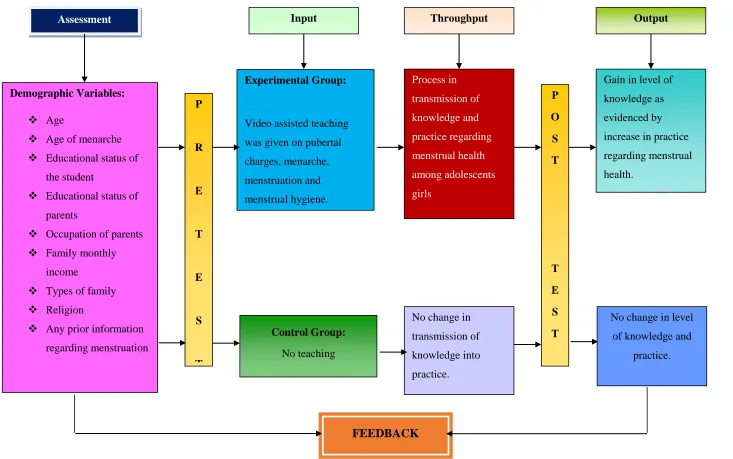
The study is based upon J.W.Kenny’s open system model. All living systems
are open, in that there is a continual exchange of matter, energy and information. Open Systems have varying degrees of interaction with the environment from which
the system receives input and gives back output in the form of matter, energy and information. For survival, all systems must receive varying types and amount of
matters, energy and information.
The main concepts of the open system model are input, throughput and output. According to J.W. Kenny’s Open System Model,
Input: Refers to matter, energy and information that enters in to the system through its boundary. In this study it refers to the assessment of video assisted
teaching programme on knowledge and practice regarding pubertal changes, menarche, menstruation & menstrual health.
Throughput: Refers to processing where the system transforms the energy, matter and information. In this study it refers to the transformation of knowledge and practice regarding menstrual health among adolescent girls after receiving video
assisted teaching programme.
Output: Refers to matter, energy and information that are processed. In this study it refers to the increase the level of knowledge and practice regarding menstrual
health as measured by post test.
Demographic Variables:
Age
Age of menarche
Educational status of the student
Educational status of parents
Occupation of parents
Family monthly income
Types of family
Religion
Any prior information regarding menstruation P R E T E S T Experimental Group:
Video assisted teaching
was given on pubertal
charges, menarche, menstruation and menstrual hygiene. Control Group: No teaching Process in transmission of knowledge and practice regarding menstrual health among adolescents girls
No change in
transmission of knowledge into practice. P O S T T E S T
Gain in level of
knowledge as
evidenced by
increase in practice
regarding menstrual
health.
No change in level
of knowledge and
practice.
[image:36.842.63.796.47.506.2]FEEDBACK
CHAPTER – II
REVIEW OF LITERATURE
Review literature is defined as an extensive, exhaustive and systematic examination of publication of publication to the research project.
Review of literature is a critical summary of research on a topic of interest generally prepared to put a research problem in context or to identify gaps and
weakness in prior studies so as to justify a new investigation.
-Polit & Hungler 2012
Research and non research literature reviewed were organized under the following headings.
1. Over view of menstruation, menstrual hygiene and newer concept of
menstruation.
2. Studies related to knowledge on menstruation & menstrual hygiene. 3. Studies related to practice on menstrual hygiene.
4. Studies related to effectiveness of structured teaching programme on menstruation and menstrual hygiene.
OVER VIEW OF MENSTRUATION, MENSTRUAL HYGIENE & NEWER CONCEPT:
Menstruation & Menstrual hygiene:
Menstruation is a normal physiological cyclic function common to all females
in the reproductive age group. It influences her quality of life at the individual, household and societal level. The socio cultural meanings attached to it have a
Biologically, menstruation is the visible manifestation of cyclic physiologic uterine bleeding out of shedding of the endometrium. It occurs due to invisible
interplay of hormones mainly through hypothalamic- pituitary —ovarian axis. The menstrual cycle is usually one of 28 days, measured by the time between the first day
of one period and the first day of next. The duration of bleeding is about 3-5 days and estimated blood loss is between 20 to 80 ml with an average of 50-ml (Padubidri &
Shirish, 1999; Dutta, 2004).
Nearly, in 500 BC, Sushruta Samhita noted that Indian girls commenced to menstruate at the age of 12 years. The importance of menstruation and menarche can
be gauged by writing in Mahabharata that, “Each time an unwedded maiden has her monthly course, her parents or guardians are guilty of heinous crime of slaying the embryo.” Therefore, the father tried to find a husband for his daughter as early as
possible after the commencement of menstruation. (Aruna Marathi 2009)
Joshi et al, (2011), in their study on socio cultural implications of menstruation
and menstrual problems on rural women's lives conducted in Gujarat found that most of the women were unaware of the concept of reproduction prior to menarche. A few
women who had some idea stated that their knowledge was limited to the awareness that "women bled from the vagina on certain days of the month". Apparently they knew nothing beyond this. Even women who had attained menarche at the age of 16
years or later stated that they were not fully aware of the implications of menstruation.
Martin (2011) did a qualitative study among three age groups of women (puberty to childbearing, child bearing and child rearing age, menopause and post menopause) in all social groups. These women saw menstruation not as a private
describe menstruation as a 'hassle' and were concerned about its 'messiness' because they face a variety of practical difficulties in keeping it in secret while at work.
One of the largest studies of menstrual beliefs was the W.H.O funded study of patterns and perceptions of menstruation. This study involve over 5000 women in 10
countries and collected information about their menstrual experiences, such as length, frequency, and amount of bleeding as well as their beliefs about menstruation.
Analysis of data on menstrual beliefs have shown 9 different grouping of beliefs, which demonstrate the diversity of views held by women about menstruation, with each belief pattern being held by relatively a small proportion of women, ranging from
4.68 percent to 19.17 percent of the total sample.
Desai et al, (2010) found that 34.6 percent adolescents had depression in
response to menarche. Other forms of attitudes were indifference and revulsion. Nearly 80 percent of the respondents practised some form of taboo during menstruation such as avoiding holy places and not touching others. Other taboos
include hair washing, bathing and mixing with other family members.
Joshi et al, (2012) identified that a menstruating woman had to maintain some
form of isolation because she was considered 'impure' and 'polluted'. The restrictions to be practised during menstruation are more rigidly practised among Hindus than Muslims.
Ginsburg (2013) found that the social attitudes towards menstruation play a role in the treatment of women's hygiene items. Study of over 150 boxes of sanitary
goods in United States- northern California reveals how the design of the objects and of their packaging can be read as encouraging private, discreet consumption. She identified that the packaging of sanitary napkins are relatively plain and that it avoids
Desai, (2012) found 77.3 percent girls used household clothes for menstrual flow and only 22.6 percent used sanitary napkins. Use of sanitary napkins, though
hygienic has still not become popular, and the reasons reported as responsible for this are lack of easy availability and cost. The mere fact that the person is shy to buy it
from the shop shows the conservatism in thesociety.
James, (2013) identified that adolescent girls had inadequate knowledge of
menstrual hygiene. Girls were not confident of their self-care concerning protection against staining clothes during periods, so much so that they imposed certain restrictions on themselves. During menstruation, most of the girls were using un
sterilised cotton pads or old cloth pieces and reused old clothing after washing. Majority of the girls changed pads at fixed times of the day i.e., once or twice. They
did not change the pad when it was soaked. Also she identified that a large number of girls disposed of their pads unhygeinically. Girls were dissatisfied with the information they had received on menstrual hygiene.
The most common menstrual disorders found among adolescent girls are dysmenorrhoea, Pre-menstrual syndrome and dysfunctional uterine bleeding (Dutta,
2004).
James, (2010) in her study on menstrual knowledge and practices among adolescent girls in Punjab found that the common problems faced by adolescent girls a
few days before or during the menstrual periods were abdominal pain, backache, tension and constipation.
John et al, (2012) studied 600 adolescent girls of ages ranging from 13-19 years and identified that only 61 percent had regular cycles, 55 percent had painful menstruation and 21 percent had either excessive or scanty bleeding. The cycle ranged
menstrual complaints likeabdominal pain, cramps and acne were reported by 40 percent of the respondents.
In a random study of 2000 girls between the age of 11 and 19 years at Ajmer, 56.48 percent had gynaecological problems. The major problem was menstrual in 43.3
percent cases and they were dysfunctional uterine bleeding in 7.6 percent cases and dysmenorrhoea in 24 percent cases. The menstrual problems were found more in
lower socio economic status. Of the total cases 50 percent were practising some form ofmenstrual taboos and a definite relation is found with menstrual problems and taboos (Bhargava, 2013).
Joseph, (2013) found that 92 percent of the unmarried adolescent girls in a selected slum reported painful menstruation; 64 percent, heavy bleeding and 52
percent had irregular bleeding. These menstrual problems were more common among girls who were employed.
Newer concepts in menstruation:
Mesenchymal stem cells (MSCs) are self-renewing progenitor cells with the capacity to differentiate into various cell types under specific conditions. Adult stem
cells derived from different sources, including bone marrow, adipose tissue or post-natal tissues, such as umbilical cord and placenta, have been shown to possess regenerative, anti-inflammatory or immune regulatory potential in a variety of
diseases. The limitation of their clinical use resides in the invasiveness of the extraction methods and in some cases their limited proliferative capacity.
Furthermore, diverse mesenchymal stem cells sources are known to display distinct functional properties that might contribute to specific therapeutic effects.
A study published in 2007, was the first to identify and characterize a new
cells (MenSCs) are rapidly expanded and differentiated under standard laboratory conditions. There is growing interest in their clinical potential since they display a
high proliferation rate, are multipotent and obtainable in a periodic and non invasive manner, devoid of the biological and ethical issues concerning other stem cell types
[2-5]. Recent evidence suggests that MenSCs are positive for several MSCs markers, including CD90, CD29, CD105, and CD73, and also remain negative for
hematopoietic cell markers, such as CD34, CD45 and CD133. Some reports have demonstrated the expression of embryonic markers and pluripotent intracellular cell markers, such as OCT-4, c-kit and SSEA-4, not found on MSCs from other sources,
although these findings have abeen disputed, even in cells isolated and cultured under comparable conditions.
STUDIES RELATED TO KNOWLEDGE ON MENSTRUATION & MENSTRUAL HYGIENE:
Neelima Sharma et al, (2013) a cross sectional study was conducted among 50 girls of first year MBBS of Sri Aurobindo Institute of Medical Sciences, Indore. This
is an anonymous, questionnaire-based survey. A Self-developed, pre-validated questionnaire was used. Data is expressed as counts and percentages. A pre formed
pre-tested questionnaire was used. The study finding revealed that most of the girls (50.56%) were in the age group of 18-20 years. Mean age of attaining menarche was
13 ranges were 9-17. Researcher found that in 35.22% of students, menstrual habits were inculcated by their mothers. 152 girls (86.36%) were using sanitary napkins as absorbent material during their menstrual cycle. The researcher concluded that the
girls should be educated about the significance of menstruation and development of secondary sexual characteristics, selection of a sanitary menstrual absorbent and its
compulsory sex education in school curriculum and knowledgeable parents, so that she does not develop psychological upset and the received education would indirectly
wipe away the age old wrong ideas and make her to feel free to discuss menstrual matters without any inhibitions.
Varma et al., (2013) had conducted a descriptive cross sectional study among 120 adolescent girls of a higher secondary school situated in Varanasi district.
Information was obtained with the help of a predesigned and pre tested questionnaire in a local language. The result of the study was about half of the girls (58.3%) were aware about menstruation prior to attainment of menarche. The mean age of menarche
was found to be 12.98yrs. The most common menstrual pattern was 3/30 days. Mother was the first informant regarding menstruation in case of (41.66%) of girls.
Most of the girls (85.8%) believe it as a physiological process. This study has highlighted that the need of adolescent girls to have accurate and adequate information about menstruation and its appropriate management. Girls should be well
versed before the age of menarche about the physiology of menstruation, the process involved and its important etc. Education regarding reproductive health and hygiene
should be included as a part of school curriculum.
Barathalakshmi et al, (2013) had done a descriptive cross sectional study among 435 school going girls of 8th – 12th standards. A pre-designed, pre tested
structured questionnaire was used in the study. Descriptive statistics, Pearson Chi-square test and Kruskal Wallis test were applied in data analysis. This study reveals
that,the mean age of menarche in the study group was 12.9 + 1.2 years. Only 28.2% girls were aware of menstruation before menarche Very few mothers are ready to share the information which is of paramount significance to their daughters. Only
that 45.7% respondents expressed fear and 30.5% girls expressed worry on seeing first menstruation. In the present study only 30.5% girls knew that menstruation is due
to cyclical uterine bleeding and 34.0% girls knew that hormonal changes are responsible for it. It was distressing to observe that in the present study most of the
girls (65.9%) did not know the cause of the menstrual bleeding. Study concluded that personal hygiene practices were also found to be unsatisfactory. It is important to
educate adolescents about the issues related to menstruation, so that they could safeguard themselves against various infections and diseases.
Shivaleela et al, (2014) had conducted a School based cross- sectional study
among high school girl students in Western Ethiopia. Study populations are 9th and 10th grade were 1400 and 1392 respectively. The girls who attained menarche were
included for the study. Girls with visual impairment, evening class students and those who were critically ill and incapable to provide informed consent were excluded from the study. The sampling procedure started by stratifying the schools into two
categories, governmental and non-governmental. The selection of the schools was done randomly. Proportional number of participants (students) was selected by
simple random sampling technique. The sampling frame was obtained from the student registration books of the respective schools. To collect data by self-administered questionnaires were employed. . The descriptive analysis including
proportions, percentages, frequency distribution and measures of central tendency was done. In this study, more than half (60.9 %) of the students had good knowledge about
Rakesh Ninama et al, (2015) had done a Communities based cross sectional study on knowledge on menstrual hygiene. Study samples are adolescent girls of
urban areas as well as rural areas. Study was conducted in lord Krishna school, pioneers school, and eklavya school in Gujarat. Two hundred and fifteen adolescent
girls from 9th, 10th, 11th and 12th standard were selected for the study. A pre designed pre test structured questionnaire was used. The study explained that the
adolescent girls (68%) were unaware regarding the reason for menstruation. The main source of knowledge regarding menstruation was mother (83%). This might be because nobody talks much about the menstruation. There is gap in educational
system where reproductive health is not taught because either considered non important or unsocial. It is assumed that knowledge regarding menstruation will come
gradually by its own. Most of the adolescent are unaware of normal physiology of menstruation. As mother plays vital role as a teacher for imparting primary knowledge regarding menstrual cycle to adolescent. So mother need to be armed with
proper and complete knowledge via formal and informal communications.
Senthil Priya et al, (2015) A cross sectional study was undertaken among 500
adolescent girl students in the age group of 14 – 19 years who had attained menarche. The study settings are government middle and higher secondary school for girls which was very near to Salem medical college . The student’s data were collected by
personal interviews by using a pre tested structured questionnaire. The questionnaire comprised of age, socio economic status, educational status, menarcheal age,
menstrual pattern, premenstrual Symptoms (PMS), dysmenorrhoea, impact of menstrual disorders on school attendance, consultation for menstrual problems and the hygienic practices followed during the time of Menstruation. The mean age of the
underweight (37%), whereas only 16.4% were overweight and 14.2% were obese. In this study 62.2% of the adolescent girls had premenstrual symptoms, among that
various menstrual symptoms seen the most common were abdominal pain (94.6%), cramps (82.2%) and backache (77.8%). So this study concluded that Poor menstrual
hygiene in this study subjects would make them at risk of developing certain reproductive tract infections. So a proper awareness programme had to be conducted
on a routine basis in all schools particularly the rural schools emphasising the importance of genital hygiene and the remedies for the common menstrual problems which occurs in adolescent age group.
Shriram et al, (2015) cross-sectional community based study was conducted among migrant adolescent girls residing in (Dera) the Corporate ion area of Nashik
(Maharashtra). Duration of the study was 2 months. Purposive sampling method was adopted. In -depth interviewing technique use among such purposively selected 60 adolescent girls till redundancy in responses started creeping up. A semi-structured
schedule with open ended questions was used for data collection process. End of the study reveal the truth that mean age of study participants were 15.6 ± 2.4. Almost all
of the study participants were illiterate and not aware about their own age. Majority of (60%) studyparticipants were married in which most of them were married within 2-3 years after menarche. Majority of the study participants (75%) were not aware about
menarche. Those having the knowledge of menarche in which 50% information was obtained from friends followed by mothers (35%). Majority of the study participants
were experienced the complaints of the Reproductive Tract Infections (RTIs) in last 6 months. In which 80% were abnormal vaginal discharge and 20% were low backache. All the study participants were not taken any treatment for their complaints of
menstrual hygiene and improper sanitary practices. It may be because of social prohibition, educational gap and negative attitude of parents in discussing menstrual
related topic openly. There is need to give focus on such migrated adolescents girls to aware them about proper menstrual hygiene and practices.
Ramachandra et al, (2016) had done a cross sectional study among 550 school- going adolescent girls in the age group of 13-16 years in Karnataka. A
pre-designed, pre-tested semi-structured questionnaire was used. Data obtained and analyzed using the SPSS Version 15, and findings were reported in the form of descriptive statistics. The study shows that the mean age at menarche was 12.39 years
in the urban schools with overall men age of 13.98 years. Age at menarche of the participants ranged between 11 to 15 years (88.5%). This study showed that only 83
(33.27%) the urban had awareness about menstruation prior to menarche. The unawareness of girls about menstruation might be the cause for the girls in the present study to feel embarrassed, anxious or scared at onset.
Ruchi, Fartha Azmi (2016) had done a descriptive study on knowledge of the adolescence girls regarding menstrual hygiene in school bahadrabad haridwar. Non
experimental quantitative research approach was used. Study populations are adolescent school girl, 40 samples were selected from Aarya inter college in haridwar, convenient sampling technique was used. Data collection done through structured
knowledge questionnaire. Descriptive and inferential statics were used for data analysis. This study concluded that only 25% of the adolescent having adequate
knowledge in menarche and menstrual hygiene.
Jesty Kuriachen and Sridevy (2016) had conducted a experimental study on knowledge on menstrual hygiene. One group pre test post test experimental design
This study were conducted in selected Government higher secondary school, Kadirkamam in Pondicherry. The populations of the study comprises of adolescent
girls who are studying 9th standard selected at Pondicherry. The total sample of the study consists of 50 adolescent girls who are studying 9th standard. Convenient and
Purposive sampling technique was used. A structured knowledge questionnaire was used for the data collection process. The study revealed that the knowledge and
attitude level in pre test was inadequate but after the structured teaching programme the subjects had adequate knowl