Oceanography and
Marine Biology
An Annual Review
Volume 57
S. J. Hawkins, A. L. Allcock, A. E. Bates, L. B. Firth,
I. P. Smith, S. E. Swearer & P. A. Todd
First published 2019
ISBN 978-0-367-13415-0 (hbk)
ISBN 978-0-429-02637-9 (ebk)
Review 4
Design Options, Implementation Issues and Evaluating
Success of Ecologically Engineered Shorelines
Rebecca L. Morris, Eliza C. Heery, Lynette H.L. Loke, Edward Lau, Elisabeth
M.A. Strain, Laura Airoldi, Karen A. Alexander, Melanie J. Bishop, Ross
A. Coleman, Jeffery R. Cordell, Yun-Wei Dong, Louise B. Firth, Stephen
J. Hawkins, Tom Heath, Michael Kokora, Shing Yip Lee, Jon K. Miller,
Shimrit Perkol-Finkel, Andrew Rella, Peter D. Steinberg, Ichiro Takeuchi,
Richard C. Thompson, Peter A. Todd, Jason D. Toft & Kenneth M.Y. Leung
Taylor & Francis
DESIGN OPTIONS, IMPLEMENTATION
ISSUES AND EVALUATING SUCCESS OF
ECOLOGICALLY ENGINEERED SHORELINES
REBECCA L. MORRIS1, ELIZA C. HEERY2, LYNETTE H.L. LOKE2, EDWARD LAU3, ELISABETH M.A. STRAIN1, LAURA AIROLDI4, KAREN A. ALEXANDER5,6,
MELANIE J. BISHOP7, ROSS A. COLEMAN8, JEFFERY R. CORDELL9, YUN-WEI DONG10, LOUISE B. FIRTH11, STEPHEN J. HAWKINS12,13, TOM HEATH14, MICHAEL
KOKORA15,16, SHING YIP LEE17, JON K. MILLER18, SHIMRIT PERKOL-FINKEL19, ANDREW RELLA19, PETER D. STEINBERG20,21,22, ICHIRO TAKEUCHI23, RICHARD C. THOMPSON11, PETER A. TODD2, JASON D. TOFT9 & KENNETH M.Y. LEUNG3,24*
1National Centre for Coasts and Climate, School of BioSciences,
The University of Melbourne, VIC 3010, Australia
2Experimental Marine Ecology Laboratory, Department of Biological
Sciences, National University of Singapore, 117543, Singapore
3The Swire Institute of Marine Science and School of Biological Sciences,
The University of Hong Kong, Pokfulam, Hong Kong, China
4University of Bologna, Dipartimento di Scienze Biologiche, Geologiche
e Ambientali (BiGeA) and Centro Interdipartimentale di Ricerca per le Scienze Ambientali (CIRSA), UO CoNISMa, 40126, Italy
5Centre for Marine Socioecology, University of Tasmania, Hobart, TAS 7001, Australia 6Institute for Marine and Antarctic Studies, University of
Tasmania, PO Box 49, Hobart, TAS 7001, Australia
7Department of Biological Sciences, Macquarie University, New South Wales 2109, Australia 8Centre for Research on Ecological Impacts of Coastal Cities, Marine
Ecology Laboratories (A11), School of Life and Environmental Sciences, The University of Sydney, New South Wales 2006, Australia
9School of Aquatic and Fishery Sciences, University of
Washington, Box 355020, Seattle, WA 98195, USA
10State Key Laboratory of Marine Environmental Science, College of
Ocean and Earth Sciences, Xiamen University, Xiamen, China
11School of Biological and Marine Sciences, University of
Plymouth, Drake Circus, Plymouth, PL4 8AA, UK
12School of Ocean and Earth Science, University of Southampton,
National Oceanography Centre Southampton, SO14 3ZH, UK
13The Marine Biological Association of the United Kingdom, The
Laboratory, Citadel Hill, Plymouth, PL1 2PB, UK
14Georges River Council, Hurstville, New South Wales, 2220, Australia 15Faculty of Architecture, the University of Hong Kong, Pokfulam, Hong Kong, China
16Object Territories, Hong Kong, China
17Simon F S Li Marine Science Laboratory, School of Life Sciences and Earth System
18Davidson Laboratory, Stevens Institute of Technology, Hoboken, NJ 07030, USA 19ECOncrete Tech LTD, PO Box 51528, Tel Aviv, Israel
20School of Biological, Earth and Environmental Science and Centre for Marine
Bio-Innovation, University of New South Wales, Sydney, New South Wales 2052, Australia
21Sydney Institute of Marine Science, Mosman, New South Wales 2088, Australia 22Singapore Centre for Environmental Life Sciences Engineering,
Nanyang Technological University, 637551, Singapore
23Graduate School of Agriculture, Ehime University, Japan
24State Key Laboratory of Marine Pollution (City University of Hong Kong), Tat Chee Avenue,
Kowloon, Hong Kong, China *Corresponding author: Kenneth M.Y. Leung
e-mail: [email protected]
Abstract
Human population growth and accelerating coastal development have been the drivers for unprecedented construction of artificial structures along shorelines globally. Construction has been recently amplified by societal responses to reduce flood and erosion risks from rising sea levels and more extreme storms resulting from climate change. Such structures, leading to highly modified shorelines, deliver societal benefits, but they also create significant socioeconomic and environmental challenges. The planning, design and deployment of these coastal structures should aim to provide multiple goals through the application of ecoengineering to shoreline development. Such developments should be designed and built with the overarching objective of reducing negative impacts on nature, using hard, soft and hybrid ecological engineering approaches. The design of ecologically sensitive shorelines should be context-dependent and combine engineering, environmental and socioeconomic considerations. The costs and benefits of ecoengineered shoreline design options should be considered across all three of these disciplinary domains when setting objectives, informing plans for their subsequent maintenance and management and ultimately monitoring and evaluating their success. To date, successful ecoengineered shoreline projects have engaged with multiple stakeholders (e.g. architects, engineers, ecologists, coastal/port managers and the general public) during their conception and construction, but few have evaluated engineering, ecological and socioeconomic outcomes in a comprehensive manner. Increasing global awareness of climate change impacts (increased frequency or magnitude of extreme weather events and sea level rise), coupled with future predictions for coastal development (due to population growth leading to urban development and renewal, land reclamation and establishment of renewable energy infrastructure in the sea) will increase the demand for adaptive techniques to protect coastlines. In this review, we present an overview of current ecoengineered shoreline design options, the drivers and constraints that influence implementation and factors to consider when evaluating the success of such ecologically engineered shorelines.
Introduction and the history of ecological
engineering of shorelines
(Airoldi et al. 2005a, Martin et al. 2005, Bulleri & Chapman 2010, Dethier et al. 2016, Bishop et al. 2017, Heery et al. 2017). Improving environmental conditions along artificial shorelines is critical to compensate for impacts from ocean sprawl—the proliferation of artificial structures in the marine environment (Dafforn et al. 2015a, Dyson & Yocom 2015, Firth et al. 2016b, Bishop et al. 2017, Heery et al. 2017). With climate change and sea level rise, existing shoreline protections are increasingly proving ineffective and will need substantive reassessment and reconstruction during the coming decades (Hawkins & Cashmore 1993, Nicholls & Tol 2006, Hallegatte et al. 2013, Hinkel et al. 2014, Hoggart et al. 2014, Smith et al. 2017a).
The goal of this review is to provide a framework for selecting, applying and tracking the success of ecologically engineered (hereafter ‘ecoengineered’) shoreline strategies (Mitsch 2012) for intertidal and shallow subtidal marine environments. The fundamental aim of ecoengineered shorelines is to build more inclusive, resilient and safe coasts for people and nature, which maximise benefits for ecosystems, society and economies (Airoldi et al. 2005a, Dafforn et al. 2015a). Because it is a relatively young discipline and innately experimental in its current form, ensuring that it is developed and applied responsibly requires that parameters and metrics for its success be clearly defined and monitored (Saleh & Weinstein 2016, Mayer-Pinto et al. 2017). In this review, we take a multidisciplinary approach in evaluating the benefits and challenges of ecoengineered shorelines and discuss metrics to evaluate success originating in the fields of coastal ecology, engineering, sociology, economics, urban planning and architecture.
Ecoengineered shorelines are in a sense the most recent stage in the development of marine infrastructure and coastal armouring, which can be traced back to before the Common Era (i.e. BC) in Egypt (Loke et al. 2019). Early ports were located in sheltered bays, river mouths and lagoons, with simple jetties and, eventually, low-crested breakwaters used in combination with natural habitats for coastal protection (Polanyi 1963, Hoyle 1989, Charlier et al. 2005). In some regions, such as China and parts of the Mediterranean, technological advances led to more extensive artificial shorelines relatively early (Franco 1996). For instance, with the discovery of pozzolanic ash hydraulic cement, the Romans started extensive underwater engineering and managed to construct solid breakwaters to protect fully exposed harbours (Jackson et al. 2017). By the Middle Ages in Europe, planting and dune belt protection were well established, as were strict environmental regulations. For instance, legal documents of 1282 and 1339 in Venice prohibited the cutting of coastal trees, picking mussels and removing sand or vegetation from beaches or dunes (Grillo 1989). In the Renaissance, Leonardo da Vinci championed the credo of ‘working with Nature’ (‘ne coneris contra ictum fluctus: fluctus
obsequio blondiuntur’—Nature should not be faced bluntly and challenged, but wisely circumvented) (Franco 1996). A similar idea was championed by Andries Vierlingh in his manuscript entitled
Tractaet Dyckagie, which remains an important text regarding fundamental errors in land and water engineering management (Vierlingh et al. 1920).
This transition in perception and practice has been facilitated by the widening recognition of the pervasive and persistent anthropogenic changes that characterise urban areas (Bulleri & Chapman 2010, Firth et al. 2016b, Mayer-Pinto et al. 2018, Bugnot et al. 2019) and by the emergence of the ‘novel ecosystem’ concept, which emphasises novelty and human agency in the emergent ecological communities that are without historical precedent (Milton 2003, Hobbs et al. 2006). The novel ecosystem concept is not without controversy (e.g. Woodworth 2013, Murcia et al. 2014); however, in novel urban habitats specifically, it provides a framework for conceptualising coastal engineering projects as opportunities for the amelioration of ecosystems that are already heavily shaped by anthropogenic activity (Perkins et al. 2015, Aguirre et al. 2016). While the distinction is not always made, urban areas contain both hybrid ecosystems that may have significant novelty, as well as novel ecosystems, which, by definition, cannot return to hybrid or historical conditions (Hobbs et al. 2006). The novel ecosystem concept has arguably changed the perceived value of the urban environment, particularly in relation to its provisioning of ecosystem services to urban populations, ultimately facilitating the integration of a broader range of ecological, engineering, social and economic interests into shoreline development and management (Perring et al. 2013).
There is considerable overlap between the fields of ecoengineering and ecological restoration. Ecological restoration aims to assist the recovery of degraded ecosystems and put back their attendant services (Society for Ecological Restoration International Policy Position Statement (SER 2004). The traditional view of restoration envisaged returning an ecosystem to a predefined historical state (Hobbs & Norton 1996). Given ecosystem variability and complexity, coupled with the extent of environmental change that has occurred over recent decades, making target baselines uncertain (Palmer et al. 2016), restoring ecosystems to their former state is often impossible on human timescales (Hobbs et al. 2006). Thus, many have emphasised the importance of defining restoration to a defined target state, which is likely to be far from the original pristine condition of the ecosystem (Hawkins et al. 1999, 2002, SER 2004, Geist & Hawkins 2016, Palmer et al. 2016). Even our best efforts serve primarily to rehabilitate or repair damaged biodiversity and ecosystem processes and services, rather than comprehensively restore ecosystems (e.g. in a marine context, ‘nudging nature’—Hawkins et al. 1999, 2002). Conversely reallocation is the process of assigning an ecosystem to a new use that may not necessarily bear an intrinsic relationship to the structure or functioning of the predisturbed ecosystem (Aronson et al. 1993). Reconciliation is the process of modifying and diversifying anthropogenic habitats to harbour a wide variety of native species (Rosenzweig 2003a; for further discussion, see the section entitled ‘Links to theoretical and community ecology’, later in this review). While some refer to restoration as the best form of ecoengineering (Bradshaw 1997), others claim that restoration encompasses ecoengineering (SER 2004). Here, we propose that ecoengineering is a broad approach that can aid restoration (Mitsch 2012), but more typically is used for rehabilitation, reallocation and/or reconciliation.
key approaches, recent developments, limitations and future trajectory of ecoengineered shoreline design. We present a framework for the development of ecoengineered shorelines by reviewing three themes: (1) core principles and approaches to ecoengineered shoreline design, (2) factors that influence implementation and (3) how to evaluate the success of ecoengineered shorelines.
Design considerations for ecoengineered shorelines
Links to theoretical and community ecologyEcological concepts and theory provide both a vocabulary and a predictive framework to understand and manage ecosystems along the spectrum from near-pristine to highly degraded ecosystems. Thus, theory can inform policy, planning and practice. Here, we briefly introduce ecological knowledge relevant to the design of ecoengineered shorelines. We start with species-area relationships and the relationship between biodiversity and ecosystem functioning. We then discuss diversity at different scales, succession and disturbance, environmental gradients and connectivity. The aim of this section is simply to highlight some of the key theoretical underpinnings of the rapidly emerging field of designing ecologically sensitive shorelines.
Species-area relationships
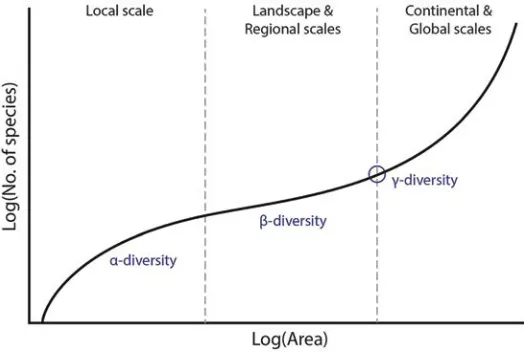
[image:7.504.121.383.445.621.2]Species-area relationships (SARs)—which involve one of the few widely accepted laws in ecology (Lawton 1999)—dictate that a larger area will contain a larger number of species. This pattern is observed at almost every spatial scale (Figure 1; Rosindell & Cornell 2007, O’Dwyer & Green 2010). It is manifest in highly modified shorelines, where the loss of natural habitat leads to direct loss in species (Rosenzweig 2003a). The same principle may be applied in reverse, however, to aid modifying, redesigning and diversifying anthropogenic habitats. Reconciliation ecology, which focusses on how urban and novel habitats may be used to maintain biodiversity and to provide ecosystem services, provides several examples of this (Hobbs et al. 2013, Perring et al. 2013), in both terrestrial (Rosenzweig 2003b, Kowarik 2011) and aquatic (Mitsch & Jørgensen 2004, Firth et al. 2016b) environments. While species colonisation in some of these examples occurs by accident (refer to Rosenzweig 2003b), many other examples are carefully planned and managed (see the section entitled ‘Case studies and scaling up’, later in this review).
Diversity at multiple scales
Diversity is a key theme in ecology, which underpins both the goals and assessment of many ecoengineered shoreline projects. It is frequently estimated as species richness (i.e. the total number of species present) and can be quantified at multiple spatial scales. While species richness within a habitat (alpha diversity) is useful in many instances, the compositional difference in species assemblages among habitats (beta diversity) is essential for achieving high diversity in a region (gamma diversity; Figure 1; Whittaker 1960, 1972). Specifying the scale at which ecoengineered shoreline designs aim to enhance diversity is crucial, as strategies for improving alpha and beta diversity may differ. Designs focussed on enhancing large-scale (landscape and regional scale— hundreds of metres—tens of kilometres) spatial heterogeneity and creation of various medium-scale habitat types (1–100 m) will have a positive effect on beta diversity. Those strategies focussed on increasing local-scale (<1 m) topographic and/or structural complexity (e.g. Coombes et al. 2015, Loke and Todd 2016) and ameliorating abiotic stressors (e.g. Browne & Chapman 2011, Evans et al. 2016) are more likely to have a positive effect on alpha diversity. Patches of more complex habitat, especially if they are of different types, among a background landscape of less complex habitats will also increase beta diversity (Firth et al. 2014, Evans et al. 2016).
Biodiversity and ecosystem functioning
Over the last two decades, there has been a growing realisation that loss of species can compromise ecosystem functioning (e.g. biomass production, nutrient uptake; Loreau et al. 2002, Tilman et al. 2014, Oliver et al. 2015) and in turn, ecosystem services (e.g. carbon storage; Díaz et al. 2006, Cardinale et al. 2012, Isbell et al. 2014). Thus, increasing diversity would enhance the functioning of ecosystems by elevating production and nutrient cycling, as well as conveying resilience to environmental change (the insurance hypothesis; Yachi and Loreau 1999) and invasion by nonnative species (Stachowicz et al. 2002, Arenas et al. 2006, Tan et al. 2018). These processes lead to enhanced goods and services provided by biodiversity and ecosystems (i.e. provisioning, supporting, and regulating; Raffaelli et al. 2002). For both sedimentary (e.g. Solan et al. 2004) and rocky shore habitats (e.g. O’Connor & Crowe 2005, Griffin et al. 2008, 2010), experimental work has shown that species diversity and identity influence ecosystem processes such as productivity and nutrient cycling. The importance of habitat patch diversity has also been recognised for some time (e.g. Giller et al. 2004, Hawkins 2004) and more recently has been experimentally demonstrated (e.g. Griffin et al. 2009, Godbold et al. 2011, Alsterberg et al. 2017). Knowledge of the traits of species (functional diversity) can also be valuable in translating structural attributes of biodiversity into the maintenance or restoration of ecosystem processes, and hence services (Rigolet et al. 2014). Ultimately, ecoengineering aims to maximise the ecosystem services that can be delivered in seminatural and highly modified ecosystems (Dafforn et al. 2015a). Paying attention to increasing habitat patch diversity, and hence beta species diversity, is likely to pay greater dividends in terms of ecosystem functioning and provision of services.
Environmental gradients and connectivity
to which environmental gradients are altered or intercepted are less likely to fundamentally change community structure. For example, installing hard coastal armour in an area naturally typified by coarse sand or gravel will inevitably lead to scouring of any colonising rocky shore species (Moschella et al. 2005), preventing communities from developing beyond the early successional stages.
Artificial structures often support assemblages analogous to rocky reefs jutting out from high-energy sandy beaches (Bally et al. 1984) that tend to be dominated by ephemeral early successional species. Additionally, designs perform best when they account for ecological connectivity at various scales. Changes to the movement of organisms and resources such as detritus should be avoided (Huijbers et al. 2013, Bishop et al. 2017). Arrays of structures scaling up to affect whole coastlines (e.g. Ma et al. 2014, Dong et al. 2016) can act as stepping stones for the spread of native species responding to climate change (Johannesson & Warmoes 1990, Mieszkowska et al. 2006, Keith et al. 2010, Firth et al. 2015, Huang et al. 2015, Dong et al. 2016), as well as help invasions by nonnative species (Floerl et al. 2009, Mineur et al. 2012, Airoldi et al. 2015, Bishop et al. 2017).
Succession and disturbance
Novel habitats are colonised by a variety of marine organisms (Wahl 1989). When relatively constant conditions prevail, communities in novel habitats gradually shift in composition and structure through the processes of immigration and extinction (MacArthur & Wilson 1967). Connell & Slatyer (1977) proposed three models of succession: the classical model of positive facilitation of later stages by earlier colonisers, inhibition of later stages by earlier arrivals and a neutral tolerance model reflecting arrival of propagules and longevity of species. Significant disturbances, whether natural or anthropogenic, tend to push a successional sequence back to earlier stages (i.e. system retrogression; Odum 1985). Biological interactions such as grazing have been shown to break inhibition by intermediate phases such as green algae (Sousa 1979).
Classical ecological theory predicts the highest levels of diversity under moderate levels of disturbance, either in terms of intensity or frequency [the intermediate disturbance hypothesis (IDH); Connell 1978], as a low-disturbance regime leads to dominance by competitive-dominant species and strong frequent disturbances suppress most species to also result in low overall diversity (e.g. Sousa 1979). Although IDH has been challenged on both a theoretical and empirical basis (Lubchenco 1978, Fox 2013), it is well established that high levels of disturbance lead to depauperate systems comprising relatively few early successional or opportunistic taxa (Pulsford et al. 2014). As disturbances are commonplace in human-dominated environments, ecoengineering strategies that help stabilise the disturbance intensity or frequency may be beneficial (Airoldi et al. 2005b, Bulleri & Airoldi 2005, Airoldi & Bulleri 2011, Bracewell et al. 2013, Salomidi et al. 2013), increasing the likelihood that communities progress to a climax (Hawkins et al. 1983) or oscillate to and from intermediate stages.
Additionally, species or groups of species that positively influence succession can be integrated into ecoengineered shorelines through seeding (e.g. Perkol-Finkel et al. 2012, Ferrario et al. 2015, Ng et al. 2015) or targeted designs (Strain et al. 2017a). Studies on the mechanisms of succession have highlighted the importance of certain species interactions in determining the rate and direction of community development (Maggi et al. 2011). Positive interactions such as facilitation [e.g. settlement by mussels or tubicolous polychaetes enhancing the colonisation of meiofauna on hard surfaces (Dubois et al. 2002, O’Connor & Crowe 2007) or increased accumulation of leaf litter by mangrove on previously bare substrata, which aids in recruitment of juvenile nekton] may be particularly important (Bulleri et al. 2018). Organisms that serve as ecosystem engineers and foundation species also have profound impacts on the way that communities develop and, ultimately, on diversity as well (e.g. Coleman & Williams 2002, Tolley & Volety 2005, Marzinelli et al. 2014).
Biological invasions
by nonnative species (Bulleri & Airoldi 2005, Glasby et al. 2007, Vaselli et al. 2008, Ruiz et al. 2009, Dumont et al. 2011, Dafforn et al. 2012, Mineur et al. 2012, Simkanin et al. 2012, Airoldi et al. 2015). These concepts are strongly interrelated with many of those already presented in this review, particularly diversity, connectivity, succession and disturbance. Artificial structures provide novel colonisation opportunities for nonnative species (Dafforn et al. 2012). Those located in urban areas may be subject to particularly high levels of propagule pressure (‘introduction effort’), given their close proximity to known invasion hubs such as marinas and shipping facilities (Seebens et al. 2013), which is thought to strongly influence invasion risk (Lockwood et al. 2005). Urban artificial structures may also be subject to particularly high rates of disturbance (Bulleri & Airoldi 2005, Piola & Johnston 2008, Kenworthy et al. 2018) or to relatively low levels of predation by mobile consumers (Simkanin et al. 2013, Astudillo et al. 2016, 2018, Rogers et al. 2016), ultimately favouring nonnative taxa. Further, additional structural complexity, which is a key component of many ecoengineered shoreline projects (discussed further in section ‘Environmentally sensitive hard defences’, later in this review), can modify predator-prey interactions and potentially facilitate nonnative prey species by enhancing refugia from native predators (Barrios-O’Neill et al. 2014).
Fundamental design options
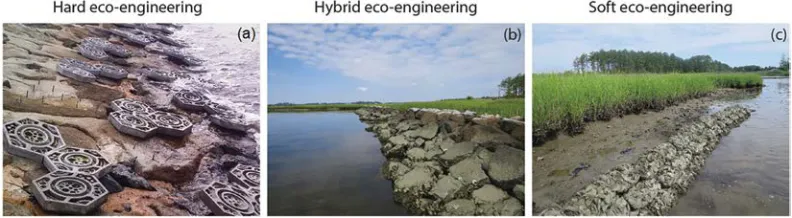
The construction of artificial structures such as seawalls, groynes and breakwaters has historically been the default approach to coastal protection (Cooper et al. 2016). Artificial structures are economically and environmentally costly (Jones 1994, Airoldi et al. 2005a, Kittinger & Ayers 2010, Hinkel et al. 2014), however, contributing to the growing interest in alternatives that compensate for the negative impacts of traditional coastal infrastructure and provide multiple functions (Chapman & Underwood 2011, Francis & Lorimer 2011, Mitsch 2012, Evans et al. 2017). These alternatives can be categorised into three fundamental approaches: (1) building in design features in new or modifying existing artificial structures (termed hard ecological engineering; Chapman & Underwood 2011, Firth et al. 2014); (2) replacing artificial structures with sediments, vegetation and/or other habitat-forming organisms (called soft ecological engineering; Temmerman et al. 2013, Morris et al. 2018b) and (3) applying both soft and hard engineering approaches in combination (known as hybrid
[image:10.504.54.450.512.621.2]ecological engineering; Chapman & Underwood 2011, Bilkovic & Mitchell 2013) (Figure 2). Many terms are used to refer to both traditionally and ecologically engineered shores. Common synonyms for artificial structures and coastal defences include coastal infrastructure, shoreline armouring, hard structures and urban structures. The term Ecoengineered shorelines is used to describe shorelines that have been developed or retrofitted using ecoengineering principles, via either hard, soft or hybrid approaches. Created or restored habitats are those that have undergone soft ecoengineering, and are commonly referred to as nature-based coastal defence (van der Nat
et al. 2016, Osorio-Cano et al. 2017, Gracia et al. 2018, Sutton-Grier et al. 2018). In the United States, soft and some hybrid ecological engineering projects also fall under the commonly used term living
shorelines (Bilkovic & Mitchell 2017).
Although the overall objective of ecoengineering is similar regardless of approach (i.e. to build shorelines for the benefit of both humans and nature; Mitsch 2012), there is a fundamental difference between hard and soft ecoengineering from a coastal defence perspective (Morris et al. 2018b). The goal of hard ecoengineering is usually to compensate for the negative impacts of artificial structures (e.g. seawall or breakwater) through enhancing biodiversity and ecological functioning while maintaining their physical integrity (e.g. Moschella et al. 2005, Burcharth et al. 2007, Chapman & Underwood 2011, Firth et al. 2014, Pioch et al. 2018). Conversely, while soft ecoengineering is usually proposed from a conservation and/or sustainability perspective (Dafforn et al. 2015a, Mayer-Pinto et al. 2017), the created or restored habitat needs to provide adequate coastal defence in addition to ecological and landscape values (e.g. biodiversity enhancement) if this technique is to replace or complement artificial structures. Although hard ecoengineering is less challenging to implement from a coastal defence perspective, there is growing evidence that created or restored habitats using soft engineering can also provide protection that is equivalent to or better than traditional engineered hard structures (Gittman et al. 2014, Smith et al. 2017a, Smith et al. 2018). As mentioned previously, soft engineering approaches and hard structures may even operate synergistically to enhance coastal protection (Smallegan et al. 2016, Vuik et al. 2016)—as successful hybrid schemes in some cases.
Goals and objectives
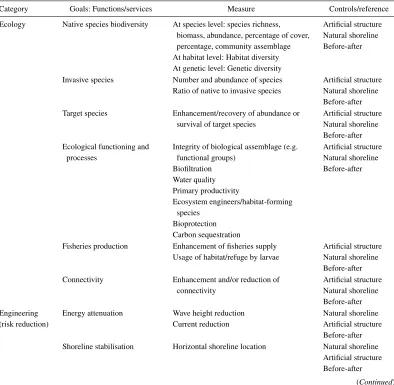
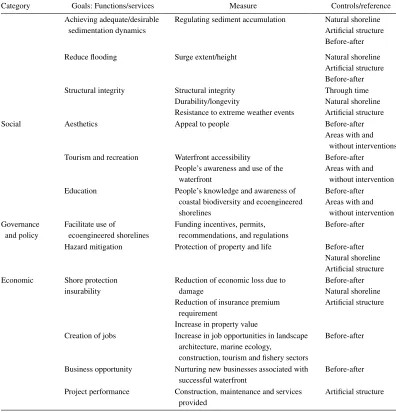
Defining the objectives or goals is considered the most fundamental step in any restoration (e.g. Hobbs & Norton 1996, SER 2004, McDonald et al. 2016, Palmer et al. 2016) or ecoengineering project (Mayer-Pinto et al. 2017). Ecoengineered shorelines are multifunctional and are valued for their potential to accrue benefits across multiple stakeholders (Evans et al. 2017), each of whom has their own set of objectives (e.g. economic, engineering, social, ecological) that typically drive or influence the objectives of a project. Sometimes these objectives overlap—for instance, creating a wide beach could also generate space for recreation, protect inland infrastructure and form habitat for nesting shore birds (Temmerman et al. 2013). Due to the way in which projects are conceived and funded (see the section entitled ‘Implementation of ecoengineered shorelines’, later in this review), one or more of these objectives may take precedence over the others, which can lead to trade-offs. Nevertheless, multifunctionality is a key goal of ecoengineered shorelines, and thus engineering, ecological and socioeconomic outcomes should be optimised. Evaluation of the success or failure of projects needs to focus on whether these multiple objectives are achieved (see the section entitled ‘Evaluating the ecoengineered shorelines approach in practice’, later in this review).
Identifying the approach
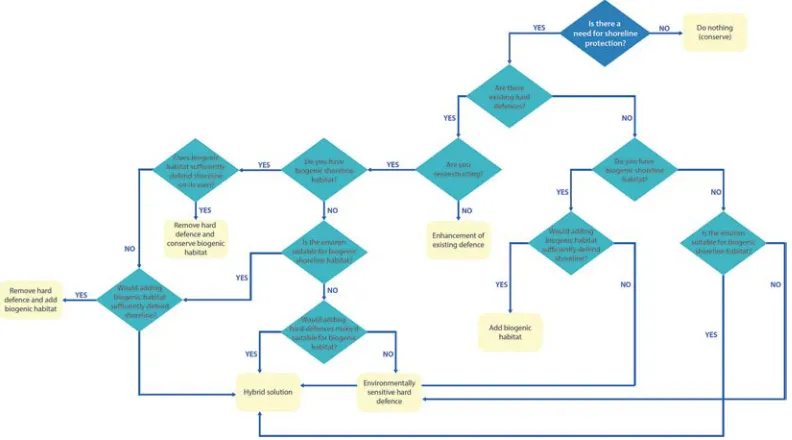
In general, selecting from soft ecoengineering, a hybrid approach and environmentally sensitive hard defences requires consideration of the physical environment (particularly wave conditions; Leonardi et al. 2016) and the respective cost of each approach (Arkema et al. 2017) in the context of the main purpose of the project (e.g. creating a bathing beach or a surfing bay, as opposed to protecting an agricultural land or an ecosystem of conservation interest). At low-wave-energy sites, soft and hybrid ecoengineering approaches are often feasible (Leonardi et al. 2016, 2018, Sanford & Gao 2018). At higher-energy sites, with significant wave action from either wind or shipping, certain types of soft engineering may not persist over time or provide adequate shoreline protection (Bouma et al. 2014). Such cases necessitate hybrid approaches, or at the highest energy end of the spectrum, hard defences (Moosavi 2017).
[image:12.504.56.452.69.289.2]Despite growing evidence suggesting that soft and hybrid approaches are often cost effective and sufficient for protection from flooding and erosion (Spalding et al. 2014, Gittman & Scyphers 2017, Sutton-Grier et al. 2018), considerable uncertainties (both perceived and realised) remain surrounding their efficacy as coastal defences (Gedan et al. 2011, Perkins et al. 2015, Sutton-Grier et al. 2015, Arkema et al. 2017). Thus, at least some degree of hard ecoengineering is often required (Cooper et al. 2016). The value and/or importance of the property, infrastructure or ecosystem to be protected will have some bearing on the choice of approach (soft, hard or hybrid). For example, if the asset to be protected is essential to national or regional infrastructure, such as an airport, hospital or railway, there may be less willingness to accept (WTA) approaches perceived to carry greater uncertainty with respect to inundation and flood risk. Often, there is stronger support for hard engineering approaches (Gray et al. 2017) that have been more thoroughly tested over time (Sutton-Grier et al. 2015), even when they are unnecessary or less cost effective than soft or hybrid alternatives (Scyphers et al. 2014, Gittman & Scyphers 2017). In contrast, where the asset is less crucial for social and economic health or primarily of local significance, there may be a higher chance for adopting more experimental (and potentially riskier) ecoengineered shoreline approaches that provide protection under most (but not the most severe) storm events, or for which the evidence of efficacy in terms of shoreline protection is limited (but see Gittman et al. 2014, Smith et al. 2018).
Which ecoengineered shoreline approaches can and should be adopted will largely be influenced by the degree to which the environment has already been modified by anthropogenic activities (Bouma et al. 2014). In heavily modified environments, environmental degradation (e.g. by pollution and land reclamation) may result in conditions that are no longer suitable for the establishment of soft or hybrid ecoengineered shorelines (Chee et al. 2017), necessitating use of hard defences, at least in the interim, if cleanup efforts or long-term mitigation of environmental conditions are part of the development plan. The implementation of soft or hybrid approaches may also be restricted by the lack of available space, particularly in heavily urbanised settings (Saleh & Weinstein 2016). In contrast, in environments where intact and functional habitat-forming species are present, the priority should be to protect these and, where necessary, enhance their efficacy in protecting shorelines by increasing their habitat area or encouraging growth forms that are more effective in stabilising sediments, dissipating wave energy or both. Particularly at sites where the natural habitat type is sedimentary (e.g. seagrass beds, mangrove forests, saltmarshes, and dune systems), use of hard defences should be applied only where absolutely necessary, as they result in a qualitative state change from a soft- to hard-bottomed systems (Airoldi et al. 2005a).
Furthermore, the selected approach will also depend on site-specific factors such as tidal range and whether the shoreline is natural or reclaimed land. These factors will influence the space available for interventions, as well as the size and configuration required for an intervention to protect from erosion and flooding effectively (Stark et al. 2016). Importantly, as sea level rise continues to shift intertidal zones landward through coastal squeeze (e.g. Jackson & McIlvenny 2011, Torio & Chmura 2015, Luo et al. 2018), ecoengineering approaches utilising intertidal species will also need the necessary space (and capacity) for the species to retreat (Bilkovic et al. 2016). Where the tidal range is small, or the site is the result of land reclamation, there may be little intertidal area for ecoengineering approaches utilising littoral vegetation (Strain et al. 2017b), necessitating the use of subtidal species (such as shellfish, macroalgae or coral reefs) for shoreline stabilisation (Temmerman et al. 2013).
Environmentally sensitive hard defences
Where hard ecoengineering approaches are deemed most appropriate, several factors typically influence the specifics of their design. The options for environmentally sensitive hard defences will depend on whether the structure is being designed de novo or whether an enhancement of an existing structure is planned.
New structures should be designed to maximise the intertidal surface area available for colonisation and to include habitat structural complexity (e.g. introducing microhabitats) that increase diversity (Loke et al. 2014, 2017) and provide refuges for target species (or their prey resources) from predators and environmental stressors (Moschella et al. 2005, Chapman & Underwood 2011, Loke et al. 2015). A greater and more heterogeneous intertidal area may be achieved by stepping structures (e.g. Barangaroo, in Sydney, Australia), sloping structures (i.e. a 45° angle as opposed to 90°), adding macroscale habitat features such as horizontal fins (e.g. Seattle seawall; for more information, see the section entitled ‘Case studies and scaling up’, later in this review) or by integrating holes of varying sizes as shelter for fish (Sella & Perkol-Finkel 2015) or invertebrates (Martins et al. 2010, Witt et al. 2012). Porous structures not only are advantageous from an engineering perspective in dampening waves (Burcharth et al. 2007), but also provide much habitat for colonisation, even if much of the additional biodiversity is hidden (Sherrard et al. 2016).
Neo et al. 2009) and roughness (microtopography, Köhler et al. 1999, Nandakumar et al. 2003, Coombes et al. 2015) of the structure. The colour of structures may also influence colonisation (James & Underwood 1994, Satheesh & Wesley 2010) by affecting brightness (many larvae are negatively phototactic; Bayne 1964, Raimondi & Keough 1990) and temperature (dark colours absorb while light colours reflect heat, Kordas et al. 2015, McAfee et al. 2017), although this has received little research attention. Use of local quarried rock may provide a substratum that is physically and chemically most similar to natural rocky shores (Green et al. 2012). Alternatively, the chemical composition of concrete may be altered to encourage recruitment (Sella & Perkol-Finkel 2015, McManus et al. 2018).
Options for existing structures will be more limited. They may include subtractive approaches where microhabitats and area are added by drilling holes, pits and grooves in structures (Chapman & Underwood 2011) or coring larger rock pools (Evans et al. 2016). Alternatively, additive approaches include retrofitting artificial structures with units such as complex tiles (Goff 2010, Loke & Todd 2016, Strain et al. 2017a) and water-retaining flowerpots and artificial rock pools (Chapman & Blockley 2009, Browne & Chapman 2011, Chapman & Underwood 2011, Firth et al. 2014, 2016a, Evans et al. 2016, Morris et al. 2017), which may be constructed from bioenhancing concrete materials (Sella & Perkol-Finkel 2015) or the transplantation of living, habitat-forming species (Perkol-Finkel et al. 2012, Ng et al. 2015), see review by Strain et al. (2018b).
Additionally, it may be possible to add new habitats to existing seawalls by placing boulders at the toe of each seawall (Green et al. 2012, Liversage & Chapman 2018). This also minimises scouring of the main structure by wave driven sand, gravel and cobbles (Moschella et al. 2005). Although some ecoengineered shorelines have been shown to reduce the proportion of nonnative species compared with traditional artificial structures (Sella & Perkol-Finkel 2015), an important aspect of monitoring is to ensure that the ecoengineered habitats are not favouring the establishment or spread of nonnative species (e.g. Morris et al. 2018a). Strategic choices for ecoengineered shoreline design and management surrounding invasion prevention are detailed by Dafforn (2017) and include techniques such as preseeding, managing for strong native grazer and predator populations and modifying the chemical and physical properties of ecoengineering features to facilitate the establishment of native assemblages.
The specific design of environmentally sensitive hard defences should be informed by socioeconomic and ecological goals (see the section ‘Evaluating the ecoengineered shorelines approach in practice’, later in this review). For example, if there is an ecological goal of biodiversity enhancement, it might be important to incorporate a diversity of microhabitats into structures, so as to maximise the number of niches (Strain et al. 2018b) and enhance beta diversity (cf. Kelly et al. 2016). In contrast, if the goal is enhancing water quality through filtration, microhabitats and chemistry that favour bivalves (or other filter feeders) should be targeted (see Strain et al. 2017a for an example of protective microhabitats that enhance bivalve survival). Morris et al. (2018c) provide a framework for deciding what interventions to apply in order to target particular functional groups of fish. Design interventions can be targeted to enhance exploited species, such as limpets in the Azores (Martins et al. 2010). Enhancing grazers will lead to less slippery and dangerous seaweeds (Jonsson et al. 2006) in areas where structures abut beaches used for recreation.
Soft approaches and the selection of habitat-forming species
persist, grow and reproduce under both present and projected future environmental conditions, given ongoing climate change and coastal development (Walles et al. 2016). Second, the species must be capable of forming habitat that is able to adequately protect shorelines through stabilisation of sediments or dampening of wave energy under present and projected future environmental conditions (Narayan et al. 2016, Morris et al. 2018b).
Where possible, native species should be selected over nonnative species. However, in rare instances, nonnative species may be more suitable choices due to extirpation of their native functional analogues or their greater capacity than natives to tolerate future environmental change. In the Netherlands, where native flat oysters (Ostrea edulis) are now functionally extinct (Beck et al. 2011) and native mussel beds (Mytilus edulis) have become largely overgrown by nonnative Pacific oysters, Crassostrea gigas (Markert et al. 2010), the nonnative oyster is being utilised as a device for shoreline stabilisation. This is because it is more suited to the present environment and is, to a large degree, functionally equivalent to the native species (da Vriend et al. 2014). Interestingly, an experimental study by Borsje et al. (2011) found that nonnative oyster beds were more effective in wave attenuation than were native mussel beds. Nonnative species, however, should not be introduced for shoreline protection purposes if they are not already naturalised in the targeted environment, or if their presence will lead to negative ecological or socioeconomic impacts that outweigh their benefits (Bunting & Coleman 2014). Ultimately, the habitat-forming species need to be self-sustaining. The probability of this may be maximised where there are nearby patches of extant natural habitat to which the population being used for ecoengineering is connected.
Socioeconomic considerations should also be taken into account when selecting species. For example, shellfish reefs may be a less desirable alternative for ecoengineering in areas subject to high human recreational activity due to risk of cuts and injury (and potential infection) from razor-sharp shells (O’Donnell 2016). Similarly, mangroves may be a socially unacceptable alternative if they facilitate the proliferation of mosquito populations, especially in areas where they are carriers of disease (Temmerman et al. 2013, Friess 2016). Conversely, certain species can be particularly desirable because they provide valued ecosystem goods or services. For instance, in areas where improvement of water quality is a key goal, living shorelines based on shellfish may not only serve to stabilise shorelines, but also improve water clarity (Allen et al. 1992, Wilkinson et al. 1996, Coen et al. 2007, Grabowski & Peterson 2007). Where the habitat-forming species provides food or raw materials, it may need to be protected from harvest so as not to compromise its role in protecting the shoreline (O’Donnell 2016). For example, the success of oyster reef restoration projects in the United States, including those for shoreline protection, is enhanced by their protection within no-take reserves (Powers et al. 2009). In Southeast Asia, firewood collection may compromise the long-term persistence of mangrove forests unless appropriate protective measures are put in place (Malik et al. 2015). Another notable socioeconomic goal can be achieved through habitat-forming species that secrete calcareous skeletons, such as oysters, corals and tube worms, through bioprotection of underlying rock or concrete, which potentially increases strength and longevity of structures (Coombes et al. 2013, 2017, Coombes, 2014).
offer enhanced ecological cobenefits where they support unique species assemblages or promote distinct ecosystem functions (Gribben et al. this issue).
Hybrid approaches
Hybrid approaches combine hard defences with natural elements, such as restoring key species or habitats by plantings and seeding. Such approaches can provide considerable benefits by helping to support broader management and conservation goals, enhancing ecosystem services and/or providing added protection beyond that of traditional hard structures (O’Donnell 2016). They enable ecological communities to be incorporated into defences at sites where they would not survive on their own or would, on their own, provide inadequate coastal protection (Sutton-Grier et al. 2015).
The configuration of natural and hard elements in a hybrid approach depends on the wave exposure of the environment, the amount of space available for transplants and the species involved. At sites where natural habitats persist and provide shoreline protection from moderate (but not large) storms, they may be fringed on their landward side by hard defences, such as seawalls or revetments, which provide the required protection from major storm events. At sites where wave action inhibits establishment of unprotected living habitat, the hard defence may be placed on the seaward side to protect the habitat from erosion. Low-crested rock sills are used to stabilise landward sediments in many instances, so that saltmarsh (Benoit et al. 2007, Bilkovic & Mitchell 2013) or mangroves (Hashim et al. 2010) can establish and grow. Hard defences and living habitat can also be interspersed. In Florida, for example, mangroves were planted in concrete cultivars that attenuate waves, accrete sediment and are designed to provide more favourable environments for survival and growth (Krumholz & Jadot 2009). This technique is also currently being implemented in Victoria, Australia ( https://www.climatechange.vic.gov.au/__data/assets/pdf_file/0018/123507/Climate-Change-Innovation-Grants_funded-projects.pdf).
Generally, as wave energy increases, a greater ratio of hard defence to soft defence via a living habitat will be required. In environments with limited intertidal space, the opportunity for living habitat may be limited to small habitat pockets among hard defences (see the pocket beach example in Seattle, described in Toft et al. 2013). Nevertheless, the inclusion of these can still lead to significant biodiversity enhancement and ecosystem service provision over those provided by the hard defences alone (Spalding et al. 2013).
Implementation of ecoengineered shorelines
The implementation of the ecoengineered shoreline approach is a complex process that is influenced by politics, public safety, community values and cost. Thus, it is not without potential risks and challenges. A major concern is dealing with communicating uncertainties and the need for adequate data (Chapman & Underwood 2011). Poor understanding of the underpinning mechanisms of common ecoengineering techniques (Gedan et al. 2011, Bouma et al. 2014) can limit the effectiveness of ecoengineered shoreline designs and lead to unanticipated changes in important ecosystem processes (Bilkovic & Mitchell 2013). There may be unintended consequences of standard ecoengineering strategies, such as enhanced structural complexity that may lead to increased accumulation of litter by shoreline structures (Aguilera et al. 2016). There is a lack of accepted and standardised criteria for evaluating their success (Perkins et al. 2015). A reputational risk is the misuse of ecoengineered shoreline concepts and terminology to justify and market expanded loss and conversion of natural habitats as ecologically desirable (Pilkey et al. 2012). However, the ecoengineered shoreline approach also has numerous potential benefits, which have already been discussed in this review, and which have been strongly emphasised in the recent research literature (Pioch et al. 2018).
entitled ‘Introduction and the history of ecological engineering of shorelines’, earlier in this review). Although older work on the ecology of artificial habitats exists (e.g. Plymouth and Port Erin breakwaters, United Kingdom; Southward & Orton 1954, Kain & Jones 1975) and a broader interest in the ecology (Hawkins & Cashmore 1993) and restoration of artificial marine habitats emerged in the 1980s and 1990s (e.g. Russell et al. 1983, Allen et al. 1992, 1995, Hawkins et al. 1992a,b, 1993, 1999, 2002, Allen & Hawkins 1993), research on ecoengineering of coastal structures only began to accelerate in the early 2000s (Chapman & Underwood 2011, Perkins et al. 2015, Strain et al. 2018b). In part, this increase has been prompted by growing recognition of the benefits of the ecoengineered shoreline approach (Pioch et al. 2018) the importance and relevance of which are particularly evident when considered within the context of major ecological, social and economic challenges currently faced by coastal ecosystems and human communities. It is within this context that we identify several drivers of the recent growing interest in ecoengineered shorelines, which we have broadly classified into five categories (discussed in the next sections): (1) climate change and associated sea level rise and increased flood risk; (2) coastal urbanisation, economic development and urban renewal; (3) integration in governance and policy; (4) growing public outreach and awareness and (5) advances in science and technology.
Climate change, the associated sea level rise and increased flood risk
Anthropogenic climate change is placing coastal communities at risk; consequently, adaptation strategies are likely to be urgently required, especially in low-elevation coastal areas (Neumann et al. 2015, Dangendorf et al. 2017). Rising sea levels and increasingly frequent or more intense storms are leading to coastal erosion and flooding, necessitating either relocation or defence of low-lying settlements and infrastructure. By the end of this century, a rise of at least 0.25–0.55 m is projected, and about 95% of the ocean area will be affected (IPCC 2014). It is estimated that in the United States, approximately 1500 homes will be lost to coastal erosion each year for several decades, at a cost to property owners of $530 million per year (Heinz Centre 2000). These impacts of climate change are exacerbated by continued population growth in the coastal zone (Nicholls et al. 1999). Worldwide, it is predicted that by 2070, 37 million people and assets worth $13 trillion will be exposed to coastal hazards such as storms, flooding and climate variability (Nicholls & Hanson 2013). With carbon emissions still not stabilised globally, development of climate change adaptation strategies is now a priority for many jurisdictions (IPCC 2014).
Disasters such as the Indian Ocean tsunami in December 2004 and the hurricanes Katrina (2005), Sandy (2012) and Michael (2018) in the United States have drawn attention to the important role that coastal vegetation and reef-forming invertebrates play in shielding populations and property from sea level rise and storms (e.g. Danielsen et al. 2005, Gedan et al. 2011, Arkema et al. 2013). In some instances, the role that natural ecosystems play in reducing flooding is more effective than that of hard defences (Gittman et al. 2014). For example, along the east coast of the United States, damage to shorelines protected by marsh was less than along shoreline protected by bulkheads following category 1 hurricane events (Gittman et al. 2014). In several countries, including the United States, these observations, coupled with the growing need for coastal settlements and infrastructure to adapt to the threat of climate change, has led to policy that focusses attention away from hard to soft (i.e. ‘living shoreline’) defences as a climate change adaptational strategy (Finucane et al. 2014).
solutions that consider natural infrastructure options in all Federal Sandy infrastructure investments’. As a result, large numbers of living shoreline projects have now been implemented across the coastline (e.g. Tom’s Cove and Assateague Beach), which are anticipated to provide not only coastal defence, but also other societal benefits.
Coastal urbanisation, economic development and urban renewal
As the human population living in the coastal zone continues to increase, rapid urbanisation is transforming natural shorelines, expanding the built environment and increasing land reclamation. Developed urban shorelines are characteristically dominated by artificial structures, which have finite service life spans and need to be maintained regularly and replaced eventually (Mahmoodian et al. 2015). Urban renewal provides opportunities for converting existing coastal defences into more ecologically sustainable designs. For example, the Seattle seawall (see the section entitled ‘Case studies and scaling up’, later in this review) was failing and at risk of collapse should an earthquake hit, posing a public safety hazard. This, combined with the importance of the shoreline as a migratory corridor for endangered juvenile Chinook salmon, provided the opportunity to incorporate habitat improvements to the seawall reconstruction. Ecoengineered shoreline approaches will be adopted most readily where they provide clear benefits, which are in the public interest.
It is not unusual for areas of a city to be intentionally or unintentionally deindustrialised or deurbanised back to a more natural situation, and in such cases, ecoengineered shorelines can potentially play an important role. The Barangaroo Reserve in Sydney, Australia, is an example of a project driven by deindustrialisation and redevelopment. This reserve was once a concrete container terminal, but it underwent a major transformation to become a harbour foreshore park. Projects of this sort have great potential and open up huge opportunities for ecoengineered shorelines. Obsolete, locked dock basins in macrotidal estuaries in Europe have been the focus of ambitious urban renewal schemes, usually retaining the dock basins as water features or marinas and turning warehouses into housing, offices, hotels, shops, museums, art galleries and entertainment venues. One of the best studied has been the Liverpool dock system, where water quality was improved by artificial mixing and biofiltration by artificially (Russell et al. 1983) and naturally settled mussels (Allen et al. 1992, Hawkins et al. 1992a, Allen & Hawkins 1993, Wilkinson et al. 1996), leading to increases in biodiversity and healthy inner-city ecosystems of considerable conservation interest (Allen et al. 1995). The docks were much used in outreach and public engagement (Hawkins et al. 1993). Had the ecoengineered shoreline concept existed in the 1980s, considerable impetus and a body of good practice could have been deployed at the planning stage of urban renewal in Liverpool.
Integration into governance and policy
developments, including coastal defences in emerging planning guidance (see Evans et al. 2017, 2019 for detailed reviews of these efforts).
Global concerns for climate change and maintenance of biodiversity as seen in the participation of different governments in international agreements and conventions may also lead to ecoengineering options. The Paris Climate Agreement states that signatory parties ‘should take action to conserve and enhance, as appropriate, sinks and reservoirs of greenhouse gases’ (United Nations 2015), and the Convention on Biodiversity Conservation aims to achieve ‘the conservation of biological diversity, the sustainable use of its components’ (United Nations 1992). Ecoengineering is potentially one of the means that can help achieve the goals of these agreements and conventions.
Growing public outreach and awareness
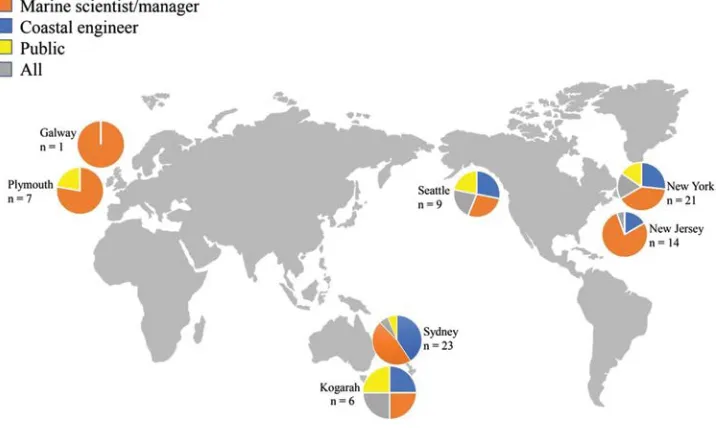
Public awareness of and concern about marine environmental issues are positively correlated with being well informed (Gelcich et al. 2014). Recent expanded interest in ecoengineered shorelines thus may be tied to greater education and understanding of the topic, as well as greater experience with coastal hazards that necessitate coastal defence infrastructure (Kochnower et al. 2015, Gray et al. 2017). Interviews with coastal residents in the United States suggest that awareness of and preference for ecoengineered shoreline approaches over traditional engineering are common, although so too are various misconceptions about the topic (Scyphers et al. 2014). In a recent survey of residents of four harbours in Australia and New Zealand, Kienker et al. (2018) found that level of education was positively correlated with support for marine ecoengineering. Additionally, prior knowledge about the dominant marine artificial structures in their harbour influenced how much participants in the study were willing to pay for ecoengineering (Kienker et al. 2018). A study of a variety of different stakeholders in Wales, ranging from engineers through coastal ecologists to the general public highlighted a willingness to embrace a multifunctional approach to the design of sea defences, especially if ecological objectives could also be delivered (Evans et al. 2017).
Education may result from formal programmes, such as in schools, or from community engagement in outreach activities and media articles (Figure 4). Emphasis on raising public awareness has been central to several recent ecoengineered shoreline projects. For example, the Billion Oyster Project in New York integrated curriculum development and restoration-based education programmes about the importance of oyster reefs and their ecosystem services for primary and high school students (Janis et al. 2016), which likely contributed to public awareness of the project. Local media attention has also recently increased the visibility of various ecoengineered shoreline projects, such as flowerpots on Sydney seawalls (e.g. Chapman & Blockley 2009, Browne & Chapman 2011, Morris et al. 2017).
Advances in science and technology
In addition, many ecoengineered shoreline strategies have themselves advanced and become more cost effective because of recent innovations in fabrication (3-dimensional printing) and materials science (e.g. ecofriendly cement mixes; Perkol-Finkel & Sella 2014). Further, advances in ecology and ecosystem science have brought insights that clarify ecological processes and the functional traits of taxa that are central to ecosystem services provided by shoreline habitats. For example, greater understanding of the role of oysters in biofiltration, habitat provisioning, sediment stabilisation and wave attenuation in New York Harbour (e.g. Coen et al. 2007, Grabowski et al. 2012) ultimately facilitates ecoengineered shoreline projects that are of ecological and social value (e.g. the Billion Oysters Project). As knowledge of coastal ecological processes and the science of ecoengineering continue to grow and support advances in technology, it is likely to drive the demand for ecoengineered shorelines.
Barriers to implementation
[image:20.504.72.435.66.416.2]In general, barriers may include (1) a lack of awareness by decision-makers of the available options and a failure to engage with the multiple stakeholders involved in communicating the benefits of ecoengineered shoreline approaches, (2) government policies that are insufficiently flexible to accommodate new approaches and ways of thinking and (3) an absence or paucity of science-based evidence for the success, benefits and long-term durability of innovations (see the section entitled
‘Evaluating the ecoengineered shoreline approach in practice’, later in this review). Additionally, there may be cultural, financial or logistic (e.g. extreme environmental degradation) barriers to adopting ecoengineered shoreline approaches. To incentivise the innovation and development of ecoengineered shoreline designs and technologies, a consistent and supportive framework is required to improve risk-to-reward ratios, particularly during the demonstration stage of technology and design development. This framework may enhance positive expectations, stimulate learning, improve the design and increase the likelihood of successful project implementation (Foxon et al. 2005).
Awareness and communication among key stakeholders
For hard ecoengineered shorelines, small-scale trials have been carried out in different parts of the world over the last three decades, but medium- to large-scale implementation of ecoengineered shorelines is still in its infancy (but see the Seattle case study as one exception). For soft engineering, larger-scale implementation is more common; for instance, there has been a great effort to restore mangroves in Asia, with coastal defence as a driver in many projects (Saenger & Siddiqi 1993, Benthem et al. 1999, IFRC 2011). However, in contrast to hard ecoengineering, which has often been research driven, these larger-scale soft ecoengineering projects frequently lack scientific rigour and robust ecological-monitoring regimes (Narayan et al. 2016). Despite hot spots of research and/ or implementation of ecoengineered shorelines globally, one barrier to their implementation more generally may be the wider transfer of information to relevant local, state or national governments. Even in countries that are driving ecoengineered shoreline research (like Australia, European countries, and the United States), regional (state or provincial) governments may not know about the rationale, concept and potential value of ecoengineered shoreline implementation. A better understanding of these innovations by government leaders, key stakeholders and the general public may lead to support for small-scale project trials. In turn, the success of these trials can lead to the implementation of large-scale ecoengineered shoreline projects.
Effective communication and partnerships among architects, engineers, ecologists, socioeconomic scientists and other relevant stakeholders are also important. Cross-disciplinary teams generate holistic projects through collaboration to achieve a common goal and build synergy. In particular, there is a need to build trust and better understanding among stakeholders, who often do not share the same perspective and interests (Prati et al. 2016), so as to develop ecoengineered shorelines that can fulfil both engineering requirements (i.e. shore protection and structure integrity) and ecological goals, while also providing a social benefit (Evans et al. 2017).
Policies, incentives, regulations and financial instruments
At present, specific policies that call for integrating ecological considerations into the design and construction of coastal defence and coastal development schemes through ecological engineering are generally lacking in most countries or jurisdictions. Nevertheless, ecoengineered shorelines can potentially make a significant contribution towards a wide variety of current policy objectives, such as those that support sustainable development and the maintenance of biodiversity (Naylor et al. 2012, Dafforn et al. 2015b). For example, under the United Nations Convention on the Law of the Sea (UNCLOS), states are required to protect and preserve the marine environment (Ban et al. 2014). In this context, ecoengineered shorelines could be proposed as a tool for generating more adaptive, resilient coastlines for the mutual benefit of the environment and society. Having ecoengineered shorelines on the international policy agenda may incentivise the implementation of local legislation to further support their application (e.g. the Living Shorelines Act, Maryland).
The few large-scale ecoengineered shoreline projects emerging recently (e.g. Tong King Delta and Mekong Delta, Vietnam; Grenville Bay, Grenada; Barangaroo Reserve, Carss Park and Olympic Park in Sydney; the Seattle Seawall Project, Harlem River Designing the Edge Project, Brooklyn Bridge Park, and Vancouver Conference Centre Project in the USA), if monitored efficiently for successes and failures, could provide valuable evidence to inform the adoption of ecoengineered shoreline designs, but also offer some essential information for doing a benefit-cost analysis (BCA) of any proposed ecoengineered shoreline project. Insufficient resources are usually the main barrier for any innovative development and its commercialisation (Hadjimanolis 1999). This situation is exacerbated by the lack of full accounting of the benefits associated with ecoengineered shorelines, which has rarely been performed. This is due primarily to the difficulty in assigning monetary values to the ecosystems and social services that the projects are designed to perform (see the section entitled ‘Measuring socioeconomic outcomes’, later in this review; but see Narayan et al. 2016, Reguero et al. 2018).
To date, many of the documented ecoengineered shoreline projects have been on a small scale, partly due to insufficient financial support. In most cases, local governments play a key role by providing some seed funding for conducting feasibility studies on small-scale trials of various ecoengineered shoreline designs. If a trial project proves successful, the government might proceed to conduct a large-scale implementation, depending on the policy agenda, site availability and financial resources. Unfortunately, even when money is available, in some cases the type of monitoring that is performed focusses only on proving whether a particular trial concept can or should be scaled up at a particular site (J. Miller, pers. obs.). In these cases, the opportunity to identify benefits that may apply more broadly to ecoengineered shorelines constructed in other locations is lost.
Certain countries have structured regulations that may encourage implementation of ecoengineered shoreline designs. For example, in the United States, there are regulations that demand quantitative mitigation measures for development projects, including in coastal and marine environments. These typically call for the restoration of habitat loss and/or ecosystem functions affected by the project and are often significantly higher in cases where on-site mitigation is not possible in terms of the investment expected (e.g. Ambrose 1994). Currently, mitigation measures include actual restoration work (e.g. marsh restoration, construction of artificial reefs) or purchasing mitigation credits from available mitigation banks. Ecoengineered shoreline implementation can be viewed as on-site mitigation measures, potentially offsetting some of the overall compensation and mitigation costs. This can effectively incentivise the implementation of ecoengineered shorelines; however, documentation of such cases is lacking within the United States, and currently this approach is not widely adopted in other countries.
Environmental Assessment Methods (BEAM) in Hong Kong (Lee et al. 2007) in order to recognise the environmental friendliness and energy-saving efforts being adopted in the building as an incentive for the project proponent or developer to achieve the highest rating (e.g. platinum award in LEED).
Recently, the Waterfront Edge Design Guidelines (WEDG) in New York and New Jersey Harbour have been developed by the Waterfront Alliance (http://waterfrontalliance.org). The WEDG is a point-based rating system with a set of guidelines for waterfront projects in New York and New Jersey Harbour, with a view to creating resilient, ecological and accessible waterfronts (Box 1). During the evaluation process, actions taken in the planning, design, construction and even postconstruction (monitoring) process are tallied to determine how successful a project is in achieving benefits in the three core areas: resilience, ecology and access. Any project proponents can voluntarily go through the WEDG assessment to gain certification and receive advice from professional assessors to further improve the project in the plan’s three aspects: shoreline protection, ecological enhancement and diverse uses of the waterfront by various stakeholders.
Thus far, the WEDG has been used to certify over a half-dozen projects spanning a range of shoreline uses, from parks to heavy industrial areas in New York City (http://wedg.waterfrontalliance. org). Recently, the WEDG has undergone a revision intended to streamline the ratings system and make it more readily applicable to shorelines outside the New York/New Jersey metropolitan
BOX 1 THE WEDG CERTIFICATION SYSTEM FOR WATERFRONT PROJECTS ADOPTED IN NEW YORK AND NEW JERSEY
WEDG
The WEDG employs an evidence-based approach, focussing on three key pillars of excellent waterfront design in New York and New Jersey Harbour. They include the following:
• Resilience: The waterfront project should reduce risks or be adaptable to the effects of sea level rise and increased coastal flooding, through setbacks, structural protection and other integrative landscaping measures.
• Ecology: The waterfront project should protect existing aquatic habitats and use designs, materials and shoreline configurations to improve the ecological function of the coastal zone and strive to be consistent with regional ecological goals.
• Access: The waterfront project should be equitable and informed by the community, enhancing public access, supporting a diversity of uses, from maritime, recreation and commerce where appropriate, thereby maximising the diversity of the harbour and waterfront.
The credit points made by the professional assessors would help guide the design process, from conceptual design through operations, and provide design performance goals for resilience, ecology and access in the following six categories:
• Category 0: Site Assessment and Planning
• Category 1: Responsible Siting and Coastal Risk Reduction • Category 2: Community Access and Connections
• Category 3: Edge Resilience • Category 4: Natural Resources • Category 5: Innovation
area. The WEDG is the first example of this kind to pave the way for developing an international certification system that will play a key role in incentivising the development of ecoengineered shorelines around the globe. Furthermore, the question is how to use the certification system to further incentivise ecoengineered shorelines. Potentially, if waterfront projects have successfully addressed the Sustainable Goals of the United Nations (https://www.un.org/sustainabledevelopment/ sustainable-development-goals) and received certification by a system like the WEDG, then the project proponent could receive a tax reduction or rebate and banks could provide better loans with a lower interest rate for the project proponent. However, such arrangements are likely to depend on individual governments and banks. There is certainly a need to build more successful precedent cases to convince governments and financial institutions.
Engineering concerns and paucity of science-based evidence for success
One of the biggest obstacles from an engineering standpoint is liability (Slate et al. 2007). Although regulations differ from country to country, engineers are generally responsible for ensuring public safety and can be held responsible if their projects fail. Findings of fault can result in severe economic, professional or even criminal sanctions (Baura 2006). As a result, engineers tend to be cautious and view unproven technologies/approaches with an appropriate degree of trepidation. When it comes to the design of traditional infrastructure such as buildings and bridges, engineers can rely on established codes such as the International Building Code for guidance.
For less traditional infrastructures such as coastal defence systems (i.e. seawalls, breakwaters and revetments), codes are often lacking. As a result, engineering design is often guided by a set of standard practices/approaches advocated in respected design manuals such as the Coastal
Engineering Manual (U.S. Army Corps of Engineers 2002) and The Rock Manual (CIRIA et al. 2007). Absent codes, following well-vetted engineering practices provides a level of protection from professional liability should a project fail. For the engineering community to more openly embrace ecoengineered shorelines, design manuals need to be developed (Burcharth et al. 2007), or perhaps more likely, sections need to be added to existing design manuals to deal specifically with ecoengineered shoreline approaches. Such an effort needs to be led by an internationally recognised body such as the U.S. Army Corps of Engineers or Construction Industry Research and Information Association (CIRIA).