The Evolution of the
Internet in the Business
Sector:
Web 1.0 to Web 3.0
Pedro Isaías
Universidade Aberta (Portuguese Open University), Portugal
Piet Kommers
University of Twente, The Netherlands
Tomayess Issa
Curtin University, Australia
Published in the United States of America by
Business Science Reference (an imprint of IGI Global) 701 E. Chocolate Avenue
Hershey PA, USA 17033 Tel: 717-533-8845 Fax: 717-533-8661 E-mail: [email protected] Web site: http://www.igi-global.com
Copyright © 2015 by IGI Global. All rights reserved. No part of this publication may be reproduced, stored or distributed in any form or by any means, electronic or mechanical, including photocopying, without written permission from the publisher. Product or company names used in this set are for identification purposes only. Inclusion of the names of the products or companies does not indicate a claim of ownership by IGI Global of the trademark or registered trademark.
Library of Congress Cataloging-in-Publication Data
British Cataloguing in Publication Data
A Cataloguing in Publication record for this book is available from the British Library.
All work contributed to this book is new, previously-unpublished material. The views expressed in this book are those of the authors, but not necessarily of the publisher.
For electronic access to this publication, please contact: [email protected]. CIP Data
The evolution of the internet in the business sector : Web 1.0 to Web 3.0 / Pedro Isaias, Piet Kommers, and Tomayess Issa, editors.
pages cm
Includes bibliographical references and index.
ISBN 978-1-4666-7262-8 (hardcover : alk. paper) -- ISBN 978-1-4666-7263-5 (ebook) -- ISBN 978-1-4666-7265-9 (print & perpetual access) 1. Business enterprises--Computer network resources. 2. Information technology--Economic aspects. I. Isaias, Pedro, editor. II. Kommers, Piet A. M., editor.
HD30.37.E96 2015 384.3’1--dc23
2014036396
This book is published in the IGI Global book series Advances in E-Business Research (AEBR) (ISSN: 1935-2700; eISSN: 1935-2719)
Managing Director: Managing Editor:
Director of Intellectual Property & Contracts: Acquisitions Editor:
Production Editor: Development Editor: Typesetter:
Cover Design:
306
Chapter 14
Students as Customers:
Participatory Design for Adaptive Web 3.0
ABSTRACT
The World Wide Web is changing, from the early Web 1.0 to the Social Web 2.0 and beyond to Web 3.0 interfaces, but more importantly, the users of the Web are also changing, and their numbers are increasing rapidly in line with this evolution. In e-Learning, it is essential to be able to keep up with these trends and provide personalized social interaction. Here, our main customers are our students, but these customers do not come unprepared: they already have a great deal of Web experience, especially in the areas of Social Networking Sites (SNS) and online interaction. Thus, it is essential to improve approaches used in the past, where learners were only involved in the receiving part of the delivery process. This chapter therefore proposes and explores applying participatory design methodologies in the early stages of the social adaptive educational hypermedia system design process, showing also its benefits for further design, implementation, and usage.
1. INTRODUCTION
The Web of today looks totally different from that of the past. Its main driving forces are less the technologies and mechanisms, but its thriv-ing user communities. There are over 2.4 billion Web users in the world, according to KPCB Web Trends (Meeker & Wu, 2013). Moreover, younger
generations have embraced the Web as a normal part of their lives, on which they spend a great amount of time. For instance, according to Everfi (Everfi, 2013), 13% of the 5500 American young teens surveyed admitted to spending more than five hours a day online, 16% of them admitted to spending 3-5 hours, and 40% of them admitted to spending 1-3 hours.
Lei Shi
University of Warwick, UK
Alexandra I. Cristea
University of Warwick, UK
Craig Stewart
Coventry University, UK
Students as Customers
In education, e-Learning is flourishing, with most universities and even schools having a clear e-presence and a varying proportion of online ma-terials, including usage of e-Learning systems and learning management systems (such as MOOCS, Moodle, or older systems such as Blackboard, WebCT, etc.). However, e-Learning lags some-what behind in embracing the new technologies, techniques and interaction models, for instance e-Learning in the business (through lifelong learning) or mobile sectors (ubiquitous learning).
In this global context, there is already a good body of research available to support the benefits of personalized education, both offline and online. Targeting the latter, the research area of Adaptive Hypermedia (AH) and Adaptive Educational Hypermedia (AEH) (Brusilovsky, 2001) has been growing rapidly during the past 20 years. It has resulted in a plethora of AEH systems (AEHS) to support, verify and evaluate the newly proposed models, system architectures and methodologies. Researchers in this area have been focusing on posing and answering the six major questions that define the core of adaptation, initially intro-duced by Brusilovsky (1996), namely, 1) what can we adapt? 2) what can we adapt to? 3) why do we need adaptation? 4) where can we apply adaptation? 5) when can we apply adaptation? and 6) how do we adapt?. Asking (and answer-ing) these questions enables researchers to define adaptation process, in order to design an AEHS that better identifies a learner’s knowledge level, learning goal, preferences, stereotypes, cognitive and learning styles, etc. (Brusilovsky, 2004) to provide adaptive and adaptable learning content, navigation, presentation and interaction. Whilst researchers (and system designers) are of impor-tance during the AEHS design process, the other crucial role that has often been neglected is that of the customer of an AEHS (such as the learner or end-user).
Indeed, with the ever-increasing commoditiza-tion of learning, and the rise in fees (especially for higher education), students tend to act more
like customers than passive recipients of knowl-edge, as they have often been considered in the past. They also come normally with a very good background on Web 2.0 (as in social) and some Web 3.0 (as in both personalized and social) sys-tems and platforms, albeit with less knowledge in the area of e-Learning (including pedagogy and meta-cognition of life skills such as Learning to Learn). Indeed with the rise of this ‘student-as-client’ paradigm, the business of higher learning has broken the bounds of the traditional university structures and ‘exploded’ onto the Web. MOOCs are an excellent example of this, with vast num-bers of students (often 100,000+) being able to access courses designed by leading teachers and researchers. These courses, like all previous non-AEH courses, fall into the ‘one-size-fits-all’ trap (Brusilovsky, 2012), in that delivery of these learning materials are not personalized to the learner in anything other than a superficial man-ner. Therefore AEH research and development has a great deal to offer the business of educa-tion, especially in using MOOCs (and Learning Management Systems (LMS) such as Moodle) as a vehicle for delivering a personalized lesson to a large scale audience over the course of their working life.
Students as Customers
with each other (Brusilovsky & Henze, 2007; Krause, et al., 2009; Magnisalis, et al., 2011; Shi, et al., 2013).
Accordingly, the research focus has shifted from an individual orientation, on a student and his cognitive processes (Werner, 1986), to a so-cial orientation. In comparison with AEHSs, the social-AEHSs have been pushing the research area of AH and AEH towards fostering diversification of (explicit and implicit) user modeling (Barla, 2011), as well as richer user experience. Due to the wide use and popularity of major social network sites (SNS) such as Facebook, Renren, Weibo, Tumblr, Pinterest, the new generation of learn-ers have already been frequently using Web 2.0 functionalities and social apps, which makes the social-AEH learning environment more familiar to them, and subsequently increases the usability of such an e-Learning environment (Shi, et al., 2013b). The significant features of social-AEHS make it more important than ever before to ensure the learners’ participation during the AEHS design process (Shi, et al., 2012a).
In the conventional research process of the AH and AEH area, researchers normally took a researcher-centered (or designer-centered) ap-proach, while the learners were usually involved only in the evaluation stage (Lohnes & Kinzer, 2007; Seale, 2009; Mulwa, et al., 2011). For in-stance, the researchers firstly built an AHES with their hypothesis and several new features, and then conducted experiments to collect learners’ usage data and/or distributed questionnaires, in order to evaluate the system’s usefulness, ease of use, ease of learning, satisfaction, privacy and data sharing, and so on. However, the researcher-centered ap-proach has limited ability to cater for the learners’ real needs (Looi, et al., 2009), because researchers’ knowledge about the adaptation process does not necessarily guarantee that they know about the end-users’ needs from the system. Not only are more time and effort needed in the initial design process, but the researchers (or designers) may
also face costly redesigns if they want to improve the system in the follow-up research (or design) iterations. Therefore, the adoption of user-centered design (UCD) (Norman & Draper, 1986), partici-patory design (PD) (Schuler & Namioka, 1993) and the analysis of phenomena characterizing the human-computer interaction (HCI) (Shneiderman & Ben, 2003) process should be considered even since the early design stages, in order to build more usable systems (Valtolina, et al., 2011). If the system were designed to provide its end-users with exactly what they need, it would provide a better user experience, as well as encourage users to try features and contents, so that the system would collect greater usage data, which could eventually lead to a more useable system with greater benefits for the learner.
In this chapter, we therefore illustrate how the customers of e-Learning, the students (note that in lifelong learning the ‘student’ is often also the employee and as such this can have a direct benefit for the business that employs them), can be involved in the design process, by applying a PD methodology in the early stage of designing a social-AEHS. For this purpose, we report our case study, which mimicked a large co-designer experiment in a small format and extracted an ordered list of initial application requirements, aiming at exploring how to apply a PD methodol-ogy and gathering issues and initial preferences for future studies. We further show how this stu-dent involvement has benefitted the later design, development and usage of our adaptive, social e-Learning system.
2. BACKGROUND:
TOWARDS SOCIAL AEH
hyperme-Students as Customers
dia applications, by making them adaptive and adaptable. As the most popular research area of AH, adaptive educational hypermedia (AEH) combines adaptive hypermedia system (AHS) and Intelligent Tutoring Systems (ITS), with the aim of breaking away from the “one-size-fits-all” men-tality (Brusilovsky, 2012). This means engaging learner interaction as well as enabling e-Learning systems to adapt to different learners’ specific needs in a given context, and thereby providing a personalized learning experience for each learner. A lot of conceptual A(E)H frameworks have been proposed since the early 2000s, aiming to simplify the process of building adaptive systems. Well-known frameworks include AHAM, proposed by Wu (2002), XAHM, proposed by Cannataro et al. (2002), LAOS, proposed by Cristea and De Mooij (2003), the Munich model, proposed by Koch and Wirsing (2006), GAF, proposed by Knutov (2008), GAL proposed by Van Der Sluijs, et al. (2009) and so on. Afterwards, some conceptual A(E)H framework with social dimensions were proposed, such as SLAOS proposed by Ghali and Cristea (2009b) that extended from LAOS by adding a collaboration mechanism, and ALEF proposed by Šimko et al. (2010).
Prior (and partially concomitantly) to the development of conceptual A(E)H frameworks, a variety of AEH systems and AEH-based learn-ing tools have also been researched. For example, AHA! (De Bra, et al., 2003) was designed as an adaptive hypermedia platform that delivers XHTML pages as a series of concepts. Each concept is recommended to the user according to a predefined adaptation strategy. MOT (Cristea & Kinshuk, 2003) is a web-based generic adaptive hypermedia system based on the LAOS frame-work for authoring adaptive learning materials. The GRAPPLE (De Bra, et al., 2013) project cre-ated the GALE (Smits & De Bra, 2011) delivery engine, which extended the principles of AHA!, in order to produce a more general purpose and fully extendable delivery engine. As regards the branch that the social dimension is introduced,
one of the first attempts was MOT 2.0 (Ghali and Cristea, 2009a) that was developed based on the SLAOS framework, introducing several social facilities, such as the ability to hold a discussion via chat tool, to rate, tag learning items, and get recommendations of advanced learners to contact (Cristea and Ghali, 2011). Progressor (Hsiao, et al., 2013) is a web-based tool based on the concepts of social navigation and open student modeling (Mitrovic & Martin, 2007) that helps students to find the most relevant resources in a large collection of parameterized self-assessment questions on Java programming. Topolor (Shi, et al, 2013c) is social adaptive personalized e-Learning system that provides extensive social features and personalized recommendations including learning topic recommendation, learning path recommen-dation, learning peer recommendation and so on, in a adaptive e-Learning environment with rich social interactions.
Students as Customers
3. PARTICIPATORY DESIGN AND
THE WE!DESIGN METHODOLOGY
As one of the most important User-centered design (UCD) approaches, participatory design (PD) places greater emphasis on allowing users to make the decisions (Vink, et al., 2008). March (2005) states “New and unexpected interactions with the immaterial have expanded the design territory to include people as designers”. Rather than the traditional view that users (and custom-ers) are not necessary to participate in the design process before the requirement gathering phase, PD requires designers and users to equally work together to set design goals and plan prototypes, and engages users as active members of the design process (Muller, 2003). Researchers and system designers who endorse PD approaches believe that users are capable (with necessary knowledge and skills) and should play a more active role during the design process (Triantafyllakos, et al., 2008; Shi, et al., 2012b). PD offers users opportunities to participate during the design process so as to increase the probability of a usable design. It pro-vides a chance for system designers to work with users so as to better understand users’ real needs. It supplies a tool that helps to identify issues and solutions (Rashidah, 2011).
The research on learners as co-designers of educational systems has been increasingly ap-pealing to researchers. Könings, et al. (2010) assert PD can be “adapted for use in education as a promising approach to better account for students’ perspectives in the instructional design process in different school subjects”. Seale (2009) claims that participatory methods have “the po-tential to both empower students and increase the possibility that teachers will respond to student voices”. Many PD approaches introduce learners as co-designers in the design process, and bring together design techniques of needs assessment, evaluation, brainstorming, prototyping, consensus building and so on. However, most of the existing PD methodologies have strict requirements, and
most of them are focused on learning content de-sign only (Triantafyllakos, et al., 2008). Learners are the core participants in an e-Learning process, so it is essential for the system designers to take into consideration the learners’ opinions. Involv-ing learners in the design process brInvolv-ings benefits not only for applications, but also for the learners themselves, because it can help exchange knowl-edge between students and designers (Roda, 2004). As one of the PD methodologies, We!Design is student-centered and can be easily applied in real educational contexts (Triantafyllakos, 2008). It brings some merits compared to other PD methodologies:
1. Conducts cooperation between students and designers in a short period of time;
2. Supports a content-independent learning process, including note-taking and assess-ment, and
3. Exploits the potential of highly computer-literate students who are driven to collaborate in order to produce a description of needs, task sequences and user interface prototypes (Triantafyllakos, 2008).
For these reasons, we have opted to use the We!Design methodology in our research for re-quirements analysis.
The We!Design methodology contains two phases (see Figure 1).
Students as Customers
second stage, tasks sequencing, students design task sequences to satisfy the previously built set of needs. In the third stage, prototype designing, students design a low-tech prototype application to complete the designed task sequences.
During PHASE 2, the system designers ana-lyze the requirements proposed in PHASE 1 and synthesize them into a single application, with an ordered requirements list. Initially, the designers organize, group and rewrite the collected needs to avoid overlapping. Next, these needs are ordered based on the number of sessions that they are proposed and their importance assessed by the students. Finally, the designers compile the diverse task sequences of each final need into one task
sequence, analyze the prototyped designed by the students, and eventually synthesize the final prototype application. In the next section, we will present the detailed process of applying the We!Design methodology, together with the actual data collected from the performed case study.
4. APPLYING PARTICIPATORY
DESIGN FOR ADAPTIVE WEB 3.0
4.1 Setup
Students as Customers
was a computer science Ph.D. student from the University of Nottingham, UK; the other one was a computer science Ph.D. student from the University of Warwick, UK .The 6 undergraduate students were from the ‘Politehnica’ University of Bucharest, Romania. They were 4th years com-puter science students, studying a course entitled ‘Semantic Web’.
A short seminar was delivered at the beginning of the case study to introduce the experimental process, explain the case study’s goals, and recall the required background knowledge including how to design a system and what an AEH system is. Firstly, one coordinator presented the concept of AH and AEH, followed by some case stud-ies of AEH systems, including AHA! (De Bra, 2003), MOT 2.0 (Ghali, 2009) and LearnFit (Essaid, 2010). Then, the coordinator introduced the concept of social networking sites (SNS) to the students. All the students were, as expected, familiar with SNS, such as Facebook, Google+ and YouTube, etc. They were also familiar with UML and UML-based design.
Thereafter the students could take upon them-selves the main roles of discussing and presenting, while the coordinators were in charge of time controlling and summarizing. The seminar focused on the features of the AEH systems and SNS, and aimed to acquaint the students with both domains, and encourage them to think deeply about these two kinds of system, so they could integrate both to design new social-AEH systems.
4.2 Phase I: Design
Session with Students
We conducted two parallel design sessions, each of which consisted of 3 students, and lasted for about 2.5 hours. The two coordinators supported these sessions, without interfering unless they considered it necessary to bring the students back on track. One coordinator was a human computer interaction (HCI) expert, whose role was that of ensuring that students consider preserving the
usability of the system; the other coordinator was an e-Learning system expert, whose task was to be preventing the students from loosing track of the system design goals.
For facilitating the work, students in a group sat together. In front of them was a table with pens and a big white paper to record their ideas on, and eventually draw the user interface of the prototype. The two design sessions were recorded by a video camera, so the coordinators could fo-cus on guiding the case study and solve current issues, instead of noting the problems occurred for further research.
Stage 1: Needs Collecting
In the needs collecting stage, the students were asked to extract a set of needs that are currently not met, according to their previous e-Learning experience. The expectation was that these needs could be addressed by using a social-AEH system. The students contributed to the needs collection by brainstorming and discussing ideas. Initially, the students considered the main features that they expected to be provided by such an e-Learning system, as well as briefly discussed problems that they encountered when using such systems previously. All the students had opportunities to present their own ideas. Turn taking in suggestions was supported. Additionally, while one student was presenting, the others were encouraged to ask questions and provide suggestions and com-ments. Afterwards, the students summarized all the ideas into an initial need list, and then continu-ally elaborated, categorized and evaluated these needs. As a result of this process, 97 ‘raw’ needs were proposed and ordered into a requirement list, according to their perceived importance.
Stage 2: Task Sequencing
Students as Customers
users’ background information and specific situ-ation related to using the system (Cooper, 2007). Four personas were created to outline the real characteristics of the system’s end-users. Take one for example:
Michael is a sophomore student, studying a course of ‘Java Programming Language’. He has learned PHP, and achieved higher scores than most of the other students. He prefers to analyze examples, and then design his own program to check whether he’s learnt the constructs from the examples. He likes to share and discuss with other students.
Scenarios, such as the one above, create a story with settings, personas and a sequence of actions and events (Carroll, 2000). One of the designed scenarios was:
When Sam is debugging his program using the programming tool provided by the system, he re-ceives a message from his friend asking for help. He preserves his work, and asks what this friend exactly needs.
In this stage, personas and scenarios were used to describe the interaction between the persona and the potential application to fulfill the proposed needs, and enable rapid communication about usage possibilities that might satisfy the needs proposed in STAGE 1.
Stage 3: Prototype Designing
This stage was a refinement process, asking the students to convert the needs collected in STAGE 1 and the task sequences designed in STAGE 2 to concrete requirements, so as to design a low-tech prototype application. Firstly, the students portrayed the final task sequences and visualized the scenarios on the large shared white paper with necessary notes to present the basic ideas of the interaction process and user interface. For instance, the students drew a dropdown list that
could be used as a menu to switch between dif-ferent views of the concept structure. Secondly, the students re-evaluated each component from the user interface, and proposed new components and/or re-organized existing components, to make sure each proposed task sequence could be com-pleted smoothly. Finally, a stereotypical end-user role-play was conducted, to evaluate the usability of the designed prototype.
4.3 Phase II: Application Synthesis
In PHASE II, the principal designers gathered and analyzed the product designed in the first phase to synthesize a single application. The requirements were firstly grouped into 35 final ones, by removing duplicates. Next, they were ordered according to the estimated importance, which was computed according to the number of times the requirements appeared in the students’ suggestions, in one form or another. Then, these requirements were categorized into four catego-ries, which represented the main areas for which features could be built in a system, according to the designer, and which are as follows:
1. Learning: Here entered, for example, re-quirements such as using of multiple types of files, including photos, videos, slides, etc.; allowing for multiple files was considered of high importance by students; other (optional) requirements of lesser importance were, for example, taking tests after learning a topic; getting assessment and feedback from teach-ers; etc.
2. Social Networking: This category included important requirements such as creating groups that are registered for the same topic; and, in decreasing order of priority, discuss-ing the topic with other students; etc. 3. Adaptation: This category involved
Students as Customers
knowledge level and other students’ rating; etc.
4. Usability: This category listed requirements such as visibility of the system status; instruc-tions and tips; graphical user interfaces; etc. The results of these phases are described in
section 4.4 below. However, before this data-mashing phase, we have gathered more information from students, as follows.
4.4 Additional Quantitative
and Qualitative Feedback
Gathering: The Questionnaire
The students who participated in the design ses-sions were also invited to answer a questionnaire with 28 questions. They were asked to evaluate the e-Learning environments that they had used in the past, and to elicit their extra expectations for features of a new social-AEH system. As the students already went through the introduc-tory material and design sessions, their answers were more informed, and were able to help the designer understand the priorities students set on the previously extracted requirements. Due to the limited space, only selected results are shown in this section.
Students’ Previous Experience
with E-Learning Systems
There were several reasons for students to use e-Learning systems in the past, as shown in Figure 2. The most important reason they gave was to ‘Save Time and Effort’. This corresponded to their answers in the open-ended questions part of the questionnaire, where the students stated that ‘Availability 24/7, everything is organized in one place’ as being some of the features of e-Learning systems that they liked the most. Out of this clear preference, one of the requirements would be to provide a simple, constantly available ‘one stop-shop’, where all the material and functionality is present, and thus not increase the learning burden.
From the point of view of social websites used, the questionnaire result also indicated that all the students have experience of collecting learning resource from Wikipedia (see Figure 3). Wikipe-dia is indeed the largest general reference on the Web, offering more than 30 million articles (List of Wikipedias, 2013). YouTube was mentioned as the second most popular social networking website to collect learning resources from, while the third one was LinkedIn. In the case study, students also mentioned the requirements of access to and search for open learning resources from outside of the system. Therefore access to open learning resources such as Wikipedia, and searching for
Students as Customers
learning materials, should have a high priority to be developed.
After finding out about the students’ experi-ence with e-learning systems and social platforms, we further asked about specific features, if they should or not be included in the system.
Preferences for the New
System Features
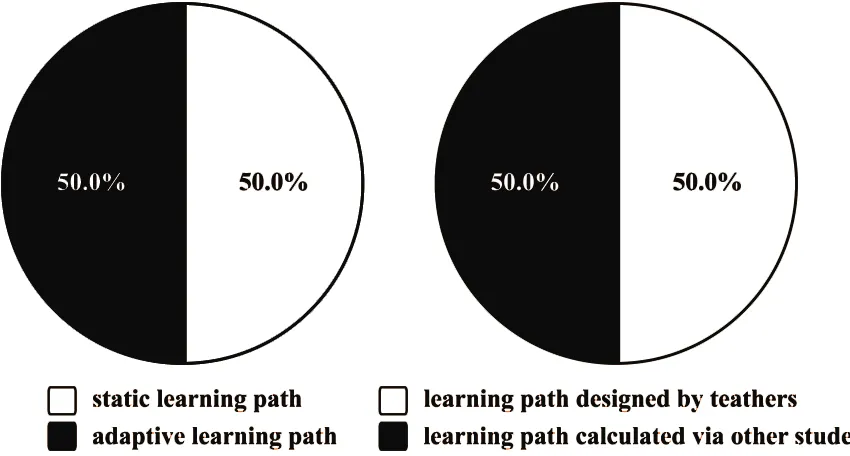
In Figure 4, 67% of the students prefer courses to be published by both teachers and students; while the other 33% think that the courses can only be published by teachers. Besides, more students (83%) prefer topics to be recommended according to students’ ratings rather than the count of visits. Figure 5 shows that half of the students prefer that learning paths are kept static from creation; while the other half consider that learning paths should be adapted to the learning context. Furthermore, the same percentages of students agree that learn-ing paths can be both designed by teachers and calculated by data collected from other students’ behaviors. Figure 6 shows that 17% of the students prefer asynchronous interaction with others in the system (such as comments); while the other 83% of the students prefer synchronous interaction such as chat window. Figure 6 also shows that 33% of the students hope to have all social interaction tools when they begin to use the system; while the other 67% of the students prefer to obtain more social interaction tools when they move up to a higher user-level.
Importance of the Selected
System Features
The students were further asked to rate the im-portance of a list of features pre-selected by the system designers on a 1-5 scale (1 = not important at all; 5 = very important). Table 1 displays the means and standard deviations of the result. The feature considered the most important by the students is the ‘Exchange of knowledge and ap-proaches’ with the maximum mean value (4.83) and the minimum standard deviation (0.41). The minimum ones were ‘Multimedia delivery’ and ‘Recommendation of groups and other students’, with an average of 3.67 > 3 and a standard devia-tion of 0.82. However, some clear preferences could be seen from the students’ responses, and these were further processed towards the system requirements in the following subsection.
Suggestions on Designing a
New E-Learning System
The questionnaire also contained some open-ended questions that allowed students to provide unrestrained wide-range responses, which could reveal originally unanticipated findings in the questionnaire (Reja, 2003). The suggestions of the students are summarized in the list below (ranked by the implementation priority, and labeled with the functionality aspects):
Students as Customers
[image:13.612.74.499.426.654.2]Figure 4. Preferences for learning material
Students as Customers
Figure 6. Preferences for interaction
Table 1. Allocated importance of the features of an adaptive social e-learning system
Feature Scale of Importance
Mean (1-5) Standard Deviation
[image:14.612.89.541.424.650.2]Students as Customers
S1. The recommendation of learning materials for a particular student should be based on her/his performance during learning, mixed with results from the exercise/tests. – Per-sonalization & Exercises;
S2. Students should be able to create their own learning paths in the courses that they were interested in, while other students could provide suggestions or use these learning paths for their own study. – Adaptability & Open Student Models & Social Interaction; S3. The system should provide an interface to
access online libraries for reference while students are learning related topics, and make is possible for the students to save these references inside the system. – Open corpus & Social Interaction;
S4. Exercise tools are essential, especially for practice courses such as programming lan-guage. It would be better to learn by using the knowledge rather than just reading some chapters. – Exercises;
S5. The system should introduce some learning aid for students to improve their learning efficiency. – Usage Tutorials & Learning aids.
S6. The user interface should be as simple as possible, concentrating all needed resources in one place (a ‘one stop-shop’: either physi-cally - with all material in one place, or on one server, or virtually - as in a portal to all the needed information). – Portal & User interface.
4.5 Requirement List
Finally, the designer merged the results from PHASE 2 and the responses from the questionnaire into a requirement list, ordered by their priority. The latter was computed from the estimated impor-tance of a requirement, as stated by the students, and from the separate information on the number of times a (version of the) requirement appeared during the design sessions. The resulting list of
the ordered requirements for social-AEH systems is shown in Table 2.
5. DISCUSSION OF THE
CASE STUDY
In PHASE 1, the coordinators had to be very clear in which situation they needed to intervene and to what extent. In the needs collection stage, espe-cially at the beginning, the students were always impatient to start exploring solutions to satisfy the proposed needs rather than focusing on collect-ing needs, so the coordinators had to stop them in time. In the task sequencing stage, personas and scenarios were used to capture the require-ments of the system. One of the best practices is to identify primary personas, ‘the individual who is the main focus of the design’ (Cooper, 2007). To be primary, a persona is ‘someone who must be satisfied but who cannot be satisfied with an interface designed for any other persona. An inter-face always exists for a primary persona.’ (Cooper, 1999) With regard to scenarios, storyboards or customer journeys were used to test the validity of design and assumptions. The students had to design an appropriate level of detail, because of the short period of time. In the prototype design-ing stage, some solutions were found flawed to some extent, and the students might be unwilling to fix flaws or they might need extra time. The coordinators should encourage them to get the solution as well as control the time, as even if the work was incomplete, the highlighted issues could still inspire the designers.
Students as Customers
Table 2. Ordered requirements list for a social-AEH system
Category Requirement N1 I2 P3
Learning Use multiple types of files, e.g. PDFs, photos, videos, slides, etc. 5 (q) 1 1
Take tests after learning a topic 4 (q) 3 2 Get assessment and feedback from teachers 5 (q) 4 3 View learning progress in percentage 5 7 4 Tag and flag up topics in the learning path 1 2 5 Access to open learning resource, e.g. Wikipedia 6 5 7 Search learning resource within and outside of the system 6 6 8 Use interactive learning content, e.g. debugging tools. q 9 6 Contribute to learning materials by creating and uploading files 3 8 9 Choose to view the whole or partial learning path 1 10 10
Social
Networking Create groups that are registered for the same topicDiscuss the current learning topic with other students 36 14 12
Set access rights for learning materials q 8 3 Set access rights for groups q 9 4 Ask and answer questions of other students 5 3 5 Create groups that share common learning interests 4 10 6 Use feedback & questions forum at the end of each lesson 5 5 7 Share and/or recommend learning materials 2 2 8 Use communication tools to chat and leave messages 4 (q) 6 9 Write comments/notions wherever and whenever they want 5 7 10 View history discussion when selecting a particular topic 1 11 11 Design and publish courses for others to use q 12 12
Adaptation Recommend other topics according to the current learning topic 5 (q) 2 1
Recommend topics according to student’s knowledge level 4 (q) 1 2 Recommend topics by referring to other students’ rating 2 (q) 3 3 Adapt learning path according to learning progress 2 (q) 4 4 Adapt learning tools according to student’s user-level 1 7 5 Adapt social interaction tools according to students user-level q 8 6 Recommend other students according to the current topic q 6 7 Recommend other groups according to student’s interests q 5 8
Usability View system status 2 3 1
Use graphical user interfaces 4 1 2 Get instructions and tips 3 (q) 2 3 Select full screen option 1 4 4 Set themes, layout, etc. 2 5 5 1. N: the number of times the requirement appeared in the students’ suggestions, (q: from questionnaire results).
Students as Customers
the requirements, it would be still possible that the designer deviates from their intended design.
Overall, the students willingly contributed to generating the requirements, and they were satis-fied with both the experiment and the knowledge they acquired during the experiment. From the system designer’s perspective, the requirements obtained represents a generic level of detail into the requirements definition, which is collected as natural language statements describing what services the system is expected to provide. Be-sides, these requirements create a common vision between the students and the system designers, to make sure the system that will be developed is what the students really need. The next step is to generate the requirements specification (intermediate-detail) and then the application specification (high-detail) (Sommerville, 1995).
The questionnaire results indicate that cur-rently the students’ favorite equipment to access e-learning system is the laptop. While Canalys recently released the worldwide shipment esti-mation of equipment for Web access (Titcomb, 2013), which indicates mobile computing devices, especially smartphones, tablets and phablets (a cross between phones and tablets), have a much greater potential. This means that cross-platform compatibility, including adaptive layout and adap-tive screen orientation (landscape or portrait), is urgently needed.
Facebook is the largest SNS in the world and has 1.19 billion monthly active users, and 728 million daily active users on average in Septem-ber 2013 (Facebook Newsroom, 2013), but most people use Facebook for entertainment (Tosun, 2012) rather than learning, which is why the questionnaire result shows that only 16.7% of the students chose that they have ever collected learning resource from Facebook.
Another interesting result is that half of the students chose ‘Compulsory to Use’ as a reason to use an e-learning system. This may be because the systems are hard to use, or the students are not confident to use them. Therefore it is crucial
to evaluate and analyze existing systems to find out how to improve them or how to design a better new system. The opinions of the systems’ end-user, the students, are very important, and many aspects (e.g., system usability, accuracy of recommendation, intended learning outcomes, learning context) of the systems need to be taken into consideration. Therefore the evaluation should be conducted using a multi-dimensional approach (Ozkan, 2009).
The main difference of this case study from the original We!Design methodology was that, all the students who participated in the design sessions were asked to answer a questionnaire for collecting more information. Although the coordinators were trying to avoid transferring their own opinions in the design session, it remains possible that they could still have influenced the students. In contrast to the design sessions, the questionnaires have uniform questions but no middleman bias, and the research instrument does not interrupt the students. Besides, the structured question-naires enable the responses to be standardized, hence easier to analyze. The questionnaires were delivered after the application synthesis phase, because on the one hand, as the designers have already analyzed the requirement proposed by the students, they will be able to asked pointed ques-tions to further understand the students’ opinion; and on the other hand, since the students have gone through the design session, they may like to have more chance of proposing extra expectations and helping the designers understand the priorities of the previously extracted requirements.
Students as Customers
delivery as highly important, when for instance, for art and social science subjects, the quality of multimedia transmission and presentation might be very important.
6. THE RESULT: TOPOLOR
Based on the case study result (and also the lit-erature review on e-Learning systems and social networking sites), we further developed an over-arching research hypothesis that extensive social features (based on suggestions S2 and S3 above), personalized recommendations (based on S1) and Facebook-like appearance of a system (anticipated to make the environment more familiar to
learn-ers), subsequently increases the usefulness and usability of the system (S6).
To be able to validate this hypothesis, a first version of a personalized social e-learning system, Topolor1 (Shi, et al., 2013c), was built.
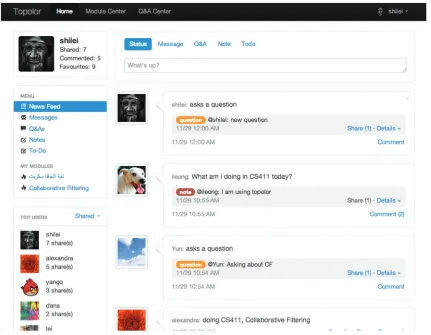
[image:18.612.101.532.387.722.2]This first prototype provided a learning portal (S6) with a Facebook-like appearance (Shi, et al., 2013b) as shown in Figure 7, featuring the profile avatar and learner information, the fixed-position top menu and the left side bar for navigation, and the information flow wall for social interaction, etc. It supports learning content adaptation (S1), learning path adaptation (S1), adaptation to test results (S4), and peer adaptation (S1-S3), and provides a social e-learning environment (S2, S3), i.e., learners can comment on a topic, ask/answer a question about a topic, create and share notes
Students as Customers
related a topic, etc. This represents thus a much broader range of adaptation than in regular adap-tive hypermedia. It has been used as an e-Learning platform for MSc level students in the Department of Computer Science, at the University of War-wick, and the usage data is being anonymously collected for analysis.
In the last year and a half, Topolor has been under iterative development and evaluation, aim-ing at testaim-ing the hypothesis stated above and progressing towards achieving the overall research aim, as mentioned in Section 2. By the time of the writing of this chapter, we have finished the first two iterations of system development, as well as two rounds of evaluation. Following the experimental study on applying PD methodolo-gies in developing a social-AEH system reported in this chapter, which has given us an excellent starting point in the system design. We have also conducted several other studies on, among others: subjective assessments of Topolor’s usability (S6); social interaction design in a social-AEH system (S2, S3); Learning behavior pattern analysis in Topolor (S1-S3); and building light gamification upon social interactions (S3, S5, S6).
In the primary evaluation of Topolor, SUS, a ten-item attitude Likert scale (Brooke, 1996) questionnaire was used to obtain a global view of subjective assessments of usability for To-polor (Shi, et al., 2013f). ToTo-polor was used to teach ‘Collaborative Filtering’ during a two-hour lecture, after which the students were asked to fill in an optional SUS questionnaire. 10 (out of 21) students’ responses were received. The SUS score was 75.75 out of 100 (with 0 worst and 100 best score, and σ=12.36, median=76.25), and the Cronbach’s alpha value of the questionnaire data was 0.85 (>0.8). Therefore, we could claim that the first prototype of Topolor’s usability meets our initial expectations. Positive qualitative feedback from the students supported this SUS result.
We have reported the evaluation of Topolor’s social toolset on each feature’s usefulness and ease of use, as well as the reliability of the results (Shi,
et al., 2013h). Topolor was designed to include a wider range of social interaction features than pre-vious adaptive educational hypermedia systems. The evaluation results indicated students’ high satisfactions on both usefulness and ease of use of the various social features that Topolor provides, with ‘excellent’ level of reliabilities (Cronbach & Shavelson, 2004). The oral feedback was that they would have wanted to have more lessons in this e-Learning environment. Decisive in this, we believe, was the fact that a lot of the social features had a look and feel familiar to them that was similar to the popular Facebook environment. Such familiarity is essential to consider in design-ing such systems.
User modeling is a process where learner’s spe-cific needs are built and maintained (Brusilovsky & Millán, 2007), either by explicitly gathering or implicitly obtaining user data during user-system interaction, in order to provide personalized and adaptive services. Using an implicit approach, a social-AEHS can track learning behaviors unobtrusively and ubiquitously, hence inferring unobservable information from observable infor-mation about a learner. To provide suggestions on the further development and improvement of implicit user modeling in Topolor, we analyzed learning behavior in the first prototype, using data mining methods and visualization tools (Shi, et al., 2013g; Shi, et al., 2013j). We explored learning behaviors patterns in Topolor, focusing on the analysis of action frequency and action sequence. The results revealed some interesting individual learning behaviors and some common learning behavior patterns (e.g., allowed for identification of the social learner, using social tools more than learning, in contrast to the focused learner, using learning content more, etc.), which suggested possible directions both to improve implicit user modeling for the next prototype of Topolor, and to design user modeling for other social-AEHS.
Students as Customers
to improve these features to make Topolor more engaging. Therefore, according to the analysis on the usage of social interaction features, we proposed three light gamification mechanisms to build upon those identified social interaction features with relatively lower rating. Gamifica-tion is implemented for creating more interest, attention and interaction to make a system more engaging (Deterding, et al., 2011). Light gami-fication mechanisms here literally mean that we intend to introduce gamification as a solution to symbiotically make Topolor easier to use and more engaging, rather than replace its social learning community (Shi, et al., 2013e). The proposed three gamification mechanisms include: 1) tip mechanism as packaged missions (Kim, et al., 2009) to navigate students to use various features in Topolor (S5); 2) badge mechanism to cultivate an environment of collaborative and competitive e-Learning (Domínguez, et al., 2013)(S5); and 3) peer-review mechanism to prevent learners
from abusing features in Topolor and improve the quality of posts (S5).
[image:20.612.101.532.460.721.2]Based on the studies mentioned above, the second prototype of Topolor was developed (see Figure 8 for its homepage screenshot). We have improved various features provided in the first prototype and introduced some new features such as open student modeling (Mitrovic & Martin, 2007) (S2) and light gamification mechanisms (Shi, et al., 2013e)(S5), aiming to further validate our overall research hypothesis by testing the improved features and newly introduced features, e.g., social interactions and adaptation strategies. The evaluations have started already, and we are now in the data-gathering phase.
7. FUTURE RESEARCH DIRECTIONS
The participatory design methodology applied in the experiment is effective and straightforward, as expected. We believe the readers of this chapter
Students as Customers
can benefit from the showcase of the way of ap-plying this methodology in the case study. In this section, we would like to further suggest several potential research directions, according to the experience from this research.
Firstly, the We!Design methodology points out that it is necessary to involve the students with software engineering knowledge background in the design sessions. We did observe its benefits. For instance, it was effective to let them design personas, scenarios and design a user interface. But then we also noticed some shortcomings. For one thing, their computer knowledge might limit their ability to design a general e-Learning sys-tem, as mentioned in section 5; for another, they might somehow think from a system developer/ designer’s point of view, rather than that of an end-user, a customer of the system. Therefore, one of the potential research directions is to investigate the balance of the different knowledge backgrounds of the students who participate in the design ses-sions, and how to lead them to communicate and cooperate smoothly and effectively.
Secondly, this methodology was applied in the very beginning of the system design process to col-lect needs and prototype user interfaces. It would be also valuable to explore its usage in an iterative system development process. For example, at the beginning of the second development iteration, the design sessions can extract users’ opinions of their experience of using the system, and collect their needs for improving the existing features and their expectations of new features for the next version, because in this stage, they might have already had deeper understanding about what the system does and how the system works.
In using an iterative design methodology it is also possible to refine the priority lists according to more focused user groups. The work presented in this chapter describes the first stage of the Topolor design process, which focused on Higher Educa-tion students, but can also find applicability to the customers to be found in the Lifelong Learning arena. As in any business, modern educational
environments need to be aware of the degree of customer satisfaction in the products that they use, and the PD process has proved to be an ideal avenue to creating a system that brings this aspect into the ground level of system design.
8. CONCLUSION
The emergence of Web 2.0 and the developmental trend towards Web 3.0 is changing many perspec-tives in people’s everyday life, especially the way that they assimilate, create and share knowledge. On the other hand, the evolution of the younger generation’s preferences is pushing the features and services provided by Web applications to be social, adaptive and personalized. Learning, as one of the most important ongoing activities in daily life, essentially means that e-learning needs to keep up with these trends, because the learners, the customers of the global education market, are not satisfied any more in being the passive receivers of knowledge. However, the design methodologies for adapting and personalizing social e-Learning environment have not yet been extensively researched. This chapter, therefore, proposes and explores applying participatory design methodologies in the early stages of the social adaptive educational hypermedia system design process, showing also its benefits for further design, implementation and usage.
Students as Customers
system design process, even in the very begin-ning, and allow them to make decisions on what services the system should provide and how to present these features. This is especially neces-sary in the areas of Web 2.0 and the emerging Web 3.0, as the experience of these end-users in using these technologies in other contexts outside e-Learning is sizeable. Thus, e-learning providers and implementers need to take into account this wealth of knowledge, and this chapter illustrates a simple and straightforward way of doing it, also further justified by the results of the evaluations of the implementations created on this basis.
This chapter also sheds some light into the applicability of Web 2.0 and especially Web 3.0 technology and theory in e-learning, and the necessity of bringing these fields together to enhance the experience of our clients/customers, here, the learners.
REFERENCES
Bandura, A. (1977). Social learning theory. Aca-demic Press.
Barla, M. (2011). Towards social-based user mod-eling and personalization. Information Sciences and Technologies Bulletin of the ACM Slovakia, 3(1), 52–60.
Brooke, J. (1996). SUS-A quick and dirty usability scale. Usability Evaluation in Industry, 189, 194. Brusilovsky, P. (1996). Methods and techniques of adaptive hypermedia. User Modeling and User-Adapted Interaction, 6(2-3), 87–129. doi:10.1007/ BF00143964
Brusilovsky, P. (2001). Adaptive educational hy-permedia. In Proceedings ofInternational PEG Conference (pp. 8-12). PEG.
Brusilovsky, P. (2004). Adaptive educational hypermedia: From generation to generation. In Proceedings of 4th Hellenic Conference on In-formation and Communication Technologies in
Brusilovsky, P. (2012). Adaptive Hypermedia for Education and Training. Adaptive Technologies for Training and Education, 46.
Brusilovsky, P., Farzan, R., & Ahn, J. W. (2006). Layered evaluation of adaptive search. In Pro-ceedings ofWorkshop on Evaluating Exploratory Search Systems at SIGIR06 (pp. 11-13). ACM. Brusilovsky, P., & Henze, N. (2007). Open corpus adaptive educational hypermedia. In The Adaptive Web (pp. 671–696). Springer Berlin Heidelberg. doi:10.1007/978-3-540-72079-9_22
Brusilovsky, P., & Millán, E. (2007). User models for adaptive hypermedia and adaptive educational systems. In The adaptive web (pp. 3–53). Springer-Verlag. doi:10.1007/978-3-540-72079-9_1 Cannataro, M., Cuzzocrea, A., Mastroianni, C., Ortale, R., & Pugliese, A. (2002, May). Model-ing adaptive hypermedia with an object-oriented approach and XML. In Proceedings of Second International Workshop on Web Dynamics. Aca-demic Press.
Carroll, J. M. (2000). Five reasons for scenario-based design. Interacting with Computers, 13(1), 43–60. doi:10.1016/S0953-5438(00)00023-0 Cooper, A., Reimann, R., & Cronin, D. (2012). About face 3: The essentials of interaction design. John Wiley & Sons.
Cooper, A., & Saffo, P. (2004). The inmates are running the asylum (Vol. 1). Sams.
Cristea, A., & Kinshuk, K. (2003). Considerations on LAOS, LAG and their Integration in MOT. In Proceedings ofWorld Conference on Educational Multimedia, Hypermedia and Telecommunica-tions (pp. 511-518). Academic Press.
Students as Customers
Cristea, A. I., & Ghali, F. (2011). Towards adapta-tion in e-learning 2.0. New Review of Hypermedia and Multimedia, 17(2), 199–238. doi:10.1080/13 614568.2010.541289
Cronbach, L. J., & Shavelson, R. J. (2004). My current thoughts on coefficient alpha and successor procedures. Educational and Psy-chological Measurement, 64(3), 391–418. doi:10.1177/0013164404266386
Dabbagh, N., & Kitsantas, A. (2012). Personal Learning Environments, social media, and self-regulated learning: A natural formula for connect-ing formal and informal learnconnect-ing. The Internet and Higher Education, 15(1), 3–8. doi:10.1016/j. iheduc.2011.06.002
De Bra, P., Aerts, A., Berden, B., De Lange, B., Rousseau, B., & Santic, T. et al. (2003, August). AHA! The adaptive hypermedia architecture. In Proceedings of the Fourteenth ACM Conference on Hypertext and Hypermedia(pp. 81-84). ACM. doi:10.1145/900051.900068
De Bra, P., Smits, D., van der Sluijs, K., Cristea, A. I., Foss, J., Glahn, C., & Steiner, C. M. (2013). GRAPPLE: Learning management systems meet adaptive learning environments. In Intelligent and Adaptive Educational-Learning Systems (pp. 133-160). Springer Berlin Heidelberg.
Deterding, S., Dixon, D., Khaled, R., & Nacke, L. (2011, September). From game design elements to gamefulness: defining gamifica-tion. In Proceedings of the 15th International Academic MindTrek Conference: Envisioning Future Media Environments (pp. 9-15). ACM. doi:10.1145/2181037.2181040
Dieberger, A., Dourish, P., Höök, K., Resnick, P., & Wexelblat, A. (2000). Social navigation: Techniques for building more usable systems. Interactions, 7(6), 36-45.
Domínguez, A., Saenz-de-Navarrete, J., De-Marcos, L., Fernández-Sanz, L., Pagés, C., & Martínez-Herráiz, J. J. (2013). Gamifying learning experiences: Practical implications and outcomes. Computers & Education, 63, 380–392. doi:10.1016/j.compedu.2012.12.020
El Bachari, E., Abelwahed, E. H., & El Adnani, M. (2010). Design of an Adaptive E-Learning Model Based on Learner’s Personality. Ubiquitous Com-puting and Communication Journal, 5(3), 27–36. Everfi. (2013). Young Teens and the Digital World. Retrieved from http://visual.ly/young-teens-and-digital-world
Facebook Newsroom. (2013). Retrieved from http://investor.fb.com/releasedetail. cfm?ReleaseID=802760
Ghali, F., & Cristea, A. I. (2009a). MOT 2.0: A Case Study on the Usefuleness of Social Modeling for Personalized E-Learning Systems. In Proceed-ings of AIED (pp. 333-340). AIED.
Ghali, F., & Cristea, A. I. (2009b). Social reference model for adaptive web learning. In Proceedings of Advances in Web Based Learning–ICWL 2009 (pp. 162–171). Springer Berlin Heidelberg. doi:10.1007/978-3-642-03426-8_21
Ghali, F., & Cristea, A. I. (2009c). Authoring for e-learning 2.0: A case study. In Proceedings of Advanced Learning Technologies, (pp. 170-174). IEEE.
Students as Customers
Knutov, E. (2008, January). Gaf: Generic adap-tation framework. In Proceedings of Adaptive Hypermedia and Adaptive Web-Based Systems (pp. 400–404). Springer Berlin Heidelberg. doi:10.1007/978-3-540-70987-9_62
Koch, N., & Wirsing, M. (2006, January). The Munich reference model for adaptive hypermedia applications. In Proceedings of Adaptive hy-permedia and adaptive web-based systems (pp. 213–222). Springer Berlin Heidelberg.
Könings, K. D., Brand-Gruwel, S., & van Mer-riënboer, J. J. (2010). An approach to participatory instructional design in secondary education: An exploratory study. Educational Research, 52(1), 45–59. doi:10.1080/00131881003588204 Krause, U. M., Stark, R., & Mandl, H. (2009). The effects of cooperative learning and feedback on e-learning in statistics. Learning and Instruc-tion, 19(2), 158–170. doi:10.1016/j.learnin-struc.2008.03.003
List of Wikipedias. (2013). Retrieved from http:// meta.wikimedia.org/wiki/List_of_Wikipedias Lohnes, S., & Kinzer, C. (2007). Questioning assumptions about students’ expectations for technology in college classrooms. Academic Press. Looi, C. K., Wong, L. H., So, H. J., Seow, P., Toh, Y., & Chen, W. et al. (2009). Anatomy of a mobilized lesson: Learning <i>my way</i>. Computers & Education, 53(4), 1120–1132. doi:10.1016/j.compedu.2009.05.021
Magnisalis, I., Demetriadis, S., & Karakostas, A. (2011). Adaptive and intelligent systems for collaborative learning support: A review of the field. IEEE Transactions on Learning Technolo-gies, 4(1), 5–20.
March, W., Jacobs, M., & Salvador, T. (2005, April). Designing technology for community ap-propriation. In Proceedings of CHI’05 Extended Abstracts on Human Factors in Computing Sys-tems (pp. 2126-2127). ACM.
McLoughlin, C., & Lee, M. J. (2007, December). Social software and participatory learning: Peda-gogical choices with technology affordances in the Web 2.0 era. In Proceedings of ICT: Providing Choices for Learners and Learning (pp. 664-675). Academic Press.
Meeker, M., & Wu, L. (2013). 2013 Internet Trends. Retrieved from http://www.kpcb.com/ insights/2013-internet-trends
Mitrovic, A., & Martin, B. (2007). Evaluating the effect of open student models on self-assessment. International Journal of Artificial Intelligence in Education, 17(2), 121–144.
Muller, M. J. (2003). Participatory design: The third space in HCI. In Human-computer inter-action: Development process, (pp. 165-185). Academic Press.
Mulwa, C., Lawless, S., Sharp, M., Arnedillo-Sanchez, I., & Wade, V. (2010, October). Adaptive educational hypermedia systems in technology enhanced learning: a literature review. In Pro-ceedings of the 2010 ACM conference on Infor-mation technology education (pp. 73-84). ACM. doi:10.1145/1867651.1867672
Norman, D. A., & Draper, S. W. (1986). User centered system design: New perspectives on human-computer interaction. L. Erlbaum As-sociates Inc.
Students as Customers
Rahamat, R., Shah, P. M., Puteh, S. N., Din, R., & Karim, A. A. (2011). End-Users’ involve-ment in the developinvolve-ment of web-based learning resources for English Literature. The Southeast Asian Journal of English Language Studies., 17(special issue), 5–18.
Reja, U., Manfreda, K. L., Hlebec, V., & Vehovar, V. (2003). Open-ended vs. close-ended questions in web questionnaires. Advances in Methodology and Statistics, 19, 159–177.
Roda, C. (2004). Participatory System Design as a Tool for Learning. CELDA.
Schuler, D., & Namioka, A. (Eds.). (1993). Participatory design: Principles and practices. Routledge.
Seale, J. (2009). Doing student voice work in higher education: An exploration of the value of participatory methods. British Edu-cational Research Journal, 36(6), 995–1015. doi:10.1080/01411920903342038
Shi, L., Al Qudah, D., & Cristea, A. I. (2012a). Apply the We! Design methodology in E-learning 2.0 system design: A pilot study. In Proceedings of 2012 Imperial College Computing Student Workshop (pp. 123-128). Academic Press. Shi, L., Al Qudah, D., & Cristea, A. I. (2013h). Social e-learning in topolor: A case study. In Pro-ceedings of the 7th IADIS Conference e-Learning (pp. 57-64). IADIS.
Shi, L., Al Qudah, D., Qaffas, A., & Cristea, A. I. (2013c). Topolor: A social personalized adaptive e-learning system. In User Modeling, Adaptation, and Personalization (pp. 338-340). Springer Berlin Heidelberg. doi:10.1007/978-3-642-38844-6_32
Shi, L., Al Qudah, D., Qaffas, A., & Cristea, A. I. (2013e). To build light gamification upon social interactions: requirement analysis for the next ver-sion of Topolor. In Proceedings of the Sixth York Doctoral Symposium on Computer Science and Electronics. Department of Computer Science, University of York.
Shi, L., Al-Qudah, D. A., & Cristea, A. I. (2012b) Exploring Participatory Design for SNS-based AEH Systems. In Proceedings of the 11th IADIS International Conference WWW/INTERNET (pp. 242-249). IADIS.
Shi, L., Al-Qudah, D. A., & Cristea, A. I. (2013a) Designing Social Personalized Adaptive E-Learn-ing. In Proceedings of the 18th ACM Conference on Innovation and Technology in Computer Sci-ence Education. ACM.
Shi, L., Awan, M., & Cristea, A. I. (2013f) Evalu-ating System Functionality in Social Personalized Adaptive E-Learning Systems. In Proceedings of the 8th European Conference on Technology Enhanced Learning (pp. 633- 634). Academic Press. doi:10.1007/978-3-642-40814-4_87 Shi, L., & Cristea, A. I. (2013j). Investigating the impact of social interactions in adaptive E-Learning by learning behaviour analysis. In Proceedings of Sixth York Doctoral Symposium on Computer Science and Electronics. Depart-ment of Computer Science, University of York. Shi, L., Cristea, A. I., Awan, M. S., Stewart, C., & Hendrix, M. (2013g). Towards Understanding Learning Behavior Patterns in Social Adaptive Personalized E-Learning Systems. In Proceedings of the 19th Americas Conference on Information Systems (pp. 1-10). Academic Press.
Students as Customers
Shi, L., Gkotsis, G., Stepanian, K. A., Al Qudah, D., & Cristea, A. I. (2013b). Social personal-ized adaptive e-learning environment: Topolor-implementation and evaluation. In Proceedings of the 16th International Conference on Artificial Intelligence in Education (pp. 708-711). Academic Press. doi:10.1007/978-3-642-39112-5_94 Shi, L., Stepanyan, K., Al Qudah, D., & Cristea, A. I. (2013i). Evaluation of Social Interaction Features in Topolor-A Social Personalized Adaptive E-Learning System. In Proceedings of the 13th IEEE International Conference on Advanced Learning Technologies (pp. 15-18). IEEE. doi:10.1109/ICALT.2013.92
Shneiderman, B., & Ben, S. (2003). Designing The User Interface: Strategies for Effective Human-Computer Interaction, 4/e (New Edition). Pearson Education India.
Šimko, M., Barla, M., & Bieliková, M. (2010). ALEF: A framework for adaptive web-based learn-ing 2.0. In Key Competencies in the Knowledge Society (pp. 367-378). Springer Berlin Heidelberg. Smits, D., & De Bra, P. (2011, June). GALE: a highly extensible adaptive hypermedia engine. In Proceedings of the 22nd ACM conference on Hypertext and hypermedia (pp. 63-72). ACM. doi:10.1145/1995966.1995978
Sommerville, I., & Sawyer, P. (1997). Require-ments engineering: a good practice guide. John Wiley & Sons, Inc.
Titcomb, J. (2013). Tablets forecast to overtake PC sales at end of year. Retrieved from http:// www.telegraph.co.uk/finance/newsbysector/me-diatechnologyandtelecoms/electronics/10305093/ Tablets-forecast-to-overtake-PC-sales-at-end-of-year.html
Tosun, L. P. (2012). Motives for Facebook use and expressing “true self” on the Internet. Com-puters in Human Behavior, 28(4), 1510–1517. doi:10.1016/j.chb.2012.03.018
Triantafyllakos, G. N., Palaigeorgiou, G. E., & Tsoukalas, I. A. (2008). We! Design: A student-centred participatory methodology for the design of educational applications. British Journal of Educational Technology, 39(1), 125–139. Valtolina, S., Barricelli, B. R., Mesiti, M., & Ribaudo, M. (2011). User-Centered Design of E-Learning Tools for Users with Special Needs: The VisualPedia Case Study. In Proceedings of Workshop HCI@ Large-Educate to the new fron-tiers of the Human-Machine Interaction (Held in Conjunction with CHItaly 2011). ACM.
Van Der Sluijs, K., Hidders, J., Leonardi, E., & Houben, G. J. (2009). Gal: A generic adaptation language for describing adaptive hypermedia. In Proceedings of 1st International Workshop on Dynamic and Adaptive Hypertext: Generic Frameworks, Approaches and Techniques (pp. 13-24). Academic Press.
Vink, P., Imada, A. S., & Zink, K. J. (2008). De-fining stakeholder involvement in participatory design processes. Applied Ergonomics, 39(4), 519–526. doi:10.1016/j.apergo.2008.02.009 PMID:18417096
Vygotskiĭ, L. L. S. (1978). Mind in society: The development of higher psychological processes. Harvard University Press.
Wenger, E. (2000). Communities of practice and social learning systems. Organization, 7(2), 225–246. doi:10.1177/135050840072002 Wenger, E. (2009). A social theory of learning. In Contemporary theories of learning: Learning theorists... in their own words, (pp. 209-218). Academic Press.
Werner, H. D. (1986). Cognitive theory. Social Work Treatment, 246.
Students as Customers
Zimmerman, B. J. (1989). A social cognitive view of self-regulated academic learning. Jour-nal of EducatioJour-nal Psychology, 81(3), 329–339. doi:10.1037/0022-0663.81.3.329
ADDITIONAL READING
Alexander, B. (2006). Web 2.0: A new wave of innovation for teaching and learning? EDUCAUSE Review, 41(2), 32.
Björgvinsson, E., Ehn, P., & Hillgren, P. A. (2010, November). Participatory design and democratiz-ing innovation. In Proceedings of the 11th Biennial Participatory Design Conference (pp. 41-50). ACM. doi:10.1145/1900441.1900448
Brusilovsky, P. (2001). Adaptive hypermedia. User Modeling and User-Adapted Interaction, 11(1-2), 87–110. doi:10.1023/A:1011143116306 Clark, R. C., & Mayer, R. E. (2011). E-learning and the science of instruction: Proven guidelines for consumers and designers of multimedia learning. John Wiley & Sons. doi:10.1002/9781118255971 Cole, J., & Foster, H. (2007). Using Moodle: Teaching with the popular open source course management system. O’Reilly Media, Inc. Cristea, A., Ghali, F., & Joy, M. (2011). Social, personalized lifelong learning. E-Infrastructures and Technologies for Lifelong Learning: Next Generation Environments, 90-125.
Cristea, A. I., & Ghali, F. (2011). Towards adapta-tion in e-learning 2.0. New Review of Hypermedia and Multimedia, 17(2), 199–238. doi:10.1080/13 614568.2010.541289
Dix, A. (2009). [Springer US.]. Human-Computer Interaction, 1327–1331.
Downes, S. (2005). Feature: E-learning 2.0. Elearn magazine, 2005(10), 1.
Garrett, J. J. (2010). Elements of User Experi-ence, The: User-Centered Design for the Web and Beyond. Pearson Education.
Garrison, D. R. (2011). E-learning in the 21st century: A framework for research and practice. Taylor & Francis.
Hakkarainen, K., Lipponen, L., & Järvelä, S. (2013, May). Epistemology of inquiry and com-puter-supported collaborative learning. Computer-Supported Collaborative Learning, 2, 129–156. Pappano, L. (2012). The Year of the MOOC. The New York Times, 2(12), 2012.
Schuler, D., & Namioka, A. (Eds.). (1993). Participatory design: Principles and practices. CRC Press.
Shen, X., Tan, B., & Zhai, C. (2005). Implicit user modeling for personalized search. In Proceed-ings of the 14th ACM international conference on Information and knowledge management (pp. 824-831). ACM.
Shi, L., Awan, M. S. K., & Cristea, A. I. (2013). Evaluation of social personalized adaptive E-Learning environments: end-user point of view. In Proceedings of the 3th Imperial College Com-puting Student Workshop (pp.103-110). Schloss Dagstuhl - Leibniz Center for Informatics. Shi, L., & Cristea, A. I. (2014) Making it game-like: Topolor 2 and Gamified Social E-Learning. In Proceedings of the 22nd Conference on User Modeling, Adaptation and Personalization. Springer.