UNIVERSITI TEKNIKAL MALAYSIA MELAKA
Improving of Cool Air Evacuation Process for Home Application
This report submitted in accordance with requirement of the Universiti Teknikal Malaysia Melaka (UTeM) for the Bachelor Degree of Manufacturing Engineering
(Manufacturing Process) with Honours.
By
MOHD DZAKIUDIN BIN SARIPUDIN
FACULTY OF MANUFACTURING ENGINEERING
UNIVERSITI TEKNIKAL MALAYSIA MELAKA
BORANG PENGESAHAN STATUS LAPORAN PSM
JUDUL:
Improving Of Cool Air Evacuation Process For Home Application
SESI PENGAJIAN: Semester 2 2009/2010
Saya MOHD DZAKIUDIN BIN SARIPUDIN
mengaku membenarkan laporan PSM / tesis (Sarjana/Doktor Falsafah) ini disimpan di Perpustakaan Universiti Teknikal Malaysia Melaka (UTeM) dengan syarat-syarat kegunaan seperti berikut:
1. Laporan PSM / tesis adalah hak milik Universiti Teknikal Malaysia Melaka dan penulis. 2. Perpustakaan Universiti Teknikal Malaysia Melaka dibenarkan membuat salinan untuk tujuan
pengajian sahaja dengan izin penulis.
3. Perpustakaan dibenarkan membuat salinan laporan PSM / tesis ini sebagai bahan
pertukaran antara institusi pengajian tinggi.
4. *Sila tandakan ( SULIT √)
TERHAD
TIDAK TERHAD
(Mengandungi maklumat yang berdarjah keselamatan atau kepentingan Malaysia yang termaktub di dalam AKTA RAHSIA RASMI 1972)
(Mengandungi maklumat TERHAD yang telah ditentukan oleh organisasi/badan di mana penyelidikan dijalankan)
(TANDATANGAN PENULIS) Alamat Tetap:
B-02-20, Cendana Apartment, Bandar Sri Permaisuri, 56000, Kuala Lumpur Tarikh: _______________________ (TANDATANGAN PENYELIA) Cop Rasmi: Tarikh: _______________________
i
ABSTRACT
ii
ABSTRAK
iii
DEDICATION
For my beloved Father and Mother who always support and give their love that I really need
iv
ACKNOWLEDGEMENT
v
LIST OF TABLES
3.1
3.2
Gantt Chart of PSM 1
Gantt Chart of PSM 2
21
22
3.2 Typical Range of Fan Efficiency 36
3.3 Specification of Enermax Magma Fan 38
3.4 Specification of Toyo Cooling Blower 41
4.1 Water Level result 49
4.2 T24S Vs UCMA8 51
4.3 Ducting Design 52
4.4 Temperature Data 53
4.5
4.6
Underground Temperature
Comparison Temperature value
61
vi
LIST OF FIGURES
1.1 Earth Underground Temperature Delay 2
3.1 Process Flow 20
3.2 Underground temperature compare with surface temperature when
surface hot but underground cool 23
3.3 Underground temperature compare with surface temperature when
surface cold but underground warm. 23
3.4 Cabin Front View 25
3.5 Cabin Front View and Right View 25
3.6 Cabin Front View and Left View 25
3.7 Back View 25
3.8 Solid Work Drawing for cabin Part (Isometric View) 26 3.9 Solid Work Drawing for whole cabin (Isometric View) 27
3.10 Detail Structure 28
3.11 Ducting System 29
3.12 The air move in slow velocity in beginning and increase to high
speed at the center before come back to the normal at the end 30
3.13 Underground Level 32
3.14 Measuring Water Level Process 33
3.15 Digital Thermometer 35
3.16 Enermax Twister Magma Fan 37
3.17 Toyo Cooling Blower 39
3.18 Toyo Cooling Blower Performance 40
3.19 Air Flow in Design 1 42
3.20 Air Flow in Design 2 43
3.21 Air Flow in Design 3 44
vii
3.23 Thermistor 45
4.1 Water Level Chart 50
4.2 4.3 4.4 4.5
Temperature VS Times for 1st day Temperature VS Times for day 2 Temperature VS Times for day 3 Hole Position
54 55 56 57
4.6 Hole Temperature Chart 58
4.7 World Temperature 60
4.8 Virgin soil 62
4.9 Construction Soil 62
4.10 Air Flow 64
4.11 Cabin Design with Large Loop 65
4.12 Cabin Design with Large Loop in Transparent View 66
4.13 Surface Earth Level 67
4.14 4.15 5.1 5.2 5.3 5.4 5.5 5.6
Overview of Structure Piping Distance cabin from near building Normal House
Inside House
House design with modification of column Detail house design no 1
House design with modification of floor Detailed House design no 2
viii
LIST OF ABBREVIATIONS, SYMBOLS, SPECIALIZED
NOMENCLATURE
COP - Coefficient of performance IRH - Institute for Reproductive Health PVC - Poly (vinyl chloride)
ANV - Advanced naturally ventilated
HVAC - Heating, Ventilating, and Air Conditioning
FT - Foot
M - Meter
CAD - Computer-aided design
V - Voltage
Mm - Millimeter
G - Gram
HZ - Hertz
oC - Degree Celsius
ix
LIST OF APPENDIX
A Isometric Drawing 83
B Orthographic Drawing 84
C
D
E
World Temperature
Design 1
Design 2
85
86
x
TABLE OF CONTENT
Abstract i
Abstrak ii
Acknowledgement iii
Dedication iv
Table of Content v
List of Table viii
List of Figure ix
List of Abbreviations, Symbols, Specialized Nomenclature xi
List of Appendix xii
1. INTRODUCTION 1
1.1 Natural Cooling System 1
1.2 Background Research 3
1.3 Problem Statement 5
1.4 Objective of the Research 6
1.5 Scope 6
1.6 Significant of the Project 7
2. LITERATURE REVIEW 8
3. METHODOLOGY 19
3.1 Introduction 19
3.1.1 Process Flow 20
3.1.2 Gantt chart 21
3.2 Data Collection 22
3.2.1 Underground Temperature VS Surface Temperature 22
3.3 Study Design of Cabin 24
xi
3.3.2 CAD Drawing 26
3.3.3 Detail Structure 28
3.4 Study of Ducting System 29
3.5 Study of Water Level 31
3.5.1 Procedure to Get Water Level 33
3.6 Measuring the Temperature 34
3.6.1 Thermometer 34
3.6.2 Procedure to Get Temperature 35
3.7 Study Selection of Fan 36
3.7.1 Fan 36
3.7.2 Enermax Twister Magma Fan 37
3.7.3 Toyo Cooling Blower 39
3.8 Study of System Air Flow 42
3.8.1 Introduction 42
3.8.2 Design 1 42
3.8.3 Design 2 43
3.8.4 Design 3 43
3.8.5 Design 4 44
3.9 Sensing Design 45
4. RESULT AND DISCUSSION 48
4.1 Introduction 48
4.2 Result 49
4.2.1 Water Level Result 49
4.2.2 Fan Selection 51
4.2.3 Ducting System Design 52
4.2.4 Temperature Result 53
4.2.5 Hole Temperature 57
4.3 Result Finding 59
4.4 Discussion 59
xii
4.4.2 Land Type 62
4.4.3 Surrounding Area 63
4.4.4 Small Area For Attract 64
4.4.5 Small Deep of Hole 67
4.4.6 Narrow Place 69
4.4.7 Overall Discussion 70
5. CONCLUSION 72
5.2 Recommendation 73
REFERENCES 78
APPENDICES 73 A Isometric Drawing
B Orthographic Drawing C World Temperature D Design 1
1
CHAPTER 1
INTRODUCTION
1.1 Natural Cooling System
This project is concentrating on the natural cooling system for a cabin, which will not require much power consumption (electricity). This project is designated for the development and the demand of an affordable cooling system for a house. The design is using simple piping system to blow the cool air from underground into the cabin. The piping system is buried certain depth into underground and it is hollow type pipe to blow the cool air into cabin. Four blower which have a capability to absorb cool air from underground will installed at four piping hole.
For the controlling of the exhaust fan, a temperature sensor which is used to sense the cabin temperature is installed in the system. In this controlling system, the range of temperature that is considered as suitable temperature (human comfort range) is set. If inside the cabin temperature is within this range, the control system will turn the blower off. So, the cool air from underground will stop entering the cabin. In the other way, if the cabin temperature is increasing (hot), the control system will turn the exhaust fan on and cool air from underground will enter the cabin.
2
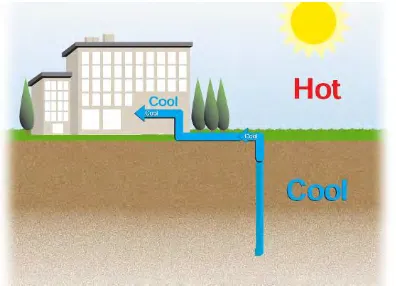
Figure 1.1: Earth Underground Temperature Delay
The main thing in underground evacuation cooling system is the underground properties. If it does not have these natural properties, this underground evacuation cooling system won’t be functioning. Below is some information about these underground properties.
Actually, the earth has a built in time delay. During those times of the year when the cooling requirements are highest, the earth’s temperature is still relatively cool, allowing easy absorption of excess heat into the ground. The ground temperature actually lags the outside temperature by several months, so that by the time the earth increases, the building’s total cooling requirement has been reduced.
[image:17.612.129.525.69.355.2]3
system can be created or designed to replace air conditioning system. We can figure this out by doing a simple experiment. During hot day, if we open the water tap head, the water that comes out is cool for first few seconds. After that, the water will become warm again. The water pipes are buried inside the ground. So, from this we can know that the underground temperature is cool even though it is a hot day because of time delay of earth.
As a consequence, to continue this budget-saving project, the base of the cabin is built on the project site and followed by the whole physical of the cabin. The piping system which is located behind the wall will flow the cool air to the ceiling of the cabin. In the ceiling, there is a wooden-box to gather the cool air before it is spread through a diffuser which is to spread the cool air into the cabin. This diffuser can blow the cool air into the cabin equally. These are the whole idea of what natural cooling system all about.
1.2 Background Research
1.2.1 Temperature
The temperature of the ground, a few feet beneath the earth’s surface, remains relatively constant throughout the year, even though the outdoor temperature may fluctuate greatly with the change of seasons. The underground temperature is 37°F (2.7°C) to 74°F (23°C), are the natural temperature just a few feet underground in many places in the world.
1.2.2 Cooling system
4
process of evaporating water and a high velocity air blower to deliver naturally cooled air. Cooling and heating use more energy than any other system in your home.
Much of the cost of cooling your home can be saved by passive cooling techniques which don't require expensive retrofits or professional installations. There are few methods that can be used to have a free or low-cost home cooling system with less impact on the environment and your energy bill. One of them is the concept of whole-house fan.
This project is using the same concept with the whole-house fan. A whole-house fan is a type of fan installed in a building's ceiling, designed to suck hot air out of the building. It is sometimes confused with an attic fan. A whole-house fan sucks hot air out of a building and forces it into the attic. This displaces the very hot air trapped in the attic (which is pushed out the gable-end or soffit vents). Then, with windows and/or doors open to the outside, the whole-house fan draws cooler outside air into the building to replace the hot air (creating a cooling breeze whilst doing so). Attic fans, by comparison, only serve to remove some hot air from the attic; no cooling effect is provided to the actual living space.
5 1.3 Problem Statement
Malaysia has an equatorial climate, giving it a warm and wet weather due to its proximity to the equator. Temperatures in the lowlands range between 29°C - 35°C during the day and 26°C - 29°C at night, depending on the amount of rainfall and sunlight. On an average, Malaysia receives about 6 hours of sunshine each day with cloud formations occasionally leading to rainfall. However, daytime is usually warm and sunny, with heavy rains only occurring in the evenings onward. So, this kind of weather would increase temperature in a house, which sometimes will cause the uncomfortable environment inside the house.
Air-conditioner is a well-known appliance for cooling systems. However, the cost to produce and to have the appliance is quite expensive. The main culprit in high electricity bills is air conditioner, as cooling is the most expensive cost. Furthermore, if the house have 3 or 4 air conditioner and tend to prefer Western style homes that are ready with bigger window that make house hot and need air conditioner turned on all day. Some 60% of electricity bills are from the usage of air conditioner.
6 1.4 Objectives Of The Research
The main objective of this cooling system research is to consume less energy as compared to the conventional cooling systems. Less energy will decrease the cost, in terms of the production and the cost during application. This investigation is to adjust the temperature from hot to normal temperature. This normal temperature is considered as the human comfort range which is not very hot and not very cool. The objectives of the research in details are to:-
a. Improve cooling system
b. Design the ducting system suiting the cabin. c. Design the Auto-control blower for the system. d. Test and continuous improvement.
1.5 Scope
7 1.6 Significance Of The Project
This project is a trial for redesigning of the cooling system of a cabin, which will require less power consumption compared to the conventional existing cooling system. The natural cooling system is expected to be designed with less complicated concept as compared to the existing one. It is expected to form a less costly and more economic cooling system.
8
CHAPTER 2
LITERATURE REVIEW
M. Macias, A. MateoM. Schuler, and E.M. Mitre discovered the application of night cooling concept to social housing design in dry hot climate. They aim to ensure a certain comfort for the flats during the summer months by applying a passive solar cooling concept. By introducing an accessible high thermal mass in the building construction and activating it during the night with increased ventilation, the concept tries to limit the indoor temperature below an operative temperature of 28 °C, instead of using fan.
In one article at http://www.southface.org/web/resources&services/publications /factsheets/housefan.pdf, a whole house fan can be used as the sole means of cooling or to reduce the need for air conditioning. Outside air temperature and humidity dictate times when the whole house fan would be favorable over air conditioning. If both methods of cooling are present, a seasonal use of the whole house fan (during spring and fall) may yield the optimum combination of comfort and cost. a whole house fan represents a potential energy loss because it is essentially a large, uninsulated hole in the ceiling. Standard fan louvers do not insulate or seal tightly.
9
supported. A further condition was that active cooling be avoided. Techniques such as natural or mechanical night ventilation or heat removal by slab cooling with vertical ground pipes as well as earth-to-air heat exchangers in the ventilation system were applied.
Kevin J. Lomas (1996) find the Architectural design of an advanced naturally ventilated building form. Advanced stack-ventilated buildings have the potential to consume much less energy for space conditioning than typical mechanically ventilated or air-conditioned buildings. He described how environmental design considerations in general, and ventilation considerations in particular, shape the architecture of advanced naturally ventilated (ANV) buildings. The attributes of simple and advanced naturally ventilated buildings are described and a taxonomy of ANV buildings presented. Simple equations for use at the preliminary design stage are presented. As the result, the guidance, simple calculation tools and case study examples will give architects and environmental design consultants confidence to embark on the design of ANV buildings.
D.Y. Goswami and K.M. Biseli (1993) present use of underground air tunnels for heating and cooling agricultural and residential buildings. It describe the soil temperature, at a depth of about 10 feet or more, stays fairly constant throughout the year, and is approximately equal to the average annual ambient air temperature. So, underground temperature can be used as a cooling system. The method of using this concept is to pass air through an underground air tunnel and air is cooled or heated can be used directly for the conditioned space or indirectly with air conditioners or heat pumps. The material of tube use is corrugated plastic or galvanized steel but steel is more costly. The diameter of tube is 12 in with the depth is 6 ft, 9ft and 12 ft.