Select Committee on Economic Affairs
5th Report of Session 2006–07
Apprenticeship:
a key route to skill
Volume I: Report
Ordered to be printed 3 July 2007 and published 20 July 2007
Published by the Authority of the House of Lords
London : The Stationery Office Limited £price
The Economic Affairs Committee
The Economic Affairs Committee is appointed by the House of Lords in each session with the orders of reference “to consider economic affairs”.
Current Membership
The members of the Economic Affairs Committee are: Lord Griffiths of Fforestfach
Lord Kingsdown
Lord Lamont of Lerwick Lord Lawson of Blaby Lord Layard
Lord Macdonald of Tradeston Lord Oakeshott of Seagrove Bay Lord Paul
Lord Sheldon Lord Skidelsky
Lord Turner of Ecchinswell Lord Vallance of Tummel Lord Wakeham (Chairman)
Information about the Committee
The reports and evidence of the Committee are published by The Stationary Office by Order of the House. All publications of the Committee are available on the internet at:
http://www.parliament.uk/parliamentary_committees/lords_economic_affairs.cfm
Members’ interests are available at the Register of Interests:
http://www.parliament.uk/about_lords/register_of_lords_interests.cfm
General Information
General information about the House of Lords and its Committees, including guidance to witnesses, details of current inquiries and forthcoming meetings is on the internet at:
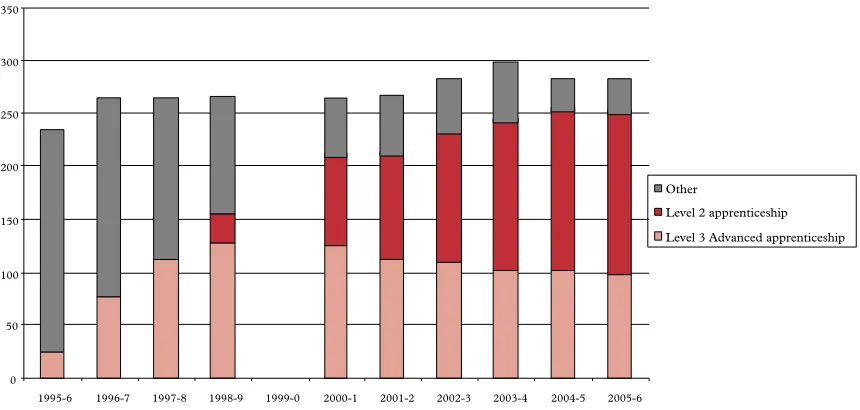
http://www.parliament.uk/about_lords/about_lords.cfm
Contact Details
All correspondence should be addressed to the Clerk of the Economic Affairs Committee. Committee Office, House of Lords, London SW1A 0PW
CONTENTS
Paragraph Page
ABSTRACT 5
Chapter 1: Introduction 1 7
Chapter 2: Broad trends in skill demand, and implications of low
skills of young people for the UK economy 6 8
Skills of young people in the UK compared to other OECD countries 7 8 Table 1: Level 2+ and Level 3+ by age for UK, France and Germany 9
Skills, earnings and employment probabilities 13 10
Chapter 3: The case for investment in apprenticeship training
for low-skilled young people 20 12
Comparing US and European provision for post-16 education
and training 20 12
Apprenticeship in the UK since 1994 23 12
Figure 1: Numbers in apprenticeship and other government-
supported work-based learning by programme 1995–2006 13
Young people seeking apprenticeship 26 13
Apprentices’ views of apprenticeship 28 14
Young people not in education, employment or training (NEET) 31 15 The value of apprenticeship for earnings and employment 33 15
Benefits to employers 34 15
Chapter 4: Training of low-skilled young people abroad—
apprenticeship in Germany and Switzerland 42 18
Apprenticeship in dual system countries 43 18
Employers’ role in apprenticeship design 45 18
Learning about apprenticeship in school 46 19
Maintaining employer demand for apprentices 47 19
Cost-sharing in apprenticeship 48 19
Completion and progression 49 19
Chapter 5: Apprenticeship: barriers to participation by young people 52 21
Progress to Level 2 by age 19 53 21
Lack of urgency in addressing basic skills 55 21
Many young people unfitted to start apprenticeship 58 22
Schools fail to prepare for and promote apprenticeship 60 22
Prior qualifications of apprentices 62 23
Table 2: Highest Prior Attainment Level of Advanced
Apprentices (Level 3) in 2005/06 (%) 23
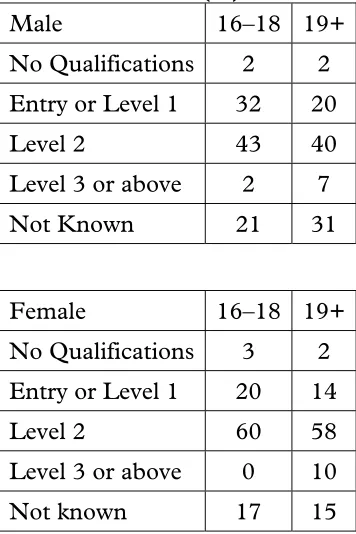
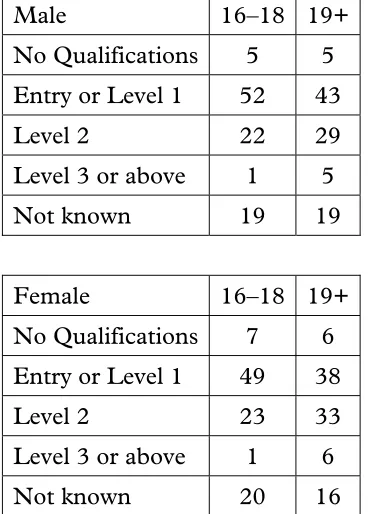
Table 3: Highest Prior Attainment Level of Apprentices
(Level 2) in 2005/06 (%) 24
Pressure of targets for apprenticeship ‘starts’ 64 24
Failure of careers guidance services 66 25
Failure to generate apprenticeship places 70 26
Chapter 6: Employers: marginalised at the end of a long chain
of administration 78 28
Management of funding 80 28
Employers not sufficiently involved 85 29
Advantages of employer involvement 87 30
Chapter 7: Problems of quality, access and progression 91 31
Variability in standards and time allowed for training 92 31
Demands of apprenticeship qualifications reduced 94 31
Level 3 for many more apprentices 95 32
Little progression and no reliable data 96 32
Young women benefit less from apprenticeship 97 32
Minorities under-represented 98 33
Poor completion rates 99 33
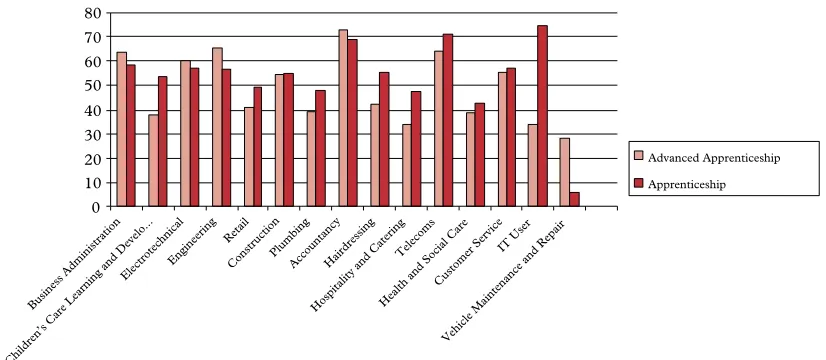
Figure 2: Success rates on Advanced Apprenticeships (Level 3) and
Apprenticeships (Level 2) in 15 large sector frameworks, 2005–06 33
Chapter 8: Apprenticeship within the broader government policy
framework—an unsettled landscape lacking in coherence 104 35
No one organisation in charge 106 35
Sector Skills Councils may be unable to cope 108 35
The fate of the Technical Certificate 110 36
The Apprenticeship Diploma 113 37
Policy to engage employers 117 38
Apprenticeship entitlement—a long history 126 40
Chapter 9: Conclusions and Recommendations 131 41
Introduction 131 41
Broad trends in skill demand, and implications of low skills
of young people for the UK economy 132 41
The case for investment in apprenticeship training for
low-skilled young people 133 41
Training of low-skilled young people abroad—apprenticeship
in Switzerland and Germany 136 41
Apprenticeship: barriers to participation by young people 137 42 Employers: marginalised at the end of a long chain of
administration 142 42
Quality and variability of apprenticeship frameworks, equity, aspirations and progression, completion of apprenticeship
framework 145 43
Apprenticeship within the broader government policy
framework—an unsettled landscape lacking in coherence 149 43
Appendix 1: Economic Affairs Committee 45
Appendix 2: List of Witnesses 46
Appendix 3: Call for Evidence 47
Appendix 4: Visit to Aylesbury Training Group, 1 May 2007 49
Appendix 5: Glossary 52
NOTE:References in the text of the report are as follows: (Q) refers to a question in oral evidence
(p) refers to a page of written evidence
ABSTRACT
The UK has an excellent record in higher education but a poor record in providing skills for the rest of the population. The result is unnecessarily low productivity and low wages for many, to the detriment of the economy, as well as needless disaffection among the young.
To tackle this problem, we recommend renovating and expanding the existing apprenticeship system. Apprenticeship gives young people the skills that employers demand, which in turn boosts their wages. In most European countries, such systems are the main route to skill for up to half of all young people, and comparable opportunities are badly needed here. In Britain, by contrast, we found that many who could and should benefit from apprenticeship have not done so.
To rectify this situation, urgent action is required:
• Many young people leave school without the basic functional literacy and numeracy required for apprenticeship. Early action by the Government is needed to improve this situation.
• Many schools also fail to inform many students about apprenticeship. By the age of 14, all school pupils should be fully informed about the opportunities provided by apprenticeship.
• Problems also surround the apprenticeship programmes themselves. The Government has given individual employers too little involvement in how apprenticeships are run, rendering them little more than passive partners. Employers need to be at the centre of apprenticeship provision. Within five years, all Government funding for apprenticeships should go directly to employers, rather than through training providers as happens today.
• Apprenticeship schemes have suffered from too much emphasis on quantity over quality. Completion rates for advanced apprenticeships remain unacceptably low. Progression through the different levels of apprenticeship and on to higher education also needs to be greatly improved.
• Successive Governments, not least the present Government, have provided poor leadership in tackling these problems. They have unveiled a stream of policy initiatives. But most have failed to deliver. These failures stem from poor implementation, frequent reorganisations, and the absence of a single Government body to take responsibility for apprenticeships.
CHAPTER 1: INTRODUCTION
1. Productivity in Britain continues to lag behind that of our main European competitors. One important reason is the large number of workers in Britain who have low skills and, consequently, low productivity and low pay. Many young people still fail to acquire any adequate level of skill. Young people with low skills on the UK labour market are faced with restricted employment opportunities, and the prospect of a poor quality job.
2. In his evidence to us, Lord Dearing emphasised the scale of the challenge of educating and training these young people:
“… if this Committee had been sitting, say, 150 years ago, it would have been addressing the same issue. That is how far we are lagging behind countries like Germany and France in basic skills and in technical knowledge”. (Q 370)
3. This issue is increasingly recognised as one of the most serious problems facing our country. At the end of 2006, a major report from Lord Leitch addressed the skills of the adult workforce and focussed in particular on skill formation among adults over 18.1 At much the same time, the Department of Education and Skills (DfES) published the 14–19 Implementation Plan, outlining the way in which the Diplomas proposed in the 2005 White Paper would be developed and launched.2 These diplomas will be mainly gained by full-time study.
4. Our report seeks to complement these developments by focusing sharply on an area which has been seriously neglected: the apprenticeship route, by which young school leavers can gain a skill while studying part-time rather than full-time—learning while earning. For very many young people this is a more attractive route than full-time study, and for employers it guarantees a supply of labour whose skills are directly relevant to the job in hand.
5. It has been calculated that by age 25 around one quarter of the age group in England will have passed through an apprenticeship. Since over half of those recruited to apprenticeship are drawn from the ‘below Level 2 group’3 apprenticeship constitutes an important route to skills for low-skilled young people. We have therefore focused our inquiry on apprenticeship, in particular on quality and outcomes, costs and benefits, the effectiveness of current delivery arrangements and the supply and demand for apprentices.
1 Leitch Review of Skills, Prosperity for All in the Global Economy, HM Treasury, 2006 2 Cmnd 6476, 14–19 Education and Skills, February 2005
3 UK level 2 is 5 or more GCSE passes at Grades A*–C, (G)NVQ2 or vocational equivalent; Scottish
CHAPTER 2: BROAD TRENDS IN SKILL DEMAND, AND
IMPLICATIONS OF LOW SKILLS OF YOUNG PEOPLE FOR THE UK ECONOMY
6. Since at least the early 1990s, labour market demand for unskilled or low-skilled individuals in advanced industrialised countries has been falling. In his evidence, Professor Stephen Nickell referred to a “continuous shift in the labour market away from unskilled workers towards skilled workers” (Q 9). While numbers in these groups have also been falling, demand has fallen faster and low-skilled individuals—both adults and young people—remain over-represented in unemployment and inactivity.4 In two thirds of OECD countries, from 1995 to 2005, the youth to adult unemployment ratio has worsened for young people although the absolute level of long-term unemployment among young people fell over the same period.5
Skills of young people in the UK compared to other OECD countries
7. In his evidence, Professor John Martin of the OECD pointed to the significant increase in upper secondary graduation rates in OECD countries in recent years to 80–90% (Q 39). The OECD has stated that “rising skill demands in OECD countries have made completion of upper secondary education [this definition includes apprenticeship] the minimum credential required for successful labour market entry and a basis for further participation in lifelong learning.”6 Among OECD countries, the UK has one of the highest proportions of people leaving education at the age of 16 and relatively few still enrolled in education at age 17.
8. On the question of whether proportions of school pupils in the UK with very low basic skills are higher than in other OECD countries, Professor Martin pointed to the OECD PISA 2000 study which tested reading, mathematics and science at age 15 for a wide range of countries including the UK.7 This study does not suggest that, at age 15, the UK has a longer tail of very low achievers than other countries.8 In fact, PISA (2000) showed the UK as having average scores which placed the UK in the top half of the distribution, with dispersion around the mean not significantly different from other OECD countries.
9. However, the UK performance in improving skills after the age of 15 is significantly worse than that of other countries. Between the ages of 16 and 25, the International Adult Literacy Survey showed UK skill levels to be significantly lower than those of other European countries such as Germany
4 OECD, From Education to Work: A Difficult Transition for Young Adults with Low Levels of Education, 2005,
Annex B Table C.5.1
5 OECD, Starting Well or Losing Their Way? The Position of Youth in the Labour Market in OECD Countries,
2006, p. 8
6 OECD, 2006, ibid, p. 13
7 OECD, Knowledge and Skills for Life—First Results from Programme for International Student Assessment
(PISA), 2001
8 Gill B, Dunn M, Goddard E, Student achievement in England: results in reading, mathematical and scientific
and Switzerland.9 Much of this catch-up by later ages in other countries is the result of learning gained through apprenticeship.
10. By their twenties, young people in the UK do much less well. Just over one quarter are still below Level 2. The UK has higher proportions of young people in their mid twenties below Level 2 than France, Germany, or Singapore. Only the United States has levels of low skills similar to the UK.10 11. Almost all growth in the skill levels of the workforce is the result of young
[image:9.595.136.447.318.620.2]people acquiring qualifications and replacing older less-qualified individuals. Tables 1 and 2 show changes in qualification levels for a “pseudo cohort” born in the same year in the UK, France and Germany.11 After age 21 but before they reach their mid-twenties, far higher proportions in France and Germany improve their qualifications than in the UK, indicating that much skill upgrading in those countries takes place when young adults are in their twenties. However, growth in skills from qualifications acquired after the age of 30 is very low in the UK, and negligible in France and Germany.
TABLE 1
Level 2+ and Level 3+ by age for UK, France and Germany
Percentage at Level 2 and above
Age 19–21 25–27 31–33
in 1991 in 1997 in 2003
UK 50 59 62
France 73 83 82
Germany 67 84 84
Percentage at Level 3 and above12
Age 19–21 25–27 31–33
in 1991 in 1997 in 2003
UK 29 39 43
France 30 53 52
Germany 50 78 78
Source: McIntosh (2005) op. cit. Table A.5
12. Priority therefore needs to be given to increasing the flows of qualified young people into the labour force as a way of improving the stock of skills overall.
9 OECD, Literacy skills for the knowledge society: further results from the International Adult Literacy Survey, 1997,
Table 1.6, Paris, France
10 Steedman H, McIntosh S, Green A, International Comparisons of Qualifications: Skills Audit Update, DfES
Research Report No. 548, 2004, Table 1
11 McIntosh S, Using Pseudo-Cohorts to Track Changes in the Qualifications of National Populations, DfES
Research Report No. 621, 2005. Pseudo cohorts are artificially created data sets created from repeated cross sections. In this study the repeated cross sections are from the Labour Force Study in each country
12 UK level 3 is 2 or more A-level passes; (G)NVQ 3 or vocational equivalent; Scottish equivalent
In this respect, the UK has lagged behind other OECD countries over the last 20 years. While, in almost all other OECD countries, the younger (25– 34) age group is much better qualified than the older (45–54) age group, the UK shows almost no difference in skill levels between these two groups and remains towards the lower end of the OECD distribution. (DfES p 111)
Skills, earnings and employment probabilities
13. Workforce skill levels were recognised by Professor Martin as one of at least three important determinants of productivity differences between countries. Poor adult skill levels in the UK were thought by the OECD to explain a part of lower UK productivity relative to other countries. (Q 38)
14. It is widely accepted that skill levels (proxied by formal qualifications) show a strong and regular association with earnings and employment probabilities, and that these differences arise from differences in productivity levels according to skill. Individuals in the UK who fail to reach basic standards of functional literacy and numeracy have been found to have substantially lower earnings and employment levels. Those with no qualifications aged 20–29 have lower earnings and much lower employment probabilities even than those who hold only a Level 1 qualification (DfES p 115). Young people do not appear to suffer low earnings and unemployment from lack of skills to a greater extent than do older workers when all factors are considered. Professor Nickell commented: “A lack of skills is a lack of skills whether you are young or old; people who lack skills have a bad time in almost every aspect of their lives.” (Q 11)
15. On three important measures—unemployment, earnings and job quality—low-skilled young people in the UK fare badly. Unquality—low-skilled young people have a high probability of unemployment relative to those with some skills (DfES p 116). Hourly earnings remain lower for those with qualifications below Level 2 over the whole working life cycle (DfES p 115). Typical jobs for the young unskilled are insecure and offer no training; furthermore, these young people are frequently ‘churned’ between periods of casual employment and unemployment (Furlong p 208).
16. Since the 1980s, the earnings of the highly-educated have risen faster than the earnings of those who lack skills. A recent study shows that male wage inequality as measured by the 90/10 hourly wage ratio has increased during the past two decades from 2.63 to 3.40 in the UK and from 3.58 to 4.76 in the US.13 In Germany, the increase—from 2.53 to 2.86—has been smaller. The study refers to the “dramatic increase in wage inequality since the late 1970s in the US, UK and other Anglophone countries. A significant reason for this is the growth of wage differentials between educational groups ... a fundamental reason for this is a long-run growth in the relative demand for skills driven by technology change …”14
17. Witnesses not only emphasised the need to improve skill levels but stressed that an increase to Level 3 is the minimum necessary to minimise the risk of low wage, low skill employment (Vignoles Q 25, Furlong p 208, Ryan Q 298).
13 The 90/10 wage ratio is calculated by dividing the average earnings of those whose wages fall within the
90th percentile (richest 10 %) of the wage distribution by the average earnings of those whose wages fall
within the 10th (poorest 10 %) percentile
14 Machin S, Van Reenen J, Changes in Wage Inequality, Special Paper No. 18, Centre for Economic
18. Improving the skills of young people is not just a question of productivity and economics: skills also improve lives and well-being. In its evidence to us, the Trades Union Congress (TUC) argued that improving access to skills is also an important instrument of social justice, and stressed our collective responsibility towards young people to prepare them better to enter the world of work (QQ 212, 215). Improving skills improves well-being in many ways; health, effective parenting and ability to benefit from lifelong learning opportunities have all been shown to improve when individuals acquire skills.15 At the same time, propensity to engage in crime is reduced. On the other side of the balance sheet, a recent report from the Prince’s Trust warns that youth unemployment is costing the UK economy some £10 million a day in lost productivity. Together with the £20 million-a-week paid out in Jobseeker’s Allowance, the young unemployed are costing the UK billions of pounds each year. The Prince’s Trust report also reveals that youth crime is costing £1 billion every year while educational underachievement costs £18 billion in lost earnings. 16
19. UK productivity could improve if the pool of skilled labour could be increased, and the cost to the economy and to society of failure to achieve this would be high. To increase the stock of skills in the UK requires flows of better-qualified young people to replace those retiring workers who have lower skills. As young people with low skills face poor job prospects, it is important to ensure that those who are able to do so acquire a recognised skill.
15 Wider benefits of Learning Research Centre, Institute of Education, University of London, various reports,
2004–2007
CHAPTER 3: THE CASE FOR INVESTMENT IN APPRENTICESHIP TRAINING FOR LOW-SKILLED YOUNG PEOPLE
Comparing US and European provision for post-16 education and training
20. The UK not only has a high proportion of low-skilled in the young adult population relative to other European countries such as France, Germany and the Netherlands, but also has greater wage inequality than those countries.17 The US resembles the UK, having similar proportions with low skills in the young population and higher levels of income inequality. By contrast, the European countries cited here all have strong vocational education tracks which include substantial numbers in apprenticeships. Apprenticeships, which last on average for three years, have contributed to some 80% of young people gaining a substantial level of skill and the associated higher productivity.
21. In the US, High School provides mostly general education for 16–19 year olds; apprenticeship is not on offer to young people. Hourly wages in occupations usually carried out by High School drop-outs and High School graduates have not increased in real terms for at least two decades.18
22. Provision for 16–19 year olds in the UK lies somewhere between the US and European models. In recent years, provision for 16–19 year olds has been moving closer to the European model; apprenticeship—mostly of one year duration—has been revived and developed since 1994. Currently, a Diploma alternative to A-level, combining applied learning in a vocational context with more general study, is under development and it is planned that the first Diplomas will be offered in 2008.
Apprenticeship in the UK since 1994
23. Apprenticeship has a long tradition in Britain but by the early 1990s numbers had fallen to a low level. Apprenticeship was re-launched in 1994 as Modern Apprenticeship with a National Vocational Qualification (NVQ) 3 as its aim, agreed in consultation with the National Training Organisations representative of employer interests in their respective sectors. Apprentices were normally employees and it was expected that they would be accorded some time away from work for off-the-job learning. Costs of assisting the apprentice to gain the expected NVQ and costs of assessment were met out of public funds, while the employer paid wage and all other costs.
24. By 1997, 75,000 were in Modern Apprenticeship but the Level 3 qualification target proved unattainable for many. A lower level apprenticeship with an NVQ 2 target was introduced in 2001.19 Subsequently, the Modern Apprenticeship was renamed ‘Advanced apprenticeship’, and the lower level (NVQ 2) apprenticeship became the main source of apprenticeship places (Figure 1). Currently, there are three main government-supported programmes offering skills training to young
17 Machin and Van Reenen, 2007, op.cit
18 Freeman Richard B, America Works: the exceptional labour market, Russell Sage, New York Exhibit 4, 2007 19 Harris M, Modern Apprenticeships: An Assessment Of The Government’s Flagship Training Programme, Institute
people: Entry to Employment for those with no or very low prior qualifications, apprenticeship leading to NVQ Level 2, and Advanced apprenticeship leading to NVQ Level 3.
[image:13.595.84.514.312.517.2]25. Numbers officially ‘in apprenticeship’ have increased substantially since 1996. However, as Figure 1 below shows, most of this increase has been as a result of converting government-supported programmes of work-based learning into apprenticeship. Since 2000, numbers in apprenticeship have increased by almost 20% although growth now appears to have slowed or stalled and numbers in Advanced apprenticeship have fallen. Total numbers on all government-supported work-based learning programmes have hardly changed (+7%) since 2000. The failure to expand significantly workplace-based training over this period suggests a problem with employer demand.
FIGURE 1
Numbers in apprenticeship and other government-supported work-based learning by programme 1995–2006
0 50 100 150 200 250 300 350
1995-6 1996-7 1997-8 1998-9 1999-0 2000-1 2001-2 2002-3 2003-4 2004-5 2005-6
Other
Level 2 apprenticeship Level 3 Advanced apprenticeship
Source: TEC Management Information; ILR/SFR 05; ILR/SFR 09; ILR/SFR
Note: Other = National Traineeship (prior to 1998), NVQ Learning, Entry to Employment
Young people seeking apprenticeship
evidence, British Telecom (BT) had some 15,000 applications for 80 apprenticeship places (Q 93).
27. In the course of this inquiry, the Government published a Green Paper which recognised that “there are more young people who would like to take an apprenticeship place than there are places available”.20 A proposal in the Green Paper is an apprenticeship entitlement by 2013 for all those who meet the entry requirements for the sector. If properly implemented, this policy could help many more young people to find the apprenticeship places they seek.
Apprentices’ views of apprenticeship
28. We visited a training provider and spoke with a number of young men who were engaged in engineering apprenticeships (Appendix 4). Their views of apprenticeship were uniformly positive and enthusiastic. Some hoped to continue to study beyond NVQ Level 3. Young women employees working in a care home also expressed a positive view of the NVQ training they were undertaking in the apprenticeship framework. They saw the qualification as one on which they could build and which might facilitate a career move to other jobs in the sector.
29. Surveys of the views of young people who have experienced apprenticeship are generally positive. In a 1998 survey of young people on Modern Apprenticeship, apprentices said that the range of qualifications, the job-related nature of the training and the fact that they were paid were the most positive aspects of their apprenticeship, while the actual level of pay, long hours and theoretical nature of some of the training were the aspects most frequently criticised.21 A study of those who had not completed their apprenticeship training but had moved on to another employer found that, despite not finishing, non-completers were generally very positive about apprenticeship training. Most enjoyed the training (79%) and felt they learned a lot (78%), and half said that it had helped them in their career.22
30. The Modern Apprenticeship Advisory Committee chaired by Sir John Cassels, which reported in 2001, found that “being paid, achieving a recognised qualification and securing employment were particularly important for young people who were not expecting to perform well in GCSEs. For higher achievers, the range of sectors beyond traditional manual occupations was also an appealing feature.”23 We also received evidence from Connexions that apprenticeships which provided little or poor quality training and did not allow apprentices time for off-the-job training damaged the image of apprenticeship among young people and could deter others from applying (pp 192–193).
20 DfES, Raising Expectations: staying in education and training post-16, 2007, p. 26
21 Coleman N and Williams J, Evaluation of Modern Apprenticeships: 1998 Survey of Young People, DfES
Research Brief No. 93, December 1998
22 IFF Research Ltd, Modern Apprenticeships: Exploring the Reasons for non-completion in five Sectors, DfES
Research Brief No. 217, August 2000
23 Report of the Modern Apprenticeship Advisory Committee, Modern Apprenticeships: the Way to Work,
Young people not in education, employment or training (NEET)
31. Young people not in education, employment or training (NEET) were the subject of great concern in evidence submitted to us (ALP pp 6, 7; NYA p 1; DfES p 122). Some 13% of 16–17 year olds are classified as NEET and numbers have recently increased sharply.24 From Youth Cohort Survey Data, we can see that almost half of the NEET 16 year olds (48%) had either no GCSE passes or fewer than 5 passes at Grades D-G.25 This group is currently not targeted or helped by current active labour market and training measures. Recent growth in NEET numbers has come mainly from the group with below Level 2 qualifications (DWP pp 194, 200).
32. The situation of young adults aged 18–24 is even more alarming. Nearly a fifth of this age group (19%) are not in education, employment or training. The situation of young women is considerably worse than that of young men; over one fifth of young women aged 18–24 are not in education, employment or training compared to 16% of young men. Most of the young people in the NEET group are not long-term unemployed but, as pointed out by Dr Vignoles, move in and out of insecure employment with repeated periods of unemployment (Q 28).
The value of apprenticeship for earnings and employment
33. Vocational qualifications such as NVQ 3 increase the probability of employment and, at Level 3, are also associated with a modest increase in earnings. But a recent study shows that, for the same level of vocational qualification, wage returns to a recent apprenticeship are significantly higher.26 Young men who have a recently completed apprenticeship at Level 3 have an average return of 18% compared to those whose highest qualification is at Level 2 while the corresponding figure for young men with a Level 2 apprenticeship is 16%. Young women have an average wage return of 14% to a recently acquired Level 3 apprenticeship but no significant wage return to a Level 2 apprenticeship. The high level of wage returns to apprenticeship means that the investment in apprenticeship by apprentice, employer and government is likely to yield substantial benefits to all parties.
Benefits to employers
34. The same study points to the implications for employers, who stand to benefit from the increased productivity of those with apprentice training:
“… wage benefits, as an indicator of the future productivity of apprentices, dwarf any costs incurred by the state and employers. In addition, employer training and supervisory costs are offset by the value of the output produced by apprentices. When these low costs are set against the very high estimated wage returns, it is not surprising that the cost-benefit analyses produce the high figures that they do.”27
It is possible that these net benefits might not be quite so substantial if apprenticeships were less selective and undertaken by a larger number of
24 National Statistics, First Release: Labour market statistics, 15 November 2006, Table 14 25 National Statistics, Statistical First Release, April 2005, Table C
26 McIntosh S, A Cost-Benefit Analysis of Apprenticeships and Other Vocational Qualifications, DfES Research
Report No. 834, 2007, p.1
young people. Returns to young women are consistently lower than those to young men with apprenticeship. But, overall, the evidence on costs and benefits suggests that there is a strong economic and business case for expansion of apprenticeship, in addition to the compelling case for reducing social inequalities and deprivation associated with low skills.
35. The UK economy currently lacks the skills needed to match the productivity levels of other advanced economies. Individual employers face skills shortages which inhibit the development of their business; demographic factors mean that replacing the specialised skills of employees reaching retirement is becoming a pressing matter (SSDA p 225). Apprenticeships are a prime source of intermediate skills in craft, technician and associate professional occupations, required both for economic growth and the replacement of employees with specialist skills. Although evidence is sparse, it seems that most employers have ‘heard about’ or ‘know about’ apprenticeships, but many lack understanding of how to become involved.28 On a visit to a Training provider we heard that:
“While [the Association’s] training schemes have been successful the group still battles to convince employers unfamiliar with their work to join their scheme to interview the trainees, and provide apprenticeships. [The Chief Executive] said even managing directors who started their own careers on apprenticeships can be unwilling to sign up.” (Appendix 4) 36. There is general agreement that more marketing activities to promote
apprenticeship to employers are highly desirable. 29 However, we have not received any evidence to suggest that these activities have been given the required priority. We did not receive a response to a request to the LSC for information on the success or otherwise of its most recent apprenticeship marketing initiative.
37. A 2003 study surveyed a sample of employers engaged in apprenticeship and found that, overall, the most important factors, in considering the introduction of apprenticeships, were “the wish to give staff a chance to gain a qualification, to improve staff retention and to provide staff with opportunities for career progression and development.”30 There is, however, no large-scale reliable survey evidence from employers who have decided not to offer apprenticeships. It is therefore difficult to know what might persuade employers to offer apprenticeships in preference to other ways of obtaining the skills needed. A recent study questioned companies on their reasons for preferring upgrading existing employees or recruiting ready-trained staff to apprenticeship. This study (based on case studies of 30 large organisations) found that relative cost was a key issue:
“The use that employers make of apprenticeship depends primarily on its cost-effectiveness relative to two alternative sources of skills— recruitment and upgrade training.”31
28 Modern Apprenticeship Advisory Committee op.cit. pages 51,52
29 DfES, Modern Apprenticeship End to End Review, p.20; Apprenticeship Task Force Report, 2004, p.7
http://www.employersforapprentices.gov.uk
30 Anderson T, Metcalf H, Modern Apprenticeship Employers: Evaluation Study, DfES Research Report 417,
April 2003. This study found that “developing skills needed for the business” was ranked fourth as a reason for using apprenticeships.
31 Ryan P, Gospel H, Lewis P, Foreman J, Large Employers and Apprenticeship Training, Chartered Institute of
38. The Apprenticeship Task Force, set up to report on ways of encouraging employers to offer apprenticeships, commissioned research from the Institute for Employment Research at the University of Warwick on the business case for apprenticeship. This found that there was a sound but not easily quantifiable business case for using apprenticeship. It depended, however, on a company’s appreciation of longer-term benefits and could be undermined by poaching.32
39. Apprenticeship is a prime source of intermediate skills in craft, technician and associate professional occupations, required both for economic growth and the replacement of employees with specialist skills who leave or retire. Apprenticeship brings high wage returns. Young people who complete an apprenticeship which includes an NVQ 2 or an Advanced Apprenticeship with an NVQ 3 earn significantly more than those who gain the same qualifications outside an apprenticeship framework. Good quality apprenticeship places are highly sought after and the available evidence indicates that the supply of young people seeking a place outstrips demand.
40. Apprenticeship should be established as the main route to skills below graduate level. It should be the standard method for a combination of work and learning to contribute to the Government’s goal that all young people aged 17 and 18 should participate in some form of education and training.
41. By 2013, any young person who can demonstrate the appropriate level of functional literary and numeracy and a positive commitment to apprenticeship should be eligible for the Government’s apprenticeship entitlement.
CHAPTER 4: TRAINING OF LOW-SKILLED YOUNG PEOPLE ABROAD—APPRENTICESHIP IN GERMANY AND
SWITZERLAND
42. We visited Germany to meet executives, senior managers, trainers and apprentices in a department store and a large hotel in Düsseldorf. In addition we visited the Chamber of Commerce and a vocational school. We also heard oral evidence on apprenticeship in Switzerland from Professor Ernst Buschor of the Swiss Federal Institute of Technology. The aim of this part of our inquiry was to understand better how other countries overcome the main challenges inherent in managing apprenticeship partnerships, in particular, encouraging employer demand for apprentices, ensuring that training programmes match employer needs, and providing adequate guidance and support to young people seeking apprenticeship.
Apprenticeship in dual system countries
43. In Germany and Switzerland, apprenticeship operates within what is known as the ‘dual system’. This refers to the requirement that apprentices must receive structured training provided by the employer, usually on the employer’s premises, as well as general education and technical knowledge in the vocational school. In both countries, proportions enrolling in university are lower than in the UK and apprenticeship attracts higher proportions of well-qualified young people. Content and cognitive demands of apprenticeship vary considerably according to the needs of the apprenticeship occupation.
44. There was strong competition for apprenticeships in the Düsseldorf department store we visited; this was symptomatic of increasing difficulties in Germany in providing sufficient places to meet the demand from young people. Currently, around half the age group in Germany enters apprenticeship but often only after a considerable waiting period. We learned that it was normal for young people to improve their qualifications in full-time further education in order to be considered for an apprenticeship; the average age on entry is now 18 years. The apprentices we met in both the hotel and department store saw apprenticeship as the gateway to further career advancement; they appreciated the support and training provided by the company, less so the courses provided at the vocational school they attended.
Employers’ role in apprenticeship design
Learning about apprenticeship in school
46. Apprenticeship is so well-known and well-established in Germany and Switzerland that almost all employers, parents and teachers are familiar with what it offers. Nevertheless, in both countries, classes in school prepare students to think about occupational choice and the range of apprenticeships open to them in their locality. Since it is up to young people to find an apprentice place, students learn in school or in college to write letters of application to firms. In Germany, young people with lower level school achievements are experiencing increasing difficulties in finding an apprenticeship place. In Switzerland too, some 10–15% do not have sufficient education and social skills to start apprenticeship. In both countries, those who fail to find a place enrol on full-time courses designed to improve basic numeracy, literacy and social skills.
Maintaining employer demand for apprentices
47. Keeping the net costs of apprenticeship to firms as low as possible over the duration of the apprenticeship period was identified in both Switzerland and Germany as crucial to ensuring an adequate supply of apprenticeship places. In both countries, the typical apprenticeship lasts considerably longer (three years) than in the UK where the average duration is around one year (but three or four for some engineering and similar apprenticeships).
Cost-sharing in apprenticeship
48. The longer duration of apprenticeship in Germany and Switzerland allows firms to recoup some of the expenses of the training costs and lost productivity of the early period of apprenticeship from the higher productive output of the apprentice in the latter period. Much also depends on the level of the apprentice allowance (which in Germany is fixed at around one third of the adult employee wage) so as to help offset the cost of apprentice day release (usually one or one and a half days a week). In the case of Switzerland, where just under two thirds of young people pass through apprenticeship, Professor Buschor emphasised that employer demand for apprentices was extremely sensitive to the balance of costs (Q 131). The costs of apprenticeship are thus shared by employers, apprentices and government. In Germany, the regional government meets the cost of off-the-job education and training but in addition the Federal government finances employers directly in a number of ways. Principally, these are finance for groups of small employers who establish Group Training Facilities, and direct financing of the costs of apprenticeship places in small companies which could not otherwise afford to train.33
Completion and progression
49. In both Germany and Switzerland, not all who start an apprenticeship complete it or complete with the same employer. Most of those who leave do so during the initial probation period and the vast majority start another apprenticeship. Calculating completion rates of German apprenticeships on the same basis as that used by the LSC (taking early leaving into account)
33 Bundesministerium für Bildung und Forschung, Infopaket Ausbildung,
gives a completion rate for German apprenticeship of 75%.34 This compares with the position in England (2005–06) where 50% completed the full framework and 57% gained an NVQ qualification only.35
50. It is clear that career advancement and progression from apprenticeship play an important part in attracting students with good school achievements into apprenticeship in Switzerland. The attractiveness of apprenticeship to young people in Switzerland declined in the early 1990s because there were no progression possibilities to tertiary education. This was remedied by the introduction of a Vocational Baccalaureate in 1995. This is open to those with completed apprenticeship and gives access to tertiary level qualifications following further full-time study after apprenticeship (Buschor Q 128). Currently, some 20% of apprentices in Switzerland continue on to tertiary education. It is not known how many British apprentices progress to tertiary education from apprenticeship. (See Chapter 7 below)
51. Apprenticeship places in Germany and Switzerland are highly sought after by young people. Employers in both countries provide three-year apprenticeships for more than half the cohort, but recently the supply of young people seeking apprenticeship has exceeded demand from employers. At least 75% of German apprentices complete their three-year training successfully, compared to around half in the UK, where apprenticeship lasts only one year on average. In both Germany and Switzerland, employer demand for apprentices is highly sensitive to the costs of employing them. As in the UK, the quality of young people applying for apprenticeship is improved by good progression prospects within the firm or sector, but in Switzerland and, to a lesser extent, in Germany, apprentices can and do continue on to higher education.
34 West J, Improving Completion Rates In Apprenticeship: A Comparative And Numerical Approach,
http://www.employersforapprentices.gov.uk/docs/research/research_1_309.doc, accessed 09/05/2007
CHAPTER 5: APPRENTICESHIP: BARRIERS TO PARTICIPATION BY YOUNG PEOPLE
52. In the UK, apprenticeship is the main route to an occupational skill and worthwhile employment for young people who have limited school achievements. However, we believe that far too many of those who could and should benefit from this route do not do so.
Progress to Level 2 by age 19
53. Level 2 is widely recognised as the absolute minimum level necessary for gaining regular employment and benefiting from lifelong learning.36 Just over half of 16 year olds in England, Wales and Northern Ireland achieve this level. After 16, progress is poor. In 2006, only a further 19% of 19 year olds in England have reached Level 2. Between a third and a fifth of all young people are still without even this most basic level of skill at age 19.37 Most will struggle and/or fail to improve thereafter.
54. Of those who gain a Level 2 qualification by age 19, only 4% have done so through apprenticeship. From the age of 16 onwards, a higher proportion of young people are in jobs—mostly without training—or unemployed than in apprenticeship.38 Yet, as pointed out in Chapter 3, apprenticeship offers good wage returns and good employment prospects to young people. The reasons why so few benefit from apprenticeship are examined in this chapter.
Lack of urgency in addressing basic skills
55. Concern over the numbers of young people leaving school every year without the basic skills of literacy and numeracy was widespread in the evidence submitted to us (Amicus p 171; ALP p 176; City of London Corporation p 187; Connexions p 191; ICG p 209; NYA p 221; CBI p 47). The DfES recognised this in their written evidence:
“Some young people are [therefore] leaving the education and training system having failed to develop a foundation in the right skills; having failed to get qualifications that will serve them well; and having failed to be helped to continue with their education and training until they have at least reached Level 2, but preferably Level 3.” (p 103)
56. The DfES also provided evidence that those who have formally achieved a Level 1 standard or even Level 2 on leaving school still often lack basic numeracy and literacy. The Skills for Life Survey (2003) showed that “many of those with English and Maths at GCSE do not currently meet functional literacy and numeracy standards”. (DfES p 127)
57. This issue was recognised in the 14–19 Education and Skills White Paper (February 2005)39 and the Skills White Paper (March 2005).40 In the same
36 5 GCSE passes at Grades A*–C , (G)NVQ 2 or vocational equivalent/Scottish equivalent qualification 37 National Statistics, SFR 06/2007, Table 2
38 National Statistics, SFR 04/2005, Table C; SFR 48/2005, Table A 39 Cmnd 6476, 14–19 Education and Skills, February 2005
year, the DfES gave the QCA a remit to develop functional skills in English, ICT and mathematics. However, under the QCA timetable, qualifications in functional mathematics will not be available until 2010. This lengthy delay for what must be essentially quite a simple task is difficult to understand given the urgency of the situation.
Many young people unfitted to start apprenticeship
58. Apprenticeship is not for those who have failed to acquire basic skills of literacy and numeracy. The Association of Learning Providers (ALP) told us:
“Many young people leaving school lack the basic skills necessary for employment—they are all too often simply not ready even for Entry to Employment (E2E), the recognised ‘pre-Apprenticeship’ programme, but at this time no realistic alternative option is available. As a result many are ending up in the Not in Education, Employment or Training (NEET) group—indeed statistics are showing that the number of NEETs has been steadily rising despite all the Government’s efforts to raise skills levels, particularly for young people”. (p 176)
59. The Office for Standards in Education (Ofsted) suggested that at a conservative estimate some 300,000 16–19 year olds are unable to access training or any worthwhile employment as a result of a lack of basic skills (Q 248). This means that every year at least one third of the young people who do not have a Level 2 qualification are not able to progress to further training without remedial help. It was also suggested to us that many in this same group are seriously disadvantaged by a lack of social skills which are becoming more important in what is an increasingly customer-facing labour market (Connexions p 191; ICG pp 209–210; NYA p 223). Evidence from the CBI defined social or ‘soft’ skills as “an individual’s desire, determination, motivation and attitude,” and claimed that, in a recent CBI survey, almost half (47%) of employers expressed disappointment at the attitude of school leavers towards work. (p 48)
Schools fail to prepare for and promote apprenticeship
60. The very poor basic and social skills of school leavers point to a lack of effort on the part of schools to inform students of what will be expected of them in the workplace and a failure to offer appropriate courses and preparation for work-based learning and training. This was recognised in a DfES review in 2004–05:
“Schools (especially those with sixth forms) do not always provide impartial guidance to 14- to 16-year olds on the full range of local learning opportunities.”41
Written evidence from Connexions (p 192) stressed the “huge gap between what was taught in education and what skills are actually important in the labour market.” Sir Digby Jones told us: “We have got to get the message into 11, 12, 13-year olds that there is a fabulous future through … the apprenticeship system.” (Q 366) He also stressed the need to educate parents as well as schools and teachers.
61. We learned at first hand that schools rarely inform young people about the opportunities offered by apprenticeship (Appendix 4). The training provider we visited reported that schools have been reluctant to get involved with apprenticeships. Many schools in the area in recent years have become more reluctant to let staff from the training provider talk to students about apprenticeships as an option for when they leave. Lack of interest in apprenticeship opportunities on the part of schools and failure to prepare students for them leads young people to make poor choices on leaving, and helps to explain why so many leave poorly prepared for further training. We spoke with apprentices at the training provider and found that none had learned about apprenticeship at school. Some had taken a year or more to find out about opportunities offered by the training provider and to take up an apprenticeship.
Prior qualifications of apprentices
[image:23.595.209.387.491.758.2]62. We were told that the DfES did not compile statistics on the prior qualifications of apprentices (see Para 70 below). This is yet another example of the failure of the DfES to provide statistical information on topics vital to the understanding of apprenticeship and its functioning. This indifference to the vital issue of prior preparation for apprenticeship is symptomatic of the lack of any connection between what goes on in schools and the requirements of apprenticeship. At our request, the DfES prepared the following tables showing prior qualifications of apprentices and Advanced apprentices. Unfortunately, these are of only limited use because of the large percentages whose prior qualifications are not known.
TABLE 2
Highest Prior Attainment Level of Advanced Apprentices (Level 3) in 2005/06 (%)
Male 16–18 19+
No Qualifications 2 2 Entry or Level 1 32 20
Level 2 43 40
Level 3 or above 2 7 Not Known 21 31
Female 16–18 19+
No Qualifications 3 2 Entry or Level 1 20 14
Level 2 60 58
TABLE 3
Highest Prior Attainment Level of Apprentices (Level 2) in 2005/06 (%)
Male 16–18 19+
No Qualifications 5 5 Entry or Level 1 52 43
Level 2 22 29
Level 3 or above 1 5 Not known 19 19
Female 16–18 19+
No Qualifications 7 6 Entry or Level 1 49 38
Level 2 23 33
Level 3 or above 1 6 Not known 20 16
Source: Special tabulation from the Individual Learner Record (ILR) supplied by the DfES
63. Table 3 shows that many of those on Advanced apprenticeship are poorly qualified. For example, a third of young men aged 16–18 on Advanced apprenticeship have not achieved a Level 2 qualification. By contrast, Table 4 shows that many of those on apprenticeship (which aims for a Level 2 qualification) are already at that level. These figures point to confusion and waste in a situation where, despite official commitment to progression through apprenticeship, young people are not given the opportunity to progress on the basis of prior achievements.
Pressure of targets for apprenticeship ‘starts’
64. The pressure of Public Sector Agreement (PSA) targets focused on numbers of apprenticeship ‘starts’ may well explain why so many apprentices aged 19+ are not improving on their prior level. One way of meeting targets for apprentice ‘starts’ is to recruit onto apprenticeship young people who are already employed. A recent study showed that almost half (45%) of those in apprenticeship are already employed with the same employer when they start.42 Many of these will already have acquired some of the skills needed to obtain an apprenticeship qualification. The apprenticeship can be shorter and cheaper—especially if the new recruit already has a Level 2 qualification—and even a short apprenticeship counts as a ‘start’.43 Ms Melanie Hunt, Director of Learning at the LSC, explained the process to us:
“… it is important to add that apprenticeships are assessed on the basis of competence, so, if an existing employee is being assessed for an apprenticeship and taken through that, they will not require so much, if
42 Ullman A, Deakin G, Apprenticeship pay: a survey of earnings, DfES Research Report 674, 2005, p. 11 43 A case study example of this practice is quoted in Fuller A and Unwin L, Creating a Modern Apprenticeship:
you like, training input as maybe a new employee and a brand-new apprentice and, therefore, we are not spending money unnecessarily on off-the-job training.” (Q 288)
65. Lack of basic skills is a barrier to participation in apprenticeship for far too many—at least a third—of those who leave school without reaching Level 2. However, of those who have at least the basic literacy and numeracy skills to benefit from apprenticeship, many fail to find a place. The reasons for this are, first, information failure, more specifically inadequate careers advice and guidance, and second, a failure by the relevant authorities to make any realistic assessment of the demand for apprenticeship on the part of young people and employers. These issues are explored in more detail in the remainder of this chapter.
Failure of careers guidance services
66. We have already noted that schools fail to inform young people about the opportunities offered by apprenticeship and other work-based training such as Entry to Employment. This failure is further compounded by the failure of government to provide a service that offers basic information on local labour markets, earnings, career prospects and training opportunities. A number of our witnesses expressed concern at the lack of suitable careers guidance and information for young people. (CBI Q 157; IoD Q 168; Vignoles Q 288; TUC Q 307)
67. The Government makes provision for careers guidance and information services to young people through Connexions, a network of information and guidance providers financed from public funds. 44 In 2004, the National Audit Office reviewed the work of Connexions partnerships and found that careers education and guidance services provided to young people were unsatisfactory. 45 In July 2005, the DfES recognised that Connexions was not able to provide information on training opportunities to young people at formative stages in their school careers while also looking after vulnerable groups.46 Ofsted, which previously inspected Connexions partnerships, has not had the power to inspect Connexions since 2004 except as part of a wider Joint Area Review (JAR). They acknowledged that there had been no proper oversight of Connexions by Ofsted since 2004. 47
68. We conclude that Connexions is failing to reach a great many of those who need its services. Young people looking to make vital decisions about their future have been left to find their own way without help or guidance. The failure to offer timely guidance on the whole range of post-16 education and training opportunities when young people are still in school has other consequences. Evidence from other countries suggests that, if young people in school are well-informed about apprenticeship and the qualities and standards required for entry, they are more motivated to achieve while at school (Buschor Q 140). The opportunity for reflection and understanding
44 “Connexions is the Government’s support service for all young people aged 13 to 19 in England.Through
multi-agency working, Connexions provides information, advice, guidance and access to personal development opportunities for young people”
http://www.connexions.gov.uk/partnerships/index.cfm?CategoryID=3,accessed 19/06/07
45 National Audit Office, Connexions Service Advice and Guidance for All Young People, March 2004 46 DfES, End to End Review of Careers Education and Guidance, July 2005, p. 5
of oneself offered by guidance interviews is also valuable in promoting the social skills and the attitudes to work that many young people need to develop.
69. In May 2004, the DfES announced their intention to create a ‘clearing house’ for school leavers: “This will match prospective trainees to employers, providing for aspiring apprentices what the UCAS clearing system provides for aspiring students.”48 This proposal, which more than three years later has not been implemented, would considerably ease the problem of enabling young people to find apprenticeship places.
Failure to generate apprenticeship places
70. The DfES acknowledged that neither they nor the LSC collect data on the number of young people interested in or actively seeking an apprenticeship.49 This contrasts with the very detailed statistics published annually in Germany and Switzerland showing the supply of young people coming forward for apprenticeship and numbers of places offered by employers. The DfES also made clear that no data are collected on employer demand for apprentices, nor is there any central or local record of businesses that employ apprentices.
71. When asked whether some young people who wanted an apprenticeship failed to get a place, the LSC told us that they work on the assumption that the numbers of apprenticeship places purchased by the LSC corresponds to the supply of young people seeking apprenticeship:
“… we have information from our existing providers of apprenticeships and other kinds of work-related provision for young people and, on the basis of that, we develop our purchasing plan.” (Q 283)
When pressed on how many failed to get a place, the view was that:
“… it is not an enormous issue in Yorkshire and the Humber. Anecdotally, one hears from time to time of one or two people who have not managed to get a placement” (Q 284).
72. However, other authoritative sources of evidence provided a different story, maintaining that many young people seeking an apprenticeship place were unable to find one. Sir Roy Gardner, Chairman of the Apprenticeship Ambassadors Network, told us that there are more people wanting apprenticeships than employers offering places (Q 421). Professor Lorna Unwin referred to anecdotal evidence about shortages of apprenticeship places and called for a proper survey to discover the real level of demand from employers for (Q 93).
73. Many school leavers in the UK have not acquired the minimum level of functional numeracy and literacy and social skills necessary to benefit from apprenticeship training. In our view, the improvement of levels of functional skills in mathematics and English is fundamental and should be given much higher priority by schools. The Government should take this forward with far greater urgency.
74. Of those who could benefit, many are failed by wholly inadequate or non-existent careers advice and guidance, and by ignorance of or
indifference to apprenticeship opportunities in schools. By the age of 14, all school pupils should be informed about the opportunities offered by apprenticeship, and about the work needed to qualify for one. Careers teachers and the Connexions service—which is failing to reach a great many of those who need its services—should explain the advantages of vocational as well as academic education. Special attention should be paid to informing girls about non-traditional apprenticeships and to providing information on earnings in different sectors.
75. It is clear that many young people who have the capacity to benefit from apprenticeship fail to find a place. There should be an effective clearing house where all apprenticeship places are advertised and through which young people can apply—as for university entry. It should be operated by the LSC.
76. The DfES has neglected to compile any record of young people who unsuccessfully seek an apprentice place and keeps no central record of employers seeking apprentices. No reliable data are compiled on prior qualifications. Urgent measures are needed to ensure both the production of proper statistics on apprenticeship and also effective monitoring.
CHAPTER 6: EMPLOYERS: MARGINALISED AT THE END OF A LONG CHAIN OF ADMINISTRATION
78. Apprenticeship improves the nation’s skill base and, for many of those who benefit, enhances earnings and life chances. However, the employer’s role in what should be the apprenticeship partnership is currently that of a passive partner in a process of which the average apprentice employer has only limited understanding. 79. Apprenticeship is—or should be—a unique public-private partnership. Three actors contribute—employer, apprentice and government—and all stand to benefit from a successful partnership. Witnesses stressed that procedures for the administration of government funding of apprenticeship had the effect of marginalising employers (Unwin and Fuller Q 77; Ashton p 173). In the case of apprenticeship funding, the administrative chain separating policy from practice on the ground is a long and, we would argue, dysfunctional one.
Management of funding
[image:28.595.76.520.402.772.2]80. Government funding for the training component of apprenticeship is administered by the LSC. The LSC managed the funding of a wide range of education and training activities on behalf of the DfES. Planned LSC expenditure in 2006–07 was just under £10 billion. Table 5 sets out the range of activities funded by the LSC and the share of each in the total budget.
TABLE 4
Planned Learning and Skills Council Expenditure 2006–07
Budget Line Planned
expenditure 2006–07 £000s
Percentage of total
School sixth forms 1,871,098 19
16–19 Further Education 2,863,200 30
Work-based Learning (apprenticeship) 1,080,325 11
19+ Further Education 1,932,858 20
NETP (Train to Gain) 230,000 2
Personal and Community Development
Learning 210,000 2
Learners with Learning Disabilities and/or
Difficulties 157,662 2
Learner Support Funds 198,249 2
University for Industry/LearnDirect 176,332 2 14–19 Skills and Quality Reform 425,792 4
Capacity and Infrastructure 64,244 1
LSC Capital 468,800 5
Total Departmental Expenditure Limit
(DEL) expenditure 9,678,560 100
81. Apprenticeship constitutes only 11% of the total funding activity of the LSC, while other 14–19 learning (school sixth forms and under 19 Further Education) accounts for just under half of the total. Apprenticeship is, therefore, a relatively small part of the total range of the LSC’s activities, both at national and local level. We consider that this distribution of post-16 funding is unbalanced and that there should be a substantial shift of resources away from other post-16 provision in favour of apprenticeship.
82. Perhaps because the budget for apprenticeship is relatively small, responsibility for ensuring that apprentices are found and funded is passed on from the national LSC to ‘training providers’ via local LSCs. The term ‘training provider’ covers a wide variety of organisations and businesses, some of which are not-for-profit and include Chambers of Commerce and some Group Training Organisations. Some Further Education Colleges provide apprenticeship training. A small number of large employers contract directly with the LSC to receive funding to train apprentices.50
83. Each local LSC (LLSC) is allocated a share of the total funds available for apprenticeship training. Training providers in each LLSC then bid for a share of the funds available in their area. Professors Unwin and Fuller told us that the reliance on training providers to “make apprenticeship happen” dates back to the model adopted 25 years ago to launch the Youth Training Scheme:
“The providers sit at the heart of the VET [vocational education and training] system and concentrate on securing the number of apprenticeship placements (still referred to as ‘starts’ in the DfES and LSC statistical databases) identified for them by their local LSCs. These numbers are based on the annual PSA target set by the Treasury and not on the needs of businesses for apprentices. As such, many employers have no connection with the qualification requirements of the VET programme as they are handled by the training provider.” (p 21)
84. Employers who are not approached by training providers to take apprentices will not know that apprentice places are sought in their area unless they take steps to inform themselves. Employers who do wish to take on an apprentice and to access government funding for training must normally approach a local training provider in order to access the funds held by that provider for apprenticeship places. We heard from a Cheshire company with long experience of employing apprentices that would-be apprentices who have identified a company that is prepared to offer an apprenticeship must also first find a training provider who can make the funding available. (Eric Johnson of Northwich Ltd pp 206–207)
Employers not sufficiently involved
85. We heard evidence from a number of sources on the marginalisation of apprentice employers. The Institute of Directors told us: “… we have to get
50 In a Parliamentary Question of 16 April 2007 (Col 286w), the DfES was asked: “What percentage of