
Responding to local needs: implementing research and evaluation in general practice in North Queensland
146
0
0
Full text
(2) RESPONDING TO LOCAL NEEDS: IMPLEMENTING RESEARCH AND EVALUATION IN GENERAL PRACTICE IN NORTH QUEENSLAND. Dr Tracy Cheffins MBBS, MPH, FAFPHM, FRACGP. A thesis submitted to the Faculty of Medicine, Health and Molecular Sciences, James Cook University, in fulfilment of the requirements for the degree of Doctor of Public Health. July 2013. 1.
(3) Statement of Access I, the undersigned, the author of this thesis, understand that James Cook University will make this thesis available for use within the University Library and, via the Australian Digital Theses network (unless granted an exemption), for use elsewhere. I understand that, as an unpublished work, a thesis has significant protection under the Copyright Act and.. Statement on Sources I declare that this thesis is my own work and has not been submitted in any form for another degree or diploma at any university or other institution of tertiary education. Information derived from the published or unpublished work of others has been acknowledged in the text and a list of references is given.. ---------------------------------------------------------. ----------------------------. Tracy Cheffins. (Date). Electronic Copy Declaration I, the undersigned, the author of this work, declare that the electronic copy of this thesis provided to the James Cook University Library is an accurate copy of the print thesis submitted, within the limits of the technology available.. ---------------------------------------------------------. ----------------------------. Tracy Cheffins. (Date). 2.
(4) Dedication This thesis is dedicated to the general practitioners and general practice nurses of North Queensland.. 3.
(5) Table of Contents ABSTRACT. ...................................................................................................................................... 5. LIST OF FIGURES .................................................................................................................................. 12 LIST OF TABLES .................................................................................................................................... 13 LIST OF BOXES .................................................................................................................................... 14 SPECIFIC RESEARCH QUESTIONS .......................................................................................................... 15 ABBREVIATIONS .................................................................................................................................. 17 CHAPTER SUMMARIES......................................................................................................................... 19 PART ONE. .................................................................................................................................... 24. CHAPTER 1.. INTRODUCTION TO GENERAL PRACTICE RESEARCH NETWORKS IN AUSTRALIA........... 24. CHAPTER 2.. MANAGEMENT OF ACUTE OTITIS EXTERNA BY GENERAL PRACTITIONERS IN NORTH QUEENSLAND .............................................................................................................. 39. CHAPTER 3.. EVALUATING THE USE OF ENHANCED PRIMARY CARE HEALTH ASSESSMENTS BY GENERAL PRACTICES IN NORTH QUEENSLAND ............................................................ 52. CHAPTER 4.. ARE NEW PARENTS FULLY VACCINATED? AN EVALUATION OF A GENERAL PRACTICE PARENT VACCINATION INTERVENTION. ...................................................................... 60. CHAPTER 5.. RESEARCH CAPACITY BUILDING THROUGH THE NQPBRN: CONCLUSION TO PART ONE .................................................................................................................................... 68. PART TWO. .................................................................................................................................... 76. CHAPTER 6.. INTRODUCTION TO EVALUATION OF CHRONIC CONDITION MANAGEMENT PROJECTS IN GENERAL PRACTICE. ................................................................................................ 76. CHAPTER 7.. SELF-MANAGEMENT SUPPORT CAPACITY OF PROVIDERS OF CHRONIC CONDITION PRIMARY CARE............................................................................................................ 87. CHAPTER 8.. A HEALTH CARE PARTNERSHIP FOR MANAGING CHRONIC CONDITIONS: A CASE STUDY OF INTEGRATED PRIMARY CARE.................................................................................. 96. CHAPTER 9.. EXTENDING THE REACH - INTEGRATED CHRONIC CONDITION MANAGEMENT IN RURAL QUEENSLAND ............................................................................................................ 108. CHAPTER 10.. EVALUATION OF A TEAM CARE ARRANGEMENT SUPPORT PROGRAM ...................... 117. CHAPTER 11.. DISCUSSION AND CONCLUSION TO PART TWO. ........................................................ 123. CHAPTER 12.. PERSONAL REFLECTION. ............................................................................................ 128. CHAPTER 13. CONCLUSION AND RECOMMENDATIONS. ................................................................. 131 REFERENCES. .................................................................................................................................. 136. APPENDIX - COPIES OF PUBLISHED PAPERS. ..................................................................................... 145. 4.
(6) ABSTRACT RESPONDING TO LOCAL NEEDS: Implementing research and evaluation in General Practice in North Queensland. Background Following the Australian Government’s review of its general practice strategy in 1998, policies were implemented to increase the contribution of general practice to health research, and move general practice towards a population based approach to service delivery. The Primary Health Care Research Evaluation and Development (PHCRED) program was established to enable all Australian University Departments of General Practice to increase research output and build research capacity in primary health care including general practice. The North Queensland PracticeBased Research Network (NQPBRN) was formed by James Cook University (JCU) in 2007 to implement general practice research and build capacity for research and evaluation in the primary health care sector. At the same time, the Townsville General Practice Network (TGPN) was promoting population health practice and addressing the increasing burden of chronic conditions. Evaluation of TGPN chronic condition management projects provided an opportunity for further research within general practice, and complemented the work of the NQPBRN. This thesis is based on research and evaluation projects undertaken simultaneously at the author’s two workplaces - the JCU Discipline of General Practice and Rural Medicine where she coordinated the NQPBRN, and TGPN where she advised their population health program on chronic condition management. The projects are therefore grouped into two sections: general practice clinical research projects undertaken within the NQPBRN and chronic condition management evaluations completed at TGPN. While completing the projects, the author also gained a broader understanding of the most. 5.
(7) appropriate ways to implement and sustain research in general practice settings. Aims 1. To design, implement and publish original research undertaken within a. network of general practices in North Queensland, and through this build research capacity in general practices in the region. 2. To evaluate chronic condition management projects undertaken by the. Townsville General Practice Network population health program. Methods Part One:. Projects completed within the North Queensland Practice-Based Research Network. Three clinical studies were designed and implemented to respond to local needs as identified by the general practitioners (GPs) affiliated with the NQPBRN. Practices were recruited, practice nurses were trained in data collection, and the network coordinator worked closely with practices to ensure projects were completed. Mixed research methods were chosen to suit the clinical questions and the limitations of the general practice setting. The methods used for each study were: 1. GP management of acute otitis externa (AOE) – a descriptive study using medical record audits, prospective data collection including microbiological testing, and a GP survey to explore usual clinical practice. The three components were then compared for validation of outcomes. 2. Evaluation of over 75 years health assessments – a descriptive study based on medical record audits benchmarked against guidelines, and a practice survey of general practitioner and practice nurse attitudes to health assessments.. 6.
(8) 3. Improving vaccination rates in new parents – this study measured. the. impact. of. a. practice. nurse. vaccination. intervention, using patient surveys before and after the intervention. An evaluation of the NQPBRN was performed to assess its progress and inform further development of research studies. The results of the evaluation are included in the discussion and conclusion to Part One. Part Two:. Evaluation of chronic condition management projects at TGPN. Four. evaluations. were. undertaken. of. chronic. condition. management projects implemented by the TGPN population health program. The evaluations applied mixed methods as follows: 1. Evaluation of self-management support training for health professionals - this project used semi-structured interviews to explore the application of self-management support by a cohort of health professionals who underwent training with TGPN. Barriers and enablers of self management support were identified. 2. Evaluation of an integrated health care partnership for chronic condition. management. partnership. with. –. this evaluation. Queensland. Health. and. was done used. in. hospital. avoidance data to assess the impact of multi-disciplinary team care. planning. for. frequent. re-admissions. with. chronic. conditions. Semi-structured interviews with the team of health professionals were done to ascertain the benefits of the partnership. 3. Evaluation of a rural chronic condition management program – this extension of the integrated health care partnership to a rural town was evaluated using self-reported patient satisfaction surveys before and after the intervention. Health professionals 7.
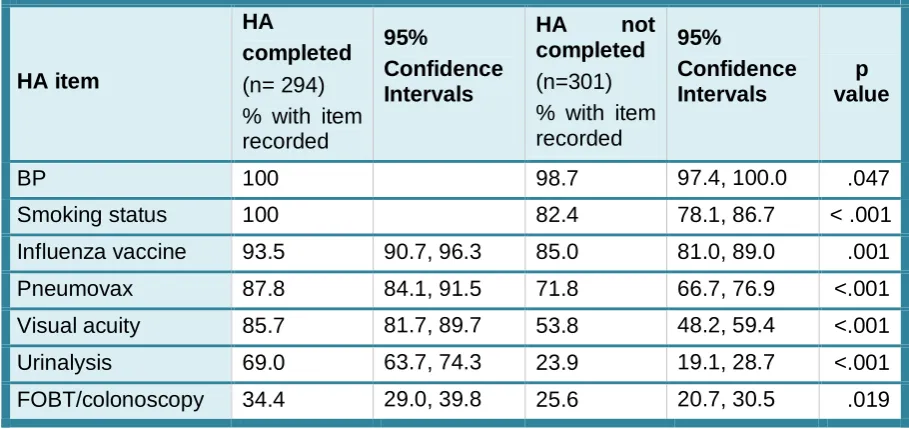
(9) and patients were interviewed to provide a more detailed understanding of the limitations of the program. 4. Evaluation of a Team Care Arrangement support program – this study was undertaken to assess the impact of an initiative to help practices improve their team care arrangement completion rates. It used practice audits before and after the intervention and semi-structured interviews with practice personnel. Literature reviews were undertaken to inform the two sections of the thesis. The outcomes of the reviews have been integrated with the NQPBRN evaluation and the author’s experience while implementing the projects, to provide a number of conclusions and recommendations for sustainable general practice research and evaluation. Results Part One. Projects completed within the North Queensland Practice Based Research Network. 1. Management of acute otitis externa (AOE) by general practitioners in North Queensland. Pseudomonas aeruginosa was the most common causative pathogen of AOE in all participating practices; GPs were able to correctly name the most common causative pathogens; there was variation in the use of oral antibiotics between regions (15.8 to 36.6%); ear syringing was commonly used in managing AOE (51.3%); and most patients (68.9%) required only one GP appointment. 2. Evaluating the use of enhanced primary care health assessments by general practices in North Queensland. Preventive health screening tests were recorded more frequently in patients with a completed health assessment: notably urinalysis, visual acuity and Faecal Occult Blood Test or colonoscopy. Blood pressure was the most frequently recorded test with or without a health assessment. The. questionnaires provided. useful. information. on. how health 8.
(10) assessments are implemented and showed that GPs believed they can provide more information about their patients’ conditions. 3. Are new parents fully vaccinated? An evaluation of a general practice parent vaccination intervention. Vaccination. histories. were. taken. from. 117. new. parents. and. recommendations made by a clinician. Catch-up vaccination was recommended for 66.1% (117/177) of parents, and 53% (62/117) complied, resulting in an improvement in up-to-date vaccination status from 33.9% (60/177) to 68.9% (122/177; p<0.0001). Part Two:. Evaluation of chronic condition management projects at TGPN.. 1. Self-management support capacity (SMS) of providers of chronic condition primary care. All interviewees rated their understanding of the principles of SMS as moderate or better. In relation to how much they use the principles in their practice, several (5 of 14) said minimally or not at all. The tools they were most likely to use were SMART goals (8 of 14) and decision balance (5 of 14). Core skills used included problem solving (11 of 14), reflective listening (13 of 14), open-ended questions (12 of 14), identifying readiness to change (12 of 14) and goal setting (10 of 14). The most important barriers to implementing SMS were current funding models for health care, lack of space, and staff not interested in change. The most highly rated enabling strategies were more training for general practitioners and practice nurses; the lowest rated strategy was more training for receptionists. 2. A health care partnership for managing chronic conditions: a case study of integrated primary health care. The evaluation identified positive outcomes from the involvement of a GP liaison team in a Queensland Health chronic condition management team. Better understanding of the Medicare system and improved communication with general practitioners were reported. However, there were some barriers to integration between public and private health care, 9.
(11) most notably the current funding models.. Wide consultation before. implementing new programs was recommended. 3. Extending the Reach - Integrated chronic condition management in rural Queensland. Eighteen clients participated in this case conferencing project between hospital and general practice staff. An evaluation showed that clients were generally positive about the case conferencing, reporting greater confidence in managing their condition. Providers expressed diverse opinions of the value of self-management. 4. Evaluation of a team care arrangement (TCA) support program. Completion rates of TCAs were audited in four general practices. They were 38.75% for the first audit and 40% for the second. One practice increased its completion rate from 30% to 60% while another practice showed a decrease from 40% to 25%. The more successful practice targeted a specific group of patients, gave them more choice of allied health practitioners, and provided clients with more detailed descriptions of the TCA process. Most practices stated that failure to complete TCAs was due to GPs and patients having different goals in the management of their chronic conditions. Conclusion Implementing research and evaluation within general practice requires a commitment from the whole practice team, but delegation of the research tasks to a practice nurse is most effective in maintaining high quality research outcomes. Training and mentoring through practice visits and regular contact is essential. Ideally the research questions should arise through local need and discussion with the practice team. Methods used in practice based research need to be feasible and appropriate to the clinical question, and relevant to the clinical context of general practice. Successful implementation of CCM programs in general practice requires involvement of the whole practice team and collaboration across sectors.. 10.
(12) Divisions of General Practice (and now Medicare Locals) can play an important role in supporting this collaboration and evaluating the impact of programs. Well-maintained disease registers within practice information systems are a fundamental requirement for effective population health strategies, research and evaluation. Patient empowerment through self-management support and patient–centred care planning are highly desirable components of CCM. The following recommendations are made to support research and evaluation in general practice settings: . To engage clinicians in practice based research and evaluation, one should ask clinically relevant questions and include reflection on clinical practice in the methodology.. . Clinicians should make a major contribution to the selection of their research questions and topics.. . Financial,. academic. and. infrastructure. support. is. essential. for. sustainable practice-based research, particularly to undertake timeconsuming tasks such as ethics applications, grant applications, analysis and publication of results. . Practice based workshops for training and timely dissemination of results are important in maintaining motivation of clinicians to do research.. . Face-to-face practice visits from academic researchers and program staff are an important component of coordinating and sustaining a clinical research and evaluation network.. . Research champions who emerge from clinical practice should be generously supported.. 11.
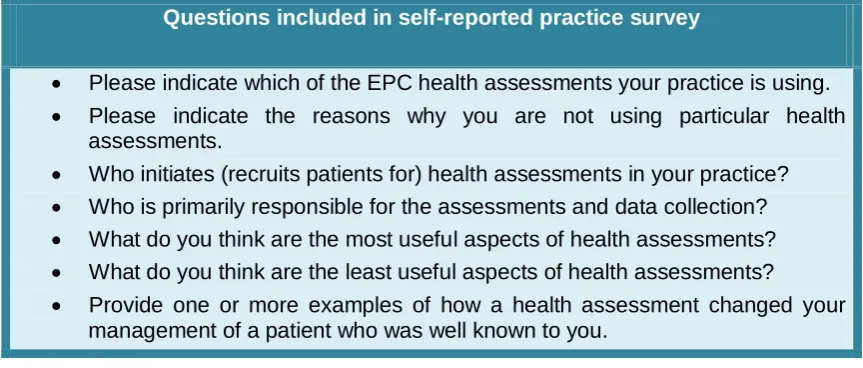
(13) List of Figures Figure 3-1: Audit items included in the over 75yrs health assessment ............. 55 Figure 3-2: Questions included in self-reported practice survey....................... 56 Figure 4-1: Recommended and completed vaccinations ................................. 65 Figure 5-1: Priorities for general practice research support. ............................ 73 Figure 7-1: Barriers to self-management support ............................................. 94 Figure 7-2: Enablers of self-management support ........................................... 94 Figure 8-1: Utilisation of Medicare chronic condition care items .....................101 Figure 8-2: Total number of days in hospital-IHCP client group ......................102 Figure 8-3: Number of hospital admissions-IHCP client group ........................102 Figure 10-1: Team Care arrangement console ...............................................120 Figure 10-2: Team Care arrangement completion rates .................................121. 12.
(14) List of Tables Table 1-1: Diversity in the activity of PBRN’s across Australia (Soos, TempleSmith et al. 2010) ............................................................................................. 31 Table 1-2: NQPBRN practice activity (current at September 2012) ................. 35 Table 2-1: Results of Phase one – case audit.................................................. 44 Table 2-2: GP Questionnaire (n=39) ................................................................ 47 Table 2-3: Results of prospective phase – clinical management micro/biology 49 Table 3-1: Comparison of screening rates ....................................................... 57 Table 4-1: Parents knowledge of their vaccination status ................................ 65 Table 4-2: Ranked reasons for non-completion of vaccinations ....................... 66 Table 6-1: Chronic disease management items funded by Medicare............... 77 Table 7-1: Self assessed level of understanding of key SMS learning objectives following workshop. (n=17) .............................................................................. 93 Table 7-2: Professional categories of those invited for follow-up interview ...... 93 Table 8.8-1: Exclusions to participation in Integrated Health Care Partnership 99 Table 8-2: Results of structured interview questions .......................................103 Table 9-1: Average Likert Scores at baseline and follow-up (1= never, 5=always) ........................................................................................................113. 13.
(15) List of Boxes Box 2-1: Variables Explored in the Study ......................................................... 43 Box 9-1: Health professional comments ..........................................................114 Box 9-2: Client’s comments.............................................................................114. 14.
(16) Specific Research Questions . Do general practitioners in north Queensland manage acute otitis externa in accordance with clinical guidelines?. . Do over 75 year old health assessments result in better preventative health care?. . Do opportunistic vaccination reminders in general practice improve adult immunisation rates in general practice?. . How did the practice based research network improve research capacity and confidence amongst general practice staff?. . What are the barriers and enablers to delivering self-management support strategies in chronic condition management?. . What is required for successful integration of chronic condition management programs between general practice and the public sector?. . Does case conferencing between private and public health care providers lead to improved patient satisfaction with their chronic condition care?. . Does training and support for general practice team care arrangement (TCA) systems lead to improved completion rates of TCAs?. 15.
(17) Publications, Awards and Presentations Publications from thesis Cheffins T, Heal C, Rudolphy S, Evans R, Veitch C. Acute otitis externamanagement by GPs in North Queensland. Australian Family Physician 2009; 38(4): 262-266. Cheffins T, Spillman M, Heal C et al. Evaluating the use of Enhanced Primary Care Health Assessments by general practices in north Queensland. Australian Journal of Primary Health 2010;16: 221-223. Cheffins T, Spillman M, Larkins S, Heal C. Recommending vaccination. General practice intervention with new parents. Australian Family Physician 2011;40(6): 437-439. Cheffins TE, Twomey JA, Grant JA, Larkins SL An evaluation of the selfmanagement support capacity of providers of chronic condition primary care. Australian Journal of Primary Health 2011;18(2): 112-115. Submitted manuscripts Australian Family Physician: Fleming R, Cheffins T. Are Team Care Arrangements completed? Australian Health Review: Cheffins T, Grant J, Dorman K, Larkins S, Waugh H. A health care partnership for managing chronic conditions: A case study of integrated primary care. Cheffins T, Grant J, Sanoullier A, Street A, Pain T, Larkins S. Extending the Reach -Integrated chronic condition management in rural Queensland. Awards and presentations North Queensland General Practitioner Research Prize for the most outstanding research paper presented at the 2011 North Queensland Conference “Recommending vaccination: General practice intervention with new parents”. RACGP Prize for the Best Research Paper Published in the Australian Family Physician in 2011 - “Recommending vaccination: General practice intervention with new parents”. Primary Health Care Research Conference, 30 June-2 July 2010, Darwin: Cheffins T., Spillman M. Are new parents fully vaccinated? General Practice and Primary Health Care Research Conference, 15-17 July 2009, Melbourne: Cheffins T., Spillman, M. Evaluating the use of health checks by general practices in North Queensland.. 16.
(18) Abbreviations ACT. Australian Capital Territory. AGPN. Australian General Practice Network. AIHW. Australian Institute of Health and Welfare. AOE. Acute Otitis Externa. APHCRI Australian Primary Health Care Research Institute CDM. Chronic Disease Management. CHIC. Connecting Healthcare in Communities. COPD. Chronic Obstructive Pulmonary Disease. ED. Emergency Department. EPC. Enhanced Primary Care. FOBT. Faecal Occult Blood Test. GP. General Practitioner. GPMP. General Practice Management Plan. HREC. Human Research Ethics Committee. IHCP. Integrated Health Care Partnership. IT. Information Technology. JAG. Joint Advisory Group. JCU. James Cook University. MJA. Medical Journal of Australia. MMR. Measles, Mumps and Rubella. MOU. Memorandum of Understanding. NHS. National Health Service. NQPBRN North Queensland Practice Based Research Network NSW. New South Wales. NT. Northern Territory 17.
(19) PACIC. Patient Assessment Chronic Illness Care. PBRN. Practice Based Research Networks. PHC. Primary Health Care. PHCRED Australian. Primary. Health. Care. Research. Evaluation. and. Development. PN. Practice Nurse. QH. Queensland Health. RACGP. Royal Australian College of General Practitioners. RCT. Randomised Controlled Trial. SA. South Australia. SM. Self Management. SMS. Self Management Support. SPSS. Statistical Package for Social Sciences. TCA. Team Care Arrangements. TGPN. Townsville General Practice Network (now Townsville Mackay Medicare Local). TRIP. Translation of Research into Practice. UK. United Kingdom. Vic. Victoria. WONCA World Organisation of Family Doctors. 18.
(20) Chapter Summaries. Chapter 1. Introduction to General Practice Research Networks in Australia This introductory chapter explores, through the literature, the role of general practice research networks, reviews the history of research within general practice in Australia, and describes the variety of networks already in existence, before outlining the local network in which this research was undertaken. Chapters 2 to 4 describe three projects undertaken within the North Queensland Practice Based Research Network.. Chapter 2. Management of acute otitis externa by General Practitioners in North Queensland This study evolved from a discussion between local GPs and the Head of the Rural Health Research Unit. It used mixed methods (survey, audits and prospective data collection) to explore GP management of a common clinical condition in North Queensland. The study revealed that with some notable exceptions, GPs manage acute otitis externa in accordance with guidelines. Antibiotic prescribing and use of ear syringing were two areas where clinical practice varied. Results of the three research components were closely aligned.. Chapter 3. Evaluating the use of Enhanced Primary Care Assessments by General Practices in North Queensland. Health. This research was instigated by members of the network, who wanted evidence of the effectiveness of the Enhanced Primary Care health assessment items they were using in their practices. It utilised a practice audit to compare prevention outcomes between two groups of patients, and a survey to explore GP and nurse attitudes towards health assessments. Over 75 years health assessments were associated with higher documented rates of preventive interventions as recommended by the RACGP. 19.
(21) Chapter 4. Are new parents fully vaccinated? - An evaluation of a general practice parent vaccination intervention. This research originated in consultation with practice nurses from the NQPBRN, who shared a common interest in immunisation and had developed research skills in previous NQPBRN projects. The study involved vaccination data collection by nurses and follow-up of participants following a recommendation for vaccination. The study showed that a reminder from a practice nurse, to parents presenting with their infants for vaccination, resulted in a doubling of adult “up-to-date” vaccination status.. Chapter 5. Discussion and conclusion to Part One. Results of an evaluation of the NQPBRN are presented and the findings related back to the literature review. The evaluation identified a number of critical factors for improving research capacity: training and support for practice nurses; funding for practices to cover staff research time; regular practice visits and early dissemination of results. The research capacity building initiatives undertaken within the NQPBRN are also described.. Chapter 6. Introduction to Part Two . This introductory chapter for Part Two of the thesis discusses how the discipline of general practice has traditionally focussed on the acute primary health care of individuals and their families. However, as the prevention and long-term management of chronic conditions has emerged as a significant part of medical practice, general practice has adopted a more systematic and continuing approach to providing health care. The chapter uses a literature review to explore how general practice can use population health strategies to manage chronic conditions.. 20.
(22) Chapters 7 to 10 outline four evaluation projects conducted through TGPN to strengthen population health capacity and chronic condition management in the region. Chapter 7. Self-management support capacity of providers of chronic condition primary care in north Queensland. This evaluation of self-management training given by TGPN to primary health care service providers was designed to identify barriers and enablers for self-management. The evaluation consisted of questionnaires at the time of training, and telephone interviews several months after completion of training. It showed that health professionals working in primary health care face barriers to the use of self-management strategies including funding models that don’t support chronic condition care. Chapter 8. A healthcare partnership for managing chronic conditions: a case study of integrated primary care. This evaluation of an intervention which added a General Practice Liaison component to an existing chronic condition management program within Queensland Health(QH) involved telephone interviews with QH and TGPN team members. TGPN implemented the GP liaison role, employing a GP and nurse to advise the QH Integrated Health Care Partnership (IHCP) allied health team. The evaluation showed that multi-disciplinary chronic condition programs in the public sector can reduce hospital admissions, but the integration of these programs with the private sector remains problematic. The presence of a GP liaison person within such a program is a positive way to overcome barriers.. Chapter 9. Extending the Reach - Integrated chronic condition management in rural Queensland. This evaluation was undertaken in a rural community within the Townsville Health Service District. Patients with early readmission to hospital for a chronic condition were the target 21.
(23) group. Case conferencing between public and private medical service providers was evaluated using patient questionnaires and face-to-face interviews with the providers. The evaluation showed that in rural settings, integration between the private and public sectors can be achieved through structured case conferencing and careful selection of patients, leading to higher patient satisfaction. Chapter 10 Effectiveness of a Team Care Arrangement support program. This evaluation was conducted in collaboration with a project officer at TGPN. It was an evaluation of a program designed to improve the completion rate of team care arrangements (TCAs) developed by GPs for patients with chronic conditions. It involved audits of medical records to assess whether the patients completed the allied health visits as recommended by their GP in a TCA. The audits were done before and after an education and support program was implemented with the GPs. The evaluation showed that TCAs are most effective when patients are carefully selected, allowed choice of whom they consult, and fully understand the process. Chapter 11 Discussion and conclusion to Part Two This chapter uses the Alma Ata declaration on primary health care. to. illustrate. the. links. between. chronic. condition. management and the principles of primary health care. A case study is used to illustrate how a supported general practice can rapidly increase its capacity to manage chronic conditions. The conclusion is reached that the projects evaluated in Part Two of the thesis contributed to this capacity of general practice teams to manage chronic conditions more effectively. Chapter 12 Personal reflection This chapter documents the author’s experience of undertaking the research thesis, including her observations from working in 22.
(24) general practice and the value of increasing research and evaluation in the primary health care sector. Chapter 13 Conclusion and Recommendations The concluding chapter draws on the projects, literature reviews, case studies, evaluations and reflections, to describe how building research and evaluation capacity in general practice enables the primary health care sector to provide more effective health care, to a population living with an increasing burden of chronic conditions. A number of recommendations are made on how to sustain research and evaluation within general practice.. 23.
(25) PART ONE Chapter 1.. Introduction to General Practice Research Networks in Australia. In exploring the role of general practice research networks it is useful to review the history of research within general practice in Australia, and outline the variety of networks already in existence, before describing the local network in which this research was undertaken. Research in General Practice Research by general practitioners Between 1990 and 2007, Australian General Practitioners (GPs) published in peer reviewed journals at the rate of 3 publications per 1000 practitioners per year. This compared with rates of 159.5 and 67.8 respectively for physicians and surgeons (Askew et al. 2008). The authors of this survey noted that GPs were working predominantly in a fee-for-service environment where research time is not remunerated. In contrast to this, physicians and surgeons had higher rates of salaried employment where research is an expected component of their work (Askew et al. 2008). Research by general practitioners is considerably more advanced in other developed countries, as described later in this chapter. Almost half of the GP-authored Medical Journal of Australia (MJA) publications between 1997 and 2001 consisted of surveys of GPs’ opinions. Physician and surgeon authored papers did not have the same reliance on descriptive research (Chew and Armstrong, 2002). Reasons for this imbalance in research outputs were thought to be the short term funding of GP research, less research capacity and expertise in GP, and the complexity of practice not favouring randomised controlled trials (Raupach and Pilotto, 2001). MJA editors Chew and Armstrong stated that if the purpose of medical research is to improve population health, then the research must ask questions from everyday practice, and use rigorous study methods to answer those questions 24.
(26) (Chew and Armstrong, 2002). These sentiments were echoed by GPs surveyed by their academic colleagues in 2002 and 2008 (Askew et al. 2002; Gunn et al. 2008). Askew et al. (2002) found that one third of GPs would be prepared to increase their involvement in research provided it was relevant to their practice and properly structured to suit the environment and culture of general practice. Gunn et al. (2008) conducted a survey of 29 GPs who participated in a randomised controlled trial (RCT) on childhood obesity, showing that learning new skills, updating knowledge and reflection on practice were their main motivators. These were seen as more important than rewards such as college medical education points. However, it was noted that only 5.5% of invited GPs participated in the RCT, in spite of their declared interest in paediatrics. The authors concluded that researchers must clearly articulate the clinical benefits of their research to GPs and their patients, and include reflection on current practice as part of the methodology. Research by others within General Practice Beyond engaging individual GPs in research projects, other strategies to increase the research output from general practice have been recommended in order to overcome the barriers relating to fee-for-service practice. Financial support for non-GPs (nurses, psychologists and epidemiologists) to undertake research in practices is one model, with practice incentive payments for participation in accredited projects (Yallop et al. 2006). Other important structural reforms include sustained funding of GP research infrastructure costs, and budgets for GP payments and research nurses (Yallop et al. 2006). Divisions of General Practice were established in 1993 to support general practice and deliver programs within GP settings. However, an evaluation of Divisions in 2006 found that collaboration between GP Divisions and universities has been hindered by misunderstanding and uncertainty about the purpose and nature of the research relationship (Kalucy et al. 2006). More effective links between Divisions and academia require more opportunities for partnering and greater fairness in the relationship. The latter should be characterised by flexibility, respect, reciprocity and inclusion (Kalucy et al. 2006). 25.
(27) The Australian Primary Health Care Research Evaluation and Development (PHCRED) Program commenced in 2000 after a review of Australia’s General Practice strategy completed in 1998 (Australian Department of Health and Family Services, General Practice Strategy Review Group, 1998). Phase One of the program (2000-2004) aimed to embed research into primary health care and specifically general practice, starting with a research priority setting process, then introducing capacity building and researcher development components (Oceania Health Consulting, 2005). An evaluation of the program found that links between Divisions of General Practice and PHCRED funded university departments varied depending on how clearly expectations were defined (Oceania Health Consulting, 2005). The second phase of the PHCRED program ran from 2005 to 2008 and aimed to increase the number of researchers in primary health care, improve the quality of their research, and ensure the uptake of evidence in policy and practice (Healthcare Planning & Evaluation, 2009). Support for researchers was provided through web-based modules, small grants, fellowships, short courses, and supervision. Several universities applied their PHCRED funding to the development of primary health care research networks engaging GPs and other health professionals (Healthcare Planning & Evaluation, 2009). At James Cook University, the North Queensland Practice Based Research Network was developed, with general practices across the region participating in a number of clinical research projects (Cheffins et al. 2009; Cheffins et al. 2010). The current phase of the PHCRED program, from 2010-2014, focuses on larger scale. research. into. improving. access. and. equity,. chronic. condition. management, prevention and improved quality and accountability (Department of Health and Ageing, 2010). Collaborative networks of primary health care researchers will compete for funding to establish Centres of Research Excellence in the focus areas (Department of Health and Ageing, 2010). The agency tasked with overseeing this phase of primary care research development is the Australian Primary Health Care Research Institute (APHCRI).. 26.
(28) Practice Based Research Networks The World Organisation of Family Doctors (WONCA) met in Canada in 2003 to progress the role of family medicine research in improving health globally. Based on evidence provided by an international panel of primary care researchers, a number of recommendations were made (Van Weel and Rosser, 2004). Along with a need to disseminate primary care research more systematically, there was strong support for practice based research networks to be developed around the world. What are practices based research networks (PBRNs)? One definition provided by Jones (2006) states that: “PBRNs are groups of practices networked together to serve ambulatory patients, usually affiliated with professional organisations or university schools of medicine with the objective of asking and answering questions that arise from daily practice” (Jones, 2006 p. 1045). Pearce’s (2004) definition also embraces the concepts of sustainability and collaboration: “PBRNs. are. sustained. collaborations. between. practitioners. and. academicians dedicated to developing relevant research questions, working together on study design and conduct, and translating new knowledge into practice” (Pearce, 2004 p. 425). Early examples of PBRN originated in the Netherlands in the 1970s when general practitioners realised they needed an evidence base for their unique community role and to differentiate their professional practice from specialised medicine (Van Weel, 2002). A morbidity database serving a network of practices was founded in Nijmegen in 1971. Subsequently, PBRNs in the United States,. United. Kingdom. and. the. Netherlands. have. progressed. to. epidemiological and clinical research, effectiveness studies, and the study of processes of care (Van Weel, 2002).. 27.
(29) In the UK, PBRNs began to develop in the 1960s, but primary care research was first included in the NHS research strategy in 1997 (Thomas et al. 2001). Since that time the role of PBRNs has evolved from research capacity building (practitioner-centred) to that of managing high quality research into health services and clinical research including randomised controlled trials, and the recruitment and retention of participants (Sullivan et al. 2007). For example, a well-cited randomised controlled trial in general practice was able to conclusively identify the role of oral prednisolone in the management of Bell’s palsy (Sullivan et al. 2009). Each country has taken a unique path in implementing and supporting PBRNs. England uses centralised coordination of its PBRNs to ensure a focus on national health priorities, while Scotland has a more regional approach and maintains a strong role in capacity building. In Wales and Northern Ireland PBRNs are more integrated with secondary and tertiary medical research (Sullivan et al. 2007). PBRNs are well established in the United States, with the Journal of the American Board of Family Medicine publishing an annual issue dedicated to research undertaken in PBRNs (Bowman et al. 2008). The editors of this journal state that: “our research networks are expanding and they offer hope for getting evidence based on real-life medicine, reflecting patients in our practices rather than carefully collected subpopulations of patients from tertiary care centres” (Bowman et al. 2008; p. 255) The 2008 research issue included three RCTs, one large retrospective study, five patient surveys, and two physician behaviour studies (Bowman et al. 2008), indicating the success of PBRNs in fostering rigorous research methods in primary care. The leadership of PBRNs can be defined as either top-down, bottom-up or whole system. The first refers to having strong institutional links and research projects led by experts, while the second encourages practitioners to develop their own ideas, with the network led by the peer group. Whole system 28.
(30) leadership is multi-disciplinary, and provides links between experienced and novice researchers, and is thus more effective in bringing about cultural change towards research (Thomas, Griffiths et al. 2001). There are strengths in all of these leadership styles, and networks may adopt different approaches depending on their stage of development, and the diversity of their membership. There are also risks associated with the different leadership styles. In top-down networks the research questions may not be generated by the network members, with a resulting lack of relevance to them. Alternatively, bottom-up networks can waste time with impractical research ideas and poorly designed studies that do not lead to useful evidence. The contextual complexity of general practice is difficult to study using most current medical research methods, due to the interaction between disease, social situation and the doctor-patient encounter (Van Weel, 2002). The International Study of Errors in Family Practice, done in six countries including Australia, provides an example of data collection that captures both medical and patient factors (Makeham et al. 2002). This complexity of practice is also reflected at the interface between quality improvement and research. PBRNs play an important part in linking research to practice – a role that is defined as Translation of Research into Practice (Mold and Peterson, 2005). There is a need for practice guidelines based on research that includes co-morbidities, financial barriers and patient priorities, as few guidelines are field-tested in the real-world environment of a primary care practice (Mold and Peterson, 2005). PBRNs have been described as the basic laboratories of primary care research, requiring basic infrastructure to achieve their goals and sustain their efforts (Green et al. 2005). This infrastructure includes a coordinator, support staff, electronic medical records, multi-user databases, mentoring programs, and research training. Barriers to participation in PBRN projects can be reduced if adequate infrastructure is available to support the network. It has been shown that face-to-face recruitment is effective, as is the regular involvement of practices in the planning of projects. Research methods must also be perceived. 29.
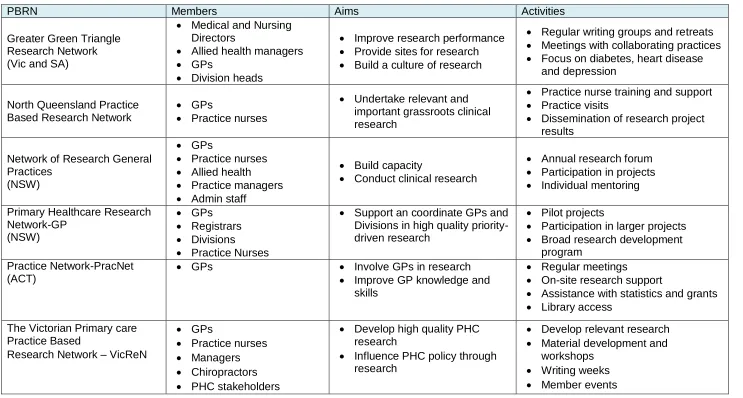
(31) as easy to implement and not time-intensive on practice staff (Goodyear-Smith et al. 2009). PBRNs have evolved around the globe to meet a recognised need for evidence directly useful to the practice of primary health care. The structure and protocols of PBRNs vary according to their resources, membership and leadership. This variation is appropriate given the diversity of primary care practice, and essential to ensuring the sustainability of practice based research. Australian Practice Based Research Networks Several Australian universities have independently established PBRNs in their local general practice communities with the aim of building research capacity. The universities provide organisational structure and academic expertise, with each network functioning uniquely to meet the needs of its members (McIntyre, 2009). PBRNs have been defined in Australia as “groups of local practices supported to undertake research relevant to general practice and the local community’s needs” (Dwan and Magin, 2008 p.871). Table 1-1, adapted from Soos et al. (2010), describes PBRNs by structure and function. The table shows great diversity in the activity of PBRNs across Australia, but they all aim to build research capacity.. 30.
(32) Table 1-1: Diversity in the activity of PBRN’s across Australia (Soos, Temple-Smith et al. 2010). PBRN Greater Green Triangle Research Network (Vic and SA). North Queensland Practice Based Research Network. Network of Research General Practices (NSW) Primary Healthcare Research Network-GP (NSW) Practice Network-PracNet (ACT). The Victorian Primary care Practice Based Research Network – VicReN. Members Medical and Nursing Directors Allied health managers GPs Division heads GPs Practice nurses . GPs Practice nurses Allied health Practice managers Admin staff GPs Registrars Divisions Practice Nurses GPs. . GPs Practice nurses Managers Chiropractors PHC stakeholders. Aims. Activities. Improve research performance Provide sites for research Build a culture of research. Regular writing groups and retreats Meetings with collaborating practices Focus on diabetes, heart disease and depression. Undertake relevant and important grassroots clinical research. Practice nurse training and support Practice visits Dissemination of research project results. Build capacity Conduct clinical research. Annual research forum Participation in projects Individual mentoring. Support an coordinate GPs and Divisions in high quality prioritydriven research Involve GPs in research Improve GP knowledge and skills Develop high quality PHC research Influence PHC policy through research. Pilot projects Participation in larger projects Broad research development program Regular meetings On-site research support Assistance with statistics and grants Library access Develop relevant research Material development and workshops Writing weeks Member events. 31.
(33) Many of these networks were established under the PHCRED program funded by the Department of Health and Ageing. However, there was no systematic approach to their introduction and many lacked clearly defined aims, strategies and performance indicators (Gunn, 2002). The initial network strategies to increase research were focussed on up-skilling, research literacy and dissemination, but it was soon recognised that they required more academic support and links to Divisions of General Practice in order to complete high quality research (Zwar et al. 2006). Evaluation data about PBRNs at a national level has been limited. The essential components of a model for larger-scale primary care research, according to Zwar et al. (2006) are: . Input from practitioners into development of projects. . Systematic study selection to match capacity. . Systems for feedback on progress and recruitment. . Systems for discussing findings with practitioners. . Training for practice staff. . Information technology and data collection capacity. . Remuneration for practices and practice staff. . High-quality coordination staff for outreach and face-to-face support. (Zwar et al. 2006). Similarly, South Australian GPs interviewed about their research needs identified mentoring, research networks and intensive research skills training as the most useful strategies to overcome practitioner isolation (Jones et al. 2003). As mentioned, the balance between top-down (academic) and bottom-up (practitioner) leadership of networks is important (McIntyre, 2009), with the 32.
(34) former sometimes stifling ideas, and the latter leading to lack of direction. Another significant challenge is sourcing core funding of the networks, as external project funding does not cover the on-going costs of coordination, training and communication within the networks (McIntyre, 2009). The main barrier to the successful implementation of PBRNs in Australia remains inadequate long-term financial support. Unlike the United Kingdom and Netherlands where Government funding is available, PBRNs in Australia rely on grants, the PHCRED program (now less accessible) or internal university funding (Dwan and Magin, 2008). The likely implications of this are a loss of continuity in research teams, and a lack of experienced researchers to build the evidence base for primary health care. Small networks of GPs working with skilled GP researchers, embedded within Divisions of General Practice and supported by an academic department of primary care, provide an attractive model for PBRNs in Australia (Gunn, 2002). An example of a successful project undertaken in such a PBRN was an RCT on the use of wet or dry wound management by GPs in north Queensland (Heal et al. 2006). The research question arose directly from the practitioners, and was developed into an RCT and coordinated by an academic GP within the North Queensland Practice Based Research Network (NQPBRN). An evaluation of the process used to implement the trial made several recommendations about enabling GP research within PBRNs (Heal et al. 2008): . There needs to be an adequate GP workforce. . Administrative support is essential. . Use RCT methods suited to general practice. . Allow adequate time for all aspects of research including ethics applications, practice staff training, data collection, data analysis and dissemination of results (Heal et al, 2008). 33.
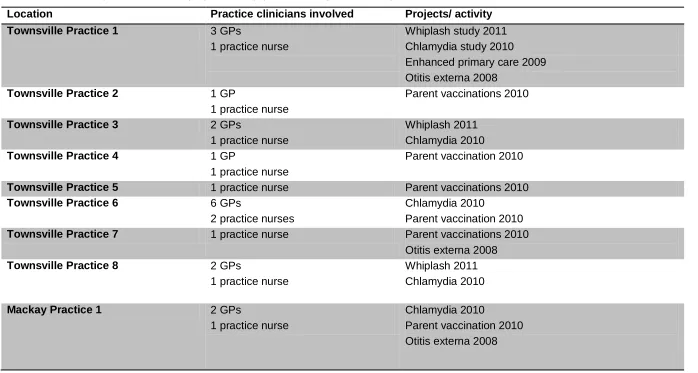
(35) North Queensland Practice-Based Research Network (NQPBRN) The local, national and international PBRN literature outlined above provided a useful evidence base for the strategic development of the NQPBRN. Prior to the establishment of NQPBRN, General Practice research in North Queensland was not coordinated and research output was very limited. NQPBRN was funded by the Australian Government’s PHCRED program between 2007-2010, and continues to operate with support from individual research grants. The two main objectives of the NQPBRN are: 1. To implement and publish General Practice based research projects 2. To build research capacity in General Practice targeted at practices nurses. A total of 26 North Queensland general practices are affiliated with NQPBRN, either as participants in projects, attendance at research training, or involvement in the development of research questions. By September 2012 the number of GPs who had been involved with PBRN was estimated to be 40 (GP numbers fluctuate within practices), with at least one practice nurse from each practice supported to improve their research skills. Table 1-2 gives more details of the geographic and temporal distribution of the 14 practices that participated in NQPBRN research projects.. 34.
(36) Table 1-2: NQPBRN practice research project activity (current at September 2012). Location. Practice clinicians involved. Projects/ activity. Townsville Practice 1. 3 GPs 1 practice nurse. Townsville Practice 2. 1 GP 1 practice nurse 2 GPs 1 practice nurse 1 GP 1 practice nurse 1 practice nurse 6 GPs 2 practice nurses 1 practice nurse. Whiplash study 2011 Chlamydia study 2010 Enhanced primary care 2009 Otitis externa 2008 Parent vaccinations 2010. Townsville Practice 3 Townsville Practice 4 Townsville Practice 5 Townsville Practice 6 Townsville Practice 7 Townsville Practice 8. 2 GPs 1 practice nurse. Mackay Practice 1. 2 GPs 1 practice nurse. Whiplash 2011 Chlamydia 2010 Parent vaccination 2010 Parent vaccinations 2010 Chlamydia 2010 Parent vaccination 2010 Parent vaccinations 2010 Otitis externa 2008 Whiplash 2011 Chlamydia 2010 Chlamydia 2010 Parent vaccination 2010 Otitis externa 2008. 35.
(37) Mackay Practice 2. 4 GPs 1 practice nurse. Whiplash 2011 Chlamydia 2010 Enhanced primary care 2009 Otitis externa 2008. Mackay Practice 3. 3 GPs 2 practice nurses. Whiplash 2011 Chlamydia 2010 Patient views of EPC 2010 Parent vaccinations 2010 Enhanced primary care 2009. Mackay Practice 4. 1 GP 1 practice nurse. Chlamydia 2010. Cairns Practice 1. 1 GP 1 practice nurse. Otitis externa 2008 Parent vaccinations 2010 Enhanced primary care 2009. Cairns Practice 2. 4 GPs 1 practice nurse. Otitis externa 2008. 36.
(38) Recruitment of practices was via practice visits from the NQPBRN medical coordinator (the author) and presentations at local medical meetings in Cairns, Townsville and Mackay. At commencement of the NQPBRN in 2007, a formal expression of interest form was mailed out to any practice that showed interest at meetings, and practice nurses from those practices were invited to an initial research training workshop. Follow-up practice visits were made to assist the nurses with implementation of projects. As more projects were developed between 2007 and 2011, additional practices were invited to participate. Individual practices chose which projects they were interested in, with some undertaking only one, while others did several (Table 1-2). Research training workshops were held in Townsville and Mackay on an annual basis. Research support for the NQPBRN practices included dinner meetings where results from completed projects were presented and new research projects explained. Some GPs attended these meetings but did not participate in research projects. Practice nurses were provided with more detailed training, as they were the main group implementing the research, with their employing GPs nominating them for this role. NQPBRN studies used a combination of methods (including medical record audits, prospective clinical data collection, surveys and interviews) to answer locally relevant research questions, with results disseminated directly to the practices and via peer reviewed publications. Practice nurses undertook the majority of data collection and received training from the NQPBRN coordinator. Practices were compensated for the hours they spent on research (usually by way of an honorarium paid per patient recruited to compensate the practice for the nurse’s time). Research topics were selected in consultation with the practice teams, thus ensuring they were genuinely interested in the research and results. The NQPBRN projects included in this thesis relate to important clinical issues in general practice in north Queensland: acute otitis externa, aged care and immunisation of new parents. The research ideas came from general practitioners and general practice nurses.. 37.
(39) The NQPBRN was established to increase research capacity in primary health care settings in north Queensland. The published experience of other networks in Australia and abroad was useful in informing the leadership style, support and research methods used by our network. The following chapters in Part One of the thesis report research projects completed by the NQPBRN, and the concluding section to Part One describes the impact of NQPBRN on general practice research capacity in North Queensland, including reporting on an evaluation of NQPBRN activities.. 38.
(40) Chapter 2. Management of Acute Otitis Externa By. General Practitioners In North Queensland This study was funded by the Primary Health Care Research Evaluation and Development (PHCRED) program at James Cook University, and undertaken within the North Queensland Practice-Based Research Network (NQPBRN). The original idea for the project evolved from a discussion between local general practitioners (GPs) and the Head of the Rural Health Research Unit. It uses mixed methods to explore GP management of a common clinical condition in North Queensland. Publication Reference Cheffins T, Heal C, Rudolphy S, Evans R, Veitch C. Acute otitis externamanagement by GPs in North Queensland. Australian Family Physician 2009; 38(4): 262-266. The original paper published in the Australian Family Physician is presented here. Content has not been changed and format used for the Australian Family Physician has been retained, including the need to comply with word limits for an original research article. Re-formatting has been minor and involved making the paper comply with a thesis chapter structure, including placing references at the end of the thesis. Authors’ contributions Tracy Cheffins Developed research project design Wrote and submitted ethics application Coordination and recruitment of research practices Training of research nurses Oversight of data collection and analysis Writing report and publication Clare Heal Assisted with recruitment of practices and training of nurses in Mackay Steven Rudolphy Assisted with the recruitment of practices and training of nurses in Cairns. 39.
(41) Rebecca Evans Research assistant for data analysis. Craig Veitch Provided advice to first author on design of study, and responsible for initial discussion of a study into acute otitis externa.. Abstract Background Acute otitis externa (AOE) is a common condition in North Queensland. Clinical guidelines exist for the management of this condition. This study explores the pattern of causative pathogens and management of AOE by general practitioners in North Queensland. Methods Eight general practices in three regional cities of North Queensland participated in the study. The three components were: a retrospective case audit of AOE management, a survey of GPs’ self reported usual management and collection of clinical data and microbiological specimens from new cases. Results The three components of the study showed considerable alignment in their results. Pseudomonas aeruginosa was the most common causative pathogen in all regions; GPs were able to correctly name the most common causative pathogens for AOE; there was variation between the three cities in whether oral antibiotics were prescribed by the GPs (15.8-36.6%); ear syringing is commonly used in managing AOE (51.3%); and most patients (68.9%) required only one GP appointment. Discussion General practitioners have good knowledge of the causative pathogens for AOE in their region. While clinical guidelines are generally followed, there is some variation in the prescription of oral antibiotics and use of ear syringing in managing this condition. 40.
(42) Background and Aims. Acute otitis externa (AOE) is a common ear condition seen in primary health care settings. Also known as swimmer’s ear or tropical ear, it is prevalent in hot humid climates such as North Queensland where swimming is a common activity (Murtagh, 1998). There is limited research relating to the range of pathogens that cause this condition, or its management in primary care settings in tropical North Queensland. Clinical guidelines developed by the American Academy of Otolaryngology – Head and Neck Surgery Foundation (Rosenfeld et al. 2006) recommendations. relating. to:. assessment. of. co-morbidities. make. requiring. modification of management; use of topical rather than systemic antimicrobials; cost-effective and safe choice of medications; patient instructions about correct use of drops; the role of aural toilet and wicks; and review of non-responding cases. A systematic review and meta-analysis of 18 randomised controlled trials of topical antimicrobial therapy for AOE found that use of any topical antimicrobial significantly increased cure rate over placebo, but comparative studies between types of antimicrobials showed only minor differences which were often not statistically or clinically significant. Steroid drops alone were found to increase cure rates by 20% compared with steroid plus antibiotic drops (Rosenfeld et al. 2006). Australian therapeutic guidelines for antibiotic use (Therapeutic Guidelines Antibiotic expert group, 2006) state that, following dry aural toilet, topical corticosteroid and antibiotic combination drops should be instilled for three to seven days. Severe cases may require a wick, with systemic antibiotics reserved for those with fever, spread to the pinna or folliculitis. Although the Australian therapeutic guidelines inform the treatment and management of AOE, they are relatively broad and anecdotal evidence suggests that management practices may vary considerably. In addition, anecdotal evidence from North Queensland suggests that the pathogens 41.
(43) associated with AOE infections may vary between sites. The Cochrane Library lists a protocol developed to systematically review the management of AOE (Kaushik et al. 2004), but this has not been completed. Project aims . gain an understanding of how North Queensland general practitioners (GPs) manage this common condition,. . determine the most common causative pathogens, and any variation in pathogens between different sites, and. . find if any underlying risk factors influence management decisions.. Methods Ethical approval for the project was granted by the James Cook University human ethics committee (approval number H2517). Eight general practices from three large regional cities in North Queensland were recruited into the study which consisted of three phases: Phase One:. An audit of management of acute otitis externa cases presenting to GPs in the preceding 12 month period.. Phase Two:. A self-reported questionnaire for GPs, assessing usual management practices.. Phase Three:. A prospective clinical survey of patients presenting to GPs over the 2007-8 summer, including microbiological testing.. The population demographics of the three North Queensland centres are similar, with a younger age profile than Queensland overall, and higher proportions of Aboriginal and Torres Strait Islander people (Office of Economic and Statistical Research, 2011). For Phase One, practice nurses were trained to search their medical record database to find cases, and then complete an audit sheet, which was de42.
(44) identified. We aimed for 60 audits from each region. Practices were given some financial recompense to cover the nurses’ time. For Phase Two, GPs at participating practices were asked to provide written consent and complete a questionnaire reporting their usual management practices in relation to AOE. For Phase Three, GPs were asked to identify patients with new presentations of AOE during a variable time period determined by each practice based on convenience and staffing levels. Practice nurses obtained consent from patients, collected a microbiological swab, and completed a clinical information sheet that included swab results. The de-identified audits, questionnaires and clinical reports were forwarded to a nominated GP coordinator in each region, who then passed them on to the central coordinator for analysis. Simple frequency analyses and two sided Chi square tests for statistical significance of specific associations were conducted using SPSS (2005). Variables explored in each phase are listed in Box 2-1. Box 2-1: Variables Explored in the Study. Variables explored in each phase of the study Phase 1 - Case audit Age, gender, month of presentation, use of swabs, swab results, co-morbidities and contributing factors, ear cleaning methods, pharmaceutical treatments prescribed, nonpharmaceutical management, number of visits, referrals made. Phase 2 - GP questionnaire Number of AOE cases seen per year, enquiry about co-morbidities and contributing factors, use of swabs, most prevalent pathogens, methods of cleaning, preferred treatments (pharmaceutical and non-pharmaceutical), use of referral. Phase 3 - Clinical reports including swabs Age, gender, contributing factors and co-morbidities, use of swabs, pathogens isolated, ear cleaning, pharmaceutical and non-pharmaceutical treatments prescribed, value of swab result, referral to other providers.. 43.
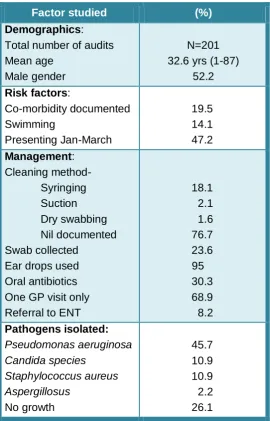
(45) Results Phase One (see Table 2-1) There were 201 clinical cases of AOE audited, with the three regions providing 93, 70 and 38 cases respectively. The median age was 32.6 years (range 1-87), with 52.2% males. Co-morbidities and contributing factors were documented in 18.5% and 25% of cases respectively. Almost half (47.2%) presented in the three months January to March.. Table 2-1: Results of Phase one – case audit. Factor studied Demographics: Total number of audits Mean age Male gender Risk factors: Co-morbidity documented Swimming Presenting Jan-March Management: Cleaning methodSyringing Suction Dry swabbing Nil documented Swab collected Ear drops used Oral antibiotics One GP visit only Referral to ENT Pathogens isolated: Pseudomonas aeruginosa Candida species Staphylococcus aureus Aspergillosus No growth. (%) N=201 32.6 yrs (1-87) 52.2 19.5 14.1 47.2. 18.1 2.1 1.6 76.7 23.6 95 30.3 68.9 8.2 45.7 10.9 10.9 2.2 26.1. 44.
(46) Less than 25% (23.6%) of audit cases had a swab taken. The most common pathogen isolated in all regions was Pseudomonas aeruginosa (45.7%). There was some regional variation in the proportion of infections caused by candida species (24% compared with 4.8%), but numbers were small overall. The. majority. were. prescribed. ear. drops. (95%),. with. combination. steroid/framycetin the most commonly used (47.5%). When a second ear drop was prescribed it was most likely (31.3%) to be ciprofloxacin. Oral antibiotics were prescribed in 30.3% of cases overall, but regional variation was noted (from 15.8% to 36.6%). More than two thirds (68.9%) were managed with only one visit to that GP, and less than 10% (8.2%) were referred to an ENT specialist. Statistically significant associations were found between: . presence of a co-morbidity and having a swab taken (p = .041). . having a swab taken and use of oral antibiotics (p < .001). . number of GP visits and use of oral antibiotics (p = .001). . Presence of a co-morbidity and referral to ENT specialist (p= .006).. Phase Two (see Table 2-2) Thirty-nine questionnaires were returned by GPs working at the participating practices. Due to the turnover of GPs during the extended period of the project, and the varied methods of questionnaire distribution, an exact response rate is difficult to determine. Based on the current staffing levels of these practices, we estimate our response rate to be over 90%. This was achieved by having local GP. coordinators. and. practice. nurses. distributing. and. collecting. the. questionnaires personally. The majority of GPs (94.4%) reported seeing more than 10 cases of AOE per year, with 47.2% seeing more than 30 per year. The majority (74.4%) routinely enquire about middle ear disease, but less do so about diabetes and immunosuppression (48.7% and 17.9%). Swabs are not used routinely (17.9% reported 45.
(47) taking a swab at initial presentation), but more than half (56.4%) report swabbing if the patient fails to improve. Almost a half (46.2%) of the GPs will take a swab if the case is clinically severe. However 74.4% of GPs find swabs only sometimes or rarely useful. GPs identified the same three most prevalent pathogens found by the audit. More than half (51.3%) reported syringing to clean the ear, 41% use dry swabbing, but 12.8% state that cleaning is not usually required. Only 7.7% use suction under microscopic control as recommended in guidelines. Relatively few GPs (23.1%) reported using oral antibiotics, and topical combination steroid/framycetin drops are their preferred prescription medication (50%) – consistent with the audit findings. Almost half (48.7%) of GPs insert wicks to manage AOE.. 46.
(48) Table 2-2: GP Questionnaire (n=39). Factor studied. %. Number of cases seen per year: <10 10-30 >30. 5.6 47.2 47.2. Management:Enquiry about co-morbidities: Diabetes Middle ear disease Immuno-suppression. 48.7 74.4 17.9. Contributing factors seen: Swimming Hearing aid Trauma. 100 71.8 59.0. Cleaning method used: Suction Syringing Dry swabbing. 7.7 51.3 41.0. Timing of swabs: Initial presentation Follow-up visit Clinically severe. 17.9 56.4 46.2. Usefulness of swab: Rarely useful Sometimes useful Very useful. 23.1 51.3 25.6. Preferred ear drops: Framycetin /steroid Ciprofloxacin. 50.0 26.3. Use oral antibiotics Wick inserted Have referred to ENT. 23.1 48.7 84.6. Named as common pathogen causing AOE: Pseudomonas aeruginosa Staphylococcus aureus Fungal. 84.8 56.4 51.3. 47.
(49) Phase Three (see Table 2-3) Practices recruited 49 patients with AOE who agreed to have a swab taken and provide the practice nurse with relevant clinical information. The practice nurse completed a form which included risk factors, management provided and swab results for each consenting patient. Patients were predominantly male (72.3%) and were slightly older than the audit population (mean age 40.8 years). Swimming was cited as the most commonly reported contributing factor (23.4%), and 36.1% had a documented comorbidity. Ear cleaning was done by syringing (29.8%) and dry swabbing (14.9%), but no method of cleaning was documented for 42.6%. The majority (89.4%) were prescribed ears drops with 8.5% having two different drops. Oral antibiotics were given to 25.5 % of cases.. 48.
(50) Table 2-3: Results of prospective phase – clinical management microbiology. Factor studied (n=47) Mean age. % 40.8 years (range 4-87). Male. 72.3. Comorbidity (total) Diabetes Other. 36.1 2.1 34.0. Contributing factors (total) Swimming Hearing aid Other. 46.8 23.4 6.4 17.0. Pathogen isolated (first or second pathogen) Pseudomonas aeruginosa Staphylococcus aureus Aspergillus niger Candida species None. 55.4 8.6 4.3 10.7 34.0. Method of cleaning Dry swabbing Syringing Both. 14.9 29.8 2.1. Ear drops used (total) Framycetin/steroid Ciprofloxacin. 89.4 34.0 19.1. Oral antibiotics. 25.5. Other treatments Insertion of wick Other nil. 10.6 8.5 76.6. Changes made after swab No Yes. 74.5 12.8. Referral to other provider ENT specialist Not required. 6.4 87.2. 49.
(51) Pseudomonas aeruginosa was the most common pathogen isolated (55.3%), with Candida species (10.7%), Aspergillus niger (4.3%) and Staphylococcus aureas (8.6%) also noted. No pathogen was isolated for 34.0% of cases. The swab result was not responsible for any change in treatment in 74.5% of cases. Discussion The project provided an opportunity for a network of general practices to contribute a relatively small amount of professional time and resources to the completion of a clinically relevant and multi-faceted study. The three phases allowed the topic to be explored from different perspectives – a retrospective description of past practice, a self-reported survey of usual practice and a prospective study of management and gathering of microbiological data. The retrospective component of the study is subject to selection and measurement bias and on its own is not useful. However, there were several areas where the three phases showed an interesting alignment of results. GPs estimated that they used swabs in around 20% of cases and this was confirmed by the audit. Pseudomonas aeruginosa was found to be the causative pathogen in around half of the audit and prospective cases, with a large majority of GPs correctly naming it as the most common causative pathogen. Swab results were found useful in managing only 25% of the prospective cases, a figure which was mirrored in the self-reported GP survey. According to clinical guidelines, oral antibiotics are only recommended for complicated AOE infections. In North Queensland, use of oral antibiotics was found to be 30% in the audit, and 23.1% of GPs reported using them. The prospective study revealed an intermediate use rate of 25.5%. We are not able to analyse directly whether antibiotics were used only for complicated or severe infections. However, we saw in the audit results that oral antibiotic use was associated with more visits to the GP and with collection of a swab, both possible indicators of more severe infection.. 50.
(52) Another area which is somewhat controversial is the use of ear syringing. Guidelines recommend against its use, however 62.1% of surveyed GPs reported using this method. In the prospective phase, ear syringing was performed in 29.8% of cases. The reasons for this inconsistency with guidelines may be explained by lack of access to microscopy for suction. In summary, the project has shown consistency in the causative pathogens and management of AOE in North Queensland. Clinical guidelines are generally followed, however, use of oral antibiotics varies between regions, and lack of access to preferred cleaning equipment leaves GPs little option but to use less preferred methods. Further research into the effectiveness and safety of different ear cleaning methods is recommended. Acknowledgments GPs, practice nurses and staff of participating practices. References for this chapter are included in the final reference list.. 51.
Figure

+7

Related documents
