R E S E A R C H A R T I C L E
Open Access
Responding to GPs
’
information resource needs:
implementation and evaluation of a
complementary medicines information resource
in Queensland general practice
Tina Janamian
1*, Stephen P Myers
2, Peter O
’
Rourke
3and Heather Eastwood
4Abstract
Background:Australian General Practitioners (GPs) are in the forefront of primary health care and in an excellent position to communicate with their patients and educate them about Complementary Medicines (CMs) use. However previous studies have demonstrated that GPs lack the knowledge required about CMs to effectively communicate with patients about their CMs use and they perceive a need for information resources on CMs to use in their clinical practice. This study aimed to develop, implement, and evaluate a CMs information resource in Queensland (Qld) general practice.
Methods:The results of the needs assessment survey of Qld general practitioners (GPs) informed the development of a CMs information resource which was then put through an implementation and evaluation cycle in Qld general practice. The CMs information resource was a set of evidence-based herbal medicine fact sheets. This resource was utilised by 100 Qld GPs in their clinical practice for four weeks and was then evaluated. The evaluation assessed GPs’(1) utilisation of the resource (2) perceived quality, usefulness and satisfaction with the resource and (3) perceived impact of the resource on their knowledge, attitudes, and practice of CMs.
Results:Ninety two out of the 100 GPs completed the four week evaluation of the fact sheets and returned the post-intervention survey. The herbal medicine fact sheets produced by this study were well accepted and utilised by Qld GPs. The majority of GPs perceived that the fact sheets were a useful resource for their clinical practice. The fact sheets improved GPs’attitudes towards CMs, increased their knowledge of those herbal medicines and improved their communication with their patients about those specific herbs. Eighty-six percent of GPs agreed that if they had adequate resources on CMs, like the herbal medicine fact sheets, then they would communicate more to their patients about their use of CMs.
Conclusion:Further educational interventions on CMs need to be provided to GPs to increase their knowledge of CMs and to improve their communication with patients about their CMs use.
Background
The Australian community are substantial users of com-plementary medicines (CMs) [1,2] with more than half of the population using them in some form, mainly self-initiated herbal medicines and vitamins and minerals. Given that the therapeutic efficacy of some of these pre-parations has first class evidence of efficacy [3-5], some
Australian GPs have included their use in clinical prac-tice [6]. We have recently demonstrated however, that majority of GPs lack knowledge and require information on CMs [7]. Even those GPs that are sceptical of CMs need to be aware of the potentially harmful effects of certain CMs approaches [8], in particular herbal medi-cines, as well as the potentially harmful effects of con-current use of specific pharmaceutical CMs combinations [9]. It is important that the Australian community, including health professionals, are educated
* Correspondence: [email protected]
1Discipline of General Practice, University of Queensland, Brisbane, Australia
Full list of author information is available at the end of the article
about these modalities. In particular, recent studies [7,10] have highlighted concerns over the lack of com-munication between primary health care physicians and their patients regarding CMs.
As a health professional group, Australian GPs are in the forefront of primary health care and public health and are in an excellent position to communicate with their patients and educate them about CMs [11] pro-vided that they have appropriate scientifically validated up to date information to base these communications. To be able to provide information on CMs to patients, GPs will need a working knowledge of the subject and become informed about different CMs modalities [11-14]. Physicians cannot become knowledgeable about all CMs practices, but they can apply the principles of evidence-based medicine, as in any area of health care [14]. At the very least, GPs will need understanding of CMs benefits, side effects, interactions, issues of con-tamination, and recommended dosages [12,15]. Under-graduate, graduate clinical, and continuing education could play an important role in informing GPs with up-to-date and relevant information. GPs also need to be provided with appropriate evidence-based information resources to use in their clinical practice [7,16].
We have demonstrated that GPs lack the knowledge required about CMs and this study set out to develop a CMs information resource based on the findings of our needs assessment survey [7], and to implement and eval-uate the CMs information resource in Qld general prac-tice. It was hypothesised that the provision of an appropriate CMs information resources would be well received by GPs, and was likely to positively impact GPs’ attitude, knowledge and practice of CMs. It was also hypothesised that having appropriate CMs informa-tion resources would help improve GPs knowledge of CMs, give them more confidence and improve their communication with their patients about CMs.
Methods
Ethics approval for this study was obtained through the University of Queensland’s Medical Research Ethics Committee (Approval Number 2002000194).
Resource development
The findings of a needs assessment survey of Queens-land (Qld) general practitioners were used to inform development of a CMs information resource for GPs to use in their clinical practice [7]. The needs assessment survey indicated that fact sheets were GPs’most pre-ferred type of information resource for receiving CMs information to use in clinical practice. GPs equally per-ceived most need for an information resource on herbal medicines or vitamins, minerals, and trace elements. It was decided to focus the information resource on herbal
medicines. The majority of GPs wanted the information resource to contain evidence-based literature (87%), pharmacological (80%) and toxicological information (66%). Based on this information it was decided that a set of herbal medicine fact sheets containing evidence-based literature, pharmacological, and toxicological information would be developed.
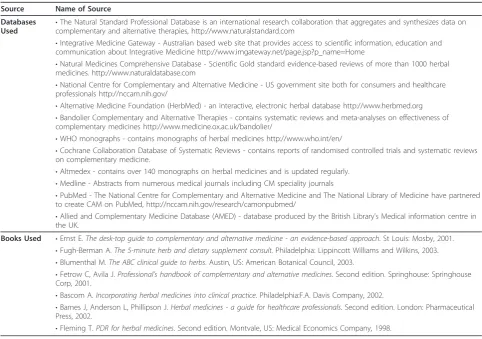
The time frame of the study permitted the develop-ment and production of 4 herbal medicine fact sheets. The 4 herbal medicines selected for the fact sheets were St John’s wort, ginkgo biloba, saw palmetto and valerian. These were selected based on a review of literature of commonly used herbal medicines in Australia [17-21], review of the scientific evidence available on herbal medicines, and consultation with the study expert advi-sory group (a panel of nine, including local GPs, GPs with CMs qualifications or experience, a sociologist with expertise in the field of CMs and a lecturer in needs assessment methodology). Each fact sheet is a double-sided A4 sheet, with the front side containing informa-tion on the herb including clinical uses, major chemical components, pharmacological actions, dosage and administration, adverse effects, most common adverse effects, rare adverse effects, contraindications and drug interactions. The reverse side includes evidence-based literature and results of the latest clinical trials on the specific herb, with a short summary of the evidence and references for the clinical trials. The content, layout and format of the fact sheets was informed by existing resources on CMs for GPs and health professionals including reputable databases (Table 1). The 4 fact sheets used are given in an additional file (Additional file 1).
Implementation and evaluation
perceived attitudes towards CMs, their knowledge of CMs, and their practice of CMs, in particular the her-bal medicines covered in the fact sheets. Four follow up reminders via phone and fax were conducted to achieve a high response rate. The questionnaire data was analysed using Statistical Package for the Social Sciences (SPSS) version 10.0.
Results
Response rate
The overall response rate for returned post-intervention surveys by GPs was 92 (92%). Reasons for not respond-ing included illness, on long term leave or on holidays, changed practice or too busy.
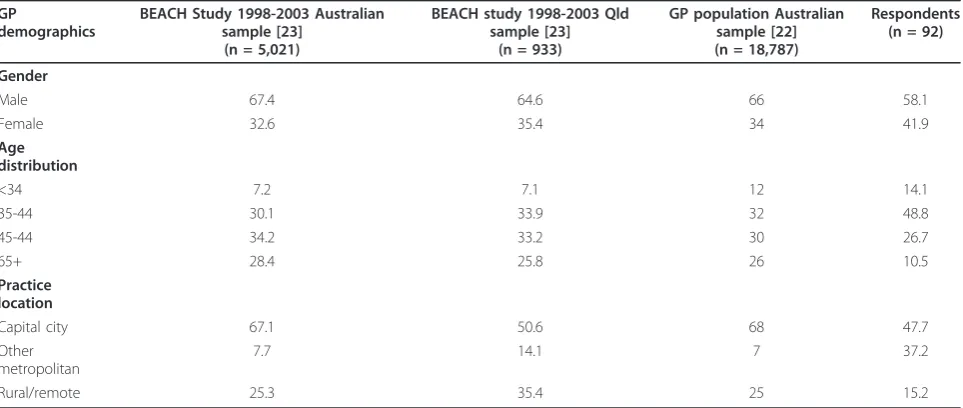
The representative nature of the respondents was compared to the GP population in Australia [22] and the GP population in Qld using the Bettering the Eva-luation And Care of Health (BEACH) survey of general practice activity 1998-2003 [23] (Table 2). The respon-dents were over-representative of female and younger GPs compared to the GP population in Australia and Qld. The respondents were under-representative of the rural/remote GPs.
Post-intervention survey responses Frequency of use
Six GPs indicated that they “never” used the herbal medicine fact sheets and these 6 were excluded from the remaining analysis (i.e. all percentages are given as the proportion of the 86 respondents who did use the fact sheets). A third of the GPs had used the herbal medicine fact sheets at least once, a third between one and four times and the remaining third (32%) had used them 4 or more times.
[image:3.595.56.539.98.437.2]When GPs were asked “did you use the herbal medi-cine fact sheets as many times as you could have”, 45% of respondents answered yes. The most common rea-sons for not doing so were that they forgot (33%), not enough time (19%), and being too busy (15%). The majority of GPs (79%) used the St Johns Wort fact sheet, 57% used the valerian fact sheet, 54% used the ginkgo fact sheet, and 45% used the saw palmetto fact sheet. About 20% of respondents had used all 4 fact sheets in the 4 week period. This was supported by the majority of GPs reporting that they frequently saw patients with depression (73%) and insomnia (63%), occasionally seeing patients with benign prostatic
Table 1 Sources used for informing herbal medicines information fact sheets
Source Name of Source
Databases Used
•The Natural Standard Professional Database is an international research collaboration that aggregates and synthesizes data on complementary and alternative therapies, http://www.naturalstandard.com
•Integrative Medicine Gateway - Australian based web site that provides access to scientific information, education and communication about Integrative Medicine http://www.imgateway.net/page.jsp?p_name=Home
•Natural Medicines Comprehensive Database - Scientific Gold standard evidence-based reviews of more than 1000 herbal medicines. http://www.naturaldatabase.com
•National Centre for Complementary and Alternative Medicine - US government site both for consumers and healthcare professionals http://nccam.nih.gov/
•Alternative Medicine Foundation (HerbMed) - an interactive, electronic herbal database http://www.herbmed.org
•Bandolier Complementary and Alternative Therapies - contains systematic reviews and meta-analyses on effectiveness of complementary medicines http://www.medicine.ox.ac.uk/bandolier/
•WHO monographs - contains monographs of herbal medicines http://www.who.int/en/
•Cochrane Collaboration Database of Systematic Reviews - contains reports of randomised controlled trials and systematic reviews on complementary medicine.
•Altmedex - contains over 140 monographs on herbal medicines and is updated regularly.
•Medline - Abstracts from numerous medical journals including CM speciality journals
•PubMed - The National Centre for Complementary and Alternative Medicine and The National Library of Medicine have partnered to create CAM on PubMed, http://nccam.nih.gov/research/camonpubmed/
•Allied and Complementary Medicine Database (AMED) - database produced by the British Library’s Medical information centre in the UK.
Books Used •Ernst E.The desk-top guide to complementary and alternative medicine - an evidence-based approach. St Louis: Mosby, 2001.
•Fugh-Berman A.The 5-minute herb and dietary supplement consult. Philadelphia: Lippincott Williams and Wilkins, 2003.
•Blumenthal M.The ABC clinical guide to herbs. Austin, US: American Botanical Council, 2003.
•Fetrow C, Avila J.Professional’s handbook of complementary and alternative medicines. Second edition. Springhouse: Springhouse Corp, 2001.
•Bascom A.Incorporating herbal medicines into clinical practice. Philadelphia:F.A. Davis Company, 2002.
•Barnes J, Anderson L, Phillipson J.Herbal medicines - a guide for healthcare professionals. Second edition. London: Pharmaceutical Press, 2002.
hypertrophy (40%), dementia or cerebral insufficiency (42%), and intermittent claudication (69%).
Reasons for using or not using fact sheets
The most common reason for using a specific fact sheet was that the GP saw more patients with the right condi-tion (59%), while 23% perceived the herb to be effective, 15% believed that the evidence for this herb is strong, and 35% indicated other reasons for using the herbal medicine fact sheets. Frequently listed reasons in the other category included patients asking about them and reading the fact sheets to increase own knowledge. Of the 6 GPs who indicated not using the fact sheets, 4 for-got, 1 said that they do not believe the herb is effective, 1 GP said they prefer to use the most effective drug available.
How GPs used the fact sheets in their clinical practice GPs mainly used the fact sheets to increase their own knowledge (80%), answer patients’ questions (71%), and advise patients (66%). Some GPs used the fact sheets to recommend or prescribe the herbs to patients (37%), and 49% showed the fact sheets to patients and 29% even made a copy of the fact sheets for patients.
GPs’assessment of the herbal medicine fact sheets (quality,
usefulness, satisfaction)
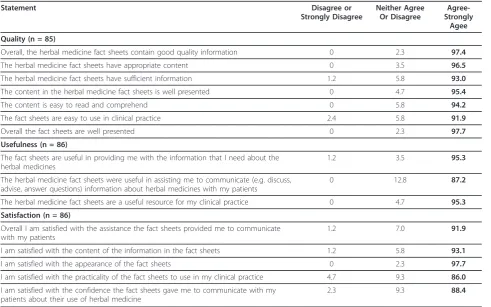
The majority of the GPs agreed with the statements on their perception of the quality, usefulness of the fact sheets, and their satisfaction with the fact sheets (Table 3). For instance, 98% of GPs agreed that overall, the her-bal medicine fact sheets contain good quality informa-tion and that overall the fact sheets are well presented, 95% agreed that the fact sheets are useful in providing them with the information that they need about the her-bal medicines, and 92% agreed that overall they were
satisfied with the assistance the fact sheets provided them to communicate with their patients.
Perceived impact on knowledge of CMs, attitudes towards CMs, and clinical practice of CMs
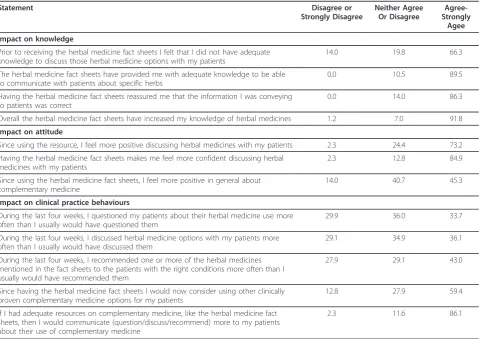
Table 4 includes the results of the impact of the fact sheets on GPs’perceived knowledge of CMs, attitudes towards CMs, and clinical practice of CMs. Sixty six percent of GPs agreed that prior to receiving the fact sheets they felt they did not have adequate knowledge to discuss those herbal medicine options with their patients. Approximately 90% of GPs agreed that overall the fact sheets have increased their knowledge of herbal medicines, and provided them with adequate knowledge to be able to communicate with patients about those specific herbs and reassured them that the information they were conveying to patients was correct.
The majority of GPs (73%) agreed that since using the resource, they feel more positive discussing herbal medi-cines with their patients and 85% agreed that having the herbal medicine fact sheets makes them feel more confi-dent discussing herbal medicine with my patients”, and almost half of respondents agreed (45%) that since using the herbal medicine fact sheets, they feel more positive in general about complementary medicine.
[image:4.595.58.540.100.304.2]About one third of responding GPs’ agreed that they questioned their patients about their herbal medicine use and discussed herbal medicine options with their patients more often than they usually would have. Nearly half of the GPs agreed that they recommended one or more of the herbal medicines mentioned in the fact sheets to the patient with the right conditions more often than they usually would have recommended them. Interestingly nearly 60% of GPs agreed that since having the herbal medicine fact sheets, they would now
Table 2 Characteristics of respondents to the evaluation with GPs in Australia and Qld (%)
GP
demographics
BEACH Study 1998-2003 Australian sample [23]
(n = 5,021)
BEACH study 1998-2003 Qld sample [23]
(n = 933)
GP population Australian sample [22] (n = 18,787)
Respondents (n = 92)
Gender
Male 67.4 64.6 66 58.1
Female 32.6 35.4 34 41.9
Age distribution
<34 7.2 7.1 12 14.1
35-44 30.1 33.9 32 48.8
45-44 34.2 33.2 30 26.7
65+ 28.4 25.8 26 10.5
Practice location
Capital city 67.1 50.6 68 47.7
Other metropolitan
7.7 14.1 7 37.2
consider using other clinically proven CMs options for their patients. Eighty six percent of GPs agreed that if they had adequate resources on CMs, like the herbal medicine fact sheets, then they would communicate more to their patients about CMs.
There were positive associations between GPs reasons for using fact sheet and how they used the fact sheet. GPs whose reason for using the fact sheets was that they believe the herb is effective were more likely (p < 0.001) to have used the fact sheets for recommending or prescribing the herb to patients (70.0%) compared to GPs who did not believe the herb is effective (27.3%). GPs who indicated reason for use as evidence is strong for this herb were also more likely (61.5%) to have used the fact sheets to recommend or prescribe to patients than GPs (32.9%) who did not believe the evidence is strong for this herb (p = 0.049). GPs who believe the herb is effective were also more likely (60.0%) to have given patients a copy of the fact sheets than GPs (19.7%) who did not believe the herb is effective (p < 0.001).
There was also some positive association between GPs perceived impact on knowledge of CMs and GPs’ atti-tudes towards CMs and GPs’clinical practice of CMs. For instance, GPs who agreed to the knowledge state-ment“prior to receiving the herbal medicine fact sheets
I felt that I did not have adequate knowledge to discuss those herbal medicine options with my patients” were more likely (p = 0.002) to agree to the statement“during the last four weeks, I questioned my patients about her-bal medicine use more often than I usually would have questioned them”. They were also more likely (p = 0.015) to agree to the statement “during the last four weeks, I recommended one or more of the herbal medi-cines mentioned in the fact sheets to the patients with the right conditions more often than I usually would have recommended them”.
GPs who agreed to the attitude statement “since hav-ing the herbal medicine fact sheets, I feel more positive in general about complementary medicine” were more likely (p = 0.002) to agree to the statement“during the last four weeks, I questioned my patients about their herbal medicine use more often than I usually would have questioned them”than GPs who were equivocal or disagreed to the attitude statement. The other associa-tions followed a similar trend.
Main strengths and shortcomings of the fact sheets and suggestion for improving fact sheets
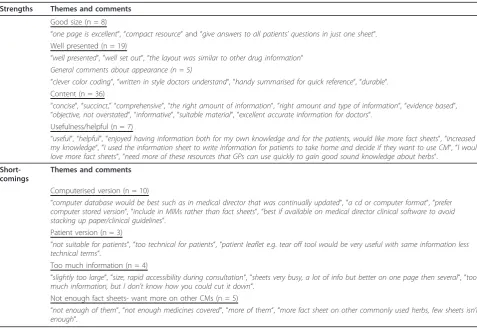
[image:5.595.56.548.99.406.2]GPs were asked to comment on the strengths of the fact sheets and more than half of responding GPs wrote a comment. The common themes mentioned were in regards to the appearance, content, and usefulness of
Table 3 GPs’assessment of the herbal medicine fact sheets
Statement Disagree or
Strongly Disagree
Neither Agree Or Disagree
Agree-Strongly
Agee
Quality (n = 85)
Overall, the herbal medicine fact sheets contain good quality information 0 2.3 97.4
The herbal medicine fact sheets have appropriate content 0 3.5 96.5
The herbal medicine fact sheets have sufficient information 1.2 5.8 93.0
The content in the herbal medicine fact sheets is well presented 0 4.7 95.4
The content is easy to read and comprehend 0 5.8 94.2
The fact sheets are easy to use in clinical practice 2.4 5.8 91.9
Overall the fact sheets are well presented 0 2.3 97.7
Usefulness (n = 86)
The fact sheets are useful in providing me with the information that I need about the herbal medicines
1.2 3.5 95.3
The herbal medicine fact sheets were useful in assisting me to communicate (e.g. discuss, advise, answer questions) information about herbal medicines with my patients
0 12.8 87.2
The herbal medicine fact sheets are a useful resource for my clinical practice 0 4.7 95.3
Satisfaction (n = 86)
Overall I am satisfied with the assistance the fact sheets provided me to communicate with my patients
1.2 7.0 91.9
I am satisfied with the content of the information in the fact sheets 1.2 5.8 93.1
I am satisfied with the appearance of the fact sheets 0 2.3 97.7
I am satisfied with the practicality of the fact sheets to use in my clinical practice 4.7 9.3 86.0
I am satisfied with the confidence the fact sheets gave me to communicate with my patients about their use of herbal medicine
the fact sheets. Some GPs also made general comments about the fact sheets (Table 5). Thirty five GPs made comments about the shortcomings of the fact sheets, most of these were related to having a computerised version of the fact sheet (Table 5). Twenty five GPs gave suggestions on ways to improve the fact sheets and these were related to the shortcomings, such as having a computerised version (n = 8), having more fact sheets on other commonly used herbs (n = 5), to have a folder or ring binder for all fact sheets (n = 5), have similar patient handouts (n = 3), and to laminate them (n = 2).
Discussion
The series of 4 herbal medicine fact sheets was devel-oped as a result of the needs assessment survey of Qld GPs [7]. Ninety two GPs completed the 4 week evalua-tion and eighty six (93%) of them used the fact sheets in their clinical practice and the majority (73%) perceived that they were a useful resource.
There are limitations with regards to the generalisabil-ity of the sample. The resource was trialled with 100 self-identified GPs in Qld who had expressed interest to
evaluate a CMs information resource once it was devel-oped. It is likely that the results are biased towards a more positive outcome, which is of note when generalis-ing the findgeneralis-ings from this study. The respondents were over-representative of female and younger GPs com-pared to the GP population in Australia and Qld. This is consistent with the population studies that have shown that females and younger age groups are more interested in CM than males and older age groups [1,2].
The post-intervention questionnaire was a self-reported instrument which has limitations associated with self-reporting and recall bias. It should also be noted that the attitudinal statements are worded with positive intent and may have attracted biased responses.
[image:6.595.59.540.110.449.2]Another limitation of this study was that a pre-inter-vention survey to assess individual changes in GPs’ knowledge, attitude, and practice was not conducted prior to implementing the fact sheets, mostly due to limited resources and time. Without a baseline survey, changes in knowledge, attitude and practice could not be calculated [24]. Thus the post-intervention survey could only assess GPs’ perceived attitude, knowledge,
Table 4 GPs’perception on usage of the herbal medicine fact sheets and its impact on their knowledge, attitude and clinical practice (n = 86)
Statement Disagree or
Strongly Disagree
Neither Agree Or Disagree
Agree-Strongly
Agee
Impact on knowledge
Prior to receiving the herbal medicine fact sheets I felt that I did not have adequate knowledge to discuss those herbal medicine options with my patients
14.0 19.8 66.3
The herbal medicine fact sheets have provided me with adequate knowledge to be able to communicate with patients about specific herbs
0.0 10.5 89.5
Having the herbal medicine fact sheets reassured me that the information I was conveying to patients was correct
0.0 14.0 86.3
Overall the herbal medicine fact sheets have increased my knowledge of herbal medicines 1.2 7.0 91.8
Impact on attitude
Since using the resource, I feel more positive discussing herbal medicines with my patients 2.3 24.4 73.2
Having the herbal medicine fact sheets makes me feel more confident discussing herbal medicines with my patients
2.3 12.8 84.9
Since using the herbal medicine fact sheets, I feel more positive in general about complementary medicine
14.0 40.7 45.3
Impact on clinical practice behaviours
During the last four weeks, I questioned my patients about their herbal medicine use more often than I usually would have questioned them
29.9 36.0 33.7
During the last four weeks, I discussed herbal medicine options with my patients more often than I usually would have discussed them
29.1 34.9 36.1
During the last four weeks, I recommended one or more of the herbal medicines mentioned in the fact sheets to the patients with the right conditions more often than I usually would have recommended them
27.9 29.1 43.0
Since having the herbal medicine fact sheets I would now consider using other clinically proven complementary medicine options for my patients
12.8 27.9 59.4
If I had adequate resources on complementary medicine, like the herbal medicine fact sheets, then I would communicate (question/discuss/recommend) more to my patients about their use of complementary medicine
and practice after having the fact sheets in practice. It is worth noting that the cohort as a whole had identified in the needs assessment [7] that they lacked knowledge of herbal medicine and the primary outcome of the eva-luation was to assess the value of the fact sheets in clini-cal practice.
GPs’use of the fact sheets in their clinical practice
Over 90% of GPs used the herbal medicine fact sheets at least once, with a third of GPs having used the fact sheets regularly throughout the 4 weeks. The St Johns wort fact sheet was used the most followed by the valer-ian. This is not unexpected considering that a higher percentage of GPs indicated that they see patients with depression and insomnia for which St Johns wort and valerian are used. The most common reason for GPs using the fact sheets was seeing more patients with the right condition for that herb, or belief that the herb is effective and they perceived the evidence for the specific herb to be strong. This finding verifies that if a GP per-ceives a particular CMs as useful or beneficial they are more inclined to want to learn more about it, and hence more likely to use available information resources to increase their knowledge.
GPs who used the fact sheets because they believe the herb is effective or the evidence is strong for that herb were more likely to have used the fact sheets for dis-cussing the herb as an option, recommending or pre-scribing the herb to patients and providing patients with a copy of the fact sheets. These findings reinforce the relationship between GPs’belief of CMs and practice of CMs. Similarly other studies have found that belief in efficacy or legitimacy of selected CM modalities was associated with high frequency of GPs’recommendation of the modality to patients [10,25].
[image:7.595.57.535.98.428.2]GPs mainly used the fact sheets to increase their own knowledge, answer patient’s questions and advise patients. Some respondents used the fact sheets to recommend or prescribe the herbs to patients, and nearly half of the respondents showed the fact sheets to patients, with some GPs even making a copy of the fact sheets for patients. These findings indicate that the fact sheets were not only used successfully by GPs as a learning tool to increase their own knowledge but it also gave GPs the information they required to com-municate with patients and to recommend and pre-scribe the herbs. Furthermore, it confirmed the feasibility of using the fact sheets during consultations
Table 5 GPs’qualitative comments regarding strength and shortcomings the herbal medicines fact sheets
Strengths Themes and comments
Good size (n = 8)
“one page is excellent“,“compact resource“and“give answers to all patients’questions in just one sheet“. Well presented (n = 19)
“well presented“,“well set out“,“the layout was similar to other drug information“ General comments about appearance (n = 5)
“clever color coding“,“written in style doctors understand“,“handy summarised for quick reference“,“durable“. Content (n = 36)
“concise“,“succinct,” “comprehensive“,“the right amount of information“,“right amount and type of information“,“evidence based“,
“objective, not overstated“,“informative“,“suitable material“,“excellent accurate information for doctors“. Usefulness/helpful (n = 7)
“useful“,“helpful“,“enjoyed having information both for my own knowledge and for the patients, would like more fact sheets“,“increased my knowledge“,“I used the information sheet to write information for patients to take home and decide if they want to use CM“,“I would love more fact sheets“,“need more of these resources that GPs can use quickly to gain good sound knowledge about herbs“.
Short-comings
Themes and comments
Computerised version (n = 10)
“computer database would be best such as in medical director that was continually updated“,“a cd or computer format“,“prefer computer stored version“,“include in MIMs rather than fact sheets“,“best if available on medical director clinical software to avoid stacking up paper/clinical guidelines“.
Patient version (n = 3)
“not suitable for patients“,“too technical for patients“,“patient leaflet e.g.tear off tool would be very useful with same information less technical terms“.
Too much information (n = 4)
“slightly too large“,“size, rapid accessibility during consultation“,“sheets very busy, a lot of info but better on one page then several“,“too much information, but I don’t know how you could cut it down“.
Not enough fact sheets- want more on other CMs (n = 5)
to answer patients’ questions and advise them about the herbal medicines.
GPs’assessment of the herbal medicine fact sheets
Nearly all responding GPs perceived that overall the herbal medicine fact sheets contain good quality infor-mation. They perceived the content of the fact sheets to be appropriate, sufficient, well presented, easy to com-prehend and to use in clinical practice. About 90% of GPs perceived that the fact sheets were useful in assist-ing them to communicate information about herbal medicines to their patients. This was partly confirmed by other items which showed that 30-40% of GPs indi-cated that they perceived since having the fact sheets they question patients about their herbal medicine use, and discuss and recommend one or more of the herbal medicines more often than they usually would.
GPs mentioned some shortcomings and ways to improve the fact sheets. Overall, GPs perceived that a computerised version of the fact sheets linked to the medical director which can be continually updated, should be provided in addition to the paper-based fact sheets. This suggestion seems both sensible and feasible. Other studies have shown that a computer-based inter-vention can increase change in behaviour [26,27]. This could perhaps initially be done for the most commonly used herbal medicines in Australia and eventually all herbal medicines. Other GPs thought that a patient ver-sion of the fact sheet with less technical terms would be beneficial, as many of them had photocopied the fact sheet for their patient or written notes from the fact sheet for their patients to take home. This is a valid comment as patient information sheets are often pro-vided for other areas of medicine such as sexually trans-mitted or communicable diseases, vaccinations, and antibiotics. Another shortcoming was that 4 fact sheets on 4 herbal medicines are not enough for clinical prac-tice and there were suggestions that more fact sheets on other commonly used herbs should be provided.
Perceived impact on knowledge, attitude, and practice
This study was limited to a post-intervention design which measured GPs’perceived impact of the resource on their attitudes, knowledge, and clinical practice of CMs. It should be made clear that this evaluation offers a snapshot of the value and potential benefits of the resource and is by no means a clear indication of the actual impact of the resource on GPs’attitudes, knowl-edge, and clinical practice of CMs. Focus group discus-sions or interviews would have been valuable to further explore the attitudes reported and also reasons for beha-vioural and attitudinal change.
The herbal medicine fact sheets had a positive impact on GPs’attitude, knowledge and practice of CMs. More
than half of responding GPs perceived that prior to receiving the fact sheets they felt they did not have ade-quate knowledge to discuss those herbal medicine options with their patients. Previous studies [28-31] have also reported that the majority of GPs acknowledge that they have an inadequate level of knowledge to advise patients about CMs.
Approximately 90% of respondents believed that over-all the fact sheets increased their knowledge of herbal medicines, and provided them with adequate knowledge to be able to communicate with patients about those specific herbs. This finding shows that the fact sheets did contain appropriate information to facilitate GPs’ communication with patients about those herbal medi-cines. The majority of GPs thought that the fact sheets reassured them that the information they were convey-ing to patients was correct. This could indicate that sometimes GPs are attempting to discuss CMs with their patients on an uninformed basis and feel some-what uncertain or not confident about the information they are providing to patients.
and GPs’perceived practice of CMs. GPs who believed that prior to receiving the herbal medicine fact sheets they felt they did not have adequate knowledge to dis-cuss herbal medicines were more likely to agree that while having the fact sheets, they recommended one or more of the herbal medicines mentioned in the fact sheets to the patients with the right conditions more often than they usually would have. These findings con-firm that familiarisation with CMs does impact GPs’ practice. Other studies [10,28,33,34] have also demon-strated a positive relationship between GPs’ increase in knowledge of CMs and increase in their practice of CMs.
Providing GPs with an opportunity to increase their evidence-based knowledge in their everyday practice by means of information resources on different CMs, like the herbal medicine fact sheets, is likely to increase their knowledge and confidence to discuss CMs with their patients. Suter et al (2004) [30] found a positive rela-tionship between GPs’ knowledge about specific CM modalities and their comfort level in discussing CM with their patients. Likewise, Corbin-Winslow and Sha-piro (2002) [10] found a linear relationship between increasing comfort levels in discussing CM use with increasing propensity to ask patients about their use of CM modalities. This is logical as GPs feel apprehensive about discussing a topic with patients that they know little or nothing about. Their level of knowledge does not allow them to respond to patients’questions or pro-vide any useful advice, therefore they avoid communica-tion [10]. However, if GPs had adequate resources to increase their knowledge they would be more qualified to evaluate the usefulness of particular CMs modalities objectively and thus be more likely to discuss them with patients.
There was also a positive relationship between GPs’ perceived attitude about CMs and their practice of CMs. GPs perceived that since having the fact sheets they dis-cussed and recommended CMs more often than they did prior to the use of the fact sheets. Verhoef and Sutherland (1995) also reported that GPs that had a positive attitude about involvement with CM were more likely to practice CM and refer for CM [36].
It is important to note that the provision of evidence-based information does not imply that it will be trans-lated into practice even when a GP has indicated satis-faction with the intervention or when their knowledge has increased [37-39]. The available literature on the use of printed materials in changing GPs’ practices have mostly reported that the dissemination of printed educa-tional materials alone has a small impact on GPs’ prac-tice [40-42]. The dissemination of information alone may increase awareness and predispose to change but is not usually sufficient to bring about actual behavioural
change in the absence of an active implementation strat-egy appropriate to the setting concerned [37,43,44]. Another important fact that has been reiterated in lit-erature is that when the goal of an intervention is to change clinical practice, it is necessary to implement a multifaceted intervention incorporating two or more education strategies [42,45-48]. It has been suggested that changing behaviour may be an incremental process requiring a number of exposures to new information before the change occurs [49]. One episode or one series of fact sheets for a new concept may merely raise aware-ness without inducing change [49]. However, repeated exposures may lead to a“pre-contemplative”GP becom-ing ambivalent and eventually decidbecom-ing to implement new practice behaviours [49].
Studies [42,46-48,50] have reported that other educa-tional techniques such as academic detailing and the use of local opinion leaders were the most effective techni-ques in changing physician performance. Physician reminder systems were also effective, audit and feedback techniques were marginally effective, and conferences and printed materials were the least effective. The pas-sive dissemination of information through the use of mailings, printed materials, lectures, and conferences, although less effective, are substantially less expensive to implement [42,47]. Therefore they are commonly used as a primary method to alter GP behaviour.
the intention to learn about CM and to bring about change in their practice. Therefore these GPs would be more inclined to use the information in the fact sheet in their clinical practice to bring about behaviour change.
There has long been a clamour for an understanding of what works and what does not work to improve phy-sicians’performance and clinical practice [61-63]. There is an imperfect evidence base as to which dissemination and implementation strategies are likely to be efficient under varying circumstances [47]. However, some attempts have been made to identify what types of edu-cational intervention and the characteristic of interven-tions that are ideal for changing GPs’behaviour. Smith (1997) concluded that the ideal information source for doctors will need to be directly relevant, contain valid information and be accessed with a minimal amount of work. Such sources include colleagues, drug reference books, journals which contain evidence-based informa-tion, regularly updated textbooks, systematic journal reviews and a portable and comprehensive summary of systematic reviews [64]. The literature states that the effectiveness of educational interventions aimed at chan-ging provider behaviour may be influenced by at least 4 factors [40]: (1) characteristics of the intervention, (2) characteristics of the provider, (3) characteristics of the behaviour that the intervention is trying to change and (4) characteristics of the organisation and context. Research on which characteristics of printed educational materials influence clinical practice has been limited [65,66] but some suggestions have been made [65-68]: source (credibility of information), format (e.g. appear-ance, length), mode of delivery (e.g. mass mailing, direct mailing), frequency/timing of intervention, content of information (e.g., topic, evidence-based). These impor-tant characteristics of printed educational materials were all considered in developing the CMs fact sheets of this study to maximise their usefulness and impact on GPs’ knowledge, attitude and clinical practice.
Conclusions
The findings of this study indicate that the production and dissemination of CMs information resources such as the evidence-based herbal medicine fact sheets pro-duced in this study are feasible, worthwhile and have the potential to change and enhance clinical practice, particularly the relationship between doctor and patient regarding CMs. In general, the herbal medicine fact sheets were well accepted and utilised by Qld GPs. The post-intervention evaluation confirmed that such a resource has the potential to increase GPs’knowledge of, and attitudes towards CMs thereby facilitating posi-tive changes in clinical practice. Increasing GPs’ knowl-edge of CMs and improving their communication about CMs could have a substantial impact on the health and
well-being of patients. Further educational interventions on CMs need to be provided to GPs on a regular basis to increase their knowledge about CMs so they can con-fidently communicate with their patients on an informed-basis. Similar to other Australian general prac-tice education programs, future interventions on CMs need to be evaluated as part of a quality cycle to ensure that they are appropriately targeting the needs of general practice and their patients.
Additional material
Additional file 1: Herbal medicines fact sheets. The four herbal medicines fact sheets developed, implemented, and evaluated in this study.
Acknowledgements
Ethics approval for this study was obtained through the University of Queensland’s Medical Research Ethics Committee. This research was funded by the Australian Centre for Complementary Medicine Research and Education (ACCMER) a joint venture of the University of Queensland and Southern Cross University. The authors would like to thank all the general practitioners who participated in this study by piloting the complementary medicine resource in their clinical practice and for completing the evaluation survey.
Author details
1Discipline of General Practice, University of Queensland, Brisbane, Australia. 2NatMed-Research Unit, Southern Cross Plant Science, Southern Cross
University, Lismore, Australia.3Queensland Institute of Medical Research, Brisbane, Australia.4Medical Education Services Australia (MESA), Notting Hill, Australia.
Authors’contributions
All mentioned authors made substantial contribution to this research and manuscript: TJ carried out all components of the research including development of research protocol, data collection and analysis, and drafted the manuscript. SPM participated in the design of the study, provided important intellectual content and was involved in the drafting of the manuscript. PO participated in the design of the study, provided assistance in the statistical analysis, and was involved in the drafting of the manuscript. HE participated in the design of the study, provided important intellectual content and provided input into the final draft of the manuscript. All authors read and approved the final manuscript.
Competing interests
The authors declare that they have no competing interests.
Received: 10 June 2011 Accepted: 20 September 2011 Published: 20 September 2011
References
1. MacLennan AH, Wilson DH, Taylor AW:The escalating cost and prevelance of alternative medicine.Prev Med2002,35:166-173. 2. MacLennan AH, Myers S, Taylor AG:The continuing use of
complementary and alternative medicine in South Australia: costs and beliefs in 2004.MJA2006,184:27-31.
3. Lakhan SE, Vieira KF:Nutritional and herbal supplements for anxiety and anxiety-related disorders: systematic review.Nutr J2010,9(42). 4. Linde K, Barrett B, Bauer R, Melchart D, Woelkart K:Echinacea for preventing and treating the common cold.Cochrane Database of Systematic Reviews2006, ,1:CD000530.
5. Linde K, Berner MM, Kriston L:St John’s wort for major depression.
6. Cohen MM, Penman S, Pirotta M, DaCosta C:The integration of complementary therapies in Australian general practice: results of a national survey.J Altern Complement Med2005,11:995-1004. 7. Janamian T, O’Rourke P, Myers SP:Information resource needs and
preference of Queensland general practitioners on complementary medicines: result of a needs assessment.Evid Based Complement Alternat Med2011, 6, (Article ID 810908).
8. Niggemann B, Gruber C:Side effects of complementary and alternative medicine.Allergy2003,58(8):707-16.
9. Izzo A, Ernst E:Interactions between herbal medicines and prescribed drugs.Drugs2001,61:2163-2175.
10. Corbin-Winslow L, Shapiro H:Physicians want education about complementary and alternative medicine to enhance communication with their patients.Arch Intern Med2002,162:1176-81.
11. Australian Medical Association:AMA position statements: complementary medicine.2002 [http://ama.com.au/node/2214].
12. Grant MM, Barney RA, Wagner PJ:Alternative pharmacotherapy: patterns of patient use and family physician practice.J Fam Pract2000,
49:927-931.
13. Hall K, Giles Corti B:Complementary therapies and the general practitioner. A survey of Perth GPs.Aust Fam Physician2000,29:602-6. 14. Rosenberg W, Donald A:Evidence based medicine: an approach to
clinical problem-solving.BMJ1995,310:1122-1126.
15. Weir M:Obligation to advise of options for treatment–medical doctors and complementary and alternative medicine practitioners.J Law Med
2003,10:296-307.
16. Bensoussan A:Complementary medicine–where lies its appeal?MJA
1999,170:247-8.
17. Grauer R, Thomas R, Tronson M:Preoperative use of herbal medicines and vitamin supplements.Anaesth Intensive Care2004,32:173-7. 18. Taylor DM, Walsham N, Taylor SE, Wong LF:Use and toxicity of
complementary and alternative medicines among emergency department patients.Emerg Med Australasia2004,16:400-6.
19. Thomas K, Coleman P:Use of complementary or alternative medicine in a general population in Great Britain. Results from the National Omnibus survey.Journal of public health Oxford, England2004,26(2):152-7. 20. Welch SA:The use of complementary medicines by inpatients at St
Vincent’s Hospital Sydney.Aust J Hosp Pharm2001,31:111-3. 21. Wilkinson JM, Simpson MD:High use of complementary therapies in a
New South Wales rural community.Aust J Rural Health2001,9:166-171. 22. Commonwealth Department of Health and Ageing:General Practice
Workforce 2000: Canberra, Australia..
23. Britt H, Miller GC, Knox S, Charles J, Valenti L, Bayram C, O’Halloran J, Henderson J, Pan Y, Harrison C:General practice activity in the states and territories of Australia 1998-2003.Canberra: Australian Institute of Health and Welfare; 2004.
24. Hawe P, Degeling D, Hall J:Needs assessment: what issue should your programme address?InEvaluating health promotion: a health worker’s guide.Edited by: Hawe P, Degeling D, Hall J. London: MacLennan 1990:. 25. Flannery M, Love M, Pearce K, Luan J, Elder W:Communication about
complementary and alternative medicine: perspectives of primary care clinicians.Altern Ther Health Med2006,12:56-63.
26. Hunt D, Haynes R, Hanna S, Smith K:Effects of computer-based clinical decision support systems on physician performance and patient outcomes: a systematic review.JAMA1998,280:1339-1346.
27. Johnston M, Langton K, Haynes R, Mathieu A:Effects of computer-based clinical decision support systems on clinician performance and patient outcome: a critical appraisal of research.Ann Intern Med1994,
120:135-142.
28. Berman B, Singh K, Lao L, Singh BB, Ferentz KS, Hartnoll SM:Physicians’ attitudes towards complementary or alternative medicine: a regional survey.J Am Board Fam Pract1995,8:361-366.
29. Himmel W, Schulte M, Kochen M:Complementary medicine: are patients’ expectations being met by their general practitioners?Br J Gen Pract
1993,43:232-5.
30. Suter E, Verhoef M, O’Beirne M:Assessment of the information needs and use of information resources on complementary and alternative medicine by Alberta family physicians.Clin Invest Med2004,27:312-5. 31. Visser GJ, Peters L:Alternative medicine and general practitioners in The
Netherlands: towards acceptance and integration.Fam Pract1990,
7:227-32.
32. McFie T:Complementary medicine: the future.Australian Medical Association Queensland News2001,July:14.
33. Amster M, Cogert G, Lie D, Scherger J:Attitudes and use of
complementary and alternative medicine by California family physicians.
The International Journal on Grey Literature2000,1:77-81.
34. Aziz Z:Herbal medicines: predictors of recommendation by physicians.J Clin Pharm Ther2004,29:241-246.
35. Furnham A, McGill C:Medical students’attitudes about complementary and alternative medicine.J Alternat Complement Med2003,9:275-84. 36. Verhoef MJ, Sutherland LR:General practitioners’assessment of and interest in alternative medicine in Canada.Social Science and Medicine
1995,41(4):511-5.
37. Haines A, Jones R:Implementing findings of research.BMJ1994,
308:1488-1492.
38. Lomas J:Words without action? The production, dissemination, and impact of consensus recommendations.Annu Rev Public Health1991,
12:41-65.
39. Nazareth I, Freemantle N, Duggan C, Mason J, Haines A:Evaluation of a complex intervention for changing professsional behaviour: the Evidence Based Out Reach (EBOR) Trial.J Health Serv Res Policy2002,
7:230-238.
40. Farmer A, Legare F, McAuley L, Thomas R, Harvey E, McGowan J, Grimshaw J, Wolf F:Printed educational materials: effects on professional practice and health care outcomes (protocol).Cochrane Database Syst Rev
2003, ,3:CD004398.
41. Freemantle N, Harvey E, Wolf F, Grimshaw J, Grilli R, Bero L:Printed educational materials: effects on professional practice and health care outcomes.The Cochrane Library1997, ,1:CD004398.
42. Shirran L, Thomas R, Mowatt G, Fraser C, Bero L, Grilli R, Harvey E, Oxman A, O’Brien M:Changing provider behavior: An overview of systematic reviews of interventions.Med Care2001,39:II2-II45.
43. Mittman B, Tonesk C, Jacobson P:Implementing clinical guidelines: social influence strategies and practitioner behaviour change.Quality Review Bullentin1992,18:413-422.
44. Mugford M, Banfield P, O’Hanlon M:Effects of feedback of information on clinical practice: a review.BMJ1991,303:398-402.
45. Davis D, Thomas M, Oxman A, Haynes R:Evidence for the effectiveness of CME: a review of 50 randomized controlled trials.JAMA1992,268:1111-7. 46. Davis DA, Thompson MA, Oxman AD, Haynes RB:Changing physician
performance: A systematic review of the effect of continuing medical education strategies.JAMA1995,274:700-5.
47. Grimshaw J, Eccles M, Walker A:Changing physicians behavior: what works and thought of getting more things to work.J Contin Educ Health Prof2002,22:237-243.
48. Oxman A, Thomson M, Davis D, Haynes R:No magic bullets: a systematic review of 102 trials of interventions to improve professional practice.
CMAJ1995,153:1423-31.
49. Goodyear-Smith F, Whitehorn M, Mccormack R:General practitioners’ perceptions of continuing medical education’s role in changing behaviour.Education in Health2003,16:328-338.
50. Grimshaw J, Russell I:Effect of clinical guidelines on medical practice: a systematic review of rigorous evaluations.Lancet1993,342:1317-1322. 51. Shumaker S, Schron E, Ockene J:The handbook of health behavior
change.New York: NK: Springer Publishing; 1998, 1-113.
52. Walsh J, McPhee S:A system model of clinical preventive care: an analysis of factors influencing patient and physician.Health Educ Q1992,
19:157-175.
53. Andersen R:Revisiting the behavioral model and access to medical care: does it matter?J Health Soc Behav1995,36:1-10.
54. Bandura A:Self-efficacy: Towards a unifying theory of behavioral change.
Psychol Rev1977,84:191-215.
55. Ajzen I:From intentions to actions: A theory of planned behavior.In
Action control: From cognition to behavior.Edited by: Kuhl J, Beckmann J. Berlin:Springer; 1985:11-39.
56. Ajzen I:The theory of planned behavior.Organ Behav Hum Decis Process
1991,50:179-211.
57. Ajzen I:Models of human social behavior and their application to health psychology.Psychology and Health1991,13:735-740.
59. Sheeran P, Silverman M:Evaluation of three interventions to promote workplace health and safety: evidence for the utility of implementation intentions.Soc Sci Med2002,56:2153-2163.
60. Walker A, Grimshaw J, Armstrong E:Salient beliefs and intentions to prescribe antibiotics for patients with a sore throat.Br J Health Psychol
2001,6:347-360.
61. Eisenberg J:Physician utilization: the state of research about physicians’ practice patterns.Med Care1985,May(23):461-483.
62. Eisenberg J, Williams S:Cost containment and changing physicians’ practice behavior: can the fox learn to guard the chicken coop.JAMA
1981,246:2195-2201.
63. Greco P, Eisenberg J:Changing physicians’practices.N Engl J Med1993,
329:1271-1273.
64. Smith R:Information in practice.BMJ1997,313:1062-1068. 65. Grilli R, Lomas J:Evaluating the message: the relationship between
compliance rate and the subject of a practice guideline.Med Care1994,
32:202-213.
66. Grol R, Dalhuijsen J, Thomas S, Veld C, Rutten G, Mokkink H:Attributes of clinical guidelines that influence of guidelines in general practice: observational study.BMJ1998,317:858-861.
67. Foy R, MacLennan G, Grimshaw J, Penney G, Campbell M, Grol R:Attributes of clinical recommendations that influence change in practice following audit and feedback.J Clin Epidemiol2002,55:717-722.
68. Revere D, Dunbar P:Review of computer-generated outpatient health behavior interventions: clinical encounters in absentia.J Am Med Inform Assoc2001,8:62-79.
Pre-publication history
The pre-publication history for this paper can be accessed here: http://www.biomedcentral.com/1472-6882/11/77/prepub
doi:10.1186/1472-6882-11-77
Cite this article as:Janamianet al.:Responding to GPs’information resource needs: implementation and evaluation of a complementary
medicines information resource in Queensland general practice.BMC
Complementary and Alternative Medicine201111:77.
Submit your next manuscript to BioMed Central and take full advantage of:
• Convenient online submission
• Thorough peer review
• No space constraints or color figure charges
• Immediate publication on acceptance
• Inclusion in PubMed, CAS, Scopus and Google Scholar
• Research which is freely available for redistribution