City, University of London Institutional Repository
Citation: Ziemann, A. ORCID: 0000-0002-5996-8484, Brown, L., Sadler, E., Ocloo, J.,
Boaz, A. and Sandall, J. (2019). Influence of external contextual factors on theimplementation of health and social care interventions into practice within or across countries - A protocol for a 'best fit' framework synthesis. Systematic Reviews,
This is the accepted version of the paper.
This version of the publication may differ from the final published
version.
Permanent repository link: http://openaccess.city.ac.uk/id/eprint/23018/
Link to published version:
Copyright and reuse: City Research Online aims to make research
outputs of City, University of London available to a wider audience.
Copyright and Moral Rights remain with the author(s) and/or copyright
holders. URLs from City Research Online may be freely distributed and
linked to.
Influence of external contextual factors on the implementation of
1
health and social care interventions into practice within or across
2
countries – A protocol for a ‘best fit’ framework synthesis
3
4
Alexandra Ziemann, Centre for Healthcare Innovation Research (CHIR), City, University of
5
London, Northampton Square, London EC1V 0HB, United Kingdom; King’s Improvement
6
Science and Centre for Implementation Science, Institute of Psychiatry, Psychology &
7
Neuroscience, King’s College London and National Institute for Health Research (NIHR)
8
Collaboration for Leadership in Applied Health Research and Care (CLAHRC) South
9
London, PO28, David Goldberg Centre, 16 De Crespigny Park, Denmark Hill, London SE5
10
8AF, United Kingdom, [email protected]
11
(corresponding author) 12
13
Louise Brown, Department of Social and Policy Sciences, University of Bath, 3 East,
14
Claverton Down, Bath BA2 7AY, United Kingdom, [email protected]
15
16
Euan Sadler, Department of Nursing, Midwifery and Health, School of Health Sciences,
17
Faculty of Environmental and Life Sciences, University of Southampton, Southampton,
18
SO17 1BJ, United Kingdom; King’s Improvement Science and Centre for Implementation
19
Science, Institute of Psychiatry, Psychology & Neuroscience, King’s College London and
20
NIHR CLAHRC South London, PO28, David Goldberg Centre, 16 De Crespigny Park,
21
Denmark Hill, London SE5 8AF, United Kingdom, [email protected]
22
23
Josephine Ocloo, Centre for Implementation Science, Health Service and Population
24
Research Department, Institute of Psychiatry, Psychology & Neuroscience, King’s College
London and NIHR CLAHRC South London, PO28, David Goldberg Centre, 16 De Crespigny
26
Park, Denmark Hill, London SE5 8AF, United Kingdom, [email protected]
27
28
Annette Boaz, Kingston University and St. George’s, University of London and NIHR
29
CLAHRC South London, 6th Floor, Hunter Wing, Cranmer Terrace, London, SW17 0RE,
30
United Kingdom, [email protected]
31
32
Jane Sandall, Department of Women and Children’s Health, School of Life Course Science,
33
Faculty of Life Sciences & Medicine, King’s College London and NIHR CLAHRC South
34
London, St. Thomas' Hospital, London SE1 7EH, United Kingdom, [email protected]
35
36
37
38
39
40
41
42
43
44
45
46
47
Abstract
49
50
Background
51
The widespread implementation of interventions is often hindered by a decline and variability
52
in effectiveness across implementation sites. It is anticipated that variations in the
53
characteristics of the external context in different sites, such as the political and funding
54
environment, socio-cultural context, physical environment, or population demographics can
55
influence implementation outcome. However, there is only a limited understanding about
56
which and how external contextual factors influence implementation. We aim at developing a
57
comprehensive framework conceptualising the influence of external contextual factors on
58
implementation, particularly when spreading health and social care interventions within or
59
across countries.
60
61
Methods 62
The review will use the ‘best fit’ framework synthesis approach. In the first stage of the
63
review we will examine existing frameworks, models, concepts and theories on external
64
contextual factors and their influence on implementation from a variety of sectors and
65
disciplines including health and social care, education, environmental studies, and
66
international development fields. The resulting a-priori meta-framework will be tested and
67
refined in the second review stage by analysing evidence from empirical studies focusing on
68
the implementation of health and social care interventions within or across countries.
69
Searches will be conducted in bibliographic databases such as MEDLINE, ERIC, HMIC, and
70
IBSS, grey literature sources and on relevant websites. We will also search reference lists,
71
relevant journals, perform citation searches, and ask experts in the field. There is no
72
restriction to study type, setting, intervention type or implementation strategy to enable
73
obtaining a broad and in-depth knowledge from various sources of evidence.
74
75
Discussion
77
The review will lead to a comprehensive framework for understanding the influence of
78
external contextual factors on implementation, particularly when spreading health and social
79
care interventions within or across countries. The framework is anticipated to help identify
80
factors explaining the decline and variability in effectiveness of interventions and assessing
81
the prospects of implementation effectiveness, when spreading interventions. We do not
82
intend to only develop another stand-alone implementation framework but one that can be
83
used in conjunction with existing frameworks. The framework can be honed and validated in
84
future empirical research.
85
86
Systematic review registration
87
PROSPERO CRD42018084485
88
89
90
Keywords
91
Implementation, innovation, context, spread, diffusion, scale-up, healthcare, social care,
92
framework, theory, ‘best fit’ synthesis
93
94
95
96
97
98
Background
100
Despite many promising interventions being developed their implementation into everyday
101
practice is limited [1]. The process of translating research findings into widespread practice
102
can be described in four phases: (1) basic research discoveries, (2) tests of interventions in
103
trials, (3) implementation in pilot projects in single organisations, and (4) the spread to
104
several organisations and locations for the benefit of the whole population [2]. In the last
105
phase, the widespread implementation across several implementation sites is often hindered
106
by a decline in effect and variability in effectiveness across sites [3]. This leads to large parts
107
of the population not equally or not rapidly benefitting from new or improved interventions [4].
108
109
It is anticipated that variations in the characteristics of the external context in different
110
implementation sites can influence the implementation outcome. Such characteristics could
111
be differences in legal, political and funding environments, health system organisation,
112
socio-cultural contexts, the demographics of the served population, inter-organisational
113
networks, power dynamics, historical developments, or physical environment and location.
114
However, there is currently only a limited understanding about which and how external
115
contextual factors influence the implementation of health and social care interventions,
116
particularly when spreading interventions within or across countries [5].
117
118
Fewer studies have examined the influence of external contextual factors on implementation,
119
compared to other factors such as the internal, i.e. intra-organisational context, or the
120
content of an intervention [6]. The conceptualisation of what constitutes external contextual
121
factors already varies considerably. This makes it difficult to establish what impact the
122
external contextual factors would have. Some external contextual factors are specified in
123
existing implementation science frameworks, for example, Greenhalgh et al.’s conceptual
124
model of the Diffusion of Innovations in Service Organizations [7], the Consolidated
125
Framework for Implementation Research (CFIR) by Damschroder and colleagues [8], the
Exploration, Preparation, Implementation, Sustainment model (EPIS) by Aarons et al. [9], the
127
Context and Implementation of Complex Interventions framework (CICI) by Pfadenhauer and
128
colleagues [10] and Watson and colleagues’ definition of the external implementation context
129
[11]. All these frameworks encompass different, but also overlapping, external contextual
130
factors and they vary considerably in their conceptualisation. Further, these studies’
131
underlying methodological approaches and evidence bases for developing the frameworks
132
differ noticeably. We will build upon this growing understanding of external implementation
133
context and aim at systematically deriving a comprehensive framework of how external
134
context is influencing the implementation of health and social care interventions, especially
135
when spreading interventions within and across countries.
136
137
138
Methods/Design
139
The systematic review protocol is registered in the PROSPERO international prospective
140
register of systematic reviews (CRD42018084485). It was written according to the Preferred
141
Reporting Items for Systematic Reviews and Meta-Analyses Protocols (PRISMA-P)
142
guideline recommended for systematic review protocols [12]. The PRISMA-P checklist is
143
included in Additional File 1.
144
145
Review design 146
The review will follow the ‘best fit’ framework synthesis approach developed by Carroll et al.
147
which is especially suited to develop a comprehensive framework based on existing
148
evidence [13] (Figure 1). The best fit approach allows for either identifying an appropriate (or
149
best fit) framework from the published literature to guide the thematic synthesis of evidence
150
from empirical studies or for generating a new meta-framework by systematically searching
151
for and synthesising published frameworks. We chose the latter approach as we did not
deem any published framework to be comprehensive in terms of focusing on external
153
implementation context.
154
155
The review is divided into two stages. Stage 1 (framework review) will follow the BeHEMoTh
156
(Behaviour of interest, health context, exclusions, models or theories) approach to
157
systematically identify theories, models, frameworks and concepts of external
158
implementation context in the scientific and grey literature from different sectors and
159
disciplines [14]. Frameworks, theories, models and concepts identified in stage 1 will be
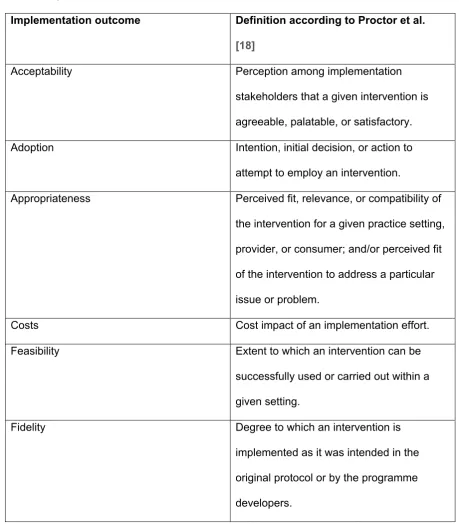
160
synthesised in an a-priori meta-framework using thematic analysis [15]. Stage 2 (empirical
161
study review) will apply a systematic search and purposeful sampling approach to identify
162
information-rich empirical studies of health and social care interventions implemented into
163
practice within or across countries. Evidence from stage 2 will be coded against the a-priori
164
meta-framework generated in stage 1. Emerging themes from empirical studies that cannot
165
be coded against the a-priori meta-framework will be incorporated into the meta-framework.
166
The result of the review will be a refined framework on the influence of external contextual
167
factors on implementation. This new framework can subsequently be honed and validated in
168
future empirical research.
169
170
Figure 1: Two-stage review design following the ‘best fit’ framework synthesis approach,
171
based on Carroll et al. [13]
172
173
Legend Figure 1: The review applies a two-stage process. In the first stage we will review
174
existing frameworks, models, concepts and theories (stage 1 - framework review). Concepts
175
for external implementation context will be synthesised in an a-priori meta-framework. In the
176
second stage, we will test and refine the a-priori meta-framework by analysing evidence from
177
empirical studies that focus on the implementation of health and social care interventions
178
into practice within or across countries (stage 2 - empirical study review). The concepts
179
derived from both reviews will be synthesised into a final framework.
181
Aims of the study 182
The primary aim of the review is to understand which and how external contextual factors
183
influence the implementation of health and social care interventions into practice within or
184
across countries. Each of the two consecutive review stages has specific review questions:
185
- Stage 1 (framework review):
186
How are external contextual factors that influence the implementation of interventions
187
into practice conceptualised within existing theory?
188
189
- Stage 2 (empirical study review):
190
1. How are external contextual factors influencing the implementation of health
191
and social care interventions into practice within or across countries?
192
193
2. What is the evidence on this influence regarding
194
a) the characteristics of the implementation process at different levels
195
(i.e. micro, meso, macro levels), the involved stakeholders, the
196
internal context of an organisation, and the intervention?
197
b) implementation outcomes?
198
c) Different types of interventions and different types of implementation
199
strategies?
200
d) the implementation of interventions spreading internationally from one
201
country to another compared to interventions spreading within the
202
same country?
203
204
205
206
Eligibility criteria 208
Types of studies
209
In the framework review (stage 1) we will include studies that focus on exploring, testing or
210
developing frameworks, theories, concepts or models of the implementation of interventions.
211
Studies describing statistical or technical, care or disease models will be excluded. The
212
review will not be restricted to study type and will include, for example, experimental and
213
non-experimental studies, quantitative, qualitative and mixed methods studies, hybrid
214
implementation studies, process evaluations and conceptual studies.
215
216
In the empirical study review (stage 2) we will include primary studies analysing qualitative
217
empirical data of the implementation of interventions. We will exclude non-empirical studies
218
and studies not analysing the implementation of interventions, e.g., studies only analysing
219
the effectiveness of interventions. The review will be restricted to studies presenting
220
qualitative evidence from, for example, qualitative and mixed methods studies, hybrid
221
implementation studies, and process evaluations.
222
223
Domain
224
In the framework review (stage 1) we will include studies set in any non-profit public or
225
private service domain such as health care, public health, social care, education,
226
environment, public administration, and international development fields. We will not only
227
focus on studies set in the health and social care domain in this review stage but seek to
228
include evidence from other domains such as education or international development that
229
might be transferrable to the health and social care domain.
230
In the empirical study review (stage 2), studies focusing on interventions implemented in a
232
non-profit public or private health and social care domain will be included. Studies set in
for-233
profit businesses in the private domain will be excluded in both review stages.
234
235
236
Participants
237
We will include studies in both review stages that focus on participants in a practice setting,
238
including (a) service users, i.e., members of the public who might be using the intervention,
239
patients, carers and people from organisations that represent service users; and/or (b)
240
service providers, including professionals and managers. Studies focusing only on
241
participants in a policy or research setting will be excluded.
242
243
Intervention
244
In both review stages we will include studies focusing on active intervention implementation.
245
We will exclude studies focusing only on the stages of passive diffusion and dissemination of
246
interventions [7]. Further, studies focusing purely on utilisation or transfer of knowledge
247
instead of the implementation of tangible practices or interventions will be excluded.
248
249
In the empirical study review (stage 2) we will include studies describing the active
250
implementation of a health or social care intervention within or across countries. We will
251
exclude pilot implementation studies and planned but not yet implemented interventions. We
252
will include studies only focusing on interventions targeting delivery arrangements of
253
healthcare defined according to the Effective Practice and Organisation of Care (EPOC)
254
taxonomy [16]. As we only focus on practice settings (i.e. in primary, secondary, voluntary,
255
community care settings), studies only describing financial and governance arrangements
256
will be excluded from our review. Social care interventions are defined as the provision of
social work, personal care, protection or social support services to children or adults (or their
258
carers) in need or at risk, or adults with needs arising from disability, illness, old age or
259
poverty. They include working with individuals, small groups or communities and cover
260
services provided by public bodies, the voluntary sector or accessed on a self-funded basis
261
by the public. We will only include health and social care interventions that improve service
262
user or provider outcomes, or the quality of services. We will exclude studies set in a
non-263
health or non-social care domain, defined as interventions that are implemented in another
264
domain, e.g., education, and that are not delivered by health or social care professionals.
265
We will exclude studies focusing on the implementation of an intervention only in one single
266
site without it having been spread to other implementation sites. We define a site by
267
geographic location in order to capture the influence of different external contexts.
268
269
In both reviews, there will be no restriction regarding the type of intervention, type of
270
implementation strategy [17], or level of implementation (i.e., micro, meso, macro level).
271
272
Context
273
In both review stages we will include studies focusing on one or more external contextual
274
factors which can be defined as characteristics of the setting surrounding an organisation in
275
which the implementation takes place [7, 11]. Such external contextual factors could be, for
276
example, legal, political and funding environments, health system organisation, socio-cultural
277
contexts, the demographics of the served population, inter-organisational networks, power
278
dynamics, historical developments, or physical environment and location. Studies focusing
279
only on characteristics of the implementation process itself, the internal (intra-organisational)
280
context, the stakeholders involved in the implementation process, or the implemented
281
intervention will be excluded.
282
Outcomes
284
In the empirical study review (stage 2) we will include studies describing the influence of
285
external contextual factors on implementation outcome, ideally as defined by Proctor et al.
286
[18] (Table 1). We will also include studies if they refer to other implementation outcomes,
287
such as the utilisation of an intervention.
288
[image:13.595.67.527.244.769.2]289
Table 1 Implementation outcome measures included in the review
290
Implementation outcome Definition according to Proctor et al.
[18]
Acceptability Perception among implementation stakeholders that a given intervention is agreeable, palatable, or satisfactory. Adoption Intention, initial decision, or action to attempt to employ an intervention.
Appropriateness Perceived fit, relevance, or compatibility of the intervention for a given practice setting, provider, or consumer; and/or perceived fit of the intervention to address a particular issue or problem.
Costs Cost impact of an implementation effort. Feasibility Extent to which an intervention can be
successfully used or carried out within a given setting.
Penetration Integration of an intervention within a service setting.
Sustainability Extent to which a newly implemented intervention is maintained or
institutionalised within a service setting’s ongoing, stable operations.
291
Search strategy 292
For the framework review (stage 1), the search is following the iterative BeHEMoTh
293
(Behaviour of interest, health context, exclusions, models or theories) strategy which was
294
developed by Booth and Carroll for the systematic identification of frameworks, models,
295
concepts, and theories from the literature [14]. Carroll et al. proposed to follow this strategy
296
for the first stage of a best fit framework synthesis [13]. The BeHEMoTh strategy comprises
297
the following steps: (1) Identifying theory from existing internal reference databases, (2)
298
systematic database searches combining behaviour of interest (implementation) and context
299
(external context) with terms for models or theory, (3) searches for named theories to identify
300
key citations and (4) citation searches for identified theories in combination with the
301
behaviour of interest.
302
303
For the systematic database search (step 2 of the BeHEMoTh strategy), we will combine
304
generic and specific free text and database thesaurus terms for implementation, e.g.,
305
implementation, adoption, knowledge transfer, with terms for external context, e.g., external
306
context, outer setting, structural environment, and terms for theories, models, concepts and
307
frameworks. An example of the proposed search strategy for MEDLINE (via Ovid) can be
308
found in Additional File 2. The search covering scientific and grey literature will be performed
309
in the following databases:
310
• Business Source Complete (from date of inception),
• CINAHL (Cumulative Index to Nursing and Allied Health) (from date of inception),
312
• Embase (from 1947),
313
• ERIC (Education Resources Information Center) (from date of inception),
314
• Global Health (from 1973),
315
• HMIC (Health Management Information Consortium) (from 1979),
316
• IBSS (International Bibliography of the Social Sciences) (from 1951),
317
• MEDLINE (from 1946),
318
• ProQuest Dissertations and Theses Global (from date of inception)
319
• PsycINFO (from 1806),
320
• SCOPUS (from 2004),
321
• Social Policy and Practice (from date of inception), and
322
• Web of Science (from 1900).
323
324
In the empirical study review (stage 2), the database search is combining generic and
325
specific free text and database thesaurus terms for external contextual factors with terms for
326
implementation, and terms for spread within or across countries, e.g., spread, scale-up,
327
cross-country, multi-site. The search strategy for this review stage will additionally be
328
informed by the results of the framework review (stage 1), e.g., regarding terms for external
329
contextual factors. The search covering scientific and grey literature will be performed in the
330
following databases:
331
• CINAHL (Cumulative Index to Nursing and Allied Health) (from date of inception),
332
• Embase (from 1947),
333
• HMIC (Health Management Information Centre) (from 1979),
334
• IBSS (International Bibliography of the Social Sciences) (from 1951),
335
• MEDLINE (from 1946),
336
• ProQuest Dissertations and Theses Global (from date of inception)
• PsycINFO (from 1806), and
338
•
Social Policy and Practice (from date of inception).
339340
Besides searching electronic databases, we will hand-search reference lists of included
341
articles and perform citation searches of included articles and authors to identify further
342
publications linked to included studies. We will also perform citation searches for the theories
343
identified in the framework review (stage 1) in combination with terms for health and social
344
care interventions spread within or across countries. Further, we will search Google Scholar
345
to cross-check that we have not missed any relevant publications.
346
347
For both reviews, we will search the grey literature databases GreyLit and OpenGrey. We
348
will also hand-search websites of relevant institutions and organisations such as the World
349
Health Organization, King’s Fund, and the Health Foundation and relevant journals in which
350
key articles were published, such as Implementation Science. In addition, we will ask experts
351
in the field to identify any unpublished and ongoing work. Both reviews are restricted to
352
publications in the English language. We will not apply any restrictions towards population,
353
place, study type, and publication year. We will include any publication type except for
354
conference abstracts and study protocols.
355
356
Study selection, data extraction & analysis 357
358
Selection
359
In both reviews, citations will be managed using Rayyan [19] and EndNote X9. Pairs of
360
reviewers will independently screen the title and abstract of records and full-texts for
361
inclusion (e.g., AZ (100%) + LB (30%), ES (20%), JO (10%), AB (10%), JS (10%)).
362
Disagreements will be resolved by group discussion and consensus in the review team. We
will calculate inter-rater reliability midway and at the end of the screening process to ensure
364
consistency between the reviewers. We aim to improve the inter-rater reliability after the first
365
calculation by refining the inclusion criteria in the review team.
366
367
In the empirical study review (stage 2), we follow the threefold purposeful sampling approach
368
applied by Benoot and colleagues [20]. We chose this approach as the authors had a similar
369
literature synthesis objective in that they aimed at constructing and refining a theory. From
370
the eligible studies identified in the systematic search, we intend to select a sample of rich
371
cases providing in-depth information to answer research questions 2 a-d (intensity
372
sampling). We also apply a maximum variation sampling approach and a disconfirming
373
sampling approach to allow for refining the external context concepts in the a-priori
meta-374
framework developed in stage 1. Based on the extracted data from eligible studies (see
375
below), we will first select information-rich studies based on the density of information
376
provided to answer research questions 2a-d and the quality and clarity of the studies
377
(intensity sampling). We will then select studies that vary as much as possible from each
378
other, for example, in study design, conceptual lens, implementation level, intervention type,
379
implementation outcome, and the described concepts of external context (maximum
380
variation sampling). In the last step, we will identify studies describing diverging concepts of
381
external context and conceptual lenses (disconfirming sampling). Publications on the same
382
study will be merged. Sampling of articles will be done by one reviewer (e.g., AZ) and
383
discussed and agreed upon with another reviewer (e.g., LB). Disagreements will be resolved
384
by group discussion and consensus within the review team.
385
386
Data extraction and analysis
387
In the framework review (stage 1) we will develop an a-priori meta-framework using thematic
388
analysis of the included frameworks, concepts, theories and models to identify
commonalities and differences [13]. Themes will be supported by descriptions or definitions
390
from the included studies if such detail is provided. Key concepts identified in stage 1 will
391
inform the construction of the data extraction form for the empirical study review (stage 2).
392
393
In the empirical study review (stage 2), the data extraction form for coding empirical studies
394
will include basic information on the studies and specific information related to research
395
questions 2 a-d such as study title, first author name, publication year, study design, study
396
country/countries, setting, study participants/stakeholders (e.g., service providers, service
397
users), intervention, implementation strategy, level of implementation (macro, meso, micro),
398
implementation outcomes, and if the spread of the intervention was within or across
399
countries. Furthermore, it will include information on external context concepts and the
400
applied conceptual lens. Finally, the data extraction form includes quality assessment criteria
401
(see below). The data extraction form will be piloted independently by two reviewers (e.g.,
402
AZ, LB) on a sample of the studies and jointly agreed upon by all review team members.
403
Once all appropriate data has been mapped deductively to the meta-framework a separate
404
inductive process of thematic analysis will be used to accommodate any remaining data
405
against new concepts within an augmented framework. One reviewer (e.g., AZ) will extract
406
data and perform the thematic analyses, with a second reviewer (e.g., LB) validating the
407
results by independently extracting and analysing data from a sample of the studies. Results
408
will be discussed with all members of the review team. Disagreements will be resolved by
409
group discussion and consensus within the review team.
410
411
Quality assessment 412
We will assess the internal validity of individual empirical studies, focusing on how the
413
design and conduct of each study has been reported following the quality appraisal
414
approach suggested for the best fit synthesis approach by Carroll et al. [13, 21]. We will
classify studies according to the number of quality criteria they meet. If a study meets two or
416
more quality criteria it will be rated as being of adequate quality. If only one or no quality
417
criterion is met the study will be rated as being of inadequate quality. We will perform a
418
qualitative sensitivity analysis following the synthesis stage (see below) to assess how each
419
individual study contributes to the final synthesis and how studies that were rated inadequate
420
in terms of quality are contributing to the synthesis and how exclusion of inadequate studies
421
would affect the synthesis.
422
423
The conceptual framework derived from the synthesis (see below) will be assessed for risk
424
of bias in terms of selection and reporting of the evidence used to generate the framework.
425
We will explore, for example, any unexplained absence of themes (e.g., differences between
426
the a-priori meta-framework and the final framework), the absence of negative or
427
disconfirming evidence, and the sensitivity to variables such as design, setting, participants,
428
or frequency of reported themes in included studies [13]. The analysis of the differences
429
between the two frameworks is also a testfor a form of publication bias of the included
430
empirical studies in stage 2, if themes are not reported in the empirical studies that were
431
included in the a-priori meta-framework.
432
433
Data synthesis 434
Based on the concepts and themes identified from the two linked review stages we will
435
derive a new final framework [13]. In a first step, the themes identified from conceptual
436
frameworks in stage 1 and from the empirical data in stage 2 will be incorporated within a
437
new framework. In a second step, the evidence will be revisited to include relationships
438
between framework themes. This process will result in a conceptual diagram and a narrative
439
supporting the diagram that refers to the included studies.
440
Amendments to the protocol 442
Any amendments to the protocol will be documented. Records in the PROSPERO database
443
will be updated when important changes are introduced. All amendments to the protocol will
444
be described and explained in the publication of the review results.
445
446
447
Discussion
448
449
The review will lead to a comprehensive framework on the influence of external contextual
450
factors on the implementation of interventions in health and social care practice, especially
451
with a focus on interventions that spread within or across countries. The framework is
452
anticipated to help identify reasons and factors explaining the decline and variability in
453
effectiveness of an intervention and also assess the prospects of implementation
454
effectiveness when spreading interventions. By improving the spread of interventions, a
455
larger proportion of the population can more quickly and more equally benefit from new or
456
improved services. The framework can be validated and honed through future empirical
457
research.
458
459
We are aware of the vast number of existing frameworks in the field of implementation
460
science [22]. This will be the first framework providing a consolidated conceptualisation of
461
external implementation context and it can be applied when the focus of a study or
462
implementation project is to understand external implementation context. However, we do
463
not only intend to develop another stand-alone framework but a framework that can be used
464
in conjunction with existing implementation theories, models, and frameworks. The new
465
framework can contribute a deeper, broader and consolidated conceptualisation of the factor
466
“external context” that is included in other existing frameworks. Another critique of the large
467
number of existing frameworks is the lack of applicability or actual application [23]. By
following a thorough, systematic approach deriving evidence from not only the theoretical but
469
empirical literature, we are aiming at developing a framework that is applicable in practice as
470
it is based in evidence derived from implementation practice. Further, many determinant
471
frameworks such as the one proposed here, are criticised for simply listing determinants but
472
not reflecting on the connections between determinants or the mechanisms that link
473
determinants with implementation outcomes [23]. Through review stage 2, we intend to
474
derive the necessary level of detail from empirical studies to enrich the framework and make
475
connections and causal links visible.
476
477
We chose the best fit approach as it has shown to be suitable for the structured and
478
transparent development of a framework based on synthesising existing evidence. The
479
approach and especially the development of meta-frameworks have been suggested as a
480
useful evidence synthesis approach for the field of quality improvement and implementation
481
[15]. With its two-stage approach, it allows us to not only compile evidence from existing
482
theory into a meta-framework but enhance the framework’s comprehensiveness and
483
representativeness with additional evidence from empirical studies.
484
485
We are aiming to develop a comprehensive framework covering a variety of external
486
contextual factors at multiple levels ranging, for example, from political and funding
487
environments and inter-organisational networks to population characteristics, physical
488
environments and historical developments. To achieve this, we decided to keep the
489
framework review (stage 1) broad to include a wide range of existing frameworks, models,
490
concepts and theories from different sectors and disciplines such as education,
491
management, environmental studies and international development. Studies from these
492
areas might contain useful concepts of external context applicable to the implementation of
493
health and social care interventions. Further, we will follow a broad search strategy covering
494
a large amount of scientific and grey literature sources and covering published and
There is also no restriction regarding, for example, a specific type of intervention, setting or
497
implementation strategy. This strategy will enable us to obtain a broad knowledge of external
498
contextual factors and their influence on implementation processes and outcomes.
499
Nevertheless, the quality of studies and their impact on the findings will be evaluated through
500
the quality assessment and sensitivity analysis.
501
502
Our broad approach in the review poses the risk of a large number of potentially eligible
503
studies and an unfeasible workload during the screening and data analysis process. We
504
have therefore chosen to restrict the database search for the stage 1 review by focusing on
505
studies that contain the terms for framework, model, theory or concept in the title only. We
506
will limit the risk of missing relevant studies by applying several additional search steps,
507
including searching for grey literature, citation search, hand-searching references and
508
relevant journals, and asking experts in the field.
509
510
Furthermore, we have chosen to focus the stage 2 review to qualitative empirical studies
511
describing health and social care interventions that spread within or across countries. This
512
allows us to capture empirical studies with a higher potential to describe the impact of
513
external contextual factors on implementation compared to studies focusing on single
514
implementation sites. In addition, the stage 2 review is not restricted to a certain group of
515
interventions or implementation strategies enabling us to still capture a broad range of
516
external contextual factors and their influence on implementation. The threefold purposeful
517
sampling approach also helps us to gather both, in-depth and comprehensive information on
518
the role of external contextual factors.
519
520
We have appointed an international external advisory board for quality assurance including
521
academic experts in health and social care, contextual factors, implementation and the best
522
fit review methodology. Additionally, we have appointed professional and service user/carer
523
representatives with the aim of including perspectives beyond those of researchers. The
professional representative was appointed based on expertise in spreading or adopting
525
health and/or social care interventions transferred from elsewhere. The service users/carers
526
have been appointed to provide their perspective on and experience with factors affecting
527
their use of newly implemented health and social care interventions. The advisory board was
528
and will be consulted and asked to comment on the review methodology and (preliminary)
529
results, the protocol, publication manuscripts, and for any specific queries arising during the
530
review process.
531
532
533
List of abbreviations
534
BeHEMoTh = Behaviour of interest, health context, exclusions, models or theories
535
CFIR = Consolidated Framework for Implementation Research
536
CICI = Context and Implementation of Complex Interventions
537
CINAHL = Cumulative Index to Nursing and Allied Health
538
EPIS = Exploration, Preparation, Implementation, Sustainment
539
EPOC = Effective Practice and Organisation of Care
540
ERIC = Education Resources Information Center
541
GreyLit = Grey Literature Report
542
HMIC = Health Management Information Consortium
543
IBSS = International Bibliography of the Social Sciences
544
PRISMA-P = Preferred Reporting Items for Systematic Reviews and Meta-Analyses
545
Protocols
546
PROSPERO = International prospective register of systematic reviews
547
548
549
Declarations
551
Ethics approval and consent to participate 552
Not applicable
553
554
Consent for publication 555
Not applicable
556
557
Availability of data and material 558
Not applicable
559
560
Competing interests 561
The authors declare that they have no competing interests.
562
563
Funding 564
AZ and ES were funded by a Fellowship programme awarded to King’s Improvement
565
Science jointly by Guy's and St Thomas' Charity, and the Maudsley Charity. King’s
566
Improvement Science is part of the National Institute for Health Research (NIHR)
567
Collaboration for Leadership in Applied Health Research and Care (CLAHRC) South London
568
and comprises a specialist team of improvement scientists and senior researchers based at
569
King’s College London. Its work is funded by King’s Health Partners (Guy’s and St Thomas’
570
NHS Foundation Trust, King’s College Hospital NHS Foundation Trust, King’s College
571
London and South London and Maudsley NHS Foundation Trust), Guy’s and St Thomas’
572
Charity, the Maudsley Charity and the Health Foundation. JS is an NIHR Senior Investigator.
573
AZ and ES were and AB, JO and JS are supported by the NIHR CLAHRC South London at
574
King’s College Hospital NHS Foundation Trust. JO was funded by the Health Foundation.
575
The funding bodies had no role in designing the study, collecting, analysing or interpreting
576
data, nor in writing the manuscript. The views expressed are those of the authors and not
necessarily those of the National Health Service (NHS), the NIHR or the Department of
578
Health and Social Care.
579
580
Authors' contributions 581
AZ and LB conceived the study. AZ wrote the first draft of the protocol. All authors were
582
involved in developing the eligibility criteria. AZ and LB set up the search strategy and
583
accomplished preliminary searches. All authors contributed to subsequent drafts of the
584
protocol and read and approved the final manuscript.
585
586
Acknowledgements 587
The authors would like to very much thank the members of the external international
588
advisory board to this review for their valuable feedback on the protocol: Dr Andrew Booth,
589
University of Sheffield, Sheffield, UK; Jennifer Bostock, service user representative, UK; Prof
590
James Copestake, University of Bath, Bath, UK; Catherine Dale, Health Innovation Network,
591
London, UK; Prof Jim Dearing, Michigan University, East Lansing, USA; Clare Evans,
592
service user representative, UK (deceased); Prof Sandy Oliver, University College London,
593
London, UK; Dr Dennis P. Watson, University of Illinois, Chicago, USA. Furthermore, we
594
would like to thank Peter Bradley, University of Bath library, for his support with setting up
595
the search strategy and identifying suitable databases.
596
597
598
References
599
1. Brownson RC, Colditz GA, Proctor EK. Preface. In: Brownson RC, Colditz GA,
600
Proctor EK, editors. Dissemination and Implementation Research in Health
601
Translating Science to Practice. 2nd edition. New York: Oxford University Press;
602
2018. p. xiii-xvi.
2. Glasgow RE, Vinson C, Chambers D, Khoury MJ, Kaplan RM, Hunter C. National
604
Institutes of Health approaches to dissemination and implementation science: current
605
and future directions. Am J Public Health 2012;102:1274-81.
606
3. Dixon-Woods M, Leslie M, Tarrant C, Bion J. Explaining Matching Michigan: an
607
ethnographic study of a patient safety program. Implement Sci 2013;8:70.
608
4. Simmons R, Fajans P, Ghiron L. Introduction. In: Simmons R, Fajans P, Ghiron L.,
609
editors. Scaling up health service delivery: from pilot innovations to policies and
610
programmes. Geneva: World Health Organization; 2007. P. vii-xiv
611
5. Kaplan HC, Brady PW, Dritz MC, Hooper DK, Linam WM, Froehle CM, et al. The
612
influence of context on quality improvement success in health care: a systematic
613
review of the literature. Milbank Q 2010;88:500-59.
614
6. Alexander JA, Hearld LR. The science of quality improvement implementation:
615
developing capacity to make a difference. Med Care 2011;49 Suppl:S6-20.
616
7. Greenhalgh T, Robert G, Macfarlane F, Bate P, Kyriakidou O. Diffusion of
617
innovations in service organizations: systematic review and recommendations.
618
Milbank Q 2004;82:581-629.
619
8. Damschroder LJ, Aron DC, Keith RE, Kirsh SR, Alexander JA, Lowery JC. Fostering
620
implementation of health services research findings into practice: a consolidated
621
framework for advancing implementation science. Implement Sci 2009;4:50.
622
9. Aarons GA, Hurlburt M, Horwitz SM. Advancing a conceptual model of
evidence-623
based practice implementation in public service sectors. Adm Policy Ment Health
624
2011;38:4-23.
625
10. Pfadenhauer LM, Gerhardus A, Mozygemba K, Lysdahl KB, Booth A, Hofmann B, et
626
al. Making sense of complexity in context and implementation: the Context and
627
Implementation of Complex Interventions (CICI) framework. Implement Sci
628
2017;12:21.
11. Watson DP, Adams EL, Shue S, Coates H, McGuire A, Chesher J, et al. Defining the
630
external implementation context: an integrative systematic literature review. BMC
631
Health Serv Res 2018;18:209.
632
12. Moher D, Shamseer L, Clarke M, Ghersi D, Liberati A, Petticrew M, et al. Preferred
633
reporting items for systematic review and meta-analysis protocols (PRISMA-P) 2015
634
statement. Syst Rev 2015;4:1.
635
13. Carroll C, Booth A, Leaviss J, Rick J. "Best fit" framework synthesis: refining the
636
method. BMC Med Res Methodol 2013;13:37.
637
14. Booth A, Carroll C. Systematic searching for theory to inform systematic reviews: is it
638
feasible? Is it desirable? Health Info Libr J 2015;32:220-235.
639
15. Booth A, Carroll C. How to build up the actionable knowledge base: the role of 'best
640
fit' framework synthesis for studies of improvement in healthcare. BMJ Qual Saf
641
2015;24:700-708.
642
16. Effective Practice and Organisation of Care (EPOC): EPOC Taxonomy. 2015.
643
https://epoc.cochrane.org/epoc-taxonomy. Accessed 20 Jul 2018.
644
17. Powell BJ, Waltz TJ, Chinman MJ, Damschroder LJ, Smith JL, Matthieu MM, et al. A
645
refined compilation of implementation strategies: results from the Expert
646
Recommendations for Implementing Change (ERIC) project. Implementation Science
647
2015;10:21.
648
18. Proctor E, Silmere H, Raghavan R, Hovmand P, Aarons G, Bunger A, et al.
649
Outcomes for implementation research: conceptual distinctions, measurement
650
challenges, and research agenda. Adm Policy Ment Health 2011;38:65-76.
651
19. Ouzzani M, Hammady H, Fedorowicz Z, Elmagarmid A. Rayyan-a web and mobile
652
app for systematic reviews. Syst Rev 2016;5:210.
653
20. Benoot C, Hannes K, Bilsen J. The use of purposeful sampling in a qualitative
654
evidence synthesis: A worked example on sexual adjustment to a cancer trajectory.
655
BMC Med Res Methodol 2016;16:21.
21. Carroll C, Booth A, Lloyd-Jones M. Should we exclude inadequately reported studies
657
from qualitative systematic reviews? An evaluation of sensitivity analyses in two case
658
study reviews. Qual Health Res 2012;22:1425-1434.
659
22. Nilsen P. Making sense of implementation theories, models and frameworks.
660
Implementation Science 2015;10:53.
661
23. Burchett HE, Blanchard L, Kneale D, Thomas J. Assessing the applicability of public
662
health intervention evaluations from one setting to another: a methodological study of
663
the usability and usefulness of assessment tools and frameworks. Health Res Policy
664
Sy 2018;16(1):88.
665
666
667
Additional files
668
• Additional file 1, pdf, Prisma-P 2015 checklist
669
• Additional file 2, pdf, Search strategy – Framework review (review stage 1) –
670
MEDLINE (OVID)
671
672
Additional file 1
PRISMA-P (Preferred Reporting Items for Systematic review and Meta-Analysis Protocols) 2015 checklist: recommended
items to address in a systematic review protocol*
Section and
topic Item No Checklist item on page # Reported
ADMINISTRATIVE INFORMATION Title:
Identification 1a Identify the report as a protocol of a systematic review 1 Update 1b If the protocol is for an update of a previous systematic review, identify as such n.a. Registration 2 If registered, provide the name of the registry (such as PROSPERO) and registration number 4 Authors:
Contact 3a Provide name, institutional affiliation, e-mail address of all protocol authors; provide physical mailing address
of corresponding author 1-2
Contributions 3b Describe contributions of protocol authors and identify the guarantor of the review 1, 24 Amendments 4 If the protocol represents an amendment of a previously completed or published protocol, identify as such
and list changes; otherwise, state plan for documenting important protocol amendments 19 Support:
Sources 5a Indicate sources of financial or other support for the review 23-24
Sponsor 5b Provide name for the review funder and/or sponsor 23-24
Role of sponsor or funder
5c Describe roles of funder(s), sponsor(s), and/or institution(s), if any, in developing the protocol 23-24
INTRODUCTION
Rationale 6 Describe the rationale for the review in the context of what is already known 5-6 Objectives 7 Provide an explicit statement of the question(s) the review will address with reference to participants,
METHODS
Eligibility criteria 8 Specify the study characteristics (such as PICO, study design, setting, time frame) and report characteristics (such as years considered, language, publication status) to be used as criteria for eligibility for the review 9-13 Information
sources 9 Describe all intended information sources (such as electronic databases, contact with study authors, trial registers or other grey literature sources) with planned dates of coverage 13-15 Search strategy 10 Present draft of search strategy to be used for at least one electronic database, including planned limits, such
that it could be repeated Add. File 2
Study records: Data
management 11a Describe the mechanism(s) that will be used to manage records and data throughout the review 16 Selection
process 11b State the process that will be used for selecting studies (such as two independent reviewers) through each phase of the review (that is, screening, eligibility and inclusion in meta-analysis) 15-16 Data collection
process 11c Describe planned method of extracting data from reports (such as piloting forms, done independently, in duplicate), any processes for obtaining and confirming data from investigators 16-17 Data items 12 List and define all variables for which data will be sought (such as PICO items, funding sources), any
pre-planned data assumptions and simplifications 17
Outcomes and
prioritization 13 List and define all outcomes for which data will be sought, including prioritization of main and additional outcomes, with rationale 12-13 Risk of bias in
individual studies 14 Describe anticipated methods for assessing risk of bias of individual studies, including whether this will be done at the outcome or study level, or both; state how this information will be used in data synthesis 17-18 Data synthesis 15a Describe criteria under which study data will be quantitatively synthesised n.a.
15b If data are appropriate for quantitative synthesis, describe planned summary measures, methods of handling data and methods of combining data from studies, including any planned exploration of consistency (such as I2, Kendall’s τ)
n.a.
15c Describe any proposed additional analyses (such as sensitivity or subgroup analyses, meta-regression) n.a. 15d If quantitative synthesis is not appropriate, describe the type of summary planned 18 Meta-bias(es) 16 Specify any planned assessment of meta-bias(es) (such as publication bias across studies, selective
reporting within studies) 18
Confidence in cumulative evidence
*It is strongly recommended that this checklist be read in conjunction with the PRISMA-P Explanation and Elaboration (cite when available) for important clarification on the items. Amendments to a review protocol should be tracked and dated. The copyright for PRISMA-P (including checklist) is held by the PRISMA-P Group and is distributed under a Creative Commons Attribution Licence 4.0.
Additional File 2
Search strategy - Framework review (review stage 1) - MEDLINE (OVID)
1. translational medical research.sh
2. evidence based practice.sh 3. diffusion of innovation.sh 4. knowledge utili*.ab,ti 5. knowledge mobili*.ab,ti 6. knowledge transfer*.ab,ti 7. knowledge translat*.ab,ti 8. implement*.ab,ti
9. adopt*.ab,ti 10. research utili*.ab,ti 11. spread*.ab,ti 12. scale-up.ab,ti 13. scaling-up.ab,ti
14. external context*.ab,ti 15. external environment*.ab,ti 16. outer context*.ab,ti
17. outer setting*.ab,ti 18. structural context*.ab,ti 19. structural environment*.ab,ti 20. wider context*.ab,ti
21. wider environment*.ab,ti 22. wider setting*.ab,ti 23. broader context*.ab,ti 24. broader environment*.ab,ti 25. macro-level.ab,ti
26. micro-level.ab,ti 27. system-level.ab,ti 28. local context*.ab,ti 29. local environment*.ab,ti 30. regional context*.ab,ti 31. regional environment*.ab,ti 32. national context*.ab,ti 33. national environment*.ab,ti
34. framework*.ab,ti 35. concept*.ab,ti 36. theor*.ab,ti 37. model*.ab,ti
38. 1 or 2 or 3 or 4 or 5 or 6 or 7 or 8 or 9 or 10 or 11 or 12 or 13
39. 14 or 15 or 16 or 17 or 18 or 19 or 20 or 21 or 22 or 23 or 24 or 25 or 26 or 27 or 28 or 29 or 30 or 31 or 32 or 33
40. 34 or 35 or 36 or 37