White Rose Research Online
Universities of Leeds, Sheffield and York
http://eprints.whiterose.ac.uk/
This is an author produced version of a paper published in Preventive Medicine.
White Rose Research Online URL for this paper: http://eprints.whiterose.ac.uk/4473/
Published paper
Bewick, B.M., Trusler, K., Barkham, M., Hill, A.J., Cahill, J. and Mulhern, B. (2008) The effectiveness of web-based interventions designed to decrease alcohol consumption – a systematic review, Preventive Medicine, Volume 47 (1), 17 - 26.
The effectiveness of web-based interventions designed to decrease alcohol consumption – a systematic review
Bridgette M. Bewick, Karen Trusler, Michael Barkham, Andrew J. Hill, Jane Cahill, Brendan Mulhern
PII: S0091-7435(08)00043-1
DOI: doi:10.1016/j.ypmed.2008.01.005 Reference: YPMED 2315
To appear in: Preventive Medicine
Received date: 8 November 2006 Revised date: 9 January 2008 Accepted date: 9 January 2008
Please cite this article as: Bewick Bridgette M., Trusler Karen, Barkham Michael, Hill Andrew J., Cahill Jane, Mulhern Brendan, The effectiveness of web-based interventions designed to decrease alcohol consumption – a systematic review, Preventive Medicine
(2008), doi: 10.1016/j.ypmed.2008.01.005
ACCEPTED MANUSCRIPT
The effectiveness of web-based interventions designed to decrease alcohol
consumption – a systematic review.
Bewick, Bridgette.M (MA (Hons) Psychology) a, Trusler, Karen (BSc (Hons) Psychology and Criminology) a, Prof. Barkham, Michael (Phd Clinical Psychology) c, Prof. Hill, Andrew.J (Phd Psychology) a, Cahill, Jane (MA, Social and Political Sciences) b, and Mulhern, Brendan (MRes
Psychology) a.
a: Leeds Institute of Health Sciences, University of Leeds
b: Psychological Therapies Research Centre, University of Leeds c: Centre for Psychological Services Research, University of Sheffield
Correspondence: Bridgette M Bewick
Leeds Institute of Health Sciences Charles Thackrah Building
Woodhouse Leeds LS2 9JL
Telephone: 0113 343 0809 e-mail: [email protected]
Word Counts: Abstract: 229 Main text: 4112
ACCEPTED MANUSCRIPT
Abstract
Objective: To review the published literature on the effectiveness of web-based interventions designed to decrease consumption of alcohol and/or prevent alcohol abuse.
Method: Relevant articles published up to, and including, May 2006 were identified through electronic searches of Medline, PsycInfo, Embase, Cochrane Library, ASSIA, Web of Science and Science Direct. Reference lists of all articles identified for inclusion were checked for articles of relevance. An article was included if its stated or implied purpose was to evaluate a web-based intervention designed to decrease consumption of alcohol and/or to prevent alcohol abuse. Studies were reliably selected and quality-assessed, and data were independently extracted and interpreted by two authors.
Results: Initial searches identified 191 articles of which 10 were eligible for inclusion. Of these, five provided a process evaluation only, with the remaining five providing some pre- to post-intervention measure of effectiveness. In general the percentage quality criteria met was relatively low and only one of the 10 articles selected was a randomized control trial.
Conclusion: The current review provides inconsistent evidence on the effectiveness of eIectronic screening and brief intervention (eSBI) for alcohol use. Process research suggests that web-based interventions are generally well received. However further controlled trials are needed to fully investigate their efficacy, to determine which elements are key to outcome and to understand if different elements are required in order to engage low and high risk drinkers.
ACCEPTED MANUSCRIPT
Introduction
Brief interventions for health problems such as alcohol use disorders have been of growing interest over the last few decades (Moyer et al., 2002). Several reviews have been conducted on the effectiveness of face-to-face brief interventions in health care and treatment settings (Moyer et al., 2002; Bien et al., 1993). Results are consistent, showing that brief interventions are more effective than no counseling (Bien et al., 1993).
Personalized feedback is often incorporated into brief interventions and aims to encourage behavior and/or attitude change. Studies suggest that incorporating social norms information into feedback interventions can help decrease alcohol consumption, encouraging participants to become more aware of the level and consequences of their drinking and how their drinking behaviors compare to others of a similar social or demographic group (White 2006; Walters and Neighbors, 2005; Neighbors et al., 2004; Collins et al., 2002;).
Although brief feedback interventions for alcohol use have traditionally been delivered by more conventional face-to-face (e.g., Humpreys and Klaw, 2001; Borsari and Carey, 2000) and postal mail methods (e.g., Collins et al., 2002; Walters et al., 2000; Agostinelli et al., 1995), they have more recently been delivered electronically via computer programs (e.g. Neighbors et al., 2004; Matano et al., 2000) and the internet (e.g., Davies-Kirsch and Lewis, 2004; Saitz et al., 2004; Kypri et al., 2003; Cunningham et al., 2000). Both experimental and review studies comparing a combination of such methods have found that providing feedback as an intervention for alcohol use can be effective regardless of the delivery mode (e.g. White et al., 2006; Kypri et al., 2005; Walters and Neighbors, 2005).
ACCEPTED MANUSCRIPT
internet based interventions may have a number of advantages over the more traditional modes of delivery. Specifically, they are able to reach a large audience in a cost effective manner (White, 2006; Walters et al., 2005), can offer participants privacy and anonymity through the ability of users to access the intervention at times and in locations that suit their needs, and are flexible in their ability to provide automated and tailored information (Moyer and Finney, 2004/2005; Fotheringham et al., 2000).
Currently information on the feasibility, utility and effectiveness of web-based interventions is limited (Evers et al., 2005; Ritterband et al., 2003). The majority of studies to date have focused their work on the feasibility of various interventions for substance use and alcohol problems in particular (e.g. Moyer and Finney, 2004/2005; Collins et al., 2002; Bein et al., 1993). Previously published reviews which have included information on web-based interventions for alcohol use have either provided only narrative accounts of the results, descriptions of the interventions with limited details on outcome results, and/or have not designated web-based interventions as their primary focus (e.g. Walters et al, 2005; Copeland and Martin, 2004). Non-systematic reviews have concluded that computer generated personalized feedback can be effective in reducing alcohol consumption (e.g. White, 2006; Kypri et al., 2005), although these reviews have not included systematic appraisal of the effectiveness of web-based interventions.
Furthermore, it should be recognized that the few research studies that have concentrated on the quality of web-based interventions have found that many interventions lack the basic elements needed for health behavior change (Evers et al., 2005). Many e-health web-sites require improvements to ensure that issues of quality, accuracy of information and efficacy are more adequately addressed (Evers et al., 2005, Kunst et al., 2002). Research also highlights the on-going problem of access to the internet, particularly for those in socially or linguistically disadvantaged cultures who do not have the resources or ability to access the interventions, Neuhauser and Kreps (2003) refer to these issues as the ‘broadband divide’ which may restrict many people from accessing features of e-health communication.
ACCEPTED MANUSCRIPT
interventions, it is timely that a systematic review focusing on the effectiveness of web-based alcohol interventions should be carried out.
To summarize, this paper provides a systematic appraisal of the best available evidence on: 1) the effectiveness of web-based interventions aimed at decreasing alcohol consumption; and 2) participants’ perceptions of the usefulness and potential benefits of the intervention. Additionally this paper aims to systematically assemble and evaluate the quality of the evidence available using established systematic review techniques. Systematic reviews are defined by key methodologies, including: (a) highly comprehensive searches in order to identify relevant studies; (b) explicit inclusion criteria and transparency concerning study eligibility and (c) rigorous quality appraisal. The use of a standardized quality rating tool (i.e., Downs and Black, 1998) was employed as part of this process.
Method
Literature search and selection of studies
ACCEPTED MANUSCRIPT
Quality rating and hierarchy of evidence
Using the full text, two authors (BMB, KT) independently quality rated the articles selected for inclusion. Primary studies were rated using the criteria set out by Downs and Black (1998). This scale is regarded as being reliable and easy to use and particularly suitable for the evaluation of non-randomized intervention studies in systematic reviews (Deeks et al., 2003). The quality rating tool comprises 27 items and provides an overall score for a study as well as a score for the quality of reporting and both the internal and external validity. Agreement between researchers was measured using kappa (κ) and disagreement settled by consensus. At this stage articles which did not meet the original inclusion criteria were excluded.
All included studies were independently rated by three authors and one additional researcher (BMB, KT, JC, JS) according to an adapted hierarchy of evidence (adapted from Harris et al., 2001). Classification of evidence was as follows: I-1 evidence from randomized control trial(s); I-2 evidence from randomized comparison trial(s); II-1 evidence from controlled trial(s) without randomization; II-2 evidence from cohort or case-control studies; II-3 evidence from comparisons between times or places with or without the intervention; and III descriptive studies. For the purposes of the current review efficacy studies are presented with studies of effectiveness.
Data extraction
ACCEPTED MANUSCRIPT
Statistical analyses
For effectiveness studies pre-, post- and mean difference data pertaining to AUDIT score, unit quantity consumed, maximum consumption and frequency of heavy drinking were extracted, where available, for both intervention and comparison groups. The mean difference scores for both intervention and comparison groups and the pre- and post- scores for the intervention group were entered into RevMan (2002) and effect size graphs were produced. Standardized mean difference and fixed effects model was used for calculations. Where information from authors resulted in a re-analysis of the original data, some numbers provided (e.g. sample size) deviate slightly from those originally published. Where data were not available, studies were excluded from the relevant analysis. Due to the heterogeneous nature of the studies (in terms of populations, research designs and measurement unit) it was not deemed appropriate to combine the data using meta-analysis.
Results
From the initial search 191 articles were identified and 27 of these were found to be eligible for inclusion (20 primary studies and seven review studies). The kappa statistic for inter-rater agreement on the inclusion or exclusion of studies was 0.83 – indicating substantial agreement (Viera and Garrett, 2005). Of these, 10 primary studies and 7 review studies were excluded upon closer reading due to the content of the articles not meeting the inclusion criteria (k=1.0). One dissertation was also excluded as the British Library was unable to supply a copy. Detailed reading of reference lists of all included articles by two independent researchers (BMB, KT) resulted in the inclusion of one additional primary study.
ACCEPTED MANUSCRIPT
---Insert Figure 1, and Tables 1-2 about here
---Hierarchy of research design
One of the 10 studies was a randomized control trial, four were randomized trials incorporating a comparison group(s), one was a controlled study without randomization, one was a cohort study and three were descriptive studies (see Table 2). Of the five randomized trials details of how randomization took place was reported in all but one (Cunningham et al., 2005).
Analysis of effectiveness studies
A summary of the headline results presented by each of the effectiveness articles identified is presented in Table 1. Pre- and post-data were available for three (Chiauzzi et al., 2005; Cunningham et al., 2005; Moore et al., 2005) of the five effectiveness studies identified (see Table 3).
Chiauzzi et al. (2005) compared an interactive web-site with personalized feedback to an education only website (see Table 1). The intervention program delivered tailored motivational feedback about high risk drinking. Participants (n=265) worked through four weekly 20-minute sessions. All participants were students who reported binge drinking once in the last week (i.e. 5+ drinks for men and 4+ drinks for women). No meaningful differences were found at baseline between the two groups with regard to unit quantity, frequency of heavy drinking and maximum consumption per day (see Table 3). No meaningful differences were found with regard to the ability of the interventions to reduce unit quantity, frequency of heavy drinking or maximum consumption per day (see Table 3 and Figure 2). Pre- to post-intervention the personalized feedback group did reduce unit quantity, frequency of heavy drinking and maximum consumption per day (see Table 3) and smaller but meaningful reductions were also observed in the education only group (see Table 3).
ACCEPTED MANUSCRIPT
appearance of materials was similar for both web- and print-based versions. Each newsletter included the following components: (1) question challenging an alcohol expectancy belief, (2) a statement refuting the belief, (3) definitions of standard drinks, (4) strategies for reducing the risk of binge-drinking and (5) useful internet links. There was a small effect size difference between the groups at baseline (i.e., pre-intervention) with the web-based group reporting lower average levels of unit quantity, maximum consumption and frequency of heavy drinking (see Table 3; note that the effect size confidence intervals all include zero). Their results suggest that the print-based newsletters were more effective in terms of reducing unit quantity, maximum consumption and frequency of heavy drinking. However the effect size confidence interval contains zero for both unit quantity and frequency of heavy drinking (see Table 3 and Figure 2). When considering the pre- to post-intervention change for the web-based group alone no meaningful effect was found (see Table 3).
Cunningham et al. (2005) compared a web-based intervention to a web-based plus self-help book intervention (see Table 1). The web-based intervention provided brief personalized information and feedback about participants’ drinking. The additional self-help materials were sent via postal mail. Meaningful differences were found between the two groups at baseline with regard to both AUDIT and unit quantity measures with higher means for the intervention plus self-help group (see Table 3). However, the confidence intervals around the effect size both include zero and therefore this difference should be treated with caution. The web-based intervention combined with self-help was seen to be more effective at reducing both AUDIT and unit quantity scores (see Figure 2). The web-based intervention alone did result in a small reduction of AUDIT and unit quantity scores but in both instances the effect size confidence intervals include zero (see Table 3).
---Insert Table 3 & Figure 2 about here
ACCEPTED MANUSCRIPT
consumption, their risk status along with a comparison with the recommended limits, an estimate of their blood alcohol concentration and normative feedback. The research staff involved in the study were blind to participants’ group allocation. Mean and standard deviation statistics were unavailable for the frequency of heavy episodic drinking however the ratio of geometric means reported in the original paper suggest a better outcome for the brief intervention compared with control (0.63, p=0.02) at six-week follow up. This difference was no longer significant at six-month follow up (0.85, p=0.38)
Kypri and McAnally (2005) examined the efficacy of a brief web-based intervention for multiple risk behaviors for university students. The computerized feedback and advice provided to intervention participants included (1) health authority recommendations and, (2) social norms and self-comparisons information. The intervention group (n=72) was compared to two control groups; one completed a web-based questionnaire at baseline and at follow up (n=72), the second completed assessment only at follow-up (n=74). Of relevance to the current review’s data extraction participants were asked to report the largest amount consumed in the previous four weeks and to complete AUDIT. Unfortunately the results pertaining to these outcome measures were not available at the time of writing this review. Kypri and McAnally (2005) reported no significant difference in the percentage of compliance with recommended levels of alcohol consumed per occasion between participants who received computerized assessment feedback and advice, participants who completed electronic assessment pre- and post, or participants who completed electronic assessment post- only. [Note: Of the Kypri and McAnally (2005) sample, 25% of participants were non-drinkers or light-drinkers].
ACCEPTED MANUSCRIPT
Analysis of process data
A summary of the headline results presented by each of the process articles identified is presented in Table 1. In general, the process feedback provided was positive in terms of the usefulness of the site: 57% of participants reported that the websites were interesting (Westrup et al., 2003), 61% accurate in feedback (Cunningham et al.,2000), 80% helpful (Linke et al., 2004) and 20%-56% useful (Bendsten et al., 2006; Cunningham et al., 2000). At least three quarters of participants also reported finding the sites easy to use (Bendsten et al., 2006; Westrup et al., 2003). In addition, a small but notable percentage (3%-8%) of participants reported that they felt that the information would change their alcohol habits for the better (Bendsten et al., 2006; Westrup et al., 2003).
Lieberman et al. (2003) found that the perceived helpfulness was lower for alcohol abusers in comparison to responses given by non-alcohol abusers, while Westrup et al. (2003) reported that high- and moderate-risk participants perceived a greater change in their alcohol use when compared to low-risk participants. Westrup et al. (2003) also reported that high-risk participants were more interested in the alcohol information provided compared to low-risk participants.
Quality ratings
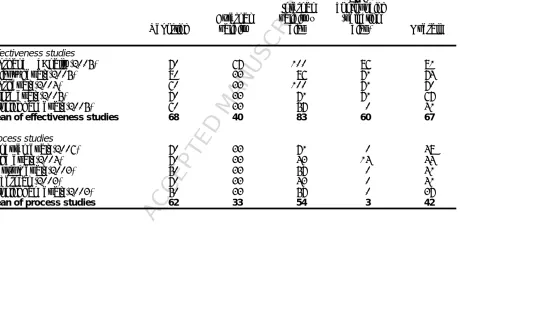
All 10 primary studies were rated on Downs and Black (1998) scale and the percentage of criteria met was calculated for each subscale and for the checklist overall (κ =0.79). These results are presented for both effectiveness and process studies (see Table 4).
Overall the average percentages of criteria met was greater for effectiveness studies than for process studies (see Table 4).
---Insert Table 4 about here
---ACCEPTED MANUSCRIPT
Discussion
The Downs and Black (1998) ratings suggest that the strength of the evidence provided within the current review is weak with only one of the 10 included studies (Kypri and McAnally, 2005) meeting more than 75% of the criteria and only a further three (Chiauzzi et al., 2005; Moore et al., 2005; Kypri et al., 2004) meeting more than 50%. These relatively low scores reflect the lack of rigor within the research designs employed.
The one randomized control trial included in the review (i.e. Kypri and McAnally, 2005) did not report a significant effect of an electronic Screening and Brief Intervention (eSBI) on alcohol related outcome measures and the data from this trial were not made available for the current analysis. Initial work by Kypri et al. (2004) found a significant reduction in quantity consumed per typical occasion in the intervention group. However Kypri and McAnally (2005) found no significant difference between the control and intervention groups on their outcome measures. Kypri and McAnally (2005) suggested that the inability to support the Kypri et al. (2004) findings indicating that web-based interventions may be effective could be due to the relatively large number of non- or low-drinkers within the 2005 study. The Westrup et al. (2003) finding that high-risk participants perceived a greater change and were more interested in the material presented provides some support for the suggestion that eSBI’s may be more effective for high risk participants than for low-risk participants. Liberman’s (2003) study, however, suggests that perceived helpfulness could be lower for alcohol abusers. The seemingly contradictory results across studies highlight the need for further research to understand the relationship between levels of alcohol consumption and effectiveness of any intervention administered.
ACCEPTED MANUSCRIPT
suggest that traditional print modes of delivery are more effective (Moore et al, 2005). However when a web-based text education website without personalized feedback was compared to a personalized interactive website the results did not favor either intervention (Chiauzzi et al., 2005).
Given the lack of pure controls in the majority of the effectiveness studies the current review also considered the pre- to post-intervention results within the intervention group alone. Those studies that utilized personalized feedback within their web-site intervention alone condition (i.e. Cunningham et al, 2005; Chiauzzi et al., 2005) provided more favorable results than the study that did not provide personalized feedback within the web-site intervention (i.e. Moore et al, 2005). This suggests that it may be the automated personalized feedback that is likely to impact on participants’ behavior rather than the electronic delivery per se. That is, non-personalized educational material delivered electronically may be no more, perhaps even less, effective than more traditional modes of delivery (e.g. Moore et al., 2005). The current evidence does not provide detailed insight into what elements of personalized feedback are effective nor does it provide evidence on whether interventions are likely to be effective for both high and low risk drinkers. Again, further research is needed to address these issues.
ACCEPTED MANUSCRIPT
Although recent publications suggest that there has been a sharp increase in the number of web-based interventions available (Copeland and Martin, 2004), this systematic review suggests that there is a relatively small number of published data on the effectiveness of such interventions, while the process studies suggest positive feedback from users. Given the potential ability for web-based interventions to reach a wide audience at low cost, it would appear prudent to ensure that the efficacy of such interventions is evaluated before making them available to the public via the world wide web.
Limitations
The current review has a number of limitations, namely that outcome data were not available for all of the ten studies identified for inclusion. Furthermore the heterogeneous nature of the studies, in terms of the interventions evaluated and the study objectives, prohibited any meta-analysis to be carried out. It is therefore not possible or advisable to draw any firm inferences from these results.
Conclusions
Earlier published non-systematic reviews have investigated the potential feasibility and content of web-based interventions designed to moderate alcohol use. The current review is the first to systematically evaluate the effectiveness of such interventions and has found inconsistent results across studies. Process research suggests that web-based interventions are generally well received. However further randomized control trials are needed to investigate their
effectiveness. All of the identified effectiveness studies focused on web-based interventions targeted at the North American or New Zealand student population. Further research is therefore required to demonstrate the generalizability of these interventions to other
ACCEPTED MANUSCRIPT
Acknowledgements
ACCEPTED MANUSCRIPT
References
Agostinelli, G., Brown, J.M., Miller, W.R. 1995. Effects of Normative feedback on
consumption among heavy drinking college students. Journal of Drug Education, 25(1), 31-40.
Bendsten, P., Johansson, K., Akerlind, I., 2006. Feasibility of an email-based electronic screening and brief intervention (e-SBI) to college students in Sweden. Addictive
Behaviours. 31, pp. 777-787.
Bien, T.H., Miller, W.R., Tonigan, J.S., 1993. Brief interventions for alcohol problems: a review. Addiction. 99, 315-336.
Borsari, B., Carey, K.B., 2000. Effects of a brief motivational Intervention With College Student Drinkers. Journal of Consulting and Clinical Psychology. 68(4), 728-733.
Chiauzzi, E., Green, T.C., Lord, S., Thum, C., Goldstein, M., 2005. My student body: A high-risk drinking prevention web site for college students. Journal of American College Health. 53(6), pp. 263-273.
Cloud, R.N., and Peacock, P.L. (2001). Internet screening and interventions for problem drinking: Results from the www.carebetter.com pilot study. Alcoholism treatment quarterly, 19(2). 23-44.
Collins, S.E., Carey, K.B., Sliwinski, M.J., 2002. Mailed Personalized Normative feedback as a brief intervention for at-risk college drinkers. Journal of Studies on Alcohol. 63(4), 559-567.
Copeland, J., Martin, G., 2004. Web-based interventions for substance use disorders: A qualitative review. Journal of Substance Abuse Treatment. 26, 109-116.
Cunningham, J.A., Humphreys, K., Koski-Jannes, A., 2000. Providing Personalized Assessment Feedback for problem drinking on the internet: A Pilot Project. Journal of Studies on Alcohol. 61, pp. 794-798.
Cunningham, J.A., Humphreys, K., Koski-Jannes, A., Cordingley, J., 2005. Internet and paper self-help materials for problem drinking: Is there an additive effect? Addictive Behaviors. 30, pp1517-1523.
ACCEPTED MANUSCRIPT
Deeks, J. J., Dinnes, J., D'Amico, R., Sowden, A. J., Sakarovitch, C., Song, F., et al. (2003). Evaluating non-randomised intervention studies. Health Technology
Assessment, 7(27).
Downs, S. H., Black, N. (1998). The feasibility of creating a checklist for the assessment of the methodological quality both of randomised and non-randomised studies of health care interventions. Journal of Epidemiol Community Health, 52(6), 377-84.
Evers, K.E., Cummins, C.O., Procaska, J.O., Procaska, J.M., 2005. Online Health
Behaviour and disease management Programs: Are we Ready for Them? Are They Ready for Us? Journal of Medical Internet Research. 7(3).
Fotheringham, M.J., Owies, D., Leslie, E., Owen, N., 2000. Interactive Health Communication in Preventive Medicine. Internet-based Strategies in teaching and research. American Journal of Preventive medicine. 19(2), 113-120.
Harris, R. P., Helfand, M., Woolf, S.W., Lohr, K. N., Mulrow, C. D., Teutsch, S. M. and Atkins, D. (2001). Current methods of the U.S. preventive services task force.
American Journal of Preventive Medicine, 20(S3):21-35.
Humphreys, K., Klaw, E., 2001. Can Targeting Nondependent Problem Drinkers and Providing Internet-Based Services Expand Access to Assistance for Alcohol Problems? A Study of the Moderation Management Self-Help/Mutual Aid Organisation. Journal of Studies on Alcohol. 62(4), 528-532.
Kypri, K., McAnally, H.M., 2005. Randomized controlled trial of a web-based primary care intervention for multiple health risk behaviours. Preventive Medicine. 41, pp.761-766.
Kypri, K., Saunders, J.B., Gallagher, S.J., 2003. Acceptability of various brief
intervention approaches for hazardous drinking among university students. Alcohol and Alcoholism. 38(6), 626-628.
Kypri, K., Saunders, J.B., Williams, S.M., McGee, R.O., Langley, J.D., Cashell-Smith.M.L., Gallagher, S.J., 2004. Web-based screening and brief intervention for hazardous
drinking: a double blind randomized controlled trial. Addiction. 99, pp. 1410-1417.
Kypri. K., Sitharthan, T., Cunningham, J.A., Kavanagh, D.J., Dean, J.I., 2005. Innovative Approaches to Intervention for Problem drinking. Current Opinion in Psychiatry. 18(3), 229-234.
ACCEPTED MANUSCRIPT
Lieberman, D.Z., 2003. Determinants of Satisfaction with an Automated Alcohol Evaluation Program. Cyberpsychology and Behavior. 6(6), pp. 677-682
Linke, S., Brown, A., Wallace, P., 2004. Down your drink: A web-based intervention for people with excessive alcohol consumption. Alcohol and Alcoholism, 39(1), pp. 29-32.
Matano, R.A., Futa, K.T., Wanat, S.F., Mussman, L.M., Leung, C.W., 2000. The Employee Stress and Alochol Project: the Development f a Computer-based Alcohol Abuse
Prevention program for Employees. The Journal of behavioural health services and research. 27(2), 152-165
Moore, M.J., Soderquist, J., Werch, C., 2005. Feasibility and Efficacy of a binge drinking prevention intervention for college students delivered via the internet versus postal mail. Journal of American College Health. 54(1), pp. 38-44.
Moyer, A., Finney, J.W., 2004/2005. Brief interventions for Alcohol Problems. Factors that facilitate implementation. Alcohol Research and Health. 28(1), 44-50.
Moyer, A., Finney, J.W., Swearingen, C.E., Vergun, P., 2002. Brief interventions for alcohol problems: a meta-analytic review of controlled investigations in treatment-seeking and non-treatment-treatment-seeking populations. Addiction. 97, 279-292.
Neighbors, C., Larimer, M.E., Lewis, M.A., 2004. Targeting Misperceptions of Descriptive Drinking Norms: Efficacy of Computer-Delivered Personalized Normative Feedback
Intervention. Journal of Consulting and Clinical Psychology. 72(3) 434-447.
Neuhauser, L and Kreps, G.L., 2003. Rethinking communication in the E-health Era. Journal of Health Psychology, 8(1) pp. 7-23.
Review Manager (RevMan) [Computer Program]. Version 4.2 for Windows. Oxford, England. The Cochrane Collaboration, 2002. CD-ROM and Internet.
Ritterband, L.M., Gonder-Frederick, A., Cox, D.J., Clifton, A.D., West, R.W., Borowitz, S.M., 2003. Internet Interventions: In review, In Use and into the Future. Professional Psychology: Research and Practice. 34(5), 527-534.
Saitz, R., Helmuth, E.D., Aromaa, S.E., Guard, A., Belanger, M., Rosenbloom, D.L., 2004. Web-based screening and brief intervention for the spectrum of alcohol problems. Preventive medicine. 39, 969-975.
Steyn, P., Chan. E., 2003. Global internet population grows an average of four percent year-over-year. www.nielson-net-ratings.com. Accessed 21.07.06
ACCEPTED MANUSCRIPT
Viera, A.J. and Garrett, J.M. (2005). Understanding interobserver agreement: The Kappa statistic. Family Medicine, 37(5):360-363.
Walters, S.T., Bennett, M.E., Miller, J.H., 2000. reducing Alcohol use in College Students: A controlled trial of two Brief Interventions. Journal of drug Education. 30(3) 361-372.
Walters, S.T., Neighbors, C., 2005. Feedback interventions for college alcohol misuse: What, why and for whom? Addictive Behaviors. 3, 1168-1182.
Walters, S.T., Miller, E., Chiauzzi, E., 2005. Wired for wellness: e-Interventions for addressing college drinking. Journal of Substance Abuse Treatment. 29, 139-145.
Westrup, D., Futa, K.T., Shelly, D., Whitsell, S.D., Mussman, L., Wanat, S.F., Koopman, C., Winzelberg, A., Matano, R., 2003. Employees’ reactions to an interactive website assessing alcohol use and risk for alcohol dependence, stress level and coping. Journal of substance use. 8(2), pp.104-111.
White, H.R., 2006. Reduction of alcohol-related harm on United States college
campuses: The use of personal feedback interventions. International Journal of Drug Policy. 17, 310-319.
ACCEPTED MANUSCRIPT
Table 1: Sample characteristics, purpose and findings of effectiveness and process studies designed to evaluate web-based interventions for alcohol use
Author (year)
Sample size a
n Population Mb Age(SD)c Female% Purpose Findings d Effectiveness studies
Chiauzzi et al.
(2005) 265
Binge drinkers from U.S. college
19.9 (1.6) 54
To evaluate the efficacy of an internet-based brief intervention program that delivers tailored motivational feedback about high-risk drinking.
Women who used the intervention site
reported reducing their peak and total
consumption during special occasions and also fewer negative consequences. Heavy binge drinkers who used the intervention site reported a more rapid decrease in average consumption and peak consumption when compared to the comparison group.
Cunningham et al.
(2005) 86 Visitors to website (predominantly Canadian/USA residents) 37.9 (13.0) 69
To evaluate the effectiveness of a personalized feedback website plus self-help book for problem
ACCEPTED MANUSCRIPT
Kypri and McAnally(2005) 218 New Zealand students attending student health service
20.2 (1.5) 49
To examine the efficacy of a brief web-based intervention for multiple risk behaviors for university students. No significant difference found between intervention control and comparison groups with regard to compliance with
recommended episodic consumption limits.
Kypri et al. (2004) 112
New Zealand binge drinker students attending student health service 50
To evaluate the efficacy of a web-based brief
intervention to reduce hazardous drinking.
At 6 weeks the intervention group reported significantly lower levels of total consumption, lower frequency of very heavy episodic drinking and reduced consequences of heavy drinking when compared to controls.
Moore et al. (2005) 133
Students from 3 courses at 1
U.S. university. 21.7 (0.2) 58
Feasibility and efficacy of a binge drinking web-based newsletter versus a print-based
intervention for college students.
Both interventions were feasible. Results did not differ by
delivery mode.
ACCEPTED MANUSCRIPT
Process StudiesBendsten et al. (2006) 3875 Universitystudents in Sweden
44
To evaluate the feasibility of an electronic
screening and brief intervention for college students.
Significant correlation between students’ drinking pattern and perceptions of whether personalized advice would lead to change. Students drinking at risky levels were more likely to state that they would change their behavior.
Cunningham et al.
(2000) 243 Visitors to website (predominantly Canadian/USA residents)
33.8 (12.6) 56
To detail and evaluate the development of a brief assessment and normative feedback internet programme.
Approximately 50% of participants reported finding the feedback useful.
Lieberman (2003) 1432 Visitors to
website 35.0 (11.4) 57
To investigate subject interactions and level of
satisfaction with an online alcohol use feedback website.
ACCEPTED MANUSCRIPT
Linke et al. (2004) 1319Visitors to website
(predominantly white British)
38.1 (9.6) 44
To evaluate the usefulness of a web-based intervention designed to promote healthy drinking behavior
Over 80% of users stated that they found the programme
‘helpful’ or ‘very helpful’.
Westrup et al.
(2003) 857
Employees from highly educated workforce in California
40.9 (11.0) 77
To investigate employee’s reactions to web-based assessment and intervention for alcohol use.
Approximately 81% of participants reported that the website was easy to use and the majority stated that the information provided was interesting. a n displayed is the number of consenters
b Mean
c Standard Deviation
ACCEPTED MANUSCRIPT
Table 2: Hierarchy of evidence ratings with intervention and control details for effectiveness and process primary studies designed to evaluate web-based interventions for alcohol use
Author (year)
Level of
evidence Intervention Control or comparison group
Effectiveness studies
Studies incorporating a pure control Kypri and McAnally
(2005)
I-1 Computerized assessment feedback and advice (n=72)g, f.
Pure control: Web-based questionnaire at baseline and follow-up (n=72).
Other control group: Computerized assessment at follow-up only (n=74).
Studies incorporating comparison group
Chiauzzi et al. (2005) I-2 Interactive website with personalized feedback. Four weekly 20 minute sessions (n=131)c, f, i.
Text based education only website. Four weekly 20 minute sessions (n=134)c.
Kypri et al. (2004) I-2 Interactive website providing personalized feedback (n=51)e, f, g, h, i.
Alcohol fact and effects leaflet (n=53)c.
Moore et al. (2005) I-2 Web-based prevention newsletters sent once a week for four weeks via email link (n=59)a, b, c, d.
Print-based prevention newsletters sent once a week for four weeks via post (n=57) a, b, c, d.
Cunningham et al.
(2005) I-2 Internet personalized feedback
e,f only
(n=29). Interactive website with personalizedfeedbacke,f and self-help book (n=19).
Process studies
Westrup et al. (2003)*
II-1 Interactive website with full personalized feedbacki.
Interactive website with limited personalized feedback.
Linke et al. (2004) II-2 6-week web-based structured programme.
Bendsten et al. (2006)
III Interactive website with personalized feedback e, f, i (n=742).
Cunningham et al.
ACCEPTED MANUSCRIPT
Lieberman (2003) III Interactive website with personalizedfeedback e, i (n=1455).
* A total of 187 participants completed all phases of the study; sample breakdown by treatment group was not available. Non-personalized feedback: a alcohol-expectancy belief; b risks associated with alcohol consumption; c general information (e.g. definitions of standard drinks); d strategies for reducing risks associated with alcohol consumption.
ACCEPTED MANUSCRIPT
Table 3: Pre- and post- AUDIT, unit quantity, frequency of heavy drinking and maximum consumption per day data for effectiveness studies designed to evaluate web-based interventions for alcohol use
Pre Post Mean Difference ESa Outcome measure/Author
(year) n Mb SDc Mb SDc Mb SDc d
AUDITd
Kypri et al. (2004)1 Intervention 16.6 5.7
Control 16.6 6.0
Cunningham et al. (2005) Intervention 29 15.6 8.9 12.6 7.8 -3.0 6.6 0.36e Comparison 19 19.8 10.3 11.9 9.9 -7.6 8.6 0.78 Between group ES d -0.44e 0.08 e 0.62
Unit quantity
Chiauzzi et al. (2005) 2 Intervention 131 19.6 15.9 14.6 13.2 -5.0 28.6 0.34 Comparison 134 23.3 15.6 17.5 13.0 -5.8 28.1 0.40 Between group ES d -0.23e -0.22e 0.03 e
Cunningham et al. (2005) 2 Intervention 29 21.0 16.6 17.40 17.70 -2.80 13.4 0.21e Comparison 19 29.1 23.2 18.40 25.80 -10.70 16.0 0.44e Between group ES d -0.42e - 0.05e 0.55e
Moore et al. (2005) 3 Intervention 53f 2.5 2.42 2.53 2.4 0.40 f 1.80 -0.01e Comparison 47 3.2 2.73 2.51 2.3 -0.60 f 1.50 0.27e Between group ES d -0.27e 0.01e -0.12e
Frequency of heavy drinking
ACCEPTED MANUSCRIPT
Moore et al. (2005) 5 Intervention 53 0.80 1.10 0.80 1.40 0.10f 0.90 0.00e Comparison 47 1.10 2.00 1.30 2.60 0.40f 1.20 0.09e
-0.19e -0.24e -0.29e
Maximum consumption per day
Chiauzzi et al. (2005) 6 Intervention 131 2.00 0.5 1.60 0.70 -0.40 1.12 0.66 Comparison 134 2.00 0.5 1.70 0.70 -0.30 1.11 0.49 Between group ES d 0.00f -0.14f -0.09f
Moore et al. (2005) 7 Intervention 53 4.40 5.2 4.30 5.00 -.10 g 2.30 0.02f Comparison 47 5.30 5.4 4.60 5.40 -.60 g 2.80 0.13f Between group ES d -0.17f -0.06f 0.20 f
* AUDIT and largest amount consumed in last 4 weeks data was collected but not available for Kypri and McAnally (2005);
Pre data on total number of drinks in the proceeding 2 weeks and pre post data frequency in last 2 weeks was collected but was unavailable for Kypri et al. (2004).
1Post data for Kypri et al. (2004) was not available; 2Quantity per average week; 3Quantity last 30 days; 4 Binge drinking
days per week; 5 Two week frequency of binge drinking; 6 Past week greatest number of drinks at one time log transformed scores; 7 30 Day greatest number of drinks at one time
a Effect Size, b Mean, c Standard Deviation d Alcohol Use Disorders Identification Test e Confidence interval includes zero
ACCEPTED MANUSCRIPT
Table 4: Percentage of Downs and Black (1998) criteria met for effectiveness and process studies designed to evaluate web-based interventions for alcohol use
Reporting %
External validity
%
Internal validity –
bias %
Internal validity -confounding
(selection bias)
%
Overall % Effectiveness studies
Kypri and McAnally (2005) 70 67 100 86 81
Chiauzzi et al. (2005) 80 33 86 71 74
Kypri et al. (2004) 60 33 100 71 70
Moore et al. (2005) 70 33 71 71 67
Cunningham et al. (2005) 60 33 57 0 41
Mean of effectiveness studies 68 40 83 60 67
Process studies
Bendsten et al. (2006) 70 33 71 0 48
Linke et al. (2004) 70 33 43 14 44
Westrup et al. (2003) 50 33 57 0 41
Lieberman (2003) 70 33 43 0 41
Cunningham et al. (2003) 50 33 57 0 37
ACCEPTED MANUSCRIPT
Figure Legend:
1: Flow diagram of the process of selecting studies designed to evaluate web-based interventions for alcohol use.
ACCEPTED MANUSCRIPT
ACCEPTED MANUSCRIPT
SMD= Standard Mean Difference; CI=Confidence Interval; AUDIT = Alcohol Use Disorders
Identification Test;
ACCEPTED MANUSCRIPT
Précis
The results presented within this systematic review are inconsistent and