REPUBLIC OF ANGOLA
EUROPEAN COMMUNITY
JOINT ANNUAL REPORT 2001-2002
1. Executive Summary
2. The Policy Agenda of Angola
3. Update on the Political, Economic and Social Situation
3.1 Update on the Political Situation
3.2 Update on the Economic Situation
3.3 Update on the Social Situation
4. Overview of Past and Ongoing Co-operation
4.1 Focal Sectors
4.2 Projects and Programmes outside Focal Sectors
4.3 Utilisation of Resources for NSAs
4.4 Other instruments
5. Programming Perspective for the Following Years
6. 2003 Annual Operational Reviews – Specific issues
6.1 The Speeding Up of the Use of Old EDF Resources
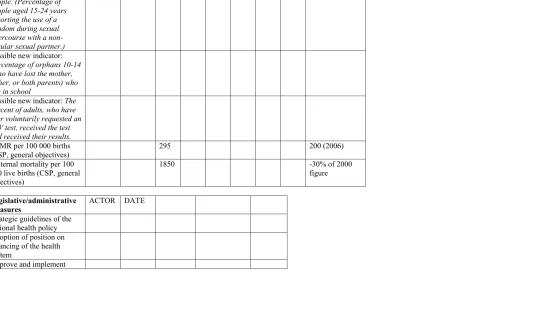
6.2 Setting Indicators and Targets for Measuring Results in Focal Sectors
6.3 Dialogue in the Country with the NAO and Non-State Actors
Table of Annexes
Annex 1: Intervention framework (including policy measures and indicators)
Annex 2: Chronogramme of activities
Annex 3: Indicative timetables for commitments and disbursements
Annex 4: Financial situation for 8th EDF (grants)
Annex 5: Financial situation for 7th EDF (grants)
Annex 6: Financial situation for 6th EDF (grants)
1. Executive Summary
Process of peace and reconciliation
After the signing of the Memorandum of Understanding Complementary to the Lusaka
Protocol of 1994 on 4 April 2002, Government action in theshort-term centred on the
disarmament and demobilisation of the soldiers of UNITA, on their socio-occupational reintegration and on the integration of their officers in the Angolan armed forces or the national police. In August 2001, the Government announced its intention to organise
presidential and legislative elections. However, the Government needs to take complex prior measures: the review of the Constitution (already in progress) and of the electoral law, electoral census, the resettlement of displaced populations and the guarantee of freedom of movement in the country. In December 2002, the MPLA and UNITA reached consensus in principle on a new Constitution in which the President of the Republic will retain his position as Head of State and Government (and of his own political party).
The fight against poverty
War left behind a difficult legacy. After 27 years of warfare most infrastructure is seriously dilapidated or totally destroyed. Studies and analyses indicate extremely high levels of poverty, both among the urban population and among displaced persons. One important aspect is the lack of access to social services. Restoring these services is going to require substantial funding and has to be accompanied by a strengthening of institutional capacity. Available data also indicate an increase in inequality. There were at that time large numbers of Internally Displaced Persons, ex-combatants and refugees to be resettled. In an effort to overcome this situation, the Government is preparing a Poverty Reduction Strategy (PRSP), which will guide Government action in five main directions: economic and institutional reform, the human capital base, the social and economic infrastructure, equitable growth and strengthening the public sector. In January 2002, the Government continued the consultation with civil society on the PRSP. The latter’s focus will be on rehabilitation and reconstruction.
Perspectives for Foreign Investment
Peace came up against an economic structure where mining and quarrying - particularly
petroleum extraction - accounted on average for almost 51% of the GDP in the 1990s.
However, Angola's long-term investment potential is vast. Influx of foreign capital to
non-oil sectors will require confidence from investors for the necessary long-term investment. A sustained peace will allow Angola to change into a regional economic power. As regards public accounts, the Government has taken a number of measures in
relation to the transparency of transactions in the public sector, such as audits at the
Central Bank and of the financial transactions of the petroleum and diamond sectors, the preparation of a plan for the delayed settlement of the national debt and the transfer of the
management of customs duties and the reform of the Customs Service. The legislation
Food security
Food security continued to be critical during the period under review. The number of Angolans in this situation up to April 2003, when the harvests begin, is put at 2.1 to 2.4 million. In addition to the assistance by way of food aid through WFP, the EC provided support in the supply of agricultural inputs to assist with the sowing campaigns and the resettlement of displaced populations. In 2002 alone, 107 000 families were reached. The EC provides institutional support for the preparation of that part of the Poverty Reduction Strategy covering food security. a sectoral strategy and has been trying to give impetus to the preparation of Multiannual Food Security Programme.
Overview of past and ongoing co-operation
At an initial stage, the NIP of the 8th EDF defined the primary sector and rural development, roads and bridges and development and urban reconstruction as focal sectors. Provision was also made for support for framing global and sectoral policies. Nevertheless, the war situation in the country prevented these policies from being strictly followed. The conflict also created needs for humanitarian and reconstruction needs, which could not remain unmet, so that the EC’s programmes in Angola were primarily directed at the health and rural rehabilitation sectors.
The LRRD approach is structured in response to the humanitarian crisis
More than one-third of the payments to Angola in 2001 and 2002 were made by way of immediate aid for the humanitarian crisis. The continuing serious humanitarian situation during those years and the opportunities emerging with the peace agreement facilitated the use of the EC's multiple instruments - ECHO, budget lines and the EDF. ECHO operations made it possible to guarantee basic health care to approximately 1.5 million recipients. Some of ECHO’s operations are going to be continued through the “Transitional programme for support for displaced populations.”
Action Plan and Emergency Programme for Support of the Peace Process
Following the signature of the Memorandum of Understanding and an appeal of President dos Santos to President Prodi, the Commission drew up a short-term plan of action to support the peace process in Angola. A total of €125 million was identified from the Community budget and the EDF for a wide range of actions, including emergency relief, food aid and food security, support for displaced persons and returnees, and mine action (10M€ from ECHO, 32 M€ from the food security budget line and 83 M€ from the seventh and eighth EDF)
Four NGOs will undertake priority mine action interventions in the provinces of Benguela, Huíla, Huambo, Bié, Moxico and Bengo thus allowing for the delivery of humanitarian assistance and the return of displaced populations.
Reconstruction and institutional support in rural development programmes
Programmes with an impact in rural areas were those most affected by military conflict flaring up again in 1998. The rehabilitation projects restricted during 2001 and 2002 mainly to the rural areas with greater security, intensified after the signing of the
cease-fire, in interior municipalities within the provinces identified. The Programme for the
Support of Reconstruction [PAR], just like the Micro-Projects Programme III [PMR III], has institutional support as one of the main objectives. Within the framework of the PAR, Municipal Reference Operators assist the municipal authorities in drawing up diagnoses and municipal rehabilitation programmes in 19 municipalities of the Planalto Central. The PMR III, approved in 2002, provides for the capacity building of national governmental and non-governmental institutions at municipality level and will contribute to the revitalisation of food production in 5 provinces (Huila, Namibe, Cunene, Cuanza Sul and Bengo).
Reconstruction in the transport, water, sanitation and education sectors
Approximately 68 km of the Namibe-Lubango road were restored with EU funding. This
axis is a vital link between the coastal and inland area. In the water and sanitation
sector, the EC has concentrated significant financial resources, prominent among them
being projects for “The supply of water to the town of Tombwa”, and “Water and waste
sanitation - Luanda”. The PAR, the “Transition Programme” and the “Programme for Support of the Peace Process” include water components.
The support provided by the EC in the field of education was part of the initiative for the
reconstruction of the educational system in Angola or, “Consolidation of the educational
systems of PALOP - countries with Portuguese as their official language” and produced
methodological and educational support, while “In-service training for primary school
teachers” was a continuation of the teacher training measures carried out under two previous projects.
The last agricultural school to operate in Angola, the Instituto Médio Agrário do
Tchivinguiro (IMAT), has been benefiting from EC funding for rehabilitation, supply and technical assistance measures ( €8.24 million), with a view to providing the IMAT with resources for training agricultural technicians capable of adapting to the different contexts of Angolan agriculture, making this institution a pilot reference centre for agricultural technical education in the country. Recent information points to serious difficulties in the management of the institute, which could endanger the sustainability of the project.
The health situation continues to cause concern
on improving the quality of services and re-establishing basic social services in areas,
which were previously inaccessible. With the “Post-Emergency Health Project - PSPE”
(€18 million), partnership in the health sector is intensifying. In 2001 and 2002 it
provided institutional support centrally and provincially and to the National Blood
Centre. In July 2001, implementation began of the “Project for the Support of the
National Physical Rehabilitation Programme - PNRF” (€14 million), whereby a more global and integrated response to the needs of the persons with motor deficiencies is sought.
Programming perspective for the Following Years
Bearing in mind the current transitional situation the country is going through, with the enormous needs in terms of reconstruction, rehabilitation, resettlement and socio-occupational reintegration and de-mining, readjusting financial planning will prove necessary in order to react to these imminent and urgent challenges having a major impact on the processes of reconciliation and reintegration. The resources still available total €183 million. The delegation and services of the NAO are to discuss a number of proposals:
- the socio-economic reintegration of displaced populations and of the demobilised and the reconstruction of social infrastructures (health, education and secondary roads); - The consolidation of the peace process, via a programme with an important de-mining component;
The co-financing of existing programmes, particularly with the WB.
It is anticipated that the first funding proposals will be concluded by July 2003.
The Speeding Up of the Use of Old EDF Resources
Apart from the war one of the main causes for the slow disbursement of EDF funds was undoubtedly the weakness in staff terms of the Services of the NAO. A support project is currently being prepared which provides for the recruitment of national technicians for the NAO Services and for their technical capacity building. Most recently the Delegation has observed difficulties in obtaining residence visa for internal and external technical staff and the non-application of the custom’s regime for assistance negotiated in the Lome and Cotonou Conventions. On the EC's part, attention must be drawn to the lack of human resources, which has affected the Delegation.
Setting Indicators and Targets for Measuring Results in Focal Sectors
Quality and availability of data on Angola are a particular challenge due to the long period of civil war. This goes for data collected by international organisations as well as for national data such as from the National Institute for Statistics (INE). If data are available for certain areas, they tend to vary significantly depending on the source. Furthermore the Angolan PRSP is not yet available at the moment of the drafting of this document. However, it would be highly advisable that the choice of indicators be in line with those monitored in the PRSP.
The failure of two peace processes affected these efforts and led directly to a large-scale humanitarian crisis. The signing in Luena, on 4 April 2002, of a Memorandum of Understanding Complementing the Lusaka Protocol of 1994 which officially confirmed the cease-fire was an optimistic pre-announcement of the peace and reconciliation process, of which the economic reform process forms an integral part. The humanitarian crisis, however, persists in the medium term.
The Government's strategy to take the peace and reconciliation process forward in the short term centred on the disarmament and demobilisation of UNITA soldiers, on their socio-occupational reintegration and on the integration of their officers in the Angolan armed forces or national police. The Government, which had already taken initiatives to include in the political process those elements, which rejected a warlike stance, now granted UNITA the time and space needed for its remodelling as a political party. The National Assembly approved an amnesty law and a National Fund for Peace and Reconciliation had meanwhile already been created.
In August 2001, the Government announced its intention to organise presidential and
legislative elections. However, those elections will not take place before 2004, since the Government needs to take prior measures, which are complex from the logistical, technical and political point of view. They include the revision of the Constitution (already in progress) and of the electoral law, electoral census, the resettlement of displaced populations and the guarantee of freedom of movement in the country. The latter three issues are interdependent and linked, in turn, to the situation as regards the mines existing on the territory. The Commission stands ready to assist the Government in this arduous task in the framework of the CSP/NIP.
The Government set up an Inter-Ministerial Committee to support and implement programmes for the consolidation of peace and reconciliation, at the same time as Parliament created a Joint Committee for the reassessment of political measures. Both the Committees hold debates with different political groups.
Until very recently, the war left no margin for Government actions on behalf of short-,
medium- or long-term development. The conclusion of the Poverty Reduction Strategy
Paper (PRSP) was delayed on a number of occasions on account of the reversal in the
political/military situation. During the preparation of the PRSP, a systematic analysis of
poverty was scheduled, which will be improved as the strategy paper is implemented. In January 2002, the Government exchanged impressions for the first time with civil society concerning the PRSP, and this contributed towards defining the way in which these consultations proceeded.
3. Update on the Political, Economic and Social Situation
Millennium Development Goals – Indicators
Indicators 1990 1995 1996 1997 1998 1999 2000
1. GDP per capita
2. Prevalence of underweight children (under-five years of age)
3. Under-five mortality rate per 1,000 live birth
4. Net enrolment ratio in primary education (%)
5. Primary Completion Rate1
6. Ratio of girls to boys in
primary/secondary/tertiary education
7. Proportion of births attended by skilled health personnel
8. Proportion of 1 year old children immunised against measles
9. HIV prevalence among 15-19 / 20-24 year old pregnant women,
9a. Pregnant women HIV total
10. Proportion of population with sustainable access to an improved water source
646.75
283
0.92/-/-
17(1992)
38
444.44
295
46
473.87
40.6
62
488.70
209
34 28.3
78
507.61
57
0.84/0.70/0.70
65
509.98
27
0.87/0.77/0.64
46
2.72
506.07
40.6
295
0.88/-/-
23
38
Sources: UN databases, World Bank
3.1 The political situation
As early as June 2000, the European Union had adopted a Common Position on Angola,
which backed a political solution for the conflict on the basis of the Lusaka Protocol.
Since the end of February 2002, at the time of the death of Jonas Savimbi, the political and military scene has changed radically. The cease-fire of 4 April 2002 held and the first measures taken by the Government - in terms of quartering the UNITA soldiers and the reunion of the respective families - were concluded by the end of July 2002 and it is hoped their resettlement will be concluded in mid-2003.
The ban on moving abroad imposed on members of UNITA was abolished in May 2002 in order to allow this movement to advance in performing a political role. The cease-fire with what was left of the UNITA army was reached in exchange for guarantees as to individual safety of its members and that of their kin. In turn, the Government took the decision to stop the war even on an occasion military favourable to it. In the light of the political changes, the EU Common Position was reviewed in June 2002 and now calls for the creation of conditions for the holding of free and fair elections and measures responding to the humanitarian situation.
Conflict prevails in the Angolan enclave of Cabinda, though. There the Government still faces resistance from the two factions of the Liberation Front of the Cabinda (FLEC-FAC and FLEC- Renovada). In October 2002, the Angolan Government announced its intentions to resume dialogue over Cabinda. Also, an offensive by the FAA since seems to have broken the military back of the two rebel factions.
Angola is considered a non-negligible power, both in economic and military terms in the sub-region. Today, oil and the prestige of its army have given the country a political weight beyond what the size of its population alone would justify (estimated at 13 million). This might explain a certain rivalry with South Africa. Angola is regarded as an important actor in the resolution of the Zimbabwe crisis, through the influence of its leaders, for stability in the Great Lakes region, namely the DCR, where it has felt the need forced to intervene militarily and for the evolution of SADC, due to its economic potential.
In December 2002, the MPLA and UNITA arrived at a consensus of principle on a new Constitution in which the President of the Republic will retain his position as the Head of State and Government (and of his own political party).
3.2 Update on the Economic Situation
The peace came up against an extremely disjoint economic structure in the country.
Mining and quarrying - particularly petroleum extraction - accounted on average for almost 51% of the GDP throughout the 1990s by comparison with the 9.4% of agriculture, the 4.75% of the processing industry and the 1.8% of fisheries. Trade and non-mercantile services were responsible for the creation of 21% of internal wealth, the share of construction sector activities being 4%.
Sectoral discrepancies can most clearly be seen when looking at exports; throughout the 1990s, oil and oil products accounted for an average of almost 90% of the total, or 62% of the GDP. In 2000, a surplus balance of payments - USD 637 million - was recorded for the first time, with petroleum exports totalling USD 7 119.6 million and other exports - mainly diamonds - amounting to USD 766.7 million.
Agriculture was greatly affected by the war, in terms of the collapse of traditional and non-traditional systems of production.
The multiplying effect of the growth in the petroleum sector is limited, since that sector is not linked to the rest of the economy in terms of either inter-sectoral relations or employment. On account of the war, employment-generating economic activities practically disappeared, being replaced by a capital-based economy offering few opportunities of employment (or even income) for the vast majority of the population.
This radical change in economic specialisation underlies the major deterioration in the
situation of poverty affecting most of the population and a more marked social
imbalance. The general environment for the implementation of private sector activities
(administrative, legal and commercial) is not yet favourable for the creation of more diversified economic activities and the creation of jobs and income.
Angola's long-term investment potential is vast. The oil industry contributes has made the country the largest recipient of foreign direct investment among all the African
countries in recent years. However, the comprehensive mining of kimberlite would need
confidence on the part of investors for the additional long-term capital investment. A sustained peace will allow Angola to realise this potential and grow into a regional economic power. There are indications that these changes have already begun.
Inflation came to be controlled better as from 1997 (there was a decrease from an average of 977 percent in the 1990s to 268,4% in 2000, 116,1% in 2001 and 105,6% in 2002). The oligopolistic nature of the commercial network and the limited size of the internal market contribute towards this high inflation.
In April 2000, Angola and the IMF reached an agreement on a Staff-Monitored
Programme - SMP. Delays took place in implementing the measures provided for in the SMP, which explains the fact that not many of the quantitative objectives have yet been achieved. Meanwhile, the SMP was suspended in February 2002. The Government has, however, reaffirmed its intention to proceed with implementing the measures provided for as part of the process of economic reform.
On 17 December 2002, the National Assembly approved the General State Budget (GSB) for 2003. A special feature of the 2003 GSB is that it is the first part of the two-year programme for transition from war to peace referred to above. The aim of the programme is to tackle the most immediate problems revealed by the cessation of hostilities, namely the fight against hunger and poverty. The transition programme will be followed by a medium-term programme to be implemented from 2005 to 2009, which will in turn be integrated in the (25-year) long-term development strategy now in preparation.
The forecast of public expenditure included in the GSB for 2003 is that total
expenditure will have to rise from approximately 39.8% of the GDP in 2002 to 50.7% in
2003. Revenue, whichstood at 49.2% of the GDP in 2000, 44.3% in 2001 and 33.3% in
2002, will have to increase to 50.2% of the GDP in 2003 in line with the GSB as a result of the increase both in petroleum, and non-petroleum, receipts. Public expenditure management can be greatly affected by fluctuations in the price of petroleum (the budget has been prepared on the basis of an oil price of 22 US$/barrel)
It is calculated that in 2002, external debt is 90% of the GDP, i.e. US$ 9.5 billion. Most
of this debt is short-term: 75% has to be paid or renegotiated by 2005. In the former year, the debt service absorbed approximately 30% of total exports, which is sustainable according to international standards.
Until recently, the costs of the war and the service of the debt absorbed some 50% of
4.71% of the GDP whereas education stands at 7.16%, health 5.06%, social security 1.26% and expenditure on housing and community services, 1.36%.
From the point of view of budget deficits, there was an improvement in public finance
management resulting from changes in connection with control, taxation, procedural reforms and the diversification of the basis of assessment. According to official estimates, the 2002 deficit has not exceeded 1.2% of the GDP (compared with –0,2% stated in the budget) - the primary surplus standing at 3.5% (compared with 3,9% stated in the budget)
With regard to public accounts, the Government has taken a number of steps in regard to the transparency of transactions in the public sector, like audits at the Central Bank and of financial transactions in the petroleum and diamond sectors, the preparation of a plan for the overdue settlement of the national debt and the transfer of the management of customs duties and reform of Angola's customs to the British undertaking Crown Agents.
The Government also approved a privatisation plan for 2001-2005 covering strategic
economic sectors, together with measures to improve bank supervision and the financial
system. The legislation currently governing the foreign investment sector has been
reviewed in mid-2003 with a view to ending the existing discrimination in favour of
national as opposed to foreign investment. In addition, a tax reform programme has
been approved which is expected to introduce a single tax on property and income and a
value added tax. An administrative reform programme is under way to reduce the
number of public officials with a low standard of training by 20% and to offer training to the others.
3.3 Update on the Social Situation
As regards the level of poverty in Angola, existing studies and analyses and empirical observation of the situation point to extremely high levels, both among the urban population and among those displaced by war. Another important aspect of poverty is the
lack of access to social services. Having regard to the seriousness of the effects of the
war, especially in areas which were the scene of violent conflicts, restoring those services has to be a gradual process, is going to require considerable funding and needs to go hand
in hand with institutional capacity building. Poverty also has to do with the distribution
of health and education is very critical; in some regions those services are even non-existent.
In addition to performing tasks to consolidate the peace process, the Government has responsibility for promoting national reconciliation, the social reintegration of the demobilised and their families and those displaced by war, ensure a functioning state administration throughout the national territory and restore infrastructures for the provision of health and education services. These tasks will continue in 2003 and 2004 in accordance with the Economic and Social Transition Programme.
The health situation continues to be worrying and, with the exception of Luanda and some provincial capitals, there is a lack of health care and its provision at times depends on the support of NGOs, which count on external financing. The deficient cover and quality of health care is the result of a combination of factors, such as the unstable institutional environment, the shortage of human resources, inadequate management systems, deficient co-ordination within the sector (between central and provincial/municipal levels), with other sectors and with donors, with the private sector and with other non-State actors. The effects of the war, continuing food insecurity, low levels of education, insufficient access to water and sanitation of the environment and the inadequate provision of health care give rise to a high-risk situation reflected in unacceptable levels - even in an African context - of high mortality among children under five, maternal mortality, poor and chronic nutrition and endemic diseases such as malaria and tuberculosis, quite apart from epidemic outbreaks of measles and meningitis. There is a growing incidence of sleeping sickness. The rate of HIV/AIDS infection in Luanda, which was 3.4% in 1999, was estimated in 2001 at 8.6% in the adult population (15-48 years). Were this trend to continue, the scenario in the next few years would be alarming, with an impact on the demographic structure of the population and on the chief indicators of human development. The main factors in the dissemination of HIV in Angola are directly related to the aftermath of the war, the expansion of poverty, poor information and the limitation of resources and socio-cultural and geographical determinants. One of the most important socio-economic determinants - resulting from the free movement of persons and goods in the post-war period - is the mobility of populations within the country (internal displaced persons) and relations with neighbouring countries (especially the return of the population which sought refuge in neighbouring countries with high incidence of HIV). From the current review of the national strategic plan, an endeavour will be made to exploit existing opportunities in order to propose a more effective multi-sectoral response.
most vulnerable group of the population followed by the poorest resident family units with limited resources to acquire factors of production. Persons newly displaced as a result of population movements to areas with better access to basic social services and family members of demobilised personnel were also identified as vulnerable. According to the vulnerability analyses carried out at the end of 2002 after the sowing periods of the main farming season (September/October), between 2.1 and 2.4 million Angolans were estimated to be affected by food insecurity up to April 2003, the time of the beginning of the harvests.
In 2001, 405 000 tonnes of food had to be imported commercially in addition to the 176 000 tonnes or so received as food aid. In accordance with an analysis by the FAO and WFP mission carried out between 15 May and 6 June 2002, the cereal harvest in that year was put at 504 000 tonnes. The needs to be covered from outside in 2002/2003 were estimated at 725 000 tonnes, of which 504 000 were to be met from commercial imports and approximately 221 000 through emergency food aid.
The permanent instability making itself felt in rural areas up until April 2002, the presence of large mined areas, the inadequate provision of basic social services in vast areas of the country, the poor state of highway infrastructures, which are in some cases impassable during the rainy season, and the destruction of bridges, are reflected in the quantities of food produced locally and available on the market being further reduced. The purchase of food accounts for approximately 77% of the budget of the poorest family units and this is indicative of their vulnerability.
The progress recorded in the field of education and literacy over the first 15 years after
independence was not sustained due to a lack of public funding during the last decade. The low salaries caused a mass exodus of teachers and adversely affected the quality of teaching, a problem further aggravated by the lack of technical training and by the recruitment of unqualified teachers. Most of the school infrastructures were damaged by the war, through sacking and through vandalism or simply through lack of maintenance and at the same time the investment in the construction of new classrooms was not sufficient to cater for the explosion in the number of pupils. Yet a number of provinces (Luanda, Benguela, Namibe and especially Cabinda) are showing better results in terms of access; the national averages are particularly low - today barely 55% of children have primary education certificates and 30% secondary ones. Approximately 50% of men and 70% of women are illiterate.
The return of displaced populations to their areas of origin following the cease-fire in April 2002 increased the availability of land for resident communities, which did not feel the need to move. However, up until the end of 2002, the distribution of factors of production was still not sufficient to meet the needs of these populations and of those, which voluntarily decided to return to the areas of origin during the year. The situation of transition towards stability for the rural populations means that account must be taken of
the need to guarantee access to the land for traditional communities, with the legal
production potential and ensuring the regulation and adequate fulfilment of land rights,
drew up a Land Bill, which began to be the target of consultation with civil society as
from 2002.
The gender inequality is continuing, despite the legislation approved since independence, which sought to eliminate it. There are traditional pre-concepts, which prevent equality, while the many years of war, the displacement of populations and the increase in poverty aggravated the situation for the majority of women. In addition to having a lower human development index, women in rural areas are currently the heads of one in three households. As well as undertaking their normal tasks, they also have to perform other tasks, which fall to men, such as tillage, since they are especially affected
by the food security situation. In towns, it is they who control a large part of the informal
commercial sector, which requires them to spend a lot of time outside the home yet at the same time trying to fulfil their domestic responsibilities. To aggravate the problem further, the education of girls is lower than that of boys. It is generally acknowledged that if acceptable conditions for the basic family unit to function and reproduce are not provided, there is the risk of the institutional and economic system perpetuating the degrading situations referred to earlier.
Environmental challenges are represented by the degradation of arable land in regions near to towns where there is the greatest population pressure, deforestation and the consequent shortage of timber, destruction of biodiversity even in supposedly protected areas, and the degradation of marine ecosystems due to over-exploitation and pollution. However, the damage caused to the soil is of a local nature and it may generally be said that the environmental situation is good or easily remediable, thanks to the low population density in most of the country and the vast forest cover. The management of natural resources is not efficient and adequate legislation does not exist. The Government has drawn up a national strategy and action plan for environmental management and also drafted basic environmental legislation in areas like the assessment of environmental impact, taxation and audits, and also inter-and intra-sectoral measures, in partnership with civil society, which are intended to broaden and disseminate knowledge on environmental questions in different spheres. There is no systematic scientific evaluation of fish resources, although there is evidence that industrial catches of fish suffered a one-third reduction by comparison with the 600 000 tonnes caught yearly before independence. This is not only due to the reduction in the capacity of the national fleet but also to the absence of precise data on the catches of foreign fleets in Angolan waters.
4. Overview of past and ongoing co-operation
In an initial stage and for the objective of supporting rehabilitation in the country, the NIP of the 8th EDF defined the primary sector and rural development, roads and bridges and development and urban reconstruction as focal sectors. Provision was also made for support for framing global and sectoral policies. Nevertheless, the state of war in the country did not allow these guidelines to be followed strictly. The disbursement of EDF funds in particular has been very slow and problematic and the second instalment of the
operations needed to be re-examined. The civil conflict also created humanitarian and reconstruction needs, which could not remain unmet.
Accordingly, the EC programmes in Angola were primarily directed towards the sectors of health, development and rural rehabilitation, making the transition between multi-sectoral community development and food security, including food aid to the most vulnerable segments of the population. In addition, the EC is also financing the education sector. Key areas of support to institutional strengthening were recently identified in partnership with the Government.
Although the bulk of EC funding has been concentrated in Luanda and in the most accessible coastal areas, including the province of Huíla, most of the activities of the EC's humanitarian agency, ECHO, took place outside these regions. The prolonged humanitarian crisis and the need to support the rehabilitation of the central highlands (Planalto Central) - the region with the greatest population density and the one most affected by the war – has meant that half of the 7th EDF funds have also targeted the interior of the country.
More than one-third of the payments to Angola in 2001 and 2002 were made by way of immediate food aid for the humanitarian crisis, specifically food aid, emergency aid, actions associated with mines, and social reintegration, or as an important component of support for emergency and rehabilitation activities, such as health and agriculture.
The LLRD approach is structured on the response to the humanitarian crisis. The continued existence of the serious humanitarian crisis during 2001 and 2002 and the opportunities arising with the peace agreement facilitated the use of multiple instruments of the EC: ECHO, budget lines and the EDF - in response to the socio-humanitarian crisis. Emergency operations (ECHO - €12 million in 2002) made it possible to guarantee basic health care to approximately 1.5 million beneficiaries (through more than 80 health units), the protection and alleviation of other emergency needs in terms of water, sanitation and non-food items. In addition, the access facilitated by the termination of the conflict made it possible to meet basic health needs, especially through programmes for rehabilitation and nutritional supplementation (44 rehabilitation and nutritional supplementation centres) for approximately 130 000 highly vulnerable persons not accessible until 2002. In addition to national bodies, 16 international NGOs, three UN agencies/services (UNICEF, WFP and the OCHA) and the ICRC were involved in this programme.
Some of the ECHO operations are going to be continued via the transitional programme for the support of displaced populations with funding from the EDF (Article 255 of the Lomé IV Convention relating to support for displaced and refugee populations), due to
the peace situation as from 2002. In parallel, the “Transition Programme for the Support
of Displaced Populations” (€16.3 million) is focused on meeting basic health needs and
Following the signature of the Memorandum of Understanding between the Government and UNITA on 4 April 2002 and an appeal of President dos Santos to President Prodi, the Commission drew up a short-term plan of action to support the peace process in Angola. The main objective was to quickly make available funds, which could not be committed or implemented thus far, for emergency actions. A total of 125 M€ was identified from the Community budget and the EDF for a wide range of actions including emergency relief, food aid and food security, support for displaced people and returnees, and mine action (10 M€ from ECHO, 32 M€ from the food security budget line and 83 M€ from the seventh and eighth EDF).
As immediate support for the peace process, the services of the NAO and of the Commission identified an amount of the €30 million left over from the 7th and 8th EDF,
which were reallocated to an “Emergency Programme for the Support of the Peace
Process”. The respective Funding Agreement was signed in September 2002 and the first
decisions were taken at the end of 2002. The programme includes the components “Health, nutrition, water and sanitation” (€8.5 million), “Education, protection and emergency reintegration of children” (€5 million), “Humanitarian de-mining” (€7 million), “Resettlement and return” (€7 million) and “Logistics and transport” (€1 million).
In the health component, United Nations agencies, namely the WHO (epidemiological vigilance and essential medicines), the OCHA (water and sanitation), UNICEF (essential medicines, support for vaccinations, nutritional rehabilitation and malaria control measures) benefiting approximately 2.0 million persons, are involved in addition to national bodies.
In the immediate reconstruction phase, unexploded ordinance (UXO) and landmines constitute a major obstacle. Although figures have been corrected downwards it is being estimated that about 6 million landmines still exist on Angolan soil. Moreover, in many cases there are no records on their location. This constitutes an important impediment to humanitarian assistance and reconstruction, as well as a direct and immediate threat to rural populations.
The Emergency Programme establishes the EC as the major donor for humanitarian mine action. Four NGOs will undertake priority mine action interventions in the provinces of Benguela, Huíla, Huambo, Bié, Moxico and Bengo thus allowing for the delivery of humanitarian assistance and the return of displaced populations. Combined with the large-scale provision of agricultural inputs, which is financed by a separate component of the Emergency Programme and the Food Security Budget Line, and implemented by Euronaid and FAO, these operations will greatly support the reintegration and return process. This process will be further assisted with the construction of bridges at crucial points by WFP and the support to UNHCR’s refugees programme.
integral part of a longer term strategy. CNIDAH consists of an association of services and it is therefore essential that a competent national body be in place, if Angola wants to overcome and solve the mine problem. The inclusion of the respective project in the Emergency Programme made it possible to quickly start with this priority task.
The Co-operation Strategy with the country, which includes the National Indicative
Programme, was negotiated in this period. These documents were finally signed on 28th
January 2003. The indicative allocation from the 9th EDF for Angola amounts to 117M€
(A-envelope) and 29 M€ (B-envelope). At the same time an amount of 64M€ is available from previous EDFs, which will be used in accordance with the EC response strategy for the co-operation with Angola. This is in line with the objectives defined in the EU’s Common Position on Angola of June 2002.
A political solution to consolidate the military resolution of the conflict, which allows for a lasting peace in Angola, will provide favourable conditions for facing the challenges of reconstruction and recovery. For this reason, an important priority for the EC is to support measures to promote peace and conflict resolution in Angola and in the region. It
is also a necessary step towards the central objective of poverty alleviation.
4.1. Focal Sectors
4.1.1 Rural development
a) Results
The programmes with an impact in rural areas were the ones most affected by the military conflict flaring up again in 1998. As a consequence of the war, most rural infrastructures have been destroyed and reconstruction/rehabilitation of the rural environment is consequently a matter of priority. The building of schools, health posts, a secondary road, etc. which the PAR and PMR have carried out have a major impact on the life of the people.
b) Activities
The Programme for the Support of Reconstruction (PAR), with the incidence of activities in rural areas of the provinces of the centre of the country (Huambo, Bié, Huíla, Benguela) was reformulated taking into consideration the lessons learned from past experience, following a reprogramming mission carried out at the beginning of 2001. Following the request from the National Authorising Officer, the Financing Agreement due to expire in at 2001 was extended for a further two years.
secondary road with a 112 km extension and a number of measures for de-mining operations with humanitarian objectives in the provinces of Huambo and Bié were supported.
As from the second half of 2001 and in the course of 2002, the recommendations of the reprogramming mission began to be implemented, with the second stage of the Programme being commenced. The Financing Agreement allocated global funds to the value of €55 million for the second stage, while approximately €28 million are still available (not committed).
After the signing of the cease-fire, activities were resumed in the municipalities in the interior of the provinces identified and the reorganisation of the Programme was undertaken, particularly the conclusion, in early 2001, of the first Technical Assistance contract and the preparation of the international public competition for TA pre-selection for the support of this second stage, launched in the second half of 2002.
In 2001, a National Co-ordinator was appointed and in 2002 a Management Unit with local technicians was constituted. During the two years, a mechanism was introduced for decentralising the power of decision-making and the monitoring of projects for provinces with a greater involvement by the provincial governments and local authorities. The PAR now has a greater focus on support for municipal rehabilitation programmes, with priority being given to revitalising basic social services linked to the sectors of education, health, water and sanitation, leaving for support for the rehabilitation of other sectors the possibilities of other lines of funding from the EC and from the General State Budget and other donors.
At the end of 2002, the PAR was to implement action in 19 municipalities, with the respective support operators for local authorities and international and national NGOs, which began drawing up basic diagnoses for the preparation of Municipal Rehabilitation Programmes, having been selected and awarded contracts.
The “Micro-ProjectsProgramme II” was closed in July 2001 with a balance of
approximately €1.2 million. The value of the one-year Financing Decision was €2 million. The delay in commencing its implementation was due to management organisations problems resulting from the Programme passing from the auspices of Ministry of Planning (National Authorising Officer) to those of the Ministry of Agriculture and Rural Development, a process which lasted approximately seven months. During 2002, eight small-scale projects were concluded, namely six rural schools and two small-scale dams for irrigation and the watering of livestock.
In December 2001, the programming study, which served as the basis for the technical
proposal and for the preparation of the “PMR III” Financing Decision, was embarked
governmental and non-governmental institutions at municipality level (grassroots organisations, churches, local NGOs, etc.). The Management Unit of this programme began its activity at the end of 2002.
c) Horizontal matters
The PAR, like the PMR III, has institutional support as one of its main objectives. Under the PAR, Municipal Reference Operators assist the municipal authorities in drawing up diagnoses and Municipal Rehabilitation Programmes. In the second stage, they will continue to support the authorities in monitoring and inspecting rehabilitation and reconstruction works. The PMR III provides for the capacity building of national governmental and non-governmental institutions at municipality level (grassroots organisations, churches, local NGOs, etc.).
4.1.2 Roads and bridges
a) Results
The function of the transport sector is of fundamental importance for national reconstruction, not only in terms of services to the other sectors of production but also as a mechanism for extending development and economic activities throughout the country. This means that the transport system must be modernised in terms of infrastructures, operations, regulations and institutional strengthening. The strategic reference framework is based on measures for the rehabilitation of the existing transport network, on the involvement of the private sector, on the integration of transport and competitiveness, on
financial security and on restructuring institutions. A National Strategy for Transport in
Angola (ENTA) for the period 2000-2015 was defined in 1999.
In the case of the road sub-sector, the short-term action plan provides for (i) the
rehabilitation of priority roads of the fundamental network, with a total length of approximately 8 600 kilometres; (ii) the institutional strengthening of the INEA, with a view to increasing its capacity for maintaining and establishing a viable Road Fund; and (iii) a review of the regulation and involvement of the private sector (concessions) in
transport services. The permanent lack of maintenance in the road infrastructure sector
will have to be overcome by making the Road Fund operational through increasing financial resources and improving management capacity.
application of a new tariff system for fuels - the Fund's main source of receipts. The study proves the viability of collecting annual funds of the order of USD 20 million.
With the signing of the peace agreement in April 2002, the Government has made efforts to reopen the main axes, seeking funding from the main donors for implementing actions defined in the short-term Action Plan for this purpose, particularly the rehabilitation of the priority roads of the fundamental network, the institutional strengthening of the INEA, with a view to increasing its capacity to maintain and establish a viable Road Fund, reviewing regulations and involving the private sector (concessions) in transport services.
b) Activities
In the field of the road sub-sector, the EU has been supporting actions for rehabilitation and development. Mention should be made of the following main projects:
As part of the project for “Rehabilitation of Major Road Axes in the South-West of the
Country”, approximately 68 km of the Namibe-Lubango Road were reinstated with EU
funding, the amount involved being €12.5 million - €2.5 million being from the NIP (6th
EDF) and €10 million from the PIR (6th EDF). The rehabilitation works commenced in
April 2000 are in their final stage with the supply and installation of a weighbridge to check the load per axis of the weighed vehicles. The axis constitutes a link of great importance between the coastal area of the province of Namibe, where the preponderant activity is fishing, and the inland area of the province of Huila, with its large-scale farming. The Namibe-Lubango road forms part of a major international Luanda-Windhoek axis and is vital for establishing links between provincial centres in the south-west of the country (Namibe, Lubango and Ondjiva).
As regards the rehabilitation of main roads with a regional connection studies have been elaborated financed by Italian Co-operation and a financing proposal has been prepared for the rehabilitation of the Lubango-Santa Clara road (425 km). This project was suspended in the meantime due to divergences between the parties as to its sustainability. Most recently there have been exploratory contacts with a view to a possible reactivation of this initiative in the regional approach.
As part of the Programme for Support and Reconstruction (PAR), the EU has been
supporting the rehabilitation of secondary and tertiary earth roads on the central
plateau; such as the rehabilitation of the secondary road from Lubango to Quipungo (approximately 112 km).
c) Horizontal matters
4.1.3 Urban reconstruction and development - Water and sanitation
a) Results
The existing infrastructures in the urban centres in the water supply and sanitation
sector, which were constructed before independence, are at present in a bad state and today serve on a daily basis less than 20% of a rapidly-growing population. Recently, there have been major investments in infrastructures in water supply with a view to increasing production and improving distribution. In Luanda, the intervention of the private sector is reflected in higher costs for the poorest sectors of the population, which live in places not served by the channelled water network and spend 15.4% of their income on water by comparison with the 3.3% spent by those living under better conditions. Wells, rivers and lakes are the main sources of water supply in rural areas. The lack of drinking water for human beings and animals is an extremely serious problem at particular times of the year in the semi-arid grazing areas in the south.
The policy for the water and sanitation sector will be supported by the recent approval of the Water Law, a new strategy and plan for the development of the sector, the creation of Public Undertakings for Water and Sanitation and the creation of a Water Supply and
Sanitation Fund. The Ministry for Energy and Water recently prepared the “Strategy and
Development Plan for the Water Supply and Sanitation Sector”, the foundations of which will have to be implemented during the period 2001-2005.
With the central objective of improving the quality of life of populations and their general standard of human development, the Government defined a strategy and an action
programme including the Master Plans for the Supply of Water and Urban Sanitation, the
Programmes for Rehabilitation and the Expansion of Urban Water Supply and Sanitation Systems, the Rural Water and Sanitation Programme and the Institutional Strengthening Programme.
In relation to the production and distribution of drinking water, the rehabilitation of water systems in the cities or towns of Negage, Uíge, Malange, Huambo, Luena, Catete and Baía Farta is being concluded with Government funding.
b) Activities
With a view to supporting the Government in implementing measures so as to improve the current water supply and sanitation situation of urban centres and rural environments, the European Commission has concentrated significant financial resources in this sector; the following main projects/programmes are to be singled out:
Under the project “Water supply for the town of Tombwa”, the construction of a new
framework for its socio-economic development and for activities linked to fishing. The project began in December 2001.
In its final stage of preparation, the cost of the project “Supply and Community Use of
Water and Waste Sanitation in the Suburban Districts of Luanda” is put at €20 million;
the aim is to supply drinking water to approximately 1 360 000 people in the areas of Cazenga and Mulemba, to improve the sanitation situation for approximately 150 000 persons and to implement a system for the collection of Municipal Solid Waste (MSW) to benefit approximately 800 000 persons. The technical viability studies are in their final stage and it is intended to present the financing proposal to the EDF Committee in 2003.
In addition to these projects, the EC has been supporting the water and sanitation sector
with various rehabilitation operations under the “Programme for the Support of
Reconstruction (PAR)”, which financed the rehabilitation of municipal water systems on
the central plateau (Benguela, Huíla, Huambo and Bié). The “Transition Programme for
the Support of Displaced Populations”, with a water and sanitation component costing
€5 million began supporting actions in 2002 in the provinces of Uíge, Malange, Moxico,
Kwanza Norte, Bengo and Kuando Kubango. The “Programme for the Support of the
Peace Process” has also supported emergency measures in newly accessible areas with a
water and sanitation component of a value of €1.39 million through the OCHA.
c) Horizontal matters
The preparations of projects for the supply of Tombwa and of water and sanitation in Luanda will include environmental impact analyses. It is nevertheless in the framework
of the “Transition Programme for the Support of Displaced Populations” that the
4.2. Projects and Programmes Outside Focal Sectors
4.2.1 Education
a) Results
In the CSP/NIP the Government undertook to increase the allocation to the health sector to 10% of the state budget in 2003 and to increase budget execution to 100% in 2004. In the last three years until 2002, the State Budget allocations to the sector accounted for an average of 6.3% of total expenditure. By way of dealing with the situation, the
Government approved the so-called Integrated Strategy for the Improvement of the
Educational System, which seeks to relaunch the sector, giving priority to teacher training, the organisations of the system and the rehabilitation of school infrastructures. The World Bank contributed to this programme by strengthening institutional capacity, the rehabilitation and construction of schools and drawing up a strategy for the rehabilitation of the educational system. The Asian Development Bank (ADB) is financing a project seeking to extend access to basic education (rehabilitation and reconstruction of schools), improve the quality of primary and secondary education (capacity building of teachers and educational administrative staff) and develop access to vocational training (rehabilitation of two training centres for young people).
b) Activities
The support granted by the EC in the field of education is part of the initiative for the reconstruction of the educational system in Angola conducted by the Government as a crucial stage in the process of national reconstruction and consolidation of peace. Its objective is to contribute to the development of access to education services and to the improvement of the standard of general education, particularly through institutional strengthening.
The operations supported aim to extend and broaden the experience gained and the results achieved in support for the training of primary education teachers. The project
“Consolidation of the educational system of countries with Portuguese as their official
language (PALOP)” produced methodological and teaching support, installed local
training centres and trained, among others, 170 Angolan primary education teacher trainers, who, in turn, trained approximately 4 000 teachers in all provinces of the country
under the national project for the “Rationalisation of the number of training courses for
elementary education teachers.”
The current programme for the “In-service training of primary education teachers”,
technical and logistical conditions were implemented in 2002. The equipping of the training centres and the commencement of international technical assistance operations are planned for 2003.
The IMAT (Instituto Medio Agrario de Tchivinguro)comprising the main structures of an agricultural school, a boarding school and three farms, is the last agricultural education establishment to operate in Angola after the closure of the Institutes of Huambo and Malange. Due to the precarious situation they were in, the IMAT, under the
“Rehabilitation of the Secondary Agricultural Institute of Tchivinguiro (IMAT)”
project, has been benefiting since mid-1998 from rehabilitation measures, supplies and technical assistance financed by the European Commission, with funds from the 7th EDF, the amount involved being €8.24 million, with a view to the IMAT being provided with resources for the training of agricultural technicians capable of adapting to the different contexts of Angolan agriculture, making this Institute a reference pilot centre for agricultural and technical teaching in the country. Recent information points to serious difficulties in the management of this institute, which could endanger the sustainability of the project.
In connection with this funding, the main buildings (agricultural school, boarding school, secondary school, infirmary and 18 dwellings for teachers) were rehabilitated and new phytotechnical and zootechnical laboratories and new external technical networks (water, drains and electrical energy), including new water reserves, a new electrical sub-station, an emergency generator and external lighting) were constructed. The project provided furniture (school, boarding school, secondary school and living quarters) and equipment (teaching and laboratory material, farming equipment and multi-disciplinary technical assistance) with a view to re-establishing the IMAT's administrative, financial, technical and educational management.
4.2.2 Health
a) Results
The Government's approach in attempting to resolve the serious health situation is based on improving the quality of service and on re-establishing basic social services in those areas, which were previously inaccessible, with priority being given to the health of mothers and infants, HIV/AIDS and the prevention and control of other transmissible and endemic diseases.
In the Country Strategy Paper and National Indicative Programme the Government undertook to increase the allocation to the health sector to 10% of the state budget in 2003 and to increase budget execution to 100% on 2004. Expenditure in the health sector in the years 2000 and 2001 rose to USD 177.9 million (USD 13.3 per capita) and USD 263.5 million (USD 19.1 per capita), accounting respectively for 7.1 and 7.7% of total State expenditure according to the SIGFE (3.3 and 5.4% according to the IMF, who comes to lower figures based, however, on the same study by UNDP/UNICEF/OIM/WHO as the authorities, due to the consideration of extra-budgetary expenditure, which amounts to approx. 50% of the total). The breakdown of expenditure in 2001 was 47% on staff, 32% on goods and services, 10% on transfers (National Health Council - evacuation and treatment abroad) and 11% on investments. The situation could even be more worrying if the inequality of distribution of the resources available at national level were taken into account. Expenditure per capita in 2003 amounted to USD 13.08 in the coastal provinces, to USD 4.6 in the provinces in the interior which were the most affected by the war and to USD 11.08 in the Eastern provinces, which are the least populated.
Despite the recent approval of the general regulation of health units of the national health
service and of the Medium-Term Health Development Plan, a consistent global strategy
for the sector which puts the principles of the Basic Health Act approved in 1992 into practice remains to be formulated.
b) Activities
With the “Project for Post-Emergency Health – PSPE” (€18 million), which was
reprogrammed in 1999, partnership is intensifying in the health sector. In 2001 and
2002, the project implemented the following main activities:
ii) support at provincial level (Luanda and other provinces): The plan for health development in Luanda was drawn up. Measures for imparting skills and for training in the information system, epidemiological vigilance, HIV/AIDS and assessing and monitoring children involving 20 doctors and 178 other health technicians were carried out. Two contracts were awarded for the supply of 2 275 essential medicine kits and complementary medication for support for Luanda's primary health network. A start was made on the construction of three new health centres in less served peripheral areas and on the rehabilitation of the Provincial Directorate for Health. Competitions were launched for supplies and the equipping of the new health units and municipal health structures. Seven small-scale operations were carried out in the spheres of health education and nutrition education, individual and collective hygiene and the supply of water and sanitation of the environment.
iii) support of the National Blood Centre - the CNS (as part of HIV/AIDS control). The
physical rehabilitation of the CNS was initiated and a tender was awarded for the supply of reagents and other resources for equipping the CNS. A campaign was conducted to promote the donating of blood. Two senior technicians taking a specialisation abroad in the fields of immunohaemotherapy and clinical haematology and the management of blood centres. In-service training of doctors on the rational use of blood. Basic documents were drawn up on a National Blood Policy (including comparative legislation with other countries) but have not yet been approved: Act on the therapeutic use of blood; Statute of the National Blood Centre and of the National Blood and Blood Transfusion Regulation network.
Following the EC's multiple dispersed interventions in support of operations targeting
persons with motor deficiencies, the implementation of the Ministry of Health's “Project
for the Support of the National Programme for Physical Rehabilitation - PNRF” (€14
million), whereby a more global and integrated response to the needs of such persons is sought on the one hand and developing national capabilities which gradually ensure the full management of the PNRF on the other, began in July 2001. With the delays, which took place in contracting TA, only the component of support for the management of Orthopaedic Centres by the NGOs Handicap International (B) - Benguela and Lubango and Viana and Intersos (Menongue) is being implemented. By means of it, the production/repair of prostheses and pre- and post-fitting support for more than 500 persons with motor deficiencies of the lower limbs and technical training in support of the management of local teams in the provinces involved, were provided. Short-term TA supported the process for the creation of organisational and institutional conditions for the full development of the project.
The start of the “Programme for the Support of the Health Sector” (€25 million) took
The “Transition Programme for the Support for Displaced Populations”, with a health component in the amount of €9.14 million, began supporting actions in the provinces of Uíge, Malange, Kwanza Sul, Bengo and Kuando Kubango through NGOs in 2002.
c) Horizontal matters
See a) Results
4.2.3 Institutional support
Results
The Government has tried to establish more consistent policies but is faced with
structural difficulties aggravated by the war, one of the main ones being a lack of human resources and systems (for example, statistical data) to frame an economic
policy. The management of public sector careers requires urgent reform making
economic policy more sustainable, including a wage review, which attracts and retains qualified staff for administration. This lack of human resources is a major limitation on the reorganisations of public services. Since the long period of war forced workers to take refuge in Luanda or in the most accessible provincial capitals, most of rural areas where the difficulties have been greatest in terms of access and safety continue not to benefit from social services provided by the local authority.
The basis for the reorganisations of an independent legal system is fragile. Some inspection institutions which are fundamental in terms of the management and control of
public funds have, in fact, a legal basis, namely the Constitutional Court, the
Anti-Corruption Authority and the Office of the Public Prosecutor. The Court of Auditors
was effectively appointed in 2001.
Activities
Provision is made for a significant amount from the 8th EDF and, if necessary from the 9th, in accordance with the EU's Common Position on Angola, for the promotion of good governance and institutional support.
It should be noted that the preparation of the governance projects had started in a pre-peace context. At the present time, governance is very much on the agenda again and is an essential aspect of the reconciliation process. However, the implementation and preparation of these programmes continue to be very slow. A different perception by the Government of current priorities, with institutional reforms being placed behind physical rehabilitation, could lead to the conclusion that the authorities are not sufficiently committed to advance in this area.
Following the mid-term evaluation in mid-2002 recommending a strategic reorientation,
the project “Institutional Support for the National Assembly” remained suspended as
commence in 2003 with a more realistic approach integrated into the NAO's schedule. With this in mind, a rider to the Financing Agreement is in preparation.
In the justice sector the project of “Institutional Support for the Instituto Nacional de
Estudos Judiciários [National Institute for Legal Studies] (INEJ) was able to create the necessary conditions within that body to guarantee the training of magistrates and other holders of legal office. All the activities of the project ended in 2002, except for the final evaluation which will determine whether the Institute will be capable of accepting the justice programme of countries with Portuguese as their official language (PALOP).
A preliminary identification study for “Support for the Reform of the Administration of
Justice” in 2001/2002 reviewed the justice sector and proposed certain possible areas of
support. Despite follow-ups on different occasions, this study has not provoked any reactions from the technical ministry and is in abeyance.
The Financing Agreement for the project “Institutional Support for the National
Statistical Institute” was signed in September 2002, the amount concerned being €1.9
million. Its objective was to enhance statistical capabilities with a view to contributing towards drawing up the strategy to combat poverty. Due to the political context developing positively, there have been some delays in the start-up of this particularly important project and a slight change in focus is now necessary.
The second stage of a viability study for a programme of “Support for the Reform of
Public Administration” is also in progress.
Support to improve the management of public finances is also considered a priority. The
level and nature of the aid to be granted (estimated at between €5 and 10 million, although a larger amount may be necessary) will be determined in the context of a co-ordinated framework to be defined with the Government and other donors. The World Bank has been the major actor in this area and has been preparing a programme aiming to improve and render more transparent public management, including that of the oil sector.
The project “Institutional Support for the Services of the National Authorising Officer”
is of greater direct importance for co-operation between the Government of Angola and the European Commission. A project for institutional support is in preparation, which provides for the competitive recruitment of national technicians for the NAO services and also their technical capacity building as well as in EDF procedures through substantial technical assistance. A study in 2000 resulted in a proposal for preliminary financing which, after ample discussions and changes, is to allow a Financing Agreement to be reached at the end 2003. Nevertheless, the situation will continue to be difficult during 2003 and 2004 and temporary measures (TA) need to be taken for this period.
4.3 Utilisation of Resources for NSAs