PSYCHIATRY
REVIEW ARTICLE published: 01 September 2014 doi: 10.3389/fpsyt.2014.00114
What are the implications for policy makers? A systematic
review of the cost-effectiveness of screening and brief
interventions for alcohol misuse in primary care
Colin Angus1*, Nicholas Latimer1, Louise Preston1, Jessica Li1and Robin Purshouse2
1
School of Health and Related Research (ScHARR), University of Sheffield, Sheffield, UK
2Department of Automatic Control and Systems Engineering, University of Sheffield, Sheffield, UK
Edited by:
Antoni Gual, Hospital Clínic de Barcelona, Spain
Reviewed by:
Antoni Gual, Hospital Clínic de Barcelona, Spain
Robert F. Leeman, Yale School of Medicine, USA
*Correspondence:
Colin Angus, School of Health and Related Research (ScHARR), University of Sheffield, Regents Court, 30 Regent Street, Sheffield S1 4DA, UK
e-mail: [email protected]
Introduction:The efficacy of screening and brief interventions (SBIs) for excessive alcohol use in primary care is well established; however, evidence on their cost-effectiveness is limited. A small number of previous reviews have concluded that SBI programs are likely to be cost-effective but these results are equivocal and important questions around the cost-effectiveness implications of key policy decisions such as staffing choices for delivery of SBIs and the intervention duration remain unanswered.
Methods:Studies reporting both the costs and a measure of health outcomes of programs combining SBIs in primary care were identified by searching MEDLINE, EMBASE, Econlit, the Cochrane Library Database (including NHS EED), CINAHL, PsycINFO, Assia and the Social Science Citation Index, and Science Citation Index via Web of Knowledge. Included studies have been stratified both by delivery staff and intervention duration and assessed for quality using the Drummond checklist for economic evaluations.
Results:The search yielded a total of 23 papers reporting the results of 22 distinct studies. There was significant heterogeneity in methods and outcome measures between stud-ies; however, almost all studies reported SBI programs to be cost-effective. There was no clear evidence that either the duration of the intervention or the delivery staff used had a substantial impact on this result.
Conclusion:This review provides strong evidence that SBI programs in primary care are a cost-effective option for tackling alcohol misuse.
Keywords: alcohol drinking, screening and brief intervention, primary care, systematic review, policy making, resource allocation, brief alcohol intervention, brief intervention
INTRODUCTION
The misuse of alcohol is a substantial concern for public health policy makers across the world, with over 5% of the global burden of disease and injury estimated as being alcohol-attributable (1). In addition to these deleterious effects on health and the associated economic costs, excessive consumption of alcohol is also associ-ated with a range of social harms such as increased crime, public nuisance, and reduced workplace productivity, which impact not just on the drinker, but on society as a whole (2).
Primary care provides an avenue through which a large propor-tion of the populapropor-tion can be reached by intervenpropor-tions aimed at reducing alcohol misuse and the related consequences. In particu-lar, excessive drinkers attend primary care with greater frequency than moderate drinkers (3) and may therefore be more easily targeted through this channel. Programs of Screening and Brief Interventions (SBIs), in which patients are screened opportunisti-cally for alcohol misuse and those screening positively are offered a brief session of advice can harness these properties to achieve broad coverage of the population at risk (4).
There is a substantial body of existing research into the effec-tiveness of SBI programs in primary care, with a recent review of
reviews identifying 24 previous systematic reviews (5). The con-sistent finding of these studies is that SBIs are effective at reducing excessive alcohol consumption and this weight of evidence has led to the inclusion of SBIs in a range of international policy rec-ommendations including the World Health Organisation’s global strategy for tackling harmful alcohol use (6). However, in spite of these calls for the implementation of such policies, evidence on the cost-effectiveness of SBI programs is less equivocal. This is a key question for the policy makers and healthcare budget planners being urged to instigate or fund these programs and there have been few attempts to draw together the existing literature in order to inform their decisions.
There have been three major previous reviews of the cost-effectiveness evidence on SBIs in primary care (7–9). While all three conclude that they are cost-effective, none examine the impact that implementation decisions such as the staff used to deliver the SBI, or the duration of the intervention itself, have on overall program cost-effectiveness. These issues are critical as the use of general practitioners (GPs) to deliver SBIs is usu-ally a substantiusu-ally more expensive option than nursing staff and a lack of available time is the single greatest perceived barrier
Angus et al. Cost-effectiveness of SBIs
to early intervention in alcohol problems in primary care (10). In addition, these existing reviews either predate several impor-tant studies or have a narrow scope which misses a number of key papers. This study updates and expands the 2008 review by Latimer et al. (8) in order to provide a systematic overview of the existing cost-effectiveness evidence for SBIs in primary care, together with an examination of the differential impact of alternative implementation options.
METHODS
The original search was undertaken in May 2008 (8) and refreshed on four subsequent occasions, with the latest update undertaken in April 2014. Searches were conducted on the following electronic databases:
Medline in Process and Other Non-Indexed Citations and Medline 1950-present via OVID SP
EMBASE via OVID SP
Science Citation Index via Web of Knowledge Social Science Citation Index via Web of Knowledge Cochrane Library Databases via Wiley
Assia via CSA
PsycINFO via OVID SP Econlit via OVID SP
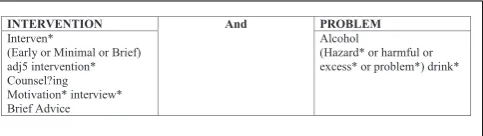
The original search undertaken in 2008 adopted an iterative emergent approach. Rather than developing an a priori search strategy, smaller individual searches were undertaken in order to develop understanding of the research area. The information specialist (Louise Preston) and lead reviewer (Nicholas Latimer) worked together to develop further iterations of the search strat-egy based on the findings of earlier searches. As a result, for this update, the use of a predetermined search strategy was possible as search terms had been tested and validated as part of the original searches. The search strategy is presented inFigure 1.
The title and abstracts of all retrieved studies were screened by one reviewer (Colin Angus) against a set of pre-defined inclu-sion and excluinclu-sion criteria. These criteria, listed in Supplementary Material, were piloted with a second reviewer (Jessica Li) on an initial subsample of 10 studies and subsequently refined, follow-ing discussions between both reviewers, to ensure clarity in their interpretation. Any study reporting the costs and health or other economic benefits of SBI programs in primary care were consid-ered for inclusion. Studies were excluded which were not published in English, which examined multi-behavior interventions (e.g., combined drink and drugs education programs), which included components occurring outside of primary care, or which evalu-ated interventions comprising more than four patient contacts (on the grounds that these no longer constitute “brief ” interventions). Studies examining SBI implementation strategies only (e.g., GP education programs to increase delivery rates of SBIs to patients) were excluded unless they presented a separate economic evalua-tion of the SBI delivery itself. Similarly, studies that examined only screening tools (e.g., AUDIT or CAGE) were excluded unless they also included a BI component.
Data from all included studies were extracted by one reviewer (Colin Angus) using a standard template (see Supplementary
INTERVENTION And PROBLEM
Interven*
(Early or Minimal or Brief) adj5 intervention* Counsel?ing Motivation* interview* Brief Advice
Alcohol
[image:2.595.308.550.63.131.2](Hazard* or harmful or excess* or problem*) drink*
FIGURE 1 | Search strategy utilized in the review.
Material) adapted from that used by Latimer et al. (8). Studies were assessed for methodological quality using the Drummond checklist for economic evaluations (11) as recommended for use in Cochrane reviews (12). Five of the included studies were ran-domly selected and additionally assessed for quality by a second reviewer (Jessica Li) to ensure consistency (agreement was 100% between both reviewers).
RESULTS
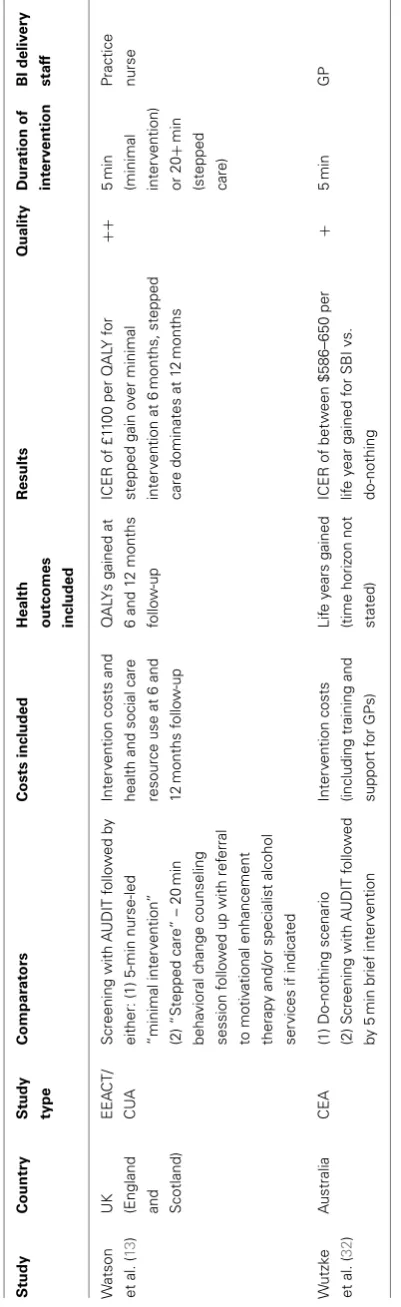
Twenty-three papers reporting the results of 22 distinct studies that met the criteria for inclusion in the review were identi-fied. These fall into two major categories: economic evaluations alongside clinical trials (EEACTs) (13–21) and stand-alone mod-eling evaluations (4,7,22–33).Table 1summarizes these studies, while excluded studies are reported in Supplementary Mater-ial. A glossary of relevant health economic terms is included in Supplementary Material.
These 23 studies examine the cost-effectiveness of SBIs in almost exclusively high-income countries (Chisholm et al. being the only exception (30)), with the majority of studies covering the USA (8 studies), UK (5 studies), or Australia (3 studies). There was considerable variation in the quality of the studies, with 7 rated as being of low quality, 10 of moderate quality, and 5 of high quality, although there are signs of an improving trend over time with more recent papers scoring more highly. The main issues encountered were an inadequate description of the intervention itself, poor reporting of the sources of cost data used in the studies, and insufficient sensitivity analysis.
Of the nine studies reporting evaluations alongside clinical tri-als, two compared different levels of brief intervention (13,14), both concluding that a longer “stepped care” intervention was the most cost-effective option. Another six studies compared brief interventions with usual care (15,17–21). The trials that these studies are associated with ran for between 6 and 48 months, while the full effect of changes in drinking behavior on health outcomes can take many years to develop (34). It is therefore perhaps unsur-prising that these studies found few statistically significant results and do not allow any firm conclusions to be drawn around the cost-effectiveness of SBI programs.
All except one of the 14 modeling studies compared SBI pro-vision to an alternative do-nothing scenario in which no SBIs are delivered. The other study (24) examined the cost-effectiveness of increasing the current uptake rate. Among these studies, the most common health outcome measures were QALYs (4,23,25, 26,28,31,33), with two studies using DALYs (22,30) and two using life years gained (7,32). Almost all these studies found SBIs to be either cost-saving and health improving (i.e., they dominate a do-nothing scenario) or to have very low costs relative to health
Angus
et
al.
Cost-ef
fectiv
eness
of
[image:3.595.55.728.62.536.2]SBIs
Table 1 | Characteristics of included studies.
Study Country Study
type
Comparators Costs included Health
outcomes included
Results Quality Duration of
intervention
BI delivery
staff
Angus
et al. (28)
Italy CUA (1) Do-nothing scenario (2)
Screening with AUDIT-C followed
by 10 min brief intervention
Intervention costs and
health and social care
resource use over
30 years following start
of program
QALYs gained
over 30 years
follow-up
SBI delivered at next GP
registration has an ICER of C550
per QALY vs. do-nothing. SBI at
next GP consultation has an ICER
of C590 per QALY vs. do-nothing.
++ 10 min GP
Angus
et al. (33)
Netherlands
and Poland
CUA (1) Do-nothing scenario
(2) Screening with AUDIT-C
followed by 10 min brief
intervention
Intervention costs and
health and social care
resource use over
30 years following start
of program
QALYs gained
over 30 years
follow-up
Netherlands: SBI delivered at next
GP registration has an ICER of
C6340 per QALY vs. do-nothing.
SBI at next GP consultation has an
ICER of C5748 per QALY vs.
do-nothing. Poland: SBI delivered
at next GP registration has an
ICER of zł3696 per QALY vs.
do-nothing. SBI at next GP
consultation has an ICER of zł3269
per QALY vs. do-nothing.
++ 10 min GP
Babor
et al. (15)
USA EEACT/
CEA
Screening with AUDIT followed by
either: (1) Treatment as usual
(2) 3–5 min brief intervention
Intervention costs SF-12 score and
mean alcohol
consumption at
12 months
follow-up
Small but significant reduction in
consumption for BI group vs.
treatment as usual. No significant
difference in SF-12 scores. No
significant differences in either
outcome between GP- and
nurse-delivered intervention
groups
− 3–5 min GP or nurse
Chisholm
et al. (30)
International CUA (1) Do-nothing scenario
(2) Screening followed by brief
intervention involving four primary
care visits inside a year
Intervention costs DALYs averted
over a lifetime
horizon
SBI varies from dominated by to
dominating a do-nothing scenario
depending on WHO region with
9/12 regions having an ICER of
≤5000I$ per QALY
+ Not stated GP
Cobiac
et al. (22)
Australia CUA (1) Do-nothing scenario
(2) Screening followed by
counseling, supportive written
materials and follow-up
consultations with further advice
“if necessary”
Intervention costs,
patient time/travel and
health and social care
resource use over
lifetime horizon
DALYs averted
over a lifetime
horizon
ICER of $6800 per DALY averted
vs. do-nothing
− Not stated GP
(Continued)
www
.fr
ontiersin.or
g
September
20
1
4
|V
olume
5
|
Article
11
4
|
Angus
et
al.
Cost-ef
fectiv
eness
of
[image:4.595.54.729.68.523.2]SBIs
Table 1 | Continued
Study Country Study type
Comparators Costs included Health outcomes included
Results Quality Duration of intervention
BI delivery staff
Dillie et al.
(16)
USA EEACT/
Cost
mini-mization
analysis
Screening with self-reported
alcohol consumption followed by
either:
(1) 2×15 min brief interventions each followed up with a 5 min
telephone call
(2) Additional screened with %
CDT followed by 2×15 min brief interventions each followed up
with a 5 min telephone call
Intervention costs,
patient time/travel,
health and social care
resource use, motor
vehicle crashes and
legal/criminal costs over
4 years follow-up
N/A Addition of % CDT screening
saves $212 per patient screened
+ 40 min GP (nurse
delivers
follow-up
phone calls)
Drummond
et al. (14)
UK (Wales) EEACT/
CUA
Screening with AUDIT followed by
either:
(1) 5-min nurse-led “minimal
intervention”
(2) ”Stepped care” – 20 min
behavioral change counseling
session followed up with referral
to motivational enhancement
therapy and/or specialist alcohol
services if indicated
Intervention costs,
health and social care
resource use costs and
costs of crime at
6 months follow-up
QALYs gained at
6 months follow
up
Stepped care 98% likely to be
most cost-effective option at a
threshold of £20,000–30,000 per
QALY. No ICER presented
− 5 min
(minimal
intervention)
or 20+min (stepped
care)
Practice
nurse
Fleming
et al. (17,
18)
USA EEACT/
CBA
Screening with 7-day timeline
follow back followed by either:
(1) Patient information leaflet
(2) 2×15 min brief interventions each followed up with a 5 min
telephone call
Intervention costs,
patient time/travel,
health and social care
resource use, motor
vehicle crashes and
legal/criminal costs over
lifetime horizon
Mean alcohol
consumption at
various points up
to 4 years
follow-up
Significant reduction in
consumption observed in SBI
group (32% in men, 43% in
women). SBI estimated to save
$546 per patient from healthcare
perspective and $7780 from a
societal perspective vs. patient
information leaflet
+ 40 min GP (nurse
delivers
follow-up
phone calls)
Freeborn
et al. (19)
USA EEACT/
Resource
utiliza-tion
analysis
Screening with AUDIT followed by
either:
(1) Treatment as usual
(2) Brief advice from GP then
15 min motivational session with
trained counselor
Health and social care
resource use over
2 years follow-up
N/A No significant difference in health
and social care resource use
between BI and care as usual
groups
− 15+min GP and
trained
counselor
(Continued)
F
rontiers
in
Psy
c
hiatry
|
A
ddictiv
e
Disorders
and
B
eha
vioral
Dy
scontrol
September
20
1
4
|V
olume
5
|
Article
11
4
|
Angus
et
al.
Cost-ef
fectiv
eness
of
[image:5.595.54.730.65.527.2]SBIs
Table 1 | Continued
Study Country Study
type
Comparators Costs included Health
outcomes included
Results Quality Duration of
intervention
BI delivery
staff
Freemantle
et al. (29)
International CEA (1) Do-nothing scenario
(2) Screening with AUDIT followed
by 15 min brief intervention
Intervention costs Mean alcohol
consumption at
24 months
follow-up
SBI costs £8–20 per patient,
which equates to £18–47 per
patient who reduces their
drinking, with a mean reduction of
24% among those who cut down
− 15 min GP
Kapoor
et al. (23)
USA CUA (1) Do-nothing scenario
(2) Screening with AUDIT followed
by full clinical assessment of
unhealthy alcohol use and
5–10 min brief intervention
(3) Screening with AUDIT and %
CDT followed by full clinical
assessment of unhealthy alcohol
use and 5–10 min brief
intervention
Intervention costs,
health and social care
resource use over
lifetime horizon
QALYs gained
over lifetime
horizon
Both screening strategies
dominate vs. do-nothing.
Incremental cost of adding % CDT
to screening is $15,500 per QALY
+ 5–10 min Not stated
Lock et al.
(20)
UK
(England)
EEACT/
Cost
mini-mization
analysis
Screening with AUDIT followed by
either:
(1) Treatment as usual
(2) 5–10 min nurse-led brief
intervention
Intervention costs,
health and social care
resource use and
personal costs at
12 months follow-up
SF-12 score at
12 months
follow-up
No statistically significant
difference in costs or health
outcomes between arms
+ 5–10 min Nurse
Ludbrook
et al. (7) UK
(Scotland)
CEA (1) Do-nothing scenario
(2) Screening using 7-day timeline
follow back followed by 2×15 min brief interventions each followed
up with a 5 min telephone call
Intervention costs,
patient time/travel,
health and social care
resource use, motor
vehicle crashes and
legal/criminal costs over
lifetime horizon
Life years gained
over lifetime
horizon
SBI dominates vs. do-nothing − 40 min GP (nurse
delivers
follow-up
phone calls)
Mundt
et al. (21)
USA EEACT/
CBA
Screening with health screening
survey and assessment interview
followed by either:
(1) Treatment as usual
(2) 2×15 min bried interventions each followed up with a 5 min
telephone call
Intervention costs,
patient time/travel and
health and social care
resource use over
2 years follow-up
Life years lost
(valued at
$50,000 each)
over 2 years
follow-up
Non-significant cost savings of
$467 from healthcare perspective
and $812 from societal
perspective for BI vs. treatment as
usual
+ 40 min GP (nurse
delivers
follow-up
phone calls)
(Continued)
www
.fr
ontiersin.or
g
September
20
1
4
|V
olume
5
|
Article
11
4
|
Angus
et
al.
Cost-ef
fectiv
eness
of
[image:6.595.64.717.69.508.2]SBIs
Table 1 | Continued
Study Country Study type
Comparators Costs included Health outcomes
included
Results Quality Duration of intervention
BI delivery staff
Navarro
et al. (24)
Australia CEA (1) Current level of SBI provision
(2) Increased levels of screening
and brief intervention or combined
SBI provision
Intervention costs
(including training)
Number of risky
drinkers who
reduce their
alcohol
consumption
Additional cost of between
$174–1041 per risky drinker who
reduces their drinking, depending
on the scenario
+ Not stated GP
Purshouse
et al. (4) UK
(England)
CUA (1) Do-nothing scenario
(2) Screening with AUDIT followed
by 5 min brief intervention
Intervention costs and
health and social care
resource use over
30 years following start
of program
QALYs gained
over 30 years
follow-up
SBI delivered at next GP
registration dominates do-nothing
scenario. SBI at next GP
consultation has an ICER of £1175
per QALY vs. do-nothing
++ 5 min Practice
nurse/GP
(both
modeled)
Rehm
et al. (27)
Canada CBA (1) Do-nothing scenario
(2) Screening followed by brief
intervention
Health and social care
resource use costs,
costs of crime and
productivity losses due
to death and disability
per annum. Unclear if
intervention costs are
included
Deaths, years of
life lost and
acute hospital
days averted per
annum
Introduction of BI would avoid 360
deaths, 9000 years of life lost,
56,000 acute care hospital days
and would reduce
alcohol-attributable costs by
$602m per annum vs. do-nothing
+ Not stated Not stated
Saitz et al.
(31)
USA CUA (1) Do-nothing scenario
(2) Screening followed by brief
intervention
Intervention costs and
health and social care
resource use over
lifetime horizon
QALYs gained
over a lifetime
horizon
SBI dominates vs. do-nothing − Not stated Not stated
Solberg
et al. (25)
USA CUA (1) Do-nothing scenario
(2) Annual screening followed by
5 min BI
Intervention costs,
patient time/travel and
health and social care
resource use over
lifetime horizon
QALYs gained
over lifetime
horizon
ICER of $1750 per QALY vs.
do-nothing with healthcare
perspective. SBI dominates with
societal perspective
+ 5 min GP
Tariq et al.
(26)
Netherlands CUA (1) Do-nothing scenario
(2) Screening with AUDIT followed
by 10–15 min brief intervention
Intervention costs and
health and social care
resource use costs over
a lifetime horizon
QALYs gained
over lifetime
horizon
ICER of C5400 per QALY gained
for brief interventions vs.
do-nothing
++ 30–45 min GP
(Continued)
F
rontiers
in
Psy
c
hiatry
|
A
ddictiv
e
Disorders
and
B
eha
vioral
Dy
scontrol
September
20
1
4
|V
olume
5
|
Article
11
4
|
Angus et al. Cost-effectiveness of SBIs T able 1 | Continued St udy Country St udy type Compar at ors Costs included
Health outcomes included
Results Quality Dur ation of int erv ention BI deliv ery staf f W atson et al. ( 1 3 )
UK (England and Scotland)
EEA CT/ CU A Screening with A UDI T follo w ed b y either: (1) 5-min nurse-led “minimal inter v ention ” (2) “Stepped care ” – 20 min beha vioral change counseling session follo w ed up with ref er ral to motiv ational enhancement therap y and/or specialist alcohol ser vices if indicated Inter v ention costs and health and social care resource use at 6 and 1 2 months follo w -up QAL Ys gained at 6 and 1 2 months follo w -up ICER of £1 1 0 0 per QAL Y for stepped gain o v er minimal inter v ention at 6 months, stepped care dominates at 1 2 months ++ 5 min (minimal inter v ention) or 20 + min (stepped care) P ractice nurse W utzk e et al. ( 32 ) A ustralia CEA (1) Do-nothing scenario (2) Screening with A UDI T follo w ed b y 5 min brief inter v ention Inter v ention costs (including training and support for GPs) Lif e y ears gained (time horiz on not st ated) ICER of bet w een $586–650 per lif e y ear gained for SBI vs. do-nothing + 5 min GP CB A, cost–benefit analy sis; CDT , carboh y drate deficient transf er rin; CEA, cost-ef fectiv eness analy sis; CU A, cost-utilit y analy sis; D AL Y, disabilit y -adjusted lif e y ear; EEA CT , economic e v aluation alongside a controlled trial; GP , general practitioner; ICER, increment al cost–ef fectiv eness ratio; N/A, not applicable; QAL Y, qualit y -adjusted lif e y ear; SBI, screening and brief inter v entions. F or det ailed definitions of terms see Supplement ar y Material.
gains, making SBI programs highly likely to be considered cost-effective under the relevant national guidelines. The sole exception was Chisholm et al. (30), who presented separate costs and bene-fits for each of 12 World Health Organization (WHO) sub-regions and found that SBI programs are dominated by current taxation in parts of Africa (region AfrE), although they estimated that they are either cost-effective or cost-saving in the remaining 11 sub-regions using the WHO’s estimated cost-effectiveness thresholds (35). Of the remaining modeling studies, one (27) uses a burden of disease approach to estimate SBIs would be substantially cost-saving (Canadian $602m per annum). The remaining studies (24, 29) use intermediate end points (number of risky drinkers averted and change in mean alcohol consumption), which make the results unhelpful for the purpose of informing resource allocation deci-sions without additional modeling to estimate the impact of these end points on health outcomes. The majority of these modeling studies consider outcomes over a 30 year (4,28,33) or lifetime (7, 22,23,25,26,30,31) time horizon, ensuring that the long-term impacts are reflected in the results.
Fifteen studies examine the cost-effectiveness of GP-delivered interventions (4,7,15,16,18,21,22,24–26,28–30,32,33), while only five examine nurse-delivered interventions (4, 13–15,20). Owing to the substantial heterogeneity between studies both in terms of methods and outcomes it is difficult to draw any clear conclusions about the relative cost-effectiveness of using different staff to deliver SBI programs, although the lack of a clear differ-ence between the two options may be of interest to policy makers. Only two studies directly compare both options: Purshouse et al. (4) assumea priorithat delivery staff do not impact on the effec-tiveness of the BI but find that even the use of the more expensive GP-delivered BI option is unlikely to prevent the program from being cost-effective. Meanwhile, Babor et al. (15) conducted a trial with separate nurse-delivered and GP-delivered SBI arms. The authors found no significant difference in effectiveness of the intervention between these arms, while the nurse-delivered option was around 1/3 cheaper, indicating it to be a more cost-effective option.
With regards to the total duration of the intervention (i.e., the total contact time between patient and delivery staff, either face-to-face or over the telephone, aggregated over multiple contacts where appropriate), 12 studies evaluate interventions of 10 min or less (4,13–15,20,23,25,28,32,33) and 11 consider interventions of over 10 min (with a maximum duration of 45 min) (4,7,13, 14,16,18,21,26,28,29). Again the heterogeneity of methods and outcomes makes direct comparison difficult, although there is no clear difference in terms of cost-effectiveness between shorter and longer interventions. Only five studies consider both longer and shorter interventions. Two of these (13,14) report that the longer intervention is cost-effective relative to the shorter one, although this conclusion is difficult to make on the basis of the analysis presented in the studies, particularly given the short follow-up of the trials. The other three studies (4,28,33) assume no difference in effectiveness but find that longer, more expensive interventions are still highly likely to be considered cost-effective compared to no intervention.
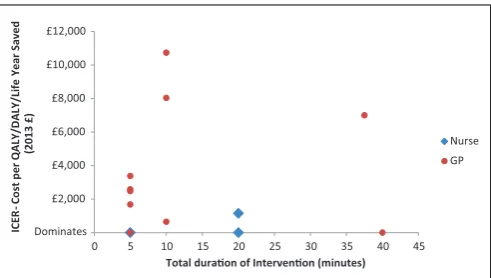
In order to further explore the relationship between delivery staff, BI duration, and cost-effectiveness,Figure 2presents a direct
[image:7.595.60.261.60.715.2]Angus et al. Cost-effectiveness of SBIs
£2,000 £4,000 £6,000 £8,000 £10,000 £12,000
0 5 10 15 20 25 30 35 40 45
IC
E
R
-C
o
st
p
e
r
QA
LY
/D
A
LY
/L
if
e
Y
e
a
r S
a
v
e
d
(2
0
1
3
£
)
Total duraon of Intervenon (minutes)
Nurse
GP
[image:8.595.46.292.61.200.2]Dominates
FIGURE 2 | Cost-effectiveness of SBI programs by SBI duration and delivery staff.
comparison of the cost-effectiveness results converted to 2013 UK £, for those studies which report delivery staff, intervention dura-tion, and an Incremental Cost–Effectiveness Ratio (ICER) (4,13, 25,26,28,33,36).
DISCUSSION
This systematic review provides strong evidence that SBIs in a pri-mary care setting are a cost-effective policy option for tackling alcohol-related harms, at least in high-income countries. There is a paucity of evidence for lower- or middle-income countries and that does exist indicates that there may be substantial heterogene-ity in both the expected costs and effectiveness of SBI programs depending on the local context in these areas (30).
There is also substantial heterogeneity in study methods, included costs, and reported health outcomes between the included studies, which makes it difficult to determine the impli-cations of this diverse body of evidence for those making resource allocation decisions, although there is an apparent trend for more recent studies to use standardized measures such as QALYs or DALYs, which makes between-study comparison more meaning-ful. There are also significant differences in the national contexts between studies (for example the existing level of drinking or the current suite of alcohol policies in the country), which must be considered when making international comparisons.
Considering these differences, there is no clear evidence that the choice of delivery staff for SBI programs has a substantial impact on the program’s cost-effectiveness. This may be because GP-delivered interventions are more effective but more costly than those delivered by nurses, although this would be at odds with existing literature, which suggests that the use of less costly nursing staff to conduct tasks that would otherwise be the responsibility of GPs is unlikely to impact negatively on the quality of care received by patients (37,38).Figure 2also suggests that nurses may be a more cost-effective option, although heterogeneity in settings and methods between the included studies mean that the graph should be interpreted with caution.
It is also important to note that policy makers will need to con-sider the total budget impact of any policy options in addition to the potential cost-effectiveness, an issue highlighted in several of
the included studies (28,33,39). This may suggest that nurse-led SBI programs, which are likely to be less costly overall, may be more appealing option, although consideration must be given to the existing primary care systems in each country. For example, in countries such as the UK or the Netherlands where practice nurses already undertake many primary care services such as vac-cinations or health checks, nurse-led SBIs may be a more practical option than in other countries where care is currently delivered exclusively by the GP.
There is also no clear evidence that the duration of intervention delivered has a substantial impact on cost-effectiveness. Again this may indicate that longer interventions are more effective but more expensive, although studies on the effectiveness evidence have not found a consistent relationship between amount of patient con-tact and effectiveness (5,40). While the studies by Watson and Drummond provide limited evidence that longer interventions may be more cost-effective in the short-term in the UK context, it is not clear that this translates to the longer term, or to other countries (13,14).
In addition to the substantial heterogeneity between studies already mentioned, there are a number of limitations to this sys-tematic review. Only studies published in the English language were included, something which may be at least partly responsible for the lack of included studies from the developing world. Some of the included studies are also of low methodological quality which makes it difficult to evaluate the robustness of their conclusions. Finally, there are two key issues, which no study of SBI effectiveness can escape. The first is that the estimates of effectiveness, which underpin the cost-effectiveness estimates examined here may be exaggerated by the impact of regression to the mean, caused by drinkers changing their consumption over time for reasons unre-lated to the receipt of a brief intervention (e.g., public holidays or seasonal variation) (41). The second, countervailing issue is that of an intervention or Hawthorne effect, whereby the act of being enrolled into a trial acts as an intervention in itself, some-thing which may at least partly explain why many SBI effectiveness studies observe a reduction in alcohol consumption over time in the control groups (42).
Limitations in the evidence base mean that this review is unable to address a number of other issues that may be of interest to pol-icy makers such as the cost-effectiveness of SBI programs targeting specific groups within the general population. Further research to examine the differential effectiveness of, and the likely coverage by, SBI programs in these subgroups is important to allow this area to be explored further. The other key priority for further research to inform decision makers concerns the uptake among primary care providers of SBI programs. Difficulties in persuad-ing GPs and nurses to fully deliver SBI programs could have a substantial impact on the effectiveness and cost-effectiveness of these programs. A recent international trial conducted as part of the optimizing delivery of healthcare interventions (ODHIN) project will go some way to addressing this challenge by examin-ing the effectiveness and cost-effectiveness of different strategies at increasing SBI delivery rates in primary care (43).
In conclusion, while there are significant differences between the studies included in this review, the overwhelming conclusion is
Angus et al. Cost-effectiveness of SBIs
that SBIs in primary care are a cost-effective option, at least in high-income countries. There is no clear evidence that the duration of the intervention, or the type of staff used to deliver it, changes this conclusion. Policy makers should, however, be mindful of the differing budget implications that alternative implementation options may present.
AUTHOR CONTRIBUTIONS
Louise Preston undertook the literature searches. Colin Angus con-ducted the review, with assistance from Jessica Li, and drafted the article. Robin Purshouse and Nicholas Latimer provided guidance and expertise. All authors read and approved the final manuscript.
ACKNOWLEDGMENTS
The research leading to these results or outcomes has received funding from the European Union’s Seventh Framework Pro-gram for research, technological development and demonstration under grant agreement no. 259268 – optimizing delivery of health care intervention (ODHIN). Participant organizations in ODHIN can be seen at www.odhinproject.eu/partners.html. The views expressed here reflect only the authors’ and the European Union is not liable for any use that may be made of the information contained therein.
SUPPLEMENTARY MATERIAL
The Supplementary Material for this article can be found online at http://www.frontiersin.org/Journal/10.3389/fpsyt.2014.00114/ abstract
REFERENCES
1. Lim SS, Vos T, Flaxman AD, Danaei G, Shibuya K, Adair-Rohani H, et al. A comparative risk assessment of burden of disease and injury attributable to 67 risk factors and risk factor clusters in 21 regions, 1990-2010: a systematic analy-sis for the Global Burden of Disease Study 2010.Lancet(2012)380:2224–60. doi:10.1016/S0140-6736(12)61766-8
2. Anderson P, Baumberg B.Alcohol in Europe. London (2006). Available from: http://leonardo3.dse.univr.it/addiction/documents/External/alcoholineu.pdf 3. Cherpitel CJ. Drinking patterns and problems among primary care patients: a
comparison with the general population.Alcohol Alcohol(1991)26:627–33. 4. Purshouse R, Brennan A, Rafia R, Latimer NR, Archer RJ, Angus CR, et al.
Model-ling the cost-effectiveness of alcohol screening and brief interventions in primary care in England.Alcohol Alcohol(2013)48:180–8. doi:10.1093/alcalc/ags103 5. O’Donnell A, Anderson P, Newbury-Birch D, Schulte B, Schmidt C, Reimer J,
et al. The impact of brief alcohol interventions in primary healthcare: a sys-tematic review of reviews.Alcohol Alcohol(2013)49:66–78. doi:10.1093/alcalc/ agt170
6. World Health Organization.Global Strategy to Reduce the Harmful Use of Alco-hol. Available from: http://www.who.int/substance_abuse/alcstratenglishfinal. pdf?ua=1
7. Ludbrook A, Godfrey C, Wyness L, Parrott S, Haw S, Napper M, et al.Effective and Cost-Effective Measures to Reduce Alcohol Misuse in Scotland: A Literature Review. Aberdeen: Health Economics Research Unit (2001). Available from: http://www.alcoholinformation.isdscotland.org/alcohol_misuse/files/measure reduce_full.pdf
8. Latimer N, Guillaume L, Goyder E.Prevention and Early Identification of Alcohol Use Disorders in Adults and Young People. Screening and Brief Interventions: Cost Effectiveness Review. Sheffield (2008). Available from: http://www.sheffield.ac. uk/polopoly_fs/1.43294!/file/Alcohol-2_3.pdf
9. Elzerbi C, Donoghue K, Drummond C.Report on the European Public Health Impact and Cost Effectiveness of Early Diagnosis and Treatment of Alcohol Use Disorders(2013). Available from: http://amphoraproject.net/w2box/data/ Deliverables/AMPHORA_WP6_D3.3.pdf
10. Wojnar M.Optimizing Delivery of Health Care Interventions (ODHIN): Survey of Attitudes and Managing Alcohol Problems in General Practice in Europe – Final Report. Warsaw (2014). Available from: http://www.odhinproject.eu/ resources/documents/doc_download/52-deliverable-4-1-survey-of-attitudes-and-managing-alcohol-problems-in-general-practice-in-europe.html 11. Drummond MF, Jefferson TO. Guidelines for authors and peer reviewers of
eco-nomic submissions to the BMJ. The BMJ Ecoeco-nomic Evaluation Working Party.
BMJ(1996)313:275–83. doi:10.1136/bmj.313.7052.275
12. The Cochrane Collaboration.Cochrane Handbook for Systematic Reviews of Interventions. 5th ed. Higgins JP, Green S, editors (2011). Available from: www.cochrane-handbook.org
13. Watson J, Crosby H, Dale V, Tober G, Wu Q, Lang J, et al. AESOPS: a randomised controlled trial of the clinical effectiveness and cost-effectiveness of opportunis-tic screening and stepped care interventions for older hazardous alcohol users in primary care.Health Technol Assess(2013)17:1–158. doi:10.3310/hta17250 14. Drummond C, Coulton S, James D, Godfrey C, Parrott S, Baxter J, et al.
Effec-tiveness and cost-effecEffec-tiveness of a stepped care intervention for alcohol use disorders in primary care: pilot study.Br J Psychiatry (2009) 195:448–56. doi:10.1192/bjp.bp.108.056697
15. Babor TF, Higgins-Biddle JC, Dauser D, Burleson JA, Zarkin GA, Bray J. Brief interventions for at-risk drinking: patient outcomes and cost-effectiveness in managed care organizations.Alcohol Alcohol (2006)41:624–31. doi:10.1093/ alcalc/agl078
16. Dillie KS, Mundt M, French MT, Fleming MF. Cost-benefit analysis of a new alcohol biomarker, carbohydrate deficient transferrin, in a chronic illness pri-mary care sample.Alcohol Clin Exp Res(2005)29:2008–14. doi:10.1097/01.alc. 0000187606.54854.db
17. Fleming MF, Mundt MP, French MT, Manwell LB, Stauffacher EA, Barry KL. Benefit-cost analysis of brief physician advice with problem drinkers in primary care settings. Med Care(2000)38:7–18. doi:10.1097/00005650-200001000-00003
18. Fleming M, Mundt M, French M, Manwell L, Stauffacher E, Barry K. Brief physi-cian advice for problem drinkers: long-term efficacy and benefit-cost analysis.
Alcohol Clin Exp Res(2002)26:36–43. doi:10.1111/j.1530-0277.2002.tb02429.x 19. Freeborn DK, Polen MR, Hollis JF, Senft RA. Screening and brief intervention for hazardous drinking in an HMO: effects on medical care utilization.J Behav Health Serv Res(2000)27:446–53. doi:10.1007/BF02287826
20. Lock CA, Kaner EF, Heather N, Doughty J, Crawshaw A, McNamee P, et al. Effec-tiveness of nurse-led brief alcohol intervention: a cluster randomized controlled trial.J Adv Nurs(2006)54:426–39. doi:10.1111/j.1365-2648.2006.03836.x 21. Mundt MP, French MT, Roebuck MC, Manwell LB, Barry KL. Brief physician
advice for problem drinking among older adults: an economic analysis of costs and benefits.J Stud Alcohol(2005)66:389–94.
22. Cobiac L, Vos T, Doran C, Wallace A. Cost-effectiveness of interventions to prevent alcohol-related disease and injury in Australia.Addiction(2009)
104:1646–55. doi:10.1111/j.1360-0443.2009.02708.x
23. Kapoor A, Kraemer KL, Smith KJ, Roberts MS, Saitz R. Cost-effectiveness of screening for unhealthy alcohol use with % carbohydrate deficient transferrin: results from a literature-based decision analytic computer model.Alcohol Clin Exp Res(2009)33:1440–9. doi:10.1111/j.1530-0277.2009.00974.x
24. Navarro HJ, Shakeshaft A, Doran CM, Petrie DJ. The potential cost-effectiveness of general practitioner delivered brief intervention for alcohol misuse: evidence from rural Australia.Addict Behav(2011)36:1191–8. doi:10.1016/j.addbeh. 2011.07.023
25. Solberg LI, Maciosek MV, Edwards NM. Primary care intervention to reduce alcohol misuse ranking its health impact and cost effectiveness.Am J Prev Med
(2008)34:143–52. doi:10.1016/j.amepre.2007.09.035
26. Tariq L, Van Den Berg M, Hoogenveen RT, Van Baal PH. Cost-effectiveness of an opportunistic screening programme and brief intervention for excessive alcohol use in primary care.PLoS One(2009)4:8. doi:10.1371/journal.pone.0005696 27. Rehm J, Gnam WH, Popova S, Patra J, Sarnocinska-Hart A. Avoidable
Cost of Alcohol Abuse in Canada 2002. Toronto, ON (2008). Available from: http://www.researchgate.net/publication/49676020_Avoidable_cost_of_ alcohol_abuse_in_Canada/file/d912f50b9440fa6bef.pdf
28. Angus C, Scafato E, Ghirini S, Torbica A, Ferre F, Struzzo P, et al. Cost-effectiveness of a programme of screening and brief interventions for alcohol in primary care in Italy.BMC Fam Pract(2014)15:26. doi:10.1186/1471-2296-15-26
Angus et al. Cost-effectiveness of SBIs
29. Freemantle N, Gill P, Godfrey C, Long A, Richards C, Sheldon TA, et al. Brief interventions and alcohol use.Qual Health Care(1993)2:267–73. doi:10.1136/ qshc.2.4.267
30. Chisholm D, Rehm J, van Ommeren M, Monteiro M. Reducing the global bur-den of hazardous alcohol use: a comparative cost-effectiveness analysis.J Stud Alcohol(2004)65:782–93.
31. Saitz R, Svikis D, D’Onofrio G, Kraemer KL, Perl H. Challenges applying alcohol brief intervention in diverse practice settings: populations, outcomes, and costs.
Alcohol Clin Exp Res(2006)30:332–8. doi:10.1111/j.1530-0277.2006.00038.x 32. Wutzke SE, Shiell A, Gomel MK, Conigrave KM. Cost effectiveness of brief
interventions for reducing alcohol consumption.Soc Sci Med(2001)52:863–70. doi:10.1016/S0277-9536(00)00189-1
33. Angus C, Scafato E, Ghirini S, Torbica A, Ferre F, Struzzo P, et al. Opti-mizing Delivery of Health Care Interventions (ODHIN): Cost-Effectiveness – Model Report. Sheffield (2013). Available from: http://www.odhinproject.eu/ resources/documents/doc_download/66-deliverable-3-1-cost-effectiveness-model-report.html
34. Holmes J, Meier PS, Booth A, Guo Y, Brennan A. The temporal relationship between per capita alcohol consumption and harm: a systematic review of time lag specifications in aggregate time series analyses.Drug Alcohol Depend(2012)
123:7–14. doi:10.1016/j.drugalcdep.2011.12.005
35. WHO.Table: Threshold Values for Intervention Cost-Effectiveness by Region
(2014). Available from: http://www.who.int/choice/costs/CER_levels/en/ 36. Ludbrook A. Effective and Cost – Effective Measures to Reduce Alcohol
Misuse in Scotland: An Update to the Literature Review. Scottish Govern-ment (2004). Available from: http://www.scotland.gov.uk/Publications/2005/ 01/20542/50228
37. Laurant M, Reeves D, Hermens R, Braspenning J, Grol R, Sibbald B. Substitu-tion of doctors by nurses in primary care.Cochrane Database Syst Rev(2005) (2):CD001271. doi:10.1002/14651858.CD001271.pub2
38. Laurant M, Harmsen M, Wollersheim H, Grol R, Faber M, Sibbald B. The impact of nonphysician clinicians: do they improve the quality and cost-effectiveness of health care services?Med Care Res Rev (2009)66:36S–89S. doi:10.1177/1077558709346277
39. Meier PS, Meng Y, Holmes J, Baumberg B, Purshouse R, Hill-McManus D, et al. Adjusting for unrecorded consumption in survey and per capita sales data: quan-tification of impact on gender- and age-specific alcohol-attributable fractions for
oral and pharyngeal cancers in Great Britain.Alcohol Alcohol(2013)48:241–9. doi:10.1093/alcalc/agt001
40. Kaner EF, Beyer F, Dickinson HO, Pienaar E, Campbell F, Schlesinger C, et al. Effectiveness of brief alcohol interventions in primary care popula-tions.Cochrane Database Syst Rev(2007)4:CD004148. doi:10.1002/14651858. CD004148.pub3
41. Jenkins RJ, McAlaney J, McCambridge J. Change over time in alcohol con-sumption in control groups in brief intervention studies: systematic review and meta-regression study.Drug Alcohol Depend(2009)100:107–14. doi:10.1016/j. drugalcdep.2008.09.016
42. McCambridge J, Kypri K. Can simply answering research questions change behaviour? Systematic review and meta analyses of brief alcohol intervention trials.PLoS One(2011)6:e23748. doi:10.1371/journal.pone.0023748 43. Keurhorst MN, Anderson P, Spak F, Bendtsen P, Segura L, Colom J, et al.
Implementing training and support, financial reimbursement, and referral to an internet-based brief advice program to improve the early identification of hazardous and harmful alcohol consumption in primary care (ODHIN): study protocol for a cluster rando.Implement Sci(2013)8:11. doi:10.1186/1748-5908-8-11
Conflict of Interest Statement:The authors declare that the research was conducted in the absence of any commercial or financial relationships that could be construed as a potential conflict of interest.
Received: 30 June 2014; accepted: 12 August 2014; published online: 01 September 2014. Citation: Angus C, Latimer N, Preston L, Li J and Purshouse R (2014) What are the implications for policy makers? A systematic review of the cost-effectiveness of screening and brief interventions for alcohol misuse in primary care. Front. Psychiatry5:114. doi: 10.3389/fpsyt.2014.00114
This article was submitted to Addictive Disorders and Behavioral Dyscontrol, a section of the journal Frontiers in Psychiatry.
Copyright © 2014 Angus, Latimer, Preston, Li and Purshouse. This is an open-access article distributed under the terms of the Creative Commons Attribution License (CC BY). The use, distribution or reproduction in other forums is permitted, provided the original author(s) or licensor are credited and that the original publication in this journal is cited, in accordance with accepted academic practice. No use, distribution or reproduction is permitted which does not comply with these terms.