Abstract: Cloud computing represents a new era of computing network, where the resources of the system are dispersed and shared among its users in the network premises. The user of this system is able to use such resources through the technology of internet based on system of Pay-As-Per-Use. If a service is used by any type of user, it helps in production of wide variety of data. So, the cost of data transfer between two of the dependent resources will be extremely high. Additionally, an application of complex nature involves large number of tasks boosting the process of total cost of execution with respect to the used application, if the process is not scheduled in an optimized manner. In order to overcome such issues, a hybrid approach of water cycle optimization is proposed with particle swarm optimization. This method is divided into two steps of working determining under and over utilized virtual machines. In experimental analysis, the proposed approach on different scientific workflows is done where significant performance in all the workflows is based on total execution time and total execution cost.
Index Terms: Scheduling, Workflow Management Systems, Workflow Management Coalition.
I. INTRODUCTION
With the process of technological advancement, the mechanism of storage and processing along with technology of Internet, the concept of computing resources have become more powerful and cheaper, and it is more available in ubiquitous form, this kind of modern technological fashion has resulted in a methodology based on a new model of computing known as cloud computing, where resources for instance storage and CPU are usually provided in terms of general form of utilities which can be released and leased and by the end users with the help of the Internet technology in a fashion of on-demand concept. In an environment of cloud computing, the conventional role of service-based provider is usually categorized in two major parts: providers of infrastructure who basically manage the platforms for cloud computing and lease (sublet) resources in accordance to a pricing model based on usage. Secondly, the providers of the service, who lease resources from a single or many kinds of infrastructural providers for the purpose of serving the users/clients [1] [3]. The technology of cloud computing is classified into three of the models of service: SaaS (Software as a Service), PaaS (Platform as a Service), and IaaS (Infrastructure as a Service). The concept of scheduling in an environment of cloud computing presents the method of
Revised Manuscript Received on July 05, 2019.
Jyoti Parashar, Maharishi Markandeshwar (Deemed to be University), Mullana-Ambala, Haryana (India)
Atul Garg, Maharishi Markandeshwar (Deemed to be University), Mullana-Ambala, Haryana (India)
efficient form of task mapping procedure over the system and resources such as bandwidth, memory, and CPU time. Hence, for the process of resources in an effective manner, the mechanism of scheduling plays a significant role in technology of cloud computing. Based on job dependency, scheduling is mainly divided into two classes: Dependent scheduling i.e. workflow scheduling, and Independent Scheduling i.e. task scheduling. The mechanism of workflow presents a sequence of associated (linked) instructions. The main objective of workflow scheduling is the automation of the procedures which usually participates in the method of forwarding the files and data between the cloud participants along with maintenance the constraints [2].
1.1 Workflow Scheduling
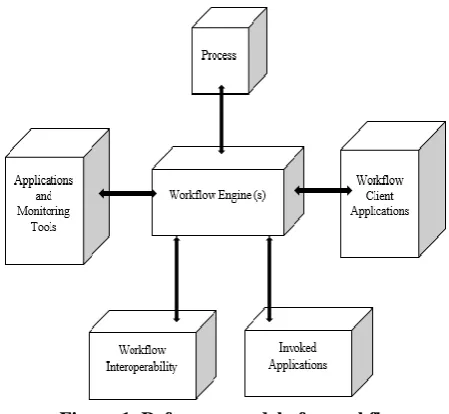
The concept of workflow scheduling presents a large problem in the field of computing. Basically such an issue is associated with mapping of each of the task with a suitable condition resource and it allows the task with numerous performance of the constraints. Workflow indicates the automation-based business approach, where approach in section or in a whole involves the passing of informational, documents tasks from a one to another type of participant for action-based activity, in context to a set/group of procedure-based rules [4]. While discussing the concept of cloud, the property of elasticity or scalability is considered as main advantage of cloud-based application. Thus, the property of elasticity of cloud helps in facilitating changes of characteristics and resource at its operational time. Such capability of cloud helps in enabling the management of workflow systems to quickly meet the requirements of QoS. The concept of Workflow is usually defined as the business-based automated process either in a section or in a whole part, when the tasks or information, documents gets forwarded from one participant to other based on the group or a set of procedural rules [4]. The property of elasticity or scalability represents the major benefit of cloud-based application. Cloud elasticity helps in facilitating changes attributes and resource at its operating time [5] [7]. This capability of the cloud further enables the WMS to quickly acquire the service quality as well as the requirements of the application. The main objective of workflow scheduling is to perform procedural automation specifically consisting of files and data forwarding between the cloud-based participants that helps in maintaining the constraints of the system. The Workflow Management Coalition (WfMC) mainly defines the method of workflow as a method to identify the structural interfaces that enables the products to perform interoperation at numerous levels. Such type of model mainly defines the management system of the
workflow along with
significant interfaces of the system interfaces. Figure 1 below presents the model of
Jyoti Parashar, Atul Garg
Workflow load Balancing using soft computing base novel framework with Qos Parameters
[image:2.595.52.277.76.283.2]reference in terms of conditions based on the mechanism of workflow scheduling.
Figure 1. Reference model of a workflow
1. Workflow engine: It presents a software that helps in providing the environment of run-time to design, manage and further execute the instances of workflow.
2. Process-based Definition: It represents the process of workflow process supporting automated type of manipulation.
3. Interoperability of Workflow: It mainly performs
interfacing to support the interoperability between distinct type of workflow systems.
4. Invoked-type of Application: It performs the mechanism of interfacing in order to support the process of communication with numerous applications of IT.
5. Workflow Client-based Application: It performs the mechanism of interfacing in order to support communication with the interface of user type.
6. Monitoring and Administration: It enables the process of interfacing by providing a method of system-based monitoring and metric-based functions for facilitating the composite workflow management in context to the environment of application.
In other terms, an operational module of the workflow engine (s) presents the picture of workflow scheduling and it also presents a necessary section of the WMS (workflow management system). The scheduling of workflow mainly sets a target on mapping as well as managing the interdependent tasks execution on the shared-type of resources [6]. The process of workflow is based on DAG i.e. Directed Acyclic Graph, where each of the task is presented by data and control dependencies being presented by the edges. With the ever increasing demand for the automation of numerous processes in cloud computing technology, the strategies of improvement in context to the algorithms of workflow scheduling along with workflow management has given rise to most of the critical challenging issues [8] [12]. The scheduling mechanism of workflow helps in allocating the tasks and discovering the resources.
1.2 Workflow Scheduling Challenges
The problem of workflow scheduling presents dynamic and random. They do not possess prior knowledge in terms of randomness due to loads of unpredictable nature, and hence,
execution factors based on cost and time which makes that makes such an issue to be under NP-hard (non-deterministic polynomial-time hardness) problem. Several metaheuristic and heuristic methods approaches are mainly used to have an optimized form of schedule with complexity based don polynomial time [9]. The workflow tasks should be executed in particular order such that the constraint-based dependency gets handled easily. The concept of workflow is associated to either scientific or business workflows. Some of the business-based workflow carries human selective business decision in order to perform the function of processing passing from one to other type of participant. A good algorithm of scheduling algorithm must involve the following [11]:
Connectivity of the load and network among several sites of the computation (for e.g. VMs)
Computing infrastructure heterogeneous form of environment.
Data sink(s) and source(s) nodes.
The algorithms of sophisticated form are required for scheduling the jobs/tasks while keeping an eye over the above discussed factors. In the environment of cloud computing, one task workflow may take the data input from the other tasks executing over similar type of virtual machine (VM) or on distinct type of VMs. On similar basis, the outputs of the system can be further sent to other type of tasks on remote or similar VM. Critical challenges faced by the scheduling of work are discussed in the section below:
1. Uncertainty: Current techniques for scheduling-based on cloud mechanics usually follows deterministic form of modeling possessing early knowledge about resources and tasks [14]. However, such a method is not at all possible for the process of cloud-based computing where the received tasks are of unpredicted nature as the provider-based service is not aware of data-based amount and its computation which is required to be managed properly. Parameter-based uncertainty such as the computing resources number, availability of speed-based response, variations in bandwidth, resource availability mainly needs the provider of the service along with user service to be concerned in order to ensure minimized QoS i.e. Quality of Service (QoS). So, analysts are jointly combining their efforts of working in order to reduce the challenges of uncertainty by prediction of execution and waiting time of task for improving the resource efficiency and utilization.
2. Integrated Complex Architecture: The concept of WMS is
based over DAG workflow mainly used in performance analysis by using comprehensive scientific built applications on the basis of large scaled experiments and is used further used to define, manage, and further execute the extensive data-based distributed as presented in applications of workflow.
3. Quality of Service:As the problem ofworkflow scheduling in cloud mechanism is of highly uncertain and unpredictable nature, the provider of the service has to assure that the services of the cloud must get delivered with minimized maintenance of quality of service (QoS). At the same time, user of the service checks several form of received services following the parameters of QoS [4]. Worse kind of decisions of scheduling presents the
worsen conditions results in long execution, inefficient utilization of resources, and reduced quality of throughput. 4. Load balancing: The process of optimized cloud resources utilization requires uniform type of loading distributed among distinct VMs such that these do not suffer from over or underutilization conditions.
5. Extensive management of data: It involves the relation of scientific workflow relating computational tasks that involves large scale data mining and analysis, querying and accessing database, processing on mathematical basis and other intensive computational applications [7] [10].
1.3 Scheduling Algorithms
The algorithms of workflow scheduling implemented and used in management of Work flow systems are depicted in Table-1 .Efficient algorithms of scheduling becomes significant for the operations of automated type in regard to both the disparate and distributed resources of cloud as well as workloads [8] [10]. The concept of resource-based scheduling presents a dynamic issue, and it is linked to on-demand type of resource provisioning, support of fault tolerance, and hybrid scheduling of resource with suitable conditions of QoS, taking an account in terms of budget, time, and cost analysis.
1.4 Workflow scheduling models
Numerous scheduling models of workflow have been developed by distinct researchers. Some of common models are discussed as follows:
1. Pareto and POSEC Analysis: Specifically in cloud
mechanics, when there is discussion about Job-based mapping and scheduling, the experts mainly considers two of the algorithms for the purpose of optimized scheduling. One such algorithm is based on the analysis of POSEC and the other on analysis of Pareto method.
Pareto analysis: Based on the data provided by Pareto Analysis, near about 80 percent of tasks usually completes their execution process in 20 percent of time and rest of 20 percent of the jobs can execute in rest 80 percent of time. Pareto-based algorithm take less amount of time in execution the similar group of jobs as executed in case of POSEC-based algorithm.
POSEC method: It is prioritized by four the common
parameters such as streamlining, organizing, contributing, and economizing.
2. Ordinal Iterative Optimization: It presents another method of] gaining an optimized method of workflow scheduling in the mechanics of cloud. The major advantage of using such type of methods is that it helps in lowering the overhead process in producing suboptimal type of schedule and it is capable to excellently work on the property of cloud elasticity under the dynamic form of workload.
3. One-port and Multi-port model: A linearized model of workflow depicts the dependencies between several stages which can be presented by a linearized graph. In order to perform workflow, two of the methods are used in the analysis i.e. one-port and multiport model.
One-port model: Here, each of the processor has the
ability to perform the process of computation, sending output or incoming tasks single at a time. It does not support the mechanism of parallel processing
Multiport Model: In this analysis, a processor has the ability to perform multiple kind of operations likewise computational evaluation, gaining input etc. in a single time. It allows simultaneous multiple outgoing and incoming processes.
4. Hierarchical cloud-based workflow scheduling: It is comprised of three steps in order to gain the process of optimal scheduling.
First step: It helps in splitting all the parallel-type of jobs.
Second step: matching of jobs with corresponding candidate services takes place. This means the resources are assigned to different jobs as per their requirements.
Third step: This step employs the algorithm of scheduling for job-based execution.
5. Costing based on Activity in cloud mechanics: Such type of activity-based costing presents a method of measuring both the cost and the performance of the object. The performance of the task is observed on separate platform on the basis of, time, space, and the resources chosen for complete process of execution. A job is basically classified based on factors that are either Available or Partially Available [11] [13]. Availability of job is confined to all desired resources for the purpose of execution and only available at same data-based center. The needed resources for execution are not present on individual data center.
Workflow load Balancing using soft computing base novel framework with Qos Parameters
Table.1 Workflow Scheduling Algorithms
DAG: Directed Acyclic Graph, ACO: Ant colony Optimization, PCO: Particle Swarm Optimization, QoS: Quality of Service, HEFT: Heterogeneous Earliest Finish Time, SHEFT: Scheduling Heterogeneous Earliest Finish Time.
II. RELATEDWORK
Nobo Chowdhury, et.al [1] provided a comparative study for distinct kinds of existing algorithms of scheduling in the environment of cloud. The major objective of task-based scheduling is to have best throughput of the system and it also involved allocation of numerous application resources. Uncertainty in operation usually increases with task size and forms a very high potential for effective solving procedure. Various creative methodologies are usually favored to clear the operational territorial situation of scheduling in respect to the process of cloud computing. Li Liu, et.al [2] proposed a function of adaptive penalty for strict type of constraints on comparing with other forms of genetic algorithms (GAs). However, coevolution approach was used for adjusting mutation probability and the crossover, which was capable in preventing the process of prematurity and accelerating the process of convergence. The researchers have also compared the proposed algorithm with various methods like Heterogeneous Earliest Finish Time, Particle Swarm, Random optimization methods, and genetic algorithm (GA) in a simulator named WorkflowSim on the basis of representative form of scientifically built workflows. Prajakta M. Deore, et.al [3] discussed the strategy of pay-as-per-use pricing used for gaining resources for the users. Several algorithms were used for the process of workflow scheduling in previous time. But such algorithms were employed over the
technology of grid-based computing. But now these days, the algorithm of scheduling is applied directly over the environment of cloud. With the use of evolutionary-based multi-objective form of scheduling, the cost and the make span will reduce thoroughly. This mechanism of scheduling performs better than other type of algorithms that helps in minimizing both the cost and make span. Amanpreet Kaur, et.al [4] studied the concept of workflow and task scheduling as two of the major paradigms in the environment of cloud computing differing in the data-based extent. The process of workflow mainly deals with a large business or scientific patterns of data whereas the task usually corresponds to an individual job comprised of service provider or the customer based applications. Both of these require effective and efficient utilization and resource provisioning. The process consists of discussing distinct form of phases along with critical challenges faced by the given types of scheduling. Zhaomeng Zhu, et.al [5] highlighted various type of difficulties, and design the problem related to workflow scheduling which helps in optimizing both the cost and make span as a MOP i.e. Multi-objective Optimization Problem for the environment of cloud computing. The researchers have proposed an algorithm of Evolutionary Multi-objective Optimization in order to solve the workflow scheduling problem on the platform of IaaS i.e. Infrastructure as a Service. Various schemes in this algorithm were proposed for solving the issues such as specific encoding and population issue in terms fitness evaluation, genetic operators, and initialization. Numerous experiments in terms of practical
workflows along with
randomized generated
workflows presents that the schedules (produced) by the S. No. Scheduling
Algorithm
Parameters Factors Tools Findings
1. SHEFT Execution time
and scalability
Task grouping Cloudsim Optimised time of
execution
2. HEFT Makespan Highest
upward rank
GridSim DAG makespan reduction
3. Market
Oriented Hierarchic-al
scheduling
CPU time, Makespan
DAG Amazon
EC2
Minimised time of execution
4. ACO based
Service flow Scheduling
Time, Resource utilisation
QoS Amazon
EC2
Optimised flow of service
5. PSO based
Heuristic for Scheduling
Time, Resource utilisation
Task grouping Amazon
EC2
Good Workload distribution in a cost
effective way.
6. Multiple QOS
constrained scheduling
Makespan, Cost, Time, Success
Rate
Multiple type of workflows
Cloudsim Dynamic scheduling of
workflow.
7. Budget
Constraints Scheduling
Budget, Makespan DAG
scheduling
Amazon EC2
Minimised makespan and execution time
8. Cost-based
Scheduling on utility grids.
Cost Task
Scheduling
GridSim Rescheduling of
evolutionary type of algorithms presented more stable form on various type of workflows with pricing models and IaaS (instance-based) computing. Ehab Nabiel Alkhanak, et.al [6] analysed the various issues of cost-based optimization in Scientific Workflow Scheduling (SWFS) by surveying extensively the existing form of approaches based on SWFS in the grid and cloud computing environment and it provides a cost-based classification based on the parameters and aspects of Scientific Workflow Scheduling. Additionally, it helps in providing a cost classification based on the performance of metrics which was classified into temporal and monetary cost-based parameters on the basis of several stages of scheduling. Thiago A. L. Genez, et.al [7] proposed a methodology based on Particle Swarm Optimization for user guidance in selection of a configuration based on CPU frequency for various type of resources that helps in minimizing the schedule-based make span when a combined capacity of CPU (frequency-based sum) was considered for maintenance purpose. In order to minimize the period of make span, the procedure of proposed PSO began to work in association with a famous Heterogeneous Earliest Finish Time (HEFT) scheduler. The procedure was further calculated and correlated with an approach of Naive Bayes that helps in selecting only the similar configurations of CPU based frequency. Anterpreet Kaur [8] surveyed numerous existing algorithms of workflow scheduling in context to the technology of cloud computing and further has explained several parameters, algorithms, and tools in a tabular form. Comprehensive survey of literature has found that the experiment has identified various scheduling algorithms for the purpose of scheduling, and such type of algorithms differs somehow in parameter and factor-based mechanism of scheduling. It has analyzed the scheduling workflow presents a hard issue. So, it was really impossible to create an optimized solution within time (polynomial) and the scheduling algorithms mainly focus on modelling near or approximate-optimized solutions. Santhosh B, Harshitha, et.al [9] worked on the objectives of scheduling-based algorithm. The study has shown that the MAXMIN was considered as the most effective and efficient method in respect to make span and it also considered the total cost comparable to various other algorithms such as MINMIN, First Come First Serve (FCFS), and Minimum Completion Time (MCT). Such type of algorithm got improved by taking account of fault tolerance and multiple type of objective functions. Murli Manohar Sharma, et.al [10] explained the significance of workflow scheduling, its basic model of reference and several existing algorithms of scheduling along with numerous features were also presented in tabular form. Numerous cloud computing facets, the management of workflow, along with its model of reference model, several components, algorithms of workflow scheduling available in the market were analyzed and surveyed for research purpose. Arash Ghorbannia Delavar, et.al [11] proposed a methodology of HSGA i.e. hybrid heuristic method in order to determine a suitable form of workflow scheduling graph on the basis of genetic algorithm (GA) to quickly obtain the response. It also help in optimizing make span, speedup ratio, and resource-based of load balancing. Firstly, the algorithm of HSGA performs task-based prioritization in a complex form of graph considering others’ impact in terms of graph-based topology. Such kind of methodology was quite effective and efficient for reducing application based time completion
process. Thereafter, it combines Round Robin and Best-Fit methods in order to make optimized form of initial population which helps in obtaining a quick and best possible solution. Saurabh Bilgaiyan, et.al [12] analyzed the experiment with a proposed form of cat swarm optimization (CSO) algorithm by using a workflow based on hypothetical manner and it further compared the scheduling workflow results with existing form of Particle Swarm Optimization based algorithm. The experimental analysis indicates - (1) CSO provided an optimized TOR i.e. task-to-resource scheduling scheme which helps in minimizing it’s cost in total (2) CSO has shown an improved process over the existing algorithms of PSO in context to a large number of iterations, and (3) CSO helps in ensuring a fair distribution of load on the availability of resources. Rajwinder Singh, et.al [13] presented the workflow execution in the environment of cloud computing as well as workflow scheduling. The basic idea that lies behind such a model proposed was to improve the requirement of QoS based cost along with resource grouping over the mechanism of cloud. Thus, the proposed model in terms of workflow scheduling will help in optimizing the turnaround-time for the overall process
III. PROPOSEDMETHODOLOGY
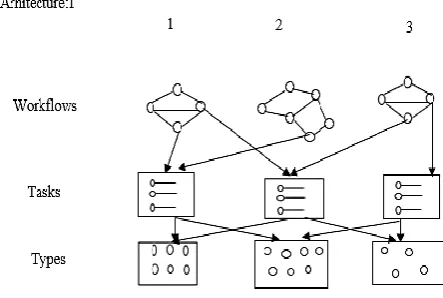
[image:5.595.308.530.465.614.2]This section explains the proposed methodology which is followed by various steps to achieve the expected results of the proposed technique. In figure 2, the basic architecture of the workflow is presented and it also involves parsing in task and interaction with various types of virtual machines. It uses three type of workflows and tasks in the next level than mapping is done on virtual machines. In cloud computing environment, configuration of VM is done using memory, processer, speed etc.
Figure.2 Primary Architecture
Workflow load Balancing using soft computing base novel framework with Qos Parameters
Figure.3 Secondary Architecture
3.1 Flowchart of proposed methodology
In figure4, the proposed flow chart is presented that provides effective results in the experiment analysis. In this workflow, the first step is to select the workflows from distinct type of workflows such as LIGO, GENOME, CYBERSHAKE and MONTAGE. These workflows consists of distinct type of complexity and deadlines based dependency. The second step involves the parse of the workflows using parsing approaches that do not effect cost and time of computation. In the third step, mapping of task is done on different type and number of virtual machines. In the next step the process of optimization will initiate by taking the input from virtual machines. In the proposed approach, optimization (by default) sets random initialization using critical path analysis. In the given task, critical path is known based on distinct level of workflows. In fifth step, after the process of initialization, fitness function is updated which is defined in equation 1 and equation 2 and each time input is presented by subset of tasks. When fitness function converges in minimum cost and time then the process takes place and analysis is done based on time and cost in particular instance of virtual machine.
Figure.4 Proposed Flowchart
In the proposed algorithm, the process of defining the number of tasks may vary according to virtual machine and optimization approaches. Water cycle optimization hybrid slong with particle swarm optimization may vary the value of threshold according to workflows and deadline constrained.
3.2 Proposed Algorithm Workflow scheduling Algorithm
1. Calculate number of workflows and define Virtual Machine (VM).
2. Calculate average computation cost and deadline. 3. Set the node ranking as critical path.
4. Set the edge weight according to deadline , 5. Compute PSO
6. repeat
For all ‘level one’ tasks do Assigns task and resource According to PSO
if (PSO solution not optimize) Start
Compute solution of WCA If (optimize)
Start
Analysis cost and time else
Step 6 finish finish end for
9. Update levels of workflows 10. Compute PSO and WCA 11. until there unscheduled tasks
IV. EXPERIMENTALRESULTS
4.1 Problem Definition: In cloud computing environment, the concept of workflow scheduling may contain various types of objectives. In this paper, a hybrid approach based on meta-heuristic optimization method, workflow scheduling algorithm based on CEPWCA i.e. Cost Effective particle swarm optimization with water cycle. The objective of such a proposal is to gain a reliable schedule for execution of workflow in cloud mechanics such that the overall cost of execution gets minimized while meeting the time limiting constraint. However, the process of scheduling generated by such type of algorithm are surrounded by the time-based deadline. So, we came up with an assumption that the time-based deadline stated by the system user is attainable. A schedule S = {VMset, Map, TEC, TET} is defined on the basis of computing resources set like virtual machines (VMs), workflow-based total execution time (TET), total execution cost (TEC), and Map where task mapping of each task is done in context to a suitable kind of VM. VMset = {VM1, VM2. . .VMk} represents a set of VMs. Equation first and second shows problem objectives of the system.
Minimize
TEC = Total Execution Cost LET = End Time
LST = Start Type = Type of VM TET =
FT = finish time of task 4.2 Experiment analysis
In experimental analysis, the use of different input dataset like GENOME, LIGO, CYBERSHAKE and MONTAGE is done.
In these workflows, the proposed and existing approaches are employed. Further, the analysis of Total execution cost (TEC) and Total execution time (TET) is done. The experiment also involves variation in number of instances of both the workflows and virtual machines. Equation 1 and 2 are used for calculation of TEC and TET, respectively.
4.2.1 Genome Workflow Analysis
In Genome workflow analysis, different number of workflows and virtual machine (4-20) have been used and this method involves the study of various existing and proposed methods of optimization such as particle swarm optimization (PSO), water cycle optimization (WCA) and grey wolf optimization (GWO) (existing approaches) and a proposed approach named hybrid PSO-WCA. The main reason of selecting proposed hybrid approach is states as follows:
In existing approaches, the use single optimization working on two of the task is done firstly by finding under and over utilized VMs. This task is very important because if any form of VM is under-utilized, it increases the cost and if it is over utilized then it results in a queue of tasks where there occurs an increase in time span of processing. The second task takes the decision of VM based migration.
Hybrid based proposed approach is used because a single approach of optimization finds the process of utilization and other form of optimization approach mainly works upon VM-based decision.
If one optimization is used in this process then it will use the process of biasing process and the time increases automatically and it does not make balance between time and cost.
Table.1 Workflow analysis (GENOME)
In Table 1 and figure 5, the analysis of proposed and existing approach is done by analyzing the performance on TET and TEC processes. Figure 5 presents a graph representing Y-axis as TEC and and X-axis as the number of VM. When the number of VM increases cost and time but in case of proposed approach it will not increase as much when compared to the
existing approaches. The main reason behind improvement of the proposed approach include the following discussion:
In proposed
approach, use of hybrid approach No. of
Workflows
Cost (PSO)
Time (PSO)
Cost (WCA)
Time (WCA)
Cost (PSO-WCA)
Time (PSO-WCA)
Cost (GWO)
Time (GWO)
Four 754.8628 111802.053 854.863 175751.8 503.3937 81621.487 602.1637 87621.487
six 911.2239 136211.636 1011.22 194451.6 651.177567 105839.47 749.9476 111839.47
Eight 1076.159 160868.211 1176.16 213746.93 813.7072 129945.2 912.4772 135945.2
Ten 1239.016 186115 1339.02 232173.1 972.476933 154850.23 1071.247 160850.23
twelve 1404.632 211081.556 1504.63 250851.4 1145.98163 179809.2 1244.752 185809.2
Fourteen 1540.559 231917.106 1640.56 268963.93 1302.278 205685.57 1401.048 211685.57
Sixteen 1654.406 247921.983 1754.41 287689.37 1469.32633 229749.9 1568.096 235749.9
Workflow load Balancing using soft computing base novel framework with Qos Parameters
effects the time of processing that we have discussed in analysis shown above.
In propose approach, use of WCA algorithm containing the process of water cycle which is more fast in searching process results in reduction of time for searching under-utilized and over utilized machines.
In proposed approach, use of PSO checks the local and global parameters for VM migration. So, it helps in improving the performance of the proposed approach for TET and TEC.
Figure.5 GENOME TEC/TET ss. No of VM LIGO
Table.2 Workflow analysis (LIGO)
No. of Workflows
Cost (PSO)
Time (PSO)
Cost (WCA)
Time (WCA)
Cost (PSO-WCA)
Time (PSO-WCA)
Cost (GWO)
Time (GWO)
Four 93.692037 10813.9 149.8346 11613.912 61.3535 8743.6803 81.8535 9563.68
six 106.50244 12095.9 176.56717 12895.863 72.38118 9858.7217 92.8812 10678.72
Eight 120.17474 13489.2 204.8907 14289.213 85.84143 11379.333 106.341 12199.33
Ten 133.85959 14879.5 233.13133 15679.531 99.7847 12589.533 120.285 13409.53
twelve 146.87069 16350.9 261.98667 17150.936 113.3981 14038.773 133.898 14858.77
Fourteen 157.59431 17584.2 289.8068 18384.199 126.895967 15550.287 147.396 16370.29
Sixteen 165.50062 18483.3 319.01373 19283.264 138.818 17003.747 159.318 17823.75
Eighteen 168.59193 18813 332.72295 19613.023 145.56895 17738.565 166.069 18558.57
In Table 2 and figure 5 analysis of proposed and exiting approach performance on TET and TEC for LIGO. In figure 6 show graph its Y-axis TEC and X-axis number of VM. When number of VM increase cost and time increase but in proposed approach it will not as much increase compare to existing approaches. Reason behind improving proposed approach discuss above section.
Figure.6 LIGO TEC/TET vs. No. of VM
CYBERSHAKE
Table.3 Workflow analysis (CYBERSHAKE)
No. of Workflows Cost (PSO) Time (PSO) Cost (WCA) Time (WCA) Cost (PSO-WCA) Time (PSO-WCA) Cost (GWO) Time (GWO)
Four 33.9845
867 6312.127 556 35.5960 448 6412.1 28 28.5078 033 6017.3 663 32.3778 0333 6819.2 363
six 35.6880
678 6065.351 889 37.1929 289 6165.3 52 30.3719 067 5277.9 963 34.2419 0667 6079.8 663
Eight 37.11
548 6046.128 556 38.6717 896 6146.1 29 31.46 405 5235.4 10 35.3 3405 6037.2 80
Ten 38.7752
389 5982.633 222 40.146 577 6082.6 33 33.6182 467 5277.0 393 37.4882 4667 6078.9 093
Twelve 40.12
465 5882.914 889 41.4017 174 5982.9 15 34.6541 433 5220.3 263 38.5241 4333 6022.1 963
Fourteen 41.5398
422 5788.095 944 42.3744 174 5888.0 96 36.4433 267 5044.9 24 40.3133 2667 5846.7 94
Sixteen 42.54
066 5815.484 944 42.9663 967 5915.4 85 37.66 648 4977.8 843 41.53 648 5779.7 543
Eighteen 43.04
275
5833.35 025
43.179
265 5933.35
38.89 972 4935.8 695 42.7 6972 5737.7 395
Twenty 43.31
Workflow load Balancing using soft computing base novel framework with Qos Parameters
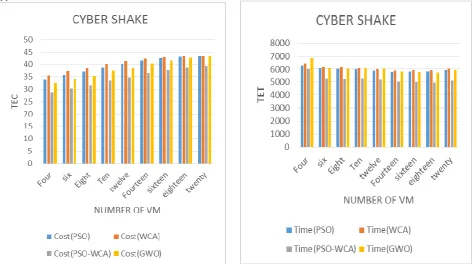
In Table 3 and figure 7 analysis of proposed and exiting approach performance on TET and TEC for cyber shake.in figure 6 show graph its Y-axis TEC and X-axis number of VM. When number of VM increase cost and time increase but in proposed approach it will not as much increase compare to existing approaches. Reason behind improving proposed approach discuss above section
[image:10.595.51.525.132.396.2]
Figure.7 CYBERSHAKE TEC/TET vs. No. of VM
MONTAGE
In Table 3 and figure 7 analysis of proposed and exiting approach performance on TET and TEC for montage.in figure 6 show graph its Y-axis TEC and X-axis number of VM. When number of VM increase cost and time increase
but in proposed approach it will not as much increase compare to existing approaches. Reason behind improving proposed approach discuss above section.
No. of Workflows
Cost (PSO)
Time (PSO)
Cost (WCA)
Time (WCA)
Cost (PSO-WCA)
Time (PSO-WCA)
Cost (GWO)
Time (GWO)
Four 71.7425933 6067.2683 81.74259 6726.258 21.38573 5267.268333 33.386 5981
six 73.6249467 6635.248 83.62495 6839.476 26.740227 5835.248 38.74 6094
Eight 75.4896167 6441.2577 85.48962 6855.841 28.120693 5641.257667 40.121 6111
Ten 77.6937833 6406.9227 87.69378 6952.003 29.331667 5606.922667 41.332 6207
twelve 79.5042 6684.344 89.5042 7022.52 29.738487 5884.344 41.738 6278
Fourteen 81.49138 6729.743 91.49138 6972.275 29.70824 5929.743 41.708 6227
sixteen 83.47643 6618.4733 93.47643 6830.584 29.99229 5818.473333 41.992 6086
eighteen 84.42549 6533.6085 94.42549 6764.14 30.34646 5733.6085 42.346 6019
[image:10.595.19.578.474.654.2]Figure.8 MONTAGE TEC/TET vs. No. of VM
V.CONCLUSION
The environments of cloud computing facilitates the applications through virtualized resources provisioned in a dynamic form. However, the users of the system are charged in term of pay-per-use methodology. User-based applications may acquire large data-based retrieval the cost of execution at the time of scheduling considering the ‘execution time’ only. Additionally, to optimize the execution time, the cost of development from data-based transfers between various resources along with execution cost must be considered as accordingly. In this paper,the authors have presented a scheduling technique based on relatively new swarm approach known as WCA_PSO. This technique shows considerable improvement over PSO in terms of speed of convergence. By using two modes of operation, the algorithm reduces the wastage in terms of time and the wastage of cost in case of VM migration as the process of single optimization take more time in convergence, which effects the decision of VM migration. In this analysis, the proposed approach improves the complex input workflow based on cost and time parameters.
VI. APPENDIX
VI.ACKNOWLEDGMENT
REFERENCES
1. Chowdhury, Nobo, KM Aslam Uddin, Sadia Afrin, Apurba Adhikary, and Fazly Rabbi. "Performance Evaluation of Various Scheduling Algorithm Based on Cloud Computing System." Asian Journal of Research in Computer Science (2018): 1-6.
2. Liu, Li, Miao Zhang, Rajkumar Buyya, and Qi Fan. "Deadline‐constrained coevolutionary genetic algorithm for scientific workflow scheduling in cloud computing." Concurrency and Computation: Practice and Experience 29, no. 5 (2017): e3942. 3. Deore, Prajakta M., and S. M. Jaybhaye. "A Survey on Workflow
Scheduling in Cloud Computing." InternationalJournal of Innovative
Research in Science, Engineering and Technology 6, no. 7 (2017): 2319-8753
4. Kaur, Amanpreet, Bikrampal Kaur, and Dheerendra Singh. "Challenges to task and workflow scheduling in cloud environment." International Journal of Advanced Research in Computer Science 8, no. 8 (2017). 5. Zhu, Zhaomeng, Gongxuan Zhang, Miqing Li, and Xiaohui Liu.
"Evolutionary multi-objective workflow scheduling in cloud." IEEE Transactions on parallel and distributed Systems 27, no. 5 (2016): 1344-1357.
6. Alkhanak, Ehab Nabiel, Sai Peck Lee, Reza Rezaei, and Reza Meimandi Parizi. "Cost optimization approaches for scientific workflow scheduling in cloud and grid computing: A review, classifications, and open issues." Journal of Systems and Software 113 (2016): 1-26. 7. Genez, Thiago AL, Ilia Pietri, Rizos Sakellariou, Luiz F. Bittencourt,
and Edmundo RM Madeira. "A particle swarm optimization approach for workflow scheduling on cloud resources priced by cpu frequency." In Proceedings of the 8th International Conference on Utility and Cloud Computing, pp. 237-241. IEEE Press, 2015.
8. Kaur, Anterpreet. "A Review of Workflow Scheduling in Cloud Computing Environment." International Journal of Computer Science Engineering (IJCSE), (4) (2) (2015): 47-50.
9. Santhosh, B., Harshitha Prachi Kaneria, and D. H. Manjaiah. "Comparative Study of Workflow Scheduling Algorithms in Cloud Computing." International Journal of Innovative Research in Computer and Communication Engineering 2, no. 5 (2014).
10. Sharma, Murli Manohar, and Anju Bala. "Survey paper on workflow scheduling algorithms used in cloud computing." International Journal of Information & Computation Technology 4 (2014): 997-1002. 11. Delavar, Arash Ghorbannia, and Yalda Aryan. "HSGA: a hybrid
heuristic algorithm for workflow scheduling in cloud systems." Cluster computing 17, no. 1 (2014): 129-137.
12. Bilgaiyan, Saurabh, Santwana Sagnika, and Madhabananda Das. "Workflow scheduling in cloud computing environment using cat swarm optimization." In 2014 IEEE International Advance Computing Conference (IACC), pp. 680-685. IEEE, 2014.
13. Singh, Rajwinder, and Pushpendra Kumar Petriya. "Workflow Scheduling in Cloud Computing." International Journal of Computer