An evaluation of a public online
intervention for depression
Kylie Bennett
June 2019
A thesis submitted for the degree of Doctor of Philosophy of The Australian National University
iii
Acknowledgements
I would like to thank my supervisory panel, including Professors Britt Klein and John Cunningham, for their guidance and supervision. Most particularly, I extend my gratitude to Emeritus Professor Kathy Griffiths, the chair of my panel, for her guidance, mentorship and above all for her unwavering belief that I could complete this thesis while working full-time. Kathy is also the co-creator of the
MoodGYM program, which is evaluated in this thesis.
I would also like to thank Anthony Bennett not only for his support at a personal level but also for his IT expertise. Anthony has managed the technical implementation of the MoodGYM program and has enabled the online trials described in this thesis. He has facilitated many PhD projects at the ANU Centre for Mental Health Research, and I am grateful that this has included my project.
iv
Abstract
Depression is a leading cause of disability worldwide, but only a minority of individuals receive evidence-based treatment for the condition. Moreover, there are barriers to accessing effective therapies such as cognitive behaviour therapy (CBT). Internet-delivered CBT (iCBT) is a scalable, accessible and potentially effective alternative to face-to-face CBT. This thesis is a detailed study of the unguided use among spontaneous and other community users of ‘MoodGYM’, a well-known, open-access, automated iCBT program for depression. The thesis comprises two systematic reviews of the effectiveness of iCBT and four empirical studies of MoodGYM, including two observational studies, a partially randomised controlled trial (PRPT) and a randomised controlled trial (RCT). The first review – a synthesis of previous systematic reviews – concluded that iCBT for depression is broadly effective for the treatment of depression. The second review focused specifically on automated interventions which were entirely self-directed and involved no direct human input in their delivery. It found some evidence for the effectiveness of automated iCBT, particularly for adults in community settings. However, findings from controlled efficacy trials may not translate into equivalent user outcomes in real-world settings, and there is a lack of systematically documented information about the user characteristics and outcomes of globally accessible online programs for mental health. Accordingly, the first observational study (N = 417,354) investigated the
characteristics of spontaneous, community users of automated MoodGYM and found they were mostly female, highly educated and had high initial depression scores. Nearly half were referred by a health professional, with male users and those from the U.K. or rural areas more likely to be
vi
Table of Contents
List of Figures ... x
List of Tables ... xiii
1. Introduction ... 1
Background ... 1
Definitions ... 2
The MoodGYM iCBT intervention ... 3
The current thesis ... 8
Research aims ... 8
Outline and contributions of the current thesis ... 9
2. Systematic Review of iCBT for depression ... 11
Introduction ... 11
Method ... 13
Inclusion and exclusion criteria for systematic review ... 13
Search strategy ... 13
Data extraction ... 14
Quality of reviews ... 15
Results ... 16
Search results ... 16
Review characteristics ... 17
Quality of reviews ... 19
Effectiveness of iCBT for depression ... 24
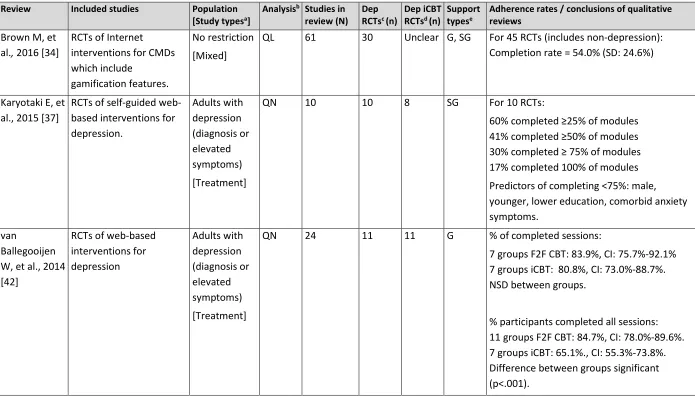
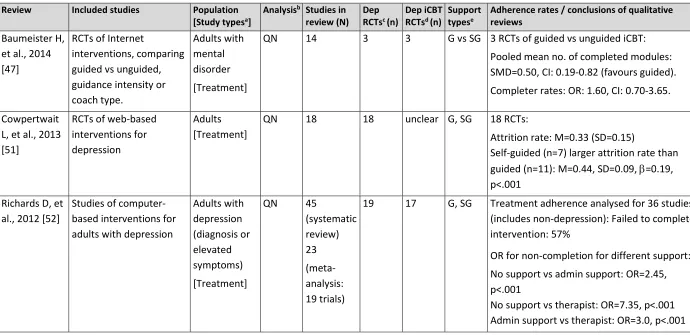
Adherence to iCBT for depression ... 42
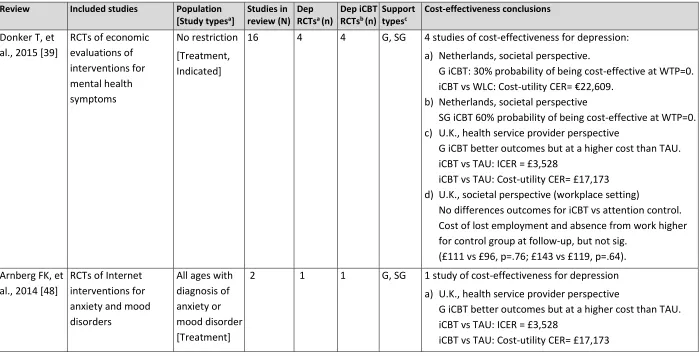
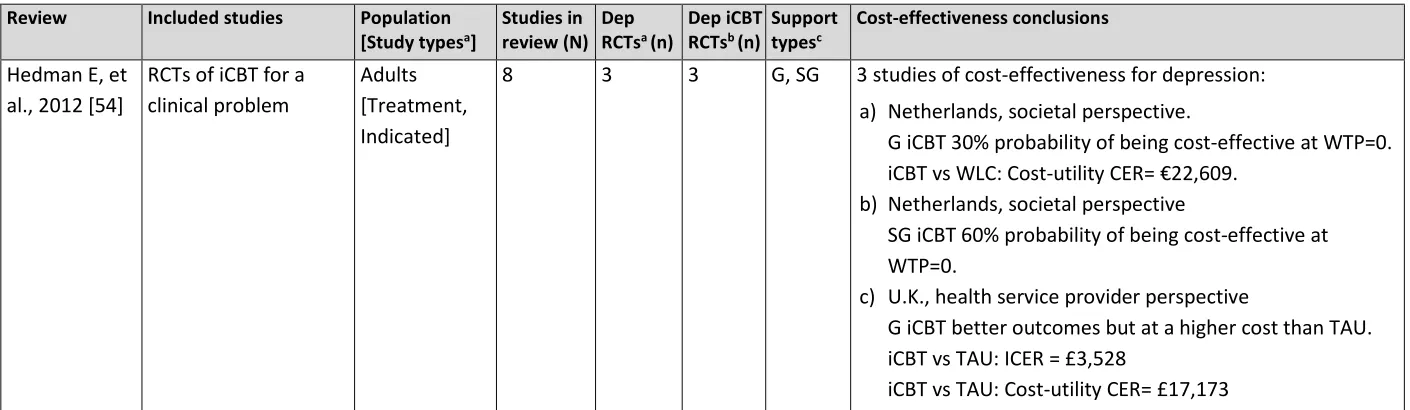
Cost-effectiveness of iCBT for depression ... 48
Discussion ... 51
Effectiveness of iCBT in the treatment and prevention of depression ... 52
The effect of human guidance ... 53
Participant engagement ... 54
Cost-effectiveness ... 54
Limitations ... 55
Conclusion ... 55
3. Unguided automated iCBT for depression: A systematic qualitative review ... 57
Introduction ... 57
The importance of automated iCBT interventions ... 57
The extant literature on the effectiveness of automated iCBT interventions ... 57
The current study ... 58
vii
Inclusion and exclusion criteria for systematic review ... 59
Search strategy ... 60
Data extraction ... 62
Quality of studies ... 62
Results ... 63
Search results ... 63
Study characteristics ... 64
Quality of studies ... 77
Effectiveness of automated iCBT for depression ... 78
Discussion ... 86
Summary of findings ... 86
The effectiveness of self-selected automated iCBT in community settings ... 87
The effectiveness of iCBT in primary care ... 88
The use of iCBT in population with unmet need ... 89
Adherence to automated iCBT interventions ... 90
Limitations ... 91
Conclusion ... 92
4. MoodGYM Spontaneous Community Users: User Characteristics ... 94
Introduction ... 94
The literature on spontaneous iCBT users ... 94
The extant literature on the characteristics of spontaneous MoodGYM community users ... 95
Study aims ... 99
Method ... 99
Participants ... 99
Measures ... 100
Analyses ... 104
Results ... 107
Aim 1: User characteristics ... 107
Aim 2: Comparisons by country ... 119
Aim 3: Referral by a health professional ... 132
Aim 4: Initial depression and anxiety symptom scores ... 137
Discussion ... 155
Summary of results ... 155
User characteristics ... 156
Cross-country comparisons ... 158
Referral by health professionals ... 159
Depression and anxiety symptoms of users ... 161
Limitations ... 162
viii
5. MoodGYM Spontaneous Community Users: Adherence and depression outcomes . 165
Introduction ... 165
Previous reporting of adherence and depression outcomes for spontaneous, community users of MoodGYM ... 166
Study aims ... 170
Method ... 171
Participants ... 171
Measures ... 171
Analyses ... 173
Results ... 175
Aim 1: Adherence and its predictors ... 175
Aim 2: Depression symptom changes ... 192
Discussion ... 200
Summary of results ... 200
User progress through the program ... 202
Changes in depression symptoms of users... 205
Limitations ... 209
Conclusion ... 210
6. Variations of MoodGYM: A Partially Randomised Preference Trial ... 212
Introduction ... 212
The effect of treatment preference and trial design on adherence and outcomes ... 212
The effectiveness of different MoodGYM components ... 215
Current study ... 215
Method ... 217
Participants ... 217
Choice or randomisation ... 218
Conditions ... 219
Measures ... 219
Analyses ... 220
Results ... 224
Aim 1: Predictors, adherence and depression outcomes for choosing versus accepting randomisation ... 227
Aim 2: Relative effectiveness of different MoodGYM module combinations ... 243
Discussion ... 249
Summary of results ... 249
Choice versus randomisation: Adherence and Outcomes ... 250
Which program variants are most effective? ... 253
Limitations ... 254
ix
7. Treatment moderators of MoodGYM ... 257
Introduction ... 257
The literature on moderators and predictors of unguided iCBT for depression ... 257
Current study ... 260
Method ... 261
Participants ... 261
Procedure ... 262
Measures ... 263
Analyses ... 264
Results ... 268
Predictors of improvement in depression outcome ... 270
Moderators of treatment ... 273
Discussion ... 274
Summary of results ... 274
Predictors of depression outcome ... 275
Self-care as a moderator of depression outcome ... 277
Limitations ... 280
Conclusion ... 281
8. Summary and conclusions ... 282
Summary of results ... 282
Systematic reviews of iCBT for depression ... 282
Real-world users: Observational studies of automated iCBT for depression ... 283
Choice and intervention variations: Partially Randomised Preference Trial ... 286
Moderators of automated iCBT for depression ... 287
Implications of research findings ... 288
Conclusions and future research directions ... 291
9. References ... 293
Appendix A: Adapted AMSTAR Checklist Items ... 314
Appendix B: Additional analyses ... 316
B.1. Predicting completion of at least one depression test ... 316
B.2. Predicting number of modules completed ... 318
x
List of Figures
Figure 1.1 (a). Module 1 – Feelings. Introducing the concepts of CBT. ... 4
Figure 1.1 (b). Module 2 - Thoughts. Training in the identification of dysfunctional (warpy) thoughts.4 Figure 1.1 (c). Module 3 - Unwarping. Cognitive restructuring (challenging warpy thoughts) and behavioural activation (pleasant events scheduling). ... 5
Figure 1.1 (d). Module 4 - Destressing. Stressful events and relaxation training. ... 5
Figure 1.1 (e). Module 5 - Relationships. Problem-solving training and coping with relationship issues. ... 6
Figure 1.2. Screenshot from the MoodGYM program (Version 3) - Depression Quiz. ... 7
Figure 1.3. Screenshot from the MoodGYM program (Version 3) - Depression assessment results and feedback. ... 7
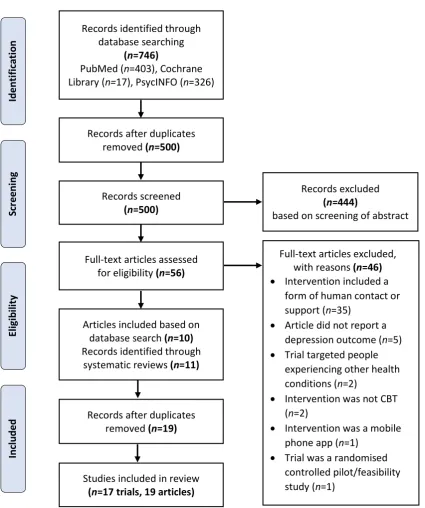
Figure 2.1. Preferred reporting items for systematic reviews and meta-analysis (PRISMA) diagram displaying procedure for selecting reviews ... 17
Figure 3.1. Preferred reporting items for systematic reviews and meta-analysis (PRISMA) diagram displaying procedure for selecting articles ... 64
Figure 3.2. Year of publication (first article) for studies included in the systematic review. ... 74
Figure 4.1. Number of new user registrations (eligible participants), by month (n=409,111). ... 109
Figure 4.2. Age group and gender of MoodGYM users (N=417,354). ... 111
Figure 4.3. Percentage of MoodGYM users within each age group who were male (N=417,354). ... 112
Figure 4.4. Education level of MoodGYM users (N=317,354). ... 113
Figure 4.5. How personal users found the MoodGYM program (N=417,354). ... 114
Figure 4.6. How users found MoodGYM, by month of registration n=407,030. ... 115
Figure 4.7. Self-reported number of evidence-based treatments for depression used by MoodGYM users (N=417,354). ... 116
Figure 4.8. Percentage of MoodGYM users who endorsed using each treatment option to cope with depression (N=417,354). ... 117
Figure 4.9. User responses to whether they have used CBT to help cope with depression (N=317,354). ... 118
Figure 4.10. Percentage of users who are male, by country (n=340,313). ... 119
Figure 4.11. Age groups of MoodGYM users by country (n=340,313). ... 121
Figure 4.12. Age groups by gender of MoodGYM users, by country (n=340,313). ... 123
Figure 4.13. Percentage of MoodGYM users within each age group who are male, by country (n=340,313). ... 124
Figure 4.14. Percentage of MoodGYM users from rural/remote region, by country (n=340,313). ... 125
xi Figure 4.16. Percentage of users who found MoodGYM via different pathways, by country
(n=338,668). ... 128
Figure 4.17. Percentage of 'motivated' MoodGYM users, by country (n=340,313). ... 131
Figure 4.18. Initial depression scores for male and female users (n=372,442). ... 138
Figure 4.19. Initial anxiety scores for male and female users (n=368,981). ... 138
Figure 4.20. Mean initial depression and anxiety scores (+/- SD), by age group (n=372,442 depression; n=368,981 anxiety). ... 139
Figure 4.21. Mean initial depression score (+/- SD), by age group and gender (n=372,442). ... 141
Figure 4.22. Mean initial anxiety score (+/- SD), by age group and gender (n=368,981). ... 141
Figure 4.23. Mean initial depression and anxiety scores (+/- SD) for users from top four countries (n=304,041, depression; n=301,374, anxiety). ... 143
Figure 4.24. Mean initial depression and anxiety scores (+/- SD), by users’ education level (n=372,442, depression; n=368,981, anxiety). ... 145
Figure 4.25. Mean initial depression and anxiety scores (+/- SD) as a function of the number of depression treatments previously tried (n=372,442, depression; n=368,981, anxiety). ... 149
Figure 5.1. Number of users who completed introductory surveys and commenced Module 1 (N=417,354 registrants). ... 176
Figure 5.2. Number of logins for users who commenced Module 1 (n=339,745). ... 189
Figure 5.3. Time on the program (rounded minutes) for users who commenced Module 1 (n=339,756). ... 191
Figure 5.4. Estimated mean changes in depression score by number of modules completed for users from the top four countries (n=106,882). ... 193
Figure 5.5. Estimated mean changes in depression score by number of logins for users from the top four countries (n=106,882). ... 194
Figure 5.6. Estimated mean changes in depression score by time spent on the program for users from the top four countries (n = 106,882). ... 195
Figure 5.7. Estimated mean changes in depression score by time between pre-test and post-test for users from the top four countries (n=106,882). ... 196
Figure 6.1. Text displayed to eligible trial participants. ... 218
Figure 6.2. Number of users who were included and excluded from the trial (N=41,283 registered users). ... 225
Figure 6.3. Number of trial participants who chose or were assigned to each condition (n=23,988). ... 226
Figure 6.4. Number of modules completed by participants who received Condition 1, by choice status (chose: n=715; randomised: n=984). ... 234
xii Figure 6.6. Number of modules completed by participants who received Condition 3, by choice
status (chose: n=2,296; randomised: n=1,016). ... 235 Figure 6.7. Number of modules completed by participants who received Condition 4, by choice
status (chose: n=295; randomised: n=1,004). ... 235 Figure 6.8. Number of modules completed by participants who received Condition 5, by choice
status (chose: n=155; randomised: n=1,006). ... 236 Figure 6.9. Number of modules completed by participants who received Condition 6, by choice
status (chose: n=13,273; randomised: n=6,043). ... 236 Figure 6.10. Numbers of randomised participants who received the intervention, by condition
(n=7,794). ... 245 Figure 6.11. Number of modules completed by participants who received their condition (n=6,303).
... 246 Figure 6.12. Estimated marginal means for Goldberg Depression score as a function of measurement
xiii
List of Tables
Table 2.1. Search strategy for systematic review ... 14
Table 2.2. The focus of reviews included in the current systematic meta-review. ... 18
Table 2.3. AMSTAR item ratings for systematic reviews included in the current systematic meta-review. ... 20
Table 2.4. Characteristics of systematic reviews examining effectiveness included in the current systematic meta-review. ... 25
Table 2.5. Characteristics of systematic reviews examining adherence included in the current systematic review. ... 43
Table 2.6. Characteristics of systematic reviews examining cost-effectiveness included in the current systematic review. ... 49
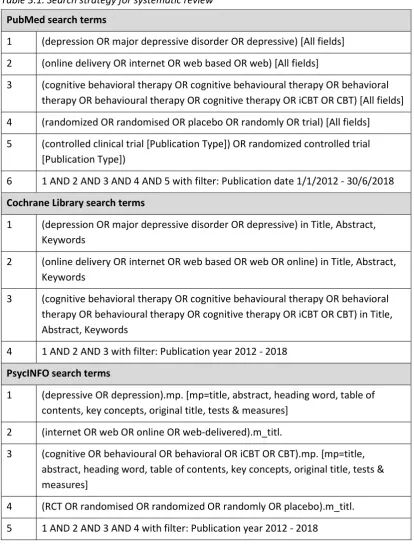
Table 3.1. Search strategy for systematic review ... 61
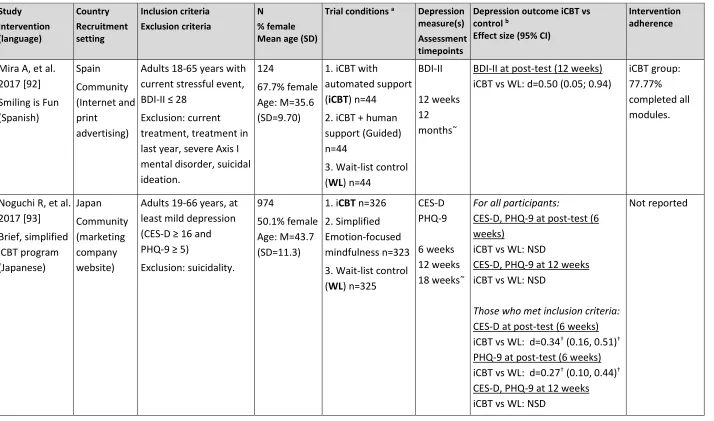
Table 3.2. Characteristics of studies included in the current systematic review. ... 65
Table 3.3. Assessment of quality criteria for studies included in the current systematic review. ... 78
Table 4.1. User characteristics reported in studies of spontaneous MoodGYM community users ... 96
Table 4.2. Additional reason for visiting MoodGYM (eligible participants, N=417,354). ... 107
Table 4.3. Average seasonal effect on new registration numbers, for each month of the year. ... 110
Table 4.4. Country of registration (“Which country are you logging in from?”, N=417,354). ... 112
Table 4.5. MoodGYM user responses to the Motivation item (N=417,354). ... 118
Table 4.6. Chi-square test statistics: Gender by pairwise country comparisons ... 120
Table 4.7. Chi-square test statistics: Age group by pairwise country comparisons. ... 122
Table 4.8. Chi-square test statistics: Rural or not, by pairwise country comparisons. ... 125
Table 4.9. Chi-square tests: Education level by pairwise country comparisons. ... 127
Table 4.10. Contingency table and adjusted residuals for Chi-square tests between each country and method of finding the program. ... 130
Table 4.11. Chi-square test statistics: Motivation by pairwise country comparisons. ... 132
Table 4.12. Whether users were referred by a health professional, by demographic characteristics and motivation level (n=340,313). ... 133
Table 4.13. Logistic regression model test statistics for referral by a health professional. ... 134
Table 4.14. Prediction success rates for logistic regression models (dependent variable: referral by a health professional). ... 135
Table 4.15. Hierarchical logistic regression results for predicting whether a user was referred by a health professional (n=340,313). ... 136
xiv Table 4.17. Games-Howell post hoc analysis of initial depression and anxiety scores for age by
gender sub-groups – comparisons between male and female users for each age group. ... 142
Table 4.18. Games-Howell post hoc analysis of initial depression and anxiety scores – comparisons between countries. ... 144
Table 4.19. Games-Howell post hoc analysis of initial depression and anxiety scores – comparisons between education levels. ... 146
Table 4.20. Mean depression and anxiety scores for users included in the linear regression analyses, by sub-groups (n=301,373). ... 150
Table 4.21. Multiple regression predicting initial Goldberg Depression score (n=340,313). ... 153
Table 4.22. Multiple regression predicting initial Goldberg Anxiety score (n=340,313). ... 154
Table 5.1. Adherence and depression outcomes reported in studies of spontaneous MoodGYM community users. ... 167
Table 5.2. Whether or not users from the top four countries started Module 1, by registration characteristics (n=340,313). ... 177
Table 5.3. Logistic regression model test statistics. ... 179
Table 5.4. Logistic regression results for predicting commencement of Module 1 (n=340,313). ... 179
Table 5.5. Number of modules completed by users who commenced Module 1 (n=339,759). ... 181
Table 5.6. Characteristics of top four country users who completed zero, one or more than two modules (n=278,151). ... 183
Table 5.7. Multinomial logistic regression model test statistics. ... 185
Table 5.8. Multinomial regression results for predicting completion of one module compared to zero modules, and two or modules compared to zero modules (n=278,151). ... 186
Table 5.9. Number of logins for users who commenced Module 1 (n=339,756). ... 190
Table 5.10. Number of minutes spent on the program, for users who commenced Module 1 (n=339,756). ... 191
Table 5.11. Pearson Correlation coefficients (r) for pairs of adherence measures (n=106,882). ... 196
Table 5.12. Multivariate regression model test statistics for depression change score. ... 197
Table 5.13. Hierarchical multivariate regression predicting depression change score (n=106,882). 198 Table 6.1. Choice status, by registration characteristics and mean baseline scores (n=23,988). ... 228
Table 6.2. Logistic regression model test statistics for choosing versus accepting randomisation. .. 230
Table 6.3. Logistic regression results for predicting choosing condition versus accepting randomisation (n=19,316). ... 231
Table 6.4. Numbers of participants in each condition who commenced Module 1 and completed their program, by choice status (n=19,316). ... 233
xv Table 6.6. Logistic regression model test statistics for completion of two or more depression
assessments. ... 238 Table 6.7. Logistic regression results for predicting completion of at least two depression tests. ... 239 Table 6.8. Baseline, post-test and change in depression scores, by choice status (n = 6,211). ... 241 Table 6.9. Multivariate regression model test statistics for depression change score. ... 242 Table 6.10. Hierarchical multivariate regression predicting depression change score (n=6,211). .... 242 Table 6.11. Baseline characteristics and depression symptom scores for randomised participants, by
condition (n=7,794). ... 244 Table 6.12. Number and percentage of participants completing available depression assessments, by
condition (n=6,303). ... 247 Table 7.1. Baseline survey characteristics of participants, by condition (n=3,070)... 269 Table 7.2. Potential predictors of CES-D scores (n=3,070). ... 271 Table 7.3. Three-way interactions of time x condition x potential moderator, for potential treatment
moderators of CES-D scores (n=3,070). ... 273 Table 7.4. Potential predictor variables considered in models of depression outcome. ... 276 Table 7.5. Potential treatment moderator variables considered in models of depression outcome.279 Table 8.1. Summary of user characteristics and predictors among community MoodGYM users. ... 285 Table 8.2. Summary of predictors of choice status (Chapter 6, n=19,316). ... 287 Table B.1. Logistic regression model test statistics. ... 316 Table B.2. Logistic regression results for predicting completion of at least one depression test
(n=340,313). ... 317 Table B.3. Multinomial logistic regression model test statistics... 318 Table B.4. Multinomial regression results for predicting completion of one module compared to zero
Page | 1
1.
Introduction
Background
There is a high prevalence of depressive disorders worldwide. In 2015, over 300 million individuals were estimated to suffer from depression (approximately 4.4% of the global population) [1]. Depression is a major contributor to the global burden of disease [2] and the leading cause of disability worldwide, with over 50 million Years Lived with Disability (YLDs) estimated in 2015 [1].
There are effective treatments for depression. However, the majority of individuals with depression do not receive evidence-based treatment (e.g., [3]). Barriers to receiving treatment include cost, insufficient access to services, lack of mental health literacy, stigma and a preference for self-reliance rather than professional help [4].
One effective treatment for depression is cognitive behaviour therapy (CBT) [5] – a psychological therapy traditionally delivered face-to-face by an appropriately trained psychologist or other mental health professional. Technology advances over the last 30 years, including the proliferation of personal computers and more recently, the widespread use of the Internet, have increasingly been incorporated into models of CBT delivery [6, 7, 8]. Such innovation potentially removes barriers to accessing treatment – for example, CBT delivered via video-conferencing removes access barriers related to distance [9], CBT training programs on stand-alone computers decreases the impact of a lack of trained therapists [10], and online CBT training programs can potentially circumvent the barrier of stigma associated with mental health problems if they can be accessed anonymously [11].
In particular, Internet-delivered CBT (iCBT) programs for depression which are fully automated (that is, do not employ any direct human input in their delivery) offer enormous potential at a global level since they are highly scalable. Once developed, such interventions can be delivered to large numbers of individuals at a low incremental cost [12]. Combined with the global reach of the Internet, this creates an opportunity to provide accessible, anonymous treatment resources to the millions of individuals worldwide with depression and depressive symptoms. If such programs are shown to be effective for the treatment of depression, the provision of wide-spread or open-access iCBT could produce a significant public health impact.
Page | 2
Definitions
A number of terms associated with Internet-based cognitive behaviour therapy are used throughout the thesis. In the interests of clarity and to avoid ambiguity, these terms, as they are employed in this thesis, are defined briefly below.
Internet-delivered CBT (iCBT): An intervention which predominantly teaches CBT techniques, and which is delivered through the Internet, accessible as a website through a web browser. CBT delivered through a smartphone app is not classified as iCBT within this thesis.
Computerised CBT (cCBT): An intervention which predominantly teaches CBT techniques, and which is delivered on a stand-alone computer, for example through a CD-ROM.
Guided intervention: An intervention which includes human guidance as a therapeutic component. For example, guidance could be provided by a therapist, health professional, lay person or coach, and might consist of phone calls, web chat or emails on either a regular basis or to provide feedback on completed activities.
Unguided or self-guided intervention: An intervention which does not include any human guidance as a therapeutic component. The provision of self-guided interventions may include human support (or contact from researchers in research settings) which is not directly related to the intervention content.
Automated intervention: A type of unguided intervention which does not include any human
guidance or direct human input for its delivery. The provision of automated interventions in research settings does not include any human-initiated contact. For example, a trial protocol which involves weekly phone calls from a research assistant in addition to use of an unguided intervention would not be classified as an automated intervention. Open-access intervention: An intervention which is publicly available to all individuals with Internet access. Users of an open-access intervention can access the intervention at any time, from any location.
Spontaneous, community users: Individuals who access open-access interventions outside of research contexts.
Page | 3 Drop-out: When a research participant fails to complete a post-intervention or follow-up outcome measure. Note that drop-out does not refer to (lack of) user adherence to an intervention.
Completer: A research participant who completes all outcome measures that are specified in a research protocol. Note that completer does not refer to user adherence to the intervention.
The MoodGYM iCBT intervention
The empirical studies in this thesis focus solely on the online program MoodGYM. One of the first automated iCBT programs to be delivered as an open-access intervention, MoodGYM was developed by researchers at the Australian National University and launched in 2001. To access the program, spontaneous, community users are required to agree to the terms of use and register with a
username and password which they can use to access the program at any time. At registration users also complete a brief survey which includes demographic and other questions.
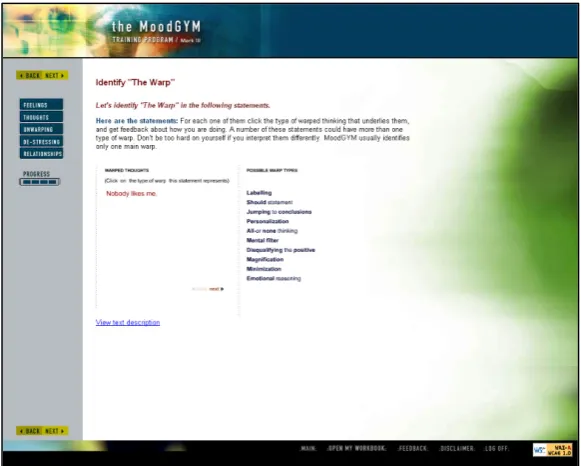
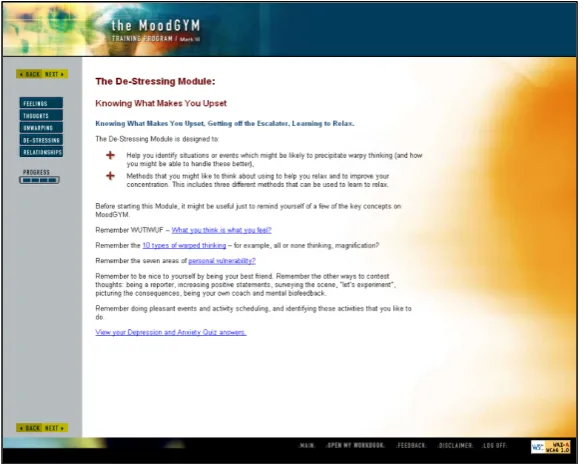
A detailed description of MoodGYM can be found in the MoodGYM Clinician’s Manual [13]. In summary, MoodGYM is structured as five modules which provide CBT training through character stories, quizzes, interactive exercises and diaries. The program content specifically addresses depression and does not focus on comorbid conditions such as anxiety or insomnia. The first
Page | 4 Figure 1.1 (a). Module 1 – Feelings. Introducing the concepts of CBT.
[image:19.595.71.361.69.302.2] [image:19.595.71.362.343.576.2]Page | 5 Figure 1.1 (c). Module 3 - Unwarping. Cognitive restructuring (challenging warpy thoughts) and behavioural activation (pleasant events scheduling).
[image:20.595.71.359.69.376.2] [image:20.595.71.363.431.663.2]Page | 6 Figure 1.1 (e). Module 5 - Relationships. Problem-solving training and coping with relationship issues.
The MoodGYM modules must be completed in linear order for the user to progress through the program. Modules 2 and 3 rely on the content taught and build on the responses provided by the user in the previous modules; however, Modules 4 and 5 do not. The program makes extensive use of interactive exercises in which the user practices identifying, categorising and reframing
dysfunctional thoughts. As part of their use of the program users are encouraged to make text entries in workbooks and diaries, and the program also includes a workbook to review exercises and quizzes or to add entries to diaries. The program does not include any video. Use of the program is completely self-directed and there are no automated emails or other prompting messages such as text messages.
At the beginning of each module, users must complete a Depression and Anxiety symptom scale and are immediately provided with feedback about their level of symptoms, based on normative
community data. Users with high numbers of depression or anxiety symptoms are encouraged to seek professional face-to-face help, and all users are provided with information about different sources of help. However, program access is not restricted based on user symptom levels – all users can continue to access the content regardless of their level of symptoms. Figure 1.2 shows a
Page | 7 Figure 1.2. Screenshot from the MoodGYM program (Version 3) - Depression Quiz.
Page | 8 Directing users to other services does raise the possibility that any improvement in MoodGYM user symptoms is attributable to the help-seeking behaviour that the feedback might generate. Research on the impact of online depression interventions on help-seeking behaviour is sparse. One small randomised controlled trial (RCT) found that a brief, online intervention providing normative feedback and sources of help for depression and anxiety did not significantly affect help-seeking behaviour in a sample of elite athletes [14]. Likewise, a recent systematic review of interventions to promote help-seeking for mental health problems found that there was no evidence from four RCTs that online interventions were effective for increasing help-seeking behaviours in users [15].
However, notwithstanding the potential barriers to accessing other services which may have brought the user to MoodGYM, the possibility that users access alternative resources on the recommendation of the intervention cannot be excluded, particularly in observational studies of real-world program users.
MoodGYM was first released for public use in April 2001. Version 2 of the program, released in September 2003, delivered technical improvements and bug fixes to the original program. This version also introduced the requirement for users to complete core depression and anxiety assessments before progressing through the program. In March 2009 Version 3 was released on a new software platform, which enabled larger numbers of concurrent users and enhanced capabilities for research and translation. The content of this version was identical to the previous versions and translations for Norwegian, Finnish, German, Chinese and Dutch languages were also added. The program was implemented with a traditional website design and was not responsive for display on devices with smaller screens (such as smartphones)1.
The current thesis
Research aims
The aim of the current thesis is to understand the potential public health impact of an automated, open-access iCBT program for depression by examining the unguided use of the MoodGYM program by community users, including user characteristics, program usage and depression outcomes. Additionally, the thesis considers how this impact might be maximised by asking: Which modules are
1 The program’s user experience was significantly updated when the Version 4 was released in July 2017. This
most recent version includes technology improvements to ensure compatibility with modern delivery
Page | 9 most important for depression improvement?; Does user preference impact outcomes?; and Who benefits most from automated iCBT?
Outline and contributions of the current thesis
The current thesis comprises eight chapters. Following the current brief Introduction (Chapter 1), Chapters 2 and 3 explore the extant literature on the effectiveness of iCBT for the treatment or prevention of depression. Chapter 2 is a systematic meta-review of existing systematic reviews of randomised controlled trials (RCTs) that have examined the effectiveness of iCBT for depression. The review extends previous meta-reviews by considering the effectiveness of both guided and unguided iCBT interventions: including the use of iCBT for the prevention as well as the treatment of
depression; not restricting the target population groups; and including reviews which focus on participant adherence to iCBT and the cost-effectiveness of iCBT for depression. Chapter 3 then specifically considers the evidence for the effectiveness of automated iCBT interventions. Although previous systematic reviews have considered unguided iCBT more generally (including
non-automated interventions) or, in addition have also included trials of non-iCBT interventions, to our knowledge, this is the first systematic review to focus specifically on RCTs of automated iCBT for depression.
The thesis then explores the characteristics and depression outcomes of ‘real-world’ spontaneous, community users of the open-access MoodGYM program. In the largest and most comprehensive study of its type to date, Chapters 4 and 5 examine a sample of over 400,000 spontaneous users who registered on the publicly available website over a period of approximately 5 years from March 2009. The observational study described in Chapter 4 examines the characteristics of these users and compares demographic characteristics and user pathways to the program, based on the country of registration. The study also investigates whether demographic sub-groups of these spontaneous users are more likely to have been referred to the program by a health professional or to have higher baseline depression symptoms. Chapter 5 then investigates the usage patterns and depression outcomes for these spontaneous users, and in particular, whether improved depression outcomes can be predicted by demographic or other variables. These variables include the user’s level of motivation and their understanding of CBT – potentially modifiable factors which have not previously been examined in the context of outcomes for spontaneous users.
Page | 10 critical for improving symptoms in users. For this study (N = 23,988), spontaneous, community users were recruited to a Partially Randomised Preference Trial (PRPT), which allowed users to either choose or be randomised to one of several versions of MoodGYM that differ in module composition (e.g., the first module only vs the first and second modules combined). The design of this study also allows the first analysis of the role of preference on user adherence and depression outcomes by examining whether users who choose their intervention version are more likely to complete their program and/or have superior depression outcomes to users who are randomised. In addition, the demographic and clinical characteristics of users who choose (rather than agree to be randomised) are examined.
Chapter 7 presents a secondary analysis of data from an RCT of automated MoodGYM (N = 3,070), which recruited participants via the United Kingdom National Health Services consumer health information portal, NHS Choices, and in which participants were randomised to either receive MoodGYM or were placed in a wait-list control condition. The RCT design enables potential moderators of iCBT treatment to be explored – that is, whether there are demographic or baseline clinical characteristics of participants which affect depression outcomes for participants in the iCBT condition but not in the control condition. This study extends the limited existing research into moderators of iCBT treatment, to help understand which users might benefit most from automated iCBT. Although the study was undertaken in a research trial context (which is necessary for
moderator research since a control condition is required for comparison), the setting approximates that of spontaneous, community users. In order to consider the data in the context of the earlier chapters in the thesis, predictors of depression improvement (across both conditions) are also investigated.
Page | 11
2.
Systematic Review of iCBT for depression
Introduction
The first randomised controlled trial (RCT) of an iCBT intervention for depression, which evaluated the effectiveness of the ‘Overcoming Depression on the Internet’ (ODIN) program, was published by Clarke et al. in 2002 [16]. Although this initial study did not find an effect for the intervention compared to a control condition, there has since been a rapid growth of RCTs evaluating iCBT for depression. There has also been a corresponding growth in the publication of systematic reviews of RCTs of iCBT for depression since the first such reviews were published in 2006 [17, 18].
Despite the large number of systematic reviews of depression iCBT, to date, there have only been two published reviews of these reviews [19, 20]. In 2011, Foroushani and colleagues conducted a meta-review of systematic reviews focusing on the efficacy of computerised CBT (including iCBT) for depression in adults (with or without anxiety) [19]. The aim of this review was to examine the efficacy of iCBT in the treatment of depression, with an emphasis on the available evidence for individual programs. Twelves reviews were included in the analysis, which incorporated an
evaluation of five specific programs. The authors ‘cautiously’ concluded that certain cCBT packages, specifically ‘MoodGYM’, ‘Beating the Blues’ and ‘Colour Your Life’, can have a positive effect on symptoms of depression but emphasised that the evidence was ‘limited’ [19]. The review also noted that cost-effectiveness information was only available for the Beating the Blues intervention, from one published paper included in one of the reviews.
A more recent, but more general review examined meta-analyses of Internet-delivered health interventions, including but not limited to iCBT for depression [20]. The aim of this 2017 review was to identify publicly available and effective self-help interventions through a search of meta-analyses of RCTs of interventions delivered over the Internet that included at least one intervention not guided by a clinician/therapist and which reported any health-related outcome. Overall, 71 meta-analyses were identified, comprising 268 unique RCTs of unguided Internet interventions, of which 15 RCTs evaluated depression iCBT programs. Of the depression interventions evaluated in these RCTs, four were publicly available (MoodGYM, ‘BluePages’, ‘Deprexis’, Colour Your Life). The review concluded that all four websites were associated with a reduction in depression symptoms. Three of the websites offered iCBT, whereas BluePages provided psycho-education.
Page | 12 effectiveness of interventions for the treatment of depression but also their effectiveness for
depression prevention. Evidence needs to be assembled not only for adult populations but also for youth at a time of the first emergence of depression and a critical period for preventive intervention. The delivery model of different interventions is also pertinent – particularly whether evaluated programs are guided by a clinician, lay person or other coach, or are self-guided. This is especially important given that different models are associated with different resource implications and accessibility considerations. The extent to which iCBT program users engage with interventions (user adherence) and whether the delivery of programs is cost-effective are also highly relevant. Finally, a consideration of the quality of the evidence is critical when undertaking a review.
A number of the above factors were not considered by one or both of the extant meta-reviews. The very broad 2017 review [20] covered all health conditions but contained little discussion of
depression specifically. Its emphasis was on dissemination and the availability of websites for which evidence was available, rather than on the quality of this evidence. The review also focused on self-help programs rather than iCBT specifically and did not examine user adherence or
cost-effectiveness.
The Foroushani review [19] was focused on reviews of cCBT for depression. However, the review was limited to adult populations and treatment interventions. Study quality and bias were examined, as was cost-effectiveness; however, the review did not consider user adherence. Moreover, the review is no longer current, given the ongoing exponential growth in research involving iCBT interventions.
To address the limitation of the existing reviews, the current study is a systematic meta-review of all previous systematic reviews involving RCTs of the effectiveness of iCBT for the treatment or
prevention of depression. Unlike the previously published meta-reviews, this review does not seek to specifically examine the evidence for particular programs but rather examines the effectiveness of unguided and guided iCBT interventions in general. The review also expands the 2011 review by including non-adult (youth) study populations, and by examining the use of iCBT for the prevention of depression (as well as for treatment). In addition, the current meta-review includes reviews which focus on participant adherence to iCBT interventions and the cost-effectiveness of iCBT for
Page | 13
Method
The current meta-review was guided by the Preferred Reporting Items for Systematic Reviews and Meta-Analysis ‘PRISMA’ statement [21]. Database searches, data extraction and quality ratings were undertaken by a single reviewer (the candidate).
Inclusion and exclusion criteria for systematic review
Reviews were eligible for inclusion if they:
i) involved a systematic review of research trials of the effectiveness or cost-effectiveness of Internet-delivered CBT interventions for depression;
ii) included at least one randomised controlled trial which:
a) examined the effectiveness or cost-effectiveness of iCBT (either guided or unguided);
b) targeted users with depression or which aimed to prevent depression in users; and
c) reported data relating to effectiveness, cost-effectiveness or user adherence to the intervention;
iii) were published in a peer-reviewed, English language journal; and iv) were published after January 2000 and before August 2017.
Reviews were excluded if they were concerned with depression only as a comorbidity of a physical disorder or another mental health condition, or with depression in carers of people with a physical or mental disorder. In addition, reviews which included studies of cCBT but not studies of Internet-delivered CBT were excluded. Reviews were also excluded if they were a review of other systematic reviews.
Search strategy
Page | 14 Table 2.1. Search strategy for systematic review
PubMed search terms
1 (depressive OR depression OR dysthymia OR mood OR mental) [Title/Abstract]
2 (internet OR web OR online OR web-delivered) [Title]
3 (intervention OR treatment OR prevention OR CBT OR therapy) [Title/Abstract] 4 (systematic OR review OR meta-analysis OR metaanalysis OR meta-analytic)
[Title]
5 1 AND 2 AND 3 AND 4
Cochrane Library search terms
1 (depressive OR depression OR dysthymia OR mood OR mental) in Title, Abstract, Keywords
2 (internet OR web OR online OR web-delivered) in Record Title
3 (intervention OR treatment OR prevention OR CBT OR therapy) in Title, Abstract, Keywords
4 1 AND 2 AND 3
PsycINFO search terms
1 (depressive OR depression OR dysthymia OR mood OR mental).mp. [mp=title, abstract, heading word, table of contents, key concepts, original title, tests & measures]
2 (internet OR web OR online OR web-delivered).m_titl.
3 (intervention OR treatment OR prevention OR CBT OR therapy).mp. [mp=title, abstract, heading word, table of contents, key concepts, original title, tests & measures]
4 (systematic OR review OR analysis OR metaanalysis OR meta-analytic).m_titl.
5 1 AND 2 AND 3 AND 4
Data extraction
Page | 15 cost-effectiveness); the type of trials included; the population targeted by the review; the total number of trials included in the review; how many of these trials evaluated interventions for depression which used technology; how many trials evaluated iCBT interventions for depression; whether the included trials involved guided or self-guided interventions, or both; and the results of the reviews (including overall effect sizes for quantitative reviews where calculated).
Quality of reviews
The quality of included systematic reviews was assessed against the ‘AMSTAR’ (Assessing the Methodological Quality of Systematic Reviews) tool [22] as adapted by Kim et al. [23]. A previous systematic review of nine studies evaluating the measurement properties of the AMSTAR concluded that it was reliable and valid for use in RCT designs [24].
The adapted AMSTAR (see Appendix A: Adapted AMSTAR Checklist Items) included 11 checklist items to assess different aspects of the quality of systematic reviews, including whether the review:
specified the research aims (Item 1); employed independent raters for data selection/extraction (Item 2); detailed a comprehensive search process (Item 3); clearly reported inclusion and exclusion criteria (Item 4); provided a list of included studies (Item 5); detailed the characteristics of included studies (Item 6); assessed and documented the scientific quality of included studies (Item 7); formulated conclusions based on the scientific quality of the included studies (Item 8); used appropriate methods to combine the study results (Item 9); assessed the likelihood of publication bias (Item 10); and acknowledged sources of funding and conflicts of interest (Item 11).
Page | 16
Results
Search results
Page | 17 Figure 2.1. Preferred reporting items for systematic reviews and meta-analysis (PRISMA) diagram displaying procedure for selecting reviews
Review characteristics
Focus
Most of the 46 included reviews (n = 41, 89.1%) focused on the effectiveness of interventions in reducing or preventing depression symptoms or depressive disorder. Of these 41 systematic reviews of effectiveness, 21 were quantitative and reported a meta-analysis of the included trials. Seven reviews (15.2%) focused on participant adherence to interventions in the trials reviewed – four
Records excluded
(n=81)
based on screening of abstract
Full-text articles excluded, with reasons
(n=26)
• Trials targeted people experiencing other health conditions (n=13)
• Trials did not include any iCBT interventions for depression (n=3) • Trials focused on outcomes for carers of
people with health conditions (n=3) • Trials did not include depression
outcome (n=1)
• Trials focused on interventions for comorbid depression & anxiety (n=1) • Review not systematic (n=1)
• Review of other reviews (n=1) • Protocol (n=1)
• Non-English journal (n=2) • Not journal article (n=1) Records identified through
database searching (n=211)
PubMed (n=103), Cochrane Library (n=24), PsycINFO
(n=94)
Records after duplicates removed (n=144)
Records screened
(n=144)
Full-text articles assessed for eligibility
(n=62)
Reviews included based on database search (n=36)
Records identified through reference lists
(n=10)
Reviews included in current analysis (n=46)
Page | 18 exclusively reported on adherence and three reviews also reported on trials of effectiveness. Three reviews (6.5%) focused on cost-effectiveness, with two of these studies also including studies of effectiveness. Table 2.2 shows the number of reviews which focused on each of effectiveness, adherence, cost-effectiveness, or combinations of these.
Table 2.2. The focus of reviews included in the current systematic meta-review.
Focus of review: Number of reviews:
Effectiveness only 36
Adherence only 4
Cost-effectiveness only 1
Effectiveness and adherence 3 Effectiveness and cost-effectiveness 2
Total 46
Types of trials
Nearly half of the included reviews (n = 21, 45.7%) were confined to studies of the treatment of depression, involving participants with a depression diagnosis or elevated symptoms of depression as measured by a validated depression screening test. A small number of reviews (n = 3, 6.5%) focused exclusively on studies of the prevention of depression (n = 1 indicated trials involving participants with depressive symptoms which did not meet diagnostic criteria; n = 1 universal trials comprising participants selected regardless of their level of depressive symptoms; and n = 1 trials involving a mix of indicated, selective and universal prevention trials). Three reviews (6.5%) were restricted to trials targeting perinatal populations and included both selective prevention (targeting groups at risk of depression) and treatment trials. The remaining 19 included reviews (41.3%) included both prevention and treatment trials.
Population
Page | 19
Quality of reviews
The ratings for each of the 46 included reviews on the modified 11-item AMSTAR tool are displayed in Table 2.3. The average cumulative score across reviews was 9.0 (out of a possible score of 11), indicating that overall, the systematic reviews were of high quality.
All 46 reviews clarified the research purpose of the systematic review (modified Item 1), and all but one review (97.8%) described a comprehensive literature search (Item 3) and provided a list of included studies (Item 5). Most reviews detailed the characteristics of included studies (Item 6; n = 44, 95.7%) and clearly specified the inclusion and exclusion criteria (modified Item 4; n = 42, 91.3%). Just over three-quarters of the reviews (n = 35, 76.1%) included a conflict of interest statement and acknowledgement of funding sources (Item 11).
Page | 20 Table 2.3. AMSTAR item ratings for systematic reviews included in the current systematic meta-review.
1 2 3 4 5 6 7 8 9 10 11
Suma Research
purpose clear
Duplicate selection/ extraction
Wide-ranging
search
Clear
criteria studies List of Details of studies assessed Quality considered Quality methods Suitable combine
Publication bias assessed
Conflict of interest
stated Sztein DM, et al.,
2017 [26] Y Y Y Y Y Y Y Y Y Y Y 11
Lau, Y, et al., 2017
[27] Y Y Y Y Y Y Y Y Y Y Y 11
Karyotaki E, et al.,
2017 [28] Y Y Y Y Y Y Y Y Y Y Y 11
Josephine K, et al.,
2017 [29] Y Y Y Y Y Y Y Y Y Y N 10
Zhou, T, et al.,
2016 [30] Y Y Y Y Y Y Y Y Y N Y 10
Sander L, et al.,
2016 [31] Y Y Y Y Y Y Y Y Y N Y 10
Lee, EW, et al.,
2016 [32] Y Y Y Y Y Y Y Y N/A N Y 10
Ebert DD, et al.,
2016 [33] Y C/A Y Y Y Y Y Y Y Y Y 10
Brown M, et al.,
2016 [34] Y Y Y Y Y Y Y N N/A N Y 9
de BitenCourt MD,
et al., 2016 [35] Y Y Y Y Y Y N N N/A N N 7
Ashford MT, et al.,
2016 [36] Y N Y Y Y Y Y Y Y N N 8
Karyotaki E, et al.,
Page | 21 Table 2.3. AMSTAR item ratings for systematic reviews included in the current systematic meta-review (continued).
1 2 3 4 5 6 7 8 9 10 11
Suma Research
purpose clear
Duplicate selection/ extraction
Wide-ranging
search
Clear
criteria studies List of Details of studies assessed Quality considered Quality methods Suitable combine
Publication bias assessed
Conflict of interest
stated Ebert DD, et al.,
2015 [38] Y Y Y Y Y Y Y Y Y Y Y 11
Donker, T, et al.,
2015 [39] Y Y Y Y Y Y Y Y N/A N Y 10
Clarke AM, et al.,
2015 [40] Y Y Y Y Y Y Y Y N/A N Y 10
Ye X, et al., 2014
[41] Y Y Y Y Y Y Y Y Y N Y 10
van Ballegooijen,
et al., 2014 [42] Y Y Y Y Y Y Y N Y N Y 9
Saddichha S, et al.,
2014 [43] Y Y Y Y Y Y Y Y N/A N N 9
Rice S, et al., 2014
[44] Y Y Y N Y Y N N N/A N Y 7
Reyes-Portillo JA,
et al., 2014 [45] Y Y Y Y Y Y Y N N/A N Y 9
Davies EB, et al.,
2014 [46] Y N Y Y Y Y Y Y Y Y Y 10
Baumeister H, et
al., 2014 [47] Y Y Y Y Y Y Y Y Y Y Y 11
Arnberg FK, et al.,
2014 [48] Y Y Y Y Y Y Y Y Y Y Y 11
Andersson G, et
al., 2014 [49] Y Y Y Y Y Y Y Y Y Y Y 11
Paul CI, et al., 2013
Page | 22 Table 2.3. AMSTAR item ratings for systematic reviews included in the current systematic meta-review (continued).
1 2 3 4 5 6 7 8 9 10 11
Suma Research
purpose clear
Duplicate selection/ extraction
Wide-ranging
search
Clear
criteria studies List of Details of studies assessed Quality considered Quality methods Suitable combine
Publication bias assessed
Conflict of interest
stated Grist R, et al., 2013
[6] Y N Y Y Y Y Y Y Y Y N 9
Cowpertwait L, et
al., 2013 [51] Y C/A Y Y Y Y Y Y N/A Y N 9
Richards, D, et al.,
2012 [52] Y Y Y Y Y Y Y Y Y Y N 10
Muresan, V, et al.,
2012 [53] Y C/A Y N Y Y N N Y N N 5
Hedman E, et al.,
2012 [54] Y C/A Y Y Y Y N N N/A N Y 7
Titov, N, 2011 [55] Y N C/A N Y Y N N N/A N Y 5
Wade, AG, et al.,
2010 [56] Y N Y Y N N N N N/A N Y 5
Griffiths KM, et al.,
2010 [57] Y C/A Y Y Y Y Y Y N/A N Y 9
García-Lizana, et
al., 2010 [58] Y Y Y N Y Y Y Y N/A N Y 9
Calear AL, et al.,
2010 [59] Y N Y Y Y Y N N N/A N Y 7
Andrews G, et al.,
2010 [8] Y Y Y Y Y Y Y Y Y Y Y 11
Christensen H, et
al., 2009 [60] Y C/A Y Y Y Y N N N/A N Y 7
Andersson G, et
Page | 23 Table 2.3. AMSTAR item ratings for systematic reviews included in the current systematic meta-review (continued).
1 2 3 4 5 6 7 8 9 10 11
Suma Research
purpose clear
Duplicate selection/ extraction
Wide-ranging
search
Clear
criteria studies List of Details of studies assessed Quality considered Quality methods Suitable combine
Publication bias assessed
Conflict of interest
stated Amstadter AB, et
al., 2009 [62] Y C/A Y Y Y Y N N N/A N Y 7
Kaltenthaler E, et
al., 2008 [63] Y Y Y Y Y Y Y Y N/A N Y 10
Barak, A, et al.,
2008 [64] Y Y Y Y Y Y N N Y Y N 8
Spek V, et al., 2007
[65] Y Y Y Y Y Y Y Y Y N Y 10
Griffiths KM, et al.,
2007 [7] Y C/A Y Y Y Y N N N/A N N 6
Gellatly J, et al.,
2007 [66] Y Y Y Y Y N Y Y Y Y Y 10
Kaltenthaler E, et
al., 2006 [18] Y Y Y Y Y Y Y Y N/A N Y 10
Griffiths KM, et al.,
2006 [17] Y C/A Y Y Y Y N N N/A N N 6
Total n (%)
46 (100%)
30
(65.2%) (97.8%) 45 (91.3%) 42 (97.8%) 45 (95.7%) 44 (71.7%) 33
30 (65.2%)
26 (100%b)
18
(39.1%) (76.1%) 35 Mean: 9
a For summed score, N/A is given a score of 1 and C/A is given a score of 0. b Percentage of those reviews for which this item is relevant.
Page | 24
Effectiveness of iCBT for depression
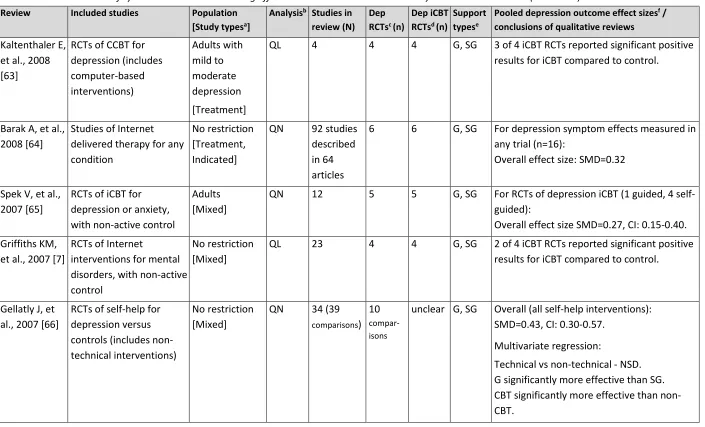
The reviews which focused on the effectiveness of interventions for depression spanned the years 2006 to 2017 inclusive, and the details of these 41 reviews are reported in reverse chronological order in Table 2.4.
In the earliest reviews of Internet interventions for common mental disorders, Kaltenthalter and colleagues identified two RCTs of iCBT for depression in adults (one of which reported positive results) [18], and Griffiths and Christensen reported on three RCTs with non-active controls for any age group (one with positive results for depression symptoms) [17]. In subsequent updates to these reviews in 2008 [63] and 2007 [7], the number of RCTs had increased to four (three with positive results) and four (two with positive results) respectively. In an additional 2010 update to their review of interventions for all age groups, Griffiths et al. [57] noted a linear growth in the number of RCTs of Internet interventions for depression and anxiety and reported on eight RCTs of interventions for depression. Six of these RCTs reported a significant effect for the iCBT group compared to a control, and two RCTs reported no effect compared to a psycho-educational control.
Page | 25 Table 2.4. Characteristics of systematic reviews examining effectiveness included in the current systematic meta-review.
Review Included studies Population
[Study typesa] Analysis
b Studies in
review (N) Dep RCTsc (n) Dep iCBT RCTsd (n) Support typese Pooled depression outcome effect sizes f / conclusions of qualitative reviews Sztein DM, et
al., 2017 [26]
RCTs of iCBT for adults experiencing mild to moderate depression, compared to wait list control.
Adults with depression symptoms [Treatment]
QN 14 14 14 G, SG Overall effect size: SMD=0.74, CI: 0.62-0.86. Guided (12 studies) SMD=0.73, CI: 0.58-0.87. Self-guided (4 studies) - SMD=0.79 CI: 0.55-1.03.
No significant difference between groups. 3-6-month follow-up SMD=0.83, CI: 0.69-0.98 Lau Y, et al.,
2017 [27]
RCTs of guided iCBT for adult women less than 2 years postpartum, for depression, pregnancy loss and post-traumatic stress.
Adult women <= 2 years post-partum
[Selective]
QN 8 5 5 G Depression iCBT (5 studies):
Overall effect size: SMD=0.65, CI: 0.48-0.82
Karyotaki E, et al., 2017 [28]
RCTs of self-guided iCBT for depression. Adults with depression (diagnosis or elevated symptoms) [Treatment]
QN 16 16 16 SG Traditional meta-analysis (16 RCTs):
Overall effect size: SMD=0.33, CI: 0.19-0.46 Individual participant meta-analysis (data from 13 RCTs): Significant effect of treatment
over control: β = −0.21; p<.001
Overall effect size: SMD=0.27, CI: 0.17-0.37 Josephine K,
et al., 2017 [29]
RCTs of Internet and mobile interventions for adults with a diagnosed depressive disorder.
Adults with depression diagnosis [Treatment]
QN 19 19 12 G, SG 10 RCTs of interventions vs wait-list (includes non-iCBT) had depression outcomes:
Page | 26 Table 2.4. Characteristics of systematic reviews examining effectiveness included in the current systematic meta-review (continued).
Review Included studies Population
[Study typesa] Analysis
b Studies in
review (N) Dep RCTsc (n) Dep iCBT RCTsd (n) Support typese Pooled depression outcome effect sizes f / conclusions of qualitative reviews Zhou T, et al.,
2016 [30]
RCTs of iCBT for
subthreshold depression.
All ages with subthreshold depression symptoms (no diagnosis) [Indicated]
QN 8 8 8 G, SG Post-intervention:
Overall effect size: SMD=0.46, CI: 0.22-0.70 3-month follow-up (3 RCTs):
SMD=0.12, CI: 0.01-0.22
6-month follow-up (2 RCTs) - no significant difference.
12-month follow-up (2 RCTs): SMD=0.28, CI: 0.12-0.44 Sander L, et
al., 2016 [31]
RCTs of online psychological interventions in preventing mental disorders
Adults without mental disorder diagnosis [Universal]
QN 17 6 3 G, SG 8 RCTs reported depression severity
outcomes (includes non-iCBT interventions): Overall effect size: SMD=0.35, CI: 0.12-0.57 At medium term follow-up:
Overall effect size: SMD=0.22, CI: 0.07-0.37 Lee, EW, et al.,
2016 [32]
Studies of online interventions with maternal mental health as an outcome measure.
Women, from pregnancy to 1-year post-partum [Selective]
QL 3 2 2 G, SG Significant improvement in depression
Page | 27 Table 2.4. Characteristics of systematic reviews examining effectiveness included in the current systematic meta-review (continued).
Review Included studies Population
[Study typesa] Analysis
b Studies in
review (N) Dep RCTsc (n) Dep iCBT RCTsd (n) Support typese Pooled depression outcome effect sizes f / conclusions of qualitative reviews Ebert DD, et
al., 2016 [33]
Individual participant meta-analysis based on RCTs of guided Internet interventions for adults with depression. Adults with depression (diagnosis or elevated symptoms) [Treatment]
QN 18 18 12 G Risk of deterioration from baseline to
post-intervention significantly lower in intervention compared to control groups (includes non-iCBT interventions): RR=0.47, CI: 0.29-0.75.
Difference in risk of deterioration between groups not significant at follow-up.
de BitenCourt MD, et al., 2016 [35]
Studies of psychotherapy including virtual contact with a therapist.
Adults [Mixed]
QL 35 6 3 G 2 RCTs showed significant reduction of
symptoms in iCBT group, 1 RCT showed no significant difference between intervention and control group.
Ashford MT, et al., 2016 [36]
Studies of online interventions for depression, stress and complicated grief for women in perinatal period.
Women, from pregnancy to 1-year post-partum [Selective]
QN 11 2 1 G, SG Meta-analysis of 8 RCTs (includes depression
as secondary outcome, non-iCBT interventions):
Significant effect for intervention in 6 studies.
Page | 28 Table 2.4. Characteristics of systematic reviews examining effectiveness included in the current systematic meta-review (continued).
Review Included studies Population
[Study typesa] Analysis
b Studies in
review (N) Dep RCTsc (n) Dep iCBT RCTsd (n) Support typese Pooled depression outcome effect sizes f / conclusions of qualitative reviews Ebert DD, et
al., 2015 [38]
RCTs of Internet and computerised CBT for depression and anxiety in youth. Youth <=25 years with depression/ anxiety (diagnosis or elevated symptoms) [Treatment]
QN 13 4 4 G, SG For 4 RCTs on depression iCBT:
Overall effect size SMD=0.76, CI: 0.41-1.12.
Clarke AM, et al., 2015 [40]
Studies of interventions to promote positive mental health or prevent mental health problems in youth.
Youth aged 12-25 years [Mixed prevention]
QL 28:
8
promotion 20
prevention
6 6 G, SG 5 RCTs: Significant reduction in depression in iCBT compared to control group, at post-intervention and follow-up.
1 RCT: Significant reduction in depression in iCBT group in male participants only, at post-intervention and 6-month follow-up
Ye X, et al., 2014 [41]
Studies of Internet interventions targeting anxiety and/or
depression symptoms, for youth.
Youth aged 7-25 years [Mixed]
Page | 29 Table 2.4. Characteristics of systematic reviews examining effectiveness included in the current systematic meta-review (continued).
Review Included studies Population
[Study typesa] Analysis
b Studies in
review (N) Dep RCTsc (n) Dep iCBT RCTsd (n) Support typese Pooled depression outcome effect sizes f / conclusions of qualitative reviews Saddichha S,
et al., 2014 [43]
Studies of online self-help interventions targeting depression or anxiety.
No restriction [Mixed]
QL 33 29 25 G, SG Guided CBT: Effect sizes from 0.6 to 1.9. Self-guided CBT: Effect sizes from 0.3 to 0.7. All RCTs of iCBT for depression: positive results, except 1 RCT where no significant difference for depression (unguided iCBT) and for 1 RCT where iCBT was less effective than a problem-solving intervention. Rice S, et al.,
2014 [44]
RCTs of interventions for treatment or prevention of depression.
Youth aged 12-25 years [Mixed]
QL 15 15 15 G, SG 9 depression prevention RCTs - effective for university students, adolescents (selective) and secondary students (significant effect for males only).
5 depression intervention RCTs – effective (1 RCT showed non-inferiority compared to TAU)
1 combined intervention: no significant effect.
Reyes-Portillo JA, et al., 2014 [45]
Studies of interventions for treatment or
prevention of depression.
Youth aged <=25 years [Mixed]
QL 17 13 10 G, SG 4 RCTs of depression iCBT showed significant depression reductions at post-intervention, with effect sizes from 0.15 to 0.84.
Page | 30 Table 2.4. Characteristics of systematic reviews examining effectiveness included in the current systematic meta-review (continued).
Review Included studies Population
[Study typesa] Analysis
b Studies in
review (N) Dep RCTsc (n) Dep iCBT RCTsd (n) Support typese Pooled depression outcome effect sizes f / conclusions of qualitative reviews Davies EB, et
al., 2014 [46]
RCTs of Internet interventions for depression, anxiety, distress and stress in university students.
Higher education students [Mixed]
QN 17 9 8 G, SG For 9 RCTs of depression interventions
(includes 1 non-iCBT):
Overall effect size SMD=0.43, CI: 0.22-0.63.
Baumeister H, et al., 2014 [47]
RCTs of Internet
interventions, comparing guided vs unguided, guidance intensity or coach type.
Adults with mental disorder [Treatment]
QN 14 3 3 G vs SG 3 RCTs of guided vs unguided iCBT for
depression:
Overall effect size: SMD= - 0.15, CI: -0.46-0.16 (non-significant but favouring guided).
Arnberg FK, et al., 2014 [48]
RCTs of Internet
interventions for anxiety and mood disorders. Trials excluded if high risk of bias.
All ages with a diagnosis of anxiety or mood disorder [Treatment]
QN 40 9 5 G, SG iCBT was guided in the 5 depression iCBT
RCTs.
Guided iCBT compared to wait-list (5 RCTs): Overall effect size SMD=0.83, CI: 0.59-1.07.
Andersson G, et al., 2014 [49]
Studies of guided iCBT compared to face-to-face CBT for mental disorders
No restriction [Treatment]
QN 13 2 2 G For 2 depression RCTs iCBT vs F2F:
Overall effect size not significant SMD=0.05, CI: -0.19-0.30.
Paul CI, et al., 2013 [50]
Studies of web-based interventions for chronic mental and physical health conditions.
No restriction [Treatment]
QL 36 12 9 G, SG For 9 RCTs of iCBT for depression:
7 showed significant improvement in depression in intervention group compared to control.