IN SEARCH OF A PROGRAMME REVIEW FRAMEWORK FOR A POLYTECHNIC IN BAHRAIN: THE EXPERIENCE OF A BAHRAINI
QUALITY COORDINATOR
Jameel Hasan, Dip.Ed., B.M.Eng., M.Ed.
A Dissertation submitted in partial fulfilment of the award of Doctor of Education
Faculty of Business, Education, Law & Arts
iii ABSTRACT
Across the Middle East and North Africa region the quality of education has been highlighted as an issue of concern by the World Bank, in particular the less than positive impact on economic development. Also, it has been found that improvement initiatives often fail if they are transferred from the Western world without the consideration of local and cultural aspects. This research reports on a process used to address the non-contextualised improvement models that so often fail to enhance quality outcomes for students.
The focus of this study is on a polytechnic that commenced its operation in Bahrain in 2008. The purpose of this research is to provide a coherent, meaningful and contextually appropriate programme review framework to replace a generalised one that was inherited from overseas at the institution’s inception. This study’s value lies in its ability to identify principles, standards and a process that have the potential to stimulate change in both the attitudes and behaviour of the people who have an involvement, or should have an involvement, in framework-associated aspects of quality management, assurance and improvement.
A qualitative interpretivist case study method was adopted. The qualitative data included documents, observations, formal interviews, discussion groups, and dialogue with both internal and external quality experts. Analysis and synthesis of the data has been informed by a comprehensive review of relevant literature, thematic coding, and ongoing reflections of the researcher during the developmental process. The dual positions of the writer as researcher and employee of the organisation is acknowledged in the development of the contextualised framework.
A key finding of the research is that the appropriateness of the process of implementation is crucial in bringing about change. The reliance on a hierarchically imposed quality system, with the expectation that commitment will cascade naturally and predictably from the top to the bottom, is problematic and inappropriate to the context of the polytechnic. Rather, there are needs for ongoing dialogue among internal and external stakeholders and to find pockets of enthusiasm within the organisation that are exemplars of quality accountability and improvement and to use this expertise to support the widening and deepening of such pockets. The intention is to have organisational units and individuals own a quality review framework, and a quality system overall, instead of seeing it as something that is imposed, and treated as no more than a matter of begrudging compliance.
iv
DECLARATION OF ORIGINAL AUTHORSHIP
I certify that the content of this dissertation has not been previously submitted for any degree and it is not currently being submitted for any other degree. I also certify that to the best of my knowledge any assistance received in preparing this dissertation and all sources used have been acknowledged accordingly.
v ACKNOWLEDGMENTS
The author wishes to express sincere appreciation to his supervisors, Associate Professor Dorothy Andrews and Dr Peter McIlveen, for their patient assistance in the preparation of this dissertation. They have been supportive throughout, offering the right blend of challenge and encouragement.
vi LIST OF ABBREVIATIONS
The following table provides the extended form of various abbreviations and acronyms used throughout the dissertation.
Abbreviation Extended Form
ANQAHE Arab Network for Quality Assurance in Higher Education
APR Annual Programme Review
AQAC Academic Quality Assurance Committee
ASQ American Society for Quality
AUT Auckland University of Technology
BOT Board of Trustees
CAC Curriculum Advisory Committee
CAP Certificate in Academic Preparation
EDB Economic Development Board
EFQM European Foundation for Quality Management
EHEA European Higher Education Area
ELLI Effective Lifelong Learning Inventory
FB Faculty Board
GCC Gulf Cooperation Council (the member states being Bahrain, Kuwait, Oman, Qatar, Saudi Arabia and the United Arab Emirates)
HEC Higher Education Council
HEI Higher Education Institution
KHDA Knowledge and Human Development Authority
KPI Key Performance Indicator
MENA Middle East and North Africa
NCAAA National Commission for Academic Accreditation and Assessment
OECD Organisation for Economic Cooperation and Development
Ofsted Office for Standards in Education
PAD Programme Approval Document
PBL Problem-based Learning
PC Programme Committee
QAA The United Kingdom’s Quality Assurance Agency for Higher Education
QAAET Bahrain’s Quality Assurance Authority for Education and Training
QMS Quality Management System
SMT Senior Management Team
TQM Total Quality Management
vii TABLE OF CONTENTS
CERTIFICATION OF DISSERTATION ... ii
ABSTRACT ... iii
DECLARATION OF ORIGINAL AUTHORSHIP ... iv
LIST OF ABBREVIATIONS ... vi
LIST OF FIGURES ... x
LIST OF TABLES ... xi
CHAPTER 1 INTRODUCTION ... 1
1.1 Background to the Research Problem ... 1
1.2 Overview of the Literature ... 1
1.3 Aim of the Study ... 3
1.4 Research Questions ... 3
1.5 Overview of the Research Design ... 3
1.6 Ethics ... 4
1.7 Context for the Research ... 5
1.7.1 Management Structure of Arabian Gulf Polytechnic ... 6
1.7.2 Growth of Arabian Gulf Polytechnic ... 8
1.7.3 Programmes Offered by Arabian Gulf Polytechnic ... 8
1.8 Changes Relating to the Researcher’s Role Over the Study Period ... 10
1.9 Significance of the Study ... 10
1.10 Overview of the Structure of the Dissertation ... 10
CHAPTER 2 LITERATURE REVIEW ... 12
2.1 Overview ... 12
2.1.1 Conceptual Considerations ... 12
2.1.2 Major Literature Informing This Study ... 13
2.2 The Emergence of Quality in Business and Industry ... 13
2.3 The Quality Concept as Applied to Education ... 16
2.3.1 Considerations Specific to Higher Education ... 18
2.3.2 Internationalisation of Quality in Higher Education ... 22
2.3.3 Lessons from Europe ... 23
2.3.4 New Bosses for Quality in Education ... 26
2.4 Programme Review as a Key Quality Process in Higher Education ... 27
2.4.1 Characteristics of an Effective Programme Review ... 30
2.4.2 Quality Culture and Its Links to Programme Review ... 34
viii
2.5.1 The Arab World in General ... 39
2.5.2 The GCC Countries... 40
2.5.3 Bahrain ... 45
2.6 Arabian Gulf Polytechnic as a Quality-based Initiative ... 50
2.7 Conclusion ... 51
CHAPTER 3 METHODOLOGY ... 54
3.1 Overview ... 54
3.2 Research Orientation ... 54
3.3 Research Questions ... 55
3.4 Research Method: Case Study ... 55
3.5 Design and Data Collection ... 57
3.5.1 Phase One: Design the Case Study ... 58
3.5.2 Phase Two: Conduct the Case Study ... 61
3.5.3 Phase Three: Analyse the Case Study Evidence ... 66
3.5.4 Phase Four: Conclude, Recommend and Consider the Implications . 68 3.6 Participant-Researcher ... 68
3.7 Criteria for Judging Quality ... 69
3.8 Ethics ... 72
3.9 Conclusion ... 72
CHAPTER 4 DATA PRESENTATION ... 74
4.1 Introduction ... 74
4.2 General Context ... 74
4.2.1 Case Study Timeline and Main Research Phases ... 74
4.3 Phase One: Design the Case Study ... 76
4.3.1 Phase One, Part One: Analysis of Documents ... 76
4.3.2 Phase One, Part Two: Annual Programme Reviews that Occurred during the Study ... 83
4.3.3 Students’ Views on the Existing Practice of the Annual Programme Reviews ... 87
4.4 Phase Two: Conduct the Case Study ... 98
4.4.1 Framework Development ... 99
4.4.2 Prepare for the Review ... 105
4.4.3 Carry Out the Review ... 105
4.4.4 Validation Process... 105
4.4.5 Students’ Views on the Pilot Exercise ... 106
ix
4.5 Phase Three: Analyse the Case Study Evidence ... 110
4.6 Conclusion ... 137
CHAPTER 5 DISCUSSION ... 138
5.1 Introduction ... 138
5.2 The Emergence of a Contextualised Programme Review Framework ... 139
5.3 Essential Components of the Proposed Framework ... 142
5.3.1 Principles underlying the Framework ... 143
5.3.2 Types of Standards for Contextualised Programme Review ... 151
5.3.3 Enablers of Contextualised Programme Review ... 156
5.3.4 Transmission of Enablers to Outcomes ... 167
5.3.5 Outcomes of the Contextualised Programme Review ... 168
5.3.6 Feedback relating to the Contextualised Programme Review ... 170
5.4 The Research Process for Contextualisation of Programme Review at Arabian Gulf Polytechnic ... 171
5.4.1 Research Process: Strengths ... 171
5.4.2 Research Process: Limitations ... 172
5.4.3 Lessons Learned ... 173
5.5 Conclusion ... 174
CHAPTER 6 RECOMMENDATIONS AND CONCLUDING COMMENTS ... 177
6.1 Introduction ... 177
6.2 Significance and Limitations of the Study ... 177
6.3 Implications for Implementation ... 178
6.4 Suggestions for Further Research ... 181
6.5 Recommendations ... 182
6.6 Personal Reflection ... 183
6.7 Final Word ... 186
References ... 188
Appendix A: Review Standards... 198
Appendix B: Group Interview: Review Participants ... 202
Appendix C: Review Outcomes ... 206
Appendix D: Group Interview: Students... 209
Appendix E: Contextualised Programme Review Standards ... 212
x LIST OF FIGURES
Figure 1.1 Management Structure of Arabian Gulf Polytechnic……… 8
Figure 3.1 Multiple Sources of Data……….57
Figure 3.2 Case Study Method and Timeline………. 60
Figure 3.3 Case Study Design……….. 61
Figure 3.4 Framework Development………63
Figure 3.5 Pilot Testing Process……….. 64
Figure 3.6 Criteria and Strategies for Judging and Ensuring the Trustworthiness of the Research……… 71
Figure 4.1 Case Study Timeline and Main Research Phases………. 75
Figure 4.2 Phase One: Design the Case Study………. 76
Figure 4.3 Gaps between Espoused Theory and Actual Practice……….. 98
Figure 4.4 Programme Review Principles……….. 99
Figure 4.5 Categories of Programme Review Principles Tested in the Pilot Exercise………... 101
Figure 4.6 Programme Review Standards Tested in the Pilot Exercise……….. 101
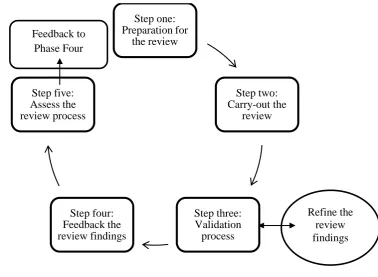
Figure 4.7 Programme Review Process Tested in the Pilot Exercise………….. 104
Figure 5.1 The Contextualised Programme Review Framework……….. 141
Figure 5.2 Five Principles underlying the Framework………. 144
Figure 5.3 Several Roads Being Travelled………... 149
Figure 5.4 Six Dynamic, People-oriented Enablers of Contextualised Programme Review………. 167
Figure 5.5 Systems Theory as the Basis of Problem Based Learning and the Contextualised Programme Review Framework……….. 168
Figure 5.6 The Importance of Iterations of the CPRF Process………. 170
Figure 5.7 Existing and Suggested Student Input Methods for Programme Review………. 174
xi LIST OF TABLES
Table 1.1 Arabian Gulf Polytechnic Profile ... 6
Table 1.2 Management Structure of Arabian Gulf Polytechnic ... 7
Table 1.3 Programmes Offered by Arabian Gulf Polytechnic ... 9
Table 2.1 Characteristics of Effective Self-evaluation ... 31
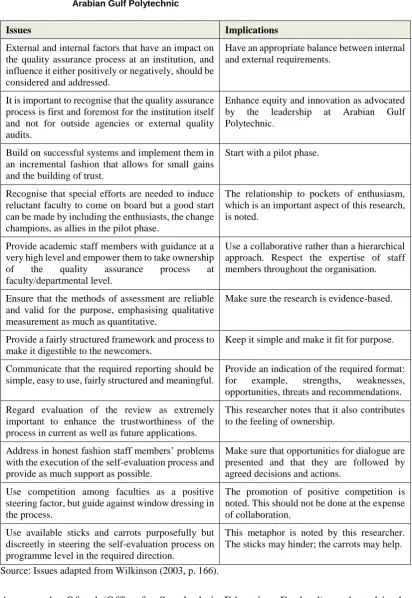
Table 2.2 Important Issues in Managing the Evaluation Process and Their Implications for Arabian Gulf Polytechnic ... 32
Table 2.3 Caveats and Their Implications for the Research ... 38
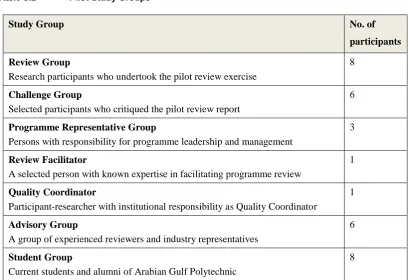
Table 3.1 Pilot Study Groups ... 62
Table 3.2 Business Programme Review Team Members ... 65
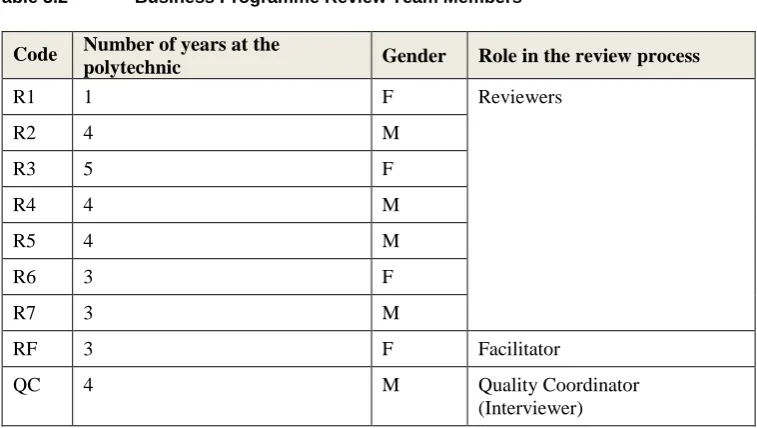
Table 3.3 Challenge Team Members ... 65
Table 3.4 Advisory Group ... 66
Table 3.5 List of Review Participants and Their Roles... 67
Table 3.6 List of Students Interviewed, Including Specialisation and Status... 67
Table 3.7 Links Relating Research Questions to the Research Process... 68
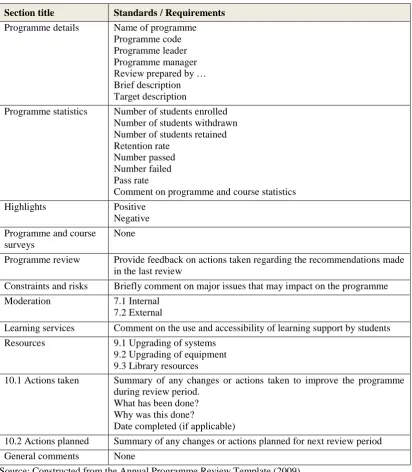
Table 4.1 Minimum Requirements Identified by the Evaluation and Review Policy ... 79
Table 4.2 Programme Components that Need to Be Evaluated as per the Evaluation and Review Policy ... 80
Table 4.3 Review Requirements of the Annual Programme Review ... 81
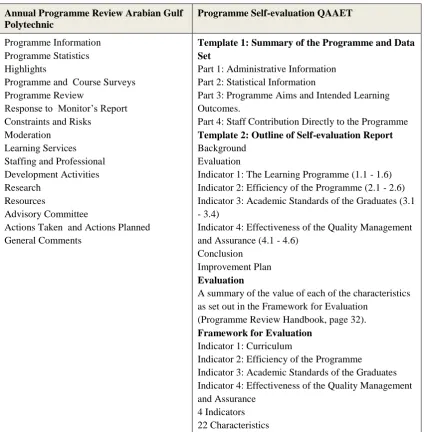
Table 4.4 Comparison Between the Requirements of the APR and the QAAET Programme Evaluation ... 83
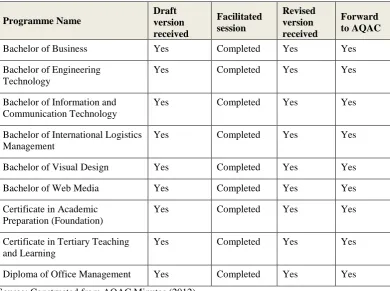
Table 4.5 Actions Relating to Phase One, Part Two: APRs that Occurred during the Study ... 84
Table 4.6 List of Programmes Considered during Phase One, Part Two ... 85
Table 4.7 Data Collection Tools and Timing Required for the APR ... 86
Table 4.8 Programme Review Principles Tested in the Pilot Exercise ... 100
Table 4.9 Categories of the Programme Review Process Tested in the Pilot Exercise ... 102
Table 4.10 Links Relating to Review Principles and Process Tested in the Pilot Exercise ... 102
Table 4.11 Validation Process... 105
Table 4.12 Categorisation of the Collected Data ... 111
Table 5.1 CPRF Essential Component Descriptions ... 143
Table 5.2 Five Principles underlying the Framework ... 145
Table 5.3 Quality Culture Ideal Types interpreted as Situational Preferences .. 147
Table 5.4 Five Types of Standards for Contextualised Programme Review ... 152
Table 5.5 Employability Attributes Identified by Arabian Gulf Polytechnic ... 154
Table 5.6 Six Enablers of Contextualised Programme Review ... 157
Table 5.7 Exemplary Use of Metaphors ... 161
Table 5.8 Programme Review Parties and their Desired Characteristics and Activities ... 162
1
CHAPTER 1 INTRODUCTION
1.1 Background to the Research Problem
This case study explores the institution-wide initiative to develop a contextualised framework for programme review at Arabian Gulf Polytechnic (a pseudonym), a higher education institution that provides technical and applied professional education. The institution is in the Kingdom of Bahrain, which is a small island in the Arabian Gulf.
Across the MENA (Middle East and North Africa) region the quality of education has been highlighted as an issue of concern because of its less-than-positive impact on economic development (World Bank, 2008). Improvement initiatives in the Middle East often fail if they are transferred from the Western world without consideration of local and cultural aspects (Idrus, 2010). Programme review is a difficult process and necessarily contextualised; it is also considered “an important tool for ensuring quality teaching and learning” (Bornman, 2004, p. 372). The implications of this may be particularly significant in the context of higher education in the Middle East, where most improvement initiatives have focused on transferring ready-made frameworks from overseas rather than undertaking investigations into ways of developing a programme review framework to sustain improvement.
In 2008 Arabian Gulf Polytechnic adopted a review template from the host institution of an expatriate colleague. However, this was not effective in providing quality feedback that could be used for improving the learning experiences of students. There was little buy-in to the process, as it was not contextualised to the local requirements and culture – ‘the way of doing things’ in Bahrain. Through a case study of the polytechnic, this research investigates the most appropriate review framework that will be sustainable in the local context.
1.2 Overview of the Literature
2
In relation to this study – which focuses on programme review as a particular aspect of quality in education at a specific institution in the tertiary field in the Kingdom of Bahrain – it has been considered worthwhile to review the literature from industry to gauge what aspects of quality are genuinely transferable to education. The literature was then reviewed in relation to education generally, and higher education specifically, to ascertain what might be useful and relevant for a programme review at Arabian Gulf Polytechnic. This examination of the literature has required exploring various fields of quality. First, the focus was on those of industry and business, where the quality concept was initially made popular, and then in the field of education, with its more recent quality history. There was also exploration from geographical perspectives – the Arab world in general, the MENA region (being the Middle East and North Africa), the GCC countries (being those of the Gulf Cooperating Council), and finally Bahrain.
In relation to the fields of business, industry and education, and to geographical considerations, questions that were put included: How is quality defined? What principles are attributed to it? What standards are in place? What processes are seen as appropriate? How is it assured? How is it managed? How is it enriched and sustained? What frameworks and models are applied? Additionally, there was a need to consider how such aspects might be relevant to the development of a framework at a particular tertiary educational institute in Bahrain.
This width and depth of the review of the literature had an aim of not only exploring a number of case studies of relevance but also of tapping into descriptive and theoretical papers that provided definitions and models that might be appropriate in adapted form to the present study. This raised further questions such as: What points of significance can be taken from the writings of the pioneers of quality in industry such as Deming, Crosby and Juran (American Society for Quality, 2010)? What aspects of Senge’s (1990) Learning Organization are relevant to the present study? What models have been developed for higher education specifically and how might they be adapted for the present study? Some writers call for a revolutionary approach to the assurance and management of quality in education (Kristensen, 2010). Others see it as essentially evolutionary (Hodgetts, Luthans, & Lee, 1994). This literature review explores in depth what might best apply to the context of the present study and particular note is taken of models that have been developed to explain quality as a vital component in an efficient and effective system (Harvey & Stensaker, 2008).
Organisational trust is revealed as a huge factor in determining the effectiveness of a quality assurance model. The evidence in recent literature changes in the way quality is conceptualised in higher education, based on a changing agenda, from accountability to learner engagement and learning (Harvey & Williams, 2010a), resulting in a shift from an institutional focus onto programmes. However, the research to date on programme review is not all positive; this suggests that a completely different model of programme review could be explored.
To avoid criticism of inappropriateness to the educational context, this study selects and critiques models and orientations of promise such as the Baldrige Excellence
Program (2013) and Total Quality Management (Hodgetts, Luthans, & Lee, 1994) and
3
hierarchical management structuring of many traditional approaches and, instead, has the appeal of sustained ownership by quality practitioners.
1.3 Aim of the Study
This case study aimed to find an appropriate Programme Review Framework for Arabian Gulf Polytechnic. Stemming from this aim, the specific purposes of the research have been to:
1. Develop an appropriate process that can be used to develop a contextualised framework for programme review at Arabian Gulf Polytechnic.
2. Develop the programme review framework and its elements which include key principles, processes and standards.
3. Identify the implications for the existing system at the polytechnic that need to be considered in the implementation of the developed programme review framework.
1.4 Research Questions
Given the aims, this overarching question provided the focus for the research and summarised the research problem:
What emerges as an appropriate framework for programme review at Arabian Gulf Polytechnic from a practitioner’s perspective?
The following three sub-questions form a framework to support the overarching question and assist to focus the study:
1. What emerges as an appropriate process that can be used to develop a contextualised framework for programme review at Arabian Gulf Polytechnic?
2. What are the key principles, standards and processes for programme review that are appropriate for Arabian Gulf Polytechnic’s context and in line with international practice?
3. How can programme review at Arabian Gulf Polytechnic be best implemented?
1.5 Overview of the Research Design
The orientation of this research is qualitative. Stake (2010) argues that many people who do qualitative research want to improve how things work and that empathy and advocacy are and should be part of the lifestyle of each researcher. This research took place in the context of a higher education institution, was emergent rather than prefigured, was fundamentally interpretive, and was experiential, empirical and field oriented. It used multiple data collection tools that were interactive and humanistic. In addition, the researcher adopted a holistic view, employed iterative, complex reasoning involving both induction and deduction, and systematically reflected upon who he was in the inquiry.
4
study is expected to catch the complexity of a single case”. It may also be classified as intrinsic as the researcher has an interest in the case (Stake, 1995). The use of the case study method assists the researcher in investigating the programme review process in depth, within a particular context, and this has led to the creation of new knowledge (Yin, 1994). The process of this research follows Yin’s (1994) four-phase approach which comprises: (1) Design the case study; (2) Conduct the case study; (3) Analyse the case study evidence; and (4) Develop the conclusions, recommendations and implications. While these phases are considered linear, they are also iterative (Yin, 2009). The case study findings and outcomes are not generalised to other institutes in Bahrain because case study research is not sampling research and a case is not studied primarily to understand other cases (Stake, 1995). Data sources included group interviews and a researcher’s journal. The group interviews were used to gather the research data related tothe fourth phase, that is, to assess and refine the developed framework. As a participant observer throughout the process, the researcher used a reflective journal to capture his reflections (Jones, 2002).
The researcher’s formal role during the research was Quality Coordinator at Arabian Gulf Polytechnic, where this case study was conducted. As the researcher was part of the investigation, the possibility of researcher bias was kept well in mind throughout the study. Onwuegbuzie and Leech (2006) indicate that researcher bias may be subconsciously transferred to the participants in such a way that their behaviours, attitudes, or experiences are affected. As the primary instrument for data collection and analysis, the researcher was aware that data were mediated through him (Merriam S., 1998). He was particularly careful with his dual role of participant and researcher, knowing that his interpretive perspective in the context was shaped by his personal experience and assumptions brought to the research process (Jones, 2002).
Validation is an important key to effective research; it is a requirement for both quantitative and qualitative research (Patton, 2002). Lincoln and Guba (1985) suggest four criteria for judging the soundness of qualitative research: credibility, transferability, dependability and confirmability. The researcher employed a variety of strategies to establish the trustworthiness of findings. Triangulation, involving a variety of methods to obtain evidence that would assist in the development of a programme review framework for Arabian Gulf Polytechnic, was a key research strategy that was employed to increase confidence in the validity of the research findings (Yin, 2009).
1.6 Ethics
In November 2011, the Research Committee at Arabian Gulf Polytechnic granted permission for the undertaking of this study. The ethics clearance application indicated clearly the nature of the study to be undertaken and how Arabian Gulf Polytechnic could benefit from the study.
5 1.7 Context for the Research
Arabian Gulf Polytechnic was established in 2008 as an initiative of the kingdom’s Economic Development Board (EDB) to address a shortage of technical and applied professional graduates in the country. It is a higher education institution (HEI) that offers career-focused programmes to produce professional and enterprising work-ready graduates (refer to Table 1.1). Underpinned by the values of excellence, learning and innovation, it is striving to become a “world-class provider of applied higher education” (Arabian Gulf Polytechnic, 2013a, p. 5) and to deliver on its recently approved mission of producing “professional and enterprising graduates with the 21st century skills necessary for the needs of the community locally, regionally and internationally” (p. 5).
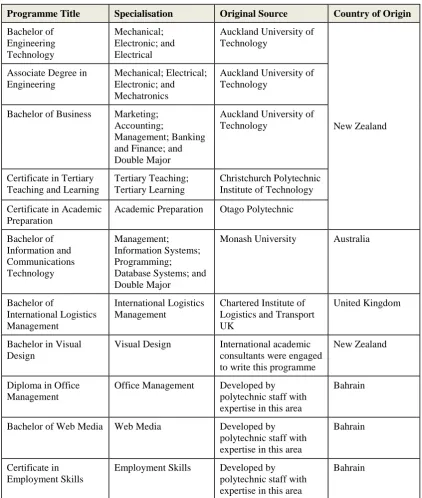
The curriculum developed by Arabian Gulf Polytechnic is specifically designed to provide graduates with the attitude, knowledge and skills that will make them employees of choice (Arabian Gulf Polytechnic, 2008). As Arabian Gulf Polytechnic is relatively new, the institution has purchased programmes from other institutions around the world for implementation within the polytechnic context. These have included: business and engineering degrees purchased from Auckland University of Technology (New Zealand) and an information and communications technology programme purchased from Monash University (Australia). However, these programmes were found to be not entirely relevant to the needs of Bahraini students.
Arabian Gulf Polytechnic staff is made up of a variety of nationalities (more than 20) each with different understandings and beliefs regarding the function of programme reviews. The majority of teaching staff members are expatriates from teaching cultures with various interpretations of learning and teaching processes – New Zealand, Australia, Ireland, England, Scotland, the United States, Canada, Brazil, France, Pakistan and Somalia. The students, almost all of whom are young Bahraini school-leavers (both male and female), have come from a very traditional mode of schooling where they mostly experienced a teacher-centred, didactic form of teaching in both primary and secondary schools.
6 Table 1.1 Arabian Gulf Polytechnic Profile
Vision World-class provider of applied higher education
Mission Professional and enterprising graduates with the 21st century skills necessary for the needs of the community locally, regionally and internationally
Key characteristics A higher education institution established to meet the needs of the labour market and industry requirements
Serves local, regional and international learners
Offers technical and applied professional programmes and short courses Awards degrees and engages in applied research
Focused on producing work-ready graduates Academic staff with real-world work experience
Practical learning experiences on campus and in the workplace
Develops critical thinking through a Problem-based Learning (PBL) approach
Programme features
Quality applied education and training A learner-centred approach
Work-integrated learning
Opportunities to develop leadership and social skills
Integration of applied research and scholarship with teaching and learning Environmental sustainability
International opportunities Career success
Source: Constructed from the polytechnic’s Institutional Listing Application (2013b).
1.7.1 Management Structure of Arabian Gulf Polytechnic
The role of the Arabian Gulf Polytechnic Board of Trustees is defined by Royal Decree, Article 7. There are 15 responsibilities specified under the overarching statement of authority: “The Board shall have a controlling authority on the affairs of the polytechnic and shall have all required authority to achieve its purposes” (Cabinet, 2008, p. 3). The responsibilities of the Board of Trustees include: development and monitoring of policy; overall planning to achieve the goals of the polytechnic; approval of research and education and training programmes and the awarding of qualifications; oversight of scholarships and grants provided by the polytechnic; appointment of staff, financial management, accountabilities and audit and monitoring of other aspects of polytechnic activities outlined within the decree.
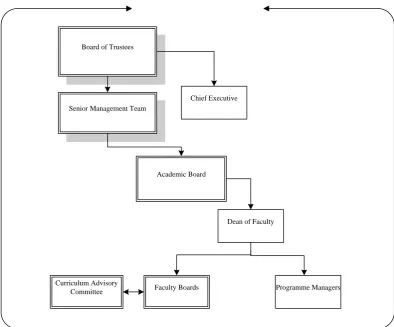
The polytechnic has a clear management structure (refer to Table 1.2 and Figure 1.1). The Senior Management Team (SMT) is responsible for the coordination of all divisions and faculties within the polytechnic and for the activities of the various committees through the Directors charged with their oversight. Within faculties and divisions there are clear middle-management structures.
7
Table 1.2 Management Structure of Arabian Gulf Polytechnic
Management level Responsibilities Board of Trustees
(BOT)
This is a body established by decree and charged with the governance of the polytechnic. Key amongst the many roles of the BOT is the employment of the Chief Executive, who is accountable to the Board of Trustees for the management and performance of the polytechnic.
Chief Executive The Chief Executive is ultimately responsible for ensuring that an integrated Quality Management System is developed and flourishes throughout the institution. The Chief Executive is the Chair of both the Senior Management Team and the Academic Board.
Senior Management Team (SMT)
This is the senior decision-making body within the administration and management of the polytechnic, responsible to the Chief Executive. The SMT is responsible for decisions affecting the smooth operation of the polytechnic. Individual members of the SMT have a responsibility to bring matters to the attention of their SMT colleagues and to seek and respect the opinion and advice of colleagues.
Academic Board This is a polytechnic body of key academic staff under the chair of the Chief Executive, but has an appropriately qualified senior academic (Manager Curriculum Development) to manage all the processes and procedures related to the approval, delivery and monitoring of courses. The Academic Board implements policies and procedures to ensure relevant quality courses are provided and that their standard is maintained. It receives audit reports and monitors outcomes.
Dean of Faculty This is the title given to the senior staff responsible for managing each faculty, answering needs, identifying opportunities, supervising development and ensuring compliance with internal regulations, policies and procedures, and supervising all teaching staff.
Programme Managers These are heads of the subject area divisions and are specialist staff as well as proven managers. Each is charged with identifying needs, assessing risks and threats as well as presenting innovative solutions for improving infrastructure. They are responsible for day-to-day operations management, liaison with industry and quality education delivery of courses in their area.
Faculty Boards These are established by each Faculty and chaired by the Dean of Faculty. They perform the functions required by its terms of reference, to oversee the implementation of academic policies; develop and monitor procedures to ensure that courses, programmes and related services meet internal and external standards; and carry out any further responsibilities under delegation from the Academic Board.
Curriculum Advisory Committees
These committees ensure that Arabian Gulf Polytechnic remains true to its mission and vision. They play a crucial role in helping to provide strategic direction for the development of polytechnic programmes. They are also essential for the initiation of new programmes and they play an important role in guiding, strengthening and improving existing programmes. Faculties are responsible for seeking meaningful input at various stages of programme development, delivery, and review and for maintaining active consultation networks in the form of a formal Curriculum Advisory Committee that can provide continued advice and support.
8
Board of Trustees
Senior Management Team
Academic Board
Faculty Boards Curriculum Advisory
Committee
Dean of Faculty
Programme Managers Chief Executive
[image:19.595.120.515.70.397.2]Source: Constructed from the Quality Manual: Towards Excellence (2012).
Figure 1.1 Management Structure of Arabian Gulf Polytechnic
1.7.2 Growth of Arabian Gulf Polytechnic
The polytechnic has grown from 235 students and 35 staff in 2008 to 2,017 active students and 343 staff by the end of Semester 1, Academic Year 2012-2013 (Arabian Gulf Polytechnic, 2013b). Of the 2,017 registered students, 270 (13.4%) are enrolled in the year-long Foundation Programme. Of the 1,747 students enrolled in Bachelor’s degrees, 875 (50%) are studying for the Bachelor of Business degree, 292 (17%) are studying for the Bachelor of International Logistics Management degree, 245 (14%) are studying for the Bachelor of Information and Communications Technology degree, and 335 (19%) are studying for the Bachelor of Engineering Technology degree. Student enrolment comprises 99% Bahraini nationals.
1.7.3 Programmes Offered by Arabian Gulf Polytechnic
9
Bachelor of Web Media and a Diploma of Office Management were developed by polytechnic staff with expertise in these areas (Arabian Gulf Polytechnic, 2010).
[image:20.595.112.535.261.760.2]The English language is used as the delivery mode for all programmes at Arabian Gulf Polytechnic. Consultation with key stakeholders indicated that English was the language for international business and that graduates required competent English language skills to be effective in the workplace. This underpins the common degree structure which includes additional English components as the criteria for entry (Polytechnics International New Zealand, 2007). The polytechnic regularly seeks industrial representatives’ advice regarding each programme through its Curriculum Advisory Committees. Table 1.3 shows the detail of each programme offered by Arabian Gulf Polytechnic.
Table 1.3 Programmes Offered by Arabian Gulf Polytechnic
Programme Title Specialisation Original Source Country of Origin
Bachelor of Engineering Technology Mechanical; Electronic; and Electrical
Auckland University of Technology
New Zealand Associate Degree in
Engineering
Mechanical; Electrical; Electronic; and Mechatronics
Auckland University of Technology
Bachelor of Business Marketing; Accounting;
Management; Banking and Finance; and Double Major
Auckland University of Technology
Certificate in Tertiary Teaching and Learning
Tertiary Teaching; Tertiary Learning
Christchurch Polytechnic Institute of Technology
Certificate in Academic Preparation
Academic Preparation Otago Polytechnic
Bachelor of Information and Communications Technology Management; Information Systems; Programming;
Database Systems; and Double Major
Monash University Australia
Bachelor of
International Logistics Management
International Logistics Management
Chartered Institute of Logistics and Transport UK
United Kingdom
Bachelor in Visual Design
Visual Design International academic consultants were engaged to write this programme
New Zealand
Diploma in Office Management
Office Management Developed by polytechnic staff with expertise in this area
Bahrain
Bachelor of Web Media Web Media Developed by polytechnic staff with expertise in this area
Bahrain
Certificate in Employment Skills
Employment Skills Developed by polytechnic staff with expertise in this area
Bahrain
10
1.8 Changes Relating to the Researcher’s Role Over the Study Period The researcher’s professional role underwent several changes during the study period. In May 2010 the researcher joined Arabian Gulf Polytechnic as Quality Coordinator where his main role was to manage the Quality Management System (QMS) in terms of policy development. In April 2011 he was appointed as Academic Quality Specialist, a position which involved managing programme reviews – the focus of this study. In April 2012 he was promoted to Acting Quality Manager, a role that focused on developing quality at the strategic level. In May 2014 the researcher became Chief of Quality at Arabian Gulf Polytechnic.
1.9 Significance of the Study
The findings of this study contribute to the current body of knowledge on developing contextualised programme review frameworks in the higher education context and indicate the importance of careful consideration of local and international requirements. While the framework and the recommendations contribute in meaningful and practical ways to research in the higher education context, the study also provides direction for further investigations, dialogue, and discovery of quality education delivery within the Middle East. It challenges the common practice of importing systems successful in the West – particularly those from the United Kingdom and United States, with their own unique histories, cultures, linguistic contexts, religious and political orientations, and educational practices – without due consideration of the local context, and indicates that the experience of expatriates needs to be coupled with local knowledge for sustainable quality education.
This research also contributes to a growing literature in the field of programme review in an Arabic context, providing an exploration of influences on the programme review process, such as politics, desirability, and its historical development in the Middle East. However, given that many HEIs in the MENA region encounter similar problems in terms of importing quality processes that need contextualising, the framework for sustainable review that emerges from this study, and which builds on a solid foundation of relationships, is valuable. This study highlights the importance of giving significant weight to all key aspects of an effective framework (such as principles, standards, processes, and evaluation) and to the relationships between these aspects. In doing so, many gaps in the quality assurance systems and processes at Arabian Gulf Polytechnic were addressed by this research and this may also be useful for other similar institutions facing the same challenges.
1.10 Overview of the Structure of the Dissertation
11
12
CHAPTER 2 LITERATURE REVIEW
2.1 Overview
This research investigates the development of a contextualised framework for programme review in a higher education institution in Bahrain. The literature review acts as a foundation to support the research and is interrelated in several ways. The concept of quality, in terms of its assurance, management and improvement, is considered in both a general and historical sense and then more specifically to the Arab world – the Middle East and North Africa, the countries of the Arabian Gulf, and Bahrain in particular. Cultural considerations are a major focus and are significant in gaining an appreciation of how quality, and programme review as a significant aspect of quality, might be understood at Arabian Gulf Polytechnic, the focus of the case study.
2.1.1 Conceptual Considerations
In this study, conceptual considerations relate to the concept of quality, its practice, external and internal perspectives relating to programme review, the significance of culture and contextualisation, the importance of sustainability, and the place of individual and team motivation.In terms of ordering, a review of the concept of quality is explored first. Where has it come from? What is its relevance to education in general and higher education in particular? What are the issues and trends associated with its application and how might they impact on the present study? Secondly, a review of quality practice in higher education in the Arab world is carried out. The initial focus is on the Arab world as a whole – comprising countries of the Middle East and North Africa (MENA) – and then the spotlight turns to what are known as the GCC countries, being Saudi Arabia, the United Arab Emirates, Qatar, Oman, Kuwait and Bahrain. Special attention is then devoted to Bahrain. Overall, critical challenges and implications for the Arab world and selected sub-parts of it are reviewed and gaps in the literature regarding the practice of programme review in the Arabian context are identified with the aim of having this part of the review contribute significantly to this small but developing body of literature.
13
2.1.2 Major Literature Informing This Study
Significant input for this literature review has been drawn from three major sources: the World Bank (World Bank, 2008), Harvey and Williams (2010a & 2010b), and the American Society for Quality (American Society for Quality, 2013). The World Bank published its report The Road Not Traveled: Education Reform in the Middle East and
North Africa in 2008 (World Bank, 2008), where it presented a global perspective on
educational reform (and one highly relevant to this study) rather than the more typical North American or European perspectives. Harvey and Williams (2010a and 2010b) provide a two part meta-analysis of 15 years of contributions, including 320 substantive contributions, to the journal Quality in Higher Education. The first part focuses on external processes and factors, both national and international; and the second on internal quality assurance, improvements in learning and teaching, and assessments of the impact of quality assurance. The American Association for Quality (2013), in its recent initiative, identified quality successes and opportunities from around the world. This research took nearly a year and a half to complete, with more than 2,000 survey responses from organisations in more than 22 countries. This comprehensive study is relevant primarily to business and industry but is significant for higher education as a comparison of similarities and differences.
Other input for this literature review has come from a variety of books and articles that have been located by a search of key words, and their combinations, such as quality, programme review, quality assurance, quality management, quality improvement, and self-review.
The following section explores the emergence and development of quality as a key concept of business and industry. It provides the basis for a subsequent comparison of quality in the field of education as opposed to its conceptualisation and application in business and industry.
2.2 The Emergence of Quality in Business and Industry
This section provides an overview of the history of quality management systems and how they have been applied in business and industry and later adapted for educational institutions across the globe. This sets the broad context for this research and a key issue is the multiplicity of systems that has evolved.
Much of the literature indicates that quality in general, as an idea, is problematic. Lock (1994) indicates that it is one of the most commonly misunderstood words in management. Dale (2003) mentions that quality as a concept is difficult for many people to grasp and understand; much confusion and myth surrounds it. Wittek and Kvernbekk (2011) comment:
Quality is an inherently vague concept, and if this is right, it will have consequences for what answers you can have to the “what is” question. For example, it will run you into boundary problems, and it will force you to operate in gray zones. (p. 683)
14
exceed customer expectations; adding value for the customer; continuously measuring the improvement of processes and services for customers; acting as promised and reporting failures; doing the right thing at the right time in the right way with the right people; ensuring customers come back and products do not; providing the best value to customers by improving everyday activities and processes; beyond delivering what the customer wants, anticipating what the customer will want when he/she knows the possibilities; delivering customer value across the company through best-in-class products, services, and support; and meeting and exceeding the expectations of clients, employees, and relevant constituencies in the community (American Society for Quality, 2013, p. 7).
Several professional organisations have tried to define quality in the context of training and development. The Scottish Quality Management System (2001, p. 17) defines quality as the “capacity of the organisation to supply services which meet clients’ and learners’ expectations”. The Australian National Training Authority (2005) defines quality as “the ability of a set of inherent characteristics of a product, system or process to fulfil requirements of customers and other interested parties” (p.17). The reference to product and customer – a carryover from business – is noted. ASQ CEO Paul Borawski sums up the situation: “There still is no official definition of quality that serves all purposes. The statistics remain unchanged. Fifty per cent say there is no single definition of quality. Fifty per cent say there needs to be one” (American Society for Quality, 2013, p. 7).
However, despite this confusion over definition, the review of the literature indicates there is acceptance of quality as a concept. Quality management systems and applications have gained general acceptance in almost all communities in the United States. This acceptance has evolved from industrial origins to service organisations, public and non-profit organisations, and educational institutions (Paunescu & Fok, 2004). The American Society for Quality (2013) states:
From the breadth and depth of survey respondents it is clear that quality is a cultural management philosophy used by organisations globally of every size and industry. Over the last three decades the discipline has evolved from a strong manufacturing focus on compliance requirements to a more holistic approach that affects the daily work of every employee, regardless if they are manufacturing a part or providing a service. (p. 7)
15
14 points for management and developed a cycle of plan-do-study-act (American Society for Quality, 2010, p. 17).
Another prominent figure was Philip Crosby, who stressed the importance of “doing it right the first time” and promoted a standard of excellence based on nothing – the concept of zero defects. (The relevance of this to education, at any level, has been questioned.) Crosby stated: “Quality management is needed because nothing is simple any more, if indeed it ever was” (American Society for Quality, 2010, p. 17). Others who shaped the concept of quality in its formative years were Walter Shewhart, who combined the disciplines of statistics, engineering and economics and promoted statistical quality control as the way to address the needs of industry; Armand Feigenbaum, who coined the term total quality control which has come to be known as Total Quality Management (TQM); Kaoru Ishikawa, who developed a fishbone (or cause and effect) diagram and stressed, somewhat contrary to the idea of zero defects, that “failure is the seed of success”; Joseph Juran, who applied Pareto’s 80/20 principle to quality (a rule of thumb that suggested 80 per cent of problems come from 20 per cent of causes, which management should concentrate on) but who emphasised the human rather than statistical side and the importance of improvement as a result of good planning and control (American Society for Quality, 2010, pp. 16-21).
The work of the pioneers of quality in the United States helped spawn influential movements such as the Baldrige Performance Excellence Program, first in industry and later in health and education both in the United States and throughout the world (including an influence in the early years of Arabian Gulf Polytechnic). The work of Senge (1990) has also had a wide impact on improvements in quality management. Senge focused on group problem solving using a systems thinking method in order to develop companies as learning organisations with dialogue as a key enabler of team learning. Interestingly, a well-cited paper by Hodgetts, Luthans, and Lee (1994) has described quality as an evolutionary process through phases of TQM, the Learning Organization and eventually the World-class Organization. Whether it is appropriate to see quality as an evolutionary or revolutionary will be considered later in this dissertation.
Relatively recent writers, such as Lock (1994), have often echoed the thoughts of the founding gurus. For example, in agreeing with Deming that quality is everyone’s responsibility and with Crosby that things should be done correctly first up, Lock (1994) highlighted that, to achieve the highest quality, everybody who works in the organisation will know precisely what to do, use correct methods and procedures, and be able to perform their task well and right first time. Winchip (1996) explored the possible adaptability of Deming’s management philosophy to higher education institutions. Her empirical study suggests that, with limitations, five major Deming themes are adaptable to higher education: (1) purpose, (2) cooperative systems, (3) improvement, (4) leadership, and (5) methods-processes.
16
reach every part of an organisation and every employee and every function needs to be involved if TQM is to become total.
The literature indicates that research on quality is plentiful but, as stated by the American Society for Quality (2013), still lacking:
We found a gap in the current research for the quality discipline; there is no comprehensive view of the current state and thus the future opportunities regarding the use of quality tools and techniques, as well as continuous improvement systems, within and across regions around the globe. (p. 7)
In relation to the emergence of quality in business and industry, the literature demonstrates that the concept of quality is problematic yet widely accepted, that there are many definitions, a multiplicity of quality systems, and often conflict over the needs for compliance versus improvement. Furthermore, there is dispute over whether changes over time in the approach to quality are to be considered evolutionary or revolutionary. There is also a need for training and development of employees in relation to quality; however, in-depth research in this area is limited and this limitation has a negative impact on the opportunities for improvement of quality applications. Among the implications for the present study are a need to craft a conceptualised definition of quality, a likely requirement to focus on both compliance and improvement of organisational quality, an imperative to provide appropriate training and development to all members of the organisation, and a confirmation of the worth of and need for meaningful research.
In moving from a focus on business and industry to a focus on education, the following guiding question is raised: What are some of the similarities and differences between the former and the latter – and within education itself?
2.3 The Quality Concept as Applied to Education
This section examines the concept of quality as applied specifically to education. Among the questions explored are: Is the concept essentially the same in business and industry and education? Does the terminology of quality in business and industry rest comfortably with the terminology of education? Can the concept be applied in much the same way in business and industry and education? Are there significant differences that should be noted and addressed? What is the relevance for programme review in a higher education institution?
17
requiring an investment in training for every staff member. He notes that quality programmes have been successfully implemented in hundreds of schools in the USA and UK and that quality provides professionals in education with the structure and techniques necessary to improve every educational process.
Consistent with the Baldrige model (Baldrige Performance Excellence Program, 2013), which originated in the United States with a focus on what constitutes excellence in industry and business, there is now recognition that educational organisations have varying missions, roles and programmes and consequently need their own set of standards. The Baldrige education criteria stress student learning and view students as “key customers”, which is plausible as an idea but can be criticised in that many of the terms used by Baldrige, such as customers, have not been changed to education-friendly terms, such as learners. The Baldrige concept of excellence in education includes three components: (1) a well-conceived and well-executed assessment strategy; (2) year-to-year improvement in key measures and indicators of performance, especially student learning; and (3) demonstrated leadership in performance and performance improvement relative to comparable organisations and appropriate benchmarks (Baldrige Performance Excellence Program, 2013). With reference to leadership, analysis of the Baldrige literature suggests that it is top-down rather than distributed or collaborative.
According to several writers, such as Green (1994) and Newton (2012), there is a mismatch between quality as applied in industry and quality as applied in education. In industry the customer is clear and, generally, the business model makes it easy to identify a clear process for improvement. In contrast, it is much more difficult to transfer systems and processes in education because the customer and the product are not easily defined, the outcomes not easily measured and improvement defies quantitative assessment. Green (1994, p. 7) comments: “Central to the debate about quality in the educational context is the issue of whether concepts derived from the profit-centred private sector can be readily transferred to public service organisations.”
An attraction of the quality concept in education has been that it can be used to prove to society that the education being delivered is effective in delivering what governments require. This leads to what the literature refers to as the quality revolution (Newton, 2012). In certain contexts, researchers have found that quality assurance systems provide powerful tools to ensure that students are given an education that prepares them for work and allows them to make meaningful contributions to society as citizens.
18
Overall, a review of the literature shows that many writers have alluded to the journey that quality has taken in its application to the education sector. References are made to the challenges of defining the term and to determining its applicability to education in general as well as to higher education in particular (Harvey & Williams, 2010a). A significant challenge identified by many writers, as indicated by Harvey and Williams (2010b), is to decide where quality processes should be implemented for greatest effect: the curriculum, assessment, the learning and teaching processes, or resources and facilities. These are variously targeted according to the context. The question of the transferability of quality concepts developed in the United States and Europe, where education has a long history and where there were historical practices to build on, is an important one that needs further examinations (Idrus, 2010).
In summary, some writers see models from business as appropriately applied to education; others do not. Those that see the relevance from business typically couple quality with hierarchical organisations. Some see the applications of quality as generally a good thing, while others see the introduction of quality to education as revolutionary. Most agree that training and development of staff is important. Internal audits are typically seen as important but there is some debate over the value of compliance in the absence of contextualisation and an eye to improvement. Quality, then, has brought some advantages and a number of issues to education in general. What more does the literature tell us about how quality works in higher education in particular?
2.3.1 Considerations Specific to Higher Education
Among these considerations are the contestability of the concept, the historical relationship to quality in business and industry, the various definitions and metaphors, the appropriateness of models from industry, the external and internal requirements for compliance, and the issues of ownership of the concept and practice by academia.
The literature indicates that quality is a highly contested concept and has multiple meanings linked to how further and higher education is perceived (Tam, 2001). The National Centre for Vocational Education Research (2006b) comments on the quality concept as a multifaceted one that is as open to argument and negotiation in the vocational education and training (VET) environment (which, it is to be noted, is essentially the field pertaining to Arabian Gulf Polytechnic, the focus of this case study) as it is in other social, economic and political contexts. Additionally, policymakers and practitioners have different definitions of quality and different views about where effort is required to achieve quality (National Centre for Vocational Education Research, 2006a). Further, issues surrounding the importance of measurement complicate the concept of quality in higher education. As Dew (2009, p. 5) suggests: “The general truism ‘what gets measured is what gets done’ demonstrates that measures play an important role in quality.”
19
sector models in higher education, more attention has been devoted to the development of quality management models that would take into consideration the specific characteristics of higher education institutions.
Quality in educational programmes has been variously conceptualised – among other things – as meeting specified standards, being fit for purpose or as transformative (Harvey & Williams, 2010a). Taking conceptualisation further, Harvey and Stensaker (2008) identify five ways of defining quality in higher education:
(1) Exceptional. This is a traditional concept of quality linked to the idea of
excellence, usually operationalised as exceptionally high standards of academic achievement. Quality is achieved if the standards are surpassed. It is worth noting that this concept reflects the In Search of Excellence writing of Peters and Waterman (1982), which was essentially a collection of case studies of top-rated American businesses (Peters & Waterman, 1982).
(2) Perfection or consistency. This focuses on process and sets specifications
that it aims to meet. Quality in this sense is summed up by the interrelated ideas of zero defects and getting things right first time. Often thought not to apply to a learning situation where no one wants students to be all the same, it does, however, have relevance in areas such as consistency of academic judgement and reliability of management information. The concepts, as indicated in the section on quality in general, come from Deming and Crosby (American Society for Quality, 2010).
(3) Fitness for purpose. This judges quality by the extent to which a product or
service meets its stated purpose. The purpose may be customer-defined to meet requirements or (in education) is usually institution-defined to reflect institutional mission (or course objectives), or indeed defined by external professional bodies. Fitness for purpose is often allied with another so-called definition of quality, fitness
of purpose, which evaluates whether the quality-related intentions of an organisation
are adequate. It provides a check on fitness for purpose. As such, fitness of purpose is not a definition of quality in itself. It is to be noted that fitness for purpose was a focus of the original quality gurus and that fitness of purpose reflects Argyris and Schon’s (1974) concept of “double-loop learning”, which might lead to a paradigm shift for a process or system, as opposed to “single-loop learning”, which relates more to fitness
for purpose refinements of a process or system (Argyris & Schon, 1974).
(4) Value for money. This assesses quality in relation to return on investment
or expenditure. At the heart of the value-for-money approach in education is the notion of accountability. Increasingly, students are also considering the value for money of their own investment in higher education. This definition fits comfortably, of course, with industrial and business models.
(5) Transformation. This view sees quality as a process of change, which in
higher education adds value to students through their learning experience. Education is not a service for a customer but an ongoing process of transformation of the participant. This leads to two notions of transformative quality in education: enhancing the consumer and empowering the consumer (Harvey & Stensaker, 2008). These ideas rest comfortably with ideas of improvement and ongoing learning.
20
quality?’, and that is what we usually do. “He adds, “At the root of disputes over assurance is the unspoken dispute over what is being assured.”
Many educational theorists and practitioners have been less than keen to buy into the original quality concepts. Brookes and Becket (2007) indicate that much attention has been given to quality management models developed for business and industry, and that there is a concern that such models may add little to the improvement of teaching and learning, although they might have advantages for improving accountability. Houston (2008) explains:
The language and tools of industry-born quality models are an imperfect fit to higher education. Authentic quality improvement is more likely to result from approaches to systemic intervention that encourages exploration of questions of purpose and of the meaning of improvement in context than from the imposition of definitions and methodologies from elsewhere. (p. 61)
Harvey critiqued the TQM approach and argued that it failed to address fundamental issues of educational quality (Harvey, 1995). Harvey and Williams (2010b, p. 3), in reaffirming this view following their comprehensive meta-analysis of contributions to the journal Quality in Higher Education, state “an issue is the use of industrial models
and TQM in particular, which contributors, on the whole, regarded as of little use in the higher education setting”. Despite the concern, models from industry have had a place. The ISO 9001:2000 and the excellence models (European Foundation for Quality Management, 2009) are among the popular industry-originated models that have been applied to higher education (Pratasavitskaya & Stensaker, 2010).
Significantly, in terms of finding appropriate models for higher education, Brennan and Shah (2000) emphasise the importance of taking different perspectives into account. They provide a framework for how quality management models can be categorised according to an appreciation of different wants and needs. The choice of approach depends on the values of a particular group and its conception of what quality is in higher education. Values are different according to whether the basis is academic, managerial, pedagogic, or employment focus. This, in turn, leads to important decisions on centralisation or decentralisation of quality. (More is made of this in Chapter 5 of the dissertation. The model is adapted by the researcher for use by Arabian Gulf Polytechnic.)
21
Moving to another consideration, the introduction of quality management concepts in higher education is mainly an externally driven process related to increased demands for accountability and efficiency in the sector (Brookes & Becket, 2007). Compared to the implementation of external quality assurance, the development of internal quality assurance systems at higher education institutes is progressing more slowly (Rauhvargers, 2009).The contribution of external quality assurance must be secondary and supportive, while the basic drive towards better quality must come from the institutions themselves (Haakstad, 2009). That is, it must come from their quality systems and their quality culture. Quality assessment must move from its stress on accountability for past performance to concerns about future performance and in that way must be found to influence quality enhancement strategically (Elton, 1994). Significantly, the consumerist approach to higher education quality, which is driven by governments and senior management, has not been met with enthusiasm by academics. Rather, as Harvey and Williams (2010b) suggest, there is a strong commitment to autonomy and academic freedom.
Reflecting the multiplicity of metaphors on quality, Dew (2009, p. 5) presents five popular ways to frame the issue of quality in higher education: “quality as endurance, quality as luxury and prestige, quality as conformance to requirements, quality as continuous improvement, and quality as value added”. Among other interesting metaphors, education has been seen as the catch-all for a range of economic, political and societal sicknesses and ills. The concept of quality, therefore, has been very appealing to the education sector as a medicine to be administered to institutions to solve their problems.
Harvey and Stensaker (2008, p. 435), in acknowledging that the concept of quality culture is complex, state: “Given five different definitions of quality and an array of notions of culture, the intersections between the two concepts are potentially vast.” So, how can educationists come to grips with this complexity? Harvey and Stensaker (2008) explain:
It is important to note that much of this complexity is related to an implicit understanding of quality culture as manipulative, as seeing it as an end product, and by relating it to various functions raised by external and internal stakeholders in higher education. If we, as a point of departure, accept that culture is a way of life, then quality culture becomes a tool that can be useful for analysis, questioning and dialogue in higher education. This implies a change of perspective concerning the purpose associated with quality culture. Hence, instead of starting by asking who do we want to be? Perhaps a better question would be who are we? It also implies that we should look for tools that could be helpful in answering more fundamental questions about individual, group and organisational functioning? (p. 435)