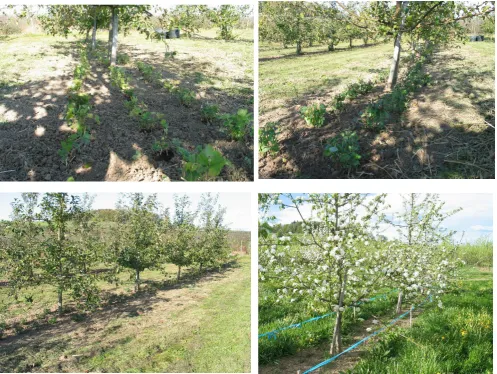
D
ynamic
soD
mulching
anD
use
of
recycleD
amenDments
to
increase
bioDiversity
,
resilience
anD
sustainability
of
intensive
organic
fruit
orcharDs
anD
vineyarDs
Università Politecnica delle Marche
P.zza Roma 22, 60121 Ancona, Italy
Fruit Growing Institute
Ostromila12 str. 4004, Plovdiv, Bulgaria
Laimburg Research Centre
Laimburg 6 I-39051 Vadena (BZ), Italy
Research Institute of Horticulture
(Instytut Ogrodnictwa)
Al. 3 Maja 2/3 96-100 Skierniewice, Poland
CTIFL French technical Interprofessional Centre for Fruits and Vegetable
22 rue Bergère, 75009 Paris, France
FiBL - Research Institute of Organic Agriculture
Ackerstrasse 113, 5070 Frick, Switzerland
University Hohenheim
Schloss Hohenheim 1, 70599 Stuttgart, Germany
1. INTRODUCTION
The challenge represented by weed management has been indicated as one of the mayor constraint in conversion into organic management (Bond & Grundy, 1998). Beside the limitation imposed in the use of chemical tool, the whole approach in organic weed management should be substantially different. Full weed eradication shouldn’t be a goal (Blake, 1990), there are obviously conflicts between a completely weed eradication and other aims of the organic system (Mattsson et al., 1990; Colquhoun & Bellinder, 1996). Despite the initial positive effect of a mechanic weed control due to organic soil matter mineralization, heavy negative outcomes are detrimental for soil physical, chemical and biological fertility.
In the last decades a more holistic approach intended to increase the sustainability of the agronomic practices by increasing the biodiversity has characterized a rising part of the organic scenario. Nowadays, a further challenge for the organic farmers should be to move from the goal of a “greater biodiversity” to the setting of a better diversity, finalized to the achievement of precise agro-ecosystemic services.
Weed community composition in orchard agroecosystem depends on how the local biodiversity is selected and favorited by environmental, biotic, and especially management factors, that act as “environmental filters” (Gotzenberger et al., 2012; Borgy et al., 2016). Furthermore, some of the practices, like for example tillage, act more than others as strong filters (Barberi et al., 1998). For these reasons, an integrated or ecological weed management requires precise knowledges on the effect of management practices on the weed population composition (Bastiaans et al., 2000).
Diversification is recognized as a factor promoting system resilience, nevertheless a generical increase in biodiversity is not in itself a guaranty for the improvement of the economical sustainability of the organic practices. (Barberi et al., 2016).
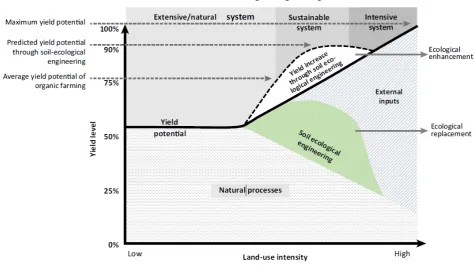
[image:4.595.57.532.366.637.2]The challenge evolves toward the identification of species combination able to provide services to the system and to maintain competition to a not detrimental level. It would be possible to intensify organic agriculture by developing strategies for targeted exploitation of biodiversity. Bender et al. (2016) proposed an interesting model on the contribution to input substitution by endogenous resources (Fig.1).
Figure 1 Conceptual model showing the contribution of external resource inputs and natural biological processes to an ecosystem function, in dependence of land-use intensity.
3
Figure 1 Conceptual model showing the contribution of external resource inputs and natural biological processes to an ecosystem function, in dependence of land-use intensity.
At low land-use intensity, yield is low and sustained by natural biological processes. With higher land-use intensity, dependence on external resource inputs increases and the contribution of natural biological processes decreases. Yield is highest under intensive management with a high level of external resource inputs. Soil ecological engineering (green) complements the contribution of natural biological processes and can partly replace external resource inputs, therefore either maintaining yields while reducing external inputs (ecological replacement) or enhancing yield without enhancing external inputs (ecological enhancement) (Bender et al., 2016).
2. DOMINO’S ACTIVITIES and RESULTS
All the research groups involved in the DOMINO project contributed in 2018-2019 to the definition of best practices, locally tested, for sustainable weed management. The goal is to reduce soil tillage, assure a permanent soil cover thus managing weed competition within a physiologically sustainable level. A further goal is the inclusion of species that provide agroecological services and the valorization of the local biodiversity. The data we collect helped to draw the road for the experimental activities of the next two years.
2.1 Living mulches: criteria for the selection of suitable species
Several local spontaneous and cultivated species have been tested for under-the-row ground management.
The choice for the species to be grown on the row has been done considering several aspects:
a) the species is adapted to the local environmental condition
b) the species could provide an additional source of income
c) the species could provide some agro-ecological services (e.g. phytosanitary activities)
d) the species could provide a multifunctional income
source of income, officinal plants appeared as a potential target as well some horticultural species. A strong interest and market opportunity are recognized for organic officinal plants in several countries and at EU level. Discussions with producers of officinal plants have pointed out that the possibility of growing plants in a shadowy environment, like that of a fruit tree row, is an added value for the market thus increasing chances for organic farmers.
Experiences from continental climate: the case of Poland
Among species that prefer such shadow environment is Hierochloë australis – the plant used to produce an unique kind of aromatized vodka typical of Poland: “zubrówka”. Further-more, there are species which can be harvested very soon in the season (i.e. Alium ursinum), thus not causing competition with the fruit trees. Likely, there are species which are also quite well covering the ground, so highly reducing the competition from weeds (Alchemi-lla vulgaris, Galium odoratum, Veronica officinalis). Some of them, normally considered as “weeds”, can be valorized as officinal preparations.
Species able to provide agronomical services were also selected to sustain plant protection or plant nutrition. Soil-borne pests are quite difficult to control even in conventional or-chards, and organic farming limitations in the use of pesticides needs to be overcome with new solutions. The availability of plants that produce root exudates containing compounds that can interfere with soil pests is thus an opportunity that has been considered when se-lecting species to be grown on the row. Among them two have been considered, Tagetes sp. and Taraxacum officinale.
species, which can be useful for weed control and production of raw materials for uses in phyto-cosmesis or food preparations, such as Potentilla anserine, Melittis melissophyllum and Symphytum officinale.
Another species that can provide some agronomical services, and has been planned to be used in Poland, is Cucurbita pepo. It has been proved that this species is able to remediate soils polluted with organic compounds (i.e. DDT). Considering the EU-wide problem of accidental contamination of organic produces with this kind of compounds, the growth of C. pepo plants in the row could thus help overcoming this problem.
As a weak point it as to be stressed that in the preliminary trial conducted in 2018, not all species performed equally well in reducing weeds infestation. Nasturtium and mint, despite their promising characteristics did not succeeded in competing with weeds so that their relative abundance progressively decreased, in the parcels. On the other hand, chia, while developing very well and providing a good competition with weeds, fully covering the soil in the row, was not able to reach the blooming stage, thus making useless its cultivation (the product of this species is the seed).
South Tyrol (Northern Italy) pics:
During summer 2018, Laimburg Research Center performed a screening test, to evaluate the growing performances of selected species used as live mulching in a vineyard and in an apple orchard. After the first-year screening, cover percentage data of the sowed species were analyzed and some of them were selected for the trial test of 2019-2021. The chosen species are different, some of them were selected from the local spontaneous weeds, oth-ers are officinal or horticultural species. All of them were selected in function of the charac-teristic they possess and the possible ecosystem services they can provide to the orchard/ vineyard. The tables below show:
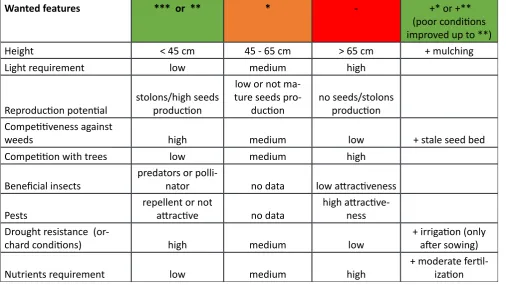
Table 1) the wanted characteristic in live mulching species,
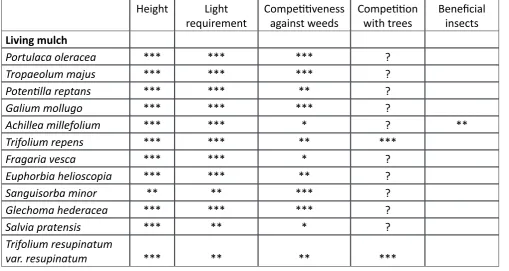
[image:8.595.48.555.423.708.2]Table 2) the list of the selected species and the qualitative score attributed in function of their phenology/biology.
Table 1 the wanted characteristic in live mulching species.
Wanted features *** or ** * - +* or +** (poor conditions improved up to **)
Height < 45 cm 45 - 65 cm > 65 cm + mulching
Light requirement low medium high
Reproduction potential stolons/high seeds production
low or not ma-ture seeds
pro-duction no seeds/stolons production Competitiveness against
weeds high medium low + stale seed bed
Competition with trees low medium high
Beneficial insects predators or polli-nator no data low attractiveness
Pests repellent or not attractive no data high attractive-ness
Drought resistance
(or-chard conditions) high medium low + irrigation (only after sowing)
Table 2 Characteristics of the main species selected as living mulches
Height Light
requirement Competitiveness against weeds Competition with trees Beneficial insects
Living mulch
Portulaca oleracea *** *** *** ?
Tropaeolum majus *** *** *** ?
Potentilla reptans *** *** ** ?
Galium mollugo *** *** *** ?
Achillea millefolium *** *** * ? **
Trifolium repens *** *** ** ***
Fragaria vesca *** *** * ?
Euphorbia helioscopia *** *** ** ?
Sanguisorba minor ** ** *** ?
Glechoma hederacea *** *** *** ?
Salvia pratensis *** ** * ?
Trifolium resupinatum
Pests Drought
resistence Nutrients required Reproduction potential
Living mulch
Portulaca oleracea ** *** *** ***
Tropaeolum majus ** +* ** Na
Potentilla reptans ** ** *** ***
Galium mollugo ** ** *** **
Achillea millefolium ** *** *** **
Trifolium repens ** *** *** **
Fragaria vesca ** - *** ***
Euphorbia helioscopia ** *** *** **
Sanguisorba minor ** ** *** Na
Glechoma hederacea ** *** *** ***
Salvia pratensis ** *** *** *
Trifolium resupinatum var.
resu-pinatum ** ** *** ***
Perennial plants, dwarf lawn and green manures for the French organic apple orchard
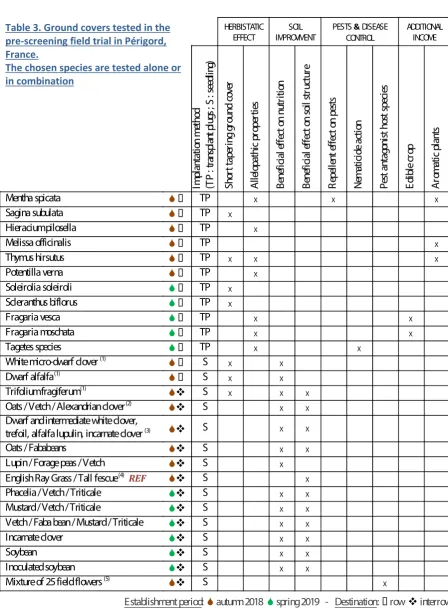
The “ground covers assessment trial” was established in October 2018, first with 15 species or mixtures of ground cover species, chosen for their herbistatic properties (allelopathic species; short-growth tapering species), for their positive action in pest protection (repellent species; beneficial insects and mites host plants), for their improving action on the functioning of the soil and their nutritional potential for the tree, and/or for their ability to generate an additional income for the farmer (with here, aromatic herbs – Thymus, Mentha, Melissa – and fruiting species – Fragaria vesca and Fragaria moschata). The trial was completed in spring 2019 with 11 other species or combination of species, for a total of 26 treatments, implemented at the rate of 3 replicates of 25 m² each, over a total surface area of 3,371 m². The list of these treatments is given in table 3; among these, 13 are intended for implantation on the row and 13 for interrow (12 legume-based green manures and a flowery mixture).
A variety of observations have been made since the trial was implemented. They concern: (i) biodiversity measurements (percentage coverage by planted or sown ground covers and spontaneous flora (weeds), earthworm counts by mustard test, abundance measurements of soil beneficial fauna by using Barber traps; (ii) soil status measurements (nitrogen balance at 30 cm below the surface, soil moisture, infiltration capacity), (iii) cover growth measurements (height and biomass), (iv) work times and input costs recording.
It is premature to draw conclusions from most of these notations, for which there are currently insufficient repetitions over time. However, the following trends will be given, as the interest of some covers is beginning to stand out and the first steps in covers management can already be imagined.
Ground covers evolution
Veronica persica, Matricaria sp., Senecio vulgaris, Sonchus arvensis, Rumex acetosa, Vicia sp., Cardamina hirsuta, Plantago lanceolata. Weeds have invaded the established covers unevenly, with the “space occupancy” factor appearing to be predominant: the faster the cover occupies the space, the cleaner the plot remains in early spring, and then, the stronger its growth, the cleaner it remains over time.
Thus:
• Dwarf lawn (white micro-dwarf clover and dwarf alfalfa) kept a very nice appearance until mid-April, and then allowed some fast-growing weeds to escape, such as rumex or groundsel.
• Green manures (sown at high density) remained clean beyond their flowering stage, with very good biomass production, varying according to the potential of the mixed species.
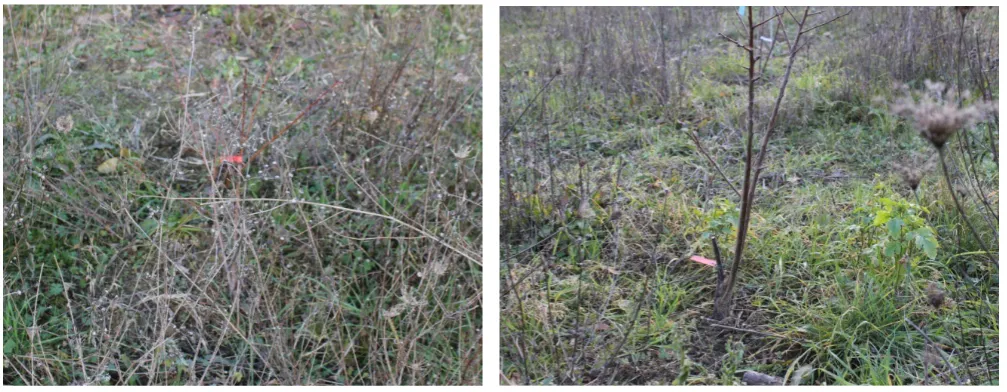
[image:12.595.403.554.529.684.2]• Perennials planted for their allelopathic properties, planted at a rate of 6 plants per m², have not yet shown any ability to hinder the germination of spontaneous flora or its spread. Most of these perennials have been chosen for their stolon propagation mode, but so far only a very small extension of these plants has been noted, which nevertheless remain very much alive even if covered by a layer of well-developed weeds (Fig.2) .
Figure 2. Fouling by weeds according to the ability of the ground cover to quickly occupy the space
Association Lupin / Forage peas / Vetch very well developed and weed-free
White micro-clover with a good
Table 3. Ground covers tested in the pre-screening field trial in Périgord, France.
The chosen species are tested alone or in combination
HERBISTATIC
EFFECT IMPROVMENT SOIL PESTS CONTROL & DISEASE
ADDITIONAL INCOME Imp la nt at io n me th od (TP : tra ns pl an t pl ug s ; S : s eed lin g) Sh or t t ap er in g gr ou nd cov er Al lel op at hi c p ro per ties Be ne fic ia l e ffe ct o n nu tr iti on Be ne fic ia l e ffe ct o n so il str uc tu re Rep ell en t ef fec t o n p es ts Ne m at icid e a ct ion Pes t a nt ag on ist h os t s pec ies Ed ib le c rop Ar om at ic pl an ts
Mentha spicata S� TP X X X
Sagina subulata S� TP X
Hieracium pilosella S� TP X
Melissa officinalis S� TP X
Thymus hirsutus S� TP X X X
Potentilla verna S� TP X
Soleirolia soleiroli S� TP X
Scleranthus biflorus S� TP X
Fragaria vesca S� TP X X
Fragaria moschata S� TP X X
Tagetes species S� TP X X
White micro-dwarf clover (1) S� S
X X
Dwarf alfalfa (1) S� S
X X
Trifolium fragiferum (1) Sv S
X X X
Oats / Vetch / Alexandrian clover (2) Sv S
X X
Dwarf and intermediate white clover,
trefoil, alfalfa lupulin, incarnate clover (3) Sv S X X
Oats / Fababeans Sv S X X
Lupin / Forage peas / Vetch Sv S X
English Ray Grass / Tall fescue (4) REF Sv S
X
Phacelia / Vetch / Triticale Sv S X X
Mustard / Vetch / Triticale Sv S X X
Vetch / Faba bean / Mustard / Triticale Sv S X X
Incarnate clover Sv S X X
Soybean Sv S X X
Inoculated soybean Sv S X X
Mixture of 25 field flowers (5) Sv S
X
Establishment period: Sautumn 2018 Sspring 2019 - Destination: �row vinterrow
(1) BARENBRUG’s cultivars; (2) « Green Spirit Proteo 2 »-BARENBRUG; (3) « Multiflore LD »-BARENBRUG (4) « Enherbement verger N°3 »-BARENBRUG; (5) « Coccinelle »- BARENBRUG
Ground covers management
} The green manure mixtures were cut at the beginning of May, 2 weeks after flowering, and then mulched on adjacent strips of bare soil to assess their nitrogen release (Fig.3). Of these mixtures, those consisting of annual species are managed on a rotational basis with other green manures, the aim in order to be able to supply the fertilizer needs of apple trees during their most active demand period, from spring to the end of August; the mixtures Oats / Fababeans, Lupin / Forage peas / Vetch and Oats / Vetch / Alexandrian clover were therefore followed by a sowing of soybeans; this species was chosen for its ability to produce a high level of biomass, and therefore, we hope, to release large amounts of nitrogen. On its side, the perennial mixture White clover / Trefoil / Alfalfa lupulin / Incarnate clover was cut and mulched on the side, but was not followed by another sowing, in order to determine its capacity to maintain itself and restore enough nitrogen by successive cuts.
} After a first trimester of observations, it seems that the so-called allelopathic species do not have the capacity to prevent the emergence of weeds as quickly as one might have hoped and it seems likely that this potential can be acquired as the plant sets up, perhaps even 3 to 4 years after introduction (as shown in the many examples we can see in our gardens). It was therefore decided, for the new set of perennial plants introduced in spring 2019, to associate them from the outset with a dwarf clover seedling, to assess whether this combination is able to fill the space quickly enough to contain weed growth, thus giving time for the plants to settle and expand, and then to become dominant after several vegetation cycles.
Figure 3. Green manure in full bloom of the incarnate clover: in addition to providing nitrogen, our living mulches attracts honey-gathering insects and make the landscape beautiful
2.2 Living mulches with horticulture species
Based on previous successful experiences, at Università Politecnica delle Marche, several species of strawberries have been tested under different agronomic condition.
Highly vegetative species selected for their stoloniferous aptitude maintained a soil cover exceeding the 40% during the first summer and produced an interesting number of stolons and new plantlets. In late winter soil cover for those species exceeded 50% (Fig.4a) .
Figure 4a. White strawberries soil cover in
[image:15.595.57.518.519.718.2]The same excellent performance was recorded for the living mulches with Potentilla ssp. A 60% of soil cover has been reached in this case, with several soil spots showing 100% of covering by the mulches (Fig. 4b.).
Wild species of strawberries, rather adapted to shadow condition, suffered instead some summer drought stress in calcareous soil, in the absence of complementary irrigation. After an initial soil cover percentage ranging at around 30%, one month after transplanting, the soil cover decreased during summer and a relevant percentage of plantlets failed to grow. A remaining 10% of soil covered by mulching was recorded during autumn and winter. The recovery of those species was hard during the following spring, due to a large population of weed development in the parcel.
Mulches performances strongly differed due to soil and climatic caratteristics as well as due to soil management practices. In fresh, acid soils, in the presence of abundant rains during spring and a mild summer wild strawberries doubled the percentage of soil covered in 4 months moving from an average 30% to a 70%. In those condition the hideal number of plantlet to be installed under the main crop was one for each side of the plant. Variant with a double number of plantlets did not differed accordingly in performances thus indicating than, in the presence of favourable conditions to runners production, a low initial investment would assure the success and the efficacy of the mulching. A labor investment of about 30 hours/ha was estimated for mulching installation in favourable condition.
[image:16.595.58.268.531.686.2]Figure 5. Soil fully covered under the vineyard can. No further soil management will be needed after strawberry full set.
[image:16.595.294.543.532.688.2]An initial investment of 0.25 cent/plantlet will be required, thus meaning a cost of about 2.000€ for a pilot surface of 1 ha. It has to be highlighted that the high production of runners will allow to self-produce, within one year, the material for any further transplant. The arvest and transplant of the plantlets can be managed by using internal labor in rainy days thus allowing a great compatibility with the other activities scheduled. Mulches resulted particularly helpful especially in the management of the area surrounding the trunk harder to manage otherwise (Fig. 5) .
No further extra costs were required other than the management routinely required by the vineyard. A production of strawberries of 700gr/m of floor under the row was estimated for the second year after installation, thus fully covering the installation costs. The added value of the mulching as to be considered also in terms of social and commercial perception of the agronomical practices by the consumers (Fig.6).
At the Competence Centre for Fruit Growing Bavendorf a demonstration trial has been started by the Univeristy of Hoenheim in October 2018 with wild strawberries (Fragaria vesca) and peppermint (Mentha x piperita) planted in the row under apple trees on M25 with a spacing of 3.6 m. The strawberries were planted with a density of 9.4 plants m-2, the
peppermint with a density of 4.4 plants m-2, each on 10.8 meter length. The trees are planted
Wild strawberries in the row Peppermint in the row
2.3
The selective weeding: engineering local biodiversity [image:19.595.47.551.383.579.2]The valorization of local biodiversity in soil cover management was the goal of a selective manual weeding applied by Università Politecnica delle Marche in an apricot orchard. Two months after installation the spontaneous weed population was manually selected in order to eliminate by uprooting just competitive, tap root and taller species. 8 months after manual intervention the average and maximum weed height were 50% lower in weeded parcels (Fig.8) thus reducing competition and inducing a significant advantages in the main crop development resulting in a 20% higher trunk caliper relative growth rate. A significantly reduced incidence of highly competitive species was still appreciable after 10 months.
Figure 8. Weed height in control (left) and selectively weeded (right) parcels
2.4 Underground biodiversity
The samples, collected roughly on a monthly basis, were analyzed determining the dynamic of fungal and bacterial populations using sequences of the bacterial 16S rRNA gene and of the fungal ITS region of the ribosome. The soil samples were also analyzed to assess the population dynamic of the nematodes community, considering different trophic groups and species. It emerged that the total number of nematodes in the soil treated with organic fertilizers increased particularly during the summer period in comparison to the control, without major changes in the number of plant parasitic species.
During the spring 2019, the soil sampling campaign has been started again, including also the newly established trials for row management and for fertilization using microbial strains.
During the autumn 2018, a trial to test the effect of treating the fallen leaves with one of the locally produced organic fertilizers (Vinasse) to assess the possibility of increasing their degradation, thus reducing the inoculum for the primary infection of Venturia inequalis, was also established. The trial included also the use of a selected microbial strain with high cel-lulosolytic activity, to further enhance the biodegradation process.
2.5 Aboveground biodiversity
The analysis of above ground arthropods population started at preliminarily during 2018, but is going to be fully implemented from 2019. The 2018 assessment was mainly devoted to assess the pests pressure on the orchards selected for the trials. However, as already men-tioned above, in the preliminary trial in Poland with on-the-row secondary crops, a two-fold increase of predatory mites (particularly those belonging to Tydeidae family) was observed when nasturtium and mint were grown.
References
Barberi, P, Bocci, G, Carlesi, S, Armengot, L, Blanco-Moreno, JM & Sans, FX. 2018. Linking species traits to agroecosystem services: a functional analysis of weed communities. Weed Research 58, 76– 88.
Bond W., Grundy A.C. 1998 Desk study on the control of weeds in organic arable and horticultural production systems. Project Report OF 0152. MAFF, London, UK
Barberi P., Cozzani A., Macchia M., Bonari E. 1998. Size and composition of the weed seedbank under different management systems for continuous maize cropping. Weed Research 38, 319–334
Bastiaans L., Kropff M., Goudriaan J., Van Laar H. 2000. Design of weed management systems with a reduced reliance on herbicides poses new challenges and prerequisites for modeling crop-weed interactions. Field Crops Research 67, 161–179.
Blake F. 1990 Organic Growing (Grower Digest). Nexus Media Ltd, London, UK.
Bender S.F., Wagg C., van der Heijden M.G.A. 2016. An Underground Revolution: Biodiversity and Soil Ecological Engineering for Agricultural Sustainability. Trends Ecol Evol. 31(6):440-452
Borgy B., Perronne R., Kohler C., Grison A.L., Amiaud B., Gaba S. 2016. Changes in functional diversity and intraspecific trait variability of weeds in response to crop sequences and climate. Weed Research 56, 102–113.
Colquhoun J.B., Bellinder R.R. 1996. Re-evaluating cultivation and its potential role in American vegetable weed control. Proceedings X Colloque International sur la Biologie des Mauvaises Herbes, Dijon, France, 335-341.
Geotzenberger L., De Bello F., Brathen K. 2012. Ecological assembly rules in plant communities-approaches, patterns and prospects. Biological Reviews 87, 111–127.