This is a repository copy of The OFDI Patterns and Firm Performance of Chinese Firms:
The Moderating Effects of Multinationality Strategy and External Factors.
White Rose Research Online URL for this paper: http://eprints.whiterose.ac.uk/102182/
Version: Accepted Version
Article:
Clegg, J, Lin, HM, Voss, H et al. (2 more authors) (2016) The OFDI Patterns and Firm Performance of Chinese Firms: The Moderating Effects of Multinationality Strategy and External Factors. International Business Review, 25 (4). pp. 971-985. ISSN 0969-5931
https://doi.org/10.1016/j.ibusrev.2016.01.010
© 2016, Elsevier. Licensed under the Creative Commons Attribution-NonCommercial-NoDerivatives 4.0 International http://creativecommons.org/licenses/by-nc-nd/4.0/
[email protected] https://eprints.whiterose.ac.uk/
Reuse
Unless indicated otherwise, fulltext items are protected by copyright with all rights reserved. The copyright exception in section 29 of the Copyright, Designs and Patents Act 1988 allows the making of a single copy solely for the purpose of non-commercial research or private study within the limits of fair dealing. The publisher or other rights-holder may allow further reproduction and re-use of this version - refer to the White Rose Research Online record for this item. Where records identify the publisher as the copyright holder, users can verify any specific terms of use on the publisher’s website.
Takedown
If you consider content in White Rose Research Online to be in breach of UK law, please notify us by
The OFDI Patterns and Firm Performance of Chinese Firms: The Moderating Effects of Multinationality Strategy and External Factors
Jeremy Clegg
Director of the Centre for International Business, University of Leeds, UK
Hsin Mei Lin
Dept. of International Business Studies, National Chi Nan University, Taiwan
Hinrich Voss
Lecturer in International Business, University of Leeds, UK
I-Fan Yen
Dept. of International Business Studies, National Chi Nan University, Taiwan
Yi Tien Shih
Dept. of International Business Studies, National Chi Nan University, Taiwan
ABSTRACT
The purpose of this paper is to examine how multinationality strategy, home political
influence, and host-country risk explain the performance consequences of OFDI
patterns of firms in the most important emerging economy, China. Two main patterns
of OFDI (‘born global’ natured multiple simultaneous and IP-natured gradually
growing) have been dominant in China during its first OFDI as a latecomer. In
contrast to the conventional IP argument, we hypothesize that the multiple
simultaneous pattern of a born-global nature leads to better performance. We also
hypothesize that firm multinationality strategy and home political influence play
greater roles in enhancing the performance effect of the multiple simultaneous pattern than another pattern, i.e. IP-natured gradually growing pattern. Using panel data of
4,619 observations from 261 Chinese publicly listed firms from 1991-2011, we find a
superior performance effect for the multiple simultaneous pattern. Further, we find a
greater moderating effect of firm multinationality strategy and home political
influence affecting the OFDI and performance relationship undertaken by the multiple
simultaneous pattern than by the gradually growing pattern. Our study extends
understanding of OFDI patterns in emerging economies and suggests that the analysis
of performance consequences should focus on external and firm factors that may
facilitate the performance effect.
1. INTRODUCTION
The process of China’s integration with the global economy began with its ‘go global’ policy of the 1990s (Buckley et al, 2008) and prospered after the 2001 WTO
accession and the 2008 Olympics in Beijing. As latecomers to the global economy,
some Chinese firms follow the internationalization process (IP) model, going
international in small, incremental steps; others have a more ‘born global’ nature,
taking a large step from their first outward foreign direct investments (OFDI). Studies
of the pattern of OFDI generally examine the dimensions of pace, speed, and
regularity; however, the sole explanation of each single dimension has produced
incomplete findings. Accordingly, there is a need for a more synthesized
conceptualization of the patterns of OFDI (Buckley et al, 2007; Wang et al, 2011).
The patterns of OFDI are indeed a crucial key to understanding how and why
China has become the most important emerging economy (EE), rapidly
internationalizing in a short period of time, and how much Chinese firms benefit from
choosing a proper pattern for their first OFDI. The success of China calls for
exploration of pattern choice and firm performance effect by EE firms in general and
Chinese firms in particular. Therefore, we sort OFDI into two patterns: (1) multiple
simultaneous OFDIs characterized by fast speed and sudden onset, and (2) gradually
growing OFDIs with a slower speed and more regular rhythm. The performance effect
of OFDI patterns, in turn, are worthy of further consideration, as the outcomes of the
two different patterns have been debated.
The empirical literature on patterns of OFDI has produced mixed and
contradictory findings of their consequences (Lu et al, 2014; Hashai, 2011; Barkema
& Drogendijk, 2007). The wide variety of results implies that there may be factors
outside the examined nexus of pattern performance that affect the nature of this
relationship. While the international business (IB) literature posits that firm- and
country-level factors can trigger OFDI, it has overlooked the role of crucial
‘antecedents’ in explaining the OFDI and its performance. By logical extension, the reasons for choosing a specific pattern of foreign expansion should also predict the
outcomes of the firm. We fill the gap by looking at the ways in which firm-level
multinationality strategy and country-level (dis)advantages can affect the relationship
between the pattern of OFDI and the performance of the firm.
As latecomers to the global economy, Chinese firms may differ from those of
advanced economies in their motives and attitudes when deciding their
multinationality strategy. For instance, some Chinese firms take a large step in
internationalization by investing in countries so as to seek to mitigate their late arrival
or gain support from the environment. Thus, for EE firms with relatively little
contingent on firm-level multinationality strategy. Early literature on OFDI from
developed economies largely focused on the external factors of the host side (Henisz
& Zelner, 2005). Recent research has begun to pay attention to the role of home
support (Wang et al, 2012). However, the IB literature needs to devote more attention
to consider both host and home factors at the same time (Lu et al., 2014; McGahan &
Victor, 2010), as well as the firm-level multinationality strategy, when investigating
the phenomena in EEs.
Further, the findings suggested for advanced economies may not apply to EE, as
they are fundamentally and institutionally different in terms of country environment
and motives of internationalization (Morck, Yeung & Zhao, 2008). Against this
background, this paper aims to examine the different performance effect of the pattern
of OFDI and its implication for the Chinese pattern of OFDI, focusing particularly on
how different multinationality strategies, home political influence, and host-country
risk moderate the effect of the pattern of OFDI on firm performance.
Using a comprehensive sample consisting of 4,619 project-firm-half year
paneled observations, collected from the annual reports of 261 publicly listed Chinese
firms, we examine the patterns of OFDI and firm performance, and the condition of
host and home environment, and multinationality strategy. To understand the first
wave of OFDI in China, we choose the time period of 1991–2011, when China
initiated its first go-global policy. We then divide the Chinese OFDI into two patterns
based on specific criteria. We find that the multiple simultaneous pattern of Chinese
OFDI is indeed distinctive in certain superior performance, and the existence of the
moderating roles of multinationality strategy and home political influence need to be
rooted within the general IB theory when explaining new phenomena in EE such as
China. Our study extends the literature on the pattern of OFDI-performance
relationships and further suggests that the analysis of the performance consequences
of OFDI patterns should focus on home-specific factors and firm strategies that may
facilitate the performance effect of the typical pattern of China’s OFDI.
2. THEORY AND HYPOTHESES DEVELOPMENT
We review the literature and then hypothesize (H1) to test the performance effect
of the two patterns, multiple simultaneous and gradually growing, of OFDI in Chinese
to explain its first wave of OFDI in the face of huge turmoil, economic reform, and
economic recovery in recent years. The realization of the advantages of patterns is
subject to firm and environment contingencies. Multinational strategy, home political
influence, and host-country risk as moderators are reviewed and hypothesized in
2.1 The patterns of OFDI
The literature on patterns of OFDI has studied the nature of foreignness, speed,
and regularity. From the perspective of foreignness, IP (Johanson & Vahlne, 1977,
1990) and the born-global approach (e.g. Bell, McNaughton, & Young, 2001; Knight
& Cuvisgil, 2004) depict a dichotic process of international expansion. For instance,
Kalinic and Forza (2012) classified expansion into two models: gradualist (gradual
commitment) and born-global (a quick expansion after inception). The well-known IP
approach suggests that firms internationalize in small, incremental steps,
conceptualizing the foreign expansion as a sequential and path-dependent
commitment process to overcome the liability of foreignness (Li, 2007). An
alternative view has suggested that firms can be born global—that is, that they
internationalize soon after their inception. The concept can be referred similarly to the
viewpoint that firms without prior OFDI experiences begin to engage in OFDI very
rapidly. These international experience-constrained firms even invest in a diversified
geographical and operational scope (Hashai, 2011) at the same time to enjoy the
advantage of foreignness (Kostova & Roth, 2002; Nachum, 2010).
The literature discusses the speed of internationalization in terms of small and
large steps (Barkema & Grogendijk, 2007; Lu et al, 2014; Casillas &
Moreno-Menéndez, 2014). The interchangeable term ‘pace’ (Vermeulem & Barkema,
2002) is used to define the nature of speed, namely that faster expansion refers to the
large amount of expansion a firm undertakes within a given period of time, while a
slower speed implies limited expansion actions within a given time period. From the
perspective of regularity, internationalization can be regular and irregular
(Vermeulem & Barkema, 2002). Regularity expresses in the way that subsidiaries
have expanded in a rhythmic, regular fashion. Irregular rhythm involves large peaks
of rapid expansion followed by long periods of inactivity.
To capture the definition of the pattern of Chinese OFDI more completely, we
synthesize the nature of ‘speed’ and ‘rhythm’ to define the ‘pattern’ of OFDI, which
used to be separately studied in literature. We, accordingly, classify two patterns: a
multiple simultaneous pattern and a gradually growing pattern. The multiple
simultaneous pattern is characterized as having fast speed and sudden onset. That is,
firms choosing this pattern for OFDI usually have multiple subsidiaries to establish
simultaneously in a given period of time. This pattern is characterized not only as
having a fast speed, but also by a simultaneous jump into several new institutional
settings. It evolves into large peaks of rapid expansion from the beginning investment
followed by relatively stable increased investment. In contrast, the gradually growing
pattern is characterized by a slower speed and regular rhythm. That is, firms engage in
regular fashion.
2.1.1 The benefits and costs of the two patterns
For the pattern of multiple simultaneity, from an international portfolio
perspective, empirical results have supported the fact that gains can be realized in a
jump investment, which creates a low correlation among the several international
markets (e.g. Longin & Solnik, 1995), resulting in a more stabilized return. In this
regard, the pattern leads MNEs to learn quickly from its environment and respond
appropriately to host requirements (Kostava & Zaheer, 1999) because the benefit of
legitimacy is achieved by developing a variety of country institutional profiles of the
multiple countries in which MNE operates. In a race, latecomers of China MNEs
(CMNEs) that possess resources that can be replicated at low marginal cost can enter
multiple markets simultaneously (Vassolo, Anand & Folta, 2004). The pattern also
realizes the benefits of rapid entrepreneurship internationalization, such that an
entrepreneur in an international network (Oviatt & McDougall, 2005) allows the firm
to internalize in a quick, born-global fashion (Lopez, Kundu & Ciravegna, 2009). Past
research has found a positive performance effect of born-global enterprises (Zhou,
Wu & Luo, 2007; Knight & Casusgil, 2004; Kalinic & Forza, 2012; Lopez, Kundu &
Ciravegna, 2009).
The costs of adopting this pattern to a firm lie mainly in the liability of
foreignness. First, MNEs have difficulty absorbing the amount of expansion, given
the bounded rationality and limited cognitive scope of top management (Vermeulen &
Barkema, 2002). Second, firms that reach a certain degree of OFDI within relatively
few years have little time to evaluate internationalization experience, assimilate it, and apply it to commercial ends (Kalinic & Forza, 2012). Finally, this pattern puts firms at
risk of the liability of foreignness (Zaheer, 1995), particularly when the host
environment is unfamiliar and internationalization is time-compression-diseconomy
(Dierickx & Cool, 1989). Scholars doing empirical research in this area suggest that
an infusion of incremental elements into the born-global mode, such as ‘born regional’
(Lopez, Kundu & Ciravegna, β009) or ‘sequencing born global’ (Hashai, β011),
would be a feasible internationalization path. As compared to internationalization in a
larger step, Barkema and Drogendijk (2007) empirically find that a smaller step of
internationalization that stresses the balance between exploitation and exploration in
an incremental strategy would be a suitable strategy for Dutch firms.
The gradually growing portfolio pattern involves focusing on the essence of
sequentially growing foreign investments, viewed as a sort of application of IP from
the aspect of incremental commitment. Initial investments involving a few countries
a learning curve in foreign environments and exploit the early-developed capability of
coordinating with local suppliers, customers, and government institutions for later
investments. The gradually growing pattern also accumulates experiences with
products and processes adaptation, which can be applied to incoming local
circumstances (Johansson & Vahlne, 1990; Belderbos, Capannelli & Fukao, 2001;
Song, 2002). This valuable pattern results in an incremental expansion of foreign
investments after uncertainty is resolved and opportunities for expansion materialize.
The IP-based internationalization-performance relationship has been studied
extensively in the context of firms from developed countries, with mixed and
contradictory findings (Contractor et al., 2003) on a linear and monotonic relationship
(Hitt, Hoskisson & Kim, 1997). More complex models include U-shaped (Ruigrok &
Wagner, 2003), inverted U-shaped (Chen & Wang, 2014), and S-shaped (Lu &
Beamish, 2004).
2.1.2 The performance effect of OFDI patterns
Prior literature provides abundant evidence of the positive relationship between
the ‘gradualist pattern’ of internationalization and performance (e.g. Hitt, Hoskisson
& Kim, 1997). From the perspective of portfolio theory, the extent to which OFDI in
different countries can create value for the MNEs by providing growth and switch
options (e.g. Li & Rugman, 2008) explains the superior performance effect of
multiple simultaneity pattern rather than a gradually growing pattern for China. With
its speed, scope of foreignness, and sudden onset rhythm, the multiple simultaneous
pattern grants more value from the growth and switch options of the portfolio for
Chinese firms choosing multiple onset OFDIs. The gradually growing pattern, by
contrast, stresses that a stepwise process takes place in foreign countries, assures
learning accumulation and has a positive performance effect (Johanson & Vahlne,
1977). However, there is a steadier and more stabilized stream of revenues and grants
from accessing strategic resources secured through rapid expansion under the multiple
simultaneous pattern, especially for late-coming China, which wishes to catch in the
race.
Given the theoretical argument and empirical investigation about the specific
forms and paths of CMNEs that choose to go global rapidly after inception, there is a benefit of a set of simultaneous and overlapping OFDIs in different countries (Hashai,
2011). The study can further imply that CMNE performance may improve through the
multiple simultaneous pattern because rapid expansion during the initial stage of
internationalization allows CMNEs to quickly exploit advantages developed in China,
including low-cost manufacturing advantages and good relationships with host
governments, and benefit from a variety of local preferential treatment and the ‘new
The performance effect of the pattern of multiple simultaneous OFDIs is
different from the pattern of gradually growing OFDIs from the point of view of
flexibility (Kalinic & Forza, 2012). Expansion in various countries with potentially
divergent macroeconomic developments, under the pattern of multiple simultaneous
OFDIs, can provide greater flexibility, allowing more opportunities with low
correlation provided initially by several multiple projects (Tang and Tikoo, 1999; Lee
& Makhija, 2009). For instance, the China State Construction Engineering
Corporation started 10 OFDI projects since its first internationalization in 2006. The
pattern of multiple simultaneous OFDIs grants greater intra-temporal flexibility at
each period as the pattern of growing investments only enjoys the intra-temporal
flexibility at later periods. With these considerations in mind, we assume that the
pattern of multiple simultaneous OFDIs will lead to a greater performance effect for Chinese firms than will the pattern of gradually growing OFDIs:
H1: The performance effect of the multiple simultaneous pattern of China is superior to that of the gradually growing pattern.
2.2 Contingencies of the relationship between the pattern of OFDI and firm performance
The inconsistent conclusions of prior studies, whether for the born-global pattern, IP
pattern, or another pattern context of OFDI, imply that there are important weaknesses
in the current conceptualization of the nature of the relationship between the pattern
of OFDI and firm performance. Some studies suggest that the relationship between
the pattern of OFDI and firm performance may be context dependent. For instance,
scholars (e.g. Wind & Douglas, 1981; Ghertman, 1988; Butler & Joaquin, 1998)
found that the returns of MNEs influence decisions of later foreign investment. As
such, scholars should go beyond the direct nexus between the pattern of OFDI and
firm performance and focus on the exogenous influence that may shape how, and in
what ways, firms benefit from the specific pattern of OFDI.
2.2.1 Multinationality
On this subject, the previous literature has suggested that the effect of OFDI
pattern on performance is contingent upon an array of firm- and country-specific
idiosyncrasies. First, multinationality—the accumulated learning experience of
internationalization—captures the firm’s level of variety and number of host countries
involved, thus measuring the extent of MNEs’ geographical-investment divergence.
Besides the direct linear multinationality-performance relationship (Katrishen &
Scordis, 1998), the role of multinationality is multi-faceted. The multinationality
can buffer firms from the uncertainty of unknown local countries, enabling them to
speed up their pace of OFDI. Similarly, as the pervious experiences of international
entrepreneurs inform their attitude about ‘born global’ (Zander, McDougall-Covin &
Rose, 2015), firms led by such entrepreneurs with rich personal international
experience are more likely to be able to reach performance effect.
The literature also has argued that multinationality is critical in leveraging firm
competence in the internationalization process (Lu & Beamish, 2004). Such
multinationality strategies enable firms to support OFDI implementation and compete
locally by incrementally increasing premiums and achieving superior performance
(Wang et al., 2012)
For OFDI of China, multinationality serves as a moderator. Multinationality
strategy better stabilizes profit for the OFDI pattern of fast speed and sudden onset of
expansion because environment factors, goods, and factor markets in different
countries with various level of economic development indicate a lower correlation
(Buckley, 1985) than the steady growth mode. Moreover, the performance of CMNEs
would benefit from broad international experience and a diverse knowledge base
(Eriksson, Majkgard & Sharma, 2000), particularly because the advantage of
foreignness resulting from familiarity with several host countries with shared political institutions when they undertake their rapid expansion along with multiple local
institutions.
The extent to which the multinationality strategy helps OFDI access different
location-specific resources (Vachani, 1991) and unique unrelated boundary-spanning competitive advantage (Qian et al., 2008) is more superior under the multiple
simultaneous pattern than under the gradually growing pattern. As compared to the
gradually growing pattern featured by gradual replication of certain value-chain
activities in an increased manner (Allen & Pantzalis, 1996; Dunning, 1998; Doukas,
Pantzalis & Kim, 1999), Chinese firms rapidly investing in several foreign projects at
a time will be more able to realize firm performance when they operate in
geographical diversification that renders the benefit of multinationality in a dispersed
network (Lee & Makhija, 2009). Accordingly, we propose the following hypothesis:
H2: The difference of performance level between the pattern of multiple
simultaneous OFDIs and the pattern of gradually growing OFDIs will be enlarged by the multinationality strategy of the Chinese firm.
2.2.2 Home political influence
The institutional literature also highlights that the home institution may moderate
2004). Schwens, Eiche and Kabst (2011) examined the moderating impact of home
political influence on the relationship between decision-making criteria and entry
mode choice. Henisz (1998) also demonstrated the moderating impact of home
political hazards on the relationship between contractual hazards and entry mode
choice of MNEs.
The influence of home politics should be considered in a dyadic relationship
between the home and host countries in a matrix (Table 1). The performance
consequence depends on the quality of the dyadic relationship when both the
influence of the home and host countries are in strong positions (Cell 1). A positive
and friendly relationship between the host and home countries, in terms of the
political sphere and human considerations, leads to a positive ‘foreign performance’
and enhances the effect between pattern and foreign performance. In contrast, a
negative and unfriendly relationship, in terms of regulatory requirements,
inaccessibility to markets, and lesser home country supply, leads to a negative
‘foreign performance’ and lessens the effect between pattern and foreign performance.
On the contrary, when both the home and host political influence are weak (Cell
4), the dyadic relationship between the home and host countries play a trivial role in
affecting the relationship between pattern and foreign performance.
In Cell 2, MNEs actually face institutional ‘duality’ (Kostova & Ruth, β00β), as
they need to gain legitimacy from institutions of host and MNE itself. When the
structure and composition of the host institution and its legitimacy requirement are in
a stronger position (Kogut, 1991), MNEs may try to gain host legitimacy to secure a
performance effect. Under such circumstances, the firm performance effect is mainly
[image:10.595.82.513.556.724.2]determined by the will and tendencies of the host country.
Table 1 The dyadic political influence between the home and host countries
Home political influence
Strong Weak
Host political influence
Strong
Cell 1
The quality of the dyadic
relationship determines
the political influence.
Cell 2
Host country determines
the political influence.
Weak
Cell 3
Home country determines
the political influence.
Cell 4
No or less political
influence.
position and the host political influence is in a weak position. Our hypothesis is
developed based on the circumstance on Cell 3. In this case, the home political
influence may have a moderating impact on the relationship between the pattern of
multiple simultaneous OFDIs and performance. The asymmetric home political
influence can facilitate OFDI by supplying well-established institutions at home to
compensate for the less accumulated prior experiences that rapid expansion often
lacks. The Communist Party in China (Meyer & Nguyen, 2005; Wright et al., 2005),
for example, continually issues dense guidelines that cover countries and industries in
which the Chinese government support CMNEs’ rapid OFDI. Meanwhile, the Chinese
central government encourages and facilitates firms to comply with diplomatic policy
in exchange for favorable financial support and other favorable treatment. Therefore,
the Chinese policy may help to enhance risk-taking capabilities and reduce the
pressure on a firm to rely on prior experience to deal with local uncertainty (Cui &
Jiang, 2012), particularly when the Chinese government aims to connect with ‘the
Third World’, usually the least developed economies.
The literature on the foreign expansion of China has found that OFDI policies
associated with rapid expansion achieve better overall performance when complying
with home policies (Wang et al., 2012; Cui & Jiang, 2012). When the knowledge
required for a successful entry is institutionally embedded at the home government,
then, the support of the Chinese government may foster firms to springboard rapidly
at the initial OFDI with a large step and without having accumulated prior
international experience (Luo & Tung, 2007). Moreover, the impaired performance,
resulting from too many simultaneous foreign expansions and lack of prior
international experiences, is reduced when a firm complies with or actively uses
home-country government bargaining power (Lu et al., 2014).
Pooling together the foreign performance resulting from the relatively stronger
bargaining power of the home country and domestic performance gained from the
shielded and favored relation with the home government, overall firm performance
eventually may turn positive as a result of the moderating effect of accommodating
home political objectives (Wang et al., 2012). This probably explains why the home
political influence has a stronger enhancing effect on the relationship between the
home-favored multiple simultaneous pattern than the gradually growing pattern and
firm performance. Thus, based on these discussions, the following hypothesis is
suggested:
than the host country.
2.2.3 Host country risk
Rasheed (2005) demonstrated a moderating (lessening) effect of host condition
on entry mode and performance. Schwens, Eiche and Kabst (2011) also studied the
moderating influence of host country risk on the relationship between international
experience, proprietary know-how, strategic importance, and SME entry mode choice.
Political instability, economic and currency fluctuations, financial crises, and similar
events, therefore, can exacerbate the unpredictability of the host country environment
and consequent performance (e.g. Anderson & Gatignon, 1986; Erramilli & D’Souza,
1995).
A CMNE that takes incremental OFDI may have impaired performance if the
host risk becomes an obstacle that is difficult to overcome. The literature shows that
the positive relationship between the gradually growing pattern of China’s OFDI and
the performance effect may be lessened by the political instability of the host
environment. Drastic economic changes in the business environment are detrimental
to business interests. The risk that a country may not be able to repay its foreign
liabilities are risks that the return to investment may suffer (Asiedu, 2002; Busse,
2007). Local well-established market-supporting institutions are able to provide
support service to OFDI and an efficient common infrastructure is able to reduce
transactional uncertainty (McEvily & Zaheer, 1999). On the contrary, the host country
risk implies that CMNEs will have lower profitability resulting from ill-established
local institutions and perhaps even a lower probability of survival.
Casillas and Moreno-Menéndez (2014) point out that it is only through
incremental and time-consuming learning-by-doing processes of conducting business
abroad that a firm may gain crucial knowledge about host countries to overcome the
liability of foreignness. In this way, the performance effect of the pattern of multiple
and simultaneous OFDIs that CMNEs take may confront a greater lessening effect by
host country risk than the pattern of gradually growing OFDIs does, as prior
experience that accumulated on the process of incremental process is a key factor
distinguishing the gradually growing pattern from the multiple simultaneous pattern.
The unfamiliarity and discrimination costs associated with the foreign operations
are expected to be high in a risky host country in which CMNEs cannot gain stable
profit for their local operations. Such increased perceived host risks may, in turn,
increase the reliance on accumulated experiences gained in an incremental growing
pattern. Thus, the superior performance effect of the multiple simultaneous pattern is,
again, much lower than the pattern of gradually growing OFDIs.
of multiple simultaneous OFDIs limits the synergy of investing in high-risk countries to obtain resources, skills, or knowledge. On the basis of the arguments, we propose:
H4: The difference of performance level between the pattern of multiple
simultaneous OFDIs and the pattern of growing OFDIs of China will be shortened by the host-country risk.
3. THE TWO PATTERNS OF CHINESE OFDI
The Chinese OFDI began surging in China after 1990, encouraged by national
policies, ranging from Deng Xiaoping’s tour of South China in 199β to the
government-led ‘go global’ initiative instigated in the 1990s and 2000s. Chinese firms
responded by starting their internationalization not only with the traditional IP pattern
of gradually growing OFDIs but also with a born-global-based pattern of multiple
simultaneous OFDIs. Two decades ago, China was an insignificant OFDI country, but
it is now becoming an important source of global investment. Prior to the 1990s,
Chinese OFDIs were regarded as being state-owned, since private firms were legally
prohibited. Central and provincial governments controlled the appearance of CMNEs,
either directly (by administrative fiat) or indirectly (via economic policy and other
measures) designed to advance the economic development agenda (Buckley et al.,
2007). However, after the 1990s, administrative controls were relaxed, and approval
processes and procedures were streamlined (Sauvant, 2005). The process of
accelerated outward investments, liberalization, and growth makes China one of the
top three countries contributing most to the globally OFDIs. The United Nations
Conference on Trade and Development reported a growth rate of 3,700% of China’s
OFDI from 2001 to 2010 and forecasts US$150 billion OFDI of China for 2016. This
makes China the perfect arena to perform a natural experiment.
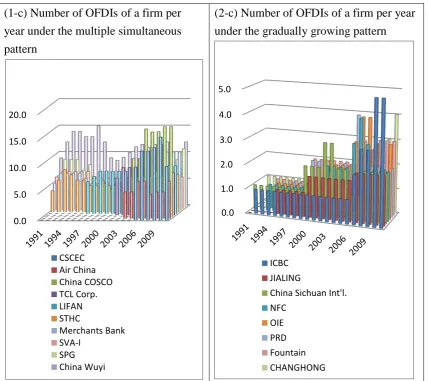
Figure 1 shows that the pattern of multiple simultaneous OFDIs involves
high-speed expansion from the beginning. It reaches larger OFDIs from the beginning
to the end during the period (Figure 1-a). Thus, it expresses a rhythm of sudden-onset
regularity characterized by large peaks of rapid expansion followed by long periods of
less activity or inactivity (Vermeulen & Barkema, 2002; Figure 1-b). A colored track
projects the pattern of expansion over the years in Figure 1-c. For example, the China
Wuyi (in light purple) started with 10 projects in 1991 and remains at a similar level
for the following decade. Merchants Bank (in blue) started with five projects in 1991
and grew to 11 in 2011.
Figure 2 shows that the pattern of gradually growing OFDIs involves a slower
speed of expansion from the beginning. It reaches a smaller amount of OFDIs from
rhythmic expansion (Figure 2-b). A colored track projects the pattern of expansion
over the years in Figure 2-c in which all firms started with only one project when they
began to conduct OFDI, followed by gradual growth.
(1-a) Speed of the multiple simultaneous
pattern
(2-a) Speed of the gradually growing
pattern
N
umber
of O
F
DI
s
Time
N
umber
of O
F
DI
s
Time
(1-b) Rhythm of the multiple
simultaneous pattern
(2-b) Rhythm of the gradually growing
pattern
The
grow
th r
ate
of
OF
DI
s
Time
The
grow
th ra
te
of
OFDI
s
(1-c) Number of OFDIs of a firm per
year under the multiple simultaneous
pattern
(2-c) Number of OFDIs of a firm per year
[image:15.595.86.515.69.450.2]under the gradually growing pattern
Figure 1: The multiple simultaneous pattern/ Figure 2: The gradually growing pattern
Data sources of Figure 1c and 2c: TEJ (listed firms on the Shanghai Stock Exchange and the Shenzhen
Stock Exchange)
4. METHODOLOGY 4.1 Data
We chose the study duration of 1991-2011 because the previous foreign
expansion before 1991 was not purely a firm decision but rather was decided by the
tightly controlled central and provincial government exerting the influence of the
Communist Party. However, the ‘go global’ policy of the 1990s brought tremendous
change. Under the free will of private firms, state-owned enterprises (SOEs) and
government-owned enterprises (GOEs) to go global or not, the OFDI since the 1990s
can be considered the OFDI initiative of Chinese firms. There are two patterns
(multiple simultaneous and gradually growing) witnessed during this wave.
There are 1,633 public list firms reported on the Shanghai Stock Exchange (SSE)
and the Shenzhen Stock Exchange (SZSE). Among them, 324 firms had OFDIs during
the study period. After deleting the data of 63 firms (579 observations) whose pattern
0.0 5.0 10.0 15.0 20.0
CSCEC Air China China COSCO TCL Corp. LIFAN STHC
Merchants Bank SVA-I
SPG China Wuyi
0.0 1.0 2.0 3.0 4.0 5.0
ICBC JIALING
China Sichuan Int'l. NFC
did not meet the criteria of the two patterns, our sample consists of project-firm-half
year paneled data of 4,619 observations from 261 Chinese listed firms operating in 69
countries over the world from 1991-2011.
To test the moderating effect of home political influence under the circumstance
of asymmetric bargaining power between the stronger home country (China) and
weaker host countries (H3), our empirical analysis is based on a subsample that only
includes the OFDI projects invested in the least developed economies. The reason for
choosing this dataset is twofold. First, the least developed economies show the least
bargaining power against China, the largest and most profoundly influential emerging
economy in the world. Second, China has specific foreign policies favoring the least
developed economies via tools of politic favors, economic aids, and infrastructure
developments so as to compete with the United States, Russia, and Taiwan in
diplomatic affairs.
To estimate the model, we employed a one-period lag for each independent
variable. Data was mainly obtained from the dataset of the Taiwan Economic Journal,
whose database provides systematic information on Chinese firms’ OFDIs from 1991
to 2011 (Lu et al., 2014; Chen & Wang, 2014).
To serve the objectives of the study, we collect the data of the host country risk
and exchange rate stability from the monthly publication of the International Country
Risk Guide (ICRG). The ICRG dataset measures are widely used by both practitioners
and academics (Dante Di Gregorio, 2005) to capture the various dimensions of
country risks and identify potential volatility. The measures represent a composite
measure of country risk rating, which consists of an aggregate of political risk,
economic risk, and financial risk per year during 1991-2011.
4.2 Model
In order to submit our framework to statistical testing, we employ regression
analysis and estimate a model that represents the key relationships predicted by our
theoretical analysis.
Y ijt =Di +Aj+X ijt-1 1 + Z ijt-1 1 + ((X- ) ijt-1 * (Z-Z)ijt-1) + Cijt-1 + ijt where Y ijt is firm performance related to project i of firm j at time t, Di is the
coefficient for the fixed effect of project, Aj is the coefficient for the fixed effect of
firm, X ijt-1 is the pattern of Chinese OFDI for project i of firm j at time t-1, Z ijt-1
denotes the three moderators–multinationality, home political influence and host
country risk for project i of firm j at time t-1, ((X- ) ijt-1 * (Z-Z)ijt-1) are terms of mean-centered interactions between the OFDI pattern and each of the three
moderators for project i of firm j at time t-1, Cijt-1 represents the set of control
mean and is independently and identically distributed across firms and time. While
the X ijt-1 is used to test H1, the three mean-centered interaction terms ((X- ) ijt-1 *
(Z-Z)ijt-1) are employed to test H2, H3, and H4, respectively.
As the paper employs a panel data set, it can be estimated by either fixed effects
(FEs) or random effects (REs) models. While both models allow us to purge any
unobserved time invariant firm-specific and project-specific effects, it is possible that
they may produce significantly different results. A Hausman specification test is thus
implemented to compare the two models. The test rejects the REs model at the 1
percent level (p=0.008). We have thus employed the FEs model. In addition, to
control for panel heteroscedasticity, we employ the generalized least squares (GLS) to
estimation. The GLS estimators are more efficient than the ordinary least squares to
our model (Rothaermel et al., 2006). To avoid the multicollinearity of interaction
terms of continuous variable, we first mean-centered the interaction terms (Aiken and
West, 1991).
4.3 Measures
4.3.1 Dependent Variable
‘Annual sales on capital’ is used to measure firm performance. This
accounting-based profitability measure was chosen largely due to data availability and
also due to the fact that many previous studies have used this measure (e.g. Grant, 1987; Haar, 1989; Stefan et al., 2010). Although many other studies have used foreign
sales on sales for performance, official data of sales of Chinese MNEs were not
widely reliable. Cui and Jiang (2012) have pinpointed that the reliability should be the
first consideration when studying China.
4.3.2 Independent Variable
We adopt the number of starting projects of OFDI and the sum of project number
of every period of a firm ( ) to measure the ‘speed’ of OFDI. For ‘rhythm’, we
adopted two measures: The sum of project number of the first eight periods of a firm
( ) and the absolute difference (| β- 1|) of the summed standard deviation of
project number of every period between the prior 21 periods and the
former 21 periods of a firm ).
If the firm (1) started with more than two OFDI projects at the initial period and
more projects later on, (2) had the sum of project number of every period greater than
88, (3) had the sum of projects of the first eight periods greater than 15, and (4) had an
absolute difference of summed standard deviation of project number between the
prior and former 21 periods greater than 0.5, then the observations of the firm are
If the firm (1) started only one OFDI project at the initial period and more
projects later on, (2) had the sum of project number of every period lesser than 88, (3)
had the sum of projects of the first eight periods lesser than 15, and (4) had an
absolute difference of summed standard deviation of project number between the
prior and former 21 periods lesser than 0.5, then the observations of the firm are
classified as a pattern of gradually growing OFDIs and coded 0.
4.3.3 Moderator variables
The commonly used measure of multinationality appearing in the literature
includes a count of the number of countries in which a firm invests across geographic
countries (Hitt, Hoskisson & Kim, 1997). Therefore, we chose to operationalize a
firm’s multinationality in terms of the number of investment countries a firm invested its international activity in (Hitt, Hoskisson & Kim, 1997; Wiersema & Bowen, 2008)
for a given half-year.
Many scholars recently adopted the measure of state share of a firm as a proxy
for home political influence in China (Wang et al., 2012; Cui & Jiang, 2012). The
political influence of the Chinese government over firms is achieved not only by
being a controlling shareholder influencing corporate and business decisions through
its control over shareholder meetings and the board of directors (Cui & Jiang, 2012)
but also to give Chinese firms access to resources or subsidies if the firm moves in the
direction that the government desires (Luo, Xue & Han, 2010; Rugman & Li, 2007).
Therefore, we adopt the state share of CMNEs for a given half-year as a proxy for the
home political influence of China.
Host country risk is measured in accordance with Cosset and Roy (1991), who
determined the indexes in 10-points scaling of political instability, economic situation,
and financial system to invest in each country as the average risk in each country.
Similar to Oetzel, Bettis and Zenner (2001), we measure the host country risk by a
simple average of three values (political, economic and financial risk) as a composite
indicator of risk value for a given host country of the project and year.
4.3.4 Control variables
Following previous studies, we control for a number of variables that may also
influence performance. We control the firm size effect in terms of the logarithm of
employee numbers and logarithm of capital in RMB (e.g. Chang & Thomas, 1989).
Firm age is also included and measured by year. Product diversity is measured by
number of products of a firm for a given period (Chang & Thomas, 1989; Palich,
Cardinal & Miller, 2000), while equity structure is measured by foreign share (Jensen,
We also consider the industry effect (Chang & Thomas, 1989; Palich, Cardinal, &
Miller, 2000) caused by the national policy of China. We create a dummy variable for
observations that belong to 10th and 11th development policies-favored industries, i.e.,
the 3rd-graded service industry, such as business, real estate, financial, and other
service industries; and 10th and 11th development policies-not-favored industries, i.e.,
the 1st-graded agriculture industry and the 2nd-graded manufacturing industries, such
as agriculture, forest, fisheries, livestock, heavy industries, etc. If the project of a firm
at a given time is in the policy-favored industries, then it is coded as 1; otherwise, 0.
Exchange rate is important to foreign sales, especially if official exchange rates of
China are under- or over-evaluated. We therefore include the variable of stability of
exchange rate by adopting a 10-point scale of variability of exchange rate per year of
China from the dataset of ICRG.
The attributes of each OFDI project are measured by project age, project size (i.e.
the logarithm of OFDI cost in thousand RMB), project gain or loss (the logarithm of
profit in thousand RMB), and the strategy orientation of the OFDI project. We
account for strategy orientation of the OFDI by including a dummy market-seeking
orientation (Dunning, 1993). When OFDI takes place in the host countries of Hong
Kong, Macau, Taiwan, Japan, South Korea, Singapore, European, and North America
(Buckley et al., 2007; Philippe Gugler & Bertram Boie, 2008), it is coded 1, denoting
market-seeking orientation of strategy. When OFDIs take place in host areas such as
Middle Asia, Saudi Arabia, Africa, Oceania, Central and South America, Southeast
Asia, India, and Russia (Ruben, 2012; Buckley et al., 2007; Sindzingre, 2013; Yun,
2014), it is coded 0, denoting a resource-seeking orientation.
According to ‘World Economic Outlook (2015), the economic development of each host country is also classified and measured by two dummy variables denoting
advanced economies (1,0), developing economies(0,1), or least developed economies
(0,0).
5. RESULTS
Table 2 first presents means and standard deviations for variables for the analysis
examining descriptive statistics. Referring to pattern of OFDI of China, there are
1,778 (38.5%) paneled observations of 26 firms belonging to the pattern of multiple
simultaneous OFDIs. In observations of this pattern, a firm starts with 4.92 projects
on average and have averaged 146.5 summed projects during the research period that
is greater than the average (105) of the total firms. Firms belonging to the pattern of
multiple simultaneous OFDIs have an average of 30.3 summed projects for the first
four years. Firms of this pattern have an absolute difference of summed standard
=1.25) greater than the average of total firms, 0.56.
There are 2,841 (61.5%) paneled observations of 235 firms belonging to the
pattern of gradually growing OFDIs. Firms of this pattern all started with only one
project and have averaged 62.5 summed projects during the research period, which is
lesser than the averaged 105 of total firms. The firms have an average of 9.87
summed projects for the first four years. The firms have an absolute difference of
summed standard deviations of project number between the prior and former 21
periods ( =0.33) lesser than the average of total firms 0.56.
Among the 69 host countries, the CMNEs in the research sample have a
substantially multinationality strategy with an average country number of 2.92,
ranging from 1 to 15. The 10-point score for host country risk is also indicated, with an average of 6.07. The distribution among the developed, developing, and least
developed economies is 2,640 (57.2%), 1,761 (38.1%), and 218 (4.7%). The average
performance effect is 0.05 in average, which means every dollar of capital brings 0.05
sales.
The mean logarithm of firm employee numbers and firm capital is 3.64 and
9.07. The mean firm age is 24.03 years. The mean of number of products and foreign
share is 5.07 and 1.25. There are 2,914 (63%) observations of the OFDI belonging to
the industry that government policy favors and 1,705 (37%) observations belonging to
the industries that government policy does not favor. A Chinese firm usually has 3.75 OFDI projects on average. The stability of the exchange rate is quite good (8.45). The
mean logarithm of project size and project gain is 3.50 and 3.53. The mean project
age is 7.46 years, which means that the average project has a positive performance
and survives more than seven years. There are 2,936 (63.6%) observations of the
OFDIs belonging to the strategy of market-seeking orientation and 1,683 (36.4%)
observations belonging to the strategy of resource-seeking orientation. The prevalence
of market-seeking strategy orientation is consistent with trends in China’s foreign
policy in recent decades.
There are 111 GOEs/SOEs (42.5%) and 150 private firms (57.5%) from China in
our sample. Further, the home political influence, in terms of state share, appears an
average of 32.86. Some CMNEs achieve a ratio of 100% home government owned.
For testing home political influence (H3), the data of the subsample consists of 218
observations of 13 firms (4.7%).
Table 2 also provides information regarding the correlations matrix among
variables. As can be seen, most of the correlations are small, and there is no single
correlation above 0.4. The average variance inflation factors (VIFs) is well below the
acceptable threshold of 10 (Neter, Wasserman, & Kutner, 1985), indicating that our
Table 2 Descriptive statistics and Pearson correlation matrix
Mean S.D. 1 2 3 4 5 6 7 8 9 10 11 12 13 14 15 16 VIF
1.Firm size (Log of employee) 3.64 0.85 1 0.283 -0.303 0.276 0.055 -0.003 0.032 0.121 0.242 -0.131 0.050 0.268 0.338 0.033 -0.020 0.273 3.591
2.Firm size (Log of firm capital) 9.07 0.69 1 -0.373 0.316 0.113 -0.060 0.037 0.208 0.367 -0.171 0.030 0.288 0.364 0.038 0.001 0.155 4.835
3.Firm age 24.03 15.59 1 -0.107 -0.090 -0.060 -0.033 -0.085 -0.098 0.180 0.042 0.197 0.304 0.002 -0.007 0.048 1.539
4.Product diversity (number of firm
products) 5.07 2.32 1 -0.046 -0.018 0.016 0.055 0.195 -0.029 -0.026 0.188 0.155 0.118 0.002 0.053 1.408
5.Equity structure (foreign share) 1.25 4.35 1 0.059 0.035 -0.018 -0.062 0.128 0.057 0.056 -0.056 0.082 0.076 -0.088 1.093
6.Industry effect (dummy) 0.63 0.46 1 -0.010 0.033 0.002 -0.029 -0.011 0.104 -0.107 -0.094 -0.039 0.069 1.179
7. Stability of exchange rate 8.45 1.15 1 -0.032 0.094 0.035 0.206 0.048 0.022 0.006 0.316 0.007 1.448
8.Project size (Log of investment
cost) 3.50 1.02 1 0.346 -0.017 -0.091 -0.024 0.109 -0.008 -0.085 0.057 1.479
9.Project gain or loss 3.53 1.18 1 0.129 -0.034 0.253 0.209 -0.067 0.079 0.053 1.801
10.Project age 7.46 3.26 1 -0.016 0.063 -0.015 -0.085 0.002 -0.035 1.289
11.Market-seeking orientation (v.s.
Resource-seeking orientation)
0.64 0.48 1 0.053 -0.014 0.081 0.319 -0.033 2.264
12.Pattern of OFDI 0.35 0.48 1 0.382 0.170 0.086 0.007 3.077
13.Multinationality (number of host
countries)
2.92 2.68 1 0.095 0.016 0.076 2.055
14.Home political influence (state
share) 32.86 28.85 1 0.073 0.133 1.094
15.Host country risk 6.07 0.68 1 -0.078 2.743
16.Firm performance Annual
Table 3 Regression results of GLS (Fixed effects; Dependent variable: Annual sales/capital)
Model 1 Model 2 Model 3 Model 4
1. Firm size 2. Firm size 3. Firm age
4. Product diversity 5. Equity structure 6. Industry effect
7. Stability of exchange rate 8. Project size
9. Project gain or loss 10. Project age
11. Market-seeking orientation 12. Host country dummy 01 13. Host country dummy 02
0.647*** 0.333*** -0.017 0.054 -0.111* 0.225*** 0.017 -0.072 0.116** -0.003 0.365** 0.013 -0.339* 0.658*** 0.282** -0.047 0.070 -0.100* 0.202*** 0.021 -0.091 0.125** 0.014 0.341*** 0.091 -0.253* 0.661*** 0.287** -0.047 0.060 -0.092* 0.204*** 0.030 -0.103 0.127* 0.018 0.329** 0.068 -0.279* 0.675*** 0.300** -0.060 0.048 -0.095* 0.196*** 0.045* -0.082 0.098* 0.024* 0.298** 0.013 -0.346* 14. H1: Pattern of OFDI (X)
15. Multinationality (Z1) 16. Host country risk (Z3) 17. H2: (X- )* (Z1-Z ) 18. H4: (X- )* (Z3-Z )
0.123* 0.164*** 0.469** -0.006 0.209** 0.574** -0.017 0.489*** -0.027
Observations 4619 4619 4619 4619
F-statistic 16.812*** 15.169*** 12.580*** 10.861***
R2 0.313 0.360 0.462 0.545
Adjusted R2 0.300 0.355 0.433 0.513
Table 4 Regression results of H3 (Fixed effects; Dependent variable: Annual sales/capital)
Model 1 Model 2 Model 3
1. Firm size
2. Firm size
3. Firm age
4. Product diversity
5. Equity structure
6. Industry effect
7. Stability of exchange rate
8. Project size
9. Project gain or loss
10. Project age
0.547**
-0.327
-0.048
0.279***
0.042
-0.046
-0.093
0.276***
0.105*
0.198***
0.530**
-0.306
-0.045
0.273***
0.041
-0.039
-0.095
0.274***
0.104*
0.196***
0.528**
-0.326
-0.062
0.298***
0.051
-0.024
-0.087
0.262***
0.104*
0.197***
11. H1: Pattern of OFDI (X)
12. Home political influence (Z2)
13. H3: (X- )* (Z2-Z )
0.431** 0.336**
0.197**
0.106**
Firm number of sample 13 13 13
Observations 218 218 218
F-statistic 15.018*** 13.743*** 11.414***
R2 0.342 0.393 0.468
Adjusted R2 0.317 0.375 0.436
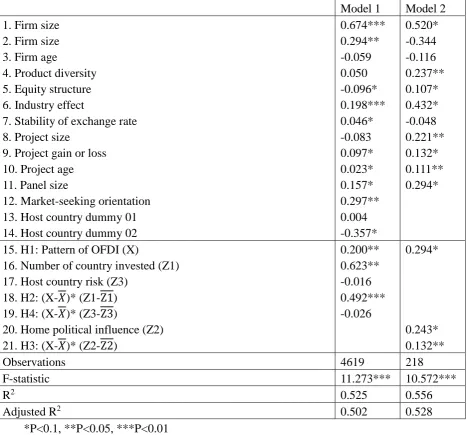
To specify the proper data for testing H3, we test H1, H2, and H4 in Table 3 and
H3 in Table 4.
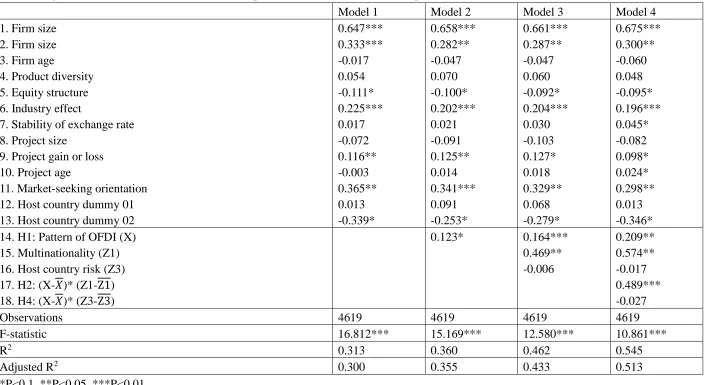
Table 3 shows the result of the data population of 4,619 observations of 261firms,
with the sample containing data on having invested in the developed, developing, and
least developed host economies. Model 1 includes only the control variables. The
pattern of OFDI is introduced to Model 2. The value of the adjusted R2 is higher in
Model 2 than in Model 1 (0.355>0.300). Further, in Hypothesis 1, we hypothesize that
the performance effect caused by the two patterns is different. The results supported
H1, that the performance effect of the pattern of multiple simultaneous OFDIs is
indeed significantly better than the performance effect of the pattern of growing
OFDIs ( =0.209**) when CMNEs, as latecomers, tried to catch up in the race of
internationalization. This proves that the pattern of OFDI is indeed a crucial key to
understanding how and why China, as the most important EE, has rapidly
internationalized in a short period of time, and how much a MNE of EE benefits from
choosing a unique pattern different from the traditional way that developed countries did for their first OFDI.
Models 2-4 present the results for H2 and H4 pertaining to the interaction effects.
Following the usual practice in moderated regression analysis (Wang et al., 2012), we
enter two-way interactions in Model 2-4 successively. The Adjusted R2 value of each
model is increasing, indicating that the addition of an interaction term in each case
does indeed increase the explanatory power of the model.
In Hypothesis 2, we hypothesize the enlarging effect of multinationality strategy
of CMNE upon the pattern of OFDI-performance relationship. As shown in the Model
4 (see Table 3), the mean-centered interaction term (X- )* (Z1-Z ) (pattern of OFDI*number of country invested) is positive and significant ( =0.489***).
Therefore, Hypothesis 2 receives support. CMNE’s rapidly globalization will be more
able to realize firm performance when operating multinationality in a dispersed
network where geographical diversification renders a benefit.
In Hypothesis 4, we hypothesize that the difference between the performance
effects caused by different patterns will be shortened by host country risk. As shown
in Model 4 (see Table 3), the mean-centered interaction term (X- )* (Z3-Z ) (pattern of OFDI *host country risk) is not significant ( =-0.027). Thus, the result does not
support H4. Our finding does not support the view that China’s investing in risky
locations under the pattern of multiple simultaneous investments breed lower levels of
performance. Therefore, we could not corroborate that the difference between the
levels of performance effect caused by different OFDI patterns of China will be
shortened by the level of host-country risk.
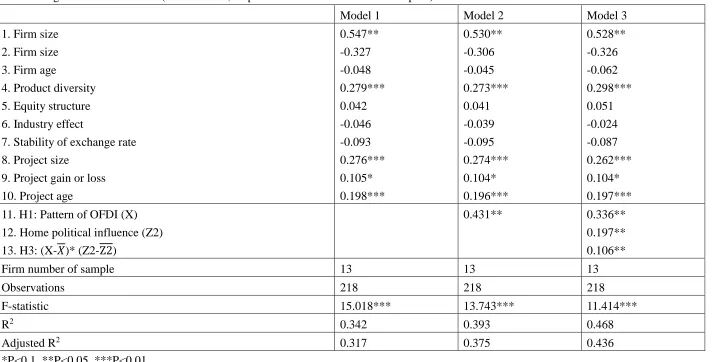
sample containing only the data on investment in least developed host economies.
Model 1 includes only the control variables. We did not include the control variables
of market-seeking orientation and host country dummies, as the subsample is among
the group of least developed economies and the group of resource-seeking orientation.
The mean-centered interaction term of home political influence is introduced in Model
3. The value of the adjusted R2 is higher in Model 3 (0.436) than in Model 1 (0.317)
and Model 2 (0.375).
In Hypothesis 3, we hypothesize that the enlarging effect of Chinese political
influence upon the pattern of OFDI-performance relationship when China is in strong
position of political influence against host countries that are least developed
economies. As shown in Model 4 (see Table 4), the mean-centered interaction term
(X- )* (Z2-Z ) (pattern of OFDI *state share) is positive and significant ( =0.106**). Thus, the finding strongly supports H3. The moderating role of the home political
influence of China is contingently enhancing CMNE’s firm performance when CMNE
adopts the pattern of multiple simultaneous OFDIs rather than the gradually growing
pattern.
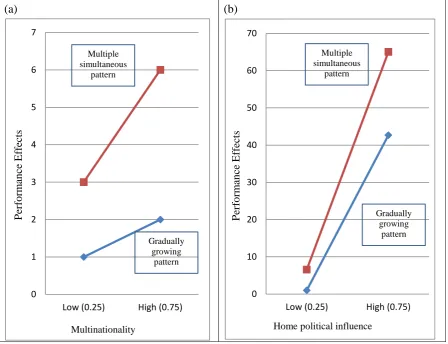
To explain the moderating effects of multinationality and the home political
influence better, we present these relationships in Figures 3a and 3b. Besides testing
the performance effect of different patterns of OFDI in China, this paper argues that
the pattern of the OFDI-performance relationship is subject to the multinationality
strategy of the firm and relative power of the external home institution. We can expect
a stronger positive performance effect when a CMNE adopts its OFDI in a faster and
fulminant pattern along with a firm’s multinationality strategy and assistance from
(a)
[image:26.595.75.524.73.417.2](b)
Figure 3. Moderating effects: (a) interaction effects of the pattern of OFDI and
multinationality and (b) interaction effects of the pattern of OFDI and home political
influence.
5.1 Robustness checks
Although our use of a lag structure may reduce endogeneity, if any, there still
might be unobserved effects that influence both OFDI patterns and their performance
outcomes. We adopt the following measures to test the stability of the main results.
First, we reduce concerns about endogeneity by incorporating several variables that
account for firm and project characteristics. We include seven firm-level and six
project-level control variables that should help to alleviate the potential problem of
endogeneity. Second, we also employ the mixed-effect models, containing both fixed
effects and random effects, to estimate the regressions. The results are qualitatively
the same. Third, we estimated a full model (see all Model 4), including the
independent variable, moderating variables, and interaction terms. The results
pertaining to those interaction terms are qualitatively similar to those in the
hierarchical models. Fourth, we replaced annual sales/employee numbers as the
dependent variable. The results remain qualitatively consistent with those reported in
the paper. 0 1 2 3 4 5 6 7
Low (0.25) High (0.75)
Per for m anc e Eff ec ts Multinationality Multiple simultaneous pattern Gradually growing pattern 0 10 20 30 40 50 60 70
Low (0.25) High (0.75)
Per for m anc e Eff ec ts
Home political influence
Finally, to further correct the bias resulting from the feature of the
three-dimension panel (Xijt; project, i; parent firm, j; time, t), we generate the variable
‘panel size’, which denotes the number of foreign projects a firm has at the same period for each observation. The panel size indicates the dispersion of the variance of
investing size of a firm at a given time period. The significance of the variables in
Table 5 suggests that the unobservable factors that are accommodated by the
statistical model are corrected for unobserved heterogeneity caused by the
[image:27.595.66.534.271.706.2]three-dimension panel.
Table 5 Regression results of GLS (Fixed effects; Dependent variable: Annual
sales/capital)
Model 1 Model 2 1. Firm size
2. Firm size 3. Firm age
4. Product diversity 5. Equity structure 6. Industry effect
7. Stability of exchange rate 8. Project size
9. Project gain or loss 10. Project age 11. Panel size
12. Market-seeking orientation 13. Host country dummy 01 14. Host country dummy 02
0.674*** 0.294** -0.059 0.050 -0.096* 0.198*** 0.046* -0.083 0.097* 0.023* 0.157* 0.297** 0.004 -0.357* 0.520* -0.344 -0.116 0.237** 0.107* 0.432* -0.048 0.221** 0.132* 0.111** 0.294*
15. H1: Pattern of OFDI (X)
16. Number of country invested (Z1) 17. Host country risk (Z3)
18. H2: (X- )* (Z1-Z ) 19. H4: (X- )* (Z3-Z )
20. Home political influence (Z2) 21. H3: (X- )* (Z2-Z )
0.200** 0.623** -0.016 0.492*** -0.026 0.294* 0.243* 0.132**
Observations 4619 218
F-statistic 11.273*** 10.572***
R2 0.525 0.556
Adjusted R2 0.502 0.528
*P<0.1, **P<0.05, ***P<0.01
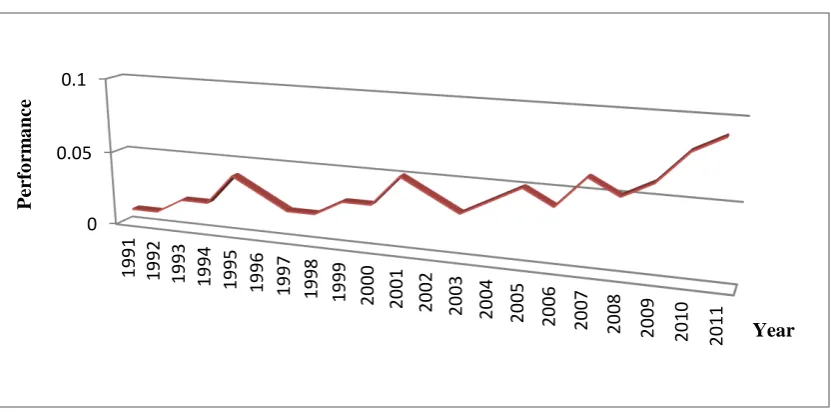
Even though some values of the observations that are in the forms of
variable that can be estimated by panel regression varies, as shown in Figure 4.
Figure 4 The values of the dependent variable of all observations
6. CONCLUSION
This paper conceptualizes and tests how different patterns of OFDI in China,
namely multiple simultaneous and gradually growing patterns, may affect CMNE
performance. This study, accordingly, is the first attempt to synthetically
conceptualize the pattern of OFDI from the extant concepts of speed and rhythm in
the Chinese context. Moreover, this paper examines the importance of
multinationality strategy and home political influence and the extent to which they
moderate the effect of pattern of OFDI on firm performance. Employing a novel panel
data set of Chinese firms, the findings largely support the explanation for EEs.
6.1 Theoretical implications
Our study adds to the internationalization literature by showing that how much a
CMNE benefits from where it expands into foreign markets depends on how it arrived
there. We developed and tested a theory for EEs regarding how various characteristics
of the pattern of OFDI influence how much OFDI contributes to CMNE performance.
Consistent with the predictions, we found that the born-global view-based pattern of
China, with its high speed and sudden onset rhythm, brings better a performance
effect for CMNEs. In the current discussion of the IP approach versus the born-global
approach, the literature predominantly suggests that the incremental and steady
rhythm of foreign investments based on the accumulation of internationalization
experience (Lopez, Kundu & Ciravegna, 2009; Hashai, 2011) may be a proper
solution, particularly for firms of advanced countries. Our findings, by contrast, have
attempted to address the necessity of reconsidering various patterns of OFDI in China
and other EEs in similar situations. This study reveals that the mechanism through
which the OFDI pattern is created as a strategy for CMNEs needs extensive
exploration so that a specific theory of EEs can be elaborated.
This creates the need to reconcile the born-global theory-based explanation in the
internationalization of EEs. Such a focus is theoretically important because it allows
us to recognize a more insightful conceptualization of internationalization theory for
EEs such as China. This is particularly true in terms of identifying an investment
framework for the comparison of foreign investment patterns based on the scope/scale
of the initial OFDI and the speed of foreign expansion of latecomers of large
emerging economies. This study also marks the first attempt to synthesize the
definition of how a firm goes international. A few studies have shown that the new
context shown in OFDI patterns of EEs may accrue overall performance effects. We
conceptualize the pattern of China OFDI by incorporating the concepts of speed and
rhythm to reach a more complete picture of the dynamics of internationalization. With
our model, we offer a theoretical explanation of this mechanism by specifying how the pattern of OFDI of EEs adds meaning to internationalization.
In addition to the theory of OFDI, this article has important implications for the
IB of EEs. Internationalization theory has offered schemes of external and internal
determinant factors and has suggested that future studies should move toward the
more integrated framework when investigating the internationalization of China or
EEs, such as the roles of moderator or mediator. These ideas have been widely
discussed and examined in developed countries, but scholars have offered little
explanation as to how, and the extent to which, both firm strategy and environmental
context moderates the effects of the pattern of OFDI on the performance of China and
similar EEs. Employing a novel panel dataset of newly CMNEs, we believe our model
provides a useful step toward the development of such a framework in EEs. In the
course of internationalization, our findings suggest that academic research should
move beyond a simplistic and universalistic view of the pattern of the
OFDI-performance relationship and focus on contingency factors that either facilitate
or constrain the relationship.
Our findings indicate that the performance effect of a multiple simultaneous
OFDIs depend on the importance of firm’s multinationality strategy. A learning curve
accumulated from present multinationality can offset the need for prior international
experience in EE firms’ OFDI activities. It is important that experiential learning from
diverse geographical and foreign institutions other than traditional accumulated
learning escalated from countries of similar psychic distance may be important for
studies of specific internationalization episodes and situations. Our findings