Rochester Institute of Technology
RIT Scholar Works
Theses
Thesis/Dissertation Collections
6-1-1996
Teletype network communication device
Mark Clyman
Follow this and additional works at:
http://scholarworks.rit.edu/theses
This Thesis is brought to you for free and open access by the Thesis/Dissertation Collections at RIT Scholar Works. It has been accepted for inclusion
in Theses by an authorized administrator of RIT Scholar Works. For more information, please contact
Recommended Citation
ROCHESTER
INSTITUTE
OF
TECHNOLOGY
A
Thesis Submitted
to the
Faculty
ofThe College
ofImaging
Arts
andSciences
in
Candidacy
for
the
Degree
ofMaster
ofFine Arts
Teletype Network Communication Device
by
Mark
A. Clyman
Reston,
Virginia
Approvals
Advisor: Craig McArt
Date:
.y/fc'1
/>...
~
Associate Advisor: James Sias
Date:
6,hfi6
Associate Advisor: Robert Kahute
Date:
.c;;
\~-
<>\
q
<....
Department Chairperson: James Sias
Date:
6/7/16
I. Mark Adam Clyman. hereby deny permission to the Wallace Memorial Library
of RIT to reproduce my thesis in whole or in part. Any reproduction will not be
Acknowledgments
I
wouldlike
to thank
my
thesis
committee:Craig
McArt,
James
Sias
andRobert Kahute
as well as researchersin
NTID,
Anne
Van
Ginkel,
Mike White
and
Michael
A. McMahon
for
their
guidance.Table
ofContents
ACKNOWLEDGEMENTS
IILIST
OFILLUSTRATIONS
IVLIST
OFTABLES
V
Chapter
I.
INTRODUCTION
TO
COMMUNICATION
12.
COMMUNICATION
BETWEEN HEARING AND HEARING IMPAIRED ... 43.
TELETYPE
NETWORK
COMMUNICATIONDEVICE
11
Goals
Data Chart
4.
DESIGNDEVELOPMENT
15Funtional
Benefits
ofform
Form
Exploration
Color
Logo
5.
PRODUCTCOMPONENTS
22Antenna
Battery
Recharger
LCD
Screen
Monitor
& Printer Attachment
Strobe Light
Battery
Light
Memo Light
Phone
System
Answer
Machine
Keyboard
6.
CONCLUSION / EVALUATION 30Appendix
HISTORY OF DEAF AMERICAN 35
BIBLIOGRAPHY 38
LIST
OF ILLUSTRATIONS
Figure
Page
1.
Mock-Up,
No. 1
-Closed
View
19
2.
Mock-Up,
No.
1
-Open
View
19
3.
Mock-Up,
No.
2
-Closed
View
20
4.
Mock-Up,
No.
3
-Closed
View
20
5.
Mock-Up,
No. 4
-Closed
View
21
6.
Mock-Up,
No.
5
-Closed
View
21
7.
Drawing,
No. 1
26
8.
Drawing,
No. 2
27
9.
Drawing,
No. 3
28
10.
Drawing,
No. 4
29
11.
Final Model
-Front
View
32
12.
Final Model
-BackView
32
13.
Final Model
-SideView
33
14.
Final Model
-Side
and
Bottom View
33
15.
Final Model
-OpenView
34
16.
Final
Model
-Key
Board
View
34
LIST
OF
TABLES
Table
Page
1
.New York
Relay
Service
Funding
Flow
Chart
9
2.
Arizona
Relay
Service
Funding
Flow
Chart
10
3.
Comparison
ofTTD
andTNC
14
CHAPTER
1
INTRODUCATION TO COMMUNICATION
In
the
eighties alot
of new opportunitiesto break
the
communicationbarriers
between deaf
people andhearing
peopleoccurred,
bringing
the two
groups closer
together.
For
example,
closedcaptioning
(constantly
changing
subtitles
linked
to
visualimages
ontelevision)
wasactively
promoted.It
wasofficially
usedby
the
ABC,
NBC
andPBS
Networks.
With
the
advent of closedcaptioned
television,
hearing
impaired individuals
were ableto
enjoy
television
more,
because
by
reading
subtitlesthey
could understand what wasbeing
saidand,
as asecondary
gain,
expandtheir
vocabulary.As Nan Decker
andBetsy
Montandon
have
noted,
"
This
closedcaptioning
method combinesthe
skills ofcourt stenographers with special computer
translation
systemsto
provide 1almost
instantaneous
captioning."
It
alsohelped increase
their
knowledge
ofwhat was
happening
in
the
world.Congress recently
passed alaw
requiring
that
closedcaptioning be installed
on alltelevision
screensthat
arelarger
than
thirteen
inches.
All
programs were captioned as of1993.
Closed captioning
not
only helps
hearing
impaired
people,
but it
alsohelps
older people who arelosing
their
hearing.
A
secondimportant development for
deaf
people wasthe
development
oftelecommunication
devices for
the
deaf
(TDD),
which allowed adeaf
personto
make a
telephone
calldirectly
to
anotherTDD
user.1 Nan Deckerand
Betsy
Montandon. Captioned Media intheClassroom.Silver
Spring
MD.
National Associationfor
theDeaf,
1984.For
adeaf
personto
call ahearing
person,
he/she
wouldhave
to
depend
upon a
relay
service.A
relay
servicefunctions
in
two
ways:to
relay
ahearing
person's messagethrough
TDD
to
adeaf
person,
orto
relay
aTDD
messagethrough
voiceto
ahearing
person.The relay
servicedeveloped in 1966
wasnot well used
in
the seventies,
but became
well-recognizedby
deaf
peoplein
the
early
eighties.The relay
serviceis
an expensive program.According
to
Paul
Singleton
"As
of1986,
California had
the
oldestrunning relay
service.As
of1990,
the
cost
for operating
that
relay
service was over$31
million.The
money
to
run 2this
serviceis
funded
by
the
State
ofCalifornia
andthe
Federal
Government."Considering
the
expense ofthese
programs aroundthe country,
I
realized
that
a new communication product mustbe
developed.
This
new product musthave
some means ofhelping hearing
impaired
people andhearing
peopleto
communicatedirectly
withoutthe
use of arelay
service.This
newkind
ofdevice
wouldbe
calledthe
Teletype
Network
Communication
(TNC).
A direct
communicationbetween
hearing
anddeaf
people wouldbe
possible
by
combining
the
TDD,
the telephone
andthe
answering
machineinto
one unit.This
particular product would utilizethe
developing
technology
of computer voice recognitionto
allow ahearing
person's voiceto
be
translated
into
adigital
type
display,
thus
allowing
the
deaf
personto
readthe
incoming
message easily.
This device
would alsotranslate
digital
type
into
a computer synthesizedvoice, thus
allowing
the
hearing
personto
hear
the
incoming
message.2 Paul J. Singleton. Nationwide TDD
Relay Standards:
Partners inProgress.
GRIMonograph
Series,
1989.I
wantedto
develop
acompletely
new systemthat
wouldbe
costeffective.
Developing
a new productthat
helps
hearing
impaired
people andhearing
people communicatedirectly
withoutthe
use of arelay
service seemedlike
atimely
project.In
additionto the
description
ofthe
modelfor
the
TNC,
human
factors
asCHAPTER
2
COMMUNICATION
BETWEEN HEARINGAND HEARING IMPAIRED
PEOPLE
There
aremany
communication problemsthat
are commonduring
the
interaction
ofhearing
impaired
people andhearing
people.For
example,
mosthearing
impaired
people experiencedifficulty
with phone conversationsto
some
degree.
Depending
onthe
nature oftheir
deafness,
onehearing
impaired
person can use atelephone
with notrouble
where anotherhearing
impaired
personmay
notbe
ableto
usethe telephone
at all.For
those
hearing
impaired
persons who can usethe phone, their
ability
to
understand wordsdepends
uponthe
soundfrequency
ofthe
voice(high
orlow
pitched), the
speedat which
the
person onthe
other endtalks
andthe
amplification.Most deaf
and
hearing
impaired
peopleI
have
talked to
feel
more comfortabletalking
to
afemale
onthe
phonebecause
their
voicetone
is
softer andhas
ahigher
pitchcompared
to
most men.This
difficulty
in
using
the
phoneto
communicatereally impacts
onthe
employability
ofhearing-impaired.
In
many
jobs,
the
ability
to
usethe
phoneis
extremely
important.
Another
problem areafor hearing-impaired
people onthe
job
is
the
ability
to
communicate withtheir
fellow
workers,
supervisors,
etc.Hearing
impaired
peoplereally depend
on clearlip
movement(lip
reading
skills),
gestures andface-to-face
communication.Hearing
people,
in
general,
do
not understandthe
communication needs ofhearing
impaired
people.Something
simple,
like
having
amustache,
can cause serious problemsfor
aperson who
is
trying
to
lip-read.
I had
an experience with one ofmy
teachers
atthe Landmark
School
atBeverly
Farms,
Massachusetts.
He had
a mustache andI
had
aterrible time
lip
reading
him.
I
told
him
aboutmy
trouble
andhe
waswilling
to trim
his
mustache shorter so
I
could understandhim
better.
It
wasnotsomething
that
many
people wouldbe willing
to
do,
but it really
showedhe
cared.By
working
together,
hearing-impaired
andhearing
people canfind
new solutionsto
many
ofthe
conflictsin
communication.The
use ofthe telephone
in
home
or at workis
still a problemthat
can notbe easily
solved.The
present solutionis
that
ahearing-impaired
person whowants
to talk to
ahearing
person can call arelay
rervice(RS)
with an eighthundred
number.This is
not a perfect solutionbecause
the
RS
canbe very
busy during
certaintimes
ofthe
day,
and canbe impossible
to
access.The RS
started
to
become
more commonin
the
late
eighties with over250,000
callsin
one month alone
in
the
State
ofCalifornia.
In
most casesthe
RS is funded
by
the
states andthe
Federal
Government.
In
othersituations,
it
canbe
funded
by
the
peoplein
the
community
andby
organizations who arewilling
to
bear
the
cost of
the
service.Some
phone companies(like
AT&T)
pickup
part ofthe tab
as a surchargefor
the
RS.
The RS is
a non-profit organization.The
accessto
the
RS is
free,
but
the
person whois calling
is
billed based
onthe time
the
userspends on
the telephone.
In
the
State
ofCalifornia
alone,
it
cost over$700,000
per month
to
runin 1987.
To
continueto
coverthe
cost ofthe
service, the
State
There
areapproximately
oneto
eight centrallocations for
the
RS in
eachstate,
depending
uponthe
size ofthe
state andit's
population.When deaf
persons
talk to the
RS, they
givetheir
home
phonenumber, name, the
telephone
number ofthe
personthey
wishto
speakto
andhis
/
her
name.The
RS
putsthrough
the
callto the
receiving
party,
identifies
itself,
asksthe
receiving party if
they
arefarmiliar
withthe
RS,
and explainsto the
receiving
party
that the
RS is
interpreting
a callfrom
aTDD
user and willtype
back
the
receiver's response.
Some
hearing
peoplefind it
odd and uncomfortableto
talk to the
RS
interpreter
(
third
party)
onthe
phone.It
takes time to
get usedto
using
the
RS because
people who usethe telephone
are more usedto
talking
directly,
one personto the
other.As
I
have
statedbefore,
many jobs
requirethe
ability
to
use atelephone.
Some hearing-impaired
peoplespecifically
avoidjobs that
requiretelephone
use.
Some
hard-of-hearing
people can use a phoneif
the
phoneis
modifiedfor
a
deaf
personto
use.For
example,
onedeaf
persontold
methat
shehad
to
use a
telephone
oncein
a while ather
job
in
aninsurance
company,
andthe
company
waswilling
to
provideher
with aTDD
and other accessoriesthat
she neededin
the
office.As
notedCongress
passedThe Americans
withDisabilities
Act
which requiresthat the
Architectural
andTransportation
Barriers
Compliance Board (Access
Board)
issued
guidelinesto
ensurethat
buildings,
facilities,
and vehicles coveredby
the
law
areaccessible, in
terms
ofThe
law
took
effect onJuly
26, 1992,
but
all requirements mustbe
metby
the
summer of
1996.
The increased
accessto
allbusinesses
will resultin increased
demand
on
the
RS
and require more operatorsto
handle
the
load. With
the
newlaw in
effect,
hearing-impaired
people shouldhave
a new confidence abouttheir
ability
to
handle
avariety
ofjobs.
Because businesses
are responsiblefor
providing
things
like TDDs for any
hearing
impaired
workerthey
may
hire,
this
might cause companies not
to
wantto
hire deaf
peoplebecause
the
cost ofbuying
andsetting
up
a newTDD
is
aboutfour hundred
dollars.
I
feel
that
it
would
be
much more effectivefor
deaf
peopleto
providetheir
ownTDD. That
way, the
company
would nothave
to
bear
the
cost.Deaf
people couldbuy
amachine and get
tax
creditfrom
the
Federal
Government. Those
people whocan't afford
their
own machine couldapply for
a guaranteedloan
from
the
government,
pay
low
interest
payments or nointerest
at all.The
use ofthe
RS is
not onehundred
percent effective.As
I
mentionedbefore,
there
aretimes
when a caller cannot getthrough to the
RS.
It
requires alot
oftime
and patienceto
usethis
service.Also,
there
aretimes
when
the
systemis
sobusy
that the
calleris
limited
in
the
number of callshe/she
can make.Some
people wait as much as one ortwo
hours
in
orderto
get
through
to the
RS.
The RS is
notthe
only way
the
deaf
can communicate with each other orwith
hearing
people.Another
alternativeis
the
Vistaphone. This is
not anThe
concept ofthe
Vistaphone is
being
improved.
The sending
andreceiving
image
willbe
through
a crystaltransparent
wire calledfiber
optics and willimprove
the
delayed image
to
a "real-time"image.
This
wouldbe
an alternativefor deaf
people who use signlanguage,
asit
would allowthem to
read eachother on
the
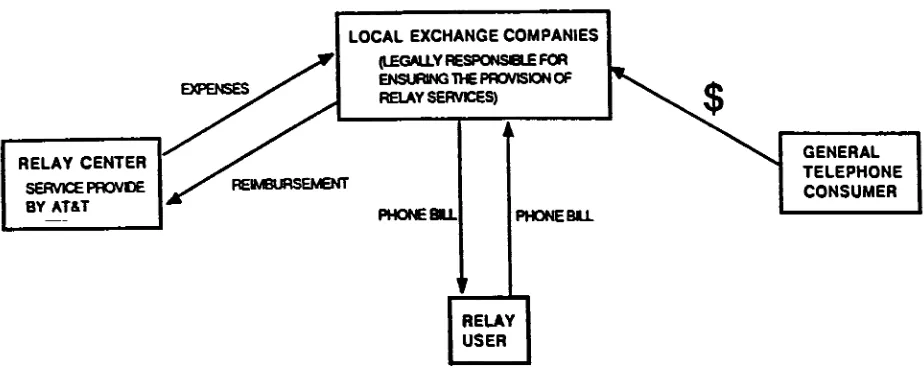
screen.TABLE 1
NEW YORK RELAY
SERVICE
FUNDING FLOW CHART
RELAY CENTER
SERVICE PROVOE BY AT&T
LOCAL EXCHANGECOMPANIES
(LEGALLYRESPONSGLE FOR
ENSURINGTHEPROVISION OF RELAYSERVICES)
REIMBURSEMENT
PHONEBU.
$
PHONE B1L
GENERAL
TELEPHONE
CONSUMER
RELAY
USER
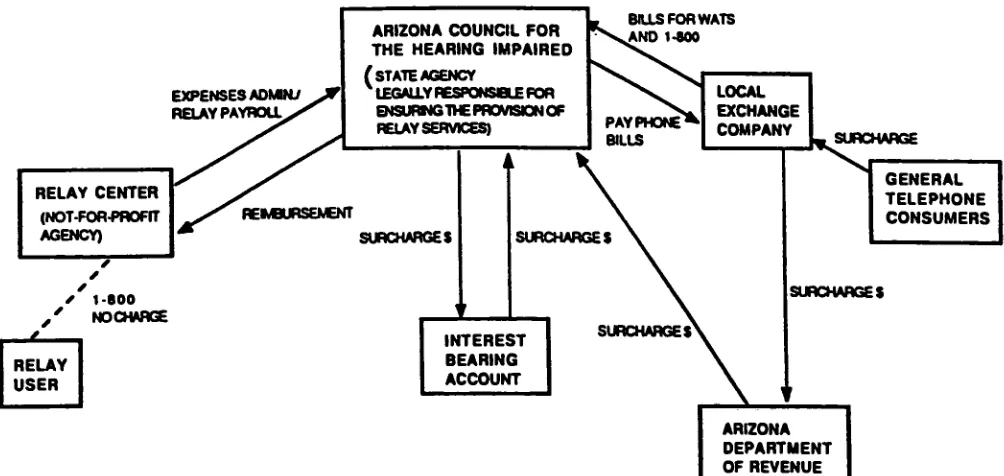
TABLE 2
ARIZONA
RELAY
SERVICE
FUNDING FLOW
CHART
EXPENSES ADMBO RELAY PAYROLL
RELAY CENTER
(NOT-FOR-PROFIT AGENCY)
ARIZONACOUNCIL FOR
THE HEARING IMPAIRED
(STATE
AGENCYLEGALLYRESPONSBLE FOR
ENSURMGTHEPROVISIONOF RELAYSERVICES) FSMBURSEKENT SURCHARGES ? 1-800 ' NOCHARGE RELAY USER
BILLS FOR WATS
CHAPTER
3
TELETYPE
NETWORKCOMMUNICATION
DEVICEI
propose a new communicationdevice for
hearing
impaired
persons.This device
wouldbe
calledthe
Teletype
Network
Communication (TNC).
There
are a number of reasonswhy
the
TNC
wouldimprove
the
lives
ofhearing
impaired
people.The
mostimportant
reasonis
that
hearing
anddeaf
peoplecould communicate
directly
with each other.This
would givehearing
impaired
people a sense of
independence
and would eliminatethe
needto
talk through
a
third
party
system.Since
the
TNC
willfunction like
atelephone,
withoutany
restriction such as
limiting
phone calls orwaiting
periods,
hearing
impaired
people will
feel
more confidence abouttheir
ability
to
access publicinformation.
Because
the
new unit willbe
portable,
deaf
people willbe
ableto
carry it
withthem
whereverthey
go.After
going
through
a number ofideas in
the
development
ofthe
newTDD
to
servethe
deaf
community
better,
I
cameup
withthe
idea
of a newproduct called
Teletype
Network
Communication (TNC).
I
have
wantedto
find
new ways
to
help
cut costin
the
State
andthe
Federal Government for running
the the
relay
servicein
the
United
States,
and alsohelp
increase
communication options
for
the
deaf
to
have better
accessto
reach outto
peoplewithout
delay
in
waiting
for
the
relay
service.One benefit
ofhaving
the
TNC is
that
deaf
andhearing
impaired
canbecome
much moreindependent
andhave
better
self-esteemDeaf
people willbe
ableto
expandtheir
career options.The TNC
wouldbe
muchdifferent
from
the
TDD,
exceptit
wouldhave
somesimilar
functions.
The TNC
will changethe
way
we communicatein
the
deaf
andhearing
world.
The
reasonfor
this
change willbe
that
the
TNC
will offer a portablecommunication option
for
the
deaf
people.The TNC
translates
digital
type
to
voice,
and voiceto teletype
onthe
LCD
screen.This
will maketwo
peoplecomfortable and confident without
the
need of athird
party
(relay
serviceoperator)
translating
the
message.This
will cuttime
and providefor
moredirect
communicationby
two
people.People wanting
to
contact each otherby
phone willhave
no problemand will
be
ableto
do it
ontheir
own.By
using
this
TNC, they
won'thave
to
be
concerned about
the time
waiting for
the
relay
service orthe
breach
ofconfidentiality
whilethey
areusing
the
relay
service.GOALS
The Teletype Network Communication
willbe just
aseasy
to
useas
the
oldTDD.
All
the
necessary
parts willbe
included in
the
systemaccording
to the
sequence ofthe operation, the
frequency
ofuse, the
importance,
and other considerations.The
product shouldbe
sleek andlightweight
soit
canbe
carried aroundeasily.
This is
one ofthe
mostimportant
features,
because
this
productshould work
any
place atany
time.
The
product shouldbe
asdurable
asany
electronic product .It has
to
be
esthetically
interesting
and pleasing.The
appearance ofthe
TNC
shouldbe
similarto
any
other consumer product.The
maintainence ofthe
TNC
shouldbe
aseasy
asit is
nowto
carefor
the
top
of-the-line
TDD
model.The
newer powersupply
will notbe
restricted,
andit is
easier
to
usewith a rechargeablebattery
and aDC
adapter which connectsdirectly
to
any
wall outlet.The
price ofthe
product willprobably be
initially
higher.
The
currenttop-of-the-line
TDDs
rangebetween
$400-550. The
newTNC
willprobably
run ashigh
as$500
-650,
but
the
price willbe
closeto the
presenttop-of-the-line
TDD
model .Some
states offersomekind
of programfor
deaf
people wherethey
can getthe
TDD
for free
orpay
a smallfee.
TABLE 3
COMPARISON OF TTD AND TNC
DESCRIPTION TTD TNC
SIZE
BULKYAND HEAVY SLEEK&
LIGHT WEIGHTSTORAGE
NO PROTECTION FROM DUST PROTECTIONFROM DUSTDIGITAL DISPLAY. . . BUILTIN SCREEN ADJUSTABLE LCDSCREEN
ONE
LINE CHARACTER TEN LINES CHARACTERANSWERING MACHINE LIMITED MEMORY
20
MEGS OR HIGHER OF DIGITAL MEMORYPRINTER STANDARD SIZE2.5"
WIDE STANDARD SIZE PAPER
8.5X11
(OPTIONAL)
RELAY SERVICE . . . PRESENTUNITS USE R.S. R.S. WON'T BE NEEDED
CARRY CASE BRIEF CASE STYLE LIGHT
WEIGHT,
NOCASE
NEEDED
TELEPHONE LIMITED BUILT-IN PHONE
SYSTEM
CHAPTER
4
DESIGN DEVELOPMENT
Form
wasexploredfor
the
Teletype Network Communication
onthe
basis
ofthe
presentTDD
andthe
combination of other electronichome
products.The first
stage ofdesign
research wasto
analyzemany
present and pastTTD
models and other
home
products.I
applied product semantics as aform
determinant.
Product
semantics,
which exploresthe
symbolic qualities ofform is
gaining popularity
withinthe
design
community.People
caneasily
understanda new concept whose appearance connects
it
to
analready existing
concept.Today,
the
faceless
technology
doesn't
giveany
information
aboutthe product,
such as
its function
andits
usage,
unless adesigner
expressesit
through the
form
ofthe
product.According
to
Michael
McCoy,
"One
ofthe
product sematicsmost appropriate uses
in
productdesign
is
on products wherethe
mechanicaldesign
does
not giveany
clueto the
object'smeaning,
asin
micro-electronic
I
designed
the
Teletype
Network
Communication for
the
deaf
from
the
metaphorical and semantic perspective.
In
the
early
part ofthe
design
process,
I
wantedto
be
more abstractto
create some newdesign ideas.
The idea
sketches were
two
dimensional
designs
on paper.Next,
I
used modelsto
showthem
in
athree-dimensional
form.
After
experimenting, the
design
conceptswere either out-dated or
just
notin
the
righttime to
presentthis
newidea.
3 Michael
McCoy,
"rDefining
aNewFunctionalism inDesign".
Innovation.IDSA,
Springl 984,16.I
movedaway from
abstractideas
to traditional
form
with acontemporary
flair.
This
processdeveloped
the
look
ofthe
TNC.
In
this stage,
I
used modelsand some
two-dimensional
sketches with color.The
sketches which weremade
included
studies ofthree-dimensional
form
andhuman
factors.
I
designed
sixdifferent
models andtwo-dimensional
renderings andsome perspective
rendering
ideas
ofthe
TNC.
The
final design
form
wasbased
on a combination of each
mock-up
to
createthe
final
design
concept ofthe
future
TNC.
Functional
Benefits
ofform
The functional benefit
ofthe
design
wasto
bring
out a stronger and anupdated
design
for
the
new product.The
presentdesigns
are old and needto
be
redesigned.The
presentdesign
is
simple andboring. A lot
ofmodern,
home
electronic products or phoneshave
interesting
appearances.The
goalfor
the
TNC
wasto
makeit light
weight ,small,
and sleek with an attractiveappearance.
This
newdesign
concept willdemonstrate
that
productsdesigned
for
the
future
canbe
modern and attractive.Also,
a goal ofthe
development
process was
to
expandthe
usage of machinesfor
the
deaf.
The
deaf
wantto
have
asmany
benefits
ashearing
peoplein
the
world of communication.My
goal was
to
givethe
best
of what wehave in
technology
today.
The biggest
improvement
wouldbe
the
voice anddigital
translation
onthe
TNC.
Form
Exploration
Originally,
in
the
early
design
development,
the
TNC
wasto
have
a softcarrying
case.The
reasonfor
this
wasto
be
costeffective,
alsoto
moveaway
from carrying
the
delicate TNC
andexposing it
to the
elements(dust,
water,
etc.).The simplicity
ofthe
design,
withfew
extras,
is
important. There
is
an optionfor
consumers
to
buy
acarrying
case oftheir
own choice.The TNC
canbe
placedin
abriefcase,
smallbag
or canbe
carried around anywhere without abag
andstill
be
protected.Color
I
decided
to
use neutral colorsfor
the
variety
of marketsthe
TNC
willaddress.
This is
a producttargeted to
all age groups ofdeaf
peoplefrom
the
age of
twelve
and up.The
exterior ofthe
productis
adark
grey
surface(Pantone
325-2).
The
reasonfor
this
coloris
that
it is
neutral;
alsodark
grey
doesn't
show muchdirt.
The
yellowgasket(Pantone
9-1)
between
the two
halves
ofthe
casehelps
to
sealthe
inner
parts and prevent moistureinside
the
unit.
Also,
it
givesit
an attractive appearance and asporty
look
to
showthis
product can
be
usedoutdoors as well as athome
or atthe
office.It
gives animpact
to
the
design.
The
key
pads andfunction keys
aredarker grey
(Pantone
325-2).
The
reasonfor
this
is
to
emphasizethe
focus
area ofthe
key
pads.Also,
dark
grey (Pantone
325-2)
does
not show muchdirt
from pressing
the
key
pad.
The surrounding
ofthe
key
pad surface areais
lighter
grey (Pantone
325-4).
White
lettering
onthe
key
padshelps
to
clearly
identify
the
keys.
Overall,
the
colors are neutral and
appealing
to
all ages of consumers.Logo
I
decided
to
combinethe
brand
name,
Teletype
Network Communication
and
the
abbreviation,
TNC,
onthe
product.To clarify
the
meaning
ofthe
ofthe
word
'Teletype":
it
meansusing
telephone
andtyping
onthe
keyboard
to
communicate.
Network
means communication or connection.I
used plaintext,
Times
font
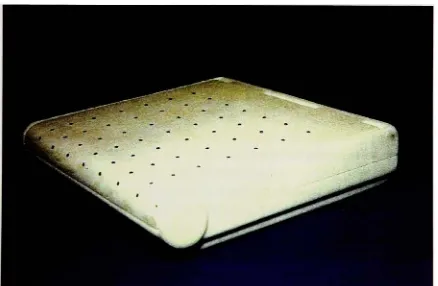
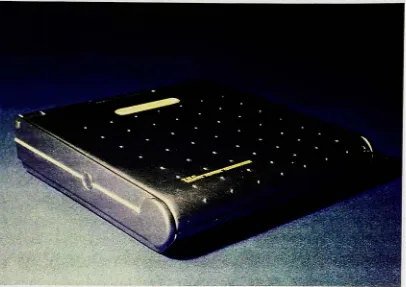
.Fig.1
Mock-Up,
No.1
Closed
View
Fig.
2
Mock-up,
No.1
Open View
[image:26.588.80.509.31.315.2] [image:26.588.77.513.351.649.2]Fig.3
Mock-Up,
No.2
Closed
View
Fig. 4
Mock-up,
No.3
Closed
View
[image:27.588.85.512.31.315.2] [image:27.588.76.516.328.645.2]Fig.5
Mock-Up,
No.4 Closed View
Fig.
6
Mock-up,
No.5
Closed View
[image:28.588.84.511.33.316.2] [image:28.588.78.516.355.641.2]CHAPTER
5
PRODUCT
DEVELOPMENT
Components
The
following
section explainsthe
physicalmakeup
ofthe
Teletype
Network
Communication
device.
All
ofthe
physical components wereresearched simultaneously.
However,
for
clarity,
each componentis
examinedindividually.
LCD
Screen
There
arefour different
types
ofdisplay
screens available: cathoderay
tubes(CRT),electroluminescence
displays
(EL),
gas plasmadisplays,
andliquid
crystal
displays (LCD).
Each
type
ofdisplay
has its
own strengths andweaknesses.
The
CRT displays
offer arelatively
high
quality
picturein
terms
ofresolution and color
rendering
capabilities.However,
when weighed againstaspects of
portability,
aCRT falls
short.Its
size and weight aretoo
greatto
be
easily
carried andit
consumestoo
much powerto
be
poweredby
a smallbattery.
EL
displays
are smallin
size,
light in
weight,
and picture resolutionis
good.
However,
colorrendering
is
poorfor blues
andgreens,
and powerconsumption
is
too
greatfor
a portable application.The
gas plasmadisplays
worklike
the
EL displays.
EL displays
electronically
excite particlesin
a membraneto
makethem
glow atdifferent
hues,
gas plasmadisplays
excite gasesto
achievethe
same end.Gas
plasmadisplays
are small andlightweight,
but like EL
displays, they
consumetoo
muchpower
for
portable applications.The LCD is
the
best
solution.It is
small,
lightweight,
andhas low
powerconsumption.
It
worksby
changing
the
shape or structure of aliquid
crystalcontained
in
athin
membrane.Changes
in
shape cause ambientlight
to
be
absorbed
in
certain areas and reflectedin
others.This
variation produceslight
and
dark
areas,
andbecause
LCD
screens refractlight, they
canbe
viewedin
very bright
environments.A
light-emitting
display,
such asthe
CRT,
wouldlose
resolution
in
abrightly
lit
environment.In
dark
environments,
wherethere
is
nolight
to reflect,
anLCD
has
the
option ofbeing
back-lit.
Color is
availablein
goodquality,
andresolution
is
sufficient andconstantly
improving.
The
weakness of anLCD
is
in
the
viewing
angle.The
LCD
has
only
one optimumviewing
angle,
and resolution atany
other angleis
poor.There is
atuning
device incorporated
withmany
LCDs.
The
tuning
device
allows people
to
changethe
optimumviewing
angleto
one whichaccommodates
their
vision.Tuning
takes
afew
seconds and canbe
changedat anytime.
However,
due
to the
small rangein
the
viewing
angle, the
screencannot
be
viewedby
morethan
one person at atime.
The
screen shapes canvary
greatly.I
have
chosen a rectangularscreen which
is
3x7 inches.
The
screen alsohas
an anti-glare materialproducing
a mattefinish
onthe
screen surface.Keyboard
The
keyboard
is
compact witheasy
reach,
andit is
also well separatedfrom
the
otherfunction
keys.
The
key
padis
a minimumsize,
but easy
to
type
with.
The
lettering
onthe
keyboard
is
readable.The
key
padis dark grey
withwhite
lettering
which will makeit easy
to
read and will giveit
a clean andsharp
look.
If
the
keypad
werelight in
color,
it
would showdirt
easily.Strobe
light
The
strobelight is
notsomething
new.The
device
is currently
used atthe
dorms
ofTower
A,
B
andC
atRochester
Institute
ofTechnology.
It has
alsobeen
installed for security
purposesin
the
Lyndon
Baynes
Johnson
building
atthe
National
Technical
Institute for
the
Deaf
for security
purposes.It is
commonly
usedfor emergency warning
in
buildings,
policecars,
etc.The
strobelight
comesin
different
sizes.The TNC
strobelight
is
considered
small,
but
the
light
will stillbe strong
enoughto
get one's attention.When
the
phonerings, the
light
willflash
atthe
sametime.
Antenna
This
willbe
the
first
device
with an antenna.The TNC
canbe
usedanywhere
in
the
world without a phone outlet.This
canbe done
withthe
use ofa an external or
internal
battery
pack.The
antennais
thin
and sleekto
giveit
a simplelook,
and canbe hidden
internally
into
the
antenna pocket when notin
use.If
it
needsto
be
used,
it
canbe
operatedby
abutton
onthe
side ofthe
TNC.
Answering
Machine
The answering
machine will workjust
like
any
regular,
digital
answering
machine.
There
willbe
notime
limit
onthe
use ofthe
answering
machine.Most deaf
people prefer notime
limit
to
givethe
user onthe
other end enoughtime
to
leave
a message.The
digital
device
will provideup
to two
and ahalf
hours
of messages.It
will coverapproximatly
twenty
messages onthe
answering
machine,
depending
onthe
messagelength.
Memo &
Battery
Light
The lights
willhave
two
different
colors,
one green andthe
other red.The
greenlight indicates
that there
is
a message onthe
answering
machine.When pressing
the
memobutton,
the
message will appear onthe
screenalong
with
the
number of callsthe
senderleft.
When
the
redlight
appears,
it
indicates
the
battery
is running
low
onthe
TNC
machine and needsto
be
recharged.
The warning light
will go offfifteen
minutesbefore
the
senderis
interrupted.
Phone
System
There is
a standard phonedialing
system.There is
no phonehandset,
but it is
an optionto
people who canhear
the
phonepretty
well.Most
deaf
people
don't hear
the
phone well anddon't
need ahandset.
Battery
Recharger
Power
is
suppliedto
the
TNC
unitby
a rechargeablebattery.
I
have
incorporated
acustom,
internal,
rechargeablebattery
pack which canbe
usedfor
overfour hours
of communication usage.I
have
alsoincorporated
anadaptorconnection
for
the
TNC.
This
will enablethe
unitto
hook up
to
line
power
in
orderto
minimizebattery
consumption.Monitor
&
Printer
Attachment
A
monitor and a printer are some ofthe
optionswhich canbe
attachedto
most computers.
The
purpose of a 15"or
larger
screenis
to
be
ableto
seethe
screen clearer and
to
be
ableto
read morelines
at onetime
comparedto
a1X6
inches
screen.The
printer canbe
abig help
printing
all received messages onthe
TNC
orfor recording
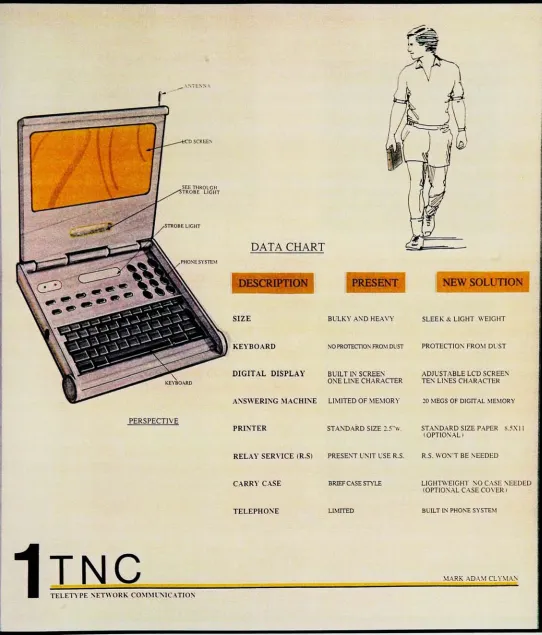
a phone conversation.SEETHROLGH TROBE LIGHT PERSPECTIVE
DATA
CHART
DESCRIPTION PRESENT SIZE KEYBOARDBULKYANDHEAVY
NEW SOLUTION
SLEEKFLIGHT WEIGHT
NO PROTECTION FROM DUST PROTECTION FROM Dl ST
DIGITAL DISPLAY BUILT IN SCREEN ADJUSTABLELCD SCREEN ONE LINE CHARACTER TEN LINES CHARACTER
ANSWERING MACHINE LIMITEDOF MEMORY 20 MEGSOFDIGITAL MEMORY
PRINTER STANDARDSIZE 2.5"\v, STANDARD SIZE PAPER S.5X1I
IOPTIONALi
RELAY SERVICE(R.Sl PRESENTUNIT USE R.S. R.S. WONT BE NEEDED
Itnc
B
TELETYPE NETWORKCOCARRYCASE
TELEPHONE
BRIEF CASESTYLE
TELETYPE NETWORKCOMMUNICATION
LIGHTWEIGHT NO CASE NEEDED
iOPTIONAL CASE COYERi
BUILTINPHONE SYSTEM
MARKADAMCLYMAN
Figure
7.
Illustration
Drawing,
No.
1
[image:33.588.25.567.15.650.2]PHONESYSTEM
LARGE LETTERS I ORINCOMING MESSAGE-SMALLLE1TERS HJRcjlTGlIINGMESS
SE-HlBILLYI IMCALLING TO TELL YOU THAT I GOT A NEW TNC. j
gaWHAT ISATNC AND WHO'S VOICE IS THIS?'
GA ITS CALL A TELETYPE NETWORK COMMUNICATION DEVICE AND THIS IS ANIMITATIONVOICE FROM THE TNC AS I typed TO YOU. GATHIS IS REALLY INCREDIBLE
AND ITSVERYCLEAR! GAI HOPE WE COULD BE ABLE
TO TALK MORE INSTEAD OF FEELING FRUSTRATED FROM USINGTHE RELAYSERVICEAS YOU EXPERIENCED BEFORE. ALL YOU HAVE TODOIS CALL ME DIRECT ASIFYOU WERE CALLINGAHEARING FRIEND. GATHAT IS GREAT ANDI
WILL BE ABLE TO TELL YOU MORE PERSONAL
THINGS OVER THIS LINEWITHOUT USING THE
RELAY SERVICE. GA I'M GLAD YOU FEEL THIS WAY AND
ILL TALK TO YOU SOON BYE SKSK SK
VIEWOF LCDSCREEN
SK=END OF CONVERSATION GA=GO AHEAD
BATTERYUGlil^ STROBELIGHT. ANSMACHINE PLAN VIEW RELEASEBUTTON FORCOVER f
- ' "
SIDE VIEW
2
TNC
TELETYPE NETWORK CO
LCDSCREEN
SEE THROUGH STROBEUGin"
FRONTVIEW
[image:34.588.31.564.18.641.2]MARKADAMCLYMAN TELETYPE NETWORK COMMUNICATION
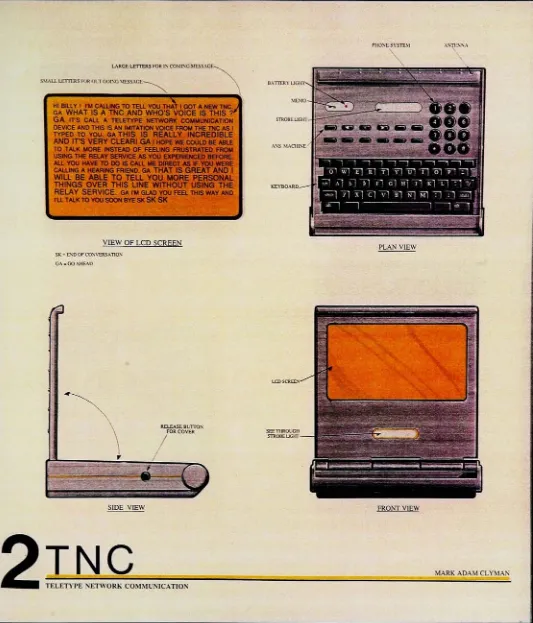
Figure 8.
Illustration
Drawing,
No.
2
BOTTOM VIEW
.
% fc
* *
'- ' '""- ' '*
'.-V-.-rr^":-.*.;/".-;
--*
-Gxb___- tm tm
-.
PRINTERATI'ACIIMENT
-BACKVIEW
-HAND GRIP FOR EASYCARRY MONITOR SCREEN ATTACHMENT BATTERY KECHARGIiR PLAN VIEW
3lNC
^Bl^^TELETYPE NETWORK CO*
RELEASEBUTTON FOR COVER / / "' . SIDE VIEW SEE THROUGH STROBE LIGHT -RUBBERTIPS \ \ FRONT VIEW
MARKADAM CLYMAN
[image:35.588.28.567.22.652.2]TELETYPE NETWORK COMMUNICATOR
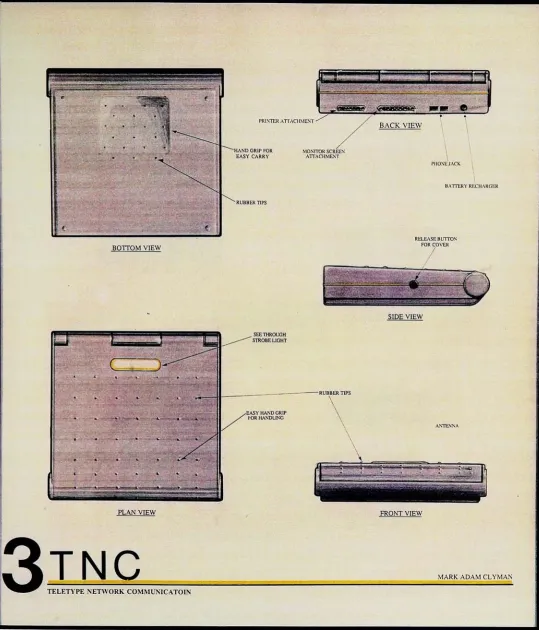
Figure 9.
Illustration
Drawing,
No.
3
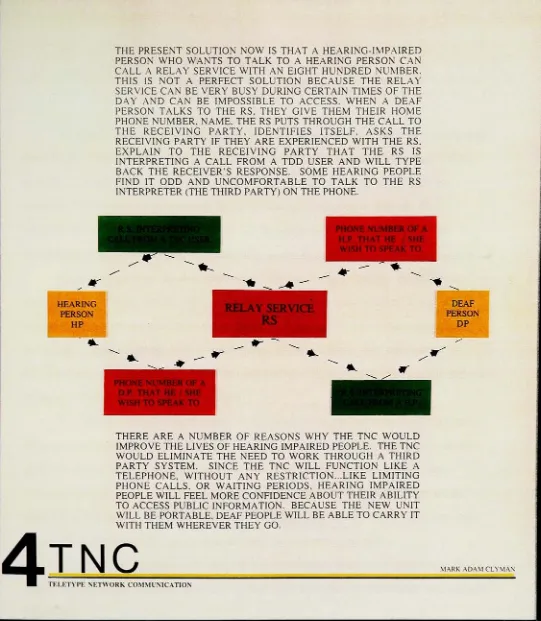
THE PRESENT SOLUTION NOW IS THAT A HEARING-IMPAIRED PERSON WHO WANTS TO TALK TO A HEARING PERSON CAN CALL A RELAY SERVICE WITH AN EIGHT HUNDRED NUMBER. THIS IS NOT A PERFECT SOLUTION BECAUSE THE RELAY SERVICE CAN BE VERY BUSY DURING CERTAIN TIMES OF THE DAY AND CAN BE IMPOSSIBLE TO ACCESS. WHEN A DEAF PERSON TALKS TO THE RS. THEY GIVE THEM THEIR HOME PHONE NUMBER. NAME. THE RS PUTS THROUGH THE CALL TO THE RECEIVING PARTY. IDENTIFIES ITSELF. ASKS THE
RECEIVING PARTY IF THEY ARE EXPERIENCED WITH THE RS. EXPLAIN TO THE RECEIVING PARTY THAT THE RS IS INTERPRETING A CALL FROM A TDD USER AND WILL TYPE BACK THE RECEIVER'S RESPONSE. SOME HEARING PEOPLE FIND IT ODD AND UNCOMFORTABLE TO TALK TO THE RS INTERPRETER (THETHIRD
PARTY)
ON THE PHONE.HEARING PERSON HP DEAF PERSON DP
THERE ARE A NUMBER OF REASONS WHY THE TNC WOULD IMPROVE THE LIVES OF HEARING IMPAIREDPEOPLE. THE TNC WOULD ELIMINATE THE NEED TO WORK THROUGH A THIRD PARTY SYSTEM. SINCE THE TNC WILL FUNCTION LIKE A TELEPHONE. WITHOUT ANY RESTRICTION...LIKE LIMITING
PHONE CALLS. OR WAITING PERIODS. HEARING IMPAIRED PEOPLE WILL FEEL MORECONFIDENCE ABOUTTHEIR ABILITY TO ACCESS PUBLIC INFORMATION. BECAUSE THE NEW UNIT WILLBE PORTABLE. DEAF PEOPLE WILL BE ABLETO CARRY IT WITH THEM WHEREVER THEY GO.
4
TNC
TELETYPE NETWORK CO!
MARKADAMCLYMAN
fELETYPENETWORK COMMUNICATION
Figure
10.
Illustration
Drawing,
No.
4
[image:36.588.25.566.31.652.2]CHAPTER 6
CONCLUSION
AND
EVALUATION
As
adeaf
person,
I
wantedto
improve
communicationbetween
the
hearing
anddeaf
world.When
I
wasin
college, the
Telecommunication device for
the
deaf
(TDD)
and
the
use ofthe
relay
services wasbecoming increasingly
popularacrossthe
country.
The
ability
to
accessrelay
services wasbecoming
moredifficult.
This
problem
led
meto
redesignthe TDD
for my
thesis
project.The
responseby
the
students and
teachers
atNTID
to
developing
a new productfor
the
deaf
was positive.Developing
a new productthat
helps
hearing
impaired
people andhearing
people communicate
directly
withoutthe
use of arelay
service seemedlike
atimely
project.
Many
newdevices have
been
developed
for deaf
/
hard
ofhearing
peopleincluding:
closed captionsbuilt into
television,
small notebook sizecomputers, the
development
oftext-to-speech
and speech-to-text.All
ofthis
newtechnology
led
meto
approachmy
project more realistically.The
sleek andlightweight design
ofthe
New
Teletype
Network
Communication
shows a
dramatic
changein
the
design
andthe
use ofthe
device.
Making
it
appearas
desirable
as other consumer products was a major goalfor
this
project.The
previous
design
ofthe
TDD
needed a newlook
to
"keep
up"with
the
design
world.When
the
TDD
wasdeveloped,
it
was notthe
design but
the
function
which wasthe
focus. The
design
neededto
be
updated andthe
function
changed.Applying
two
different
colorschemesto the
design
wasjudged positively
by
its
users.
Applying
two tones
ofgray
and yellow colorschemesto the
design
wasjudged
positively.
The
useofdesign
astexture
onthe
top
andthe bottom
ofthe
TNC
gives abetter grip
whenhandling
the
TNC.
Graphics in
this
design,
including
the
logo
of"TNC",
shouldhave been
studied moreto
explore otherfonts
or customfont
styles.The
overall majorimprovement
ofthe
TDD
(compared
to the
oldermodel)
willimprove
the
life
ofdeaf
peoplegreatly.I
askeddeaf
andhearing
people who wereknowledgeable
aboutthe
TDD
to
evaluate
my
product.They
saidthat
they
found
the
TNC
interesting,
were curious abouthow
it
wouldfunction,
and wonderedif
the
TNC
wouldbe
availableto
be
bought
in
the
nearfuture. The
deaf
peopleI
interviewed
wouldbe interested in
buying
this
if it
were on
the
market.The only
drawback
today
is
the
speech recognitiontechnology.
In
orderto
bring
this
productto reality,
speech recognition(large
vocabulary,
continuous
speech) capability is
required.Although
speechtechnology
is
not advanced enoughto
combinethe
above mentioned characteristics atthis
time,
the
future
prospectis
bright.
Some
ofthe
deaf
peopleinterviewed
felt
that
evenif
the
speech-reconigtionis
not available at
the
presenttime,
they
wouldlike
to
seethe
new product replacethe
current
TDD.
This
product wouldlead
other productsfor
deaf
anddisabled
peopleinto
the
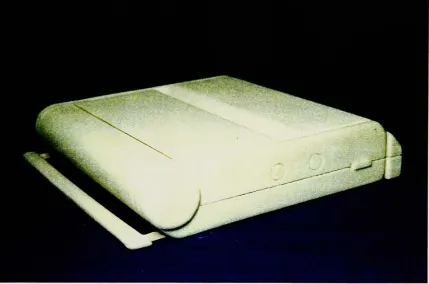
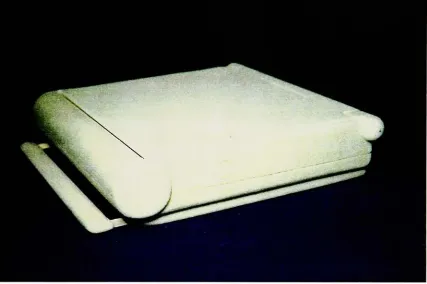
next century.Fig.1 1 Final
Model-Front View
Fig. 12 Final
Model-Back View
[image:39.588.94.499.363.654.2]Fig. 13 Final Model
[image:40.588.151.502.34.322.2]-Side View
Fig. 14 Final Model
-Side
andBottom View
[image:40.588.91.502.351.645.2]Fig.
15 Final Model
-Open View
Fig.
16 Final
Model-Key
Board View
[image:41.588.190.473.11.344.2] [image:41.588.117.474.379.650.2]APPENDIX
HISTORY
OF DEAFAMERICAN
Deafness
wasfirst documented
in
history
around355 B.C.
The
first
permanent school
for
the
deaf
in in
the
United States
wasbuilt
in
Hartford,
Connecticut
onApril
14,
1817.
"It
was calledConnecticut
Asylum
for
the
Education
andInstruction
ofDeaf
andDumb Persons.
It
wasfounded
by
Thomas Hopkins Gallaudet
andLaurent Clerc. This
school wasvery
successful and continuesto this
day
to
educateyoung
deaf
people.The
name of
the
school changedto
The
American Asylum but
today
it is
calledthe
American School for
the
Deaf in
West
Hartford,
Connecticut.
Now
there
aremany
schools all aroundthe
country
which servicedeaf
people...
elementary,
secondary,
training
schools,
etc.Many
ofthese
schools arebuilt
onthe
model ofthe
American
School for
the
Deaf.
Many
ofthese
schools were
founded
by
deaf
people.While
Abraham
Lincoln
was president ofthe
United
States,
he
signed a charterauthorizing
the
Columbia
Institution
for
the
Instruction
ofthe
Deaf,
in
Washington, D.C.,
to
grant collegedegrees
to
deaf
persons."1This
charter resultedin
the
founding
ofthe
National Deaf-Mute
College
in
1864,
which was renamedGallaudet College
in
1884..
.theonly
alldeaf liberal
arts collegein
the
United States.
In
1947,
Emerson
Romeroa,
adeaf Cuban-born New
Yorker,
developed
the
concept ofcaptioning films
for
the
deaf.
1 Clark R. Gannon. "A Narrative
History
ofDeafAmerican,"
Deaf Heritage,16.
He
thought
ofthe
same methodsthat
had been
usedin
the
old silent movies(popular before
sound wasdeveloped)
andincorporated
that
knowledge into
his ideas for
captionedfilms. He
created alibrary
of captionedfilms for
the
Deaf.
"His first
publicappearance wasin 1950
atthe
Lexington School
for
the
deaf
to
showDr.
Clarence O'Conner his
collection of captionedfilms.
Dr.
O'Conner
was movedby
this
newidea.
Romero
wasbe
ableto
establishCaptioned Films for
the
Deaf,
a non-profitcorporation,
withhelp
from
Lexington
School for
the Deaf
as well asmany
otherschoolsfor
the
deaf".
2This
servicebecame
too
costly for Romeroa
to
continue.The only way for
captioned
films
to
continue and survive wasto
get government support.Connecticut Senator
William Purtell
agreedto
introduce
abill in
Congress
to
establish a
free-loan
serviceto
subtitle motion picturesfor
the
deaf.
"On
September
2,1958,
President
Dwight
D. Eisenhower
signedPL 85-905
to
establish
Caption Films for
the
Deaf
andthis
was enactedinto
alaw".
3In
1973
the
National
Captioning
Institute
(NCI)
wasborn
and was preparedto
developed
captioned programsfor
television.
This
was another newadvancement
for
the
deaf
community.This
advancement againhelped
deaf
people
feel
that
they
could participateequally
in
society.To have
accessto the
same news and programs as
hearing
peopleby
using
a close captioneddecoder.
2
Ibid.,
266.3
Ibid.,
268.Gallaudet
University
has
been in
existencefor
over ahundred
years.Deaf
people who
have
wanted atechnical
educationhave had few
choicesin
the
past.
"In
1968,
then
President
Lyndon B. Johnson
approved of a planfor
establishing
the
first
technical
institute for
the
deaf in
the
United States.
Congress
passed a publiclaw 89-36 the
same year andthe
National
4
Technical Institute for
the Deaf
(NTID)
became
a reality".NTID
found
ahome
here
atRochester
Institute
ofTechnology (RIT)
afterlooking
at avariety
ofcampuses around
the
country
including University
ofChicago,
University
ofTennessee,
University
ofMiami,
University
ofSouthern California
andUniversity
ofPittsburgh.
RIT
was chosen wasbecause it had
alarge
amountof
land
available and wasexpanding its
technical
programs andbe-coming
one of
the
top
schools onthe
east coast.The
term
"hearing
impairment"is
generic and covers a wide range ofhearing
impairments
between deaf
andhard
ofhearing.
There
areapproximately
16
millionAmericans
who arehearing
impaired.
Of
this
number,
sometwo
million people canbe
classified as"Deaf".
4
Ibid.,
57.BIBLIOGRAPHY
Ainsworth,
William A.
Speech Recognition
by Machine
,London,
Peter
Peregrinus
Ltd,
1988.
Arthur,
Clarke C. "Voice: The Next
Interface",PC
Today
November,
1991.
Decker,
Nan
andMontandon,
Betsy. Captioned
Media in
the
Classroom.
Silver
Spring,
MD.: National Association
ofthe
Deaf,
1984
Gannon,
Jack
R.
Deaf
Heritage
"A
Narrative
History
ofDeaf
American"Silver
Spring,
MD.:
National
Association
ofthe
Deaf,
1981
Glen,
James.
"Speech
to
Text:
Today
andTomorrow
" ,Proceeding
of aConference
atGallaudet
Unversity,
September,
1988.
Washington,
D.C.:
Gallaudet
Research
Institute,
Gallaudet
Unversity,
1989.
p.164.
Harkins,
Judith E.
andBarbara M. Virvan,"Speech
toText:
Today
andTomorrow",
,
Proceeding
of aConference
atGallaudet
University,
September,
1988.
Washington,
D.C.
Gallaudet
Research
Institute,
Gallaudet
University,
1989.
Kurzweil,
Raymond. The Age
ofIntelligent Machines
.Cambridge,
Mass.:
MIT
Press,
1990.
Lee,
Kai-Fu. Automatic Speech Recognition: The Development
ofSPHINX
System
.Boston,
Mass
Kluwer Academic
Publisher.
1989.
McCoy,
Michael.
"Defining
aNew Functionalism in
Design" ,Innovation, IDSA,
Spring,
1984.
Morgan,
Nelson.
Talking
Chips
.NewYork:
McGraw-Hill,
1980.
Newton
Steve J. Voice
in
Office Systems
,The
National
Computing
Centre
Limited, Manchester,
England.
NCC
Publication,
1985.
Singleton
Paul J.
"NationwideTDD
Relay
Standards:
Partners
in
Progress",
GRI
Monograph
Series,
1989.
Sanders,
Mark
S.
andMcCormick,
Ernest
J. Human Factors in
Engineering
andDesign
.NewYork:
McGraw-Hill,
1987.
Witten,
Ian H. Principles
ofComputer
Speech
,New York
Academic
Press,
1982.