Rochester Institute of Technology
RIT Scholar Works
Theses
Thesis/Dissertation Collections
5-15-1992
Shifting reality
Nancy Crosby
Follow this and additional works at:
http://scholarworks.rit.edu/theses
This Thesis is brought to you for free and open access by the Thesis/Dissertation Collections at RIT Scholar Works. It has been accepted for inclusion in Theses by an authorized administrator of RIT Scholar Works. For more information, please [email protected].
Recommended Citation
A
Thesis Submitted
to the
Faculty
ofThe College
ofFine
andApplied Arts
in
Candidacy
for
the
Degree
ofMASTER
OF FINE ARTS
SHIFTING
REALITY
By
Nancy
A.
Crosby
Sincere
thanks to
my
thesis
Ed
Miller,
Philip
Bornarth,
andKathy
Vajda
-for
their
efforts
in
guiding
my
naive artistichand.
The
warmest gratitudeto
my
(expanding) family
-Dad, Mom,
Dave
andDebbie,
Ellen
andMike,
Patty
andJohn
-and
friends for
their
encouragement,
but
mostof all
for
being
patient,
understanding,
and supportiveof
the
personthat I am,
and ofthe
unique pathI have
chosen
to
walkdown.
A very heart-felt
thank
youto
my best friend
Michelle.
Her
illuminating
presencein
my
fleeting
RIT
days
gave me a reasonto
smilein
the
face
of allmy
hardships.
The
numerous conversations and unusualadventures we shared
together,
along
withthe
unfaltering
inner
strength ofher
personality,
providedme with
the inspiration
and courageI
neededto
pullmy
thesis
worktogether.
Despite
the
divergence
ofour
paths,
I
pray
that
ourfriendship
willendure,
andthat the
impressions
shehas
made uponmy life
willList
ofIllustrations
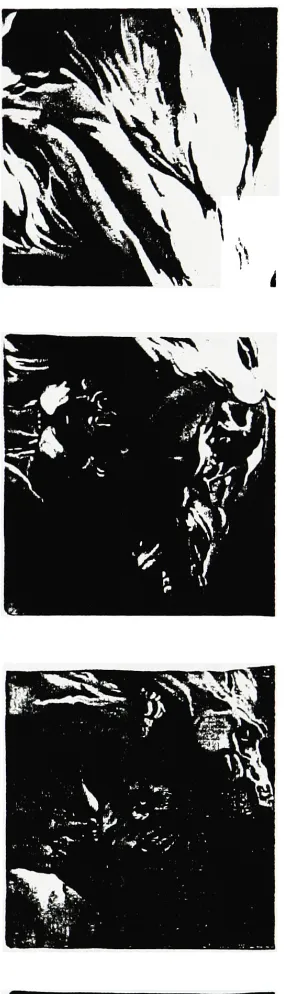
Figure
1:
Dotty
Attie,
Interest
in
Anatomy.
1988
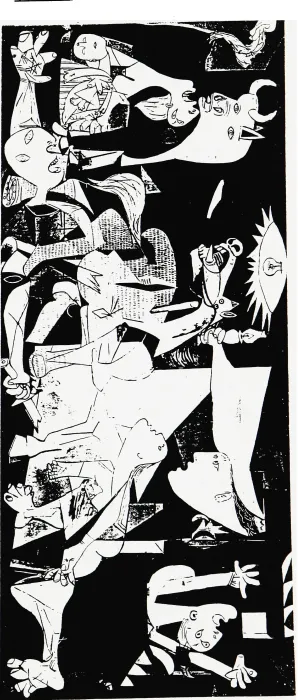
Figure 2:
Pablo
Picasso,
Guernica.
1937
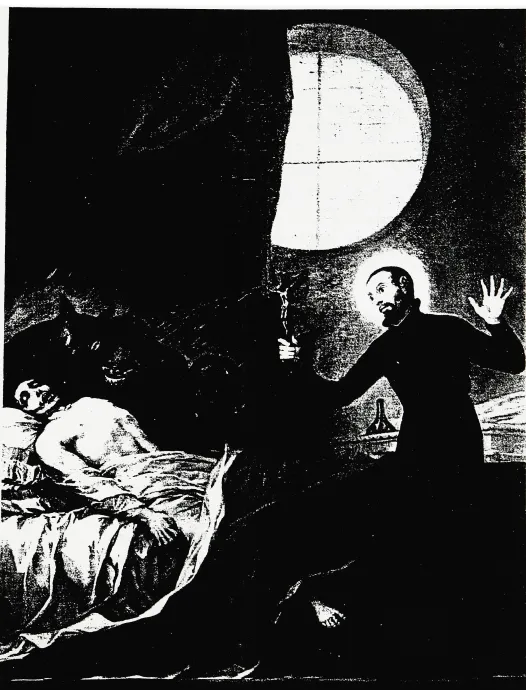
Figure
3:
Francisco
Goya,
St. Francis Borgia
Exorcising
aDemonized
Dying
Man. 1788
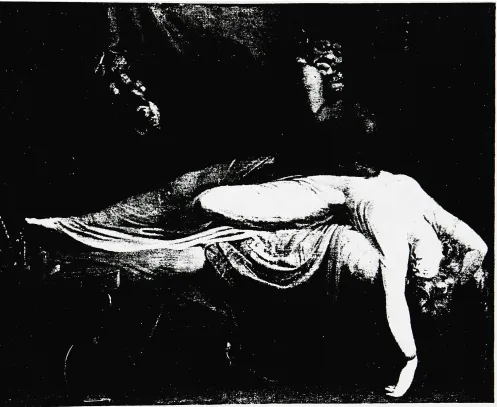
Figure
4:
J. H.
Fuseli,
The
Nightmare.
1781
Figure
5:
Gustave
Dore,
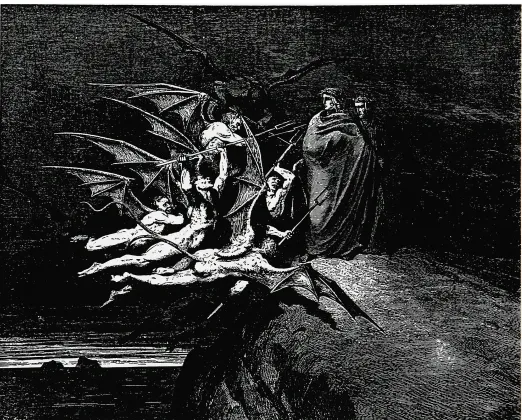
Virgil
Shows
Dante the
Souls
ofthe
Wrathful.
1861
Figure
6:
Gustave
Dore,
The
Demons Threaten
Viroil.
1861
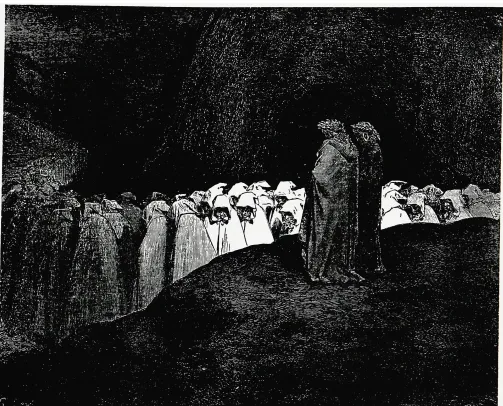
Figure 7:
Gustave
Dore,
The Hypocrites Address
Dante.
1861
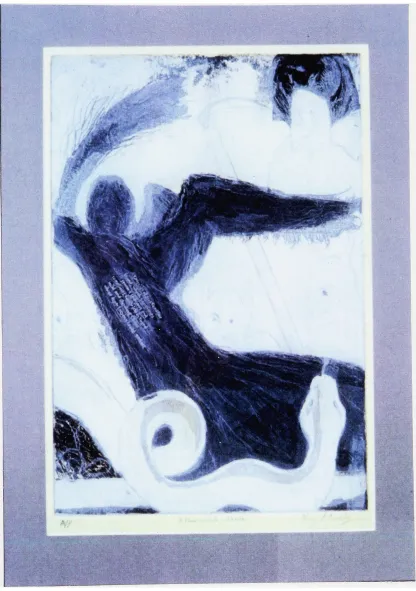
Figure
8:
Nancy
Crosby,
Illuminated
Shade. 1992
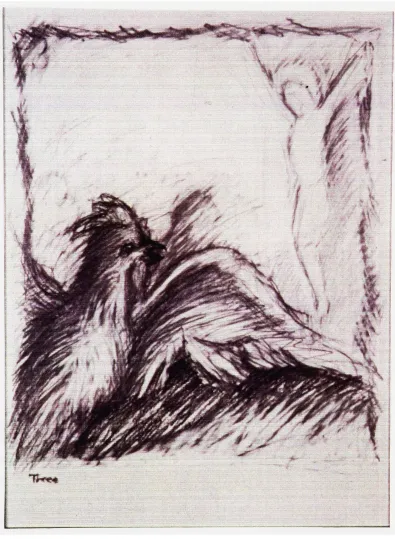
Figure
9:
Nancy
Crosby,
Three. 1992
Figure
12:
Nancy
Crosby,
Shifting
Reality
I.
1992
Figure
13:
Nancy
Crosby,
Shifting
Reality
II.
1992
Chapter
One--A
Journey
Beyond
the
Way
Station
Let
mebegin
by
saying,
I have been
raisedCatholic,
and all ofmy
life
I have been influenced
strongly
by
my beliefs.
Because
ofmy
devotion to
my
faith,
I have been bombarded
by
fantastic
iconography
andimages
which seemto
proclaimthe
presence ofnot
only
an omnipotentbeing
who reigns over all ofmankind,
but
also, the
existence of another realm or realmsbeyond
this
insignificant way
stationknown
as earth.Throughout
the
continualpassing
oftime,
humanity
has vigorously
tried
to
giveface
to the
invisible
manipulators who seemto
influence
their
thoughts
and actions.On my
thesis quest,
I
have
only
just
begun
tapping
into
otherforms
of religion-superstitious pagan
beliefs,
classicalGreek
mythology,
etc.-and
how
they
share a common element withmy
ownfaith.
In
asense,
my
art workfunctions
to
combine elements ofthese
different
doctrines in
orderto
arrive atmy
owncontemporary
art creed.
In
otherterminology,
my
art workis
utilizedto
explorethe
realms ofthe
mysterious,
it
seeks out
the
merciful gods whobestow
blessings
from
the
heavens,
it discloses
the
presence of evildemons
who spitdamning
cursesfrom
fiery hiding
chaotic,
dream-like
world whichI
have
to
create,
I
have
constructed multiple panel paintings whichI
continuously
shift around whilethe
workis in
progress.
Not only does
this
shift promote afresh
vibrancy
to
the
surface qualities ofthe
composition,
but it
also aidsthe
viewerin
altering
his/her
gazefrom
atangible
reality
to
that
whichis
unfathomable.For
this reason,
my
thesis
endeavoris
entitledShifting
Reality.
In
the
following
plethora ofwords,
paragraphs,
andillustrations,
I
planto
expand upon some ofthe
assorted elements whichI
find
pertinentto
my
thesis
statement.The first
section will revealmy
personal strugglesto
cometo
anunderstanding
of various religiousphilosophies,
myths,
and symbolism which relateto
my
creations.The
next section willdiscuss
specific artists and art works whichhave
had
adirect
effect on
the
outcome ofmy
thesis
discoveries.
And
the
final
section willdisclose
the
media and materialswhich provide
the
backbone
to the
enigma containedChapter Two
--Personal
Philosophies Behind
Religion,
Mythic
Creatures,
andthe
Contemporary
Art Dilemma
Before
I dive
headlong
into
adetailed description
ofmy
currentthesis
paintings,
I
wouldlike
to
reviewjust
how I
arrived atthe
needto
renderthe
mythical/religious subject matter on which
I
base
my
recent work.At
the
inception
ofmy
artisticexperience,
I
started offmodestly
by drawing
andpainting
from
mediocre stilllife
material as most artistsdo.
Later,
I began
juxtaposing
groups of rather odd unrelated objects( decaying
birds,
haunting
plaster
masks,
rotting
fruit,
etc..)
in
certain worksin
orderto
explore a range ofvolumes,
overlapping
forms,
colors,
and otherbasic
formal
artissues.
However,
uponviewing
these
piecesin
art critiques and studentshows,
fellow
students and professorsinsisted
that
a narrativedirection
wasevolving
in
my
work.Soon,
I began
to
intentionally
manipulatethe
viewer's sensationsby
imbuing
my
forms
withpersonal
meaning
asI
repeatedtheir
usagefrom
workto
workchanging
their
placement,
andthereby
changing
their
possible meaning.Sometimes,
I
would go sofar
asto
include
a written narrative-textin
orderto
givethe
audience aninsight
to
the
ideas
arranging
the
strangely
interesting
forms
andthrowing
in
whatever colors suitedmy
moodfor
the
day.
Art became
a playful outletthat
enabled meto
indulge
in
self-gratification.Stephen
King,
an artistof
horrific
literature,
admittedin
the
novelMisery
that
he
formulated
his
storiesfor himself
aboveall,
and
for
the
absolute satisfaction ofit;
he
writes :"The
reason authors almost always put adedication
ona
book is
because
their
selfishness evenhorrifies
them
in
the
end."(King 1988)
However,
it
appearedthat this
attitudetoward
my
work seemedempty
andshallow.
I did
not wantthe
paintingsto
become like
those
current,
egotistical,
high-minded,
non-understandable,
Post-Modern,
abstract entities whichlie hidden away in
galleries ormuseums,
and whichnever gain
the
light
ofthe
general public'scomprehension.
My
art seemedto
reflectthe
modern artdilemma.
Reading
aboutthis
art crisisin
Suzi
Gablik's
Has
Modernism
Failed?
led
meto
believe
that
the
contemporary
artdisease
mightpossibly be
curedof
its
alienating
effectsby
astrong dose
ofmeaning
and
direction.
Gablik
writes:coherent set of
priorities,
without
any
persuasivemodels,
withoutany
meansto
evaluate eitheritself
oror
the
goals whichit
serves.Our
visionis
notintegrated
--it
lacks form
anddefinition.
Is it any
wonder,
then
that
arthas fallen prey
to
difficulties
of
legitimacy
--or
that
like
adark
body
which absorbseverything
and gives outnothing,
it
shouldbe undergoing
whatseems,
by
now,
like
a permanentcrisis of
credibility?"
(Gablik
1984)
In
this
book,
Gablik does
not mockthe
early
modernistpainters
-Mondrian, Rothko, Hoffman,
et al.-for
attempting
to
liberate
the
art world andfor
making
art which was
to
them
philosophically,
socially,
spiritually,
and most ofall,
aesthetically
sound,
but
she questions where
this
direction
in
arthas
taken
us.According
to
her
this
liberation
ofthe
art scenehas
helped
cause a"loss
ofbelief in
any
system of valuesbeyond
the
self."(
Gablik 1984
)
In
responseto
this,
I hope
to
usemy
artto
rekindle
these
lost
values andbeliefs.
So,
I
searchedfor
a commonthread,
somebasic
roots,
andfears,
which
I
think
will actto
the
enticecuriosity,
imagination,
and contemplative nature of almost allmankind
"What
art needs nowis
to
bespeak
it's
origins,"quotes art critic
Lucy
Lippard
of artist-shamanDennis
Oppenheim
in her book Overlay.
(
Lippard
1983)
The
origins
Oppenheim
refersto
are primitiveones,
conceived of at a
time
when art wasfirst
usedto
unify
a culture at ritualistic ceremonies or religiousservices.
Even Lippard
is
movedto
admitthat
"the
origins of artlay
of coursein
religion.As
anatheist,
I
was somewhat appalledto
find
myselfstudying
religion.Yet
the
more
I
did
so, the
moreI
understoodthat
if
artis for
some people a substitutefor
religion,
it!s
apathetically inadequate
one
because
ofit's
rupturefrom
sociallife
andfrom heterogenous
valuesystems
that
existbelow
the
surface..of
homogenized
dominant
culture."
(
Lippard 1983
)
Thus,
Overlay,
condemnsthe
haughty
art-for-art's-sakemovement and embraces
the
resurgence of an art whichis
morecommunal,
natural,
spiritual,
and embeddedwithin
instead
of separatefrom
the
core of society.With
this
premise asmy
guide,
I
set outto
recapture
the
ideas
andimages
ofthe
forgotten
pastin
order
to
putthem
to
workin
acontemporary
society
whose art work and religious
understanding
are,
in
my
As my
creativetheory
slowly began
to
evolve,
I
chose
to
weavemy
painting
solely
aroundthe
highly
familiar
mainfigures found
in
the
image
richChristian
tradition,
especially
the
mournful and agonized ones.My
array
of actorsincluded
the
crucifiedChrist,
the
Blessed
Virgin
Mary,
majesticangels,
andthe
notorious serpent.
Even
asthese
figures
areleading
icons in my
work,
I found
they
neededto
be
contrastedand subdued
lest
my
workbecame
too
blatantly
obvious and
preachy in
its
religious content.And
so,
I
began
working
on ways ofshrouding
my
images
by
giving
the
viewer morepuzzling
forms
to
digest.
At
first,
I
startedcasting
into
my
work abarrage
ofeveryday
creatures and animals-vague
human
forms,
prowling
cats,
menacing
birds,
and other oddbeings.
Later
on,
I decided
to
infuse
my
expressive statementswith more
legendary
beings.
Now,
I
have
upgradedmy
original cast of characters
to
include
the
unusualmythic
beasts
which crownedthe
churches ofMedieval
times,
and whichinspired
the
reverence of allthose
who
lived
undertheir
watchful gaze.These
strangegrotesque
monstrosities,
better
known
asgargoyles,
are
commonly
misrepresentedin
westernbeliefs
asbeing
satanic-evilcreatures,
or spawns ofhell,
whilechurch was unable
to
eradicate"due
to
their
popularity
throughout
every
corner ofEurope.
(
Ross
andSheridan
1975
)
These
unusual gods were often usedto
wardoff
evil,
andthus,
their
appearanceinspired
acloseness of
humanity
in
dark,
superstitiousdays.
They
were protectivegods,
gods ofagriculture,
gods ofthe
sun,
moon,
planets,
andstars,
and gods whichembodied
every
aspect ofthe
mysteriouscontrolling
forces
oflife.
(
Ross
andSheridan
1975
)
In
moreprimitive
times,
the
gargoyle gave atangible,
visibleform
to
those
unseeable,
unstoppableforces
whichinvisibly
surroundhumanity.
In
this
manner,
they
temporarily
allowed manto
face,
andthus,
endurehis
fears.
Yet
another creature who arousesmy
creativeinstincts
is
none otherthan
the
mythicGreek
goddess,
the
Gorgon
Medusa.
Like
the gargoyles,
afearsome
andodious reputation seem
to
accompany
her
name.Despite
this,
many
mannerist painters choseto
romanticize
her
serpentinelocks
andher
ominouscountenance.
Even
the
poetShelley,
obsessed withher
visage,
wrote abouther
passionately.This
enamouredman,
"rather
than
being
seized withdisgust
whengazing
atthe
Medusa's
head
...is
fascinated
by
her
beauty."
(
Schmiel
1988
)
She
cries ofthe
dark
sideof a more angelic
facade.
This
is
why
I
wishto
portray
the
more sinisterhalf
of artbecause
it is
the
one
less heralded.
This
darkness
exists notto
make ussatanic or
ugly,
but
to
make usbalanced
in
mind andspirit.
In
this regard,
"necessary
evil"can
be
in
amanner of
speaking
beautiful.
It
is
this
beauty
in
art,
this
fatal
glance which makes usfeel
most alive.Aside from
this,
both
the
ancient chimeras andthe
frightful
Medusa
are entities who excitethe
imagination,
and encourage ahealthy
fear
ofthe
unknown,
afear
whichI
hope
can penetratethe
heart
of a cold
society
andkeep
it
from
turning
to
stone."The
monsterdemonstrates
a profoundreality
and atthe
sametime
warns and prophesies.He is
the
portentsent
by
God
to
put us onguard."
(
Resnick 1988
)
What
must webe
on guard against?
In
my
opinionand
in
the
opinion of art criticslike
Gablik
andLippard,
both
artists andthe
whole ofhumanity
shouldprotect each other
from
the
infected
attitude oftodays
art world-an art world which
is
notconcerned with
appealing
to the
masses,
but
whichhas
taken
an elitist stance and elevates artaccording
to
its
economic merits.Something
is
awry
when artis
no
longer
being
rewardeddue
to
its
moral,
intellectual,
spiritual,
and useful values.The
commentators reflect
the
previously
mentionedsentiments :
"Above
allelse,
human
beings
are
chiefly
motivatedby
self-seeking
and material greed.
We
desperately
need
to
outgrowthis
dismal
anddiminished image
wehave
inherited
from
the
pasttwo
centuries ofindustrialism
to
overcomeseparateness and alienation and
find unity
again."(
Gablick
1985
)
"Artistic
. . .quality has been lowered
by
plethora.Great
works . . .become
articles of consumptioninstead
of objects ofcontemplation."
(
Barzun
1989
)
In
my theory,
it
is
notthe
artist'sjob
to
elevatehis
ownself-importance,
andthereby
mirrorthe
society
which engulfshim,
but
ratherhe
shouldadvance
his
inventive
talents
by
giving
life
to
atranscendental
art,
an unblemished art which perhapscan aid
contemporary
culturein
surpassing
the
statusquo
by
evoking
thoughts
of atime
when art and11
Chapter Three
--Transcendent Art
Works
andInfluences
Several influences
held sway
overmy
thesis
workon
its
pathtoward
achieving
transcendence.
First,
I
turned
toward
those
whose creative concepts couldlend
the
supporting
brace
ofstability
to
my
thesis
compositions.
Contemporary
artistDotty
Attie,
"a
New
York
artist,
whofor
twenty
yearshas
lovingly
extracted
details
from
the
old masters and combinedthem
withtext
sequencesthat
build
into
shocknarratives of
her
owndevising,"
organises
her
nearly
plagiarized ensembles
in
a manner which provokesmy
curiosity.
(
Kozloff
1991
)
She
piecestogether
her
finely
detailed
elaborate configurationsin
a series ofprecious six
inch
squares.(
Illustration
1
)
This
type
of comic-book presentation allowsthe
viewer
to
easily delve
into
her
masterfully
reproducedsections while she
further
attractsher
audiencethrough
apuzzling break up
ofthe
panelsin
which sheflashes
snippets oftantalizingly-cryptic
imagery.
It
was
this
alluring
approachto
painting
whichinitiated
my
personal use ofthe
squarein
conjunction withthe
arcane
imagery
I lifted from
the
past.Another
source ofinspiration
cameto
mefrom
an-12
Picasso.
I
found
utterly
nofascination
in
his
cubisticexploits,
untilI
came across a mostdramatically
moving
master work ofhis
-Guernica.
(Illustration
2)
This
complicated explosion of emotionalforms
arosefrom
the
outbreak ofthe
Spainish
War.
More
specifically,
it
reflectsthe
artist'shorror
atwitnessing
the
chaos and carnage precipitatedby
the
bombing
ofthe
smalldefenseless
village ofGuernica
which
took
placeApril
28,
1937.
(
Russell
1980
)
The
violence of war whichillusion istical
ly
andsymbolically
erupts acrossthe
immense
canvas,
is
accented
by
Picasso's bare
usage of ablack,
white,
andgrey
value scheme.This
strictly
tonal
arrangementplaces emphasis on
the
role ofthe
symbolic shapeswithin
the
tense
pyramid-like structure.Eternally
sentencedto
live
outthis
terror
inside
this
sizablestage-set,
dwell
figures
reminiscent ofthose
found
in
biblical
references.For
example,
the
impaled
roaring
horse
is
likened
in
appearanceto
the
crucifiedChrist
as
he
utters abeseeching
cry
before
the
impending
release of
his
tormented
spiritto the
heavens.
Further
indications
ofthe
Lord's
death
appear notonly
in
the
sword-bearers
nailed,
crucifiedhand,
but
also,
in
the
surrounding
apostolic worshippers whobemoan
the
13
materialize,
some of whombear
astriking
resemblence
to
the
Virgin
Mary.
One
in
particularposesses
the
same characteristicsfound
in
a "pieta"as
the
mourning
mother cradlesthe
body
ofher
dead
son,
and seemsto
implore
her
God-like
protectorthe
hovering
bull for
guidancein this time
of crisis.(
Russell
1980
)
As
a naiveyoung
artist,
I
canonly
hope
that
someday
Til
be
ableto
glorify
symbols andpowerful
meaning in
such an original manner.With
Guernica
asmy
instructor,
I
soughtto
abandon
the
chaotic color schemesI
formerly
entrenched
my
images
in,
andtraded
them
for
amonochromatic
layout
whichI
believe
will stressthe
importance
ofmy
shadowy
icons.
Furthermore,
from
the
cubist styleI
gleaned aless
illustrative
manner ofrendering
subject matteralong
with a greaterconfidence
in
organizing
the
spaces withinmy
multipanel extravaganzas.
More images
which stirmy
blood
comeforth from
artists who enter more unconventional realms
through
creating
unusually
startling
visions.Francisco
Goya
was one such artist.
His bleak
imagination,
whichhe
gave
life
onto canvas andin
prints-especially
the
stark series of etchings
known
asthe
Caprices
which
took
placein
his
homeland
ofSpain
during
his
lifetime,
and werefurther
agitatedby
a potentillness
which caused
him
to
lose his
hearing,
thus
placing
him
on
the
brink
ofinsanity.
(
Schickel
1968
)
His
terrifying
revelation of a rather onesidedbattle
between
good andevil,
best
shownby
the
painting
St.
Francis
ofBorgia
Exorcising
aDemonized
Dying
Man,
disclosed
his
feelings
onhow
nearly
powerlessthe
church
is in
loosening
the
grip
evilholds
over mankind.(
Illustration
3
)
In
this
nightmarish vision " adying
man,
haunted
by
demonic
animalsis
entreatedto
repent
by
St.
Francis
...It
is
significantin
Goya's
development
for
it
forshadows
his
use of grotesquecreatures
to
suggestthe dark
side ofhuman
nature."(
Schickel
1968
)
While I do
not choseto
fashion my
lurking
figures
in
such adamning
light,
I
do
referto
Goya's
wickedbeings
whenproducing
creatures of sucha similar guise.
Also,
I
aminterested
compositionally
in
how
this
master utilizesthe
antagonizing
shadesin
relation
to
the
otherdream-like
personae who existin
his
forboding
world.An
additional ghoulishgenius,
whoseotherwordly
fantasies
are akinto
my
own,
is
J.
H.
Fuseli.
While
maintaining
apainting
stylebordering
onthe
Surreal
and
the
Romantic,
Fuseli
was capable ofcapturing
aFigure
3: Francisco
Goya
St. Francis
Borgia
Exorcising
aDemonized Dvina
Man.
1788
^jr^^>'^yiv^^-^i^j
W^0&
^li
--s*_.
...i
^
;?"-]B^|
RR^B.__ K^^4'
1
aHI
-B-.v
&?1?
p
^
f^/1
3fe,,'?''v,-: 1
'
A^A^it
it
J
ijHT
M
:.HI
*'
'
m:-v
f iL
mkJ&f^H
1
Ivj
^BjEB^ByjwW HtL^Pshhh&MIWm
1
r , Hk--*^v^J ' ^^^MK ^\^Bi
ebp^^--'
I
|| Bk3k- l
-^dHB
.
j
^^^^1
[image:23.614.46.572.119.809.2]Powell
quotes an anonymous writerin
his
book
Fuseli: The
Nightmare
as saying:"His domain
wasin
air andin
hell,
the
clouds andthe
grave.He had
little
in
common with earth.It
washe
who made real and visibleto
usthe
vague and
insubstantial
phantomswhich
haunt like dim
dreams
the
oppressed
imagination.
These
things
and
things
like
these,
werethe
subjects over which
he
ruled,
andamongst which
he
revelled,
andit
mustbe
owned, that
often asthe
attempthas been
made,
they
have
as yet ownedthe
sway
of no othermaster."
(
Powell
1973)
His
most substantial workThe
Nightmare
openly
confronts us with our own subconscious
fears
andcalls upon us
to
freely
explore ourwaiting
imagination.
(
Illustration
4
)
The
very
last
influential
artist of whomI
willspeak,
was a master ofdramatic,
almosttechnically
perfect medieval scenarios.
During
his
lifetime,
Gustave
Dore
illustrated
numerous volumes ofliterary
masterpieces,
but
the
engravingshe
madeto
accompany the
prose ofDante's
Divine
Comedy
areto
me
the
most compelling.(
Illustration
5,
6,
7
)
"Through
dizzy
vistasthe
gauntfigures
ofDante
andFigure
4: J.H. Fuseli
[image:25.614.62.559.155.562.2]Figure
6:
Gustave
Dore
[image:27.614.48.570.163.583.2]16
heroes
of some unwrittenVerdi
opera,
poised abovethe
winding
anonymouscrowds."
(
Gosling
1973
)
It is
true
that
in
away
Dore's
images
become
almosttoo
cliche
if
nottoo
heavyhandedly
idealistic,
but
they
maintain a sense of
dignity
asthey
aspireto
take the
viewer
toward
anotherdimension
oflife.
It
is
this
very
nature whichhe
successfully
brings
outin
his
work and which
I
hope
I
can accomplishin
my
ownthesis
paintings.Thus,
afterscrutinizing
both
the
old and newmasters works and
philosophies,
their
struggles withperceiving
religiousimagery
both
dark
andlight,
their
methods of
promoting
the
use of abelievable
fantasy
in
art,
andtheir
aggressivehandling
ofthe
compositional
elements,
I
soonformulated
my
ownoriginal artworks.
Without
their
aid,
my
personalChapter
Four
The
Backbone
ofthe
Enigma
Now
that
I
have
expanded uponmy
personal,
religious and artistic
ideas,
andI
have discussed
those
influential
visionaries whohelped
catapultmy
ownimagination,
I
wouldlike
to
elaborate onthe
fundamental
elements whichhold
together
the
ethereal
paintings,
drawings,
and prints whichconstitute
the
Shifting
Reality
series.The
primebackground behind
these
medievaldreamscapes
are words.That
is,
whilethe thesis
work progressed
through
its
variousstates,
I found
it
necessary
to
keep
an organizedjournal
offleeting
emotions and
racing
thoughts
which occuredto
mefrom
day
to
day.
In
onerespect,
I found
the
writtenword
to
be
an equalto the
symbolicforms I
utilized,
but I
alsofound
that
if
I
used words or snippets ofinformation
from
my
journal
asthe
title
to
the
piecesthat
they
would revealfar
too
muchmeaning
andleave
nothing for
the
viewerto
ponder.So,
I
determined
that
the
prose of other authors ortext
from
my
privatewritings could enhance
the
ambiguity
ofthe
work oract as a subtle
director
of sensation.For
example,
in
Shifting Reality
III
the
following
poemby
Theodore
Roethke
-"When
I
sawthat
clumsy
crow18
A
shapein
the
mind roseup
:Over
the
gulfs ofdream
Flew
atremendous
bird
Further
andfurther
away
Into
a moonlessblack
Deep
in
the
brain,
far
back."(
Roethke 1940
)
doesn't specifically
addressthe
intent behind
the
imagery.
Instead,
it
hints,
prodding
aroundthe edges,
further
enhancing
the
aura of mystery.(
Illustration
14
)
As
I
wasreading
andwriting
these
types
of poeticverse,
it began
invading
my painting
style
making
it
more expressive and painterly.Gestural
markmaking became
adominant
feature in
my description
ofthe shapes, shades,
andflickering
tonal
arrangements whichdance
throughout
my
multipanel play.
Sketching
became
a moreforceful
means of
exploring
this
spontaneousbrand
of painting.The agressively brutish
drawing
technique
I
acquiredby
vigorously
bearing
down
onthe
pencil asI
rodeit
across
the
blackening
sketchpaper,
andthen
chiselling
back
out areas of white with a rubber eraserleaving
ghostly
impressions,
brought
afluidity
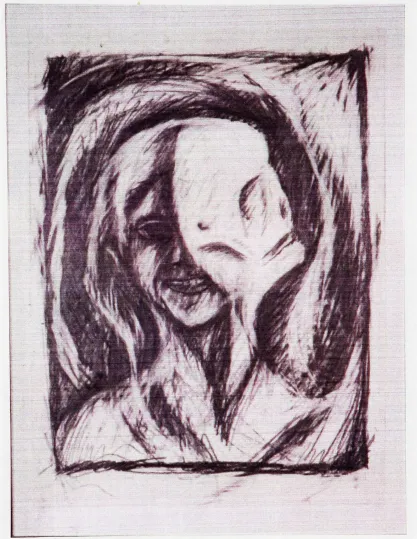
andfreshness to
my strongly
rendered characters.(
Illustrations
9, 10,
11
)
Even
the
augmentation oftexture
aidedin
promoting
the
gestural markin
the
paintings asthe
surface
to
drag
over.Further,
I felt
that
these
fibers
added a
touch
ofreality
to
an otherwise chimericalrealm
-they
represented a symbolfrom
the tangible
world which aids one
in grasping
a more elusivesphere.
These
fabrics,
I first
employedin creating
soft-ground applications
in
etching
printslike Illuminated Shade.
(
Illustration 8
)
The
printmaking
medium also afforded memany
different
methods of
applying
alimitted
palettei.e.
a rangeof
aquatinting,
openbiting,
direct
soft-groundapplication,
double
plateregistration,
etc.-which
allowed
for
ahigher
contrast of values and a greaterresolution of
forms.
Each
ofthese tools
spilled overinto
my
varied surfaceimplementation
in
the
paintings.
My
sectional pictorialformations
arebrought
to
fruition
in
transparent
areas of monochromatic acrylicwashes which are sometimes
illuminated
by
ascrubbed on administration of gesso.
(
Illustrations
12,
13,
14
)
There is
a range ofdepth implied
by
overlapping
andthe
scale change ofthe
oddshapes,
asthe
figures romp
through the
invisible landscape.
Also
afterspending
long
hours
tediously
cutting
the
wood,
nailing
together
the
stretcherframes,
stretching
andgessoing
allthe
preciouscanvases,
and20
stumbled across
the
flexibility
ofbasing
my designs
on eleveninch
squares.The
grid organizations couldbe
arranged and rearranged untilI
felt
satisfied withtheir
compositional appearance.I
even startedusing
them
asframing
andborder
devices
which createdthe
illusion
of a protectivehouse
or church-likesanctuary
These
small panels which assertthe
reality
ofthe
vision
through the
painted edge oftwo
inch
thick
frame,
also givethe
perceptionthat
the
activity
engaging
withinthe
confines of some ofthe
larger
panels
is
alsoexploding
outsidein
the
circling
windows and
beyond.
Even
the implementation
of abstracted and vagueseemingly empty
areas strenghen ones contemplative sensations.For example,
in
Shifting
Reality
I,
the
blackened
uppermost voidis
notonly
a peaceful areaof rest
for
the eye,
but it
also callsto
mindthe
unfinished spaces
found in
oriental art.These
areaswere
left barren
notin
haste,
but
as :"a
way
ofshowing
that
life
can neverbe fastened down
orcompletely
revealed
by
the
artist'sbrush,
andthat
there
is something
ungraspable andever elusive
to
whichthe
painter
draws
ones attentionby
the
slighest
hint
leaving
the
rest untouched."Therefore,
from my
vantagepoint,
a combinationof all of
these
fundamental
elementsalong
withmany
of
these
obscuredivisions
ofspace,
are effectivein
attaining
ataste
ofthe
unknown,
and oftransferring
the
viewer's gazeto
its
frightening
depths
orloftier
22
Chapter
Five
--End Hope
In
the
end,
I fear
that
somemay interpret
my
labors
asbeing
the
purveyors of wicked or malevolentarenas where no good can
possibly
survive.However,
I
hope
that
if
they
stop
and reflect uponmy
accomplishments
that
they
may
interpret
them
asbeing
a continualstruggle,
a personalinner
conflictbetween
both
the
dark
andthe
light,
or akingdom
where neither one wins
out,
but
they
both
exist sideby
side on
many
levels
-together
in
the
complicated
turmoil
ofthe
here
andnow,
andseparately
in
the
divided
realms ofthe
afterlife--in
a contolledchaos,
Figure
9:
Nancy
A.
Crosby
[image:37.614.111.506.131.670.2]Figure
1 1
:Nancy
A.
Crosby
[image:39.614.96.522.122.684.2]. n
*
/ t
'
[image:40.614.49.569.133.578.2]Figure
13:
Nancy
A.
Crosby
[image:41.614.78.538.142.601.2]Works Cited
Alighieri,
Dante.
1948.
The Divine Comedv:
The
Inferno.
Puraatorio.
andParadiso.
New
York:
Pantheon Books.
Barzun,
Jacques.
1989.
"A
Surfeit
ofArt
andWhy
Government
Need Not Encourage
It."Harpers
Magazine.
July.
Gablik,
Suzi.
1984.
Has Modernism Failed?.
New York
Thames
andHudson.
.
1985.
"Changing
Paradigms:
Is
the
Ladder
ofSuccess
aDead End for
Artists?"
New
Art
Examiner.
June.
Gosling,
Nigel.
1973.
Gustave Dore.
New
York:
Praeger Publishers.
King,
Stephen.
1988.
Misery.
New York:
Penguin
Books.
.
1988.
Nightmares
in
the
Skv:
Gargoyles
andLehmann
Haupt,
Hellmut.
1943.
The Terrible
Gustave
Pore.
New York:
Marchbanks
Press.
Lippard,
Lucy
R.
1983.
Overlay:
Contemporary Art
andthe
Art
ofPrehistory.
New York:
Pantheon
Books.
Powell,
Nicolas.
1973.
Fuseli:
The Nightmare.
New
York:
Viking
Press.
Resnick,
Salomon.
1988.
"Our
Lady
ofthe
Chimeras:
The
Gargoyles
of Notre-Dame."FMR.
34
(September/October).
Roethke,
Theodore.
1944.
"Night
Crow."The
Collection
ofPoems
bv Theodore Roethke.
New
York:
Doubleday
andCo.
Ross,
Anne
andSheridan,
Ronald.
1975.
Gargoyles
andGrotesques:
Paganism
in
the
Medieval
Church.
Boston:
New York
Graphic
Society.
Russell,
Frank D.
1980.
Picasso's Guernica:
The
Labyrinth
ofNarrative
andVision.
New
Jersey:
Schickel,
Richard.
1968.
The World
ofGova.
1746-1828.
New
York:
Time-Life
Books.
Schmied,
Wieland.
1988.
"The Magic
of Medusa."FMR
34
(September/October).
Watts,
Alan W.
1958.
The
Spirit
ofZen:
A Wav
ofLife. Work,
andArt in
the
Far East.
New
York: