Methodological Advances
Validity, Practical Utility, and Reliability of the
activ
PAL
i
in Preschool Children
GWYNETH DAVIES1, JOHN J. REILLY2, AMY J. MCGOWAN1, PHILIPPA M. DALL3, MALCOLM H. GRANAT3, and JAMES Y. PATON1
1
School of Medicine, University of Glasgow, Glasgow, UNITED KINGDOM;2Physical Activity for Health Research Group, University of Strathclyde, Glasgow, UNITED KINGDOM; and3School of Health, Glasgow Caledonian University, Glasgow, UNITED KINGDOM
ABSTRACT
DAVIES, G., J. J. REILLY, A. J. MCGOWAN, P. M. DALL, M. H. GRANAT, and J. Y. PATON. Validity, Practical Utility, and Reliability of theactivPALiin Preschool Children.Med. Sci. Sports Exerc., Vol. 44, No. 4, pp. 761–768, 2012.Purpose: With the increasing global prevalence of childhood obesity, it is important to have appropriate measurement tools for investigating factors (e.g., sedentary time) contributing to positive energy balance in early childhood. For preschool children, single-unit monitors such as the
activPALiare promising. However, validation is required because activity patterns differ from adults.Methods: Thirty preschool children participated in a validation study. Children undertaking usual nursery activity while wearing anactivPALi1 h were recorded using a video camera. Video (criterion method) was analyzed on a second-by-second basis to categorize posture and activity. This was compared with the correspondingactivPALioutput. In a subsequent substudy investigating practical utility and reliability, 20 chil-dren wore anactivPALifor seven consecutive 24-h periods.Results: A total of 97,750 s of direct observation from 30 children were categorized as sit/lie (46%), stand (35%), and walk (16%); with 3% of time in non–sit/lie/upright postures (e.g., crawl/crouch/ kneel-up). Sensitivity for the overall total time-matched seconds detected as activPALi‘‘sit/lie’’ was 86.7%, specificity was 97.1%, and positive predictive value was 96.3%. For individual children, the median (interquartile range) sensitivity foractivPALisit/lie was 92.8% (76.1%–97.4%), specificity was 97.3% (94.9%–99.2%), and positive predictive value was 97.0% (91.5%–99.1%). TheactivPALi
underestimated total time spent sitting (mean difference =j4.4%,PG0.01) and overestimated time standing (mean difference = 7.1%,
PG0.01). There was no difference in overall percent time categorized as ‘‘walk’’ (P= 0.2). The monitors were well tolerated by chil-dren during a 7-d period of free-living activity. In the reliability study, at least 5 d of monitoring was required to obtain an intraclass correlation coefficient ofQ0.8 for time spent ‘‘sit/lie’’ according toactivPALioutput.Conclusions: TheactivPALihad acceptable validity, practical utility, and reliability for the measurement of posture and activity during free-living activities in preschool children. Key Words:ACTIVITY MONITORING, POSTURE, CHILD, VALIDATION
I
n children younger than 5 yr, the worldwide prevalence of overweight and obesity increased from 4.2% in 1990 to 6.7% in 2010 and is forecast to increase further during the next decade (10). Childhood obesity is now recognized to be associated with significant morbidities (including car-diovascular disease and diabetes) and premature mortality in adulthood (13,29,35). Furthermore, children who are obese in early childhood are more likely to become obese adults (17). There is an increasing body of evidence that inactivityand sedentary behaviors are associated with obesity risk (12,19,20,23). Studies have often used surrogate measures such as self-report or subsets of sedentary behaviors such as time spent watching television to define this risk, although more recently, objective methods such as accelerometry have been used (12,18,19). The evidence from the adult literature suggests that, in addition to sedentary behavior, posture allo-cation is important to the energy balance equation and hence to risk of obesity and diabetes (23). It is therefore important that we have appropriate tools for measurement of physical activity and sedentary behaviors in early childhood so that we can appropriately evaluate their importance in the life-course accumulation of positive energy balance.
To date, no objective and practical posture detection methods have been validated in the preschool child. Previous accelerometer-based posture detection systems reported in the literature were often bulky and involved several different sensors, and their weight may have prohibited utility in a preschool population (7,23).
SPECIAL COMMUNICATIONS
Address for correspondence: Gwyneth Davies, M.B.Ch.B., National Heart and Lung Institute, Emmanuel Kaye Building, 1b Manresa Rd., London SW3 6LR, United Kingdom; E-mail: [email protected]. Submitted for publication June 2011.
Accepted for publication October 2011.
0195-9131/12/4404-0761/0
MEDICINE & SCIENCE IN SPORTS & EXERCISEÒ
CopyrightÓ2012 by the American College of Sports Medicine
Single-unit sensors are potentially more useful for research involving young children. TheactivPALi physical activity logger is a small, single-unit, lightweight physical activity monitor produced by PAL Technologies Ltd. (Glasgow, UK), which can record posture and activity during a 7-d period. The activPALihas been validated for its ability to detect walking (15,34) and for posture detection in adults (15,16). No prior validation for posture determination has previously been under-taken in children. We considered a validation in young children important because of their highly transient movement patterns. Although little is known about the detailed pattern of activity undertaken by preschoolers, in children aged 6–10 yr, activity has been found to be characterized by short intermittent bouts of varying intensity, with an average duration of low/medium- and high-intensity activity of 6 and 3 s, respectively (3). Therefore, we did not expect that the validation results from adult subjects would necessarily be applicable to young children. We also considered it important that validation should be assessed in an environment usually encountered by the child.
The main aim of the present study was to validate the activPALi for measurement of posture allocation against the gold standard of direct observation in preschool children in their usual nursery environment (the validation study). Secondary aims were to investigate the practical utility and reliability of the monitor for measurement of posture allo-cation in preschool children during a 7-d free-living period (practical utility and reliability studies).
METHODS
For the validation study, 32 children were recruited from three local nursery schools withn= 17,n= 8, andn= 7 in each. Because this was a methodological study, it was felt that a convenience sample of this sort, using local nursery schools, would be acceptable with recruitment from children in their preschool year. All data comparisons were made on 30 children in whom completeactivPALi, and direct ob-servation data were available. This convenience sample was estimated to be sufficient for validation based on similar vali-dation studies involving children of comparable age (32).
In a separate sample of 20 children (none of whom had been involved in the validation study), we also conducted a practical utility and reliability study. For both studies, basic descriptive characteristics for each child including age, sex, height, and weight were recorded. Height and weight data were converted into SD scores (SDS) according to UK 1990 reference values (9,14).
Validation Study: Design and Methods
Each child wore anactivPALimonitor (35537 mm, weight 20 g), with a PALstickiesigel pad used to attach the monitor to the right anterior thigh, midway between the hip and the knee in the midline. Video data were recorded using a Sony High Definition 4.0 Megapixel Handycam digital video camera (HDR-HC5, Tokyo, Japan), and 1 h of time-synchronized video recording was filmed for either a single
child or two children undertaking their usual nursery activity while wearing theactivPALi. During filming, the children’s activity was not restricted in any way. No more than two children wore the monitors simultaneously because of moni-tor availability and, more importantly, for practical reasons regarding the feasibility of capturing observation data from multiple children at any one time. Data collection took place for different children throughout the normal nursery day and on different days to suit each of the three individual nurseries. TheactivPALicontains a uniaxial piezoresistive accel-erometer and determines posture output from thigh inclina-tion. Both the minimum sitting and the minimum upright times as detected by activPALi were changed from the default of 10 s to 1 s in the present study (adjustable within the activPALi Professional Research Edition software (Version 5.8.2.3) between 1 and 100 s). This reduction was undertaken because of our interest in capturing postures and posture transitions irrespective of their duration.
Posture and activity were recorded according to the time in seconds on the video clock at which they occurred, on a second-by-second basis. Videos were analyzed by a single ob-server. There was no minimum duration of any single posture. Where more than one posture occurred within an individual second, all were documented. Each second of direct observa-tion data was summarized as sit, lie, stand, walk, ‘‘other,’’ or off screen. Many postures did not easily fit within definitions of walk, stand, sit, or lie. These included a heterogeneous as-sortment of postures such as crouching down (squatting), kneel-ing up, crawlkneel-ing and other postures, which were difficult to describe and for which a diagram was used to record. All such postures were grouped and called ‘‘other.’’ Any seconds dur-ing which the child was either off screen or obscured (e.g., by another child or furniture) were coded separately.
The activPALiProfessional Research Edition software classifies all data into one of the following categories: sit/lie, stand, and walk (this software also detects the number of steps taken and activity intensity, outcomes that were not included in this study). There is no ‘‘unknown’’ category for output. The .pal files generated by theactivPALiProfessional Re-search Edition software were imported into HSC PAL anal-ysis software (version 2.14) developed by Dr. Philippa Dall and Professor Malcolm Granat at Glasgow Caledonian Uni-versity. This software allows detailed analysis of theactivPALi
output as classified by the originalactivPALiProfessional Research Edition software by listing the time (in seconds) at which a change in output category (i.e., a transition) occurred. It does not alter the output category assigned by original analysis of the raw data by theactivPALiProfessional soft-ware. Use of this software allowed comparison with time-matched video data for validation purposes.
Where two postures occurred within the same second, either for direct observation or activPALioutput, an arti-ficial comparison ‘‘duplicate’’ second was generated at ex-actly the same time point in the correspondingactivPALi
or video output summary. This ensured that all subsequent seconds continued to be appropriately time-matched.
SPECIAL
C
OMMUNICA
To compare only time ‘‘on screen,’’ the time-matched data from direct observation andactivPALimonitors were filtered to exclude any seconds when the direct observation data had been coded as obscured or off screen. For each category of interest (e.g., sit/lie, stand, walk), each second of monitor data was classified as either a true positive, false posi-tive, or a false negative when compared to the time-matched data from direct observation. True positives were defined as all time-matched seconds when the monitor output category and the video observation category were identical. False positives were defined as those time-matched seconds in which the monitor output detected the category of interest, but this did not agree with direct observation. True negatives were all time-matched seconds correctly identified as not being the category of interest. False negatives were defined as all time-matched seconds not detected by the monitor as the category of interest despite being in this category according to direct observation.
Sensitivity, specificity, and positive predictive value (PPV) for each monitor output category were calculated for each child. In addition, the sums of time-matched seconds across all children according to each monitor output category were used to calculate the overall sensitivity, specificity, and PPV. Be-cause direct observation categories were not identical with monitor output (because there is noactivPALioutput ‘‘other’’), specificity and PPV were calculated using two approaches; both including and excluding all seconds in direct observation ‘‘other’’ category.
Practical Utility and Reliability Studies: Design and Methods
Children wore anactivPALimonitor for seven consec-utive days, 24 hIdj1. The monitor was sited and attached with a PALstickie as described above. Parents were also provided with a Tegadermidressing that could be placed over the monitor for additional security if they felt this was required. Parents were asked to remove the monitor before their child’s bath time and reattach afterward. New PAL-stickiesand Tegaderms were provided for use on reattach-ment; it was recommended to parents to use a new PALstickie daily. Removal before bathing or swimming was necessary as theactivPALimonitors used were not waterproof.
Practical utility.The percentage of missing or invalid data points during the 7-d period was calculated according to expected total time in conjunction with parental diary record of times of nonwear (e.g., bath time). Families were asked that children wear the monitors for 24-h periods (i.e., through-out both day and night).
To investigate perceived acceptability to families, a ques-tionnaire was administered to parents at completion of the 7-d period. A five-point Likert scale was used to assess response to 10 statements relevant to practical utility: ranging from ‘‘strongly disagree’’ to ‘‘strongly agree,’’ respectively. Potential problems with practical utility were identified by the responses ‘‘agree’’ or ‘‘strongly agree’’ with each statement.
Reliability.Intersubject and intrasubject variability was assessed during the 7-d period to calculate the duration of monitoring required to represent usual activity and posture allocation (31). Pairwise comparisons according to the pro-portion of time spent inactivPALioutput sit/lie were made both within subjects across multiple days and between sub-jects. Intraclass correlation coefficients (ICC) for time spent inactivPALioutput category sit/lie were used to determine the number of days required for reliability in terms of re-presenting usual activity.
Statistics
Minitab (Version 15.1 English, State College, PA) statistical software was used to generate tally counts of individual varia-bles and descriptive statistics for categorical variavaria-bles. Minitab was also used for pairwise comparisons with general linear model (GLM) ANOVA (using the Tukey correction for mul-tiple comparison), which adjusted for repeated-measures within subjects so the sums of squares in the GLM were correctly adjusted for the calculations in terms of the within-and between-subject variability. ICC were calculated accord-ing to conventional methodology usaccord-ing GLM ANOVA, with an ICCQ0.80 indicating acceptable reliability (36). Bland– Altman analyses were performed using GraphPad Prism (Version 4.03) (4). For all statistical tests, P G 0.05 was considered significant.
Ethics
Ethical approval for the study was granted by the Faculty of Medicine Research Ethics Committee for the University of Glasgow. Written parental informed consent was obtained before child recruitment to the study. Verbal assent from the children before their data collection session was obtained after an explanation in age-appropriate language. Only children with no known impairment to mobility were included in the study.
RESULTS
Characteristics of study participants.Thirty chil-dren in the validation study provided adequate data for both direct observation andactivPALiaccelerometry, with a mean age of 4.1 yr (range = 3.1–4.9 yr), or whom 66% were fe-male. The mean SDS were 0.6 for height, 0.8 for weight, and 0.6 for body mass index (BMI). Three children had a BMI SDS92; no child had a height, weight, or BMI SDSGj2.
In the separate sample (n = 20) recruited to the practi-cal utility and reliability studies, the mean age was 4.4 yr (range = 3.2–4.9 yr), of whom 70% were female. One child had a BMI SDS92, whereas none had a height, weight, or BMI SDSGj2.
Validation study.Cumulative activPALidata for the 97,750 onscreen seconds on which comparisons with direct observation data were based categorized 40,755 s (42%) as sit/lie, 41,268 s (42%) as stand, and 15,727 s (16%) as walking. The corresponding direct observation data were
SPECIAL
C
OMMUNICA
sit/lie = 45,282 s (46%), stand = 34,092 s (35%), walk = 15,356 s (16%), and non–sit/lie/upright postures (‘‘other’’) = 3020 s (3%). The median proportion of duplicate seconds (as a result of more than one posture within a single second) in comparison to real-time total seconds for the direct obser-vation andactivPALianalyses was 0.15% per child (inter-quartile range (IQR) = 0.08%–0.32%).
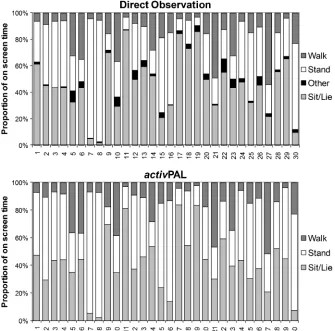
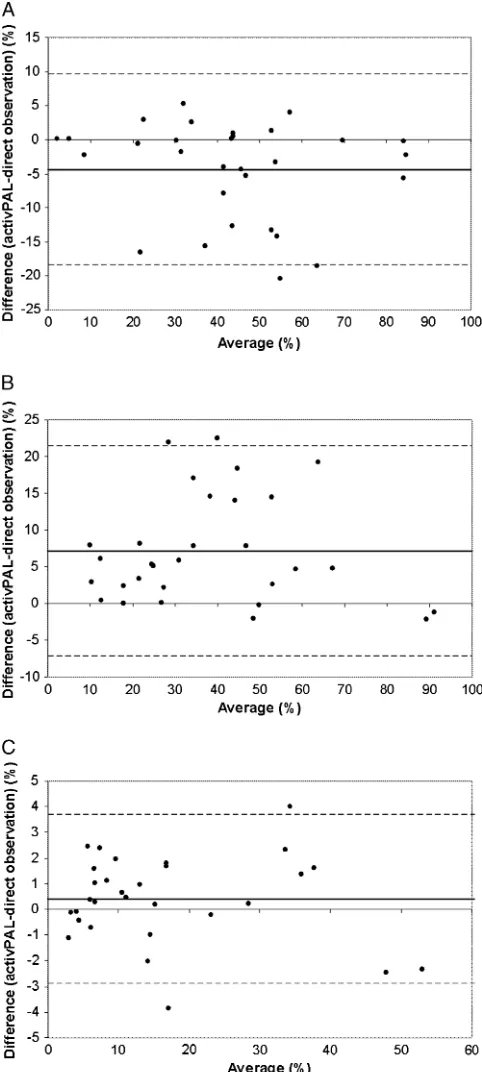
Analyzed on an individual child basis, the median on-screen time spent in eachactivPALioutput category was 43.5% (IQR = 30.2%–50.9%) for sit/lie, 41.2% (IQR = 26.0%–53.2%) for stand, and 12.2% (IQR = 7%–21.6%) for walk. The direct observation data and activPALi output for each child are represented graphically in Figure 1. The activPALi underestimated total time spent sitting (mean difference =j4.4%; pairedt-test, PG 0.01) and overesti-mated time standing (mean difference = 7.1%; pairedt-test, PG0.01). There was no difference in overall percent time categorized as ‘‘walk’’ (P= 0.2). Bland–Altman plots com-paring the direct observation data withactivPALioutput for each child are shown in Figure 2. The bias was not as-sociated with the amount of time detected in each category (r=j0.17,P= 0.4 andr=j0.03,P= 0.9 for ‘‘sit/lie’’ and ‘‘stand,’’ respectively).
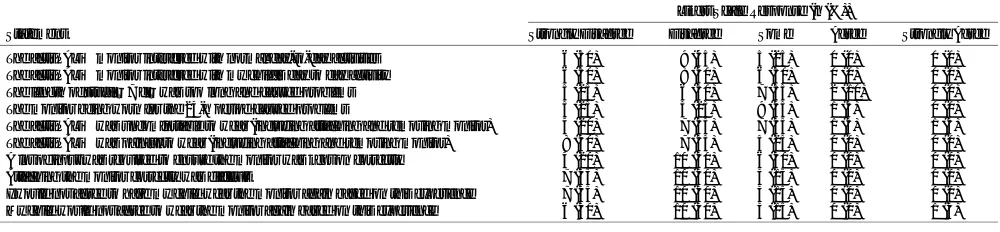
Validation ofactivPALi‘‘sit/lie’’.For individual chil-dren, the median sensitivity foractivPALisit/lie was 92.8%
(IQR = 76.1%–97.4%, minimum = 44.7%), specificity was 97.3% (IQR = 94.9%–99.2%, minimum = 88.3%), and PPV was 97.0% (IQR = 91.5%–99.1%, minimum = 83.8%). Results for all children combined are summarized in Table 1, both including and excluding observation seconds categorized as ‘‘other.’’ Excluding these ‘‘other’’ seconds, the median specific-ity increased to 99.5% (IQR = 98.9%–99.9%, minimum = 96%) and median PPV increased to 99.4% (IQR = 98.4%–99.8%, minimum = 91%).
Validation ofactivPALi‘‘stand’’.For individual chil-dren, the median sensitivity foractivPAListand was 91.8% (IQR = 82.6%–96.6%, minimum = 70.0%), specificity was 86.5% (IQR = 75.6%–91.7%, minimum = 55.9%), and PPV was 70.4% (IQR = 61.2%–83.5%, minimum = 40.2%). In the same format as described above, results for all children com-bined are summarized in Table 1. When ‘‘other’’ seconds were not included, the median specificity was 87.9% (IQR = 78.1%–94.0%, minimum = 56.4%) and median PPV was 72.4% (IQR = 63.7%–86.9%, minimum = 42.7%).
[image:4.651.159.494.380.711.2]Validation ofactivPALi ‘‘walk’’.For individual chil-dren, the median sensitivity foractivPALiwalk was 77.9% (IQR = 69.1%–86.9%, minimum = 46.9%), specificity was 96.5% (IQR = 93.7%–97.9%, minimum = 83.5%), and PPV was 73.4% (IQR = 68.0%–85.1%, minimum = 47.9%). As for sit/lie and stand, results for all children combined are
FIGURE 1—Proportion of on screen time according to direct observation (top) andactivPALioutput category (bottom). Each individual child is represented by avertical barat the same corresponding number (nos. 1–30) on thex-axis.
SPECIAL
C
OMMUNICA
summarized in Table 1. When ‘‘other’’ seconds were not in-cluded in calculations, the median specificity was 96.7% (IQR = 94.4%–98.1%, minimum = 84.8%) and median PPV was 77.6% (IQR = 69.2%–87.0%, minimum = 52.1%).
Direct observation ‘‘other’’.As stated previously, the activPALihas no unknown category for output, and there-fore, all data were categorized as sit/lie, stand, or walk. Because overall only a low total proportion of time was spent in ‘‘other’’ postures, their impact on sensitivity, specificity, and PPV was relatively small (Table 1). TheactivPALioutput for all chil-dren (n = 6) with 95% of the direct observation period in postures categorized as ‘‘other’’ (e.g., crawl, crouch, kneel up) demonstrated that ‘‘kneel up’’ was most often classified by the activPALias stand; and ‘‘crouch,’’ as sit/lie. Crawl was cat-egorized by a combination of stand and walk output and rarely by the output of sit/lie. The observed seconds that required a diagram to define were categorized as a combination of all three outputs, reflecting the heterogeneity of posture and ac-tivity comprising this group.
Practical utility.In total, with 20 children asked to wear the monitor for seven consecutive periods of 24 h, 86 h of monitoring was identified as missing according to parental log sheets (mean of 4.3 h per child during entire 7-d mea-surement period). These periods were accounted for by the total weekly times attributed by parental report to bath time or swimming, with the additional exception of one subject in whom the monitor was documented as having detached from the leg at night on three separate occasions. Monitor output identified a further 120 h of missing data (mean of 6 h per child), giving a total of 206 h of data loss. This repre-sented 6.1% of the potential maximum monitored time (3360 h)—equivalent to 10.3 h of missing data per partici-pant per week.
Responses to the five-point Likert scale statements are shown in Table 2. Overall, the responses supported the practicality of using theactivPALiin these preschool chil-dren. In addition, one parent reported that they had stopped using the overlying Tegaderm dressing because it was un-comfortable for their child.
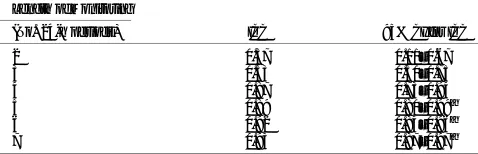
Reliability.Using GLM ANOVA with correction for mul-tiple comparisons, no significant differences in sit/lie time be-tween different days of the week were detected (P = 0.707). GLM ANOVA also assessed the differences in proportion of sit/lie time between subjects (r2(adj) = 69.39%,PG0.0001). Between-subject variability was far greater than within-subject variability. The mean T SD proportion of time (for each 24-h period) detected by activPALi as sit/lie was 75.8%T 6.9%. The mean within-subject SD for day-to-day variability in percent time spent ‘‘sit/lie’’ was 3.8% (range = 1.7%–6.5%).
ICC for sit/lie time (%) were calculated for monitoring periods of 2–7 d in duration (Table 3). The 95% confidence intervals of ICC Q0.8 for sit/lie time (%) were achieved with five or more days of monitoring (95% CI (ICC for 5 d) = 0.80–0.99).
DISCUSSION
[image:5.651.74.315.72.608.2]The present studies show that theactivPALican objec-tively capture posture and activity in preschool children
FIGURE 2—Agreement between proportion of time in activPALi
category and direct observation category. Bland–Altman plots are shown foractivPALiand direct observation sit/lie (A), stand (B), and walk (C). Each child is represented by a single data point on each graph. Mean bias is represented by asolid line; 95% limits of agree-ment,dashed lines.
SPECIAL
C
OMMUNICA
successfully. We found the practical utility of the device in free-living young children encouraging, and our data sup-port its use in this population.
Our results compare well with the adult activPALi val-idation study, which used direct observation (16), particu-larly considering children were filmed in their free-living nursery environment. The sensitivity foractivPALisit/lie reported by Grant et al. (16) was 99.4% (predictive value = 99.5%), that for standing was 84.9% (predictive value = 88%), and that for walking was 67.4% (predictive value = 63.7%) during the ‘‘activities of daily living’’ validation component of the study, in which adult subjects were asked to perform a set range of common activities and tasks (16). We found a wide range in degree of agreement betweenactivPALiand direct observation between individual children. Whereas for some children the activPALi monitor was excellent at detecting time spent in different postures, for a limited number of chil-dren, there was sometimes substantial mismatch; for example, when time spent sitting was misclassified as standing. Thus, it is important to calculate not only the overall sensitivity, specificity, and PPV for each monitor output category but also the range between children to provide an impression of vari-ation between individuals.
The most appropriate monitoring system for objectively measuring postural information in a free-living situation in young children will depend on several factors: the specific population, the intended setting for use, and the practical utility of the monitoring system itself. We wanted to inves-tigate the activPALi because of the likely potential limi-tations of multiunit monitors in free-living young children (22,25). Simple, lightweight, noncumbersome measuring systems that do not interrupt usual activity and can be worn continuously are likely to be preferable.
In the present study, we used direct observation as the criterion method with all postures and activity categorized
on a second-by-second basis. Although laborious, this en-abled a detailed account of activity during the observation period. Validation of activity monitors capable of detecting posture has largely been undertaken by documentation of posture and activity in real time by an observer or on video recordings, without the use of particular reference scales beyond simple definitions of; for example, sitting. Body po-sition is often summarized into limited categories that can generally be classified as ‘‘up’’ (walk or stand) and ‘‘down’’ (sit and lie), in order that outcomes such as the number of sit-to-stand transitions or time spent sitting can be quantified. However, as our results show, it may be important to be able to quantify a wider group of postures by direct observation during validation studies involving young children. The non–sit/lie, stand, or walk postures created the greatest chal-lenge during our validation. We grouped these postures under the global term ‘‘other,’’ representing those seconds identi-fied as crouch (squat), kneel up, crawl, and other (those that required a diagram to define) in one heterogeneous category. This category was considered necessary because certain pos-tures, for example, kneel up, could not, in our opinion, be placed comfortably within a definition of either sit or stand. However, by keeping this category separate, it meant a com-parison of a different total number of categories between the activPALi and direct observation. We therefore analyzed the data both including and excluding any direct observation data coded as ‘‘other.’’ Both were undertaken to reflect the influence this has on sensitivity, specificity, and PPV.
[image:6.651.73.579.79.164.2]There is currently little recognition of all these ‘‘in-between’’ postures (e.g., kneel up) and no consensus regarding their acceptable summary classification or the acceptability of error created by misclassification. However, by using detailed direct observation data, it will be possible to determine whether a single-unit monitor for posture detection can ever be capable of collecting the complete array of activities performed by TABLE 1. Results ofactivPALivalidation against direct observation.
True Positives (s) True Negatives (s) False Positives (s) False Negatives (s) Sensitivity (%) Specificity (%) PPV (%)
activPAL output (including all observation ‘‘other’’ seconds)
Sit/lie 39,257 50,970 1498 6025 86.7 97.1 96.3
Stand 31,297 53,687 9971 2795 91.8 84.3 75.8
Walk 12,329 78,998 3398 3025 80.3 95.9 78.4
activPAL output (excluding all observation ‘‘other’’ seconds)
Sit/lie 39,257 49,062 386 6025 86.7 99.2 99.0
Stand 31,297 52,110 8528 2795 91.8 85.9 78.6
Walk 12,329 76,443 2933 3025 80.3 96.3 80.8
Shown are total combined seconds in eachactivPAL output category and comparison with observation data, for all children in the validation study.
TABLE 2. Practical utility questionnaire parental responses.
Likert Scale Response (n(%))
Statement Strongly Disagree Disagree Some Agree Strongly Agree
TheactivPALimonitor interfered with normal day-to-day activities 6 (30) 9 (45) 5 (25) 0 (0) 0 (0) TheactivPALimonitor interfered with my child’s day to day activity 6 (30) 8 (40) 6 (30) 0 (0) 0 (0) The length of study—7 d—was too long and caused problems 5 (25) 6 (30) 7 (35) 2 (10) 0 (0) The monitor being worn for the 24-h period caused problems 5 (25) 5 (25) 9 (45) 1 (5) 0 (0) TheactivPALiwas uncomfortable to wear (including attaching and removing monitor) 4 (20) 7 (35) 7 (35) 1 (5) 1 (5) TheactivPALiwas painful to wear (including attaching and removing monitor) 8 (40) 7 (35) 5 (25) 0 (0) 0 (0) A lot of input was required to ensure the monitor was kept on correctly 4 (20) 10 (50) 6 (30) 0 (0) 0 (0) Attaching the monitor correctly was difficult 7 (35) 10 (50) 3 (15) 0 (0) 0 (0) I would not agree to have my child wear the monitor again based on this experience 7 (35) 10 (50) 3 (15) 0 (0) 0 (0) My child would not agree to wear the monitor again based on this experience 6 (30) 10 (50) 3 (15) 0 (0) 1 (5)
SPECIAL
C
OMMUNICA
[image:6.651.78.578.626.742.2]young children or indeed whether it is necessary or mean-ingful to do so. Thus, we suggest that for validation studies, particularly in children, it is important to include direct ob-servation strategies that have the potential to capture unusual body positions irrespective of the duration that this posture may be sustained for.
Where postural misclassifications between monitor output categories (e.g., sit and stand) occurred during validation in the current study, they were often as a result of sitting being identified by theactivPALi as standing. This occurred in particular when children sat at the front of their chair with thighs hanging down and knees toward the floor, or over the side of a chair with one leg in a ‘‘normal’’ sitting position with thigh horizontal, knee bent at 90-, and foot on floor and the other leg over the side of the chair with thigh hanging down. This resulted in an overestimation of activPALi defined standing time and underestimation of sitting. Occasionally, standing was misidentified by theactivPALias sitting, for example, if a child stood with one leg straight and one bent at the knee with the foot resting on top of the other foot, thereby altering thigh inclination.
Apart from theactivPALi, few other single-unit posture detecting activity monitors have been described in the litera-ture to date (5,21,27), and there are no published validation studies involving young children for single-unit systems. Multiunit devices are more common with several multiunit accelerometer-based systems reported in the literature (1,2, 6–8,11,22–24,28,30,37–40), often published with impressive validity statistics undertaken in controlled laboratory settings. Such monitors have largely been validated in adult subjects, although several have been validated in school age children (6,22). Robust field validation studies in free-living subjects are commonly lacking, particularly in childhood. A balance exists between the acceptability and utility of activity moni-tors capable of capturing posture against the ability to dis-criminate postures accurately. Increasing the number and site of body sensors generally increases the ability to detect pos-tural allocation accurately and increases the number of cate-gories that can be identified.
The choice of the child’s usual nursery environment and undertaking usual nursery activity in the present validation study was an attempt to simulate usual activity. This approach
has been considered useful in previous accelerometry vali-dations in nursery (32). Interestingly, the overall average pro-portion of time spent sedentary in the sample of children in the validation component of the present study was similar to larger studies, which have measured total time spent sedentary using accelerometers and activity monitors in the free-living envi-ronment (26,33), and to the practical utility component of this study (although notably, we also included nighttime data). We were encouraged by the parental responses to the questions about the practical utility and of the relatively low degree of data loss. It was recognized that periods of data loss in the practical utility study often reflected the parent/guardian for-getting to reattach monitor after removal for bath time.
There are several limitations to this study. Children do not spend all their time at the nursery, and therefore, it is possible that the range and characteristics of movement undertaken beyond the nursery environment differ to those observed within the validation study. In the reliability study, children wore the monitors during a single 7-d period, and therefore although this allowed day-to-day variability in activPALi
output to be determined, it could not give any information about week-to-week variability that would be important when comparing interventions longitudinally over time. Further-more, the proportion of time detected as ‘‘sit/lie’’ was calcu-lated during 24-h periods and an assessment of awake time (e.g., according to parental diary) would have been a useful addition to determine awake time sedentary behavior and activity patterns.
In summary, the results of the present studies suggest that theactivPALihas acceptable validity, practical utility, and reliability for the measurement of posture allocation in pre-school children. The activPALican also measure related concepts such as breaks in sedentary time and posture tran-sitions, but these were beyond the scope of this article. Al-though variation in posture allocation seems to be important to the risk of obesity and cardiometabolic disease in adults, it is not yet clear to what extent investigating posture alloca-tion objectively in early childhood will be helpful in under-standing the development of adverse health outcomes in later life. However, such investigations in the future will only be possible with the advent of valid, practical, and reliable single-unit measurement systems.
One of the authors (Malcolm Granat) is a coinventor of the
activPALiphysical activity monitor and a director of PAL Technol-ogies Ltd. However, he was not involved in data collection or the statistical analysis of the results.
The remaining authors declare no competing interests. The authors did not receive funding for this study.
The authors thank Dr. David Young, Department of Statistics and Modelling Science, University of Strathclyde, for his statistical advice.
The results of this study do not constitute endorsement by the American College of Sports Medicine.
REFERENCES
1. Aminian K, Robert P, Buchser EE, Rutschmann B, Hayoz D, Depairon M. Physical activity monitoring based on accelerometry:
[image:7.651.75.314.83.160.2]validation and comparison with video observation.Med Biol Eng Comput. 1999;37(3):304–8.
TABLE 3. ICC foractivPALi‘‘sit/lie’’ output according to duration of monitoring. Length of Monitoring
(No. 24-h periods) ICC 95% CI for ICC
2 0.37 0.11–0.67
3 0.53 0.30–0.75
4 0.87 0.73–0.94
5 0.89 0.80–0.99a
6 0.92 0.84–0.96a
7 0.93 0.87–0.97a
aICC ofQ0.8, usually interpreted as an acceptable reliability in accelerometry studies.
SPECIAL
C
OMMUNICA
2. Arvidsson D, Slinde F, Nordenson A, Larsson S, Hulthen L. Validity of the ActiReg system in assessing energy requirement in chronic obstructive pulmonary disease patients.Clin Nutr. 2006; 25(1):68–74.
3. Bailey RC, Olson J, Pepper SL, Porszasz J, Barstow TJ, Cooper DM. The level and tempo of children’s physical activities: an ob-servational study.Med Sci Sports Exerc. 1995;27(7):1033–41. 4. Bland JM, Altman DG. Statistical methods for assessing
agree-ment between two methods of clinical measureagree-ment. Lancet. 1986;1(8476):307–10.
5. Bliley KE, Schwab DJ, Zahn SK, et al. Design of posture and activity detector (PAD).Conf Proc IEEE Eng Med Biol Soc. 2007; 2659–63.
6. Busser HJ, Ott J, van Lummel RC, Uiterwaal M, Blank R. Am-bulatory monitoring of children’s activity.Med Eng Phys. 1997; 19(5):440–5.
7. Bussmann JB, Martens WL, Tulen JH, Schasfoort FC, van den Berg-Emons HJ, Stam HJ. Measuring daily behavior using am-bulatory accelerometry: the Activity Monitor.Behav Res Methods Instrum Comput. 2001;33(3):349–56.
8. Bussmann JB, Tulen JH, van Herel EC, Stam HJ. Quantification of physical activities by means of ambulatory accelerometry: a vali-dation study.Psychophysiology. 1998;35(5):488–96.
9. Cole TJ, Freeman JV, Preece MA. Body mass index reference curves for the UK, 1990.Arch Dis Child. 1995;73(1):25–9. 10. de Onis M, Blossner M, Borghi E. Global prevalence and trends of
overweight and obesity among preschool children.Am J Clin Nutr. 2010;92(5):1257–64.
11. Foerster F, Fahrenberg J. Motion pattern and posture: correctly assessed by calibrated accelerometers.Behav Res Methods Instrum Comput. 2000;32(3):450–7.
12. Ford ES, Kohl HW III, Mokdad AH, Ajani UA. Sedentary be-havior, physical activity, and the metabolic syndrome among U.S. adults.Obes Res. 2005;13(3):608–14.
13. Franks PW, Hanson RL, Knowler WC, Sievers ML, Bennett PH, Looker HC. Childhood obesity, other cardiovascular risk factors, and premature death.N Engl J Med. 2010;362(6):485–93. 14. Freeman JV, Cole TJ, Chinn S, Jones PR, White EM, Preece MA.
Cross sectional stature and weight reference curves for the UK, 1990.Arch Dis Child. 1995;73(1):17–24.
15. Godfrey A, Culhane KM, Lyons GM. Comparison of the perfor-mance of theactivPAL professional physical activity logger to a discrete accelerometer-based activity monitor.Med Eng Phys. 2007; 29(8):930–4.
16. Grant PM, Ryan CG, Tigbe WW, Granat MH. The validation of a novel activity monitor in the measurement of posture and motion during everyday activities.Br J Sports Med. 2006;40(12):992–7. 17. Guo SS, Wu W, Chumlea WC, Roche AF. Predicting overweight
and obesity in adulthood from body mass index values in child-hood and adolescence.Am J Clin Nutr. 2002;76(3):653–8. 18. Healy GN, Matthews CE, Dunstan DW, Winkler EA, Owen N.
Sedentary time and cardio-metabolic biomarkers in US adults: NHANES 2003–06.Eur Heart J. 2011;32(5):590–7.
19. Hu FB, Li TY, Colditz GA, Willett WC, Manson JE. Television watching and other sedentary behaviors in relation to risk of obe-sity and type 2 diabetes mellitus in women.JAMA. 2003;289(14): 1785–91.
20. Jackson DM, Djafarian K, Stewart J, Speakman JR. Increased television viewing is associated with elevated body fatness but not with lower total energy expenditure in children.Am J Clin Nutr. 2009;89(4):1031–6.
21. Langer D, Gosselink R, Sena R, Burtin C, Decramer M, Troosters T. Validation of two activity monitors in patients with COPD. Thorax. 2009;64(7):641–2.
22. Lanningham-Foster LM, Jensen TB, McCrady SK, Nysse LJ, Foster RC, Levine JA. Laboratory measurement of posture allo-cation and physical activity in children. Med Sci Sports Exerc. 2005;37(10):1800–5.
23. Levine JA, Lanningham-Foster LM, McCrady SK, et al. Interin-dividual variation in posture allocation: possible role in human obesity.Science. 2005;307(5709):584–6.
24. Lyons GM, Culhane KM, Hilton D, Grace PA, Lyons D. A de-scription of an accelerometer-based mobility monitoring technique. Med Eng Phys. 2005;27(6):497–504.
25. Mackey AH, Hewart P, Walt SE, Stott NS. The sensitivity and specificity of an activity monitor in detecting functional activities in young people with cerebral palsy. Arch Phys Med Rehabil. 2009;90(8):1396–401.
26. Martin A, McNeill M, Penpraze V, et al. Objective measurement of habitual sedentary behavior in pre-school children: comparison of activPAL with ActiGraph monitor. Pediatr Exerc Sci. 2011; 23(4):468–76.
27. Mathie MJ, Celler BG, Lovell NH, Coster AC. Classification of basic daily movements using a triaxial accelerometer. Med Biol Eng Comput. 2004;42(5):679–87.
28. Najafi B, Aminian K, Paraschiv-Ionescu A, Loew F, Bula CJ, Robert P. Ambulatory system for human motion analysis using a kinematic sensor: monitoring of daily physical activity in the el-derly.IEEE Trans Biomed Eng. 2003;50(6):711–23.
29. Owen CG, Whincup PH, Orfei L, et al. Is body mass index before middle age related to coronary heart disease risk in later life? Evidence from observational studies. Int J Obes (Lond). 2009; 33(8):866–77.
30. Paraschiv-Ionescu A, Buchser EE, Rutschmann B, Najafi B, Aminian K. Ambulatory system for the quantitative and qualitative analysis of gait and posture in chronic pain patients treated with spinal cord stimulation.Gait Posture. 2004;20(2):113–25. 31. Penpraze V, Reilly JJ, Maclean C, et al. Monitoring of physical
activity in young children: how much is enough?Pediatr Exerc Sci. 2006;18:483–91.
32. Reilly JJ, Coyle J, Kelly L, Burke G, Grant S, Paton JY. An ob-jective method for measurement of sedentary behavior in 3- to 4-year olds.Obes Res. 2003;11(10):1155–8.
33. Reilly JJ, Jackson DM, Montgomery C, et al. Total energy ex-penditure and physical activity in young Scottish children: mixed longitudinal study.Lancet. 2004;363(9404):211–2.
34. Ryan CG, Grant PM, Tigbe WW, Granat MH. The validity and reliability of a novel activity monitor as a measure of walking.Br J Sports Med. 2006;40(9):779–84.
35. Steinberger J, Moran A, Hong CP, Jacobs DR Jr, Sinaiko AR. Adiposity in childhood predicts obesity and insulin resistance in young adulthood.J Pediatr. 2001;138(4):469–73.
36. Trost SG, McIver KL, Pate RR. Conducting accelerometer-based activity assessments in field-based research.Med Sci Sports Exerc. 2005;37(suppl 11):S531–43.
37. Uiterwaal M, Glerum EB, Busser HJ, van Lummel RC. Ambula-tory monitoring of physical activity in working situations, a vali-dation study.J Med Eng Technol. 1998;22(4):168–72.
38. van den Berg-Emons HJ, Bussmann JB, Balk AH, Stam HJ. Validity of ambulatory accelerometry to quantify physical activity in heart failure.Scand J Rehabil Med. 2000;32(4):187–92. 39. White DK, Wagenaar RC, Ellis T. Monitoring activity in
individ-uals with Parkinson disease: a validity study.J Neurol Phys Ther. 2006;30(1):12–21.
40. Zhang K, Werner P, Sun M, Pi-Sunyer FX, Boozer CN. Mea-surement of human daily physical activity.Obes Res. 2003;11(1): 33–40.