By
Simon Shengyuan Yang
GradDip Agr Sci (Hons) University of Tasmania
Submitted
infulftlment of the requirements for the degree of
Doctor of Philosophy
University of Tasmania
Hobart
DISCLAIMER
This thesis contains no material which has been accepted for the award of any other degree or diploma in any other university and to the best of my knowledge, contains no copy or paraphrase of material previously published or written by any other person except where due reference is made in the text of the thesis
Date
Authority of Access
This thesis is not to be made available for loan or copying for two years following the date this statement was signed. Following that time the thesis may be made available for loan and limited copying in accordance with the Copyright Act 1968
ABSTRACT
The project investigated potato tuber initiation in hydroponics and was initiated by
Sunrise Seed Potatoes Pty Ltd, a company specialising in potato minituber production in Tasmania, Australia. The initial focus of the project was to describe in
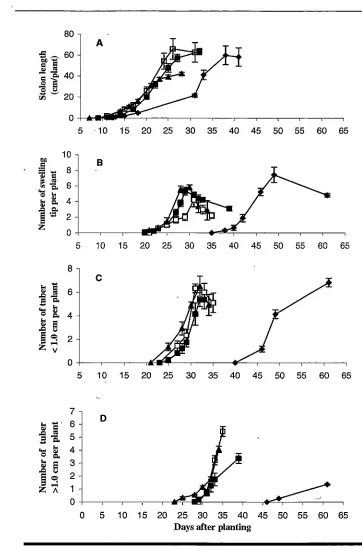
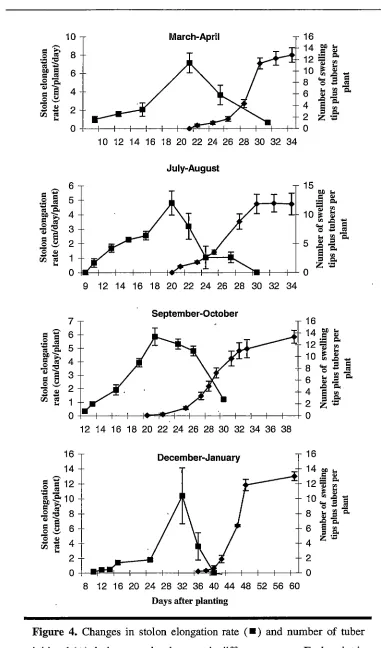
detail the rate and timing of stolon and tuber development in nutrient film technique (NFf) hydroponics. A developmental scale consisting of five stages, each based on characteristic morphological changes, was developed to enable quantitative evaluation of the effects of experimental treatments on tuberization. Nutrient uptake
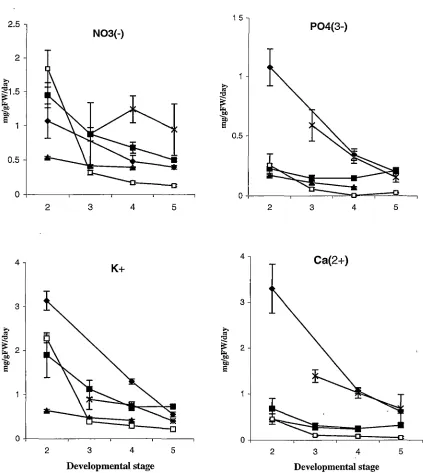
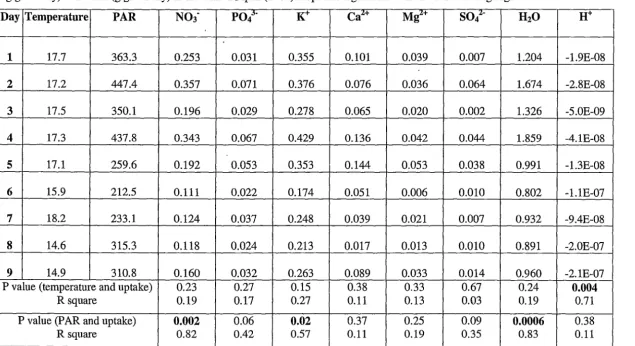
rate at plant development stages was studied in different seasons. Uptake rate of water and nutrient elements generally displayed a decline from early to late stage regardless of season. Uptake rate of H+ displayed significant variation between seasons and did not follow the characteristic decline.
A novel system for frequent and accurate non-destructive assessment of stolon and tuber growth using webcams and image analysis software was developed and validated. Stolon and tubers displayed a diurnal growth pattern with rapid elongation commencing mid to late afternoon and ceasing early morning, followed by a period of slower growth rate often leading to cessation of growth or shrinkage
at around midday. Growth rate varied under different seasonal and environmental conditions and between stolons of the same plant. The initiation of stolon tip
swelling always occurred in the late afternoon or early evening. This was the first report of the precise timing of the commencement of stolon swelling in potatoes. The timing of swelling initiation coincided with the timing of the rapid growth of
stolons and tubers in the diurnal cycle.
II
commenced in a hydroponic crop. Stolon turgor at the period of rapid elongation was decreased by adding polyethylene glycol (PEG) to the nutrient solution or increased by replacing the nutrient solution with distilled water. Rate of tuber initiation was decreased in the PEG treatment and increased in the distilled water treatment compared with standard nutrient solution.
This study demonstrated that NFT hydroponics is a valuable system for the whole plant study of potato tuber initiation. The system facilitated non-destructive
assessment of stolon and tuber development and also the compact size of the experimental system enabled treatments such as photoperiod and temperature to be
applied. Characteristic stolon diurnal growth patterns were documented for the first time using the NFT hydroponic system, and this permitted the identification of the
ACKNOWLEDGEMENTS
Firstly I would like to sincerely thank my supervisor, Dr Philip Brown, for his support and guidance over the duration of the project.
This project was supported by Australian Research Council, Sunrise Seed
Potatoes and Wrightson Seeds. I would like to make special mention to Andrew Baker (Manager of Sunrise Seed Potato) for providing the hydroponic system and
the original tissue cultured plantlets for subculture.
Thanks to Dr Stephen Wilson, Lecturer in Horticultural Science at the University
of Tasmania, my honours_ supervisor, who provided many helpful ideas in this project. Dr Alistair Gracie and Dr Suzanne Morris helped me on writing thesis and provided many good ideas.
Mr Bill Peterson provided me with heaps of assistance in development of experimental methodology, especially for establishing· the webcam monitoring
system.
, Finally I would like to thank my family and my friends for their continual support. Thanks to my wife, Wendy Yang, who has to stay at home to look after my three children to create a comfortable environment for my study.
IV
ABBREVIATIONS
Abbreviations and symbols are defined when first used in the text. The following
list covers those most commonly used and notes variations used in papers referred
to in the literature review.
ABA abscisic acid
AGPase ADP glucose pyrophosphorylase
CCC
chlorocholine chlorideCHO
carbohydratesGA gibberellin
IAA indoleacetic acid
JA jasmonic acid
LD long day
LM laser micrometer
LVDT linear voltage displacement transducer
NFT nutrient flim technique
PAR photosynthetically active radiation
PBZ paclobutrazol
PEG ployethylene glycol
RH
relative humiditySD short day
SE standard error
SS sucrose synthase
CONTENTS
Abstract Acknowledgements Abbreviations Contents I IIIIV
v
Chapter 1 General Introduction ... 1
Project Background 1
Literature Review Introduction
Key Events in Tuberization
Morphological and Anatomical Changes Biochemical Changes
Factors Influencing Tuberization Environmental Factors Metabolites
Regulation of Tuberization
Research Techniques Used in Tuberization Studies Conclusion 4 4 4 5 6 9 9 16 23 27
29
Chapter 2 General Materials and Methods ... 30
Outline 30
Introduction
Diurnal Measurement of Stolon and Tuber Growth Statistics and Computing
39 40
Chapter 3 Tuber Formation in NFT Hydroponics... 41
Introduction 41
Literature Review
Morphology of Stolon and Tuber Development
Developmental Stages
42 42 47
Chapter 3A Potato Morphology and Developmental Stages ... 50
Outline 50
Introduction 50
Methods and Materials 53
Results 54
Description of Stolon, Tuber and Shoot Morphology 54
Developmental Stages 63
Discussion 68
Chapter 3B Timing and Rate of Stolon and Tuber Development ... 71
Outline 71
Introduction
Methods and Materials
Results
Timing of Key Events (Plant Level)
Timing of Stages (Crop Level) Stolon Elongation Rate Discussion 71 73 74 74 77 78 82
Chapter 4 Nutrient Uptake and Tuberization ... 84
Outline 84
Introduction Literature Review
Nutrient Elements in Potato Tissue Nutrient and Tuberization
84 86 86 88
Water Uptake and Tuberization Methods and Materials
Results
Uptake Rate at Different Developmental Stages Uptake Rate and Plant Size
Nutrient Uptake and Water Uptake,
Nutrient Uptake in Paclobutrazol Treatment
Environmental Factors and Uptake Rate Discussion 91 93 96 96 103 106 108 109 111
Chapter S Water, Growth and Tuber Initiation ... 114
Outline 114
Introduction Literature Review
Water Availa~ility and Crop Yield Water Relations and Growth Plant Diurnal Growth Pattern
Diurnal Pattern in Plant Water Status
115 115 115 118 119 120
Chapter SA Diurnal Pattern of Stolon and Tuber Development ... 122
Outline 122
Introduction f 22
Methods and Materials 124
Results 126
Pattern of Stolon Elongation 126
Pattern of Tuber Expansion 131
Timing of Swelling 135
Discussion 137
Chapter SB Diurnal Pattern of Water Relations ... 140 Outline
Introduction
Methods and Materials Results
VIII
Water Potential in Leaves, Stolons an~ Tubers 146
Leaf Water Potential 14 7
Stolon Water Status 149
Water Status in Stolons, Swelling Tips and Tubers 153
Discussion 156
Chapter 6 Turgor and Tuber Initiation... 159
Outline 159
Introduction 159
Literature Review 160
Plant Growth and Turgor Potential 160
Manipulation of Plant Water Status in Hydroponics 163
Methods and Materials 164
Results 167
Turgor and Stolon Elongation 167
Turgor and Tuber Expansion 167
Turgor in Stolons, Swelling Tips and Mini-tubers 168 Turgor in Branching stolons of the Same Main Stolon 169
Turgor During Tuberization 170
Effect of Changes in Nutrient Solution Osmotic Potential 171
Discussion 175
Chapter 7 General Discussion ... 178
CHAPTER 1
GENERAL INTRODUCTION
PROJECT BACKGROUND
Potato (Solanum tuberosum L.) is the world's fourth most important crop after the cereals maize, rice, and wheat. With high productivity per unit area, a short growing season and high market prices, potatoes generate higher returns per hectare than most other food crops (Beukema and van der Zaag, 1990). The importance of the crop is reflected in the volume of research published on all aspects of potato biology, including the discipline of physiology. A number of texts (e.g. Li, 1985; Harris, 1992; Ewing, 1997) and review. papers (e.g. Wareing, 1983; Melis and Van Staden, 1984; Menzel, 1985a, b; O'Brien et al., 1998) have summarized much of the research underpinning our understanding of potato plant growth and development. One key aspect of development, the initiation of tuber development on stolons, has proved difficult to investigate in intact plants because the below-ground growth and development of tubers are difficult to monitor under normal conditions of culture without destruction of the entire plant. This has constituted a major obstacle to research.
Different methods have been developed for examining the physiology of tuberization as alternatives to using field-grown plants. These include the zone-separation method, where the zone of stolon and tuber formation is separated from the soil and roots (Wurr, 1977; Krauss, 1985; Stroik and Van Voorst, 1986), cuttings (e.g. Gregory, 1956; Chapman, 1958), in vitro culture (e.g. Palmer and Smith, 1969a, b, 1970; Perl et al., 1991), solution culture (Stroik and Van Voorst, 1986; Wan et al., 1994) and
zone-Chapter 1 General Introduction 2
separation and solution culture methods permit examination of the physiology of tuberization within whole plants, but the operation of both is time-consuming and achieving adequate replication in experiments can be problematic. Cuttings and in vitro techniques have therefore been the most widely used systems for examining the
physiology of tuberization. These techniques allow detailed study of processes occurring at the site of tuber formation, but limit capacity to examine correlative events at the whole plant level.
The introduction of large-scale NFT hydroponic systems for commercial minituber production has provided an alternative method for studying potato physiology from whole plant level. The NFT hydroponic systems have been described by Wheeler et al. (1990), and can support large numbers of plants in relatively cheap and easy to operate facilities. NFT systems provide ease of access for tissue sampling for physiological and anatomical studies and are therefore ideal for examination of tuber initiation at the whole plant and organ levels.
This project investigated aspects of tuber initiation in potato using a modified NFT hydroponic system. The project was initiated by a commercial hydroponic potato minituber production business, Sunrise Seed Potatoes Pty Ltd., and was funded through an Australian Research Council Linkage Grant. Sunrise Seed Potatoes sought to increase the efficiency of minituber production through improved understanding of the physiology of tuber initiation in potatoes.
Minituber production using hydroponics, along with a number of other novel minituber production systems, has become an important component of seed potato production in developed countries in recent years. The introduction of these new technologies has decreased the number of field generations required for seed production, and reduced exposure of seed tubers to pathogens, thus improving seed quality. Minitubers are relatively easy to manage (Hussey and Stacey, 1981; Espinoza et al., 1984) and can serve as an initial source of pre-basic seed stock for the ce1tified
As with all new technologies, opportunities exist to improve productivity in the NFT hydroponic minituber system. The company initiating this project was particularly interested in investigating links between nutrient uptake and tuber formation, and seasonal variations in minituber yield. An improved understanding of regulation of tuber formation in hydroponic techniques opens opportunities for manipulation of the NFT production system to increase minituber yield.
Chapter 1 General Introduction 4
LITERATURE REVIEW
Introduction
The importance of potato as a world food crop, and of tubers as the harvestable component of the plant, has ensured that a large amount of research activity has been undertaken on tuber formation. Although a complete understanding of the processes involved in tuberization has not yet been obtained, a very large body of published data exists and many aspects of tuber initiation and development have been described. In reviewing the body of literature for this project, particular attention has been paid to factors influencing tuberization, regulation of tuberization and systems used to study tuberization. This review provided an overview of literature relevant to the study of tuberization in intact plants in hydroponics. Shorter reviews of literature specific to experimental approaches used in the study have been included at the start of each research chapter.
Key Events in Tuberization
Morphological and Anatomical Changes
The first observable sign of tuberization is swelling of the stolon in the subapical region (Xu et al., 1998a). Tubers are defined as a swelling stolon tip that is more than twice the diameter of the subtending stolon (O'Brien et al., 1998). The tiny swellings are sometimes referred to as tuber initials (Ewing, 1997).
The earliest anatomical change involved in the transition of a stolon to a tuber has been reported to be the reorientation of the microtubule cytoskeleton in cell walls (Fujino et al., 1995; Sane et al., 1996). The cell wall cytoskeleton reoriented by 90° from the longitudinal axis of the stolon permitting expansion of cells in the lateral plane resulting in swelling of the subapical region of the stolon. After reorientation, other anatomical changes occurred including cell enlargement, decreased cell division in a longitudinal direction, and an increase in cell division and cell enlargement in a lateral plane to produce tuber growth (Cutter, 1992; Koda and Okazawa, 1983; Duncan and Ewing, 1984).
The initial increase in stolon diameter at tuber initiation is most likely a result of cell enlargement, with many authors concluding that cell enlargement precedes an increase in cell division (Booth, 1963; Koda and Okazawa, 1983a; Cutter, 1992; Fujino et al., 1995; Xu et al., 1998a; Vreugdenhil et al., 1999). In longitudinal section of swelling stolon there was little evidence of cell division (Booth, 1963; Koda and Okazawa, 1983), and the average number of cells across the pith region of the stolon behind newly initiated tubers was almost the same as in the region of the tuber itself (Booth, 1963). An
in vitro
study of early tuber initiation using excised stolon nodes indicated that for at least the first 10 days tuber enlarge}Ilent was due to cell expansion in cortex and pith, not to cell division in these tissues (Peterson and Barker, 1979).Chapter 1 General Introduction 6
division was unlikely to be associated with swelling of the stolon as the plane of division was transverse only, leading to stolon elongation. Following the initiation of swelling, the transverse cell division in the apex stopped, and cells in the subapical region enlarged. This enlargement preceded cell division in the swelling region during the initiation of radial tuber growth.
After swelling, both cell division and expansion continued until tubers reached their final size in both in vivo and in vitro conditions (Xu et al., 1998a). The relative importance of cell division and expansion to tuber growth was investigated and the rate of cell division was greater and contributed more to the increase in tuber size than that of cell expansion (Liu and Xie, 2001).
Not all tuber initials go on to develop into tubers. Some are resorbed. Tubers that are not resorbed are said to have been 'set' (Ewing, 1997). In the fullest sense tuberization is not yet completed after tuber set. After tuber set, some tubers remain small while others on the same plant continue to grow till mature (Ewing, 1997).
While a characteristic sequence of morphological changes occur in all stolons as they initiate tuber growth, tuberization is more complicated when studied at the whole plant level. At the plant or crop level, there is a remarkable asynchrony in events related to tuberization. Although the induction to tuberization changes the behavior and physiology of the whole plant, not all potential tuber sites are similarly and simultaneously directed towards the formation of a large and mature tuber (Struik et al., 1999).
Biochemical Changes
sucrose break down pathway (Ross et al., 1994) and changes in hormone levels (Koda and Okazawa, 1983; Xu et al., 1998b).
Starch ~
The appearance of starch has been correlated with the onset of tuber initiation (Lovell and Booth, 1967), with the timing of starch synthesis preceding cell expansion (Hannapel, 1991). Although starch has been found at low concentrations in non-swelling stolon tips, a rapid increase in starch concentration is observed immediately after tuber initiation (Hawker et al., 1979). The percentage of starch in the dry matter increased rapidly during early tuber growth and then either stabilized or increased at a slower rate (Snyder et al., 1977). Rapid starch accumulation coincided with the reorientation of the cortical microtubules and altered orientation of cell division at the onset of tuberization (Sanz et al., 1996; Xu et al., 1998a).
Pata tin
Patatin is a major soluble tuber-protein (Racusen and Foote, 1980; Paiva et al., 1983). Patatin in potato plants is usually restricted to tubers and stolons associated with developing tubers (Paiva et al., 1983; Rosahl et al., 1987; Rocha-Sosa et al., 1989). Patatin has been reported to be involved in tuberization (Paiva et al., 1983; Park et al., 1985) as it is absent in stolon tips from non-induced plants, but rapidly increases during the first stages of tuberization. Park et al. (1985) considered patatin as a reliable marker for the molecular events leading to tuberization, but a role for patatin in tuber induction has not been identified.
Enzymes
Chapter 1 General Introduction 8
stolons, particularly in the sub-apical region, just prior to any visible swelling, but decreased 10 fold on tuberization. It is well established that invertase activity is normally high in rapidly elongating tissues (Blanc, 1983), whereas sucrose synthase activity is high in developing tubers (Pressey, 1969). The changes in carbohydrate metabolism have only been observed after tuber initiation has commenced, so it is apparent that other factors are inyolved in the regulation of tuberization.
Hormones
Hormone levels and activities change drastically during tuber initiation. Gibberellin (GA) levels and activities in both aboveground and underground parts are high in plants grown in non-inductive conditions (long days (LD), high temperature) but decrease in inductive conditions (short days (SD), low temperature) (Stmik et al., 1999). GA -levels in elongating stolons are higher than in swelling tips (Okazawa, 1967; Koda and Okazawa, 1983a). In an
in vitro
study, GA levels decreased in' auxillary buds prior to tuber initiation (Xu et al., 1998b ). Levels of the major cytokinin in potato leaves, zeatin riboside, were 29 % higher in extracts from induced than non-induced tissue (Mauk and Langille, 1978). Endogenous levels of indoleacetic acid (IAA) were low in stolons prior to tuberization but increased at the time of tuber initiation (Okazawa, 1967; Obata-Sasamoto and Suzuki, 1979a, b). Activities of IAA were elevated in plants subjected to tuber-inductive conditions (Okazawa, 1957; Palmer and Barker, 1972, 1973). The jasmonic acid (JA) related compounds 11-0H-JA and 12-0H-11-0H-JA in stolons of plants grown under SD conditions were about 10 times higher than that of plants grown under LD conditions (Yoshihara et al., 1996).Factors Influencing Tuberization
Tuberization has been shown to be influenced by a number of environmental factors, inorganic nutrient availability and plant growth substances. Short days (Garner and
'
Allard, 1923; Ewing 1981; Wheeler and Tibbitts, 1997; Machackova et al., 1998), low temperature (Gregory, 1965; Marinus and Bodlaender, 1975; Gopal et al., 1998) and high irradiance (Bodlaender, 1963; Menzel, 1985c; Demagante and Vander Zaag, 1988) promote tuber initiation and development. There are few published reports on effects of nutrients other than nitrogen on tuber initiation (O'Brien et al., 1998) and the prevailing view is that tuber initiation is delayed with high nitrogen supply (Krauss, 1985). Of the plant hormones, only GAs have consistently been shown to inhibit tuber initiation, while contradictory findings have been reported for all other growth substances.
Environmental Factors
Photoperiod
Photoperiod has a profound impact on tuber initiation and consequently tuber yield. Tuber initiation occurred earlier in SD (less than 12 hours) than in LD (more than 12 hours) (Gregory, 1956; Bodlaender, 1963; Ewing, 1990; Ewing and Struik, 1992). In SD, the partitioning of dry matter to tubers was greater and the active tuber growth period was reduced compared with LD.
The signal of photoperiod was perceived by the leaves (Gregory, 1965). Phytochrome has been implicated in the photoperiod signal, as far-red light partially reversed this process and night break lighting with far red light inhibited tuberization (Batusi and Ewing, 1982).
Chapter 1 General Introduction 10
earliness of tuber formation on in vitro as described for whole plants, conversely, it has been shown that LD either promoted (Hussey and Stacey, 1981; Wheeler et al., 1988) or had no effect (Hussey and Stacey, 1984) on tuberization. Other studies found that tuberization of some cultivars occurred under 24-hour light in vitro (Hussey and Stacey, 1981) and in vivo (Wheeler and Tibbitts, 1986, 1987; Wheeler et al., 1991).
Extension of photoperiod with a mixture of fluorescent and incandescent lamps, which gave a high level of irradiance, was found to be much less harmful to tuberization than that of only incandescent lamps, which gave a very low level of irradiance (Wheeler and Tibbitts, 1986; Lorenzen and Ewing, 1990). Using cool white fluorescent lamps, at photosynthetically active radiation (PAR) of 5 µmol m-2s-1, the inhibitory effect was
-slightly less than using incandescent lamps at the same irradiance (Wheeler and Tibbitts, 1986).
The responses of potato plants to photoperiod has also been shown to interact with temperature. Under SD, low day/high night temperatures tended to increase shoot branching, forming a vigorous shoot system, while high day/low night temperatures led to reduced shoot growth. The effect of the temperature treatments was much reduced under LD (Steward et al., 1981).
Temperature
The effect of temperature on growth and development in potato has been extensively studied and it can be generally concluded that a temperature range of 15 to 20 °C is optimal for tuber formation (Cutter, 1992; Burton, 1981; Ewing, 1981; Lorenzen and Lafta, 1996; Geigenberger et al., 1998). Tubers rarely form at temperatures above 30 °C (Menzel, 1985a). Borah and Milthorpe (1963) reported that temperature had a much greater effect on the number of tubers than on yield, hence, the main effect seemed to be on tuber initiation rather than on subsequent growth of tubers. High temperatures have, however, been shown to retard tuber growth as well as initiation (Menzel, 1982).
High temperature increased growth of aboveground parts, including intemode number, leaf number and dry matter yield of leaves and stems but reduced tuber yield (Ewing, 1981; Struik et al., 1989a, b, c; Wolf et al., 1990; Ezekiel and Bhargava, 1997) indicating a greater partitioning of resource to the above-ground portions of the plants. Consistent with this hypothesis, the dry weight ratio of shoot to underground part decreased from 3.7 at 20115 °C to 1.7 at 33/25 °C day/night temperature (Bensalim et al., 1998), even though total plant dry weight was not affected by temperature (after
6-weeks treatment period) (Wolf et al., 1990).
High soil temperature not only decreased the accumulation of dry matter in tubers, but also led to production of small, malformed tubers (Yamaguchi et al., 1964; Epstein, 1966; Reynolds and Ewing, 1989). Studies have also shown that high night temperature had a greater effect in reducing tuber yield than high day temperatures (Gregory, 1954; Went, 1957; Bodlaender, 1960, 1963; Menzel, 1982), while low night temperature reduced tu?erization or had no effect on tuber number in a range of cultivars and potato species (Alvey, 1965; Moreno, 1970; Roca-Pizzini, 1972).
Chapter 1 General Introduction 12
emergence under an 18-hour photoperiod at 17 °C. When temperature was raised, tuberization was delayed and did not occur at all under a 15-hour photoperiod at 27 °C (Werner, 1934). However, tuberization was induced at 27 °C or higher when N application was withheld from the nutrient solution and by reducing photoperiod to 12.5 hours or less (Werner, 1935). Gregory (1954) further investigated the relationship between photoperiod and temperature and found that tubers were initiated under SD over a wide range of day temperatures (17 - 30 °C), while in LD, the day temperature range was greatly restricted (17 °C) with the necessity for lower night temperatures (10 °C). This was similar to the results of Bodlaender (1960) and Went (1957) with different cultivars. More recently, the interaction of photoperiod and temperature has been shown by Vandam et al. (1996), who found that high temperatures gave lower absolute tuber growth rate, but photoperiod did not affect absolute tuber growth rate at lower temperature.
C02
Mingo-Castel et al. (1974; 1976) reported that high concentration of C02 stimulated tuberization of potato stolons cultured in vitro. Treating the potato root systems with high levels of C02 resulted in an increase in dry matter content as early as two days after treatment. When the treated plants were allowed to grow for a period of three to six weeks there was a large increase in tuberization (Arteca, 1996). C02 treated plants exhibited an increase in stolon length, number of tubers per stolon and overall dry weight (Arteca et al., 1979). C02 enrichment to potato plants of cultivar Denali in controlled environment rooms increased tuber yield when daylength was 12 hours, but increased shoot growth when daylength was either 12 hours or 24 hours (Wheeler et al., 1988). In a subsequent study it was shown that C02 applied to the root zone of
Water availability
Moist conditions favour stolon development (Clark, 1921). The effect of water stress on potato growth and development was reviewed by Van Loon (1981). Briefly, drought at early stages of crop growth delayed tuber initiation considerably but shortened the tuber formation period; drought at the beginning of tuberization resulted in a limited number of tubers per plant and more malformed tubers; drought during tuber bulking encouraged crop senescence. Struik and Van Voorst (1986) reported that the formation of tuber initials was greatly enhanced when the stolon medium was kept air dry during tuberization. This effect was more pronounced when uptake of water by the roots was sufficient. However, the large increase in the number of swollen stolon tips, caused by the dry stolon medium, did not result in more tubers. Field experiments on the effects of drought on tuber initiation and development have produced contradictory results (Ewing and Struik, 1992). Soil moisture stress during tuber initiation in pot experiments decreased tuber number but similar stress after tuber initiation did not affect tuber number per stem (MacKerron and Jefferies, 1986). Early drought stress also reduced tuber number in long-term field studies. The relationship between rainfall and tuber number was linear during the 12 seasons examined (Haverkort et al., 1990). Drought stress before stolon initiation reduced stolon and tuber numbers per stem in pot experiments but later drought stress had no effect (Haverkort et al., 1990).
Nutrient elements
The effects of nitrogen on tuber initiation have been extensively studied, while other element nutrients have received relatively little attention. The vast majority of published papers concerning the effects of nutrients have assessed their effects on potato tuber yield and generally not on key stages of plant development, such as tuberization.
Chapter 1 General Introduction 14
Yie, 1982). Tuberization was shown to be inhibited in solution culture by continuous supply of nitrogen but occurred when the nitrogen supply was temporarily interrupted (Krauss and Marschner, 1971, 1976, 1982). Repeated cycles of high nitrogen/ nitrogen withdrawal can result in the formation of chain tubers, demonstrating that nitrogen levels play an important role in the control of tuber formation (Krauss, 1985). Under non-inductive conditions such as LD or high temperatures, reduction in nitrogen levels did not result in tuberization, indicating that nitrogen is probably not involved in the induction of tuberization but it is able to repress tuber formation when conditions are favorable for induction (Menzel, 1985b). Nitrogen supply has also been shown to influence tuber size, with reduced total availability of nitrogen resulting in small microtubers in in vitro tuberization studies (Garner and Blake, 1989).
The source of nitrogen has also been shown to affect microtuberization. Ammonium supplied in ratio to nitrate greater than 2: 1 proved inhibitory effect to tuberization (Graner and Blake, 1989). Ammonium has also beert shown to inhibit tuberization of etiolated sprout sections cultured in vitro (Koda and Okazawa, 1983b).
High nitrogen supply to leaves did not prevent tuberization, even though the nitrogen content of the plants was comparable to those receiving high nitrogen through the roots (Sattelmacher and Marschner, 1979). Foliar application of N had less effect on ion uptake and distribution than soil/root applications. It is likely that the form of N supplied to plants influenced uptake of other nutrients (Baker and Maynard, 1972; Kirkby and Mengel, 1967). Nitrogen source influenced the mineral composition of potato tissues. A continuous supply of NH4+-N increased plant tissue P, while continuous supply of N03--N lowered plant tissue P (Davis et al., 1986). NH/-N also
decreased the concentrations of Ca and Mg in root and shoot tissue compared to plants grown on NH/ I N03- or N03--N (Davies et al., 1986). Hence, the effect of N on potato tuberization may be partially through its effects on other ions (e.g. Ca and Mg).
(1998) showed that K had no inhibitory effect on microtuber number in the early cultivar Kufri Ashoka when applied at levels less than 25 mM. At K levels higher than 25 mM the number of microtubers in the late cultivar Kufri Sindhuri decreased. Although the amount of tubers initiated was lower at the high K levels, total microtuber mass in both cultivars increased.
In an in vitro study, Balamani et al. (1986) reported tuber numbers of 0, 14, 71 and 865 when CaCh was applied at concentrations of 0.1, 0.3, 1and5 mM respectively. In addition to this the authors found that no tuberization occurred at 1 rnM MgCh alone, while MgCh together with CaCh promoted tuberization (Balamani et al., 1986). Therefore it was concluded that Ca2+ alone played a role in the tuberization, and that Mg2+ may not play a promotive role in tuberization, but Mg activates several
Ca-regulated enzymes such as protein kinases that promote tuberization (Balamani et al., 1986).
More recently, Paiva et al. (1997) reported that potato cultivar Baraka plantlets grown in nutrient solution did not tuberize at all when Ca was absent, but when Ca concentrations were less than 36 mg per litre symptoms of Ca deficiency were obtained and plants produced large numbers of small tubers.
Increased Mg supply from 0 to 0.5 rnM increased the dry weight of both aboveground and underground parts of potato plants (Fong and Ulrich, 1974). Plant leaf area and tuber dry weight increased with increased Mg concentrations up to 1 mM in solution, and then decreased with further increases in Mg concentrations (Cao and Tibbitts, 1992). When the Mg concentration was 1 mM in solution, the rate of C02 assimilation
was higher and the dark respiration rate was lower. The same authors also found that the different Mg treatments influenced accumulation of other minerals in leaves. Leaf concentration of Ca and Mn decreased with increased Mg supply and leaf K was lower at higher Mg treatments.
Chapter 1 General Introduction 16
tuber numbers per plant were 140, 40 and 2 respectively. This result suggests that the external pH might play an important role in potato induction and tuberization.
In the investigation into the role of sucrose in potato microtuber production in vitro, Khuri and Moorby (1995) measured the pH of base medium weekly. These authors found that the pH of the culture medium fell gradually and reached the lowest point in the fifth week, and microtuber began to form after 6 weeks. The pH was the lowest in 8 % sucrose media in the fifth week. Unfortunately these authors did not investigate the possible role of pH on microtuberization. It is possible that low pH triggers the early tuberization as in the experiment of Wan et al. (1994).
Metabolites
Carbohydrates
A number of early studies examined the relationship between endogenous carbohydrate (CHO) and potato tuberization. High endogenous CHO levels generally coincide with tuber initiation. Burt (1964) recorded an increase in soluble sugars in stolon tips and leaves as plants approached tuber initiation. Tuber initiation was associated with a three- to four-fold increase in the concentration of soluble sugars in the stolon tips and two-fold increase in leaves. Similar increases in CHO levels in stolon tips during tuberization have been reported by Hawker et al. (1979), Renz et al. (1993) and Misra et al. (1994). Stolon sucrose level was increased by antisensing ADP-Glc pyrophosphoryla~~ -to prevent stare~ formation, resulting in an increased number of tubers both per plant and per stolon (Muller-Rober et al., 1992).
The effects of exogenous application of sucrose on in vitro microtuberization have been widely studied. Most studies have shown that a high sucrose concentration (8
commonly accepted that sucrose_ is required for but does not induce tuber formation in potato (Menzel, 1985b; Ewing, 1990).
In intact potato plants, it has been concluded that assimilates may provide part of the stimuli for tuber formation (Ewing and Struik, 1992), probably in interaction with hormones (Vregdenhil and Helder, 1992).
Growth Substances "
Many growth substances including gibberellins, cytokinins, abscisic acid, ethylene and jasmonic acid have been reported to affect tuberization. The effects of these growth regulators on tuberization were reviewed by Napier and Venis (1990) and Ewing (1995).
Gibberellins
The most widely reported hormonal effect on tuberization is the inhibitory effect of the gibberellins (GAs). Decreased GA activity has been documented when leaves were exposed to tuber inductive SD (Okazawa, 1960; Racca and Tizio, 1968; Pont-Lezica, 1970; Railton and Wareing, 1973; Kumar and Wareing, 1974), and increased activity documented under non-inductive conditions, such as low irradiance (Woolley and Wareing, 1972), high temperature (Menzel, 1983) and continuous supply of nitrate in the hydroponic solution (Menzel, 1983).
Chapter 1 General Introduction 18
There have also been many studies on the effects of exogenous applications of GAs on tuberization. It has been consistently shown that application of GAs to shoots, or cuttings, delayed or inhibited tuber initiation but enhanced shoot growth (e.g. Lippert et al., 1958; Lovell and Booth, 1967; Moser and Hess, 1968; Kumar and Wareing,
1974; Menzel, 1980; Xu et al., 1998b), while GA applied to tubers or stolons inhibited tuber development and promoted the formation of new stolons (Krauss and Marschner, 1976; Mares et_al., 1981).
Chlorocholine Chloride and Paclobutrazol
Chlorocholine chloride chloroethyl-trimethylammonium chloride, usually refered to as CCC, is a GA inhibitor that when applied to foliage decreased the growth of stems, leaves and stolons, and promoted tuberization (Dyson, 1965; Dyson and Humphries, 1966; Gi~ford and Moorby, 1967; Dutta and Kaley, 1968). CCC treated potato plants also exhibited increased tuberization when grown under non tuber inductive LD conditions and CCC treatment completely reversed the inhibitory effect of high temperature on tuber production (Kumar and Wareing, 1974; Menzel, 1980). CCC has also been found to be effective in the stimulation of tuberization in vitro (Harvey et
al., 1991; Simko, 1991, 1993; Levy et al., 1993), and in increasing the number of
microtubers at the early stage of culturing (Yamamoto and Nakata, 1997).
Cytokinins
There are some contradictory reports on the effect of cytokinins on tuberization. Early papers suggested that cytokinins were the stimulus for tuberization (Madec, 1963; Courduroux, 1966), as they stimulated cell division (Skoog and Miller, 1957), inhibited cell elongation (Vanderhoef and Key, 1968), and promoted cell expansion (Scott and Liverman, 1956). The levels of the major cytokinin zeatin riboside in potato leaves have been shown to be 29 % higher in extracts from induced than non-induced tissue (Mauk 'and Langille, 1978; Arteca et al., 1980), and reached maximal levels in shoots and underground tissue 4 days and 6 days respectively after first exposure to tuber inducing conditions (Langille and Forsline, 1974; Forsline and Langille, 1975). However, when cytokinins were applied to growing stolons of non-induced plants, there was either no effect (Krauss and Marschner, 1976) or the stolon was converted into a leafy shoot (Kumar and Wareing, 1972). The conclusion drawn from in vitro studies has been that cytokinins induce tuberization (Palmer and Smith, 1969b, 1970; Smith and Palmer, 1970; Pelacho and Mingo-Castel, 1991).
Abscisic Acid
Abscisic acid (ABA) is generally considered as a tuberization promoter, because the application of this hormone has been found to increase potato tuber growth (El-antably et al., 1967; Menzel, 1980; Xu et al., 1998b), and promote tuberization in non-induced
tissue of intact plants (Menzel, 1980), leaf cuttings (Biran et al., 1974), isolated stem segments (Wareing, 1978) and stolons (Krauss and Marschner, 1976), and plants grown in solution culture under non-inductive conditions of continuous high nitrogen supply (Krauss and Marschner, 1976).
Chapter 1 General Introduction 20
Not all studies have reported tuber initiation following ABA application. ABA treated plants either displayed no effect or prevented tuberization in viva and in vitro (Palmer and Smith, 1969b; Smith and Rappaport, 1969; Claver, 1970). Furthermore, a wilt mutant of potato with highly reduced levels of ABA was found to form tubers (Quarrie, 1982). This finding made it questionable whether ABA was required for tuber initiation under natural conditions. It was also reported that there was a poor correlation between endogenous levels of ABA and tuberization (Kumar and Wareing, 1974; Wareing and Jennings, 1980). It appears that the role of ABA is primarily an indirect one and that it acts by suppressing shoot growth, and making more CHO available for storage in the tuber. This is consistent with the finding that the endogenous ABA levels in the shoots increased when tub~r-forming plants are subjected to tuber inductive conditions.
Ethylene
Auxins
Auxins, such as IAA and NAA, increased the number, size and sometimes the earliness of tubers when applied to whole plants and cuttings, stem segments, stolons, sprouts and tubers (reviewed by Menzel, 1985b).
Endogenous levels of indoleacetic acid (IAA) in potato tissues were estimated by Okazawa (1967) and Obata-Sasamoto and Suzuki (1979a, b) to be low in stolons prior to tuberization, but increased at the time of tuber initiation. In contrast, results of evaluations of peroxidase and IAA oxidase indicated that IAA might decrease at the time of tuber initiation. Activities of these auxin degrading enzymes were elevated in plants subjected to tuber-inductive conditions (Okazawa, 1957; Palmer and Barker,
1972, 1973).
Harmey et al. (1966) found that the addition of IAA to the in vitro culture medium produced earlier and heavier tubers in vitro than in untreated controls. This effect was only found in the presence of a high level of sucrose in the medium. At low sucrose levels IAA was unable to stimulate tuber initiation but gave rise to attenuated shoots. Incorporation of IAA in the culture medium has been demonstrated to induce tuberization of stem sections and axillary shoots cultured in vitro (Stallknecht and Farnsworth, 1982). Studies using
[1
4C] IAA showed that IAA was not moved upward into the shoot tissues that were embedded in the amended medium (Krauss, 1985).The incorporation of NAA into in vitro media resulted in stimulation of tuber formation and tuber initiation in cultured plantlets (Stallknecht and Farnsworth, 1982). The results of NAA on tuberization of axillary shoots were similar to those exhibited by IAA, but the percentage of shoots tuberizing was extremely variable (Krauss, 1985). In contrast to IAA, NAA at the concentrations studied effectively inhibited coumarin-induced tuberization. The suggested mode of action of NAA with regard to tuber initiation was to affect the endogenous cytokinin concentration (Tizio and Biain,
Chapter 1 General Introduction 22
Not all studies have demonstrated a promotive effect of auxins on tuberization. Exogenous application of IAA has been reported either to inhibit or to fail to induce tuber initiation in some studies (e.g. Harmey et al., 1966; Kumar and Wareing, 1974). The basis of the difference in response to auxins in whole plant and in vitro systems has not been examined.
Jasmonates
Compounds related to jasmonic acid (JA) are thought to act as tuber promoters as they demonstrate tuber-inducing activity in vitro (Koda et al., 1991). The active compound, an aglycone, was named 'tuberonic acid' (Ewing, 1995). Martin-Closas et al. (1997) reported that explants treated with JA at 30 °C showed a significant increase
in tuberization, regardless of photoperiod length. The role of the JA during tuberization may be its capability of inducing expansion of cells. Takahashi et al. (1994) reported that JA and air-borne methyl jasmonate (JA-Me) are capable of inducing expansion of potato cells. Light microscopy revealed marked swelling of potato tissue discs after 1 day of culture in medium contained JA, with the growth due to expansion and not division of the cells (Takahashi et al., 1994).
The hydroxylation of JA was affected by daylength (Helder et al., 1993b). Under SD conditions both 11-0H-JA and 12-0H-JA (TA) were found in the leaves of a wild-type potato (Solanum demissum) that had formed tubers. Under LD conditions tuberization did not occur and these compounds were undetectable. It was suggested that daylength controls hydroxylation of JA, thereby controlling tuberization. Yoshihara et al. ( 1996) suggested that photoperiod affected the transport of TA glucoside. These authors found that radioactivity labeled TA glucoside metabolized from
[1
4C] JA in stolons of plants grown under SD conditions was about 10 times higher than that of plants grown under LD conditions.tuber-inducing signal. Helder et al. (1993b) also reported that ·application of salicylhdroxamic acid, an inhibitor of one step in the JA biosynthetic pathway, did not prevent tuberization in SD conditions. These results indicate that differences in the levels of JA itself may not influence tuberization.
Regulation of Tuberization
Early investigators attributed the process of tuber formation to the existence of surplus carbohydrates. Wellinsiek (1929) introduced a form of the nutritional theory for tuberization. The same author suggested that the causal factor of tuberization was the concentration of metabolites from photosynthesis, especially the carbohydrate-to-nitrogen ratio. The hypotheses to explain tuber induction was that SD inhibited shoot growth, causing assimilate to be accumulated in the stolon tips, which in turn led to tuberization (Wellensiek, 1929; Werner, 1934; Burt, 1964). However, short term observations showed that this is not the case, because moving plants from LD to SD did not cause a decrease in rate of leaf expansion until well after a strong tuber sink had been formed (Lorenzen and Ewing, 1990). A role for sucrose in tuber induction cannot be discounted, however, as during tuber initiation, more assimilate was produced by the leaves and exported to stolons, and the stolons contained more sucrose under SD conditions than LD conditions (Ewing, 1990).
Chapter 1 General Introduction 24
at night in SD than LD conditions, showing more effective carbon output under SD compared to that of LD or continuous lighting (Stutte et al., 1996). Lorenzen and Ewing (1992) also showed that starch accumulation in potato leaves was greater under LD than SD, even with the presence of strong sink tubers.
The high temperature inhibition of tuberization is thought to be mediated through reduced dry matter partitioning to underground parts. Elevated temperatures decreased the activity of SS and ADPglucose pyrophosphorylase (AGPase) in tubers (Kraus and Marschner, 1984; Lafta and Lorenzen, 1995). Given that SS is closely associated with sink strength of potato tubers (Zrenner et al., 1995), reductions in SS activity result in reduced pai1itioning of photosynthate to tubers and increased shoot growth (Borah and Milthorpe, 1963; Ewing, 1981; Struik et al., 1989a, c), which in turn delays or inhibits tuberization.
Several studies have shown that reduced carbon import into potato tubers at high temperature was attributable to reduced sucrose mobilization in the tuber itself, and not just to a shortage of photosynthate supply (Krause and Marschner, 1984; Mohabir and John, 1988; Wolf et al., 1991). The inhibitory effect of high soil temperatures to tuber growth was accompanied by increased sucrose levels in both tubers and leaves. This indicates a block of sucrose breakdown and starch synthesis in the tubers (Wolf et al., 1991). Furthermore, potato starch synthesis is optimal at approximately 21.5 °C.
Increasing the temperature to 30 °C led to a 50 % reduction of starch synthesis, whereas respiration rates increased 2-fold (Mohabir and John, 1988). This finding was confirmed in long-term experiments when individual tubers were subjected to 30 °C for 6 days; incorporation of labeled
[1
4C] assimilates into starch, as well as the starch content and the growth rate of the tubers, were significantly reduced, whereas the labeled assimilates into the sugar fraction was not affected by high tuber temperature (Krauss and Marschner, 1984).and high levels of nitrogen promote shoot and root growth that would utilize much of the available carbohydrate and then reduce the amount of the available carbohydrate for tuber fon~ation (Jackson, 1999).
The possible roles for sucrose to play in in vitro microtuberization include energy sources, an osmotic role and sucrose regulating hormonal levels and enzymatic activities. The role of sucrose as an osmotic agent in plants is well established. Along with its component hexoses, it can account for up to 35 % of osmotic adjustment in tobacco callus cells subjected to high sodium chloride (NaCl) stress (Gibbs et al., 1989). These sugars were also found to increase dramatically in carrot (Fallon and Phillips, 1989) and tomato (Randa et al., 1983) cells placed under osmotic stress. It is thought that the sucrose dissociated to increase osmotic potential within the cells.
Chapter 1 General Introduction 26
Appeldoorn et al. (1997) reported the effect of sucrose on UGPase. The authors used culture medium treatments of 8 % sucrose, 8 % sucrose plus GA, and 1 % sucrose, with induced axillary buds cultured in the treatment media. In the tuber inductive (8 % sucrose) and non-tuber inductive (8 % sucrose plus GA) treatments, the activity of UGPase was considerably higher than in the non inductive 1 % sucrose treatment. This was consistent with the enhancement of UGPase mRNA synthesis in potato leaves when incubated in the presence of high sucrose ~evel (Spychalla et al., 1994). The increase in UGPase activity after the onset of tuberization of field-grown potato plants (Sowokinos, 1976; Zrenner et al., 1993) might also result from the sugar-induced effect, because sucrose content was always high in the swelling tips of stolons (Ross et al., 1994).
More attention has been given to the effects of plant growth substances on tuberization since the discovery of growth substances. Driver and Hawkes (1943) suggested that the exi_stence of a specific factor produced under favorable photoperiods in the leaves was moved to the stolons, inducing tuberization. Grafting experiments, by Gregory (1954, 1956), Chapman (1958) and Kumar and Wareing (1972) provided supporting data for the hormonal theory of tuberization. The same authors demonstrated that the occurrence of a tuberization stimulus, formed in the leaves under inductive conditions, was transmissible through graft unions and concluded that it was not a major metabolite such as a carbohydrate. Others have supported this theory (Chapman, 1958; Madec, 1963; Kumar and Wareing, 1973, 1974; Ewing, 1987).
tubers (Krauss and Marschner, 1976), or to the stolons (Mares et al., 1981) caused the cessation of tuber growth and the formation of new stolons. Conversely, the application of GA inhibitors promoted tuberization (Bodlaender, 1964; Menzel, 1980) even under non-inductive conditions (Kumar and Wareing, 1974).
Several environmental factors involved in tuberization have been reported to be mediated through plant GA levels. It was found that tuber inhibitory higher temperatures stimulated higher levels of GA activity in potato shoots (Menzel, 1983). Treating plants or cuttings with CCC, a GA synthesis inhibitor, overcame the inhibition of tuberization caused by high temperatures (Jackson, 1999). The inhibitory effect of low light intensities on tuberization might be me~iated through the same control process as high temperature, as increased GA levels in potato leaves have been recorded under these conditions (Woolley and Wareing, 1972). Nitrogen withdrawal promotes tuberization. It was found that nitrogen withdrawal affected phytohormone levels, with a reduction in GA levels and an increase in ABA levels (Krauss, 1985). In a study of sucrose on tuber initiation in vitro, Xu et al. (1998b) not only reported that tuberization was highly dependent on sucrose concentration, but also found that much higher levels of GA1 in the tips of stolons growing in media with 1 % sucrose, as
opposed to 8 % sucrose. These authors suggested that sucrose could modulate endogenous GA levels in the stolon tip.
Research Techniques Used in Tuberization Studies
The physiology of potato tuberization has been previously studied using a range of techniques including: intact glasshouses/field grown plants, stem cutting carrying one or more nodes, isolated sprouts, and stolons and stem segments in tissue culture.
Chapter 1 General Introduction 28
leaving one or more leaves exposed to the light. The development of each buried bud into a tuber or an orthotropic shoot depends on the conditions the mother plant grew in. If the mother plant was grown under strongly inductive conditions, the buried buds develop into tubers shortly after planting (Ewing and Stroik, 1992). If the mother plant was grown in non-tuber-inductive conditions, the buried buds remained dormant or developed as shoots (Ewing and Stroik, 1992). The cutting propagation technique provides a large quantity of material for study and can be used to test how environmental conditions, genetic differences, the application of growth substances, and other variables affect the degree to which leaves have been induced. However, this method studies tuber development only at a single growth point, neither taking into account competition between competing sinks nor the effect of removing the section from the whole plant dynamic.
The in vitro plants are ordinarily grown in a sucrose medium (e.g. Palmer and Smith, 1970; Perl et al., 1991; Melchiorre et al., 1997). These plantlets originate from apical meristems and nodal subcultures. There is no underground portion as the entire plant is maintained in continuous darkness, favoring the formation of stolons and tubers (Ewing, 1997). Tuberization responses measured on in vitro plants do not seem to be reliable predictors of whole plant responses as the growth conditions are significantly different compared with the natural grown plants (Ewing, 1997).
Hydroponic systems are another technique that can be used to study whole intact plants (Wan et al., 1994; Cao and Tibbitts, 1994, 1998). The advantages df such systems are that they permit free access to stolons and tubers to study growth patterns without destroying plant tissue, and also permit easy access to tissue for destructive sampling in an investigation of important physiological changes occurring during tuberization in intact plants. Additionally the system size is relatively small, making it possible to facilitate manipulation of the external environment (eg. daylength) and the chemical environment surrounding the stolons and tubers through changes in the hydroponic solution.
Conclusion
Chapter 2 General Materials and Methods 30
CHAPTER 2
GENERAL MATERIALS AND METHODS
OUTLINE
The experimental work in the project was undertaken over a three year period from
2000 to 2002 and consisted of 14 major experiments. The materials and methods
common to the majority of these experiments are described in this chapter. Detailed
descriptions of methodology and materials specific to individual experiments are
presented in the following chapters of the thesis along with the data generated in the
project.
INTRODUCTION
Trial No. Start Finish
1
Mar2000 Apr20002
May2000 Jun20003
Jul2000 Aug20004
Sep 2000 Oct 20005 Dec2000 Jan 2001
6
Mar2001 Apr20017 Jul 2001 Aug2001
8
Nov2001 Dec20019
Jan2002 Feb 200210
Mar2002 Apr200211
May2002 Jun200212
Jul2002 Aug200213
Sep 2002 Oct200214
Nov2002 Dec 2002Season Autumn Autumn- Winter Winter Spring Summer Autumn Winter Spring-Summer Summer Autumn Autumn-Winter Winter Spring Spring-Summer
Brief Trial Description
Familiarization with system; Development of key parameters for measurement
Morphological description including stolon length, number of swelling tips and tubers for establishing plant developmental stages and for studying timing and rate of stolon and tuber development
Method validation for webcam system and plant water status measurement; Measuring nutrient uptake rate
Webcam measurement of stolon and tuber growth; Effect ofPBZ on tuberization, nutrient uptake rate and plant water status
Effect of daylength on plant water status and stolon growth
0
Webcam measurement of stolon and tuber growth; Measuring nutrient uptake rate and diurnal plant water status
Measuring nutrient uptake rate and diurnal water status; W ebcam measurement of stolon and tuber growth
Diurnal pattern of growth and water status; Tuber growth rate and turgor; Turgor in stolons, swelling tips and tubers
Measuring nutrient uptake rate; Diurnal pattern of water status
Effect of PEG on stolon growth, tuber initiation and plant water status
Q
.§ ~ tv Q g[
f
~-Chapter 2 General Materials and Methods 32
MATERIALS AND METHODS
Plant Materials
Potato plants of cultivar Russet Burbank (Solanum tuberosum L.) were used in this project in all experiments. Virus free tissue cultured plantlets were initially supplied by Sunrise Seed Potatoes (Devonport, Tasmania), then subcultured for use in all experiments. All tissue cultured potato plantlets transplanted to the hydroponic system were approximately 10 cm high.
A stock of tissue culture plantlets was maintained by subculturing. Vigorously growing shoots from tissue-cultured plantlets were cut into segments containing two nodes for subculturing. The bottom leaf was excised from the stem. Segments were transplanted under aseptic conditions to new tissue culture medium. All cultures were maintained in a controlled environment room with 16 hour daylength, light intensity approximately 100 µmo1.m·2.s·1 at the culture level, day temperature of 22
±
2 °C and night temperature of 15±
2 °C. Plantlet vigour declined after 4 - 5 cycles of subculturing, so fresh plantlets were obtained from Sunrise Seed Potatoes when required.Tissue Culture
The tissue culture medium consisted of the following components: Murashige and Skoog salts 4.4 g/l
Sucrose
Casein enzymatic hydrolysate Ascorbic acid
Distilled Water Phytagel
30 g/l 0.5 g/l 40 mg/l 1 litre 2.0 g/l
Tissue culture media was prepared by adding Murashige and Skoog media powder (Sigma, Sydney) and 40 mg/l ascorbic acid to 80 % of the final required volume of distilled water, stirring until completely dissolved. In order to remove ethylene, 0.5 gll
casein hydrolysate (Sigma, Sydney) was added. 3 % (w/v) sucrose was then added and dissolved. The solution was made up to the final volume, and the pH was adjusted to 5.8 using 5 % KOH. 0.2 % (w/v) Phytagel (Sigma, Sydney) was added to the solution. Phytagel has been shown previously to be a superior gelling agent than agar in media used for potato micropropagation (Veramendi et al., 1997). The solution was then heated using a microwave oven and removed jusf prior to reaching boiling point. A volume of 25 ml of hot liquid medium was poured into 120 ml polycarbonate tissue culture vessels (Crown Scientific Pty. Ltd., Hobart, Tasmania) and autoclaved for 15 minutes at 121 °C and 103 kPa. Culture vessels containing medium were then cooled to room temperature, sealed and stored at room temperature for later use.
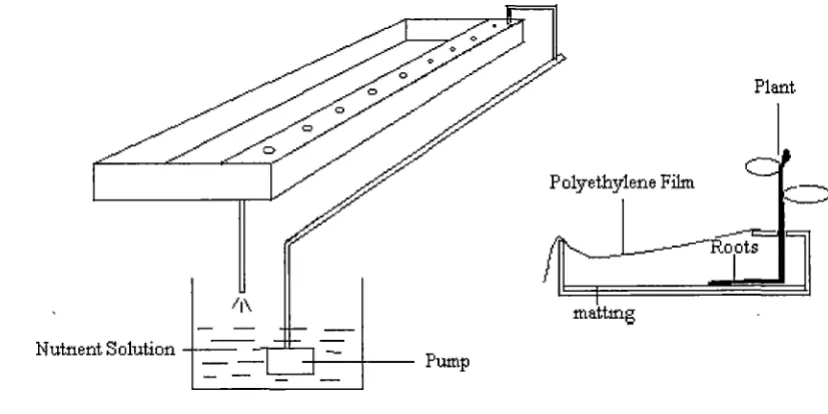
Hydroponic Systems
Chapter 2 General Materials and Methods 34
pipe. The solution reservoir was covered to prevent algal growth. Pumping rate was adjusted to supply an outlet flow rate of 125
±
5 ml per minute.Plant
Polyethylene Film
Roots
mattmg
[image:44.565.111.525.166.373.2]N utnent Solution
Figure 1. Schematic diagram of NFT hydroponic system
Nutrient Solution
A commercially available hydroponic nutrient salt mixture (Culture-S, ACCENT Hydroponics Pty. Ltd., Australia) was used for preparing nutrient solution. Stock solutions were prepared according to the manufacturer's recommendations. The nutrient consisted of two parts, part A and part B salts. Part A was Ca(N03) 2 and part B was a combination of salts. Part A and part B salts were dissolved into fresh tap water to make 11 litre of stock solutions A and B. Stock solutions were stored in sealed light proof food grade plastic drums.
The concentration of nutrient elements in the final solution was:
Element (ppm) (mM)
Nitrate nitrogen 210 3.39
Phosphorous 60 1.94
Potassium 330 8.46
Calcium 170 4.25
Magnesium 50 2.06
Sulphur 65 2.03
Iron 6.0 0.11
Manganese 2.0 0.04
Boron 0.3 0.03
Copper 0.06 0.0009
Zinc 0.06 0.0009
Molybdenum 0.007 0.00007
· During experiments, the pH and conductivity of the nutrient solution were maintained at pH at 5.8 and electrical conductivity at 2.0 mS/cm by an automated NutriDose monitoring system (Autogrow Systems Ltd., New Zealand). The pH was adjusted using
5
% KOH or5
% H2S04• An equal volume of stock solutions A and B were used toadjust electrical conductivity. Nutrient solution was replaced with fresh solution on a regular basis, ranging from: every 10 days when plants were first planted in trays to every 7 days when plants reached maximum size.
Greenhouse Conditions
Chapter 2 General Matenals and Methods 36
Glasshouse temperature was thermostatically maintained between 15 °C and 25 °C. The average temperature measured was 13 °C and 18.4 °C in winter and in summer respectively. The average relative humidity was 76 % in winter and 67 % in summer.
Plants were grown under natural daylength and light intensity conditions. Daylength varied from approximately 9 hours in winter to 15 hours in summer. The daily highest photosynthetic photon flux density at the plant level varied from approximately 400 µmol.m-2.s-1 in winter to 1200 µmol.m-2.s-1 in summer.
Standard Measurements
Plant Growth
Access to underground part organs was achieved by releasing pegs and folding back the opaque polyethylene film covering the trays. The number, length and diameter of stolons and tubers on individual plants were measured in experiments. Initially stolon length was measured using a compass and a ruler, and stolon and tuber diameter were measured using vernier callipers. A webcam system was later constructed to take time lapsed pictures from which the length of stolons and the diameters of stolons and tubers were recorded.
Plant fresh weight in the hydroponic trays was determined indirectly. Prior to planting, the hydroponic system was run for 24 hours, drained until solution ceased flowing at the tray outlet, and the weight of the hydroponic tray plus matting was measured . The weight of the tray plus plants was measured using the same method at different stages of crop growth. Plant fresh weight on a whole tray basis was obtained by subtracting the weight of the bare system from the total weight of the system with plants.
Nutrient Uptake
J'
10:00 am on one day and again at 10:00 am the following day. After accounting for water loss, the difference in concentration of nutrients between the two samples was used as a measure of nutrient uptake.
Fresh nutrient solution was added to the hydroponic trays at the commencement of each nutrient uptake measurement. The volume of nutrient solution used at the commencement of each measurement was determined by recording the weight of the solution as it was added to the reservoir. After flushing the new solution through the system for 1 hour the first solution samples were collected and weighed. The second samples were collected after 24 hours. The pump was turned off at this time and the trays allowed to drain fully before volume of nutrient solution was again determined by recording the weight of the solution in the reservoir. Nutrient solution samples were stored in polycarbonate bottles at 4 °C before analysis. Bottles were washed with 15 % HCl solution and rinsed with distilled water prior to sample collection.
Ca, Mg, K, P and S were analysed using an 'IRIS' Inductively Coupled Plasma Optical Emission Spectrometer (ICP-OES, Thermo Jarrell Ash, Franklin, Ma, USA). Each calibration protocol typically consisted of a blank and 3 - 5 standards covering the concentration range 0 to 200 ppm. Standard mixtures were prepared in 5 % (v/v) HN03. Standard mixture preparations (AccuStandard Inc, ICPM0143-5 and ICPM0165-5, New Haven, CT, USA) were analysed regularly to ensure accuracy. Sample uptake time to the ICP-OES was approximately 60 seconds, while the rinse time between samples was also approximately 60 seconds.