The Australian Learning and Teaching Council has provided funding for this
Benchmarking COMPASS
®for curriculum renewal
Establishing infrastructure and collaborative processes for cross-institutional benchmarking of student clinical performance in
speech pathology
Benchmarking resources handbook
Project website
http://benchmarking.portal.com.au
Lead institutions Flinders University The University of Sydney Partner institutions Latrobe University James Cook University The University of Newcastle The University of Queensland
Other organisations Speech Pathology Australia
Support for this project has been provided by the Australian Learning and Teaching Council Ltd., an initiative of the Australian Government Department of Education, Employment and Workplace Relations. The views expressed in this report do not necessarily reflect the views of the Australian Learning and Teaching Council or the Australian Government.
This work is published under the terms of the Creative Commons Attribution-
Noncommercial-ShareAlike 3.0 Australia Licence. Under this Licence you are free to copy, distribute, display and perform the work and to make derivative works.
Attribution: You must attribute the work to the original authors and include the following statement: Support for the original work was provided by the Australian Learning and Teaching Council Ltd, an initiative of the Australian Government. Noncommercial: You may not use this work for commercial purposes.
Share Alike: If you alter, transform, or build on this work, you may distribute the resulting work only under a licence identical to this one.
For any reuse or distribution, you must make clear to others the licence terms of this work. Any of these conditions can be waived if you obtain permission from the copyright holder. To view a copy of this licence, visit
<http://creativecommons.org/licenses/by-nc-sa/3.0/au/ > or send a letter to:
Creative Commons
543 Howard Street, 5th Floor San Francisco California 94105 USA.
Requests and inquiries concerning these rights should be addressed to:
Office for Learning and Teaching GPO Box 9880
Sydney NSW 2001 Location code N255EL10
or
2011
ISBN
Contents
Acknowledgements ... 1
1. Introduction ... 2
2. List of Abbreviations ... 2
3. Project Materials ... 2
3.1 Project management ... 2
3.2 Project method ... 2
4. References ... 5
5. Appendices ... 6
Acknowledgements
The project team would like to express their sincere gratitude to the speech
pathology discipline located across Australia and New Zealand for their enthusiasm, engagement and support, as well as their commitment to The Benchmarking
COMPASS® for curriculum renewal project. We also appreciate the invaluable support provided to the project by the Speech Pathology Association of Australia, which enabled our objectives to be met throughout the course of the project. The project team would like to extend a special thank you to Brett Kokegei, Nick Henderson and James Prosser at Portal Australia who have worked tirelessly to deliver a Benchmarking COMPASS® Database that meets the project’s
1
Introduction
This document collates the resources and documents the processes used to support the successful development and implementation of a strategy to nationally
benchmark the assessment of speech pathology students’ clinical learning via COMPASS® (McAllister et al 2006) to inform quality improvement of the curriculum. This information should be read in conjuction with the final report for the
Benchmarking COMPASS® for Curriclum Renewal project (McAllister et al 2011).
The project provides a model for mutually beneficial collaborative work across universities and among disciplines within a shared framework of standards for learning and teaching. It has demonstrated that academics across universities are able to effectively collaborate to use and share this information to inform their practice.
The resources in this document provide an illustration of a successful strategy to engage diverse stakeholders with a cross-insitutional project that addresses potentially sensitive issues such as differences in student performances and
learning outcomes across universities. A number of the materials provide a template that could be adapted to support similar initiatives.
2
List of Abbreviations
APEC SLP: Asia Pacific Education Collaboration in Speech Language Pathology
COMPASS®: Competency Assessment in Speech Pathology
3
Project Materials
3.1 Project management
The project was managed by a team of academics and project staff from six Australian universities and overseen by a steering committee. Terms of reference were developed to define their role (see Appendix 1).
3.2 Project method
3.2.1 Benchmarking COMPASS® Database
A demonstration version of the Benchmarking COMPASS® Database is publicly accessible from this website: <http://benchmarking.portal.com.au/>. This version is exactly the same as the confidential database accessed by speech pathology programs. It uses fabricated student assessments to demonstrate how data is benchmarked. Please note, the fabricated data does not allow for all reports will be populated, however there is enough data to illustrate how the database works.
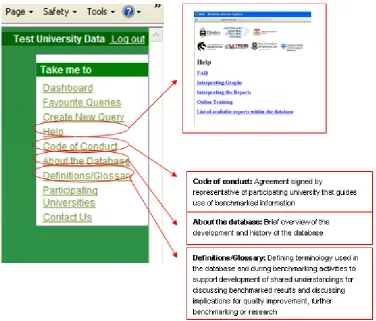
Figure 1: Location of resources document links from log on page of the Benchmarking COMPASS® Database
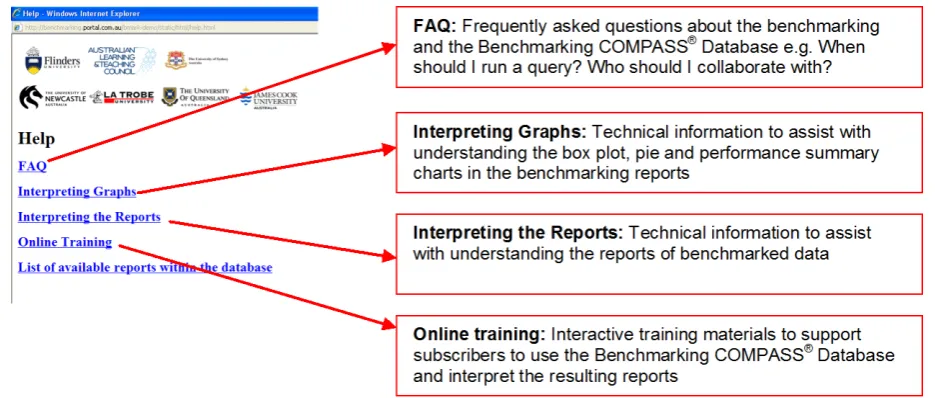
[image:6.595.97.504.68.330.2] [image:6.595.92.469.377.698.2]Figure 3: Resource documents accessible from the Help subheading on the log on page of the Benchmarking COMPASS® Database
3.2.2 Capacity building
Resources that supported the process of engaging and supporting universities to participate in benchmarking can be found in Appendices 2 to 11. Full details of the project cycles can be found in the project report (McAllister et al, 2011). The APEC SLP website was also updated and moved to Google Sites during the project and provides an ongoing platform for sharing resources and supporting benchmarking discussions (see <https://sites.google.com/site/apecslp/home>). A further resource, “Manual for Benchmarking and Research using COMPASS® Online Assessment Tool”, was developed to support universities to carry out more detailed
[image:7.595.47.515.60.259.2]4
References
McAllister, S, Lincoln, M, Ferguson, A & McAllister, L 2006. COMPASS®:
Competency assessment in speech pathology. Melbourne: Speech Pathology Association of Australia Ltd.
McAllister, S, Lincoln, M, Ferguson, A, Hill, A, Davenport, R & Brown, L (2011) Benchmarking COMPASS® for curriculum renewal project: Establishing infrastructure and collaborative processes for cross-institutional
5
Appendices
Appendix 1—Steering committee terms of reference ... 7
Appendix 2—Benchmarking collaboration agreement: Memorandum of Understanding ... Benchmarking Collaboration Agreement ... 8
Appendix 3—Code of conduct ... 30
Benchmarking COMPASS® Database ... 30
Code of Conduct: Use and Interpretation of Cross-Institutional Benchmarked Data ... 30
Appendix 4—Project newsletters ... 33
Appendix 5—Cycle 1 Benchmarking forum briefing paper ... 35
Appendix 6—Cycle 1 Benchmarking forum agenda ... 49
Appendix 7—Cycle 1 Benchmarking forum workbook ... 51
Appendix 8—Teleconference agenda ... 70
Appendix 9—Cycle 2 Benchmarking forum briefing paper ... 71
Appendix 10—Cycle 2 Benchmarking forum agenda ... 81
Appendix 11—Cycle 2 Benchmarking forum workbook ... 82
Appendix 12— Table of contents: Manual for benchmarking and research using the COMPASS® Online Assessment tool ... 94
Appendix 1—Steering committee terms of reference
COMPASS™ Benchmarking for Curriculum Renewal Project
Project Steering Committee
Terms of Reference
Role: The Project Steering Committee will monitor and support project implementation, and provide advice regarding project development and implementation. The Project Steering Committee will support the team in achieving high quality project outcomes and effective dissemination.
Terms of Reference: The Project Steering Committee will:
Monitor project processes to ensure alignment with project goals and intended outcomes
Advise on project implementation Advise on ongoing project management Monitor project evaluation
Monitor project outcomes
Receive regular reports from the Project Leader Receive regular reports from the Independent Project Evaluator
Review interim and final reports to the ALTC Reporting line: To the Australian Learning and Teaching Council Frequency of meetings: Every four months throughout the project
Membership (Proposed)
Associate Professor Simon Barrie (Chair)
Associate Professor Ieva Stupans (University of South Australia)
Dr Sue McAllister (Project Leader and Manager) Project Team Representative (Louise Brown) Project Reference Group Representative Ms Vicki Dawson (Speech Pathology Australia Representative)
Ms Jonquil Eyre (Independent Evaluator)
Chair Associate Professor Simon Barrie
The meeting Chair will Chair meetings
Ensure meetings are convened, agendas and minutes distributed
Administration Officer To be Advised
Will organise administrative matters such as Organising meeting dates and times
Recording minutes
Appendix 2—Benchmarking collaboration agreement:
Memorandum of Understanding
Benchmarking Collaboration Agreement
Benchmarking Collaboration Agreement
Parties
University The University of Sydney, a body corporate under the University of Sydney Act 1989 (ABN 15 211 513 464) as described more fully in Part A of Schedule 1
Research Parties The parties described in Part A of Schedule 1, including the University. Details
Effective Date The Effective date of this agreement will be the date on which four or more persons signs agreement.
Project (clause 1.1)
The project described in the Project Plan in Schedule 2.
Project Period (clause 1.1)
31 October 2009 to December 2014
Term This agreement commences on the Effective Date and terminates on December 2014
Project Outcome (clause 1.3)
This project will (as set out in Schedule 1) support cross-institutional benchmarking of student assessment data collected by COMPASS® Online. Each university will be able to access confidential reports benchmarked by the Benchmarking COMPASS® Database, comparing their student’s assessment data to the combined data of participating universities.
Project Leaders A/Prof Michelle Lincoln (University of Sydney) and Dr Sue McAllister (Flinders University) and includes any replacement of the Project Leaders as appointed from time to time by written agreement between the parties. Individual Project
Obligations (clause 2)
The respective obligations of each party are set out in Schedule 1.
Management Committee
Dr Sue McAllister, Flinders University
Associate Professor Michelle Lincoln, The University of Sydney Associate Professor Alison Ferguson, The University of Newcastle Dr Bronwyn Davidson, The University of Queensland
And includes any replacement of any member as appointed from time to time by written agreement between the parties.
Special Terms
This agreement is subject to the following special terms: Not Applicable
Note: All capitalised terms in column 1 of the Details have the meaning given in column 2. EXECUTED as an agreement on the terms of the Details, Special Terms and General Terms. SIGNED for and on behalf of [university name] by its duly authorised representative:
…..……….… Signature
…..……….… Printed Name
Position:
…..……….… Date
………..
General Terms
1.
Project
1.1. Undertake Project
The parties will conduct the Project in accordance with the terms of this agreement and the Project Parties will each use reasonable endeavours to carry out the Project within the Project Period and to achieve the Project Outcome.
The parties (other than the University) acknowledge that they have entered into this agreement for consideration of the University granting them the privileges contained in this agreement, and related rights that would not otherwise be available to the party.
1.2. Records
Each Project Party must maintain reasonable, up to date and accurate records regarding the conduct and conclusions of its part of the Project.
1.3. Scope of Project
Any departure from the Project Plan set out in Schedule 2 must be notified to the other parties and agreed in writing signed by the University. Such agreement will be subject also to the requirements set out in the Funding Agreement.
1.4. Sub-contracting
A Project Party must not sub-contract the performance of any part of the Project which is stipulated in the Project Plan in Schedule 2 without the prior written consent of the University, such consent not to be unreasonably withheld.
2.
Obligations of parties
2.1. Funding Agreement obligations
(a) Each party acknowledges that the University has entered the Funding Agreement which imposes certain obligations on the University, as the Administering Organisation, regarding use of the
Australian Learning and Teaching Council Funding and the conduct of the Project. The Project Parties (other than the University) acknowledge that they have reviewed the Funding Agreement and agree to assist the University to comply with the Funding Agreement and to use their best endeavours not to do anything that causes the University to breach its obligations under the Funding Agreement.
(b) In addition to their general obligations under clause 2.10, each party agrees to comply and act consistently with the obligations
imposed by Australian Learning and Teaching Council under the Funding Agreement, including:
(i) if applicable, ensuring that its Project is carried out in accordance with the Funding Agreement, in a diligent and competent manner;
(ii) assisting the University to obtain any necessary prior approvals from Australian Learning and Teaching Council in accordance with the Funding Agreement before it undertakes any acts with respect to this agreement, including replacing any Specified Personnel or expelling or replacing any party to this agreement;
(iii) in addition to its obligations under clause 0 and 0 (General
obligations), promptly providing any information reasonably required by the University to enable the University to meet the Funding Agreement requirements on reporting and financial management of the Project, including reasonable access to records and premises if required for the purpose of conducting reviews of the Project under the Funding Agreement;
(iv) complying with the requirements in the Funding Agreement with respect to the protection of personal information, including any applicable obligations under the Privacy Act 1988 (Cwlth) and related policies as set out in the Funding Agreement, and immediately notifying the
University if it becomes aware of a breach of its obligations under this clause 0;
(v) complying with all applicable laws and Australian Learning and Teaching Council policies with respect to the Project, including any laws relating to workplace relations, equal opportunity, occupational health and safety and other laws and policies as set out in the Funding Agreement; and
7, 8, 10, 11, 13, 14, 15, 16, 17, 19, 20, 21, 25 and 29 of the Funding Agreement.
The obligations in subclause (b) operate as
agreements between the parties, enforceable against each other, not by Carrick.
2.2. General obligations
In addition to the obligations under clause 2.1 (Funding Agreement obligations), each party agrees to:
(a) use reasonable endeavours to comply with its Individual Project Obligations, the details of which are set out in Schedule 1;
(b) provide any other related assistance, information, data, equipment, facilities, resources or materials as may be reasonably required to satisfactorily perform the Project;
(c) if applicable, comply with all safety, security and other procedures notified to it by any other party while on any other party’s site;
(d) if applicable, provide the Reports to the Management Committee at the times and in the manner set out in Schedule 1 or as reasonably requested by the Management Committee; and
(e) provide all reasonable assistance to the University in preparing any reports required to be submitted by the University under the Funding Agreement.
2.3. Conflicts of interest
Each party agrees to disclose to the University any conflict of interest which has the potential to influence, or appear to influence, the project and activities, publications and media reports, or requests for funding in relation to the Project. Each party (other than the University) warrants that to the best of its knowledge after making diligent inquiries no conflict of interest exists or is likely to arise in its performance of its obligations under this agreement. The parties acknowledge that, under the terms of the Funding Agreement, the University is required to notify Australian Learning and Teaching Council immediately of the nature and details of any conflict of which the University becomes aware relating to any party involved in or associated with the Project.
3.
Personnel
3.1. Responsibility
Each Project Party agrees to comply with all obligations required by law with respect to its employees for work done in connection with the
Project, including paying all Employee Entitlements, deducting and remitting any taxation from payments to employees, and adhering to any industrial awards or related agreements.
3.2. Project Leader
The Project Leader will have the authority in consultation with the Management Committee to review and direct the performance of the Project in accordance with the Project Plan and the Project Outcome, including the authority to:
(a) monitor the provision by each party of its respective Individual Project Obligations;
(b) monitor the provision by each party of their respective Reports in accordance with clause 0 (General obligations); and
(c) monitor the maintenance of records by each party under clause 1.2 (Records).
4.
Intellectual Property Rights
4.1. Project IPRs
All parties acknowledge Australian Learning and Teaching Council’s ownership rights to project material under clause 13 of the Funding Agreement. Each party grants the University all necessary warranties and licences, and will arrange for the preparation and execution of all necessary documents, in order for the University to comply with clause 13 of the Funding Agreement.
4.2. Moral rights
Each party acknowledges that the Specified Personnel, employees, Students and any other representatives involved in the Project will, if they are authors of material in which copyright subsists, have moral rights in those copyright materials.
5.
Confidentiality and publication
5.1. Limited use and disclosure
Each party must maintain the secrecy of each other party’s Confidential Information.
5.2. Association approval
No party will use any other party’s name or the name of any other party’s employee or refer to the Project, in any public manner whatsoever including in any capital raising, business, advertising or other promotional material without the written permission of the relevant other party, which may be granted subject to conditions.
5.3. Australian Learning and Teaching Council acknowledgment
together with acknowledging Australian Learning and Teaching Council in any publication in accordance with the Funding Agreement.
6.
Liability
6.1. Consequential loss
Subject to applicable laws, a party will not be liable to any other party for loss of profits, revenue, goodwill or opportunities in contract, tort, under any statute or otherwise (including negligence) arising from or in any way related to this agreement or the Project.
6.2. Contributory negligence
Each party’s liability under this agreement is reduced to the extent that any damages, liability, loss or costs arise from or are attributable to, any negligent act or omission of the other party or its officers, employees, agents or contractors.
6.3. Indemnity
Subject to applicable laws, each party indemnifies (the “Indemnifying Party”) and agrees to keep indemnified each of the other parties and its respective directors, officers, employees and agents (each an “Indemnified Party”) against all liability, loss, costs, damages or expense (including legal costs and expenses) incurred or suffered by an Indemnified Party as a result of negligence, wilful misconduct, negligent act or omission, wilful act or failure to act, or unlawful act or omission on the part of the Indemnifying Party in connection with this agreement.
The parties acknowledge that, under clause 13.9 and 18 of the Funding Agreement, the University is required to indemnify Australian Learning and Teaching Council. Each party indemnifies the University and its respective directors, officers, employees and agents for any amounts which the University is liable to pay to Australian Learning and Teaching Council under those indemnity provisions to the extent that the liability to pay arose as a result of the acts or omissions of that party or its directors, officers, employees, agents or Students.
References to the Indemnifying Party in this clause include its directors, officers, employees, agents or Students with respect to the Project.
7.
Termination and expulsion
7.1. Termination by mutual agreement
This agreement may be terminated at any time by mutual written agreement of all the parties.
7.2. Termination or expulsion of Defaulting Party
In addition to rights for Force Majeure events, where a party (“Defaulting Party”):
(a) breaches a term of this agreement and fails to remedy the breach within 30 days after receiving notice requiring them to do so; or
(b) has entered into any form of insolvency, liquidation or external administration, whether voluntary or involuntary, formal or otherwise,
the University, as the Administering Organisation, may terminate this agreement with immediate effect by notice to the parties or the other parties may jointly expel the Defaulting Party from participating in this agreement provided the termination or expulsion is undertaken in accordance with the Funding Agreement.
7.3. Termination of Funding Agreement
The University, as the Administering Organisation, may immediately terminate this agreement by written notice to the other parties on termination of the Funding Agreement or if Carrick ceases to provide all or any part of the Carrick Funding to the University.
7.4. Consequences of termination
On termination of this agreement for any reason, each party will return all property in their possession belonging to any other party, including Confidential Information and Project Confidential Information.
7.5. Rights of Defaulting Party
On expulsion of a Defaulting Party from participating in this agreement for any reason, the Defaulting Party will:
(a) cease to have any rights to the Project Material as defined in the Funding Agreement, under this agreement; and
(b) return all property in their possession belonging to any other party, including Confidential Information and Project Confidential Information.
7.6. Variation on expulsion
Subject to the obligations under the Funding Agreement, if a party is expelled from participating in this agreement under clause 7.2 (Termination or expulsion of Defaulting Party) or for Force Majeure, the remaining parties will promptly meet and agree any changes to the terms of this agreement and will enter into a variation agreement to effect any such change.
7.7. No prejudice
prejudice to the rights of the parties to obtain damages for any breach of this agreement.
7.8. Survival
All clauses that are intended to survive termination will survive termination. For the avoidance of doubt, the obligation to comply with the code of conduct survives termination.
8.
Disputes
8.1. Dispute resolution procedure
Any dispute relating to this agreement (“Dispute”) must, prior to a party initiating litigation (other than for equitable or interlocutory relief), be dealt with as follows:
(a) the affected party will notify the other parties with details of the Dispute (“Dispute Notice”) and, within 7 days of receiving the Dispute Notice, the Management Committee will meet and attempt to resolve the
Dispute;
(b) if unresolved within 30 days of the Dispute Notice, the Project Officers of each relevant party, or another nominated member of senior management (the “Nominated Person”) will negotiate and attempt to resolve the dispute;
(c) if unresolved within 30 days of the
commencement of the negotiations between the Nominated Persons, any of the affected parties may refer the Dispute to mediation;
(d) if the parties cannot agree on a mediator within a further 14 days, the Dispute will be referred by the parties to the President, Australian Commercial Disputes Centre, Sydney to nominate a suitably qualified mediator and the parties will accept that nomination;
(e) the parties will cooperate to enable the mediator to mediate the Dispute within 30 days of the mediator’s appointment; and
(f) the fees of the mediator will be paid by the parties in equal proportions.
9.
Communication
9.1. Requirements for valid notice
Any notice or other formal communication under this agreement:
(a) must be in writing and signed by the Project Officer of the sender or an authorised representative of them;
(b) must be marked to the attention of the recipient’s Project Officer and be delivered to the recipient by hand, pre-paid post or fax
at the address or number shown in Schedule 1 (or as last notified); and
(c) will be effective once received, and will be deemed to be received, if posted in
Australia, on the seventh day or, if faxed, at the time shown on the transmission report for the complete message being sent.
10.
General
10.1. Terms and entire agreement
This agreement consists of these General Terms, the Details, the Special Terms and any annexures or schedules expressly incorporated and it constitutes the entire agreement of the parties about its subject matter and supersedes all previous agreements, understandings and negotiations on that subject matter.
10.2. Inconsistency
If there is an inconsistency between a provision of a Schedule, Details, the Special Terms or any annexures expressly incorporated and these General Terms then the first-mentioned terms prevail.
10.3. No representations or warranties
Each party acknowledges that in entering into this agreement they have not relied on any representations or warranties about its subject matter except as expressly provided by this agreement.
10.4. Variation and waiver
A provision of this agreement or a right created under it may not be waived or varied except in writing, signed by the party or parties to be bound. A failure or delay in exercise of a right arising from a breach of this agreement does not constitute a waiver of that right.
10.5. Further assurances
Each party agrees to execute such agreements, deeds and documents and do or cause to be executed or done all such acts and things as may be reasonably necessary to give effect to the Funding Agreement and this agreement, including assisting to facilitate any application to register IPRs, confirming any rights granted in relation to the IPRs, and assisting with any GST requirements.
10.6. No exclusivity
10.7. No agency or partnership
Nothing contained or implied in this agreement is intended to create a partnership between any of the parties or, except as otherwise provided in this agreement, establish any of the parties as an agent or representative of any other party or of the Australian Learning and Teaching Council. Except as otherwise provided in this agreement, no party has any
authority to bind any other party, or to act for, or to incur any obligation or assume any responsibility on behalf of, any other party in any way.
10.8. Force Majeure
No party is liable for any breach of its obligations under this agreement to the extent that the breach resulted from a Force Majeure Event provided that it:
(a) promptly notifies the other parties (with appropriate details); and
(b) takes all reasonable steps to work around or reduce the effects of the Force Majeure Event.
Subject to the obligations under the Funding Agreement, if a Force Majeure Event continues for more than 30 days or continues beyond the Project Period, any of the other parties may terminate this agreement with immediate effect by notice to the parties or the other parties may jointly expel the party the subject of the Force Majeure Event from
participation in the Project in accordance with clause 7.2 (Termination or expulsion of Defaulting Party).
10.9. Governing law
This agreement is governed by the law in force in New South Wales. Each party submits to the non-exclusive jurisdiction of the courts of that place.
10.10. Counterparts
This agreement may be executed in counterparts. All counterparts when taken together are to be taken to constitute one instrument.
10.11. General interpretation
Unless the contrary intention appears, in this agreement:
(a) references to the singular includes the plural and vice versa;
(b) references to person or individuals include a firm, a body corporate, a partnership, a joint venture, an unincorporated body or association, or any government agency;
(c) the words “include” and “including” are not used as, nor are they to be interpreted as, words of limitation;
(d) headings are for convenience only and do not affect interpretation;
(e) a reference to Carrick statutes, policies, rules, or regulations include references to those statutes, policies, rules or regulations as amended, updated or replaced from time to time;
(f) reference to a party means a party to this agreement and includes the party’s executors, administrators, successors and permitted assigns;
(g) references to dollars is to Australian dollars, unless otherwise stated;
(h) a provision of this agreement will not be construed to the disadvantage of a party merely because that party was responsible for the preparation of the agreement or the inclusion of the provision in the agreement;
(i) the liability of the parties is several, not joint and several;
(j) if an act must be done on a specified day which is not a business day, it must be done instead on the next business day; and
(k) where consent or approval is to be provided under the terms of this agreement, that consent or approval must not be withheld unreasonably.
11.
Definitions
The following words have these meanings in this agreement:
Administering Organisation means the University, in its role as the party to which the Australian Learning and Teaching Council provides the Australian Learning and Teaching Council Funding and who is responsible for any such Australian Learning and Teaching Council Funding and the conduct of the Project under the Funding Agreement.
Carrick means The Carrick Institute for Learning and Teaching in Higher Education Ltd.
Project Leader means the project leader identified in the Details.
Australian Learning and Teaching Council Funding means funds provided by Australian Learning and Teaching Council to the University under the Funding Agreement for the purposes of the Project.
(a) publicly available or subsequently becomes publicly available other than in a breach of this agreement;
(b) lawfully known to the other party on a non-confidential basis before being disclosed by the party that owned the confidential information;
(c) rightly acquired from a third party who is not in breach of an agreement to keep such information confidential; or
(d) developed independently by a party.
Employee Entitlements meansany amounts to which an employee would be entitled by law or under any award, agreement or arrangement in connection with salary and allowances, including (without limitation) annual leave entitlements, long service leave entitlements and superannuation contributions.
Force Majeure Event means any event which is outside the reasonable control of the affected party and could not have been prevented by that party taking all reasonable steps.
Funding Agreement means an agreement between Australian Learning and Teaching Council and the University governing the award of funds to the University, a copy of which is attached at Annexure A.
IPRs means all registered and unregistered rights in relation to present and future copyright, trade marks, designs, know-how, patents, confidential information and all other intellectual property as defined in article 2 of the Convention establishing the World
Intellectual Property Organisation 1967.
Project Confidential Information means any confidential information created in carrying out the Project and which contributes to the Project Outcome, including any Reports.
Schedule 1—Project and party details
Funding Proposal title Establishing infrastructure and collaborative processes for cross-institutional benchmarking of student clinical performance in speech pathology
Australian Learning and Teaching Council Reference Number
PP8-955
Project Period This agreement commences on the Effective Date
and terminates on December 2014
Duration of the Australian Learning and Teaching Council grant
September 2008 to April 2011
Part A: Project Parties
Note: All capitalised terms in column 1 of the following tables have the meaning given in column 2.
The University/Administering Organisation
The University of Sydney
A body corporate under The University of Sydney Act 1989, ABN: 15 211 513 464
Project Officer Attention: A/Prof Michelle Lincoln
Email: [email protected]
Telephone: 02 9351 9430
Fax: 02 9351 9173
Individual Project Obligations
Project Role Participate in project management as a member of the project team. Contribute data from COMPASS® Online to the Benchmarking COMPASS® Database.
Specified Personnel
The following persons:
Associate Professor Michelle Lincoln
Will Students be
involved? No
Reports Provide copies of prerequisite materials described in Schedule 1 (signed
Memorandum of Understanding, Code of Conduct, and relevant ethics approval).
Other project obligations
As detailed in Schedule 2.
Flinders University
A body corporate under the Flinders University Act 1966, ABN 65 542 596 200
Project Leader Attention: Dr Sue McAllister Telephone: 08 8204 5417
Email: [email protected] Fax: 08 8204 5935
Individual Project Obligations
Project Role Lead and manage the project team and the cross-institutional benchmarking using the Benchmarking COMPASS® Database
Contribute data from COMPASS® Online to the Benchmarking COMPASS® Database.
Specified Personnel
The following persons: Dr Sue McAllister
Will Students be
Reports 1. Evaluation report to participating universities and the Australian Learning and Teaching Council on utility of the benchmarking database and quality improvement processes by April 1011.
2. Confidential reports accessible by each university on their data benchmarked against the combined data of participating universities until December 2014 3. Provide copies of prerequisite materials described in Schedule 1 (signed Memorandum of Understanding, Code of Conduct, and relevant ethics approval).
Other project
obligations As detailed in Schedule 2.
The University of Newcastle
A body corporate under the University of Newcastle Act 1989, ABN 15 736 576 735
Project Officer Attention: Associate Professor Alison
Ferguson
Telephone: 02 4921 5716
Email:
Fax: 02 4921 7386
Individual Project Obligations
Project Role Participate in project management as a member of the project team. Contribute data from COMPASS® Online to the Benchmarking COMPASS® Database.
Specified Personnel
The following persons:
Associate Professor Alison Ferguson
Will Students be involved?
No
Reports Provide copies of prerequisite materials described in Schedule 1 (signed
Memorandum of Understanding, Code of Conduct, and relevant ethics approval).
Other project obligations
As detailed in Schedule 2.
The University of Queensland
A body corporate under The University of Queensland Act 1998, ABN 63 942 912 684
Project Officer Attention: Dr Bronwyn Davidson Telephone: 07 3365 2830
Email: [email protected] Fax: 07 3365 4754
Individual Project Obligations
Project Role Participate in project management as a member of the project team. Contribute data from COMPASS® Online to the Benchmarking COMPASS® Database.
Specified Personnel
The following persons: Dr Bronwyn Davidson Ms Anne Hill
Will Students be involved?
No
Reports Provide copies of prerequisite materials described in Schedule 1 (signed
Memorandum of Understanding, Code of Conduct, and relevant ethics approval).
Other project obligations
As detailed in Schedule 2.
James Cook University
A body corporate under the James Cook University Act 1998, ABN 46253211955
Project Officer Attention: Ms Louise Brown Telephone: 07 47816229
Email: [email protected] Fax: 07 4781 6868
Project Role Participate in project management as a member of the project team. Contribute data from COMPASS® Online to the Benchmarking COMPASS® Database.
Specified Personnel
The following persons: Ms Louise Brown
Will Students be involved?
No
Reports Provide copies of prerequisite materials described in Schedule 1 (signed
Memorandum of Understanding, Code of Conduct, and relevant ethics approval).
Other project obligations
As detailed in Schedule 2.
La Trobe University
A body corporate under the La Trobe University Act 1964, ABN 64 804 735 113
Project Officer Attention: Ms Rachel Davenport Telephone: 03 9479 1808
Email: [email protected] Fax: 03 9479 1874
Individual Project Obligations
Project Role Participate in project management as a member of the project team. Contribute data from COMPASS® Online to the Benchmarking COMPASS® Database.
Specified Personnel
The following persons: Ms Rachel Davenport Ms Debbie Kras
Will Students be involved?
No
Reports Provide copies of prerequisite materials described in Schedule 1 (signed
Memorandum of Understanding, Code of Conduct, and relevant ethics approval).
Other project obligations
As detailed in Schedule 2.
Curtin University A body corporate under the Curtin University Act 1966, ABN 99 143 842 569
Project Officer Attention: Dr Cori Williams Telephone: 8 9266 7865
Email: [email protected] Fax: 8 9266 2464
Individual Project Obligations
Project Role Contribute data from COMPASS® Online to the Benchmarking COMPASS® Database.
Specified Personnel
The following persons: Dr Cori Williams
Will Students be involved?
No
Reports Provide copies of prerequisite materials described in Schedule 1 (signed
Memorandum of Understanding, Code of Conduct, and relevant ethics approval).
Other project obligations
Nil
Edith Cowan University
A body corporate under the Edith Cowan University Act 1984, ABN 54 361 485 361
Email: [email protected] Fax: 8 6304 5834
Individual Project Obligations
Project Role Contribute data from COMPASS® Online to the Benchmarking COMPASS® Database.
Specified Personnel
The following persons: Professor Beth Armstrong
Will Students be involved?
No
Reports Provide copies of prerequisite materials described in Schedule 1 (signed
Memorandum of Understanding, Code of Conduct, and relevant ethics approval).
Other project obligations
Nil
Macquarie University
A body corporate under the Macquarie University Act 1989, ABN 90 952 801 237
Project Officer Attention: Dr Elisabeth Harrison Telephone: 2 9850 6716
Email:
Fax: 2 9850 9199
Individual Project Obligations
Project Role Contribute data from COMPASS® Online to the Benchmarking COMPASS® Database.
Specified Personnel
The following persons: Dr Elisabeth Harrison
Will Students be involved?
No
Reports Provide copies of prerequisite materials described in Schedule 1 (signed
Memorandum of Understanding, Code of Conduct, and relevant ethics approval).
Other project obligations
Nil
Charles Sturt A body corporate under the Charles Sturt University Act 1989, ABN 64 085 727 288
Project Officer Attention: Ms Libby Clark Telephone: 2 6051 6747
Email: [email protected] Fax: 2 6051 6989
Individual Project Obligations
Project Role Contribute data from COMPASS® Online to the Benchmarking COMPASS® Database.
Specified Personnel
The following persons: Ms Libby Clark
Will Students be involved?
No
Reports Provide copies of prerequisite materials described in Schedule 1 (signed
Memorandum of Understanding, Code of Conduct, and relevant ethics approval).
Other project obligations
Nil
Massey University
A body corporate under the Massey University Act 1963, ABN N/A
Email: [email protected] Fax: +64 9 443 9717
Individual Project Obligations
Project Role Contribute data from COMPASS® Online to the Benchmarking COMPASS® Database.
Specified Personnel
The following persons: A/Prof Helen Southwood
Will Students be involved?
No
Reports Provide copies of prerequisite materials described in Schedule 1 (signed
Memorandum of Understanding, Code of Conduct, and relevant ethics approval).
Other project obligations
Nil
University of Auckland
A body corporate under the University of Auckland Act 1961, ABN N/A
Project Officer Attention: A/Prof Suzanne Purdy Telephone: +64 9 373 7599
Email: [email protected] Fax: 64 9 373 7450
Individual Project Obligations
Project Role Contribute data from COMPASS® Online to the Benchmarking COMPASS® Database.
Specified Personnel
The following persons: A/Prof Suzanne Purdy
Will Students be involved?
No
Reports Provide copies of prerequisite materials described in Schedule 1 (signed
Memorandum of Understanding, Code of Conduct, and relevant ethics approval).
Other project obligations
Nil
University of Canterbury
A body corporate under the University of Canterbury Act 1961, ABN N/A
Project Officer Attention: Dr Catherine Moran Telephone: +64 3 364 2401
Email:
Fax: +64 3 364 2760
Individual Project Obligations
Project Role Contribute data from COMPASS® Online to the Benchmarking COMPASS® Database.
Specified Personnel
The following persons: A/Prof Suzanne Purdy
Will Students be involved?
No
Reports Provide copies of prerequisite materials described in Schedule 1 (signed
Memorandum of Understanding, Code of Conduct, and relevant ethics approval).
Other project obligations
Schedule 2—Project Plan
Benchmarking COMPASS
®Database
October 2009
Introduction
This document provides information on joining, contributing and accessing data from the Benchmarking COMPASS® Database to support cross institutional
benchmarking and quality improvement activities aimed to review and renew speech pathology curricula. The database has been developed through project funding provided by the Australian Learning and Teaching Council (ALTC)1. Access to this database will be sponsored by ALTC until April 2011 with the project period
continuing until December 2014. A cost recovery leasing fee will apply after April 2011 for those universities who wish to continue participating in the database. Australian and New Zealand universities have collaborated to develop the content and processes of this cross institutional benchmarking initiative to inform and evaluate quality improvement activities that aim to improve teaching and learning practices. The primary function of cross institutional collaborative benchmarking using student assessment data generated by COMPASS® Competency Assessment in Speech Pathology (McAllister, Lincoln, Ferguson, & McAllister, 2006) is to inform learning and teaching practices within speech pathology programs at participating universities2.
This Memorandum of Understanding and related policies and procedures were developed and trialled successfully during a previous project funded by ALTC (Lincoln, McAllister, Ferguson and McAllister, 2008) by The University of Sydney, The University of Newcastle and Charles Sturt University.
Benchmarking COMPASS® Database
Benchmarking Process
The Benchmarking COMPASS® Database will be managed by a committee auspiced by the Asia Pacific Education Collaboration in Speech Language Pathology (APEC SLP) and chaired by Dr Sue McAllister, Flinders University and includes the following people:
• A/Prof Michelle Lincoln, The University of Sydney (APEC SLP Chair) • Associate Professor Alison Ferguson, The University of Newcastle • Dr Bronwyn Davidson, The University of Queensland
• Ms Anne Hill, The University of Queensland
1 Support for this publication has been provided by The Australian Learning and Teaching Council Ltd, an initiative of the Australian Government Department of Education, Science and Training. The views expressed in this publication do not necessarily reflect the views of The Carrick Institute for Learning and Teaching in Higher Education.
• Ms Louise Brown, James Cook University • Ms Rachel Davenport, Latrobe University
All participating universities will be notified of any changes to the Management Committee and will have the opportunity to nominate and vote for replacements. All universities using COMPASS® Online to assess student performance in practicum will be invited to participate.
Benchmarking will be conducted via the automated Benchmarking COMPASS® Database as follows:
• each enrolled university will receive 5 confidential accounts accessible only by individual logons and passwords. The Benchmarking COMPASS® Database will be run on a server secured according to current best practice internet security protocols
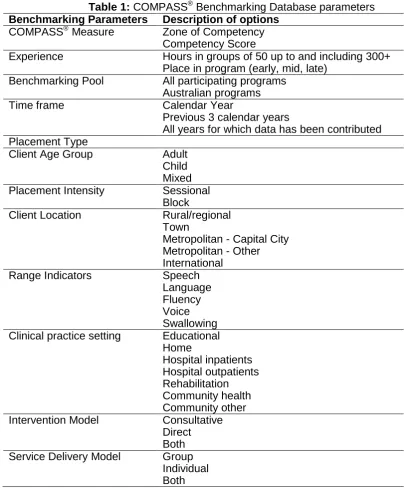
• each university will be able to select what parameters they wish to benchmark their speech pathology program(s) against. Parameters include choices among the options described in Table 1 below. Data is collected for each of these parameters by COMPASS® Online
• requesting a benchmarking report will result in aggregated and de-identified data being harvested from COMPASS® Online by the Benchmarking COMPASS® Database. University and student data will be aggregated and de-identified. Therefore no individual student data or speech pathology program data can be identified. A report will be generated that can be downloaded as a PDF or Excel file.
Any sharing of the results of benchmarking reports will be strictly governed by the Code of Conduct described below.
Programs will be able to give temporary password protected access to their
benchmarking interface to Dr Sue McAllister (leader of the management committee) to investigate and problem solve any technical difficulties with the use of the
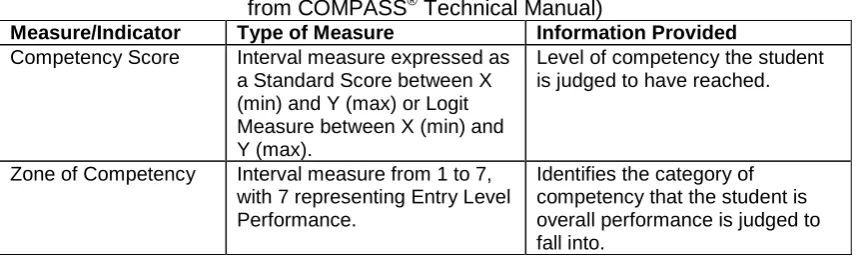
Table 1: Benchmarking parameters Benchmarking Parameters Description of options COMPASS® Measure Zone of Competency
Competency Score
Experience Hours in groups of 50 up to and including 300+
Place in program (early, mid, late) Benchmarking Pool All participating programs
Australian programs
Time frame Calendar Year
Previous 3 calendar years
All years for which data has been contributed Placement Type
Client Age Group Adult
Child Mixed Placement Intensity Sessional
Block
Client Location Rural/regional Town
Metropolitan - Capital City Metropolitan - Other International
Range Indicators Speech
Language Fluency Voice Swallowing Clinical practice setting Educational
Home Hospital inpatients Hospital outpatients Rehabilitation Community health Community other Intervention Model Consultative
Direct Both Service Delivery Model Group
Individual Both
Joining the Benchmarking COMPASS® Database
Each speech pathology program participating in the Benchmarking COMPASS® Database will need to submit the following items to the Chair of the Benchmarking Committee of the Asia Pacific Education Collaboration in Speech Language Pathology.
Items to be submitted
• Evidence of approval to participate from Chair or full Human Research Ethics Committee: this benchmarking activity is a quality improvement initiative. However, each university will have its own requirements regarding approval as benchmarking does involve student assessment data. A copy of correspondence indicating approval to participate from the Chair or the full committee of the appropriate human research ethics committee is required. See Attachment A for an example of a request for approval for this activity.
a signed copy of the Memorandum of Understanding supplied with these materials and including this document as Schedule 2 is required. The Memorandum of Understanding (MOU) describes the nature of the cross-institutional collaboration involved in using the Benchmarking COMPASS® Database, and is a legal document. It will therefore need to be signed by an appropriate representative for the university which will depend on each university’s particular organisational structure e.g. Deputy Vice Chancellor for Learning and Teaching (DVC), or equivalent. It may be that MOU will need to be first approved by the university’s legal counsel. Please note that this MOU cannot be negotiated on a case by case basis.
• Agreement to abide by Code of Conduct signed by appropriate university representative and Head of Speech Pathology program: a copy of the Code of Conduct (see Attachment B) signed by the university’s DVC (or equivalent) and the Speech Pathology Head of Program will need to be forwarded to Dr
McAllister.
Once Dr McAllister has received all documentation from the University applying to participate, she will activate an account for the speech pathology program(s). This activation will cause an automated email to be generated by the database that will be sent to the representative of the speech pathology program that wishes to join. This email will request confirmation of their wish to participate in the benchmarking database and include information on how to join and activate their 5 confidential accounts.
Suggested process
It is recommended that submission of materials be carried out by the Head of Program for Speech Pathology, with the participation and support of the Clinical Education Program Director. Steps may include the following:
• adapt the request for ethics approval in Appendix B as required, and forward to the Secretary for the appropriate Human Research Ethics Committee to present to the Chair for approval
• once ethics approval has been granted, forward the following jointly to the Faculty Legal Officer and the DVC for approval and signing
o copy of the ethics approval
o memorandum of understanding
o code of conduct
• send copies of the ethics approval, signed memorandum of understanding and code of conduct to:
Dr Sue McAllister
Chair of the Benchmarking Committee, Asia Pacific Education Collaboration in Speech Language Pathology
Speech Pathology Flinders University GPO Box 2100 Adelaide 5001 SA
Withdrawing the Online COMPASS® Database
Voluntary withdrawal
If a program wishes to discontinue involvement in the Benchmarking COMPASS® Database, they may log in to the database and select the “End enrolment in database” option. A confirmation of intention to withdraw from the benchmarking database will be required before the Chair of the Benchmarking Committee of the Asia Pacific Education Collaboration in Speech Language Pathology (Dr McAllister) will activate the withdrawal.
Involuntary withdrawal
Programs may be withdrawn from the Benchmarking COMPASS® Database at the discretion of the COMPASS® Benchmarking Database Management Committee if a university’s use of the benchmarking reports contravenes the Code of Conduct.
References
Lincoln, M., Ferguson, A., McAllister, L., & McAllister, S. (2008 ). Benchmarking clinical learning in speech pathology to support assessment, discipline standards, teaching innovation and student learning: Australian Learning & Teaching Council Ltd, an initiative of the Australian Government Department of Education,
Employment and Workplace Relations.
Attachment A
MEMO
To: [Chair, HREC]
From:
Date:
Re: Seeking formal approval to participate in trial of cross-institutional benchmarking of COMPASS® data
Over the last four years our speech pathology program, along with all other Australian and New Zealand programs, has been involved with three interrelated projects funded by the Australian Learning and Teaching Council (ALTC)3. These projects have involved the:
• national roll-out of a competency based performance assessment tool for speech pathology studies (COMPASS®). This project is now completed (Ferguson, Lincoln, McAllister, & McAllister, 2008)
• successful trialling of a process to enable ethical and confidential national and international benchmarking of data from this assessment tool for speech
pathology education programs. This project is now completed (Lincoln, Ferguson, McAllister, & McAllister, 2008 )
• development of a confidential, automated online database to support cross-institutional benchmarking of de-identified and aggregated student assessment data harvested from COMPASS® Online. This activity is focussed on quality improvement of our curriculum through the use of benchmarked data to inform us as to how our students are progressing in their development of competency compared to those of other universities. This project is current.
We wish to participate in the current ALTC project (no. 3 above) through enrolling in the Benchmarking COMPASS® Database to participate in cross-institutional
benchmarking reports on student cohort’s performance as measured by COMPASS® and in relation to degree of experience and types of placement. Enrolment in the Benchmarking COMPASS® Database requires supplying the following to Dr Sue McAllister, Chair of the Benchmarking Committee of the Asia Pacific Education Collaboration in Speech Language Pathology:
• evidence of approval to participate from Chair or full Human Research Ethics Committee
• memorandum of Understanding signed by appropriate university representative • agreement to abide by Code of Conduct signed by appropriate university
3 Ferguson, A., Lincoln, M., McAllister, L., & McAllister, S. COMPASS® Directions: Leading the integration of a competency based assessment tool in speech pathology learning and teaching. Leadership for Excellence in Learning and Teaching Grant, Carrick Institute for Learning & Teaching in Higher Education – 2006-2007.
Lincoln, M., McAllister, S., Ferguson, A., McAllister, L. Benchmarking clinical learning in speech pathology to support assessment, discipline standards, teaching innovation and student
representative and Head of Speech Pathology program.
Items 2 and 3 are not the subject of this memo and will proceed through the DVC Academic.
Description of the data to be shared & the process of data
sharing
[image:31.595.66.485.143.632.2]The COMPASS® Online tool is completed for all speech pathology students for each clinical placement. The benchmarking parameters are described in Table 1.
Table 1: COMPASS® Benchmarking Database parameters Benchmarking Parameters Description of options
COMPASS® Measure Zone of Competency Competency Score
Experience Hours in groups of 50 up to and including 300+ Place in program (early, mid, late)
Benchmarking Pool All participating programs Australian programs
Time frame Calendar Year
Previous 3 calendar years
All years for which data has been contributed Placement Type
Client Age Group Adult Child Mixed Placement Intensity Sessional
Block
Client Location Rural/regional Town
Metropolitan - Capital City Metropolitan - Other International
Range Indicators Speech
Language Fluency Voice Swallowing Clinical practice setting Educational
Home Hospital inpatients Hospital outpatients Rehabilitation Community health Community other Intervention Model Consultative
Direct Both Service Delivery Model Group
Individual Both
Enrolment in the benchmarking database enables de-identified aggregated student and placement data (as per Table 1) to be harvested from COMPASS® Online and made available for benchmarking. No data that will identify an individual student will be harvested. Each participating university can access benchmarking reports that: • provide general descriptive data e.g. how many students enrolled
Individual universities participating will not be identified. A university can only access their benchmarked data via a password protected account on a server secured by best practice internet security. The automated nature of this process means that individual student data or data related to a specific university will not be seen or handled by a person.
This process will in effect ensure that data is doubly de-identified—neither individual students nor universities will be able to be identified in the benchmarking reports we request. The above process will ensure that the performance of a particular
university will remain only known to the university involved.
Programs will be able to give temporary password protected access to their
benchmarking interface to Dr Sue McAllister (Chair of the Benchmarking Committee of the Asia Pacific Education Collaboration in Speech Language Pathology) to investigate and problem solve any technical difficulties with the use of the
COMPASS® Benchmarking Database. As per the Code of Conduct, Dr McAllister undertakes to not discuss or retain any benchmarking reports or information generated when resolving technical issues with the database.
Our comparison of our data with the aggregated data pool will allow for an
empirically-based reflection on our clinical program. For the purposes of the ATLC project, programs will be asked to evaluate the process and outcome in general terms.
Appendix 3—Code of conduct
Benchmarking COMPASS
®Database
Code of Conduct: Use and Interpretation of Cross-Institutional
Benchmarked Data
Policy Statement
The primary function of the Benchmarking COMPASS® Database is to facilitate cross institutional collaborative benchmarking of student assessment data gathered by COMPASS® Online (McAllister et al. 2006). The goal of cross-institutional
benchmarking of COMPASS® data is to inform learning and teaching practices within speech pathology programs at participating universities. Public disclosure of this data will be governed by this Code of Conduct which does not supersede any policies and procedures particular to each university relevant to benchmarking and the use of student data. Benchmarking will be conducted under a formal
Memoranda of Understanding signed by the participating universities. Specific use and interpretation of COMPASS® benchmarking data is guided by agreements established by the participating universities. Related policies and procedural information is documented within the Benchmarking COMPASS® Database document, October 2009.
Defining COMPASS® Benchmarking
The Benchmarking COMPASS® Database enables individual university programs to compare their students’ performance on COMPASS® to the combined performance of students at all other participating universities. Comparisons will occur on the basis of parameters developed and agreed on by participating universities. This process is guided by the following principles:
• all data will be de-identified and aggregated before reporting.
• parameters will not result in individual universities and students becoming identifiable within the benchmarking pool.
Speech pathology programs may also choose to engage in internal benchmarking activities (e.g. across years of a program or within topics). The conduct and public communication of benchmarking information arising from internal benchmarking activities or specific university to university collaborative relationships is not covered under this code. Public communication of cross institutional benchmarking through the use of the Benchmarking COMPASS® Database is supported under the
conditions outlined below and breaches will be subject to disciplinary procedures including involuntary withdrawal from the benchmarking trial by the APEC SLP Benchmarking Committee
Use of Benchmarked Data
The following general conditions apply:
• use of benchmarking data must also be guided by each university’s policies and procedures regarding benchmarking and the use of student assessment data • results may not be used in false, deceptive or misleading ways, either because of
what is stated, conveyed or suggested, or because of what is omitted
• any communication of benchmarking results must be accompanied by a footnote that states that “This benchmarking data must be used and interpreted within the guidelines of The Benchmarking COMPASS® Database Code of Conduct. This code requires that data is to be communicated with the permission of the program to which it refers, interpreted within the limitations of this data, and not be used for marketing purposes.”
Individual universities may choose to share their benchmarking results for the purposes of supporting teaching and learning practices only, under the above conditions and with attention to the following guidelines:
• results may be shared within programs or university communities for the purpose of improving teaching and learning within the university’s speech pathology program(s). Examples include program and curriculum review, identifying areas that may need change or have responded to change, and educating students about the clinical program
• results can be used to provide evidence required for promotion or teaching awards where the contributions of individuals or teams have resulted in positive changes in their program’s performance in relation to the benchmarking pool • results can be shared outside the participating universities in the following
contexts:
o participation in course accreditation processes
o in academic fora e.g. journal articles or conference presentations, where university Human Research Ethics Committees approval has been granted to do so.
Programs will be able to give temporary password protected access to their benchmarking interface to Chair of the Benchmarking Committee (Asia Pacific Education Collaboration in Speech Language Pathology) to investigate and problem solve any technical difficulties with the use of the Benchmarking COMPASS®
Database. The Chair of the Benchmarking Committee will undertake to not discuss or retain any benchmarking reports or information generated when resolving technical issues with the database.
Guidelines for Interpretation of Data
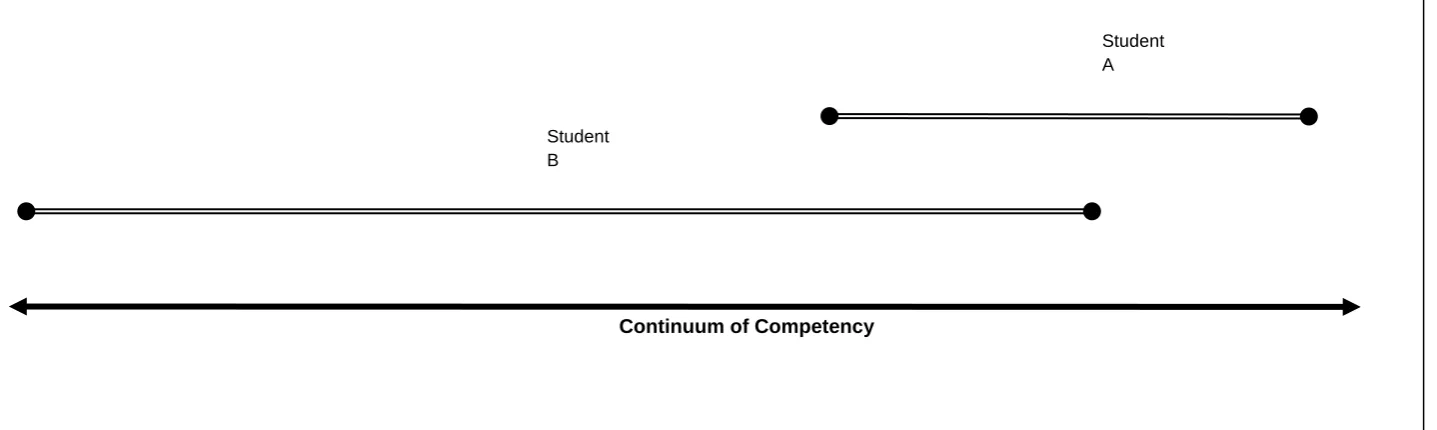
Cross-institutional benchmarking data is reported as aggregated student results for your program(s) in comparison to all other programs’ combined. As COMPASS® is a criterion based assessment and the rating scale is effectively ‘truncated’ at each end by starting at Novice and ending at Entry-Level; it represents the slice of the
continuum of competency of interest when assessing for entry level competency. Therefore the meaning of medians, percentiles, maximums and minimums will need to be interpreted with this in mind. The number of students from your program(s) represented in each comparative benchmark report should guide interpretation of reports i.e. you can have higher confidence in the meaningfulness of the comparison with greater numbers of students. In addition, you will have greater confidence in the representativeness of the data if similar results are found over consecutive years.
Expectations of Participating Universities
Universities participating in the Benchmarking COMPASS® Database are expected to do the following:
• provide evidence of approval to participate from Chair or full Human Research Ethics Committee
• adhere to this Code of Conduct and related requirements
• report any concerns regarding the use of external benchmarking data to the APEC SLP Benchmarking Management Committee.
Agreement to Abide by the Code of Conduct
Deputy Vice Chancellor, Learning and Teaching (or equivalent)
Signature_______________________
Name__________________________
Date___________________________
Position_________________________
University________________________
Head of Program, Speech Pathology (or equivalent)
Signature______________________
Name_________________________
Date__________________________
Position________________________
University______________________
References
Appendix 4—Project newsletters
COMPASS
®Benchmarking for Curriculum Renewal Project
PROJECT UPDATE
4 September 2009
Thank you for your ongoing interest in the COMPASS® Benchmarking for Curriculum Renewal Project4. The following is an update on project progress, opportunities to contribute to project activities and a ‘forecast’ for activities in 2010 for you to plan towards. As you will recall, this project has two major aims:
• establish an ethical, efficient and sustainable cross-institutional strategy to use COMPASS™ data to benchmark assessment of speech pathology student workplace performance in Australia, New Zealand and Singapore • facilitate ongoing engagement with and effective use of benchmarked data to
inform curriculum and research on preparing students for practice.
There are two phases to this project. First, developing an online database to support confidential and efficient cross-institutional benchmarking of COMPASS® data harvested from COMPASS® Online. Second, inviting universities to participate in two collaborative quality improvement cycles to examine their benchmarked data to identify and act upon areas for curriculum reform or research to support practice based learning.
1. Project progress
We were pleased to have a consensus agreement at the APEC-SLP Forum in Adelaide (May 2009) from all universities on the functionality of the proposed database for benchmarking data harvested from COMPASS® Online. The team has been consulting with Portal Australia, the company developing the software for the database, to finalise the details of the database design. We are learning a lot about data management, flow and security! Portal Australia has commenced developing a detailed specifications document that will then provide the basis for building the benchmarking database. It is anticipated that this will be finalized and building of the database commenced in October with a view to having a database ready for trialling by December.
Action note: We can’t benchmark data unless it is entered into COMPASS® Online. For those who haven’t been able to finalise lease agreements between your
universities and Speech Pathology Australia as yet - please continue your efforts! Please let Sue McAllister know if you need any support with this process.
2. Consultations
We have been consulting with students at all of the universities represented by team members to inform them of the project and provide an opportunity to have input into the design of the benchmarking database. While the overall database functionality has been agreed on, there are a number of decisions to be made regarding the content and format of reports that the benchmarking database will generate. If you would like to have input into these, please let Sue McAllister know as soon as possible and we will include you in the circulation of consultation documents. There will also be an opportunity to participate in trialling the database in early 2010. Action note: Contact Sue McAllister if you would like to have input into the content and format of reports generated by the benchmarking database.