Research Report No 220
Assembling the Fragments:
A Review of Research on Adult Basic Skills
Greg Brooks, Kerry Giles, John Harman, Sally Kendall, Felicity Rees, Sara Whittaker
National Foundation for Educational Research
The Views expressed in this report are the authors' and do not necessarily reflect those of the Department for Education and Employment.
© Crown Copyright 2001. Published with the permission of DfEE on behalf of the Controller of Her Majesty's Stationery Office. Applications for reproduction should be made in writing to The Crown Copyright Unit, Her Majesty's Stationery Office, St Clements House, 2-16 Colegate, Norwich NR3 1BQ.
Contents
List of Tables ...viii
Members of the Project Team ...ix
Acknowledgements...iix
Executive Summary ...x
PART ONE: WHERE ARE WE COMING FROM? ...1
Chapter 1: The context 1 1.1 Aiming for a fresh start ...1
1.2 Starting work ...2
1.3 The need for information...3
1.4 The availability of information ...4
1.5 The major contributor to the field...5
Chapter 2: Definitions, history and philosophies 7 2.1 Aim ...7
2.2 Sources...7
2.3 Definitions ...7
2.4 A brief history of adult basic education in the United Kingdom...11
2.5 Philosophies...12
2.6 Summary ...13
2.7 Recommendations...14
PART TWO: WHERE ARE WE NOW?...15
Chapter 3: The scale of need, and the impact of poor basic skills 15 3.1 Aim ...15
3.2 Sources...15
3.3 Assessing the scale of need ...16
3.3.1 ICT 16 3.3.2 ESOL 16 3.3.3 Oracy 17 3.3.4 Self-reported problems in literacy and numeracy 17 3.3.5 Performance surveys 19 3.4 The needs of subgroups ...23
3.4.2 Age groups 24
3.4.3 Socio-economic groups 24
3.4.4 Educational levels 24
3.4.5 Women and men 24
3.4.6 Linguistic minorities 25
3.4.7 Travellers 25
3.4.8 The unemployed 25
3.4.9 Prisoners 25
3.4.10Adults with special educational needs 28
3.5 Employers’ views on basic skills needs in the workplace ...28
3.5.1 The perception of need 28 3.5.2 The changing workplace 31 3.6 The impact of poor basic skills ...31
3.6.1 The impact of poor basic skills on individuals 31 3.6.2 The impact of poor basic skills on the economy 34 3.7 Factors associated with poor basic skills ...35
3.8 Summary ...36
3.9 Recommendations...36
Chapter 4: The students 38 4.1 Aim ...38
4.2 Sources...38
4.3 Students’ characteristics ...40
4.4 Match between need and enrolment ...43
4.5 Summary ...43
4.6 Recommendations...43
Chapter 5: Motivation, attendance, drop-out and progression 45 5.1 Aim ...45
5.2 Sources...45
5.3 What brings people to adult basic skills provision? ...46
5.4 What keeps people away from basic skills? ...50
5.5 How long and often do basic skills learners attend? ...51
5.6 Why do some basic skills learners drop out? ...51
5.6.1 Patterns of leaving 52 5.6.2 Reasons for ceasing tuition 53 5.6.3 Variables influencing drop-out 54 5.7 Where do basic skills learners go next?...55
5.8 Why do they go there? ...56
5.9 Summary ...56
Chapter 6: Provision and programmes 60
6.1 Aim ...60
6.2 Sources... 60
PROVISION...60
6.3 The scale of provision ...60
6.4 Changes in provision ...61
6.5 Provision in prisons ...62
6.6 Provision by voluntary, training and ‘other’ organisations...62
6.7 Provision by employers and in the workplace ...62
PROGRAMMES ...64
6.8 Distribution of programmes by type of provider...64
6.9 Basic skills support ...65
6.10 Family literacy and numeracy...67
6.11 Basic skills in the workplace ...71
6.12 Community-based programmes ...69
6.13 Summary ...72
6.14 Recommendations...72
Chapter 7: Tutors and professional development 73 7.1 Aim ...73
7.2 Sources...73
7.3 Numbers of basic skills staff ...73
7.4 Some characteristics of adult literacy tutors ...74
7.5 Professional Development ...74
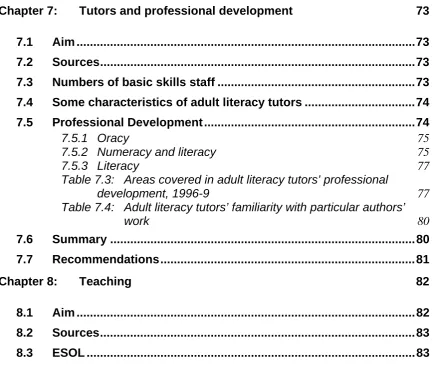
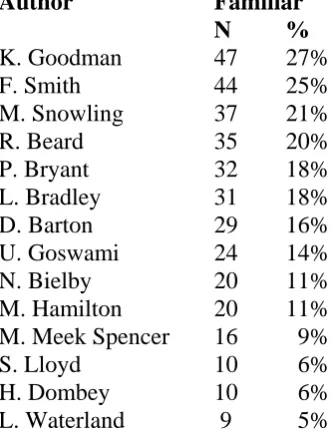
[image:4.595.84.512.68.705.2] [image:4.595.78.512.402.770.2]7.5.1 Oracy 75 7.5.2 Numeracy and literacy 75 7.5.3 Literacy 77 Table 7.3: Areas covered in adult literacy tutors’ professional development, 1996-9 77 Table 7.4: Adult literacy tutors’ familiarity with particular authors’ work 80 7.6 Summary ...80
7.7 Recommendations...81
Chapter 8: Teaching 82 8.1 Aim ...82
8.2 Sources... 83
8.4 Oracy...83
8.5 Literacy ...82
8.5.1 Curriculum content 83 8.5.2 Pedagogy 83 8.5.3 Differentiation 84 8.5.4 Teaching materials 85 8.6 Numeracy...85
8.6.1 Curricula: widening the debate 86 8.6.2 Shifting the focus 87 8.6.3 The possession of essential skills and knowledge: what are the skills and knowledge? 91 8.6.4 Pedagogy 91 8.6.5 Materials 93 8.7 Literacy-numeracy links ...93
8.8 The use of ICT in teaching basic skills to adults ...94
8.9 Students’ views... 101
8.10 Summary ... 102
8.11 Recommendations... 102
Annex to chapter 8: 101 Out-of-school learning of mathematics 101 Chapter 9: Assessment and Accreditation 107 9.1 Aim ...107
9.2 Sources...107
9.3 Formative assessment ...107
9.4 Summative assessment and accreditation...108
9.5 Summary ...110
9.6 Recommendations...110
PART THREE: WHAT WORKS?...111
Chapter 10: Impact studies 111 10.1 Aim ...111
10.2 Sources...111
10.3 ICT ...112
10.4 ESOL ...112
10.5 Oracy...113
10.6 Evidence on adult literacy and numeracy from the United States ...113
10.6.2Better grounds for optimism 117
10.7 Evidence on general adult literacy from Britain... 118
10.7.1The 1976-79 adult literacy study 119 10.7.2The 1998-99 NFER adult literacy study 120 10.8 Family literacy in Britain ...121
10.9 Evidence on adult numeracy from Britain ...123
10.10 Basic skills in prisons ...123
10.11 Summary ...124
10.12 Recommendations...124
Chapter 11: Other benefits 126 11.1 Aim ...126
11.2 Sources...126
11.3 ICT ...126
11.4 ESOL ...127
11.5 Oracy...127
11.6 US evidence on other benefits of adult basic skills tuition...127
11.7 British evidence on other benefits of adult basic skills tuition ..129
11.7.1General adult basic skills tuition 129 11.7.2Family literacy 131 11.7.3General adult numeracy provision 132 11.7.4Family numeracy 132 11.7.5Basic skills in prisons 132 11.7.6Relationship between attainment and other benefits 133 11.8 The benefits of workplace basic skills provision in Britain ...134
11.9 Summary ...135
11.10 Recommendations...135
Chapter 12: Factors associated with progress 137 12.1 Aim ...137
12.2 Sources...138
12.3 Basic skills in general ...138
12.4 Basic skills in prisons ...139
12.5 General adult literacy ...139
12.6 General adult numeracy ...141
12.7 Family literacy and numeracy...141
12.8 Workplace basic skills provision...142
12.9 Implications ...144
12.11 Recommendations...146
Chapter 13: Costs and Benefits 147 13.1 Aim ...147
13.2 Sources...147
13.3 Funding for basic skills...147
Source £m 147 13.4 Unit costs ...148
13.5 ICT ...149
13.6 Summary ...150
13.7 Recommendations...151
PART FOUR: WHERE NEXT? ...152
Chapter 14: Gaps in existing knowledge 152 14.1 Causes of Progress ...152
14.2 Special educational needs ...152
14.3 Routine data-gathering...152
14.4 Extra data-gathering ...152
Chapter 15: Recommendations 154 15.1 Causes of Progress ...154
15.2 Debating the field...155
15.3 Innovative data-gathering ...155
15.4 Routine data-gathering...156
15.5 Policy ...156
15.6 Monitoring Moser...156
Reference List...157
List of Tables
Chapter 3
Table 3.1: Surveys of the scale of need: self-reported problems 18 Table 3.2: Surveys of the scale of need: performance surveys of literacy 20 Table 3.3: Surveys of the scale of need: performance surveys of numeracy 22 Table 3.4: Incidence of poor literacy among prisoners 26 Table 3.5: Proportion of employers believing that there was a significant gap between
the skills of their current employees and those needed to meet their
business objectives, 1994-96 30 Table 3.6: Estimated economic returns to individuals of basic skills qualifications 32 Table 3.7: Life factors associated with poor adult basic skills 35
Chapter 4
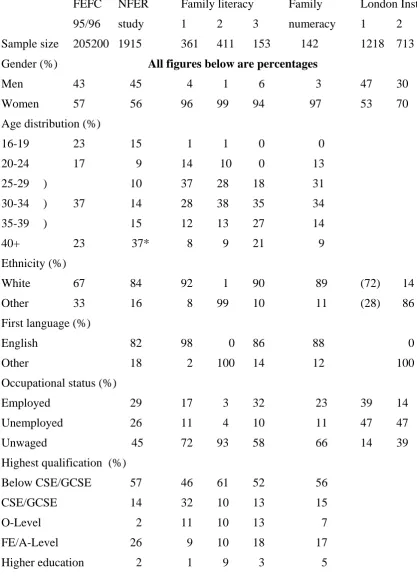
Table 4.1: Background characteristics of adult basic skills students 40
Chapter 5
Table 5.1: Adult literacy students’ reasons for seeking help 46 Table 5.2: Reasons reported by tutors for students leaving provision 52 Table 5.2: FE basic skills students’ reasons for dropping out 52 Table 5.3: ESOL students’ reasons for dropping out 53
Chapter 6
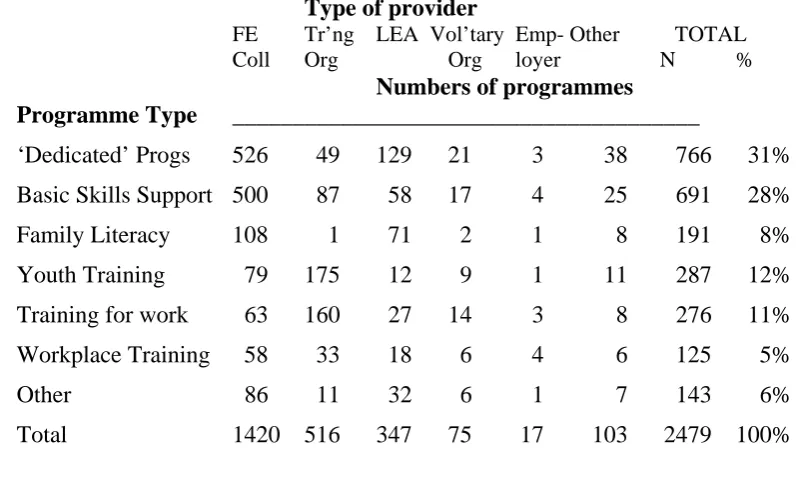
Table 6.1: Numbers of students in main types of provision in England, 1996/97 60 Table 6.2: Percentages of students by type of provider, England, 1996/97 62 Table 6.3: Numbers of programmes by programme type and type of provider,
England, 1996/97 64
Chapter 7
Table 7.1: Paid basic skills staff in England and Wales, 1996/97 73 Table 7.2: Relative proportions of basic skills staff with qualifications in numeracy
and literacy 76
Chapter 10
Table 10.1: Retention rates in 1976-79 adult literacy study in England 119 Table 10.2: Results of 1976-79 adult literacy study in England 120 Table 10.3: Overall results of 1998-99 adult literacy study in England and Wales 121
Chapter 13
Members of the Project Team
Dr Greg Brooks, Principal Research Fellow and Project Director, NFER, Slough
Kerry Giles, NFER Research Associate, Berkshire
John Harman, NFER Research Associate, Berkshire
Sally Kendall, Research Officer, NFER Northern Office, York
Felicity Rees, NFER Research Associate, Bournemouth
Sara Whittaker, Senior Assistant Librarian, NFER, Slough
Authorship
Greg Brooks wrote chapters 1, 2 (except section 2.3), 4, 7 (except section 7.5.2) and 10-15 (except sections 11.8, 12.8 and 13.5), most of the material on basic skills in prisons
(including sections 3.4.9 and 6.5), sections 3.7, 6.10-11 and 8.3-5, and the aims, sources, summary and recommendations sections of all other chapters, and edited all the
contributions.
Kerry Giles wrote up most of the material on numeracy (especially sections 7.4.2 and 8.6-7 and the Annex to chapter 8) and on the use of ICT in teaching basic skills (especially sections 8.8 and 13.5), did the systematic library search (including obtaining material through inter-library requests and searching the Register of Educational Research), and assembled batches of material for other authors to analyse.
John Harman wrote up most of the material on motivation, etc., and some of that on provision and programmes, including sections 5.3-8, 6.7 (part), 6.8-9 and 6.12. Sally Kendall wrote up most of the material on provision by employers and in the workplace, including sections 3.5, 6.7 (part), 11.8 and 12.8.
Felicity Rees wrote part of section 9.4 and most of sections 2.3 and 3.3-4 (including Tables 3.1-3).
Sara Whittaker carried out and documented all the database searches and almost all the internet searches (see the Appendix).
Acknowledgements
The project team would like to record their deep gratitude to:
• our colleagues, Mairi Ann Cullen and David Sims, for commenting on the report in draft
• our former colleague, Zenta Henkhuzens, for a few early internet searches
• our colleagues in the NFER library, Pauline Benefield, Katie Longfield and Christine Taylor, for sterling work on the references.
ASSEMBLING THE
FRAGMENTS:
A REVIEW OF RESEARCH ON ADULT
BASIC SKILLS
Executive Summary
The context
In the autumn of 1999, following the publication of A Fresh Start: Improving Literacy and Numeracy (the Moser Report), the Department for Education and Employment
commissioned the National Foundation for Educational Research to carry out a review of research on adult basic skills.
The review was to cover literacy, numeracy, oracy (speaking and listening skills), English for speakers of other languages (ESOL), and the use of Information and Communications Technology (ICT) to teach basic skills to adults. The age range to be covered was from 18 upwards, and it was envisaged that most evidence would come from Britain and then from other parts of the English-speaking world.
Searches were conducted both electronically (internet, databases) and conventionally (library).
There was most information on literacy, then numeracy, ESOL, and ICT, with least on oracy.
Oracy skills for monolingual English speakers and numeracy skills for speakers of other languages seem to be almost entirely overlooked.
The history of adult basic education in the UK since the 1970s has been one of swift growth and subtly changing philosophies.
The scale of need
National surveys of adults’ self-reports of problems in literacy and numeracy show that about 12 per cent of the adult population believe their basic skills are not adequate to meet the demands of everyday life.
The impact of poor basic skills on individuals is pervasively bad, and the impact of poor basic skills on the economy is thought to be substantial.
Though nearly 350,000 people were attending basic skills provision in 1996/97, this represented less than five per cent of those estimated to be in need.
The students
A high proportion of adult basic skills students are white, monolingual English-speaking, unwaged or unemployed, and poorly qualified.
The major motive for attending basic skills provision appears to be a desire for self-development, and the major barrier appears to be the fear of stigma.
Course completion seems to be high (75-80 per cent) for students who stay on a course beyond the first few weeks, and about half of students achieve their goals.
The major reason for drop-out is various forms of dissatisfaction with provision. Data on progression are lacking for general basic skills provision.
The major motive for parents attending family learning is to help their children. These adults have higher attendance, retention and completion rates than adults in general provision, and their progression to further study and/or employment is high.
Provision
Colleges of Further Education (FE) are the major providers (60 per cent of students), followed by Local Education Authorities (LEAs) (20 per cent) and prisons (11 per cent). Basic skills support for students pursuing another course as their main objective, and ‘dedicated’ provision for students for whom improvement in basic skills is the main objective, are the principal types of programme (60 per cent together).
Basic skills support, introduced after the 1992 Further and Higher Education Act which incorporated Colleges of FE as independent of LEAs, has been systematically developed and has had some success in lowering drop-out and non-completion rates.
Teaching and assessment
Tutors are mainly female and part-time. They tend to be well qualified, but professional development for them seems patchy.
There had never been a national curriculum for basic skills until that published in early 2000.
Little is known about what basic skills teaching is like on the ground.
There is considerable ferment and debate within the numeracy field, including attention to out-of-school learning.
demonstrated the need for a more rigorous framework. Impact studies
There was very little information on the impact of ESOL or of the use of ICT in basic skills, and none on oracy.
Combining evidence from Britain and the United States,
• There was evidence that basic skills tuition benefits basic skills students’ reading and writing
• The average gains in reading and writing in general basic skills provision were undramatic but worthwhile
• Worthwhile gains in reading and writing also occurred for parents in family literacy programmes
• Gains appeared to be greatest in approximately the first 70-100 hours of tuition
• After approximately the first 70-100 hours, gains can be sustained by further study
• The evidence on the impact of general adult numeracy tuition was sparse and unreliable
• There was suggestive evidence that family numeracy courses benefit parents’ numeracy skills.
Other benefits
There is substantial evidence of other benefits from a range of types of literacy and numeracy in both Britain and the United States, including workplace provision.
Other benefits include: self-reported gains in literacy, numeracy and self-confidence, gains in employment, further study and (particularly in family learning) gains in parents’ ability to help their children and gains for the children.
In family learning, other benefits seemed to be reliably related to gains in basic skills and might therefore serve as indirect indicators of such gains; but there is no evidence yet to show that this can be done in general provision.
The evidence on costs and benefits was small and unreliable. Principal gaps in knowledge
The biggest single gap is the total absence of intervention studies exploring what factors in teaching basic skills cause progress in learning basic skills.
Other gaps in knowledge have been noted above. Principal recommendations
Above all, there should be an immediate, structured programme of studies exploring the factors thought to cause progress in basic skills.
The research programme could immediately cover literacy, general numeracy and ESOL. Investigations of oracy for monolinguals and numeracy for speakers of other languages will need to await developments in the conceptualisation of the field.
These studies need to be undertaken with as much rigour as students’ and tutors’
sensitivities will allow; research paradigms other than control-group designs need to be considered.
Information on costs should routinely be gathered so that cost/benefit analyses can be improved.
The research programme needs to be informed by a vigorous debate on content, taking account of students’ views and the need to reach adults with poor basic skills and special educational needs.
Providers in the currently smaller sectors (employers, voluntary organisations, community-based provision) need to be encouraged, especially through steadier funding.
ASSEMBLING THE FRAGMENTS:
A REVIEW OF RESEARCH ON ADULT
BASIC SKILLS
PART ONE: WHERE ARE WE
COMING FROM?
Chapter 1:
The context
1.1 Aiming for a fresh start
The report A Fresh Start: Improving Literacy and Numeracy (Moser Report, 1999) from the Moser Working Group on Basic Skills highlighted the problems in adult basic skills in England, began to identify some of the gaps in existing knowledge, and recommended a detailed strategy for improvement.
The central problem was the percentage of adults with less than functional literacy and with low numeracy skills – estimated at about one adult in five in both cases (literacy: Carey et al., 1997; numeracy: BSA, 1997b).
The concern about adult basic skills was not confined to England:
1.2 Starting work
Even while this review was being compiled, many elements of the strategy recommended in the Moser Report were being put in place. New Adult Basic Skills Standards were drafted in the summer of 1999, put out for consultation (QCA, 1999), revised, and put out for further consultation in early 2000. About the same time the White Paper Learning to Succeed (GB. Parliament. HoC, 1999) announced that from April 2001 a new Learning and Skills Council (LSC), together with 47 local LSCs, was to be established, subsume many of the functions of the Further Education Funding Council (FEFC) and take on a broader remit. In November 1999 the Education and Employment Minister, Tessa Blackstone, announced several measures including the development of a curriculum and a national test for basic skills and enhanced training for basic skills teachers. The Basic Skills Agency (BSA) and the Qualifications and Curriculum Authority (QCA) developed the curriculum, and this went out for consultation in the spring of 2000. The University of Nottingham developed the national test, while in addition the BSA developed a rapid screening test. The BSA and the Further Education National Training Organisation began work on enhancing teacher training.
In the spring of 2000 it was decided to hold an international conference on the teaching of adult basic skills in September of that year. About the same time a decision was made not to participate in the international Adult Literacy and Life Skills Survey (ALL) being planned for 2002, but to mount a UK baseline survey of basic skills. A new centre on the Wider Benefits of Learning was established jointly at the Institute of Education and Birkbeck College of the University of London. In April 2000 the Secretary of State for Education and Employment, David Blunkett, announced the setting up of an Adult Basic Skills Strategy Unit within the Department for Education and Employment (DfEE). In the same month the University for Industry (Ufi) Ltd awarded the London Institute of
1.3 The need for information
As a further part of the strategy, and in order to begin to fill some of the main gaps in existing knowledge, the Department for Education and Employment (DfEE) commissioned four reports:
• a report from a Working Group on the basic skills needs of adults with learning difficulties and/or disabilities (LDD Working Group, 2000)
• a report from a Working Group on the basic skills aspect of English for Speakers of Other Languages (ESOL) (ESOL Working Group, 2000)
• an analysis of the economic returns to individuals of academic, vocational and basic skills qualifications (Dearden et al., 2000)
• this review of research on adult basic skills, carried out by a team at the National Foundation for Educational Research (NFER).
The aim of this review was to provide as complete a picture as possible of current research knowledge on basic skills, and on effective methods of teaching basic skills to adults
The methodology of the review is described in Appendix A. As may be deduced from the previous section, a deluge of information became available even while this review was being written, so a decision had to be taken on when no more data would be incorporated: the ‘guillotine’ date was 30 June 2000.
The information which was found has been organised in four parts:
• Part One: Where are we coming from? - covering all the preliminaries, the context for this review, what kinds and quantities of information were available, definitions of basic skills, the history of the field, and competing philosophies.
• Part Two: Where are we now? - in terms of the need for basic skills, the impact of poor skills, who basic skills students are, what their motivations for participating are, how many drop out and why, where those who complete courses go on to, what the field of basic skills provision is like, teaching and learning, assessment and
accreditation.
• Part Three: What works? - evidence on how much progress students make, the bonus effects of participation, factors related to effectiveness, costs and benefits.
• Part Four: Where next? - what are the gaps in our knowledge, and which most urgently need filling?
In each of chapters 2 to 13 the more specific questions to be addressed are summarised in an initial section on the aims of that chapter. Then comes a summary of the main sources of information used, usually including a note of what information is missing, and an indication of the structure of the chapter. Following the substantive sections, each of those chapters ends with a summary and a list of recommendations. The review concludes by identifying the major gaps in knowledge (chapter 14) and making a number of strategic recommendations (chapter 15).
1.4 The availability of information
basic skills in English for speakers of other languages. The amount of relevant information for ESOL was therefore greater than for oracy, but not as substantial as for literacy or even numeracy.
There were two possible areas of research in which the basic skills field was apparently totally deficient, but where the absence of information might be seen as a qualified advantage: aetiology (the origins and causes of basic skills problems within individuals) and the cognitive processes which operate within the brain when basic skills are being used. These seem to be areas which are studied only in developmental contexts up to about age 18. Where these areas are studied in connection with developmental learning problems they seem to dominate the field, so that other aspects which need investigation, such as what works, and why, receive little attention. The study of developmental dyslexia in particular exemplifies this imbalance. In the most recent comprehensive analysis of
dyslexia research (Tansley and Panckhurst, 1981), hundreds of pages were needed to cover aetiology and cognitive processes, while just seven sufficed for intervention studies. Little seems to have changed in that field in the intervening years. Thus the intensive and long-term attention to aetiology and cognitive processes seems to have delivered very little in the way of testable applications in teaching.
Very little research was found on the aetiology and cognitive processes of developmental
adult basic skills problems. Some research of this sort may therefore be overdue, but it would be an error to reproduce in this field the imbalance evident in research on developmental dyslexia.
There is, however, a very large literature on acquired dyslexia in adults, that is, on people whose difficulties are the result of trauma (brain injury, stroke, etc.). Though an imbalance between fundamental and applied research was evident in this field also, there did seem to be more payoff in terms of remediation in clinical settings. However, this review is concerned with adult basic skills outside those settings, and the literature on acquired dyslexia is therefore not covered.
The list of references in this report contains about 150 items, of which 39 were published and/or commissioned by the BSA, either since it adopted that name or under its previous title, the Adult Literacy and Basic Skills Unit (ALBSU). Moreover, these have tended to be the more significant, quantitative and worthwhile research works. Without this
Chapter 2:
Definitions, history and philosophies
2.1 Aim
In order to decide what counts as research evidence on basic skills, a view had to be taken not only on what counts as research (section 1.4) but also on what counts as basic skills. This chapter therefore opens by considering definitions of the field. It continues with a very brief history of basic skills in England and Wales since 1970, which leads into a discussion of the contested philosophies (sets of values) that have been held by practitioners.
2.2 Sources
The main source was the review by Hamilton and Merrifield (2000) of adult learning and literacy in the UK. The definitions analysed were mainly taken from work by the BSA and from the International Adult Literacy Survey (IALS).
2.3 Definitions
The BSA’s definition of basic skills is:
the ability to read, write and speak in English and use mathematics at a level necessary to function and progress at work and in society in general. (BSA, 1997c, p.4)
This is the definition of the field which was adopted for this review. It is a comprehensive definition, since it encompasses not only literacy but also oracy and numeracy, and
implicitly applies equally to native and non-native speakers of English.
The term ‘oracy’ was coined in the 1960s to be parallel to literacy and to cover both speaking and listening. Most definitions of basic skills (including the Moser Report’s, see below) omit oracy, and many treat ESOL as a separate field. Unlike basic skills for monolingual speakers of English, ESOL seems universally to be taken to include
competence in spoken language; but on the other hand the question of whether provision for speakers of languages other than English should include numeracy seems to be universally ignored. In this review, both oracy in general and numeracy for speakers of languages other than English are covered.
The term ‘numeracy’ was introduced in the 1950s, as a concept of basic mathematical skills to parallel the reading and writing skills of literacy. Definitions of numeracy tend to
emphasise the practical application and use of mathematics: ‘To be numerate is to function effectively mathematically in one’s daily life, at home and at work’ (Willis, 1998). Within the UK, numeracy has been regarded as comprising not only arithmetical/number skills but also ‘elements of geometry and statistics’ (Foxman, 1998, p.1).
A theme which cuts across the ‘content’ areas of basic skills is the use of Information and Communications Technology (ICT) in the teaching and learning of basic skills. This is not mentioned in the BSA definition - but this aspect of the field needed to be, and has been, addressed at many points in this review as a special topic.
Thus this review attempts to cover three aspects of basic skills (oracy, literacy, numeracy), for both native and non-native speakers of English, and with the use of ICT highlighted as a special cross-cutting theme relevant to all six of the areas just defined.
The BSA definition is silent about routes to achieving the ability levels it mentions – but this could be seen as leaving all such questions (including the use of ICT) open. If there is an omission from the BSA definition, it might be that people’s need for adequate basic skills for their personal, private lives also needs acknowledgement.
IALS, carried out in the UK in 1996 (and in about 20 other countries between 1995 and 1999), took its definition of literacy from the 1980s US Young Adult Assessment (Kirsch
using printed and written information to function in society, to achieve one’s goals and to develop one’s knowledge and potential. (cited in Carey et al., 1997, p.13) Both this and the BSA’s definitions take a functional approach. What is useful about them is that they recognise literacy (and by implication other basic skills) ‘not ... as something people have or do not have, but rather as a broad range of skills required in a broad range of contexts’ (ibid.).
Within IALS, literacy encompassed three strands: prose literacy, document literacy and quantitative literacy. Where adult numeracy figures are quoted from IALS, they are actually based on the results of quantitative literacy, which are derived from text-based arithmetic and number problems.
Other surveys have tended to look separately at literacy (comprising reading skills only, or a combination of reading and writing skills) and numeracy. There is consequently an overlap between the quantitative aspect of literacy as defined within IALS, where numbers may be presented in lists or in textual or graphical form, and the arithmetical dimension of mathematics. It is important to bear this in mind when considering any apparent
discrepancies between IALS and other numeracy survey results. There is an issue here relating to the accessibility of ‘embedded’ arithmetical concepts which are presented verbally, as compared with those presented ‘mathematically’.
correlation, though not a complete correspondence, between self-reported difficulties and low assessment scores for both literacy and numeracy.
The approach to definitions of basic skills adopted in the Moser Report (1999, in particular Annex A) was pragmatic. It did not address the question of basic competence in oracy at all, and had little to say on speakers of languages other than English (areas where the literature is wholly or partly deficient). It did express considerable encouragement for the use of ICT in basic skills (even though the research literature in that area is not extensive either). It took the threshold of functional competence in literacy as being the approximate equivalent of the minimum standard required for the award of Level 1 in the (then)
Communication Standards of the BSA, while the threshold of basic competence in
numeracy was equated approximately with Entry Level (formerly known as Foundation Level) in the BSA Numeracy Standards. The establishment of different threshold levels for literacy and numeracy was based on the fact that surveys have suggested that adults are generally able to function in society with lower levels of numeracy than of literacy (see, for example, Ekinsmyth and Bynner, 1994).
Finally in the context of functional literacy and numeracy, it is relevant to question whether threshold levels should be regarded as constant over time. Clearly, a constant definition such as that provided by the BSA, based on performance criteria and on an ‘80 per cent mastery’ model of assessment, has enormous advantages in permitting comparisons over time. Nevertheless, there is a school of thought which suggests that a modern technological society makes increasing demands on individuals’ skills, so that the threshold of functional skill is actually higher now than it was, say, at the time of the National Survey of Health and Development nearly thirty years ago.
And in fact the new draft Adult Basic Skills Standards (QCA, 1999), which were developed as a result of a recommendation in the Moser Report, re-set the boundaries between basic skills levels. In particular, the new boundary between Entry level and Level 1 was aligned with the boundary between IALS Levels 1 and 2, which was higher than the Entry
level/Level 1 boundary in the previous BSA Standards. Thus a need to raise basic skills expectations was implicitly recognised and implemented in the new Standards.
recently enough to have used them was the 1998-99 study of progress in adult literacy carried out for the BSA by NFER. All other references to ‘the BSA Standards’ are to those in use up to 1998.
2.4 A brief history of adult basic education in the United Kingdom
This section draws heavily on Hamilton and Merrifield (2000). As they showed, the modern history of adult basic education (ABE) in the United Kingdom effectively began with the Right to Read literacy campaign of the mid 1970s:
Ad hoc provision of adult literacy education by community groups and local education authorities had been rising unremarked during the late 1960s. By 1972, the eve of the campaign, more than 230 literacy schemes in England and Wales served about 5,000 learners (Haviland, 1973)…
In 1973 … Right to Read was launched… This was the first adult literacy campaign to take place in a Western European country … In 1974, the central government released £1 million to the campaign. This, combined with an enormous volunteer effort, quickly established adult literacy services throughout England and Wales... The BBC ... develop[ed] a series of [television] programmes,
On the Move, intended to publicise learning opportunities and help recruit learners. (Hamilton and Merrifield, 2000, pp.249-50)
Over the years the scope of basic skills has been steadily widening. Literacy was the exclusive early focus, and remains the predominant aspect, but the field has expanded to take in numeracy, oracy (at least for non-native speakers of English) and ESOL. Hamilton and Merrifield (2000, pp.251-3) pointed out that:
In England and Wales, ESOL was developed under the Home Office ... as a response to immigration and took a path separate from literacy... [It] was not included in the Right to Read campaign. Concern for the language needs of
linguistic minority groups ... has always been quite limited in the United Kingdom. Alan Wells, director of the BSA, acknowledges that no real [ESOL] policy has ever emerged and that there are no universal opportunities for new citizens to learn English (Wells, 1996).
This would help to explain the shortage of research in the ESOL section of basic skills.
passage of the Further and Higher Education Act of 1992, ABE was made a permanent part of further education in England and Wales. (Hamilton and Merrifield, 2000, p.252)
and its task, so far from being to put itself out of work, seems to increase exponentially. This can be seen clearly from the increase in enrolment:
In 1973 only 5,000 people were receiving help with reading and writing in England and Wales. By 1985 the number had risen to 110,000, and by 1995-96, 319,402 people were receiving help with literacy and numeracy in England (BSA, 1997)... (Hamilton and Merrifield, 2000, p.256)
It is worth noting that inter-agency approaches are increasingly being used to achieve enrolment and participation targets.
The context of further education has continued to change throughout the 1990s… [T]he focus … has shifted from simply growing to targeting learners, particularly those from areas of social and economic deprivation. To attain targets, further education colleges are increasingly forming partnerships (sometimes with community groups and voluntary organizations) and joining in local and even regional planning efforts. (Hamilton and Merrifield, 2000, pp.251-2)
2.5 Philosophies
In parallel with its expansion, the basic skills field has changed its ethos and approach, at least according to Hamilton and Merrifield (2000, pp.251, 281-4):
ABE initially became part of the existing adult education service, funded and led by LEAs. It took on the ethos of that service: a broad liberal curriculum aligned with personal self-development rather than social goals. Along with that sense of purpose it adopted its basic characteristics: informal, student-centred teaching and assessment, part-time staff, and mainly evening classes without dedicated space or facilities (often housed in schools)…
People who have been involved with literacy work since the early campaign have seen a major shift in the culture of the field. Changes in accreditation, professional status, and the institutional location of ABE have inevitably led to changes in the discourse of literacy, what is defined as good or bad practice, and what counts as goals for literacy work…
1990s these came to dominate mainstream ABE…
Some people emphasise the benefits of change – the importance of structure and progression, the positive effects of quality standards and statutory status for ABE, which encourage better resourcing and create pathways for people to continue their education and training rather than ghettoising them within basic education… Other practitioners, and some policymakers, regret the loss of an approach to literacy as a right and a means of empowerment. They also regret the loss of the flexibility and openness of relationships that characterised the old approach, even if these ideals were not always realised in practice…
Hamilton and Merrifield’s account was both a history and an analysis of competing
philosophical stances in the field. Data to be presented in chapter 8 will question the extent to which the ‘broad, liberal’, almost community service ethos has in practice been displaced by ‘functional, instrumental social control’. But that these competing philosophies exist is undoubtedly true; and they colour all aspects of the research to be analysed here. In particular, surveys of the scale of need, and analyses of the impact on society, have tended to emphasise functional uses of literacy and numeracy. Most current assessment
instruments have a similar character. On the other hand, many students’ motivations seem to have more to do with personal goals, and recent evidence suggests that adult literacy tutors’ practice and professional knowledge are in tune with that and with an enduring liberal ethos. Within the BSA’s family literacy programmes certainly there was no conflict between tutors’ urge to take account of students’ needs and goals, and the need for tutors (who know how to address students’ needs) to set the agenda by which students would reach those goals.
2.6 Summary
Basic skills encompasses not only literacy and numeracy but also oracy and English for speakers of other languages (ESOL), and the use of ICT in all those areas.
The values of some practitioners in the field tend to reflect a ‘liberal, student-centred’ philosophy, while others have integrated this with the need for tutors to teach students how to reach their goals.
2.7 Recommendations
There needs to be a renewed debate on the place of oracy in basic skills for monolingual English speakers, and on the place of numeracy in provision for speakers of languages other than English.
PART TWO: WHERE ARE WE NOW?
Chapter 3:
The scale of need, and the impact of poor
basic skills
3.1 Aim
So much for the context of basic skills, and of this review. Part Two describes the current basic skills scene in some detail. This chapter reviews, first, the survey evidence on how many people have poor basic skills, and therefore basic skills needs; secondly, what effect poor basic skills have on people’s lives, with some indications of the origins of poor skills.
3.2 Sources
The first national survey of any aspect of adult basic skills in Britain took place in 1972, and to date there have been 12 such surveys involving adults in England, eight of them (for no apparent reason) in six years in the 1990s. Summaries of the evidence from all these surveys are provided in Tables 3.1-3. None of the surveys covered only England; all of them also covered Wales, and most also covered Scotland. To extract data for England alone would in most cases be impossible. But since the population of England represents 84 per cent of the population of Britain, and 94 per cent of that of England and Wales, the view has been taken here that separate data for England would not differ markedly from those given.
Some survey data for ESOL were found. Though discussed separately below, they are included with those for the general population in the Tables. Very few survey data were found on oracy, and none on ICT and basic skills.
This pattern, of there being considerably more information on literacy and numeracy than on the other topics, persists through most of this review. Because of this, and in order that the less-documented areas should not be lost sight of by being relegated to the ends of chapters, ICT, ESOL and oracy are usually dealt with (as in this chapter) first, followed by literacy and then numeracy.
That information is then supplemented by data on employers’ views on basic skills needs in the workplace. This information is indirect evidence on the topic and is therefore not integrated with the direct survey evidence but placed after it.
In the last two substantive sections of the chapter, which consider the evidence on the impact of poor basic skills and life factors associated with poor skills, a range of sources was used.
3.3 Assessing the scale of need
3.3.1 ICT
No information.
3.3.2 ESOL
There have been three surveys of the scale of need among members of linguistic minorities, two commissioned by ALBSU/BSA, in 1989 and 1994-95, and one by the Department of Employment, in 1992, plus a recent estimate by the ESOL Working Group. The 1989 survey (ALBSU, 1989a and b) relied on self-report. It estimated the number of adults whose mother tongue was not English as between 1.66 and 1.88 million, of whom the estimated number needing help with English was 500,000; at the time 44,000 (nine per cent) were receiving help. Between a quarter and two-fifths of linguistic minority adults reported difficulties with understanding, speaking, reading and writing English. Slightly lower figures were reported from the 1992 study by Sargant (1993), who used the same questions as the ALBSU survey – but the discrepancy may have been due to differences in sampling since Sargant studied particular linguistic/ethnic minorities (South Asians, Chinese, Africans, plus a very small sample of Afro-Caribbeans).
The 1994-95 study (Carr-Hill et al., 1996) was a combined self-report and performance survey based on a sample of adults from particular linguistic/ethnic minority groups (South Asians, Chinese, recent refugees) and contained 19 literacy tasks but only two oracy (listening) tasks. It therefore did not permit generalisation to the whole of the ‘ESOL
among all the groups approached than in the general population, with between 14 and 40 per cent of different minority groups assessed as being below ‘survival’ level, i.e. below BSA Entry Level.
The ESOL Working Group (2000, p.13) pointed out that the 1991 Census showed that just over 2.5 million people then living in Britain (4.7 per cent of the population) were born in countries where English is not the national language, and estimated (p.14) that ‘1- 1.5 million people need to improve their English language skills if they are to participate in education, work and society.’
3.3.3 Oracy
No survey information on oracy was found other than that just mentioned under ESOL. It is as though the speaking and listening skills of the monolingual majority of adults are invisible to researchers. This is despite the speaking and listening element of the National Curriculum and GCSE English, the presence of Communication Skills in NVQs and in the BSA’s existing Communication Standards, and the regular polls of employers (see below) and other groups showing the importance they attach to these skills. Research in this area is admittedly more difficult than in literacy, but in the 1980s the Assessment of
Performance Unit Language Monitoring Project successfully developed oracy tests for 15-year-olds and used them in national monitoring surveys (Brooks, 1987; Gorman et al., 1983, 1988, 1991).
3.3.4 Self-reported problems in literacy and numeracy
Table 3.1: Surveys of the scale of need: self-reported problems
Survey Date Age(s)/Gr
oup
Reported in Type of problem Rate (%)
NCDS4 1981 23 ALBSU (1987) Reading 4
Writing or spelling 9
Numeracy 5
Any difficulty 13
A Nation’s Neglect 1989 linguistic
minorities
ALBSU (1989a and b)
Able to understand English ‘a little or not at all’ Able to speak English ‘a little or not at all’ Able to read English ‘a little or not at all’ Able to write English ‘a little or not at all’
26 29 36 40
BCS70 1991-92 21 Ekinsmyth and
Bynner (1994)
Reading
Writing or spelling
3 9
Numeracy 4
Any difficulty 12
Learning for a Purpose 1992 linguistic
minorities
Sargant (1993) Able to understand English ‘a little or not at all’ Able to speak English ‘a little or not at all’ Able to read English ‘a little or not at all’ Able to write English ‘a little or not at all’
19 23 26 31
Older and Younger 1993-94 22-74 BSA (1995b) Writing 13
Lost
Opportunities
1994-95 linguistic minorities
Carr-Hill et al. (1996)
‘Not at all’ able to read English ‘Not at all’ able to write English
26 30
NCDS5 1995 37 Bynner and
Parsons (1997b)
Reading
Writing or spelling
3 12
Numeracy 4
Any difficulty 12
IALS 1996 16-65 Carey et al. (1997) Poor reading skills for job 2
Poor writing skills for job 4
In round numbers, this implies that 5.4 million people in the adult (18+) population of the United Kingdom (4.5 million in England) believe that their basic skills are not adequate to meet the demands of everyday life.
3.3.5 Performance surveys
Other surveys have gone beyond self-report and assessed adults’ performance on actual literacy and numeracy tasks, but these then raise the issue of how boundaries are defined and how satisfactory the assessment instruments used are. The age 21 phase of BCS70 (the British Cohort Study 1970), for example, carried out in 1992, used tasks which were
difficult for all adults at lower levels of literacy, and included only one item designed to discriminate between those at higher levels (Ekinsmyth and Bynner, 1994, pp.19-21). In relation to literacy, Brooks (1998, pp.7-8) nevertheless concluded that ‘a significant
Table 3.2: Surveys of the scale of need: performance surveys of literacy
Survey Date Age(s)/
Group
Reported in Definition of very low
literacy
Rate (%)
Definition of functional illiteracy
Rate (%)
NSHD 1972 26 Rodgers (1986) less than 11/35 on
Watts-Vernon reading test
1
BCS70 1991-92 21 Ekinsmyth and Bynner (1994) below BSA Entry Level 13 at BSA Entry Level
but below Level 1
19
Older and Younger
1993-94 22-74 BSA (1995b) below BSA Entry Level 4 at BSA Entry Level
but below Level 1
15
Lost
Opportunities
1994-95 linguistic minorities
Carr-Hill et al. (1996) below BSA Entry Level 25
NCDS5 1995 37 Bynner and Parsons (1997b) below BSA Entry Level 6 at BSA Entry Level
but below Level 1
19
Writing Skills 1995 16-60 BSA (1996) (results were not scaled) (results were not scaled)
Table 3.2 shows reasonably consistent evidence that
• about one adult in five or six is below the threshold of functional literacy, with skills below BSA Level 1; and
• at least one adult in twenty has such a low of level of literacy as to be below BSA Entry Level.
The IALS survey of 1996 (Carey et al., 1997; cf. OECD, 2000) rated slightly more than one adult in five as having Level 1 literacy, an apparent discrepancy that is explained by the fact that the IALS levels were not designed to correspond directly to BSA levels. As Carey
et al. (1997, p.16) pointed out, IALS Level 1 included some tasks rated as within (the lower end of) BSA Level 1 for reading, and not just tasks rated as below that level.
The IALS tests contained very few items at Level 1, and therefore provided very little detail on what adults with poor skills could do – Level 1 was mainly defined by all the things that people at that level could not do. One of the aims of the 1998-99 NFER study of adult literacy for the BSA (Brooks et al., forthcoming, 2000) was to attempt finer differentiation within Level 1. Very simple items were included in the reading test used, and statistical discrimination was achieved to about four standard deviations below the national mean established by IALS – see the results summarised in chapters 10 and 11.
However, what IALS did indicate convincingly for the first time was that the level of literacy performance in the UK was lower than in several other major European countries (cf. also European Basic Skills Network, 2000), and this in itself suggested that there was a need to be addressed.
Table 3.3: Surveys of the scale of need: performance surveys of numeracy
Survey Date Age(s) Reported in Definition of very low
numeracy
Rate (%)
Definition of low numeracy Rate
(%)
ACACE 1981 16-65+ ACACE, 1982;
Social Surveys (Gallup Poll) Ltd (1981)
less than 6/11 on very simple test
21
BCS70 1991-92 21 Ekinsmyth and Bynner
(1994)
below BSA Entry Level 20 at BSA Entry Level
but below Level 1
57
Older and Younger
1993-94 22-74 BSA (1995b) below BSA Entry Level 15 at BSA Entry Level
but below Level 1
39
NCDS5 1995 37 Bynner and Parsons
(1997b)
below BSA Entry Level 23 at BSA Entry Level
but below Level 1
48
IALS 1996 16-65 Carey et al. (1997) IALS Level 1 ‘quantitative
literacy’
23
International Numeracy Survey
1996 16-60 BSA (1997b) less than 6/12 on simple test 22
Key to Tables 3.1-3: BCS70 = British Cohort Study 1970; NCDS4 = National Child Development Study, 4th sweep; NCDS5 = National Child
Development Study, 5th sweep; NSHD = National Survey of Health and Development; ACACE = Advisory Council for
In relation to numeracy (see Table 3.3), the results suggest that the level of very low numeracy in the adult population is similar to the level of functional illiteracy, i.e. that
• about one adult in five has very low numeracy, with skills below BSA Entry Level. Both the ‘quantitative literacy’ section of IALS and the simultaneous International Numeracy Survey in 1996 indicated that the proportion of adults in Britain with very low numeracy skills was substantially higher than in other developed countries (cf. also European Basic Skills Network, 2000).
It should also be noted that there was a substantial overlap in these findings. Many adults with basic skills problems have needs relating to both literacy and numeracy.
3.4 The needs of subgroups
3.4.1 Regions
Few surveys have looked specifically at levels of need within geographical areas, although the general picture to emerge from national surveys is that adults with basic skills needs are most likely to be found in areas that suffer deprivation. Areas with the highest levels of deprivation have ‘roughly one quarter more adults with poor literacy or numeracy than other areas’ (GB. Parliament. HoC, 1998).
A national project on literacy and numeracy levels at electoral ward level was carried out for the BSA (1997a) by the Opinion Research Business (ORB). ORB carried out 17 local surveys comprising over 8,000 interviews in areas chosen to make up a nationally
representative sample. These local surveys were used to make predictions about the level of basic skills in almost every ward in England. This means that for most areas the
3.4.2 Age groups
In BSA (1995b; cf. Brooks, 1998) it was suggested that the profile of need changes with age, in that young adults’ literacy and numeracy skills tend to improve into middle age, plateau, and then decline towards retirement age. The same trend was evident for both literacy and numeracy in IALS, for spelling in the Writing Skills survey (BSA, 1996), and for numeracy in the ACACE (Advisory Council for Adult and Continuing Education) survey of 1981 and the International Numeracy Survey of 1996; also for linguistic minorities in all three relevant studies. Therefore the need for basic skills provision tends to increase, not diminish, for older age groups.
3.4.3 Socio-economic groups
In surveys where the relationship of skills to socio-economic status (SES) was investigated, lower SES groups tended to have poorer skills than higher SES groups.
3.4.4 Educational levels
In surveys where the relationship of skills to level of educational qualifications was
investigated, people with poorer qualifications tended to have poorer basic skills than those with better qualifications.
3.4.5 Women and men
3.4.6 Linguistic minorities
For oracy and literacy see under ESOL, above. No data at all were found on the numeracy needs of linguistic minority adults. It seems to be assumed that speakers of languages other than English have only language (oracy and literacy) needs, when it seems likely that many also have numeracy needs.
3.4.7 Travellers
No information was found except one mention of their additional educational needs (GB. DfEE, 1997, p.18).
3.4.8 The unemployed
Unemployed people tend to have worse spelling and punctuation than those in work (BSA, 1996). There was also some evidence of loss of skills among adults who are out of work (Bynner and Parsons, 1998). This tended to be more acute, and to start sooner after loss of employment, for numeracy than for literacy.
3.4.9 Prisoners
A small-scale survey (BSA, 1994) involving 12 per cent of the prisons in England and Wales was carried out into the need for basic skills instruction among people in prison. This appears to have provided the framework for the Prison Service to carry out
Table 3.4: Incidence of poor literacy among prisoners
Year N Literacy below level 1 (%)
1994 416 52
1998 47,298 33
1999/2000 97,681 39
Rice (2000) 203 14? level in general population 15-19
Sources: BSA (1994), Prison Service (2000), Rice (2000), Table 3.2 above Key: N = sample size
Notes: (1) The 1998 and 1999-2000 percentages are averages of those given for reading and writing in Prison Service (2000); the sample size for 1998 is that for reading, while that for 1999/2000 is for writing – in both cases the sample size for the other skill was somewhat smaller.
(2) The percentage for Rice (2000) is estimated from his Figure 1, p.4.
It proved impossible to add a column of properly comparable data for numeracy to Table 3.4 because the Prison Service (2000) document did not give figures for prisoners below Entry level for numeracy, this being the definition of poor numeracy skills used here. However, that document did give the figures of 70 per cent (N = 59,440) and 67 per cent (N = 89,572) for those with numeracy skills below level 1 in 1998 and 1999-2000 respectively; and the corresponding figure in BSA (1994) was 76 per cent (N = 416). (Rice did not investigate numeracy.) Table 3.3 above showed that the three estimates for the general population on this criterion ranged between 39 and 57 per cent. Indirectly, this suggests that the incidence of poor numeracy skills also was higher among prisoners than in the general population.
The incidence of poor literacy skills was somewhat lower among women prisoners (but they formed less than 10 per cent of the samples; Rice’s sample contained no women) than among male prisoners, but (on the indirect criterion just mentioned) the incidence of poor numeracy skills was similar in both groups.
are not representative of the general adult population: they are predominantly men, and probably disproportionately represent lower IQ, educational and SES levels.
Rice’s estimate of the incidence of poor literacy among prisoners was much lower than others, and very close to estimates for the general population. His testing was very thorough, and it may well be that the Prison Service’s testing of its tens of thousands of new prisoners was less so. Nevertheless, Rice’s claim that his data showed that the incidence of poor literacy among prisoners is substantially lower than is usually claimed was based on too small a sample.
Rice did, however, provide firmer information on prisoners with dyslexia, who were a main focus of the Prison Reading Survey. A Prison Service parliamentary briefing (Robson et al., 1998) stated that the Service was ‘work[ing] with specialist educational consultants on how best to screen prisoners for dyslexia and then how best to support prisoners with this learning need’, and more recent documents supplied by the Prison Service stated that this policy was being implemented. By detailed testing Rice diagnosed 11 (five per cent) of his sample of 203 prisoners as having been dyslexic since childhood. Since he was comparing this with estimates of dyslexia in the general population averaging five per cent, he
concluded that ‘the prevalence of dyslexia in the prison population appears to correspond to estimates of its prevalence in the general population’ (Rice, 2000, p.2). He again pointed out that his estimate was much lower than some that have received publicity: ‘Estimates that one in two of the male offender population is dyslexic have been quoted in Parliament’ (ibid.). Such estimates may have been based on high estimates for poor literacy among prisoners and on the faulty assumption that most literacy problems are caused by dyslexia or merit that label. In this respect, Rice’s data seem sounder.
have access to improving literacy and numeracy skills while in prison would make it easier for them to get and keep a job on release and/or to gain a vocational qualification. As will be shown in section 6.5, the Prison Service has set itself a target in terms of reducing the incidence of poor basic skills.
3.4.10 Adults with special educational needs
The work with prisoners with dyslexia was the only research found on any group of adults with special educational needs. Otherwise, such people are a group who do not seem to have been identified clearly in surveys, although it seems reasonable to suppose that their needs in terms of specific provision might be different from those of adults who, for example, missed a substantial amount of schooling through illness, truancy, or constant changes of school.
3.5 Employers’ views on basic skills needs in the workplace
3.5.1 The perception of need
Research in this area relates to employers’ perceptions of employees’ basic skills needs within the workplace. Concerns about the basic skills needs of the workforce were raised by an employer-focused study conducted by Atkinson and Spilsbury (1993). This was a large-scale study conducted in England and Wales in 1991-92. It involved a postal questionnaire survey of 73 Training and Enterprise Councils (TECs) covering 1.3 million jobs in 24,000 establishments. One in ten of the establishments surveyed reported that their employees’ basic skills were ‘just adequate or worse’, and this dissatisfaction was most marked at the bottom of the labour market. Nearly one in four employers reported that job applicants’ basic skills were ‘just adequate or worse’, and this dissatisfaction was spread across all levels of job. In particular, Atkinson and Spilsbury found that employers valued oral communication skills.
Employers were asked to rate employees’ basic skills needs on a scale of one to five. One in seven manual workers were perceived as having problems with reading, one in six problems with verbal communication, one in five problems with numeracy, and more than one in four poor writing skills (ALBSU, 1993, p.15).
Frank and Hamilton (1993) surveyed 73 companies in the north-west of England. They found that 39 per cent of employers saw a need for basic skills training in their companies (p.129). Interestingly though, 61 per cent of these employers could not see a need for such training. The respondents also highlighted the small percentage of manual jobs that did not require any basic skills (pp.123-6). Only five per cent of respondents felt that there was very little or no reading required in the jobs they were discussing, and only seven per cent said there was no writing. In addition, only five per cent said that no mathematical skills were required in manual tasks.
Similarly, a Department for Education and Employment report (GB. DfEE, 1997, p.4) suggested that only one job in 10 below technician level had no requirement for literacy skills at any level and only one in four had no requirement for numeracy skills. And most recently, the National Skills Task Force (GB. DfEE, 1997, p.31) reported the Skill Needs in Britain survey for 1998 as saying that ‘significant numbers of employers ... said that their employees lacked basic literacy and numeracy skills’.
However, Robertson (1997, especially p.23) argued that these concerns needed to be seen in perspective. In his opinion, a ‘significant strength’ of the Skill Needs surveys was that
the responses on literacy and numeracy problems come from a lengthy
questionnaire which is asking about a whole range of issues to do with skills and training. This is important because a specific survey on literacy and numeracy problems will tend to sensitise employers to the problem and lead to a higher level of response in terms of concern about these issues.
Robertson then took
that a significant gap existed between the skills that their current employees had and those needed to meet their business objectives.
Robertson averaged the findings for those three years to give the results shown in Table 3.5.
Table 3.5: Proportion of employers believing that there was a significant gap between the skills of their current employees and those needed to meet their business objectives, 1994-96
Percentage of employers Percentage of all
reporting a skills gap employers responding
Skills felt to need improving
Computer literacy and knowledge of IT 59 11
Personal skills, e.g. motivation 58 11
General communication skills 60 11
Practical skills 51 9
Management skills 57 11
Basic ability that can be built on 47 9
Basic skills, e.g. literacy & numeracy 23 4
Source: Robertson (1997, Table 6, p.32)
Thus only four per cent of employers overall felt that their business objectives were being impeded by a lack of literacy and numeracy among their employees, though the 11 per cent for ‘general communication skills’ could be taken as evidence for a larger concern over oracy.
3.5.2 The changing workplace
Atkinson and Spilsbury found that the level of demand for basic skills was changing and that basic skills had become more important to employers in the previous five years. In their sample, nearly half of employers cited an increase in the importance of oral communication skills, and employers perceived an increase in demand for basic skills related to the increasing need to work with ICT and changing work organisation.
The role of basic skills in the changing workplace was also an issue explored by Frank and Hamilton (1993). Seventy-five per cent of their respondents highlighted an increase in the need for basic skills in manual jobs over the previous five years, as opposed to 25 per cent who said there had been no changes in basic skills needs.
In the DfEE (1997) report, 45 per cent of employers said that literacy and/or numeracy had increased in importance.
3.6 The impact of poor basic skills
A number of surveys have looked at the situation of adults with basic skills needs, and drawn inferences about the impact poor literacy and numeracy have on individuals’ lives, and on the economy.
3.6.1 The impact of poor basic skills on individuals
The issue of ‘malaise’ was raised in relation to basic skills problems by Ekinsmyth and Bynner (1994, pp. 57-8) who observed that
a clear relationship is apparent between well-being and literacy and numeracy ... this reinforces the suggestion ... that self-reported literacy and numeracy problems are an important feature of overall self-esteem.
Potts and Paull (1995, p.169) also commented that:
most educators agree ... [that] strong motivation and frequent positive
Studies have also highlighted the personal costs to workers of poor basic skills in terms of the jobs available to them and the lack of promotion prospects (Atkinson and Spilsbury, 1993; GB. DfEE, 1997). Atkinson and Spilsbury established the levels of reading, writing, numeracy and oral communication skills required for a wide range of jobs using the BSA Standards. A directory showing the basic skills requirements for 49 types of job was published - people with the poorest skills would be excluded from 48 of them.
Similarly, in the 1993 ALBSU study, around a quarter of respondents felt that poor basic skills affected the work of manual workers and 14 per cent of respondents felt that poor basic skills affected the work of managerial/professional staff (ALBSU, 1993, p.17).
The Moser Report (1999, Table 3.1, p.23) showed that low literacy scores were associated with low earnings, and that the association was even stronger between low numeracy and low earnings. In addition, low level skills tended to be associated with poor job
opportunities and high levels of unemployment, as well as poor housing, poor health and depression (particularly among women), and even imprisonment (see