A STUDY TO ASSESS THE EFFECTIVENESS OF STRUCTURED
TEACHING PROGRAMME ON KNOWLEDGE REGARDING SAFE
HANDLING AND ADMINISTRATION OF CHEMOTHERAPEUTIC
DRUGS AMONG STAFF NURSES IN SELECTED
HOSPITAL, CHENNAI.
A DISSERTATION SUBMITTED TO THE TAMILNADU
Dr. M.G.R. MEDICAL UNIVERSITY, CHENNAI,
IN PARTIAL FULFILLMENT FOR THE DEGREE OF
MASTER OF SCIENCE IN NURSING
MEDICAL SURGICAL NURSING (Critical Care Nursing)
BY
301612652
SRESAKTHIMAYEIL INSTITUTE OF NURSING AND RESEARCH
(JKK NATTRAJA EDUCATIONAL INSTITUTIONS)
KUMARAPALAYAM (PO),
NAMAKKAL DISTRICT
–
638 183.
A STUDY TO ASSESS THE EFFECTIVENESS OF STRUCTURED
TEACHING PROGRAMME ON KNOWLEDGE REGARDING SAFE
HANDLING AND ADMINISTRATION OF CHEMOTHERAPEUTIC
DRUGS AMONG STAFF NURSES IN SELECTED
HOSPITAL, CHENNAI.
BY
301612652
Research Advisor: ....……… Dr. Mrs. R. JAMUNARANI, M.Sc (N)., Ph.D.,
Principal,
Sresakthimayeil Institute of Nursing & Research,
(JKK Nattraja Educational Institutions)
Kumarapalayam, Namakkal District.
Clinical Specialty Advisor: ……… Mrs. B.GOWRI, M.Sc., (N),
Reader, HOD, Medical Surgical Nursing,
Sresakthimayeil Institute of Nursing & Research,
(JKK Nattraja Educational Institutions)
Kumarapalayam, Namakkal District.
A dissertation submitted in partial fulfillment of the requirement for the Degree of
Master of Science in Nursing to The Tamilnadu Dr. M.G.R Medical University, Chennai.
CERTIFIED THAT THIS IS THE BONAFIDE WORK OF
301612652
AT SRESAKTHIMAYEIL INSTITUTE OF NURSING AND RESEARCH
(JKK NATTRAJA EDUCATIONAL INSTITUTIONS)
KUMARAPALAYAM (PO),
NAMAKKAL DISTRICT
–
638 183.
A DISSERTATION SUBMITTED IN PARTIAL FULFILLMENT OF
THE REQUIREMENT FOR THE DEGREE OF MASTER OF
SCIENCE IN NURSING TO THE TAMILNADU Dr. M.G.R
MEDICAL UNIVERSITY, CHENNAI.
EXAMINERS:
1. ………..
DECLARATION
I hereby declare that this dissertation entitled “A STUDY TO ASSESS THE EFFECTIVENESS OF STRUCTURED TEACHING PROGRAMME ON
KNOWLEDGE REGARDING SAFE HANDLING AND ADMINISTRATION
OF CHEMOTHERAPEUTIC DRUGS AMONG STAFF NURSES IN
SELECTED HOSPITAL, CHENNAI”. It has been prepared by me under the
guidance and supervision of Dr.R.Jamunarani, Ph.D, Principal Sresakthimayeil
Institute of Nursing and Research, Kumarapalayam. Mrs.B.Gowri, M.Sc, Nursing,
Head of the department (Medical Surgical Nursing), Sresakthimayeil Institute of
Nursing and Research, Kumarapalayam. As a partial fulfillment of Master Science in
Nursing degree under The TamilNadu Dr.M.G.R Medical University, Chennai this
dissertation had not been previously formed and this will not be used for award of any
other degree. This dissertation represents independent original work on the part of the
candidate.
Place:Kumarapalayam. Register Number-301612652
Date: M.Sc (Nursing) II year,
Sresakthimayeil Institute of Nursing
and Research,
(JKK Nattaraja Educational Institutions)
ACKNOWLEDGEMENT
Gratitude can never be expressed in words, but this is only a deep perception
that makes the words to flow from one’s inner heart. Success is like matrix built by
various complexes. Hence it is my bound duty to thank and acknowledge all the
people who helped me immensely in completing this research study.
In all over work we first involve the blessings and grace of the LORD
ALMIGHTY. I praise and thank the God for all the wisdom, knowledge, guidance,
direction, strength, protection, shield and support. He has offered me throughout this
endeavor and given me courage to overcome the difficulties and thus complete this
study successfully.
I wish to thank the Managing Trustee for giving an opportunity to undergo
my postgraduate nursing career in his prestigious institution and undertaking this
research study.
It is our privilege to express our profound sense of gratitude and heartfelt
thanks to Dr.R.JAMUNARANI, M.Sc (N), Ph.D, Principal, Sresakthimayeil
institute of nursing and research for her guidance, support and encouragement
throughout the study.
I have immense pleasure in thanking Dr.VIJAYAKUMAR CHOCKKAN,
my medical guide, meticulous attention, valuable corrections and excellent
guidance, which led me to the successful completion of this study.
I also exhibit my sincere thanks to the NURSING STAFFS OF
CHEMOTHERAPY UNIT for their kind co – operation during the time of data
collection.
I am thankful to all EXPERTS who have contributed their valuable
suggestion in validating the tool.
I express my sincere thanks to Mrs. GOWRI,B. M.Sc (N), HOD,
department of medical surgical nursing, for her valuable guidance and suggestions
throughout my study.
I extent my appreciation and thanks to MRs. MALATHI, M.Sc (N), HOD,
department of obstetrics and gynecology, for her diligent efforts to ensure the best
quality of this study. Her reassuring and inspiring words will never be forgotten.
I extend my deepest sense of thanks to Mrs.AROCKIAMARY, M.Sc (N),
HOD, department of community health nursing, for her valuable guidance and
suggestions throughout my study.
My heartfelt thanks to, Mrs. VALARMATHI, M.Sc (N), department of
Medical and Surgical, a co guide for her able guidance and scholastic suggestions
I wish to express grateful thanks to Mr.ARUMUGAM, M.Phil, Professor
,department of English, J.K.K.N. college of arts and science, Komarapalayam, for
her valuable editorial support.
I would like to express my deep sense of gratitude to Mr.DHANAPAL,
M.Sc., PGDC, statistician, for his help during the statistical analysis of this study.
I wish to extend my sincere thanks to Mrs.PUSPA, librarian,
Sresakthimayeil institute of nursing and research, for providing books and journals
for carrying out my thesis work successfully.
I am greatly indebted to my beloved and ever loving Parents for their
never ending love, faith, support and encouragement throughout the study.
I would like to express my deepest thanks to all the subjects who participated
in this study without them it would have been impossible to complete this study.
I humbly acknowledge my sincere gratitude and appreciation to all who
ABSTRACT
Back ground: The nature of chemotherapy drugs (cancer chemotherapeutic drugs,
anti neoplastic agents or cytotoxic drugs) makes them harmful to healthy cells and
tissues as well as cancerous cells. For cancer patients with a life-threatening disease,
treatment with these agents can be beneficial However, for researchers and workers
who are exposed to chemotherapy drugs as part of their work, precautions must be
taken to eliminate or reduce the potential for exposure as much as possible. Chronic
effects that have been identified in patients given these drugs include cancer,
infertility, miscarriage, birth defects, damage to the liver and kidney, bone marrow,
the lungs and heart, and hearing impairment. Principal Investigators (PIs) are
required to assess the exposure hazards of their work with chemotherapy and other
hazardous drugs to determine the appropriate precautions and controls to be taken.
Objectives: To assess the level of knowledge regarding safe handling and
administration of chemotherapeutic drugs before and after Structured teaching
programme. To find the effectiveness between post test knowledge regarding safe
handling and administration of chemotherapeutic drug among staff nurses with
selected demographic variables. Methodology: The study was conducted in SIMS
Hospitals, Chennai. The research design used for this study was Pre
experimental- pre test and post test design .30 samples were selected through
purposive sampling technique .A structured interview schedule was used to collect
the data on knowledge regarding safe handling and administration of
chemotherapeutic drugs among staff nurses for pre test followed by that structured
given. Post test was conducted after one week by using the same questionnaire. The
data was analyzed by using descriptive and inferential statistics. Findings: The
demographic variables associated on the basis of knowledge are professional
education on safe handling and administration of chemotherapeutic drugs. The pre
test knowledge level of mean was assessed among staff nurses, mean was 11.58
standard deviation was 1.22 that shows the staff nurses were in poor knowledge.
After structured teaching programme, the post test knowledge level of mean was
21.2, and standard deviation was 1.68 that shows the staff nurses knowledge level
was highly improved. And difference in mean percentage of pre and post test
knowledge level was 39% and difference in mean percentage it seems to be the
study was effective to the staff nurses regarding safe handling and administration of
chemotherapeutic drugs. Comparison of pre and post test level of knowledge was
analyzed by using paired ‘t’ test. Conclusion: The study proves that structured
teaching programme on safe handling and administration of chemotherapeutic drugs
LIST OF CONTENTS
CHAPTER
No.
CONTENTS
PAGE
No.
I. INTRODUCTION 1 – 21
Need for the study 8
Statement of the problem 16
Objectives 17
Research Hypothesis 17
Operational Definitions 18
Assumptions 19
Conceptual framework 20
II REVIEW OF LITERATURE 22 – 39
Studies related to knowledge on chemotherapy
among staff nurses
22
Studies related to safe handling of chemotherapy 28
Studies related to management of side effects of
chemotherapy
35
III METHODOLOGY 40 – 52
Research approach 40
CHAPTER
No.
CONTENTS
PAGE
No.
Setting of the study 42
Variables of the study 43
Population 44
Sample 44
Sample size 45
Sampling technique 45
Criteria for selection of the sample 45
Description of the tool 46
Instrument for data collection 47
Validity 48
Reliability 49
Pilot study 49
Data collection procedure 50
Plan for data analysis 51
Data collection method 51
Data analysis plan 51
IV DATA ANALYSIS AND INTERPRETATION 53 – 73
Description of samples according to their
demographic variables
CHAPTER
No.
CONTENTS
PAGE
No.
Assess the level of knowledge among staff nurses before and after structured teaching programme on
safe handling and administration of
chemotherapeutic drugs
63
Data on association between the post test scores on
level of knowledge regarding safe handling and
administration of chemotherapeutic drugs among
staff nurses with their demographic variables
68
V DISCUSSION 70 – 73
VI SUMMARY, CONCLUSION, IMPLICATIONS
AND RECOMMENDATIONS
74 – 84
REFERENCES 85 – 89
APPENDICES i - xxxvii
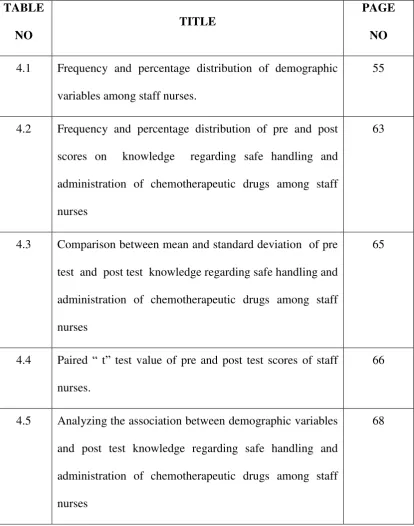
LIST OF TABLES
TABLE
NO
TITLE
PAGE
NO
4.1 Frequency and percentage distribution of demographic
variables among staff nurses.
55
4.2 Frequency and percentage distribution of pre and post
scores on knowledge regarding safe handling and
administration of chemotherapeutic drugs among staff
nurses
63
4.3 Comparison between mean and standard deviation of pre
test and post test knowledge regarding safe handling and
administration of chemotherapeutic drugs among staff
nurses
65
4.4 Paired “ t” test value of pre and post test scores of staff
nurses.
66
4.5 Analyzing the association between demographic variables
and post test knowledge regarding safe handling and
administration of chemotherapeutic drugs among staff
nurses
[image:13.595.107.522.140.667.2]LIST OF FIGURES
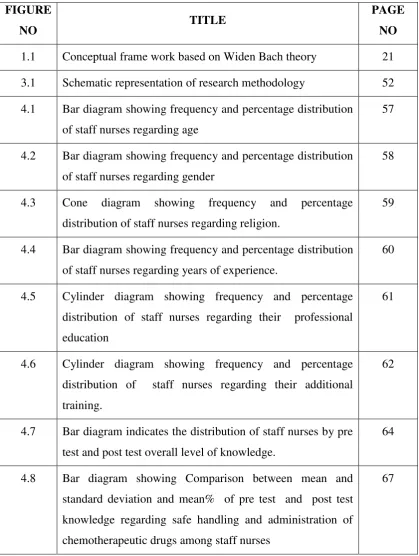
FIGURE
NO TITLE
PAGE
NO
1.1 Conceptual frame work based on Widen Bach theory 21
3.1 Schematic representation of research methodology 52
4.1 Bar diagram showing frequency and percentage distribution
of staff nurses regarding age
57
4.2 Bar diagram showing frequency and percentage distribution
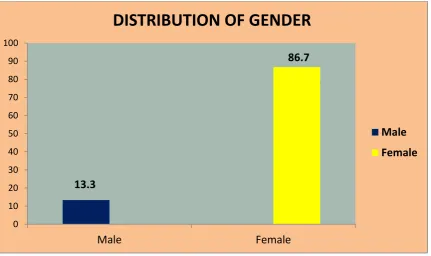
of staff nurses regarding gender
58
4.3 Cone diagram showing frequency and percentage
distribution of staff nurses regarding religion.
59
4.4 Bar diagram showing frequency and percentage distribution
of staff nurses regarding years of experience.
60
4.5 Cylinder diagram showing frequency and percentage
distribution of staff nurses regarding their professional
education
61
4.6 Cylinder diagram showing frequency and percentage
distribution of staff nurses regarding their additional
training.
62
4.7 Bar diagram indicates the distribution of staff nurses by pre
test and post test overall level of knowledge.
64
4.8 Bar diagram showing Comparison between mean and
standard deviation and mean% of pre test and post test
knowledge regarding safe handling and administration of
chemotherapeutic drugs among staff nurses
LIST OF APPENDICES
S. NO TITLE PAGE NO.
1. Letter seeking permission to conduct study i
2. Letter granting permission to conduct study ii
3. Letter requesting for opinion & suggestions of experts for
content and tool validation
iii
4. List of experts iv
5. Content and tool validation certificate v
6. Certificate by the English Editor ix
7. Certificate by the Statistician x
8. Tool for data collection xi
9. Lesson plan xx
10. Photographs xxxvii
1
CHAPTER
–
I
INTRODUCTION
“The goal of chemo drugs is to poison the cancer before killing the patient,”
O’Keefe
Chemotherapy (chemo) usually refers to the use of medicines or drugs to
treat cancer. The thought of having chemotherapy frightens many people. But
knowing what chemotherapy is, how it works and what to expect can often help
calm your fears. It can also give you a better sense of control over your cancer
treatment.
Chemotherapy was first developed at the beginning of the 20th century,
although it was not originally intended as a cancer treatment. Cancer is leading
cause of death worldwide, whereby more than 10 million people are diagnosed with
cancer and 6 million deaths take place annually. It has been estimated that there will
be 15 million new cases every year by 2020. The disease burden is much higher in
Pakistan than developed countries. The current data on cancer incidence is not
available due to unavailability of regular cancer registry system at national level in
Pakistan, according to last available figures of 1998, the rate of incidence for all
2
During World War II, it was discovered that people exposed to nitrogen
mustard developed significantly reduced white blood cell counts. This finding led
researchers to investigate whether mustard agents could be used to halt the growth of
rapidly dividing cells such as cancer cells.
Cytotoxic drugs are used in the therapy of various neoplastic conditions,
organ transplantation, and collagen vascular disorders and are used in oncology,
radiotherapy, transplant, and immunology units. Their use in other hospital
departments and outside the hospital in clinics and elsewhere is also increasing
owing to increase in the incidence of carcinomas, transplants, and immunological
diseases.
Chemo agents have been classified as “hazardous drugs” by the
Occupational Safety and Health Association (OSHA.) Hazardous drugs are those
known, or suspected to cause cancer, miscarriages, birth defects, or other serious
health consequences.
Dr.Ananya Mandal,.MD The scientists found that the patients tumour
masses were significantly reduced for a few weeks after treatment and although the
patient had to return to receive more chemotherapy, this marked the beginning of the
use of cytotoxic agents for the treatment of cancer. The initial study was done in
3
Chemotherapy is a kind of treatment that uses drugs to attack cancer cells. It
is called a "systemic treatment" since the drug, entering through the blood stream,
travels throughout the body and kills cancer cells at their sites. The drugs may rarely
be intended to have a local effect, but in most cases, the intention is to destroy
cancer cells wherever they may exist in the body. Since chemotherapy also affects
normal actively dividing cells such as those in the bone marrow, the gastrointestinal
tract, the reproductive system and in the hair follicles, most patients experience
some degree of side effects like nausea, vomiting, hair loss, mouth sores, ulcers.
Jacobsenetal., 2012 The American Society of Clinical Oncology (ASCO)
and the Oncology Nursing Society(ONS) have developed specific safety standards
for the administration of chemotherapy. These standards require that each institution
utilize a comprehensive educational program and monitor nursing competency at
specific intervals.
Salpaka, (2000) Unfortunately, most chemotherapy centres require initial
education and training programs but have not developed a common method to
evaluate nursing competency in regard to safe-handling techniques. Given such, it is
imperative that institutions dispensing chemotherapy initially engage staff and
develop evaluation and safe-handling strategies that continue over time.
Polovich & Clark, (2012). Although guidelines for chemotherapy administration
exist and are maintained by the Oncology Nursing Society and the American Society
of Health System Pharmacists, evidence suggests that work environments are still
4
This suggests that a gap may exist between evidence-based recommendations for
current practice and what is actually practiced in the clinical setting.
Most chemotherapeutic agents are both toxic and mutagenic. Alkylating agents
have been associated with the highest risks to handlers. Organ damage and increased
risk of fetal loss have been reported in persons handling and administering
chemotherapy with inadequate attention to personal safety. This was first suspected
in the 1970’s when chemotherapy drugs had already been in clinical use for 2
decades, and unfortunately (as in many other industries) many healthcare workers
were exposed to hazardous substances that led to illness and even deaths among
those workers.
The success of pharmacologic agents in treating a wide variety of acute and
chronic diseases is well-documented. Their risks and potential to cause side effects
in the patients being treated is equally well-recognized. For certain drugs, this risk
extends to pharmacists and other health care workers who handle the drugs, even
after exposure to only small concentrations.
Exposure to hazardous agents can occur during the preparation,
administration, or disposal of these drugs when health care workers create aerosols,
generate dust, clean up spills, or touch contaminated surfaces. For pharmacists
handling and dispensing oral chemotherapy, a number of activities in these
processes may result in exposure through inhalation, skin contact or absorption, or
5
Whereas inhalation and skin contact or absorption are the most common
routes of exposure from powder or residue from tablets or capsules, unintentional
ingestion can occur through hand-to-mouth contact with these powders or residues.
The amount and frequency of exposure to hazardous drugs parallels the risk for
adverse effects, but no single biological marker has been found to be a reliable
predictor of exposure or adverse effects on health.
In fact, the Occupational Safety and Health Administration (OSHA) in
1986 released recommendations for hospitals and their employees to always use
high levels of protective equipment when working with chemotherapy patients
and/or their bodily wastes.
Every day in healthcare settings across America, workers are exposed to
hundreds of powerful drugs used for cancer chemotherapy, antiviral treatments,
hormone regimens and other therapies,” according to a 2011 letter written jointly by
OSHA and the National Institute for Occupational Safety and Health (NIOSH)
to health-care professionals. “While these drugs are used to relieve and heal patients,
many of them present serious hazards to the health and safety of your workers. Some
of these drugs have been known to cause cancer, reproductive and developmental
problems, allergic reactions and other adverse effects that can be irreversible even
after low-level exposure.”
Chemotherapy, because of its relatively narrow therapeutic index, is often
associated with a greater risk of adverse events (AEs) than other medications, and
6
contrast to administration in the institutional setting, where the prescribed
medication, dose, regimen, and response to therapy are subject to several levels of
assessment, patient or caregiver (defined as family members or friends who assist
the patient) administration of oral chemotherapy is more likely to be susceptible to
errors, non adherence, and increased AEs as a result of a lack of coordinated care.
Although there are no publications comparing chemotherapy errors that
occur with oral versus intravenous administration, known issues with oral
administration include incorrect dosing and limited monitoring, which can lead to
under dosing or overdosing, serious toxicity, morbidity, and mortality. In addition,
patient non adherence to oral chemotherapy is a significant problem, which is less of
a concern with paraenteral therapy given in an institutional setting under the
supervision of health care professionals. Finally, AEs may be difficult to monitor
with the personal administration of oral chemotherapy if fewer clinic visits are
needed for drug administration purposes; thus, it is crucial to inform the patient of
the known AE profile associated with the medication.
Accidental exposure to oral chemotherapeutic agents can occur at various
stages during handling (ie, transport, unpacking, storage, handling, administration,
and disposal). Thus, guidelines for safe and appropriate handling across the health
care continuum are imperative. Some of the existing recommendations to ensure the
safe storage, prescribing, dispensing, administration, and disposal of cytotoxic oral
chemotherapy drugs. However, the recommendations have not been universally
accepted or incorporated into practice. Recent surveys of health care practitioners as
7
intravenous chemotherapy was prevalent. In addition, a survey of pharmacy
directors of National Cancer Institute–designated cancer centres published in 2007
identified gaps in pharmacy practices, safety assessments, and prescribing methods
and demonstrated the need for safe practice guidelines
Tracing an individual’s cancer to a particular exposure is difficult. It’s one of
the main reasons safety advocates have been thwarted in their efforts to get stricter
regulations. But many who study these agents fear lax safety standards are resulting
in ongoing exposures that continue to put current workers at future risk.
A just-completed study from the U.S. Centers for Disease Control, 10 years
in the making and the largest to date, confirms that chemo continues to contaminate
the workspaces where it’s used, and in some cases is still being found in the urine of
those who handle it, despite knowledge of safety precautions.
"There is no other occupation population (that handles) so many known
human carcinogens,” said Thomas Connor, a research biologist with the National
Institute for Occupational Safety and Health. Connor has spent 40 years studying the
effect of chemo agents on workers, and is one of the lead authors on the latest study.
Adverse effects of hazardous drugs through occupational exposure were first
reported nearly 30 years ago, when an increased incidence of genotoxicity was
documented in pharmacists and nurses handling antineoplastic drugs. Studies also
established an association between exposure to chemotherapy drugs and increased
8
addition, an increased risk for leukemia among oncology nurses and physicians
exposed to antineoplastic drugs was found in a Danish cancer registry. Therefore,
establishing guidelines and subsequent adherence are essential to safeguarding all
health care professionals regardless of practice setting.
Despite awareness of the occupational risks for the harmful effects of
chemotherapy drugs for more than 20 years, reports continue to document exposure
of health care workers. Currently, no standardized national guidelines exist for the
safe handling of oral chemotherapy agents in either traditional or non traditional
health care settings, and no single institutional policy can serve as an adequate
model.
NEED FOR STUDY
Cancer is currently the leading cause of death worldwide accounting for
approximately 8.2 million deaths in 2012. The global cancer burden is projected to
continue rising with 23.6 million new cases expected to be diagnosed annually by
the year 2030. In Kenya, cancer takes third place in major causes of death in the
country. With cancer cases on the rise, the overall use of cytotoxic drugs and other
treatment modalities is expected to rise to cater for the new cancer cases.
A study shows that especially nurses are exposed while preparing and
administrating the CDs (cytotoxic drugs). The level of knowledge of the nurses
about antineoplastic drugs is not satisfactory. The awareness of the nurses handling
9
of safety. In service training is a very effective tool to increase the level of
knowledge. This study revealed also the necessity of the improvement of the work
environment and the availability of the protective equipment. As the primary
prevention measures involve the least possible exposure to CDs (cytotoxic drugs),
information regarding the updated guidelines should be disseminated both at the
practice and administration levels. For that reason nurses’ information about the
possible toxicities and the protection measures used while preparing and
administering these drugs is gaining more and more importance.
It has therefore become imperative that staffs are knowledgeable regarding the safe
handling of antineoplastic drugs. The risk to health care professionals from handling
a hazardous drug stems from its inherent toxicity and the extent to which workers
are exposed to the drug. The primary routes of exposure are through direct skin
contact and through inhalation of aerosolized drug products. Other potential
exposure occurs during the disposal of the drugs, disposal of the items used in drug
preparation and administration, and when caring for patients who have received
these drugs.
Although the absolute risk cannot be eliminated, much can be done to reduce
the relative risks associated with the handling of antineoplastic agents Health care
professionals who handle antineoplastics are advised to be well informed of the
potential health hazards, be familiar with safe handling and disposal of these agents,
utilize appropriate protective equipment and adhere to available written policies,
10
The issue of medication safety is highly significant when anti-cancer therapy
is used as a treatmentmodality due to the high potential for harm from these agents
and the disease context in which theyare being used. Medication errors can occur
for a number of reasons, but the application of specific guidelines and procedures
clearly reduces the incidence of errors along with a multidisciplinary approach.
Exposure to hazardous chemicals in the workplace is a significant
occupational problem for nurses. Nurses and other HCWs (health care workers) are
subject to HD (hazardous drug) exposure during routine activities related to patient
care. Exposure is associated with a risk of adverse health outcomes. Use of safety
precautions can reduce nurses’ HD (hazardous drug) occupational exposure.
Given the potentially serious consequences of HD (hazardous drug)
exposure, one would expect that the use of safe handling precautions is high;
however, safe handling precautions have neither been universally implemented by
all nurses nor in all settings. Several studies on PPE use have been published since
1986, and all reported glove and gown use that was lower than current
recommendations. These Studies reported variation in PPE use by nurses based on
the type of HD handling activity. Glove use ranged from 49-99% for drug
preparation and 15-94% for drug administration; while gown use ranged from
3-63% for drug preparation and 3-31% for drug administration.
Despite the availability of safety guidelines for more than twenty years, use
of Protective equipment is less than ideal. Recent studies found that 25-40% of
11
failed to wear gowns. The reasons that some nurses do not incorporate safety
precautions into their practice are not fully understood. Knowledge about nurses’
decision to use safety precautions is necessary to provide guidance in designing
interventions to increase their use and reduce hazardous exposures.
Occupational exposure to hazardous drug (HDs) has been associated with
acute symptoms have been reported in nurses and pharmacists who were
occupationally exposed to HDs. These include hair loss, abdominal pain, nasal sores,
contact dermatitis, allergic reactions, skin injury, and eye injury. More recently; it
was found that exposed nurses were significantly more likely to report a cancer
diagnosis than unexposed nurses.
In that study, the nurses’ age at initial cancer diagnosis was younger than that
reported in the Surveillance, Epidemiology, and End Results Data.
A self-rating questionnaire was mailed to 939 nurses in 107 university
hospitals, 13 cancer-special hospitals, and 193 general hospitals with over 300 beds
and at least five or more clinics in Japan. A total of 571 female nurses responded to
the questionnaire. About 40% of the nurses were not at all aware of the potential
adverse effects of occupational exposure to anticancer drugs. Eighty-eight percent of
the nurses prepared anticancer drugs in the hospital wards; in most cases, nurses, not
doctors or pharmacists, transported and administered such drugs to cancer patients.
Regarding safety, 39% of the nurses took protective countermeasures against
anticancer drugs; 15% paid special attention to the handling environment; 10% had
12
with body fluids or linen handling of cancer patients. Although 82% of the nurses
were concerned about the potential health effects of occupational exposure, 75% or
over did not know whether the exposure might affect their future health or progeny.
Awareness of adverse effects was significantly related with precaution in anticancer
drug handling, for which 95% of the nurses stated a desire for special education and
training.
Exposure to chemotherapeutic drugs is associated with many adverse outcomes for
occupationally exposed individuals including but not limited to: contact dermatitis;
deoxyribonucleic acid (DNA) damage; chromosomal abnormalities; fetal loss;
infertility; preterm births; and an overall increase in ones personal risk for cancer
(Polovich & Clark, 2012).
This study was to carry out genotoxicity monitoring of nurses from the
oncology department of a hospital in South India, occupationally exposed to
antineoplastic drugs under routine working conditions. The level of genome damage
was determined in whole blood with the comet assay as well as micronucleus test
(MNT) and in buccal epithelial cells with MNT alone of 60 nurses handling
antineoplastic drugs and 60 referents matched for age and sex. Urinary
cyclophosphamide (CP), used as a marker for drug absorption, was also measured in
the urine of the nurses. The DNA damage observed in the lymphocytes of exposed
nurses was significantly higher than the controls. Similarly, a significant increase in
micronuclei (MN) frequency with peripheral blood lymphocytes and buccal cells
was observed in the exposed nurses compared to controls (P < 0.05). Multiple
13
effect on mean comet tail length as well as on frequency of MN. The mean value of
CP in urine of the nurses handling antineoplastic drugs was (mean +/- standard
deviation; 0.44 +/- 0.26 microg/ml). Our study has shown that increased genetic
damage was evident in nurses due to occupational exposure to antineoplastics. This
data corroborate the need to maintain safety measures to avoid exposure and the
necessity of intervention in the case of exposure when using and handling
antineoplastic drugs.
An early study found that the urine of nurses who handled certain
antineoplastic drugs was mutagenic, and this urinary mutagenicity increased during
the work week and decreased during the weekend when they were away from work.
Another study found increased mutagenic activity in pharmacy personnel preparing
these agents. Other studies found increased levels of DNA damage in nursing and
pharmacy personnel who handled these drugs.
There is much less data regarding cancer occurrence in health care workers
who are exposed to antineoplastics. This may be partly due to longer latency period
from time of exposure to tumor development. There has been an increased risk of
leukemia reported among Danish physicians who were employed at least six months
in a department where patient were treated with anticancer agents, and in oncology
nurses.
Another study reported on the occurrence of liver injury in three head nurses
14
absence of alcohol and drug use by these individuals, their illness was attributed to
their exposure to anti cancer drugs.
According to Martin and Larson (2003), nursing adherence to safety
guidelines has often been in question in the past and clear evidence is lacking in
regard to nurses‟ level of knowledge and compliance with existing safe
administration practices. Also, it should be noted that in regard to nurse safety and
the administration of chemotherapeutic agents only recommended guidelines have
been established, not well-recognized, mandatory safety standards.
Nurses must be aware of the safe handling of chemotherapeutic drugs, which
include assessment of drug preparation, administration and disposal. Many don't
have adequate knowledge about the effects because they are not aware of the
literature, while others may be aware of the problem and are either very concerned
about it, they believe that their workplace is safe.
The occupational safety requirements in the management of cancer has
motivated the researcher to conduct a study to determine the effectiveness of nurses
administering chemotherapy through intravenous administration by providing them
sufficient knowledge in the practice of chemotherapy, thereby helping them protect
themselves as well as the patients undergoing the treatment, from the harmful
exposures, to create a safe working environment and to empower them to manage
15
Over the past decades, several standards, regulations and guidelines have
been proposed to control occupational exposure to cytotoxic drugs those cover all
aspects including administrative control, engineering control and personal protective
equipment. So far, few studies have been conducted about the complications of
exposure to antineoplastic drugs and the health care workers' compliance with
national and international guidelines. To the best of our knowledge, little is known
about the staffs safety and their compliance with the standard regulations.
(Christopher RFriese,etal., 2011)
Unintentional chemotherapy exposure can affect the nervous system, impair
the reproductive system and bring an increased risk of developing blood cancers in
the future. These exposures are as dangerous to a nurse's health as being accidentally
stuck with a needle. "Now a days needle stick incidents have minimized so they are
rare events that elicit a robust response from administrators. Nurses go immediately
for evaluation and prophylactic treatment if this happens. But we don't have that
with chemotherapy exposure. (Live science, 2011).
Nurses’ Health Study, A recent major study has found the rate of
spontaneous abortion in nurses who handle chemotherapy drugs to be twice that of
nurses who did not handle the drugs. Past studies have reported similar results, but
this study, a partnership between the National Institute for Occupations Safety and
Health (NIOSH) and the Nurses’ Health Study, looked at pregnancy outcome and
occupational exposures retrospectively from 8,461 participants in the Nurses’ Health
Study. Participants reported 6,707 live births and 775 (10%) spontaneous abortions
16
healthy people. That’s why the nurses and doctors who give chemotherapy will take
precautions to avoid direct contact with the drugs while giving them to you.
Research has showed that nurses are the key persons who will confront the
effects of the cytotoxic drugs while they are administering it. Since the investigator
has worked in oncology department where nurses are having knowledge regarding
the administration of cytotoxic drugs, in spite of this they are utilizing only
preventive measures like gloves and masks for the administrating of drugs which
is not only sufficient to be safe from the hazardous effect of these drugs. In
addition to it, if there is any emergency situation they are not able to practice the
safe handling criteria which might lead them to develop health related problems in
their future, so the researcher thought of under taking the task of assessing the
knowledge of all the nurses to improve their knowledge regarding safe handling of
cytotoxic drugs to reduce the further incidence of adverse reaction of hazardous
drugs.
STATEMENT OF PROBLEM
A Study to assess the effectiveness of structured teaching programme on
knowledge regarding safe handling and administration of chemotherapeutic
17
OBJECTIVE OF THE STUDY
1. To assess the level of knowledge on safe handling and administration of
chemotherapeutic drugs before and after structured teaching programme.
2. To evaluate the effectiveness of structured teaching programme regarding
safe handling and administration of chemotherapeutic drugs among staff
nurses.
3. To determine the association between the post test knowledge scores on
safe handling and administration of chemotherapeutic drugs with their
selected socio demographic variables.
HYPOTHESIS
H1 : There will be significant difference between the pre-test and post –test
knowledge scores.
H2 : There will be significant association between the level of knowledge
regarding safe handling and administration of chemotherapeutic drugs
18
OPERATIONAL DEFINITION
1. Effectiveness
It refers to the degree to which objectives are achieved and the extent to
which targeted problems are solved.
2. Structured teaching programme
It refers to the set of teaching material prepared in English regarding safe
handling of chemotherapeutic drug administration, developed by investigator and
validated by the experts.
3. Knowledge
It refers to the appropriate response by the staff nurses on knowledge
regarding on safe handling and administration of chemotherapeutic drugs through
structured knowledge questions.
4. Safe handling
It refers to the process in which health care workers adhere to evidence-based
practices (EBP) set forth by national organizations that have been designed to
19
5. Intravenous
It refers to the administration of the prescribed drug through a selected vein .
6. Chemotherapy
It refers to the administration of intravenous drug as prescribed for treating
cancer.
ASSUMPTIONS
It is assumed that:
Most of the staff nurses have some knowledge on safe handling and
administration of chemothrapeutic drugs.
Knowledge of staff nurses on safe handling of chemotherapeutic drugs
and administration varies with the frequency and duration of treatment.
Preparation of the structured teaching program will enhance the
20
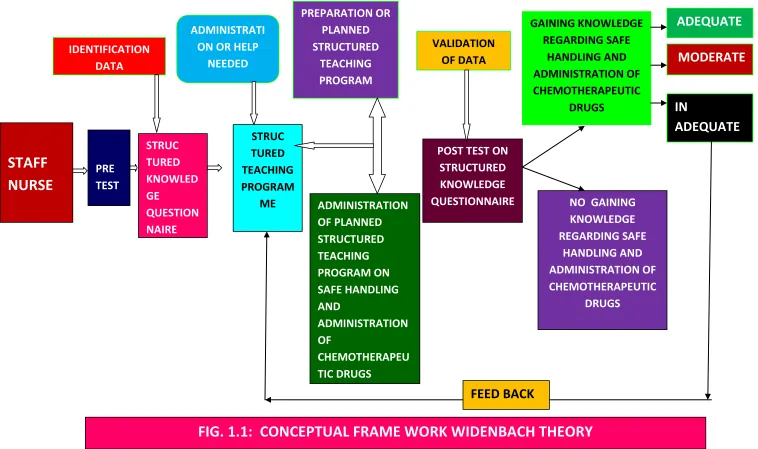
CONCEPTUAL FRAMEWORK
The conceptual frame work of this study is based on Widen Bach Theory. It
helps to provide a way of understanding and predicting how clients behave in
relation to the health and how they will comply with health care therapies. There are
four components present. The first component perceives identification or need for
help. The second component is ministration of help needed. The third component is
validation of help needed. The Widenbach theory address the relationship between a
person believes on health disease and how patient acts nurses using this approach
can better understand factors that influence ones perception and beliefs and the
individual behaviours in order to plan care that will most effectively assist individual
in maintaining health and preventing illness.
In this study lack of knowledge on safe handling and administration of
chemotherapeutic drugs among staff nurses results in poor perception about
administration of chemotherapeutic drugs .The structured teaching programme is
done by SIMS hospital about definition, types of chemo drugs, toxicity of drugs,
routs of administration, safety precautions, side effects, complication etc
Improvement in knowledge to perceive the identification of safe handling
21 IDENTIFICATION DATA ADMINISTRATI ON OR HELP
NEEDED PREPARATION OR PLANNED STRUCTURED TEACHING PROGRAM VALIDATION OF DATA GAINING KNOWLEDGE REGARDING SAFE HANDLING AND ADMINISTRATION OF CHEMOTHERAPEUTIC DRUGS
STAFF
NURSE
PRE TEST STRUC TURED TEACHING PROGRAMME ADMINISTRATION
OF PLANNED STRUCTURED TEACHING PROGRAM ON SAFE HANDLING AND ADMINISTRATION OF CHEMOTHERAPEU TIC DRUGS
POST TEST ON STRUCTURED KNOWLEDGE
[image:36.842.49.807.75.524.2]QUESTIONNAIRE NO GAINING KNOWLEDGE REGARDING SAFE HANDLING AND ADMINISTRATION OF CHEMOTHERAPEUTIC DRUGS STRUC TURED KNOWLED GE QUESTION NAIRE ADEQUATE
MODERATE
IN
ADEQUATE
FEED BACK
22
CHAPTER
–
II
REVIEW OF LITERATURE
A literature review surveys books, scholarly articles, and any other sources
relevant to a particular issue, area of research, or theory, and by so doing, provides a
description, summary, and critical evaluation of these works in relation to the
research problem being investigated. Literature reviews are designed to provide an
overview of sources you have explored while researching a particular topic and to
demonstrate to your readers how your research fits within a larger field of study.
The literature review for the present study is based on an extensive survey of
books, journals and the web. It has been organized under the following headings:
1. Studies related to knowledge on chemotherapy among staff nurses
2. Studies related to safe handling of chemotherapy
3. Studies related to management of side effects of chemotherapy
1. STUDIES RELATED TO KNOWLEDGE ON CHEMOTHERAPY
AMONG STAFF NURSES
Mahon, S. M., et.al., (2009) conducted a descriptive study in St. Louis
University Hospital to describe how 103 nurses from a local Oncology Nursing
23
handling cytotoxic drugs in their individual practices and to identity barriers to
implementing these guidelines. In sum, barriers must be overcome and better safe
handling practices incorporated to ensure the safety of nurses.
Nirenberg, A., et.al., (2010) conducted a descriptive survey to describe
oncology nurses use of National Comprehensive Cancer Network Clinical Practice
Guidelines for chemotherapy induced neutropenia and febrile neutropenia among
309 Oncology Nursing Society members. The findings gave an insight into
workplace barriers to evidence based practices in various settings.
Ashley, L., et.al., (2011) conducted a prospective study on systems-focused
clinical risk assessment among 8 nurse lead multi-disciplinary teams for improving
the standard of chemotherapy administration in large urban hospitals in United
Kingdom. It aims to identify and generate remedial structure to counteract errors
occurring during chemotherapy administration. The process outcome revealed that
nurses collectively improved the procedure of chemotherapy administration.
Gerald Berenson.L., et. Al., (2011) conducted a mixed method research
study to explore the knowledge and attitude of Saudi nurses towards chemotherapy,
the samples of chemotherapy side effects among 100 nurses in Jeddah hospital in
oncology/ hematology units. The results show that knowledge is weakest component
of 50% and the attitude is strongest component of 66%. Saudi nurses about
chemotherapy and concluded that nurses have to improve their knowledge regarding
24
Lua Pei Lin, et al., (2012) A cross-sectional study was conducted to assess
the effectiveness of knowledge regarding breast cancer and chemotherapy among
239 health science students from local public university in Terengganu, Malaysia.
Data collected based upon breast cancer and chemotherapy questionnaires (BCCQ).
The result shows that majority of students (71.1%) possessed a moderate level of
knowledge related to breast cancer and chemotherapy in that 33.1% were unaware of
different modes for chemotherapy administration. This study has generally
ascertained that knowledge related to breast cancer and chemotherapy among this
sample population remains moderate and is not uniformly disseminated. An increase
in knowledge is required to ensure an optimal level of knowledge particularly for the
junior students and those from courses other than nursing.
Yu HY.M, et al.,(2013) conducted a study A total of 203 nurses participated
in the study and achieved an average overall correct answer rate of 60.9%. Most of
the respondents, 63.5% (129 of 203), had a score of less than 70, and 77.3% (157 of
203) hoped to undergo more training on chemotherapy. Their knowledge of
chemotherapy came mainly from consultation with colleagues (4.0 ± 0.8) and
in-hospital continuing education (3.9 ± 0.8).The evidence-based results suggested that
nurses have insufficient knowledge about chemotherapy. More fundamentally,
however, nurses need more education about chemotherapy in nursing school and
through in-hospital continuing education.
Najmakhan.N., et.al., (2014) conducted an interventional study to measure
the level of nurses knowledge and attitude after the education session regarding
25
oncology units of tertiary hospitals, Rawalpandi. Pre-post test design was used 35
nurses were selected for the study. The mean score of knowledge were calculated by
Cochran’s test. Showed that knowledge scores have significantly increased with
educational training (p value <0.001),the difference in the attitude of the nurses was
not found to be statistically, significant in repeated measures of ANOVA. The result
shows that knowledge is the weakest component and attitude is the strongest
component of oncology nurses competences in chemotherapy administration .
Ali Taghizadeh Kermani, et.al., (2015) conducted a study in that 24 nurses
participated in this short educational course, supervised by several clinical/radiation
oncologists. During a two-week period, several protocols of chemotherapy,
complications associated with chemotherapy, and the management of adverse
outcomes were taught to the participants with a special emphasis on nursing
considerations. Overall, Four participants (16%) were male and 20 (83%) were
female. The majority of the subjects (90%) worked at chemotherapy wards. Sixteen
(66%) versus twenty two (91%) nurses achieved a minimum score of 70% on MCQ
before and after the course, respectively (p=0.03). The mean scores before and after
the course were 18.7±8.6 versus 26±11 for MCQ (p=0.03) and 30.3±10 versus
45.3±14 for DOPS (p=0.004). The mean of attitudes’ score were 3.93±1.7 and
4.04±1.2 before and after the course, respectively, that showed a significant
difference (p=0.01). Short educational courses about major subjects in oncology
nursing could improve nurses’ knowledge and attitude.
Virendra Singh Choudhary, et.al., (2016) Structured self-administered
26
was used on 50 staff nurses of selected with convenience sampling technique from
cancer hospitals of Punjab. The results of the study shown that mean score of staff
nurses regarding knowledge was average (14.94) and mean score of their attitude
comes out to be positive(59.70). The association between knowledge and attitude
with their selected socio-demographic variables was calculated by chi square test
and revealed statistically non significant relationship (p>0.05 ).The intention of this
study was to assess the knowledge and attitude of nurses’ on nursing care of cancer
patients undergoing chemotherapy. Overall, nurses appear to have average
knowledge and a positive attitude towards nursing care of cancer patients
undergoing chemotherapy. So enhancement in knowledge aspects is required and
CNE program me or knowledge updating program me should be held time to time.
Lavanya B, et.al., (2017) conducted a quantitative descriptive design,
Sample size was 30; out of which, 15 staff nurses and 15 nursing students were
selected by using Non-probability convenience sampling technique. Study revealed
that the level of knowledge among staff nurses, 9(60%) had inadequate knowledge,
4 (27%) had moderate knowledge and 2(13%) had adequate knowledge. Among
nursing students, 13(87%) had inadequate knowledge, 2(13%) had moderate
knowledge and none of them had adequate knowledge regarding chemotherapy.
Conclusion: The study concluded that staff nurses had better knowledge than
nursing students on Care of Patients with Chemotherapy.
Sylvia E Nwagbo, et.al., (2017) conducted a cross sectional descriptive
study design, based on Protection Motivation theory was conducted among 100
27
using a 54-item validated questionnaire. Descriptive and inferential statistics at 0.05
level of significance was used. Respondents were within 35.4 ± 5.1 years. More than
half of the respondents had over 3 years practice in the oncology unit (mean 2.62, ±
1.1). Knowledge of chemotherapy among the cohort was high; mean 13.9 ± 2.2, 70
% understood the use of gloves and gowns as part of safety guidelines. On handling
patients' clothes, only 57% understood that such should not be washed by hand or
with other clothes. Cumulatively, 79.2% of the respondents knew about the safety
guidelines, 4.7% had no knowledge while 16.1% were not sure of the correct
guidelines for administering chemotherapy. Respondents' level of education was
significantly associated with knowledge of chemotherapy, P<0.05; practice score
was also significantly associated with respondents' cadre; P<0.05. Periodic and
consistent update of nurses' knowledge supported by policies to enforce guidelines
implementation is recommended.
Sevgisun Kapucu, PhD, et al., (2017) this descriptive study was started on
April 15, 2015–July 15, 2015. The data presented in this summary belong to 165
nurses. Data were collected with data collection form including questions related to
sociodemographic qualifications and knowledge levels of nurses. Data collection
forms were E-mailed to the members of Turkish Oncology Nursing Society. Data
presented with numbers, percentages, and mean ± standard deviation. The mean age
of nurses was 33.60 ± 7.34 years and mean duration for oncology nursing experience
was 2.65 ± 0.91 years. Nurses had correct information about the importance of
selecting peripheral venous catheter and choosing the placement area for
chemotherapy administration (63.6%), control of catheter before the administration
28
management of extra vasation (75.7%). Nurses also had correct information about
the first use of port catheter (67.3%) and checking the catheter whether it is working
properly or not (75.8%). In General, nurses’ level of knowledge related to catheter is
50% and higher. It is recommended to increase the knowledge of nurses about
evidence-based information for catheter care as a step to safe chemotherapy practice.
II. STUDIES RELATED TO SAFE HANDLING OF CHEMOTHERAPY
Jezewski, M. A., et.al., (2009) conducted a descriptive co relational study in
New York to determine Oncology nurses knowledge, attitude and experience
regarding advance directives, among 3840 oncology nurses of which 794 responded.
The mean total knowledge score based on the 3 subscales was 17.4 of the possible
30. The result showed that nurse’s knowledge scores were low, nurses in this study
were not highly confident in their ability to assess patient with advance directives.
More education related to advance directives is needed and could be administered
through in service classes or continuing education.
McCaughan, E., & Parahoo, K., (2009) conducted a descriptive study
among 106 nurses working in medical surgical department in the selected hospital at
Ireland, regarding perceptions of their level of competence and educational need in
caring for patients with cancer. Results showed that these nurses who cared for
people with a varied range of cancer had above moderate level of competence, and
they also rated that their level of competence is higher in physical care than in
psycho-social care.Increasing institutional reorganization and financial support
could improve nurses’ certification rates and ultimately result in improved patient
29
Creaton, E. M., et.al., (2010) conducted a descriptive study among the
inpatient oncology staff of St Elisabeth’s hospital in Boston. The programme consist
of theoretical and practical component in which in-patient oncology nursing staffs
were highly motivated to expand their knowledge base for cancer patient care and
expressed interest in chemotherapy administration.
Verity, R., et.al., (2010) conducted a descriptive study to explore the work
of nurses who administer chemotherapy. The study was conducted across 26 London
hospitals providing cancer services.244 nurses were the study participants, the
findings highlighted the value of formal educational preparation in chemotherapy
prior to undertaking the aspect of nursing. The result reinforced that co ordinated
education and training strategy for chemotherapy practice is warranted to underpin
safe and effective practice in this area.
Magda M. et.al., (2011) Widespread use of chemotherapeutic drugs in the
treatment of cancer has lead to higher health hazards among employee who handle
and administer such drugs, so nurses should know how to protect themselves, their
patients and their work environment against toxic effects of chemotherapy. Aim of
this study was carried out to examine the effect of chemotherapy safety protocol for
oncology nurses on their protective measure practices. A quasi experimental
research design was utilized. Setting: The study was carried out in oncology
department of Menoufia university hospital and Tanta oncology treatment center. A
convenience sample of forty five nurses in Tanta oncology treatment center and
eighteen nurses in Menoufiya oncology department. Tools: 1. an interviewing
30
knowledge about chemotherapy. II: Observational check list to assess nurses' actual
practices of handling and adminestration of chemotherapy. A base line data were
assessed before implementing Chemotherapy Safety protocol, then Chemotherapy
Safety protocol was implemented, and after 2 months they were assessed again.
Results: reveled that 88.9% of study group I and 55.6% of study group II improved
to good total knowledge scores after educating on the safety protocol, also 95.6% of
study group I and 88.9% of study group II had good total practice score after
educating on the safety protocol. Moreover less than half of group I (44.4%)
reported that heavy workload is the most barriers for them, while the majority of
group II (94.4%) had many barriers for adhering to the safety protocol such as they
didn’t know the protocol, the heavy work load and inadequate equipment.
Conclusions: Safety protocol for Oncology Nurses seemed to have positive effect on
improving nurses' knowledge and practice. Recommendation: chemotherapy safety
protocol should be instituted for all oncology nurses who are working in any
oncology unit and/ or center to enhance compliance, and this protocol should be
done at frequent intervals.
Ms. Darshana.K. et.al., (2011) concludes that the overall rate of exposure
decreases when nurses report adequate staffing and resources . This implies that
nurse-patient ratios and workplace demands contribute to the problem of
mishandling chemotherapy. Therefore, these results implicate the need for adequate
staffing and resources as well as increased staff compliance to established practice
standards in order to better protect oncology nurses. Other contributing factors
31
of awareness of personal and public risks of exposure, poor communication, and
direct interruptions and/or distractions while preparing to administer medications.
Ashley, et.al., (2011). In this Study the structured checklist was used to see
the practice regarding safety measures used by nurses while handling chemotherapy
drug. Assessment of nurses practice while handling chemotherapy drug shows that
Majority of samples 56 (56%) were having poor practice while handling
chemotherapy drugs and 44% of nurses were having good practice while handling
chemotherapy drugs, Maximum score was 6 and minimum score was 1. After the
detailed analysis, this study leads to the following conclusion that assessment of
nurses’ practice while handling chemotherapy drug. Majority of samples were
having poor practice while handling chemotherapy drugs.
Najma Khan (2012) To measure the levels of nurse’s knowledge and
attitude after the conduct of education session regarding chemotherapy
administration and management. Methodology: This research study was conducted
at two oncology units of tertiary Hospital Rawalpindi. A pre-post test intervention
study design was used on 35 nurses by using Verity’s tools. Results: The mean
scores of knowledge were calculated by Cochran’s Q test showed that knowledge
scores have significantly increased with ‘educational training’ (p value < 0.001).
The difference in the attitude of the nurses was not found to be statistically
significant in repeated measure of ANOVA. The results show that knowledge is the
weakest component and attitude is strongest component of oncology nurses
32
Gibson, F., et.al., (2012) conducted a descriptive study to explore the
knowledge, attitude and beliefs of nurses who administer chemotherapy to children
and young people, 286 nurses were the samples of study. The study showed that
nurses new to chemotherapy administration were initially anxious about their role
and due to their anxious state makes drug error. Education and support from
colleagues appears to have had a positive effect on reducing worry and increasing
competence.
Polovich, M., & Clark, P. C., (2012) conducted a cross-sectional study,
among 165 nurses who were reported handling chemotherapy in oncology centers
across the United States using mailed survey method, to examine relationship among
factors affecting nurses use of hazardous drugs, safe-handling precautions, identify
the factors that promote over interfere with the hazardous drug precaution use and
determine managers perspective on the use of hazardous drug safe handling
precaution. The result showed that circumstances in the work place interfere with the
nurses to use precaution during drug preparation.
Chan Huan Keat, et.al., (2013)A prospective interventional study was
conducted in a General Hospital, Malaysia a single group of 96 nurses actively
participated for assessing the change of nurses' safety-related knowledge as well as
attitude levels regarding cytotoxic drugs. A self-administered questionnaire and
performance checklist were used. The first and second assessments took 2 months
respectively with a 9-month intervention period. The study result shows that the
33
of nurses in cytotoxic drug handling (7.6 ±5.51 to 15.3±2.55). It concludes that
further assessment may help to confirm the sustainability of the improvement in
practices.
Mc Ilfatrick, S., et.al., (2013) descriptive study tried to explore the nurse’s
experience on chemotherapy service in an acute general hospital in North Ireland.
Face to Face focused in-depth interviews were concluded among 10 nurses. Data
analysis involved a two stage approach. The study concluded that the nurses viewed
their experience of the chemotherapy day hospital as having both positive and
negative dimensions. The positive dimensions include an increased sense of
autonomy and the challenge of developing new skills, while the negative dimension
included a perceived decrease in their caring role. Role changes leads to a perceived
dichotomy between their actual and aspired role and their caring and clinical role.
Verity, R., et.al., (2014) conducted a descriptive study to explore the work
of nurses who administer chemotherapy. The study was conducted across 26 London
hospitals providing cancer services.244 nurses were the study participants, the
findings highlighted the value of formal educational preparation in chemotherapy
prior to undertaking the aspect of nursing. The result reinforced that coordinated
education and training strategy for chemotherapy practice is warranted to underpin
safe and effective practice in this area.
Kosgeroglu, N., et.al., (2015) conducted a descriptive study among 121
34
the method of administration nurses used during chemotherapeutic drug preparation
and administration. Nurses showed that their actual administration method was
insufficient according to their level of information. The ratio for nurse’s usage of the
safety cabinet during the preparation of chemotherapeutic drugs was very low