City, University of London Institutional Repository
Citation
: Paniagua, P., Fonseca, J., Gylland, A. S. & Nordal, S. (2015). Microstructural
study of the deformation zones during cone penetration in silt at variable penetration rates. Canadian Geotechnical Journal, 52(12), pp. 2088-2098. doi: 10.1139/cgj-2014-0498
This is the accepted version of the paper.
This version of the publication may differ from the final published
version.
Permanent repository link:
http://openaccess.city.ac.uk/12316/Link to published version
: http://dx.doi.org/10.1139/cgj-2014-0498
Copyright and reuse:
City Research Online aims to make research
outputs of City, University of London available to a wider audience.
Copyright and Moral Rights remain with the author(s) and/or copyright
holders. URLs from City Research Online may be freely distributed and
linked to.
Microstructural study of the deformation zones during cone
penetration in silt at variable penetration rates
Paniagua, P.1, Fonseca, J. 2, Gylland, A. S. 1, Nordal S. 1 Abstract
During conventional cone penetration testing in silt, the soil will normally be partially drained. If the penetration rate varies, time for drainage is altered and therefore the measured cone resistance and pore pressure will change. This paper studies the change in soil microstructure around the probe during cone penetration carried out at different penetration rates to investigate the failure mechanism and the processes controlling drainage in silt. Backscattered electron images of polished thin sections prepared from frozen samples at the end of penetration were used. Making use of advanced image processing techniques, the statistical distribution of particle orientations and the local porosity were investigated for the zones around the cone tip and the shaft. The spatial distribution of the measured microscale parameters in the region near the probe indicates that the soil deformation during CPTU in silt leads to the formation of both contractive and dilative zones. The macro response of the material, presented by the pore pressure and the cone penetration resistance measured during the test, results from the competition between these zones during penetration, which is shown to be dependent on the penetration rate.
Keywords: Silts; Site investigation; Fabric/structure of soils; Microscopy; Cone penetration test
1. Norwegian University of Science and Technology, Trondheim, Norway 2. City University London, UK
INTRODUCTION
The cone penetration test (CPT) consists on pushing a cone tip at the end of a
cylindrical probe of 35,7 mm diameter (standard size) into the ground at a rate of 20
mm/s while measuring the cone tip resistance (qc) and shaft friction (fs). If in addition
the pore water pressure is measured behind the cone shoulder, the test is called CPTU.
Key uses of the CPT test include identifying soil layering and determining geotechnical
parameters for engineering design. Two extreme modes of behaviour are considered
for interpretations of measurements obtained from CPT or CPTU. Drained behaviour is
considered for sands and undrained behaviour for clay. When an intermediate soil like
silt is tested with CPTU, partially drained behaviour may occur (Lunne et al. 1997).
The partial drainage behaviour of silt during CPTU is further investigated in this paper
by studying the failure mechanism around the cone, focusing in particular, to the
change in the microstructure (or fabric) of the soil surrounding the probe during
penetration at different rates.
Silt response to variable cone penetration rate
Previous studies have shown that drainage during CPTU in silt can be studied by
varying the penetration rate, coefficient of consolidation or cone diameter (Randolph
and Hope 2004, Chung et al. 2006, Yafrate and DeJong 2007, Schneider et al. 2008, Kim
et al. 2008, Jaeger et al. 2010, DeJong and Randolph 2012, Poulsen et al. 2013, DeJong et
al. 2013). Laboratory CPTU tests performed on saturated specimens of silt showed two
distinct trends of either dilative or contractive behaviour. In the case of dilative
behaviour, an increase in cone resistance and a decrease in pore pressure are observed
when penetration rate increases (Silva, 2005; Schneider, et al. 2007; Te Kamp, 1982) and
in some cases, negative pore water pressure may occur. Different behaviour was
observed in the case of intermediate soils showing contractive behaviour (DeJong and
Randolph, 2012). Recent tests performed by the authors confirm that the dilative
response dominates for high density and the contractive response dominates for low
density, both cases at large strains. For a medium dense silt, increasing the penetration
rate from very slow penetration (drained behaviour), was found to result in a
reduction of resistance to penetration. However, as the rate increases towards very fast
penetration (approaching undrained conditions) the resistance was seen to increase
again.
Cone penetration at the microscale
Investigation into the deformation around a penetrating object mainly in sand and clay
soil has been object for a number of previous studies (Robinsky and Morrison 1964,
Muromachi, 1974; Roy et al., 1974; Yasafuku and Hyde, 1995; Broere, 2001; White et al.,
2003; Liu, 2010). However, studies focusing on the microscale mechanics during cone
penetration are scarce and in most cases limited to numerical analysis using the
Discrete Element Method (DEM). For example, Jiang et al. (2008) suggested that the
failure mechanisms taking place during cone penetration were derived from a
combination of four motions of the grains from the cone. Similar studies using DEM
have also been presented by Kilonch and O’Sullivan (2007) and Butlanska et al. (2014).
Experimental work on silt using image-base analysis
Image-based experimental approach to investigate silt behaviour during CPT
laboratory test are presented in Paniagua et al. (2012); this includes 1) freezing the
sample after cone penetration to preserve deformation patterns for subsequent imaging
and 2) using x-ray computed tomography (micro-CT) as penetration takes place.
Paniagua et al. (2013) carried out laboratory scale CPTs on Vassfjellet silt combining
micro CT and 3D Digital Image Correlation (3D-DIC) to investigate failure mechanics
during penetration. The failure pattern observed in this study showed a contracting
zone under the tip with a dilating zone further down and outwards. Distinct zones of
shear were identified along the shaft with dilation occurring along the cone face. The
results suggested that the interaction between the contractive and the dilative zones
was likely to influence the pore pressure distribution; i.e., in the case of a saturated soil,
water is likely to move locally from a contractive zone to a near dilative zone, creating
a short drainage path. Previous work carried out by the authors, on thin sections from
zones surrounding the probe following CPTU penetration on the same silt, suggested
that the response of the material during cone penetration results from a competition
between contraction and dilation phenomena and the extension of the influenced
volume is dependent on the initial stresses surrounding the penetrating probe
(Paniagua et al., 2014).
The present work explores further these previous studies to improve our
understanding of the microscale phenomena underlying the observed macro scale
response of CPTU tests in silt. In particular, the drainage condition surrounding the
probe are investigated by examining the interaction between the contractive and
dilative zones near the cone during penetration at different rates.
SOIL DESCRIPTION AND CPTU TESTS
Typical silt behaviour and the Vassfjellet silt
The silt investigated in this study is a non-plastic uniform silt from Vassfjellet, Klæbu,
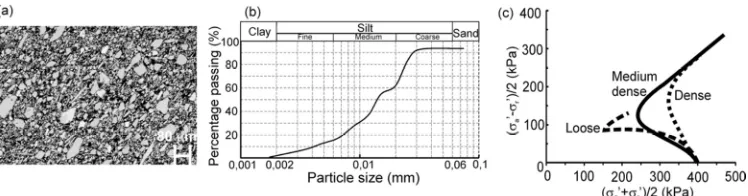
Norway. Fig. 1a shows a backscattered electron image from an electron probe micro
analysis (EPMA) scan of a reconstituted specimen of Vassfjellet silt. Vassfjellet silt is a
medium to fine silt, it has a clay content of 2,5% and 94% of the grains have sizes lower
than 74 μm (Fig.1b).
A maximum dry density (ρd-max) of 1,6 g/cm3 was found in a Proctor compaction test at
23% optimum water content and 95% saturation. A minimum dry density was
measured by allowing a slurry to settle in a graduated cylinder (method by Bradshaw
and Baxter, 2007). Mineralogy x-ray diffraction (XRD) analysis has indicated a
composition of: 35% muscovite, 27% quartz, 18% chlorite, 15% feldspar and 5%
actinolite. High dilatant behaviour was observed in saturated samples of this material
tested in undrained triaxial tests (B-value of approximately 0,95) at its maximum
density (Kim, 2012). A friction angle ϕ’ of 32° and an effective cohesion estimated to 4
kPa are also reported by Kim (2012).
Typical failure mechanisms from undrained triaxial tests presented by Ovando-Shelley
(1986) and also observed for Vassfjellet silt (Paniagua, 2014), show that silt can exhibit
both contractive and dilative behaviour. A dilative failure mechanism, characterised by
a tendency of volume increase, causes a reduction in the pore pressure (towards
suction) in a saturated sample; while a contractive failure mechanism, characterised by
a reduction in volume, leads to an increase in the pore pressure. The resulting stress
paths show that the loose and medium dense silts contract initially before showing
dilatant behaviour, while for dense specimens the initial contraction is less obvious
(Fig. 1c).
CPTU at model scale
Three specimens were prepared by the slurry consolidation method (adapted from
Kuerbis and Vaid 1988). The slurry was prepared with 45% water content and
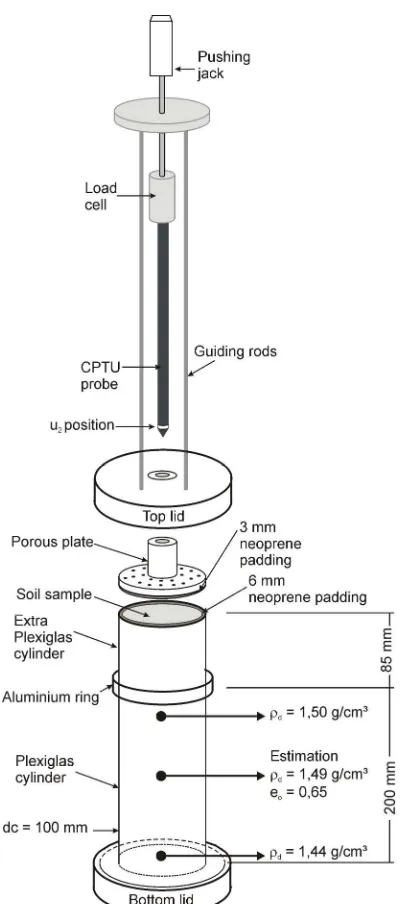
consolidated under a top loading of 65 kPa for 12 hours. The load was applied using a
load-controlled jack that pushes a movable porous plate on top of the slurry sample
(Fig. 2). The porous plate and a filter paper allowed drainage from the top part of the
sample. The specimens were built inside a Plexiglas cylinder of 100 mm diameter and
200 mm height padded with two layers of neoprene padding of 6 mm thickness (Fig.
2). The paddings were used to compensate for the effect of the boundary closeness and
account for the compressibility of the lacking surrounding soil. The soil cylinder had a
diameter of 88 mm and a height of 180 mm. The specimens exhibited water content
and density variations with depth inherently related to the sample preparation
method. Lower water content and higher density were measured at the top of the
specimen, as water content increases and density decreases with depth. After
preparation, the samples were preloaded with 80 kPa and this load was kept during
cone penetration. The test was stopped at a penetration depth of 60 mm.
Measurements of dry density at the top and bottom of similar specimens indicated a ρd
of 1,46 g/cm³ and a corresponding experimental void ratio of 6,5 at 60 mm depth (Fig.
2).
The penetrating probe had a diameter of 12 mm and an apex angle at the tip of 60°. The
penetration force was measured in all tests at the end of the shaft, therefore, it
combines cone penetration resistance and shaft friction measurements. A pore pressure
ceramic filter was located at the position u2 (behind the cone tip) and the pore pressure
sensor was located at the end of the shaft. The pore pressure filter and sensor were
saturated under vacuum and the chamber connecting them was filled with de-aired
glycerine before penetration. The samples were penetrated at three different rates: 0,06
mm/s (slow), 6 mm/s (medium) and 50 mm/s (fast). The penetration rates were chosen
according to the recommendations of DeJong and Randolph (2012) with the aim of
obtaining a combination of drained and undrained conditions.
IMAGE ACQUISITION
Thin sections
After probe penetration, the samples were rapidly frozen with the cone inside the
sample, following the technique proposed by Paniagua et al. (2012). This set-up
permitted the cylindrical Plexiglas container and the cone to be subsequently removed
and the frozen sample to be cut through its centre. After sample cutting, the frozen
blocks were carefully oven dried based on author’s previous experience on drying
techniques. Subsequent resin impregnation was carried out both on carefully carved
smaller pieces and directly in the areas around the cone and the shaft (Gylland et al.
2013). A low viscosity epoxy resin was used to avoid disturbance of the soil
microstructure. Resin impregnation of soil for fabric inspection was successfully used
in previous studies, e.g. Fonseca et al. (2012). Thin sections of 36x22 mm and 30 μm
thick, were prepared to study the deformation zones around the cone and shaft. The
thin sections were extracted from the zones around the cone tip following 60 mm
penetration into a soil specimen 180 mm high. For the subsequent analysis it is
assumed that the silt, in this part of the sample, has initially a medium density.
Electron Probe Microscopy
The thin sections were first inspected using a polarized light microscope (Nesse, 2011)
in order to define specific areas of interest for detailed analysis using backscattered
electron images (obtained from Electron Probe Micro Analyser, EPMA, JEOL
JXA-8500F). Figure 3 shows the location of the thin sections in the specimens. SDCP stands
for Slurry Deposition Cone Penetration. The symbol # seen in Figure 3, was replaced
for each test by: S for slow penetration test (i.e. 0,06 mm/s or SDCP-S), M for medium
penetration test (6 mm/s or SDCP-M) and F for fast penetration tests (50 mm/s or
SDCP-F). The angle α refers to the angle relative to a reference plane (shown as a
thicker line) for measuring the particle orientations in the angular histograms. The
numbered dots indicate the locations where EPMA images were taken. Those locations
were selected based on previously identified deformation zones observed by Paniagua
et al. (2013). Each image is defined by 1790x2560 pixels with a pixel size of 0,4 μm
(image resolution). The high spatial resolution, as well as the good image quality, have
allowed a clear identification of the grains and pore spaces. The image processing
techniques used in this study are described in the following sections.
POROSITY ANALYSIS
Methodology
Porosity analysis from an image requires the identification of the voids or pore space,
representing air or water, and the solid particles. Binarisation by thresholding is a
commonly used technique to separate the solid from the pore space. It consists of
defining a threshold value from the bi-modal intensity distribution histogram of the
image. The result is a binary image where pixels belonging to the particles are
attributed the value 1 and pixels in the pore space are given the value 0. The threshold
value that minimizes the intra-class variance between the two classes or peaks, as
proposed by Otsu (1979), was used (algorithm implemented in ImageJ 1.48g, Rasband
2013). Measuring the void ratio value from a binary image consists of calculating the
ratio between the number of pixels corresponding to pore space and the number of
pixels associated with grains in the plane of the thin section. The 2D image-based void
ratio values were calculated for the locations presented in Figure 3. Localised artefacts
due to irregularities in the specimen surface and grain plucking resulting from thin
section preparation were avoided in the selected locations. Comparison between the
image-based and laboratory-measured void ratio of 0,65 should be done with some
reservation as the latter one is a global value that does not account for local variations
within the sample. Also to note are the limitations of using a 2D analysis to measure a
parameters that should consider the three dimensionality of the samples. While the
difference between 2D and 3D void ratio measurements have not been established for
silts, this is not likely to affect the comparative analysis for the three tests, presented
here.
Void ratio contour plots
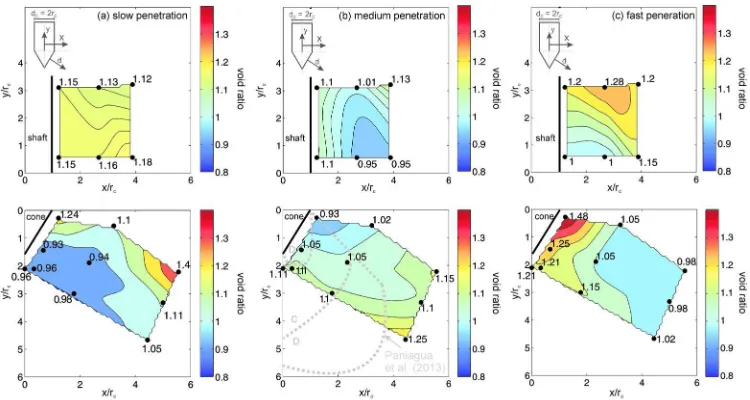
Figure 4 provides the void ratio distribution presented as contour plots obtained by
cubic interpolation of the measured values. The contours show an increase of the void
ratio values from the tip of the cone to outwards areas for the slow penetration rate
test, while for the fast penetration rate test an inverse trend is observed. Also, there is
no clear continuity between the values obtained for the cone and the shaft which
indicates the influence of the cone shoulder geometry. The failure zones observed by
Paniagua et al. (2013) are shown for comparison in the test with medium penetration
rate. This comparison between the void ratio contour plots and the failure zones from
Paniagua et al. (2013) can be done, noting that the results obtained in this work are
cumulative values (i.e. they are taken at the end of penetration) and the ones from
Paniagua et al. (2013) come from an incremental analysis. Besides, a cumulative
analysis of the incremental volumetric strains has shown identical results to the
incremental observations (Paniagua et al., 2013).
The lower void ratio values observed near the cone face for the slow penetration rate
test indicate that dilation along the shaft is less likely to develop at this rate. The high
void ratio values attained for the fast rate test is an indication that the dilation zone
tends to expand as the rate of penetration increases. For the medium penetration rate,
there is more variation in the porosity values along the cone face. These observations
suggest that the rate of penetration is responsible for the mobilisation of either a
contractive or dilative response near the tip of the cone with a consequent effect on the
cone resistance. In other words, for slow rate, contraction dominates the failure process
while for fast rate, dilation dominates. At an intermediate rate, the results indicate the
effect of partial drainage.
Void ratio against distance to cone
Potential patterns in the variation of void ratio around the cone were investigated.
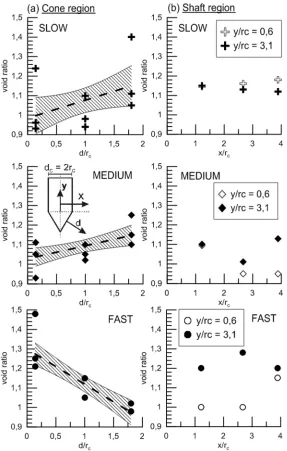
Figure 5 shows the void ratio values for the different locations of the three tests as a
function of a normalized distance of d/rc and x/rc for the cone and shaft regions
respectively. In these plots, rc is the shaft radius, d is measured from the cone face, x is
the horizontal distance from the line of symmetry of the probe. For the slow
penetration tests, low void ratio values are observed near the cone and they tend to
increase as d/rc increases. A different pattern can be seen for the test performed at fast
penetration rate, i.e. high void ratio values are measured near the cone and they
decrease for farther regions. The rate of penetration also influences the porosity along
the shaft-shoulder region. Although no clear trend can be found for the void ratio
distribution along x/rc, faster penetration can be seen to lead to higher void ratio values
along the shaft and lower near the shoulder.
Drainage patterns
The void ratio distribution can be linked to the drainage pattern. At slow penetration
rates, drained behaviour is expected (Randolph and Hope 2004) which agrees with a
low porosity zone (i.e. contraction dominated) in Figures 5 and 6, as this rate allows the
water to drain (i.e. drained contraction). For the medium rate of penetration, the void
ratio distribution relates to the partially drained behaviour resulting from contractive
and dilative regions. The fast rate of penetration prevents the water from draining and
a dilative zone (with high porosity values) is formed, also confirmed by finite element
simulations carried out by the authors. The high void ratios observed near the cone
face are likely to contribute to the development of negative pore pressures when
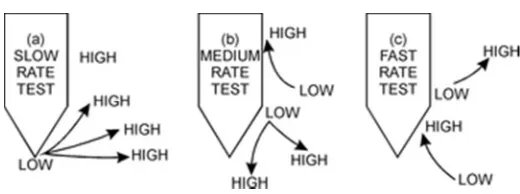
penetration occurs at fast rates, also observed by Silva (2005). Figure 6 shows schematic
diagrams of the void ratio variation around the probe where the arrows represent the
potential drainage paths, assuming that the water will travel from the low porosity to
the high porosity regions. During slow penetration there will be a side/upward
drainage from the cone tip (Figure 6a). While for the fast penetration rate, the drainage
paths are essentially upward towards the cone tip (Figure 6c). Again, for the medium
penetration rate (Figure 6b) the drainage shows a more complex pattern of paths given
the porosity variation along the cone face.
PARTICLE ORIENTATION ANALYSIS
Methodology
While for the porosity analysis the grains are treated as part of a single solid phase, the
investigation into the orientation of the grains requires the identification of the
individual grains within it, i.e. segmenting the image. This task involves more
sophisticated image processing techniques when compared to thresholding described
previously. Watershed techniques have been used for siliceous sands with relatively
rounded and convex grains (e.g. Fonseca et al. 2013a). In the case of a silt, the diversity
of particle shape ranging from almost spherical to needle-like grains and the wide
range of grain sizes, makes the segmentation process more complex. Paniagua et al.
(2014) and Fonseca et al. (2013c) describe the use of manual techniques to quantify the
characteristics of individual grains for the case of lower quality images where the
edges of the grains are difficult to identify and an automated process is not viable. In
the present study, the high quality of the EPMA images has enabled the development
of an automated process to segment the images. In order to facilitate the image
processing, grains defined by less than 30 pixels (approximately diameter of 2 µm) are
removed and assumed that their orientation is not relevant for this analysis. Note that
this corresponds to the clay fraction and represents less than 2,5% of the total grains. In
addition, the different mineralogical composition of the grains originates very distinct
intensity values representing the solid phase in the images. The process of
segmentation, consisted of 1) filtering the solid phase with similar intensity values and
2) applying a series of morphological operations consisting of eroding and dilating the
edges of the grains in order to associate to each grain a unique intensity value or ID.
The MATLAB Image Processing Toolbox (Mathworks) was used.
The second task consisted of obtaining the orientation of the major and minor axes for
each grain. This was done using the principal component analysis (PCA). PCA is
applied to the cloud of points/pixels defining each individual grain given by the x,y
coordinates and ID value (details can be found in Fonseca et al. 2013a). The orientation
of each grain (i.e. angle θ) is given by the vector describing the orientation of particle’s
major axis (Fig. 7a).
Size and shape description
The process used to obtain the size of the grains involved two key steps as developed
by Fonseca (2011): 1) orthogonal rotation of the pixel coordinates defining each grain,
so that its principal axes (obtained previously) were made parallel to the Cartesian axes
and 2) subtracting the corresponding rotated coordinates to obtain the major and
minor dimensions of the grain (Fig. 7a). The two principal axes lengths of each particle
in µm were obtained by multiplying the length given in pixels by the size of each pixel
(i.e. image resolution). The shape description of each grain was done using the aspect
ratio descriptor (AR) or elongation, given by the ratio between the lengths of the minor
and the major axes in each grain (e.g., ARsphere = 1). The statistical distribution of the AR
values is presented in Figure 7b for one of the specimens (to note that no significant
variation has been found between specimens) compared to a silica sand (Fonseca et al
2012). This silt exhibits AR values ranging from 0,1, i.e. needle-like grains, to
approximately circular grains, i.e. AR = 1; while the sand shows a much narrower
range of values, i.e. 0,6 - 1. The bias in the re-orientation of the more elongate flaky
grains under imposed deformation has been reported in previous studies (e.g. Lupini
1981). For the orientation analysis, the grains were divided into two classes according
to their AR value: i.e. bulky grains AR > 0,50 and flaky for AR < 0,50.
Angular histograms
The statistical distribution of particle orientation was investigated using 2D angular
histograms or rose diagrams. Rose diagrams provide an effective way to visualise the
distribution of a given set of vectors. In these plots the vectors are “binned" into an
interval of selected size and represented as a segment whose length is proportional to
the number of vectors orientated within the angle defining the bin limits. The
orientation of the vectors is given by the angle α measured relatively to the reference
plane shown in Figure 3, i.e. horizontal plane for the shaft and the plane inclined 32°
from the horizontal for the cone region. In the histograms, shown in Figure 8, each bin
represents an angular interval for angle α and is shaded according to either the major
axis length (in μm) or the AR to provide additional information on the link between
grain characteristics and preferential orientation. Only half of the plane is considered in
the rose diagrams since each particle has a defined orientation vector without a specific
direction, i.e. an orientation of 60° is equivalent to an orientation of 240°. These angular
plots correspond to the location SDCP-S-S1-1 and refer to all grains (Figure 8a), flaky
grains (Figure 8b) and bulky grains (Figure 8c), respectively. The orientation pattern is
similar in the three cases and the key aspect to note is the more explicit preferential
orientation of the flaky grains when compared to a more random distribution for the
bulky. It is also clear that the directional trend pattern is set by the longer and more
elongated grains, depicted by the lighter shading.
Figure 9 illustrates the distribution of particle orientation at selected locations, for all
grains after penetration and for the regions near the cone, starting from the top shaft to
the cone tip for the medium rate test, i.e. regions M-S1-1, M-S1-4,
SDCP-M-C1-4, SDCP-M-C1-3, SDCP-M-C1-2, SDCP-M-C1-1. A clear vertical orientation of
the grains major axes, i.e. parallel to the shaft, can be observed for the two positions in
the shaft region. Similar trend can be observed for the cone region where the grains
tend to re-orientate parallel to the cone face and at the tip of the cone at a
perpendicular orientation to the cone movement.
Microscale parameters
Two parameters are used for the quantitative characterisation of the distribution of
particle orientation. The first relates to the preferred orientation of the particle
distribution and is called the β value and the second parameter describes the
anisotropy of the particle distribution (A).
a) β value
This angular parameter is given by the eigenvector associated with the major
eigenvalue of the fabric tensor. The fabric tensor of the vectors defining the particle
orientations is denoted as follows (Satake, 1982):
∑
= = Φ N k k j k i ij n nN 1
1 (1)
where N is the total number of vectors in the system, k i
n is the unit orientation vector
along direction i and k j
n is the unit orientation vector along direction j.
b) Anisotropy value
The anisotropy of the system is quantified by considering the difference between the
major and minor eigenvalues of the fabric tensor, i.e. Φ1- Φ3 (e.g. Thornton 2000,
Fonseca et al. 2013a). An isotropic distribution will have an A value of zero and the
correspondent vectors distributed equally in all directions, while the realignment of the
vectors along a preferable direction will lead to higher values of A. An effective way of
graphically representing the degree of anisotropy is to use a Fourier series (Rothenburg
and Bathurst 1989, Barreto 2008). The value of A increases with the concentration of the
orientation vectors towards a preferable angle. Two extreme anisotropy values are
presented here. Figure 10a illustrates the case of A = 0,06 (near zero) with the Fourier
fitting represented by the dotted lines, exhibiting a near circular shape. The case of A =
0,53, illustrated in Figure 10b, shows a clear preferable orientation and an associated
‘more elongated’ fitting curve. Distributions with higher anisotropy values are
characterized by a predominant particle alignment which is given by the angle β. In
more isotropic distributions, the particles tend to align in random directions and the
angle β becomes less meaningful.
Anisotropy against distance to cone
Figure 11 shows the variation of anisotropy with the normalized distance d/rc for the
cone region and x/rc for the shaft for both flaky and bulky grains. The anisotropy
values attained at the end of the test relate to the extent of realignment of the grains.
However, when compared to trends observed in Fig. 5 for porosity, it can be seen that
there is not always a direct correlation between void ratio and anisotropy values. The
test carried out at medium penetration rate, for SDCP-M in Fig.11a, suggests the
development of three areas of distinct anisotropy for the cone region based on the
rotation of the grains imposed by the cone movement. In zone 1, near to the cone, the
grains realign along the direction of the cone's face: downwards and sideward at the
tip. The interaction of these mechanisms leads to grains reorient in distinct directions,
resulting therefore, in lower anisotropy values. For zone 2, the grains follow the cone
movement but as the distance from the cone increases, a 'strong' realignment and
higher anisotropy values are observed. Finally, the zone 3 is likely to be influenced by
the friction end effects from the walls.
The anisotropy values do not show much dependency on the rate of penetration. The
results suggest that the lower penetration rate imposes more evident reorientation
(higher A) for zone 2. It can also be observed that the trend of the anisotropy values is
the same for both flaky and bulky grains but the flaky grains have much greater
values, generally twice, than the bulky grains. This can be explained by the fact that the
bulky grains are less prone to rotate when compared to more flaky grains. For the shaft
region, low anisotropy values are attained near the shoulder for the slow penetration
rate, while for medium and fast penetration rates, higher anisotropy values are
observed.
Contour plots analysis
The distribution of the β values together with the anisotropy field for the three tests is
presented in Figure 12. These contour diagrams provide an alternative illustration of
the observations made before. In particular, to note are the lower anisotropy values
near the cone tip and higher anisotropy in the middle part of the region investigated,
which results from the stronger realignment of the grains. This trend is more
pronounced for the medium rate test as shown in Figure 12.
A clear reorientation of the grains towards the vertical direction along the shaft, i.e. β
close to zero can be observed for the three tests. This trend is more pronounced for the
fast test, which also exhibits the lowest void ratio values. The grains near the cone also
align parallel to the cone face. At the cone tip the grains rotate towards an orientation
perpendicular to the cone pushing direction as a consequence of the deformation
mechanism imposed by the movement of the cone. The rate of the test does not seem to
affect significantly the final preferred orientation of the grains following penetration.
The extent of the region affected by the movement of the cone cannot be clearly
defined. Referring to Paniagua et al. (2013) no significant strains were measured
outside the regions defined by the dotted lines in Fig. 5 which would mean that
locations 7 to 10 in the cone region and 3 and 6 in the shaft region might not be
significantly influenced by penetration. As a result of the slurry deposition used to
prepare the initial sample, a near horizontal particle orientation would be expected.
The more inclined orientation deviating from the horizontal direction observed for the
grains in these outer regions is believed to a result of side friction during sample
preparation, also reported by Cetin (2004), what is known as the silo theory effect
(Janssen, 1895).
LINKING MICRO TO MACRO BEHAVIOUR
The macro response obtained for the three CPTU tests carried out on Vassfjellet silt
with a medium density is presented in Table 1. It can be seen that increasing the
penetration rate from a slow value (drained behaviour) to a medium value leads to a
reduction of the penetration resistance TR; while further increase in the rate to a fast
penetration value (approaching undrained conditions) is associated with an increase of
the penetration resistance. Regarding the pore pressure (u2), the values are seen to
decrease as the penetration rate increases and negative values are measured at both
medium and fast rates. The analysis of the local porosity has shown high void ratio
values near the cone at fast penetration rate which supports the development of
negative pore pressures due to the dilative response. For the slow penetration rate test
the lower void ratio values found near the cone tip suggest drained contraction.
Table 1. Measurements of total penetration resistance (TR) and pore pressure (u2) for the three tests carried out a different penetration rates given by the cone velocity (v)
Test v (mm/s) TR (N) u2 (kPa)
Slow SDCP-S 0,06 200 2,5
Medium SDCP-M 6 190 -10
Fast SDCP-F 50 225 -40
As discussed previously, the anisotropy of the particle orientation is believed to be
largely related to the rotation of the grains imposed by the movement of the cone and
these micro scale parameters can also be linked to the dilative response of the soil. Low
anisotropy values can be associated with zones of dilation as the grains tend to
re-orient in random directions that create a “less organised” system with larger voids and
[image:21.612.101.500.457.563.2]therefore “less contractive”. Conversely, a system with a strong predominant
orientation and higher anisotropy values will be more “more contractive” (Fig. 13).
Figure 14 combines the measured observations for the medium penetration rate test,
with EPMA images with the aim of providing a more scientific explanation for the
formation of the dilative and compacted systems. It can be observed that the low
anisotropy values close to the cone tip and high void ratio agree with the dilative zone
denoted by Paniagua et al. (2013). The dilation decreases as the distance from the cone
increases making the particle distributions “more organized” and “more contractive”
towards the limit between the contractive and dilative zones identified in Paniagua et
al. (2013). At larger distances from the cone face, the randomness in the distributions
increases as well as the void ratio values. Along the shaft, the zone closer to the cone
shoulder show higher anisotropy values perhaps associated with a better alignment of
the grains at this location.
CONCLUSIONS
This paper shows that investigating soil fabric following CPTU tests, carried out on silt
at different penetration rates, can help understanding the grain-scale mechanisms,
induced by the cone penetration, that underlie the measured macroscale response. In
particular, the partial drainage behaviour can be linked to the distribution of the void
ratio and particle orientation in the regions surrounding the probe during penetration.
The analysis of local void ratio measurements allows the identification of areas with
distinct density that are, therefore, prone to exhibit distinct behaviour in terms of their
tendency to contract or dilate. Zones more prone to dilate were seen to be associated
with low anisotropy values of the vectors defining grain orientation, as the grains tend
to create a “less organised” system with larger voids within. Conversely, zones of
contraction show strong grain alignment, thus lower anisotropy values of grain
orientation and lower void ratio. It is shown that the development of regions of
contraction and dilation is influenced by the penetration rate. For higher penetration
rate, a dilative area, i.e. high void ratio, was identified near the cone, which is believed
to be associated with the generation of negative pore pressure and also leading to an
increase of cone resistance. For slow penetration rate, the low porosity values observed
near the cone indicate the tendency of this zone to contract and thus, exhibiting
drained behaviour. This study suggests that the rate-dependent response of CPTU in
silt is not only dependent on the drainage rates but is, above all, a result of the
evolution of the soil microstructure in the region surrounding the probe. The findings
herein presented show that understanding the mechanisms of grain reorientation
following cone penetration is of utmost importance to explain the drainage patterns
controlling the cone resistance and the development of pore pressures.
ACKNOWLEDGEMENTS
Workshop engineers F. Stæhli and T. Westrum at NTNU are greatly acknowledged for
valuable help with construction of the testing apparatus. Engineer A. Monsøy at
NTNU prepared the thin sections. The EPMA scans were performed by Engineer W.
Dahl at SINTEF. M. Long at University College Dublin is greatly acknowledged for
reviewing the manuscript.
REFERENCES
Barreto D., O'Sullivan c. and Zdravkovic l. 2008. Specimen generation approaches for DEM simulations. International symposium on deformation characteristics of geomaterials. Bradshaw, A.S. and Baxter, C.D.P. 2007. Sample preparation of silts for liquefaction testing.
Geotechnical Testing Journal ASTM 30: 324-332.
Broere W. 2001. Tunnel face stability and new CPT applications. PhD thesis. Delft University of Technology.
Butlanska J., Arroyo M., Gens A. and O’Sullivan C. 2014. Multi-scale analysis of cone penetration test (CPT) in a virtual calibration chamber. Canadian Geotechnical Journal 51: 51-66.
Cetin H. 2004. Soil-particle and pore orientation during consolidation of cohesive soils. Engineering Geology 73: 1-11.
Chung S.F., Randolph M.F. and Schneider J.A. 2006. Effect of penetration rate on penetrometer resistance in clay, J. of Geotechnical and GeoEnvironmental Eng, ASCE, 132(9): 1188–1196. DeJong J.T. and Randolph M.F. 2012. Influence of partial consolidation during cone penetration
on estimated soil behavior type and pore pressure dissipation measurements. Journal of Geot. and Geoenvironmental Engineering ASCE 138 (7): 777-788.
DeJong J.T., Jaeger R.A., Boulanger R.W., Randolph M.F. and Wahl D.A.J. 2013. Variable penetration rate cone testing for characterization of intermediate soils. In Countinho and Mayne (eds) Geotech. and geoph. site charact. 4. London: Taylor & Francis.
Fonseca, J. 2011. The evolution of morphology and fabric of a sand during shearing. PhD thesis. Imperial College London.
Fonseca, J., O’Sullivan, C., Coop, M. and Lee, P.D. 2012. Non-invasive characterization of particle morphology of natural sands. Soils and Foundations 52 (4): 712-722.
Fonseca, J., O’Sullivan, C., Coop, M. and Lee, P.D. 2013a. Quantifying evolution soil fabric during shearing using directional parameters. Géotechnique 63 (6): 487-499.
Fonseca, J., O’Sullivan, C., Hagira, T., Yasuda, H. and Gourlay, C.M. 2013c. In situ study granular micromechanics in semi-solid carbon steels. Acta Materialia 61 (11): 4169-4179. Gylland, A., Rueslåtten, H., Jostad, H.P. and Nordal, S. 2013. Microstructural observations shear
zones in sensitive clay. Engineering Geology 163: 75-88.
Jaeger R.A., DeJong J.T., Boulanger, R.W., Low, H.E. and Randolph, M.F. 2010. Variable penetration rate CPT in an intermediate soil. Proc., Int. Symp. on Cone Penetration Testing, Huntington Beach, CA, 8 pgs.
Janssen, H.A. 1895. Zeitschr. d. Vereines deutscher Ingenieure 39, 1045.
Jiang, M.J., Zhu, H.H. and Harris, D. 2008. Classical and non-classical kinematic fields of two-dimensional penetration tests on granular ground by discrete element method analyses. Granular Matter 10: 439-455.
Kim K., Prezzi M., Salgado R. and Lee, W. 2008. Effect of penetration rate on cone penetration resistance in saturated clayey soils, J. of Geotechnical and GeoEnvironmental Eng, ASCE, 134(8): 1142–1153.
Kim, Y. 2012. Properties of silt and CPTU in model scale. MSc project work. NTNU, Trondheim, Norway.
Kinloch H. and O’Sullivan C. 2007. A micro-mechanical study of the influence of penetrometer geometry on failure mechanisms in granular soils. Advances in measurement and modelling of soil behaviour. Geo-Denver 2007: new peaks in Geotechnics, pp. 1-11.
Kuerbis R. and Vais Y.P. 1988. Sand sample preparation – the slurry deposition method. Soils and Foundations 28 (4): 107-118.
Liu J. and Iskander M. 2010. Modelling capacity of transparent soil. Can. Geotech. J. 47, No. 4, 451–460.
Lunne, T., Robertson, P. and Powell, J. 1997. CPT in geotechnical practice. New York: Blackie Academic.
Lupini, J. F., Skinner, A. E and Vaughan, P. R. (1981). Drained residual strength of cohesive soils Géotechnique, 31 (2), p. 181-213
Muromachi T. 1974. Experimental study on application of static cone penetrometer to subsurface investigation of weak cohesive soils. ESOPT 2: 192–285.
Nesse, W. 2011. Introduction to mineralogy. Oxford University Press.
Otsu, N. 1979. A threshold selection method from gray level histograms. IEEE Transactions on Systems, Man and Cybernetics 9 (1): 62-66.
Ovando-Shelley E. 1986. Stress – strain behavior of granular soils tested in the triaxial cell. PhD thesis. University of London, Imperial College.
Paniagua, P. 2014. Model testing of cone penetration in silt with numerical simulations. PhD thesis. Norwegian University of Science and Technology, Trondheim, Norway.
Paniagua, P., Andó, E., Silva, M., Nordal, S. and Viggiani, G. 2013. Soil deformation around penetrating cone in silt. Géotechnique Letters 3: 185-191.
Paniagua, P., Fonseca, J., Gylland, A. and Nordal. 2014. Microstructural study of the deformation zones around a penetrating cone tip in silty soil. International Symposium on Geomechanics from Micro to Macro (IS-Cambridge2014).
Paniagua, P., Gylland, A. and Nordal, S. 2012. Experimental study of deformation pattern around penetrating coned tip. In Laloui & Ferrari (eds) Multiphysical testing soils-shales: 227–232. Berlin: Springer.
Poulsen R., Nielsen B.N. and Ibsen L.B. 2013. Correlation between cone penetration rate and measured cone penetration parameters in silty soils. 18th International Conference on Soil Mechanics and Geotechnical Engineering. Paris, pp. 603-606.
Randolph M.F. and Hope S. 2004. Effect of cone velocity on cone resistance and excess pore pressures, Proc., IS Osaka-Engineering Practice and Performance of Soft Deposits, Osaka, Japan, 147–152.
Rasband, W. 2013. ImageJ 1.48g. National Institutes of Health, USA.
Robinsky E.I and Morrison C.F. 1964. Sand displacement and compaction around model friction piles. Canadian Geotechnical Journal 1:81-93.
Rothenburg, L. and Bathurst, R. J. 1989 Analytical study of induced anisotropy in idealized granular materials. Géotechnique 39 (4): 601-614
Roy M., Michaud D., Tavenas F., Leroueil S. and Rochelle P.L. 1974. The interpretation of static cone penetration test in sensitive clay. ESOPT 2: 323-330.
Schneider J.A., Lehane B.M. and Schnaid, F. 2007. Velocity effects on piezocone measurements in normal and overconsolidated clays. International Journal of Physical Modelling in Geotechnics 2: 23-34.
Schneider J.A., Randolph M.F., Mayne P.W. and Ramsey N.R. 2008. Analysis of factors influencing soil classification using normalized piezocone tip resistance and pore pressure parameters. Journal of Geotechnical and Geoenvironmental Engineering 134 (11): 1569-1586. Silva M.F. 2005. Numerical and physical models of rate effects in soil penetration. PhD
dissertation. University of Cambridge.
Te Kamp, W.G.B. 1982. The influence of the rate of penetration on the cone resistance qc in sand. Proceeding of the Second European Symposium on Penetration Testing. Amsterdam: 627-633. Rotterdam: Balkema.
Thornton, C. 2000. Numerical simulations of deviatoric shear deformations of granular media. Géotechnique 50 (1): 43-53.
White D., Take W. and Bolton M. 2003. Soil deformation measurement using particle image velocimetry (PIV) and photogrammetry. Géotechnique 53 (7): 619-631.
Yafrate N.J. and DeJong J.T. 2007. Influence of Penetration Rate on Measured Resistance with Full Flow Penetrometers in Soft Clay, ASCE GI GeoDenver Conference, Denver, CO., pp. 1-10.
Yasafuku N. and Hyde A.F.L. 1995. Pile end-bearing capacity in crushable sands. Géotechnique 45: 663-676.
LIST OF FIGURES
Figure 1. (a) Backscattered electron image from EPMA scan, (b) grain size distribution of the Vassfjellet silt and (c) stress paths (adapted from Ovando-Shelley 1986).
Figure 2. Experimental set up used in the experiments presented in this paper. The variation in dry density measured and estimated in the specimen is specified.
Figure 3. Location of thin sections in the specimens studied at (a) cone region and (b) shaft region.
Figure 4. Spatial variation of void ratio values around the cone and shaft regions for (a) slow, (b) medium and (c) fast penetration rate. C: contraction and D: dilation.
Figure 5. Variation of void ratio values with the normalized distance either (a) d/rc for the cone
region or (b) x/rc for the shaft region in the different tests. The shaded area corresponds to an
80% confidence for the main trend shown (dotted line).
Figure 6. Schematic representation for the void ratio variation around the probe. The arrows show the expected drainage pattern from high pore pressures (related to low void ratios or more contraction) to low pore pressures (related to high void ratios or more dilation).
Figure 7. (a) Procedure for definition of size and shape of each grain. (b) Distribution of AR. Figure 8. Rose diagrams of particle orientations for all, flaky and bulky grains SDCP-S-S1-1. Figure 9. Rose diagrams of particle orientations of all grains for selected locations (defined in Fig. 3): (a) S1-1, (b) S1-4, (c) C1-4, (d) C1-3, (e) SDCP-M-C1-2 and (f) SDCP-M-C1-1.
Figure 10. Examples of (a) an isotropic rose diagram for bulky grains in SDCP-S-C1-10 and (b) an anisotropic rose diagram for SDCP-M-C1-5. The red discontinuous line indicates the curve fitting.
Figure 11. Variation of anisotropy with (a) d/rc (cone region) or (b) x/rc (shaft region) for flaky
and bulky grains in SDCP-S (slow rate test), SDCP-M (medium rate test) and SDCP-F (fast rate test).
Figure 12. Distribution of the angle β and spatial variation of anisotropy A of flaky grains for the zones around the cone and the shaft in (a) slow, (b) medium and (c) fast penetration rate. Each black line is oriented according to the angle β. The anisotropy values are shown at its corresponding location.
Figure 13. (a) System with grains oriented in random directions (low A) and high void ratio (dilation), (b) system with stronger grain orientation grains (high A) and low void ratio values (contraction).
Figure 14. Contours around cone and shaft of the medium penetration rate test for: (a) void ratio, (b) anisotropy and angle β. (c) Sectors of EPMA images at each location compared to Paniagua et al. (2013) observations. Each square has a side measurement equal to 80 µm. D: dilation and C: contraction.
Figure 1. (a) Backscattered electron image from EPMA scan, (b) grain size distribution of the Vassfjellet silt and (c) stress paths (adapted from Ovando-Shelley 1986).
47x12mm (600 x 600 DPI)
[image:30.612.120.494.112.210.2]Figure 2. Experimental set up used in the experiments presented in this paper. The variation in dry density measured and estimated in the specimen is specified.
195x444mm (300 x 300 DPI)
Figure 3. Location of thin sections in the specimens studied at (a) cone region and (b) shaft region. 54x35mm (300 x 300 DPI)
Figure 4. Spatial variation of void ratio values around the cone and shaft regions for (a) slow, (b) medium and (c) fast penetration rate. C: contraction and D: dilation.
97x52mm (600 x 600 DPI)
Figure 5. Variation of void ratio values with the normalized distance either (a) d/rc for the cone region or (b) x/rc for the shaft region in the different tests. The shaded area corresponds to an 80% confidence for the
main trend shown (dotted line). 86x136mm (199 x 199 DPI)
Figure 6. Schematic representation for the void ratio variation around the probe. The arrows show the expected drainage pattern from high pore pressures (related to low void ratios or more contraction) to low
pore pressures (related to high void ratios or more dilation). 29x9mm (300 x 300 DPI)
Figure 7. (a) Procedure for definition of size and shape of each grain. (b) Distribution of AR. 48x12mm (300 x 300 DPI)
[image:36.612.118.497.108.216.2]Figure 8. Rose diagrams of particle orientations for all, flaky and bulky grains SDCP-S-S1-1. 55x17mm (300 x 300 DPI)
Figure 9. Rose diagrams of particle orientations of all grains for selected locations (defined in Fig. 3): (a) S1-1, (b) S1-4, (c) C1-4, (d) C1-3, (e) C1-2 and (f)
SDCP-M-C1-1.
87x42mm (600 x 600 DPI)
Figure 10. Examples of (a) an isotropic rose diagram for bulky grains in SDCP-S-C1-10 and (b) an anisotropic rose diagram for SDCP-M-C1-5. The red discontinuous line indicates the curve fitting.
37x16mm (600 x 600 DPI)
Figure 11. Variation of anisotropy with (a) d/rc (cone region) or (b) x/rc (shaft region) for flaky and bulky grains in SDCP-S (slow rate test), SDCP-M (medium rate test) and SDCP-F (fast rate test).
86x106mm (199 x 199 DPI)
Figure 12. Distribution of the angle β and spatial variation of anisotropy A of flaky grains for the zones around the cone and the shaft in (a) slow, (b) medium and (c) fast penetration rate. Each black line is oriented according to the angle β. The anisotropy values are shown at its corresponding location.
98x52mm (600 x 600 DPI)
Figure 13. (a) System with grains oriented in random directions (low A) and high void ratio (dilation), (b) system with stronger grain orientation grains (high A) and low void ratio values (contraction).
37x16mm (600 x 600 DPI)
[image:42.612.121.486.112.279.2]Figure 14. Contours around cone and shaft of the medium penetration rate test for: (a) void ratio, (b) anisotropy and angle β. (c) Sectors of EPMA images at each location compared to Paniagua et al. (2013)
observations. Each square has a side measurement equal to 80 µm. D: dilation and C: contraction.
98x53mm (600 x 600 DPI)