R E S E A R C H A R T I C L E
Open Access
Developing a toolkit to implement the
Statin Choice Conversation Aid at scale:
application of a work reduction model
Aaron L. Leppin
1,2*, Kasey R. Boehmer
2, Megan E. Branda
3, Nilay D. Shah
1, Ian Hargraves
2, Sara Dick
2,
Glyn Elwyn
4, Henry H. Ting
5, Siqin Ye
6, Ryan Gilles
7, Marghoob Abbas
8, Alex Alexander
2and Victor M. Montori
2Abstract
Background:Guidelines recommend shared decision making (SDM) for determining whether to use statins to prevent cardiovascular events in at-risk patients. We sought to develop a toolkit to facilitate the cross-organizational spread and scale of a SDM intervention called the Statin Choice Conversation Aid (SCCA) by (i) assessing the work stakeholders must do to implement the tool; and (ii) orienting the resulting toolkit’s components to communicate and mitigate this work.
Methods:We conducted multi-level and mixed methods (survey, interview, observation, focus group)
characterizations of the contexts of 3 health systems (n= 86, 84, and 26 primary care clinicians) as they pertained to the impending implementation of the SCCA. We merged the data within implementation outcome domains of feasibility, appropriateness, and acceptability. Using Normalization Process Theory, we then characterized and categorized the work stakeholders did to implement the tool. We used clinician surveys and IP address-based tracking to calculate SCCA usage over time and judged how stakeholder effort was allocated to influence outcomes at 6 and 18 months. After assessing the types and impact of the work, we developed a multi-component toolkit. Results:At baseline, the three contexts differed regarding feasibility, acceptability, and appropriateness of implementation. The work of adopting the tool was allocated across many strategies in complex and
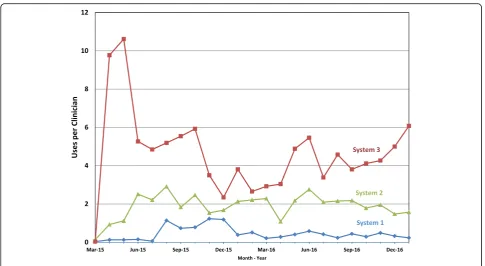
interdependent ways to optimize these domains. The two systems that allocated the work strategically had higher uptake (5.2 and 2.9 vs. 1.1 uses per clinician per month at 6 months; 3.8 and 2.1 vs. 0.4 at 18 months, respectively) than the system that did not. The resulting toolkit included context self-assessments intended to guide
stakeholders in considering the early work of SCCA implementation; and webinars, EMR integration guides, video demonstrations, and an implementation team manual aimed at supporting this work.
Conclusions:We developed a multi-component toolkit for facilitating the scale-up and spread of a tool to promote SDM across clinical settings. The theory-based approach we employed aimed to distinguish systems primed for adoption and support the work they must do to achieve implementation. Our approach may have value in orienting the development of multi-component toolkits and other strategies aimed at facilitating the efficient scale up of interventions.
Trial registration:ClinicalTrials.gov NCT02375815.
Keywords:Shared decision making, Implementation, Scale-up, Spread, Implementation toolkit, Statins, Statin choice decision aid, Statin choice conversation aid, Implementation strategies
© The Author(s). 2019Open AccessThis article is distributed under the terms of the Creative Commons Attribution 4.0 International License (http://creativecommons.org/licenses/by/4.0/), which permits unrestricted use, distribution, and reproduction in any medium, provided you give appropriate credit to the original author(s) and the source, provide a link to the Creative Commons license, and indicate if changes were made. The Creative Commons Public Domain Dedication waiver (http://creativecommons.org/publicdomain/zero/1.0/) applies to the data made available in this article, unless otherwise stated. * Correspondence:[email protected]
1
Division of Health Care Policy and Research, Mayo Clinic, 200 First Street SW, Rochester, MN 55905, USA
2Knowledge and Evaluation Research Unit, Mayo Clinic, 200 First Street SW, Rochester, MN 55905, USA
Background
The statin choice conversation aid
Statins are medications used for the primary prevention of cardiovascular disease [1, 2]. The Statin Choice Con-versation Aid (SCCA) was developed through principles of user-centered design [3] to promote shared decision making (SDM) between patients and clinicians consider-ing statins. The SCCA was tested in several randomized trials [4–7] and most of the results suggested the con-versation aid led to increased patient knowledge, greater patient comfort with the decision making process, and better alignment of prescription with estimated cardio-vascular risk; one trial showed improvement in patient self-reported adherence to treatment at 3 months [4]. Subsequently, the SCCA was integrated into the Mayo Clinic electronic medical record (EMR) and made avail-able for passive external dissemination on the Mayo Clinic Shared Decision Making National Resource Cen-ter website (statindecisionaid.mayoclinic.org). This pas-sive dissemination had resulted in more than 166,000 hits on the website in 2016, but use of the tool from within the EMR remained limited to Mayo Clinic [8]; limited evidence of adoption by Mayo and other organi-zations existed [9].
In 2013, the American College of Cardiology/Ameri-can Heart Association (ACC/AHA) guidelines for chol-esterol management recommended that decisions to initiate statin therapy be based on calculations of indi-vidualized risk and incorporate patient values and preferences through a SDM approach [1, 2]. The ACC/ AHA specifically promoted use of the SCCA in its per-formance measures related to cardiovascular prevention [10]. Further, the Centers for Medicare and Medicaid Services, in partnership with the Million Hearts initia-tive, started a demonstration project focused on using SDM for cardiovascular risk reduction [11]. Together, this resulted in increased interest nationally in the rou-tine use of SDM and other tools to support the decision to initiate statins for primary prevention.
Scale-up, spread, and the role of toolkits
In such situations where the desire to implement an intervention is widespread across organizations, broadly applicable and efficient strategies for facilitating cross-organizational scale-up and spread are of potential value [12–15]. Yet, most research in this area has been conceptual and few successful examples of such strat-egies exist in clinical settings [15]. Indeed, a 2016 review of models and frameworks for scale-up and spread sug-gested that most scale-up efforts in clinical settings are based on quality improvement (QI) methods intended only to scale practices within a single organization [16]. The few examples of effective strategies aimed at repli-cating best practices and improving processes across
multiple organizations (such as the Institute for Health-care Improvement (IHI)‘s“Breakthrough Series,”or BTS, model) often include external facilitation, co-learning, and a significant investment of time and resources from committed organizations. More efficient, low-touch, and so-called “non-sequential” or “campaign-based” ap-proaches [16, 17] for facilitating the spread of interven-tions are appealing because they have the potential to reach a greater and more diverse set of organizations. Implementation “toolkits” are examples of such ap-proaches, although they have been conceptualized in varying ways in the literature and in practice [18–22]. For the purposes of this paper, toolkits comprise a het-erogeneous bundle of evidence-based strategies designed to be disseminated to and taken up and used (as a multi-faceted implementation strategy [23]) by implementing stakeholders in distant organizations. Un-fortunately, and despite their theoretical value, imple-mentation toolkits—as typically designed and disseminated—have not proven consistently effective at achieving implementation, particularly when compared to more “hands-on” multi-faceted strategies [24–26]. One likely reason for this is that, in many cases, toolkits are not designed to target specific and known barriers to implementation or to support stakeholders in carrying out the work most critical for success. This is supported, for example, by studies showing that the number of components of many multi-faceted implementation strategies do not correlate with effectiveness and the suggestion that a “kitchen sink” approach is frequently taken [24, 27]. Developing toolkits and other multi-faceted strategies in this sort of haphazard way may result in the inclusion of strategies and components that are of low value and that only serve to increase stakeholder work and confusion. Partly for these rea-sons, Barker and colleagues, in their 2016 Framework for Going to Full Scale, suggested that toolkit-like strat-egies only be deployed after “learning deeply from a small number of sites”and developing the“scalable unit” [16]. This line of thinking is also consistent with a much larger body of literature and understanding highlighting the importance of incorporating theory, experience, and data in the design of implementation strategies [25, 28, 29].
The AIDED model for scale-up
organizing and prescribing the activities of scale-up ef-forts in and across clinical settings, although its individ-ual phases lack a robust theoretical basis for informing the development of implementation strategies, such as toolkits.
Objective
We sought to use the AIDED model—supplemented with phase-specific theoretical guidance—to develop a theory-based toolkit for facilitating implementation of the SCCA in diverse and routine clinical settings with minimal outside intervention. In this paper, we describe the experience of and insights gained from implement-ing the SCCA within three healthcare organizations and explain how these were used to develop the resulting toolkit.
Methods
Conceptual rationale and study overview
In this project, we sought to characterize the work stake-holders in multiple organizations needed to do to imple-ment the SCCA and to develop a toolkit that could mitigate or ease this work. These activities corresponded to the Assess and Innovate phases of AIDED and in-cluded elements of formative evaluation [31] and action research [32], respectively. In the AIDED phases of De-velop and Engage we sought to identify and partner with the communication channels and pre-existing networks that could“Devolve”the strategy.
During the Assess phase we first characterized the baseline contexts (through application of the Consoli-dated Framework of Implementation Research [33]) of each participating organization according to their perceived effects on the feasibility, acceptability, and ap-propriateness of implementing the SCCA. We took this
approach because we hypothesized that much of the ini-tial work that an organization would need to do to im-prove the potential and capacity for implementation [34, 35] would involve changing the intervention and envir-onment to optimize these outcome domains [35–37].
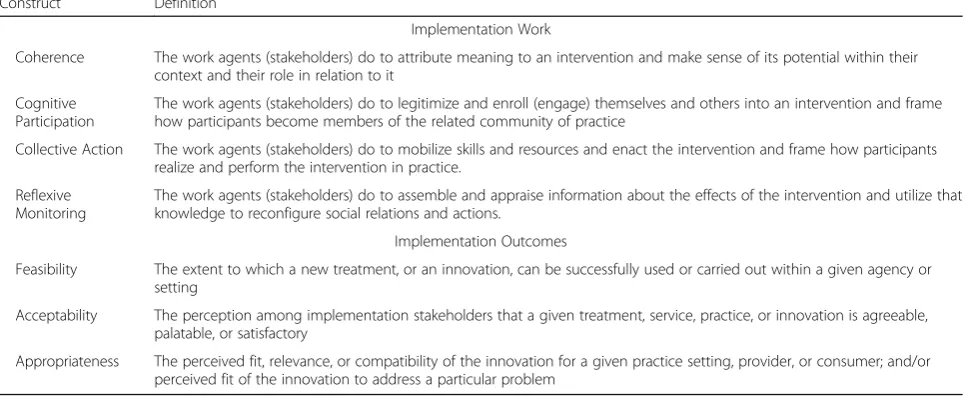
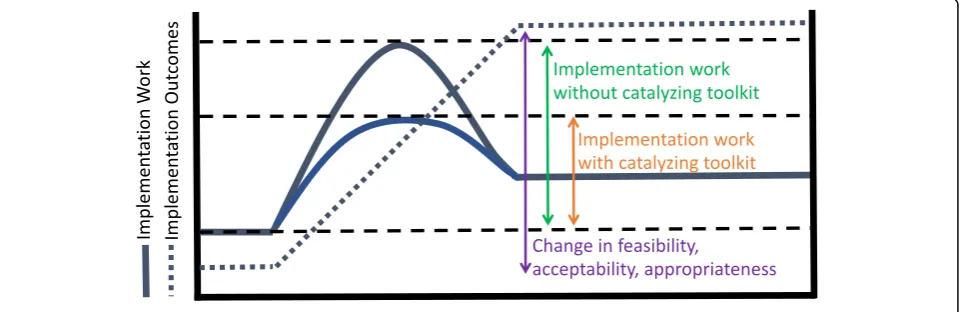
[image:3.595.57.540.534.733.2]We then used Normalization Process Theory (NPT) [38]—which considers and categorizes the work of im-plementation into constructs of coherence, cognitive participation, collective action, and reflexive monitoring (see Table 1)—to guide the formative evaluation [31] of the implementation process. We paid careful attention to the types of work required, the emergent strategies [39, 40] organizations used to do this work, and how these were allocated to optimize the feasibility, accept-ability, and appropriateness of implementation in each context. Finally, we employed user-centered design and stakeholder engagement strategies that we have used in other projects [3] to translate this insight and to guide activities in the Innovate, Develop, and Engage phases. We likened the entire project to the development of a catalyst that could be disseminated to facilitate wide-spread implementation of the SCCA. We drew the meta-phor of a catalyst from biochemistry, wherein enzymatic catalysts are used to reduce the energy threshold (e.g. the contribution of work) required for a chain reaction to occur. Indeed, in biochemistry, when catalysts are present, energy thresholds are reduced and reactions happen more readily. Extending this logic to implemen-tation, we hypothesize that when implementation work is reduced, implementation will happen more readily. An overview of the study activities and purpose is presented in Fig. 1. The biochemistry-based conceptual rationale is presented in Fig.2. Specifically, Fig.2 shows how implementation work must increase significantly during initial implementation and remain elevated—
Table 1Key implementation work and outcome constructs
Construct Definition
Implementation Work
Coherence The work agents (stakeholders) do to attribute meaning to an intervention and make sense of its potential within their context and their role in relation to it
Cognitive Participation
The work agents (stakeholders) do to legitimize and enroll (engage) themselves and others into an intervention and frame how participants become members of the related community of practice
Collective Action The work agents (stakeholders) do to mobilize skills and resources and enact the intervention and frame how participants realize and perform the intervention in practice.
Reflexive Monitoring
The work agents (stakeholders) do to assemble and appraise information about the effects of the intervention and utilize that knowledge to reconfigure social relations and actions.
Implementation Outcomes
Feasibility The extent to which a new treatment, or an innovation, can be successfully used or carried out within a given agency or setting
Acceptability The perception among implementation stakeholders that a given treatment, service, practice, or innovation is agreeable, palatable, or satisfactory
albeit to a lesser extent—to sustain the intervention. It also shows how a well-designed toolkit could function to reduce the extent to which work must increase dur-ing initial implementation. A summary of key imple-mentation work and outcome constructs is presented in Table 1.
Participants and setting
In the Fall of 2014, we partnered with 3 healthcare organizations that were interested in implementing the SCCA. Eligible systems were autonomous and in-dependent members of a pre-existing network affili-ated with Mayo Clinic called the Mayo Clinic Care Network. Systems were classified by the vendor of their electronic health record and then selected at random for invitation to the study. The health sys-tems served mostly white (> 90%), rural and suburban populations of all socioeconomic and educational backgrounds in the West, Upper Midwest, and Lower Midwest of the United States. Two of the systems (Systems 1 and 2) were integrated delivery systems spread over a larger geographic area. They employed 86 and 84 primary care clinicians (physicians, nurse practitioners, physician assistants), respectively. The
third system (System 3) was smaller and localized to a single community. It comprised 26 primary care cli-nicians and included a family medicine residency pro-gram. Staff clinicians in all systems were fully dedicated to clinical care, with the majority of clini-cians (84, 64.3, 76.9%) being physiclini-cians (in Systems 1, 2, and 3, respectively). To participate, all systems agreed to partnering with our research team to imple-ment (and electronically integrate into the medical record) the SCCA across all of primary care and to forming a 5–10 member implementation team com-prised of a physician lead and local experts in quality improvement and information technology. Patients, primary care clinicians, implementation team mem-bers, and health system leaders within each system were considered participants and were consented for all study activities.
Measures and outcomes
We developed and piloted all measures for this study in the Summer of 2014. We designed the measures, to the extent feasible, to describe the work of the im-plementation process [38] and/or assess its outcomes
Fig. 1Study flow diagram (steps 5 and 6 are hypothetical and were not the focus of this work)
[image:4.595.60.539.87.193.2] [image:4.595.59.540.545.701.2][36, 41] as part of a multi-level organizational evalu-ation of SCCA implementevalu-ation.
We created surveys for all parties (patients, clini-cians, health system leadership, and implementation team) and collected them at 3 time points (baseline, 6 and 18 months). Patients were surveyed post-encounter with a measure [42] to assess their perceptions of the level of involvement in decisions generally. The patients were a convenience sample approached during a 4–8 week time period in which we requested at least 25 patient surveys per clinician at each of the 3 time points of data collection. This assessment was not connected to use of the SCCA but instead was intended to get a pulse of the organization and establish patient demographics. Cli-nicians were surveyed to ascertain their beliefs and attitudes toward SDM and the SCCA. Clinicians were also asked to report on whether they had been ex-posed to the tool and, if so, the frequency with which they were using it. Implementation team and leader-ship surveys were similar to clinician surveys, but
were more focused on understanding respondents’ perceived readiness for the work of implementation and its relative priority, respectively.
For the qualitative data collection, we developed semi-structured interview guides for clinicians, im-plementation team members, and system leadership, as well as focus group guides for the implementation team. The qualitative assessment tools were intended to help us understand the effort, opportunity costs, and value propositions that were likely to either pro-mote or inhibit implementation (conceptualized as the readiness for implementation) and the types and amount of work required to succeed.
[image:5.595.61.543.366.735.2]Finally, we developed Google Analytics report pro-cedures that would allow us to track the frequency of access to the SCCA based on organizational IP address and adopted a SCCA fidelity checklist that our team had used in prior projects [43] to assess fi-delity. The Institutional Review Board of Mayo Clinic approved all measures and procedures for the study and the study was registered on ClinicalTrials.gov
Table 2Summary of study measures and outcomes
Summary of Study Measures and Outcomes
Assessment Tool Measure Outcome Domain Collection Point
Implementation Context and Readiness Assessments
Patient Survey Involvement in decisions generally Appropriateness Baseline
Clinician survey SDM beliefs scale Appropriateness Baseline
Clinician survey SCCA beliefs scale Acceptability Baseline
Clinician survey Self-report exposure and usage Penetration Baseline
Implementation team survey
Confidence that the strategy will succeed
Feasibility Baseline
Leadership survey Implementing SCCA is a priority Feasibility Baseline
On site system observations
Field notes, artifacts Appropriateness Baseline
Multi-level, Semi-structured Interviews
Inner and Outer Setting and Individual Characteristics
Acceptability,
Appropriateness, Feasibility
Baseline
Implementation Work Assessment (post = 6 months)
Multi-level, Semi-structured interviews
Implementation Process Evaluation Allocation of Coherence,
Cognitive Participation, Collective Action, Reflexive Monitoring work
Post
Implementation Team Focus Group
Implementation Process Evaluation Allocation of Coherence, Cognitive Participation, Collective Action, Reflexive Monitoring work
Post
Implementation Outcome Assessment (post = 6 months; follow-up = 18 months)
Patient Survey Involvement in decisions generally Appropriateness (change) Post, follow-up
Clinician survey SDM beliefs scale Appropriateness (change) Post, follow-up
Clinician survey SCCA beliefs scale Acceptability (change) Post, follow-up
Clinician survey Self-report exposure and usage Penetration (change) Post, follow-up
Google Analytics System SCCA usage Penetration, Sustainability (change) Monthly throughout study
Standardized encounter observation
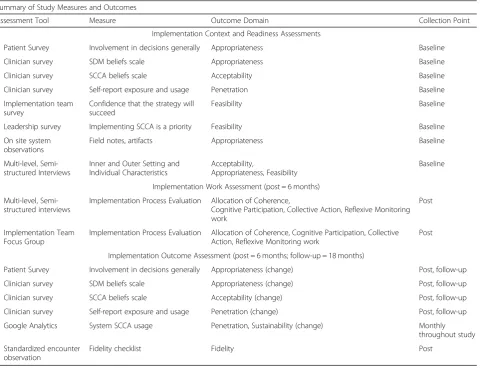
(Trial Number: NCT02375815). Copies of all measures are available in Additional file 1 and a summary of the measures—along with the outcomes they contributed to— are presented in Table2.
Procedure
Assess
Implementation context and readiness In February and March of 2015, our research team made in-person, 2-day baseline visits to each of the three health systems. On the first day, we conducted obser-vations of patient care areas, collected artifacts, and received an orientation to the clinical workflow. We also conducted and audio-recorded semi-structured interviews of 2 each of local primary care clinicians, implementation team members, and health system leaders in each system. At the end of the first day, we debriefed the experience amongst ourselves and then with the system’s dedicated physician champion. We summarized our thoughts in field notes and used the insight to structure an implementation team workshop on the second day. This workshop included an overview of SDM, practice with the SCCA, and a facilitated discussion and plan for implementation, guided by the Normalization Process Toolkit [44]. After completion of the baseline visit, we adminis-tered the patient, clinician, implementation team, and leadership surveys, electronically first and then in paper format to non-responders by on-site study coordinators.
Implementation work and outcomes After collection of the baseline data, we enrolled implementation teams from all three systems into a web-based project management site (Basecamp) to facilitate communica-tion and learning. We scheduled occasional telecon-ferences with and between the three systems to discuss key challenges and brainstorm solutions. At approximately 6 months of follow-up (Aug-Sep 2015), we returned to each health system. At these visits, we conducted follow-up interviews, conducted and re-corded a 90-min focus group with the implementation team, and video-recorded 2 simulated clinical encoun-ters by which clinicians used the tool as it existed in their current workflow and practice. We also repeated the patient, clinician, implementation team, and lead-ership surveys at this time and again at 18 months of follow-up using the same procedures as at baseline. Throughout the study period we collected monthly Google Analytic reports of Statin Choice usage by health system IP address overall and normalized ac-cording to the number of primary care clinicians. We shared these comparative reports with the
implementation teams through the Basecamp site on a monthly basis. We kept abreast of the activities and emergent implementation strategies that the on-site implementation teams were pursuing and used this information to interpret any changes in measured usage.
Innovate, develop, and engage
Based on key findings from the Assess phase, we worked in partnership with the 3 systems to modify the tool for more seamless clinical integration (e.g. by working with the developer of the tool to enable auto-population of clinical parameters required by SCCA and EMR integra-tion) and to develop procedures and materials that could reduce the work of implementation. We took note of and reached out to stakeholder groups and networks that could devolve the strategy early in this process.
Analysis
Implementation context and readiness
We conducted separate Assess phase analyses for each of the two stages. In the first stage, we used baseline data from surveys, interviews, and on-site observations to characterize the system contexts and to estimate the feasibility, appropriateness, and acceptability of imple-mentation in each setting.
For the qualitative analysis, a team of two analysts (AL and KB) coded all qualitative data independently and in duplicate according to pre-defined codes of the Consoli-dated Framework for Implementation Research (CFIR) [33] within the domains of Outer Setting, Inner Setting, and Individual Characteristics, and by health system. We searched for CFIR codes that seemed to distinguish the health systems, discussed the emerging data as a re-search team at regular meetings, and resolved any discrepancies.
Quantitative outcomes at baseline were calculated with standard descriptive statistics and included patient in-volvement in decisions, clinician exposure to and beliefs about SDM and the SCCA and its baseline usage, imple-mentation team members’confidence in implementation success, and system leadership’s perception of its relative priority.
Over a series of research team meetings and discus-sions, we merged insights from the two forms of data within pre-defined outcome domains of implementation feasibility, appropriateness, and acceptability and formu-lated “contextual summaries” of the three health systems.
Implementation work and outcomes
agreement on a pilot transcript and with the lead investigator, used pre-defined codes (e.g. coherence, cognitive participation, collective action, and reflective monitoring work) from Normalization Process Theory [38] to analyze all the 6-month qualitative data, tak-ing note of how the various types of work were allo-cated to affect the feasibility, acceptability, and appropriateness of implementation. They worked independently and in duplicate, resolving discrepan-cies by consensus and with support from the lead in-vestigator. For the quantitative analysis, we evaluated each system independently, looking for changes in survey outcomes over time within each system and not prioritizing cross-system comparisons. We used a Cochran Armitage trend test for categorical variables and compared continuous outcomes with a Kruskal-Wallis test. We triangulated all this insight with follow-up results from the Google Analytic usage reports and in consideration of the individual systems’ baseline contexts.
Results Assess
Implementation context and readiness assessment
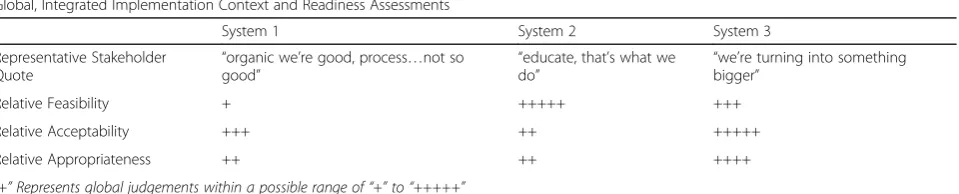
Qualitatively, we found few clear distinctions between the Outer Settings or Individual Characteristics of the three systems (as described in the CFIR [33]), although their Inner Settings differed in regards to organizational size, structure, maturity, culture, and capacity for collab-oration, communication, and implementation. Survey measures were mostly consistent with the qualitative insight, suggesting favorable climates overall, but with modest differences between systems. Summaries of the qualitative and quantitative data used to develop the contextual summaries—including patient and clinician demographics—are presented in Additional file 2. Here we present only the global, integrated assessments of im-plementation feasibility, acceptability, and appropriate-ness in Table3.
Implementation work and outcomes assessment
Across all 3 systems, self-reported and measured usage of the SCCA increased throughout the study
period. This usage increased most dramatically and sustainably in system 3 and to a lesser extent in sys-tem 2. Usage in syssys-tem 1 increased modestly for a period but was not sustained. (Fig. 3) Video-recorded encounter simulations suggested that clinicians in all systems used the tool from within their own workflow with high fidelity and in a way known to promote SDM. We found no significant changes in survey measures of appropriateness (e.g. SDM beliefs) or tool acceptability (e.g. SCCA beliefs), although there were trends suggesting acceptability of the tool and usage increased over time in a correlated fashion. For a full summary of these and other implementation outcome data organized by system, see Additional file 2. Here we focus on describing the work that was needed to build potential for implementation and how it was perceived to influence these outcomes.
Specifically, we found that effort was allocated to optimize the feasibility, acceptability, and appropriate-ness of implementation in complex and interdependent ways. Potential was achieved most readily, it seemed, when resources were directed toward improving the im-plementation outcome domains judged weakest in the baseline assessments. Often, different types of work were undertaken for different but synergistic purposes and by or for the benefit of different but equally critical stakeholders.
For example, coherence work was often needed to improve perceptions of the appropriateness of imple-mentation among both organizational and IT leader-ship and clinicians. For leaders, this often amounted to understanding the “pay-off” that could be ex-pected from the investment of resources. Import-antly, this was not something our team was able to provide or predict at project outset, but which lead-ership felt would have only increased its desire to engage:
[image:7.595.60.540.630.727.2]“I guess I was expecting this to be kind of more time and mental energy consuming than it was. If I only knew how straight forward that rule build [in the EMR], that was the majority of the build, if I knew how straight forward that was I would have been less
Table 3Integrated context and readiness assessments
Global, Integrated Implementation Context and Readiness Assessments
System 1 System 2 System 3
Representative Stakeholder Quote
“organic we’re good, process…not so good”
“educate, that’s what we do”
“we’re turning into something bigger”
Relative Feasibility + +++++ +++
Relative Acceptability +++ ++ +++++
Relative Appropriateness ++ ++ ++++
kind of feeling like it was a lot coming towards me in the beginning.”(IT Leader, System 1)
Clinicians, on the other hand, came to make sense of the tool’s appropriateness by judging whether it had been endorsed by organizational leadership and by asses-sing its impact on clinical workflow and patient care. Systems influenced this perception by having respected physician leaders communicate the SCCA’s status as an organizational priority and by explicitly demonstrating the “reason for SDM,” despite sometimes conflicting practice guidelines.
“I knew there was support from the CEO that this was a good thing to do; I guess that was what really validated it, when we did the brochure that went out to the [clinics], the one that went out to the
community—that really reinforced that this wasn’t just any old thing, it was something we valued as an organization.”(Clinician, System 3)
The feasibility of implementation was largely deter-mined by the capability of the multi-disciplinary im-plementation team to communicate these and other messages across the organization. This was because success was predicated on the collaboration of mul-tiple departments and the enrollment of support across many clinics. Cognitive participation work was especially salient in that regard and systems that were small (System 3) or had long-standing
procedures for working together and communicating efficiently (System 2) were at an advantage, provided they accessed this potential. In the case of System 2, that amounted to using existing provider meetings and educational infrastructures and standing teams. In the case of System 3, it amounted to use of an existing meeting and the addition of one implemen-tation team meeting to allocate responsibility.
“We also…tried to project it to other clinicians in our [system] and did it by different means, including the quarterly meetings and then the continued education meetings, also in our clinic meetings, and some meetings in between too.”(Leadership, System 2)
Where feasibility was low, organizations had to de-vote resources to increasing communication and teamwork potential if they wanted to succeed. Not-ably, System 1, which was judged lowest for feasibil-ity at outset, allocated little effort to improving capability in this domain. This was partly because implementation was judged to be less appropriate here. Indeed, the organization had just finished implementing another intervention aimed at a simi-lar goal.
“Like I said, I’ve had very little involvement. We haven’t been asked to do anything…maybe those conversations have occurred and I’m just not aware of them.”(Implementation Team Member, System 1)
[image:8.595.56.542.85.351.2]By not directing effort to improve feasibility or appro-priateness, the value of efforts to improve acceptability might have been reduced. For example, significant col-lective action work was done by information technology within System 1 to fully integrate the SCDA into the electronic medical record and thus increase acceptability by clinicians. Unfortunately, at the post-implementation visit, no one on the implementation team was aware this work had been done and no one had trained the clini-cians on how to use the tool. This limited uptake of the tool in System 1—with only 18% of clinicians reporting routine usage at 6 months compared to 38 and 69% in Systems 2 and 3, respectively—and, as shown in Fig.3, usage was not sustained.
As it turned out—and consistent with prior studies of the SCCA—only a small amount of work was needed to adequately train the clinicians on how to use the tool, but this work was essential and it had to be delivered re-liably. When the tool was demonstrated for a few mi-nutes (either in person or via email-delivered video) by an internal expert as it existed in the clinicians’ own electronic workflow, it seemed to help clinicians over-come the coherence work of understanding what the tool did and how it could be used efficiently. Once the clinicians tried the tool with one or a few actual patients, they often found it changed their practice, which seemed to increase acceptability. This was consistent with survey data showing correlation trends between usage and posi-tive SCCA beliefs (seeAdditional file2).
“It [was, at first] something that I used out of—just out of respect and appreciation for colleagues that say, we wanna try this out. It had nothing to do with my desire to change the way I implemented statin medications. I felt like we were doing fine. I think that’s what most providers will say is, I’m doing fine. What it has shown is just a greater understanding of patient awareness overall. We know they made a good educated choice….The best advice I could give [to another provider] is‘be open–minded and try it more than once before you decide whether or not it’s something you’re gonna do.”(Clinician, System 3)
Real world usage of the SCCA was a key factor in helping clinicians to identify a relative advantage for the tool, and it was the most important example of reflexive monitoring work we found. When early adopters were put in a position of using the tool, they could further en-hance acceptability and facilitate spread through infor-mal peer to peer communication.
“I think the best thing, though, is whenever it’s mentioned at these quarterly meetings, because then it puts it in the forefront…because one of their
partners may say,‘You mean you’ve been using this tool?,’ ‘Sure,’and they can show‘em…then you’ve got two people, then you’ve got four, and it just migrates.” (Leadership, System 2)
In short, and perhaps because the tool was developed through a user-centered design approach [3] and was known to be well-accepted by clinicians, we found most of the work required to implement the SCCA was dissemination-related work done by the organization. When key efforts were not taken to address parts of this work, success was lessened.
“I don’t think that piece of it—just putting the [SCCA] in the right spot and bringing the data from our [EMR] into that, I’m guessing was a week, week-and-a-half, not horrible. The deployment, actually get-ting it out to the other docs, is probably much bigger, the training and tracking issues of hey, did you know there’s this new tool, and using that. Now, having said that, that’s often very critical to get adoption, other-wise it just sits out there and languishes.”(Leadership, System 2)
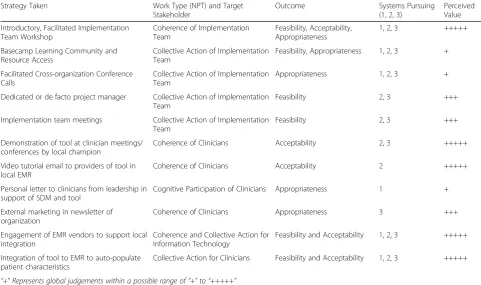
For a complete summary of the strategies systems used to reduce the work of implementation and prevent the SCCA from“languishing”see Table4. There we organize strategies by their judged value and according to the type of work they were perceived to reduce and the stakeholders and outcomes they were judged to influ-ence. Note that all judgements are global impressions of the authors that have been confirmed with staff at each participating system.
Innovate, develop, and engage
Throughout the Assess phase, we took note of oppor-tunities for modifying the SCCA to improve its fit in diverse contexts. Most notably, we worked with system IT experts to develop strategies that could in-tegrate the tool into the electronic workflows of each system. We coordinated necessary changes with the tool’s developer to permit this innovation. Through interaction with system stakeholders, we were con-nected to their EMR vendors and learned of further ways to optimize the tool for widespread use (e.g. by developing clinical program summaries that could be posted on EMR vendors’ customer web spaces). After synthesizing insights from the Assess phase, we con-sidered the value of strategies that were taken and we engaged system stakeholders in considering other strategies that would have been helpful. We collected these strategies into a toolkit (Table 5 and online at
other settings in assessing their own contexts, deter-mining the appropriateness of implementation, and strategically targeting efforts to accomplishing the work of implementation. We also put a link to this toolkit on the web-based SCCA itself so that “lone users” would be equipped to champion implementa-tion in their own organizaimplementa-tions.
Key components of the toolkit include an Imple-mentation Team Manual that guides organizations through a step-by-step process of forming their
[image:10.595.56.538.100.385.2]team, learning together, conducting assessments, and organizing activities, as well as accompanying webi-nars and video demos that the team can watch to-gether and replicate and/or disseminate as appropriate. Toolkit materials were designed to be highly practical to address the many practical bar-riers we identified. This included email language that could be used to communicate the value proposition to system leadership and EMR integration support documents that described the very technical Table 4Strategies taken to increase potential for implementation of the SCCA
Strategy Taken Work Type (NPT) and Target Stakeholder
Outcome Systems Pursuing
(1, 2, 3)
Perceived Value
Introductory, Facilitated Implementation Team Workshop
Coherence of Implementation Team
Feasibility, Acceptability, Appropriateness
1, 2, 3 +++++
Basecamp Learning Community and Resource Access
Collective Action of Implementation Team
Feasibility, Appropriateness 1, 2, 3 +
Facilitated Cross-organization Conference Calls
Collective Action of Implementation Team
Appropriateness 1, 2, 3 +
Dedicated or de facto project manager Collective Action of Implementation Team
Feasibility 2, 3 +++
Implementation team meetings Collective Action of Implementation Team
Feasibility 2, 3 +++
Demonstration of tool at clinician meetings/ conferences by local champion
Coherence of Clinicians Acceptability 2, 3 +++++
Video tutorial email to providers of tool in local EMR
Coherence of Clinicians Acceptability 2 +++++
Personal letter to clinicians from leadership in support of SDM and tool
Cognitive Participation of Clinicians Appropriateness 1 +
External marketing in newsletter of organization
Coherence of Clinicians Appropriateness 3 +++
Engagement of EMR vendors to support local integration
Coherence and Collective Action for Information Technology
Feasibility and Acceptability 1, 2, 3 +++++
Integration of tool to EMR to auto-populate patient characteristics
Collective Action for Clinicians Feasibility and Acceptability 1, 2, 3 +++++
“+”Represents global judgements within a possible range of“+”to“+++++”
Table 5Strategies identified for inclusion in the SCCA implementation toolkit
The Statin Choice Conversation Aid Implementation Toolkit
Strategies of Judged Value Work Type and Target Stakeholder Outcome
Targeted Context Self-assessments Coherence of Leadership, Implementation Team, Information Technology
Understanding of Appropriateness
Leadership Resource Estimates and Testimonials Coherence of Leadership Appropriateness
Pre-Recorded Preparatory Webinar for Implementation Team
Coherence of Implementation Team Feasibility, Acceptability, and Appropriateness
Implementation Team Manual and Meeting Agendas
Collective Action of Implementation Team Feasibility
Internal Marketing Material Examples Coherence of Clinicians Appropriateness
EMR Vendor-specific Integration and Coding Guides
Coherence and Collective Action of Information Technology
Feasibility and Acceptability
SDM Presentation Templates Coherence of Clinicians Acceptability and Appropriateness
[image:10.595.55.539.557.732.2]language and codes needed to integrate the tool electronically.
Discussion Discussion
We conducted a theory-guided, formative evaluation of the work of implementing a conversation aid designed to promote SDM in 3 different health systems and used insights from this evaluation to develop an implementa-tion toolkit. The conceptual orientaimplementa-tion of our study contributes to the field of implementation science by strategically unifying the work of others. Specifically, it adds to Bradley et al.’s model for scale-up [30] consider-ation of the work stakeholders must do achieve imple-mentation [38] and the outcomes [36] their efforts must optimize for adoption and uptake to occur. It also com-plements the work of others [45] by serving as an ex-ample of how formative evaluations in index settings can be coherently oriented [25, 46, 47] to develop bun-dled implementation strategies and toolkits that can be broadly disseminated.
Although we focused our assessment on the imple-mentation outcome domains of feasibility, acceptability, and appropriateness, we do not intend to imply that other outcomes described by Proctor et al. [36] are not relevant (e.g. adoption, maintenance, fidelity, and sustainability). Rather, we operated under the assump-tion that optimizaassump-tion of these “early phase” outcomes would be most important for enabling the unsolicited uptake that is required for scale-up and spread [48]. It is also not our impression that the toolkit we created and the strategies it comprises will necessarily be appropriate for facilitating the scale of all patient decision aids, con-versation aids, or other interventions to directly or indir-ectly promote SDM. Rather, we believe that any SDM intervention is likely to have a unique set of barriers and facilitators to implementation. These should be discov-ered in an analogous process. The SCCA was an inter-vention developed through a user-centered design approach and we were already familiar with its effective-ness and its potential for sustained use with fidelity. This might have made the tool uncommonly poised for a targeted evaluation of the barriers to scale-up and spread. Still, we identified situations in which systems were not ideally positioned to implement the tool. Our resulting context self-assessments may provide value in helping to distinguish systems that are ready for this work. These assessments are, conceptually, measuring constructs of readiness for change [49], although they guide stakeholders in considering the real-world, intervention-specific factors (such as information tech-nology bandwidth and the availability of standing clin-ician meetings) that comprise the implementation climate.
Along these lines, it is also worth noting that the Agency for Healthcare Research and Quality (AHRQ) developed a toolkit to support SDM implementation broadly in 2015 [50]. To our knowledge, no theory was employed in organizing its structure or contents. Its effectiveness in overcoming the many known barriers to SDM implementation [35,37, 51, 52] has also not been evaluated and its applicability to any single SDM inter-vention (such as the SCCA) is likely limited. Indeed, our present research and experience suggests that more targeted toolkits, designed to counteract the unique and intervention-specific barriers to implementation (and nothing more) will be more effective in facilitating scale-up of any single SDM intervention. These targeted toolkits could (and perhaps should), however, be paired with interventions like the AHRQ toolkit that are intended to promote SDM broadly.
Strengths and limitations
The scope of our implementation context and process evaluation is a major strength of this study. Indeed, we used multiple methods to rigorously assess multiple levels and perspectives across the entire breadth of 3 dif-ferent healthcare systems in difdif-ferent regions of the United States. The consistency of insights across these settings increases our confidence that the results are representative and that our conceptual rationale has value. The study also has several limitations. Because the quantitative measures were not validated and did not prove very sensitive to change, most judgements were based on qualitative data. Our study was not designed to definitively establish mechanistic relationships between the constructs we considered. Rather it should be viewed as exploratory and as a heuristic for orienting future thinking and research related to implementation strategy development and the scale-up of SDM interventions.
Practice implications and future directions
could compare the effectiveness of scale-up strategies based on theories of work reduction against those that are not.
Conclusion
We developed a multi-component toolkit for facilitating the scale and spread of an intervention to promote SDM across clinical settings. The theory-based approach we employed in designing the toolkit may have value in orienting the development of multi-component toolkits and other implementation strategies aimed at facilitating the efficient scale of interventions.
Additional files
Additional file 1:Study Measures and Guides. (PDF 2683 kb)
Additional file 2:Quantitative and Qualitative Data Summaries. (PDF 1866 kb)
Abbreviations
ACC/AHA:American College of Cardiology/American Heart Association; AHRQ: Agency for Healthcare Research and Quality; AIDED: Assess, Innovate, Develop, Engage, Devolve; BTS: Breakthrough Series; CEO: Chief Executive Officer; CFIR: Consolidated Framework for Implementation Research; EMR: Electronic medical record; IHI: Institute for Healthcare Improvement; IT: Information Technology; NPT: Normalization Process Theory; SCCA: Statin Choice Conversation Aid/Statin Choice Decision Aid; SDM: Shared decision making
Acknowledgements Not applicable
Funding
This publication was made possible by CTSA Grant Number UL1 TR000135 from the National Center for Advancing Translational Sciences (NCATS), a component of the National Institutes of Health (NIH) and Dr. Ye’s contribution was made possible by a K23 award (NIH K23 HL121144). This publication’s contents are solely the responsibility of the authors and do not necessarily represent the official view of NIH.
Availability of data and materials
All key data generated during this study is included in this published article and it Additional files. Access to the survey and qualitative datasets analyzed to generate this data is available from the corresponding author on reasonable request.
Authors’contributions
ALL was the lead investigator of the study. He conceptualized the overall study design and oversaw all aspects of recruitment and stakeholder engagement; as well as data collection, analysis, and reporting. He wrote the first draft of the manuscript, oversaw the editing and revision process, and approved the final draft. KRB was the chief qualitative analyst on the study. She assisted in the development of interview and focus group guides, conducted all interviews, led in the coding of all qualitative data, and contributed significantly to multiple drafts of the manuscript. MEB was the chief quantitative analyst on the study. She oversaw the survey database development and survey collection process. She conducted all the quantitative analyses, and contributed significantly to multiple drafts of the manuscript. NDS provided thoughtful study oversight, participated in team meetings, and contributed significant edits to later drafts of the manuscript. GE oversaw the patient survey development and provided feedback on the collection process. He participated in initial analyses of the patient surveys and edited later drafts of the manuscript. HHT participated in
conceptualizing the project and developing the study protocol. He also provided substantial feedback and edits to later drafts of the manuscript. SY
played the leading role in developing the information technology components of the toolkit and confirming their applicability. He also provided feedback and edits to later drafts of the manuscript. RG
participated in site visit activities and with confirmation of study insights and the value of toolkit components. He contributed to later drafts of the manuscript. MA participated in site visit activities and with confirmation of study insights and the value of toolkit components. He contributed to later drafts of the manuscript. AA oversaw development of the resulting toolkit and contributed to later drafts of the manuscript. VMM provided overall guidance to the project and critical feedback at all phases. He attended the initial site visits, assisted with data collection and interpretation, attended study team meetings, and contributed to many drafts of the manuscript. All authors read and approved the final manuscript.
Ethics approval and consent to participate
The study was approved by the Mayo Clinic Institutional Review Board and all participants gave consent to participate in this study. The reference number for the study is: 14–006048.
Consent for publication Not applicable
Competing interests
The authors declare that they have no competing interests.
Publisher’s Note
Springer Nature remains neutral with regard to jurisdictional claims in published maps and institutional affiliations.
Author details 1
Division of Health Care Policy and Research, Mayo Clinic, 200 First Street SW, Rochester, MN 55905, USA.2Knowledge and Evaluation Research Unit, Mayo Clinic, 200 First Street SW, Rochester, MN 55905, USA.3Department of Health Sciences Research, Mayo Clinic, 200 First Street SW, Rochester, MN 55905, USA.4The Dartmouth Institute for Health Policy and Clinical Practice, Level 5, Williamson Translational Research Building, 1 Medical Center Drive, Labanon, NH 03756, USA.5Department of Cardiovascular Diseases, Mayo Clinic, 4500 San Pablo Rd S, Jacksonville, FL 32224, USA.6Department of Medicine, Columbia University Medical Center, 622 West 168th Street, New York, NY 10033, USA.7Department of Family Medicine, Kootenai Health, 2003 Kootenai Health Way, Coeur d’Alene, ID 83814, USA.8Mosaic Life Care, 5325 Faraon Street, St. Joseph, MO 64506, USA.
Received: 14 September 2018 Accepted: 31 March 2019
References
1. Goff DC Jr, Lloyd-Jones DM, Bennett G, Coady S, D'Agostino RB, Gibbons R, Greenland P, Lackland DT, Levy D, O'Donnell CJ, et al. 2013 ACC/AHA guideline on the assessment of cardiovascular risk: a report of the American College of Cardiology/American Heart Association task force on practice guidelines. Circulation. 2014;129(25 Suppl 2):S49–73.
2. Stone NJ, Robinson J, Lichtenstein AH, Merz CNB, Lloyd-Jones DM, Blum CB, McBride P, Eckel RH, Schwartz JS, Goldberg AC. 2013 ACC/AHA guideline on the treatment of blood cholesterol to reduce atherosclerotic cardiovascular risk in AdultsA report of the American College of Cardiology/American Heart Association task force on practice guidelines. J Am Coll Cardiol. 2013; 129(Suppl 2):S1–45.https://www.ahajournals.org/doi/full/10.1161/01.cir. 0000437738.63853.7a.
3. Montori VM, Breslin M, Maleska M, Weymiller AJ. Creating a conversation: insights from the development of a decision aid. PLoS Med. 2007;4(8):e233. 4. Weymiller AJ, Montori VM, Jones LA, Gafni A, Guyatt GH, Bryant SC,
Christianson TJ, Mullan RJ, Smith SA. Helping patients with type 2 diabetes mellitus make treatment decisions: statin choice randomized trial. Arch Intern Med. 2007;167(10):1076–82.
5. Mann DM, Ponieman D, Montori VM, Arciniega J, McGinn T. The statin choice decision aid in primary care: a randomized trial. Patient Educ Couns. 2010;80(1):138–40.
encounter decision aid in Spanish patients with type 2 diabetes: a randomized trial. Patient Educ Couns. 2016;99(2):295–9.
7. Branda ME, LeBlanc A, Shah ND, Tiedje K, Ruud K, Van Houten H, Pencille L, Kurland M, Yawn B, Montori VM. Shared decision making for patients with type 2 diabetes: a randomized trial in primary care. BMC Health Serv Res. 2013;13(1):301. 8. Ballard AY, Kessler M, Scheitel M, Montori VM, Chaudhry R. Exploring
differences in the use of the statin choice decision aid and diabetes medication choice decision aid in primary care. BMC medical informatics and decision making. 2017;17(1):118.
9. Inselman J, Branda M, Castaneda-Guarderas A, Gionfriddo MR, Zeballos-Palacios CL, Morris MM, Shah ND, Montori VM, LeBlanc A. Uptake and documentation of the use of an encounter decision aid in usual practice: a retrospective analysis of the use of the statin/aspirin choice decision aid. Med Decis Mak. 2016;36(4):557–61.
10. Writing Committee M, Drozda JP Jr, Ferguson TB Jr, Jneid H, Krumholz HM, Nallamothu BK, Olin JW, Ting HH, Measures ACAFOP, Heidenreich PA, et al. 2015 ACC/AHA focused update of secondary prevention lipid performance Measures: a report of the American College of Cardiology/American Heart Association task force on performance Measures. Circ Cardiovasc Qual Outcomes. 2016;9(1):68–95.
11. Centers for Disease C. Prevention:CDC grand rounds: the million hearts initiative. MMWR Morb Mortal Wkly Rep. 2012;61(50):1017–21.
12. Perla RJ, Bradbury E, Gunther-Murphy C. Large-scale improvement initiatives in healthcare: a scan of the literature. J Healthc Qual. 2013;35(1):30–40. 13. Simmons R, Fajans P, Ghiron L. Scaling up health service delivery: from pilot
innovations to policies and programmes. Geneva: World Health Organization; 2007.
14. Simmons R, Shiffman J: Scaling up health service innovations: a framework for action. Scaling up health service delivery 2007, 1:30.
15. Norton WE, McCannon CJ, Schall MW, Mittman BS. A stakeholder-driven agenda for advancing the science and practice of scale-up and spread in health. Implement Sci. 2012;7(1):118.
16. Barker PM, Reid A, Schall MW. A framework for scaling up health interventions: lessons from large-scale improvement initiatives in Africa. Implement Sci. 2016;11:12.
17. Massoud MR, Donohue KL, McCannon CJ. Options for Large-scale Spread of Simple, HIgh-impact Interventions. In: Technical Report. Bethesda, MD: University Research Co. LLC; 2010.
18. Proctor EK, Powell BJ, McMillen JC. Implementation strategies:
recommendations for specifying and reporting. Implement Sci. 2013;8(1):139. 19. DiCenso A, Virani T, Bajnok I, Borycki E, Davies B, Graham I, Harrison M, Logan J,
McCleary L, Power M. A toolkit to facilitate the implementation of clinical practice guidelines in healthcare settings. Hospital quarterly. 2002;5(3):55–60. 20. Murray E, May C, Mair F. Development and formative evaluation of the
e-health implementation toolkit (e-HIT). BMC medical informatics and decision making. 2010;10(1):61.
21. DeWalt DA, Broucksou KA, Hawk V, Brach C, Hink A, Rudd R, Callahan L. Developing and testing the health literacy universal precautions toolkit. Nurs Outlook. 2011;59(2):85–94.
22. University of Wisconsin Health Innovation Program: HIPxChange Toolkit Database. 2017. In.http://www.hipxchange.org/browse. Accessed 7 July 2017. 23. Proctor EK, Landsverk J, Aarons G, Chambers D, Glisson C, Mittman B.
Implementation research in mental health services: an emerging science with conceptual, methodological, and training challenges. Admin Pol Ment Health. 2009;36(1):24–34.
24. Prior M, Guerin M, Grimmer-Somers K. The effectiveness of clinical guideline implementation strategies–a synthesis of systematic review findings. J Eval Clin Pract. 2008;14(5):888–97.
25. Davies P, Walker AE, Grimshaw JM. A systematic review of the use of theory in the design of guideline dissemination and implementation strategies and interpretation of the results of rigorous evaluations. Implement Sci. 2010;5(1):14. 26. Grimshaw JM, Eccles MP, Lavis JN, Hill SJ, Squires JE. Knowledge translation
of research findings. Implement Sci. 2012;7(1):50.
27. Grimshaw J, Thomas R, MacLennan G, Fraser C, Ramsay C, Vale Le, emsp14, al, Whitty P, Eccles M et al: Effectiveness and efficiency of guideline dissemination and implementation strategies. Health Technol Assess. 2004;8(6):1–72. 28. Eccles M, Grimshaw J, Walker A, Johnston M, Pitts N. Changing the behavior
of healthcare professionals: the use of theory in promoting the uptake of research findings. J Clin Epidemiol. 2005;58(2):107–12.
29. Group ICEtBR. Designing theoretically-informed implementation interventions. Implement Sci. 2006;1(1):4.
30. Bradley EH, Curry LA, Taylor LA, Pallas SW, Talbert-Slagle K, Yuan C, Fox A, Minhas D, Ciccone DK, Berg D. A model for scale up of family health innovations in low-income and middle-low-income settings: a mixed methods study. BMJ Open. 2012;2: e000987.https://doi.org/10.1136/bmjopen-2012-000987.
31. Stetler CB, Legro MW, Wallace CM, Bowman C, Guihan M, Hagedorn H, Kimmel B, Sharp ND, Smith JL. The role of formative evaluation in implementation research and the QUERI experience. J Gen Intern Med. 2006;21(Suppl 2):S1–8.
32. Senge PM, Scharmer CO: Community action research: learning as a community of practitioners, consultants and researchers. Handbook of Action Research: Concise Paperback Edition 2006:195–206.
33. Damschroder LJ, Aron DC, Keith RE, Kirsh SR, Alexander JA, Lowery JC. Fostering implementation of health services research findings into practice: a consolidated framework for advancing implementation science. Implement Sci. 2009;4:50.
34. May C. Towards a general theory of implementation. Implement Sci. 2013;8:18. 35. Lloyd A, Joseph-Williams N, Edwards A, Rix A, Elwyn G. Patchy 'coherence':
using normalization process theory to evaluate a multi-faceted shared decision making implementation program (MAGIC). Implement Sci. 2013;8:102. 36. Proctor E, Silmere H, Raghavan R, Hovmand P, Aarons G, Bunger A,
Griffey R, Hensley M. Outcomes for implementation research: conceptual distinctions, measurement challenges, and research agenda. Adm Policy Ment Health Ment Health Serv Res. 2011;38(2):65–76. 37. Legare F, Ratte S, Gravel K, Graham ID. Barriers and facilitators to
implementing shared decision-making in clinical practice: update of a systematic review of health professionals' perceptions. Patient Educ Couns. 2008;73(3):526–35.
38. May CR, Mair F, Finch T, MacFarlane A, Dowrick C, Treweek S, Rapley T, Ballini L, Ong BN, Rogers A, et al. Development of a theory of implementation and integration: normalization process theory. Implement Sci. 2009;4:29. 39. Mintzberg H, Waters JA. Of strategies, deliberate and emergent. Strateg
Manag J. 1985;6(3):257–72.
40. Naldemirci O, Wolf A, Elam M, Lydahl D, Moore L, Britten N. Deliberate and emergent strategies for implementing person-centred care: a qualitative interview study with researchers, professionals and patients. BMC Health Serv Res. 2017;17(1):527.
41. Glasgow RE, Vogt TM, Boles SM. Evaluating the public health impact of health promotion interventions: the RE-AIM framework. Am J Public Health. 1999;89(9):1322–7.
42. Elwyn G, Barr PJ, Grande SW, Thompson R, Walsh T, Ozanne EM. Developing CollaboRATE: a fast and frugal patient-reported measure of shared decision making in clinical encounters. Patient Educ Couns. 2013;93(1):102–7. 43. Wyatt KD, Branda ME, Anderson RT, Pencille LJ, Montori VM, Hess EP, Ting
HH, LeBlanc A. Peering into the black box: a meta-analysis of how clinicians use decision aids during clinical encounters. Implement Sci. 2014;9:26. 44. May CR, Finch T, Ballini L, MacFarlane A, Mair F, Murray E, Treweek S, Rapley
T. Evaluating complex interventions and health technologies using normalization process theory: development of a simplified approach and web-enabled toolkit. BMC Health Serv Res. 2011;11:245.
45. Grant A, Dreischulte T, Guthrie B. Process evaluation of the data-driven quality improvement in primary care (DQIP) trial: active and less active ingredients of a multi-component complex intervention to reduce high-risk primary care prescribing. Implement Sci. 2017;12(1):4.
46. Weiner BJ, Lewis MA, Clauser SB, Stitzenberg KB. In search of synergy: strategies for combining interventions at multiple levels. J Natl Cancer Inst Monogr. 2012;2012(44):34–41.
47. Alexander JA, Hearld LR. Methods and metrics challenges of delivery-system research. Implement Sci. 2012;7:15.
48. Rogers EM: Diffusion of innovations: Simon and Schuster; 2010. 49. Weiner BJ. A theory of organizational readiness for change. Implement Sci.
2009;4:67.
50. The SHARE Approach [http://www.ahrq.gov/professionals/education/ curriculum-tools/shareddecisionmaking/index.html]. Accessed 20 July 2017. 51. Legare F, Elwyn G, Fishbein M, Fremont P, Frosch D, Gagnon MP, Kenny DA,
Labrecque M, Stacey D, St-Jacques S, et al. Translating shared decision-making into health care clinical practices: proof of concepts. Implement Sci. 2008;3:2. 52. Elwyn G, Laitner S, Coulter A, Walker E, Watson P, Thomson R.